Nicholas Hedges

Art, Writing and Research

  • Amazon
  • Behance
  • Facebook
  • Instagram
  • Pinterest
  • YouTube
  • Art
    • Digital
    • Drawing
    • Grids
      • Correspondence
      • The Wall
      • The Tourist
    • Ink on paper
      • Shadow Calligraphy
    • Installation
      • Murder
      • Echo
    • Painting
    • Patterns
    • Mixed Media
    • Photographic installation
      • St. Giles Fair 1908
      • Cornmarket 1907
      • Headington Hill 1903
      • Queen Street 1897
    • Research/Sketches
    • Stitched Work
      • Missded 1
      • Missded 2
      • Missded 3
      • Missded 4
    • Text Work
  • Blogs
    • Family History
    • Goethean Observations
    • Grief
    • Light Slowed But Never Stilled
    • Lists
    • Present Empathy
    • Shadow Calligraphy
    • Trees
    • Time
    • Walking Meditations
  • Video
  • Photography
    • Pillars of Snow
    • Creatures
    • The Trees
    • Snow
    • St. Giles Fair 1908
    • Cornmarket 1907
    • Headington Hill 1903
    • Queen Street 1897
    • Travel
  • Illustration and Design
  • Music
  • Projects
    • Dissonance and Rhyme
    • Design for an Heirloom
    • Backdrops
    • Shadow Calligraphy
  • Exhibitions
    • A Line Drawn in Water
      • Artwork
    • A Line Drawn in Water (Blog)
    • Mine the Mountain 3
      • Artwork
    • Mine the Mountain 2
      • Artwork
      • The Wall
    • The Woods, Breathing
      • Artwork
    • Snow
      • Artwork
    • Echo
      • Artwork
    • Murder
      • Artwork
    • The Tourist
    • Dreamcatcher
    • Mine the Mountain
      • Artwork
      • The Tourist
    • M8
    • The Gate
    • Creatures
      • Artwork
    • Residue
      • Artwork
    • A visit to Auschwitz
      • Artwork
  • Me
    • Artist’s Statement

John Wesley (1703-1791)

December 17, 2014 by Nicholas Hedges

Every Sunday, from when I was born to the age of 16, I went to church. It was in many respects – and still is, even though I no longer attend – the hub of family life, having played a central part in the life of my extended family from the moment my mum moved to Oxford with her family in 1952. I was christened there in 1971; my mum and dad were married there, as were my aunts and uncles and several cousins. Many members of my family met their partners in the Youth Club and of course we have said goodbye to family members; my Grandad in 1984, my Nan in 2010 and step-father in 2008.

I doubt there is any place in the world that harbours so many memories for me, but the one I want to recall today isn’t a specific memory as such but rather a recollection. I recall how as a young boy, I used – when singing hymns – to look at the dates of birth and death of the authors, in particular John Wesley. It’s hard to say what I thought while looking at his dates (1703-1791); I can, as an adult, only interpret what that child was thinking. (Thinking about this now, it could be that it was Charles Wesley’s hymns we sang, in which case the dates would be (1707-1788). It could of course have been both). I remember too a plaque on the wall, dedicated to the memory of a man killed in the Second World War. Again there was something about the dates that captivated me – a date from a time – and a place – before I was born.

The dates of someone’s birth and death delineate a space, much as a boundary on a map, a place that existed but doesn’t anymore. They are coordinates for the beginning and end of a journey.

Filed Under: Uncategorized Tagged With: Childhood, Childrens Stories, Dates, John Wesley, Memory

Absence II

December 17, 2014 by Nicholas Hedges

History necessitates the consideration of our own non-existence. To imagine the distant past (the past before I was born) is to try and see the world, not only as if I didn’t yet exist, but as if, in all probability, I might never exist at all. With this in mind, the past, re-imagined, becomes a teeming and terrifying space where every object and building, every man, woman and child, every word spoken or written, every intention and gesture, indeed, everything is excited by a vertiginous sense of calamity. Objects in museums, remnants of ancient buildings, old family photographs, all oscillate with this potential, which, although avoided – inasmuch as I’m alive to observe them in the present moment – hold up a mirror to reflect this past forwards, showing me, in the glass, the catastrophe of my future death. As Roland Barthes writes in Camera Lucida:

“I observe with horror an anterior future of which death is the stake.”

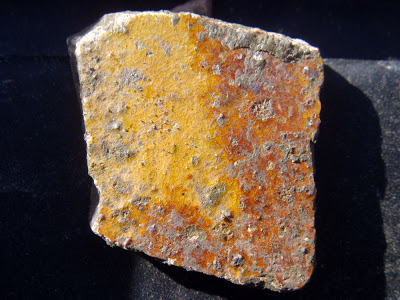
Perhaps this is why I find it strange, handling something that existed long before my birth. It’s as if when looking, for example at a mediaeval ceramic pot, or a single shard (as pictured below), that the shape, colour and decoration of that pot, created at a time when I did not exist, were essential aspects of my coming-into-being (I observe with horror how close I came to never existing). And if I can handle the object, then my body feels that horror; it feels, in effect, its own absence. (It’s strange, but the chances of there being humans 100, 200, 500 years from a given point in time is very high – barring any massive disaster. But the chances of any of those individuals being who they are is almost nil.)

As I wrote in a previous blog regarding old photographs:

“It seems to me that I’m responding to these images kinaesthetically; my mind, memories and experience read them, which is why perhaps I find often these old colour photographs – while amazing – so unsettling. My mind reads them, my body feels them and yet when the image was taken, I did not exist.”

(There is, it seems, something analogous between the distant past as seen in a colour photograph and the colours in the shard of pottery (above). What that is, I don’t yet know…)

Old objects are mirrors, reflecting what Georg Lukács called the ‘not now and not here’ whether that be the past or the future. They have a power and are possessed of a supreme indifference to us the beholder. I’m reminded here of a passage in Max Beerbohm’s Zuleika Dobson:

“Strange that to-night it [Merton College Tower] would still be standing here, in all its sober and solid beauty—still be gazing, over the roofs and chimneys, at the tower of Magdalen, its rightful bride. Through untold centuries of the future it would stand thus, gaze thus. He winced. Oxford walls have a way of belittling us; and the Duke was loth to regard his doom as trivial.”

I know that wince. It’s the same as Barthes’ horrified observation. In the past the chances of me (and indeed everyone) ever existing were infinitesimally small. Now that I do exist, I wince because I know that death is certain.

In his book ‘Other People’s Countries’, Patrick McGuinness writes:

“Of course, when you try to imagine yourself somewhere you don’t know and have never been, you can’t do it — your mind slides off the surface of the images you conjure up like a finger on wet glass; can’t get any sort of purchase. It’s much easier to imagine the inverse: the place you know well without you. It hurts more that way around too, especially if you imagine the place you know without you while you’re still there — you darken the edges of your own vision, put a black border around your days and they become like leaves curling inwards, dying from the outside in. Even as you live them forwards, you’re looking at them from behind, seeing them as they would be if they were over. I spent most of my childhood with a foretaste of its pastness in my mouth.”

Filed Under: Uncategorized Tagged With: Georg Lukacs, Rilke, Roland Barthes

All Present Standing in Silence

November 21, 2014 by Nicholas Hedges

“On Sunday last, at the close of the evening service, the Society Meeting was held, and references to the death of Private Rogers were made by several members of the Church. Private Rogers’s mother is one of the oldest members of the Church. The meeting passed a vote of condolence with the relatives, all present standing in silence.”

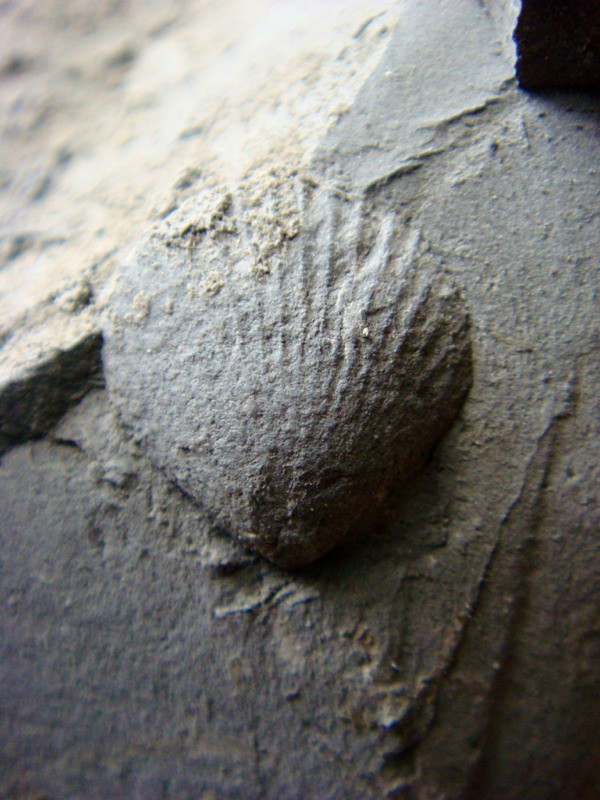
It’s strange to think these words have lain silent for 100 years – hidden like fossil-shells pressed between the pages of a cliff face. Recounting, as the fossil recalls a vanished sea, a contemplative scene of remembrance, the scene now remembers as much itself as it does the fallen soldier.

A few years ago, I happened upon a quote of Rilke’s, paraphrased as part of an exhibition. The ‘depth of time’ it said, was revealed more in human gestures than in archaeological remains or fossilised organisms. The gesture is a ‘fossil of movement’; it is, at the same time, the very mark of the fleeting present and of desire in which our future is formed’

Reading the passage with which I began, I am struck in particular by the last few words: ‘all present standing in silence.’ As I read the words, the quiet gestures of my ancestors 100 years ago are made visible, felt. Like the lines on a fossil-shell – such as that pictured below – recalling in their pattern the vanished seas in which their signified others once lived, so in the words of Jonah Rogers’ obituary, one can hear the faintest echoes of World War I, not the sound of the battlefield, but the speeches and reciprocal silence of those inside the chapel.

But it’s not only their gestures – those inside the chapel – which, as I read the text, I can see and feel. It’s also those of a time before the war; times which like the gestures released by the text, were no doubt remembered by the mourners, recalled by limbs, nerves and twitching muscles as well as the very fabric of the place in which they were standing. Perhaps those who made “references to the death of Private Rogers” were talking about such times.


The lines of the shell’s imprint, in the photograph above, were made 195 million years ago, when mankind was beyond even the furthest reaches of improbability. When I read the closing words of my great-great uncle’s obituary, I imagine those gathered inside the church, struggling within the limits of their imaginations, to comprehend that other place which, although certain, exists – within the human mind – beyond the reaches of improbability; death.

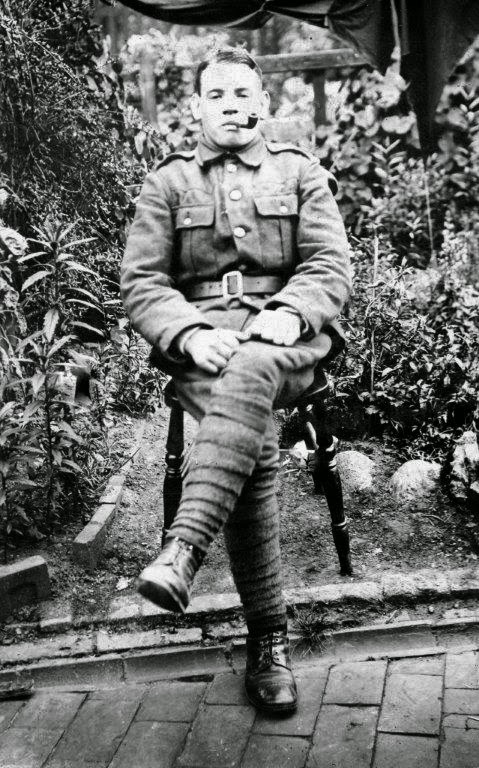
This obituary concerns the death of Jonah Rogers (pictured above) and yet all those inside the chapel are now dead; it is now as much about their deaths as his. And reading this text I am aware too of my own fragile existence. When that meeting took place, sometime in the summer of 1915 I did not exist. I too was also well beyond the reaches of improbability. And yet, it is in my imagination that this scene is taking place.
Filed Under: World War I Tagged With: Fossils, Gesture, Jonah Rogers, Obituary, Rilke, Silence, WW1 Centenary, WWI

Exhibition: Remembering We Forget

November 20, 2014 by Nicholas Hedges

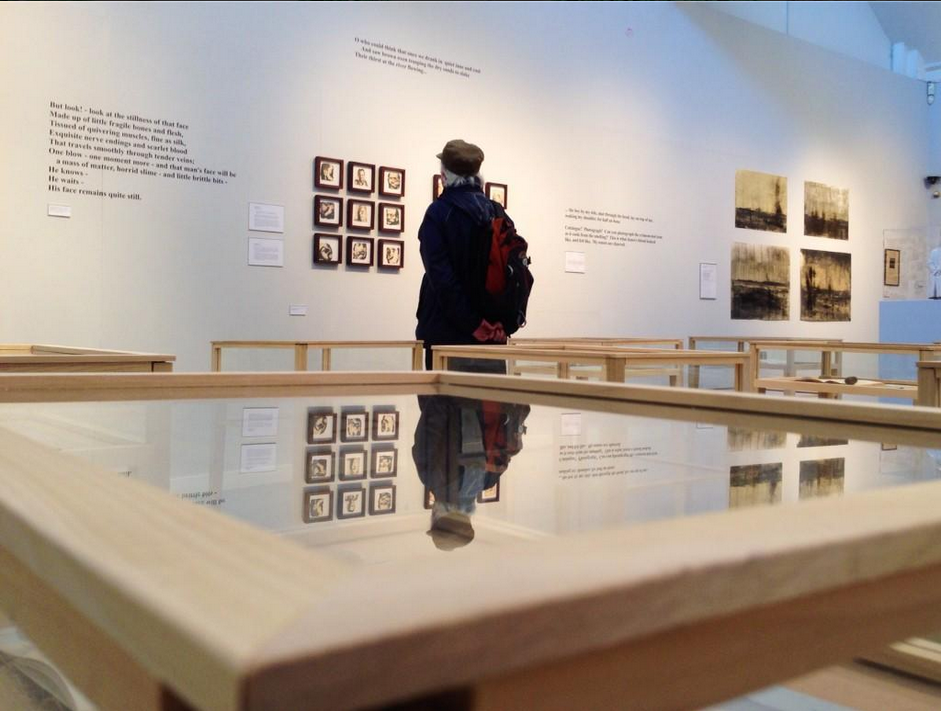
Some of my work will be shown at the Sidney Cooper Gallery, Canterbury until 17th December as part of an exhibition entitled: ‘Remembering, We Forget; Poets, Artists and the First World War.’

Filed Under: Paintings Tagged With: Exhibition, Paintings, WW1 Centenary, WWI

Children’s Names

November 11, 2014 by Nicholas Hedges

Today is Armistice Day. A day on which the lists of names arrayed in marble and stone, on plaques and in books are at the forefront of many people’s thoughts. Names left behind, as Rilke so beautifully puts it, ‘as a child leaves off playing with a broken toy’.


It was whilst standing with my children on Remembrance Sunday, holding my son as we watched the laying of the wreathes on the town’s memorial that I thought of those names and how, once, they had indeed belonged to children.

Jonah Rogers was just 22 years old when he was killed near Ypres in 1915. At the end of his obituary there is a moving passage which reads:

“On Sunday last, at the close of the evening service, the Society Meeting was held, and references to the death of Private Rogers were made by several members of the Church. Private Rogers’s mother is one of the oldest members of the Church. The meeting passed a vote of condolence with the relatives, all present standing in silence.”

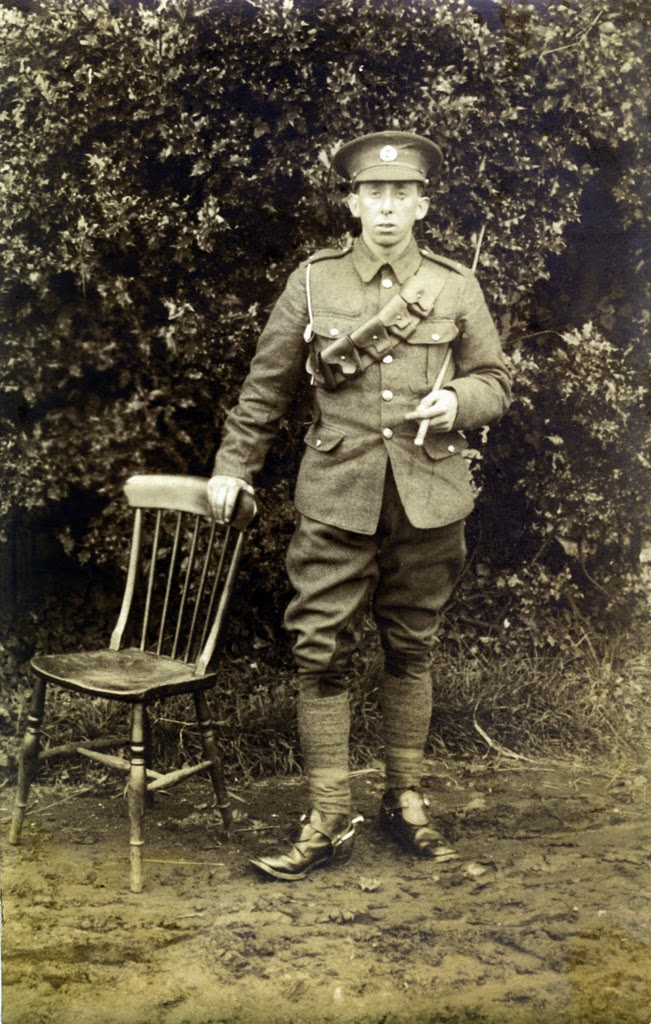
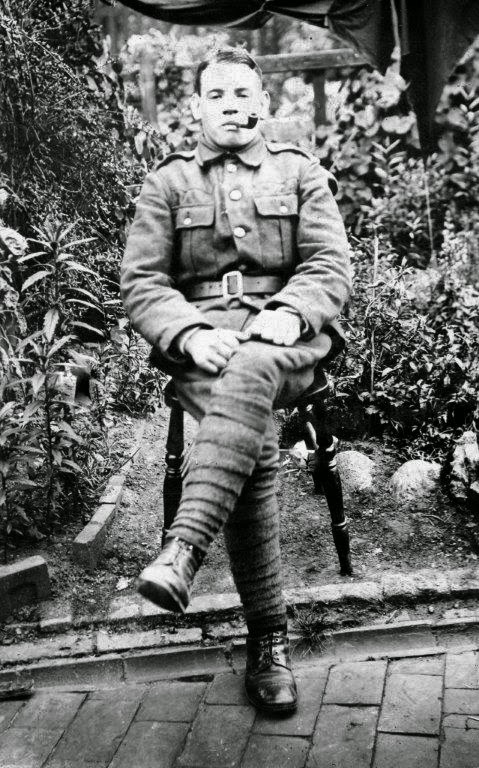
There is something about that silence which, almost 100 years on, speaks to me about Jonah. It’s as if one can hear the thoughts of his parents and siblings, remembering their son and brother in years passed; not the man dressed in his uniform, sitting on a chair as he poses in a garden for a photograph, but the boy who played in the garden of Tunnel Bank Cottage, Hafodyrynys.

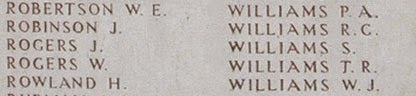
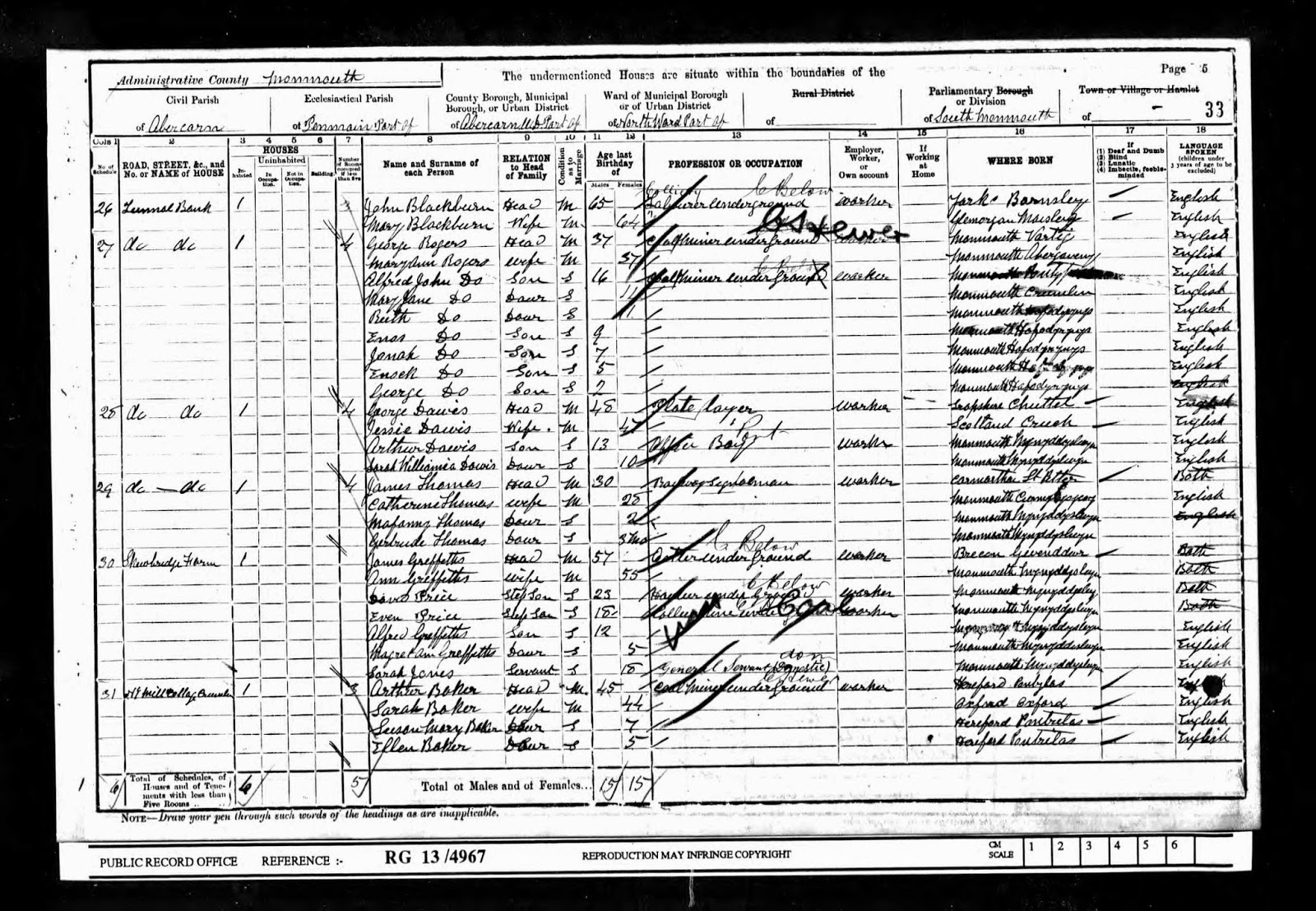
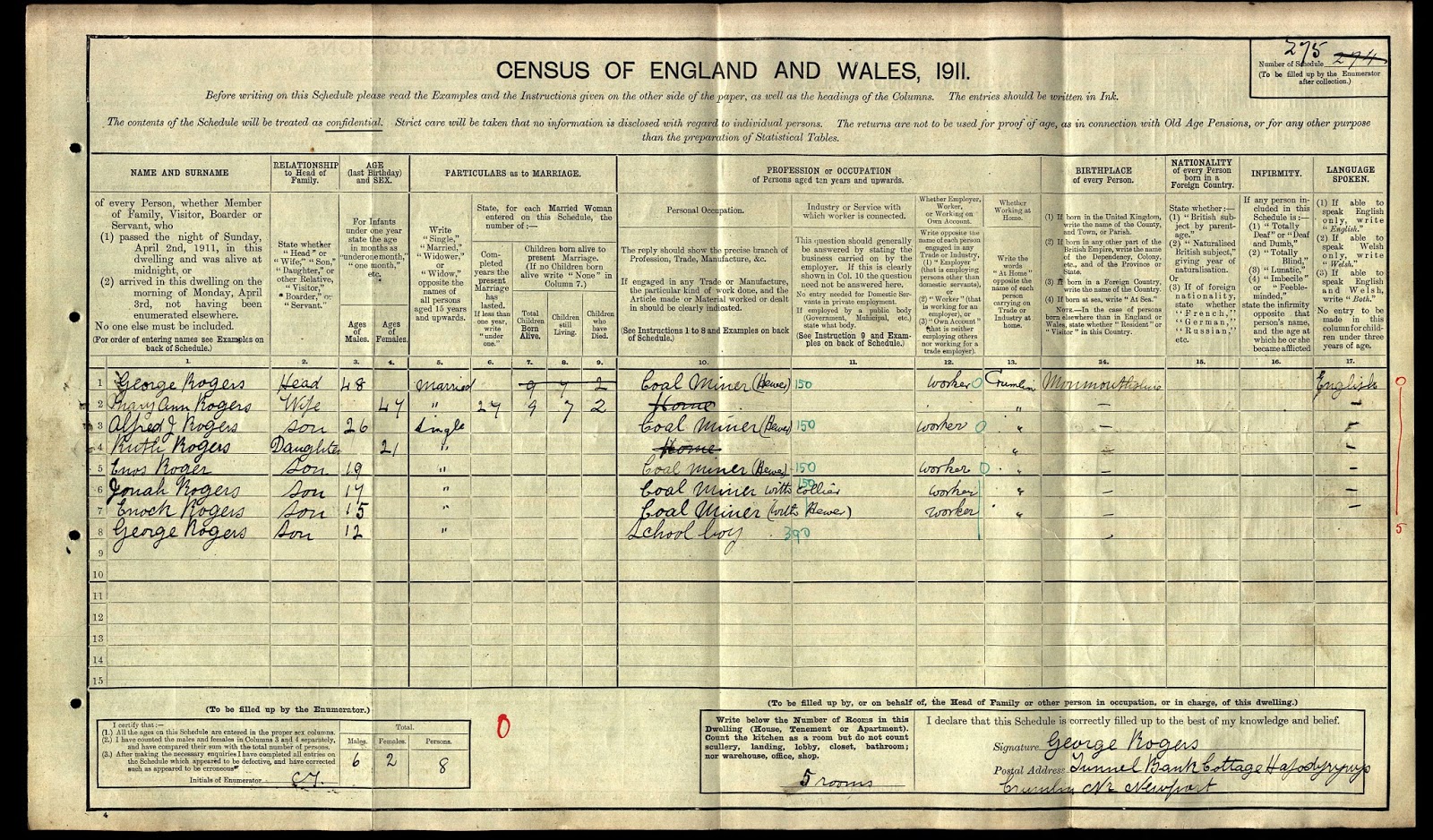
So whilst we remember the names on lists, like Jonah’s on the Menin Gate above, I want to think of two lists that are altogether different, not least because they contain the names of children – of Jonah aged 7 in 1901 and 17 in 1911.

The census from 1901.

The census from 1911.

Filed Under: World War I Tagged With: Family Jones, Jonah Rogers, Silence, World War I, WW1 Centenary, WWI

Childhood Landscapes

October 15, 2014 by Nicholas Hedges

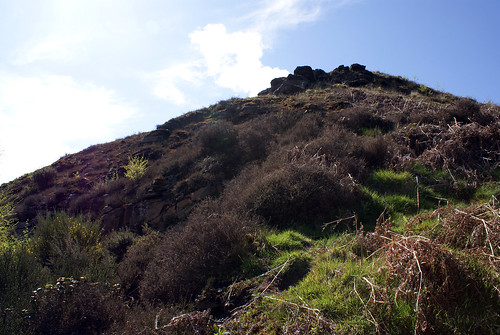
‘I can see him now,’ my Nana told me, talking about her dad, ‘because he went up our garden over the road and the mountain started from there up… and he’d go so far up and he’d turn back and wave to us, and if we went out to play, our Mam would say, “you can go up the mountain to play…” but every now and then our Mam would come out in the garden and we had to wave to her to know that we were alright you know… always remember going up the mountain…’

Hafodyrynys and Surrounds
Nana’s mountain

I interviewed my Nana in 2007, the year before she died. What she was describing was a scene from her childhood landscape in the years after the First World War. During the Second World War, a young boy called Otto Dov Kulka was a prisoner in Auschwitz-Birkenau. He recalls his childhood landscape thus:

“The colour is blue: clear blue skies of summer. Silver-coloured toy aeroplanes carrying greetings from distant worlds pass slowly across the azure skies while around them explode what look like white bubbles. The aeroplanes pass by and the skies remain blue and lovely, and far off, far off on that clear summer day, distant blue hills as though not of this world make their presence felt.”

Auschwitz-Birkenau
Auschwitz-Birkenau

In previous blogs I have described my childhood landscapes, both real and imagined; most recently in the context of childhood landscapes pre World War I, this time of two girls who lived in what is now Bury Knowle Park in Headington, Oxford.

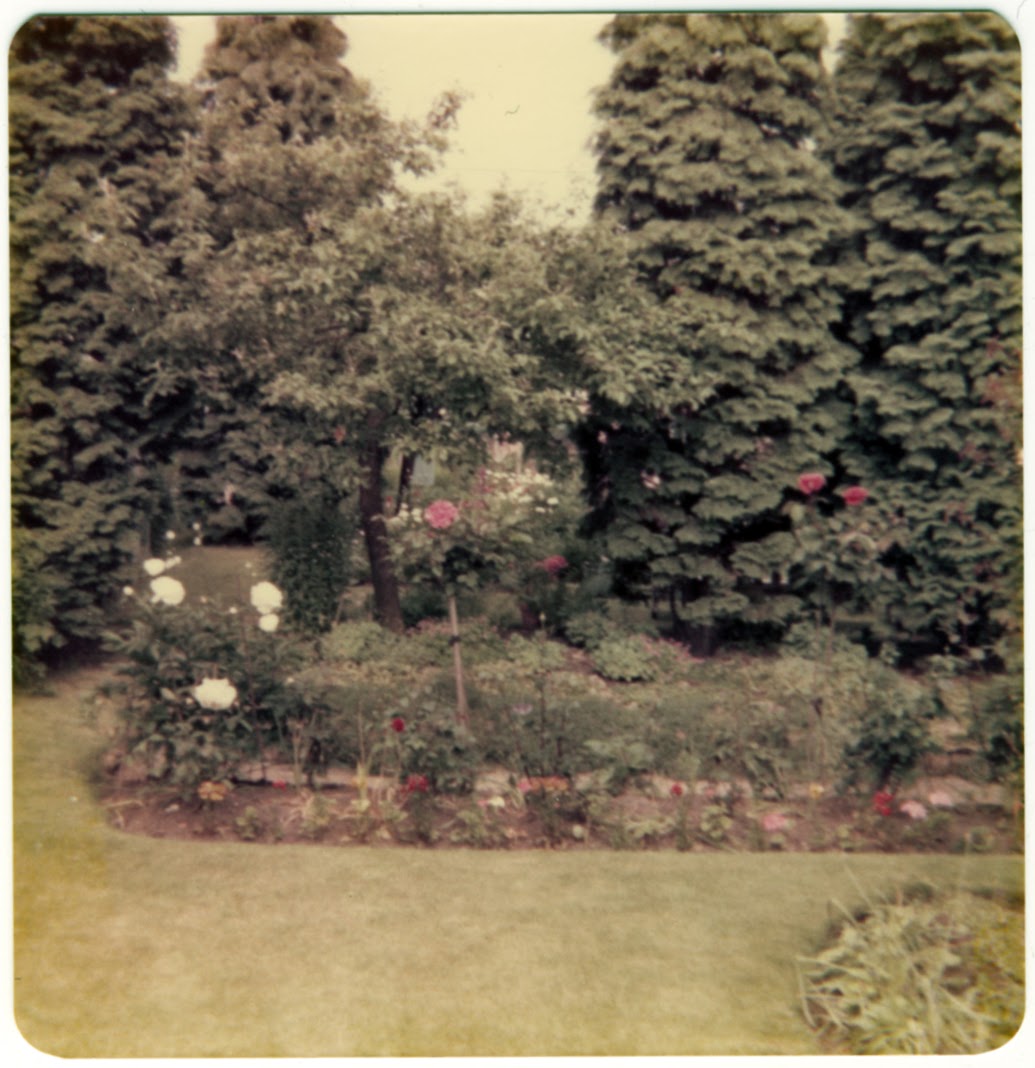
My childhood landscapes are bound up with journeys to and from my grandparents’ houses and in particular, my Nan’s garden (pictured below) also in Headington.

I have walked in all these places; in my grandparents’ garden; in Bury Knowle Park, on the ‘mountain’ in Wales and in Auschwitz. I spent many happy years in the garden of my childhood home (which has all but disappeared under a vast extension to the house).

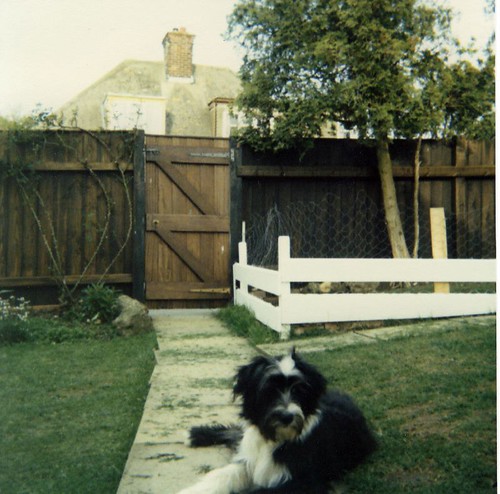
Sukey

Filed Under: Holocaust Tagged With: Bury Knowle Park, Childhood, Gardens, Holocaust, Imagined Landscapes, Landscape, Memory, Nana

Authenticity of the Alienation

October 15, 2014 by Nicholas Hedges

Returning to Otto Dov Kulka’s book ‘Landscape of the Metropolis of Death,’ I want to look at another passage which I’ve copied out below:

“… many works of cinema, theatre and art, offer a way to understand and experience Auschwitz, its universe, the ghettos, that final stage, that reality. And everyone reads these books — they sell thousands of copies — so they obviously speak in a uniform language to all those myriad readers. Yet I cannot find in them what they seek to convey! It’s a completely different world! The only response I feel able to express is alienation; all that is authentic is the authenticity of the alienation.”

The ‘authenticity of the alienation’- an interesting phrase. As an artist working with subjects like the Holocaust, one has to place that sense of alienation – one’s removal from the fact – at the forefront of any work. It is the lens through which the work is seen, becoming, in my case, the work itself; i.e. how, given that sense of alienation, we can empathise with those who suffered. Kulka continues:

“Therefore I ask: in what am I different? Something is wrong with me! And then, as so often, as almost always during periods of distress, I escape to Kafka, either his diaries or his other works. At that time, I again opened at the ending – I always open randomly – I opened at the ending of the wonderful story of the man standing before the Gate of the Law. This man who stands before the Gate of the Law actually asks the same question -and it is one of the last questions he asks, driven by his insatiable curiosity, as the gatekeeper jests. He asks: ‘Tell me, after all this is the Gate of the Law, and the Gate of the Law is open to everyone.’ To which the gatekeeper says: ‘Yes, that is so.’ Then the man says (if I remember the text correctly): ‘Yet in all the years I have been sitting here no one has entered the gate.’ And the gate-keeper nods his head and says: ‘Indeed.’ The man asks him to explain this puzzling fact, and the gatekeeper does him this one last mercy and says: ‘This gate is open only for you, it exists only for you, and now I am going to close it.’ 

Accordingly, everything I have recorded here – all these landscapes, this whole private mythology, this Metropolis, Auschwitz  – this Auschwitz that was recorded here, which speaks here from my words, is the only entrance and exit — an exit, perhaps, or a closing — the only one that exists for me alone. I take this to mean that I cannot enter by any other way, by any other gate to that place. Will others be able to enter through the gate that I opened here, that remains open for me? It is possible that they will, because this gate that Kafka opened, which was intended for only one person, for K., Josef K., is actually open to almost everyone. But for him there was only one gate into his private mythology.”

On reading this, I was reminded of a text by Holocaust survivor, Elie Wiesel which I used in relation to a piece of work I made in 2009. 


“I would bring the viewer closer to the gate but not inside, because he can’t go inside, but that’s close enough.”

There is no way into Kulka’s Auschwitz – his own private mythology. But there is a way into Auschwitz.

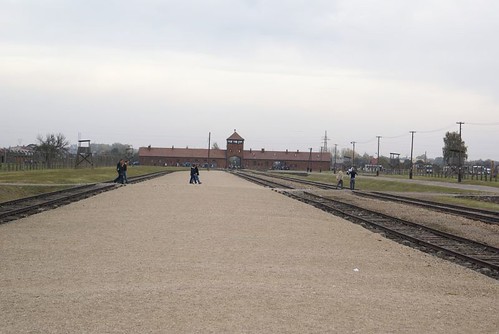
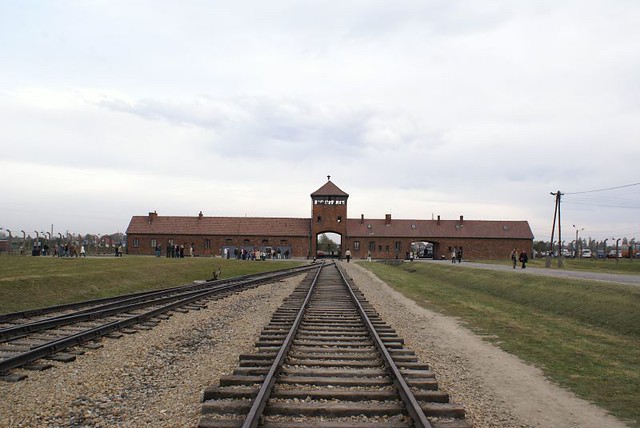
To try and empathise with those who suffered in, for example, Auschwitz, we should perhaps consider the camp as being like the Gate of the Law in the parable above; something that was, or rather is, open to everyone. Furthermore, we should think of the famous gates (the Arbeit Macht Frei gate or the gate tower at Birkenau) again like the Gate of the Law, as being gates made for specific individuals, through which only they can enter; serving to illustrate that this was a human tragedy – an individual tragedy repeated (in the case of Auschwitz) well over a million times.

Auschwitz-Birkenau

I remember clearly how strange it felt to be standing on the infamous ramp at Birkenau having walked in beneath the gate tower; how was it I could stand freely in that place where so many had perished? I think of it like this; the gate through which I walked was open only for me, it existed only for me at that particular time. To borrow from Kulka: I could not enter by any other way, by any other gate to that place. For over a million people, their only way in – their gate – led to a death camp. For me, the gate led to a memorial. 

Filed Under: Holocaust Tagged With: Elie Wiesel, Holocaust, Otto Dov Kulka, The Gate

Kulka’s Summer Skies

October 5, 2014 by Nicholas Hedges

There’s a chapter in Otto Dov Kulka’s memoir ‘Landscape of the Metropolis of Death’ which really struck me. I can’t reproduce it in full but the following excerpt gives a sense of what it says. The segment is sub-titled ‘The Blue Skies of Summer.’

“Another leap in time, to a different landscape and different colours. The colour is blue: clear blue skies of summer. Silver-coloured toy aeroplanes carrying greetings from distant worlds pass slowly across the azure skies while around them explode what look like white bubbles. The aeroplanes pass by and the skies remain blue and lovely, and far off, far off on that clear summer day, distant blue hills as though not of this world make their presence felt. That was the Auschwitz of that eleven-year-old boy. And when this boy, the one who is now recording this, asks himself — and he asks himself many times — what the most beautiful experience in your childhood landscapes was, where you escape to in pursuit of the beauty and the innocence of your childhood landscapes, the answer is: to those blue skies and silver aeroplanes, those toys, and the quiet and tranquillity that seemed to exist all around; because I took in nothing but that beauty and those colours and so they have remained imprinted in my memory. 

This contrast is an integral element of the black columns that are swallowed up in the crematoria, the barbed-wire fences that are stretched tight all around by the concrete pillars. But in that experience all this seemingly did not exist, only in the background and not consciously. 

Consciousness has internalised and submerged the sensation of the bold summer colours of that immense space; of the cerulean skies, the aeroplanes — and of the boy gazing at them and forgetting everything around him. There is almost no return to that Metropolis, with its sombre colours, with the sense of the immutable law that encloses all its beings within confines of allotted time and of death; that is, there is almost no sense of a return to that world without a sense of return to those wonderful colours, to that tranquil, magical and beckoning experience of those blue skies of the summer of 1944 in Auschwitz-Birkenau.”

It is not often one reads of an experience in Birkenau as being ‘magical.’ Further on, in a chapter called ‘Rivers which cannot be crossed and The Gate of “Law”‘ we read:

“These images of skies of blue and ‘columns of people in black being swallowed into the confines of the crematoria and disappearing clouds of smoke, the corridors of lights leading to the Metropolis of Death, the terms ‘Metropolis of Death’ and ‘Homeland of Death’, all of which are so close to me; landscapes to which I escape as one escaping into the landscapes of childhood, feeling in them a sense of freedom, protected by that immutable law of the all-pervasive dominion of death, by the beauty of summer landscapes  – all these things are part of a private mythology which I am conscious of, a mythology that I forged, that I created, with which I amuse myself and in which – I will not even say I am tormented, I am not tormented — I find an escape when other things haunt me, and even when they don’t. This Homeland exists and is available to me always. But it is a myth, it has its own mythological language…”

Ever since visiting Auschwitz I have tried through my work to see its grim past as it was; to re-witness it, as far as it is possible, as something happening now, rather than as a piece of history dead in the pages of a book. One way of doing that I found was to consider the presentness of now, they everydayness of the present moment and to project it back onto past events. As I wrote some time ago:

“For George Lukács, ‘the “world-historical individual” must never be the protagonist of the historical novel, but only viewed from afar, by the average or mediocre witness.’ In other words, those historic events written about in books, are best discovered through the eyes of those who are missing from the text, people who at best are either given the epithet ‘mob’ or ‘masses’ or are bundled into numbers and tables of statistics. It’s through the eyes of these people that I want to see the past.”

Kulka’s words reminded me of this quote. The horrors of Auschwitz are pushed to the background but as such they are all the more graspable to the present-day imagination. To re-witness the Holocaust, we have to become like that 11 year old boy, standing in the midst of unimaginable horror, but absorbed nonetheless by the vastness a beautiful blue summer’s day sky.

Filed Under: Holocaust Tagged With: Holocaust

Silence

September 24, 2014 by Nicholas Hedges

In a previous blog, looking at a photograph of Jonah Rogers, I mentioned Roland Barthes’ concept of Punctum; “…that accident which pricks me (but also bruises me, is poignant to me)…” In that photograph (reproduced below) I found it (that poignancy) in the left foot and the missing brick of the flower bed.

In my last blog, in the newspaper clipping reporting Jonah’s death, there is also an especially poignant moment – the clipping’s punctum as it were. And it’s this:

“On Sunday last, at the close of the evening service, the Society Meeting was held, and references to the death of Private Rogers were made by several members of the Church. Private Rogers’s mother is one of the oldest members of the Church. The meeting passed a vote of condolence with the relatives, all present standing in silence.”

It’s there in the last line: The meeting passed a vote of condolence with the relatives, all present standing in silence. 

The past is silent (as the tomb which it becomes) and that silence of the relatives, beating inside the church, is one hewn from that immense quietude; a grave cut into another grave. And yet it’s all the louder for it. Imagining the scene, one can hear the silence, punctuated by coughs, scrapes and fidgeting bodies (it’s amazing to think that my grandmother, then three years old, might have been there). There is something too in the silence which serves to throw into relief the image of my ancestors. The writing sets them apart from the rest of those gathered inside. They are silent and just as one imagines those everyday sounds from which silence is made, one can imagine those relatives, standing and recalling everyday things about Jonah… And it’s there that we can get a better picture of Jonah than we can from any photograph.

It’s almost as if the words in that penultimate paragraph, describe something entirely different. One can almost imagine the vote of condolence, the kind words spoken, coming only as murmurs to the relatives; all made shapeless by their mournful introspection.

Filed Under: World War I Tagged With: Family History, Family Jones, Jonah Rogers, Silence, World War I, WWI

Jonah Rogers – Newspaper Cutting

September 23, 2014 by Nicholas Hedges

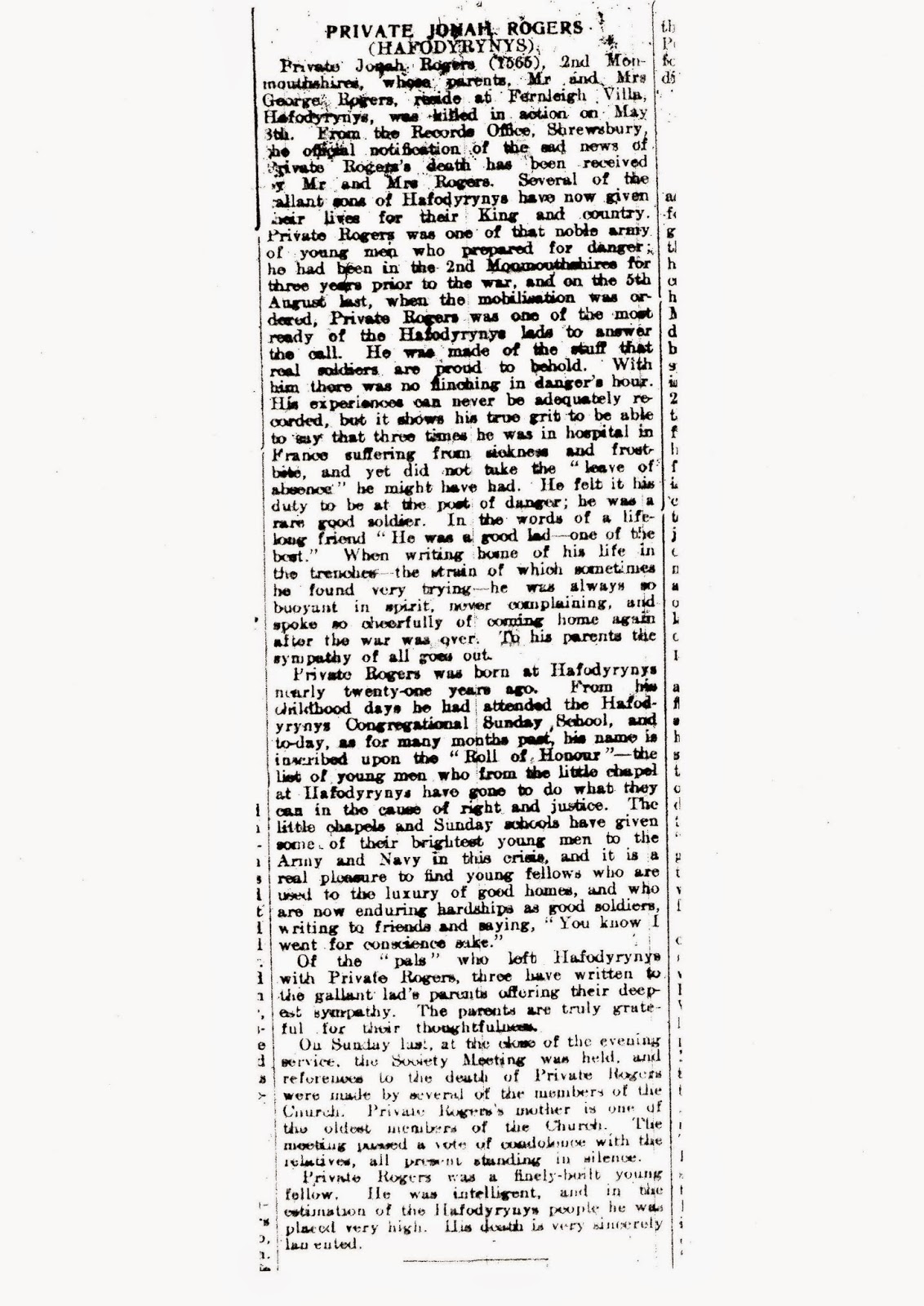
I am grateful to Keith Morgan for the following newspaper cutting recording the death of my great-great-uncle, Private Jonah Rogers in 1915. I have transcribed the story below.

PRIVATE JONAH ROGERS 
(HAFODYRYNYS)

Private Jonah Rogers (1565), 2nd Monmouthshires, whose parents, Mr. and Mrs. George Rogers reside at Fernleigh Vila, Hafodyrynys, was killed in action on May 8th. From the Records Office, Shrewsbury, the official notification of the sad news of Private Rogers’s death has been received by Mr. and Mrs. Rogers. Several of the gallant sons of Hafodyrynys have now given their lives for their King and country. Private Rogers was one of that noble army of young men who prepared for danger; he had been in the 2nd Monmouthshires for three years prior to the war and on the 5th August last, when the mobilisation was ordered, Private Rogers was one of the most ready of the Hafodyrynys lads to answer the call. He was made of the stuff that real soldiers are proud to behold. With him there was no flinching in danger’s hour. His experiences can never be adequately recorded, but it shows his true grit to be able to say that three times he was in hospital in France suffering from sickness and frostbite, and yet did not take the “leave of absence” he might have had. He felt it his duty to be at the post of danger; he was a rare good solider. In the words of a lifelong friend “He was a good lad – one of the best.” When writing home of his life in the trenches – the strain of which sometimes he found very trying – he was always so buoyant in spirit, never complaining, and spoke so cheerfully of coming home again after the war was over. To his parents the sympathy of all goes out.

Private Rogers was born at Hafodyrynys nearly twenty-one years ago. From his childhood days he had attended the Hafodyrynys Congregational Sunday school, and to-day, as for many months past, his name is inscribed upon the “Roll of Honour” – the list of young men who from the little chapel at Hafodyrynys have gone to do what they can in the cause of right and justice. The little chapels and Sunday schools have given some of their brightest young men to the Army and Navy in this crisis, and it is a real pleasure to find young fellows who are used to the luxury of good homes, and who are now enduring hardships as good soldiers, writing to friends and saying, “You know I went for conscience sake.”

Of the “pals” who left Hafodyrynys with Private Rogers, three have written to the gallant lad’s parents offering their deepest sympathy. The parents are truly grateful for their thoughtfulness.

On Sunday last, at the close of the evening service, the Society Meeting was held, and references to the death of Private Rogers were made by several members of the Church. Private Rogers’s mother is one of the oldest members of the Church. The meeting passed a vote of condolence with the relatives, all present standing in silence.

Private Rogers was a finely-built young fellow. He was intelligent, and in the estimation of the Hafodyrynys people he was placed very high. His death is very sincerely lamented.

Filed Under: World War I Tagged With: Jonah Rogers, Silence, World War I, WW1 Centenary, WWI

Distance in the Past

September 16, 2014 by Nicholas Hedges

From How to Live – A Life of Montaigne by Sarah Bakewell:

“Reading Plutarch, he lost awareness of the gap in time that divided them… It does not matter, he wrote, whether a person one loves has been dead for fifteen hundred years or, like his own father, eighteen years. Both are equally remote; both are equally close.”

Filed Under: Quotes Tagged With: Distance, Montaigne, Past, Quotes

Photography: The Colour of Shadows

August 25, 2014 by Nicholas Hedges

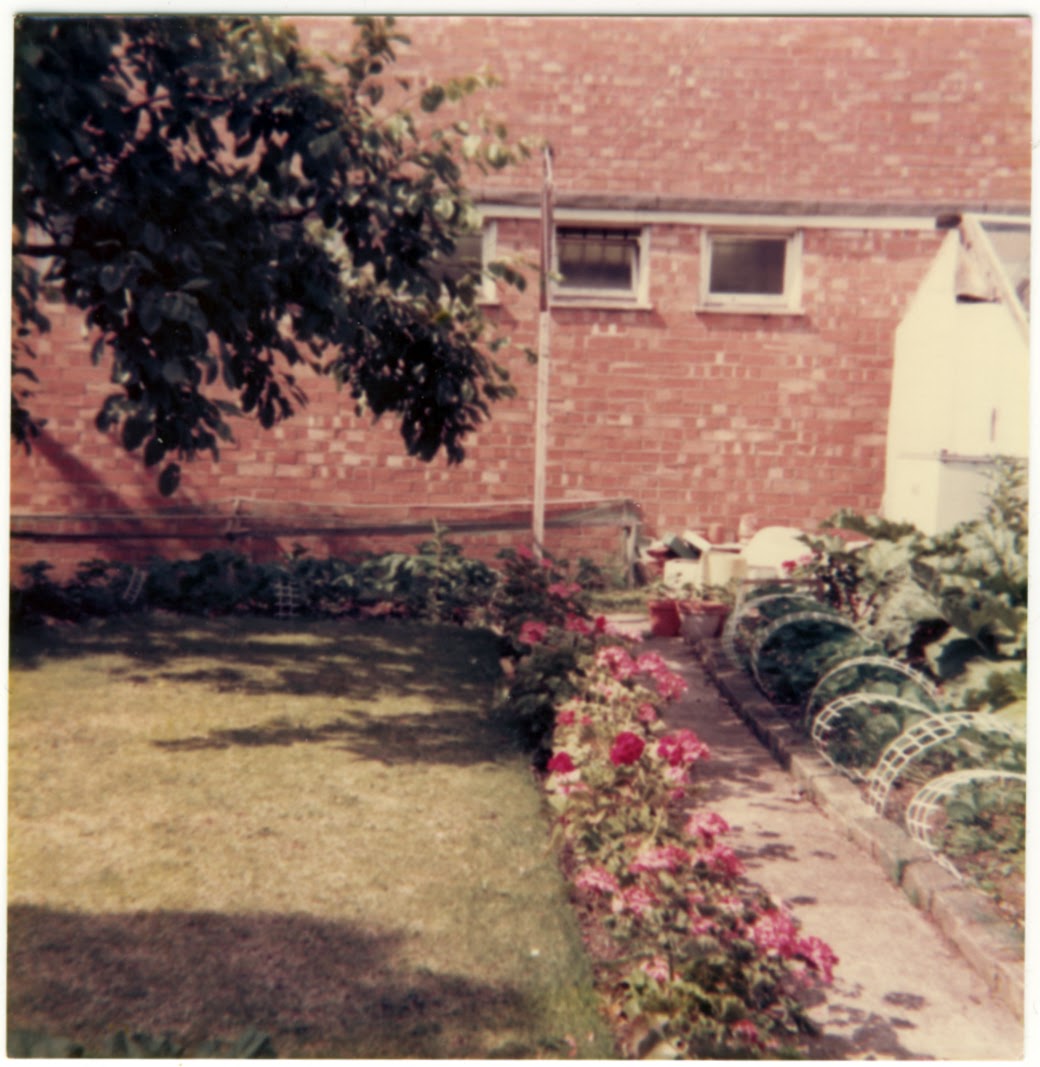
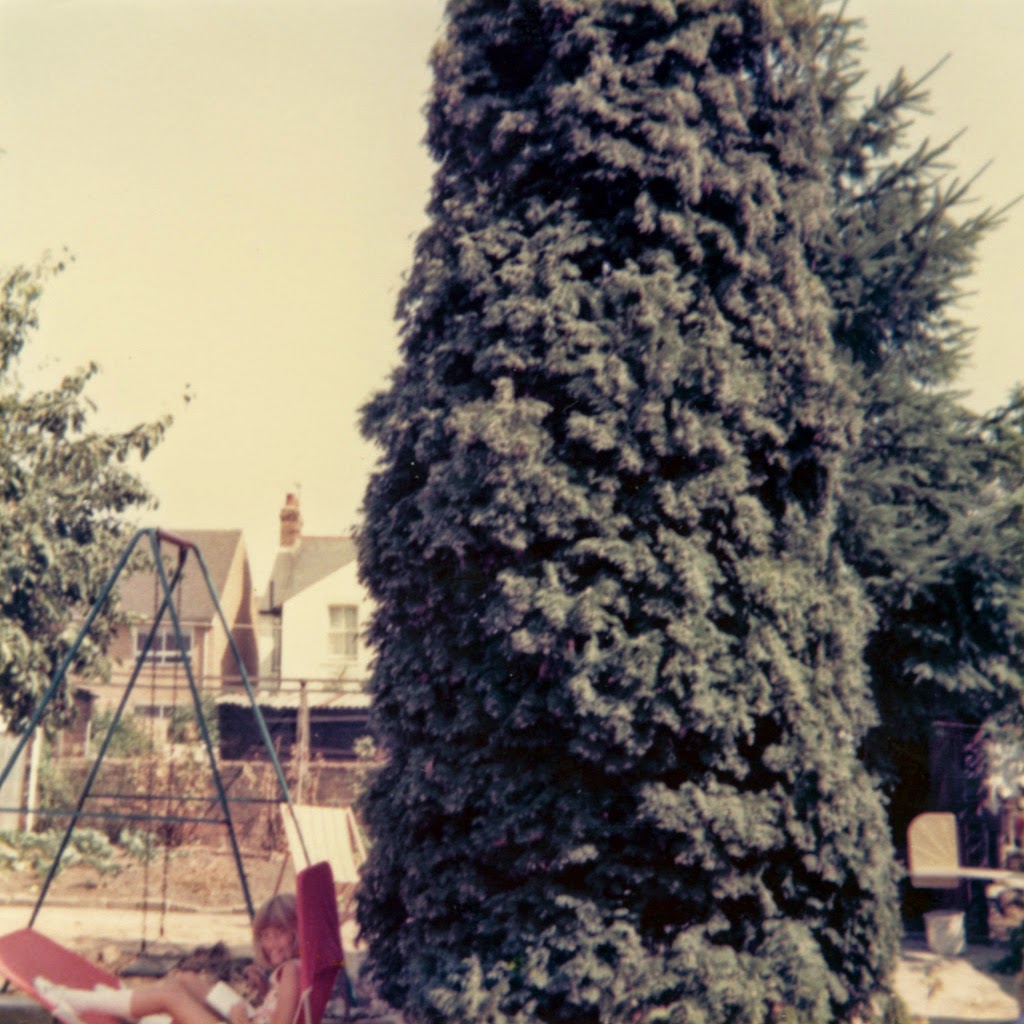
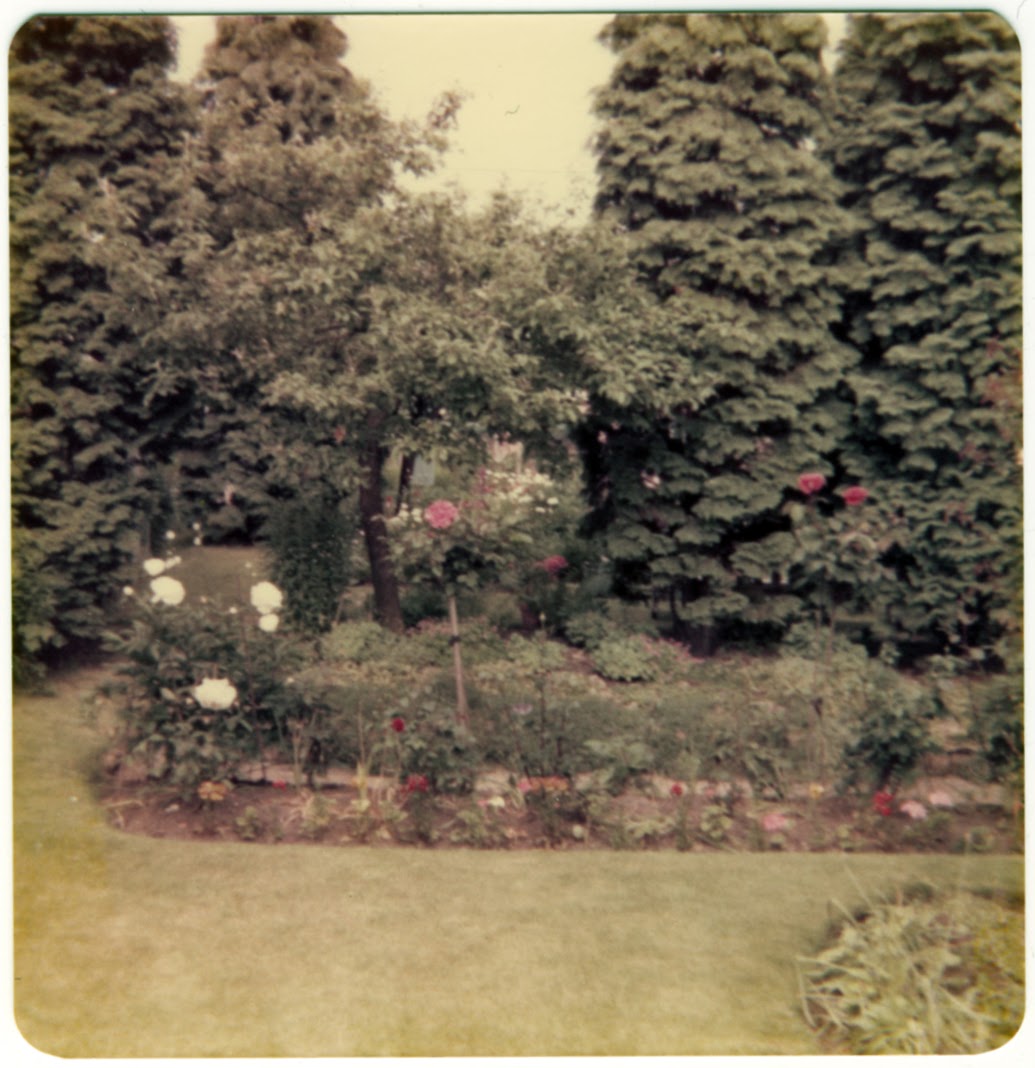
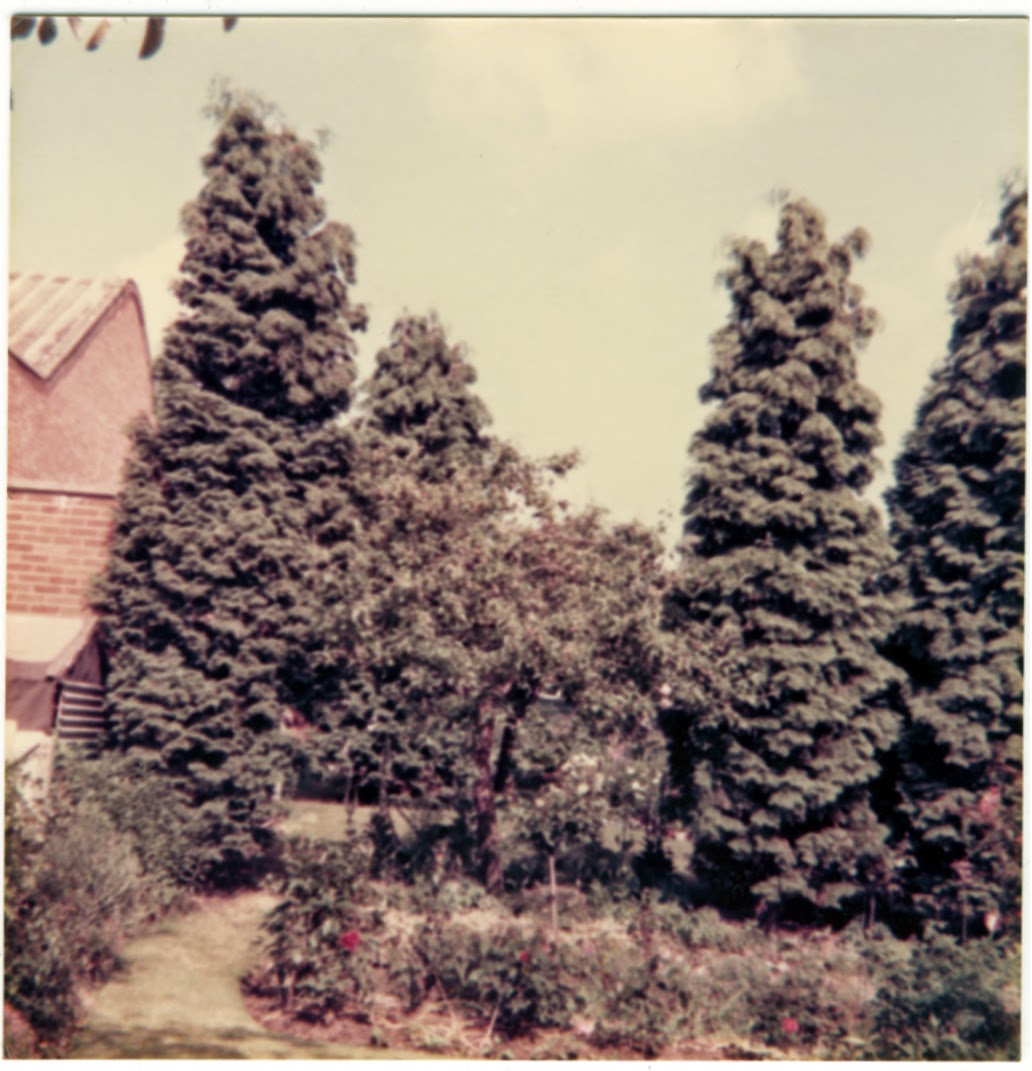
As shown in a previous blog, this is a picture of my grandparents’ garden in Headington, Oxford, taken sometime in the mid 1970s.

This was, growing up, a very special place for me…

…I remember well my grandad’s vegetable patch, the plastic greenhouse and the Victoria plum tree (all shown above);  the brick outhouses with their giant spiders (in which the red tricycle was kept); the large apple tree and the wooden lattice-work gate. I remember too the giant Christmas tree (pictured below behind the fir tree), planted – when the tree was considerably smaller – when my mum was a girl.

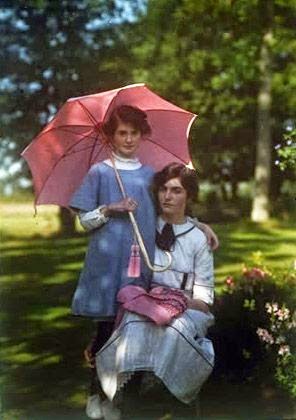
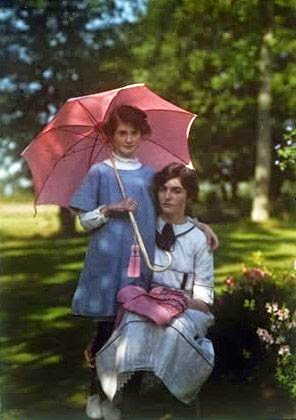
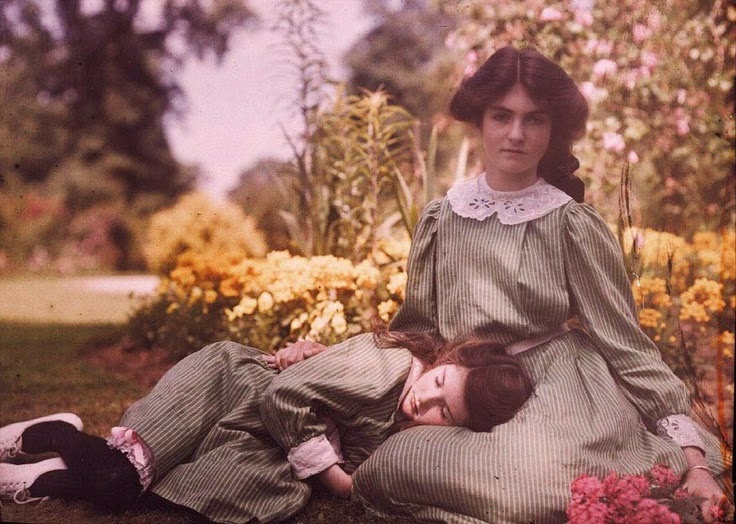
The following two photographs were also taken in Headington, some 60 years earlier at the time of the First World War (or a few years before – the second photograph is possibly 1908). They are by one of the pioneers of autochrome photography, Ethelreda Laing and show her two daughters, Janet and Iris.

What’s interesting about these photographs is that they were taken in what is now Bury Knowle Park at a time when the house was a private residence. What makes them even more interesting is the fact they are in colour. But what is it about a colour photograph that enables me to better connect with the referent? (This is a subject I started to discuss before: see ‘Empathy and the First World War (Part 2)‘.)

The photograph below shows me and my brother in the garden of the house where we grew up, also in Headington.

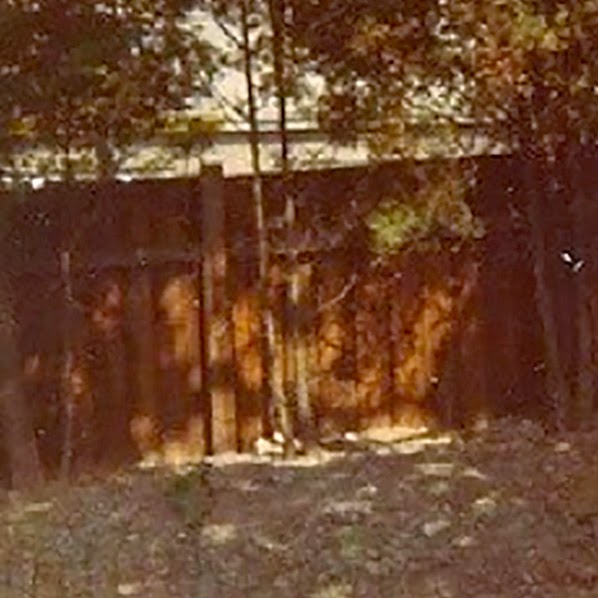
This photograph which, like the photograph from Bury Knowle, shows two children enjoying the garden, was taken c.1974. Looking at it now, I’m drawn to the patterns of light and shadow on the fence behind.
The fences were always well creosoted and when the sun shone they exuded a wonderful smell. I can smell it now, just by looking at this image, but what is more, I can feel the pattern of sun and shadow, the sensation of the cool dry earth below – the smell of the firs. It’s a synaesthetic image in that I can almost taste the pattern.
If the image above was in black and white, I doubt I’d have the same response. When we look at an image in black and white, it seems to me that our memory is stimulated less than if the image is in colour. When looking at photographs taken long before we were born this hardly seems to matter, but when looking at a colour image – such as that of the girls above – taken long ago, something strange seems to happen.
It seems to me, that a colour photograph is more likely to trigger a physical response than one which is black and white.
First of all, I’ll look at a selection of black and white images.
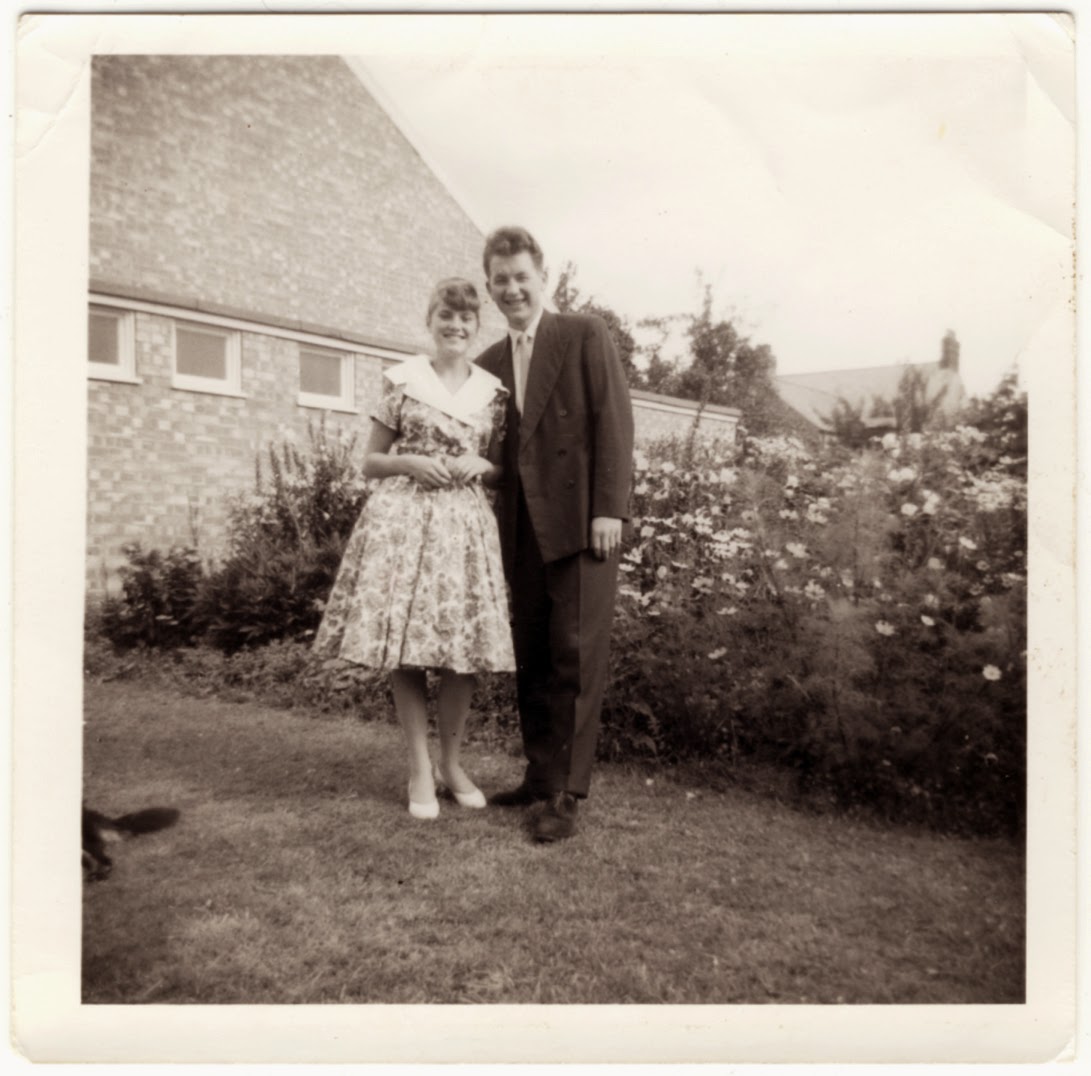
The image below is of my mum and dad. It was taken c.1960 in my grandparents’ garden (as can be gleaned from the windows – seen in the second image above).
This image, of course, elicits a response in that I recognise my parents and the location. But that is all.
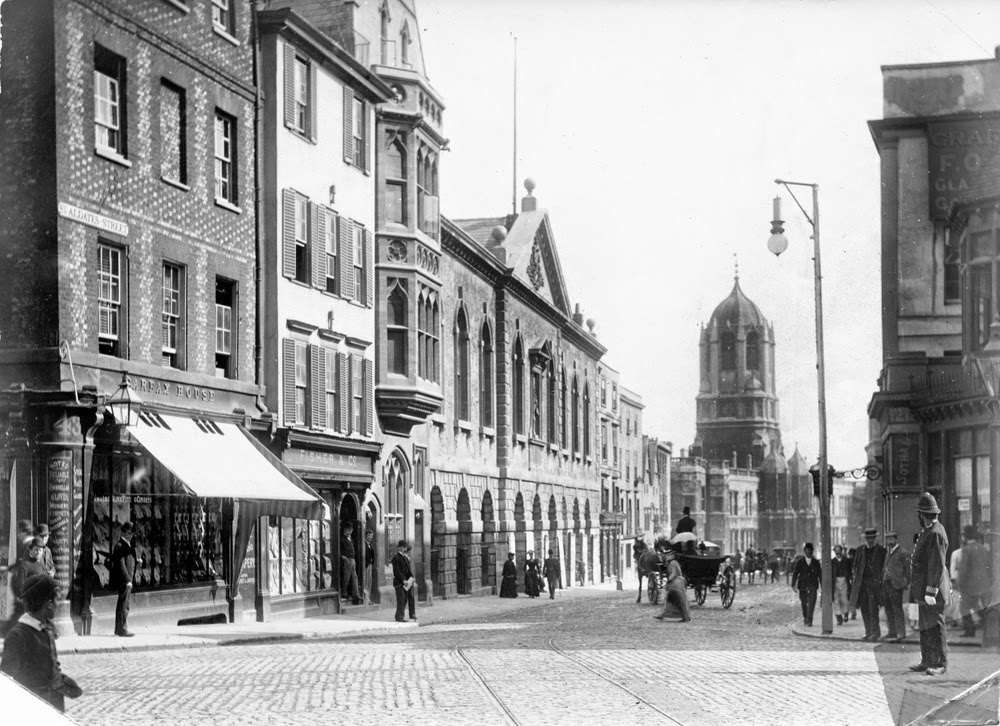
The next image was taken at Carfax, Oxford in 1893 and shows St. Aldates looking south towards Christ Church.
The image also elicits a response in that although most of the buildings shown have all disappeared, Tom Tower – in the distance – is still standing. I recognise the location as one I have experienced countless times before – although of course I could not have experienced what is shown in the photograph. 
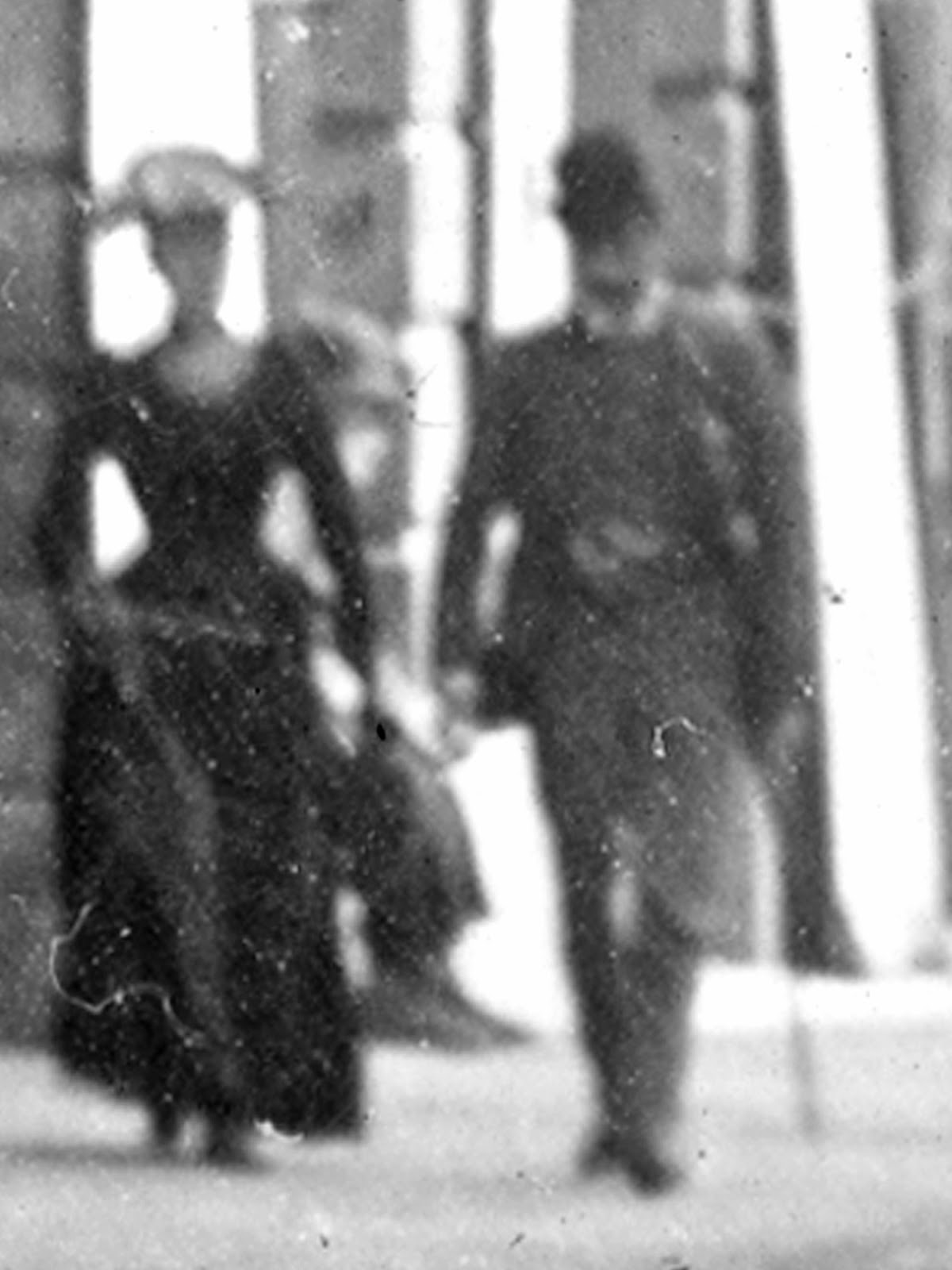
Looking at the photo more closely, one does begin to establish an empathetic response based on more than just recognition.
Again this is something I have talked about before but here, empathy is established through the movement of the man and woman. They have no idea that they are being photographed, an obliviousness which is vital for an empathetic response. It is an image of now, of the everyday. We can easily imagine the man and woman, unfrozen by time and the camera’s shutter, continuing up past the old Town Hall towards Carfax, deep in conversation.
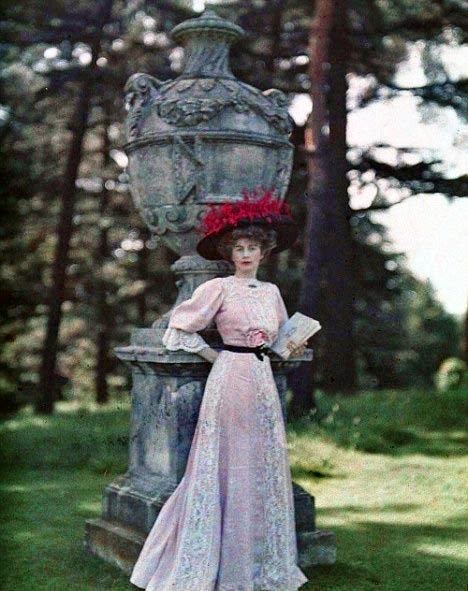
But how do old photographs differ when they are in colour?
This photograph was taken 13 years after the one above and what strikes me about it, is the fact that like the one above, taken in my garden, I can feel it. And what I feel is the temperature difference between the shadows and the lawn where the sun is shining. I can imagine the texture of the grass and the tree, I can hear the wind and feel the air; and yet this photograph was taken 108 years ago. The shadows are living – they are not dead as they can often be in black and white photographs; they have a colour.
The same can be said of the next image, taken during the First World War.
One can feel the light, the heat of the sun; the cool of the shadows. Again the shadows live. The image too is abundant with texture which I know would be absent if the image was in black and white.
It seems to me that I’m responding to these images kinaesthetically; my mind, memories and experience read them, which is why perhaps I find often these old colour photographs – while amazing – so unsettling. My mind reads them, my body feels them and yet when the image was taken, I did not exist. There is a conflict between existence and non-existence; the age old tussle between life and death.
There is no time in the past; all those things shown in the images above are as much a part of the past as each other. All there is to separate them is a rule against which, the increasing improbability of my coming into being is measured.

Filed Under: World War I Tagged With: Autochromes, Colour, Colour Photography, Gardens, Shadows, Synaesthesia, WWI

Fragments – New WWI Work

August 25, 2014 by Nicholas Hedges

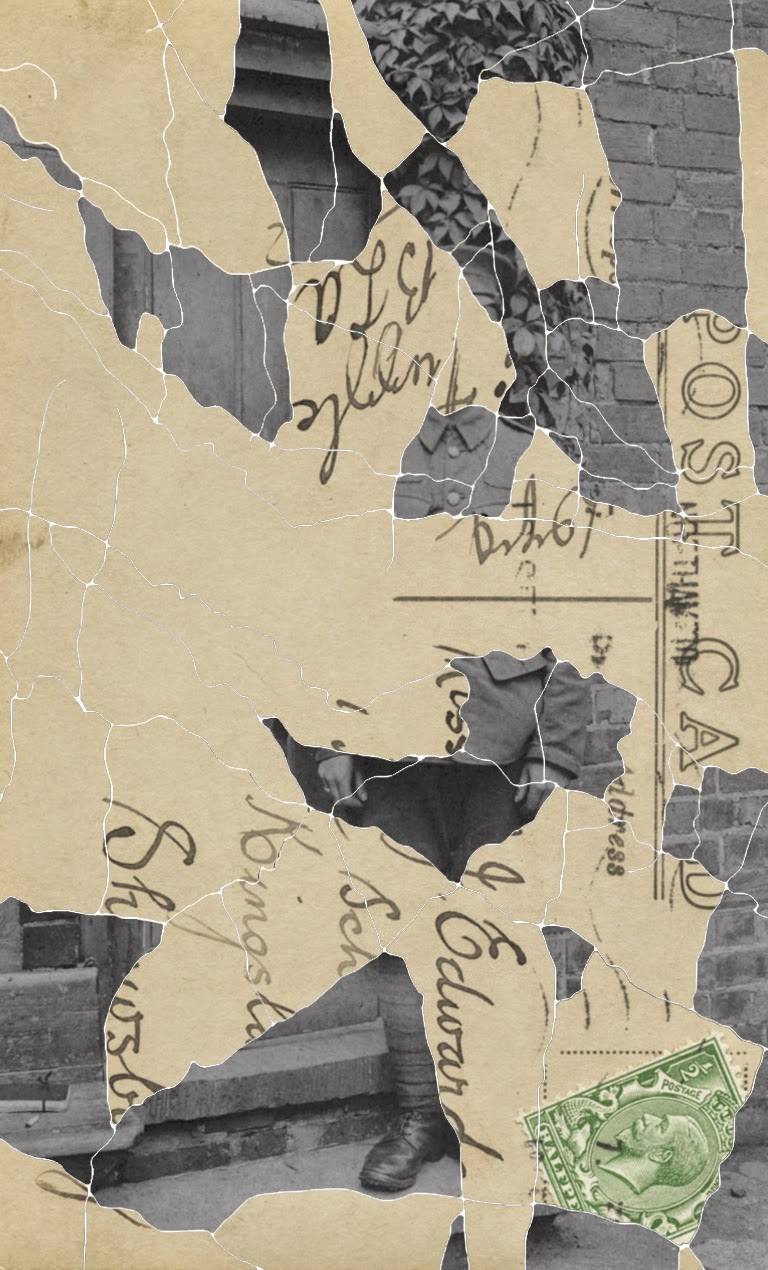
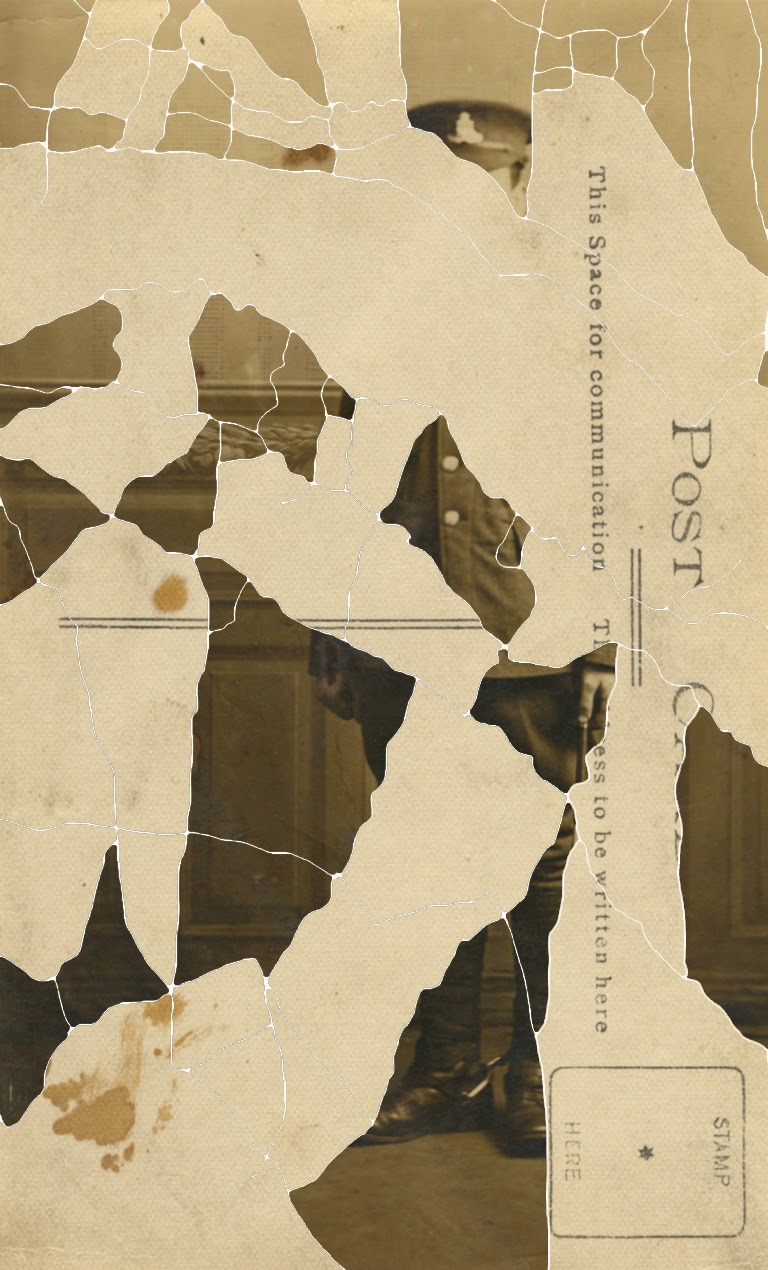
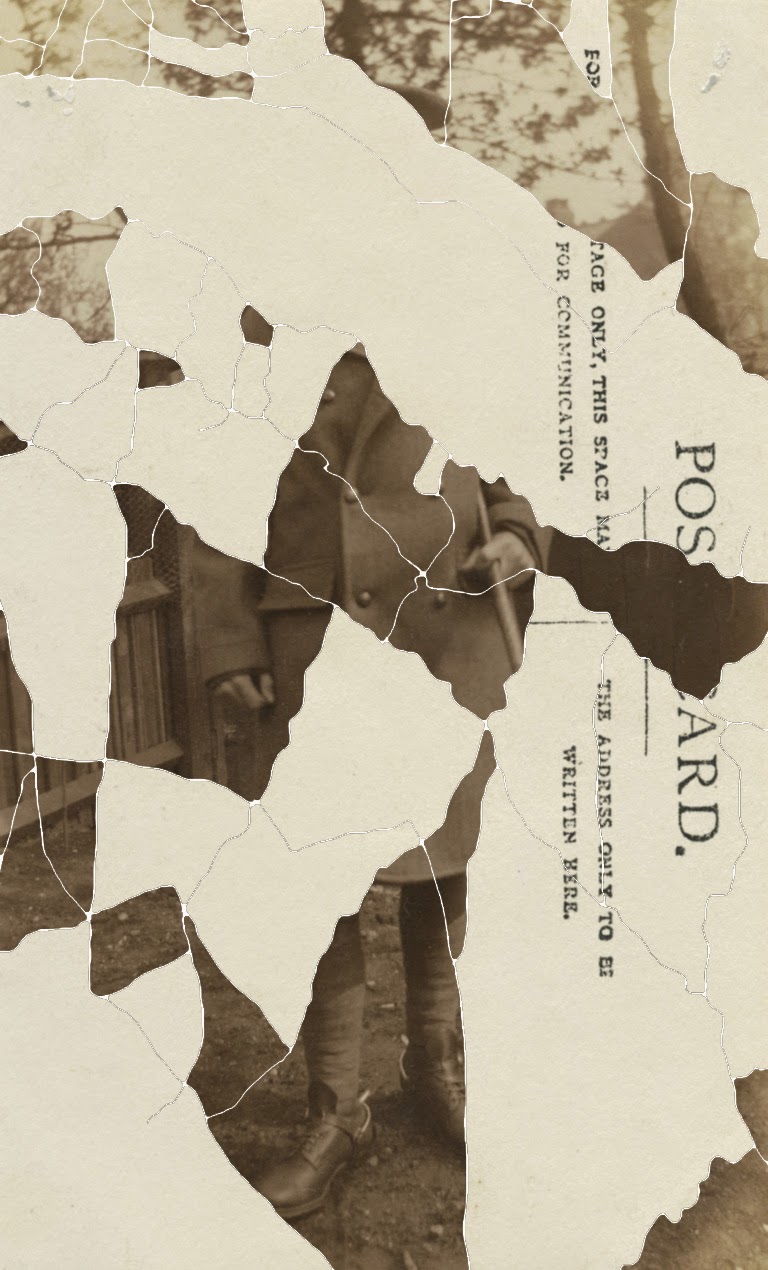
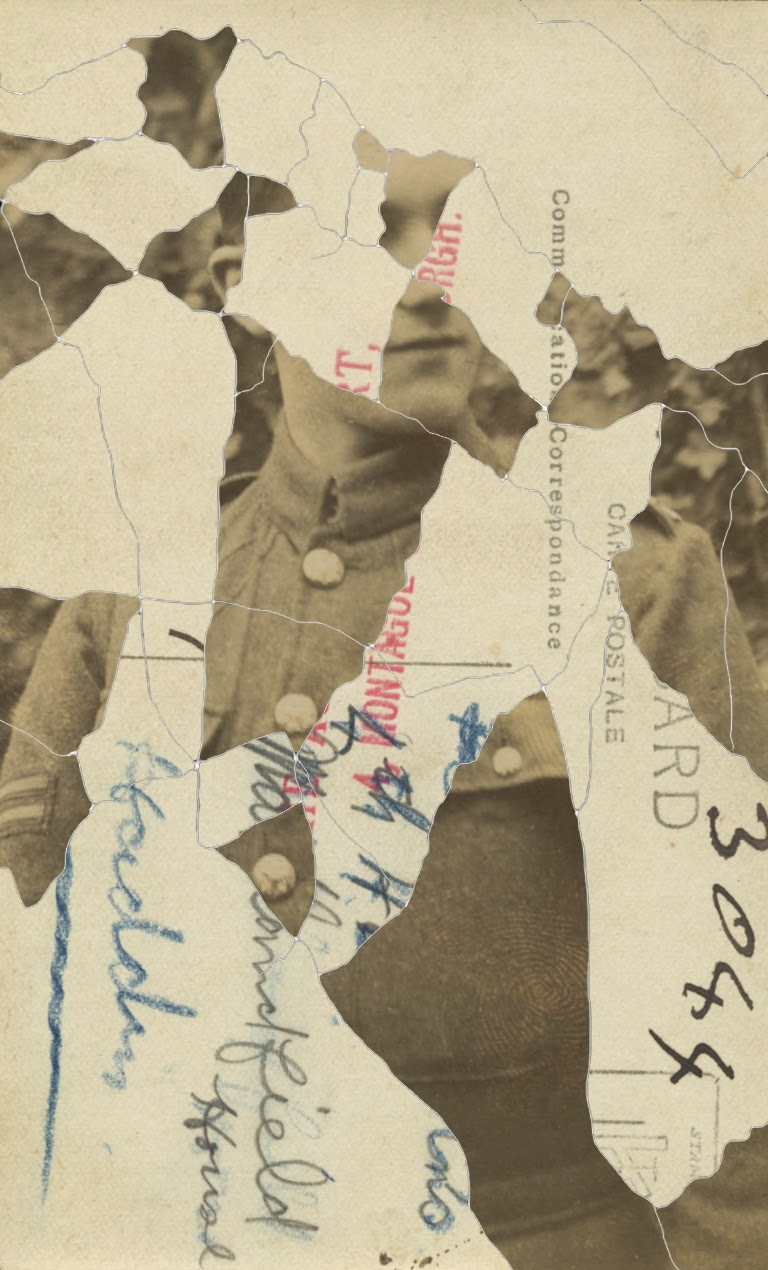
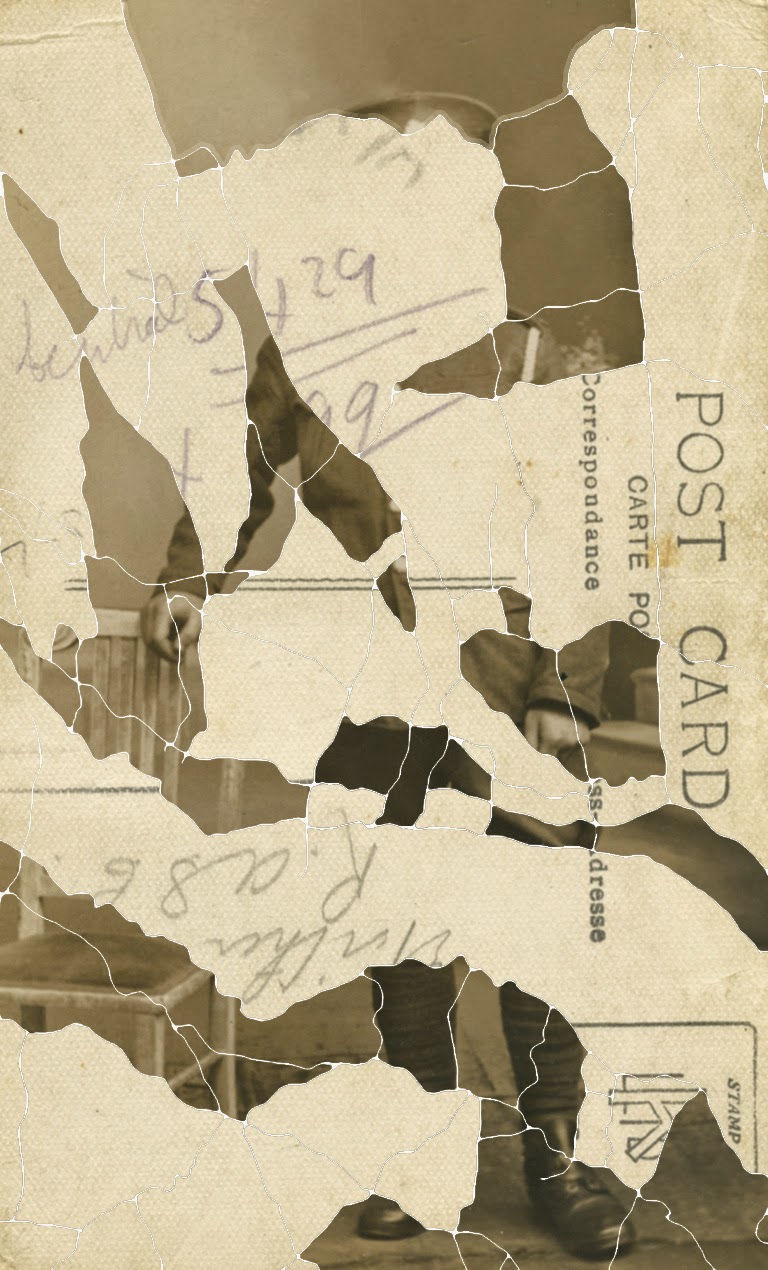
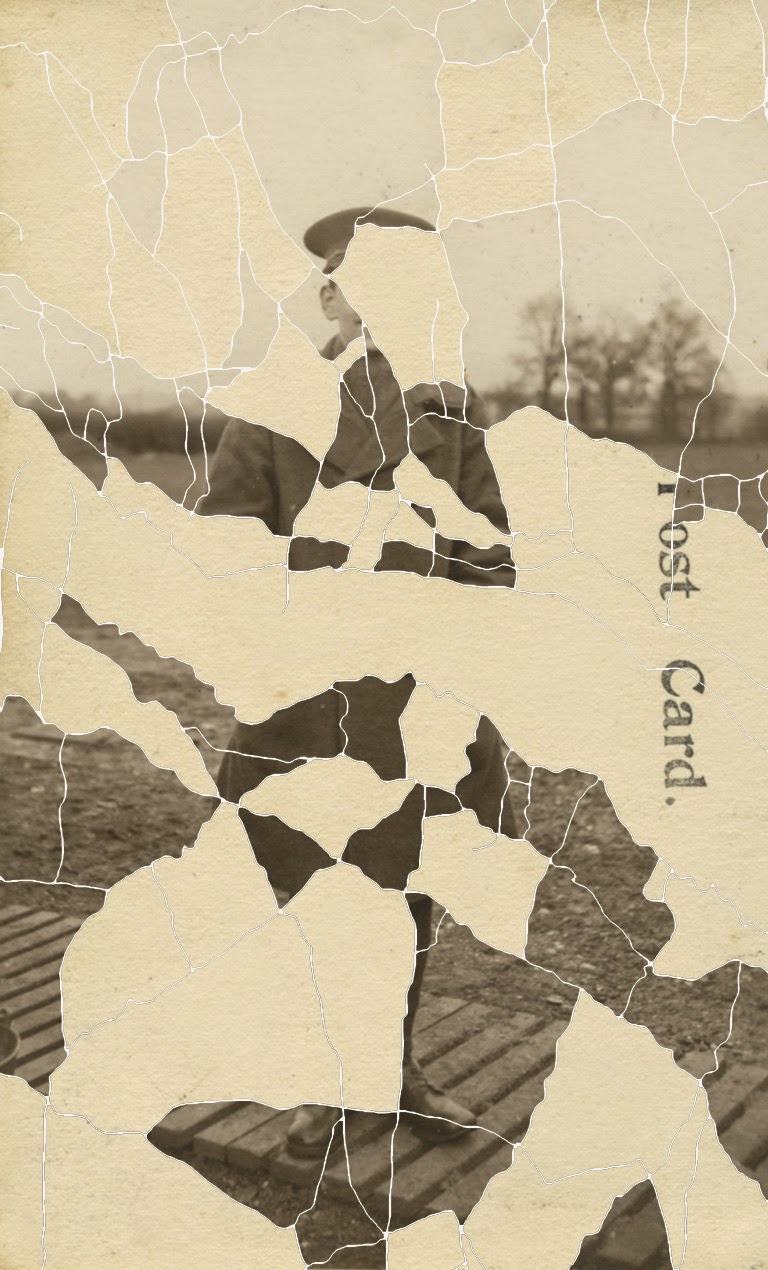
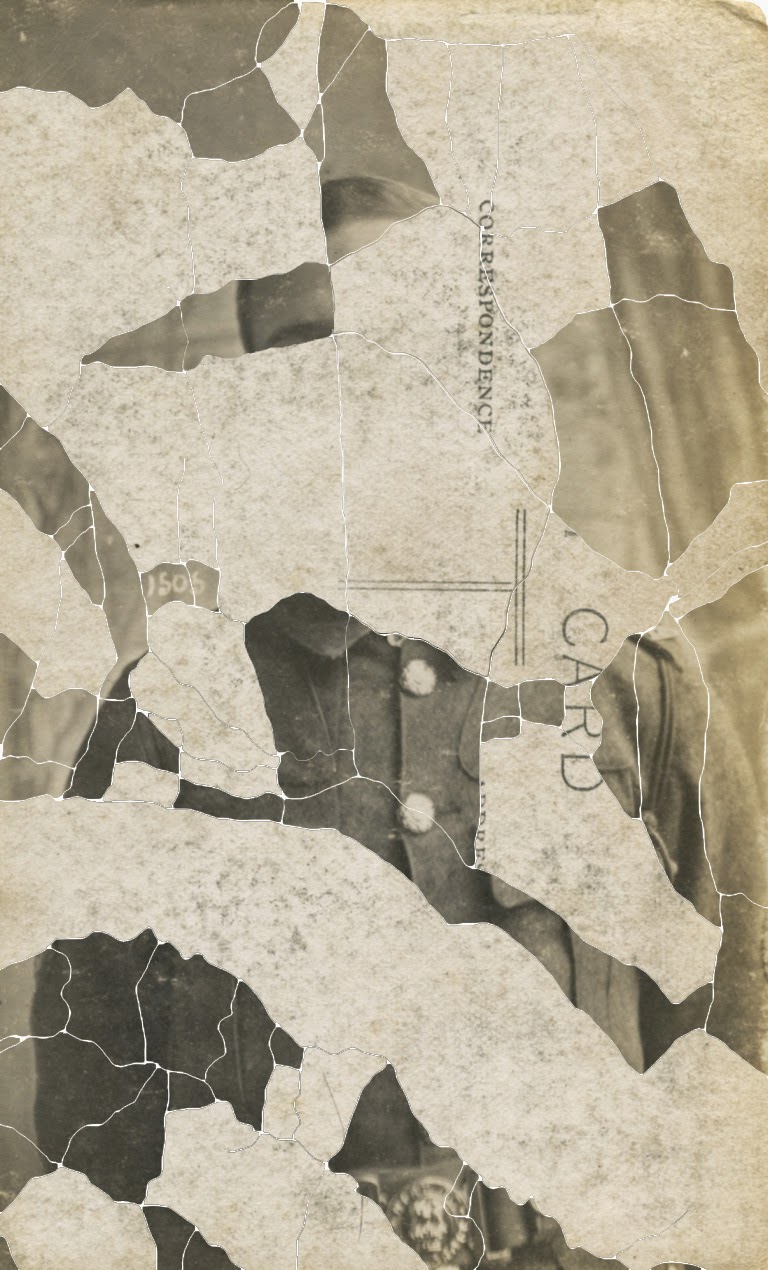
Below are a series of images inspired by my collection of World War I postcards (‘Fragments I-VII).

Filed Under: World War I Tagged With: Art, Postcards, World War I, WW1 Centenary, WWI, WWI Postcards

Proxies

August 21, 2014 by Nicholas Hedges

Following on from my last entry I’ve been wondering whether an empathetic link between ourselves and those who fought and died in the First World War can – based on Paul Fussel’s quote regarding “moments of pastoral” (“if the opposite of war is peace, the opposite of experiencing moments of war is proposing moments of pastoral”) – be found in the idea of the garden.

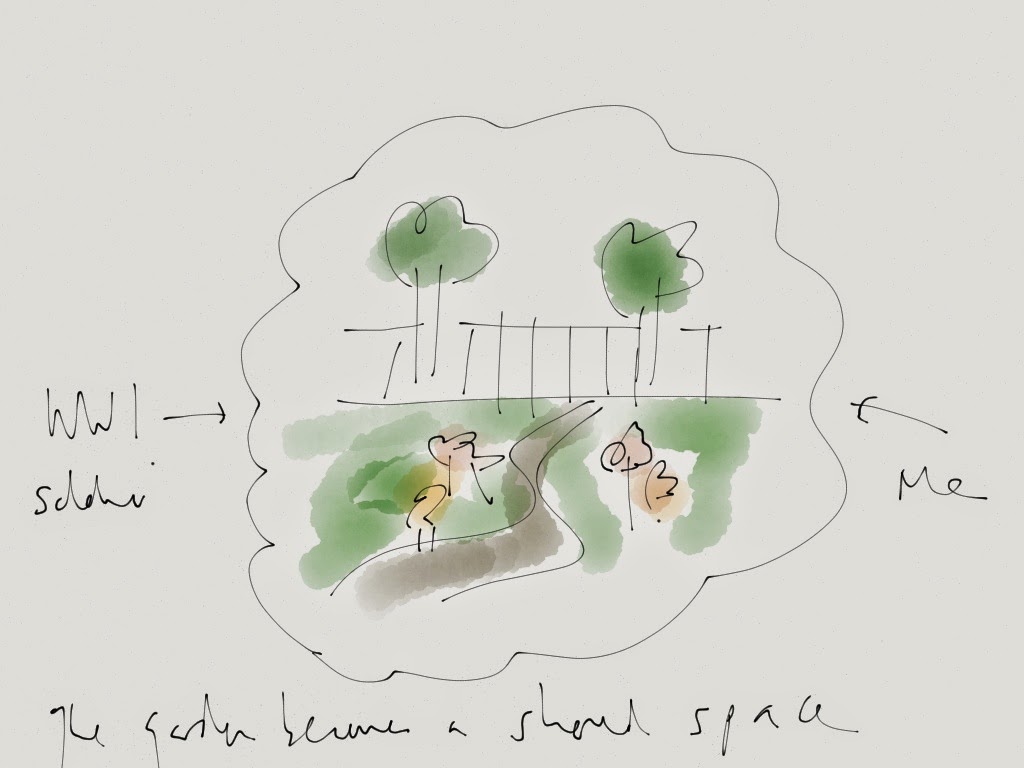
Can the garden – that domestic, pastoral space – become a space of memory and, therefore, experience shared with those who died in the violent landscape of the Western Front?

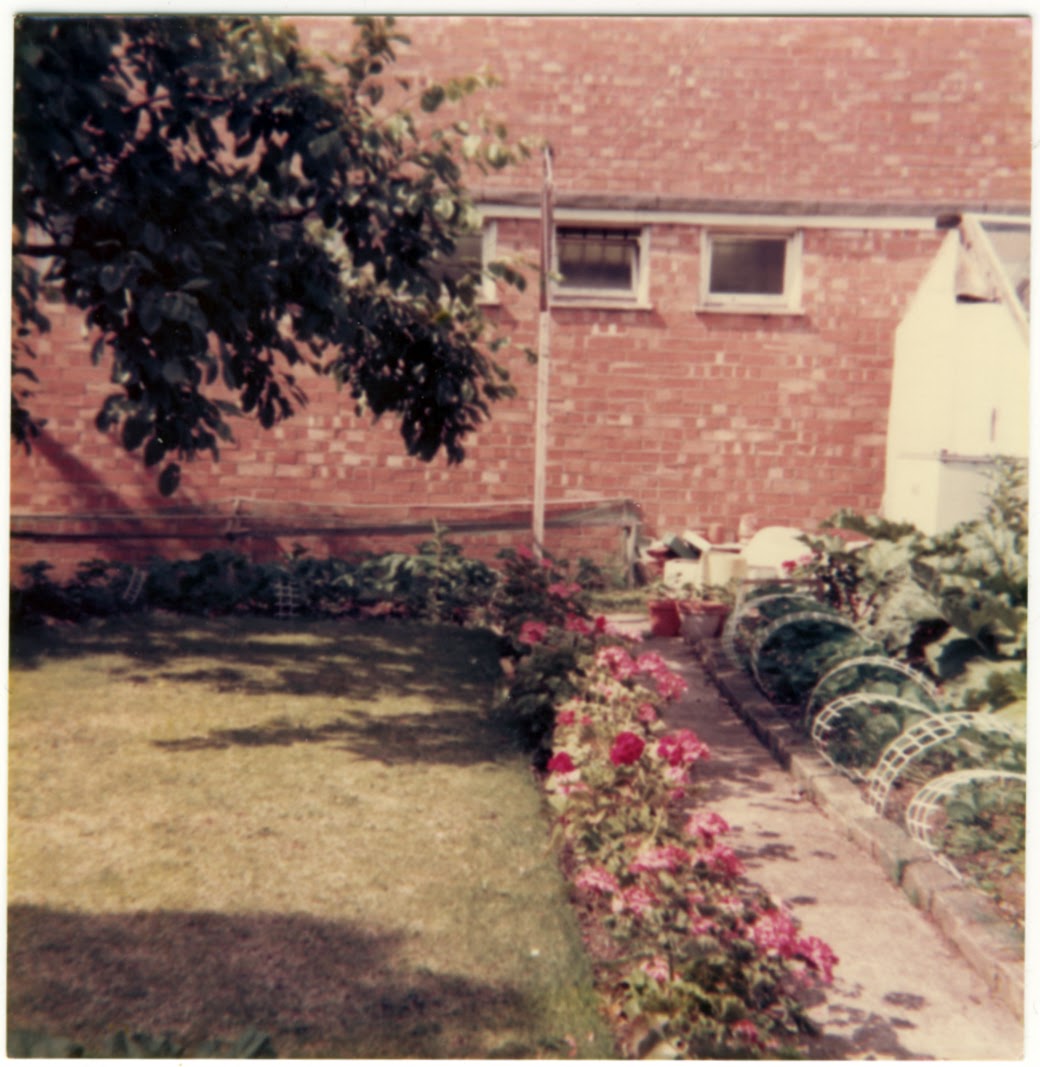
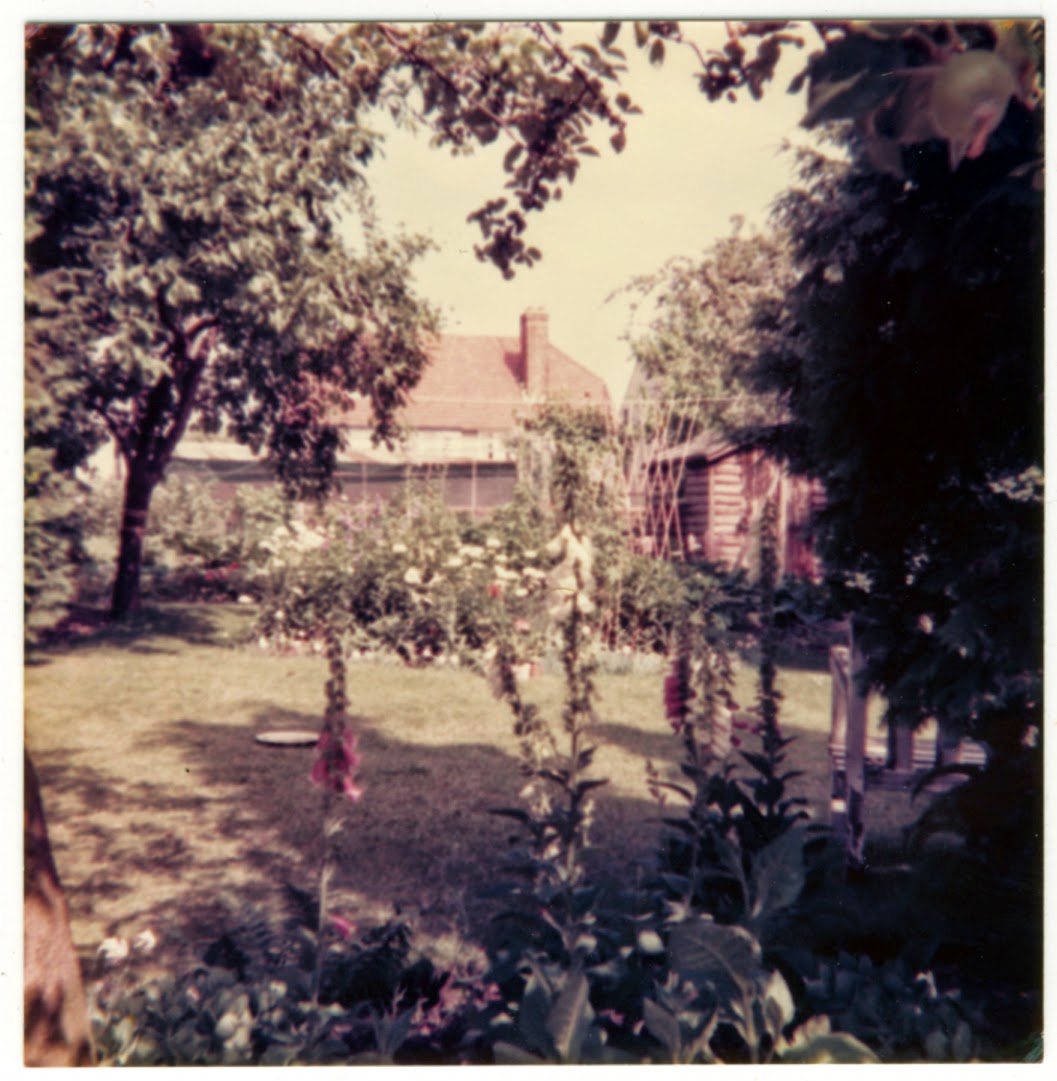
My grandparents’ garden in Oxford in the late 1970s
One of the main difficulties faced in trying to empathise with individuals who lived and died before we were born is that to think them alive we must think too of our own non-existence (and if we’re imagining our own non-existence we cannot truly empathise). Furthermore, experiences of people such as victims of the Holocaust or World War 1 soldiers are so far beyond our own, it’s impossible, even with a keen imagination, to bridge that divide.

We therefore need a proxy, and that proxy is place. Being in a place where an historic event has taken place can help us empathise, in that we can do so through a shared experience of that particular place or landscape.

This was certainly the case for me at Auschwitz where it was through observing the trees that I could best empathise with the people who were there, even though their experiences were so unimaginably different.

Trees at Birkenau

(One might imagine that a consideration of non-existence might lead to empathy through a shared consideration of death, but as Jean Amery wrote:”Dying was omnipresent, death vanished from sight.”

Non-existence bears only a passing resemblance to death and non whatsoever to dying.)

With soldiers of the First World War it’s also impossible for us to empathise with what they experienced. We can empathise through being in the landscape of Ypres or The Somme – i.e. we can empathise through a shared experience of presentness, of, in effect, being alive – but the fact the landscape looks so different today makes this especially hard.

Mouse Trap Farm c1915 – a place near where Jonah Rogers fell

Paul Fussel’s quote however helps us begin to bridge that divide: the concept of the garden, that pastoral space on a domestic scale, becomes the proxy – a space which we in the present could be said to have shared with many of those who fought in the war.

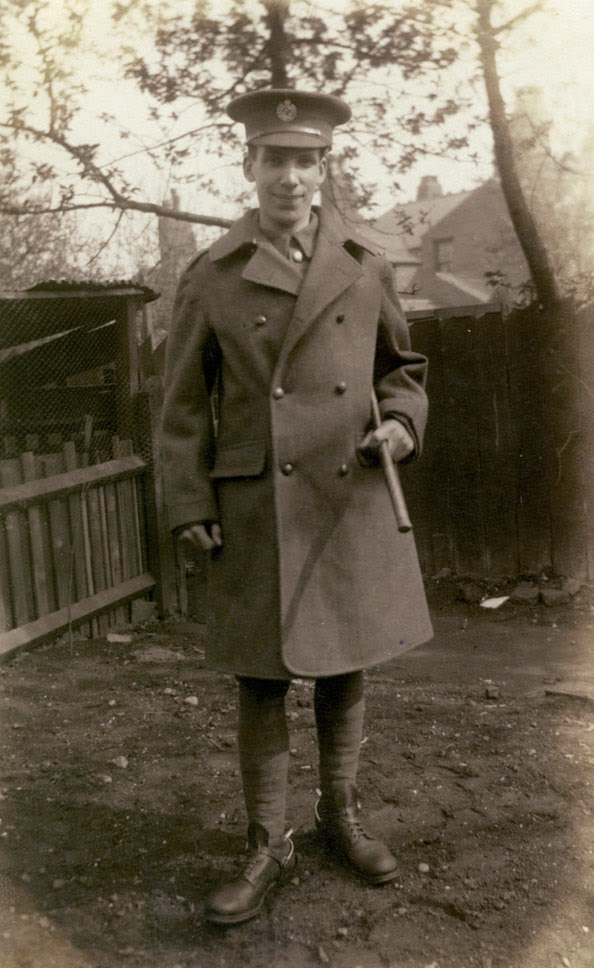
My Grandparent’s garden is as much a part of the past as the garden in which Jonah (above) is sitting. It’s almost as if the past becomes a single remembered landscape – a garden in which we can find those who lived and died long before we were born.

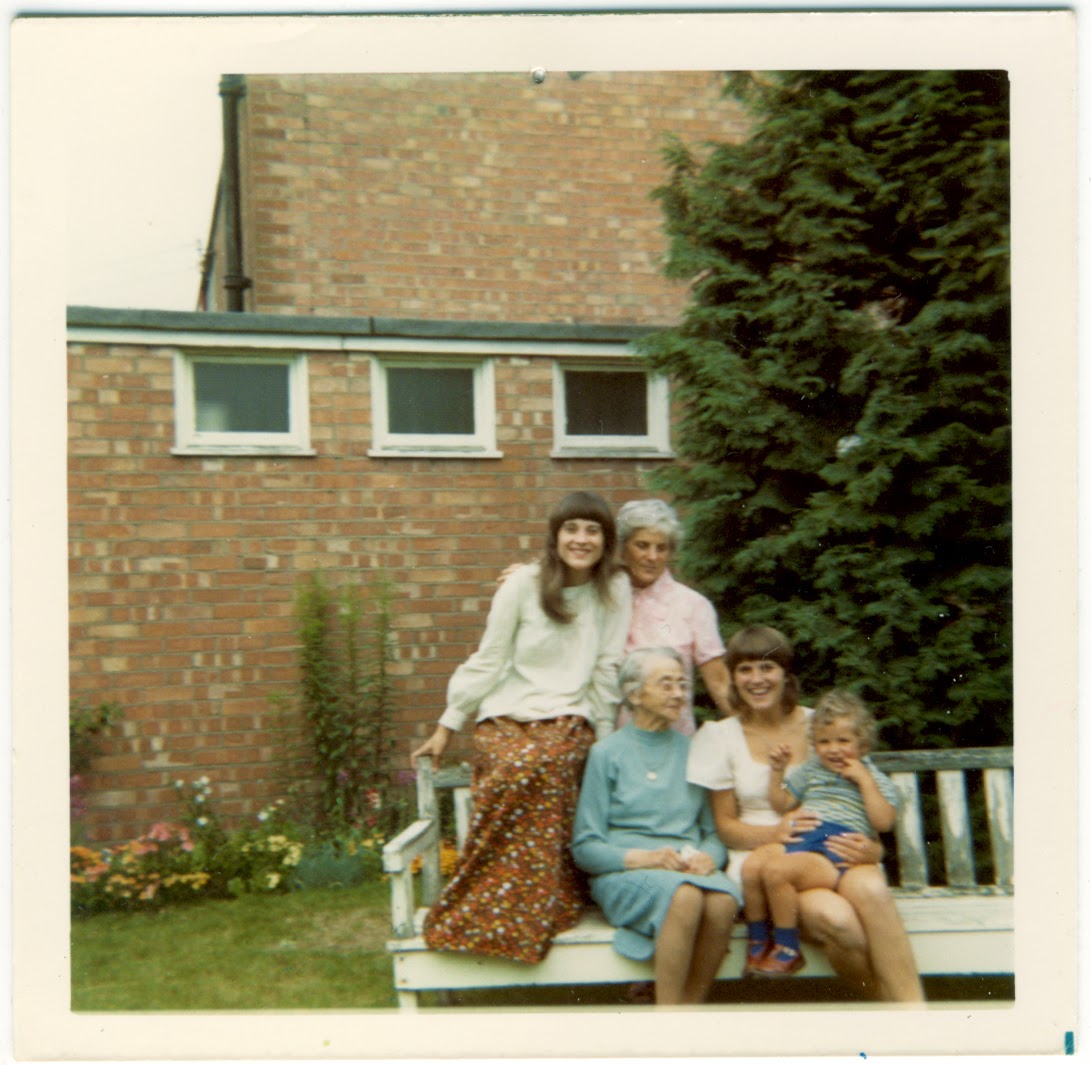
Me as a small boy with my mum, nan, aunt and great-grandmother (born in 1878)

Filed Under: Trees, World War I Tagged With: Empathy, Imagined Landscapes, Landscape, Memory, Nowness, Pastoral, Paul Fussell, Proxies, WWI, WWI Postcards

Gardens

August 15, 2014 by Nicholas Hedges

In Camera Lucida, Roland Barthes describes the concept of punctum thus:

“…it is this element which rises from the scene, shoots out of it like an arrow, and pierces me. A Latin word exists to designate this wound, this prick, this mark made by a pointed instrument… punctum; for punctum is also: sting, speck, cut, little hole – and also a cast of the dice. A photograph’s punctum is that accident which pricks me (but also bruises me, is poignant to me).”

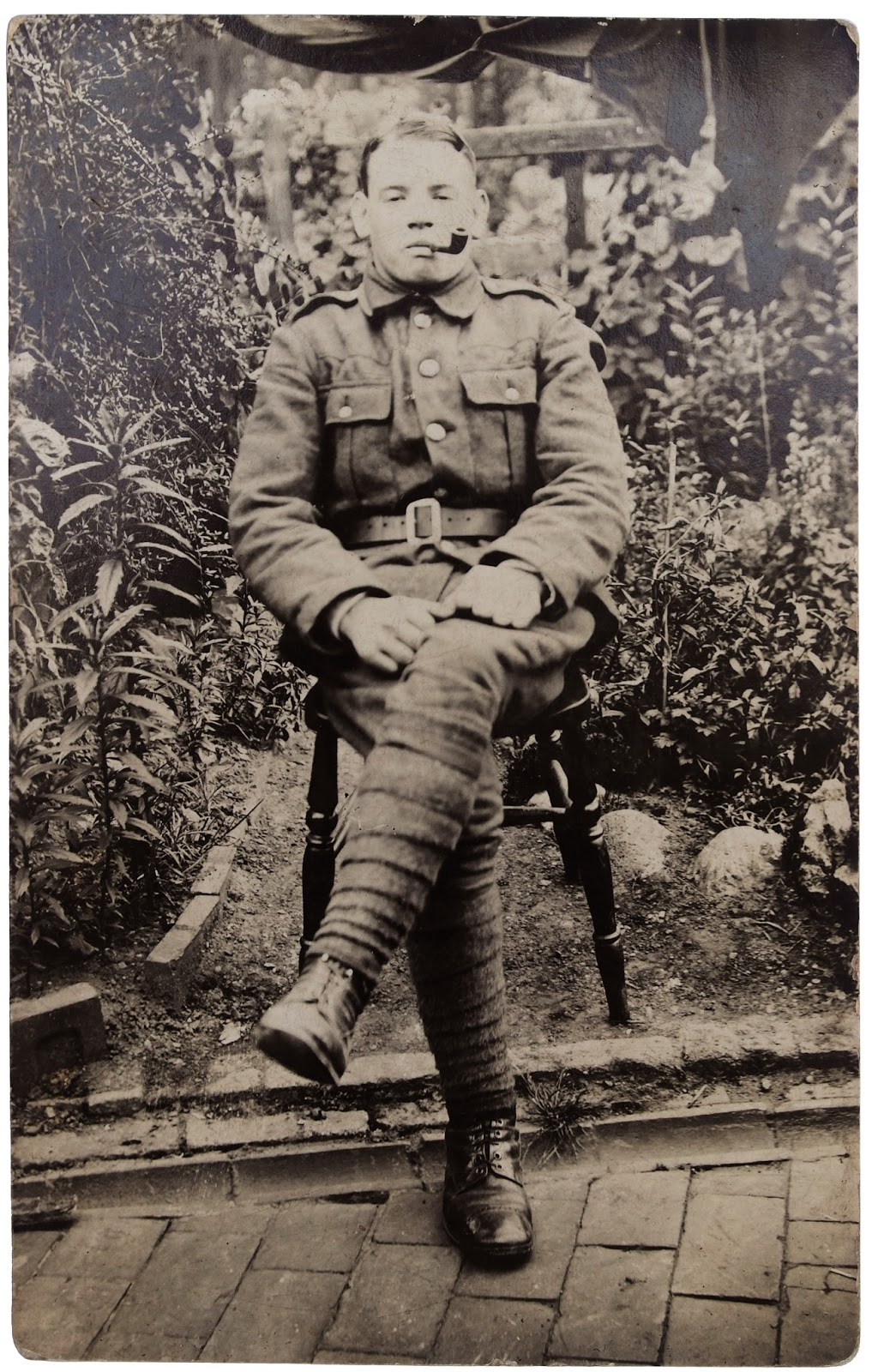
Looking again at the photo of Jonah Rogers, I became aware of something which, as Barthes might have put it, ‘pricked me’.

This is the photo…

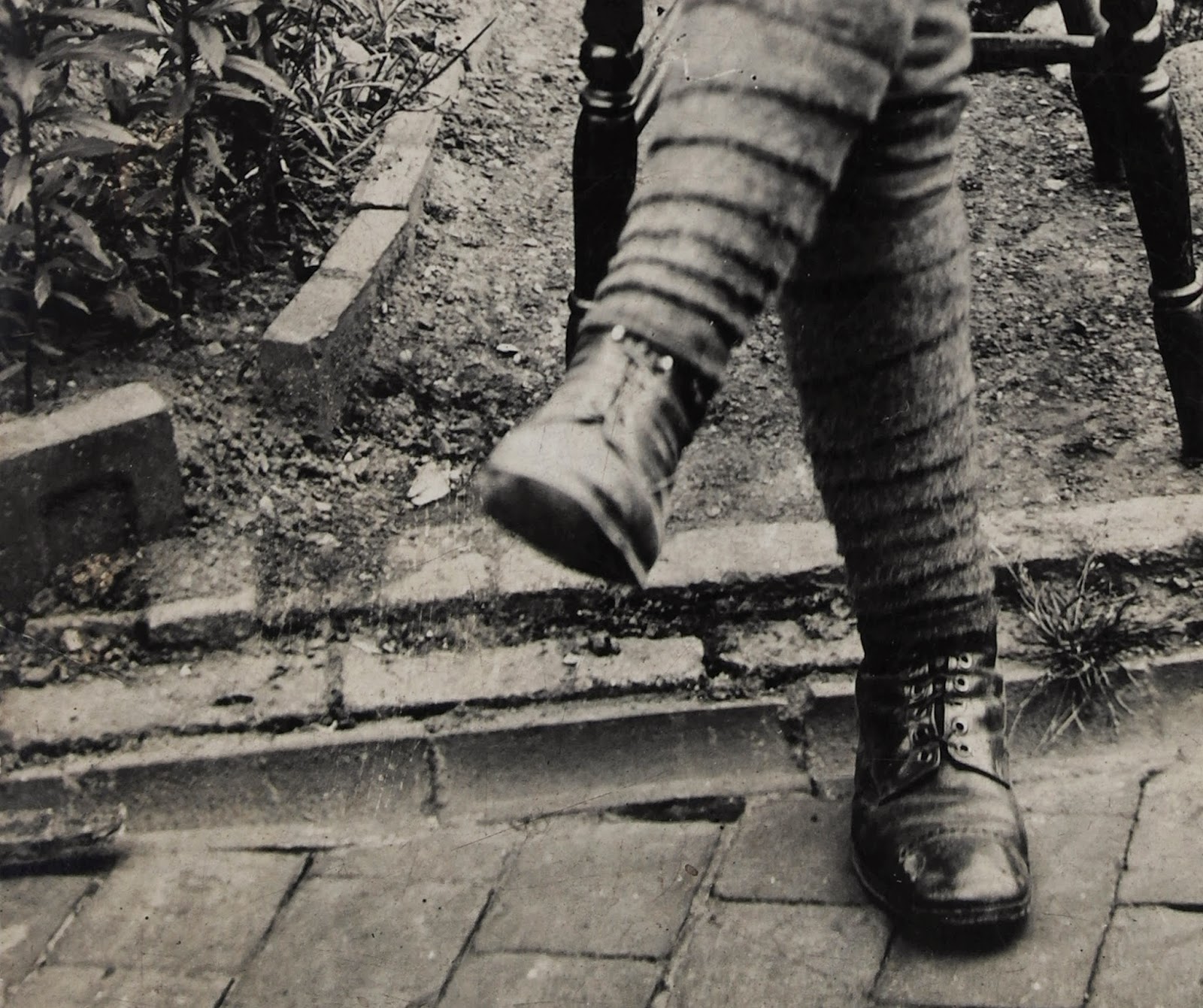
…and here is the ‘punctum‘.

In actual fact there are two things about this detail which interest me.

First, the left foot.

The fact it’s blurred implies that it was moving when the picture was taken. Otherwise Jonah appears stock still, unnaturally rigid, his hands curled into fists on his lap. One detects through this foot a sense of anxiety – not so much because of what he’d have to face on the battlefield, but rather because he was having his picture taken; he doesn’t seem comfortable in front of the camera – his foot is constantly moving. The pipe in his mouth also seems a little incongruous – especially when one considers those clenched fists; his hands look as if they’ve never held a pipe before. It’s almost as if someone has placed the pipe in his mouth.

The second thing is the ‘missing’ brick in the flower bed.

That there must have been a brick implies a passage of time between when the brick was laid and when it became dislodged – kicked perhaps out of place. That brick hasn’t been replaced, the flower bed and path have tumbled into one another and time has fallen from the photograph like the mud and mulching leaves. Or perhaps there was never a brick at all and the gap is some sort of conduit for water – the gutter running across the photograph implies this might be the case. This would still suggest a sense of time bound up in the thinking of whosoever laid the bricks in the garden, and indeed the flow of water itself. Whatever the gap is – drain or accident – both possibilities point to a time before the picture was taken; they give the photograph – to use an apt metaphor – temporal roots.

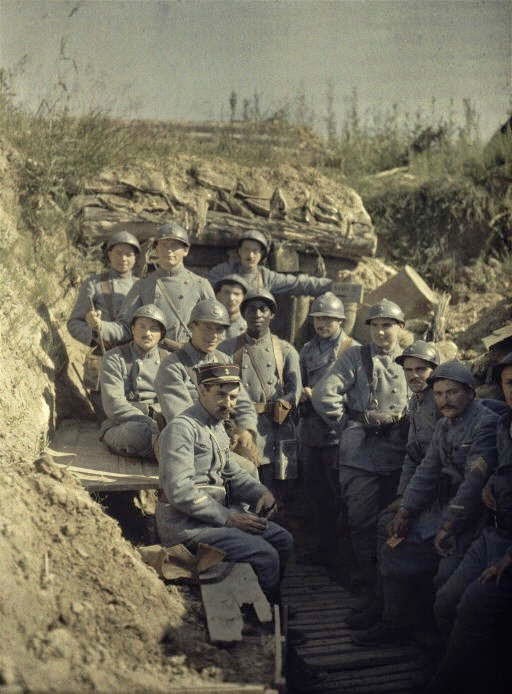
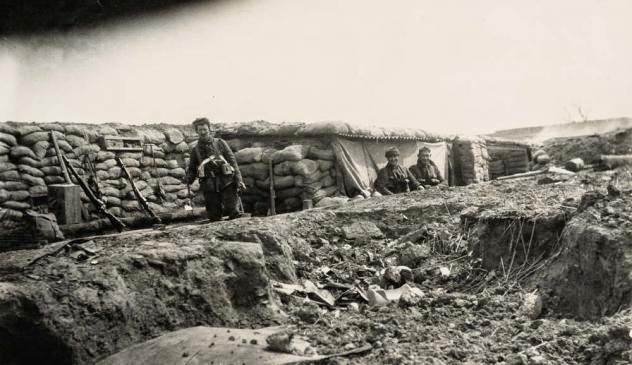
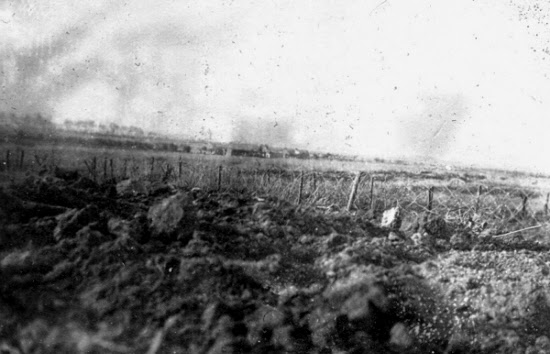
Jonah was killed in 1915 in the second battle of Ypres and I can’t help drawing a parallel between the soil of the garden and the infamous mud of the trenches such as those pictured below in which some of the 2nd Monmouthsires (Jonah’s battalion) can be seen.

This then brings me to the Paul Fussell quote I often return to:

“…if the opposite of war is peace, the opposite of experiencing moments of war is proposing moments of pastoral.”

I have for a time been thinking of the phrase ‘moments of pastoral’ and have come to regard it on a domestic level, i.e. moments of pastoral as experienced in a garden. I have always considered it vital, when establishing an empathetic link with those who died in the war, to consider their lives before the war. As I’ve written in a previous blog:

Neil Hanson, writing in ‘The Unknown Soldier’ talks of how, on the eve of the Battle of the Somme, the smell in the air was that of an English summer – of fresh cut grass; the smell – one could say – of memories; of childhood.

The garden then is a link to a time before the war and again this is reflected in some of the postcard portraits I have in my collection, where soldiers were photographed – prior to leaving – in their gardens.

I have always found these images especially poignant and have written about them before but there is something here I want to explore further; that is the empathetic link between ourselves and soldiers who fought and died in the war and the idea of the garden as a shared space of memory and experience, a conduit through which an empathetic link might be established.

Filed Under: Photography Tagged With: Gardens, Jonah Rogers, Pastoral, Photographs, Roland Barthes, WWI, WWI Postcards

Chinese Landscape Painting

August 12, 2014 by Nicholas Hedges

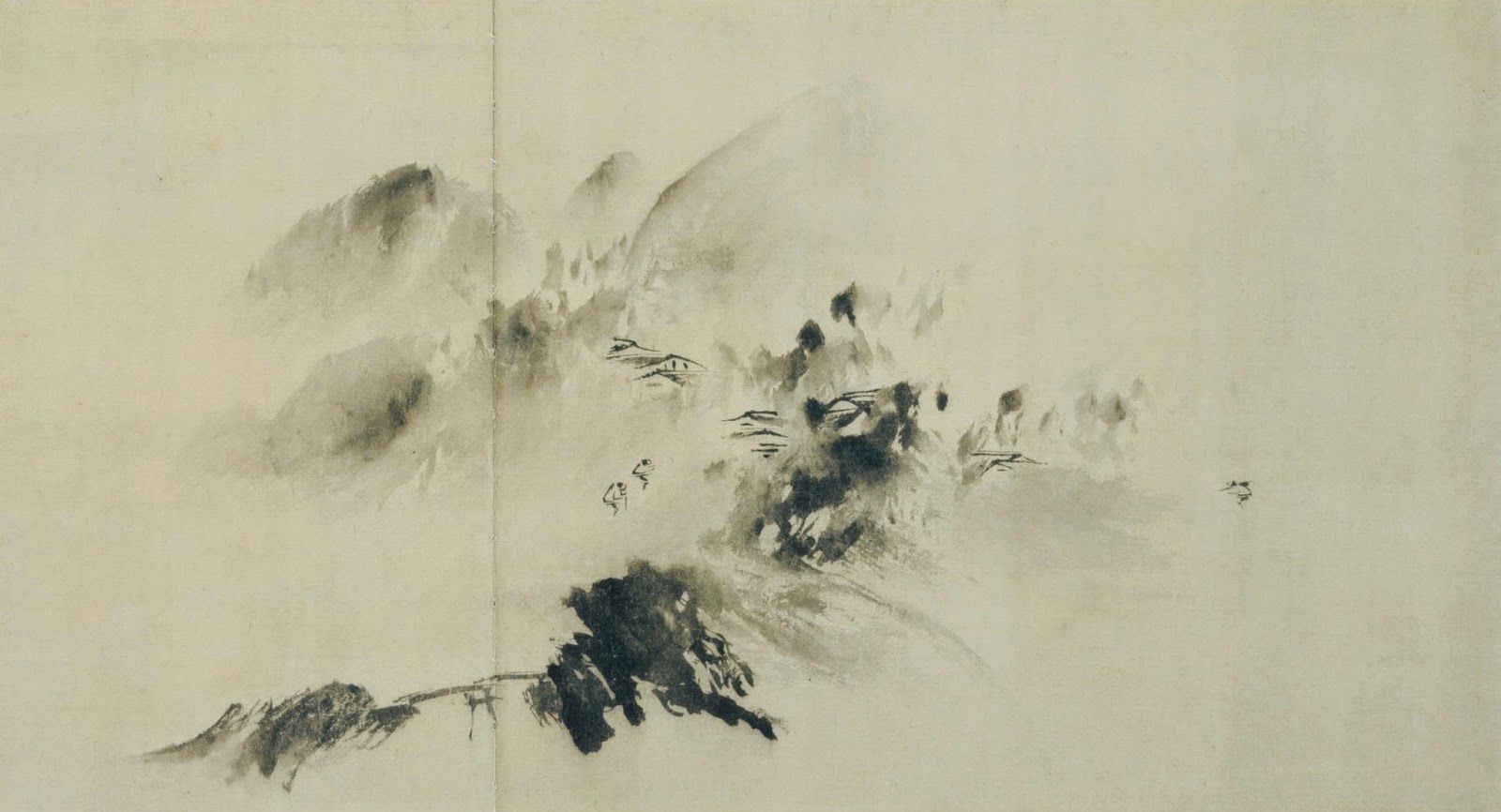
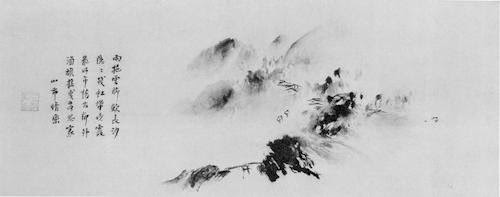
I’ve never before considered myself a fan of Chinese art but there have been times (most recently in the British Museum) when I’ve been overawed by a particular work. I refer in particular to early (11th-14th century) landscapes which move the viewer in a way one doesn’t find in the Western landscape tradition until much later on. (Why did it take so long for landscape painting to develop in the West? And why was it such a key part of painting in the Far-East so early on?) Paintings such as that below (Mountain Village in Clearing Mist by Yu Jian – made all the more extraordinary when one considers it was painted around 800 years ago in the mid 13th century), transport the viewer to a time long gone; they reveal – much as with the 17th century Japanese haiku of Basho – a moment long since past; not so much through what they depict but how it is depicted.

If I’ve never been a fan of Chinese painting per se, I have always admired Chinese calligraphy, which is of course, in itself, a form of painting. One can see in the full view of Yu Jian’s painting below, the text on the left hand side.

One can see here how the landscape itself becomes a kind of text, arranged not in straight lines, but in accordance with the serpentine lines of mountain paths, the drifting patterns of mist and the directions of distant sounds carried on the wind.

With works like these, it’s almost as if you see the landscape before the painter himself. We first see the work as a whole (the landscape as a whole), but then, whilst picking through the gestures of the artist, evident enough in the brushstrokes, we see the landscape as it is – or was – revealed. Yu Jian’s painting is not a painting of what was experienced, but rather the experiencing of what was experienced.

There’s a quote I’ve often used from Christopher Tilley. In his book, The Materiality of Stone – Explorations in Landscape Phenomenology, he writes:

“The painter sees the trees and the trees see the painter, not because the trees have eyes, but because the trees affect, move the painter, become part of the painting that would be impossible without their presence. In this sense the trees have agency and are not merely passive objects… The trees ‘see’ the painter in a manner comparable to how a mirror ‘sees’ the painter: that is, the trees like the mirror, let him become visible: they define a point of view on him which renders for him something that would otherwise remain invisible – his outside, his physiognomy, his carnal presence… the trees and mirror function as other.”

Like the trees, the mountains share that agency; they too ‘see’ the painter’ and it’s almost as if the painting becomes a painting, not of Yu Jian looking at the mountains, but of the mountain ‘seeing’ Yu Jian. It’s not the mountain that is made visible on the paper, but the artist’s outside, his physiognomy, his carnal presence.

Filed Under: Paintings, Trees Tagged With: Chinese Landscape Painting, Landscape, Nowness, Paintings

Jonah Rogers – New Photograph

August 12, 2014 by Nicholas Hedges

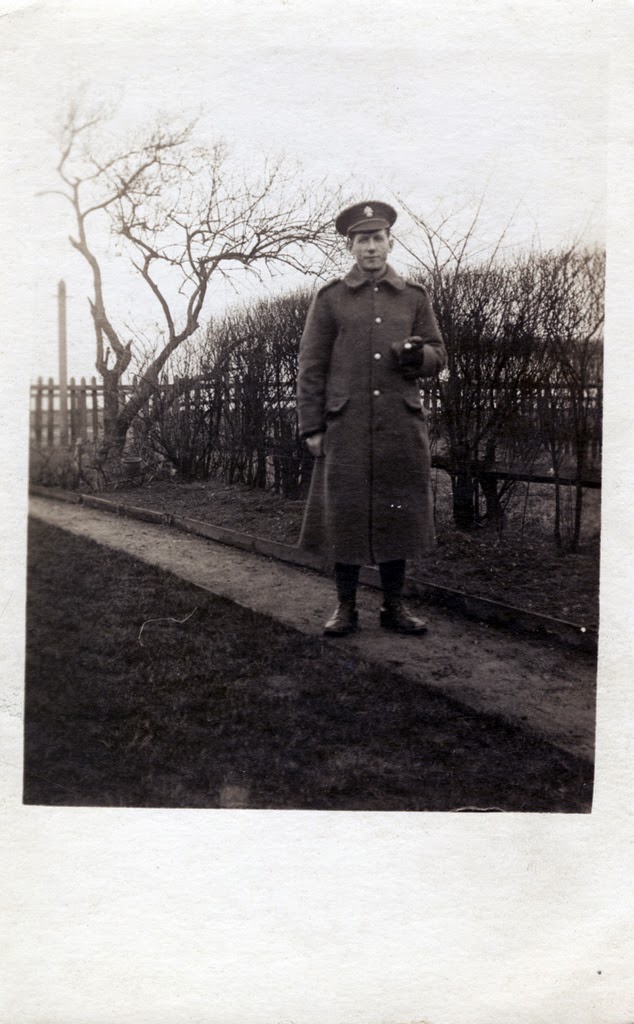
It’s been six years since I discovered my great-great-uncle, Jonah Rogers, killed in action on May 8th 1915. In that time I have also been collecting World War I postcards, portraits of soldiers taken before they left for the Front. Now, thanks to a descendent of Jonah’s sister Ruth (my grandmother was the daughter of another sister, Mary Jane) I have, in this centenary year, been sent a postcard of Jonah Rogers. The quality of the reproduction isn’t high but I’m hoping to see the original soon.

Filed Under: World War I Tagged With: Gardens, Jonah Rogers, WWI, WWI Postcards

4th August 2014

August 4, 2014 by Nicholas Hedges

“I never saw them again; they were hurried once more, fast as corks on a millstream, without complaint into the bond service of destruction.” Edmund Blunden

Thinking of my post from 28th June 2014, I wonder if ‘A’ was one like them.

Filed Under: World War I Tagged With: WW1 Centenary, WWI

Her Privates We

July 1, 2014 by Nicholas Hedges

Whilst reading Frederic Manning’s wonderful novel ‘Her Privates We’, a couple of quotes leapt off the page, particularly as regards my work and the ongoing theme of empathising with past individuals.

“Then for a moment the general sense of loss would become focused on one individual name, while some meagre details would be given by witnesses of the man’s fate; and after that he, too, faded into the past.”

“And they were gone again, the unknown shadows, gone almost as quickly and as inconspicuously as bats into the dusk; and they would all go like that ultimately, as they were gathering to go now, migrants with no abiding place, whirled up on the wind of some irresistible impulse. What would be left of them soon would be no more than a little flitting memory in some twilit mind.”

Filed Under: World War I Tagged With: Books, Frederic Manning, Her Privates We, Literature, World War I, WWI

With love from ‘A’ – 100 Years on

June 28, 2014 by Nicholas Hedges

With the centenary of the start of World War I (August 4th) almost upon us, today’s date is no less significant. 28th June 1914 was the day on which Archduke Franz Ferdinand was assassinated in Sarajevo, thus precipitating a chain of events which was to lead to the chaos and carnage of World War I.

The postcard shown below (both front and reverse) was written on that day, exactly 100 years ago.

Filed Under: World War I Tagged With: Postcards, World War I, WWI, WWI, WWI Postcards

  • « Previous Page
  • 1
  • …
  • 6
  • 7
  • 8
  • 9
  • 10
  • …
  • 32
  • Next Page »
  • The ‘Now of Then’
  • Artist’s Statement
  • Designs for an Heirloom
  • Dissonance and rhyme
  • Wildflowers
  • Emptiness
  • Wave (goodbye)
  • Now In The Past Of An Unreal Place
  • Return to Graphite
  • Genius
  • Latest Backdrops
  • Extended Backdrops
  • Backdrops
  • Komorebi
  • Acorns
  • Scroll Work
  • Goethean Observation: Japanese Scroll
  • Mistakes
  • The Leaf Is Singing Still
  • Past Present
  • Scrolls
  • As Yet Untitled
  • Holes
  • Scroll
  • A Calligraphy of Shadows
  • More Paintings
  • Latest Paintings
  • Walking Meditation 2
  • Knowing We Are There
  • Venice by Moonlight 1840
  • Fragments and Additions
  • Reimagining The Past
  • Walking Meditation 1
  • Mindful Walking I
  • Grief II
  • Three New Paintings
  • Nana’s Mountain
  • Painting
  • Iridescence
  • Roman Bottle
  • Rinsho
  • Shadow Calligraphy
  • Becoming Memory
  • Fox Talbot’s Glassware
  • Goethean Observation: Diffuser II
  • Goethean Observation: Diffuser
  • A Remembrance of Things We Never Have Known
  • A Moment’s Language
  • Take Me Home
  • Arrival/Departure
  • Diffusers
  • Grief
  • Mum
  • Measuring the past
  • Disordered Time
  • Entropy
  • Wicked Magician, Fly
  • The Quanta of History
  • Empathy Forward
  • The Natural World of 978
  • The Gone Forest
  • Empathy/Exchange: 668 grams
  • Goethean Observation: Pilgrims of the Wild, 1935
  • Nazareth O
  • Several Johns and St. Thomas
  • Raspberry
  • Tokens and Shadows
  • Patterns Seeping (II)
  • ‘Missded’ 4 – Tokens
  • Patterns seeping
  • Cut Paintings
  • ‘Missded’ 4
  • Locks III
  • Locks II
  • ‘Missded’ 2 – Tokens
  • My Son’s Drawings II
  • ‘Missded’ 2
  • ‘Missded’ 3 – Tokens
  • ‘Missded’ 3
  • ‘Missded’ 1 – A Framed Token
  • Morning Has Broken
  • Tokens of absence
  • ‘Missded’ 1, stitched
  • More Little Words
  • Three Little Words
  • Spaces In Between
  • ‘Missded’ 3
  • ‘Missded’ 2
  • ‘Missded’ 1
  • Locks
  • Tracings
  • My Son’s Paintings
  • Writing Shadows
  • Samuel Borton’s Post Chaises
  • Dawid Sierakowiak
  • Pitchipoi
  • Latest Tree Drawings
  • Notebook
  • Somewhere Between Writing and Trees II
  • Somewhere Between Writing and Trees

© Nicholas Hedges 2024

  • Facebook
  • Instagram
  • Twitter
  • YouTube

Copyright © 2025 · Outreach Pro on Genesis Framework · WordPress · Log in