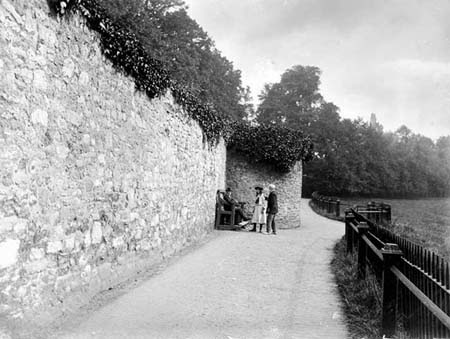
A bastion of the old city wall, Deadman’s Walk, 1907
© Oxfordshire County Council
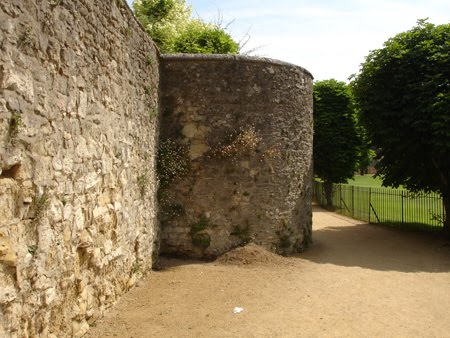
The same bastion today.
Art, Writing and Research
A bastion of the old city wall, Deadman’s Walk, 1907
© Oxfordshire County Council
The same bastion today.
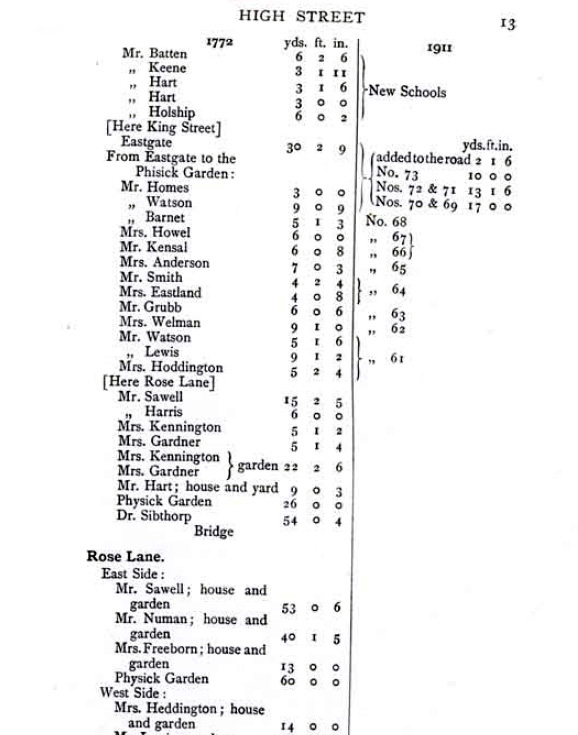
Remarkable evidence of those who lived in Oxford around the time the notice appeared in Jackson’s Oxford Journal can be found in a survey carried out by John Gwynn in 1772 (John Gwynn also designed the new Magdalen Bridge). Made as part of continuing improvements originating with the Mileways Act of 1771, the actions of Gwynn (who could be seen around town measuring the fronts of houses and other buildings) aroused suspicion and even alarm among the city’s residents. The survey itself was required to calculate the costs of repaving the city’s streets for which each property was liable to pay a share depending on the size of their facades. What we have as a result is a wonderful record; a long list of names of all the city’s residents (or rather property owners), the streets on which they lived (or owned property) and the size of their dwellings – given in yards, feet and inches. It’s interesting for me that among the many Stevenses listed in the survey might well be my great-great-great-great-great-grandparents.
The page reproduced below, is taken from the survey and represents the bottom end of the High Street where it meets Magdalen Bridge – the Bridge can be seen listed below the name of a Dr. Sibthorpe. The Physick Garden above, is the old name for what is now the Botanic Gardens.
See also John Gwynn’s Survey 1772 – Part 2.
Although the present bridge is not that over which the enigmatic stranger crossed, it nonetheless marks the line he travelled and along that line are witnesses to the moment I’m researching. Below are a few photographs which I took today showing the famous landmark.
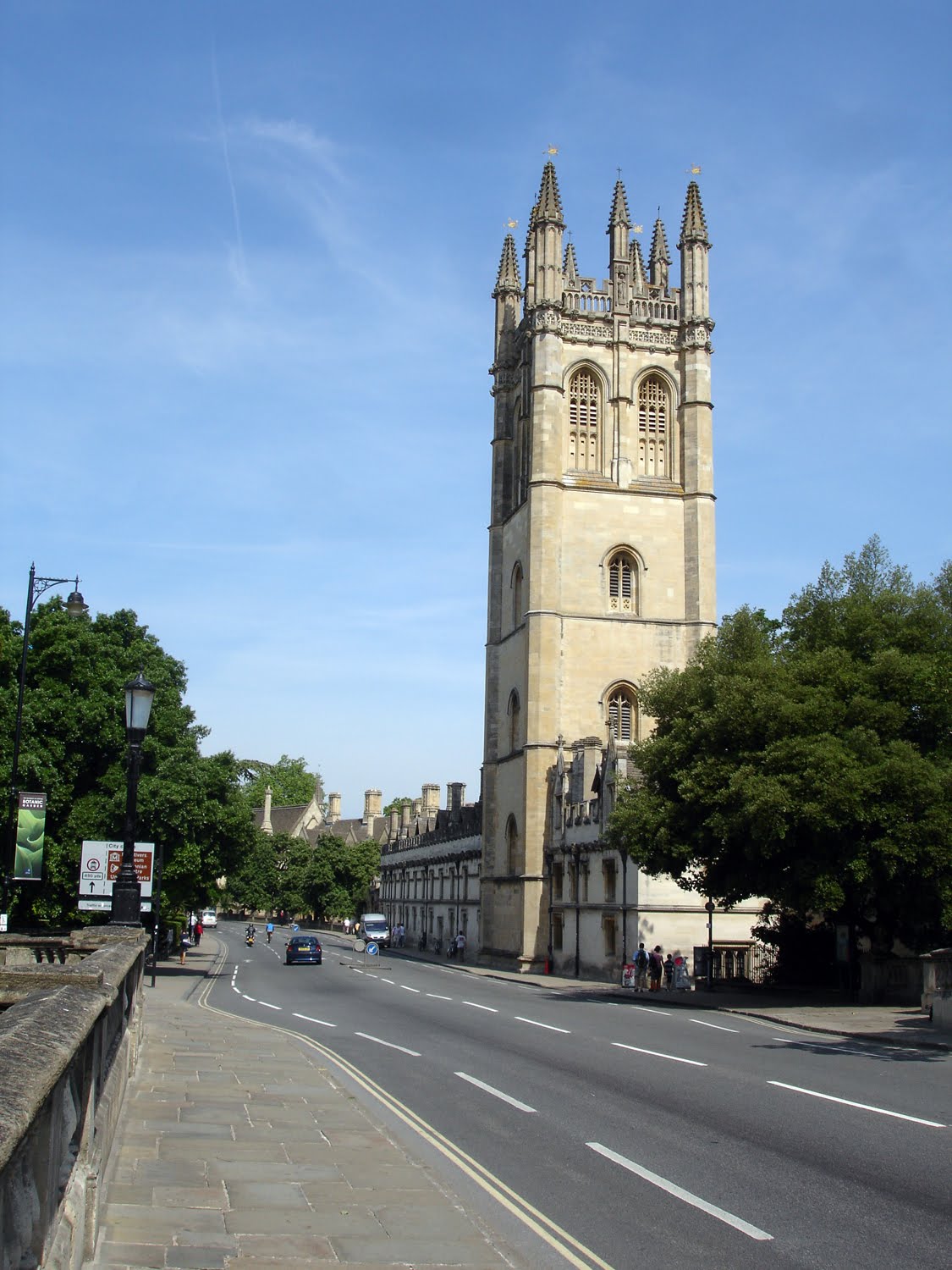
Magdalen Tower (above), as seen from the east, was completed in 1509 and would have seen the stranger pass below on his way over the bridge towards what was then the Watlington Road. The image below shows the route he would have taken with his two horses, from Magdalen Bridge on the right of the picture, towards what is now The Plain, but which in the stranger’s day would have been the church and churchyard of St. Clement, demolished in 1828.
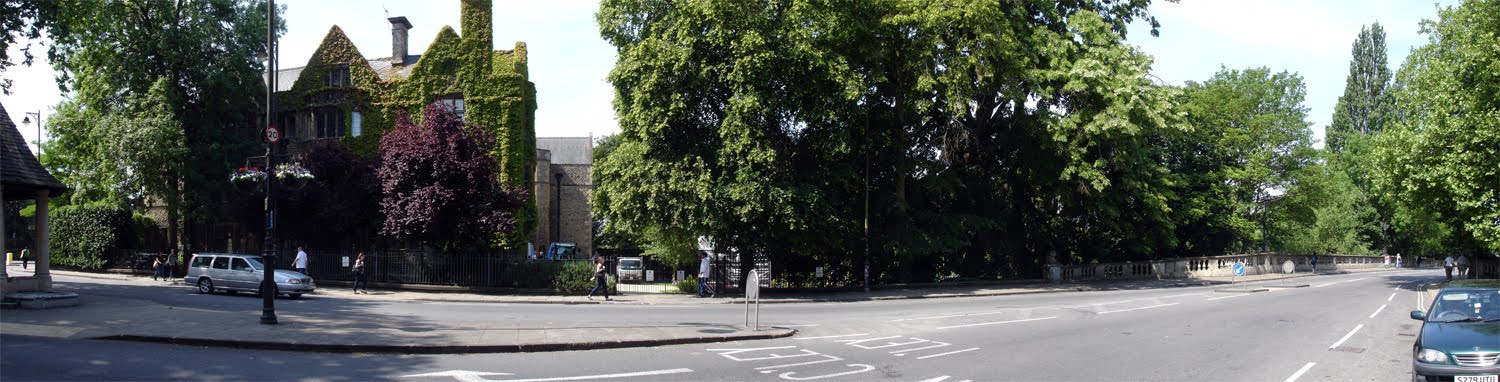
The roundabout (below) stands on what was once the church and churchyard of St. Clement . To the right is the fountain, built in 1899 as a belated tribute to Queen Victoria who celebrated her Diamond Jubilee in 1897. This was built on the site of the old toll house. The houses in the background stand on modern-day Cowley Road, the road up which the stranger rode into obscurity.
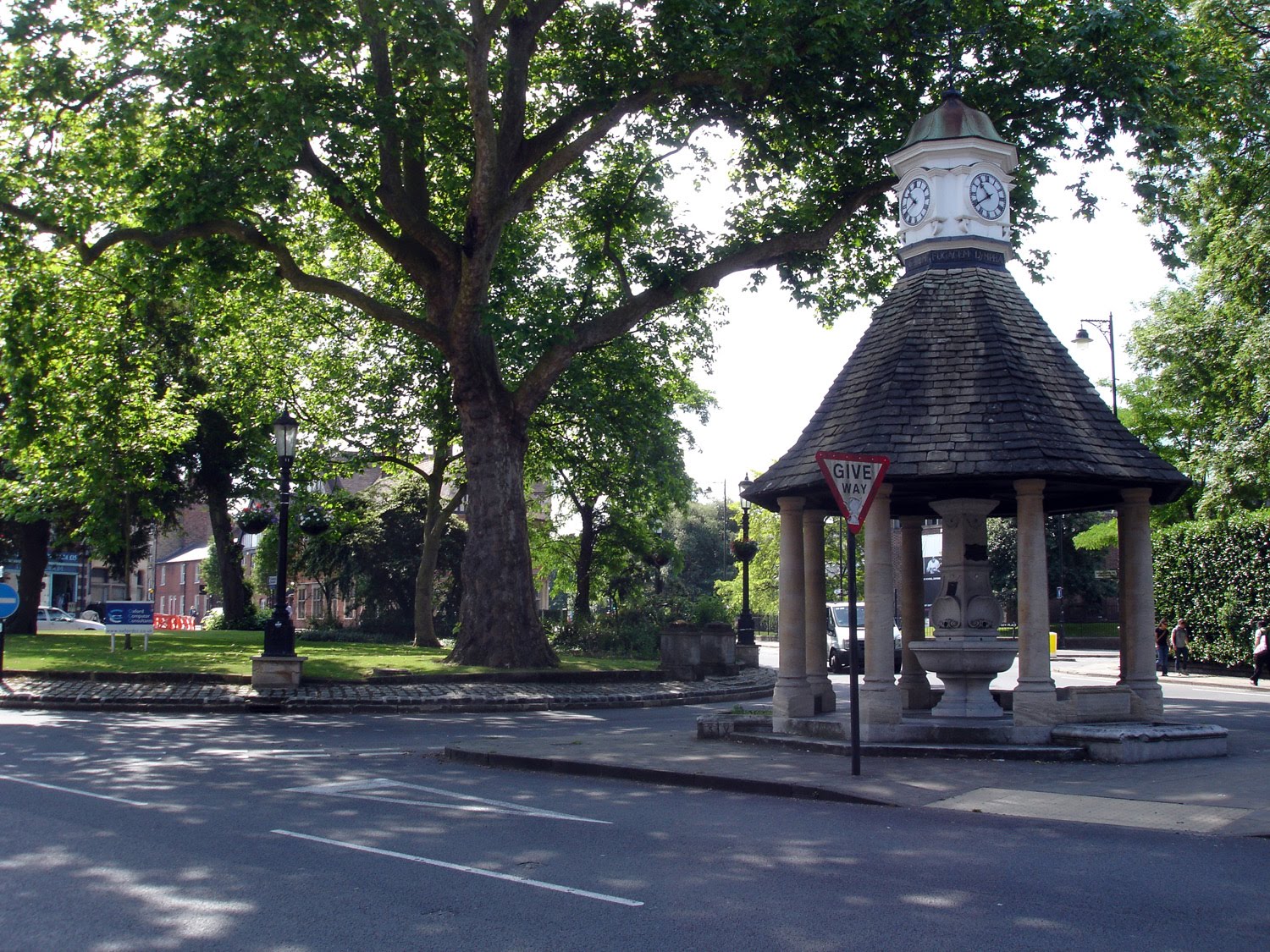
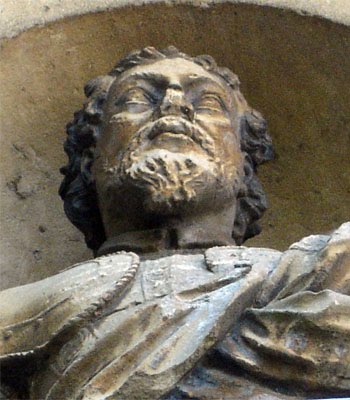
As I walked up the bridge I wondered who had seen the stranger pass and where they’d been when they saw him riding the two horses. In terms of more witnesses, the walls of the Botanic Gardens (founded in 1621) and its gateway (built by Inigo Jones’ master-mason Nicholas Stone in 1632) would have been standing at the time. The two statues and the bust, positioned in the gateway still look towards the road…
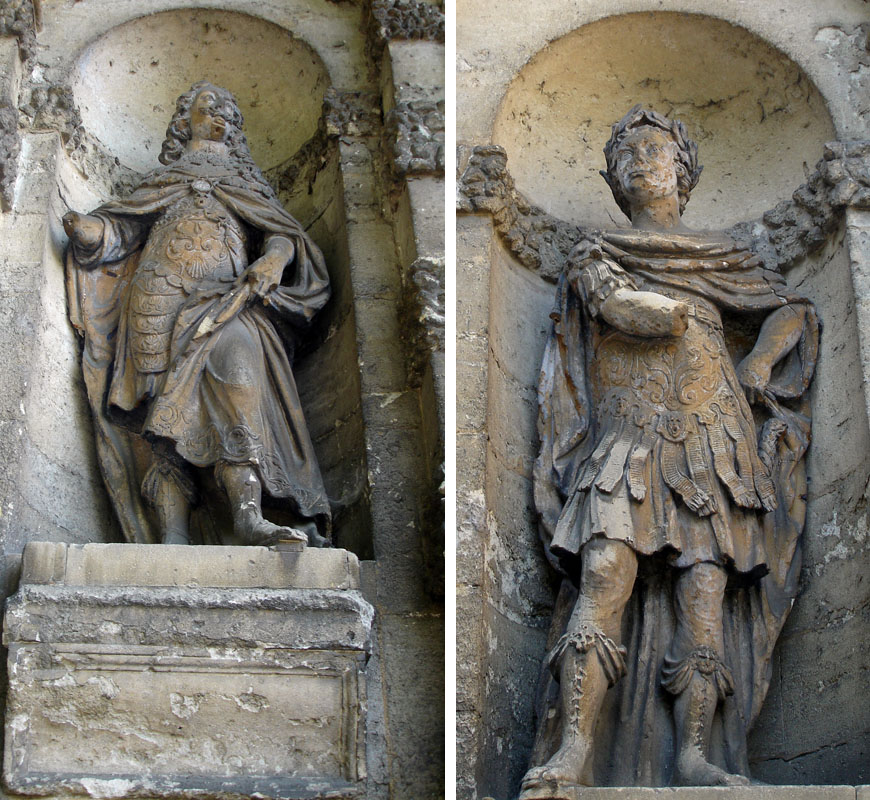
…and I like to imagine their eyes would somehow have seen him.
The bridge over which our Gentleman’s Servant rode in December 1770 is not the same bridge which crosses the River Cherwell today. Being as it is an important part of the story, I’ve copied an entry on the bridge from The Encyclopaedia of Oxford1 which I’ve reproduced below.
A bridge, formerly known as Pettypont and East Bridge, has stood here since at least 1004. In the Middle Ages the cost of its upkeep was shared between the county and the town, the town meeting its three-quarters share largely by alms and charitable bequests, the maintenance of bridges being then considered a pious duty. Bridge-hermits were also appointed to help travellers with any difficulties they might experience in crossing. The original bridge was of wood, but by the 16th century a stone bridge, some 500 feet long, with about twenty pointed and rounded arches, had been constructed.
At this time the city was still paying for repairs, both by taxation and by the allocation of alms; but William of Waynflete, the founder of Magdalen College, may have paid for restoration of the bridge in the 15th century, and the University certainly did so in 1723. Although a major restoration was then undertaken, less than fifty years later some of the piers had been swept away by floods and the western end had collapsed completely. Condemned as dangerous, it was rebuilt between 1772 and 1778 under the provisions of the Oxford Improvement Act of 1771, to the design of John Gwynn. At the same time a toll-house was built at The Plain, with gates across the roads from Headington to Cowley to collect dues for the maintenance of the bridge. Twenty-seven feet wide, with recesses in the middle, the bridge’s large semi-circular arches were supplemented by smaller ones over the towpaths. The plain balustrade was designed by John Townesend after plans for a more elaborate one had been dropped. The bridge was widened in 1835 and again in 1882. Notabilities have frequently been welcomed or taken their official departure at the bridge, as Queen Elizabeth I did on leaving Oxford in 1566.
1 The Encyclpaedia of Oxford, 1988, Ed. Christopher Hibbert, Assoc. Ed. Edward Hibbert; London, Macmillan London Limited
A sneak preview of new work for the forthcoming year.
If you visit the Westgate Library in Oxford, and make your way to the second floor, to the centre for Oxfordshire Studies; if you ask to see the microfilm of Jackson’s Oxford Journal for February 9th 1771, you will find, somewhere within its pages, the following notice:
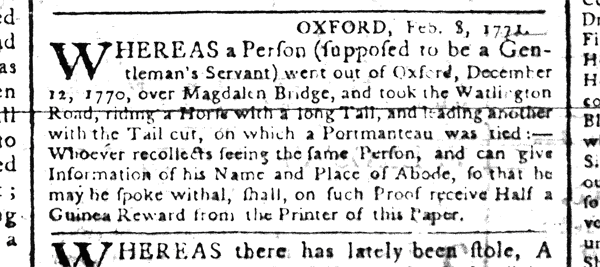
“Whereas a person (supposed to be a Gentleman’s Servant) went out of Oxford, December 12th 1770 over Magdalen Bridge and took the Watlington Road riding a horse with a long tail and leading another with a cut tail on which a Portmanteau was tied: whoever recollects seeing the same person and can give information of his name and place of abode so that he may be spoke withal, shall on such proof receive half a guinea reward from the printer.”
This enigmatic text contains just 80 words, but many questions come to mind when I read it.
Who was this man?
Where was he going?
Who was he working for?
What was in the portmanteau? And who wanted to know?
What had he done that the need to ‘speak withal’ was worthy of a reward? And why was the notice only published two months after the man had left town? Would anyone recall seeing him so long after the fact?
The man described has left neither name nor grave to posterity. Indeed, all that would seem to remain is this footprint of sorts, one comprising a few words in a text pregnant with secrets, lost in the pages of a long forgotten paper.
In the first book of his epic masterwork, À la Recherche du Temps Perdu (In Search of Lost Time) Marcel Proust writes:
“…we each derived a certain satisfaction from the mannerism, being still at the age in which one believes that one gives a thing real existence by giving it a name.”
The man described in our newspaper clipping doesn’t have a name. Does it mean therefore he has – or rather had – no real existence? The answer to that is of course, no. Certainly he’s dead, but whereas the Dead so often leave their names (as Rilke so beautifully put it in The Duino Elegies, ‘as a child leaves off playing with a broken toy’) in documents, monuments, cemeteries and so on, this man has left something else entirely. To name him would almost be to kill him.
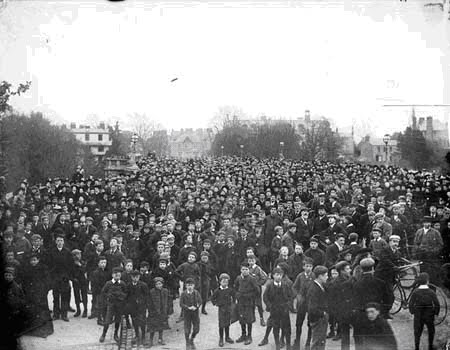
In many respects he’s not unlike those nameless men and women one often finds in old black and white photographs, for example that below, taken on the same bridge 125 years after the stranger crossed it.
What’s most intriguing about the notice, is the scene it depicts. Despite its few words we can nonetheless form an image of something which happened long before we were born; a scene in which the most insignificant detail we can imagine – perhaps a leaf fallen from a tree drifting on the river below the bridge – was more a part of the world than we as individuals – as impossibly unlikely beings – were ever, at that moment, likely to be; even my great-great-great-great-grandfather, Samuel Stevens, born in Oxford in 1776, and to me impossibly distant, was just a step away from not being born at all.
A more ‘equivalent’ image to the text might be the detail below:
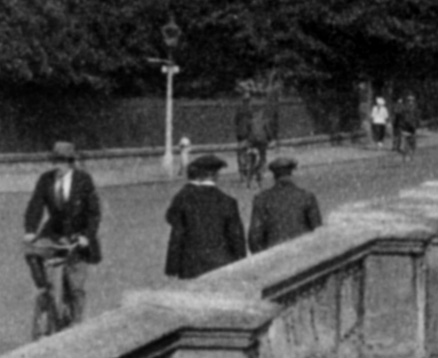
Taken from a photograph, itself taken (as far as I can tell) some time in the 1920s, it’s part of a wider view of Magdalen Bridge facing west towards Magdalen Tower. No-one in this photograph is aware the picture’s being taken and in this sense it’s a genuine representation of history; an insignificant, everyday moment in time.
This project – The Gentleman’s Servant – will set out to answer the questions posed above in full knowledge of the fact that it will fail. But what interests me is, not so much the answers, but the process of looking: of researching, collecting, archiving and storytelling.
I am not, at least as far as I’m aware, a sculptor, but I think that what I’m striving to articulate in my work has perhaps more to do with sculpture than anything else. The following statements, from the book ‘Figuring it Out,’ by archaeologist Colin Renfrew were made by the sculptor Antony Gormley.
“I want to confront existence. It is obviously going to mean more if I use my own body… I turn to the body in an attempt to find a language that will transcend the limitations of race, creed and language, but which will be about the rootedness of identity… The body is a moving sensor. I want the body to be a sensing mechanism, so your response to the work does not have to be pre-informed and does not necessarily encourage discourse… If my subject is being, somehow I have to manage to engage the whole being of the viewer.”
“My body contains all possibilities. What I am working towards is a total identification of all existence with my point of contact with the material world: my body… Part of my work is to give back immanence both to the body and art.”
The last sentence particularly resonates with me, for part of the purpose of my work is I think to give back immanence to the past and to history, something which I have come to realise can only come about through the immanence of the body – the ‘moving sensor,’ which I have otherwise described as being like the recording/playback head of a tape player.
We are all familiar with the body-casts of Pompeii; men, women and children frozen at the moment of their death almost 2000 years ago. Buried in ash, the spaces which had once contained their bodies remained after the bodies had decomposed, allowing archaeologists, to use them as moulds by pouring plaster into the cavities. It was whilst reading about the casts in Colin Renfrew’s book ‘Figuring it Out’ that I began to think of the process of casting in terms of what I’ve been researching these past few years.
If we stand in a place, for example a wood, we can try to imagine those who’ve been there before us. By being aware of the moment of our own experience, of the wind, the light, the sound of the trees and so on, we can try to see the past through the immanent lens of the present. In a previous entry ‘An Archaeology of the Moment,’ I mentioned the writing of Christopher Tilley and the concept of Other and whilst reading Colin Renfrew’s book I realised how the process of creating the casts in Pompeii shared something with what I’ve been researching, albeit metaphorically.
If we stand in a place, we are defined not only by the shape of our bodies (our physiognomy), but by everything around us. To recap, as Tilley writes: “The painter sees the tree and the trees see the painter… in a manner comparable to that in which the mirror ‘sees’ the painter: that is, the trees, like the mirror, let him become visible: they define a point of view on him which renders visible for him something that otherwise would remain invisible – his outside, his physiognomy, his carnal presence… The trees and mirror function as Other.”
Just as the trees function as ‘Other’ therefore, so must the sun, the stars, the clouds, hills, mountains, the sea, rivers, the wind, the rain and so on.
Imagine that all these things, in the place where once someone stood are – metaphorically speaking – like the ash of Pompeii, in that the shape of the person’s body is somehow sculpted by them. Of course this shape is fleeting, but imagine again that it remains, delineated by the world around it. In order to ‘see’ the shape, we must learn to fill it, not, of course, with plaster but with our own bodies or rather our presence.
At any given moment, we are sculpted by the world around us. We are both looking for and filling in the gaps left by others. We are therefore artists, artwork and viewer simultaneously.
Imagine these two situations: One, you are standing in a gallery in front of a landscape painting, a picture of a wood with no-one in it. Two, you are standing on a path in a wood that is empty and in this wood, the trees and the wind blowing through the branches, the feel of your feet upon the ground, the sound of the birds, the dappled light and shadows all act as ‘Other’ rendering your outside – your presence – visible. The gallery too is empty, but like the wood, you are far from alone, for just as the painting also acts as ‘Other’ in terms of rendering your presence visible, so the spaces left by those ‘rendered’ before are made visible again by your presence; not least the space left by the artist. And after the artist come the spaces left by everyone who’s seen the painting before you, and in the woods the same is true; although there maybe no-one else on the path, the spaces left by everyone who’s ever walked upon it are filled with your presence; the present fills the spaces of the past.
Having found Antony Gormley’s words so interesting, I read the transcript of an interview between himself (AG) and Ernst Gombrich (EG). The following are sections which I found to be particularly pertinent.
AG I want to start where language ends.
EG But you want in a sense to make me feel what you feel.
AG But I also want you to feel what you feel. I want the works to be reflexive. So it isn’t simply an embodiment of a feeling I once had.
EG It’s not the communication.
AG I think it is a communication, but it is a meeting of two lives.
In many respects this conversation above reflects precisely what I am trying to do: to feel the way people felt in the past by feeling what I myself am feeling. It is the meeting of two lives.
AG I would be interested to know whether you feel that it is possible to convey a notion of embodiment without mimesis, without having to describe , for instance, movement or exact physiognomy?
EG I have no doubt that not only is it possible but it happens in our response to mountains, for example, we lend them our bodies.
–
AG I can’t be inside anyone else’s body so it’s very important that I use my own. And each piece comes from a unique moment in time. The process is simply the vehicle by which the event is captured, but it is very important to me that it’s my body.
–
AG I am interested in something that one could call the collective subjective. I really like the idea that if something is intensely felt by one individual that intensity can be felt, even if the precise cause of the intensity is not recognised. I think that is to do with the equation I am trying to make between an individual, highly personal experience and the very objective thing – a thing in the world amongst other things.
–
AG Then I go into the second stage which is making a journey from this very particularised moment to a more universal one.
–
As I’ve written before: In a famous definition of the Metaphysical poets (a group of 17th century British poets including John Donne), Georg Lukács, philosopher and literary critic, described their common trait of ‘looking beyond the palpable’ whilst ‘attempting to erase one’s own image from the mirror in front so that it should reflect the not-now and not-here.’ Thinking in terms of the metaphor I have described above (the trees and mirror function as Other), we could say that this erasing of one’s image is an attempt to see the space left behind us. I have also written in the past how history necessitates the consideration of our own non-existence; this space also reflects that state.
“It’s as if the Photograph always carries its referent with itself, both affected by the same amorous or funereal immobility, at the very heart of the moving world: they are glued together, limb by limb, like the condemned man and the corpse… two leaves cannot be separated without destroying them both: the window-pane and the landscape…”
Roland Barthes, Camera Lucida
I’m currently reading an excellent book by Colin Renfrew, Senior Fellow of the McDonald Institute for Archaeological Research, entitled ‘Figuring it Out’, in which the author examines what he describes as ‘the parallel visions of artists and archaeologists,’ with an emphasis on contemporary art practice. As an artist with a deep interest in archaeology, I had to buy the book, and I’m very glad I did, for it’s helped me pull together numerous strands of thinking which have emerged from my research over the course of the last four years; in particular, the idea of the physical or ‘sensed’ present as a lens through which to ‘see’ the past. Professor Renfrew writes: “The past reality too was made up of a complex of experiences and feelings, and it also was experienced by human beings similar in some ways to ourselves.” The way we experience the present then, tells us a great deal about how people experienced the past when it too was the present.
I’ve written before how one of the problems we have in considering past events is the temporal distance which separates us. Reading a history book, although we know its content is‘ factual’, is nonetheless an interpretation of events; an outline at best no matter how well researched and well written it is. There may be a structure, just as in a novel, with a beginning, a middle and an end. But of course reality isn’t really like that – the boundaries are much more fluid. Necessarily therefore, a history of any event will be full of holes and it’s these holes which interest me.
In October 2006, I stood on the Ramp at Auschwitz-Birkenau and my experience there is something with which I’ve been working ever since, even whilst researching different places – whether other camps such as Bełżec or the battlefields of World War One – it’s that particular moment which I have been researching, peeling back the layers comprising the moment, much as an archaeologist digs through layers of stratified soil to uncover a whole range of times.
History is, in some respects, like fiction. What is known and written about can only be surmised from surviving evidence and what we ‘see’ as receivers of that knowledge, can only be imagined. What’s always missing is a sense of the present, as if what happened in the past always followed a script, one in which the main protagonists took their cues and delivered their lines accordingly. Hindsight, which one can hardly escape, joins all the dots, but leaves many gaps between the lines.
In the foreword to Peter Weiss’ book The Aesthetics of Resistance, Frederic Jameson writes how for the critic Georges Lukács, the world historical individual should never be the novel’s main protagonist, but rather seen from afar by the average or mediocre witness. We could say the same for history; that events described in history books are ‘best’ when seen through the eyes of those ‘average’ or ‘mediocre’ witnesses; people which history labels as ‘the mob’ or the ‘masses’; who are often buried beneath unimaginable numbers – mass graves within which, their names and individual identities are forgotten.
I’ve produced numerous works which examine this idea of the anonymous individual in history, but there’s another element I try to show, and that’s the ‘everydayness’ of any historic event. This is, I believe, key to our understanding of the past, for not only is history best seen by the ‘average’ or ‘mediocre’ witness, but – for me at least – when the main event is glimpsed as a backdrop to an individual’s own life experience. That’s not to say the event should always be viewed through the eyes of someone far away from the scene, but that it should always be seen behind the individual, rather than the individual being buried somewhere beneath.
In the time after my visit to Auschwitz-Birkenau, I wanted to find a way of identifying with those who died there. That’s not to say that I can identify with what they went through, no-one who wasn’t there can ever claim to understand what it was like to suffer, but we can seek to separate the individual from the grim statistics and site the camp in the landscape of the everyday world. Again, that’s not to say that Auschwitz-Birkenau was an everyday place, but what’s important for me, in understanding the past, in filling in the gaps which history inevitably leaves behind, is an understanding that the everyday world was happening at the time. Whatever event in whatever period we’re researching, the world was happening around it. The wind blew in the trees; the birds sang and the rain fell. The sun rose in the morning; the sky was just as blue or grey as it is today. There were clouds with their shadows, and during the night, the moon might be reflected in small pools of water, like that described by Auschwitz survivor, Filip Muller – in a pit soon to be filled with bodies. The events like the place were not everyday, but they took place regardless in an everyday world and understanding this ‘everydayness’ can help us understand and picture much more clearly events of the past.
For example, we can read hundreds of titles about the Holocaust and World War One, but when we read in the Diary of Adam Czerniakow – the ‘mayor’ of the Warsaw Ghetto – what the weather was like on a particular day, suddenly, in words like ‘beautiful weather,’ the full horror of the Holocaust is revealed, because, with these words at least, we can identify and – albeit in a very small way – empathise with someone who suffered; the past in effect becomes very much present.
In Birkenau, it wasn’t so much the sight of the gas chambers which was so horrific, or even the gaze of the infamous gatetower, but rather the way the trees moved, just as they’ve always moved, right throughout history.
Similarly, on the battlefields of the Somme, just as we cannot comprehend the horrors faced by the soldiers – the incessant shelling and machine gun fire – we can nonetheless see and feel the ground beneath our feet; we can see the sun in the sky, and feel the wind on our faces, and it’s these everyday details which take us, albeit just a little, into the midst of a battle. Of course we still need history to draw in the outlines, but it’s these other details which prevent history being a script. Events in history were not preordained, people made choices and choices can only be made and acted upon in a moment – in the present. Understanding the present therefore – that space wherein reside all our hopes and fears, our dreams and ambitions, and into which we bring our memories – is key to our understanding of the past.
In a passage written by Tadeusz Borowski, another Auschwitz survivor, we read the following: “do you really think,” he asks, that without hope such a world is possible, that the rights of man will be restored again, we could stand the concentration camp even for a day? It is that very hope that makes people go without a murmur to the gas chambers, keeps them from risking a revolt, paralyses them into numb inactivity.” People often ask why, when faced with certain death people didn’t revolt or even attempt to escape? If we read history as a script we might well feel obliged to ask that question, but when one’s alive in a moment, that in which we continue to exist, we will do anything to maintain that existence, and second by second that was achieved by doing nothing, right up to the end, for up to the end there was always the hope that something would change. Again, it’s through understanding what it means to live in the present that we can understand the past a little better.
In his book ‘The Materiality of Stone, Explorations in Landscape Phenomenology,’ Christopher Tilley writes: ‘The painter sees the tree and the trees see the painter, not because the trees have eyes, but because the trees affect, move the painter, become part of the painting that would be impossible without their presence. In this sense the trees have agency and are not merely passive objects. Dillon comments: “The trees ‘see’ the painter in a manner comparable to that in which the mirror ‘sees’ the painter: that is, the trees, like the mirror, let him become visible: they define a point of view on him which renders visible for him something that otherwise would remain invisible – his outside, his physiognomy, his carnal presence… The trees and mirror function as Other.”’ Just as the trees function as Other therefore, so must the sun, the stars, the clouds, hills, mountains, the sea, rivers, the wind, the rain and so on. Objects too, excavated during digs or on display in museums, act in much the same way.
Through archaeology, we excavate moments. We might come to better understand epochs and eras, but revealing a stone beneath a field which once belonged to part of a road reveals the movement of individuals and thereby an individual. And as we in the present stand on that stone and sense the world around us, we can bridge the gap between the past and present, even if that gap is one, two or three thousands years. If we walk along the line of the road, what we know of any relevant history becomes animated. With the aid of the ‘everydayness’ of the world we can position ourselves within an event – even if that event took place many miles away. We can become the ‘average’ or ‘mediocre’ witness, and rather than seeing a past event as one sandwiched between two pasts (those more and those less distant) we can instead bring to that past, the concept of the present and consequently the unknown future.
At the beginning of his book, ‘Figuring it Out’, Professor Renfrew looks at Paul Gauguin’s painting ‘Where Do We Come From? What Are We? Where Are We Going to?’ (1897) a title, and a question, which many artists and archaeologists alike have tried to answer. The questions posed in the title of are of course about the past, the present and the future and in reading this book I could see how these questions have always been there behind my work. After visiting Auschwitz-Birkenau and in an attempt to find anonymous individuals in history to whom I was related I began to investigate my own family tree, and, over the course of the last few years I’ve found several hundred ancestors going back on some lines as far as 1550. A year before she died, my grandmother told me about her childhood in Wales and in particular about my great grandfather who died in 1929 after years working in the mines. The following is an extract from that conversation:
‘I can see him now because he went up our garden over the road and the mountain started from there up… and he’d go so far up and he’d turn back and wave to us, and if we went out to play, our Mam would say, ‘you can go up the mountain to play…’ but every now and then our Mam would come out in the garden and we had to wave to her to know that we were alright you know… always remember going up the mountain…’
On visiting Hafodyrynys, the small town where my grandmother grew up, I walked up the ‘mountain’ she’d described and followed the path my great grandfather would have taken to work in the mines at Llanhilleth. On top of the hill I stood and looked at the view. One hundred years ago, when I did not exist, he would have seen the very same thing. One hundred years later, long after his death, I found myself – through being in that place – identifying with him, not because I know what it was like to work in the mines (of course I don’t), but because I saw the same horizon, felt the same wind, saw the same sun and so on. I’d found him there on the path (one which would in time lead to my being born).
I realised too in Hafodyrynys, that I’m not only who I am because of the genes passed down by my ancestors, but because of the things they did throughout their lives, not least because of the roads and paths they travelled, such as that upon the ‘mountain’. Anything different, no matter how seemingly irrelevant and I would not be here, and in a sense, that which I described earlier in relation to my standing on the Ramp at Auschwitz-Birkenau, where the way the trees moved seemed pregnant with the horrors of the Holocaust, is relevant here, albeit for different reasons; the everyday, insignificant details which make up a moment, are key to our existences. Until the time of our conceptions, we were always one step away (many times over) from never existing and again this refers back to what I described at the beginning of this piece; the idea of my own non-existence in relation to past events.
For the catalogue to the third in my series of exhibitions entitled ‘Mine the Mountain’ I wrote the following, in an attempt to summarise my thinking: ‘The Past is Time without a ticking clock. A place where paths and roads are measured in years. The Present is a place where the clock ticks but always only for a second. Where, upon those same paths and roads we continue, for that second, with our existence.’
The last line resonates when considered alongside what I described earlier regarding hope – that emotion which Borowski describes as ‘paralysing’ those who died in the camp.
I wrote earlier too, that through archaeology we excavate moments, that although we might come to better understand epochs and eras, revealing a stone beneath a field which once belonged to part of a road reveals the movement of individuals and thereby an individual, one continuing his or her existence for a second along the way. Artist Bill Viola wrote: ‘We have been living this same moment ever since we were conceived. It is memory, and to some extent sleep, that gives the impression of a life of discrete parts, periods or sections, of certain times or highlights.’ If we take what he says regarding this ‘same moment’ – that which we’ve been living continuously – along with what I’ve written above regarding pathways taken by our ancestors, we can see that that ‘same moment’ extends beyond the limits of our own existence and that moments and epochs are in the end, one and the same thing. The gap between the past and present – however big or small the temporal divide – is removed.
To conclude…
An ancient road, uncovered beneath a field, may be thousands of years old but nonetheless it will have been ‘written’ in terms of moments, where one individual amongst many others has carried his or her existence from one moment to the next. And as we walk ahead towards the future, along the line of the road, carrying our own existence with us; as we feel the ground beneath our feet and watch the wind blowing through the trees. As we listen to the birds and smell the scent of the grass, we’ll find ourselves in empathy with every individual who’s gone that way before us. Somewhere, beyond the horizon, Stonehenge is being built; the Romans have landed in England and the Mary Rose is sinking beneath the waves.
When I interviewed my Nana, a year before she died, she told me a story about her father who she remembered walking over what she called the mountain on his way to work. She said:
“I can see him now because he went up our garden over the road and the mountain started from there up… and he’d go so far up and he’d turn back and wave to us…”
That image of my great grandfather has stayed with me ever since, an image which seem to crystallise when I followed in his footsteps, walking from the back of my Nana’s old house in Hafodyrynys and up the slope of the ‘mountain’ as she used to call it.
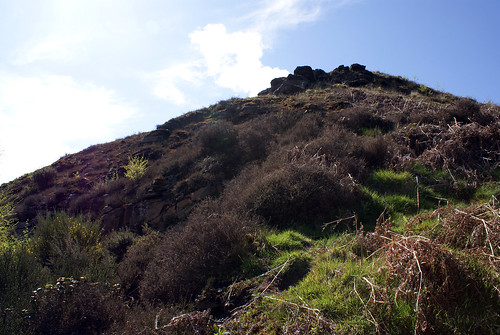
It was whilst reading The Duino Elegies by Rainer Maria Rilke, that I came upon the following passage:
“Who has twisted us this way round,
so no matter what we do we are always
in the position of one leaving? Just as,
on the last possible hill from which he can
glimpse his whole valley one final time,
he turns, stops there, he lingers –
so we live on, forever bidding goodbye.”
The image of my great grandfather, that which my Nana left me with, is almost exactly what Rilke has described in his poem. It isn’t just the image of him waving goodbye to his children, it’s also that of him saying goodbye to the world.
In his book, ‘The Past is a Foreign Country,’ David Lowenthal writes:
“‘Recognition does not always give us back the warmth of the past,’ writes Simone de Beauvoir; ‘we lived it in the present;… and all that is left is a skeleton.’ A long-ago scene recalled is ‘like a butterfly pinned in a glass case: the characters no longer move in any direction. Their relationships are numbed, paralysed.’ Her decaying ‘past is not a peaceful landscape lying there behind me, a country in which I can stroll wherever I please, and which will gradually show me all its secret hills and dales. As I was moving forward , so it was crumbling.’ Time’s erosion grievously afflicts what memories remain: ‘Most of the wreckage that can still be seen is colourless, distorted, frozen; its meaning escapes me.”
There is something aesthetically beautiful about photographs taken of the Western Front during World War One. It might sound a strange thing to say, but it’s not unlike the view I have of those photographs taken by the Czechoslovak Secret Police in Prague. Although taken in very different circumstances, they are nonetheless about observation – secret observation of a perceived or definite enemy.
The photograph below is one of those panoramas, taken in Serre during the First World War. (I do not have permission to reproduce the image so have shown it below in no great detail.)

The fact I find these images so aesthetically pleasing is perhaps a reminder of the distance between myself and the subject. These images, it goes without saying, were not taken for their aesthetic appeal. These were images designed to better enable armies to deliver death to the enemy.
I wanted somehow to use this look in creating panormas of fake landscapes based on places to which I’ve been and the work I’ve made as part of my Mine the Mountain series, in particular, The Past is a Foreign Country which is shown below.
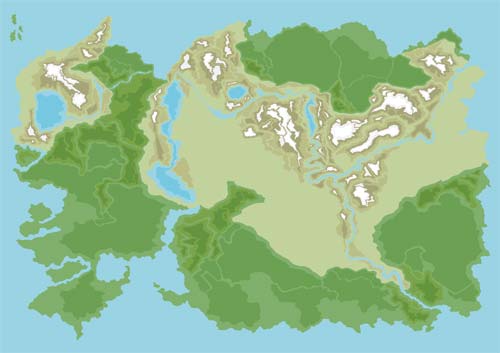
Alongside this work, I will, at the next Mine the Mountain exhibition, show a series of landscape photographs taken on trips around Europe, such as the two below.
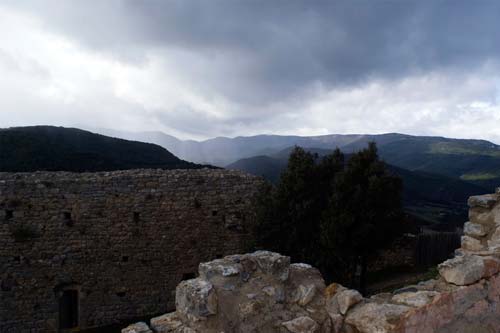
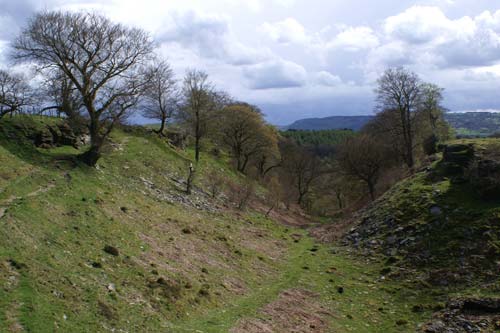
I wanted to show that although the past as we perceive it is in some respects a fiction (in that it can only be imagined) it was nonetheless real – that what happened did so in what was then the present. Taking the aesthetic of the panorama above therefore, I’ve created an amalgma of the landscapes, making a single panorama. It’s not a finished piece by any means, but the start of a new line of work.

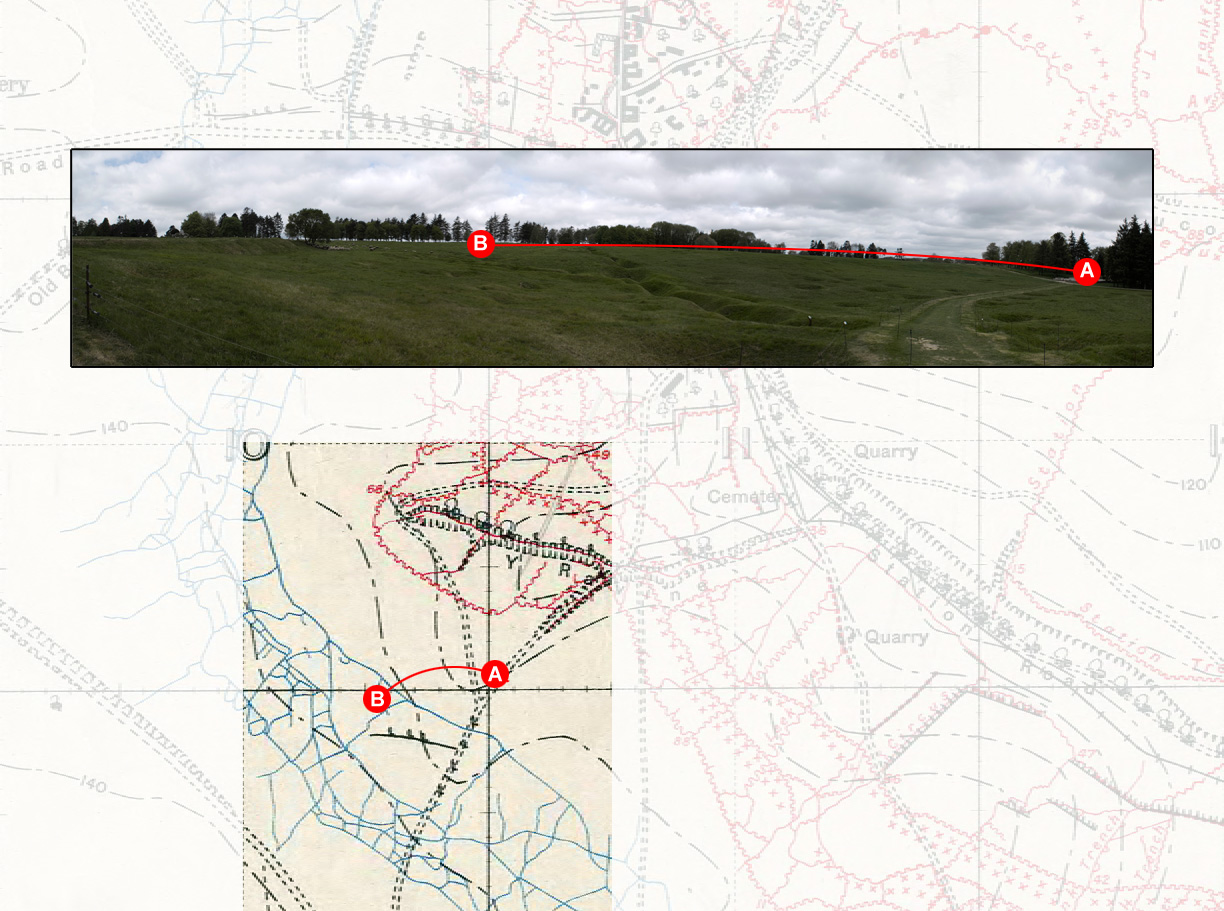
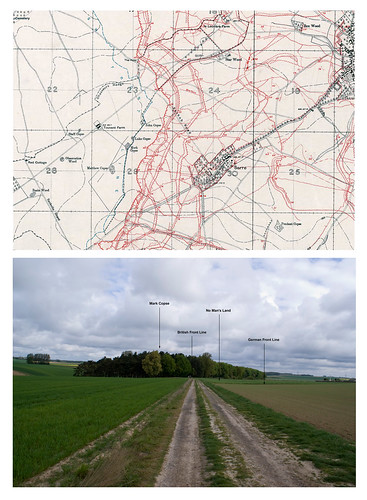
First image is a detail from a Trench Map (1916) showing Serre, the German Front Line and trenches (red) with the British Front line in blue. The photograph below shows Mark Copse, from where the 11th Battalion East Lancashire Regiment went over the top on 1st July 1916 suffering horrendous casualties as a result.
The Past is Time without a ticking clock. A place whose paths and roads are measured in years. The Present is where the clock ticks but always only for a second; where, upon those same paths and roads we continue, for that second, with our existence.
My first encounter with history, as far as I can recall, came when I was 7 years old. During a family holiday in Dorset, we visited Corfe Castle, a picture-postcard ruin which towers over the small village of Corfe below. I have two particular memories of that visit. The first is of a postcard which, in my mind’s eye I can still recall quite vividly and which I’ve since found for sale on the web (and purchased).
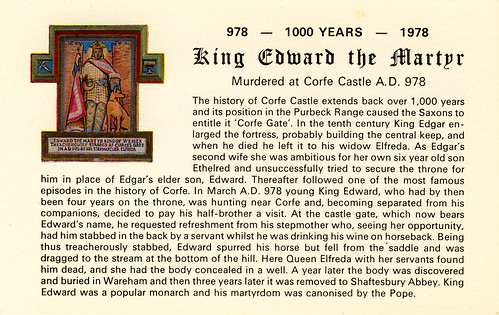
Most of its design comprises text commemorating the assassination of Edward the Martyr (reigned 975-978) a millennium before. There are two dates at the top (978-1978) and I can remember clearly looking at the year 978 and trying to conceive of a date which didn’t begin with a ‘1’.
The very idea of a 1000 years ago fuelled my imagination; the very fact the place in which I was standing witnessed such an event a 1000 years before I was even born set in motion a chain of thought which has remained to this day. Even though I was only 7, I remember considering my own non-existence, albeit in ways a 7 year old might imagine such a thing. Three years before in 1975, my great-grandmother (born in 1878) became the first person I knew to die. It was shortly after her death, that the very idea of death began to trouble me and in some ways I think the thought of a 1000 years ago presented itself to me as death in reverse. Again, this way of thinking about the past has remained with me ever since, which might go some way to explaining why I tend to visit places synonymous with trauma and death.
It was in the small museum in Corfe Village that I remember staring at a cannonball fired during the English Civil War. I can recall trying to see it as it was hundreds of years before I was born. This wasn’t just an object sitting on display; it had once been handled by people, it had flown through the air and had played a part in the castle’s destruction. I wasn’t just looking at the cannonball, I was trying to imagine its flight.
So in this postcard and the castle at Corfe my passion for history began, and this short text is the opening paragraph of a very long story which I’ve been reading ever since.
“Frontiers are lines. Millions of men are dead because of these lines.”
Georges Perec
The name Somme is, in the minds of many, synonymous with death, a byword for futile and indiscriminate slaughter. Think of the Somme and the image of men walking towards their deaths comes to mind. Think of the Somme and one date stands out above all others; 1st July 1916, the day the battle began. The battle itself lasted over four months, up until November 18th, but the 1st July is as infamous a date as any, being as it is the blackest day in British Military History. By the end of the first day’s fighting, British and Commonwealth forces had lost almost 60,000 men, with 20,000 of those killed or missing in action – a number which is almost impossible to comprehend. The exact number of casualties over the entire course of the battle (1st July – 18th November 1916) is unknown, but Allied forces lost some 620,000 men with over 145,000 killed or missing in action. Germany suffered around 465,000 casualties with almost 165,000 of those killed or missing.
These numbers are of course horrendous, but there’s always a danger that statistics such as these will only ever be numbers, rather than a single death multiplied several thousand times. Every one of those over 300,000 killed or missing in action was a son, husband or brother; an individual whose life was cut short for a small patch of ground. And we mustn’t forget the wounded whose injuries were often appalling – the result of a new type of warfare, where bodies were mauled and mangled by artillery shells, machine gun fire and shrapnel. Disfigurements and mental illness meant that even if they were lucky enough to return, many would never again lead a normal life.
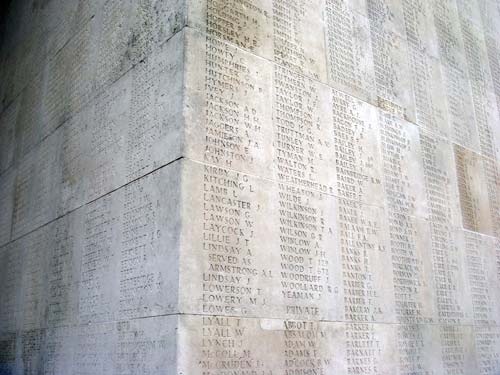
Before visiting the battlefields, I recorded my thoughts on how I imagined the Somme. Drawing on old photographs, books I’ve read and contemporaneous records, I’d built up a picture – a collage of sorts – of devastated fields, cut through with trenches; craters and mud, machine gun fire and shells. I’d imagined woods reduced to spent matchsticks occupying a space on the horizon and the terrain as I saw it in my mind’s eye was almost always flat. The images themselves were silent, equivocal and without any weight or real sense of place. There was colour but like any specific detail the colours were always vague. Any imagined scene was removed from my senses. I could try to imagine the war, but of course any idea as to what it was like would – to say the very least – be well wide of the mark. I could imagine the rain, the blue sky, the smell of the grass, but still it was all divorced from my senses; an indeterminate collection of images wherein there was little sense of direction. I could try and imagine movement, but any progression derived only from a series of stills as if I was looking down a length of film found on a cutting-room floor.
Having arrived in the Somme, we drove towards our B&B, down the narrow roads which cut across the fields. The sun was setting, casting long shadows which lay down across the landscape like discarded coats and clothes. I couldn’t help but think of those who’d stood in the trenches on the morning of 1st July 1916, knowing they might never see another sunset again. For a moment, this sunset became the one they wouldn’t to see. The sunset of that terrible day.
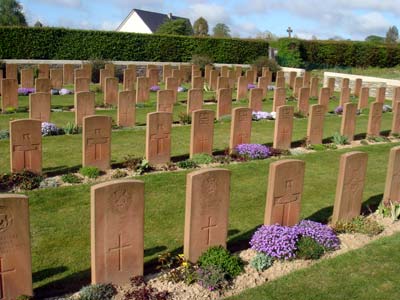
On arriving at the B&B we found our first cemetery.
We had just over a day to explore the Somme battlefields and therefore took the ‘Circuit of Remembrance’ a route signposted with poppies which takes in the major sites of the battle. Starting at Beaumont Hamel, we travelled to Thiepval, Pozières, Longueval, Rancourt, Peronne and La Boiselle. The following morning, we travelled to Serre to see the place where, among others, the Accrington Pals suffered horrific losses on that first terrible day.
Travelling through the countryside and seeing signposts pointing the way to villages and towns such as Arras, Pozières and Thiepval, I felt a strange sensation, in that prior to visiting the Somme, these legendary names were almost fictions – places connected with a distant past found only in the pages of history. Temporal distance in some way then correlates with geographic distance, where places one has never been are like those times to which one can never go. It’s as if they are names of moments in time rather than places in another country; the past is indeed a foreign country, and yet one it seems can go there.
Of all the places we visited along the ‘Circuit of Remembrance,’ two stand out in particular; the site of the attack on Serre at what is now The Sheffield Memorial Park, and the Newfoundland Memorial Park at Beaumont-Hamel. Of course all other sites were extremely poignant, not least the Memorial to the Missing at Thiepval and the many cemeteries, all immaculately kept, which are found throughout the Somme countryside.
The first place we visited was the Newfoundland Memorial Park at Beaumont Hamel.

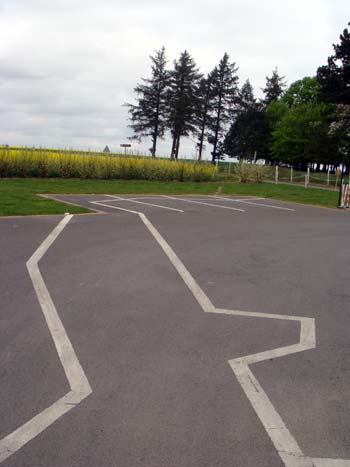
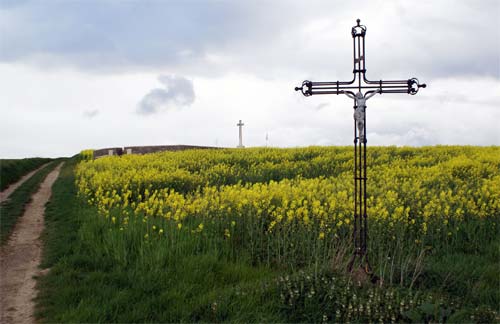
It’s one of the few sites in the Somme region where the ground has remained largely untouched since the end of the First World War. The trenches are still visible, for example, St. John’s Road and Uxbridge Road which once led to Hyde Park Corner and Constitution Hill; trenches now filled in beneath a field of Rape (the line of the Uxbridge Road trench has been marked in white in the car park).
The naming of the trenches has always interested me. It’s almost as if in the midst of the ruined landscape, whose pre-war character had all but been effaced, a new place was brought into being; not simply a ruin of that pre-existing world, but a new world entirely; a labyrinth of lines cut into the ground, named after streets or towns back home. It’s as if these ‘streets’, ‘lanes’ and ‘alleys’ were each a piece of the collective memory of those who fought and died there; fragments of a place called ‘home’ to which many would never return. Now of course the trenches have all but disappeared along with the men who made them, along with their individual memories. And yet they remain on maps and in books, and although the ruined towns and villages have been rebuilt, their own much older names seem to belong more to this other lost world than that before or after.
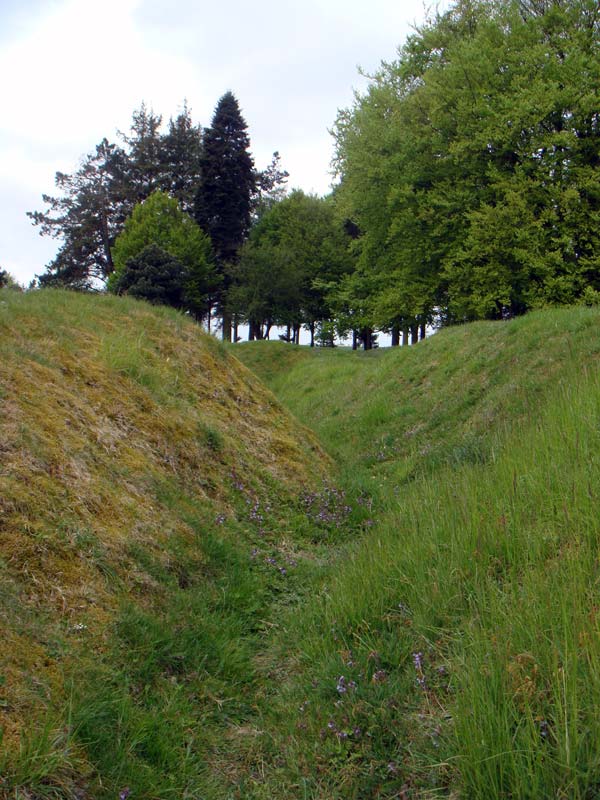
It was at Beaumont Hamel that the Newfoundland Regiment attacked on 1st July 1916, suffering as they did appalling losses. The following description is taken from the ‘Newfoundland and the Great War’ website:
“Thus it was that the Newfoundlanders moved off on their own at 9:15 a.m., their objective the first and second line of enemy trenches, some 650 to 900 metres away. In magnificent order, practiced many times before, they moved down the exposed slope towards No Man’s Land, the rear sections waiting until those forward reached the required 40-metre distance ahead…
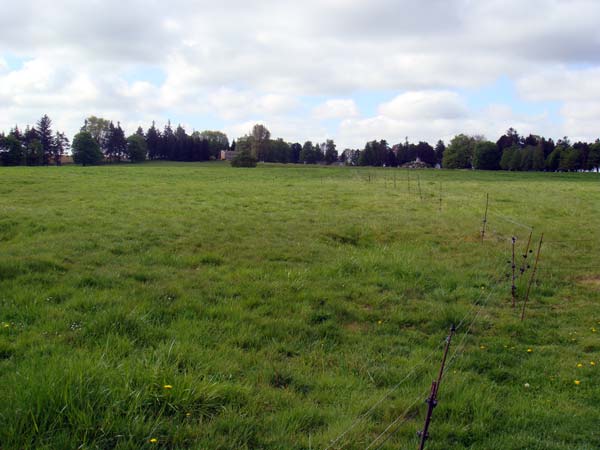
…No friendly artillery fire covered the advance. A murderous cross-fire cut across the advancing columns and men began to drop, at first not many but then in large numbers as they approached the first gaps in their own wire. Private Anthony Stacey, who watched the carnage from a forward trench with Lieutenant-Colonel Hadow, stated that “men were mown down in waves,” and the gaps cut the night before were “a proper trap for our boys as the enemy just set the sights of the machine guns on the gaps in the barbed wire and fired”. Doggedly, the survivors continued on towards The Danger Tree.”
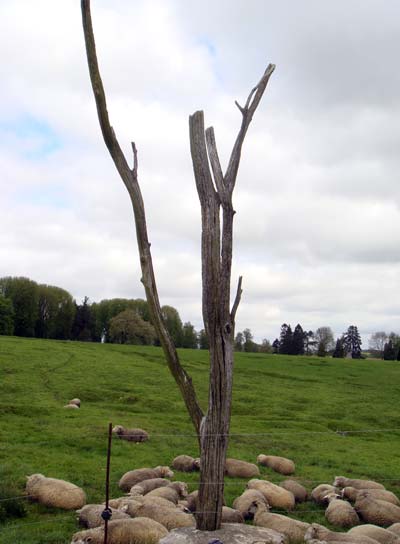
The ‘Danger Tree’ still stands, and standing there today, looking at the sheep laying around its base, it’s hard to imagine the scene at that same place 96 years ago.
Like many who’ve read about the Somme, I was aware how close the opposing armies were to one another – at least in terms of stats – separated as they were by the void of No Man’s Land, but it was only in this place that the distance was made startlingly apparent; it was hardly any distance at all. Entering the memorial, one can see the British front lines. A leaflet guides you around and suddenly, you find yourself looking back from the German front line towards where you entered, a distance which is all but a few minutes’ walk away. And in between is a patch of ground, much like any other you might have seen before but upon which thousands lost their lives.
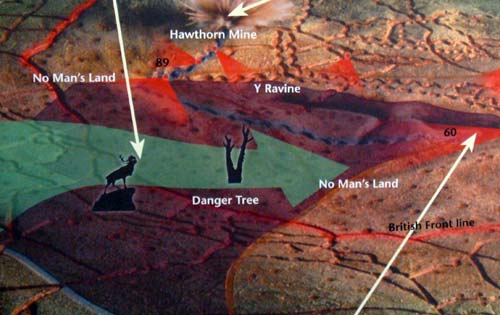
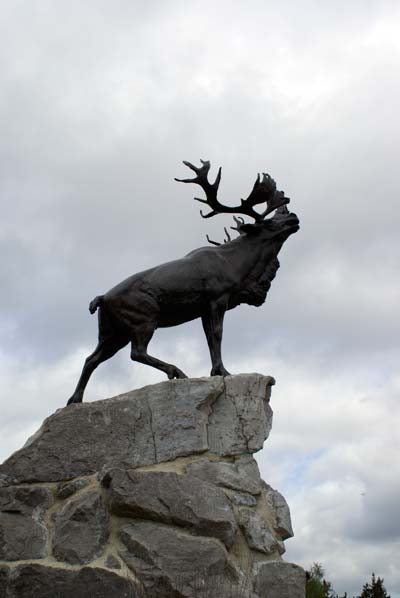
The following images show the Caribou Monument to the Newfoundland Regiment (shown on the map above) which stood at the British Front Line. The Danger Tree is that shown above which marked the furthest many men managed to get. The Y-Ravine is behind the German Front Line, the trenches of which are also shown below.
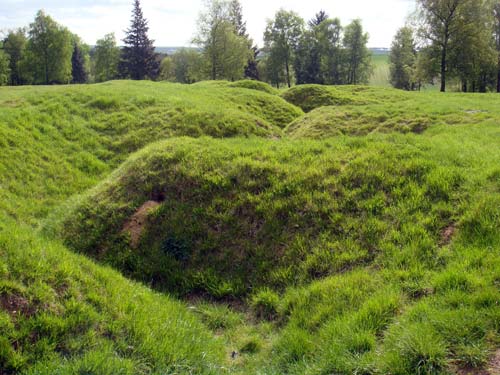
Of course it goes without saying that in 1916, the ground would have looked very different. Pockmarked by shells, cut through with trenches running on for miles and covered with swathes of barbed wire it would have presented advancing troops with considerable difficulties even without the horrors of enfilading machine gun fire and pounding artillery.
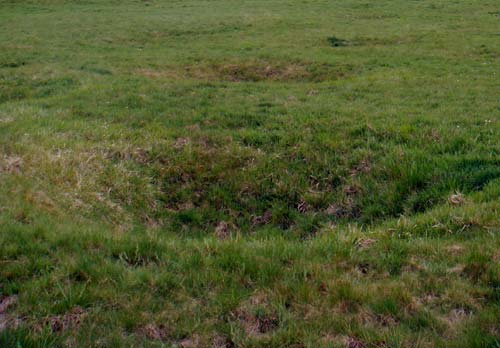
As far as can be ascertained, 22 officers and 758 other ranks were directly involved in the advance that day. Of these, all the officers and around 650 other ranks became casualties. Of the 780 men who went forward about 110 survived unscathed, of whom only 68 were available for roll call the following day. To all intents and purposes the Newfoundland Regiment had been wiped out, the unit as a whole having suffered a casualty rate of approximately 90%.
It goes without saying that as tourists today we can never imagine what it was like to be a part of this battle, not that we should be deterred from trying. Even so, one can appreciate things which sharpen the focus of any prior knowledge of the war and in particular any images which one might have imagined beforehand. I’d read about the attack on Beaumont Hamel in a book by Peter Hart and had imagined a vague collection of ‘ambiguous stills’ with which I did my best to appreciate the experiences of those who suffered the appalling violence of that first day. But standing in the middle of what had been No Man’s Land, with the British Front Line to my left, beside the Newfoundland Caribou Memorial, and the German Front Line to my right – just behind the memorial to the 51st Highland Division – I was struck by how small the battlefield, at that position, was. As I’ve said, if this was any place in the countryside, it would constitute nothing more than a small part of a short walk, but in 1916 it was a great advance, in the pursuit of which, many thousands lost their lives.
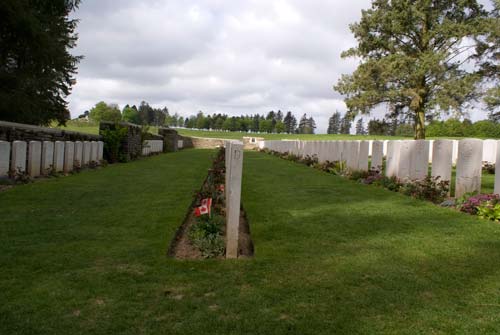
There is a tendency at sites such as this, or rather in associated museums (for example that in Ypres) to create recreations of battles with sounds effects, waxworks, lighting effects and so on. For me, such recreations do nothing other than turn history into fantasy. They push history – which already borders on fiction (in that it can only be imagined) – deeper into the world of make-believe. Recreations serve no other purpose than to ‘entertain’ and certainly do little by way of justice to memory of the men who fought there. It’s much better to be in a place, to hear the birds and see the trees… they might not be shells or machine guns, but they are real all the same.
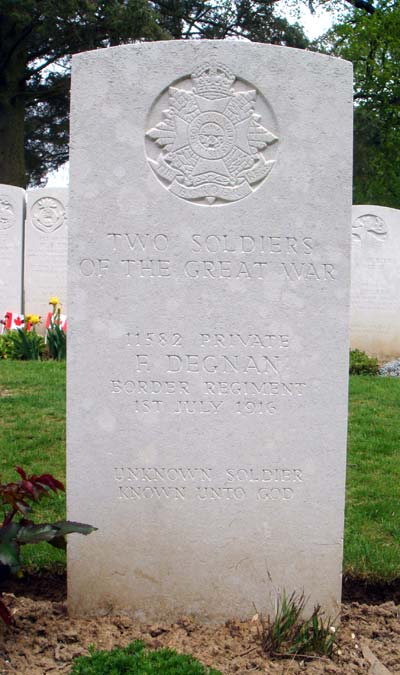
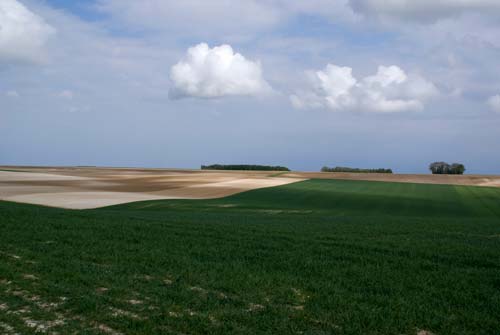
I must admit I could have stood there in ‘No Man’s Land’ for hours, collecting together what I knew of the war and what I could glean from the guide and anchoring it to the reality of the world by which I was surrounded. What I could really appreciate here was the terrain, not only the pock-marked surface, but the level of the ground which, superficially at least, appeared quite ‘flat’. Certainly, if one was out walking, one wouldn’t think it was particularly steep or hilly. However, from the point of view of those who left the British Front Line to attack the Germans, one could see what they were up against. The ground rose just enough to leave them exposed, while at the same time affording the German army at least a degree of shelter. Indeed, something which I found myself coming to understand in the Somme, were the subtle shifts of the terrain and how such changes, visible to the individual eye, shaped the war as a whole and determined the fates of so many hundreds of thousands of men.
The image below is taken in what was No Man’s Land. The Y Ravine Cemetery is on the right. Over the ridge in the distance is the German Front Line.
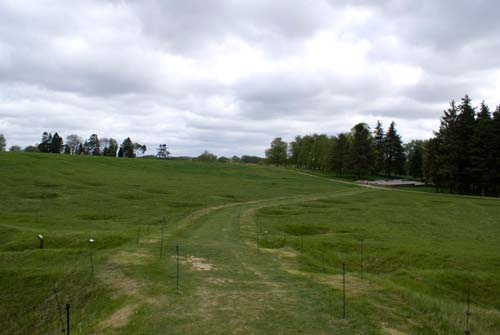
Over the course of the last few years, ever since my visit to Auschwitz, I’ve tried to understand what it is about being in a particular place that makes knowledge of a past associated with that place so much more compelling. It seems obvious that it should be the case, but why? I can watch countless DVDs about the Somme for example, view masses of photographs, read the testimonies of those who fought and look at the lists of the names of the dead. But only by standing there, in the middle of a field (upon which sheep were grazing) did the full horror make itself known.
I felt exactly the same thing at the Sheffield Memorial Park, situated on what was once the British Front Line between ‘Matthew Copse’ and ‘Mark Copse’ near the village of Serre. It was from here that an attack was made on what was then a fortified village by, amongst others, the Accrington Pals and Sheffield City Battalions, again on that infamous day, 1st July, 1916.
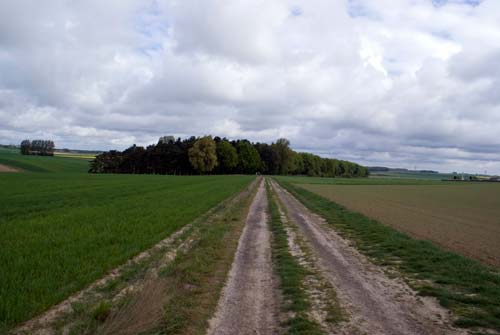
Again, staring ahead towards the Queens Cemetery, behind which the German Front Line would have run, one could see just how close the two sides were to one another. One could also read the terrain and see the advantage the Germans had when facing the approaching army. As a result therefore, one could also see just what the soldiers of the Pals Battalions were up against, even without the horrors of machine guns and artillery.
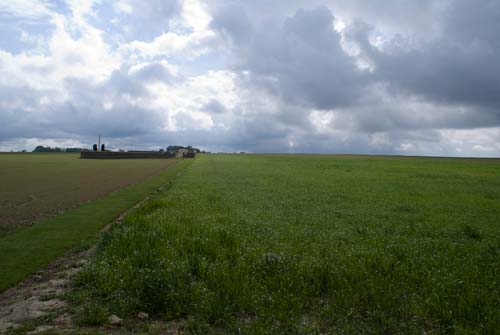
Again I have to stress, that we can never fully appreciate what the men who climbed from their trenches faced that fateful day. But as with my experience at the Newfoundland Memorial, I found that in looking towards where the German lines would have run, across the field over which the soldiers would have walked, the horrors of which I’d read became much clearer. I couldn’t see the guns of course, or the artillery and barbed-wire. I wasn’t walking into a hail of bullets with shrapnel flying from shells bursting all around me. But there in the tranquility of the present day, where one could hear the birds, I’d brought with me to that place, the whole of my existence – my past – and that was something at least I had in common with the brave men who fought there.
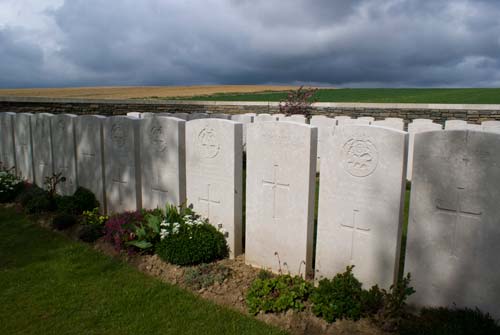
In La Boiselle, one can find the Lochnagar Crater, caused by a huge mine detonated at 7.28am on 1st July 1916. Containing 24 tons of explosives, it was at the time the largest ever man-made explosion.
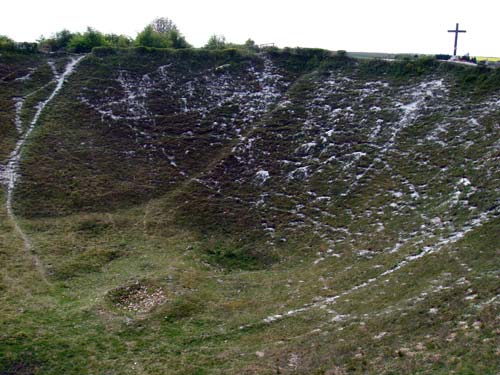
At 300 feet in diameter and 70 feet deep, the crater is still the largest caused by man in anger. Again, like the various battlefield sites, it’s a tranquil place, in stark contrast to the violence from which it was created. And yet, although one can’t hear the noise, one can see it in the vast space left in the ground. The sound has left a footprint; it’s become physical, just as sounds remain in the pock-marked battlefields found across the Somme.
In some respects, this idea of a ‘sonic footprint’ is akin to that of people leaving a trace on paths, roads, tracks and other lines found in the landscape. The trenches for example – those which one can see today – are not as they were in 1916 (i.e. they’re not as deep and are grown over with grass) but they are lines created by people many years ago. They might not call to mind a sound in quite the same way as the Lochnagar crater, but they’re nonetheless records of actions and movements.
In his book, ‘Lines, A Brief History’, anthropologist Tim Ingold writes that human beings, ‘leave reductive traces in the landscape, through frequent movement along the same route’. He considers this in light of the etymology of the word writing (derived from the Old English term writan – meaning to incise runic letters in stone) and surmises that human beings somehow ‘write’ themselves in the landscape. Henri Bergson wrote that our whole psychical existence was something just like a single sentence. I believe,’ he said, ‘that our whole past still exists.’ The whole past could be said to exist, upon and within these trenches, as ‘sentences’, ‘written’ in the landscape by men almost 100 years ago.
These lines can also – metaphorically speaking – be thought of as magnetic tapes, where as we walk, we record our presence; where what we see, hear, touch etc. at any given moment, is analogous to the recording head of a tape-player arranging the magnetic particles so as to record the sound or video image. Equally, when we walk down a particular street, path or track, we simultaneously play-back previous recordings, those laid down by people long since lost to the past and the battlefields of the Somme are a perfect place to illustrate this point.
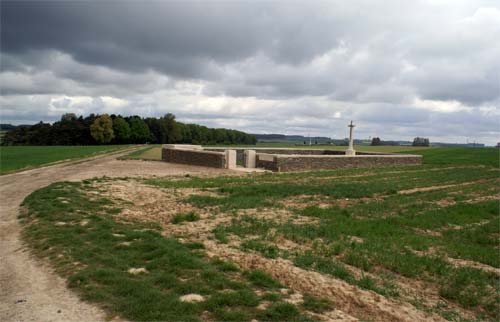
At the battle for Serre on that fateful day – 1st July 1916, hundreds of men lost their lives on the ground between the village and the memorial where we were standing. The weather on the day of our visit was mixed, but mostly dry (the battle took place on a beautiful summer’s day). There were patches of blue sky and the odd cloud. Looking ahead, I could see the lie of the land. I could see the distance, the village of Serre and behind me the trees of the copse. I could hear the birds and feel the ground beneath my feet. Imagine then, that as I walked, the things I saw were somehow recorded in the ground upon which I was walking: the position of the sun, the colour of the sky, the sound of the birds and the distance. As a record-head receives information and translates it onto tape, so metaphorically, my body was doing the same.
Of course, recording-heads don’t just record, but play-back all that’s previously been recorded. Again we can think of the ground as being crossed by many lines and that along every one of those lines are hundreds of ‘recordings’ left by those who went before us. We can imagine that what they saw, what they heard and what they thought were all translated into the ground upon which they walked.
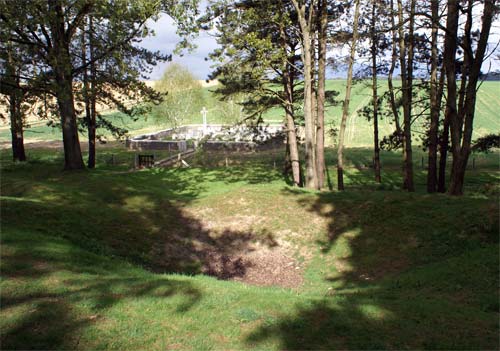
It was Bill Viola who said that ‘we have been living this same moment ever since we were conceived. It is memory, and to some extent sleep, that gives the impression of a life of discrete parts, periods or sections, of certain times or highlights’. If we think of the lines the soldiers left behind, lines which stopped abruptly in No Man’s Land, we can imagine them leading all the way back to the time they were born.
These long, individual lines are of course impossible for us to imagine in their entirety, but on sites such as the battlefields at Serre and Beaumont Hamel, where the lines of trenches can still be seen and where No Man’s Land stretches out ahead, we can be sure at least of seeing a small part. By following these fragmentary lines, our bodies in a very small way mirror that of the soldiers. Again I have to stress the words very small way and again make it clear that we can never know what it was like to experience what they did.
When we walk down the line of a trench, the gestures of our bodies are bound in some very small way to mirror those of people caught in the midst of war. When we look at the sky, down at our feet, turn our heads left or right, we can assume that an aspect of the way our bodies move is almost a mirror-image of those who went before us. We can imagine then, that when we plant a footstep, the way our body moves, what we see around us is akin to the idea of our bodies playing back that which has been recorded in the ground; the ground determines how we move – determines the shape of our body; thus we empathise kinaesthetically with those lost to the past.
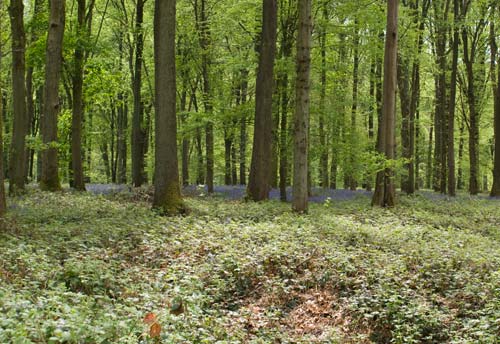
These lines, as I’ve said, are only fractions of the total line carried by men into battle, i.e. the total span comprising the entire geography of their lives. But history is full of holes, and the gaps have holes of their own.
History tells us only a little about the past. It gives us the outline whereas the rest is all but missing. The history of an event, as told in a book, has a beginning, a middle and an end, but of course in reality the past is never like that. Historic events are about the people involved, many of whom are missed out altogether. For George Lukács, ‘the “world-historical individual” must never be the protagonist of the historical novel, but only viewed from afar, by the average or mediocre witness.’ In other words, those historic events written about in books, are best discovered through the eyes of those who are missing from the text, people who at best are either given the epithet ‘mob’ or ‘masses’ or are bundled into numbers and tables of statistics. It’s through the eyes of these people that I want to see the past.
To consider this a little further; in the film Jurassic Park, the visitors to the Park are shown an animated film, which explains how the Park’s scientists created the dinosaurs. DNA, they explain, is extracted from mosquitoes trapped in amber and where there are gaps in the code sequence, so the gaps are filled with the DNA of frogs; the past is in effect brought back to life with fragments of the past and parts of the modern, living world. This ‘filling in the gaps’ is exactly what I have done throughout my life when trying to imagine the past and it’s just what we do in terms of the fragments of lines upon which we can kinaesthetically engage with people lost to the past. Where there are gaps we use our own lives to fill the holes and thereby understand that those who died in places like the Somme, were people just the same as ourselves.
Something else which plays a key role in interpreting landscapes such as those at the Somme is something which we might describe as ‘Embodied Imagination.’ We all at some point in our lives try to imagine the past whether through photographs, paintings or literature, but what we imagine always comprises snapshots, static images animated to some degree by our imaginations. It’s exactly how I described my thoughts on the Somme before my visit.
“Before visiting the battlefields, I wanted to record how I imagined the Somme. Old photographs, books and contemporaneous records all made a picture – a collage of sorts, comprising devastated fields, cut through with networks of trenches. Craters and mud; machine gun fire and shells. Woods reduced to spent matchsticks occupying a space on the horizon. The terrain as I’d imagined it was always flat and the images themselves silent, equivocal, without any weight or sense of place. There was colour but like any specific detail it was always vague. Any imagined scene was removed from my senses. I could try to imagine the war, but of course any idea as to what it was like would be well wide of the mark to say the very least. I could imagine the rain, the blue sky, the smell of the grass, but still it was all divorced from my senses; an indeterminate collection of images wherein there was little sense of direction. I could try and imagine movement, but any progression derived from a series of stills as if I was looking down a length of film found on a cutting-room floor.”
In his book ‘The Materiality of Stone: Explorations in Landscape Phenomenology,’ Christopher Tilley writes:
“At the basis of all, even the most abstract knowledge is the sensuous, sensing and sensed body in which all experience is embodied: subjectivity is physical… The body carries time into the experience of place and landscape. Any moment of lived experience is thus orientated by and toward the past, a fusion of the two. Past and present fold in upon each other. The past influences the present and the present rearticulates the past.”
In a ‘Phenomenology of Landscape,’ he writes: “Knowledge of place stems from human experiences, feeling and thought.”
We could say therefore that knowledge of the Serre battlefield, for example, stems from ‘human experiences’ (the experiences of those who fought in 1916), ‘feeling’ (my own kinaesthetic experience of the battlefield in the present day) and ‘thought’ (my embodied imagination where my knowledge of past human experience is animated by my own kinaesthetic experience). Knowledge of a place is both geography and biography, of both the place and the individual.
Again, Christopher Tilley’s work is useful here. In his book, ‘Body and Image,’ he writes:
“What the body does in relation to imagery [landscape], its motions, its postures, how that imagery [landscape] is sensed through the fingers or the ear or the nose, as much as through the organ of the eye, actively constitutes the mute significance of imagery [landscape] which to have its kinaesthetic impact does not automatically require translation into either thoughts or meanings. The kinaesthetic significance of imagery [landscape] is thus visceral. It works through the muscles and ligaments, through physical actions and postures which provide affordances for the perceptual apparatus of the body in relation to which meaning may be grafted on, or attached. Meaning is derived from and through the flesh, not a cognitive precipitate of the mind without a body, or a body without organs.”
The ‘perceptual apparatus of the body’ as described by Tilley is akin to what I’ve described as my kinaesthetic experience of the battlefield. ‘Meaning’ can then be ‘grafted on’ or ‘attached’, where that meaning is my knowledge of past human experience. The whole is what I’ve described as ‘embodied imagination.’ But we must be careful not to reduce experience down to a mind/body dualism. The mind is not divorced from the body, neither is the body separate from the mind. ‘Consciousness is corporeal.’
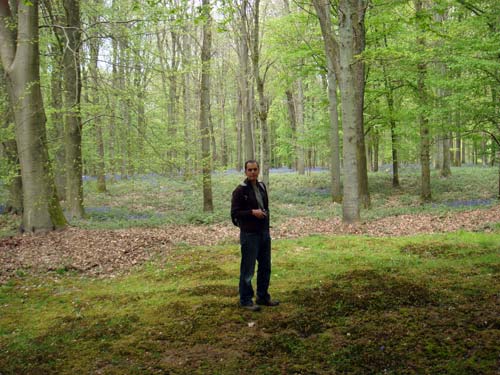
I mentioned earlier the names of the trenches; the fact that for four years, a strange, new and violent place was imposed upon a peaceful agricultural landscape; how it’s almost as if the names of the trenches were fragments of the collective memory of those who dug and occupied them. Today, when we walk along what remains, we engage kinaesthetically with those who knew them during the war and we carry with us the entire geography of our existence, stretching back in a line to the day we were born. In effect, we impose – just as we’ve done throughout our lives – our own world upon that which already exists. “In a fundamental way,” writes Christopher Tilley, “names create landscapes” and in a sense, the names of those we have known, whether throughout our lives or for a few minutes are mixed with the names of streets, cities and buildings, to make a landscape unique to us as individuals. The landscape of the Somme, in the physical present or in books and maps has been created not only by the names which existed prior to the war, but by the names of the trenches, fortifications and not least the names of everyone who fell here.
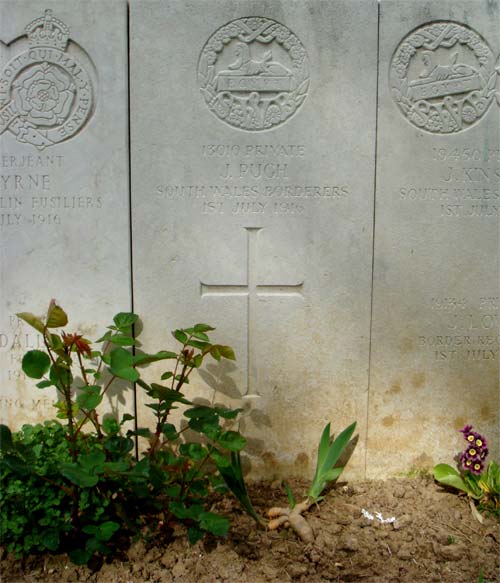
Inevitably in a place such as the battlefield at Serre where so may men fell on that small patch of ground, one’s thoughts will turn to death – the literal end of the line. In an interview in 1979 with Frank Venaille, writer Georges Perec was asked: “…don’t you think that… the determination to work from memories or from the memory, is the will above all to stand out against death, against silence?”
If we can empathise kinaesthetically with the lives of the men who fought, it’s almost inevitable that we will somehow engage with their deaths which inevitably means a contemplation of our own, and in that sense, the fact that we can then walk away means that to some extent we do indeed stand out against death and silence.
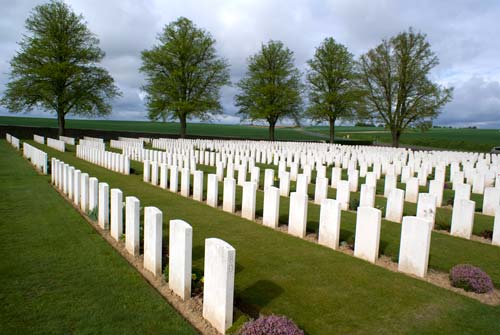
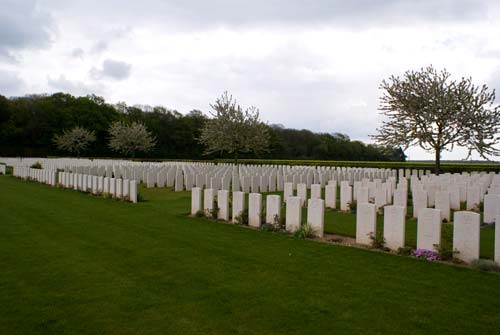
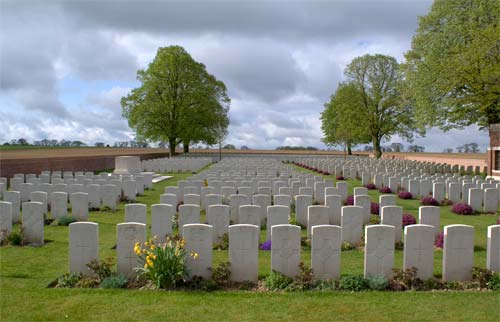
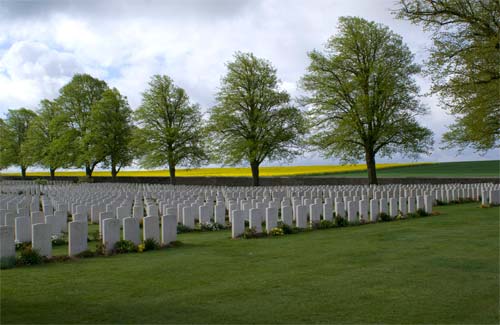
Death is at its most visible in the cemeteries and monuments of the Somme. The landscape is covered with hundreds. Immaculate and maintained by the Commonwealth War Graves Commission, they are strangely beautiful places wherein one’s breath is always taken away by the row upon row of white headstones. It’s only here the scale of the slaughter becomes apparent. Some headstones have names, many – where names are unknown – have just the words A Solider of the Great War. Often the date is familiar, coinciding with the start of a phase in the battle, July 1st 1916 for example. But many men too vanished altogether and over 72,000 of these men are commemorated on the Thiepval memorial to the missing.
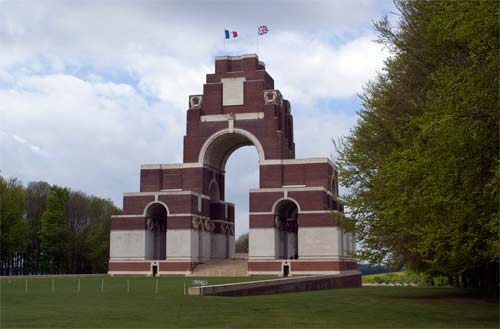
In some respects, by being in the places where they fell, by walking the lines of the trenches and through ‘reading’ or ‘playing-back’ ‘recordings’ in the lines which cover the Somme as I’ve described above, we are, kinaesthetically, remembering the missing and all who never returned home. People are places and places are people. Remembrance is not an act solely of the mind, but of an embodied imagination.
Review of Mine the Mountain in Impact Magazine. Note, the article refers to Bergen-Belsen when in fact the camp was Belzec.
I went to Auschwitz two years ago because the holocaust was as distant to me as fiction. I wanted to remember those who died not merely as numbers but as real people. Nicholas Hedges similarly visited ‘dark tourist’ sites in order to connect with those individuals and achieve self discovery of his own past.
‘Mine the Mountain’ is founded upon postcards. He perceives them to be “a conversation in as much as they’re a connection between two places, one that’s unfamiliar and one that’s known.” This then, inspires his journey from the vividly coloured postcards of War memorial sites to his own past and those who he never knew.
His starting point is to represent his distance from the holocaust survivors. They are simply numbers below the places where they died, on postcards, imposed onto an aerial of Bergen Belsen. We need to connect with the people that these numbers represent. ‘A well staring at the sky’, a collage of black and white post cards depicting the victims of the holocaust emphasise the fragility of distant memories, when juxtaposed with ‘Broken Toys’, a vividly coloured collage of his family holidays in Dorset.
We can connect with the past through place. ‘If I was a place’ combines maps he drew in childhood, to maps of the World War Trenches and the aerial views of Bergen Belsen. Through intertwining his own perception of place in the past, with the holocaust victims’ sense of place, he discovers who they are.
The exhibition is cyclic; it begins with numbers and ends with words, rather than people. Postcards containing diary entries from soldiers fighting in Ypres adorn. The final one is entitled ‘It’s A Fine Day’ (I’m not going to lie, that made me emotional). But, it reminded me of the reason we still remember the holocaust, and why Hedges and I both wanted to explore the past.
As part of my forthcoming exhibition, I’ve been purchasing a few postcards for a piece of work, one which mirrors previous works I’ve made with postcards of World War One soldiers. One of my recent acquisitions can be found below.
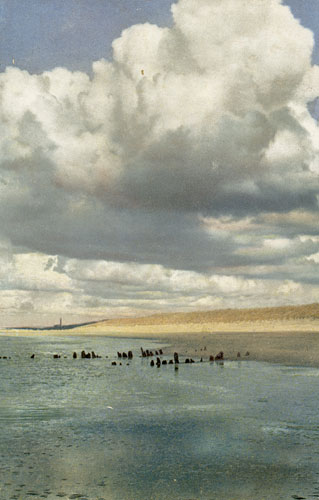
The postcard shows a quiet, tranquil beach scene, which when one looks at the reverse becomes particularly poignant.
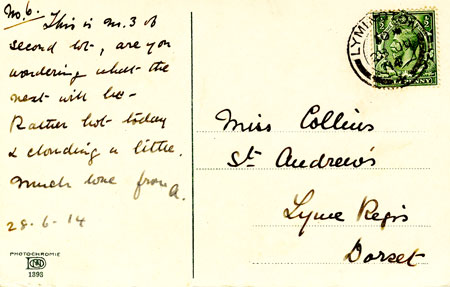
It was posted in the summer of 1914, just a few weeks before the outbreak of World War One. What’s more, the date at the bottom, 28th June 1914, is the date that Archduke Franz Ferdinand, heir apparent to the Austro-Hungarian throne was assassinated in Sarajevo.
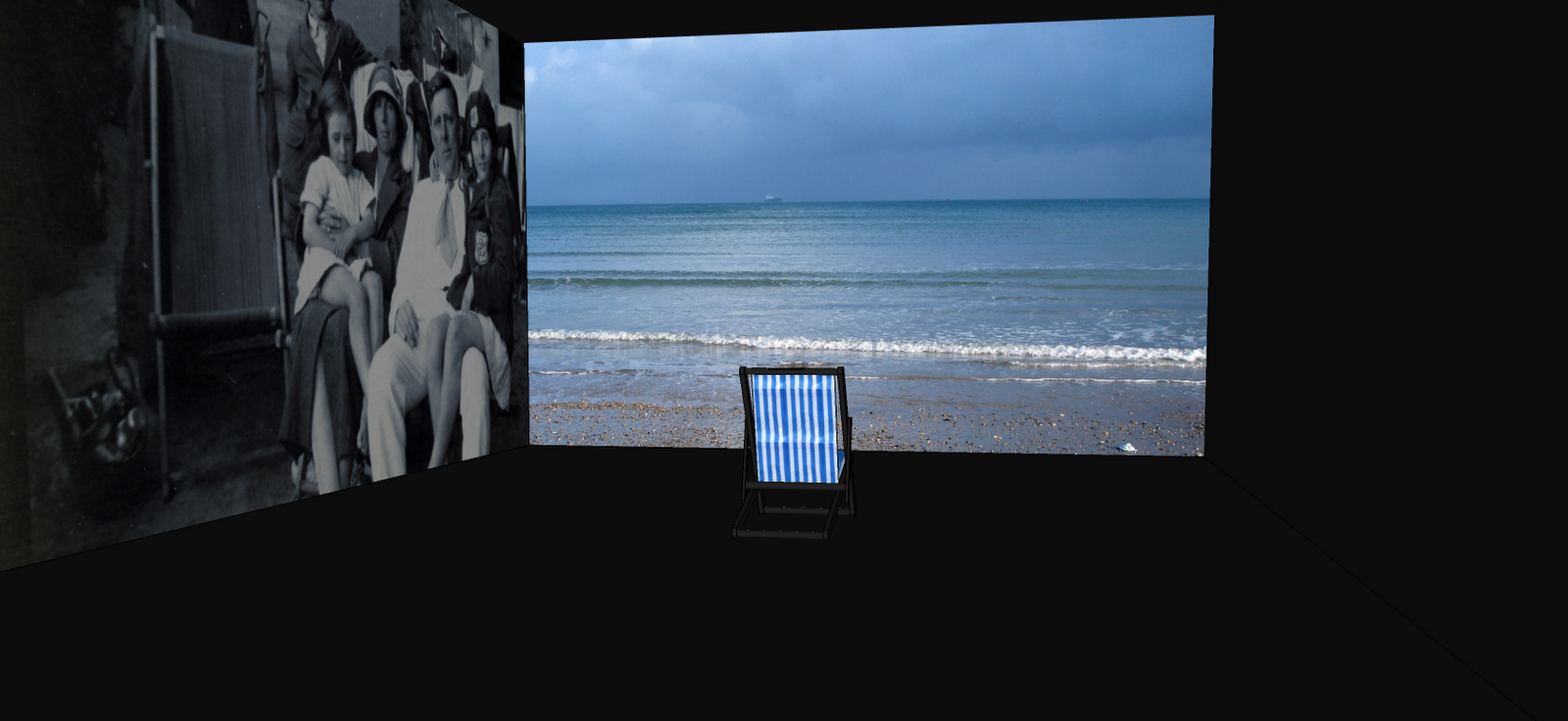
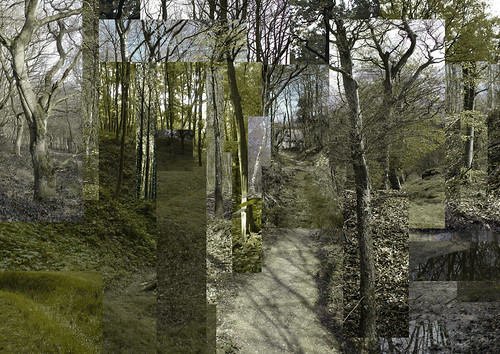
A new piece for the exhibition in June.
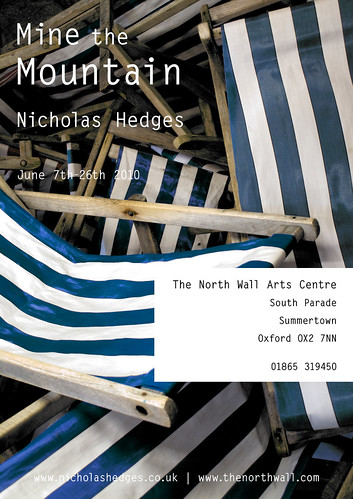
New poster for my forthcoming exhibition in June.
Recently purchased photographs.