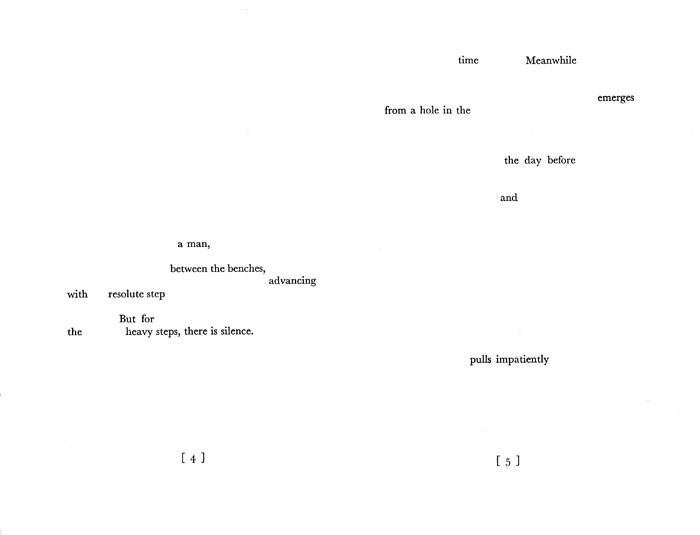
Two images from two separate projects: Heavy Water Sleep (top) and Fragment (below).
Art, Writing and Research
I’ve been looking for a way of converting GPS data to midi as part of a project based on a fragment of mediaeval pottery which I found in the Museum stores at Standlake in Oxfordshire. The GPS data derives from a walk I made around the area where the pot was discovered during an excavation in 1986 (St. Aldates in Oxford).
Part of the project articulates the idea of the pot’s creation (on a potters wheel) by using a turntable on which a vinyl record will play a fragment of an audio piece, the rest being composed of silence (or at least the crackle of the vinyl). The idea for the audio composition was to create something using GPS data. But how could this be turned into midi information?
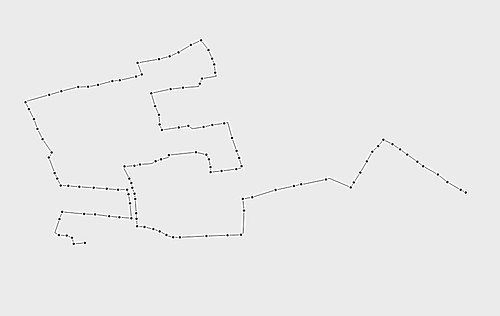
The image below shows the route recorded on my GPS device.
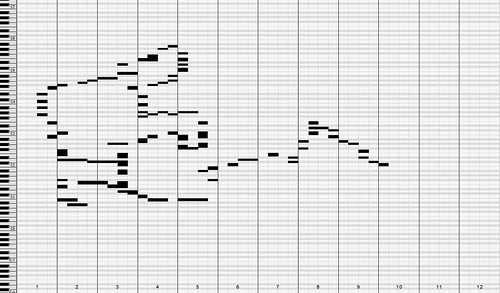
Originally, I’d coverted the data into midi (via photoshop) as in the image below, but the result was too complicated, and not a little messy.
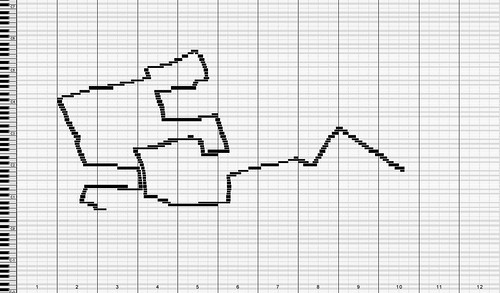
It was whilst considering how one makes paper snowflakes, that I went from cutting holes in a fragment of paper to the holes of old piano rolls. What I needed was something which was more like this. Instead of trying to copy the line of the walk completely therefore, I have instead blocked in notes where there are points on the GPS map as in the images below.
Firstly, in Photoshop, I combine a screenshot of the map with one of the midi inspector in Cubase.
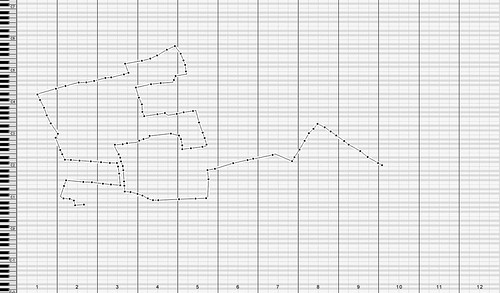
Then, where there’s a circle on the GPS line, I create a note in the nearest ‘box’.
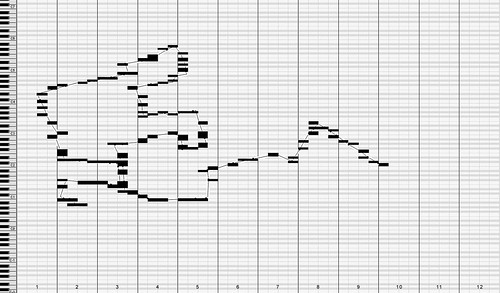
The result, when compared with my earlier attempt is now much neater and easier to work with.
I have completed two versions of the page; one based on my experience of today, the other (below the original text) inspired by my reading Adam Czerniakow’s Diary.
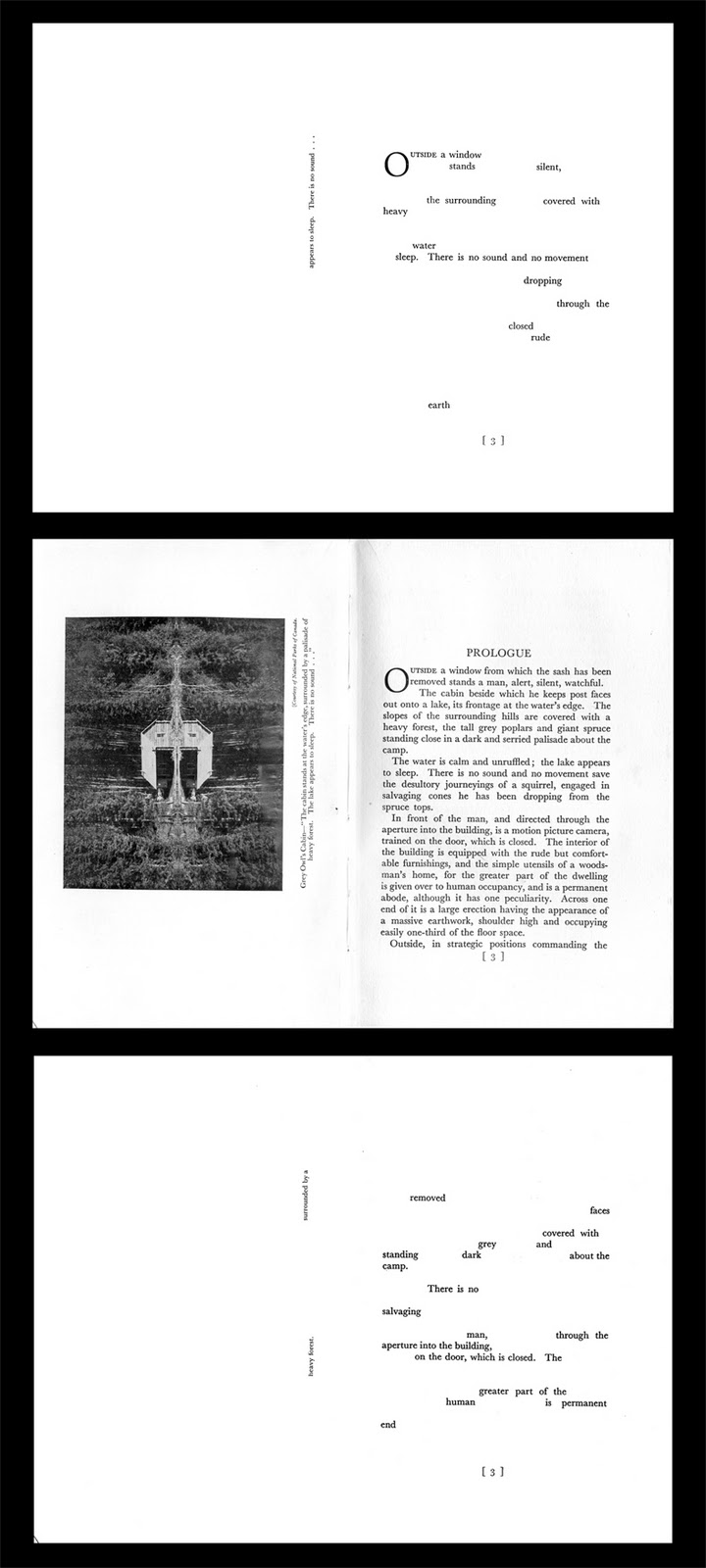
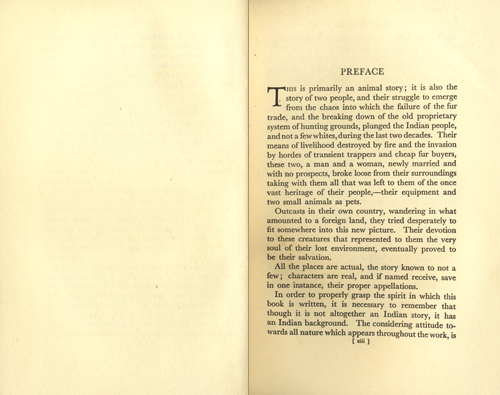
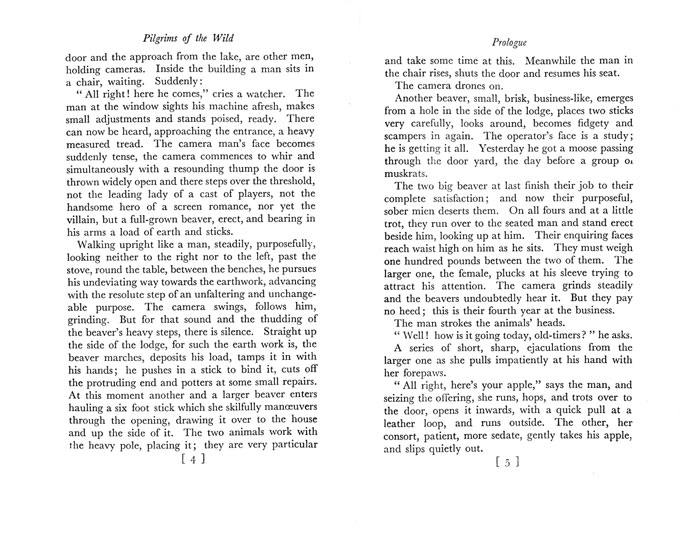
Continuing from what I was discussing yesterday (see Humument), I decided to make a start on my own ‘Humument’ by reading the first page of Pilgrms of the Wild by Grey Owl, using the text to describe something about the moment in which I was reading it. Given the snow and the freezing conditions outside, I was surprised at what I came up with, and very pleased with the result. The image below shows the original pages with my amended version below:
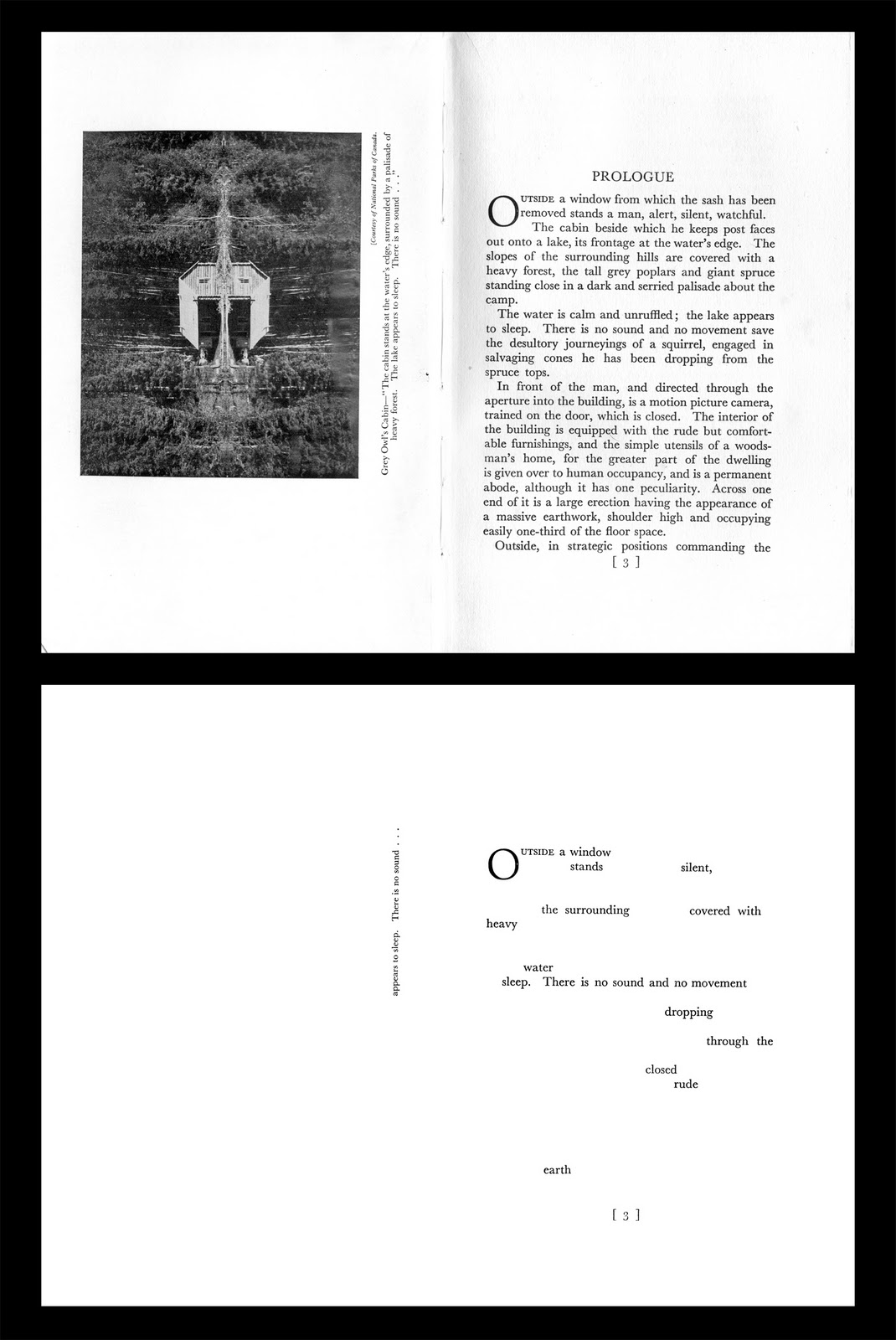
It goes to show how this technique can lead to unexpected, and in this case, rather beautiful results. I would never have thought before of describing snow as ‘water sleep’, but as my eyes scanned the page, the combination of words lept out at me.
My plan is to rework a page a day – not necessarily every day – and to rework the same pages with the Diary of Adam Czerniakow in mind.
In January this year, I used words from two seemingly unrelated books to create an installation in Shotover Country Park as part of Holocaust Memorial Day. The piece was called The Woods, Breathing, the title coming from an entry in the diary of Adam Czerniakow, who was ‘mayor’ of the Warsaw Ghetto up until his death in 1942.
In his diary, on January 19th 1940, Czerniakow describes a book he’d read, of which, he wrote: ‘The forest, little wild animals – a veritable Eden.’ The book was Pilgrims of the Wild by Grey Owl, and his comment is especially poignant given the horrors of the time in which he was living. It’s as if in the book, he found the freedom he craved, freedom which vanished as soon as the book was closed. The previous year, a few months after the start of the Nazi Occupation, he wrote how he was ‘constantly envying all the heroes of my novels because they lived in different times.’ There is a sense then, when he describes Pilgrims of the Wild that he is also envying the author, Grey Owl.
I’ve always seen Grey Owl’s book as a map, as in many respects all books are, maps through fictional landscapes, half conjured up in the minds of the author and his or her readers. Having read Czerniakow’s diary, reading Pilgrims of the Wild bought me closer, not only to him but to the time in which he was living, as if reading the book was a shared experience; as if we were walking through the same landscape, emerging at the end in very different places. That is not to say of course that reading the book enabled me to understand what it was like to live in those terrible times – nothing can ever do that. But by reading the words he would have read, it was as if I was following in his footsteps.
Looking up from the page, gazing out the window at the sky made me consider the present, the moment in time in which I was living. The sky was that of the book’s landscape, and that which Czerniakow would have seen outside his own window. We must remember, although it seems quite obvious, that the past too was once the present. By understanding this, we can begin to find indviduals lost to the pages of history. We don’t know what it’s like to experience the horrors of Nazi persecution, but reading the book beomes a shared experience, both mentally and kinaesthetically. It is an everyday activity, which opens up a crack through which we can glimpse the past.
Tom Phillips’ ‘treated Victorian novel’ – A Humument – (a page from which is pictured above) has always interested me; the technique of taking a text and changing it to make something entirely new is appealing for a number of different reasons. Every conversation we have, letter we write or note we take borrows from conversations, letters and notes spoken and written over the course of centuries (depending of course on how long the language has been used). Similarly the way we move, whether walking, sitting, standing or reading, borrows from the ways people have moved, again over the course of many hundreds, if not thousands of years. For me, Tom Phillip’s technique as used in The Humument articulates this. It’s as if we’re in the same landscape created by the original work (A Human Document by W.H. Mallock, first published in 1892) and yet are making our way through it in an entirely different way, as if the words are breadcrumbs on a trail, most of which have long since vanished.
As we walk down streets today, across parks, or through woods, we find ourselves within the same place as those who walked there a hundred, two hundred, maybe three hundred years before. We use the same words, we move the same way, but find ourselves interpretating the place quite differently. But it is the same place.
I want to useTom Phillips’ technique and create a new work from Pilgrims of the Wild, a page from which can be seen below; a work that articulates both my time of reading the book and that of Czerniakow’s.
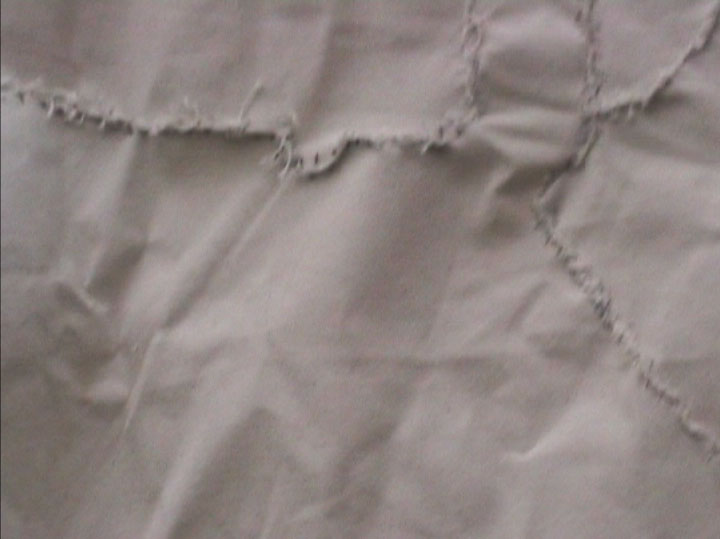
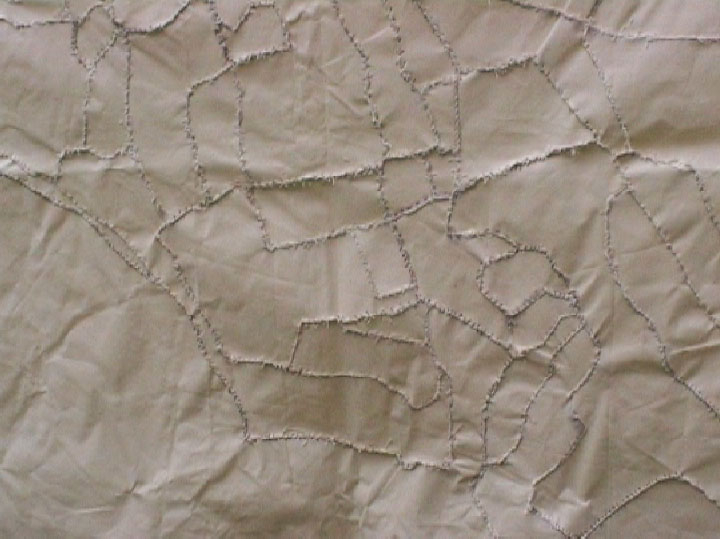
Carrying on with the work I did in Australia, I’ve spent the last couple of days videoing the canvas ‘sail’ that I made there, which was itself made from the pattern of several walks made around Newcastle, NSW. This work (‘Repaired Sail of HMS York (1828)’) is in many respects linked to a piece I made for my third Mine the Mountain exhibition called ‘Old Battle Flags‘ and is about the feel of the wind – the wind being something which although one may read about in history (particularly in the context of sailing) one can only experience in the present (of course the same could be said of everything else, but in light of the theme of this residency, the wind is especially pertinent).
This piece is about the disparity between language and experience. The wind we feel today is the same wind that’s blown over – and indeed through – the centuries and millennia. In winter the wind may blow from the east, from the vast and distant land of Siberia – a place well beyond the horizon but nevertheless a place which exists all the same.
The sail is made from my own past experiences, and the wind a reminder of movement in the past – that which is missing from the pages of history. It’s also about the everydayness of the past – something which we take often for granted like so much else but which is integral to our experience of the world.
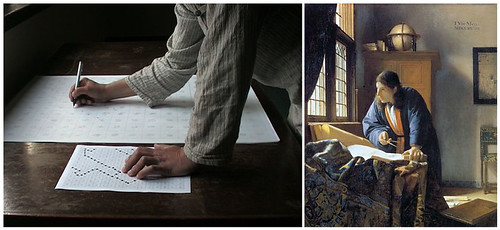
A still from some video footage of me in Australia, drawing out a map of one of the walks I did there alongside Vermeer’s ‘Geographer.’ I’m interested in the idea of performance and had something like Vermeer’s image in mind whilst I was creating my work.
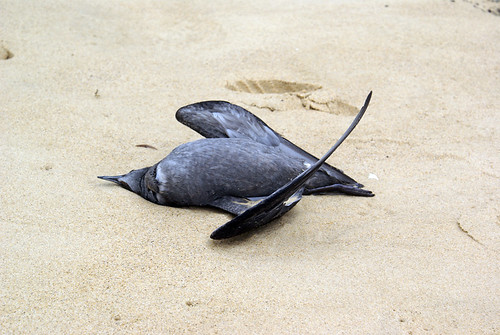
The photographs of dead birds which I took on Newcastle beach are particularly poignant; the lifeless bodies which had once soared high in the sky above are analogous with lost moments in time and, indeed, with the photograph itself. Dying out at sea, the birds had been washed up on the beach, joined in a line marked by that of the tide, rather like the words in my sketchbook, joined by the trace of the line of a walk.
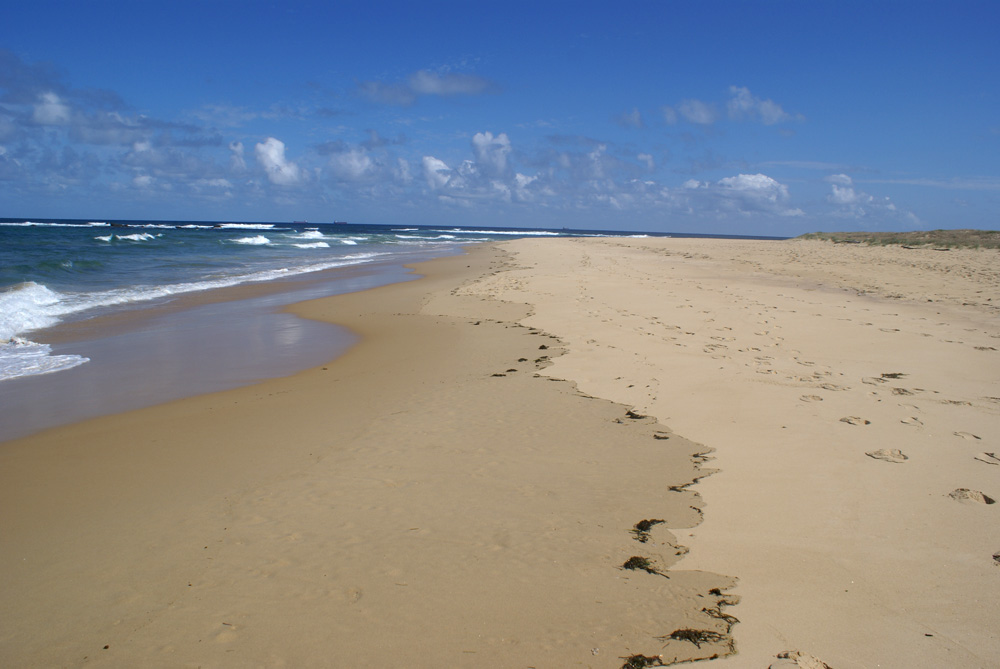
Putting the two together seems to make sense; the words of the walks referring to moments which once lived and which in the instant they were written down fell to the ground like the birds themselves. With every reading they are as those birds washed back up on the beach, joined again by a line – this time, the act of reading in sequence, or of reading them out loud.
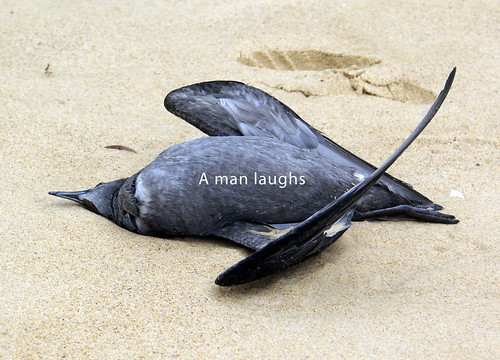
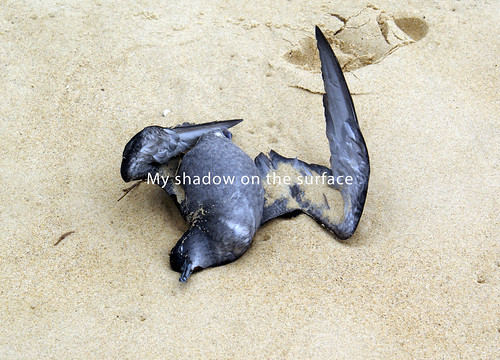
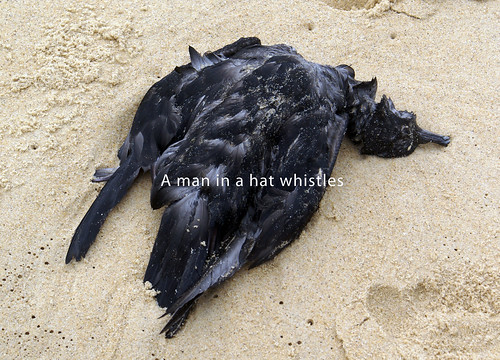
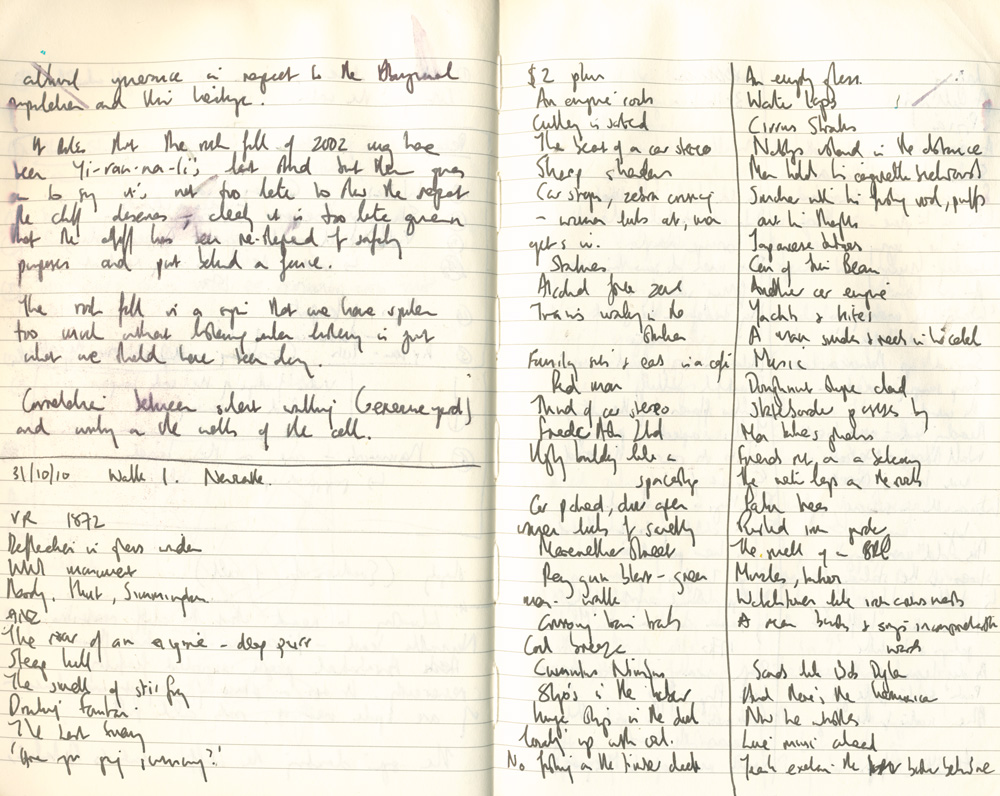
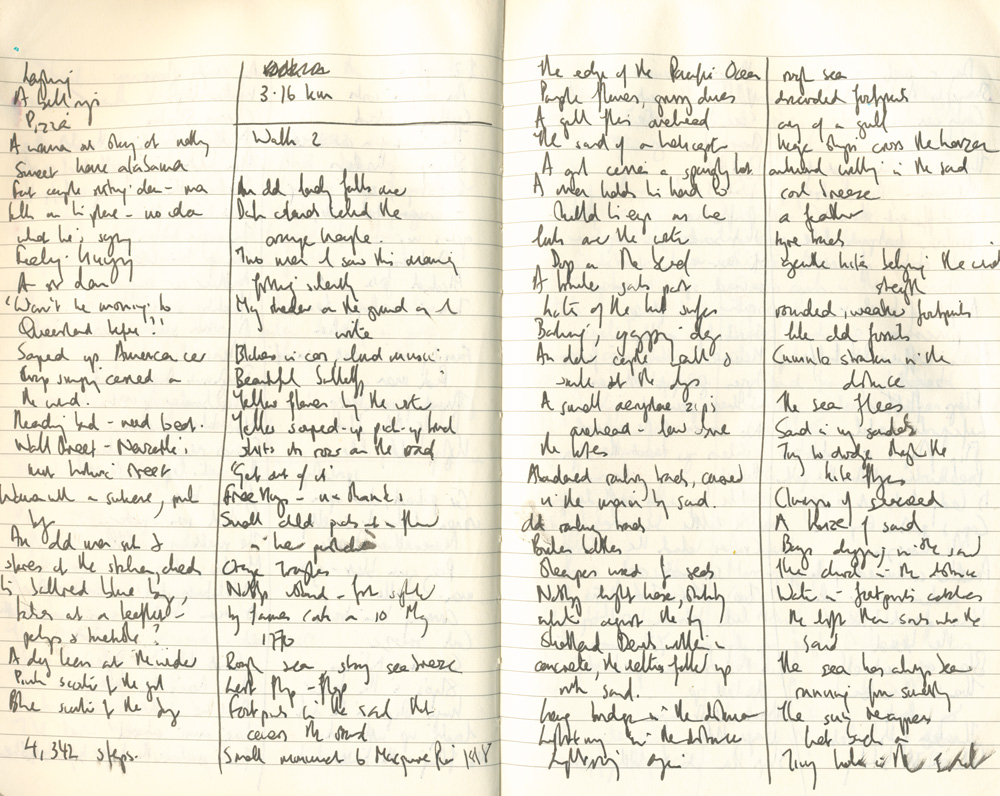
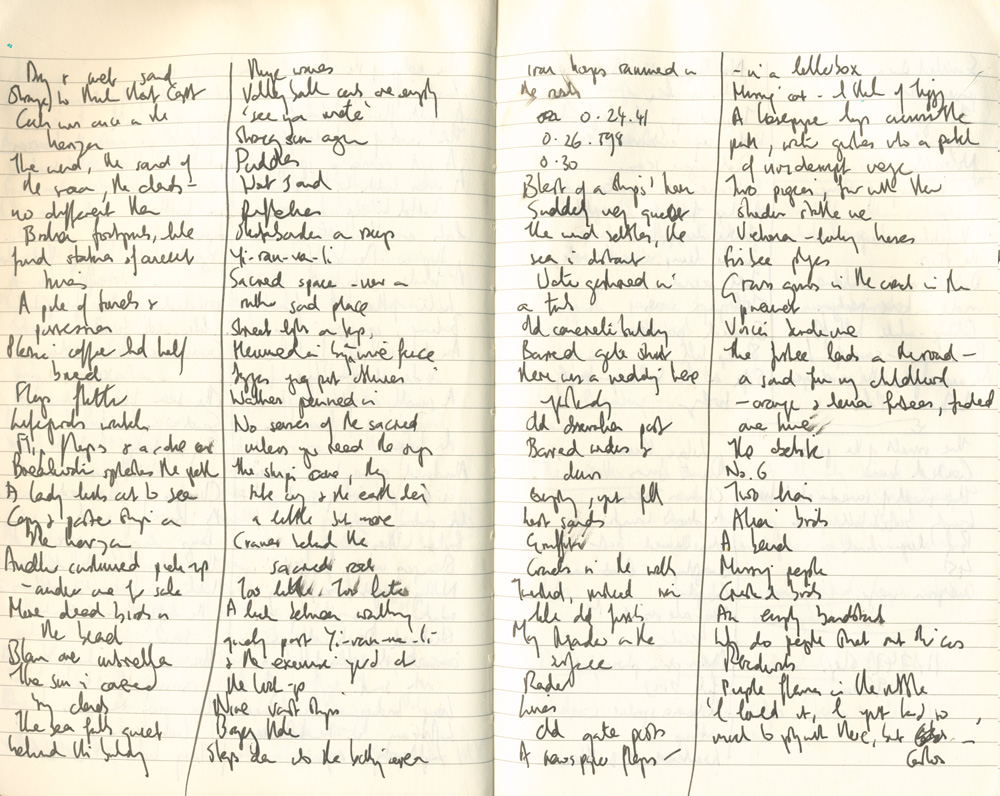
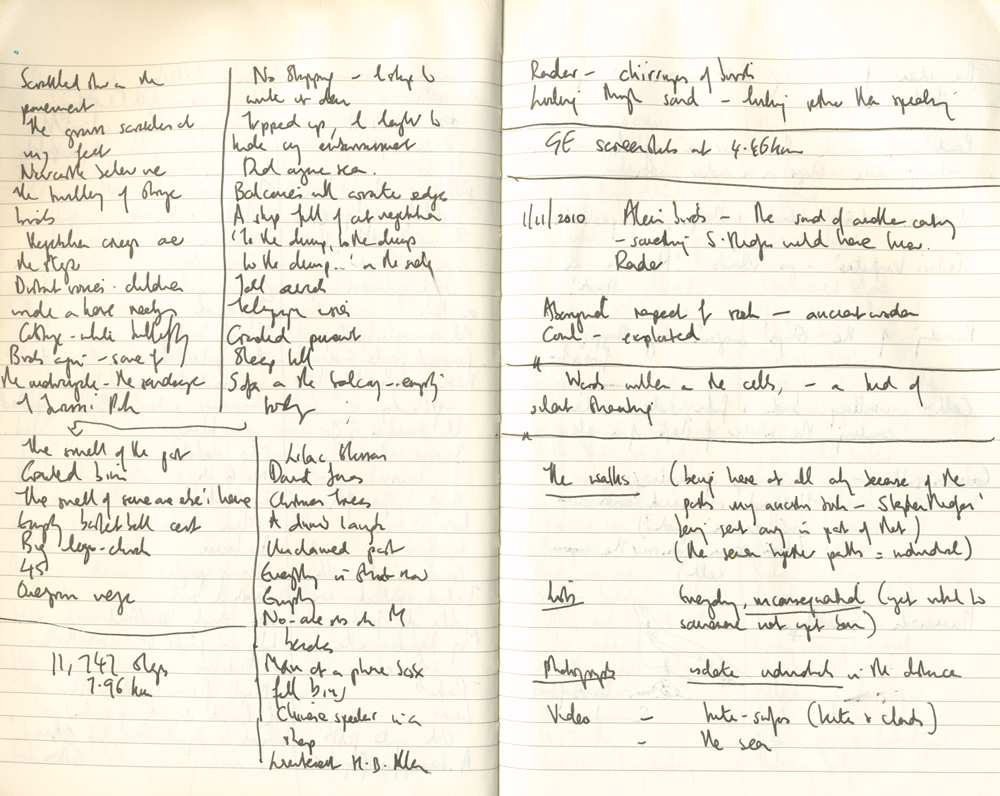
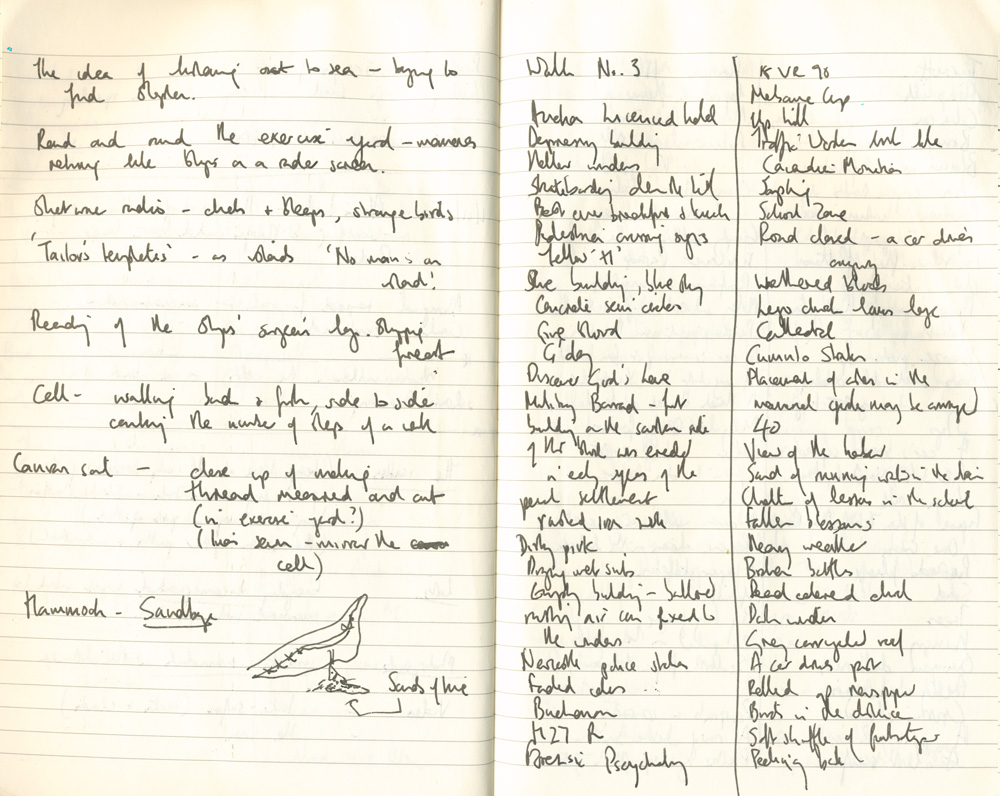
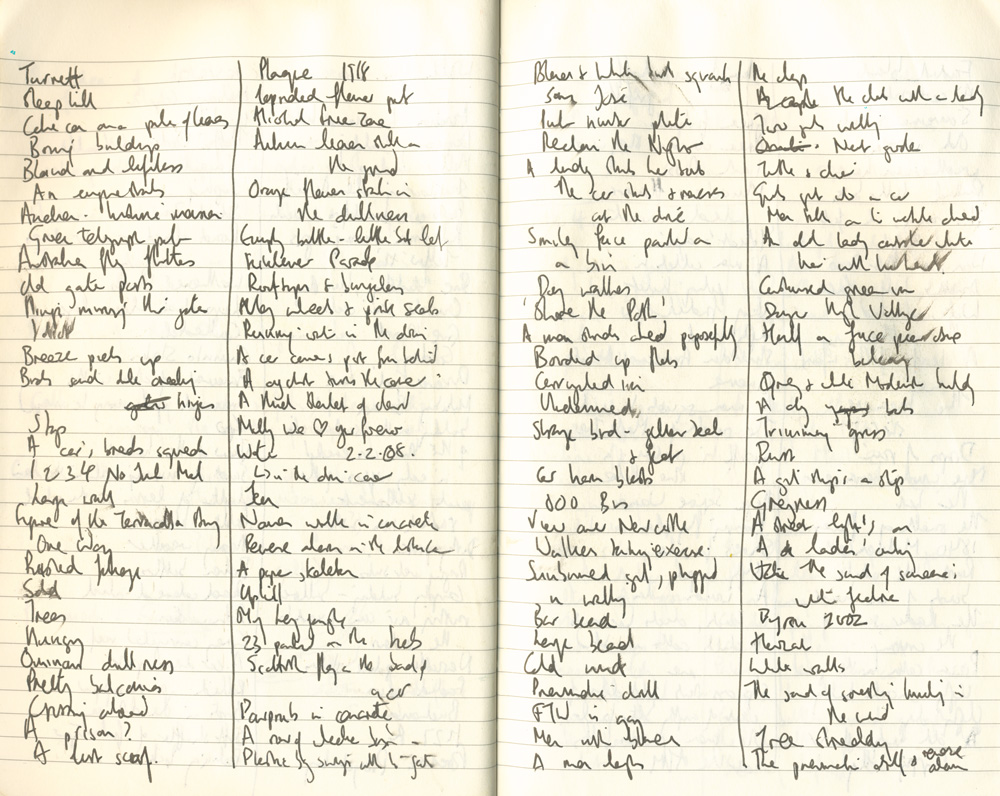
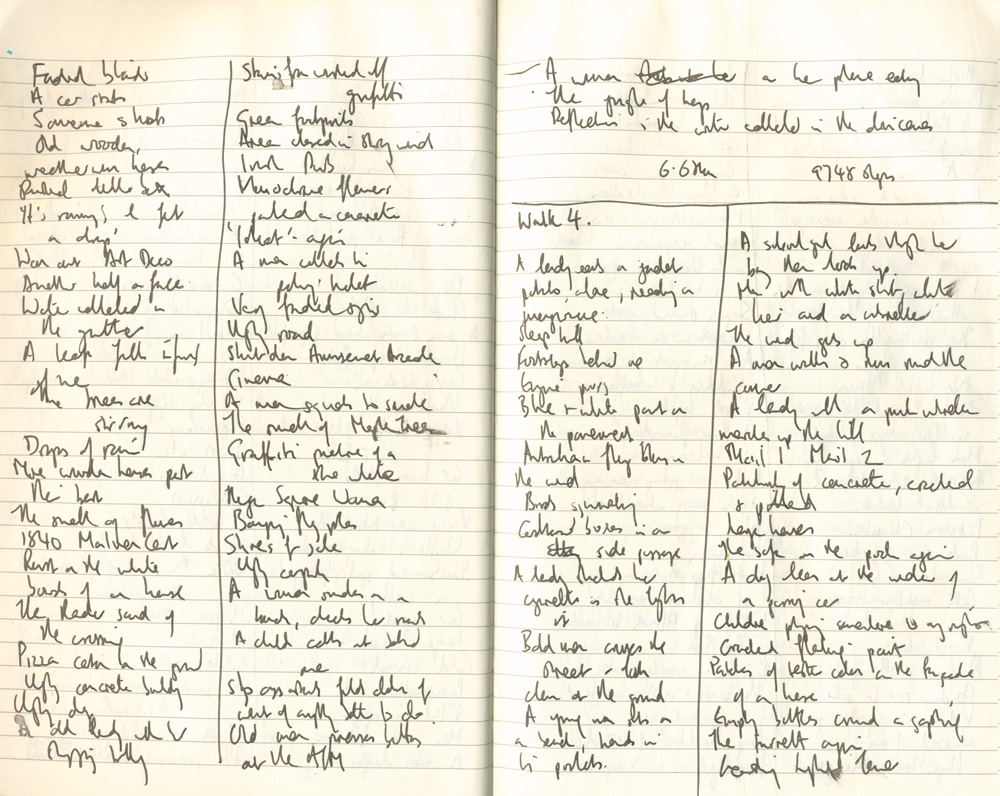
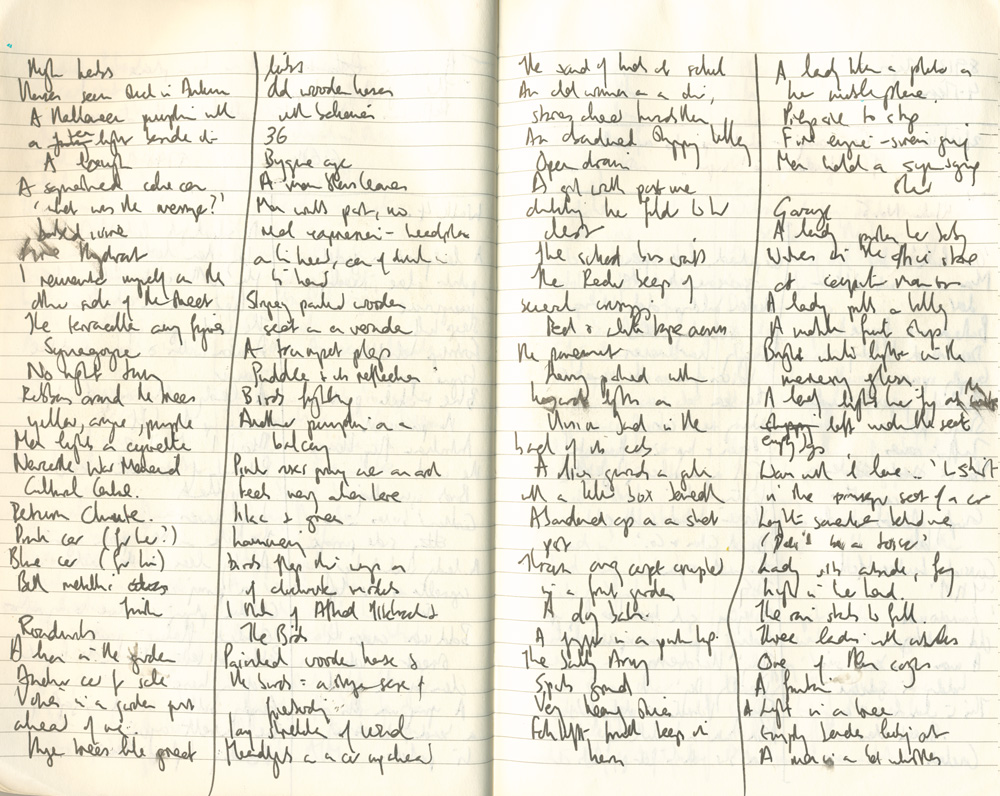
Since returning to England this morning after my residency in Australia, I’ve been looking at my notebook, and feel it’s worthwhile putting the pages up on, in particular those relating to the walks I did. So reproduced with this blog are those pages, written as I was walking (such is why the handwriting is atrocious whereas normally its little better than poor).
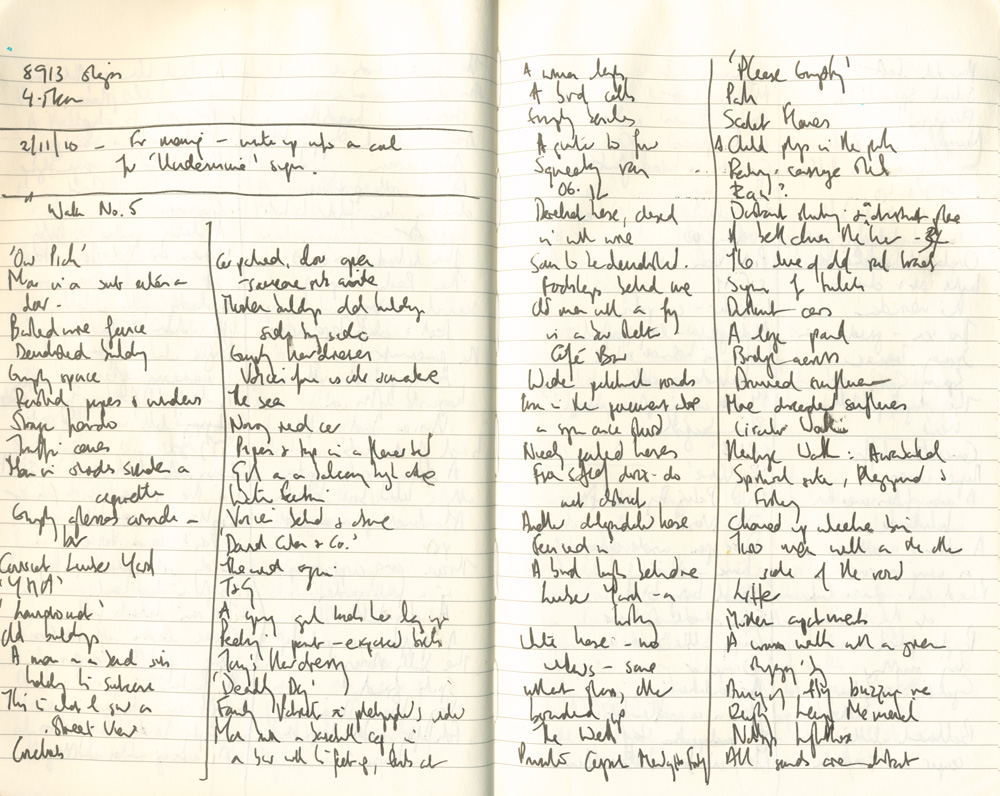
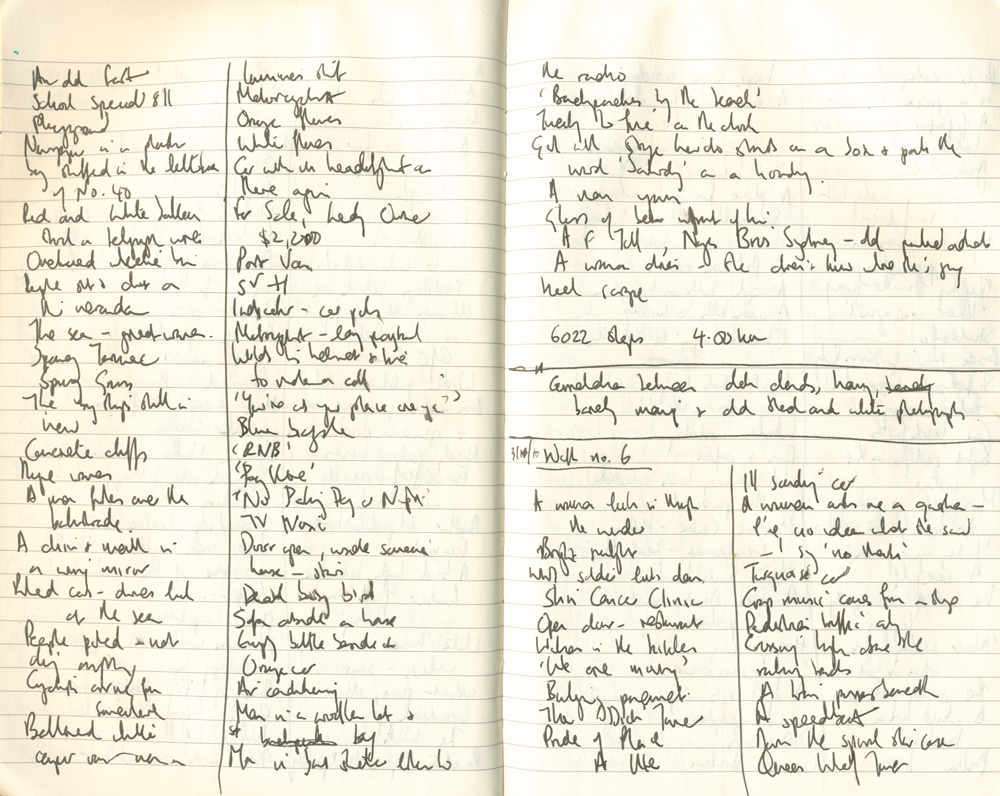
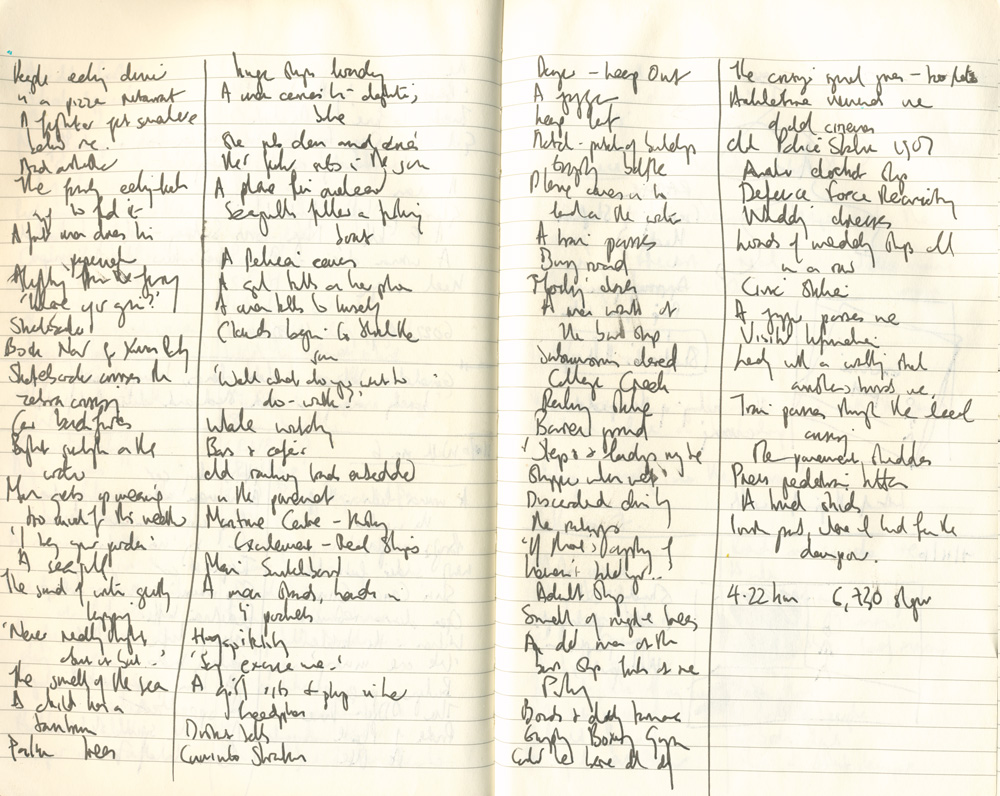
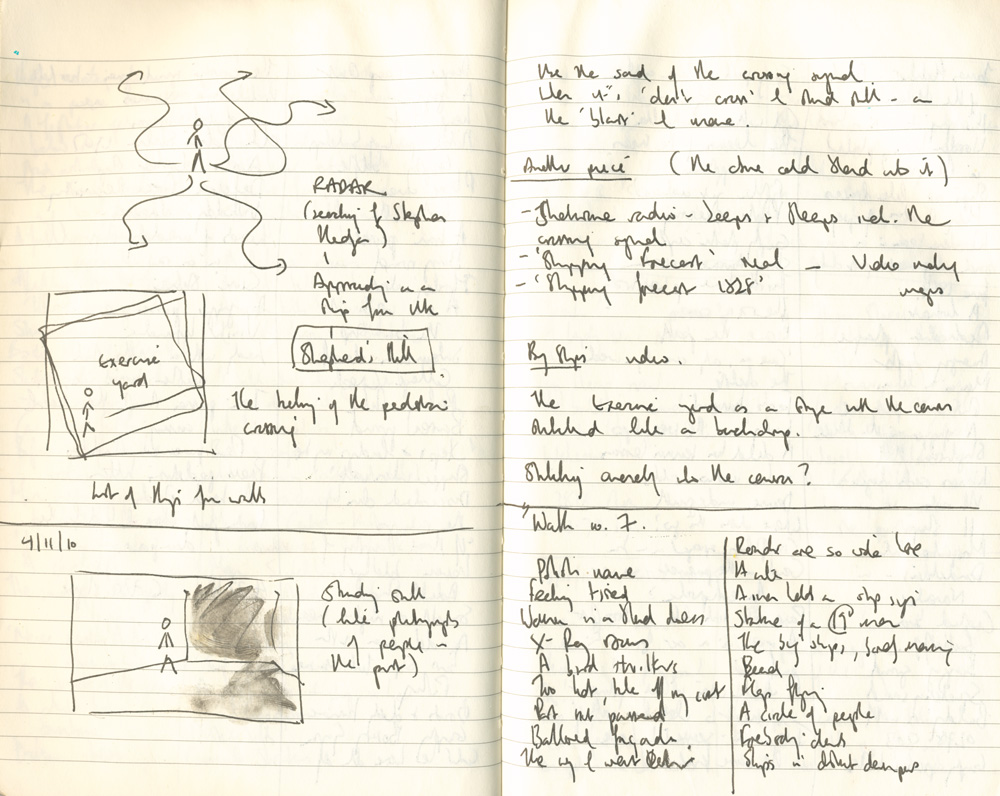
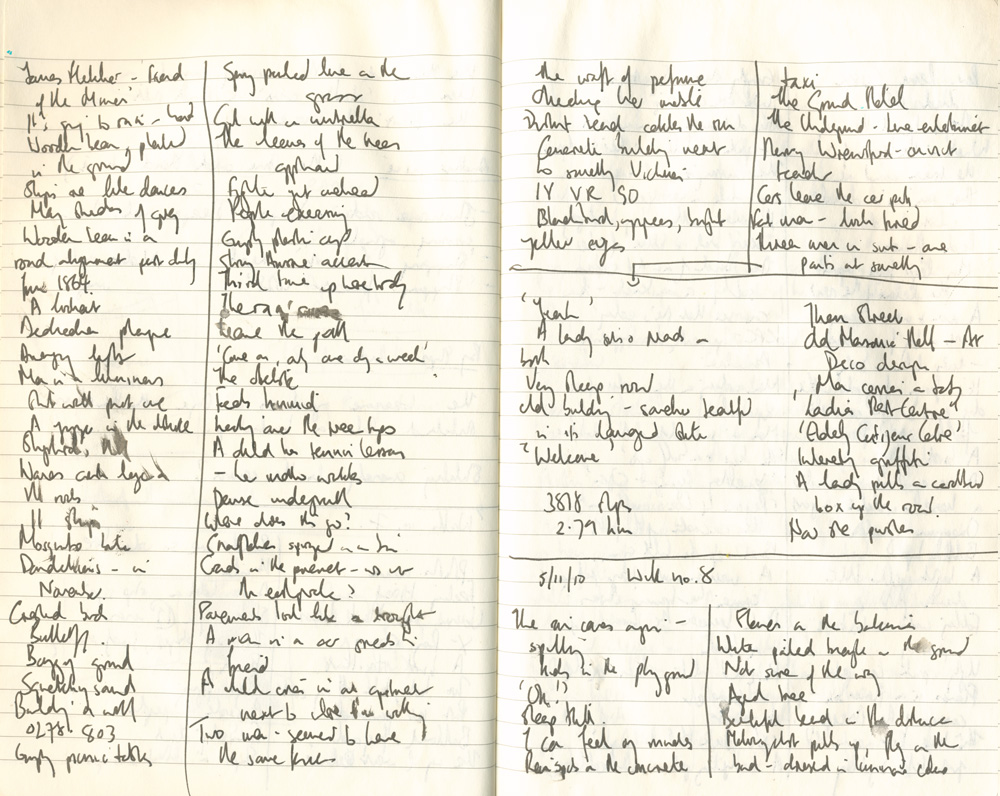
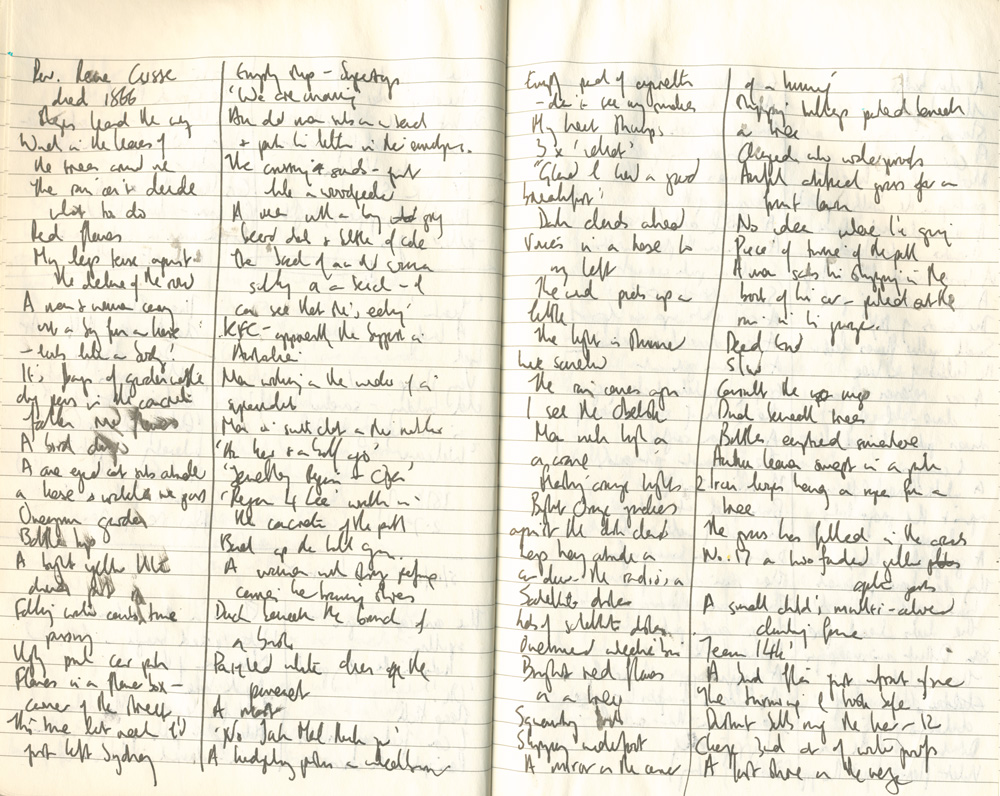
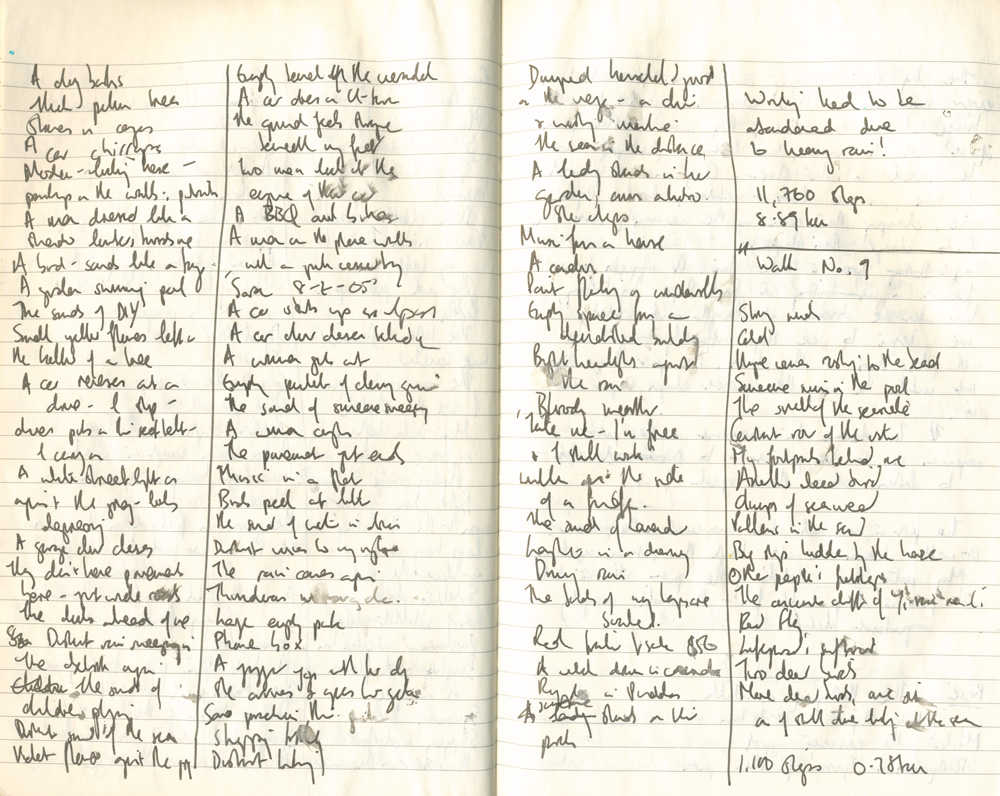
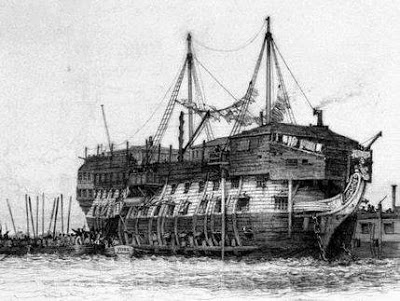
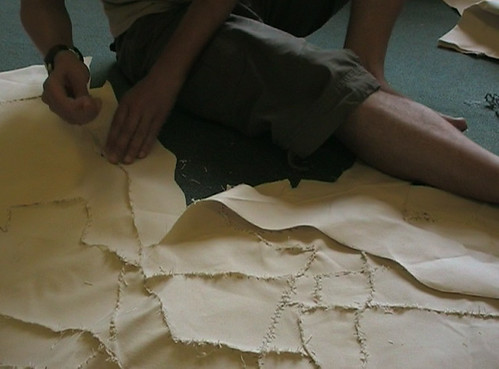
Yesterday, I finally finished stitching together the canvas pieces for a workI have tentatively called Repaired Sail of HMS York (1828), refrerring to the prison hulk on which Stephen Hedges was incarcerated before being transported to Australia. The hulk was a demasted ship and on contemporary images (such as that below) one can see how clothes were strung across the ship, almost as if replacement sails themselves.
This piece also alludes to an earlier work of mine called ‘Old Battle Flags‘ which I exhibited as part of my recent Mine the Mountain exhibition. This work – Repaired Sail of HMS York (1828) – was made in response to the old battle flags one finds sometimes hanging in cathedrals. As I wrote in a text accompanying the work:
“Whenever I see them, hanging from their poles, still and lifeless, I think of the wind that would have once shaped them, a wind which would have once blown and turned the pages of history as it was being written. It reminds me that the flags had a place in what was then the present, rather than a scripted, preordained past. I can remember as a child, sitting on the beach when the weather was less than clement, when the wind whipped the sand, drilled the waves and flapped the canvas of the deckchairs. These deckchairs on display still have their colours, and in the main, their shape, but now they are broken; metaphors for times which cannot be revisited.“
The flags hang lifeless without the wind – the past hangs lifeless too. HMS York in this sense is a metaphor for the past – demasted and without a sail, lifeless almost, a prison for the past which in its own present criss-crossed the globe. To re-witness that past we need to see it move again, to catch the wind: we need a new sail.
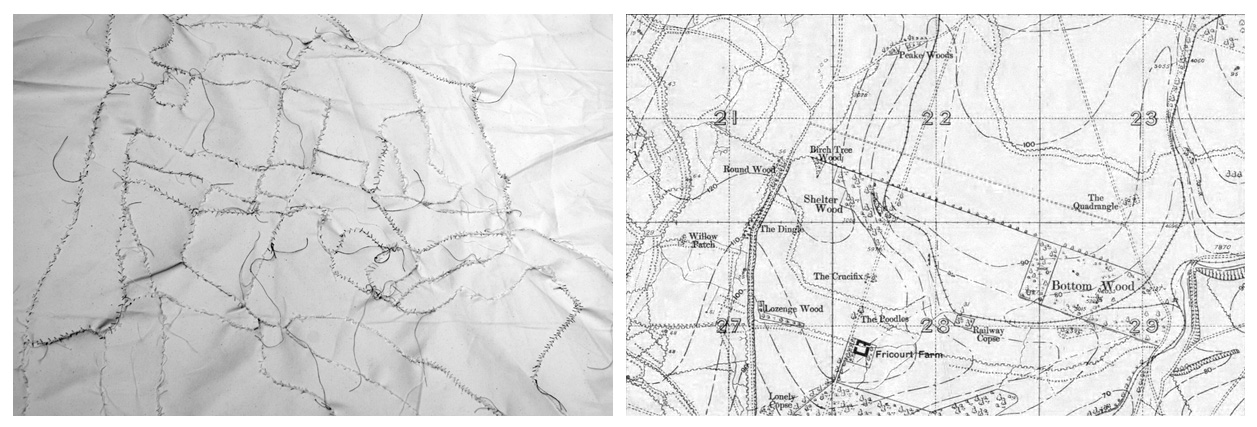
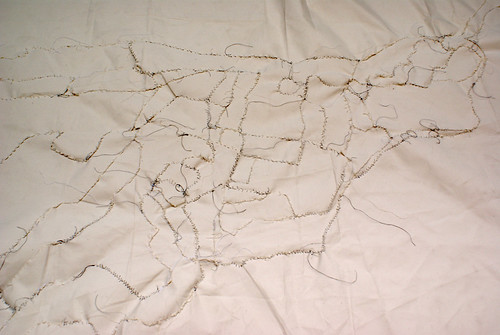
The sail in this work is made of canvas, and is derived from a pattern made from data recorded on a GPS. The data itself represents a series of nine walks made during the first week or so of the residency here in Newcastle, NSW. As I have discovered through my work over the last few years, walking and being in a particular place and experiencing the everydayness of a place, is vital in our understanding of associated historical events. It is relevant therefore, that this ‘sail’, made to catch the wind and ‘move’ HMS York once again, is constructed from a series of walks.
Below are a number of images of the sail.
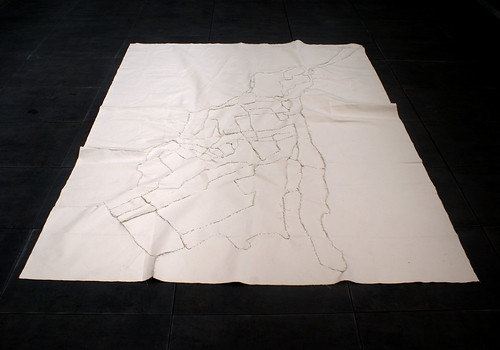
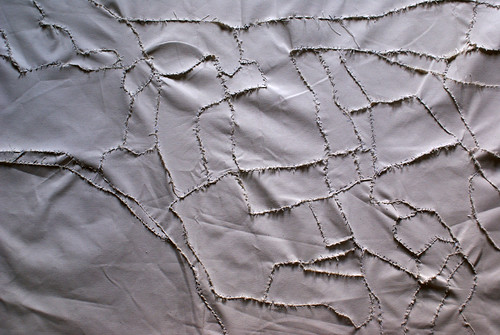
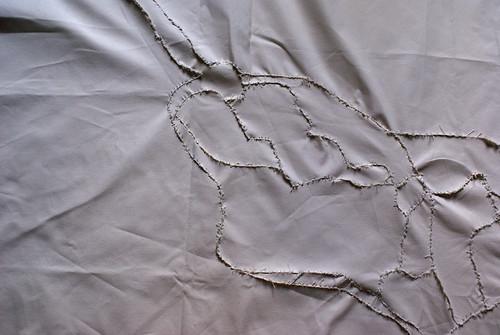
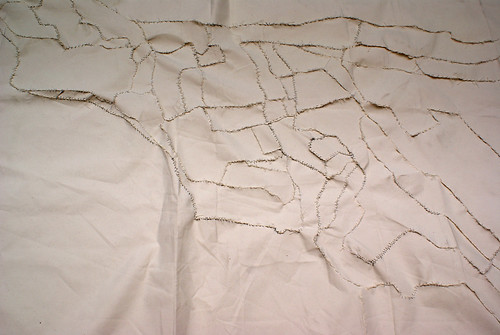
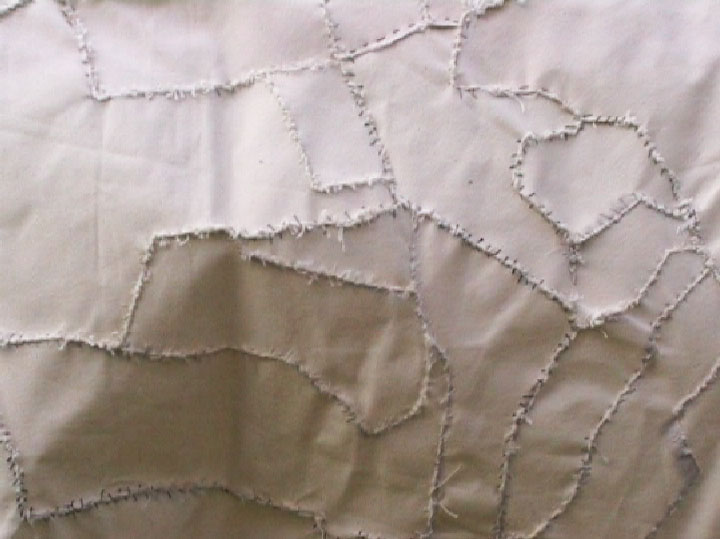
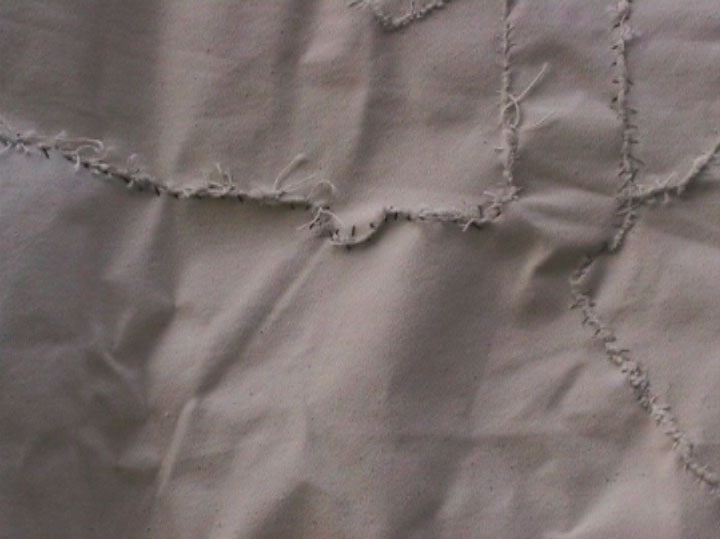
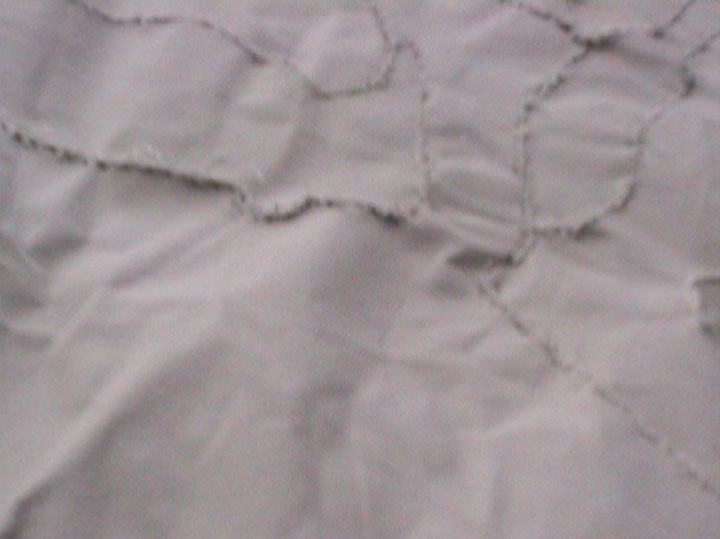
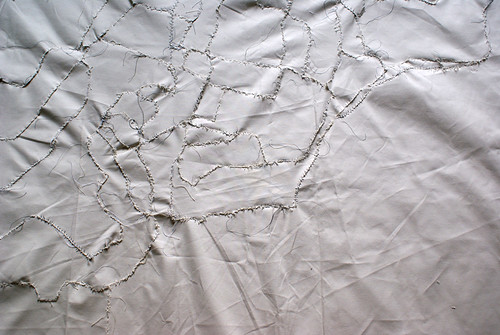
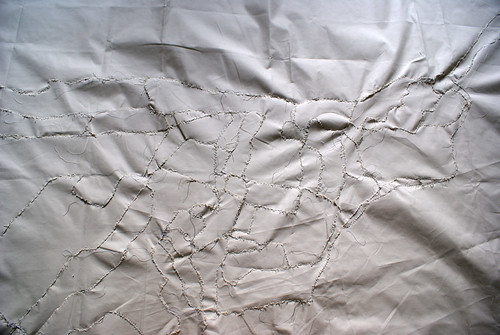
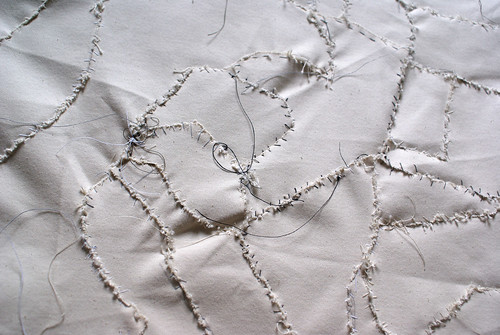
Often, it’s the reverse side of a piece like this which proves to be the most interesting, and indeed the most aesthetically satisfying. This particular canvas is no exception. When I turned it over and laid it out, I found the loose threads and knots particularly interesting. Perhaps they remind me the cut lines of past lives or the unwritten lines of text of which, for the most part, history is comprised. Below are images of the reverse side of the canvas.
After a very nice weekend in Sydney, it’s back to work on the canvas; more cutting and stitching. With just two days left of the residency, it’s going to be a close run thing as to whether I get everything done – hopefully tomorrow I shall complete the canvas at least.
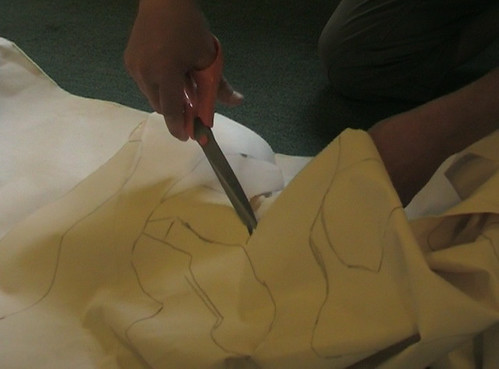
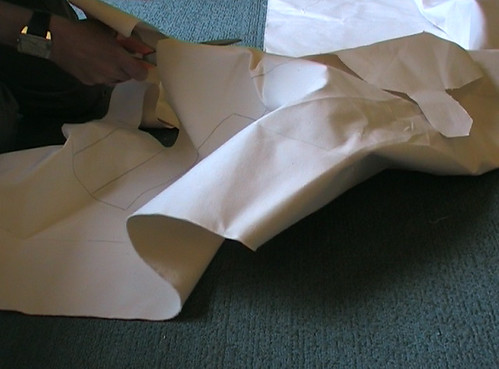
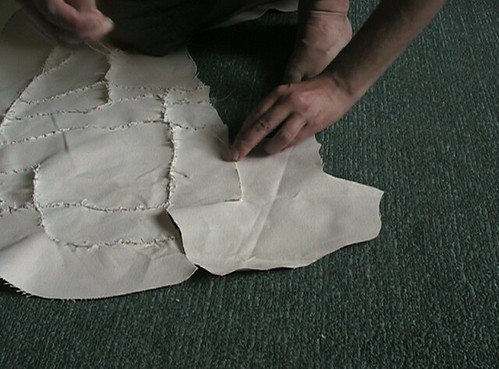
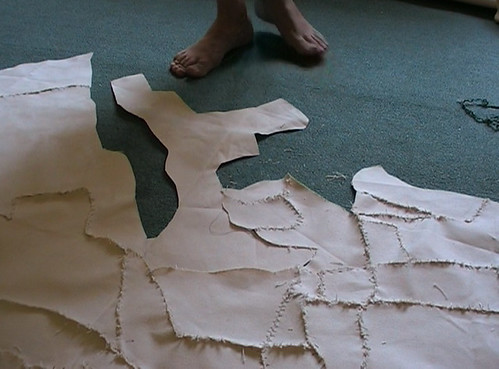
I’ve made a lot of progress over the last couple of days with video work and with the sticthed map of walks I’m creating, the title of which will be something like ‘The Lost Sail of HMS York’ referring to the prison hulk on which Stephen Hedges was incarcerated in 1828 prior to being transported to New South Wales.
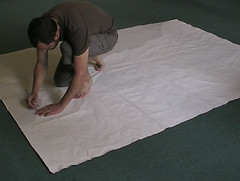
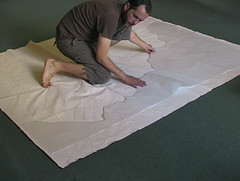
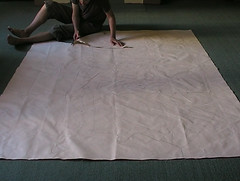
Having cut the templates and pinned them to the canvas, I then drew around each one directly onto the canvas so that I could begin cutting them out and stitching the piece together. To make things easier I will cut each piece as and when I need it so that I don’t get lost as regards where the pieces are meant to go.
The followng stills are taken from further documentary footage I’ve filmed of the process.
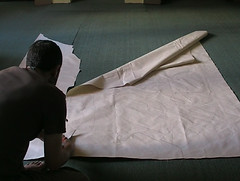
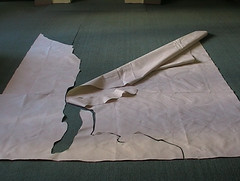
A busy day today working on a piece tentatively titled ‘Hammock’ and another which has yet to acquire even a working title. The hammock piece (shown in the photograph imemdiately below) alludes to when sailors died at sea and were sewn up in their hammocks before being cast into the water. The stitching on this particular hammock/body bag is the line recorded on my GPS when I walked the route Stephen Hedges walked from Radley House to Oxford in January 1828.
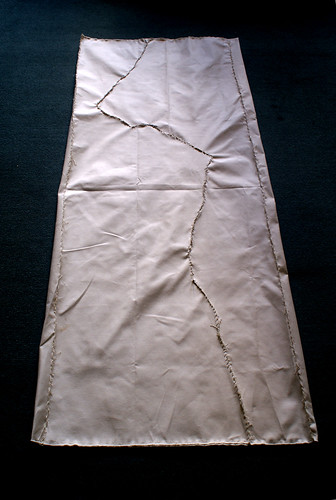
The hammock no longer has a body inside but what is left is the line. In many respects, the body inside was never meant to be that of Stephen, but rather his life in England, cast overboard along with his clothes when he entered the Prison Hulk York in Portsmouth following his conviction.
I want to dirty-up the canvas a bit and am thinking of taking it down to the sea tomorrow and videoing it lapping at the shore with the waves; something which would lend the work greater resonance.
The images below show the piece being made.
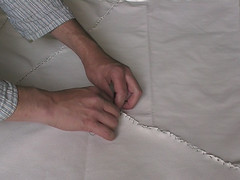
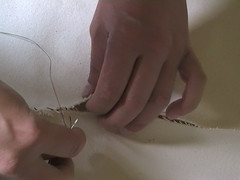
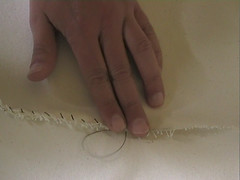
The following images are taken from the second, much bigger piece, which is a canvas comprising all the walks I have made in Newcastle NSW. The walks have been transferred to tracing paper (see Making the Map) and have now been cut up and pinned to the canvas ready for the material to be cut.
The images below are taken from documentary footage of the process.
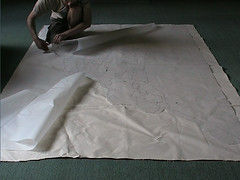
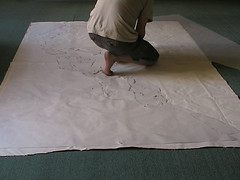
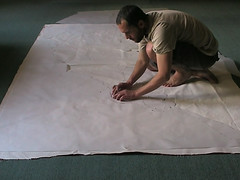
The map itself isn’t so easy to photograph, but I like the way it looks in its current state, with the cut out templates and the pins. Ideally I would like to inject something of a perfomative aspect into this work, so that the template creation has something to do with the process of tailoring – preparing fabric for an individual.
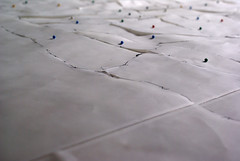
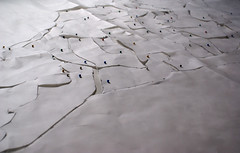
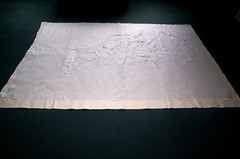
The video-based performance piece I want to make involves my walking around the exercise yard – in this case for about an hour. The ‘Walk of 4,342 Steps’ refers to a walk I did on 31st October (the first walk in a series of 9 made during the residency) and the final video will comprise my walking with details of the walk read out over the top.
The following stills are taken from the video.
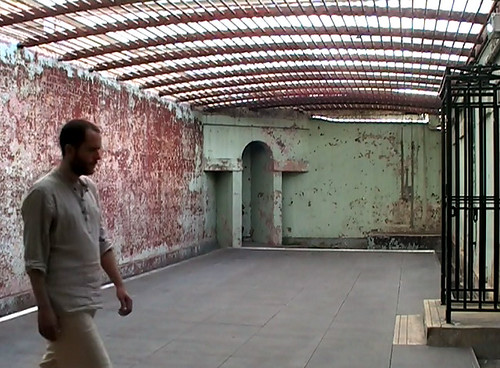
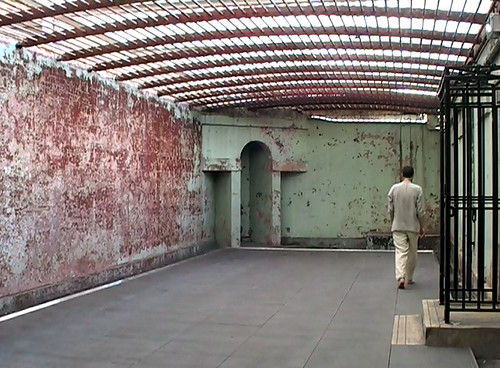
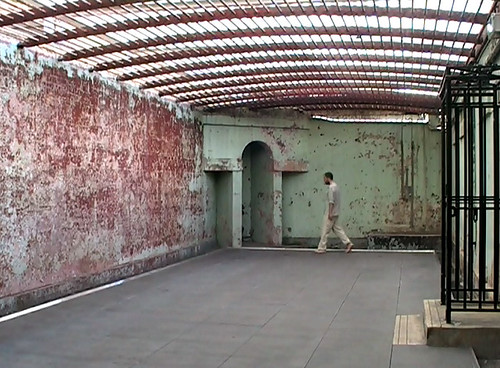
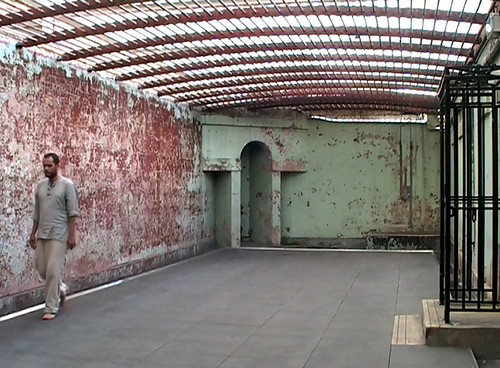
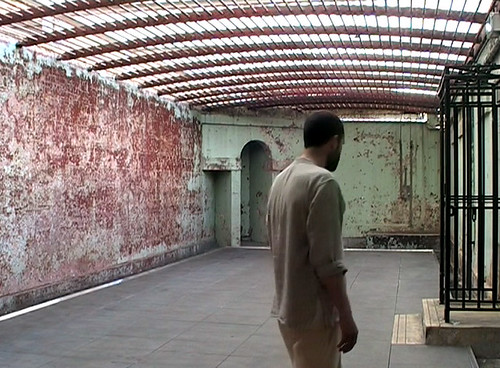
As I walked, and as I felt my body tense up and stiffen (in particular my jaw for some reason) I found myself listening to the sounds from outside, coming through the bars in the ceiling. Again this seemed to illustrate my work, as regards the idea of the constrained walk being analogous to history’s relationship with the past, where the wider past can only be ‘glimpsed’ to some degree through the bars.
One of the most interesting spaces in the Lock Up is the exercise yard in which inmates housed in the cells would walk, sit or stand for a period of time. The space has recently been made weather-proof and a floor added to the original floor beneath so as to allow the space to be used for exhibitions and so forth. I wanted to use it in a video-based perfomance piece based on the idea of history and its relationship to the past; the idea that history is in a sense heaviliy constrained in what it can tell us about the world long gone; it is hemmed in, not free to roam, but follow a prescribed path based on the sources available to us today.
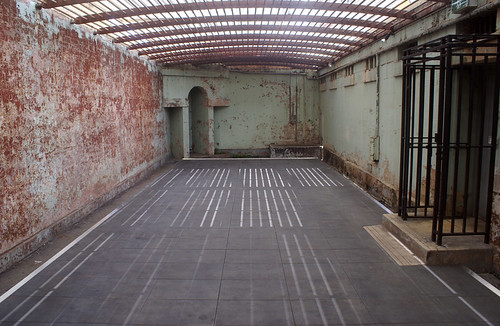
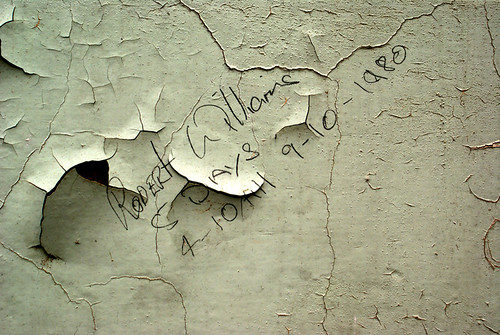
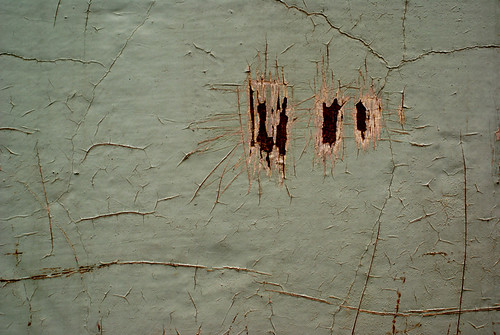
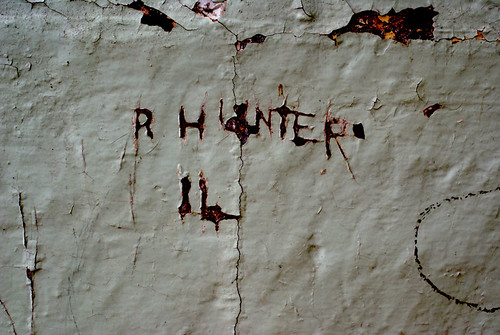
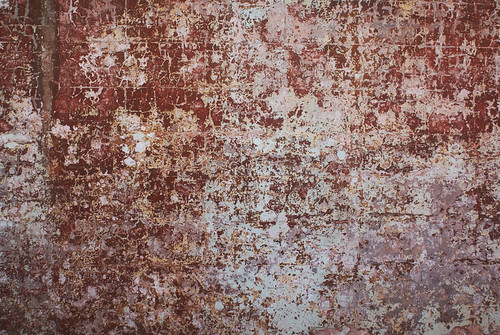
Before working on the piece (which would involve an hour’s walk around the yard), I photographed the walls, all of which have amazing textures redolent of the passage of time: peeling paint, cracked surfaces, palimpsests of paintwork and decay, as well as the inscriptions of prisoners scratched into the walls.
Below are some details from the exercise yard.
Having completed all the walks the next task is to tranfer them all to tracing paper so that templates can be cut and the map re-made on – or rather with – canvas. Taking the GPS plan, I divided it up into 8 segments, each of which I printed out onto A4 pieces of paper.
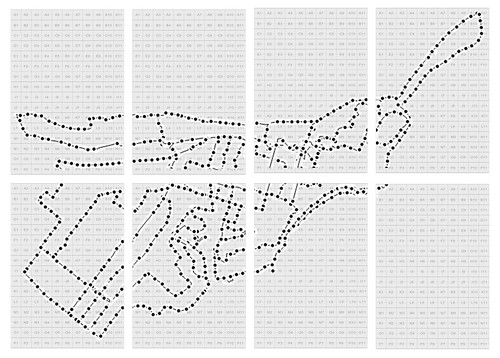
I then began scaling each piece up onto A1 heavyweight tracing paper, first marking all the dots and then joining them together. I would like to develop this whole aspect of the work, using the metaphor of sea-faring and map-making generally. Given time constraints however, the process will have to remain absent of any ‘performative’ aspect.
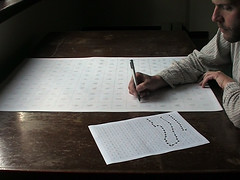
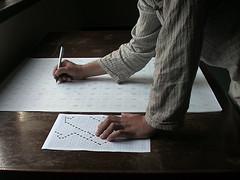
Having plotted the position of the dots, I then set about drawng in the lines.
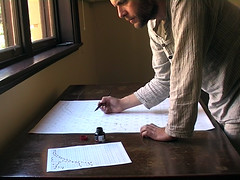
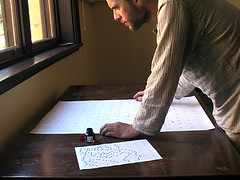
Once copied, I joined the sheets together to make the fullsize version of the map which is now ready to be cut into templates.
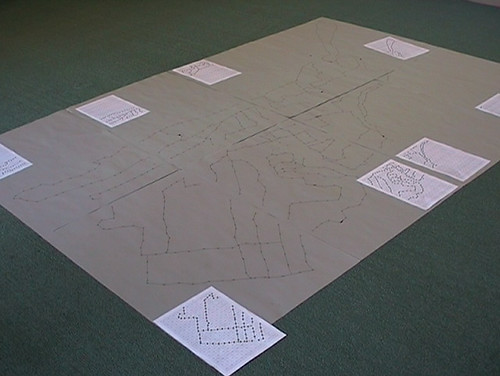
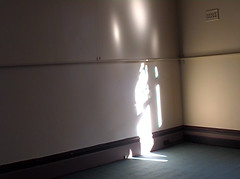
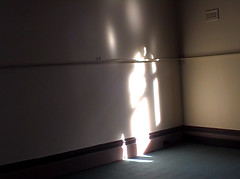
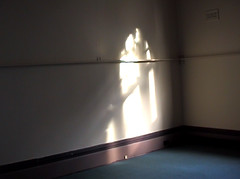
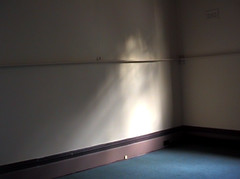
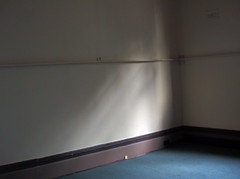
This evening I started filiming – for documentary purposes – my work on creating the templates for the ‘sail’ which I will start to sew soon. As I set up the video, I noticed, in the corner of the room, a patch of light on the wall and the floor. It reminded me of the paintings of Hammershoi, such as the image below which I wrote about in a previous blog entry back in March this year.

I put the video camera on the patch and started filiming for a couple of minutes, but as I watched the subtle changes in light I decided to leave it running until the tape ran out some 50 minutes later. The results were rather beautiful; an illustration of the passing of time, the end of a day and the the ‘nowness’ of the present – something which Hammershoi reveals beautifully in his paintings. Although painted at the beginning of the 20th century, the patch on the light keeps them very much a part of the present – the shape of the light cast by the window is something with which we are all familiar.
The stills below – taken from the video – show the light over a period of about 50 minutes.
Yesterday I walked along Newcastle Beach and discovered, as I’d seen before, dozens of dead birds washed up on the sand. The shape in which the sea had left them was, in many cases, beautiful and so I began to photograph them.
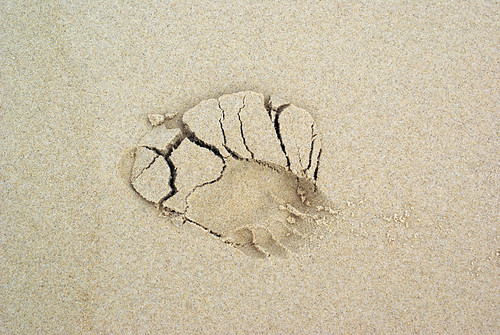
As I did so, I also became aware of the many footprints left in the sand, all different shapes and sizes, and so I started to photograph those as well, and in doing so, began connecting one with the other.
To see all photos, visit my Flickr pages.
![04/05 - Version 2 [21-12-2010]](https://farm6.static.flickr.com/5243/5280921725_3d72b17df6.jpg)