“I never saw them again; they were hurried once more, fast as corks on a millstream, without complaint into the bond service of destruction.” Edmund Blunden
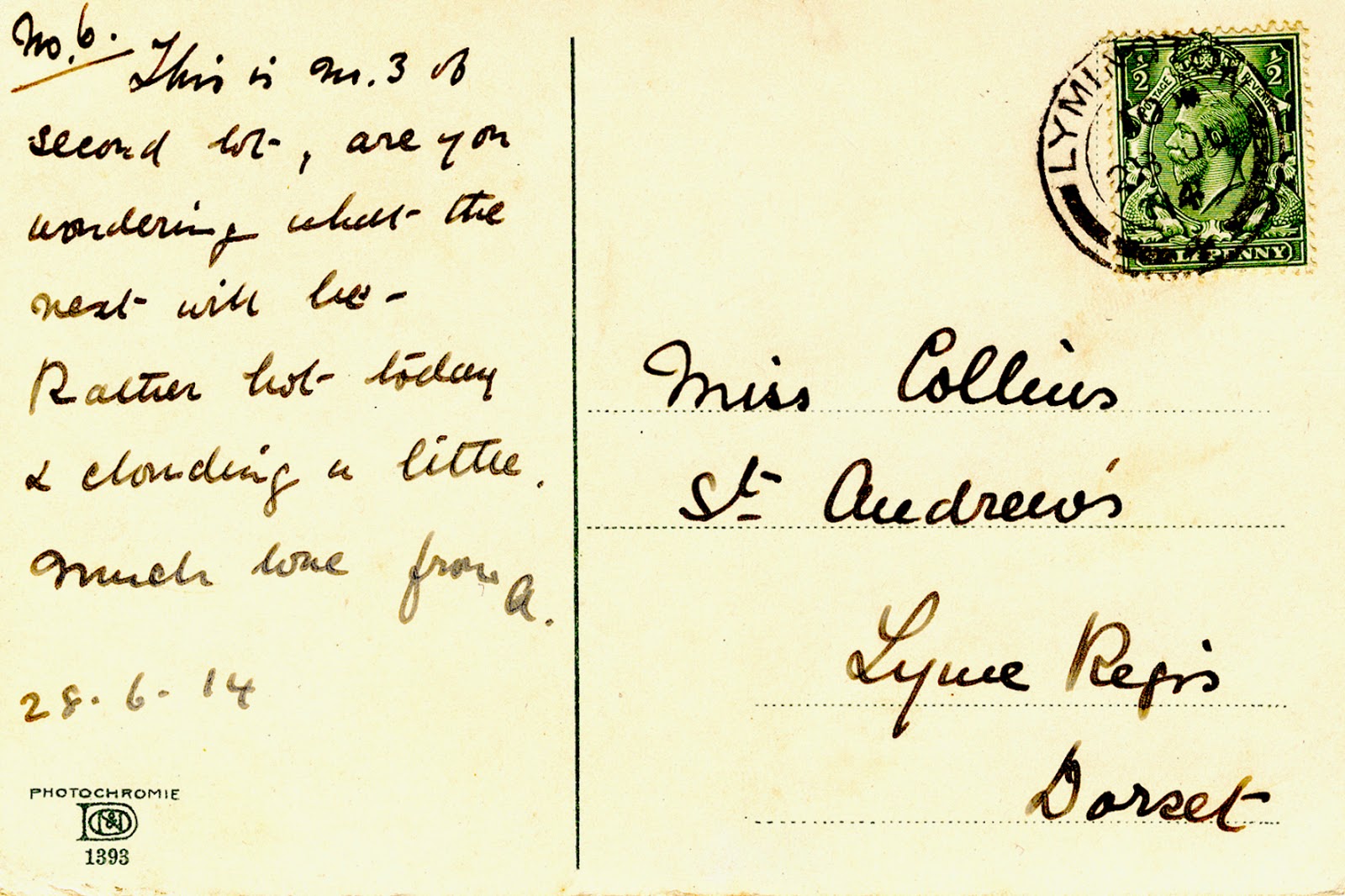
Thinking of my post from 28th June 2014, I wonder if ‘A’ was one like them.
Art, Writing and Research
“I never saw them again; they were hurried once more, fast as corks on a millstream, without complaint into the bond service of destruction.” Edmund Blunden
Whilst reading Frederic Manning’s wonderful novel ‘Her Privates We’, a couple of quotes leapt off the page, particularly as regards my work and the ongoing theme of empathising with past individuals.
“And they were gone again, the unknown shadows, gone almost as quickly and as inconspicuously as bats into the dusk; and they would all go like that ultimately, as they were gathering to go now, migrants with no abiding place, whirled up on the wind of some irresistible impulse. What would be left of them soon would be no more than a little flitting memory in some twilit mind.”
With the centenary of the start of World War I (August 4th) almost upon us, today’s date is no less significant. 28th June 1914 was the day on which Archduke Franz Ferdinand was assassinated in Sarajevo, thus precipitating a chain of events which was to lead to the chaos and carnage of World War I.
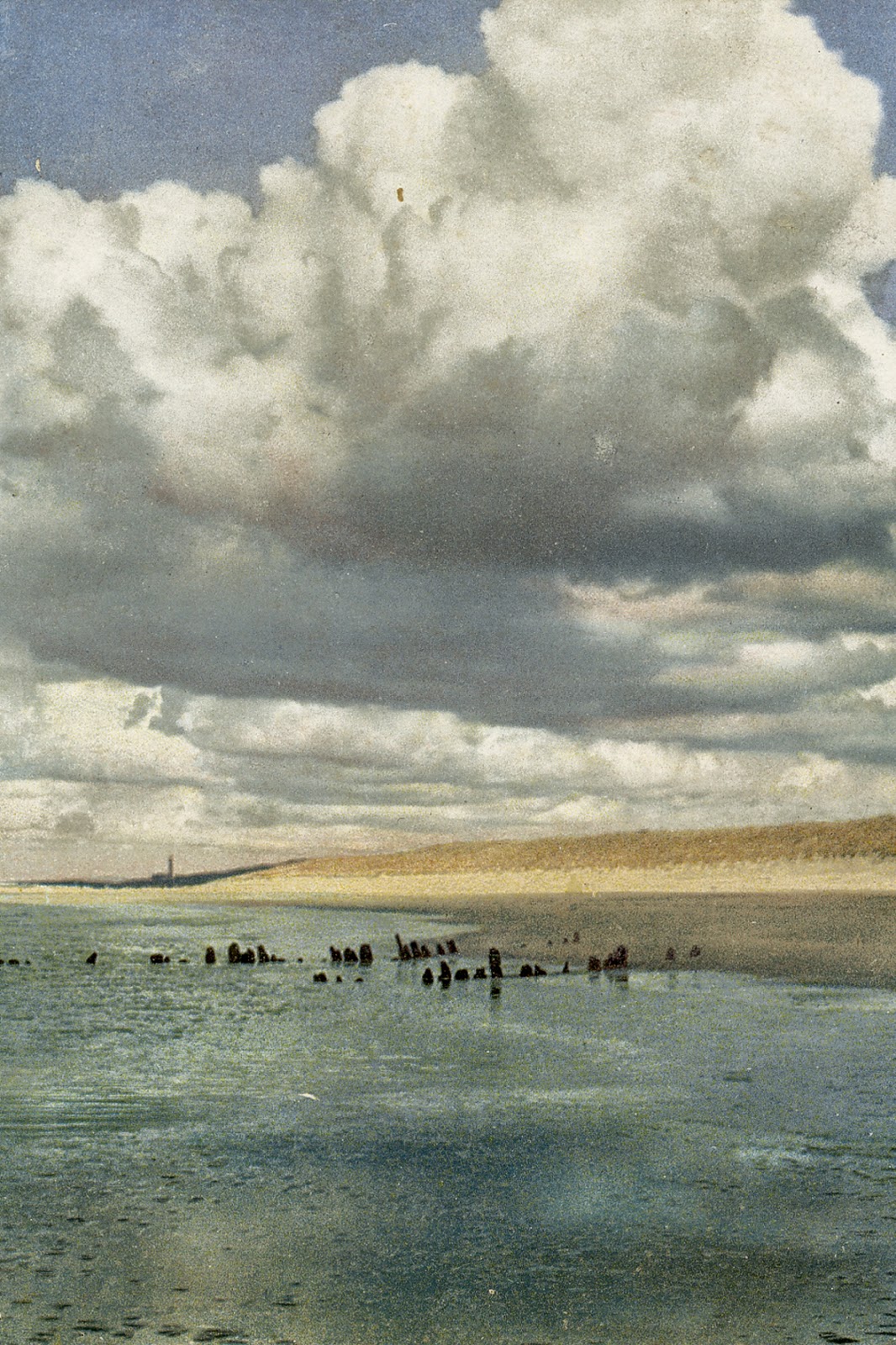
The postcard shown below (both front and reverse) was written on that day, exactly 100 years ago.
In a previous blog (Imagination and Memory) I wrote the following:
“Going back to my childhood, my imagination provided me with a means of escape (not that I needed to escape anywhere – I was fortunate enough to have the perfect upbringing). I’d always wanted to see the world unspoilt, an Arcadian vision without cars, planes, pollution, machines or any trace of the modern. And in a sense, this is I believe, what first fired my interest in the past.”
This is one of the maps in question, photographed in my bedroom around 1983.
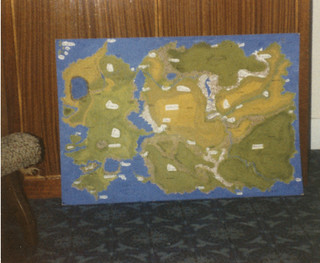
Thinking again about ‘a means of escape’, I realised that despite what I’d written, there was a ‘need’ to escape somewhere. Throughout the 1980s the Cold War was at its height and although recollections of the period bring back many happy memories, there was always, simmering in the background, the anxiety of a nuclear conflagration. Every time a ‘crisis’ was reported on the news, my dreams at the time would always be the same: I’d watch from my garden as a huge mushroom cloud billowed up above the horizon. And in the days before 24 hour rolling news, the refrain “we interrupt this programme to bring you a newsflash” would stop my heart.
The worlds that I created were places where, quite simply, there were no nuclear weapons, and therefore no risk of nuclear war, but just as these imaginary places offered a means of escape, so did history – in particular pre-industrial history and to bring the past to life, for example the mediaeval world which was especially compelling, I had to use – just as I do now – my imagination. In Leviathan, Thomas Hobbes writes:
“Imagination and memory are but one thing, which for divers consideration hath divers names.”
One could perhaps say the same about history. Certainly in my mind, those three things – history, memory and imagination – were conflated, creating a landscape in which I could wander at my leisure; a place to which I could escape. And it was through the creation of maps that I found my way there.
“The irony which memory associates with the events, little as well as great, of the First World War has become as inseparable element of the general vision of war in our time.”
Paul Fussell
The Great War and Modern Memory
‘Ghastly by day, ghostly by night, the rottenest place on the Somme’. Such was how soldiers described High Wood, one of the many that peppered the battlefields of Flanders and France. Woods in name only, these once dense places were quickly reduced to matchwood. One officer, writing of Sanctuary Wood near Ypres, declared that: ‘Dante in his wildest imaginings never conceived the like.’
We, in our wildest imaginations can not conceive the like. So how can we remember and empathise with those who for whom it was real? Historian Paul Fussell provides a starting point:
“…if the opposite of war is peace, the opposite of experiencing moments of war is proposing moments of pastoral.”
I aim therefore to create a series of pastoral landscapes and accompanying maps which use, as their starting point, portrait postcards of Great War soldiers (in particular, elements found on the studio backdrops against which they were photographed) and Trench maps. Although the pastoral scenes will be empty – devoid of human life – I aim nonetheless to create a sense that people have been there; that the landscape is remembering them – an absence rather than a lack. This will serve to articulate the journeys of those soldiers, from photographic studio to the Front, and for many, death.
Two quotes are useful here; the first from Rainer Maria Rilke’s Duino Elegies:
“Look, trees exist.
The houses we live in continue to stand. Only we
pass away like air traded for air and everything
conspires to maintain silence about us, perhaps
half out of shame, half out of unspeakable hope.”
The other from Wordsworth’s Guide to the District of the Lakes:
“…we can only imagine ‘the primeval woods shedding and renewing their leaves with no human eye to notice or human heart to regret or welcome the change.'”
In Rilke’s poem, the idea of trees (among other things) remembering through their silence those who’ve passed amongst them is particularly appealing and finds a kind of reversed echo in Wordworth’s imaginings of the primeval woods: where it isn’t the human heart regretting or welcoming the change, rather the trees, regretting (or welcoming) our absence.
Words from war poet Edward Thomas serve to further this idea of ‘remembering trees’. In the Rose Acre Papers, a collection of essays published in 1904 he writes:
“…a bleak day in February, when the trees moan as if they cover a tomb, the tomb of the voices, the thrones and dominations, of summer past.”
His widow, Helen, writing after the war in ‘World Without End,’ described how the “snow still lay deep under the forest trees, which tortured by the merciless wind moaned and swayed as if in exhausted agony.’
It’s almost the same lamenting her husband had described before the war.
Richard Hayman, writing in ‘Trees – Woodlands and Western Civilization’ states that “woods are poised between reality and imagination…” As a child woods were, for me, a means of accessing both my imagination and the distant past; a place “for chance encounters” with historical figures, monsters and knights. Woods, as Hayman puts it, are places which can “take protagonists from their everyday lives” while, as I would add, keeping them grounded in the reality of the present.
As a child I would often create maps of imagined landscapes covered – like my imagined mediaeval world – by vast swathes of forest. And as an adult, the act of drawing them returns me to a place where my childhood and the distant past coexist; “a mixture of personal memory and cultivated myth” grounded in the nowness of the present. As such, the ‘pastoral’ landscapes I’m going to paint, based on those strange and incongruous studio backdrops, become too, landscapes of childish sylvan fancies.
When considering the war, much of our attention is, naturally, focused through the lens of its duration: the years 1914-1918. But every one of those men who fought in the trenches was once a child, and since becoming a father this has become an important aspect of my ability to empathise. To empathise, we must see these men unencumbered by the hindsight which history affords us; as men who lived lives before 1914 and beyond the theatre of war. I return to Paul Fussell’s quote (“…if the opposite of war is peace, the opposite of experiencing moments of war is proposing moments of pastoral”) and add that we must also see the soldiers who fought not as men, but as children. Again, the words of Edward Thomas serve to articulate this idea; the “summer past” including perhaps those lost years of childhood. Neil Hanson, writing in ‘The Unknown Soldier’ talks of how, on the eve of the Battle of the Somme, the smell in the air was that of an English summer – of fresh cut grass; the smell – one could say – of memories; of childhood.
Returning to Rilke’s Duino Elegies we find another dimension to these landscapes.
And gently she guides him through the vast
Keening landscape, shows him temple columns,
ruins of castles from which the Keening princes
Once wisely governed the land. She shows him
the towering trees of tears, the fields of melancholy
in bloom (the living know this only in gentle leaf).
These pastoral landscapes become therefore, not only the landscapes of childhood imaginings, of “personal memory and cultivated myth”, but the landscape of mourning. The words of Edward and Helen Thomas are especially poignant in this regard; Edward’s trees mourn for a long-lost past; Helen’s for an empty future.
I read this poem by my favourite poet, Rilke, and like so much of his work it is absolutely beautiful. This translation is by Stephen Mitchell.
Orpheus. Eurydice. Hermes.
That was the deep uncanny mine of souls.
Like veins of silver ore, they silently
moved through its massive darkness. Blood welled up
among the roots, on its way to the world of men,
and in the dark it looked as hard as stone.
Nothing else was red.
There were cliffs there,
and forests made of mist. There were bridges
spanning the void, and that great gray blind lake
which hung above its distant bottom
like the sky on a rainy day above a landscape.
And through the gentle, unresisting meadows
one pale path unrolled like a strip of cotton.
Down this path they were coming.
In front, the slender man in the blue cloak —
mute, impatient, looking straight ahead.
In large, greedy, unchewed bites his walk
devoured the path; his hands hung at his sides,
tight and heavy, out of the failing folds,
no longer conscious of the delicate lyre
which had grown into his left arm, like a slip
of roses grafted onto an olive tree.
His senses felt as though they were split in two:
his sight would race ahead of him like a dog,
stop, come back, then rushing off again
would stand, impatient, at the path’s next turn, —
but his hearing, like an odor, stayed behind.
Sometimes it seemed to him as though it reached
back to the footsteps of those other two
who were to follow him, up the long path home.
But then, once more, it was just his own steps’ echo,
or the wind inside his cloak, that made the sound.
He said.to himself, they had to be behind him;
said it aloud and heard it fade away.
They had to be behind him, but their steps
were ominously soft. If only he could
turn around, just once (but looking back
would ruin this entire work, so near
completion), then he could not fail to see them,
those other two, who followed him so softly:
The god of speed and distant messages,
a traveler’s hood above his shining eyes,
his slender staff held out in front of him,
and little wings fluttering at his ankles;
and on his left arm, barely touching it: she.
A woman so loved that from one lyre there came
more lament than from all lamenting women;
that a whole world of lament arose, in which
all nature reappeared: forest and valley,
road and village, field and stream and animal;
and that around this lament-world, even as
around the other earth, a sun revolved
and a silent star-filled heaven, a lament-
heaven, with its own, disfigured stars —:
So greatly was she loved.
But now she walked beside the graceful god,
her steps constricted by the trailing graveclothes,
uncertain, gentle, and without impatience.
She was deep within herself, like a woman heavy
with child, and did not see the man in front
or the path ascending steeply into life.
Deep within herself. Being dead
filled her beyond fulfillment. Like a fruit
suffused with its own mystery and sweetness,
she was filled with her vast death, which was so new,
she could not understand that it had happened.
She had come into a new virginity
and was untouchable; her sex had closed
like a young flower at nightfall, and her hands
had grown so unused to marriage that the god’s
infinitely gentle touch of guidance
hurt her, like an undesired kiss.
She was no longer that woman with blue eyes
who once had echoed through the poet’s songs,
no longer the wide couch’s scent and island,
and that man’s property no longer.
She was already loosened like long hair,
poured out like fallen rain,
shared like a limitless supply.
She was already root.
And when, abruptly,
the god put out his hand to stop her, saying,
with sorrow in his voice: He has turned around —,
she could not understand, and softly answered
Who?
Far away, dark before the shining exit-gates,
someone or other stood, whose features were
unrecognizable. He stood and saw
how, on the strip of road among the meadows,
with a mournful look, the god of messages
silently turned to follow the small figure
already walking back along the path,
her steps constricted by the trailing graveclothes,
uncertain, gentle, and without impatience.
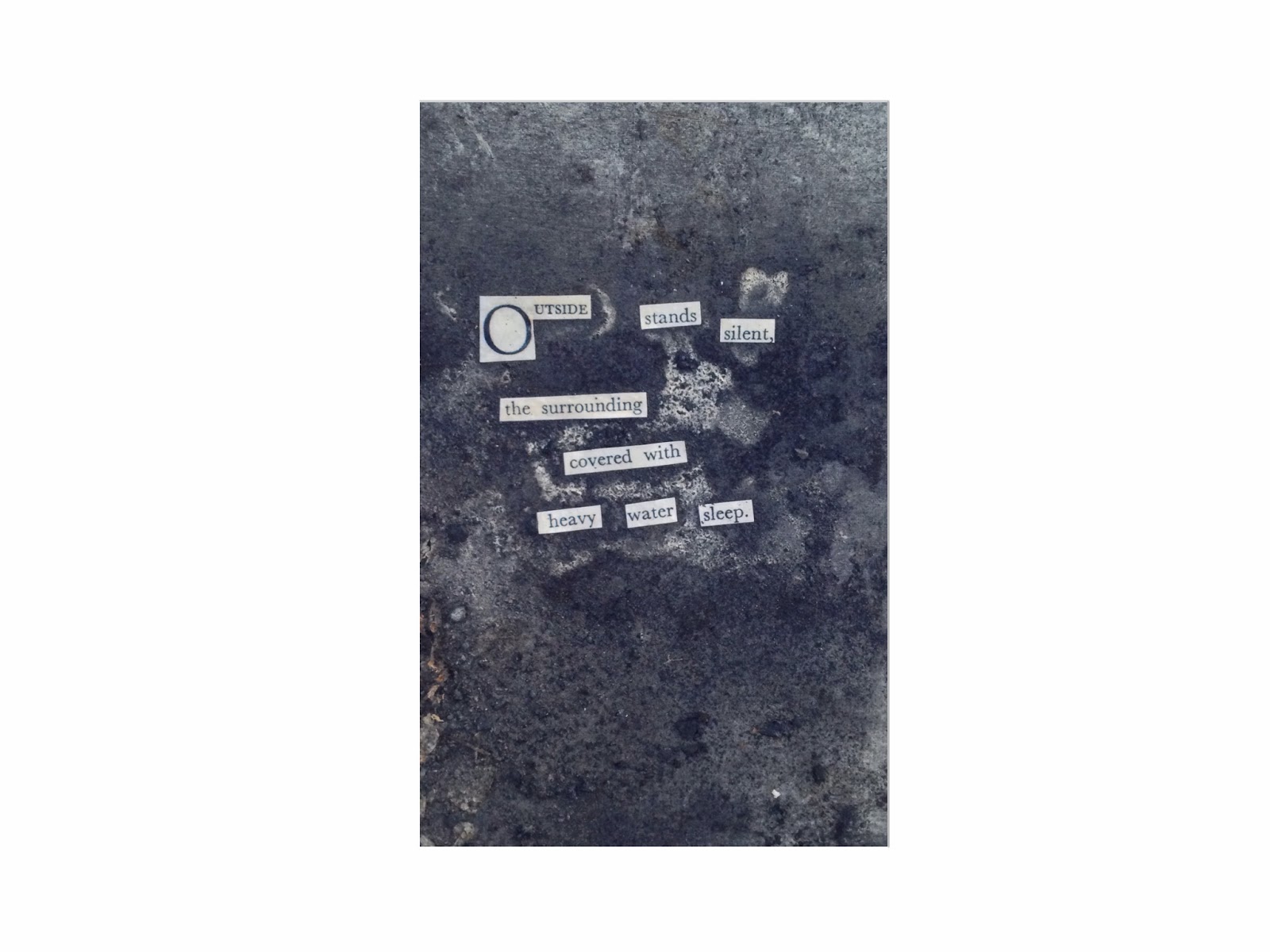
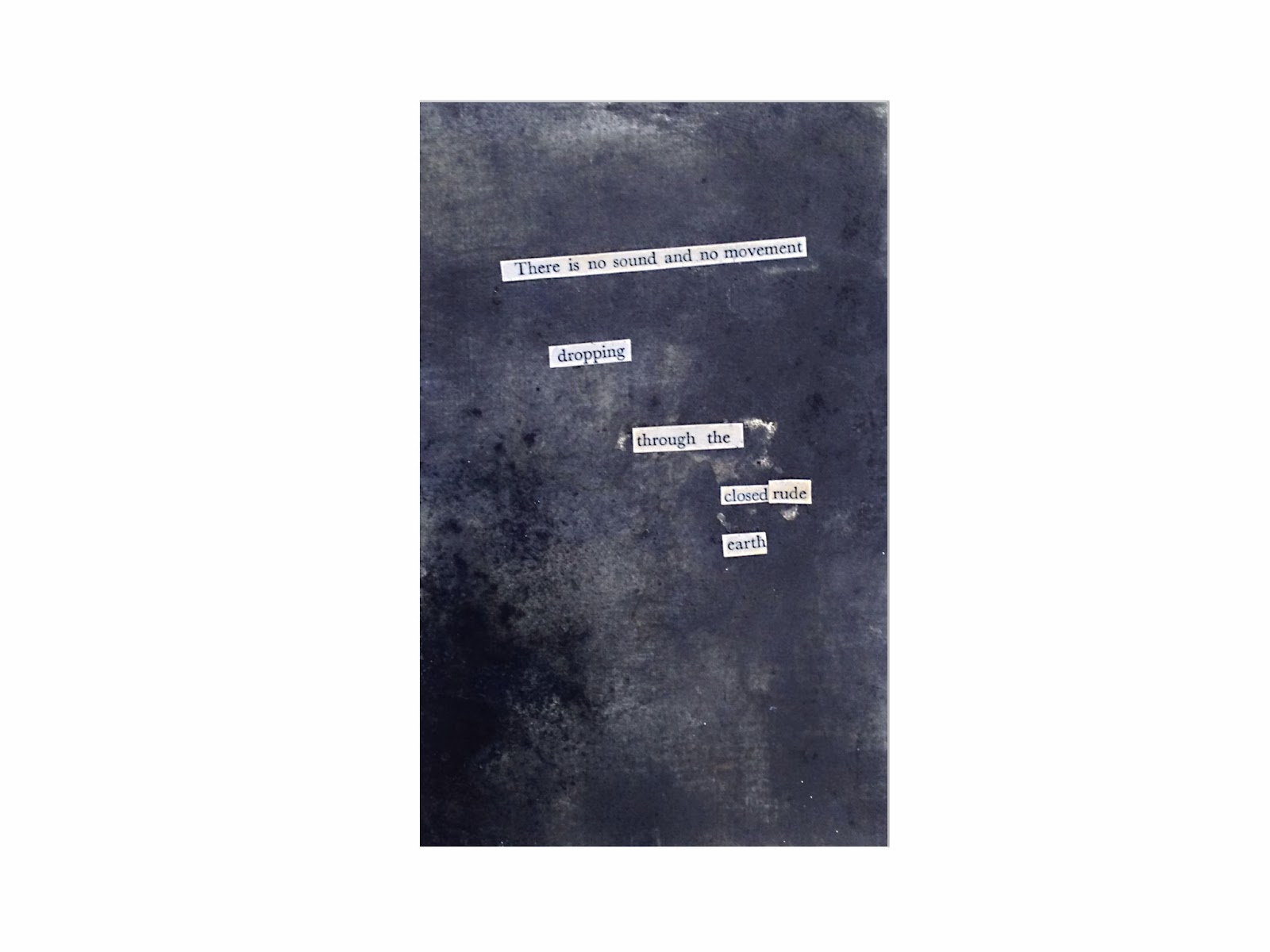
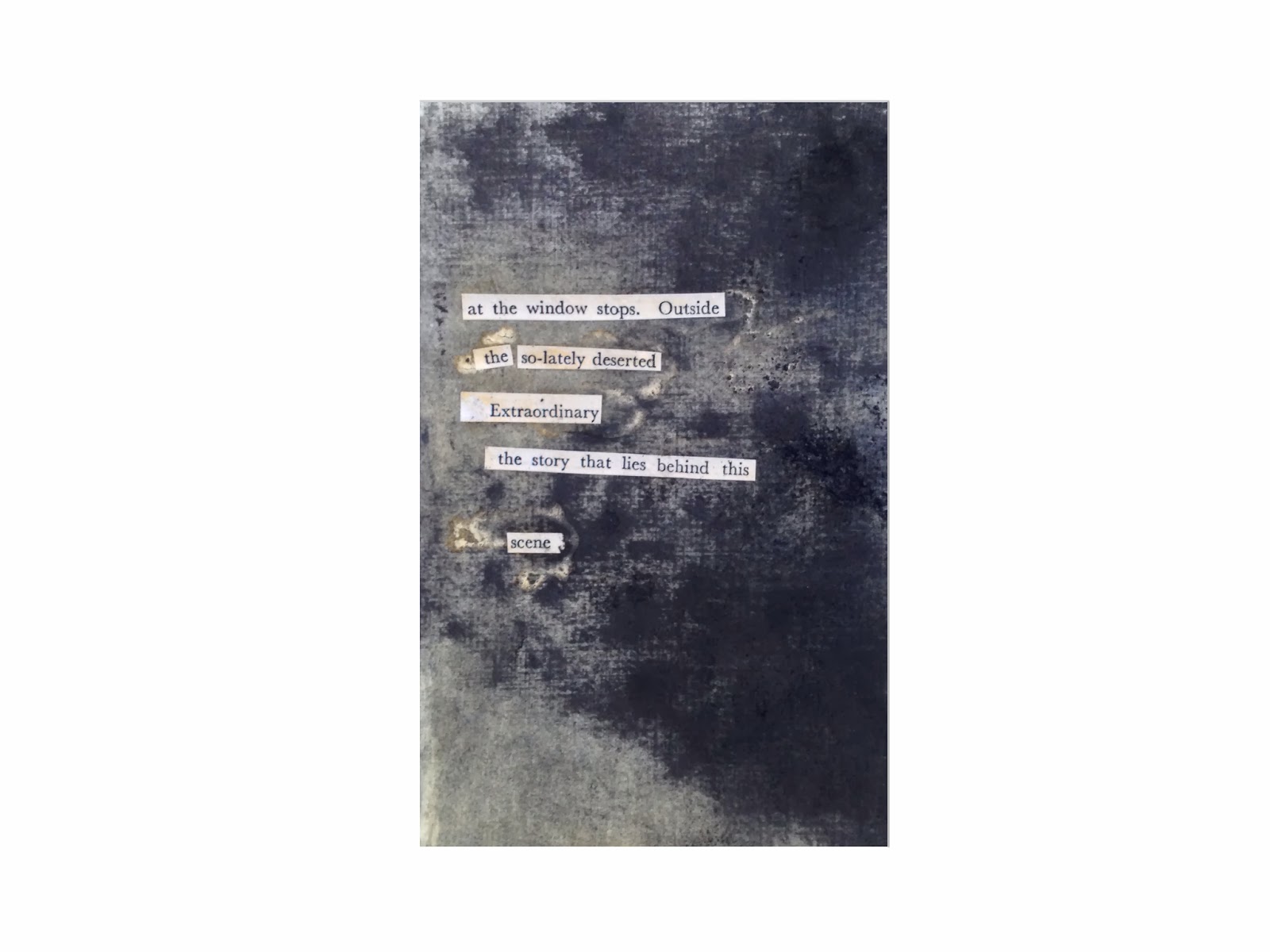
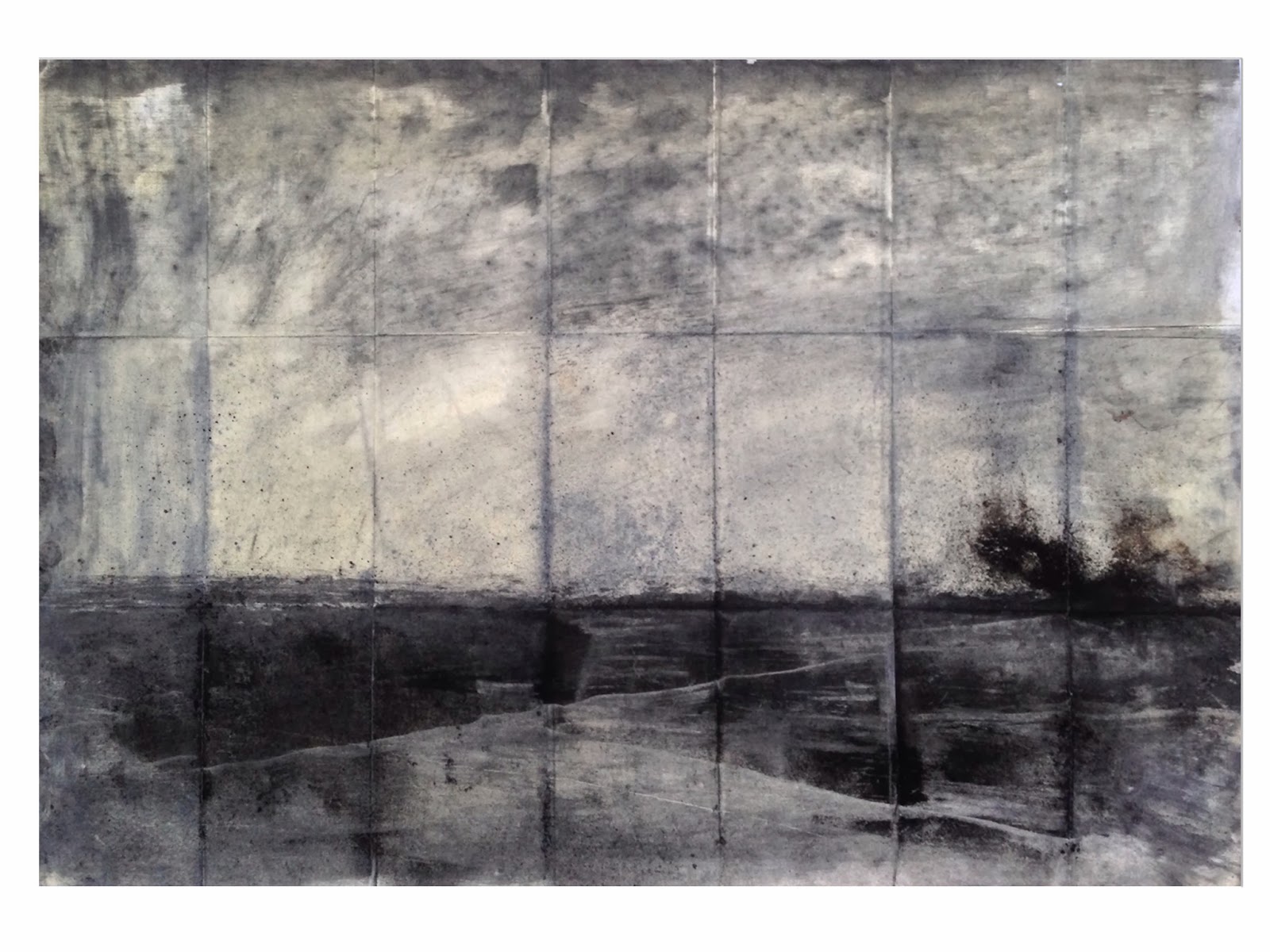
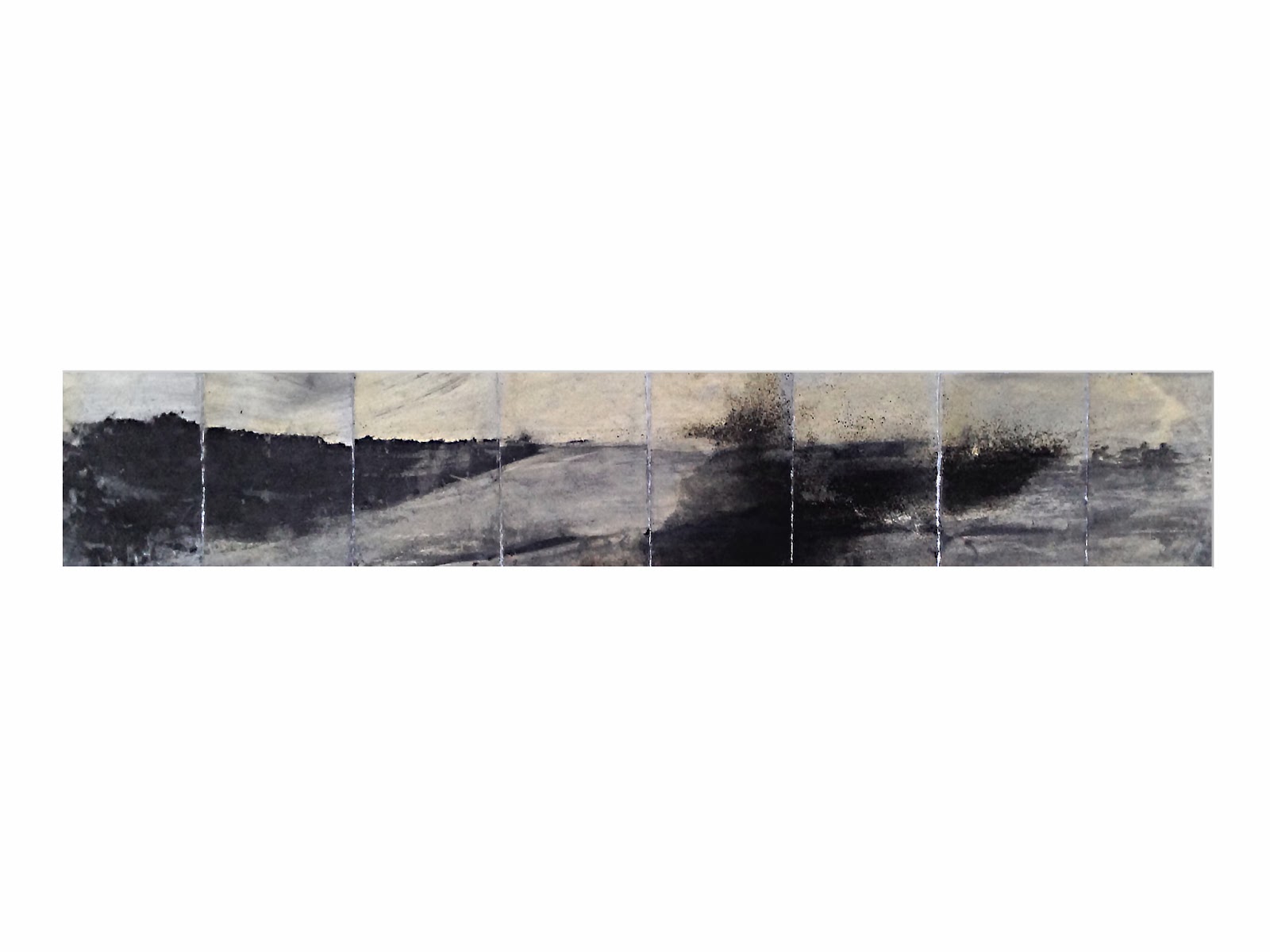
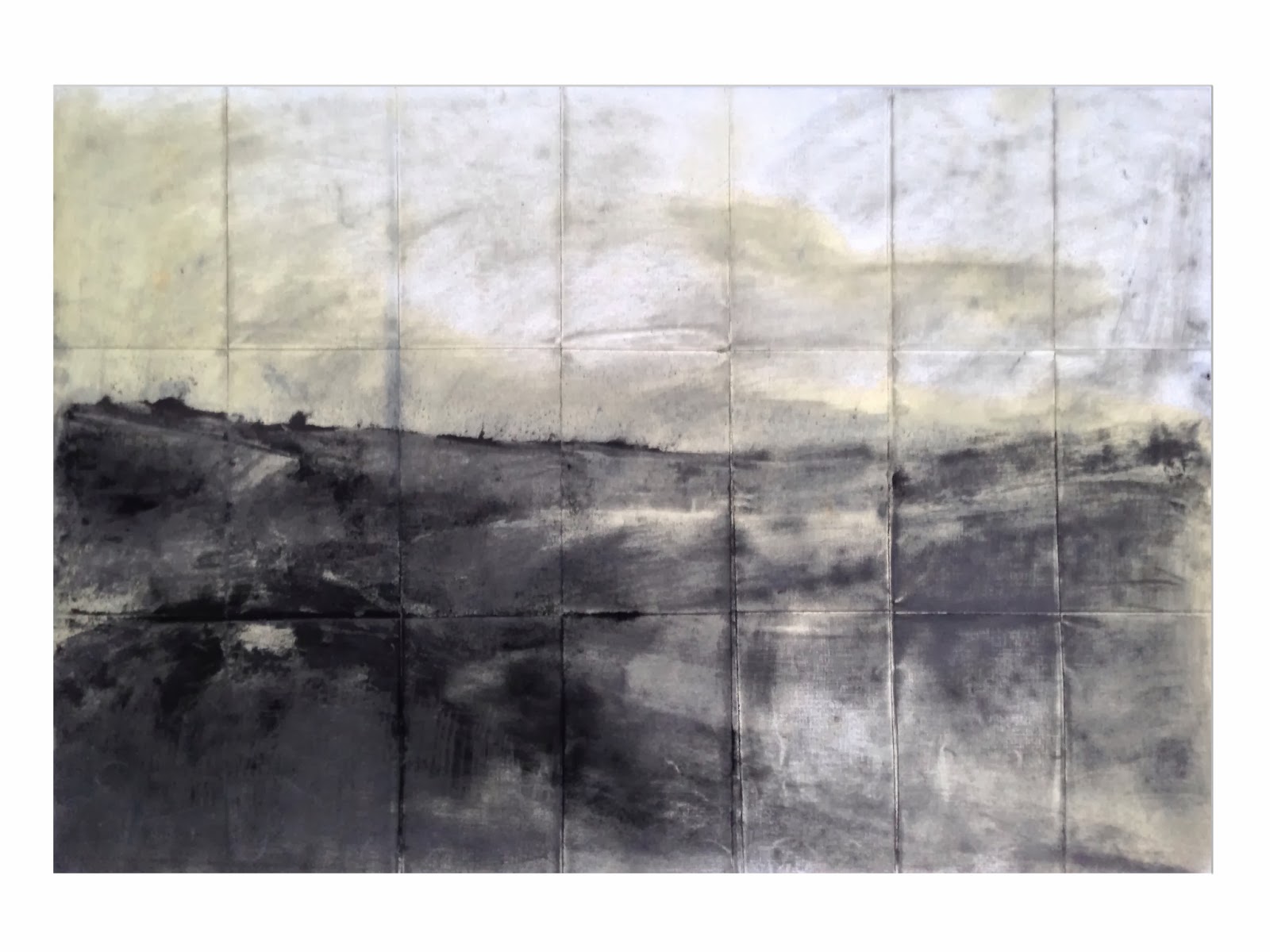
I will be exhibiting with my wife, Addy Gardner, in Plymouth from 4th-26th April 2014. Some of the work I’ll be showing can be seen below.
The Dolphin Inn (now demolished), which was run by my 6 x great-grandfather Samuel Stevens between (at least) 1734-1772. The photograph of the inn was taken some time around 1870; the modern photograph on my way to work today.
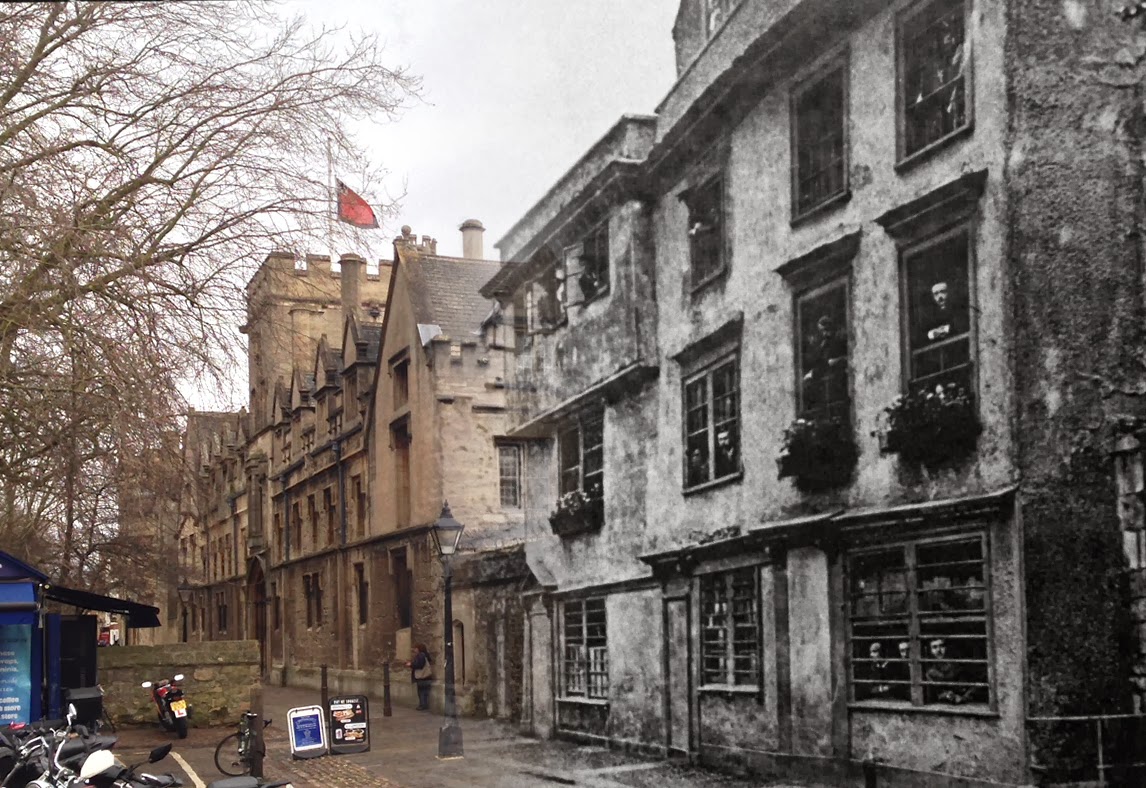
After my last post about my 6 x great-grandfather, Samuel Borton’s residence, I wanted to see if I could find out the name of the inn he owned, which, I now knew stood at the southern end of St. Giles. In a book of old Oxford photographs, which I bought a few years back, I found the following image:
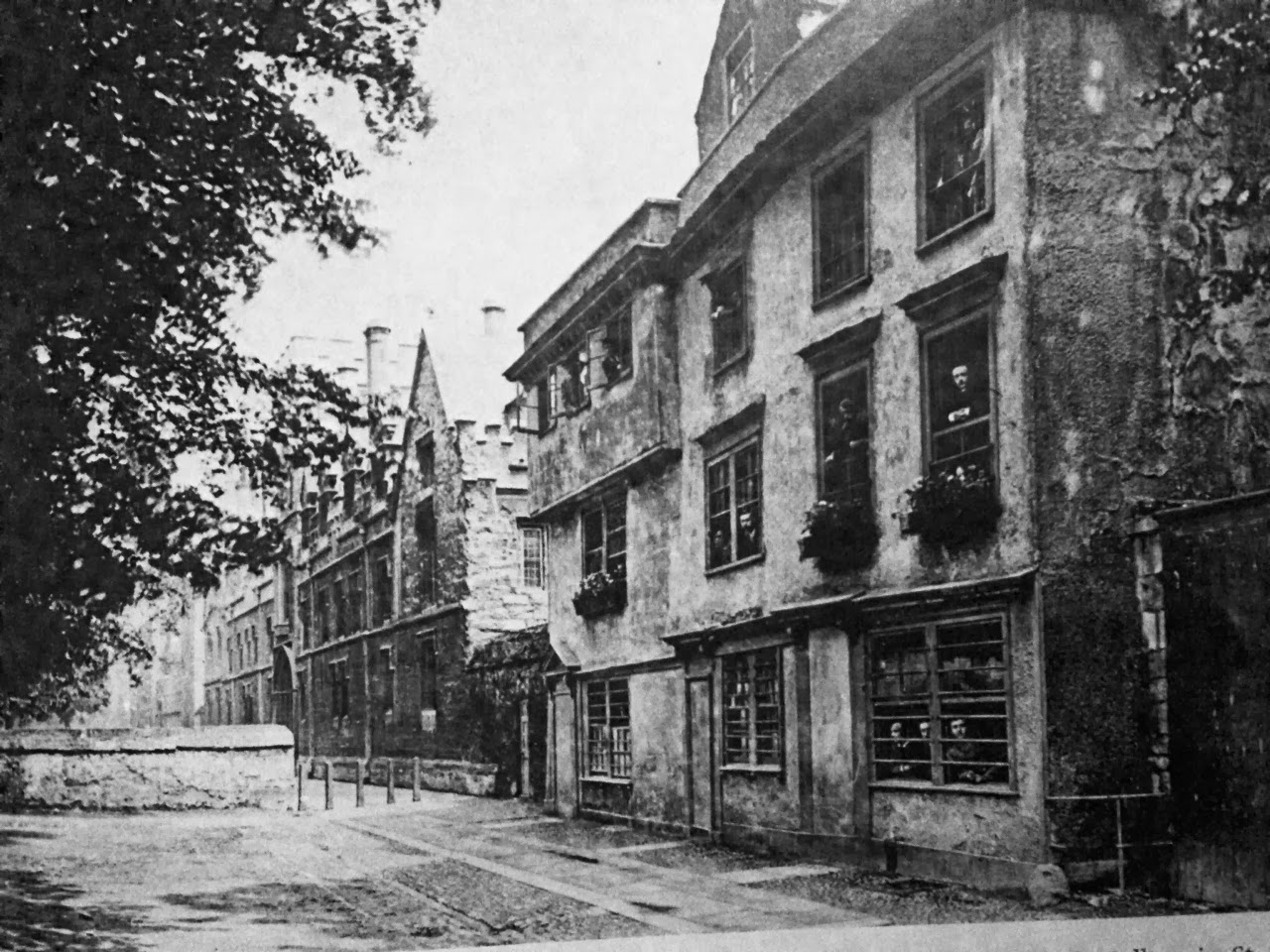
It shows St. John’s college and a building next door called the Dolphin building, which at the time of this photograph c1870 was part of the college. The text beneath the photograph stated that it had once been an inn, and digging a little deeper, I discovered that it had indeed been the Dolphin Inn.
This then is a photograph of my 6 x great-grandfather’s inn before it was demolished.
The engraving below, is that of the same inn, made in 1779, probably at the time when my ancestor was resident.
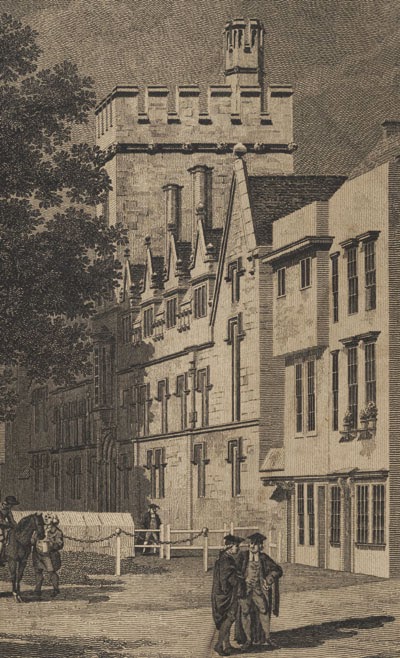
Following on from my last post on Samuel Borton’s residence, I’ve found evidence confirming where he lived. The following image shows his name in the survey:

I took the photo below whilst standing in my bus queue this evening. It shows the row of buildings which, I believe, stand on the site of those buildings once occupied by Messrs Morrel, Fidler and my ancestor, Borton.
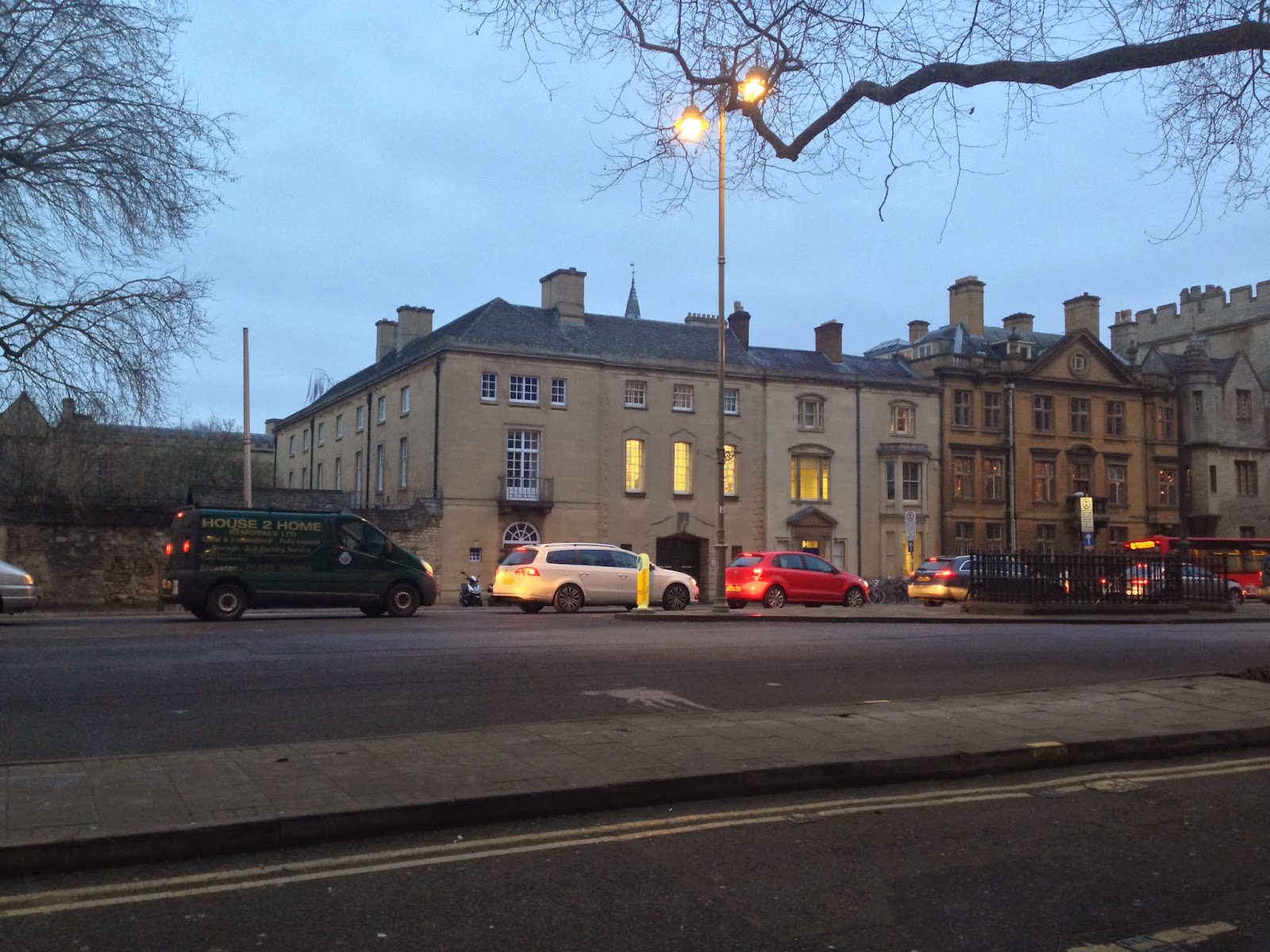
Looking at a plan from the 1772 survey – which I’d photocopied several years ago – I discovered that this is indeed the site of my ancestors dwelling.
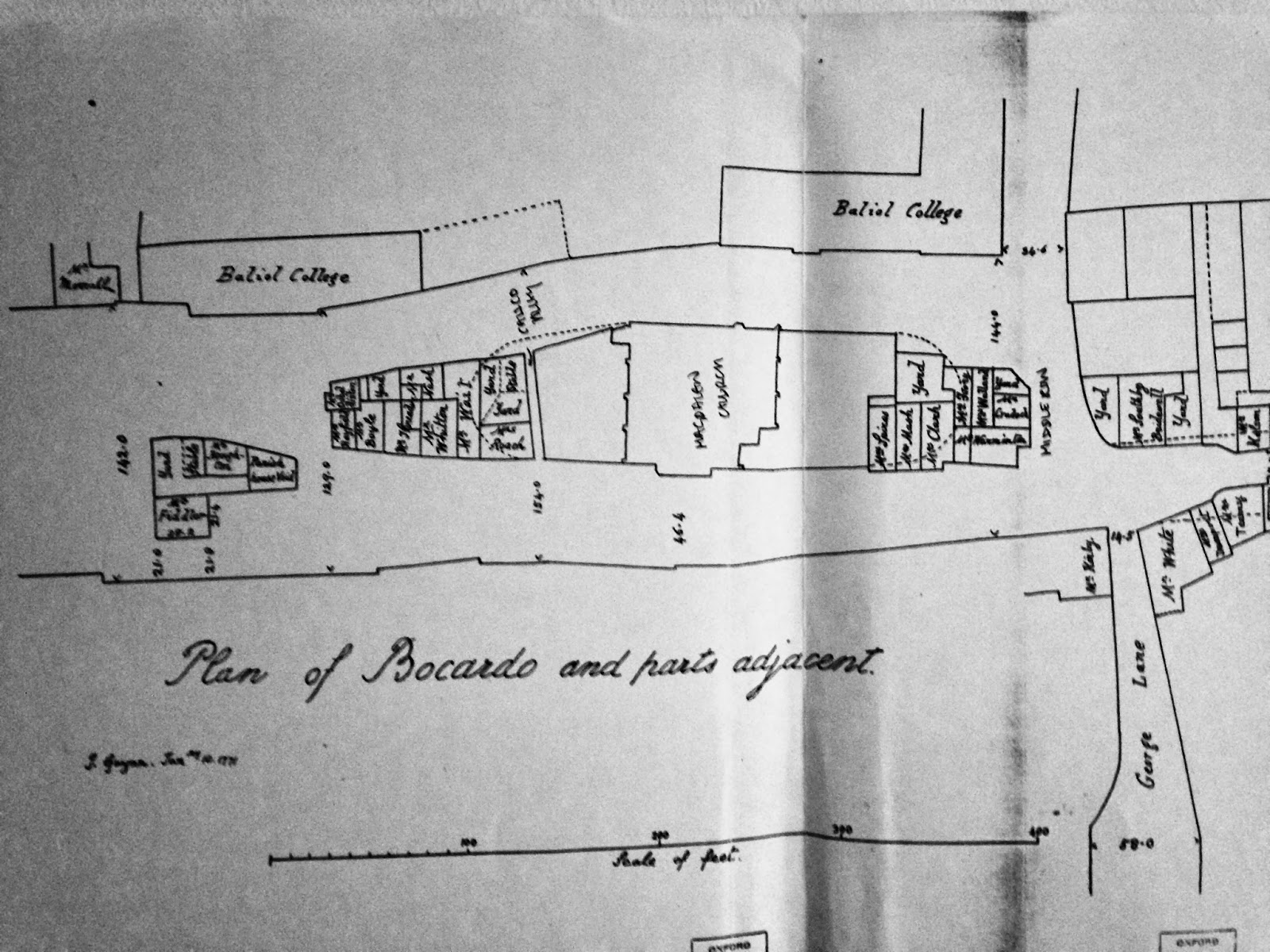
The following is a close up of the top left hand corner.
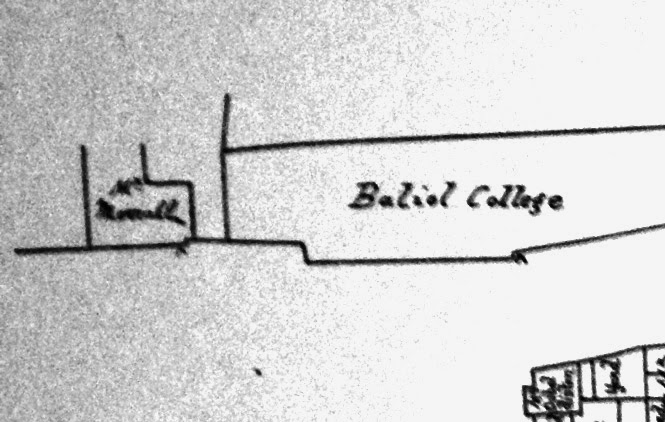
The name in the ‘box’ next to Balliol College is Mr. Morrell, which when we look at the list at the top of the page is the first name after Balliol College. His property would have stood approximately where the orange-brown neo-classical building stands now. Four yards to the left would have been Mr Fidler’s property and occupying the land next to that would have been my ancestor’s property, which I believe was an inn.
I have recently written about John Gwynn’s survey of Oxford (1772) in relation to my family tree research (see Lydia Stevens 1734-1822) and have discovered another ancestor in the same survey. Lydia’s father, Samuel Borton was, at the time of her birth, an innkeeper in Mary Magdalen Parish. Lydia married John Stevens in the church of St. Mary Magdalen in 1764, and I wondered therefore whether Samuel Borton would be listed in Gwynn’s survey? Sure enough, in Magdalen parish, close to Balliol College, a Mr. Borton is listed as the owner of a property measuring 15 yards wide.

I need to get a copy of H.E. Salter’s Survey of Oxford in 1772 with Maps and Plans to work out where exactly this is (the above extract is from Google books). However, it might be that as we have [Here Broad St.] and given that the length of Balliol College is given as 140 yards (128 metres), that Mr. Borton’s property is on the north side Broad Street. But then Balliol College, west end would seem to be that part of the college shown in yellow below. In which case Mr. Borton’s property would actually be nearer St. Giles.
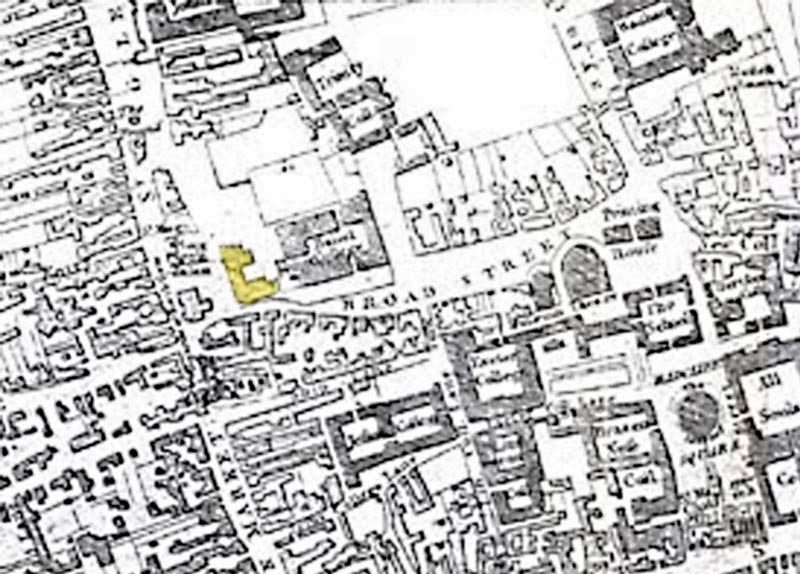
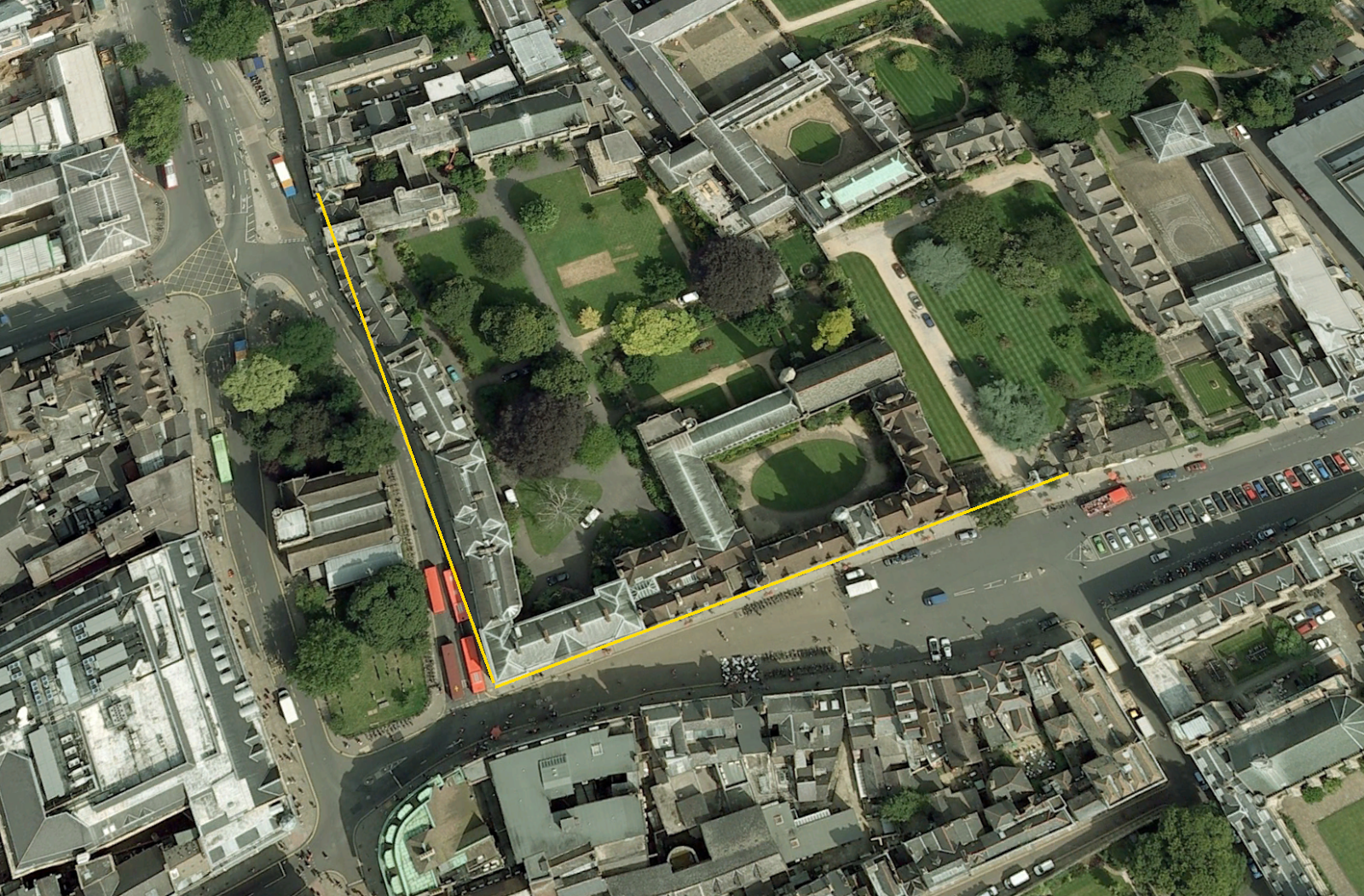
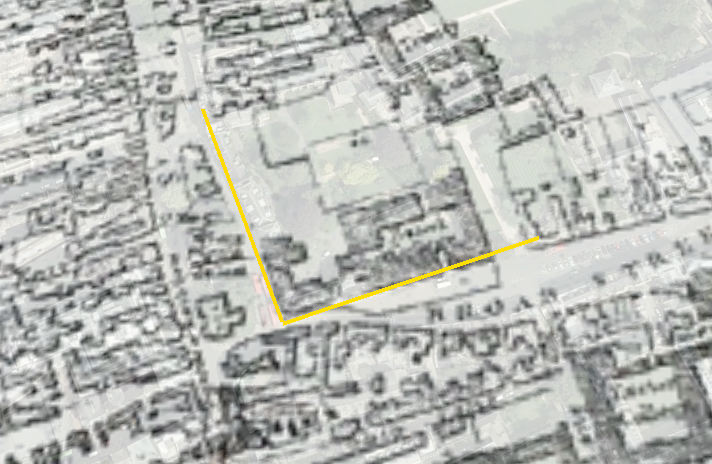
Having looked up Broad Street in Google Earth, I decided to use the measuring tool to see if that would help. The yellow lines are both approximately 140 yards long.
Superimposing the 1750 map above onto Google Earth, we get the following:
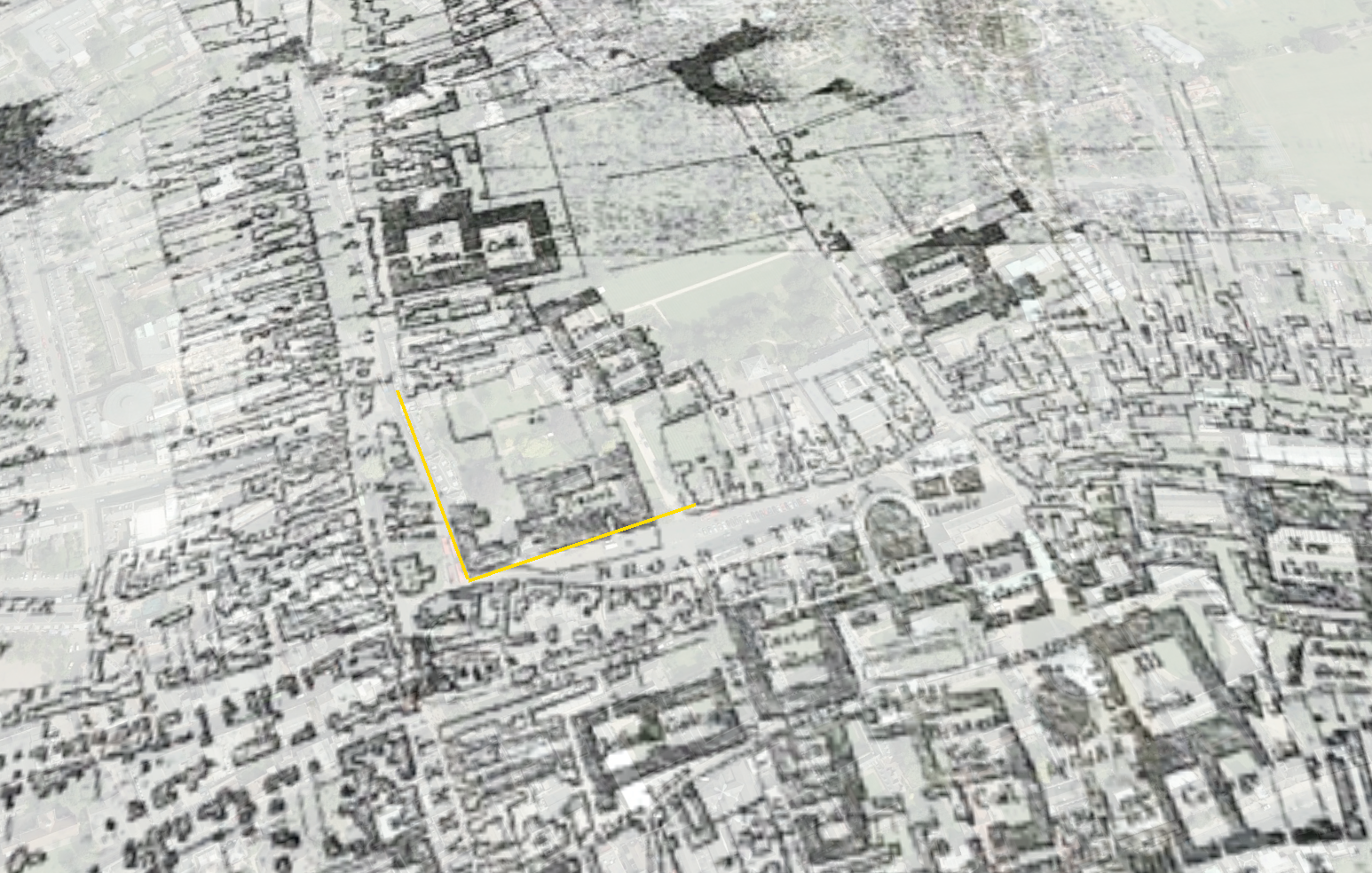
A closer look:
During a quick research session in the library this lunchtime, I tried to discover the birth date of my 6 x great-grandfather, Samuel Borton. Having trawled through the indexes for St. Martin’s parish, St. Mary Magdalen, St. Peter le Bailey and St. Mary the Virgin, I turned to that for Holywell parish. In there I discovered a Samuel Borton born in 1706. His father was listed as Richard and in the time I had, I discovered two siblings called Ann (b.1693) and Mary (b.1703).
From the index it’s hard to say for sure that this Richard Borton is the father of my Samuel Borton, but the name isn’t common and, in line with what I described yesterday, another piece of evidence could be gleaned from the names of Samuel’s own children.
His first son was called Samuel (1737 – ); his second son, surely named after his grandfather – Richard, born in 1739.
The name of a first born son or daughter is a good way of confirming whether or not your research, as regards a particular family line, is on the right track, and this has been the case with my current research into the Stevens line (my mother’s father’s line) of my family tree.
The father of my 3 x great-grandfather, John Stevens (1811-1876) was, I believe, a Samuel Stevens (1776-1841) and his father in turn was another John Stevens (1737-1803).
The name John is clearly important. John (1737-1803) named his first son John. He appears to have died in infancy as John’s fourth son (seventh child) was also named John. Sadly, this child also seems to have died in infancy; the couple’s fifth son (eighth child) was also named John. The couple’s third son (fourth child) was named Samuel (b1769) who again appears to have died in childhood. Another Samuel (my direct ancestor and the couple’s ninth child) was born seven years later in 1776. This shows that the name Samuel was also important.
This Samuel (1776-1841) had several children including a Samuel (first son, born in 1808) and a John (my direct ancestor born in 1811). John also had many children; his first born was John (1837-1888) and his second son was Samuel (1839-1919). My direct ancestor, Jabez (1847-1899) also had children, none of whom were called John or Samuel. Indeed, the name doesn’t appear again in my direct family line. One reason for this falling out of favour might be that John Stevens (1837-1888) spent much of the last part of his life in Moulsford Asylum. With the loss of his income his wife Emma entered a workhouse with two of her children, Martha and Kate, where she died of cancer in 1873.
The important point is that my 3 x great-grandfather’s second son was Samuel; it links him with the Samuel Stevens who I believe to be my 4 x great-grandfather. But where does the name Samuel come from? Why was it so important?
Going through the Oxfordshire parish indexes last week I discovered the following: my 5 x great-grandfather John Stevens (1737-1803) was married to Lydia Borton (1734-1822) in the church of St. Mary Magdalen on 24th March 1764. The witnesses are given as Sam Borton and Mary Stevens. In the records I discovered that Lydia’s father was Samuel Borton, an innkeeper in the parish of St. Mary Magdalen. So, that must be where the name comes from as regards its important in the Stevens line.
I’ve turned my attention to my 4 x great-grandfather Samuel Stevens who I know was born in Oxford in 1776. I know too that he married a woman called Mary and that they had a child called John (my 3 x great-grandfather) in 1811.
In the library this afternoon I tried to find details of other children they might have had and the date and location of their wedding; however I couldn’t find anything save for details of a daughter, Frances, born in St. Aldate’s Parish in 1809, two years before John. However that was it, which led me to suspect that either one or both had died after John’s birth, or that they had moved away – which seemed the more likely.
Given that John lived in Reading for much of his life, it seemed plausible that it was actually his parents who moved some time after his birth in 1811. Searching through the records online, I eventually found a Samuel Stevens who married a Mary Pecover in St. Lawrence Parish, Reading on May 14th 1807. This I’m sure must be my ancestor; not only does the place fit – along with the name of his wife – but the date of the wedding – two years before the birth of Frances – also fits the wider picture. It seems therefore that having married Mary in Reading, they moved to Oxford but left shortly after to return to Reading.
Having done a bit more research in the library this afternoon, I believe I have discovered the dates of birth and death of Lydia Stevens’ husband John.
I know he died before Lydia (1822) and that he was alive in 1777 when his son William was born. Looking through the parish registers for St. Martin’s (the parish in which Lydia lived at the time of her death) I discovered a John Stevens who died in 1803 at the age of 66. This would put his birth year at 1737: Lydia, his widow, was born in 1734/5 which leads me to think that this is indeed my John.
I then looked at their children and found the following, all baptised in the same parish:
Given that there are 3 Johns and 2 Samuels, one can assume that the first John died some time before 1773 and that the second John died before 1774. Clearly the name John was important which leads me to believe that John’s father might have been called John as well.
The first Samuel must have died some time before 1776 when my direct ancestor was born.
Looking again at the wedding of John and Lydia, I found that the witnesses were Sam Borton and Mary Stevens. I’ve no idea of course what their relationship was to the couple; Sam could have been Lydia’s father or brother, but clearly the name Samuel or Sam was important and seems to have come from that side of the family. Mary Stevens might have been John’s mother or sister. The couple’s third daughter was named Mary so I’m no clearer on whether this was John’s mother’s name or not.
Researching John Stevens in the library today, I found what I’m sure must be his parents. Having looked at the Index of Baptisms for the time around his birth (1811) I found only one person matching his dates. John Stevens was born on 7th October 1811 in St. Aldate’s parish. His parents are given as Samuel and Mary Stevens, and looking at John Stevens’ children, I found that his second born son is named Samuel (his first son is called John). I decided to see if I could locate a Samuel Stevens in the Parish Registers. I couldn’t be sure that he was born in the city but it seemed quite likely. Sure enough I found a Samuel Stevens born on the 4th April 1776, baptised in St. Martin’s (now demolished). His parents were given as John and Lydia Stevens and so I looked for a record of their marriage in the city. Again my luck was in and I found that they were married on March 24th 1764 in St. Mary Magdalen. Lydia’s maiden name was Borton and the witnesses at the wedding were Sam Borton and Mary Stevens. John is described as being from St. Martin’s which is where Samuel was baptised.
At the same time I also wrote the following:
A year or so ago, I started work on a piece of work based around John Gwynn’s survey of 1772. The piece was called (as a working title) ‘6 Yards 0 Feet 6 inches’ based on the measurement of John Malchair‘s home in Broad Street. Having discovered an ancestor – John Stevens – born in the city in 1811, I wondered if there was any chance that one of the Mr Stevens’ listed on the survey was an ancestor of mine? It seemed a long shot but after today’s research I’m rather more optimistic.
If I did have an ancestor in Oxford at the time of the survey and if my research is correct, then that ancestor would be John Steven, the grandfather of the one previously mentioned. I’ve no idea when he was born but I do know that he was married in 1764 and is described as coming from St. Martin’s Parish, where his son Samuel, John Jr’s father was baptised in 1776. One could assume therefore that I did indeed have ancestors living in the parish of St. Martin’s at the time of the survey.
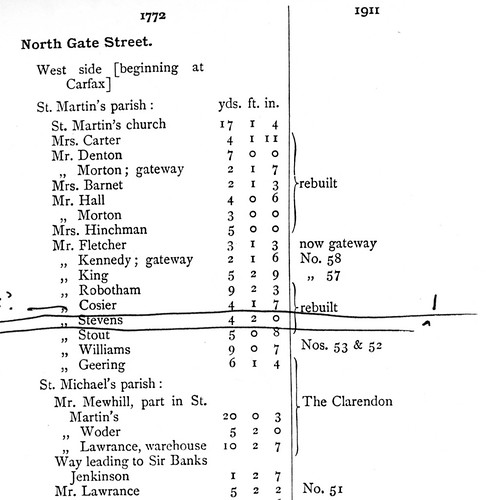
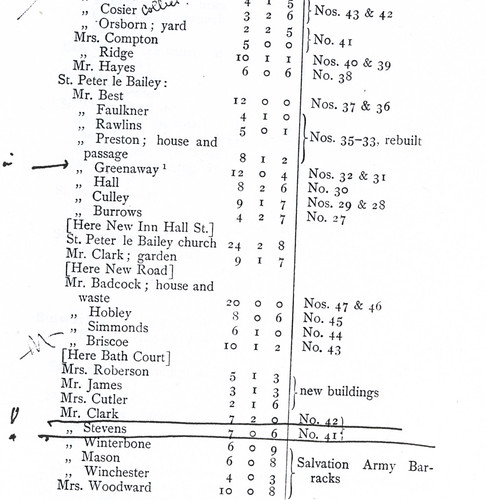
The images below are taken from the survey and show two Stevens one of which might well be my ancestor.
Gwynn fails to include (at least on the copy I have) first names from the survey but within the parish of St Martin’s two Mr Stevens are recorded along with a Mrs Stevens. One can assume however, that those most likely to be mine are the two Mr Stevens mentioned as living in the parish, one in Butcherrow (now Queen Street), the other in North Gate Street (now Cornmarket). The residence in Butcherrow is 7 yards 0 feet and 6 inches. That in North Gate Street is 4 yards 2 feet 0 inches.
Of course more work is required to see if one of these is indeed my ancestor, but I must admit to being very inspired by the prospect.
Yesterday, I was looking through Jackson’s Oxford Journal online and decided to search for a number of my ancestors. I’d already done as much with the Hedges side of the family (discovering in the process that they were often in trouble – see ‘The Victorians‘) and decided to check on my maternal side. I searched for Lydia Stevens (my 5 x great-grandmother) and discovered the following from an edition of the newspaper printed on November 2nd 1822:
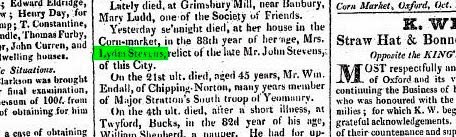
‘Yesterday se’nnight [a week] died, at her house in the Corn-market, in the 88th year of her age, Mrs. Lydia Stevens, relict [widow] of the late Mr. John. Stevens, of this city.’
Not only did this notice give me her dates of birth and death (1734 – Friday, 25th October 1822), it also seemed to indicate that the Mr. Stevens recorded in John Gwynn’s survey on 1772 was my 5 x great-grandfather. Of course there is a 50 year gap between the date of the survey and the date of Lydia’s death, but it seems quite probable nonetheless.
I’ve been thinking these last few weeks about a new body of work based on the First World War. For a long time – as will be evident from my blog – I’ve been looking at ways of using the backdrops of numerous World War I postcards.
A quote from Paul Fussell has been especially helpful in this regard.
“…if the opposite of war is peace, the opposite of experiencing moments of war is proposing moments of pastoral.”
The images on the backdrops are these proposed moments.
As a contemporary artist living so long after the war, it is of course impossible for me to create works about the war itself. What I can do however is comment on my relationship to the war (and those affected by it) by creating scenes – pastoral scenes – which use as their starting point the backdrops of World War I postcards.
The pastoral will, therefore, be articulated through the language of war.
These pastoral images will, predominantly, be woodscapes based on places I have visited over the last few years including Hafodyrynys (where my great-great-uncle, Jonah Rogers (1892-1915) grew up), Verdun and the Somme. They might contain – to quote Rilke – ‘…temple columns, ruins of castles’ as per the slightly less pastoral backdrops. They will be devoid of people; the soldiers absent as if they had melted into the backdrops – as if these pastoral scenes represent the Keening landscape of Rilke’s Duino Elegies.
As I’ve written before: it is this absence which the trees express so silently, so eloquently. As Rilke so perfectly puts it:
‘Look, trees exist.
The houses we live in continue to stand. Only we
pass away like air traded for air and everything
conspires to maintain silence about us, perhaps
half out of shame, half out of unspeakable hope.’
The woods I paint will be based, as I’ve said, on those places I have visited as well as those idealised scenes in front of which the soldiers stand in the postcards. They will be – as Richard Hayman puts it – woods “poised between reality and imagination…” – shame and unspeakable hope.
Again as I’ve written before: After the war, the sense of emptiness must have been everywhere. Every insignificant moment – barely acknowledged before the war – now pregnant with a sense of incomprehensible loss. The world, outwardly the same, had shifted just a little, but it had taken the lives of millions to push it there.
There is in this text a sense of absence but also of movement, of continuation – however slight or small (something I want to record in my work). And there’s a link between this and a quote from William Wordsworth who wrote in his Guide to the District of the Lakes: we can only imagine ‘the primeval woods shedding and renewing their leaves with no human eye to notice or human heart to regret or welcome the change.’ I somehow want to turn this quote on its head and borrow from Rilke, who in his Duino Elegies describes the towering trees of tears. I want to paint scenes where there are no people, but in which their absence is recorded, primarily by the trees silently remembering.
“The painter sees the trees, the trees see the painter.”
Burnt Norton
And all is always now. Words strain,
Crack and sometimes break, under the burden,
Under the tension, slip, slide, perish,
Decay with imprecision, will not stay in place,
Will not stay still. Shrieking voices
Scolding, mocking, or merely chattering,
Always assail them.
East Coker
There is, it seems to us,
At best, only a limited value
In the knowledge derived from experience.
The knowledge imposes a pattern, and falsifies,
For the pattern is new in every moment
And every moment is a new and shocking
Valuation of all we have been. We are only undeceived
Of that which, deceiving, could no longer harm.
In the middle, not only in the middle of the way
But all the way, in a dark wood, in a bramble,
On the edge of a grimpen, where is no secure foothold,
And menaced by monsters, fancy lights,
Risking enchantment. Do not let me hear
Of the wisdom of old men, but rather of their folly,
Their fear of fear and frenzy, their fear of possession,