Nicholas Hedges

Art, Writing and Research

  • Amazon
  • Behance
  • Facebook
  • Instagram
  • Pinterest
  • YouTube
  • Art
    • Digital
    • Drawing
    • Grids
      • Correspondence
      • The Wall
      • The Tourist
    • Ink on paper
      • Shadow Calligraphy
    • Installation
      • Murder
      • Echo
    • Painting
    • Patterns
    • Mixed Media
    • Photographic installation
      • St. Giles Fair 1908
      • Cornmarket 1907
      • Headington Hill 1903
      • Queen Street 1897
    • Research/Sketches
    • Stitched Work
      • Missded 1
      • Missded 2
      • Missded 3
      • Missded 4
    • Text Work
  • Blogs
    • Family History
    • Goethean Observations
    • Grief
    • Light Slowed But Never Stilled
    • Lists
    • Present Empathy
    • Shadow Calligraphy
    • Trees
    • Time
    • Walking Meditations
  • Video
  • Photography
    • Pillars of Snow
    • Creatures
    • The Trees
    • Snow
    • St. Giles Fair 1908
    • Cornmarket 1907
    • Headington Hill 1903
    • Queen Street 1897
    • Travel
  • Illustration and Design
  • Music
  • Projects
    • Dissonance and Rhyme
    • Design for an Heirloom
    • Backdrops
    • Shadow Calligraphy
  • Exhibitions
    • A Line Drawn in Water
      • Artwork
    • A Line Drawn in Water (Blog)
    • Mine the Mountain 3
      • Artwork
    • Mine the Mountain 2
      • Artwork
      • The Wall
    • The Woods, Breathing
      • Artwork
    • Snow
      • Artwork
    • Echo
      • Artwork
    • Murder
      • Artwork
    • The Tourist
    • Dreamcatcher
    • Mine the Mountain
      • Artwork
      • The Tourist
    • M8
    • The Gate
    • Creatures
      • Artwork
    • Residue
      • Artwork
    • A visit to Auschwitz
      • Artwork
  • Me
    • Artist’s Statement

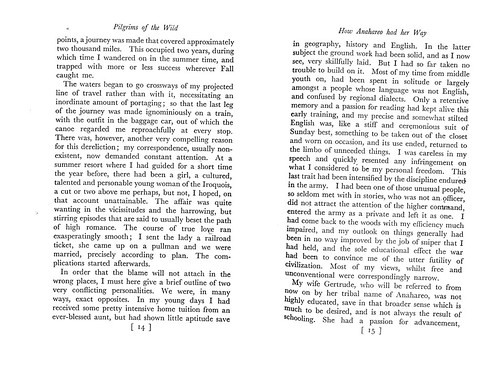
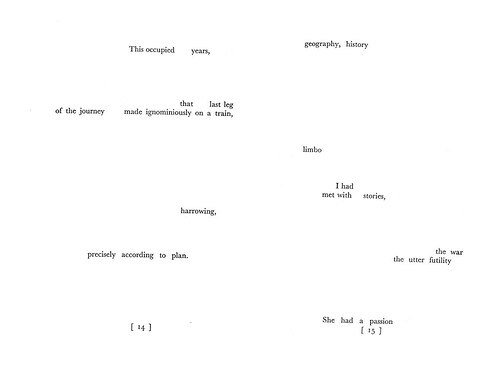
Heavy Water Sleep: Pages 12 & 13

June 14, 2011 by Nicholas Hedges

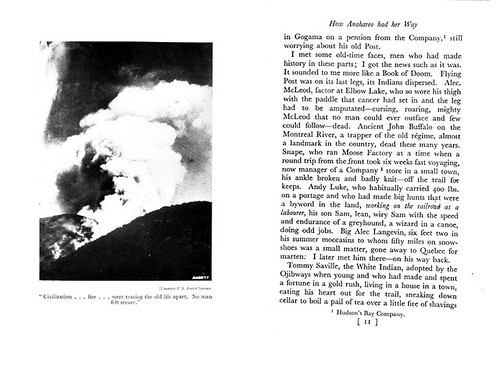
Original Version

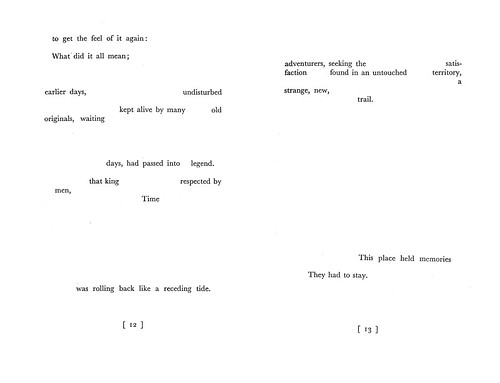
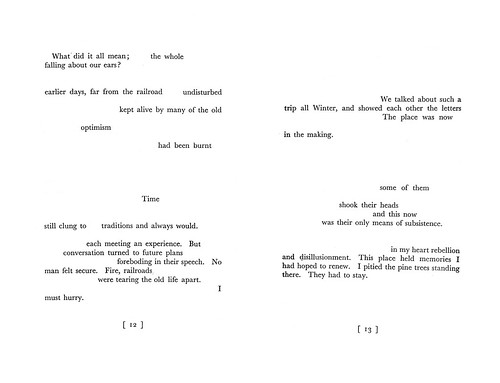
12-13 Original Version

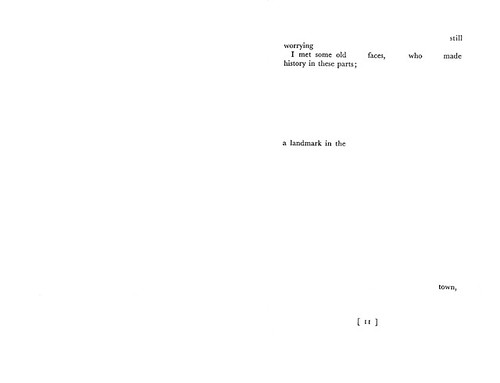
Version 1

12-13 Version 1

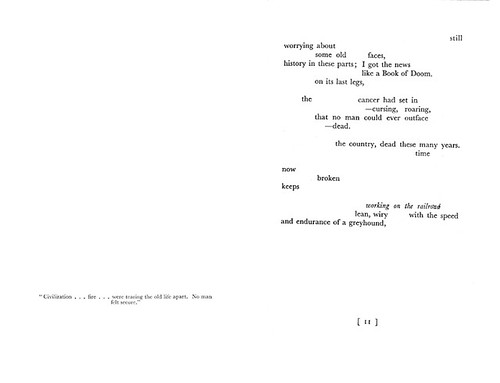
Version 2

12-13 Version 2

Filed Under: Heavy Water Sleep, Holocaust Tagged With: Heavy Water Sleep, Holocaust, Text Work, WWII

Archaeological Dig

June 12, 2011 by Nicholas Hedges

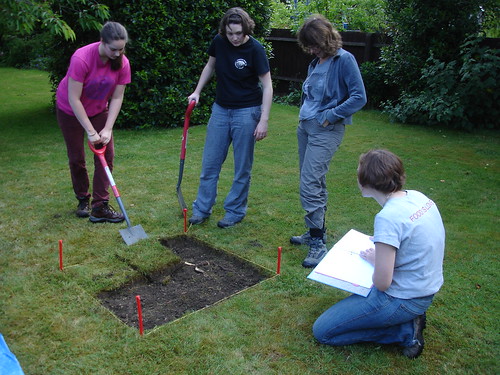
For the past day and a half I’ve been working on the East Oxford Archaeological Project, digging a test-pit in a garden in Iffley Village. Although I’ve had an interest in archaeology for a long time now, I’d never dug before and so the last two days have been both good fun and very informative.

The weather on the first day was good and digging was fairly easy (save for some roots). As I said, I’d never dug before so it was interesting – even on this small scale – to see the process involved; how everything was   observed and recorded.

Iffley Test Pit

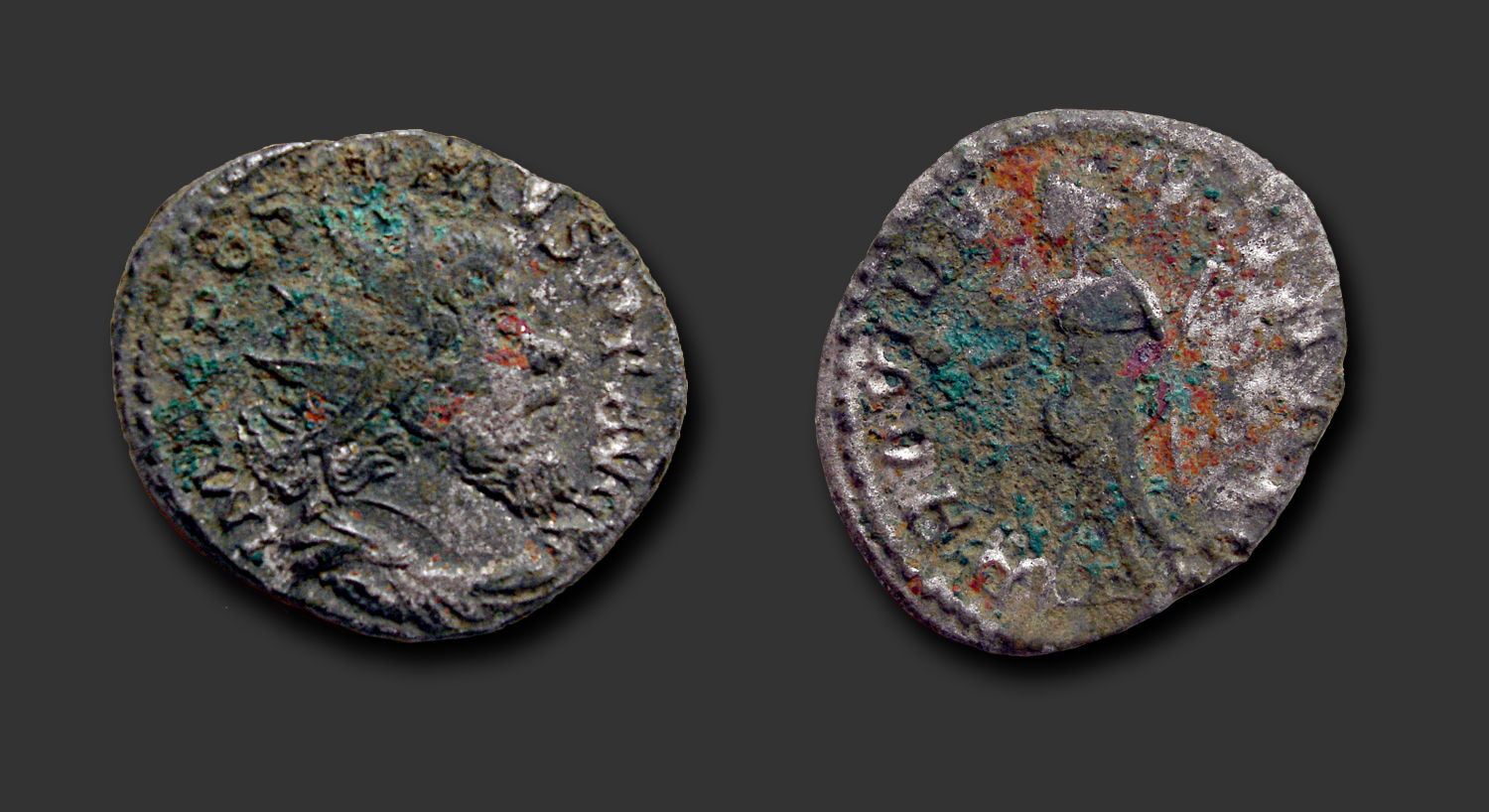
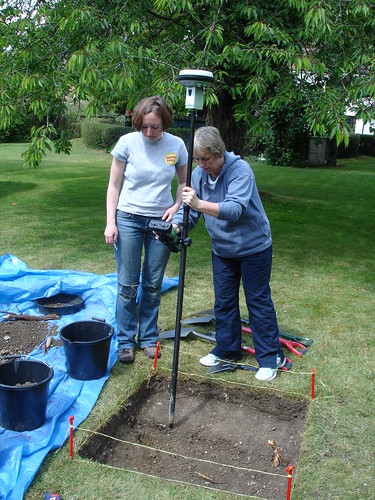
There were a few finds; miscellaneous bits of pottery (including fragments of flowerpot and a possible Roman rim!), a curious brooch-like item, some bits of clay pipe and the piece-de-la-resistance, a Roman coin from the reign of Emperor Postumus (AD 260-269). The image below shows the position of the coin being recorded with GPS.

Iffley Test Pit

Now, most of us in our time have seen a few Roman coins; not least in museums. But finding this one coin (which, I was told, was in suprisingly good condition) was quite remarkable. It’s not a rare coin; it isn’t worth a great deal of money, but that we were the first to see it and to touch it in over 1700 years was amazing. Indeed, the very fact that in the 3rd century someone had walked nearby and dropped the coin where it lay in the soil until its discovery yesterday astounds me. The 3rd century seems – and in many ways is – a completely alien world, and yet, as the coin reminds us, it was the same world as we inhabit today.

Coins are of course objects of transaction. They are given by one to another in exchange for – amongst other things – goods and services. And behind every coin is a complex network of these transactions of which we, as finders, become a part – as much a part as the person who dropped it over 1700 years ago.

It’s also astonishing to think that, within the local context, the coin was lost centuries before Oxford – now regarded as an ancient university, was even established as a town. I couldn’t help think, as I stood in the garden, of how the local landscape looked when the coin was lost, and to then make my way within my imagination down to the centre of town, to ‘see’ what was there.

Filed Under: Archaeology Tagged With: Archaeology, Artefacts, Objects

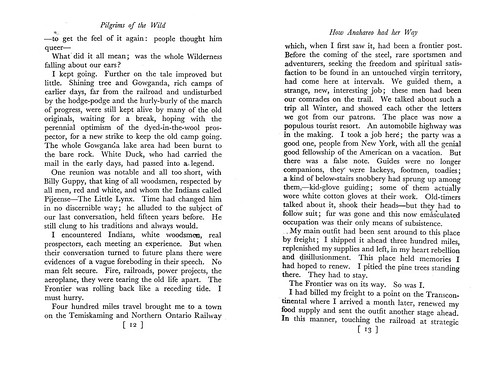
Heavy Water Sleep: Page 11

June 8, 2011 by Nicholas Hedges

Original Version

11

Version 1

11

Version 2

11

Filed Under: Heavy Water Sleep, Holocaust Tagged With: Heavy Water Sleep, Holocaust, Text Work, WWII

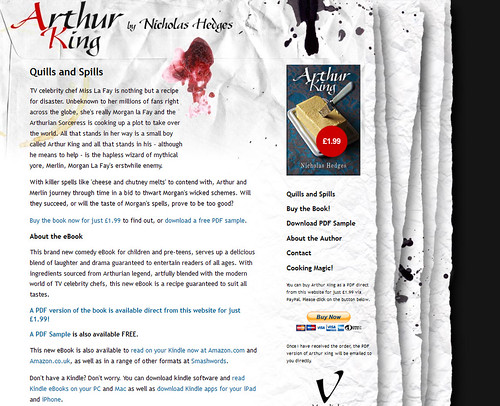
Arthur King Website

May 21, 2011 by Nicholas Hedges

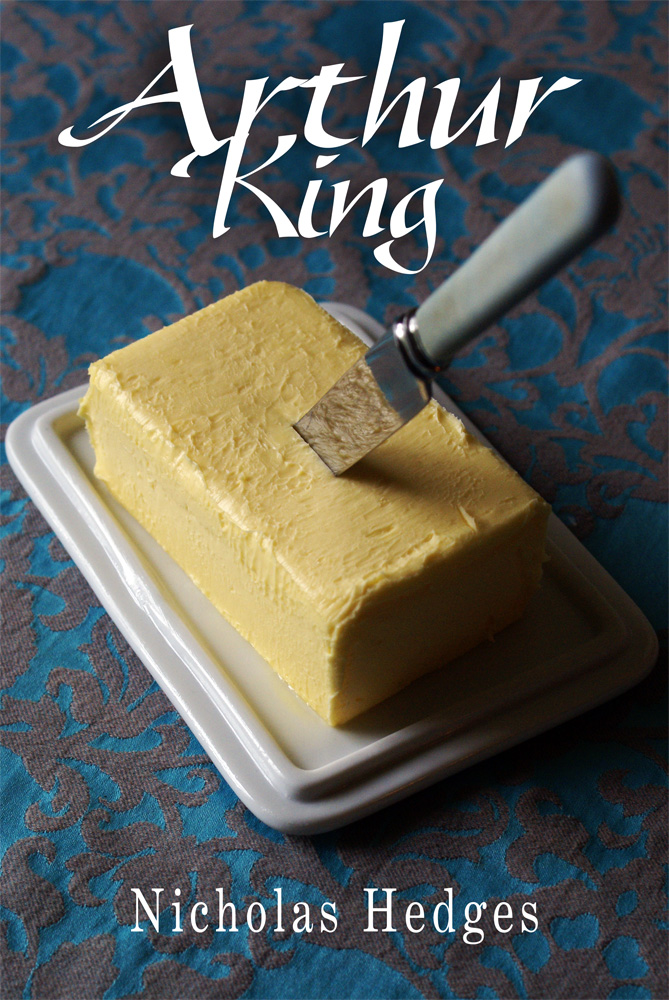
Arthur King website 
Buy the ebook directly from the website (in PDF) format for just £1.99. Visit www.arthurking.org for more details.
TV celebrity chef Miss La Fay is nothing but a recipe for disaster. Unbeknown to her millions of fans right across the globe, she’s really Morgan la Fay and the Arthurian Sorceress is cooking up a plot to take over the world. All that stands in her way is a small boy called Arthur King and all that stands in his – although he means to help – is the hapless wizard of mythical yore, Merlin, Morgan La Fay’s erstwhile enemy.

With killer spells like ‘cheese and chutney melts’ to contend with, Arthur and Merlin journey through time in a bid to thwart Morgan’s wicked schemes. Will they succeed, or will the taste of Morgan’s spells, prove to be too good?

This brand new comedy eBook for children and pre-teens, serves up a delicious blend of laughter and drama guaranteed to entertain readers of all ages. With ingredients sourced from Arthurian legend, artfully blended with the modern world of TV celebrity chefs, this new eBook is a recipe guaranteed to suit all tastes.

Filed Under: Uncategorized Tagged With: Arthur King, Childrens Stories

A Train Journey

April 25, 2011 by Nicholas Hedges

Modena to Bologna, 24th April 2011

There’s a man with his family sitting ahead of me. They look Chinese. The man sits watching while his wife and child sleep. He leans forward in his chair, poised and alert, as if expecting the enemy to appear at any minute. He could be from a Kurosawa film. His face is fixed by a look of resignation. Whenever he looks at his wife and child, it’s almost as if it’s for the last time.

He seems always to be looking into the distance; not at the horizon, but behind, to a time many years ago, a time before he was even born. There is a longing in his face; a face as expressionless as if it was cut from paper. Only occasionally does it crease, the expression leaving a mark like a fold in his skin. His wife laughs and kisses her child over and over – a small boy with a round face who watches the world pass by the window. What will he remember of his mother and father in the years ahead? What will he recall of this moment? Something? Nothing? Will it leave a mark somewhere in his memory – a fold like the half-smile on his father’s face?

Filed Under: Uncategorized Tagged With: Fragments, Observations

Arthur King available on Smashwords

April 20, 2011 by Nicholas Hedges

As well as the kindle platform, you can now read Arthur King in a wide range of other formats (including PDF) at Smashwords. The first 10% of the book is available as a sample so you can try before you buy.

I’ve also created a website for the book  (www.arthurking.org). A temporary page is available with the full Arthur King experience coming soon!

Filed Under: Uncategorized Tagged With: Arthur King, Childrens Stories

Arthur King available on Kindle

April 19, 2011 by Nicholas Hedges

Well, I thought I’d give it a go and now my children’s novel, Arthur King is available on Kindle, a story in which Arthurian Legend meets with the modern phenomenon of the TV Celebrity Chef.

Miss La Fay was once the richest, most powerful, most successful TV celebrity chef in the world. But then, I’m sure you already know that… don’t you? No? Are you sure? You must remember…

She was tall, beautiful, with long dark hair and a voice like chocolate sauce. She was on TV seven days a week, fifty-two weeks of the year and commanded an audience of millions right across the globe. From Great Britain to China, the U.S.A. to India, everyone knew her name. Cable, Satellite and MissLaFay.com – there was no escaping her recipes.

Other celebrity chefs around at the time met with strange and unexplained accidents, most notorious among them Colin ‘Big Mc’ McKee, found in the world’s biggest haggis, cooked for a Charity Dinner. You don’t remember him? You don’t remember the haggis?

What about Guy Blancmange, the Michelin chef with the Michelin stars, now flipping burgers in a motorway service station? Or perhaps Arnaud de Foisgras, found fattened up in a pigsty on a farm in Northern France? You don’t remember any of them? Well, that isn’t surprising and to be honest, I know you won’t remember Miss La Fay at all. It’s only to be expected, and this story is the reason why you have forgotten her. You and everyone else in the world.

But it could have been so very , very different, if not for the bravery of a boy called Arthur King. 

Read it now!

Filed Under: Uncategorized Tagged With: Arthur King, Childrens Stories

Arthur King

April 13, 2011 by Nicholas Hedges

Coming soon to Kindle…

Filed Under: Uncategorized Tagged With: Arthur King, Childrens Stories

Atlas at the Reina Sofia, Madrid

April 3, 2011 by Nicholas Hedges

The following short piece of text was taken from the Atlas exhibition at the Reina Sofia Gallery in Madrid which I visited last week. I’ve always loved Rilke’s work and it’s been of some importance in my research. Reading the following, it’s clear to me that that influence will only become even greater as I continue.

‘The poet Rainer Maria Rilke said that the “depth of time” was revealed more in human gestures than in archaeological remains or fossilised organisms. The gesture is a “fossil of movement”; it is, at the same time, the very mark of the fleeting present and of desire in which our future is formed.’

Filed Under: Quotes Tagged With: Exhibitions, Fossils, Gesture, Quotes, Rilke, Useful Quotes

Stitched Trench Maps II

March 23, 2011 by Nicholas Hedges

I completed my first three stitched ‘trench maps’ today and have popped them in frames ready to be exhibited in Luxembourg. Ideally they wouldn’t be in frames at all and would be presented on a much large scale, but as first versions go I’m pleased. Certainly I can see how I would like to progress them, adding more layers to create kinds of palimpsests.

Filed Under: World War I Tagged With: GPS, Lines, Positioning, Serre Palimpsest, Stitchwork, The Somme, Trench Maps, World War I, WWI

Empathy and the First World War (Part 5)

March 10, 2011 by Nicholas Hedges

The backgrounds of these postcards have become of great interest to me in as far as they help elicit a sense of empathy with those who are pictured. Some of the postcards feature no backgrounds at all and are simply headshots which make an empathetic response a little more difficult. What I want to look at here are natural and studio-based backgrounds, examples of which can be found below.
I’ve already looked at two postcards with photographs taken in natural settings and these settings can be further subdivided into those which are domestic and non-domestic. It’s those taken in what are clearly domestic settings – for example the backyards of houses – which are the most poignant, for the obvious reason that they are photographs of homes these men would soon be leaving. And again the question begs to be asked, would they ever return?
This photograph is clear

Filed Under: Photography Tagged With: Empathy, Photographs, Vintage Photographs, World War I, WWI, WWI Postcards

Empathy and the First World War (Part 5)

March 9, 2011 by Nicholas Hedges

The backgrounds of these postcards have become of great interest to me in as far as they help elicit a sense of empathy with those who are pictured. Some of the postcards feature no backgrounds at all and are simply headshots which make an empathetic response a little more difficult. What I want to look at here are natural and studio-based backgrounds, examples of which can be found below.

I’ve already looked at two postcards (see Part 3 and Part 4) with photographs taken in natural settings and these settings can be further subdivided into those which are domestic and non-domestic. It’s those taken in what are clearly domestic settings – for example the backyards of houses – which are the most poignant, for the obvious reason that they are photographs of homes these men would soon be leaving. And again the question begs to be asked, would they ever return?

This photograph was clearly taken in a back garden, one which seems to comprise little more than dirt. In the background, the backs of other houses are visible and next door appears to have what looks like a chicken coup, with chicken wire fixed above the fence. What is striking about this image is the cleanliness of the soldier’s uniform. His coat is spotless; it’s almost as if this young man is little more than a child playing soldiers in the garden, and it’s difficult to look at him knowing full well what he’s about to endure.

I’ve already discussed windows in old photographs and in the background of the image above one can see a window of one of the houses behind.

I wonder what the same scene would be like if I was standing behind, looking through the net curtains? I’d see the back of the young man being photographed and those who are taking the picture – more proud parents perhaps? I’d watch for a while, then turn my back and return to my own life within the terraced house. It’s imaginative wanderings like this which serve to animate the scene, to remind us that the past was once ‘now’.

I imagine this photograph was taken in the garden of the soldier’s parents’ house. I can imagine them holding this image, just as I’m doing now and walking outside to see that corner of the garden in which he’d been standing. The dilapidated fences, the dirt ground, the trees and the houses behind would all resonate with his presence. If I walk outside into my own garden, with this image in my hand, everything that makes ‘now’ what it is, would serve to animate it. The feel of the wind, the sounds of the birds in the trees, the feel of the ground beneath my feet etc.

This photograph was obviously taken in a studio and whereas in the previous image the backdrop is a real scene, the one above is like something from an 18th century painting. In the foreground we can see bunches of wild flowers growing alongside a quiet country track, leading off through an idealised landscape complete with ‘Rococoesque’ trees, a river and a picturesque bridge. One almost expects the solider to turn away from the incongruous chair and to walk off up the path and out of sight.

With the first image, the domestic backdrop of a garden, its fences, the chicken coup and the backs of neighbours’ houses provides a stark and disturbing contrast with what we know awaited the young man being photographed. This contrast is just as stark in the studio picture above, and in some respects even more disturbing.

Whereas the fictional scene could at least be imagined by the artist, what the man standing before it was about to face on the battlefield would never have been conceivable even with the keenest of imaginations. Reality was in a way even less real than this Arcadian backdrop which seems to depict something akin to Paradise. Perhaps this is why I find this image so haunting?

The reverse of the postcard contains text which reads: To Mr J Wade, With happy memories of past days spent at Waresley House. 

I did some research into Waresley House and discovered that it was once the home of both the Peel family (Robert Peel) and the Perrins family of Worcester Sauce fame. A large Georgian pile, I wondered what the soldier did there, who Mr J Wade was and whether or not he was the owner of the house. Having looked at the 1911 census however, I could find no record of Mr Wade. The house was owned by a Mr Gibbons, an 87 year old widower who lived there with his two daughters (both single and aged 49 and 47) and nine domestic servants.

It is possible that Mr Gibbons died soon after 1911 and that Mr Wade took over the house thereafter. Looking for Mr Gibbons on Ancestry, I found him in the same house in 1891 along with 13 children. The cook in 1911, Mary Pugh was also listed. 

Filed Under: Photography, Trees Tagged With: Empathy, Photographs, Vintage Photographs, World War I, WWI, WWI Postcards

Empathy and the First World War (Part 4)

March 9, 2011 by Nicholas Hedges

Another postcard from my World War One collection:

It’s a rather faded image but we can see that it shows a man standing outside a gate to what looks like the back yard of a house. Like the previous image (see Part 3) the man is dressed in his uniform, ready to head off to war. Or perhaps he’s returned, on leave maybe, about to go back to the Front? We’ll never know, but looking at his face, there’s something about his expression which looks weary at the very least. Of course this is probably reading too much into the picture, but there is something about his face which makes me wonder. To make it easier to see, I’ve enhanced the image a little:

Detail of the soldier’s face:

Like the previous postcard, I can well imagine the scene without the soldier standing there; the feel and the colour of the ivy, the bricks and the old, rather battered door. My imagination colours the image, and through this colouring, the textures of the bricks and the door become apparent. And like the other postcard, it is in itself a tactile object which speaks of the soldier’s absence more than his presence – after all, a postcard is a form of communication sent by someone who is, at the moment, absent from the life of the receiver. Turning it over and looking at the reverse, I could see that it had been addressed to a Miss V. J. Edwards. I wondered if she was the man’s fiancee, but looking at his hands, I could see that he was wearing what appears to be a wedding ring. And again the hands are like those I’ve discussed previously (see Part 1 and Part 3).

Could Miss Edwards be his sister? As I hold the postcard, and turn it over in my hand, I find myself performing an action she herself would have performed. What would she have thought as she read the rather enigmatic text?


1919 16.Puzzle BLA.

I’m assuming that the number at the top is the date (1919) which means we can perhaps also assume the soldier on the front survived the war. Was the photograph itself taken when the war was over? Would that account for his rather tired expression? It seems unlikely, and given the rest of the text, it might be that this isn’t the date at all. Sadly, the franking mark on the stamp isn’t clear enough to tell. What does 16.Puzzle BLA mean? Is it No.16 in a series of puzzles? Is BLA itself the puzzle – a secret code shared between the two; between the soldier and Miss Edwards? Interestingly, in the image itself, we can see in the bottom left hand corner, a notebook on a wooden bench. Did the soldier conceive his puzzles within its pages?

 
A hand rolled cigarette lays next to it, and the two together serve to animate the image – or rather the soldier in the image; I can picture him smoking, writing in his notebook, in a hand like that on the reverse. Holding the postcard and reading it, I can also ‘animate’ the person to whom it was sent.

With this single image then, a relationship long forgotten has been re-established.

Filed Under: Photography Tagged With: Empathy, Photographs, Vintage Photographs, World War I, WWI, WWI Postcards

Reading Roads

March 8, 2011 by Nicholas Hedges

Introduction

In Wales in 2008 I walked a path along which my great grandfather had walked every day from his home to the mines in which he worked. He died in 1929 (as a consequence of his work) and all I knew of him, before my visit, were what he looked like (from two photographs) and things my grandmother had told me. But on that path I felt I found him on a much deeper level. The feel of the wind, the way the clouds moved, the sound of the trees and the line of the horizon were all things he would have experienced in much the same way. It was as if these elements had combined to ‘remember’ him to me.

Hafodyrynys and Surrounds

As a consequence of my walk, the line which linked us on my genealogical chart changed to become instead a path, for when I follow lines in my family tree from one ancestor to the next and find myself at the end, so that path in Wales had led to my being born. That path on which I walked for the very first time, was as much a part of who I was as my great grandfather: “places belong to our bodies and our bodies belong to these places.” [i]
Roads (paths, tracks and traces) have become an important part of my research and it was whilst reading Edward Thomas’ poem Roads that I found connections between what he had written and what I was thinking. I’ve reproduced the poem below, and where necessary added my thoughts.

Roads by Edward Thomas (1878-1917)
I love roads:
The goddesses that dwell
Far along invisible
Are my favourite gods.
Roads go on
While we forget, and are
Forgotten like a star
That shoots and is gone.
The reference to stars (or a star) in this verse, reminds me of a quote (to which I often refer) from Roland Barthes’ book Camera Lucida, in which he writes:

“From a real body, which was there, proceed radiations which ultimately touch me, who am here; the duration of the transmission is insignificant; the photograph of the missing being as Sontag says, will touch me like the delayed rays of a star. A sort of umbilical cord links the body of the photographed thing to my gaze – light though impalpable, is here a carnal medium, a skin I share with anyone who has been photographed.”

The star shoots its light and is gone and similarly we walk and are gone. But what is left behind is the road, a version of the light left by the disappeared star; a ‘delayed’ ray which allows us to ‘see’ those who went before us. I use the word ‘see’, but we ‘see’ with our bodies. We see the light from the star, but we feel the road. This in turn brings me to the idea of empathy as something which is tactile and kinaesthetic.  Roads and paths become ‘a sort of umbilical cord… a carnal medium, a skin I share’ with those who’ve walked that road or path before – precisely what I’d felt in Wales.

On this earth ’tis sure
We men have not made
Anything that doth fade
So soon, so long endure:

In the third verse we might interpret the lines as a description of the difference between the act of walking and the road itself. We walk in the moment – a moment which fades in an instant (‘so soon’) and yet, behind us a record of the sum of all those moments is lined up along the road behind us – one which endures for centuries. It’s the same difference as that between speaking and writing; one is fleeting, the other endures. Christopher Tilley writes that “…if writing solidifies or objectifies speech into a material medium, a text which can be read and interpreted, an analogy can be drawn between a pedestrian speech act and its inscription or writing on the ground in the form of the path or track.” [ii] Paths and roads ‘record’ our movements, they are texts which we can read with our feet. 
The idea of the ‘moment’ is also discussed by artist Bill Viola who writes that:
“We have been living this same moment ever since we were conceived. It is memory, and to some extent sleep, that gives the impression of a life of discrete parts, periods or sections, of certain times or highlights. [iii]
This ‘same moment’ is in many respects like the act of walking and the road rolled into one; it fades and yet endures at one and the same time. There is an echo of this idea in Camera Lucida when Barthes writes:
“In the photograph, Time’s immobilisation assumes only an excessive, monstrous mode: Time is engorged…” [iv]
I described earlier, how the path on which I walked in Wales was as much a part of me as my great grandfather; it was the first time I’d ever walked it and yet I was a part of it long before I was born. There is then a continuous moment running along all paths and roads, and it’s memory and to some extent birth and death that gives the impression of discrete parts. This ‘universal’ moment is the ‘nowness’ of the present and it was this ‘nowness’ which I experienced on that path in Wales and which I’ve since been exploring in my work as regards empathy.
“The feel of the wind, the way the clouds moved, the sound of the trees and the line of the horizon were all things he would have experienced in much the same way.”
The third verse in Thomas’ poem seems to me to allude to the idea of experiencing the moment:

The hill road wet with rain
In the sun would not gleam
Like a winding stream
If we trod it not again.

The ‘we’ in the last line refers to us as individuals, whether ‘we’ were walking that path in 1915 or today in 2011; if ‘we’ weren’t there to see it, it wouldn’t be seen at all. 
In the fourth verse we read the following:

They are lonely
While we sleep, lonelier
For lack of the traveller
Who is now a dream only.

Before I look at this verse, I want to look at another quote; this time from the catalogue of a Paul Nash exhibition in which David Fraser Jenkins writes how Nash:
“…did not often show people in the landscape, even walking about in his lanes and paths, and as a result his pictures look deserted… Despite this absence, there is in his pictures a remarkable sense of drama, and it is this reaction between things – the trees or the buildings… that these pictures are about.” [v]
Looking at the fourth verse above, we can say that the ‘lack of the traveller’ alludes to the passing of that traveller, whether from the immediate scene, or perhaps life itself. Either way, all that’s left of what Sontag called ‘the missing being’ is the trace of the road on which they walked, the text written as they travelled. That traveller is now a dream, dreamt by the road and the elements by which it’s surrounded, a dream which I see expressed by David Fraser Jenkins as a ‘remarkable sense of drama’. The road might be lonely, but it’s never empty; the trees, the buildings, the feel of the wind and the way the clouds move all dream of the traveller – the missing being. There’s also a parallel to be found here in Rainer Maria Rilke’s Duino Elegies, where in the second elegy we read:
Look – trees exist.
The houses we live in continue to stand. Only we
pass away like air traded for air and everything
conspires to maintain silence about us, perhaps
half out of shame, half out of unspeakable hope. [vi]
This ‘silence’ alludes I think to what Jenkins describes as a ‘remarkable sense of drama’ and what I have called a ‘dream’. But how can we connect with these? In his book The Materiality of Stone,  Explorations in Landscape Phenomenology, Christopher Tilley writes:
“The painter sees the tree and the trees see the painter, not because the trees have eyes, but because the trees affect, move the painter, become part of the painting that would be impossible without their presence. In this sense the trees have agency and are not merely passive objects. [Martin] Dillon comments: “The trees ‘see’ the painter in a manner comparable to that in which the mirror ‘sees’ the painter: that is, the trees, like the mirror, let him become visible: they define a point of view on him which renders visible for him something that otherwise would remain invisible – his outside, his physiognomy, his carnal presence… The trees and mirror function as Other.” [vii]
Just as the trees function as what Dillon calls ‘Other’, so does everything else. It’s as if the shapes of disappeared travellers are somehow retained, like the people-shaped holes in the ash of Pompeii, which when filled with plaster, revealed the presence of people lost for almost 2000 years. Similarly, people-shaped holes exist along every road or path; gaps which can only be filled with our own bodies, by our own presence; by our experience of the nowness of the present.
In a definition of the Metaphysical poets, Georg Lukács described their common trait of ‘looking beyond the palpable’ whilst ‘attempting to erase one’s own image from the mirror in front so that it should reflect the not-now and not-here.’ [viii] For me, the road is the mirror which Lukács describes, and as I walk along it, I try to look beyond the palpable, to erase my own image so that the road reflects the not-­now and not-here. The palpable is the present (as opposed to the nowness of the past); the not-now and not-here is the nowness of that continuous moment in its entirety. To erase one’s image is to imagine one’s own non-existence, to see a part of that continuous moment when one did not exist, when that part was nonetheless now. It is about seeing the presentness of past events.  

From dawn’s twilight
And all the clouds like sheep
On the mountains of sleep
They wind into the night.

The next turn may reveal
Heaven: upon the crest
The close pine clump, at rest
And black, may Hell conceal.

Often footsore, never
Yet of the road I weary,
Though long and steep and dreary,
As it winds on for ever.

Helen of the roads,
The mountain ways of Wales
And the Mabinogion* tales
Is one of the true gods,

(*In the tale of Lludd and Lleuelys from the Mabinogion, you will find the following text: “Some time after that, Lludd had the island measured in length and breadth; the middle point was found to be in Oxford. There he had the earth dug up, and in that hole he put a vat full of the best mead that could be made, with a silk veil over the surface. He himself stood watch that night.” I discovered this passage whilst researching my Welsh ancestry, and being as I am from Oxford, found it rather appealing.)

Abiding in the trees,
The threes and fours so wise,
The larger companies,
That by the roadside be,

And beneath the rafter
Else uninhabited
Excepting by the dead;
And it is her laughter

At morn and night I hear
When the thrush cock sings
Bright irrelevant things,
And when the chanticleer

Calls back to their own night
Troops that make loneliness
With their light footsteps’ press,
As Helen’s own are light.

Now all roads lead to France
And heavy is the tread
Of the living; but the dead
Returning lightly dance:

Whatever the road bring
To me or take from me,
They keep me company
With their pattering,

Crowding the solitude
Of the loops over the downs,
Hushing the roar of towns
And their brief multitude.

The line ‘Now all roads lead to France’ reminds us that those who fell and are buried in France (and indeed other countries) were men with lives beyond the theatre of war – that the theatre of war extends well beyond the boundaries of any trench map. To know them and to know the missing, we have to follow the roads from France back to the towns and villages where they lived, just as to know ourselves we should follow the roads and paths from our own hometowns to those of our ancestors. To walk those streets, paths and tracks, is to turn them back into ‘consanguineal lines’; to restore lost connections in forgotten family trees; to remind us that those who fought and died were each part of a family as well as a wider community of friends and acquaintances.
The road brings and takes away and the dead keep us company at every step ‘with their pattering’. Again this could refer to the idea of the moment as being both fleeting and enduring. The moment is like a looped recording which plays and records at the same time, creating a kind of palimpsest, where all that’s gone before is contained in a moment, like light, tens of thousands of years old seen in a single second.
The line ‘Crowding the solitude,’ echoes what I wrote earlier, that roads might be lonely, but they’re never empty. And finally in the last two lines, Thomas reminds us of our own mortality; where the multitudes that make the towns roar are themselves brief. 


i Christopher Tilley, 1994, A Phenomenology of Landscape, Oxford, England, Berg
ii Christopher Tilley, 2004, The Materiality of Stone – Explorations in Landscape Phenomenology, Oxford, England, Berg
iii Bill Viola, 2005, Reasons for Knocking at an Empty House, Writings 1973-1994, Thames & Hudson
iv Camera Lucida, Roland Barthes, Vintage, 2000
v David Fraser Jenkins, 2010, Paul Nash – The Elements, London, Scala Publishers Ltd.
vi Rainer Maria Rilke, Tr. Martyn Crucefix, 2006, Duino Elegies, London, Enitharmon Press
vii Christopher Tilley, 2004, The Materiality of Stone – Explorations in Landscape Phenomenology, Oxford, England, Berg
viii http://en.wikipedia.org/wiki/Metaphysical_poets

Filed Under: Paintings, Trees Tagged With: Barthes, Bill Viola, Christopher Tilley, Family History, Family Jones, Jones, Paintings, Paths, Paul Nash, Rilke, Roads, Silence, Stars, War Poets, World War I, WWI

Roads by Edward Thomas (1878-1917)

March 8, 2011 by Nicholas Hedges


I love roads:
The goddesses that dwell
Far along invisible
Are my favourite gods.

Roads go on
While we forget, and are
Forgotten like a star
That shoots and is gone.

On this earth ’tis sure
We men have not made
Anything that doth fade
So soon, so long endure:

The hill road wet with rain
In the sun would not gleam
Like a winding stream
If we trod it not again.

They are lonely
While we sleep, lonelier
For lack of the traveller
Who is now a dream only.

From dawn’s twilight
And all the clouds like sheep
On the mountains of sleep
They wind into the night.

The next turn may reveal
Heaven: upon the crest
The close pine clump, at rest
And black, may Hell conceal.

Often footsore, never
Yet of the road I weary,
Though long and steep and dreary,
As it winds on for ever.

Helen of the roads,
The mountain ways of Wales
And the Mabinogion tales
Is one of the true gods,

Abiding in the trees,
The threes and fours so wise,
The larger companies,
That by the roadside be,

And beneath the rafter
Else uninhabited
Excepting by the dead;
And it is her laughter

At morn and night I hear
When the thrush cock sings
Bright irrelevant things,
And when the chanticleer

Calls back to their own night
Troops that make loneliness
With their light footsteps’ press,
As Helen’s own are light.

Now all roads lead to France
And heavy is the tread
Of the living; but the dead
Returning lightly dance:

Whatever the road bring
To me or take from me,
They keep me company
With their pattering,

Crowding the solitude
Of the loops over the downs,
Hushing the roar of towns
And their brief multitude.

Filed Under: Trees Tagged With: Edward Thomas, Poem, Roads, War Poets

Fields of East Oxford

March 8, 2011 by Nicholas Hedges

The following is taken from my Blog and is reproduced here as it refers to research concerning East Oxford, and in particular the area surrounding the road up which the ‘Gentleman’s Servant’ would have ridden:

I’ve spent a very interesting morning in the archives at Christ Church college, researching as part of the East Oxford Archaeology Project. I had no fixed idea as to what I wanted to look for but was interested to see where the various material on offer would lead me.

I started by looking at a large and beautiful map of 1777 which showed the field system in East Oxford along with the names of fields and some of the individual furlongs. The abundance of units of measurement are quite baffling but nonetheless very poetic: furlongs, perches, chains, rods etc. and the way locations of land are described equally interesting; for example “The field called the Lakes begins next to Drove Acre Meer shooting onto the Marsh.”

A meer as far as I’ve been able to ascertain is a boundary deriving from the Old English world mǣre. Interestingly, Drove Acre still exists today in the form of Drove Acre Road, which joins with Ridgefield Road, so named after the old Ridge Field on which it’s built. Before I go into other field names, I want to try and identify the different units of measurement.


A rood is a unit describing an area of land and is equivalent to 1/4 acre. An acre is therefore 4 roods. In terms of length, an acre is a furlong (a furrowlong) which is equivalent to 10 chains or 220 yards. A chain therefore is 22 yards. A rod, pole or perch is 5 1/2 yards. A mile is 8 furlongs. 

I also found a unit called a butt, which I believe is where the oxen (ploughing a furlong) turned and rested where one acre butted onto the next creating a small mound of earth. 

The names of the main fields in this area – as I discovered in a document of 1814 – are as follows:

Bartholomew Field
Ridge Field
Compass Field
The Lakes
Broad Field
Church Field
Far Field
Wood Field
Open Field Meadow

The name Far Field makes sense in that it’s situated some way from town. But The Lakes? 

Within these fields, individual furlongs were also given names, such as:

Pressmore Furlong
London Way Furlong
Ridge Furlong
Furlong by the Mead Hedge
Clay Pits Furlong
Furlong Shooting on Breaden Hill
Short Furlong in Catwell
Brook Furlong
Hare Hedge Furlong
Croft Furlong by Bullingdon Green

The word shoot or shooting is used a lot to describe the location of land, such as ‘Furlong shooting on Sander’s Marsh.’ I think this must mean that the furlong joins or abuts the marsh. ‘The furlong that shoots on the alms-house,’ for example seems to describe land that joins the alms-house which I think describes those in St. Clements. 

What interests me is how differently this area of Oxford would have been known to those who lived 200 years ago. It’s an obvious point given that much of what were fields are now houses, but it’s the names that interest. How did these places acquire these names, and why have some survived and others haven’t? (It’s probably just as well that no-one lives in Shittern Corner today).

Filed Under: Oxford Tagged With: Archaeology, Gentlemans Servant, Oxford, Place, Servant

Two Soldiers

March 8, 2011 by Nicholas Hedges

I was once given a collection of 200 World War I postcards featuring portraits of soldiers and have always wanted to trace some of those featured. Through research on the National Archives website and through deciphering rather bad handwriting I discovered that the man immediately below is one Walter Henry Chevalier who served in the Army Service Corps and Northumberland Fusiliers. I think, if my research is correct, that he survived the war, dying in 1962 aged 64.

Below, another World War I soldier and another survivor. The rather splendid surname ‘Dangerfield’ is written on the back and having searched for him and got over 100 Dangerfields I had a closer look at the image. The spurs and the crop suggest of course something to do with horses and the cap badge as far as I can see is that of the Royal Horse Artillery. Having refined my search, I found Edward Paul Dangerfield, Second Lieutenant in the Royal Horse Artillery. Again, if my research is correct, he survived the war and died in 1978.

Filed Under: World War I Tagged With: Soldiers, World War I, WWI, WWI Postcards, WWI Postcards

Empathy and the First World War (Part 3)

March 8, 2011 by Nicholas Hedges

It’s hard to tell where this image was taken, whether in a garden or a public park, but clearly it shows a young man in his new army uniform about to head to war.  He stands to attention, albeit somewhat awkwardly, staring into the camera – almost through it, into the distance. I wonder as I look at him who is on the other side taking the photograph? A proud parent perhaps, an anxious one? A friend or maybe some other relative? The young man in question would, I imagine, have left soon after the image was taken and the question is there to be asked: would they – whoever it was – have seen him again? Behind him a tangle of brambles foreshadows the barbed wire entanglements laid out in front of the trenches, wire on which so many like this young man lost their lives.

As with the previous images I’ve discussed (see Empathy and the First World War Part 1 and Part 2) I’m interested in how I can find a way of empathising with this individual, a young man whose name has been lost and who, for all I know, exists only within the image on this postcard. The difference between this ‘image’ and those discussed previously are that this is a physical object – a postcard; one of a number printed as keepsakes. However, as I look at it, I try as I do with other photographs to imagine the moment in which it was taken. I imagine the click of the camera , satisfied comments from the photographer, after which the young man picks up his cap, puts it on and walks off down the path. The crunch of footsteps dissipates along with the voices and I am for that moment left standing looking at the brambles and the undergrowth.

For some reason it’s hard for me to visualise this young man in colour – there’s something in his face which prevents me from seeing him talk. But without him there I can picture the rest of the scene easily enough in colour; I can see the colour of the bricks, the undergrowth and the path. I can see the leaves move and then imagine myself moving, turning and seeing people walking in the distance. I can hear sounds – birds and so on, perhaps because I can hear them outside my window on what is a beautiful spring-like day. It’s a photograph which depicts the presence of the young man in the picture and yet speaks of his absence, which is of course hardly surprising given that it was taken almost 100 years ago. Whether he survived the war or not he’s going to be absent from the world today.

The way in which I hold the postcard and look at the image is important, for it no doubt echoes that of those who knew him, who whilst he was away looked at the image and remembered their friend or loved one; someone who was present in their minds and yet absent from their immediate world.

On the reverse are the words ‘POST CARD’ and a ‘T’ shaped divide between correspondence and address. The postcard itself is blank, save for the 15p pencilled in the corner – the apparent monetary value of the image. I’ve worked before on the idea of the ‘T’ shape as being like a makeshift grave-marker and having looked at the photograph on the other side and having imagined him walking away – leaving just the image of the brambles – it becomes all the more poignant. There is no message, no address. Just ’15p’.

When looking at the previous images (see Empathy and the First World War Part 1 and Part 2)  there was one moment with which I could attempt to empathise – that being when the image was captured, but with the postcard there are many more which I can narrow down to two, one specific, the other more general. The first of course is again when the image was taken, the second an amalgamation of all the times it was handled, held between two hands just as I’ve been holding it today. The postcard, as an object, fits physically into a sequence of ‘gestures’, a moment in which the stark boundary between now and then – as described when a photograph is taken – is blurred. Empathy in this respect is not necessarily with the young man, but with those who remembered him; not with the man within the image, but with those who held the image.

Thinking about my hands holding the postcard, turning it round now, I find myself looking at the young man’s hands hanging at his side. They remind me of the hands of the corpse in the first image I looked at (see Part 1) and again an empathetic link is established. I wrote earlier how I found it hard to imagine his face moving in any way – it seems definitively frozen by the camera – and yet looking at his hands the opposite is true. I can well imagine them twitching nervously, unsure of what to do as he stands to attention.

I think too of the grass in the second image (see Part 2) growing over the turned earth and can well imagine the brambles behind the man doing the same.

I’ve written before how empathy is a kind of feedback loop, where our own bodily experience is influenced by our knowledge and vice-versa, growing all the while so that bodily experience influences knowledge whether, in the case of this subject, standing on a battlefield or looking at a photograph. I can see this loop working as regards the images I’ve discussed so far, how empathy accumulates slowly over time.

Filed Under: Photography Tagged With: Empathy, Photographs, Vintage Photographs, World War I, WWI, WWI Postcards

Empathy and the First World War (Part 2)

March 4, 2011 by Nicholas Hedges

This image was taken almost a year after the end of the First World War, on August 27th 1919 and is unusual in that, unlike the vast majority of photographs from this period, it’s in colour. What it shares with the image I described previously however – see Empathy and the First World War (Part 1) – is that it shows the process of burying the dead, long after the last guns have fired. We don’t see any corpses here, but we see the holes in the ground. On the right hand side, three crosses mark recent burials, while seven men look at the camera. A man sitting down by the tree seems to be writing.
With this photograph I can, perhaps not surprisingly, engage much more easily on an empathetic level compared with that I discussed previously. The colour and the texture of the soil, which the colour conveys, means that I can almost feel the ground. I can imagine walking into it, whereas with the previous image I’m kept at a distance. This photograph is about the soil and if the previous image seemed to me, to be about the thin divide between life and death, this image seems to say much the same thing. Like the (living) men in the previous image, these men are also all dead. The graves they’ve dug could easily be their own. But whereas the men in the previous image were looking at the bodies of their fallen friends, the gravediggers in this image, look directly at us. This is what awaits us all.

In many respects then, this image is, for me, quite an unsettling one – even more than that I discussed before. ‘The men that we’re about to bury,’ the men seem to be saying, ‘are just like you’. (I was reminded, looking at this image, of the fact that when soldiers marched to the front, just before an attack, they sometimes saw the huge pits dug in preparation for their deaths.)

But would such interpretations arise if the image were black and white? My feeling is they wouldn’t and having made the image monochrome, I can see why.

For one thing, it ceases to be an image into which I feel I could step; it remains very much an image. Colour delineates distance, whereas in black and white the image seems a lot flatter. (I have to point out that I’m not suggesting black and white photos don’t convey distance, or that this colour image, made black and white accurately reflects how it would look if shot on black and white film. The autochrome process, when made black and white like this, makes the resulting image very grainy). Secondly, the men no longer seem to be looking at me, but rather at the photographer. But most importantly, as a black and white image, this picture ceases to be about the soil, the substance which, during the war claimed both the living and the dead. The distinction between the soil and the grass is lost – a distinction which, in light of the time (1919), is especially poignant. Nature returns to reclaim what’s hers, and following the gaze of the diggers, that includes us. World War I was about, amongst many other things, the soil and vast ruination – and that is what this image is about. The grass comes as it comes upon castles ruined over long stretches of time. But as Christopher Woodward writes in his book In Ruins ‘Nature’s agent does not have to be flowers or fig-trees. In the case of Van Gogh, it was the miserable mud of Flanders.’

I see this photograph very much in terms of its texture. I see its weight, as if its colour makes it synaesthetic: I see in terms of touch. Empathy – as regards an empathetic understanding of this image – does not mean I empathise with what these men were doing when the photograph was taken, or what they too had certainly endured in the preceding years of war, but that I can see this moment as having once been now. As I wrote before, if anything hinders an empathetic engagement with the war, it’s the sense that it’s always already happened. In this image, it has already happened, but the wounds are still raw.

Empathy is a dialogue between bodily experience and knowledge. Visiting a battlefield, what we know of the war influences our bodily experience and vice-versa. Empathy is in many respects articulated through metaphor. The same is true of the photograph; but whereas on a battlefield we stand in the landscape, we can only look at the image, such is where a synaesthetic response is so important, and synaesthesia is after all a kind of metaphorical discourse.

Filed Under: Photography, Trees Tagged With: Colour, Empathy, Photographs, Vintage Photographs, World War I, WWI, WWI Postcards

Empathy and the First World War (Part 1)

March 4, 2011 by Nicholas Hedges

Windmill Military Cemetery, Monchy le Preux, east of Arras, 1918

This image was taken during the last months of World War I and shows a scene which became all too common during the long and bloody years it lasted. The four men at the back, almost silhouetted against the grey sky, locate the image in its context, reminiscent as they are of the lone figure in Ernest Brooks’ photo taken on Pilkem Ridge near Ypres in 1917.

The shadow figure of a survivor reflecting at the side of a grave is the image of the Great War and while these men are not quite silhouettes, they are nonetheless unknowable, just like the dead next to whom they stand. In Brook’s iconographic photo the silhouetted man and the corpse are one and the same thing, as if the dead man’s shadow, is for a time, living a while longer. There is then little to divide the four men and the two on either side from those over whom they stand, just as throughout the war, the gap between life and death could be measured by the thickness of a cigarette paper.

In the image from the Windmill Military Cemetery, over a dozen men await burial, some with makeshift crosses on which their names and dates of death would have been inscribed. Behind the men, crosses planted in the ground, stand like a wood, broken into matchsticks by the relentless pounding of shells. Everything in this image has been reduced. Men have been reduced to corpses, corpses reduced to names, the landscape reduced to ruin. On top of it all, the whole scene has been reduced to a picture; time itself reduced to a moment. There’s no colour and little by way of life.
An area in which I’ve become particularly interested as regards historic trauma and in particular, World War I, is our ability to empathise with those who suffered. If anything hinders an empathetic engagement with the war, it’s the sense that it’s always already happened, that its victims have always been dead. Reminding ourselves that the past was once the present, through an awareness of our own contemporary experience, is a vital part of the empathetic process. In this image we see a number of men. Those who ‘live’ within the image we know are now dead. Those who are dead, seem always to have been so. So how can we empathise with an image such as this; an image which is very much of its time and very much removed from our own?
The bodies are clearly dead, but the difference between them and the six men surrounding is, as I’ve said, slight. Looking at the hand of the body in the bottom right hand corner of the image, I can easily imagine how it once moved, once wrote a letter to a loved one back home, one touched a loved one, held a cigarette or a pint of beer.

There is something about it that’s painfully alive, as if it reminds us, that this photograph is a moment in time behind which there were many more moments, that those who died lived as we do today. Beneath the crosses in the background are many more bodies, of men who once lived. Their presence, or rather absent-presence, extends well beyond the limits of the moment, just as the landscape extends well beyond the limits of the photograph.
A photograph is captured in an instant and yet we ourselves are rarely aware of an instant in time. Of course we are aware of time passing and the difference between now and a few moments ago, but the moment we experience as ‘now’ is smudged to take in a part of the past. And of course, within our bodies, we carry our entire past, albeit one accessible only through the fragments of what we can remember. When a photograph is taken, the difference between the past and the present in which it was captured is much more stark. The shutter is like a knife, cutting one away from the other. But through thinking about ourselves and our own experience of the world, that sharp edge can be softened.
In an image like this, that process is made more difficult, not only because it was taken so long ago, but because what it depicts is so far beyond our own understanding. But the hand of the body I’ve described helps us bridge the divide. It’s something with which we can all easily identify; a way, albeit small, in which we can begin to empathise. 

Filed Under: Photography Tagged With: Empathy, Photographs, Vintage Photographs, World War I, WWI, WWI Postcards

  • « Previous Page
  • 1
  • …
  • 12
  • 13
  • 14
  • 15
  • 16
  • …
  • 32
  • Next Page »
  • The ‘Now of Then’
  • Artist’s Statement
  • Designs for an Heirloom
  • Dissonance and rhyme
  • Wildflowers
  • Emptiness
  • Wave (goodbye)
  • Now In The Past Of An Unreal Place
  • Return to Graphite
  • Genius
  • Latest Backdrops
  • Extended Backdrops
  • Backdrops
  • Komorebi
  • Acorns
  • Scroll Work
  • Goethean Observation: Japanese Scroll
  • Mistakes
  • The Leaf Is Singing Still
  • Past Present
  • Scrolls
  • As Yet Untitled
  • Holes
  • Scroll
  • A Calligraphy of Shadows
  • More Paintings
  • Latest Paintings
  • Walking Meditation 2
  • Knowing We Are There
  • Venice by Moonlight 1840
  • Fragments and Additions
  • Reimagining The Past
  • Walking Meditation 1
  • Mindful Walking I
  • Grief II
  • Three New Paintings
  • Nana’s Mountain
  • Painting
  • Iridescence
  • Roman Bottle
  • Rinsho
  • Shadow Calligraphy
  • Becoming Memory
  • Fox Talbot’s Glassware
  • Goethean Observation: Diffuser II
  • Goethean Observation: Diffuser
  • A Remembrance of Things We Never Have Known
  • A Moment’s Language
  • Take Me Home
  • Arrival/Departure
  • Diffusers
  • Grief
  • Mum
  • Measuring the past
  • Disordered Time
  • Entropy
  • Wicked Magician, Fly
  • The Quanta of History
  • Empathy Forward
  • The Natural World of 978
  • The Gone Forest
  • Empathy/Exchange: 668 grams
  • Goethean Observation: Pilgrims of the Wild, 1935
  • Nazareth O
  • Several Johns and St. Thomas
  • Raspberry
  • Tokens and Shadows
  • Patterns Seeping (II)
  • ‘Missded’ 4 – Tokens
  • Patterns seeping
  • Cut Paintings
  • ‘Missded’ 4
  • Locks III
  • Locks II
  • ‘Missded’ 2 – Tokens
  • My Son’s Drawings II
  • ‘Missded’ 2
  • ‘Missded’ 3 – Tokens
  • ‘Missded’ 3
  • ‘Missded’ 1 – A Framed Token
  • Morning Has Broken
  • Tokens of absence
  • ‘Missded’ 1, stitched
  • More Little Words
  • Three Little Words
  • Spaces In Between
  • ‘Missded’ 3
  • ‘Missded’ 2
  • ‘Missded’ 1
  • Locks
  • Tracings
  • My Son’s Paintings
  • Writing Shadows
  • Samuel Borton’s Post Chaises
  • Dawid Sierakowiak
  • Pitchipoi
  • Latest Tree Drawings
  • Notebook
  • Somewhere Between Writing and Trees II
  • Somewhere Between Writing and Trees

© Nicholas Hedges 2024

  • Facebook
  • Instagram
  • Twitter
  • YouTube

Copyright © 2025 · Outreach Pro on Genesis Framework · WordPress · Log in