Nicholas Hedges

Art, Writing and Research

  • Amazon
  • Behance
  • Facebook
  • Instagram
  • Pinterest
  • YouTube
  • Art
    • Digital
    • Drawing
    • Grids
      • Correspondence
      • The Wall
      • The Tourist
    • Ink on paper
      • Shadow Calligraphy
    • Installation
      • Murder
      • Echo
    • Painting
    • Patterns
    • Mixed Media
    • Photographic installation
      • St. Giles Fair 1908
      • Cornmarket 1907
      • Headington Hill 1903
      • Queen Street 1897
    • Research/Sketches
    • Stitched Work
      • Missded 1
      • Missded 2
      • Missded 3
      • Missded 4
    • Text Work
  • Blogs
    • Family History
    • Goethean Observations
    • Grief
    • Light Slowed But Never Stilled
    • Lists
    • Present Empathy
    • Shadow Calligraphy
    • Trees
    • Time
    • Walking Meditations
  • Video
  • Photography
    • Pillars of Snow
    • Creatures
    • The Trees
    • Snow
    • St. Giles Fair 1908
    • Cornmarket 1907
    • Headington Hill 1903
    • Queen Street 1897
    • Travel
  • Illustration and Design
  • Music
  • Projects
    • Dissonance and Rhyme
    • Design for an Heirloom
    • Backdrops
    • Shadow Calligraphy
  • Exhibitions
    • A Line Drawn in Water
      • Artwork
    • A Line Drawn in Water (Blog)
    • Mine the Mountain 3
      • Artwork
    • Mine the Mountain 2
      • Artwork
      • The Wall
    • The Woods, Breathing
      • Artwork
    • Snow
      • Artwork
    • Echo
      • Artwork
    • Murder
      • Artwork
    • The Tourist
    • Dreamcatcher
    • Mine the Mountain
      • Artwork
      • The Tourist
    • M8
    • The Gate
    • Creatures
      • Artwork
    • Residue
      • Artwork
    • A visit to Auschwitz
      • Artwork
  • Me
    • Artist’s Statement

Serre Palimpsest (completed)

October 1, 2011 by Nicholas Hedges

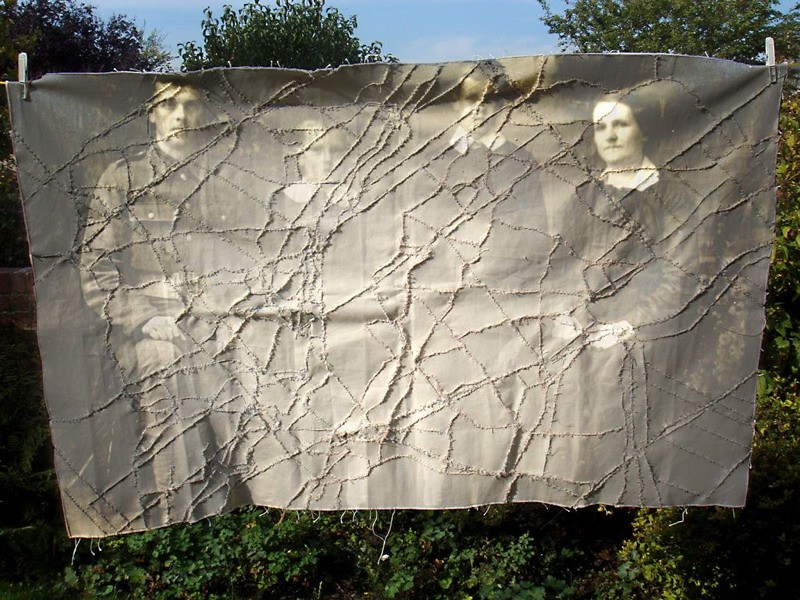
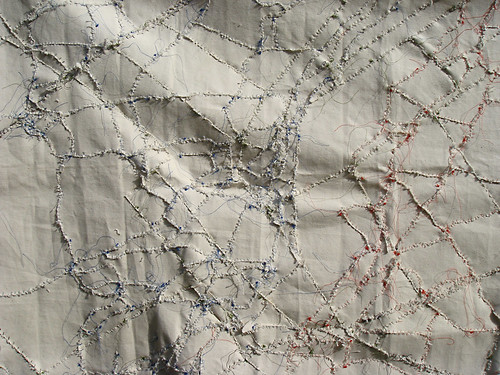
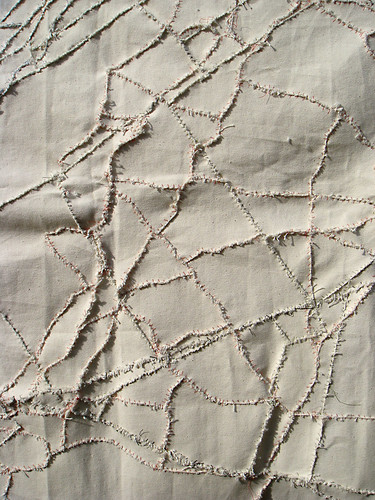
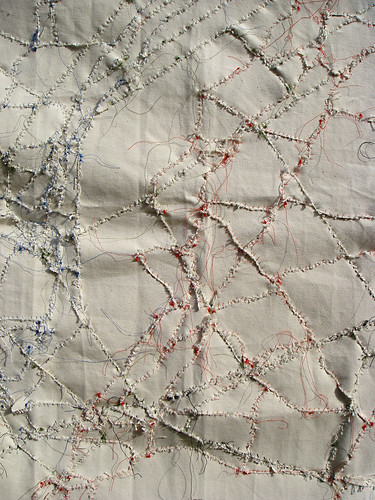
I’ve just completed – after several weeks of stitching – a piece of work called ‘Serre Palimpsest’ the creation of which I’ve been documenting on my blog. It became apparent soon after I started this work that this was a piece with two sides which may seem an obvious thing to say, but it seemed to me that the two sides we’re saying different things, just as things below the surface say something different to those above, whilst as the same time remaining connected.

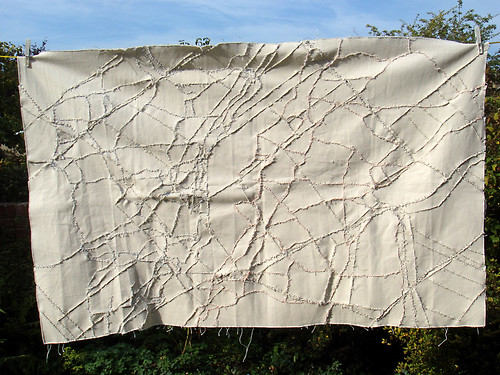
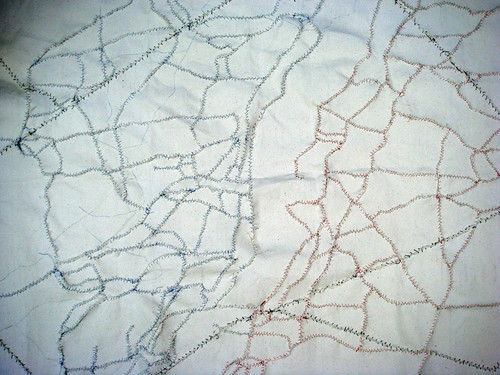
The two images below show the completed work. The first, the front:

Serre Palimpsest

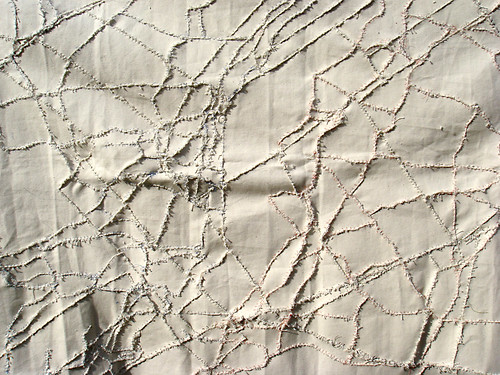
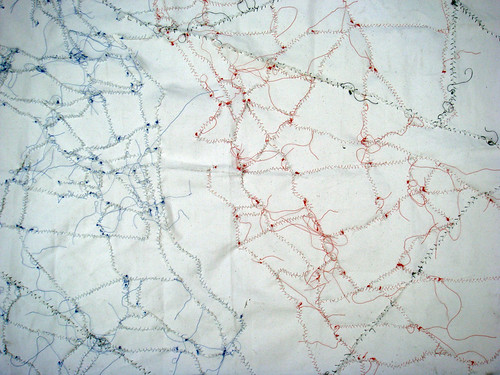
The second, the reverse:

Serre Palimpsest

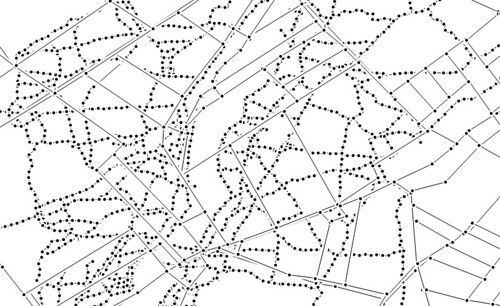
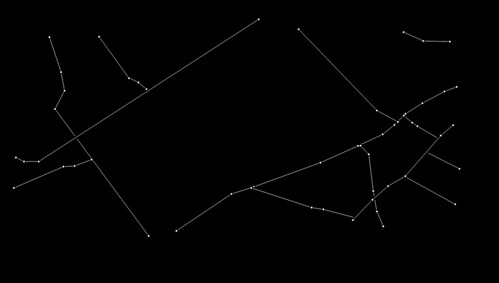
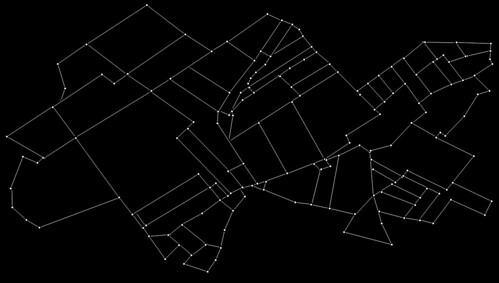
The lines stitched in black show the roads before the war (the modern day road system is pretty much the same), the blue stitching and red show the British and German trenches respectively – with No Man’s Land between, and the green stitching shows the modern day field boundaries.

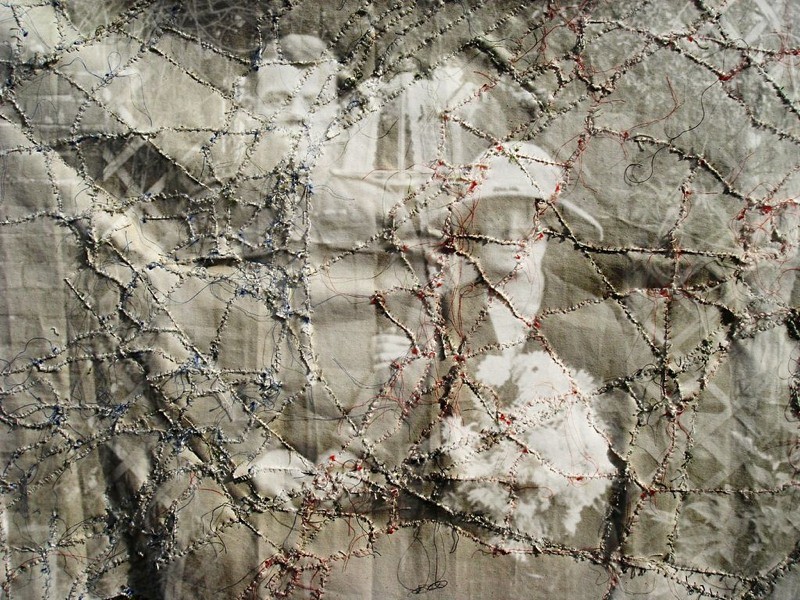
What was interesting about creating the work was how the threads from the reverse of the piece would emerge into the front, mirroring the way pieces of the past (bits of old shell etc.) find their way to the surface after many years below the ground. The cut lines on the reverse made me think of the paths soldiers would have taken to get there; paths which in many cases were cut in the Somme.

Serre Palimpsest

Serre Palimpsest

Occasionally, the threads would be tied together on the reverse which again made me think of how our lives today are similar to those who died in that their lives were lived lives too; of course their circumstances couldn’t have been more different, but the fact is that the vast statistics of the Somme comprise real individuals.

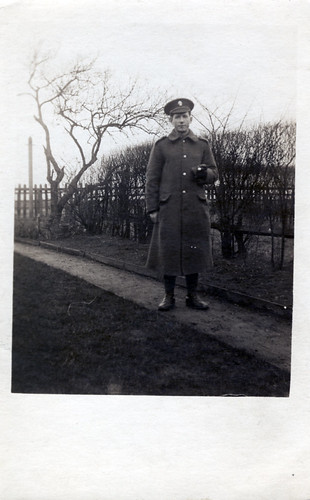
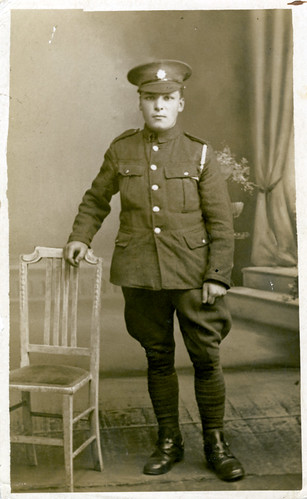
To take the photographs I hung the piece on the washing line. The weather was unseasonably hot and sunny, much like the weather would have been on the first day of the Battle of the Somme (1st July 1916). As I looked as the work swaying gently in the breeze, I thought about the photographs taken in the back gardens of those who were about to set off for the Front. I was reminded too of the backdrops used in studio-based photographs.

Serre Palimpsest

World War 1 Serviceman

World War 1 Serviceman

Filed Under: World War I Tagged With: Lines, Serre Palimpsest, Stitchwork, Trench Maps, World War I, WWI, WWI Postcards, WWI Postcards

Absent Presence

September 25, 2011 by Nicholas Hedges

See also: Artefact.

At a recent meeting with the East Oxford Archaeology Project we were given a short talk about an upcoming dig at Bartlemas Chapel. A number of things interested me in light of the work I’ve already done there, one of which was the image of a resistance survey carried out in the grounds of the chapel. At once, a sort of chain reaction of images flicked through my mind, which I’ve tried to recreate below.

The first image is a Resistance Survey image from Iffley village. The dark patches indicate areas of low resistance while the lighter patches indicate areas of high resistance – such as the remains of buildings, roads, walls etc. I like the fact that images such as these can reveal a footprint of the past, not only in terms of where structures such as these once stood, but where people once walked, following specific paths. What might today be just a large field where one can walk in any direction is revealed through techniques such as these as being a place where people walked along certain lines. The ground is revealed as a palimpsest of movement, where, just as fragments of pottery etc might be found, fragments of movement can also be revealed.

Ideas

Looking at a Resistance survey image (such as that above) during the meeting, I was reminded of an image from a previous work of mine which I exhibited last year. The image was part of an overall picture of the Belzec Death Camp in Poland, photographed from a plane in 1944. It was a place where in 1942, over half a million people were murdered, but walking there now, one cannot image that many people. Walking around the memorial, following a prescribed path, you find yourself looking in at the space enclosed, contemplating the half a million lines of movement that ended there. Where did these lines stretch back to? Where had they come from?

Thinking this way is one small way to establish empathy with those who died in places such as Belzec and the image below, when coupled with the image above resonates with this idea.

Ideas

The next image is a detail from a photograph taken of someone in 1903. This person has of course long since disappeared from the world and yet they remain. They aren’t of course visible in the places where they lived and worked (for example on Headington Hill where this image was taken) but through light (just as with electricity in the Reistance survey) their trace is revealed. The aesthetic link with the images above strengthens this connection.

Ideas

During my observation at Bartlemas Chapel last week, I wrote the following:

“The book on the sill is open at a text on St. Bartholomew. The words are silent on the page.
I read the first few words on the saint. I turn the page – again the ice-cream van. The page creaks like the pew I sat on. I can hear the words as I read them in my head, although of course they make no sound. I imagine hundreds and thousands of internal voices of people who have stood inside the chapel.”

Looking at the bible in the chapel, I saw the words as being like the fragmenetary image of past movement revealed through a Resistance survey, or the image of someone frozen in a photograph. These are words that in this small space have been heard over the course of hundreds of years; words that have mingled with the thoughts of those listening. Reading the bible within that space, I could hear the words in my mind – just as I could hear my thoughts – and yet everything was silent. (Silence here equates with (apparent) emptiness – the field where once there were buildings and people. Words read silently mirrors the electric current passing into the ground, revealing a pattern of movement beneath – lost movement, lost thoughts).

I tried to imagine the thoughts of those who’ve listened over countless generations. If they could be written down what would they tell us? After the meeting, I thought about the aesthetic of the Resistance survey and the photographs above, then pictured fragments of words in much the same way – just like the image below.

Ideas

Filed Under: Goethean Observations Tagged With: Archaeology, Bartlemas Chapel, Fragments, Geophysics, Goethean Observation, Silence

Bartlemas Chapel Observation

September 20, 2011 by Nicholas Hedges

Taken from Artefact – a website concerning Contemporary Art and Archaeology.

I’m making this initial visit to the chapel a few days before archaeological excavations are due to begin within its grounds. I’m interested in how my initial observations might be tied in with both the archaeology discovered there and the chapel’s history. How far is empathy an augmented discourse between bodily experience and knowledge?

As usual, I began by observing the chapel using a Goethean methodology, which – as if often the case – ended up following its own course.

Pre-Observation

Leaving Cowley Road and walking up the track to the chapel was like leaving the modern world behind; not completely for the outside around the chapel and here inside once can still hear the traffic humming like an overhead cable carrying electricity.

The first thing I notice when entering the chapel is the smell; the smell of age, of the past – the smell of the rooms in the church I’d attended as a child. Old books, paper and damp.

The light is slowly beginning to fade being as it is 6pm and the weather grey and raining.

I shall endeavour to carry out the observation without electric light for as long as is possible.

Part 1

The chapel is small comprising two parts divided by a screen. The main door on the chapel’s western side is locked and one enters through a small door on the left hand (north) side. (I’m going to carry out my observation inside rather than out – not least because of the rain, but also because I can easily record outside at a later date).

The walls are all whitewashed; they are rough and bumpy beneath revealing the stone. There are five windows, each of which is arched and through which the last light of the day is creeping. Behind me to my left is a large door in front of which are stacked wooden chairs – no doubt for congregations when services are held here, which they still are. Along the left hand wall more chairs are lined up in a row – eight of them. At the end facing me and in front of the screen are two small pews. Running alongside the right hand wall is another row of chairs – nine of them. There is a radiator, an old wooden cupboard on the side of which are electric sockets and a light switch. I’m sitting on a small wooden bench. In the corner to my right is a large red candle holder replete with candle – no doubt for ceremonial purposes.

Ahead, either side of the doorway through the screen are two small stools. Beyond the screen, from my position, I can see a wooden altar with a crucifix and four candles. A stool stands before them on which rests a box. Above the altar is a window and on the left and right hand walls are also windows. In the wall in this half of the building, on the right hand side from where I am sitting is another window upon the sill of which – which is deep – sits a book, open on a small lectern. Another lectern stands next to me on my right with a book containing the names of visitors. I write my name in it now.

I get up and walk. The hum of the traffic is weak like the light. I can hear the wind rustling the trees outside. Outside the window above the book is an apple tree covered with fruit. My footsteps echo.

I measure the first part of the chapel which is approximately 8 paces. The floor in this part of the chapel is parquet. In the part ahead of me it’s stone.

The pew creaks as I sit down. There are two small pews divided in two to accommodate two people. There are candle stands with low candles (burned down) on my left, a crucifix on a pole and a blue bottle of gas. On the right hand side is another blue bottle, two more well-used candles, four chairs and a picture of Christ. I see now that the altar is stone. Either side in the corners are two wood burners. The window in the left wall is narrower than the others and has a deep sill. This part of the chapel again measures approximately 8 paces.

On a window sill (right) is the curled body of a dead fly. Outside I see the apple trees and the leaves on the wet grass.

The altar is covered by a cloth – green and another white one beneath.

The bible on what I now see is a folding lectern is open at John. Tomorrow’s reading, John 3:13-17.

The ceiling is wooden with numerous coloured shields placed between the beams. The light is fading and it’s getting harder to see.

As I stand before the altar my face is drawn up to the window above it and to the sky. I turn to my left and see the old building that stands alongside. The wind stirs again. There is a white iron work chair in the garden outside. No-one is sitting in it of course.

The window above the large door in the western end of the chapel is smaller than all the others. Again I find my eyes drawn up towards it, to the pale grey light of the sky. There is a large hole in the wall on the right hand side (as I look at it) no doubt where a wooden bolt was once used to secure the church.

There are two circles, unwhitewashed either side of the door.

There are four ‘arches’ supporting the ceiling. The wood appears to be very old. The stone of the floor around the altar is patterned almost as if something has spilled upon it and not quite dried.

The width of the chapel is 7 paces.

I look again at the book full of names and dates – someone from as far away as Australia has visited here. In just a few pages we’re back at the start of 2005. I think of what I’ve done in these few pages – I think of the people I know who have recently passed away.

As the light fades the windows become a stronger presence as they hold what remains of the light outside. I can hear the chimes of an ice-cream van – a sound from my childhood. But although the windows are dominant, I don’t find myself looking beyond – just at them.

Echoes and footsteps. Car horns.

Part 2

I allow the cars and the sounds of the modern world to fall away and instead I listen only to the wind blowing through the trees. I look outside at the trees. I imagine the fruit trees across hundreds of seasons, bearing fruit, dropping the fruit, surviving the winter, blooming again in the spring. I imagine how much more important apple trees would have been long ago; a vital source of food rather than something one might idly pick while strolling past. The book on the sill is open at a text on St. Bartholomew. The words are silent on the page.

I read the first few words on the saint. I turn the page – again the ice-cream van. The page creaks like the pew I sat on. I can hear the words as I read them in my head, although of course they make no sound. I imagine hundreds and thousands of internal voices of people who have stood inside the chapel.

The shadow cast by my hand is more prominent here before the window.

I pick a spot on the left hand side of the chapel looking towards the altar. I imagine all those who have stood here in my place over the centuries, looking to their right at whatever was outside; up ahead through the window; at the others standing there with them; and I begin to imagine those other people. I begin to try and imagine their presence.

The crows outside help dispel the modern world. I think of the floor – how it would have been. I imagine the city behind me, Oxford as it was a few hundred years ago.

I move around the chapel before the screen and glance behind me to the side and up ahead and where I see the walls and windows I imagine people. Each glance is accompanied with a thought – my thoughts.

I try and get a sense of my body in relation to the chapel.

The shadows grow across the floor, blurring to become the first signs of nightfall. Forms in the chapel, like the legs of the chairs against the walls begin to disappear. Everything becomes a shadow – perhaps even me.

I imagine the large locked door being opened and people filing into the light behind. I picture that light filling the chapel, chasing away the shadows.

I’m aware of my body – how my back is aching – how I’m hungry.

The green of the leaves outside is still very visible. Everything is brown, green and grey.

My shadow is faint on the wall.

I move to stand before the altar. I turn and face the large door. Lines of sight from people long since gone still linger. I turn and face the altar. My eyes are drawn to the window, following these eye lines behind me.

I imagine the candles flickering, casting shadows on the walls as the light continues to fade. These candles which are little more than stubs of wax with short blackened wicks and puddles of wax around them.

The sound of the traffic cannot be stopped. It’s always present like interference. The only way to hear the past is with my body.

Part 3

(Rather hard as I can hardly see to write.)

Fleeting, embodied shadows.

I try and think of myself as the chapel. There is, like everything, an outside (exterior) and an inside (interior). I can feel my body – my presence – not so much as me but as something within the chapel.

Contact with the floor, with the furniture means that the chapel and I are one.

NB I have to put on the light – and only then am I aware how dark it is outside. The shift from an external light and interior dark to interior light and external dark is striking. When I turn off the light it’s reversed.

I’m aware of my heart as I sit with my eyes closed – of my breathing. My back against the wall – my breathing and heartbeat becomes that of the chapel.

Exterior / interior.
Beyond the chapel and inside.
Beyond my own body and inside.
A reversal of the two.
Interior voice reading / exterior voice listening.

With the lights on, the light beyond the window is blueish above the door. Up ahead, the window above the altar is dark.

Again there is almost a grain in the building – of sight. Looking towards the altar one is aware of the individual; then turning round, of a crowd.

Filed Under: A Line Drawn in Water, Goethean Observations, Trees Tagged With: Archaeology, Bartlemas Chapel, Goethean Observation

Empathy and Entropy

August 12, 2011 by Nicholas Hedges

On Saturday, as part of the East Oxford Archaeology Project, I took part in a sorting session, sifting through bags of soil samples which had been filtered, sieved and then divided up according to the size of the fragments they contained. I was given 4 bags of the larger size fragments which in the main were between 4mm and 10mm in size with some bits (mainly stones) larger than this.

The idea was to sort through the bags, using tweezers to pick out various things – such as bone fragments – which one would then place into dishes according to what they were (other catergories included, iron, charcoal, mortar, organic matter, glass and flint).

My best finds were a tiny, well-preserved seed pod, some splinters of glass and a human tooth but it was the whole process which interested me; the very fact that countless numbers of lives lived so very long ago had been reduced to these tiny, inconqequential fragments which, bit by bit, I sorted through and placed into dishes ready for further investigation. At the end of the session, having sifted through 4 large bags, I was left with a few tiny fragments, and yet, from these fragments, one can – with the aid of the imagination – find oneself back in the world to which they once belonged.

Entropy, as defined (one of several definitions) by dictionary.com is “a measure of the loss of information in a transmitted signal or message” and as I sifted through my box of fragments, I began to see the distinction between the past and present as one which is essentially entropic. I always try to remember how the past was once now, but in fact there is only now, a span of time which we might divide, not into days or nights, years or centuries, but into varying degrees of entropy.

Filed Under: Archaeology Tagged With: Archaeology, Empathy, Entropy, Fragments

Serre Palimpsest II

August 9, 2011 by Nicholas Hedges

I’ve just finished the second phase of a piece of work called Serre Palimpsest the results of which can be seen below.

Serre Palimpsest

Reverse side

Serre Palimpsest

So far I’ve stitched in the roads around Serre and the British and German trenches from the First World War. Next I’ll cut the fabric again to stitch in the modern day field boundaries.

Filed Under: World War I Tagged With: Lines, Serre Palimpsest, Stitchwork, Trench Maps, World War I, WWI

Creativity

July 10, 2011 by Nicholas Hedges

“Creativity is the power to connect the seemingly unconnected.”
William Plomer

Filed Under: Quotes Tagged With: Quotes, Useful Quotes

Excavated Charcoal Drawings

June 27, 2011 by Nicholas Hedges

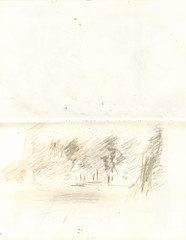
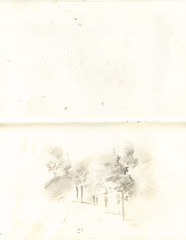
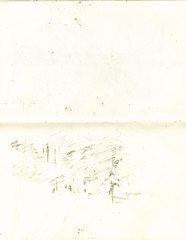
Drawings made with old charcoal excavated from a test-pit, during an archaeological dig in Iffley, Oxford.

Drawings from Headington Hill

Drawings from Headington Hill

Drawings from Headington Hill

Drawings from Headington Hill

Drawings from Headington Hill

Filed Under: Archaeology Tagged With: Archaeology, Charcoal Drawings, Drawings

Everyday Surveys

June 27, 2011 by Nicholas Hedges

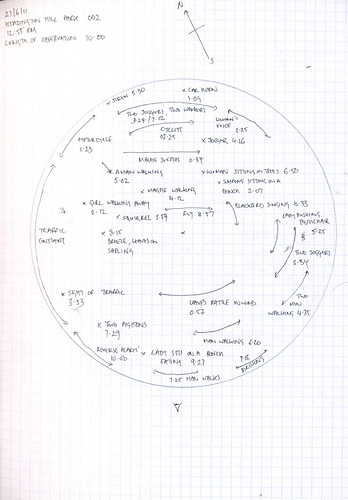
An area in which I’m interested is the idea of the past as having once been the present – an obvious point maybe, but often a more empathetic engagement with the past is made more difficult by the way in which history is packagaed or received – as a story with a beginning, a middle and an end. It’s almost as if those whom it concerns are characters in a work of fiction, whose actions are somehow predetermined.

Of course all historic events and the actions comprising them were made as part of an everyday world; that’s not to say major events such as war are ‘everyday’, but that they’re set against a backdrop of ‘everydayness.’

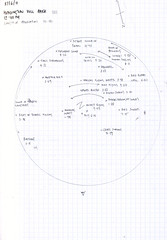
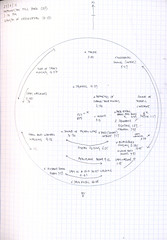
Having carried out a Plane Table Survey, I wanted to find a way of surveying the everyday diagrammatically. I’ve made everyday ‘surveys’ before in the form of lists but the images below are an attempt to articulate the everyday – as I’ve said – visually.

Everyday Surveys

Everyday Surveys

Everyday Surveys

Filed Under: Archaeology Tagged With: Archaeology, Everyday Surveys, Everydayness, Moments, Nowness

Archaeological Dig – Roman Coin 2

June 22, 2011 by Nicholas Hedges

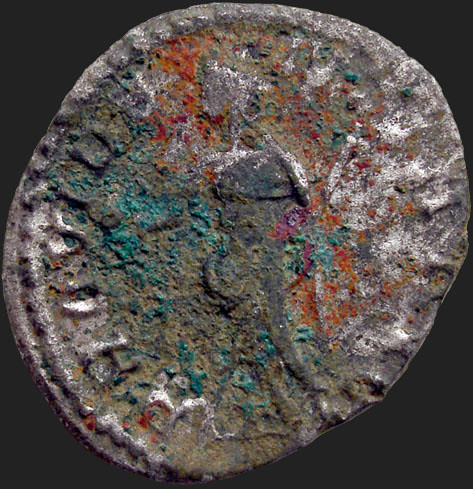
Since carrying out the observation of the Roman Coin discovered during a dig on 11th June I’ve been thinking about the coin in greater detail. One of the things which interests me about it are the vivid colours formed during its time in the ground; in particular those on the reverse side of the head, as can be seen in the image below:

Colours on a Roman Coin

It’s easy to think of the coin as having occupied two distinct periods (i.e. the 3rd century and today) and that it’s almost two distinct entities; the ‘new’ coin of some 1700 years ago, and the clipped and rather decayed coin it is now.  But of course this coin is a singular entity which has occupied a span of time covering a range of years difficult for us to imagine. To borrow from Bill Viola, this coin has ‘lived’ this same continuous moment ever since it was ‘conceived’ – or in this case minted – and for much of its existence, it’s been laying out of sight, in silence, underground.

At some point 1700 years ago,  the coin (we might assume) was lost and during the dig a week or so ago it was found. I find it easier however, to conceive of the coin’s entire existence if I forget these two ‘divisions’ and think instead of the coin as always existing – not lost or found, just always there – somewhere. Stating that it was first lost and then found creates a kind of void in between, in which the coin just sits – not really existing at all. Of course the coin was in existence for hundreds of years; before the city of Oxford was even established, and throughout the time during which it was made ancient. And in that time, beneath the ground, things were acting upon it, slowly changing its shape and colour; to make the beautiful colours we see today. The colours therefore can be linked to the passing of time – to the coin’s continuous existence. There’s a correlation between the passing of time and the formation of the various colours.

There is also something rather poetic about this as regards the way we imagine the past. For me, the distant past is often a dark and silent place (in the sense that it’s largely unknowable – not that it really was dark and silent) but one in which there was movement and colour – just as with the coin beneath the ground. Although out of sight to us today, we know that that things moved, that things were formed, that entities acted upon or influenced other entities. That there was of course colour.

Thinking about the coin a little more, I realised how else it’s changed from the 3rd century AD. Back then it wouldn’t have been valued as an object in its own right per se, but rather in regards to what it represented, i.e. a monetary unit. If I have a pound coin in my hand, I don’t value the object (the coin) so much as what it represents (a pound sterling). Now of course, the Roman coin’s original monetary value has been lost and it’s the coin as an object which has become important.

Filed Under: Goethean Observations Tagged With: Archaeology, Artefacts, Bill Viola, Colour, Goethean Observation, Silence

Serre Palimpsest

June 19, 2011 by Nicholas Hedges

Serre Palimpsest

Filed Under: World War I Tagged With: GPS, Positioning, Serre Palimpsest, Stitchwork, Trench Maps, World War I, WWI

Stitched Trench Map – Patterns

June 19, 2011 by Nicholas Hedges

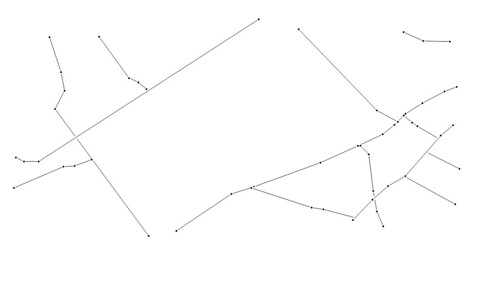
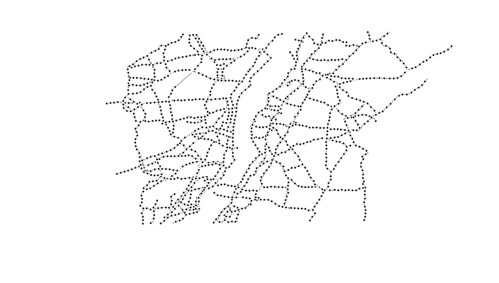
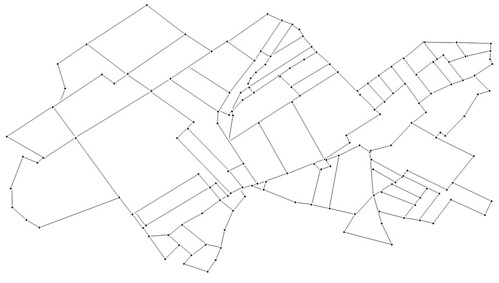
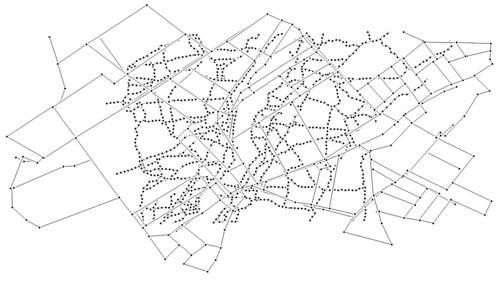
Three patterns will be used for this piece of work: 1) a map of the pre-war road system around Serre, France; 2) a map of the First World War trench system around the same area, and 3) a map of the area’s modern day field boundaries.

A single piece of fabric will be cut, firstly according to the pattern of roads.

3maps-roads

This same piece will then be re-cut according to the pattern of trenches.

3maps-trenches

And finally, this will be cut a third time according to modern day field boundaries.

3maps-fields

The final stitched piece of fabric might then look something like this:

3maps-roads-trenches-fields

Looking at the images reminded me of star constellations, and so I inverted two of the images to see how they looked.

3maps-roads-inv

3maps-fields-inv

See Serre Palimpsest.

Filed Under: World War I Tagged With: Serre Palimpsest, Stitchwork, Trench Maps, World War I, WWI

Belzec Video: Snow 6

June 18, 2011 by Nicholas Hedges

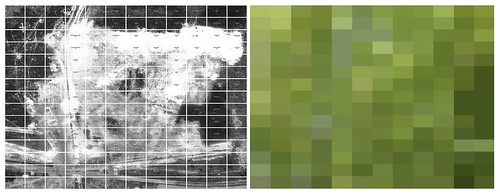
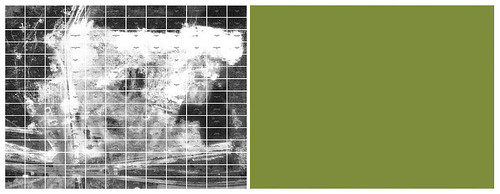
The image below shows (on the left) an earlier work about Belzec (1 to the power of 500,000) from 2010, and on the right, what would be a video (using the same number of squares) derived from the video filmed at Belzec in 1999.

Snow

Snow

Filed Under: Holocaust Tagged With: Belzec, Death Camps, Empathy, Holocaust, Snow, Video, WWII

Belzec Video: Snow 5

June 18, 2011 by Nicholas Hedges

The same idea as before applied to footage of trees at Belzec. The number of squares used is the same as an earlier work.

Filed Under: Holocaust, Trees Tagged With: Belzec, Death Camps, Empathy, Holocaust, Snow, Video, WWII

Belzec Video: Snow 4

June 18, 2011 by Nicholas Hedges

Video version of that described in the previous entry regarding this project.

Filed Under: Holocaust Tagged With: Belzec, Death Camps, Empathy, Holocaust, Snow, Video, WWII

Belzec Video: Snow 3

June 18, 2011 by Nicholas Hedges

What interests me about the video footage from the archaeological dig at Belzec (1999) is the sense of colour and movement. Often, when one is researching the Holocaust and sites like Belzec, most of the imagery one encounters is black and white and often still (although of course there is a great deal of moving footage as well).

As I’ve said, it’s difficult, given the quality of the footage, to make anything that would resemble a narrative of the investigation carried out there. So taking the idea of colour and movement as something I wanted to work with, I decided to process the video and to use a mosaic filter to reduce the image to pure forms.

When I was an undergraduate in the early 1990s, I produced a series of paintings based on this idea in a work entitled ‘A Single Death is a Tragedy, a Million Deaths is a Statistic.’ I was looking at the idea of anonymity and the past as anonymous (something which I’m still looking at today) reducing the image of a man, through a series of canvases to a single coloured pixel.

One of the ways of understanding an event as horrific as the Holocaust on an empathetic level (as far as is possible) is through understanding that the past was once the present that what happened in places such as Belzec happened when the past was now. When I sit here now and look out the window, I see the trees move, I see their colours, I see the sky, the clouds drifting and so on. I see movement and colour.

Whenever I look at images of the past, especially those in black and white, I try to imagine the scene as if it was now. I colour it, I imagine what happened immediately after the shutter was released. The smallest details become especially important. When I myself visited Belzec in 2007, I was aware of the world moving all around me, of the trees especially; of the sounds they made and the colour. Putting this together with what I knew had happened there, enabled me in some small way to empathise with those who died.

The stills below are taken from the processed video and even though they reduce the place to pixels (and therefore render it anonymous) there is something about the individual squares of colour which serve somehow to represent both the anonymous individual and the nownes of the present.

Mosaic Stills

Mosaic Stills

Mosaic Stills

Filed Under: Holocaust, Trees Tagged With: Belzec, Colour, Death Camps, Empathy, Holocaust, Snow, Video, WWII

Belzec Video: Snow 2

June 17, 2011 by Nicholas Hedges

Edited footage shot in 1999 at the site of the former Belzec Death Camp in Poland. The footage is of very poor quality and as an artist, I’m looking at how it might be used in my own work.

Filed Under: Holocaust Tagged With: Belzec, Death Camps, Empathy, Holocaust, Snow, Video, WWII

Belzec Video: Snow

June 17, 2011 by Nicholas Hedges

About two years ago I was given recordings of an archaeological investigation at the site of the Belzec Death Camp in Poland (1999). These investigations were carried out prior to the construction of the memorial there and my task was to edit the videos into something that could be seen as a narrative of those events.

The videos however were less than brilliant and any documentary-type video was going to prove impossible. However, I wanted to work with the video in some way or another and in 2010, as part of Holocaust Memorial Day, I exhibited a number of images based in part on the original video.

This year, I want to make a piece based on the video and the stills I exhibited in 2010. The initial idea is to capture all the pieces of ‘snow’ from the recordings and to arrange them in a sequence. The ‘snow’ represents the end of something, and it’s the idea of something ending which interests me as regards this piece.

Eventually I will develop the video using the colour/documentary footage on the tapes, intercutting them with the ‘snow’ elements. I will put up extracts of each stage as and when they’re complete.

Below is a short extract of the snow sequence.

Filed Under: Holocaust Tagged With: Belzec, Death Camps, Empathy, Holocaust, Snow, Video, WWII

The Trial of Stephen Hedges 1828 in Morse Code

June 17, 2011 by Nicholas Hedges

Transcript

Berkshire Easter Sessions Newbury 1815. H. Stockwell, J. Harper (not in custody,) and S. Hedges of Abingdon, were indicted for stealing 154 lbs of lead, at Radley, the property of Benjamin Kent and Charles Jones, of Oxford, for receiving the lead, knowing it to be stolen. Stockwell and Hedges pleaded Guilty, but Jones pleaded “Not Guilty”. Jones was then put on trial for receiving the lead with a felonious knowledge etc. from the two prisoners who pleaded guilty. Mr. Shepherd said, he appeared on behalf of Mr. Kent, the prosecutor of Jones, under a new statute, (sec. 447, Geo. IV. C.29) which made the offence a felony. By the 54th sec. of the same statute the receiving of property feloniously stolen would constitute a felony. The circumstances of the case were sufficiently strong to satisfy the Jury that the lead was stolen. Mr. Kent examined I live at RadleyHouse about 100 yards from the office is a larder the roof is covered with lead. In January last a considerable quantity of it was stolen. Crossexamined by Mr. Talfourd I am tenant of the house. Sir James Bowyer is the proprietor. I am yearly tenant. James Smith examined I am servant to Mr. Kent the hips of the larder were covered with lead. The lead was stolen in January last I saw it gone on the 29th January. There was a ladder found near to the ditch. There were three hips cleared of lead. Richard Burgess examined I live at Abingdon, I am a sawyer on the 28th of January I went to Oxford, and on the road, having some bones in my cart to sell, I met the three men, Stockwell, Hedges and Harper. Hedges asked me if I were going to Oxford? And would I carry a parcel? I carried a parcel for them. Harper went back for something, for a bag the other two went on with me. Near Sir G. Bowyer’s Lodge I was desired to stop. I at first objected, but I did stop about five minutes.

Harper soon afterwards came up with a bag they went into a plantation, near where Mr. Kent lives they were not five minutes away when they brought a bag, which appeared to be very heavy. I never saw what was in the bag. Stockwell carried a piece of lead on his shoulder. This was afterwards put in the bag by Hedges and Stockwell. Shortly after Jones met the prisoners, and they had some conversation together. I went on to Oxford, to Mr. Round’s wharf and near the gates I put the parcel of lead down, and delivered the bones to be weighed. Stockwell and Jones came up in about half an hour, and put the bag with the lead into the cart again. I said, where are you to take this? And Jones said “Come on back again follow me.” I followed him up the Cityroad and near the Castle met Hedges and Harper. They turned back with us through Butcherrow when Jones called out, “Hold off there here it is,” meaning the place where it was to be taken to. The bag was taken out of the cart by Jones and Stockwell, and carried up a passage by Stockwell. They soon after came back, but I did not notice they had the bag. Jones said, “What are you going to give the man for bringing it?” When Stockwell said give him sixpence, and Jones did so. Crossexamined by Mr. Talfourd I am a sawyer I don’t collect bones. I don’t deal in lead. I did not know what was in the bag I had no suspicion whatever. I was carrying the bones for Mr. Owen of Abingdon. Mr. John King examined I am a glazier, in Oxford. I know Jones on the 28th January I saw him at my house. He came to say he had some lead to sell. I told him I wanted lead and asked him what price he wanted? He said 16s a hundred. I said lead was low in price, and if it was good for any thing I would buy it. He brought me the lead in about half an hour he said he had a hundred and a half.

Three young men came with him, but I should not know them again. I paid Jones for the lead he received 20s. 6d. It was in three pieces, I believe. Some pieces were afterwards cut up by my shopman. It corresponded with the hips from which it had been taken. James Smith produced the lead. The lead was given to me by Mr. Walker, the gaoler. I marked the lead before the Magistrates. Crossexamined. The price I gave was a fair price. I had before dealt with Jones, and have known him three or four years. I had never heard any thing against his character. Mr. D. Godfrey examined. I was present at the examination of Jones what he said I took down myself. This is the signature of Mr. Bowles, the Magistrate. The prisoner declined signing his statement. [It stated that the three prisoners asked him where there was a fence for lead. And then corroborated a good deal of the testimony as adduced by the prosecution.] Mr. Talfourd submitted there was no evidence of receiving to go to the Jury no actual receiving into possession. Mr Shepherd. That will be for the Jury to decide upon. Mr. Talfourd. And that is precisely what I mean to say. Chairman. He receives the lead, and makes a bargain for the sale of it. And if that is not receiving, I am at a loss to know what receiving is. Rev. Mr. Sawbridge. And he pays the carriage of the lead. E. Gardener Esq. Yes, and he helped to carry it up the passage. The prisoner in his defence said, I asked Stockwell how he came by the lead, when he replied Hedges is captain, and got it where he had been at work.

I said I would go to Mr. King, for there I could get a fair price. Stockwell wanted 14s or more for the hundred weight, and I told them all to go to Mr. King if they pleased. At last it was agreed I was to have all above 13s. for the first hundred, and all above 14s for the remainder. I have been left friendless for nine years, and have got the best living I could buying sheepskins, rabbitskins, or anything else, for I was not nice. When the young gentleman are at the University, I make pastry, and carry it about from house to house. I have one friend in court, a Mr. Dyer. Isaac Dyer called. I am brotherinlaw to the prisoner I am a confectioner at Abingdon I have known Jones for twelve years nearly, and always understood him to be an upright and bright character. He has been a youth of a thousand honestyry, and for getting through difficulties by industrysy. The Chairman summed up the case to the Jury. If the Jury were of opinion, that he did not know the lead was stolen that he had not a guilty knowledge, they must acquit him. Verdict Not Guilty. The Chairman cautioned Jones, previous to his discharge, to avoid purchasing lead and other articles, in future he had had a very narrow escape. Jones. I trust in God I shall it shall be a thorough caution. Hedges and Stockwell were ordered to stand at the bar, and were told their offence was not of a trifling nature, for, by a very old statute, it was severely punished and by the present statute the course may pass sentence of transportation. Under all the circumstances the sentence of the court was, that they be transported for seven years. In quitting the bar, Stockwell struck Hedges familiarly on the back, and laughed.

Transcript in Morse Code

-… . .-. -.- … …. .. .-. . / . .- … – . .-. / … . … … .. — -. … / -. . .– -… ..- .-. -.– / .—- —.. .—- ….. .-.-.- / …. .-.-.- / … – — -.-. -.- .– . .-.. .-.. –..– / .— .-.-.- / …. .- .-. .–. . .-. / -.–.- -. — – / .. -. / -.-. ..- … – — -.. -.– –..– -.–.- / .- -. -.. / … .-.-.- / …. . -.. –. . … / — ..-. / .- -… .. -. –. -.. — -. –..– / .– . .-. . / .. -. -.. .. -.-. – . -.. / ..-. — .-. / … – . .- .-.. .. -. –. / .—- ….. ….- / .-.. -… … / — ..-. / .-.. . .- -.. –..– / .- – / .-. .- -.. .-.. . -.– –..– / – …. . / .–. .-. — .–. . .-. – -.– / — ..-. / -… . -. .— .- — .. -. / -.- . -. – / .- -. -.. / -.-. …. .- .-. .-.. . … / .— — -. . … –..– / — ..-. / — -..- ..-. — .-. -.. –..– / ..-. — .-. / .-. . -.-. . .. …- .. -. –. / – …. . / .-.. . .- -.. –..– / -.- -. — .– .. -. –. / .. – / – — / -… . / … – — .-.. . -. .-.-.- / … – — -.-. -.- .– . .-.. .-.. / .- -. -.. / …. . -.. –. . … / .–. .-.. . .- -.. . -.. / –. ..- .. .-.. – -.– –..– / -… ..- – / .— — -. . … / .–. .-.. . .- -.. . -.. / .-..-. -. — – / –. ..- .. .-.. – -.– .-..-. .-.-.- / .— — -. . … / .– .- … / – …. . -. / .–. ..- – / — -. / – .-. .. .- .-.. / ..-. — .-. / .-. . -.-. . .. …- .. -. –. / – …. . / .-.. . .- -.. / .– .. – …. / .- / ..-. . .-.. — -. .. — ..- … / -.- -. — .– .-.. . -.. –. . / . – -.-. .-.-.- / ..-. .-. — — / – …. . / – .– — / .–. .-. .. … — -. . .-. … / .– …. — / .–. .-.. . .- -.. . -.. / –. ..- .. .-.. – -.– .-.-.- / — .-. .-.-.- / … …. . .–. …. . .-. -.. / … .- .. -.. –..– / …. . / .- .–. .–. . .- .-. . -.. / — -. / -… . …. .- .-.. ..-. / — ..-. / — .-. .-.-.- / -.- . -. – –..– / – …. . / .–. .-. — … . -.-. ..- – — .-. / — ..-. / .— — -. . … –..– / ..- -. -.. . .-. / .- / -. . .– / … – .- – ..- – . –..– / -.–.- … . -.-. .-.-.- / ….- ….- –… –..– / –. . — .-.-.- / .. …- .-.-.- / -.-. .-.-.- ..— —-. -.–.- / .– …. .. -.-. …. / — .- -.. . / – …. . / — ..-. ..-. . -. -.-. . / .- / ..-. . .-.. — -. -.– .-.-.- / -… -.– / – …. . / ….. ….- – …. / … . -.-. .-.-.- / — ..-. / – …. . / … .- — . / … – .- – ..- – . / – …. . / .-. . -.-. . .. …- .. -. –. / — ..-. / .–. .-. — .–. . .-. – -.– / ..-. . .-.. — -. .. — ..- … .-.. -.– / … – — .-.. . -. / .– — ..- .-.. -.. / -.-. — -. … – .. – ..- – . / .- / ..-. . .-.. — -. -.– .-.-.- / – …. . / -.-. .. .-. -.-. ..- — … – .- -. -.-. . … / — ..-. / – …. . / -.-. .- … . / .– . .-. . / … ..- ..-. ..-. .. -.-. .. . -. – .-.. -.– / … – .-. — -. –. / – — / … .- – .. … ..-. -.– / – …. . / .— ..- .-. -.– / – …. .- – / – …. . / .-.. . .- -.. / .– .- … / … – — .-.. . -. .-.-.- / — .-. .-.-.- / -.- . -. – / . -..- .- — .. -. . -.. / .. / .-.. .. …- . / .- – / .-. .- -.. .-.. . -.– …. — ..- … . / .- -… — ..- – / .—- —– —– / -.– .- .-. -.. … / ..-. .-. — — / – …. . / — ..-. ..-. .. -.-. . / .. … / .- / .-.. .- .-. -.. . .-. / – …. . / .-. — — ..-. / .. … / -.-. — …- . .-. . -.. / .– .. – …. / .-.. . .- -.. .-.-.- / .. -. / .— .- -. ..- .- .-. -.– / .-.. .- … – / .- / -.-. — -. … .. -.. . .-. .- -… .-.. . / –.- ..- .- -. – .. – -.– / — ..-. / .. – / .– .- … / … – — .-.. . -. .-.-.- / -.-. .-. — … … . -..- .- — .. -. . -.. / -… -.– / — .-. .-.-.- / – .- .-.. ..-. — ..- .-. -.. / .. / .- — / – . -. .- -. – / — ..-. / – …. . / …. — ..- … . .-.-.- / … .. .-. / .— .- — . … / -… — .– -.– . .-. / .. … / – …. . / .–. .-. — .–. .-. .. . – — .-. .-.-.- / .. / .- — / -.– . .- .-. .-.. -.– / – . -. .- -. – .-.-.- / .— .- — . … / … — .. – …. / . -..- .- — .. -. . -.. / .. / .- — / … . .-. …- .- -. – / – — / — .-. .-.-.- / -.- . -. – / – …. . / …. .. .–. … / — ..-. / – …. . / .-.. .- .-. -.. . .-. / .– . .-. . / -.-. — …- . .-. . -.. / .– .. – …. / .-.. . .- -.. .-.-.- / – …. . / .-.. . .- -.. / .– .- … / … – — .-.. . -. / .. -. / .— .- -. ..- .- .-. -.– / .-.. .- … – / .. / … .- .– / .. – / –. — -. . / — -. / – …. . / ..— —-. – …. / .— .- -. ..- .- .-. -.– .-.-.- / – …. . .-. . / .– .- … / .- / .-.. .- -.. -.. . .-. / ..-. — ..- -. -.. / -. . .- .-. / – — / – …. . / -.. .. – -.-. …. .-.-.- / – …. . .-. . / .– . .-. . / – …. .-. . . / …. .. .–. … / -.-. .-.. . .- .-. . -.. / — ..-. / .-.. . .- -.. .-.-.- / .-. .. -.-. …. .- .-. -.. / -… ..- .-. –. . … … / . -..- .- — .. -. . -.. / .. / .-.. .. …- . / .- – / .- -… .. -. –. -.. — -. –..– / .. / .- — / .- / … .- .– -.– . .-. / — -. / – …. . / ..— —.. – …. / — ..-. / .— .- -. ..- .- .-. -.– / .. / .– . -. – / – — / — -..- ..-. — .-. -.. –..– / .- -. -.. / — -. / – …. . / .-. — .- -.. –..– / …. .- …- .. -. –. / … — — . / -… — -. . … / .. -. / — -.– / -.-. .- .-. – / – — / … . .-.. .-.. –..– / .. / — . – / – …. . / – …. .-. . . / — . -. –..– / … – — -.-. -.- .– . .-.. .-.. –..– / …. . -.. –. . … / .- -. -.. / …. .- .-. .–. . .-. .-.-.- / …. . -.. –. . … / .- … -.- . -.. / — . / .. ..-. / .. / .– . .-. . / –. — .. -. –. / – — / — -..- ..-. — .-. -.. ..–.. / .- -. -.. / .– — ..- .-.. -.. / .. / -.-. .- .-. .-. -.– / .- / .–. .- .-. -.-. . .-.. ..–.. / .. / -.-. .- .-. .-. .. . -.. / .- / .–. .- .-. -.-. . .-.. / ..-. — .-. / – …. . — .-.-.- / …. .- .-. .–. . .-. / .– . -. – / -… .- -.-. -.- / ..-. — .-. / … — — . – …. .. -. –. –..– / ..-. — .-. / .- / -… .- –. / – …. . / — – …. . .-. / – .– — / .– . -. – / — -. / .– .. – …. / — . .-.-.- / -. . .- .-. / … .. .-. / –. .-.-.- / -… — .– -.– . .-. .—-. … / .-.. — -.. –. . / .. / .– .- … / -.. . … .. .-. . -.. / – — / … – — .–. .-.-.- / .. / .- – / ..-. .. .-. … – / — -… .— . -.-. – . -.. –..– / -… ..- – / .. / -.. .. -.. / … – — .–. / .- -… — ..- – / ..-. .. …- . / — .. -. ..- – . … .-.-.- / …. .- .-. .–. . .-. / … — — -. / .- ..-. – . .-. .– .- .-. -.. … / -.-. .- — . / ..- .–. / .– .. – …. / .- / -… .- –. / – …. . -.– / .– . -. – / .. -. – — / .- / .–. .-.. .- -. – .- – .. — -. –..– / -. . .- .-. / .– …. . .-. . / — .-. .-.-.- / -.- . -. – / .-.. .. …- . … / – …. . -.– / .– . .-. . / -. — – / ..-. .. …- . / — .. -. ..- – . … / .- .– .- -.– / .– …. . -. / – …. . -.– / -… .-. — ..- –. …. – / .- / -… .- –. –..– / .– …. .. -.-. …. / .- .–. .–. . .- .-. . -.. / – — / -… . / …- . .-. -.– / …. . .- …- -.– .-.-.- / .. / -. . …- . .-. / … .- .– / .– …. .- – / .– .- … / .. -. / – …. . / -… .- –. .-.-.- / … – — -.-. -.- .– . .-.. .-.. / -.-. .- .-. .-. .. . -.. / .- / .–. .. . -.-. . / — ..-. / .-.. . .- -.. / — -. / …. .. … / … …. — ..- .-.. -.. . .-. .-.-.- / – …. .. … / .– .- … / .- ..-. – . .-. .– .- .-. -.. … / .–. ..- – / .. -. / – …. . / -… .- –. / -… -.– / …. . -.. –. . … / .- -. -.. / … – — -.-. -.- .– . .-.. .-.. .-.-.- / … …. — .-. – .-.. -.– / .- ..-. – . .-. / .— — -. . … / — . – / – …. . / .–. .-. .. … — -. . .-. … –..– / .- -. -.. / – …. . -.– / …. .- -.. / … — — . / -.-. — -. …- . .-. … .- – .. — -. / – — –. . – …. . .-. .-.-.- / .. / .– . -. – / — -. / – — / — -..- ..-. — .-. -.. –..– / – — / — .-. .-.-.- / .-. — ..- -. -.. .—-. … / .– …. .- .-. ..-. / .- -. -.. / -. . .- .-. / – …. . / –. .- – . … / .. / .–. ..- – / – …. . / .–. .- .-. -.-. . .-.. / — ..-. / .-.. . .- -.. / -.. — .– -. –..– / .- -. -.. / -.. . .-.. .. …- . .-. . -.. / – …. . / -… — -. . … / – — / -… . / .– . .. –. …. . -.. .-.-.- / … – — -.-. -.- .– . .-.. .-.. / .- -. -.. / .— — -. . … / -.-. .- — . / ..- .–. / .. -. / .- -… — ..- – / …. .- .-.. ..-. / .- -. / …. — ..- .-. –..– / .- -. -.. / .–. ..- – / – …. . / -… .- –. / .– .. – …. / – …. . / .-.. . .- -.. / .. -. – — / – …. . / -.-. .- .-. – / .- –. .- .. -. .-.-.- / .. / … .- .. -.. –..– / .– …. . .-. . / .- .-. . / -.– — ..- / – — / – .- -.- . / – …. .. … ..–.. / .- -. -.. / .— — -. . … / … .- .. -.. / .-..-. -.-. — — . / — -. / -… .- -.-. -.- / .- –. .- .. -. / ..-. — .-.. .-.. — .– / — . .-.-.- .-..-. / .. / ..-. — .-.. .-.. — .– . -.. / …. .. — / ..- .–. / – …. . / -.-. .. – -.– .-. — .- -.. / .- -. -.. / -. . .- .-. / – …. . / -.-. .- … – .-.. . / — . – / …. . -.. –. . … / .- -. -.. / …. .- .-. .–. . .-. .-.-.- / – …. . -.– / – ..- .-. -. . -.. / -… .- -.-. -.- / .– .. – …. / ..- … / – …. .-. — ..- –. …. / -… ..- – -.-. …. . .-. .-. — .– / .– …. . -. / .— — -. . … / -.-. .- .-.. .-.. . -.. / — ..- – –..– / .-..-. …. — .-.. -.. / — ..-. ..-. / – …. . .-. . / …. . .-. . / .. – / .. … –..– .-..-. / — . .- -. .. -. –. / – …. . / .–. .-.. .- -.-. . / .– …. . .-. . / .. – / .– .- … / – — / -… . / – .- -.- . -. / – — .-.-.- / – …. . / -… .- –. / .– .- … / – .- -.- . -. / — ..- – / — ..-. / – …. . / -.-. .- .-. – / -… -.– / .— — -. . … / .- -. -.. / … – — -.-. -.- .– . .-.. .-.. –..– / .- -. -.. / -.-. .- .-. .-. .. . -.. / ..- .–. / .- / .–. .- … … .- –. . / -… -.– / … – — -.-. -.- .– . .-.. .-.. .-.-.- / – …. . -.– / … — — -. / .- ..-. – . .-. / -.-. .- — . / -… .- -.-. -.- –..– / -… ..- – / .. / -.. .. -.. / -. — – / -. — – .. -.-. . / – …. . -.– / …. .- -.. / – …. . / -… .- –. .-.-.- / .— — -. . … / … .- .. -.. –..– / .-..-. .– …. .- – / .- .-. . / -.– — ..- / –. — .. -. –. / – — / –. .. …- . / – …. . / — .- -. / ..-. — .-. / -… .-. .. -. –. .. -. –. / .. – ..–.. .-..-. / .– …. . -. / … – — -.-. -.- .– . .-.. .-.. / … .- .. -.. / –. .. …- . / …. .. — / … .. -..- .–. . -. -.-. . –..– / .- -. -.. / .— — -. . … / -.. .. -.. / … — .-.-.- / -.-. .-. — … … . -..- .- — .. -. . -.. / -… -.– / — .-. .-.-.- / – .- .-.. ..-. — ..- .-. -.. / .. / .- — / .- / … .- .– -.– . .-. / .. / -.. — -. .—-. – / -.-. — .-.. .-.. . -.-. – / -… — -. . … .-.-.- / .. / -.. — -. .—-. – / -.. . .- .-.. / .. -. / .-.. . .- -.. .-.-.- / .. / -.. .. -.. / -. — – / -.- -. — .– / .– …. .- – / .– .- … / .. -. / – …. . / -… .- –. / .. / …. .- -.. / -. — / … ..- … .–. .. -.-. .. — -. / .– …. .- – . …- . .-. .-.-.- / .. / .– .- … / -.-. .- .-. .-. -.– .. -. –. / – …. . / -… — -. . … / ..-. — .-. / — .-. .-.-.- / — .– . -. / — ..-. / .- -… .. -. –. -.. — -. .-.-.- / — .-. .-.-.- / .— — …. -. / -.- .. -. –. / . -..- .- — .. -. . -.. / .. / .- — / .- / –. .-.. .- –.. .. . .-. –..– / .. -. / — -..- ..-. — .-. -.. .-.-.- / .. / -.- -. — .– / .— — -. . … / — -. / – …. . / ..— —.. – …. / .— .- -. ..- .- .-. -.– / .. / … .- .– / …. .. — / .- – / — -.– / …. — ..- … . .-.-.- / …. . / -.-. .- — . / – — / … .- -.– / …. . / …. .- -.. / … — — . / .-.. . .- -.. / – — / … . .-.. .-.. .-.-.- / .. / – — .-.. -.. / …. .. — / .. / .– .- -. – . -.. / .-.. . .- -.. / .- -. -.. / .- … -.- . -.. / …. .. — / .– …. .- – / .–. .-. .. -.-. . / …. . / .– .- -. – . -.. ..–.. / …. . / … .- .. -.. / .—- -…. … / .- / …. ..- -. -.. .-. . -.. .-.-.- / .. / … .- .. -.. / .-.. . .- -.. / .– .- … / .-.. — .– / .. -. / .–. .-. .. -.-. . –..– / .- -. -.. / .. ..-. / .. – / .– .- … / –. — — -.. / ..-. — .-. / .- -. -.– / – …. .. -. –. / .. / .– — ..- .-.. -.. / -… ..- -.– / .. – .-.-.- / …. . / -… .-. — ..- –. …. – / — . / – …. . / .-.. . .- -.. / .. -. / .- -… — ..- – / …. .- .-.. ..-. / .- -. / …. — ..- .-. / …. . / … .- .. -.. / …. . / …. .- -.. / .- / …. ..- -. -.. .-. . -.. / .- -. -.. / .- / …. .- .-.. ..-. .-.-.- / – …. .-. . . / -.– — ..- -. –. / — . -. / -.-. .- — . / .– .. – …. / …. .. — –..– / -… ..- – / .. / … …. — ..- .-.. -.. / -. — – / -.- -. — .– / – …. . — / .- –. .- .. -. .-.-.- / .. / .–. .- .. -.. / .— — -. . … / ..-. — .-. / – …. . / .-.. . .- -.. / …. . / .-. . -.-. . .. …- . -.. / ..— —– … .-.-.- / -…. -.. .-.-.- / .. – / .– .- … / .. -. / – …. .-. . . / .–. .. . -.-. . … –..– / .. / -… . .-.. .. . …- . .-.-.- / … — — . / .–. .. . -.-. . … / .– . .-. . / .- ..-. – . .-. .– .- .-. -.. … / -.-. ..- – / ..- .–. / -… -.– / — -.– / … …. — .–. — .- -. .-.-.- / .. – / -.-. — .-. .-. . … .–. — -. -.. . -.. / .– .. – …. / – …. . / …. .. .–. … / ..-. .-. — — / .– …. .. -.-. …. / .. – / …. .- -.. / -… . . -. / – .- -.- . -. .-.-.- / .— .- — . … / … — .. – …. / .–. .-. — -.. ..- -.-. . -.. / – …. . / .-.. . .- -.. .-.-.- / – …. . / .-.. . .- -.. / .– .- … / –. .. …- . -. / – — / — . / -… -.– / — .-. .-.-.- / .– .- .-.. -.- . .-. –..– / – …. . / –. .- — .-.. . .-. .-.-.- / .. / — .- .-. -.- . -.. / – …. . / .-.. . .- -.. / -… . ..-. — .-. . / – …. . / — .- –. .. … – .-. .- – . … .-.-.- / -.-. .-. — … … . -..- .- — .. -. . -.. .-.-.- / – …. . / .–. .-. .. -.-. . / .. / –. .- …- . / .– .- … / .- / ..-. .- .. .-. / .–. .-. .. -.-. . .-.-.- / .. / …. .- -.. / -… . ..-. — .-. . / -.. . .- .-.. – / .– .. – …. / .— — -. . … –..– / .- -. -.. / …. .- …- . / -.- -. — .– -. / …. .. — / – …. .-. . . / — .-. / ..-. — ..- .-. / -.– . .- .-. … .-.-.- / .. / …. .- -.. / -. . …- . .-. / …. . .- .-. -.. / .- -. -.– / – …. .. -. –. / .- –. .- .. -. … – / …. .. … / -.-. …. .- .-. .- -.-. – . .-. .-.-.- / — .-. .-.-.- / -.. .-.-.- / –. — -.. ..-. .-. . -.– / . -..- .- — .. -. . -.. .-.-.- / .. / .– .- … / .–. .-. . … . -. – / .- – / – …. . / . -..- .- — .. -. .- – .. — -. / — ..-. / .— — -. . … / .– …. .- – / …. . / … .- .. -.. / .. / – — — -.- / -.. — .– -. / — -.– … . .-.. ..-. .-.-.- / – …. .. … / .. … / – …. . / … .. –. -. .- – ..- .-. . / — ..-. / — .-. .-.-.- / -… — .– .-.. . … –..– / – …. . / — .- –. .. … – .-. .- – . .-.-.- / – …. . / .–. .-. .. … — -. . .-. / -.. . -.-. .-.. .. -. . -.. / … .. –. -. .. -. –. / …. .. … / … – .- – . — . -. – .-.-.- / ? .. – / … – .- – . -.. / – …. .- – / – …. . / – …. .-. . . / .–. .-. .. … — -. . .-. … / .- … -.- . -.. / …. .. — / .– …. . .-. . / – …. . .-. . / .– .- … / .- / ..-. . -. -.-. . / ..-. — .-. / .-.. . .- -.. .-.-.- / .- -. -.. / – …. . -. / -.-. — .-. .-. — -… — .-. .- – . -.. / .- / –. — — -.. / -.. . .- .-.. / — ..-. / – …. . / – . … – .. — — -. -.– / .- … / .- -.. -.. ..- -.-. . -.. / -… -.– / – …. . / .–. .-. — … . -.-. ..- – .. — -. .-.-.- ? / — .-. .-.-.- / – .- .-.. ..-. — ..- .-. -.. / … ..- -… — .. – – . -.. / – …. . .-. . / .– .- … / -. — / . …- .. -.. . -. -.-. . / — ..-. / .-. . -.-. . .. …- .. -. –. / – — / –. — / – — / – …. . / .— ..- .-. -.– / -. — / .- -.-. – ..- .- .-.. / .-. . -.-. . .. …- .. -. –. / .. -. – — / .–. — … … . … … .. — -. .-.-.- / — .-. / … …. . .–. …. . .-. -.. .-.-.- / – …. .- – / .– .. .-.. .-.. / -… . / ..-. — .-. / – …. . / .— ..- .-. -.– / – — / -.. . -.-. .. -.. . / ..- .–. — -. .-.-.- / — .-. .-.-.- / – .- .-.. ..-. — ..- .-. -.. .-.-.- / .- -. -.. / – …. .- – / .. … / .–. .-. . -.-. .. … . .-.. -.– / .– …. .- – / .. / — . .- -. / – — / … .- -.– .-.-.- / -.-. …. .- .. .-. — .- -. .-.-.- / …. . / .-. . -.-. . .. …- . … / – …. . / .-.. . .- -.. –..– / .- -. -.. / — .- -.- . … / .- / -… .- .-. –. .- .. -. / ..-. — .-. / – …. . / … .- .-.. . / — ..-. / .. – .-.-.- / .- -. -.. / .. ..-. / – …. .- – / .. … / -. — – / .-. . -.-. . .. …- .. -. –. –..– / .. / .- — / .- – / .- / .-.. — … … / – — / -.- -. — .– / .– …. .- – / .-. . -.-. . .. …- .. -. –. / .. … .-.-.- / .-. . …- .-.-.- / — .-. .-.-.- / … .- .– -… .-. .. -.. –. . .-.-.- / .- -. -.. / …. . / .–. .- -.– … / – …. . / -.-. .- .-. .-. .. .- –. . / — ..-. / – …. . / .-.. . .- -.. .-.-.- / . .-.-.- / –. .- .-. -.. . -. . .-. / . … –.- .-.-.- / -.– . … –..– / .- -. -.. / …. . / …. . .-.. .–. . -.. / – — / -.-. .- .-. .-. -.– / .. – / ..- .–. / – …. . / .–. .- … … .- –. . .-.-.- / – …. . / .–. .-. .. … — -. . .-. / .. -. / …. .. … / -.. . ..-. . -. -.-. . / … .- .. -.. –..– / .. / .- … -.- . -.. / … – — -.-. -.- .– . .-.. .-.. / …. — .– / …. . / -.-. .- — . / -… -.– / – …. . / .-.. . .- -.. –..– / .– …. . -. / …. . / .-. . .–. .-.. .. . -.. / …. . -.. –. . … / .. … / -.-. .- .–. – .- .. -. –..– / .- -. -.. / –. — – / .. – / .– …. . .-. . / …. . / …. .- -.. / -… . . -. / .- – / .– — .-. -.- .-.-.- / .. / … .- .. -.. / .. / .– — ..- .-.. -.. / –. — / – — / — .-. .-.-.- / -.- .. -. –. –..– / ..-. — .-. / – …. . .-. . / .. / -.-. — ..- .-.. -.. / –. . – / .- / ..-. .- .. .-. / .–. .-. .. -.-. . .-.-.- / … – — -.-. -.- .– . .-.. .-.. / .– .- -. – . -.. / .—- ….- … / — .-. / — — .-. . / ..-. — .-. / – …. . / …. ..- -. -.. .-. . -.. / .– . .. –. …. – –..– / .- -. -.. / .. / – — .-.. -.. / – …. . — / .- .-.. .-.. / – — / –. — / – — / — .-. .-.-.- / -.- .. -. –. / .. ..-. / – …. . -.– / .–. .-.. . .- … . -.. .-.-.- / .- – / .-.. .- … – / .. – / .– .- … / .- –. .-. . . -.. / .. / .– .- … / – — / …. .- …- . / .- .-.. .-.. / .- -… — …- . / .—- …– … .-.-.- / ..-. — .-. / – …. . / ..-. .. .-. … – / …. ..- -. -.. .-. . -.. –..– / .- -. -.. / .- .-.. .-.. / .- -… — …- . / .—- ….- … / ..-. — .-. / – …. . / .-. . — .- .. -. -.. . .-. .-.-.- / .. / …. .- …- . / -… . . -. / .-.. . ..-. – / ..-. .-. .. . -. -.. .-.. . … … / ..-. — .-. / -. .. -. . / -.– . .- .-. … –..– / .- -. -.. / …. .- …- . / –. — – / – …. . / -… . … – / .-.. .. …- .. -. –. / .. / -.-. — ..- .-.. -.. / -… ..- -.– .. -. –. / … …. . . .–. … -.- .. -. … –..– / .-. .- -… -… .. – … -.- .. -. … –..– / — .-. / .- -. -.– – …. .. -. –. / . .-.. … . –..– / ..-. — .-. / .. / .– .- … / -. — – / -. .. -.-. . .-.-.- / .– …. . -. / – …. . / -.– — ..- -. –. / –. . -. – .-.. . — .- -. / .- .-. . / .- – / – …. . / ..- -. .. …- . .-. … .. – -.– –..– / .. / — .- -.- . / .–. .- … – .-. -.– –..– / .- -. -.. / -.-. .- .-. .-. -.– / .. – / .- -… — ..- – / ..-. .-. — — / …. — ..- … . / – — / …. — ..- … . .-.-.- / .. / …. .- …- . / — -. . / ..-. .-. .. . -. -.. / .. -. / -.-. — ..- .-. – –..– / .- / — .-. .-.-.- / -.. -.– . .-. .-.-.- / .. … .- .- -.-. / -.. -.– . .-. / -.-. .- .-.. .-.. . -.. .-.-.- / .. / .- — / -… .-. — – …. . .-. .. -. .-.. .- .– / – — / – …. . / .–. .-. .. … — -. . .-. / .. / .- — / .- / -.-. — -. ..-. . -.-. – .. — -. . .-. / .- – / .- -… .. -. –. -.. — -. / .. / …. .- …- . / -.- -. — .– -. / .— — -. . … / ..-. — .-. / – .– . .-.. …- . / -.– . .- .-. … / -. . .- .-. .-.. -.– –..– / .- -. -.. / .- .-.. .– .- -.– … / ..- -. -.. . .-. … – — — -.. / …. .. — / – — / -… . / .- -. / ..- .–. .-. .. –. …. – / .- -. -.. / -… .-. .. –. …. – / -.-. …. .- .-. .- -.-. – . .-. .-.-.- / …. . / …. .- … / -… . . -. / .- / -.– — ..- – …. / — ..-. / .- / – …. — ..- … .- -. -.. / …. — -. . … – -.– .-. -.– –..– / .- -. -.. / ..-. — .-. / –. . – – .. -. –. / – …. .-. — ..- –. …. / -.. .. ..-. ..-. .. -.-. ..- .-.. – .. . … / -… -.– / .. -. -.. ..- … – .-. -.– … -.– .-.-.- / – …. . / -.-. …. .- .. .-. — .- -. / … ..- — — . -.. / ..- .–. / – …. . / -.-. .- … . / – — / – …. . / .— ..- .-. -.– .-.-.- / .. ..-. / – …. . / .— ..- .-. -.– / .– . .-. . / — ..-. / — .–. .. -. .. — -. –..– / – …. .- – / …. . / -.. .. -.. / -. — – / -.- -. — .– / – …. . / .-.. . .- -.. / .– .- … / … – — .-.. . -. / – …. .- – / …. . / …. .- -.. / -. — – / .- / –. ..- .. .-.. – -.– / -.- -. — .– .-.. . -.. –. . –..– / – …. . -.– / — ..- … – / .- -.-. –.- ..- .. – / …. .. — .-.-.- / …- . .-. -.. .. -.-. – / -. — – / –. ..- .. .-.. – -.– .-.-.- / – …. . / -.-. …. .- .. .-. — .- -. / -.-. .- ..- – .. — -. . -.. / .— — -. . … –..– / .–. .-. . …- .. — ..- … / – — / …. .. … / -.. .. … -.-. …. .- .-. –. . –..– / – — / .- …- — .. -.. / .–. ..- .-. -.-. …. .- … .. -. –. / .-.. . .- -.. / .- -. -.. / — – …. . .-. / .- .-. – .. -.-. .-.. . … –..– / .. -. / ..-. ..- – ..- .-. . / …. . / …. .- -.. / …. .- -.. / .- / …- . .-. -.– / -. .- .-. .-. — .– / . … -.-. .- .–. . .-.-.- / .— — -. . … .-.-.- / .. / – .-. ..- … – / .. -. / –. — -.. / .. / … …. .- .-.. .-.. / .. – / … …. .- .-.. .-.. / -… . / .- / – …. — .-. — ..- –. …. / -.-. .- ..- – .. — -. .-.-.- / …. . -.. –. . … / .- -. -.. / … – — -.-. -.- .– . .-.. .-.. / .– . .-. . / — .-. -.. . .-. . -.. / – — / … – .- -. -.. / .- – / – …. . / -… .- .-. –..– / .- -. -.. / .– . .-. . / – — .-.. -.. / – …. . .. .-. / — ..-. ..-. . -. -.-. . / .– .- … / -. — – / — ..-. / .- / – .-. .. ..-. .-.. .. -. –. / -. .- – ..- .-. . –..– / ..-. — .-. –..– / -… -.– / .- / …- . .-. -.– / — .-.. -.. / … – .- – ..- – . –..– / .. – / .– .- … / … . …- . .-. . .-.. -.– / .–. ..- -. .. … …. . -.. / .- -. -.. / -… -.– / – …. . / .–. .-. . … . -. – / … – .- – ..- – . / – …. . / -.-. — ..- .-. … . / — .- -.– / .–. .- … … / … . -. – . -. -.-. . / — ..-. / – .-. .- -. … .–. — .-. – .- – .. — -. .-.-.- / ..- -. -.. . .-. / .- .-.. .-.. / – …. . / -.-. .. .-. -.-. ..- — … – .- -. -.-. . … / – …. . / … . -. – . -. -.-. . / — ..-. / – …. . / -.-. — ..- .-. – / .– .- … –..– / – …. .- – / – …. . -.– / -… . / – .-. .- -. … .–. — .-. – . -.. / ..-. — .-. / … . …- . -. / -.– . .- .-. … .-.-.- / .. -. / –.- ..- .. – – .. -. –. / – …. . / -… .- .-. –..– / … – — -.-. -.- .– . .-.. .-.. / … – .-. ..- -.-. -.- / …. . -.. –. . … / ..-. .- — .. .-.. .. .- .-. .-.. -.– / — -. / – …. . / -… .- -.-. -.- –..– / .- -. -.. / .-.. .- ..- –. …. . -.. .-.-.

Filed Under: A Line Drawn in Water, Artist in Residence Tagged With: Artist in Residence, Australia, Family History, Morse Code, Stephen Hedges

Heavy Water Sleep: Pages 14 & 15

June 17, 2011 by Nicholas Hedges

Original Pages

14-15

Version 1

14-15 [17.06.11]

Version 2

14-15 Version 2

Filed Under: Heavy Water Sleep, Holocaust Tagged With: Heavy Water Sleep, Holocaust, Text Work, WWII

Archaeological Dig – Roman Coin

June 16, 2011 by Nicholas Hedges

Further to my entry on the archaeological dig in Iffley, Oxford, I have carried out some extra work on the Roman coin we discovered whilst excavating the test-pit. The coin in question, dating from the reign of Emperor Postumus (260-269 AD) can be seen below.

Click here for the text of the observation.

See also: Archaeological Dig – Roman Coin 2.

Filed Under: Goethean Observations Tagged With: Archaeology, Artefacts, Goethean Observation

  • « Previous Page
  • 1
  • …
  • 11
  • 12
  • 13
  • 14
  • 15
  • …
  • 32
  • Next Page »
  • The ‘Now of Then’
  • Artist’s Statement
  • Designs for an Heirloom
  • Dissonance and rhyme
  • Wildflowers
  • Emptiness
  • Wave (goodbye)
  • Now In The Past Of An Unreal Place
  • Return to Graphite
  • Genius
  • Latest Backdrops
  • Extended Backdrops
  • Backdrops
  • Komorebi
  • Acorns
  • Scroll Work
  • Goethean Observation: Japanese Scroll
  • Mistakes
  • The Leaf Is Singing Still
  • Past Present
  • Scrolls
  • As Yet Untitled
  • Holes
  • Scroll
  • A Calligraphy of Shadows
  • More Paintings
  • Latest Paintings
  • Walking Meditation 2
  • Knowing We Are There
  • Venice by Moonlight 1840
  • Fragments and Additions
  • Reimagining The Past
  • Walking Meditation 1
  • Mindful Walking I
  • Grief II
  • Three New Paintings
  • Nana’s Mountain
  • Painting
  • Iridescence
  • Roman Bottle
  • Rinsho
  • Shadow Calligraphy
  • Becoming Memory
  • Fox Talbot’s Glassware
  • Goethean Observation: Diffuser II
  • Goethean Observation: Diffuser
  • A Remembrance of Things We Never Have Known
  • A Moment’s Language
  • Take Me Home
  • Arrival/Departure
  • Diffusers
  • Grief
  • Mum
  • Measuring the past
  • Disordered Time
  • Entropy
  • Wicked Magician, Fly
  • The Quanta of History
  • Empathy Forward
  • The Natural World of 978
  • The Gone Forest
  • Empathy/Exchange: 668 grams
  • Goethean Observation: Pilgrims of the Wild, 1935
  • Nazareth O
  • Several Johns and St. Thomas
  • Raspberry
  • Tokens and Shadows
  • Patterns Seeping (II)
  • ‘Missded’ 4 – Tokens
  • Patterns seeping
  • Cut Paintings
  • ‘Missded’ 4
  • Locks III
  • Locks II
  • ‘Missded’ 2 – Tokens
  • My Son’s Drawings II
  • ‘Missded’ 2
  • ‘Missded’ 3 – Tokens
  • ‘Missded’ 3
  • ‘Missded’ 1 – A Framed Token
  • Morning Has Broken
  • Tokens of absence
  • ‘Missded’ 1, stitched
  • More Little Words
  • Three Little Words
  • Spaces In Between
  • ‘Missded’ 3
  • ‘Missded’ 2
  • ‘Missded’ 1
  • Locks
  • Tracings
  • My Son’s Paintings
  • Writing Shadows
  • Samuel Borton’s Post Chaises
  • Dawid Sierakowiak
  • Pitchipoi
  • Latest Tree Drawings
  • Notebook
  • Somewhere Between Writing and Trees II
  • Somewhere Between Writing and Trees

© Nicholas Hedges 2024

  • Facebook
  • Instagram
  • Twitter
  • YouTube

Copyright © 2025 · Outreach Pro on Genesis Framework · WordPress · Log in