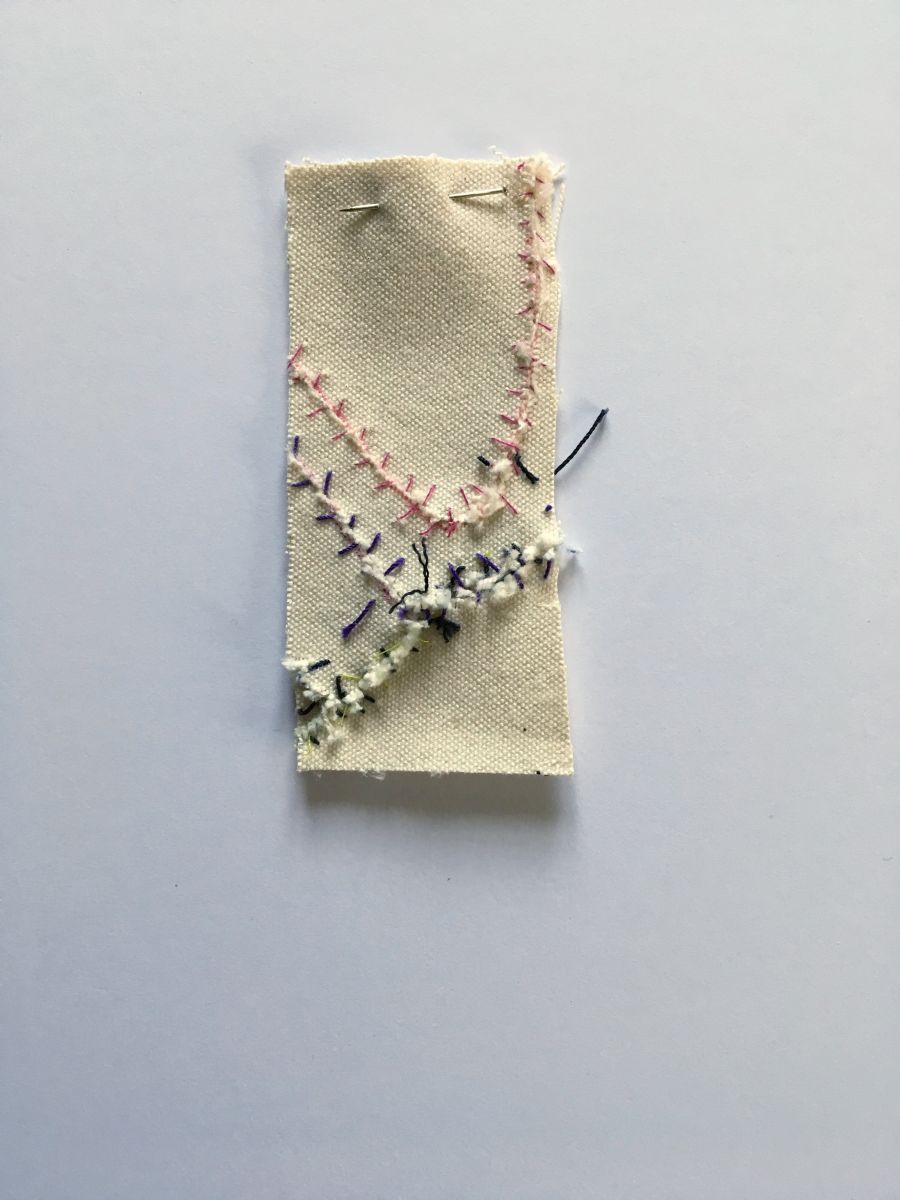
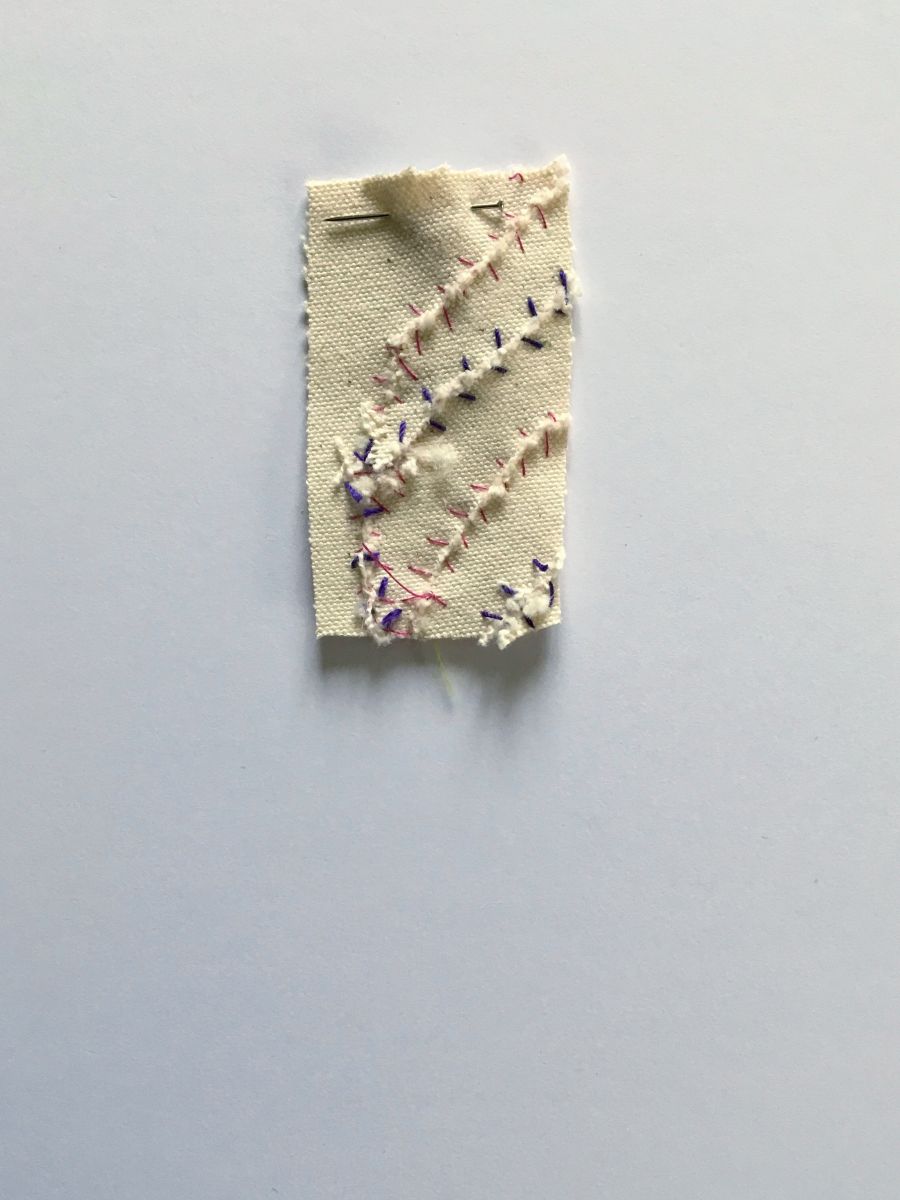
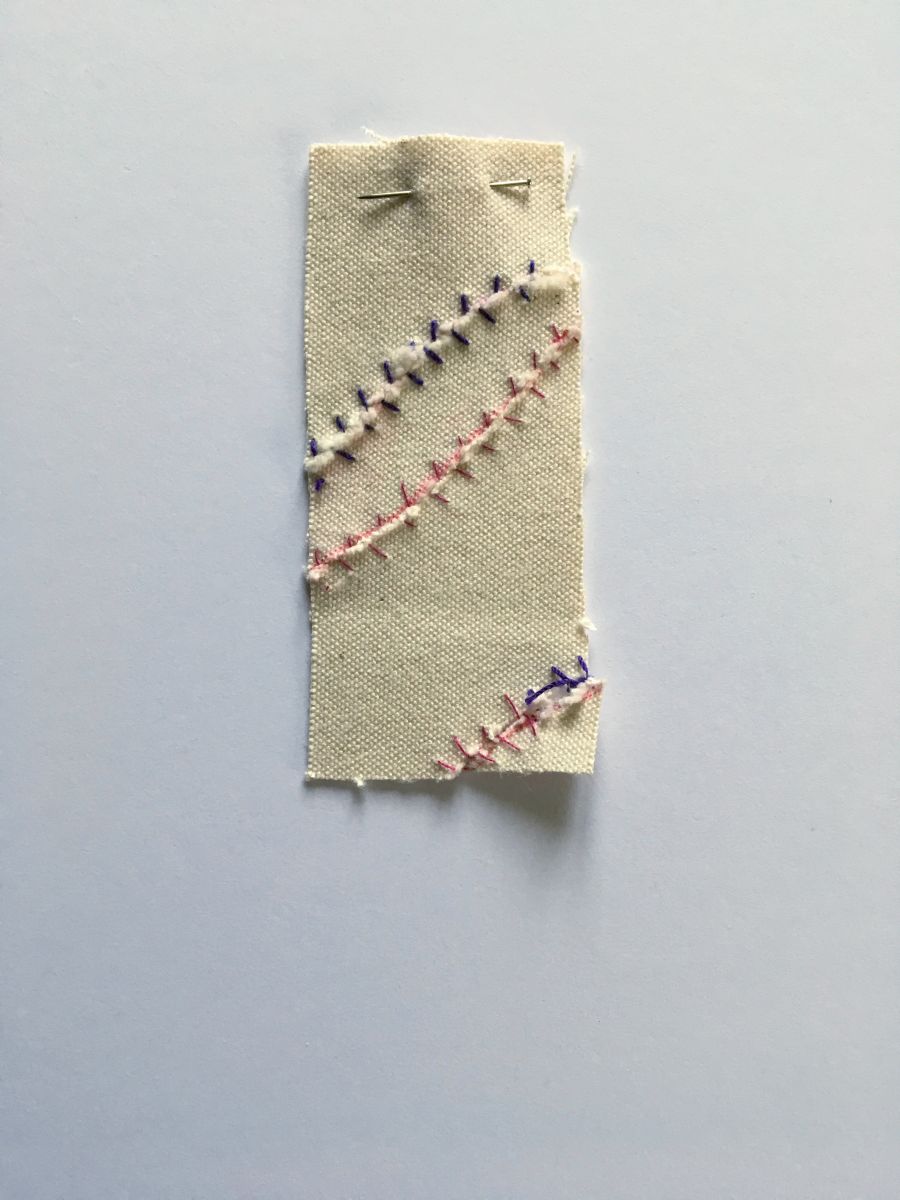
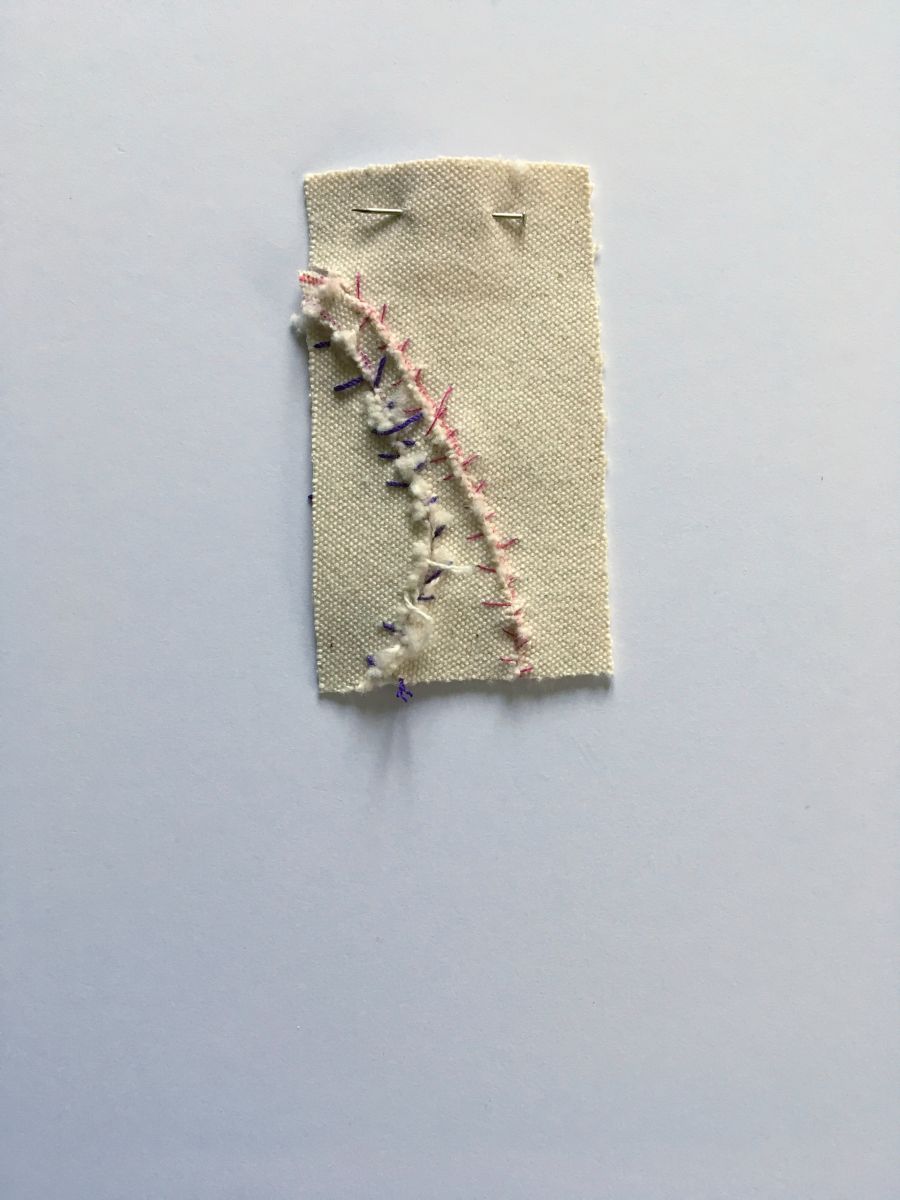
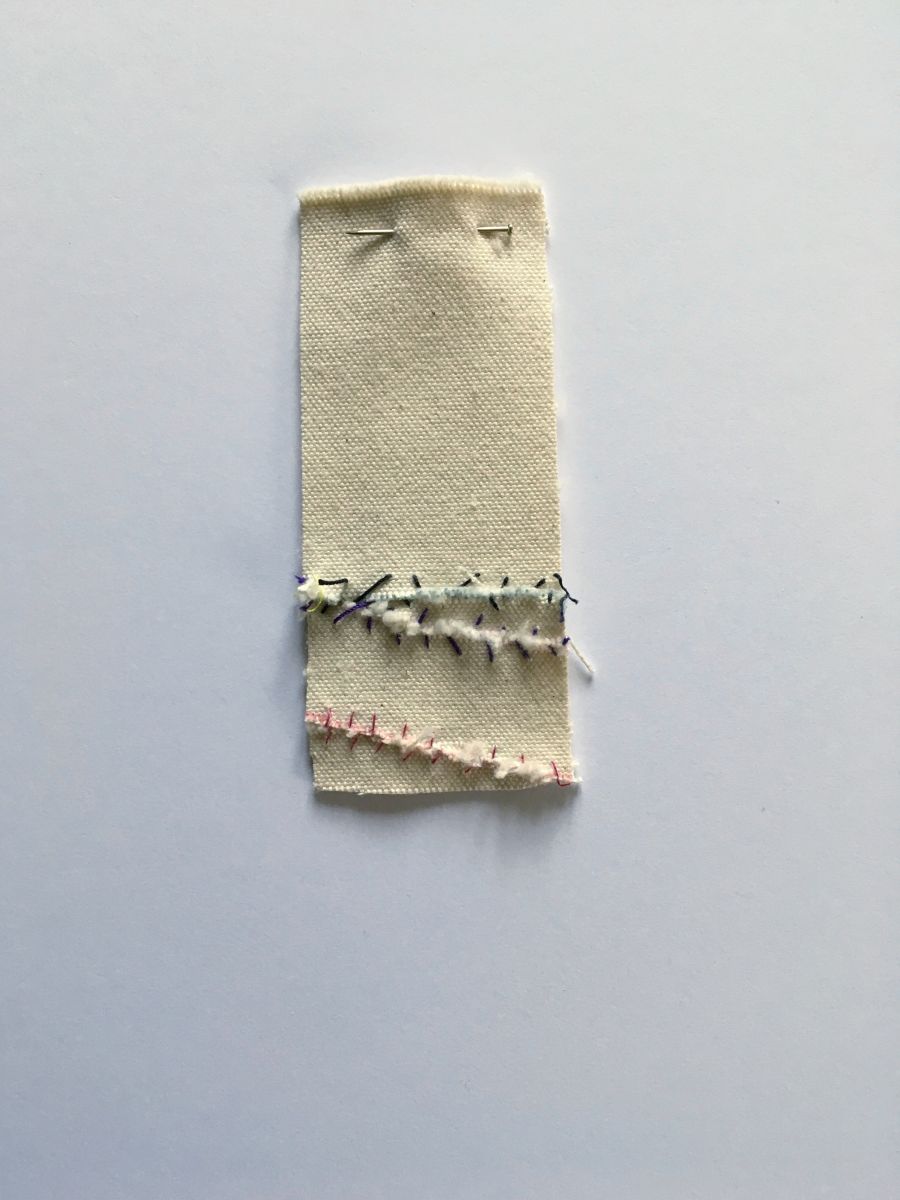
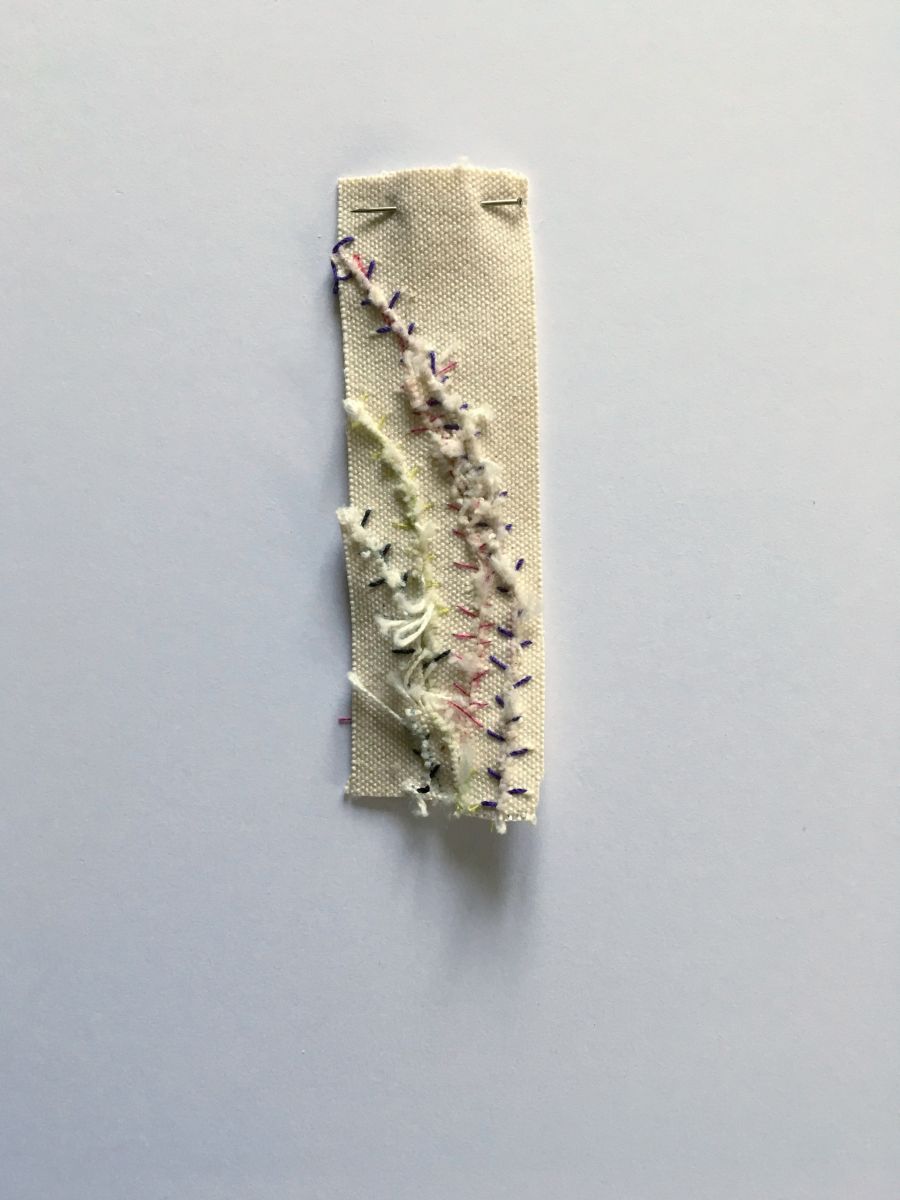
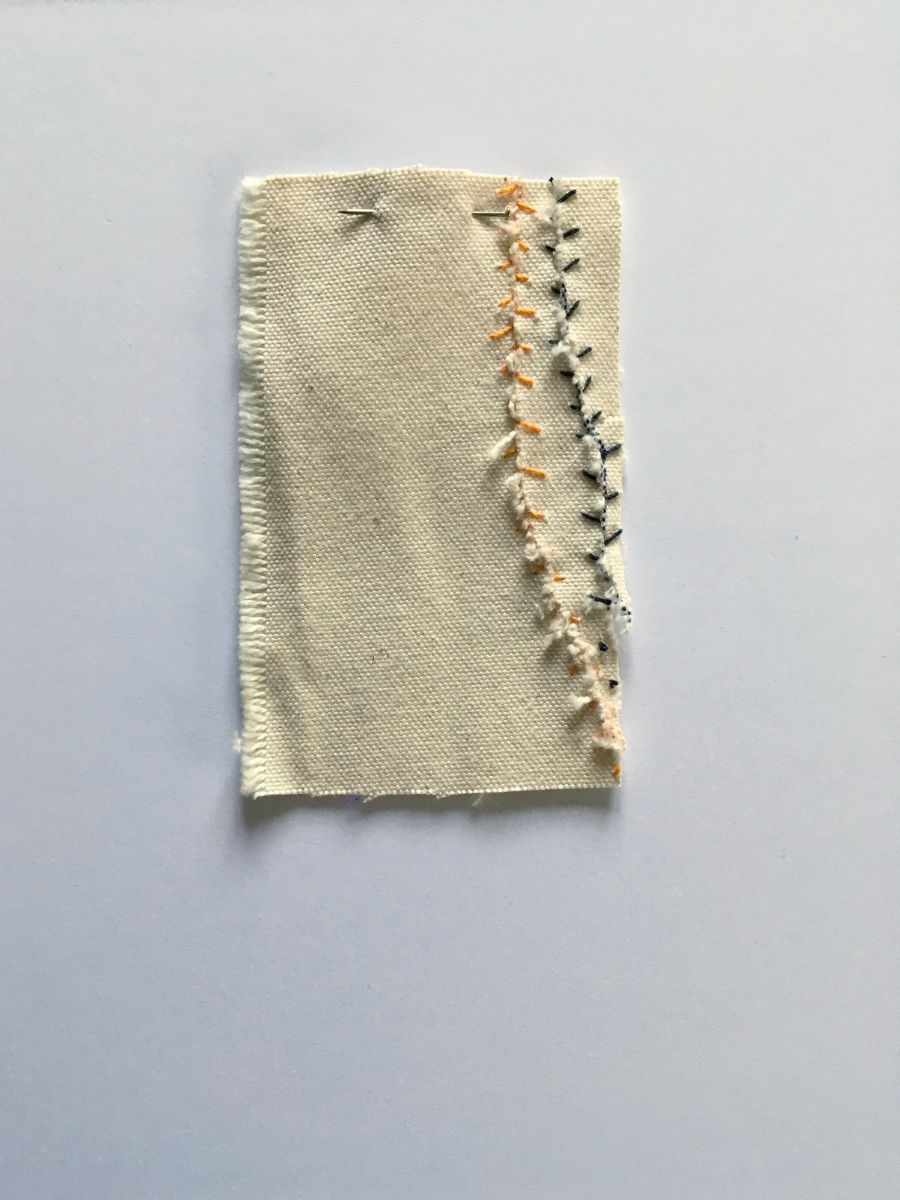
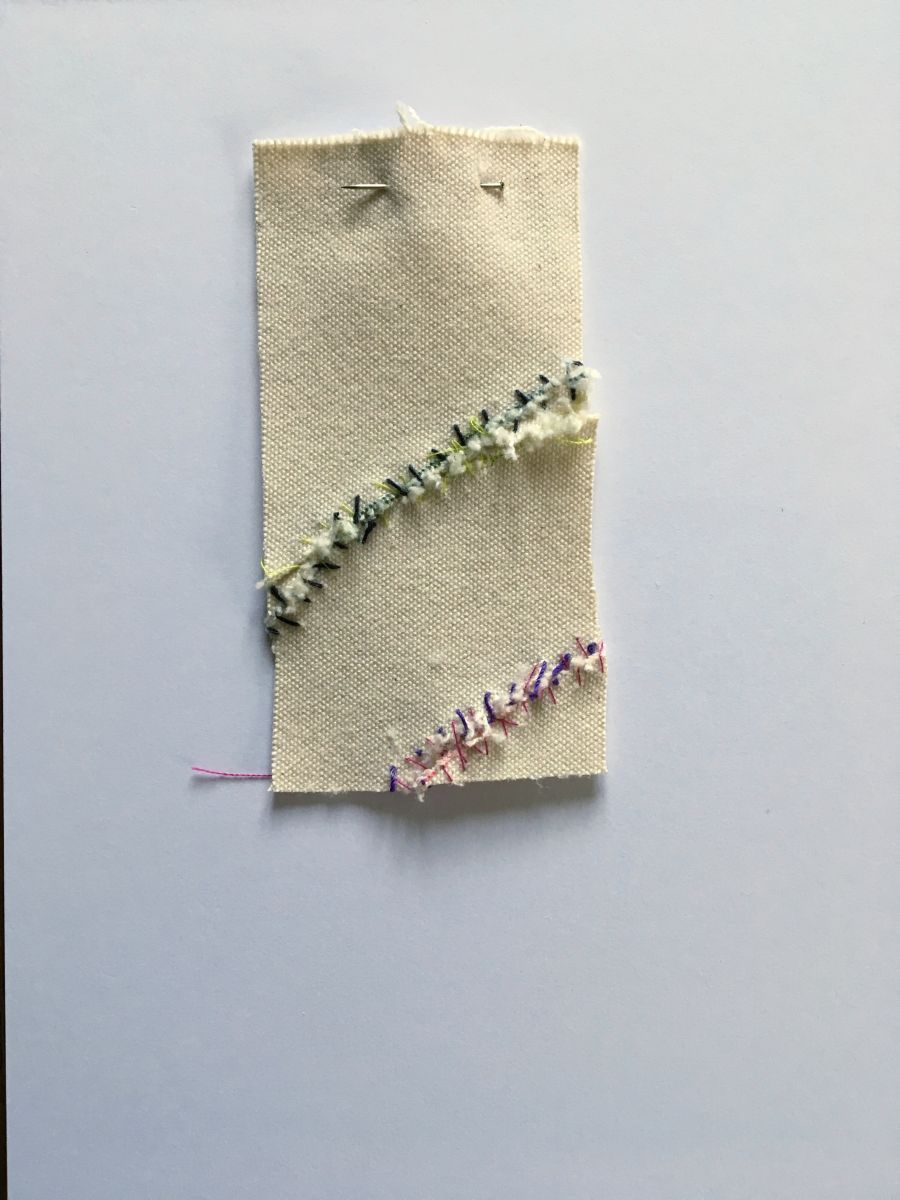
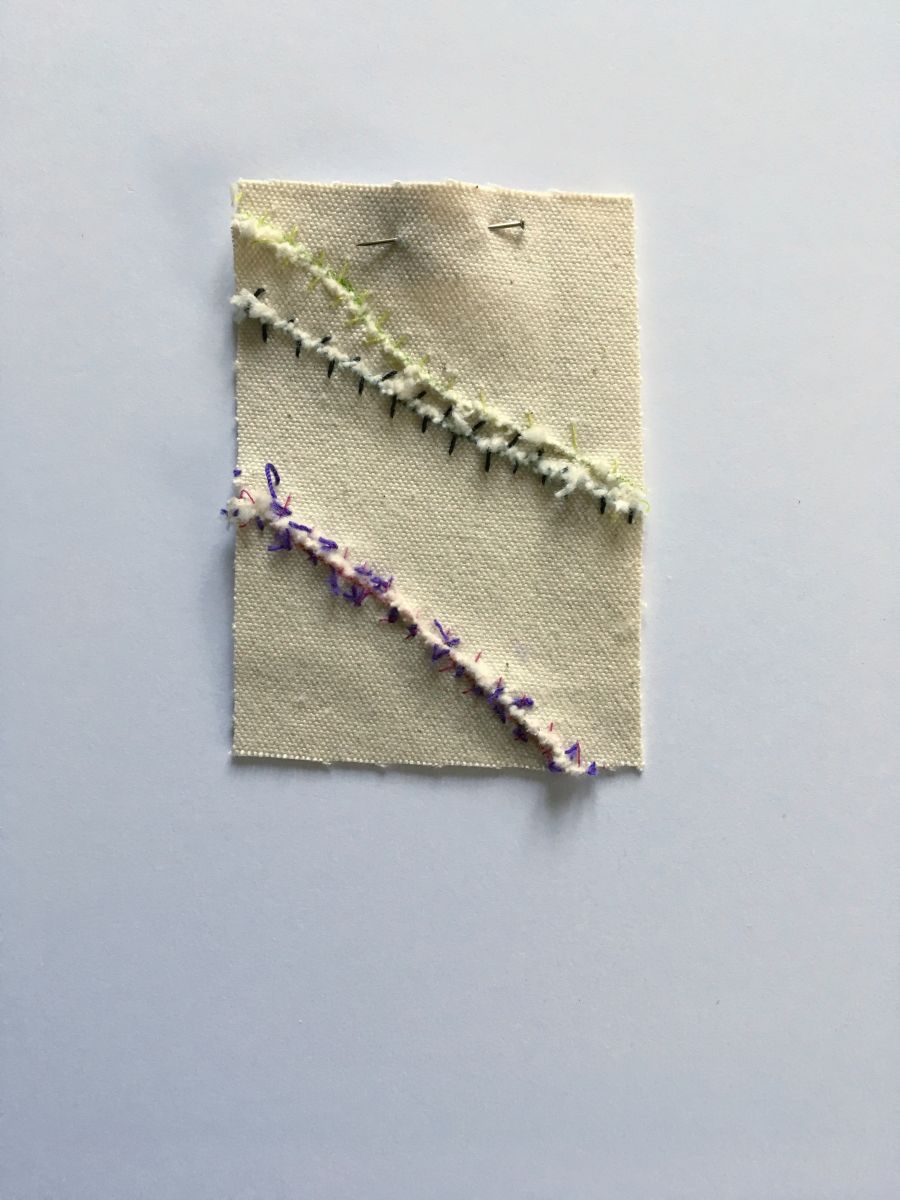
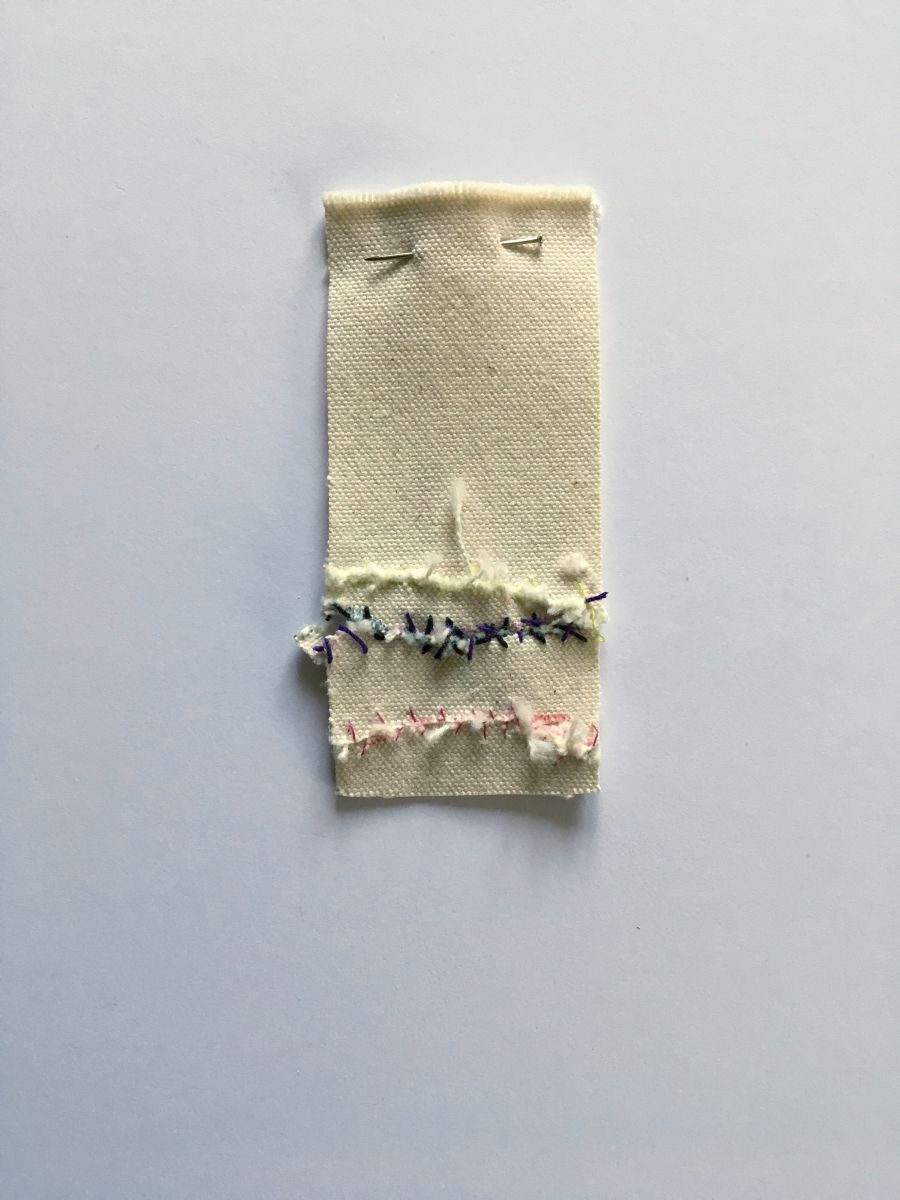
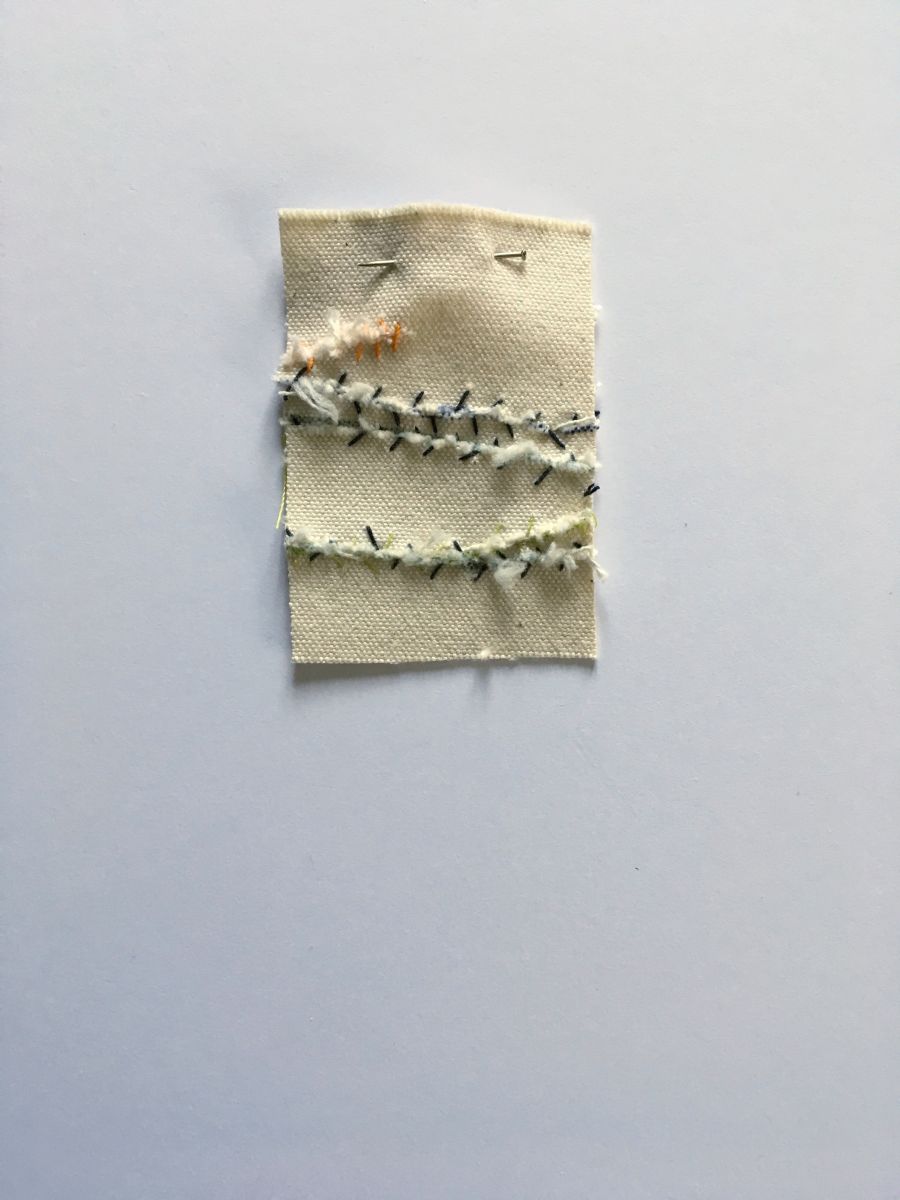
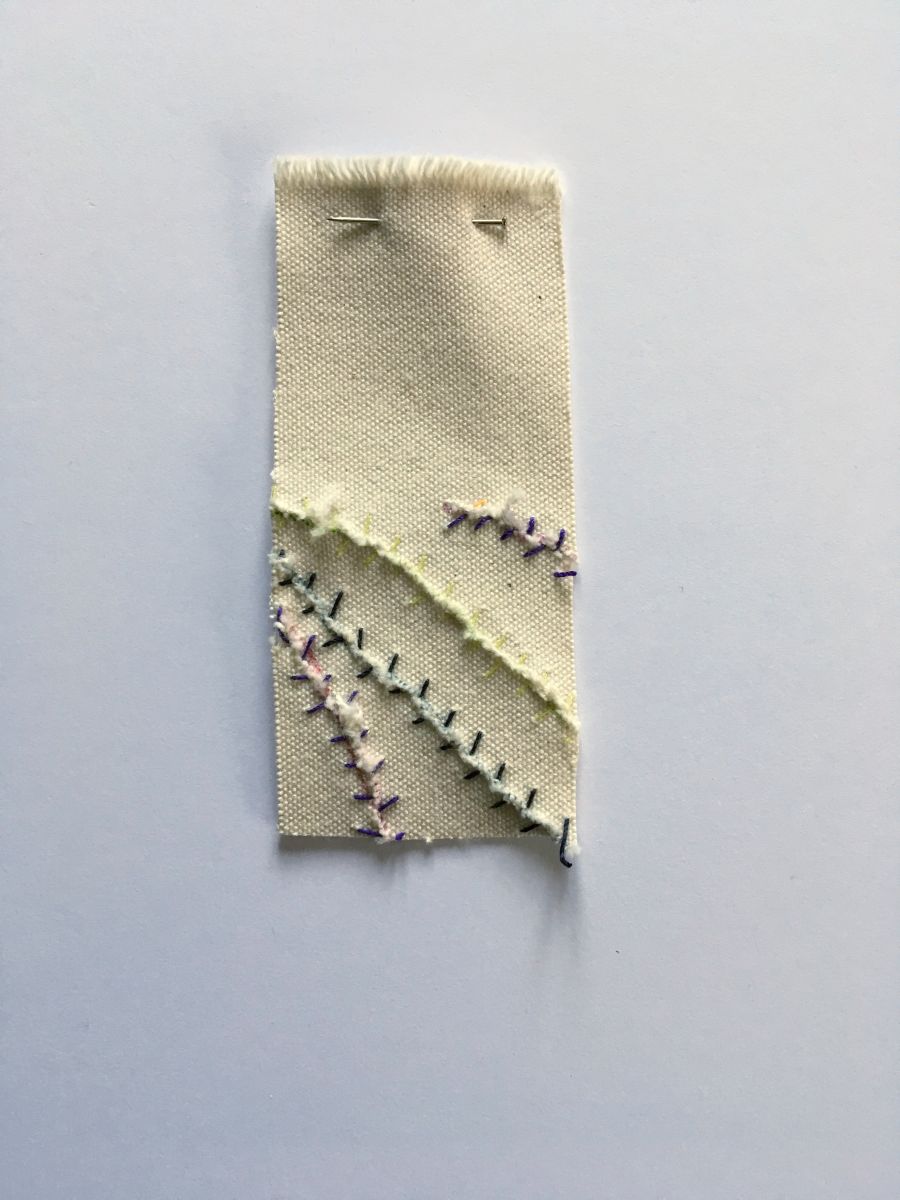
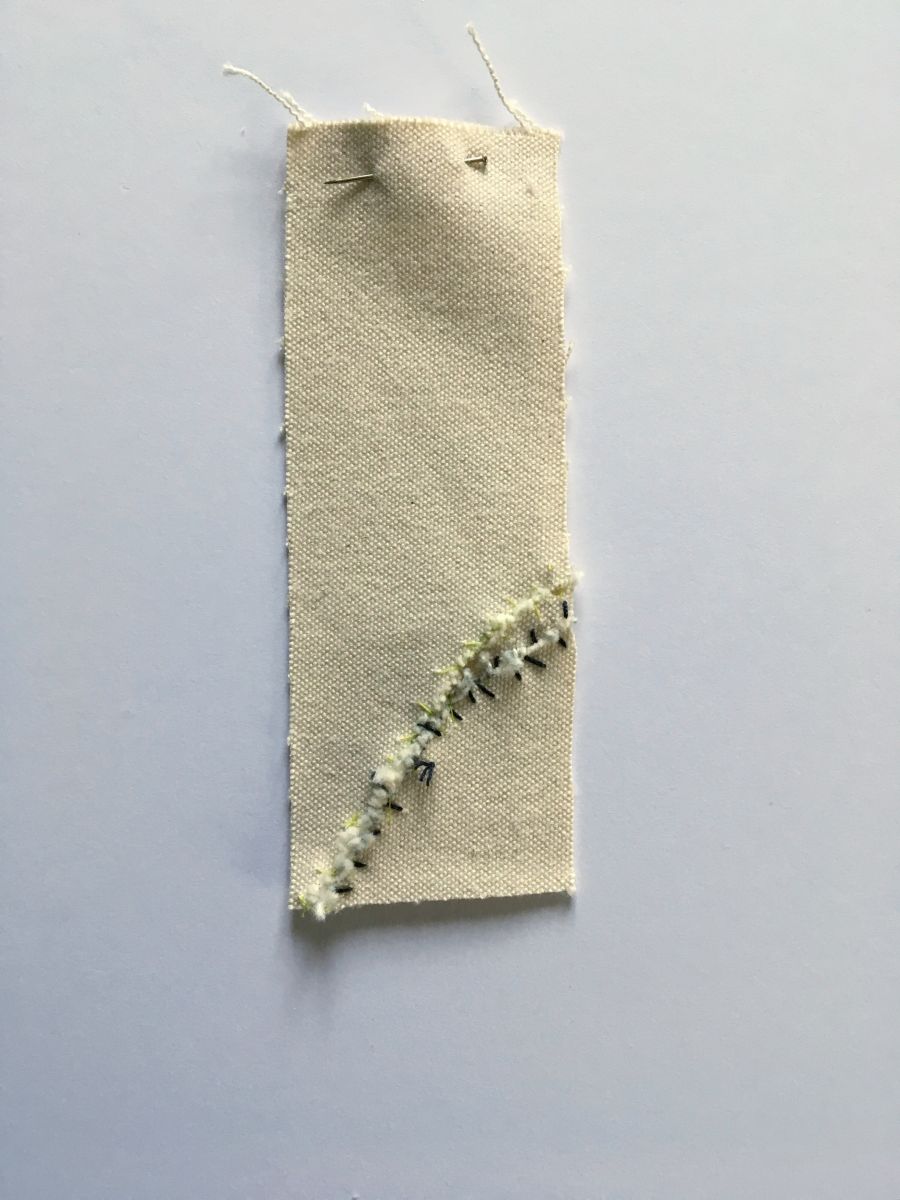
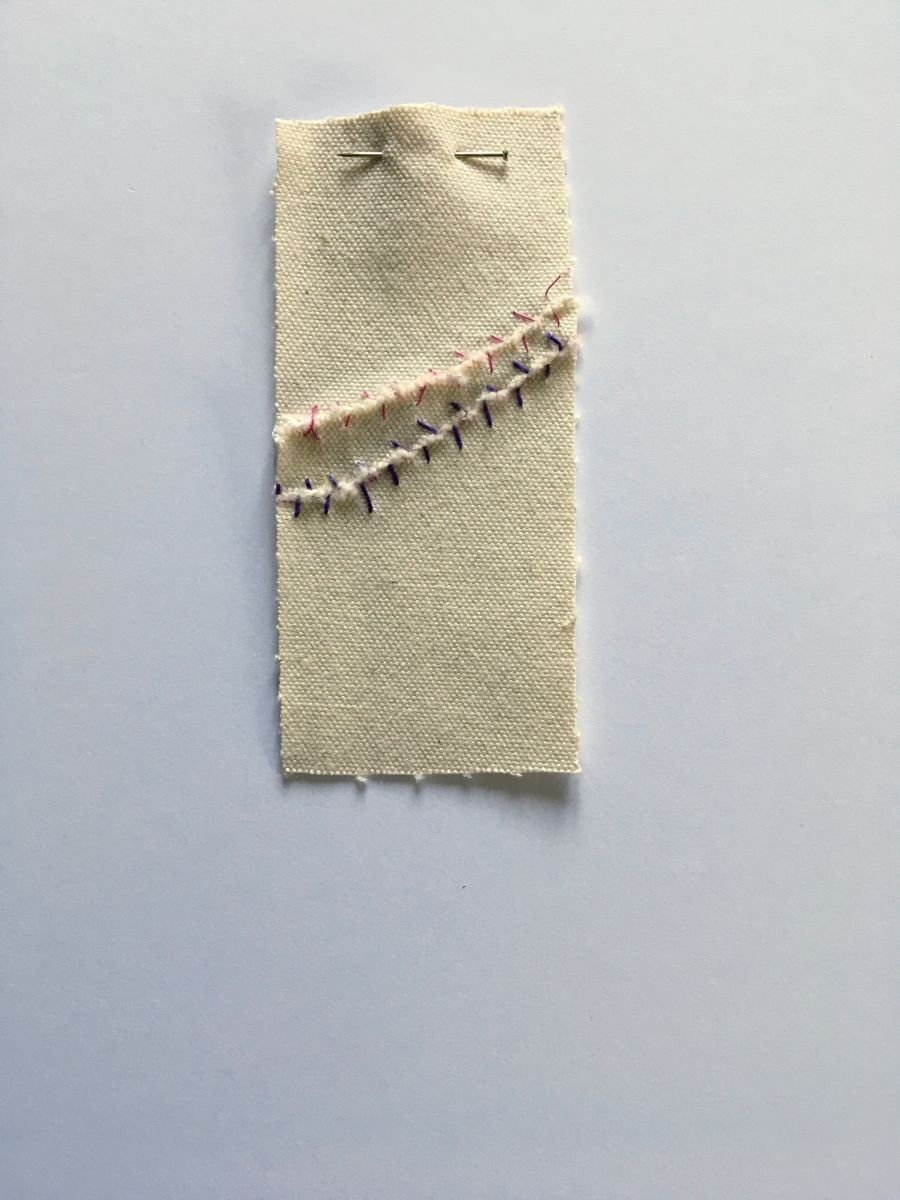
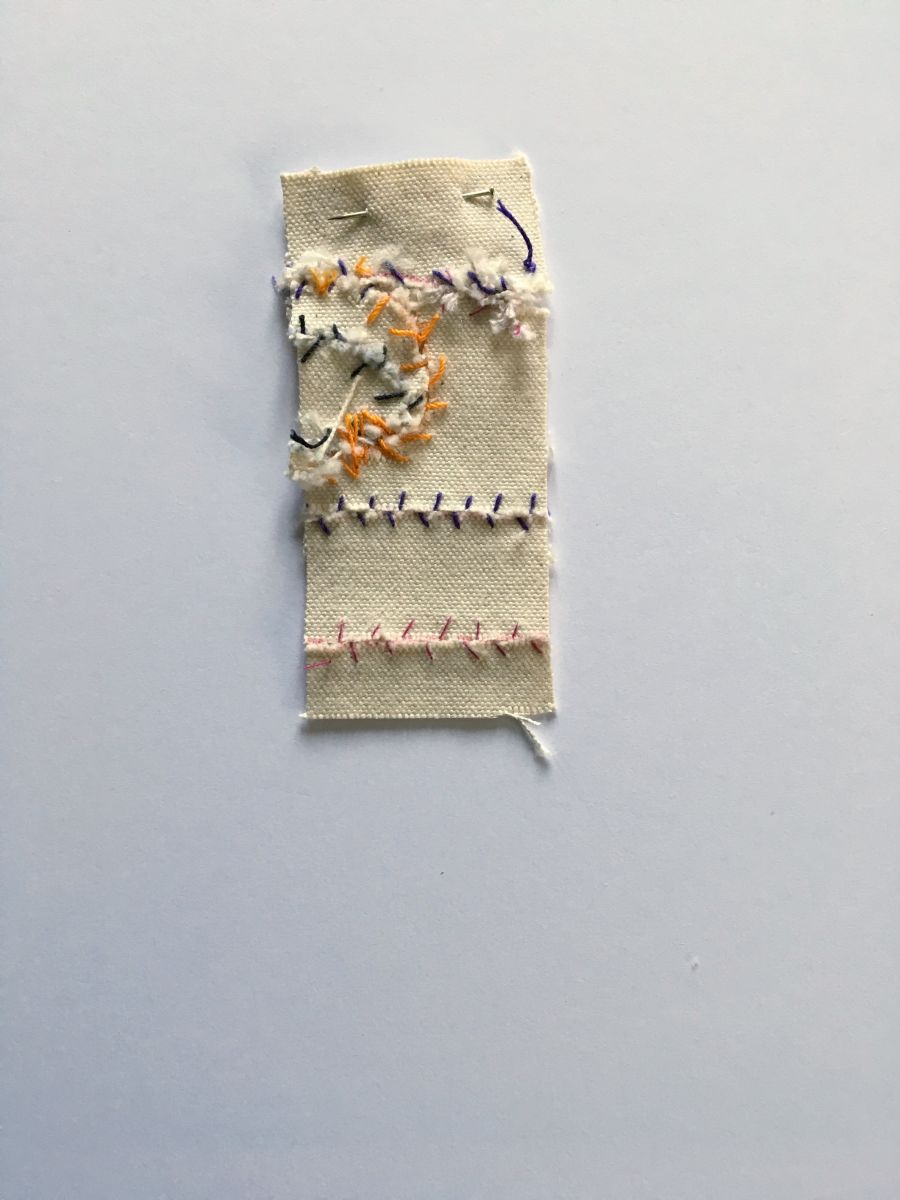
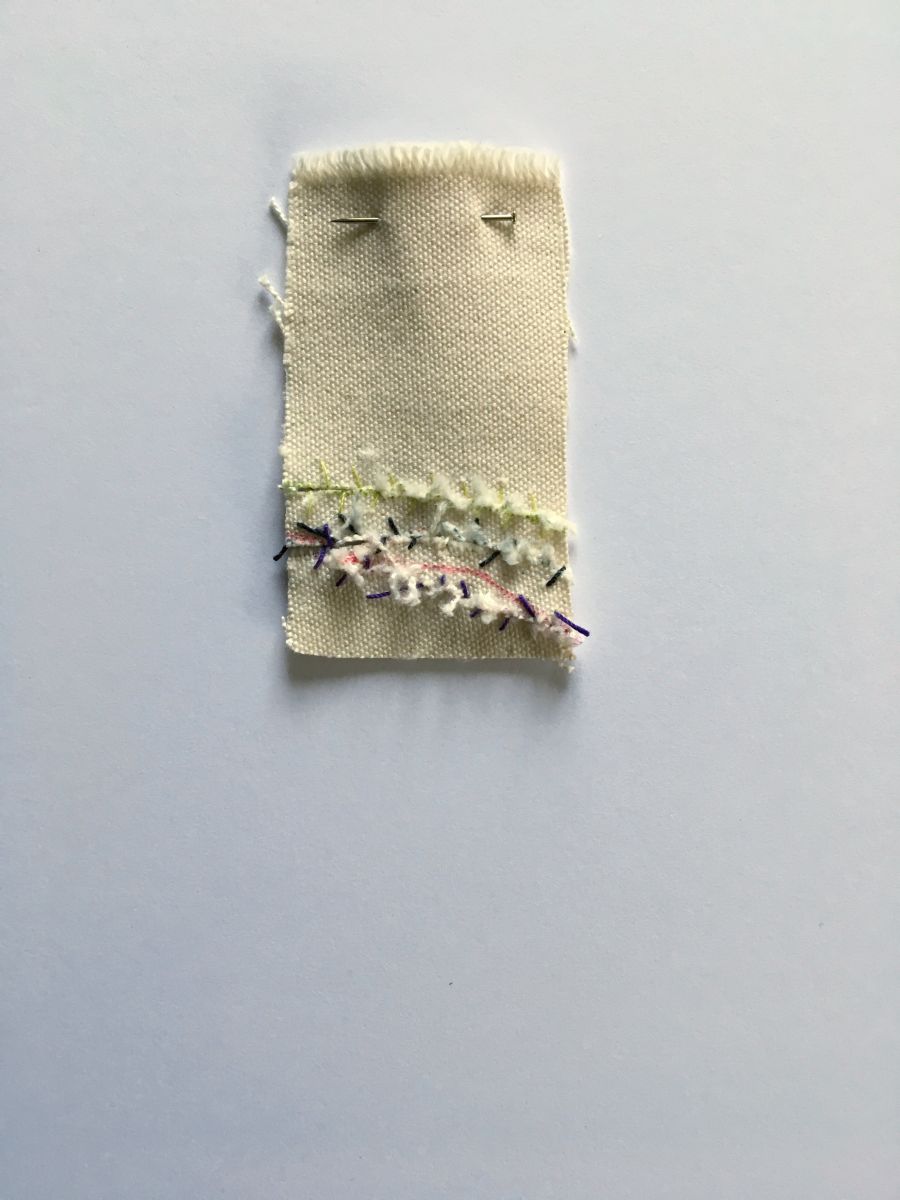
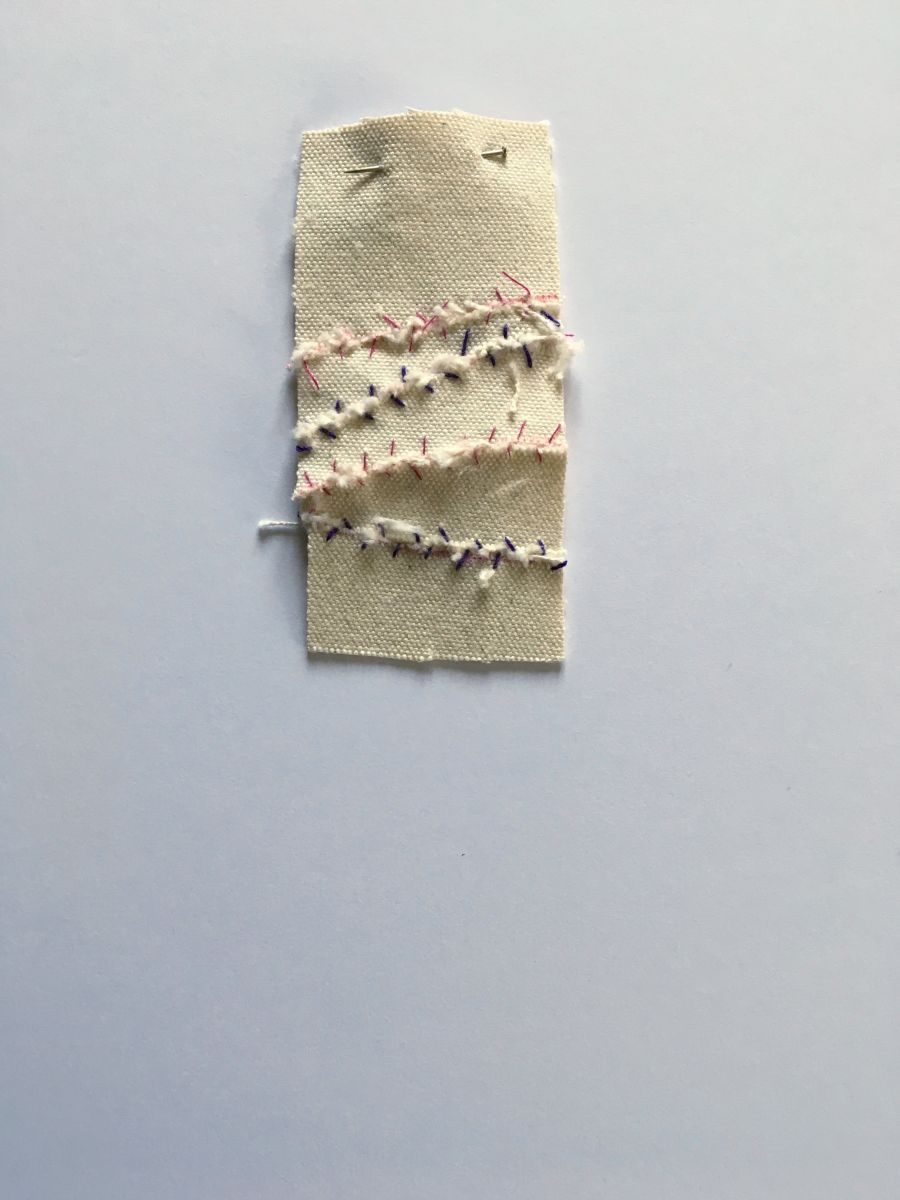
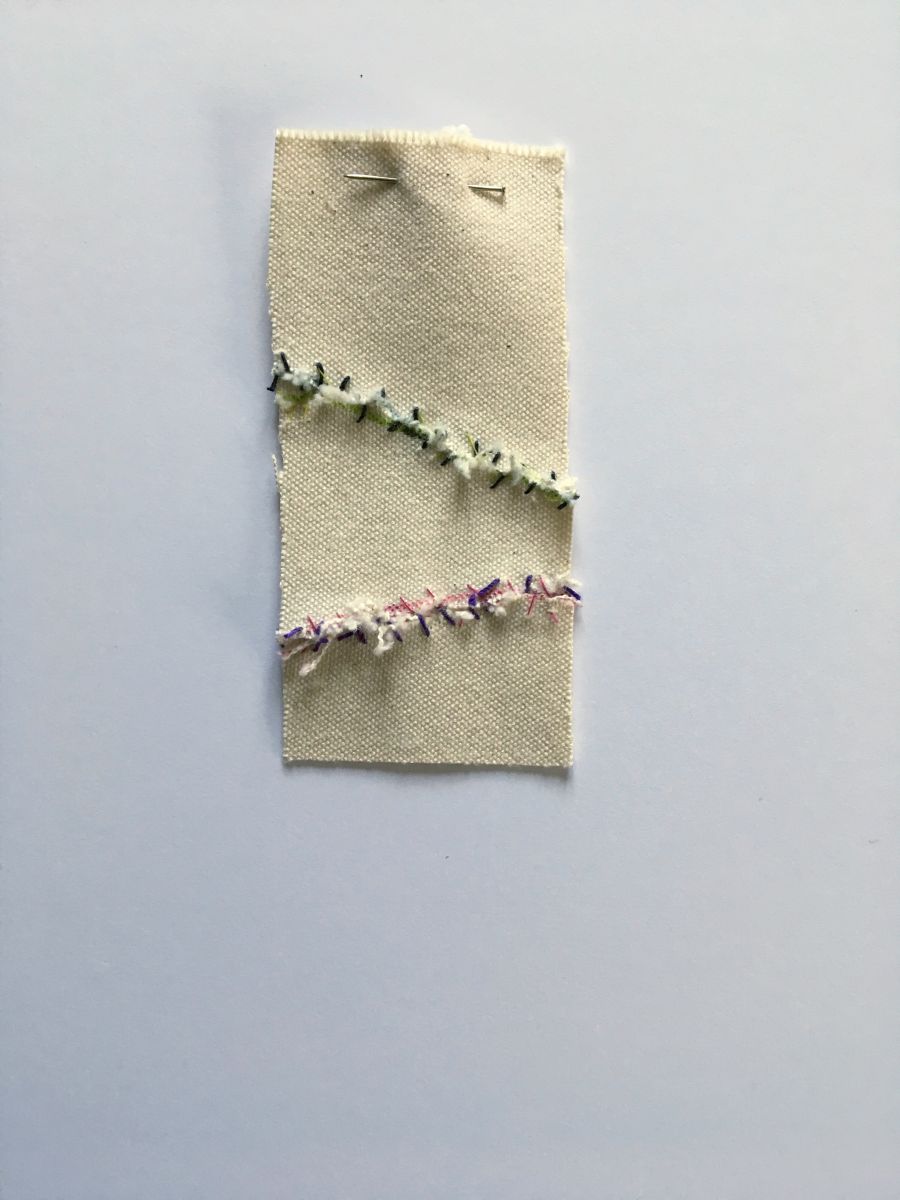
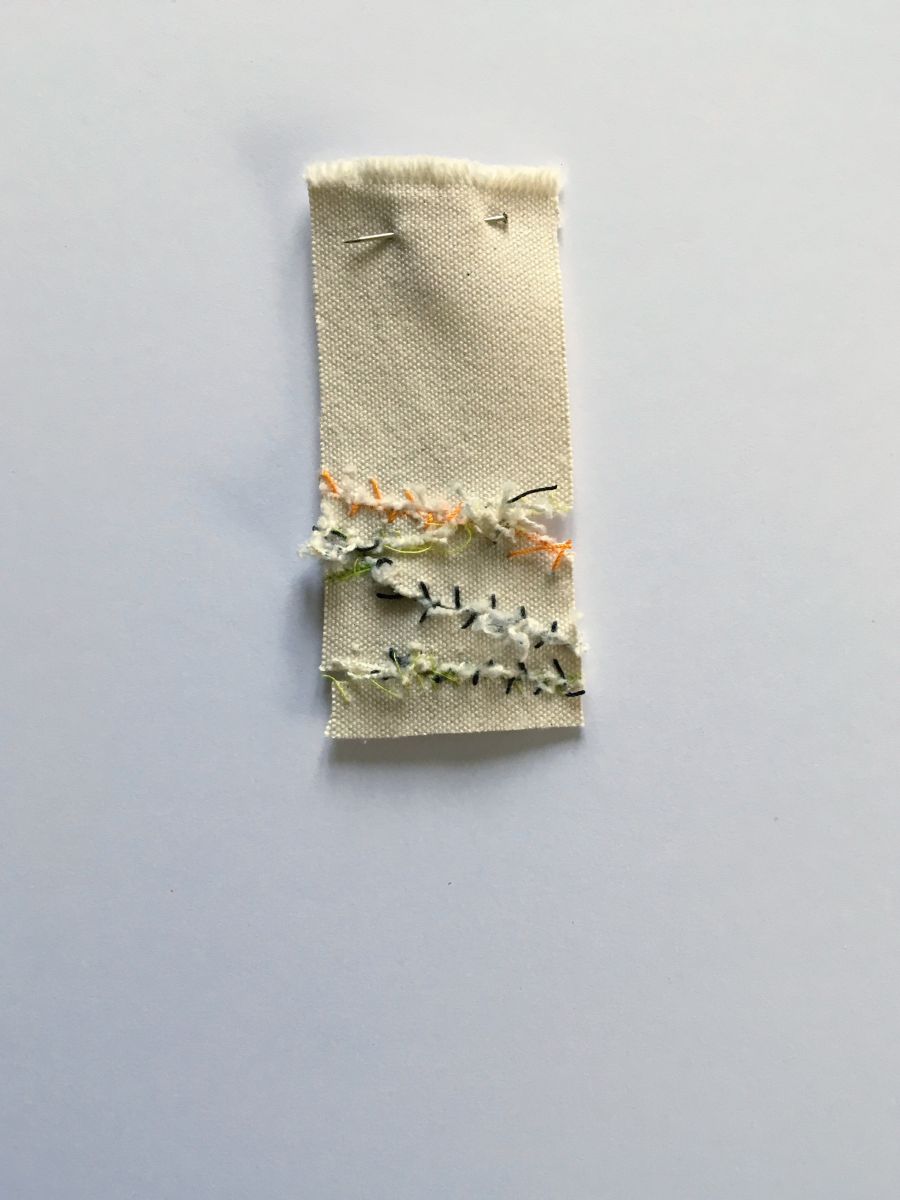
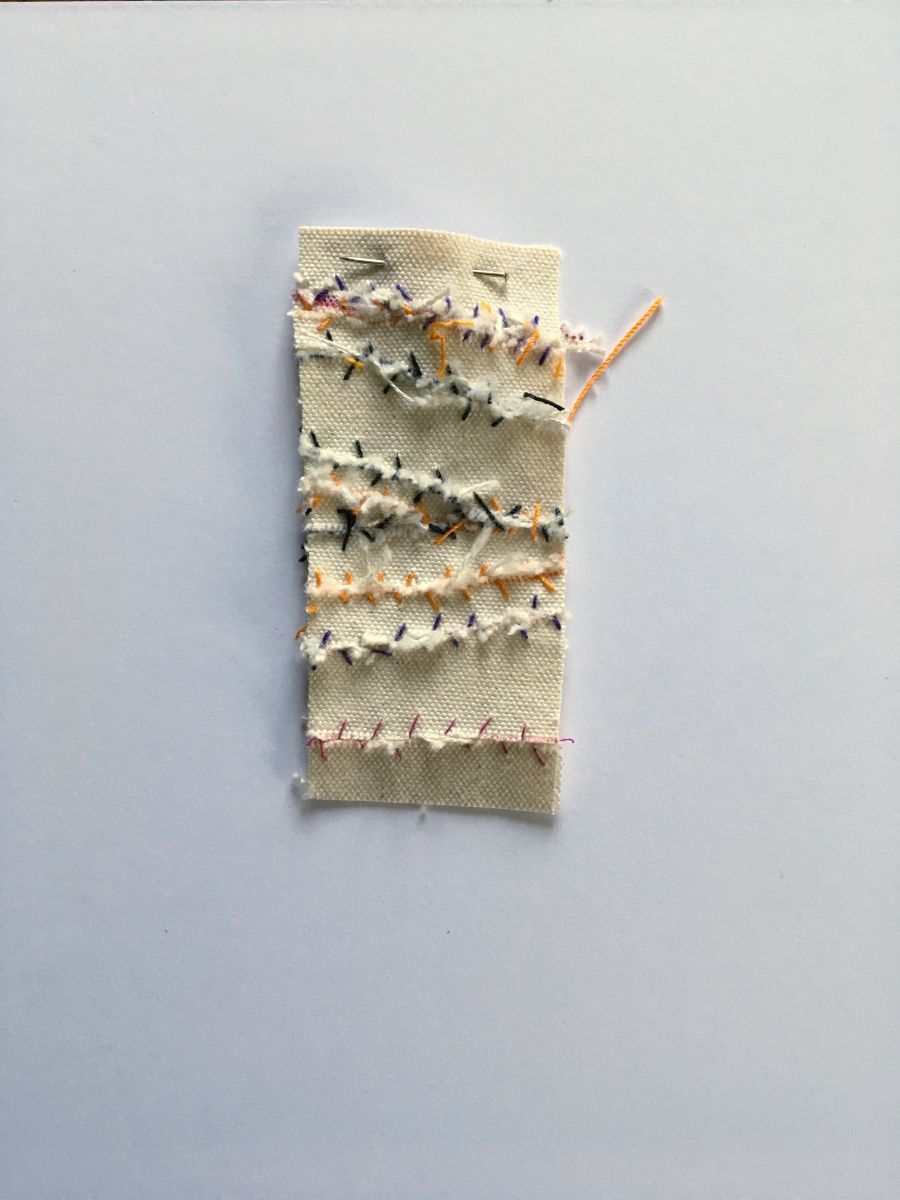
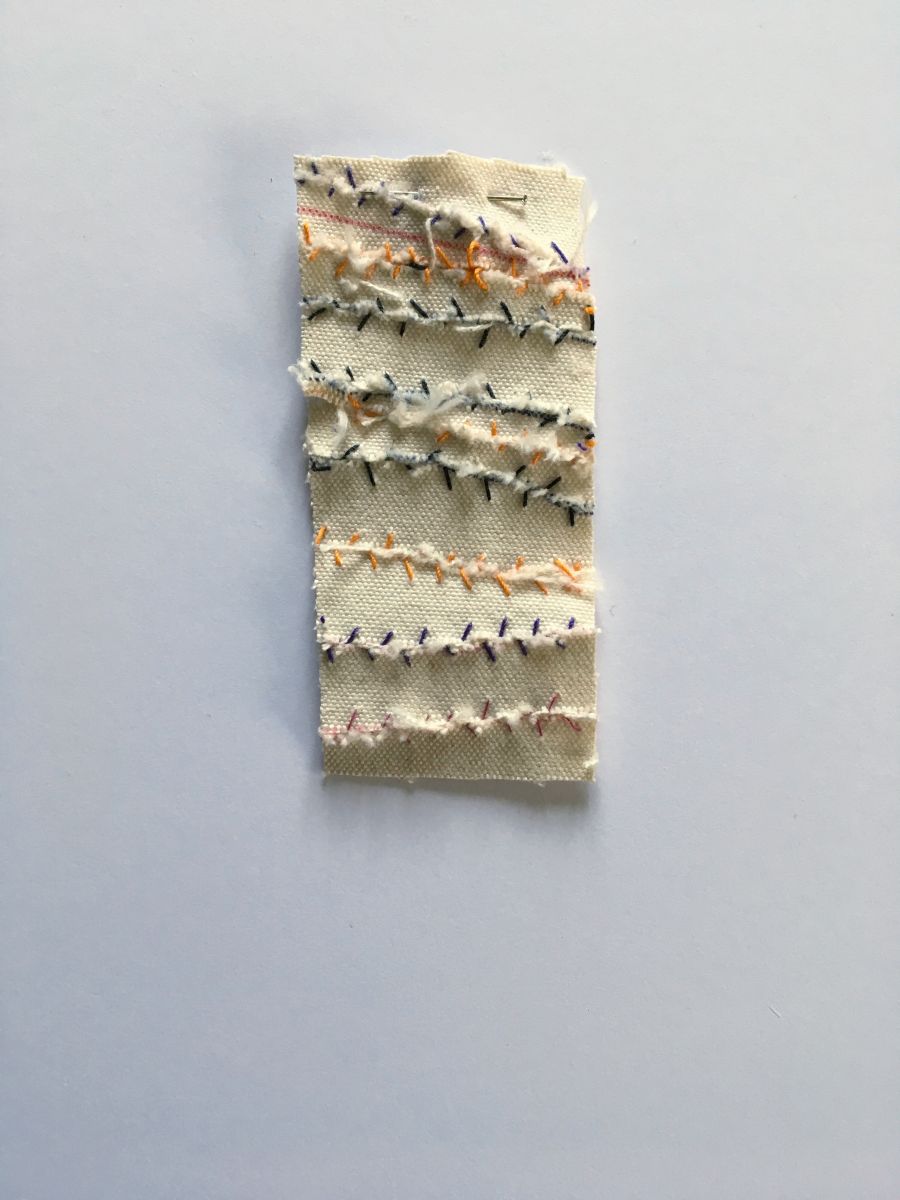
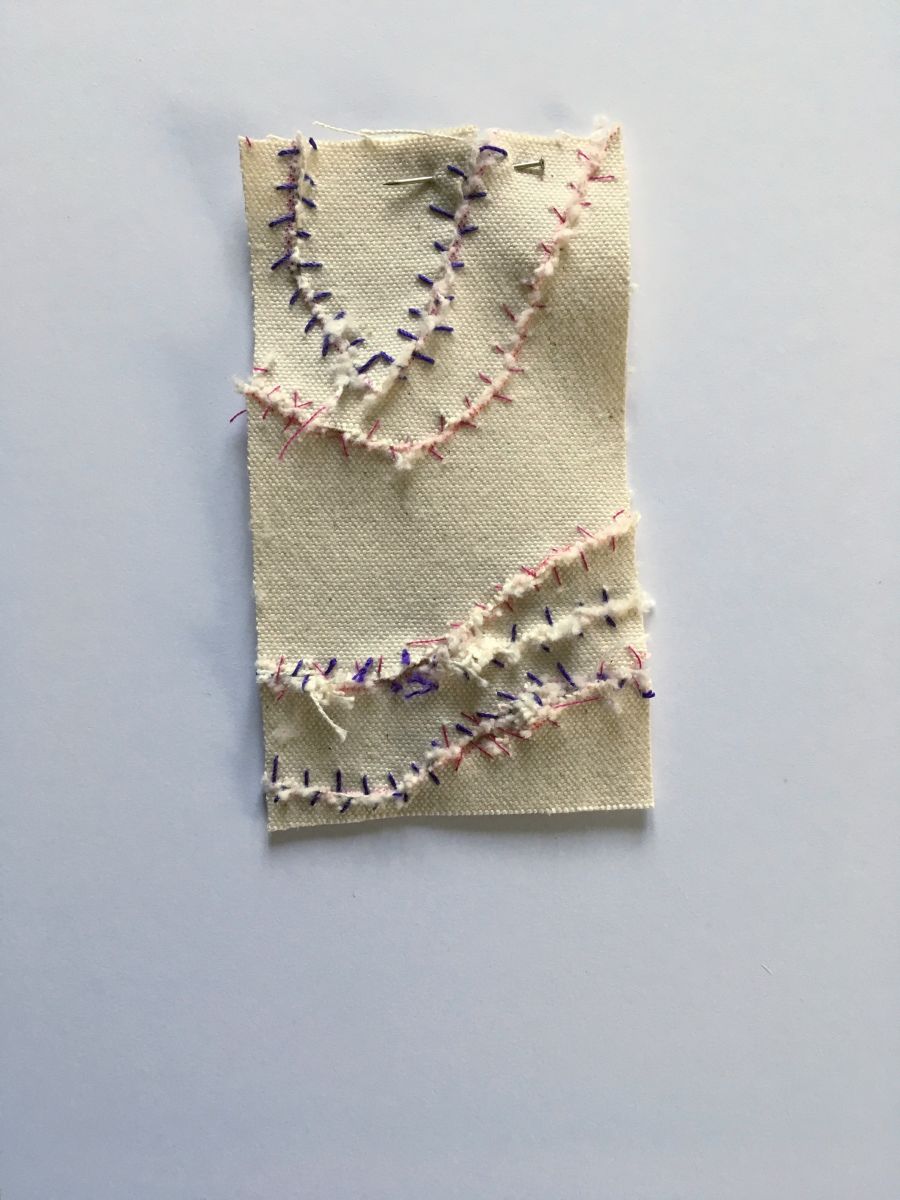
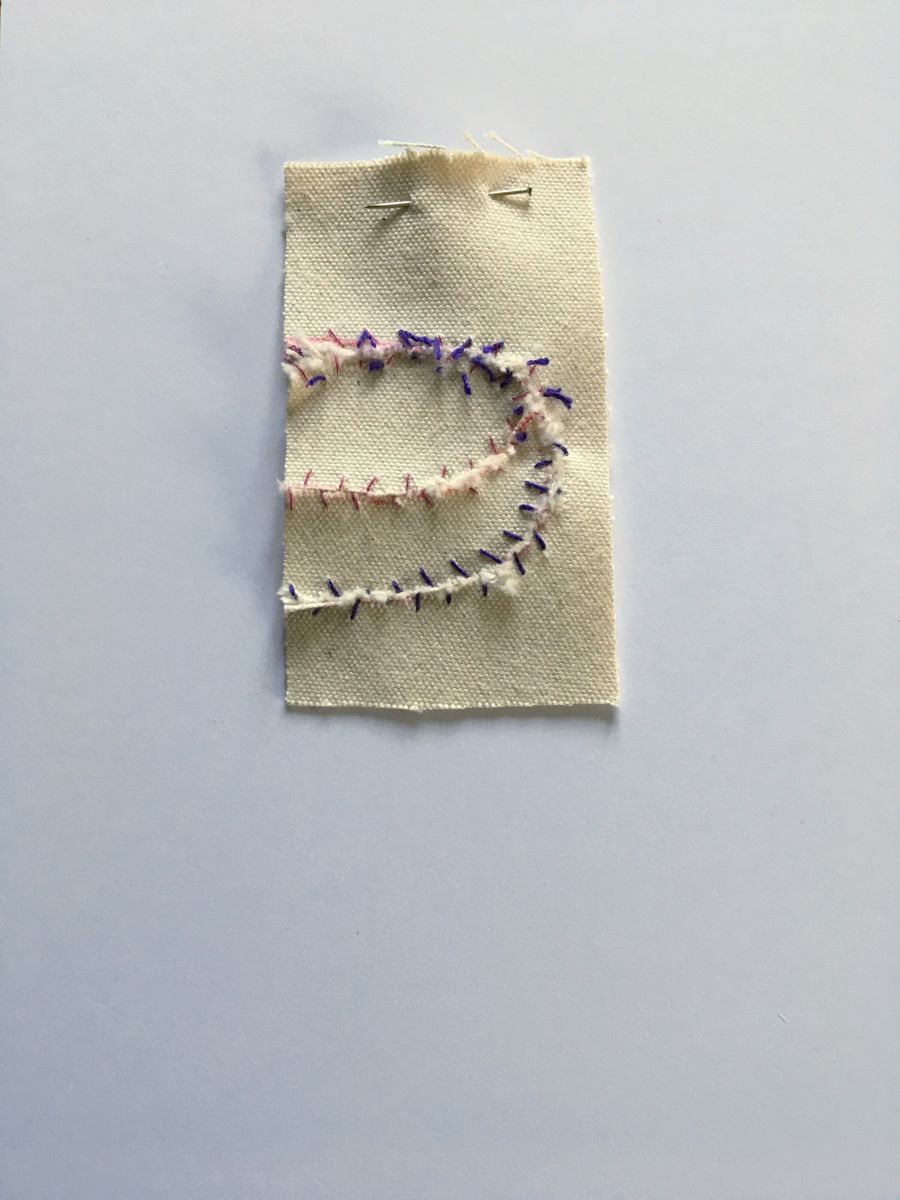
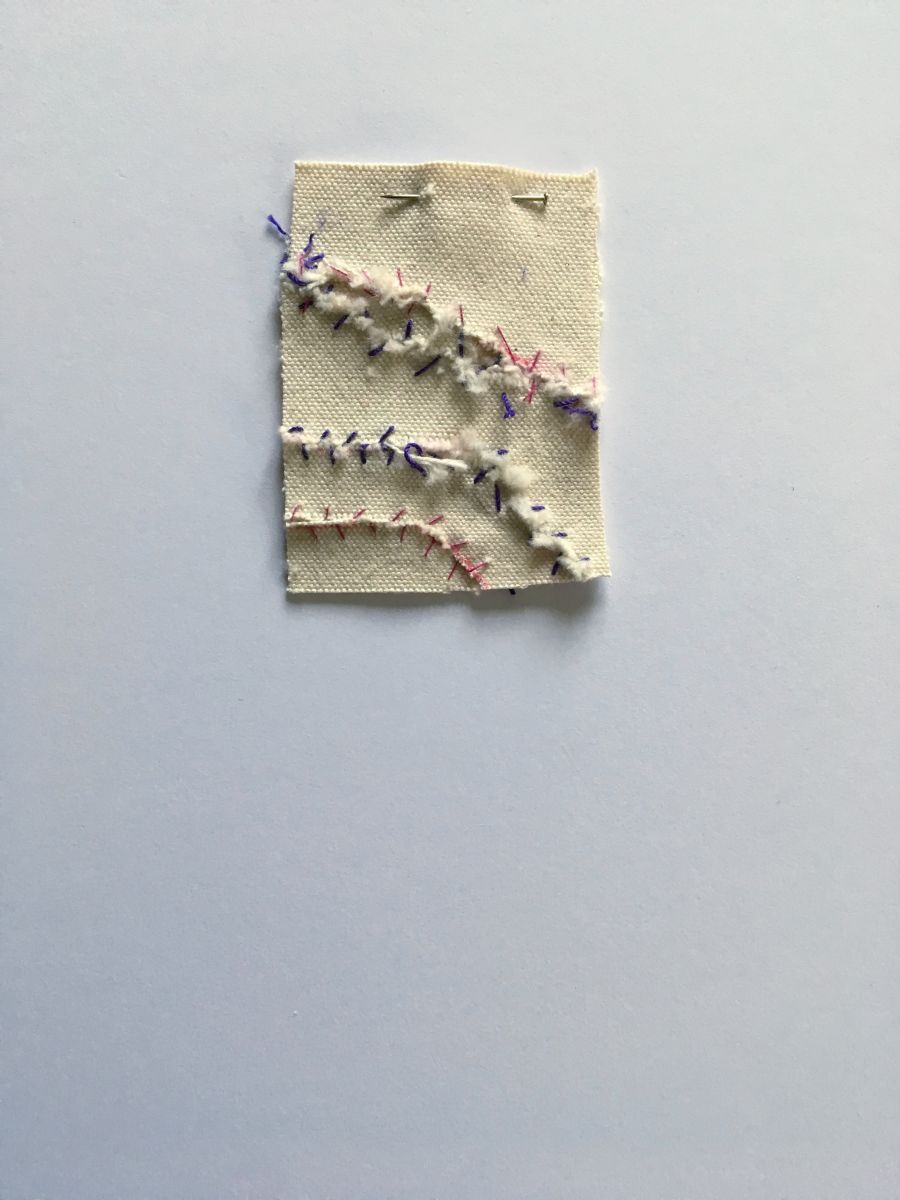
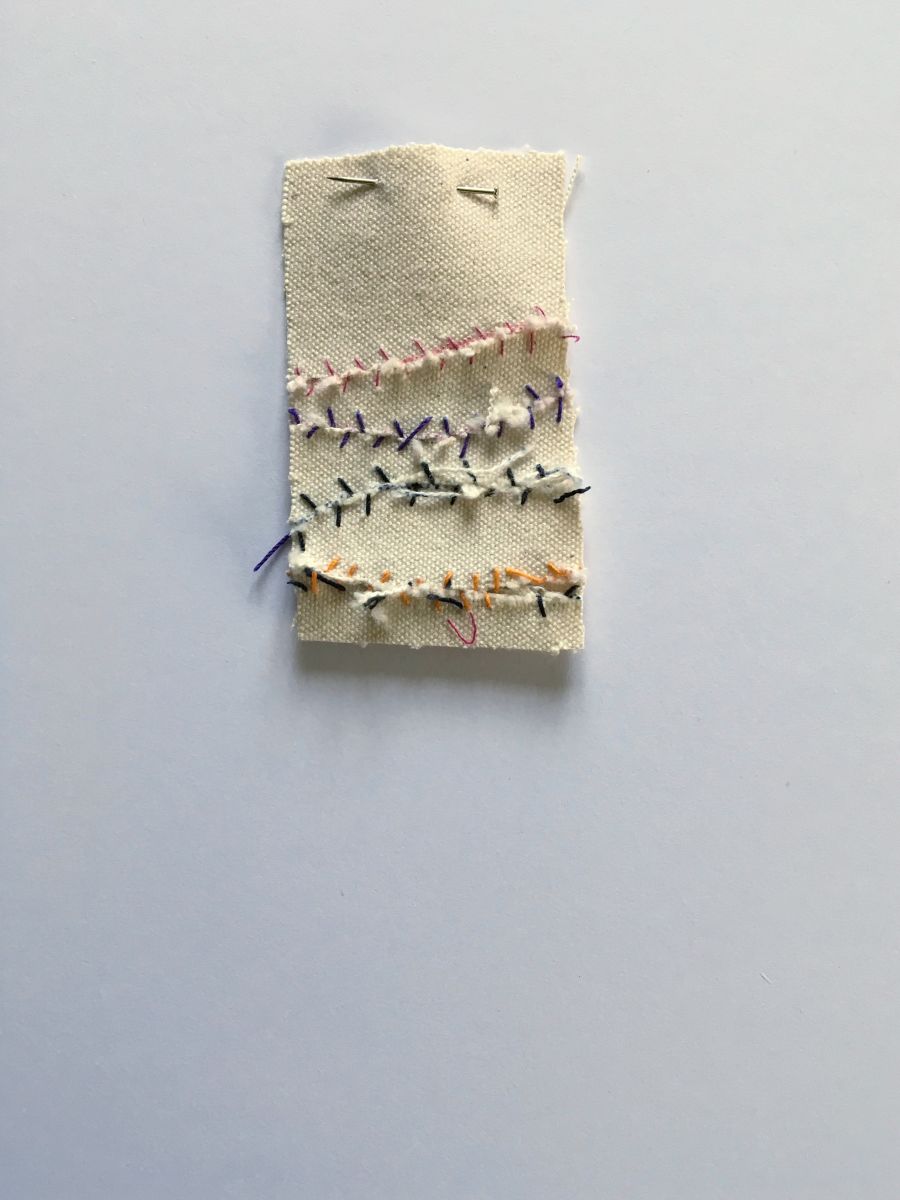
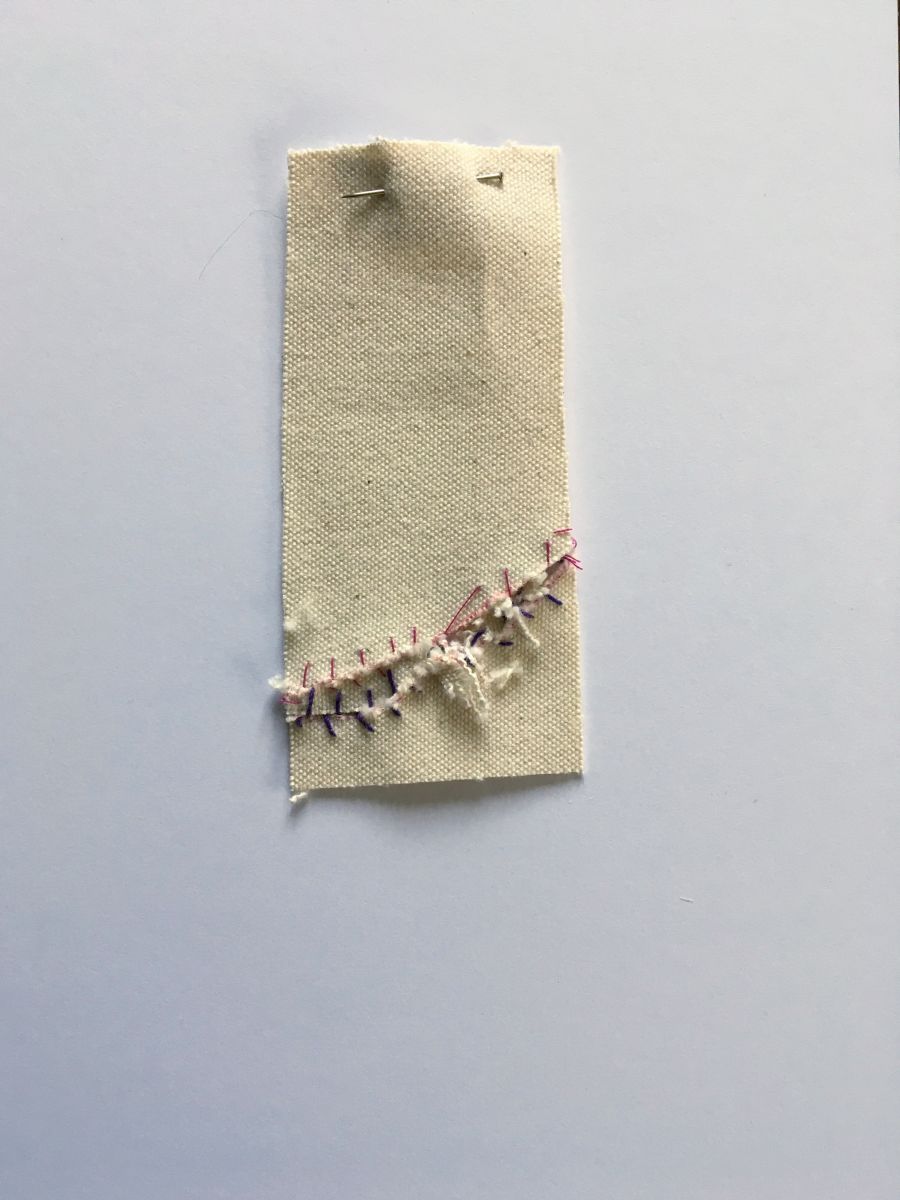
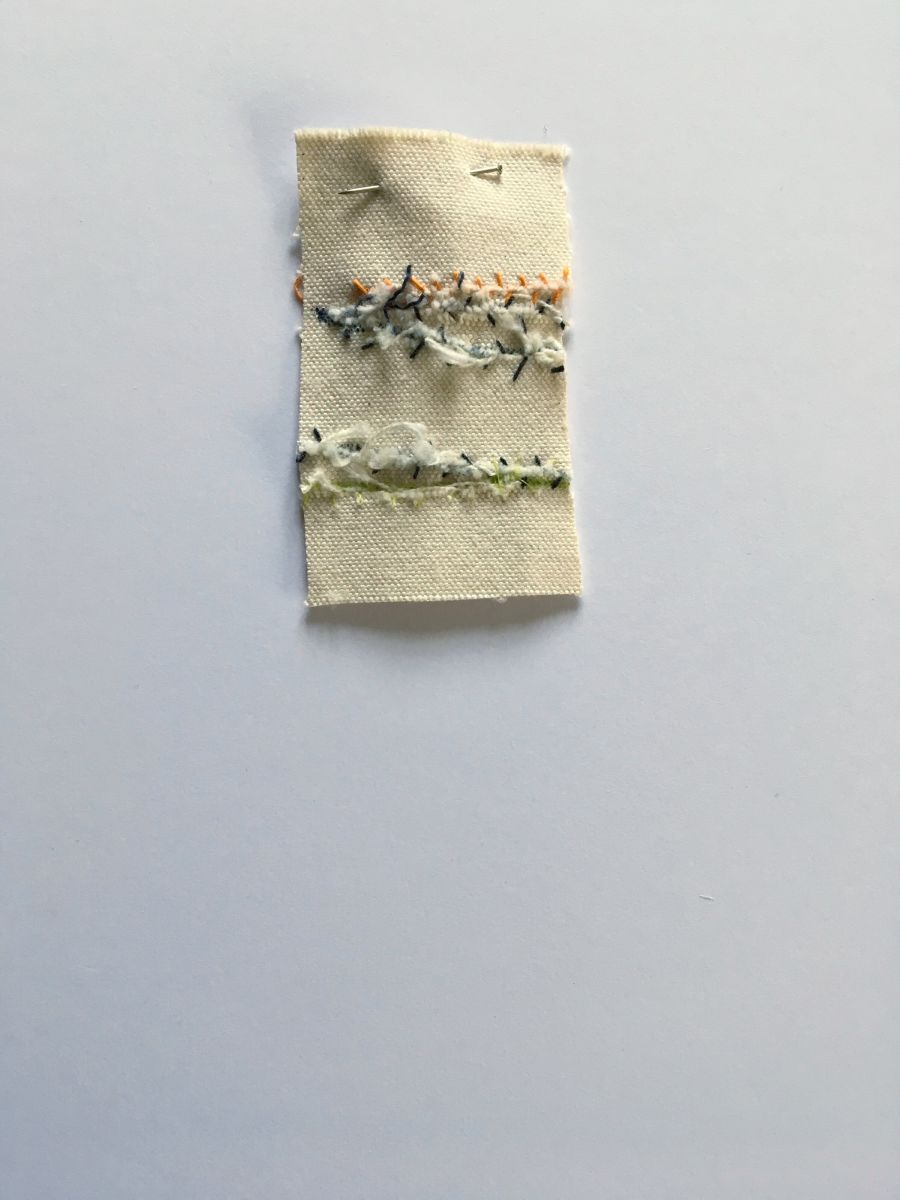
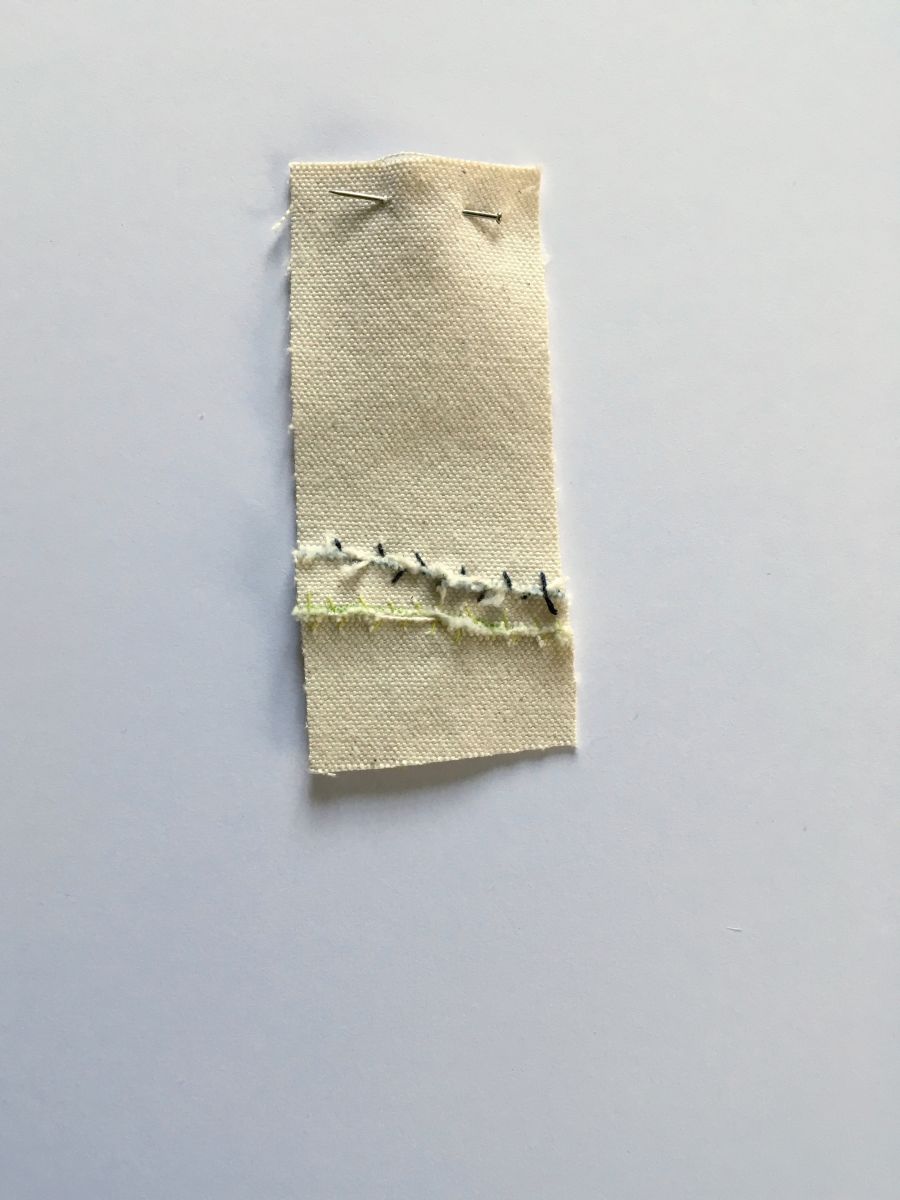
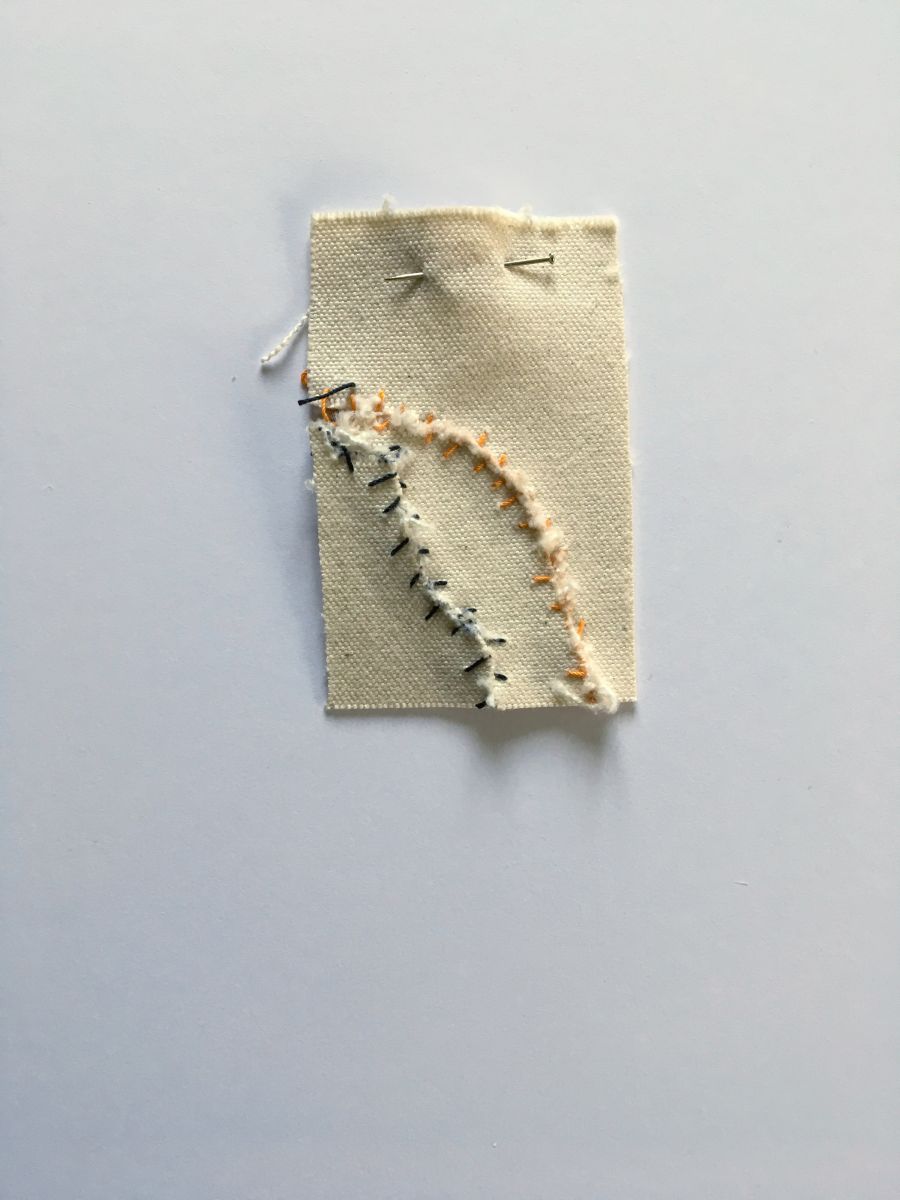
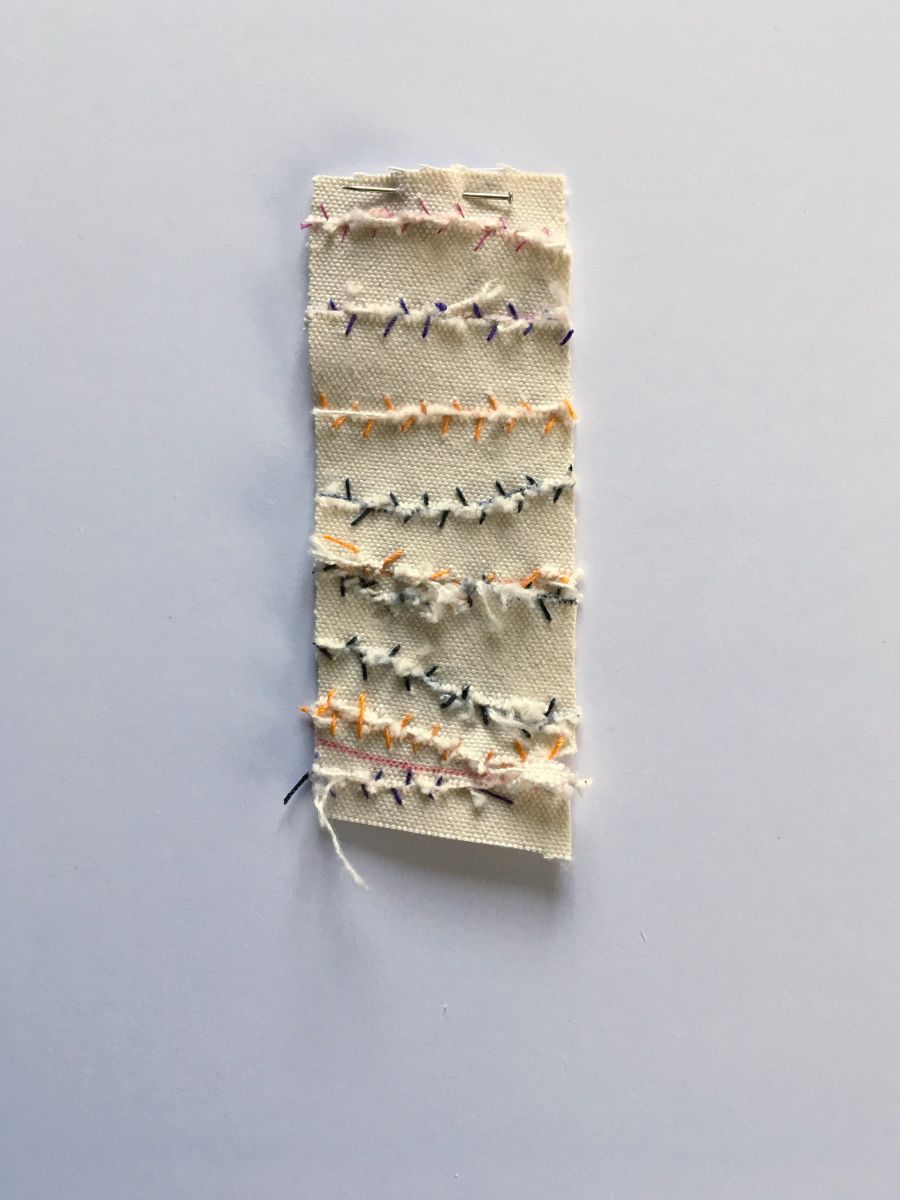
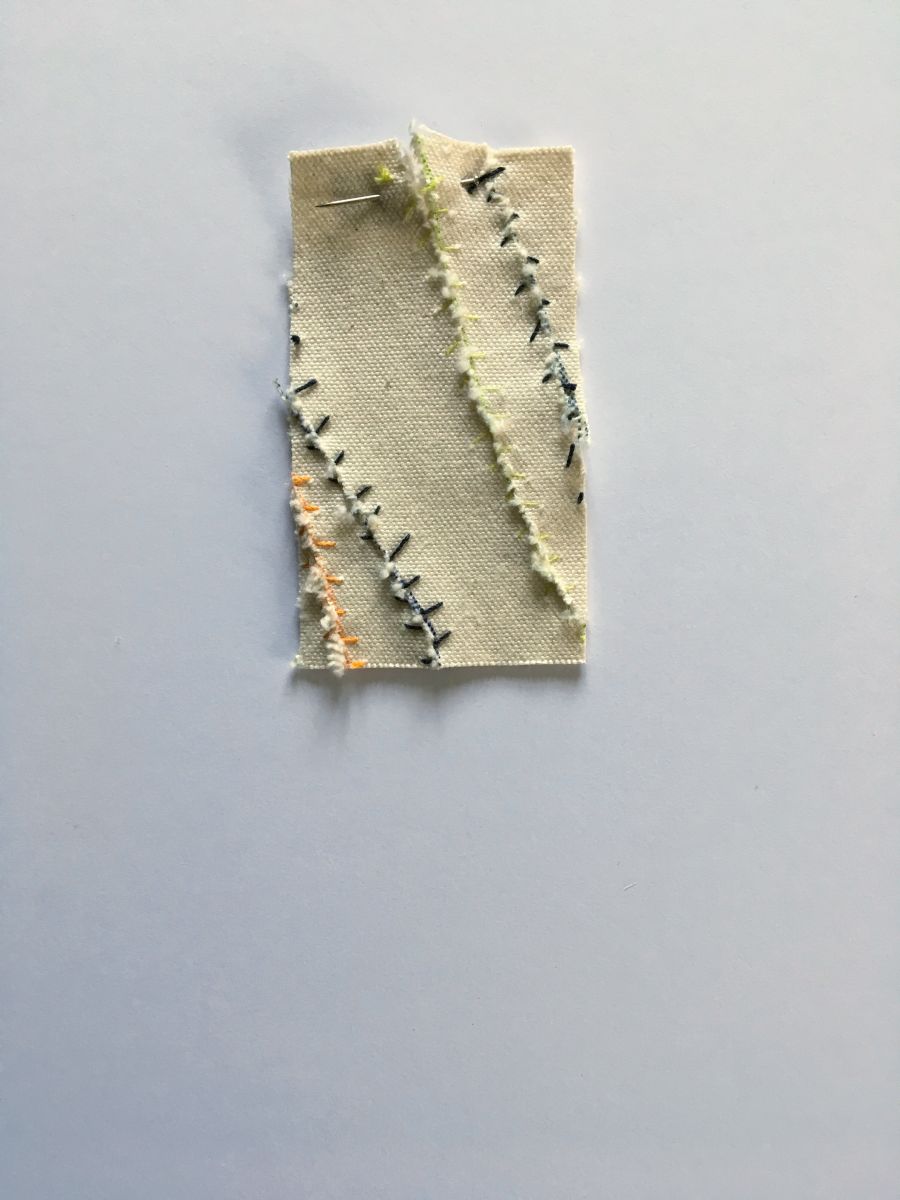
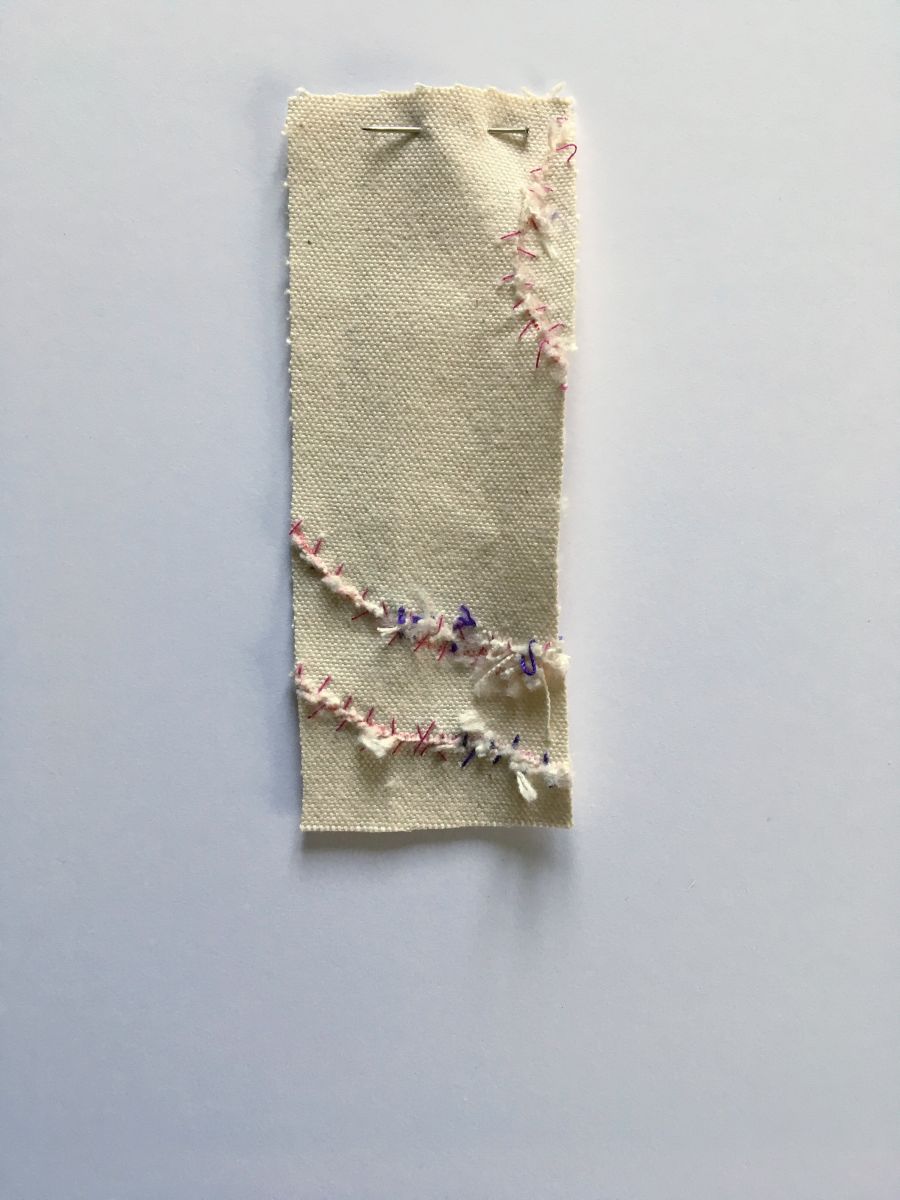
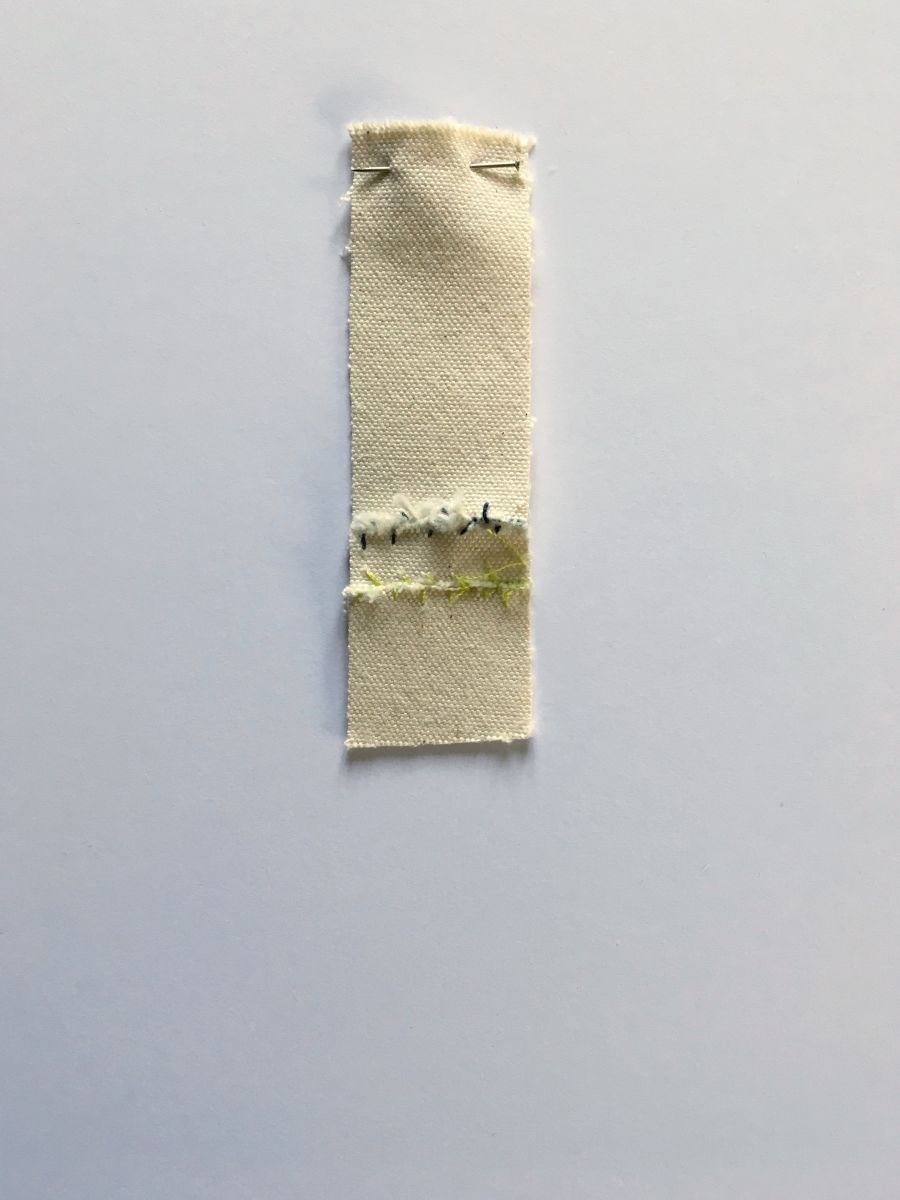
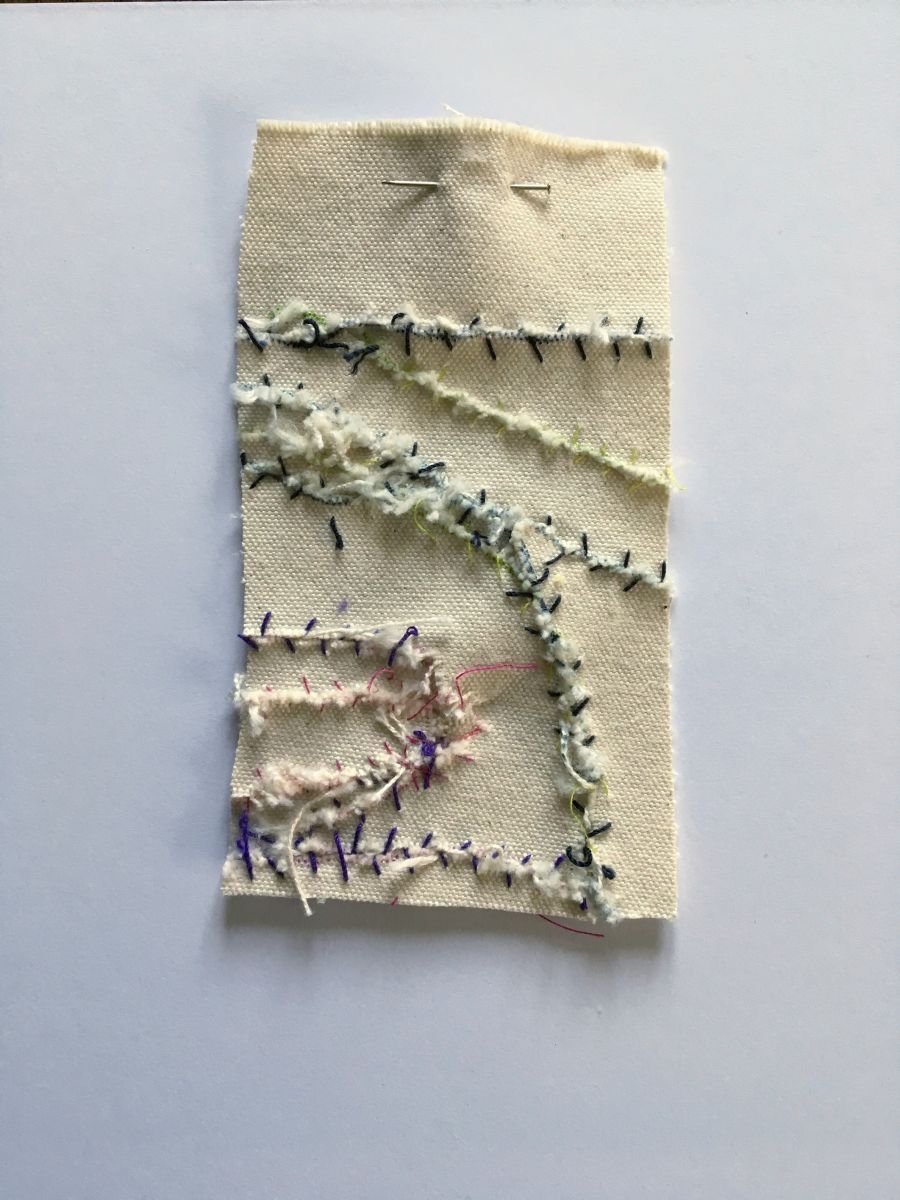
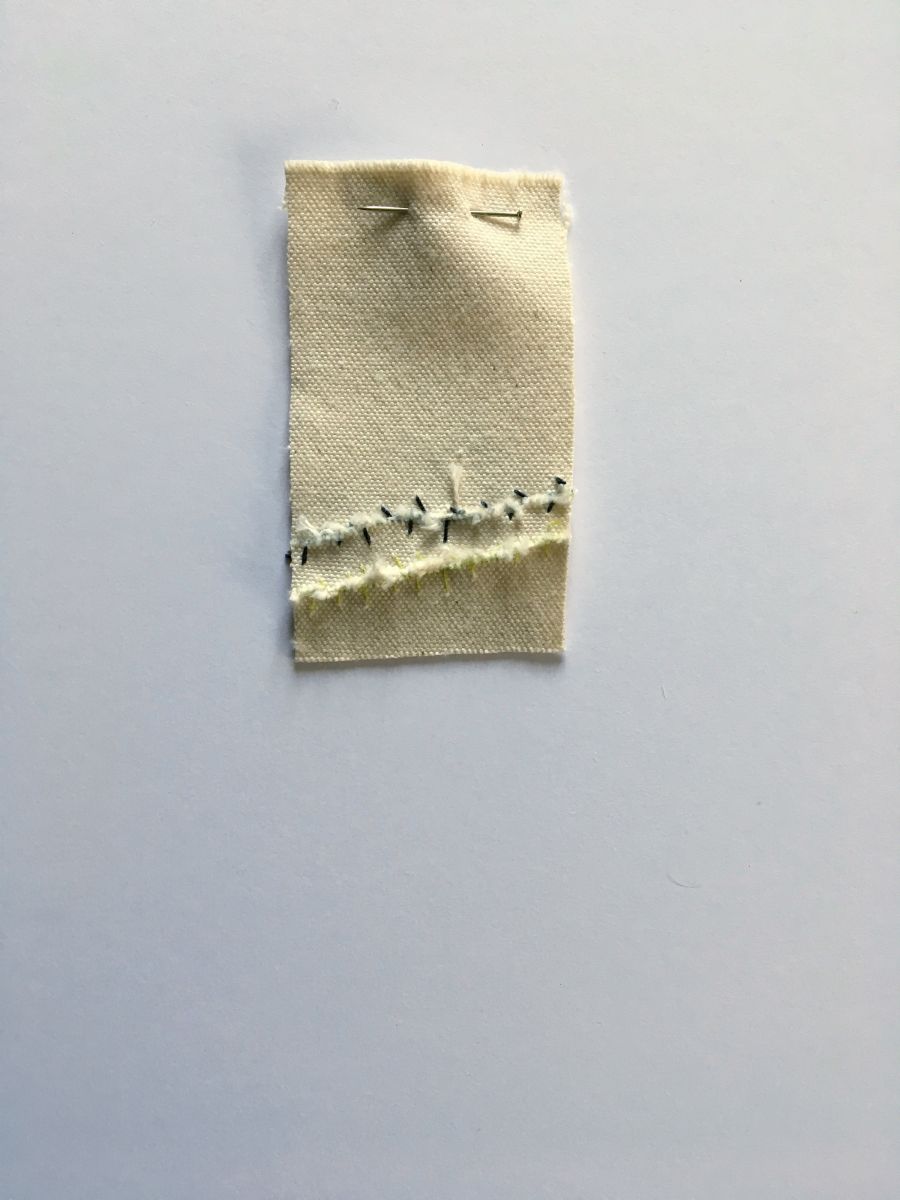
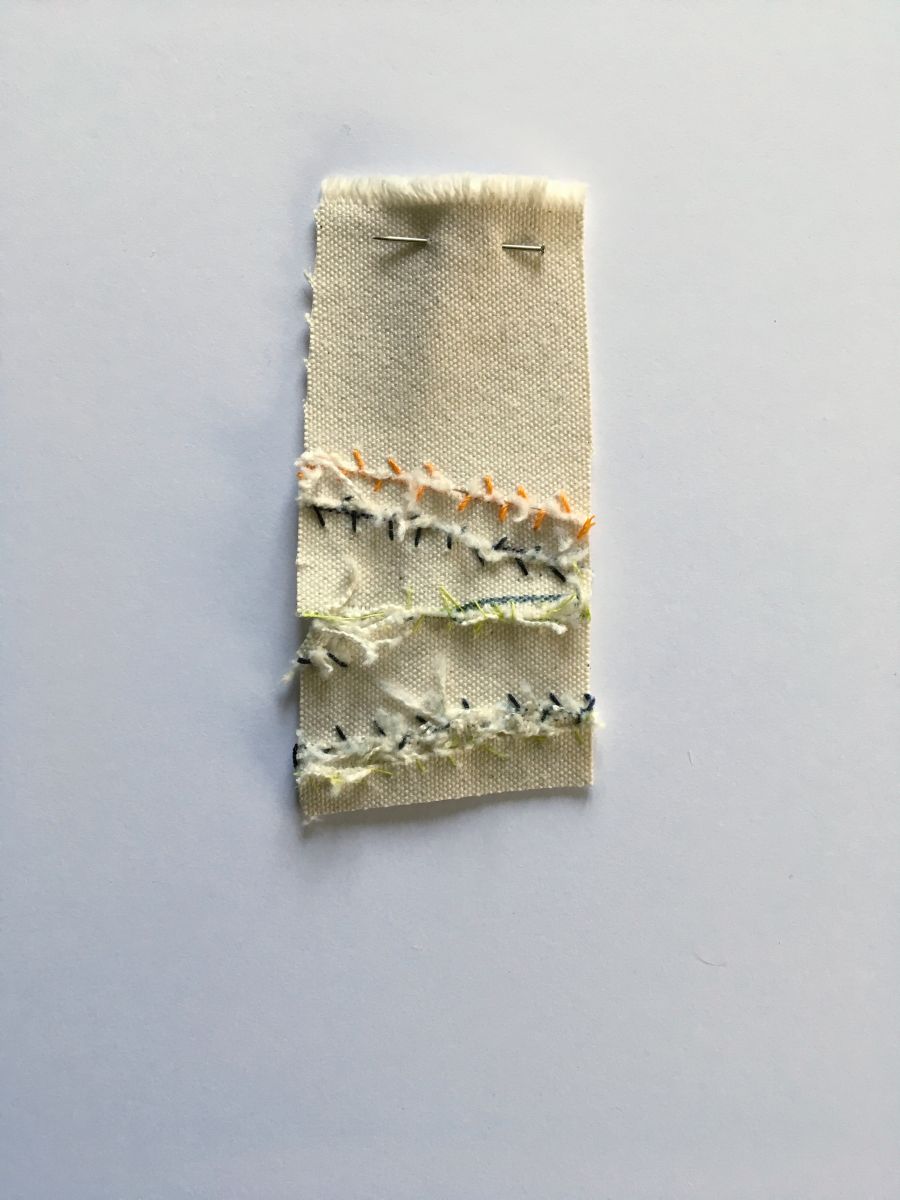
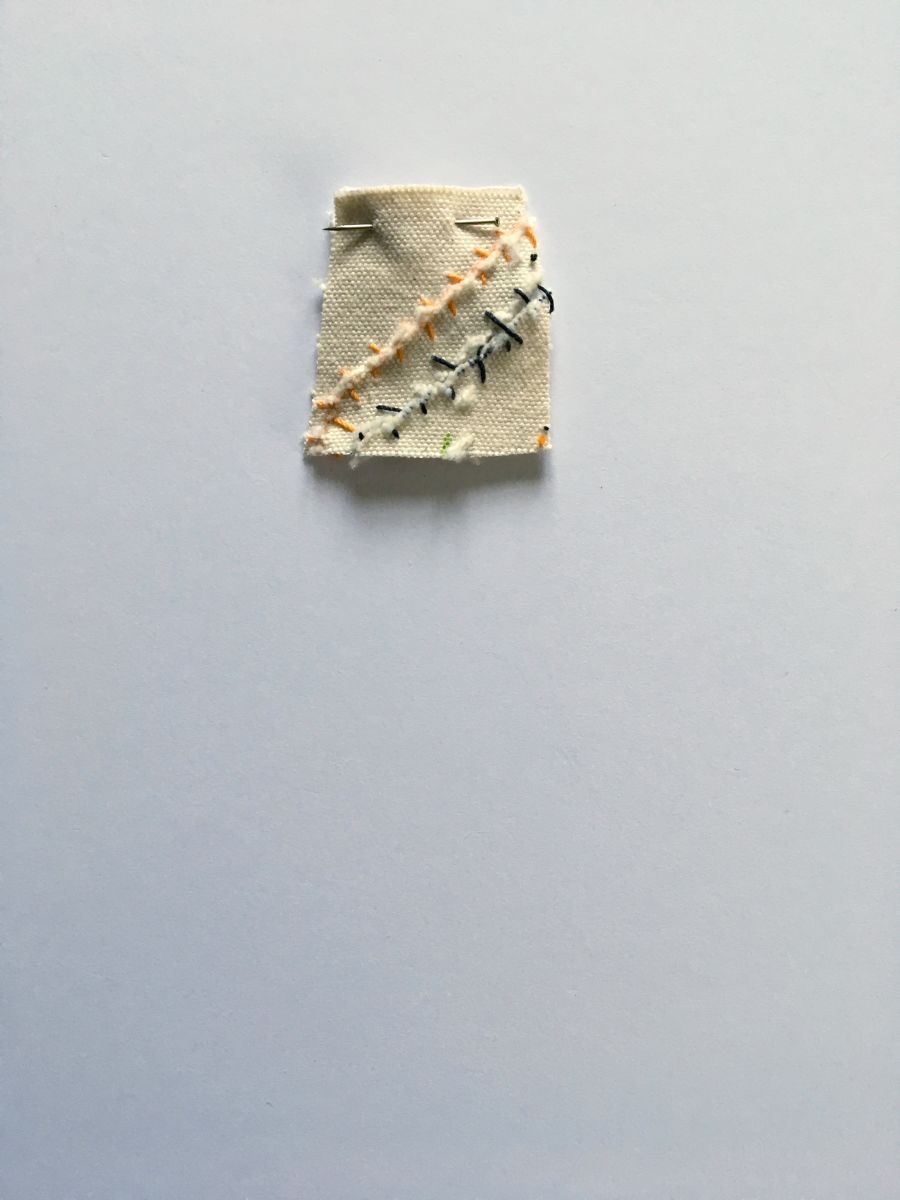
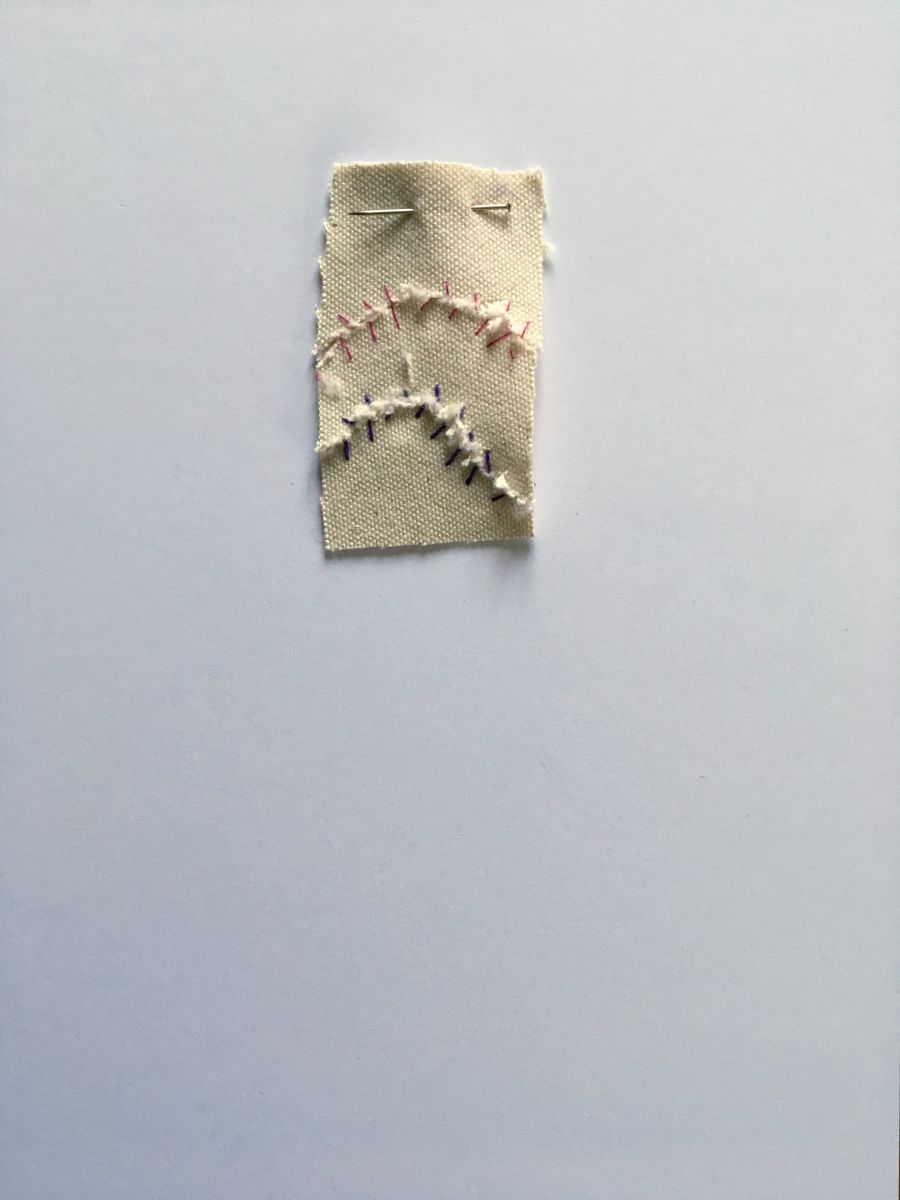
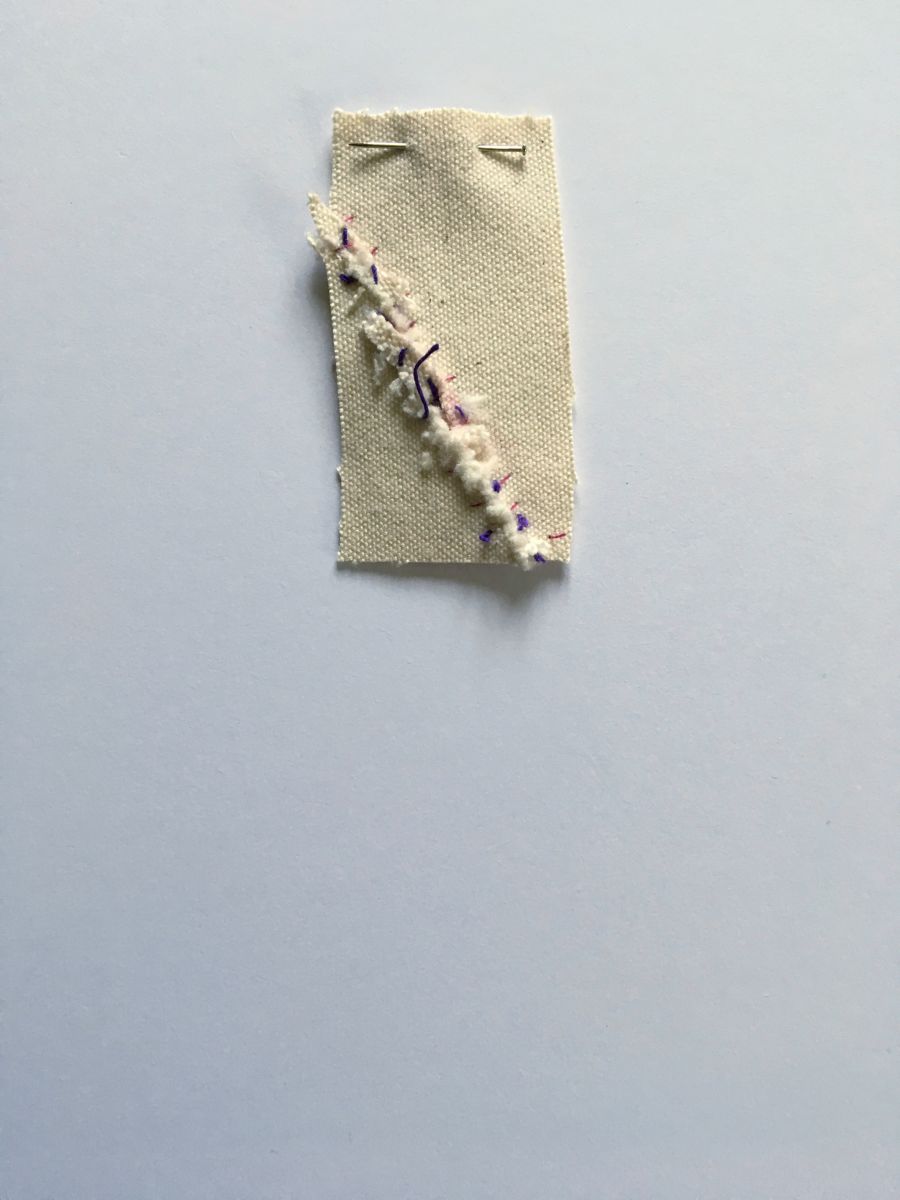
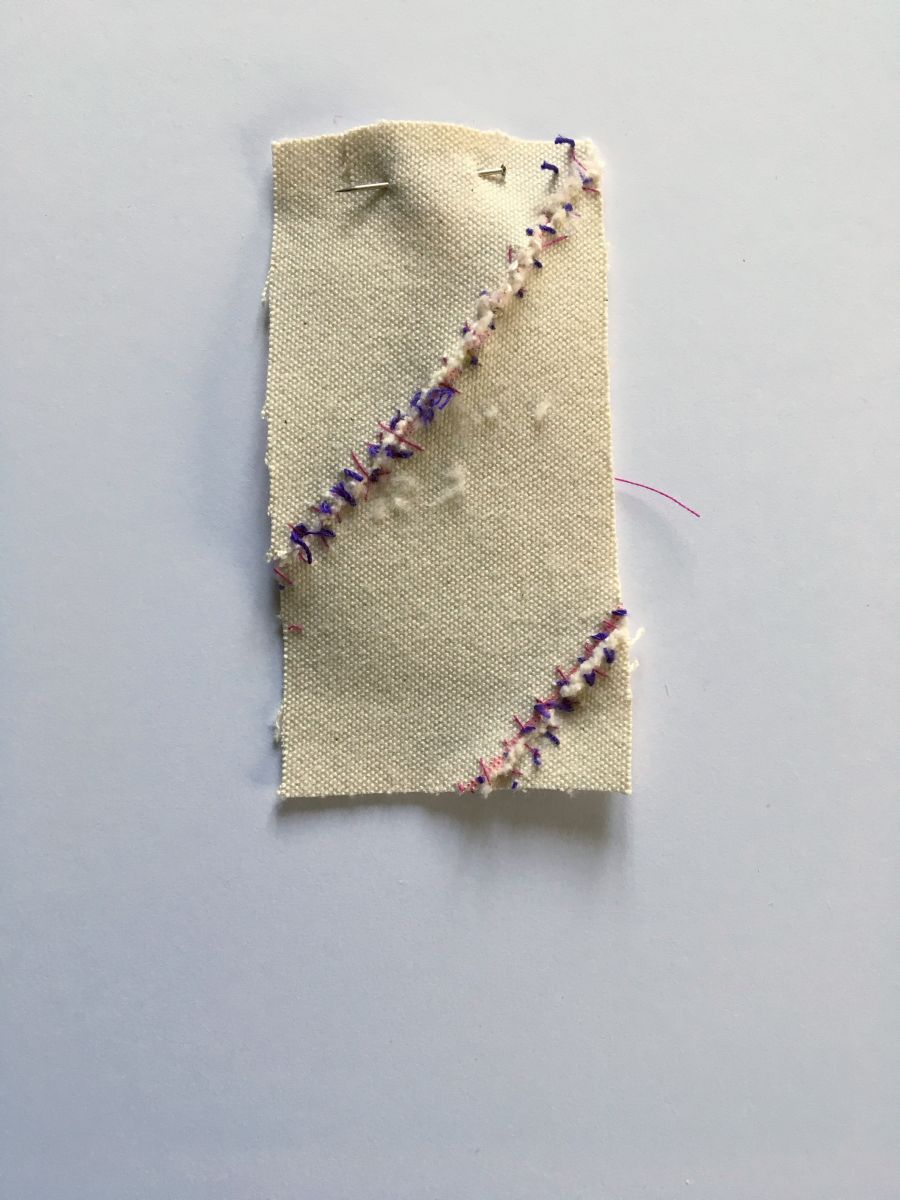
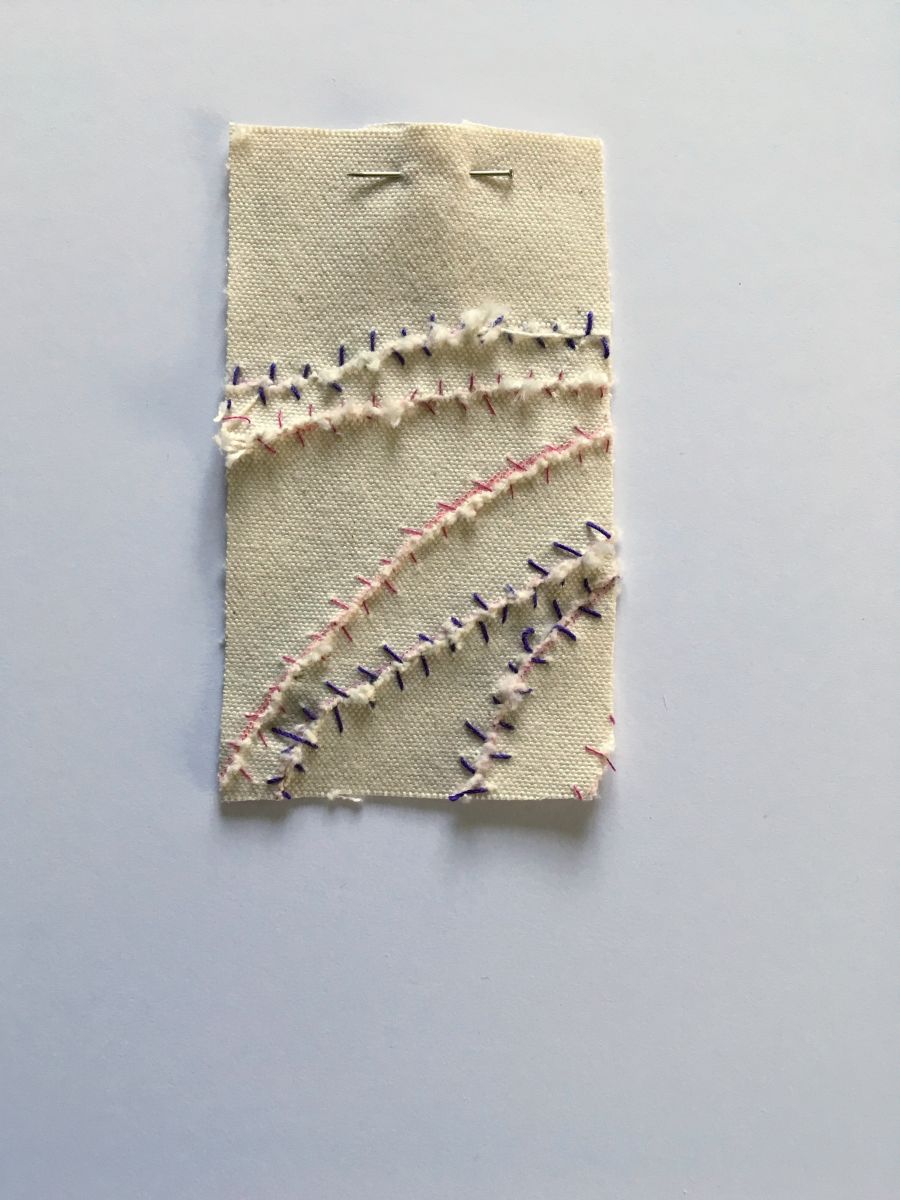
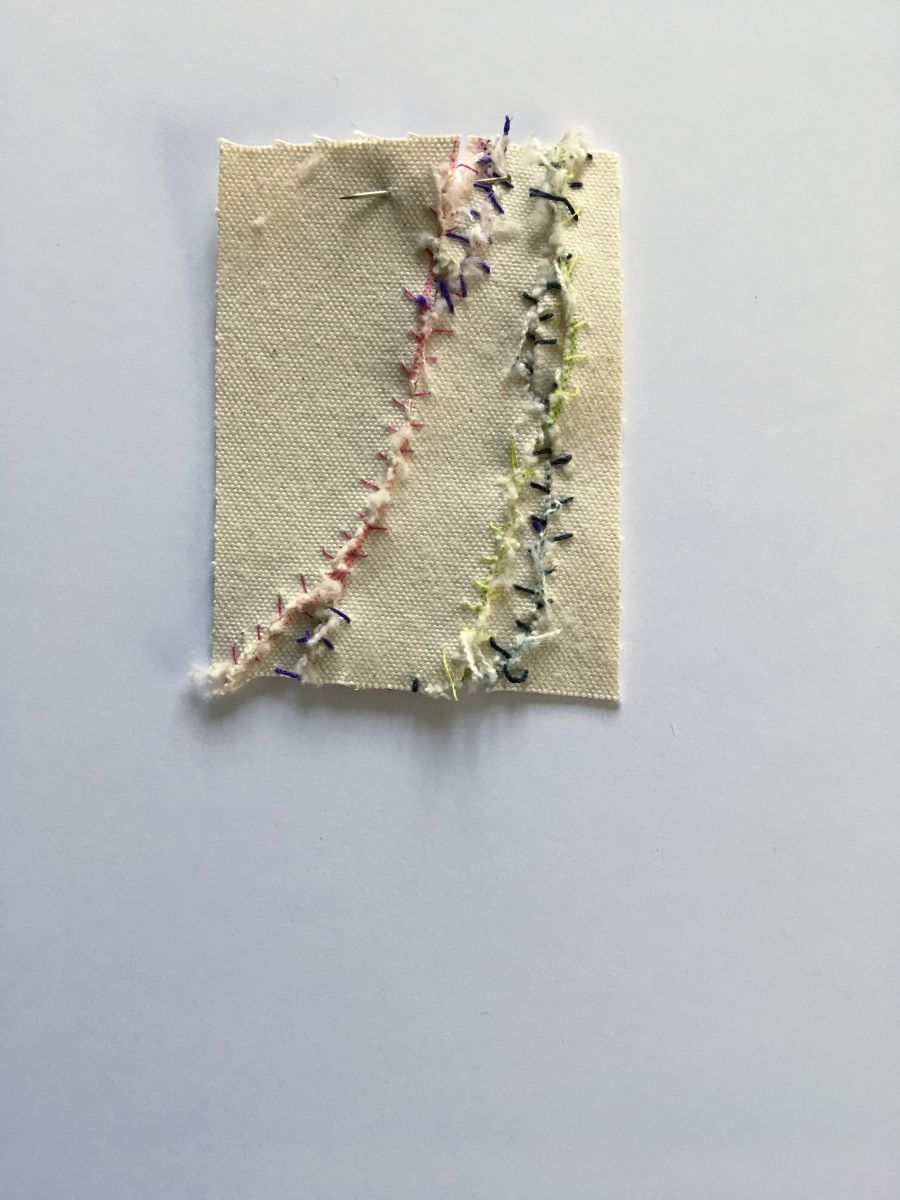
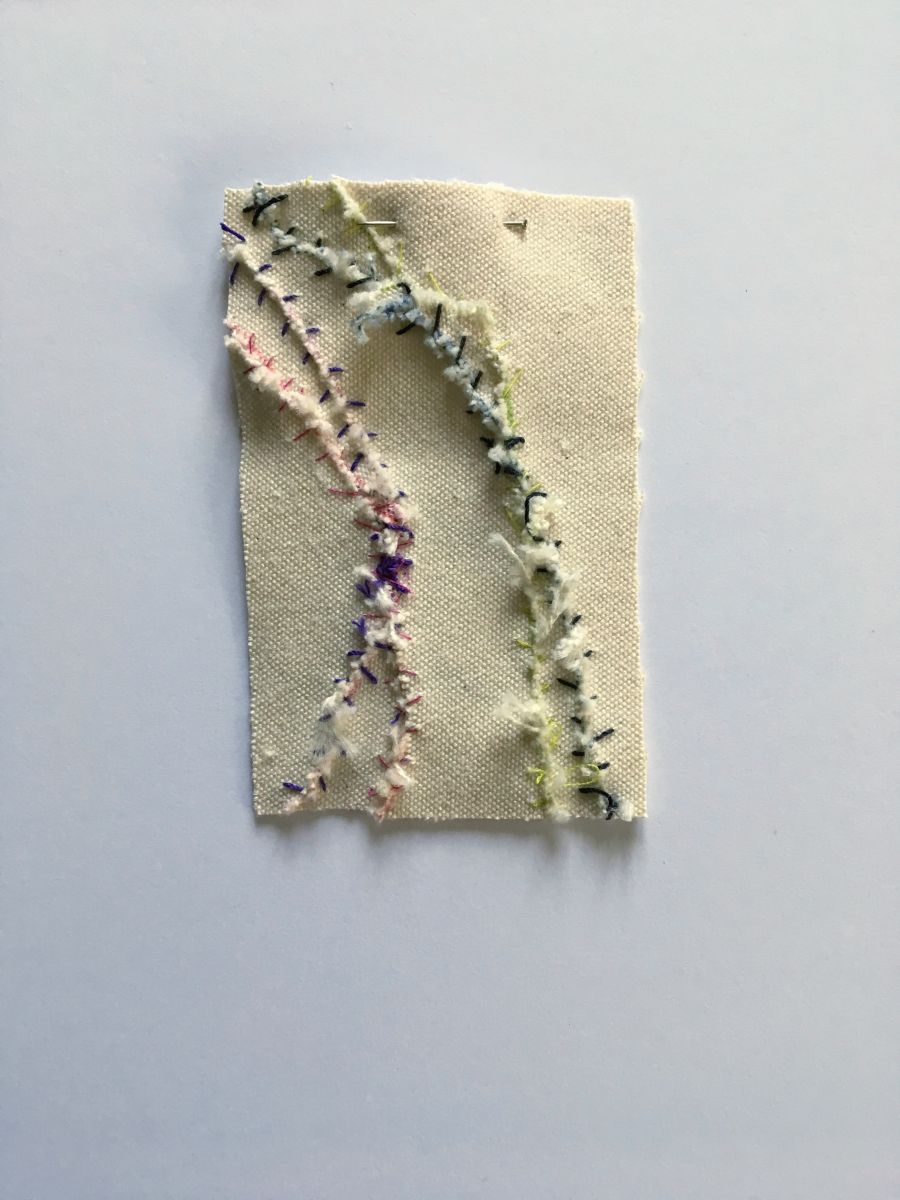
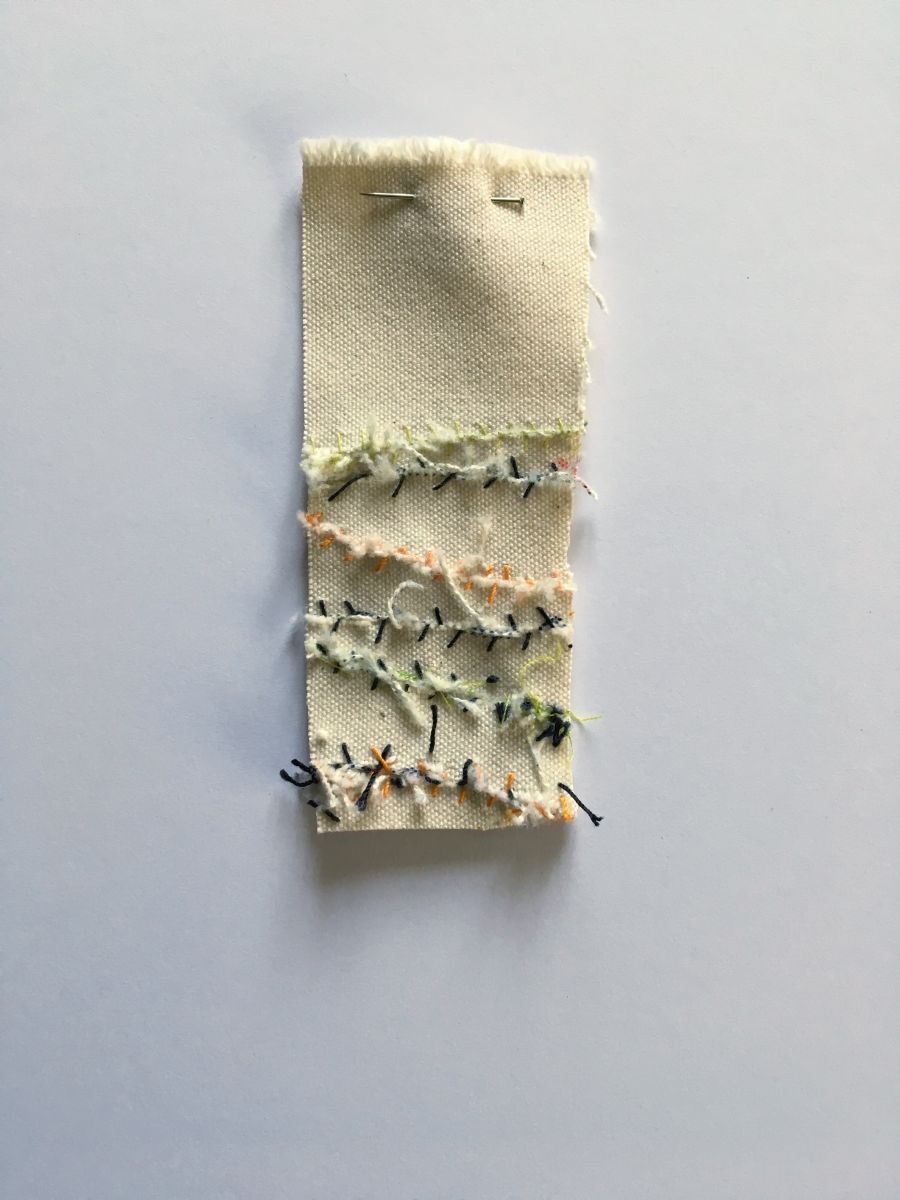
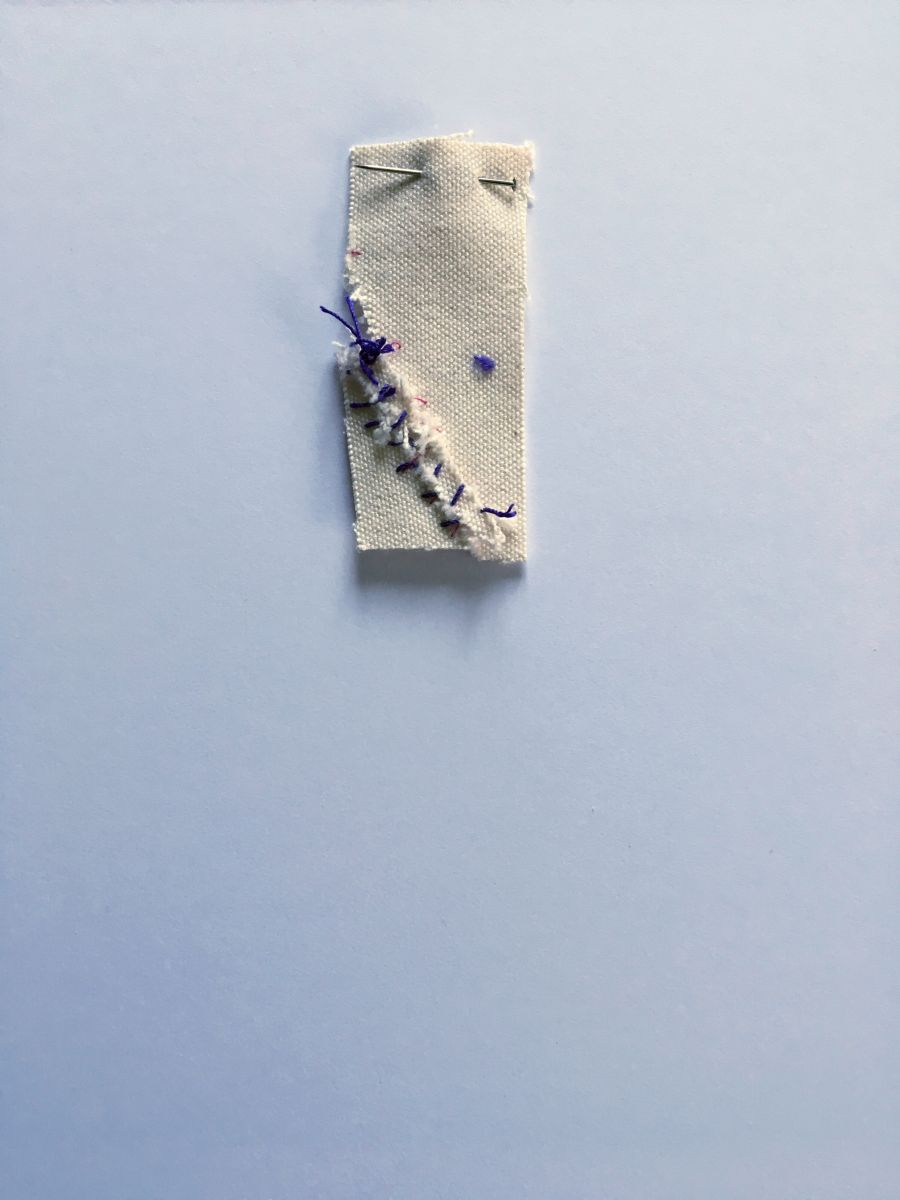
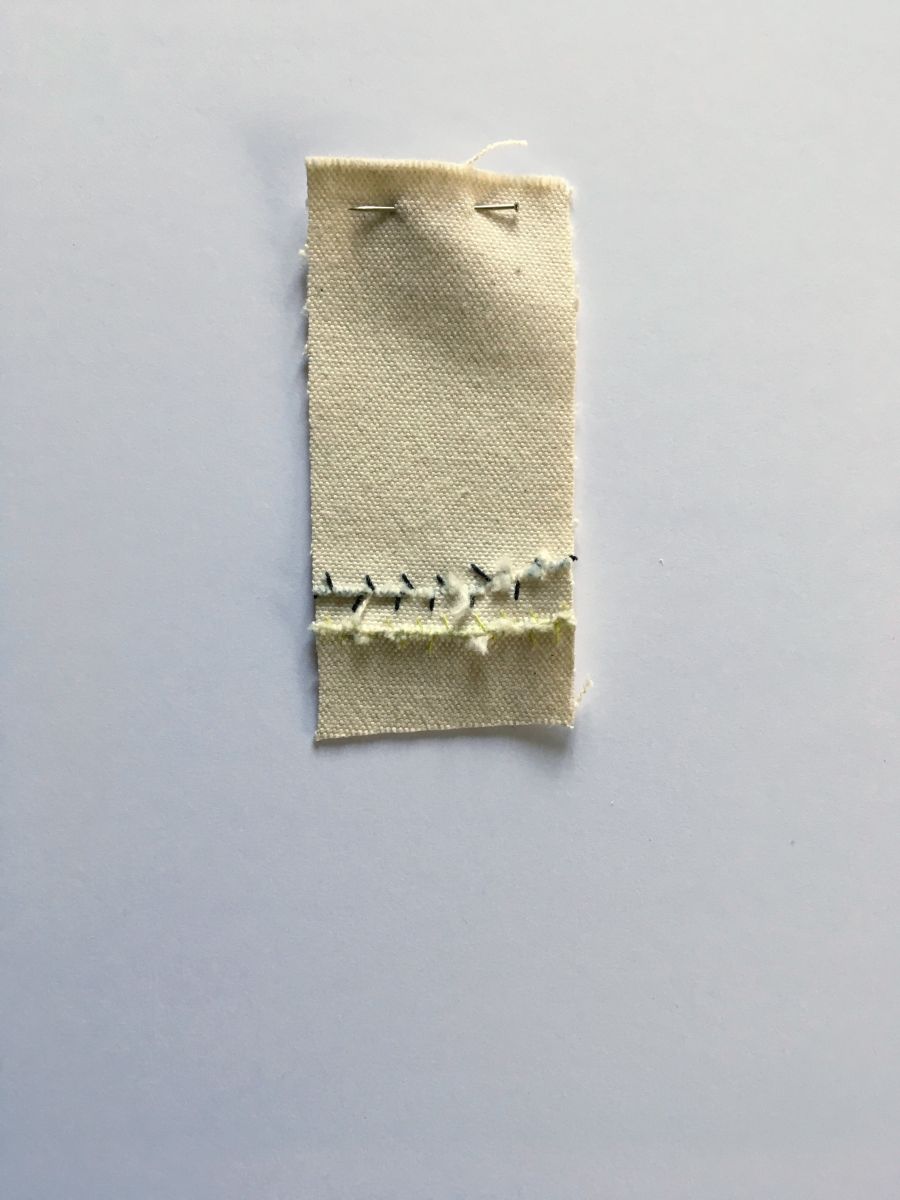
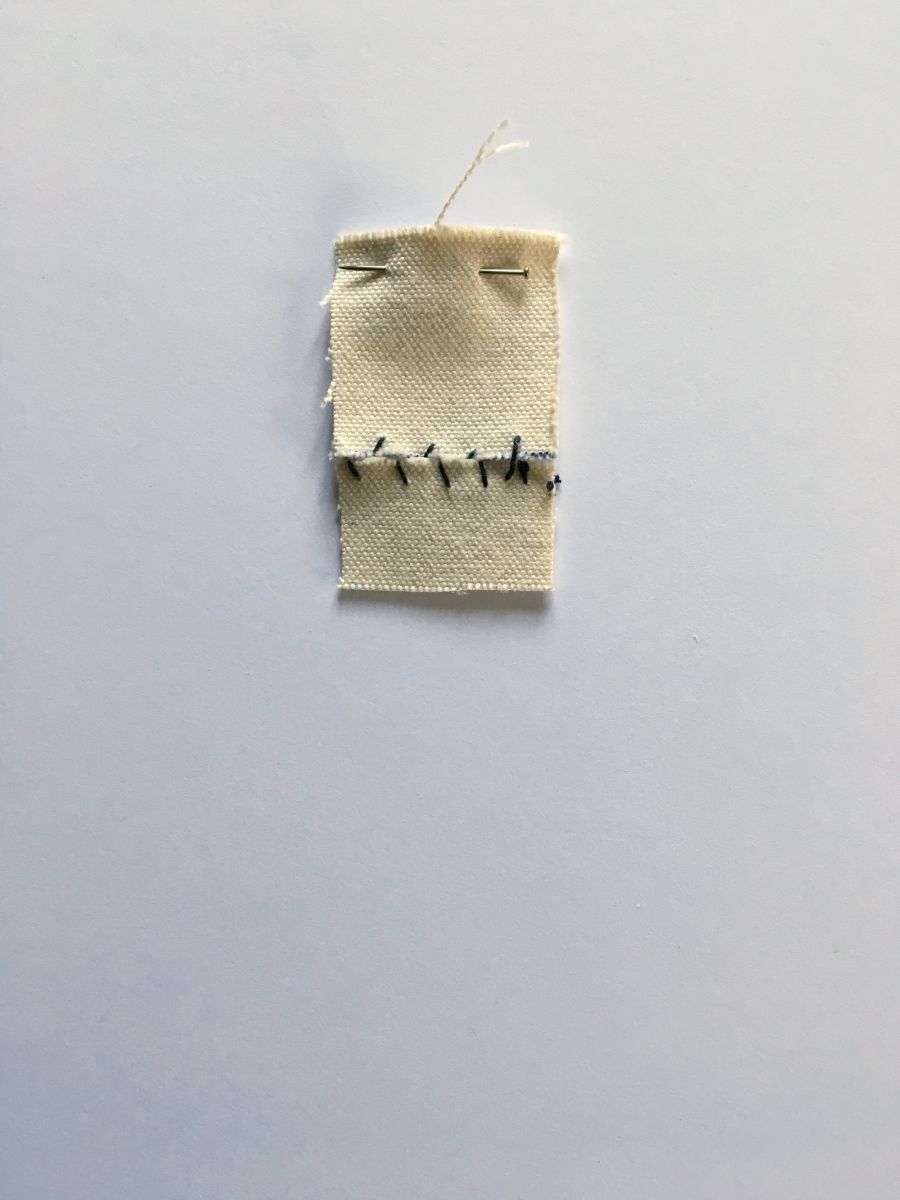
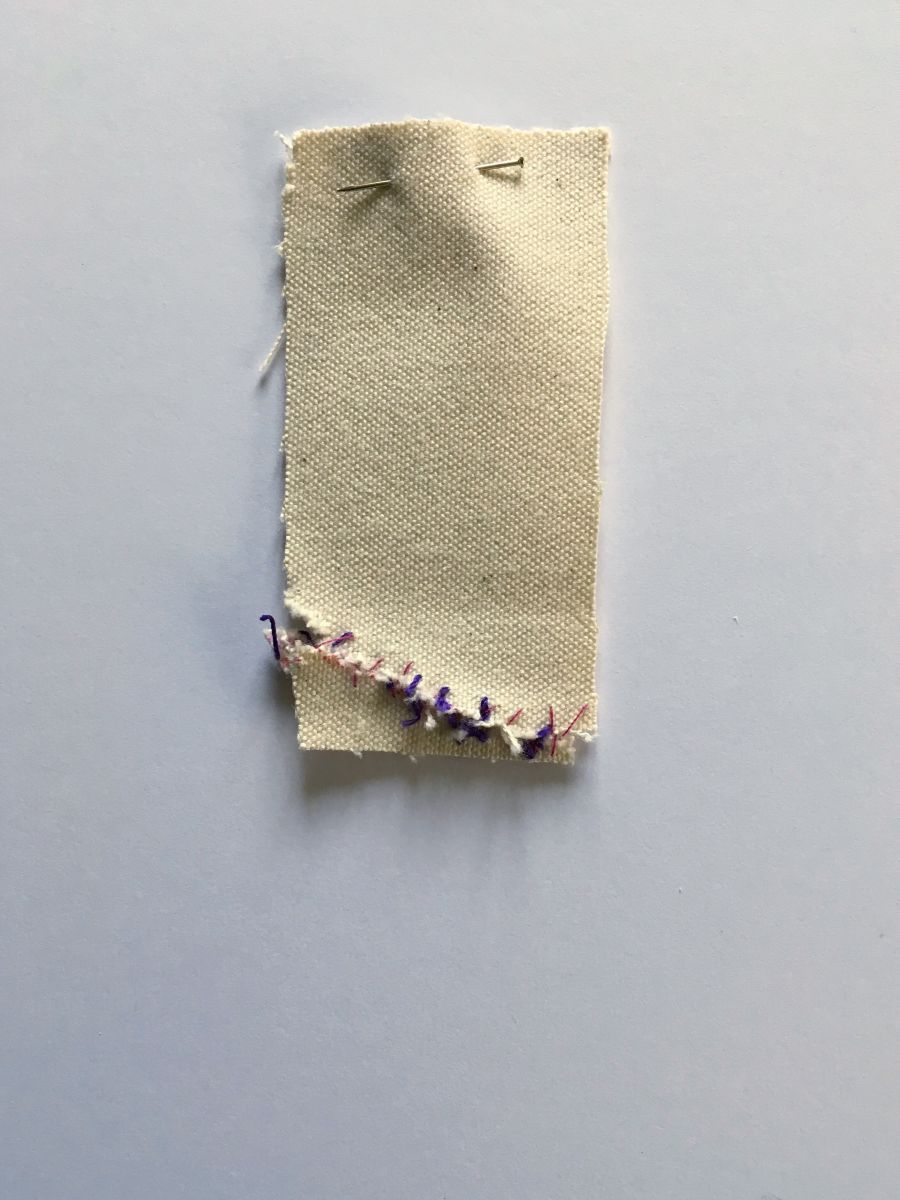
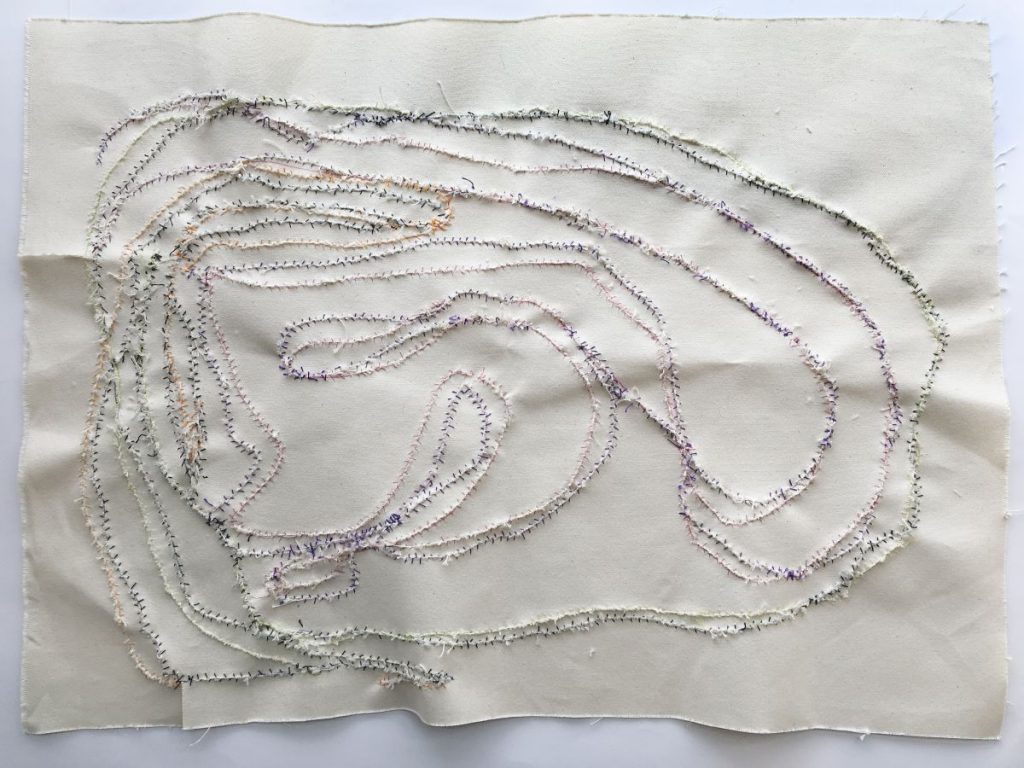
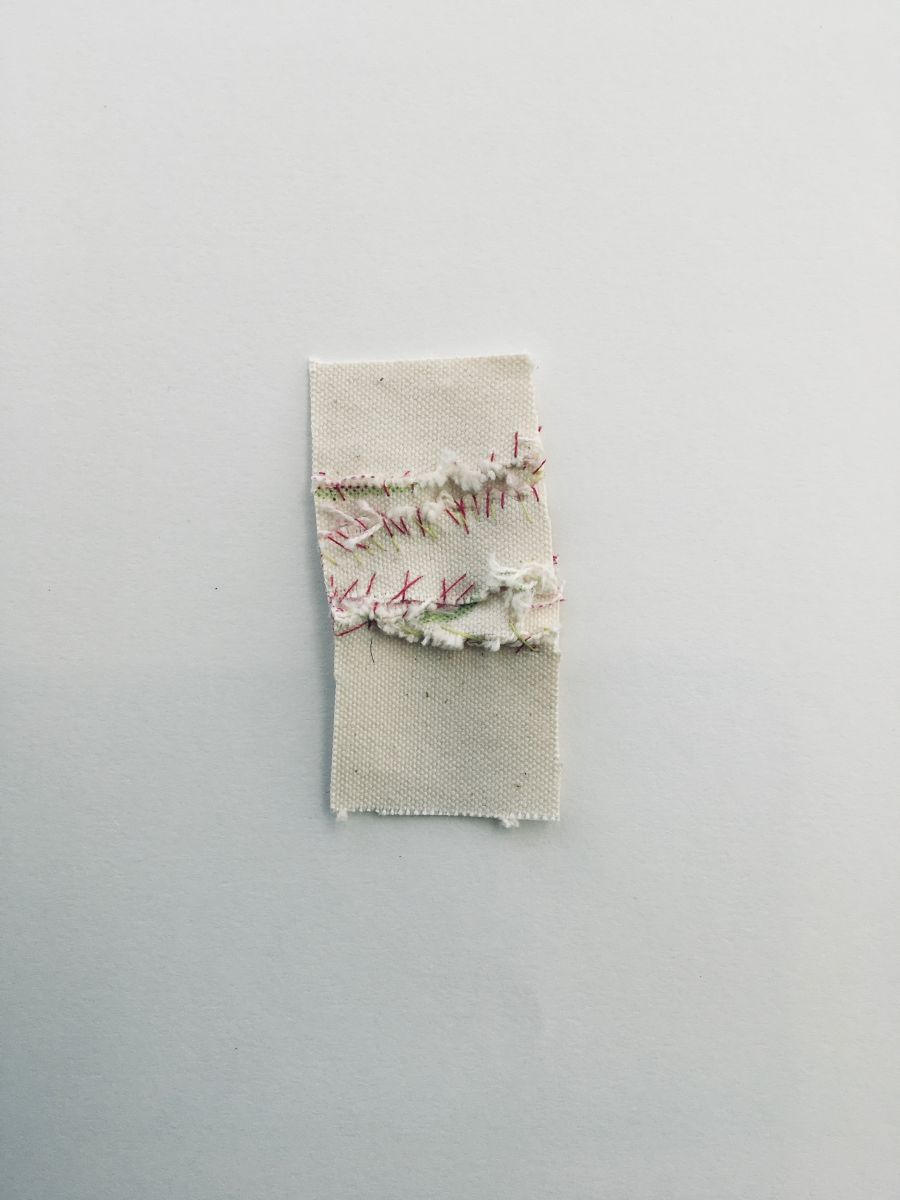
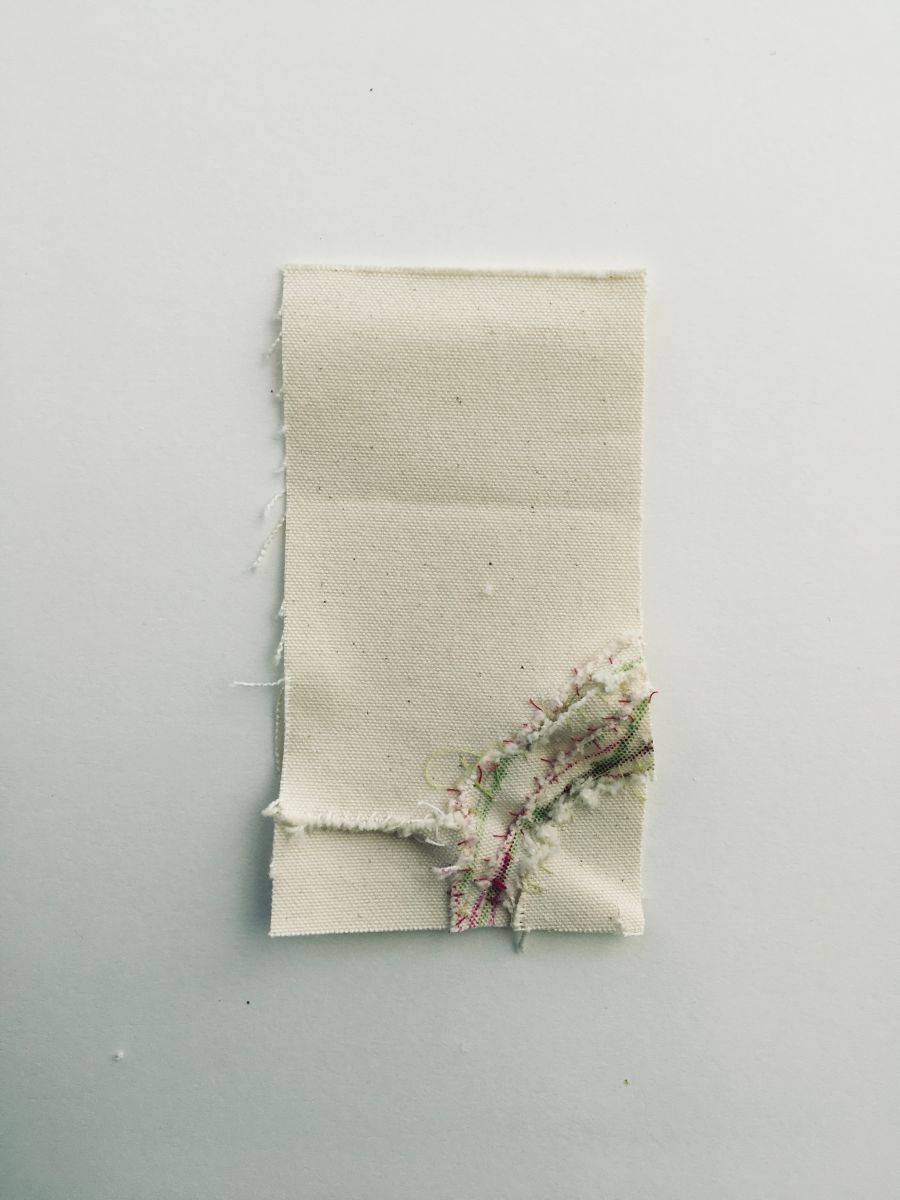
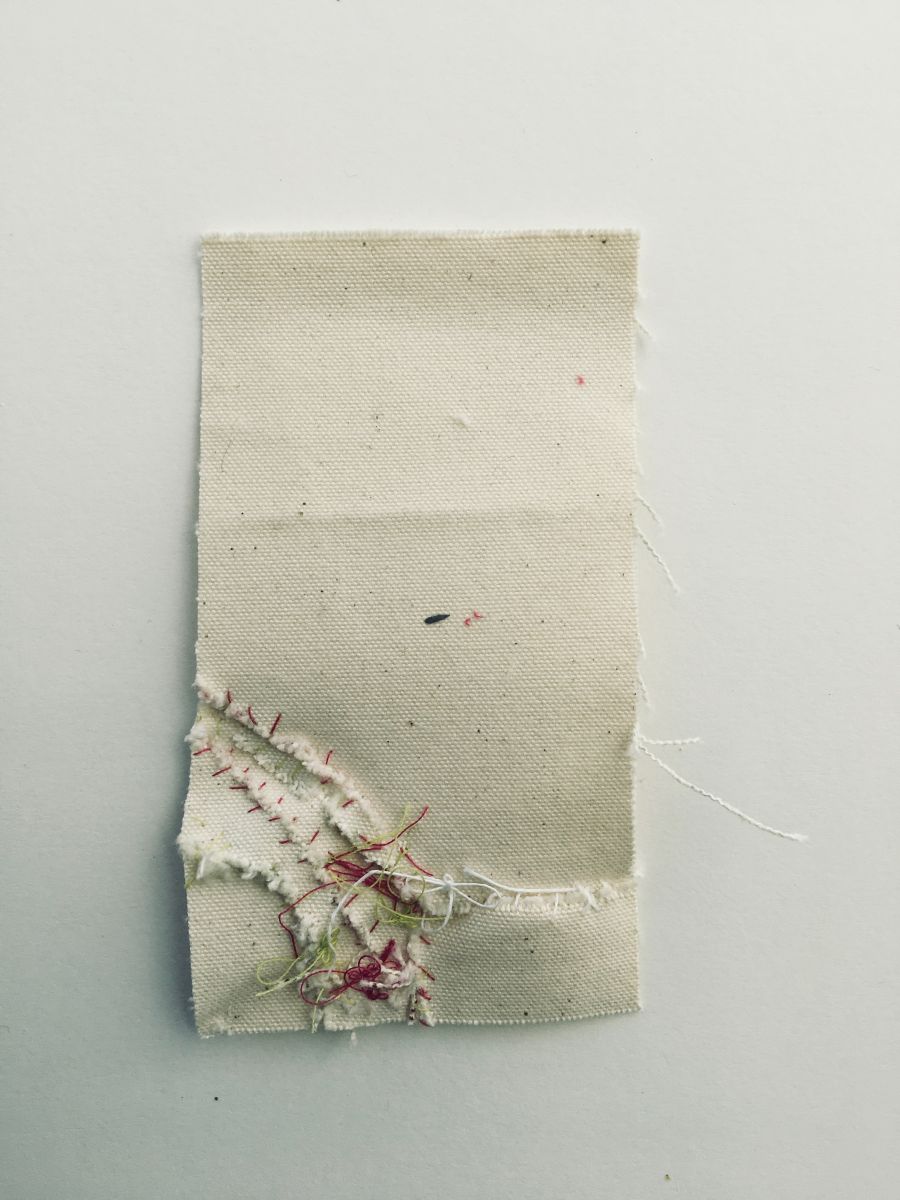
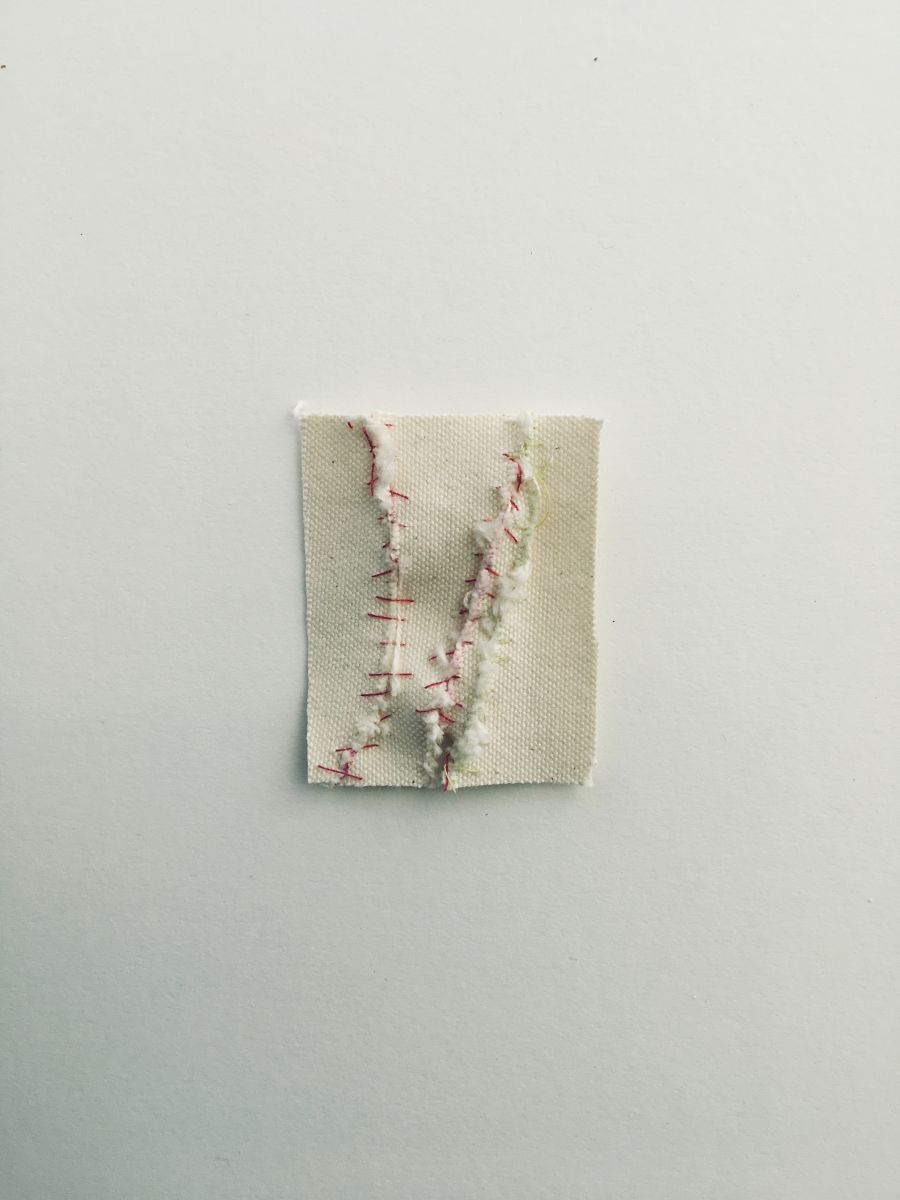
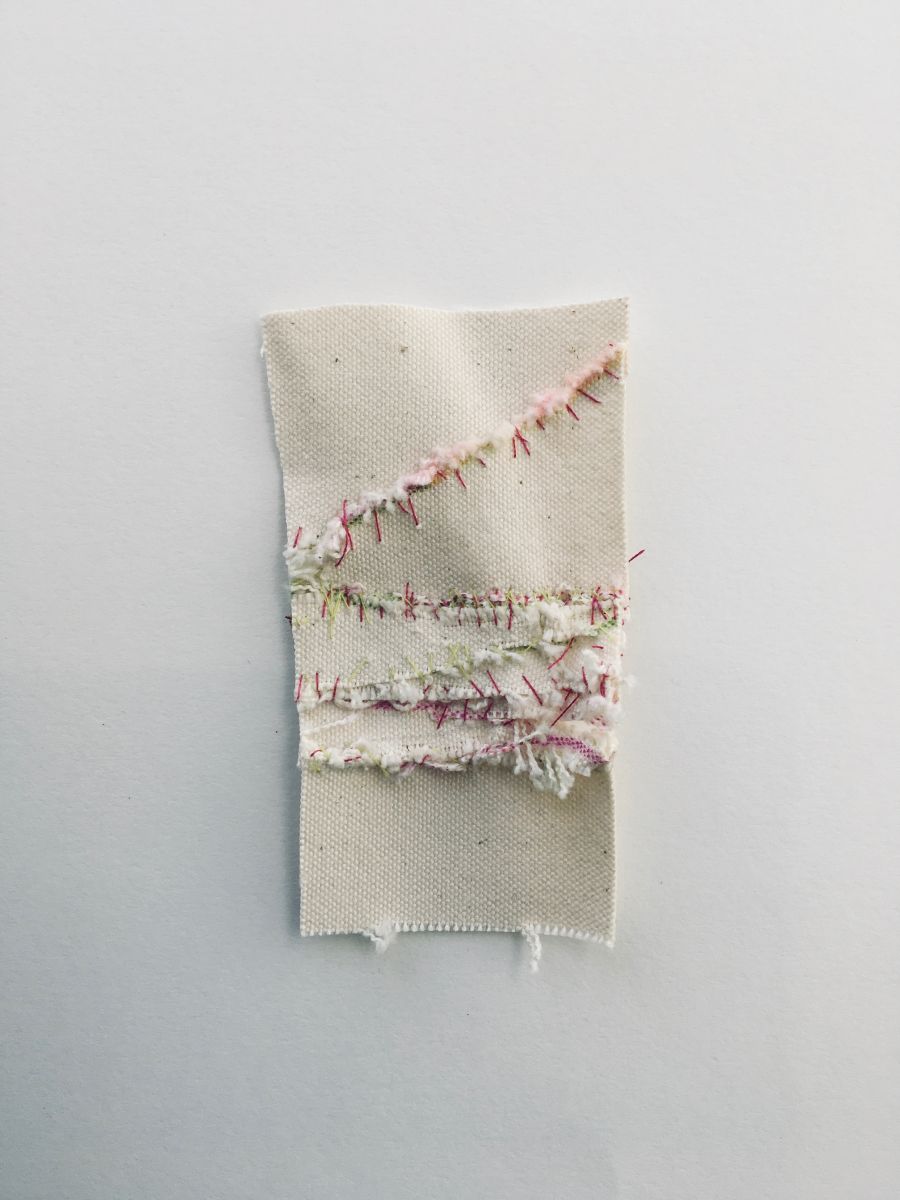
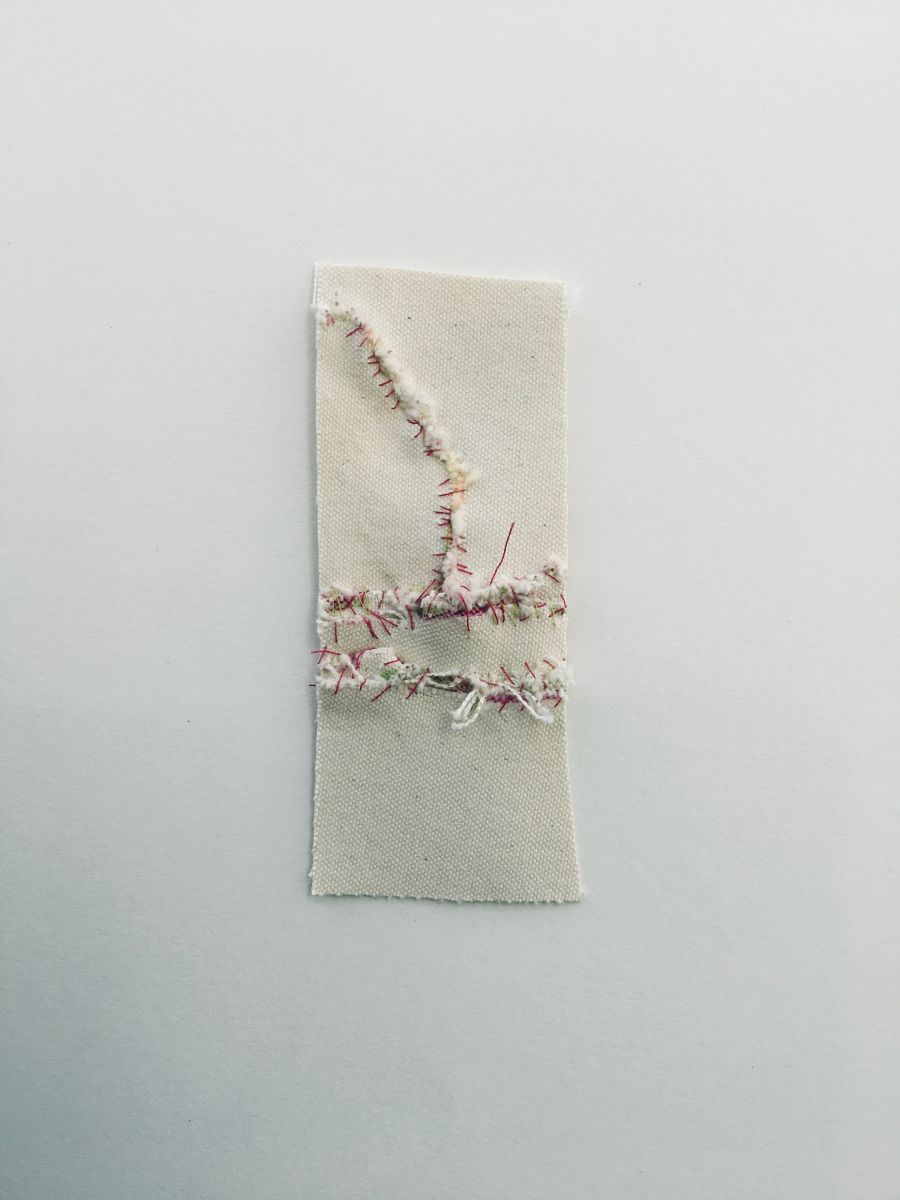
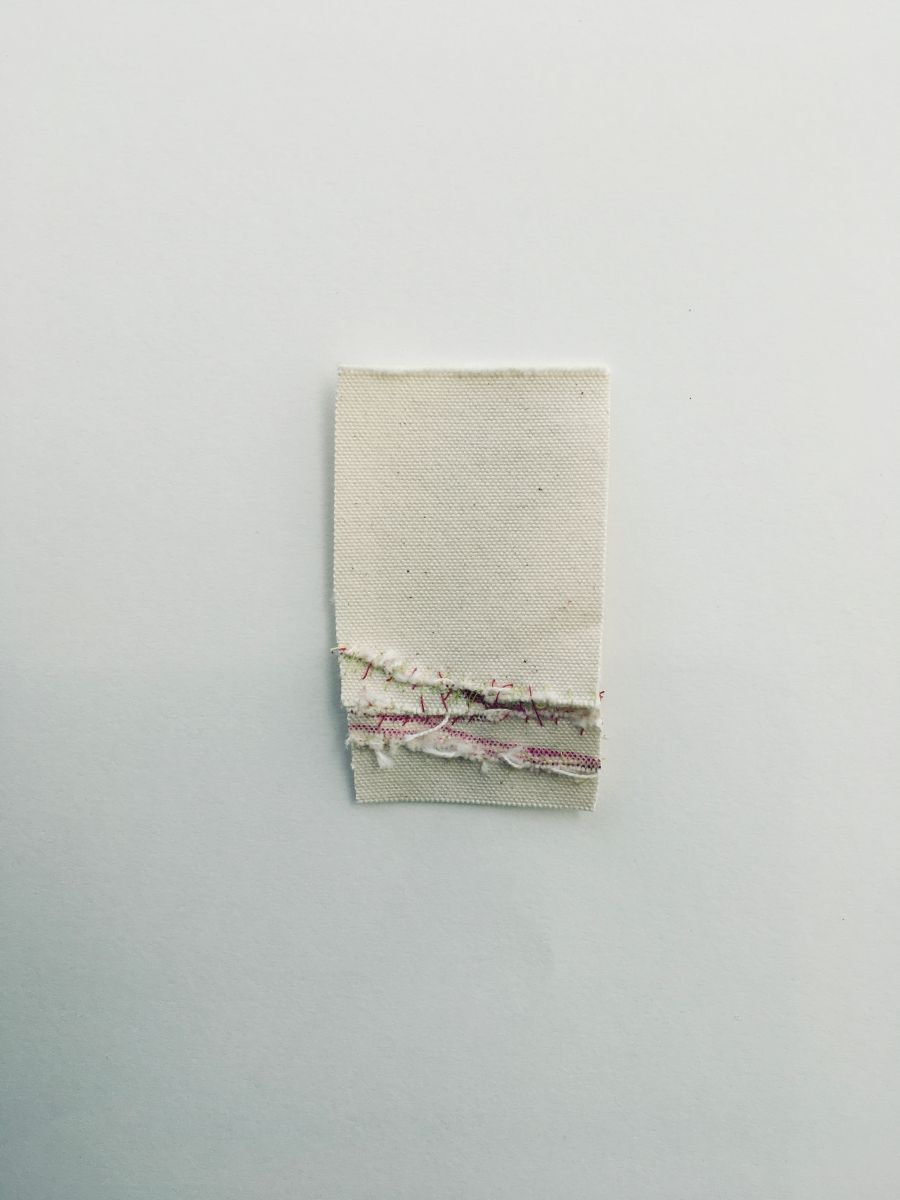
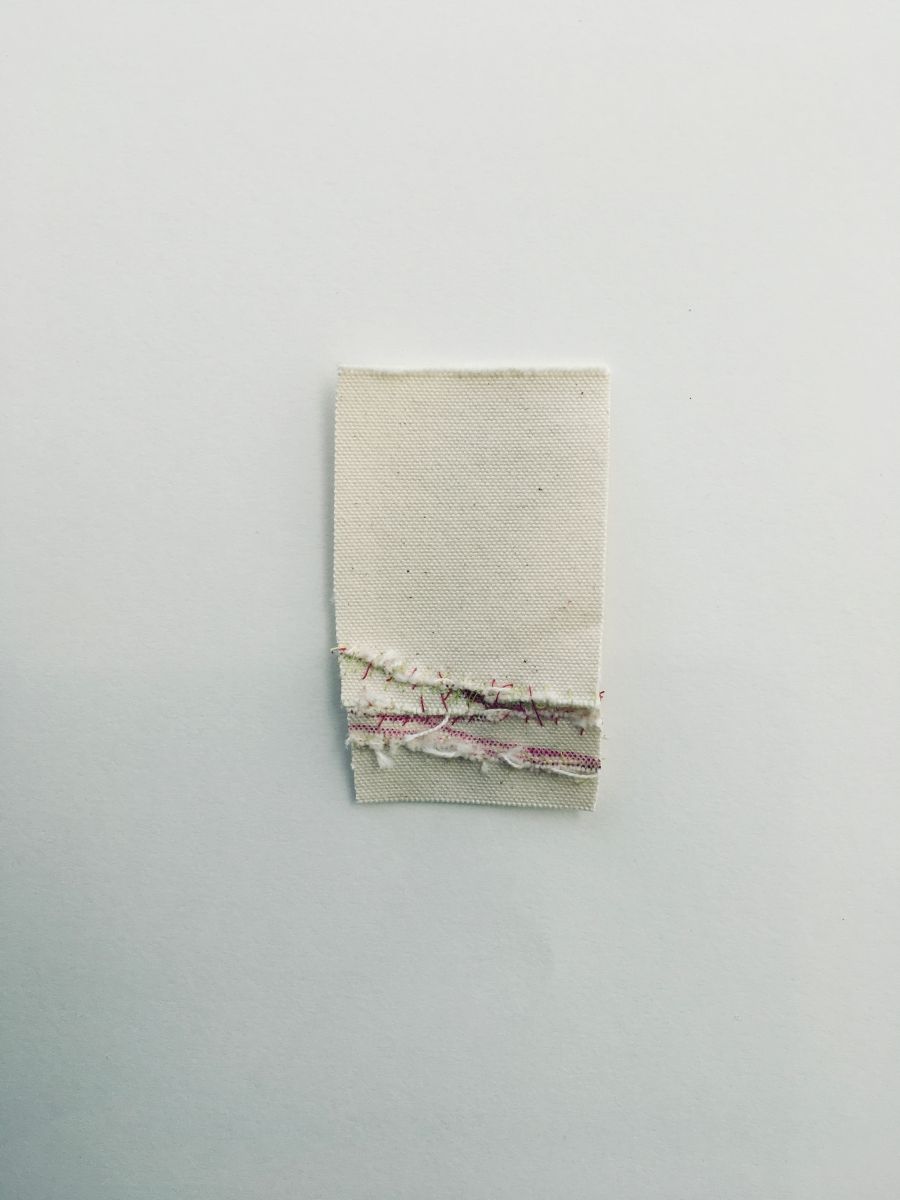
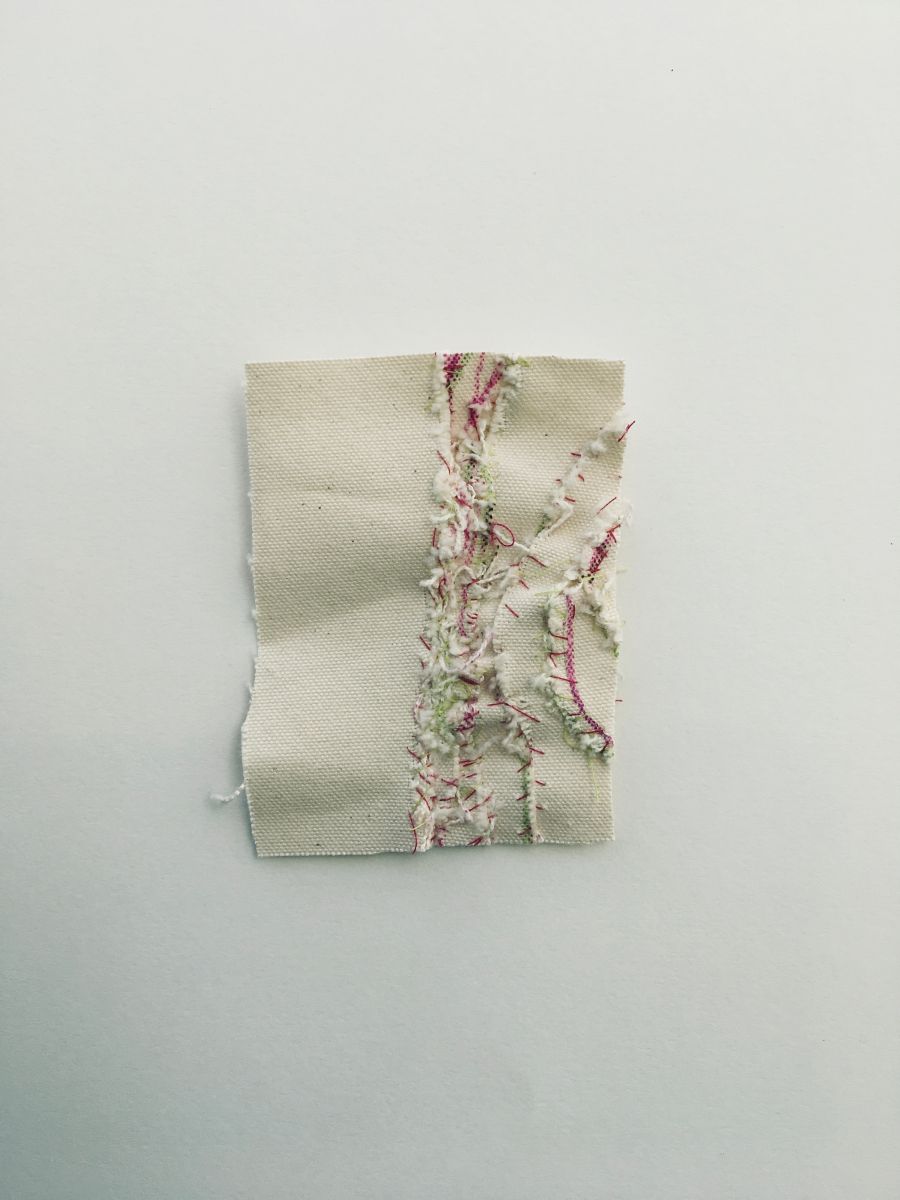
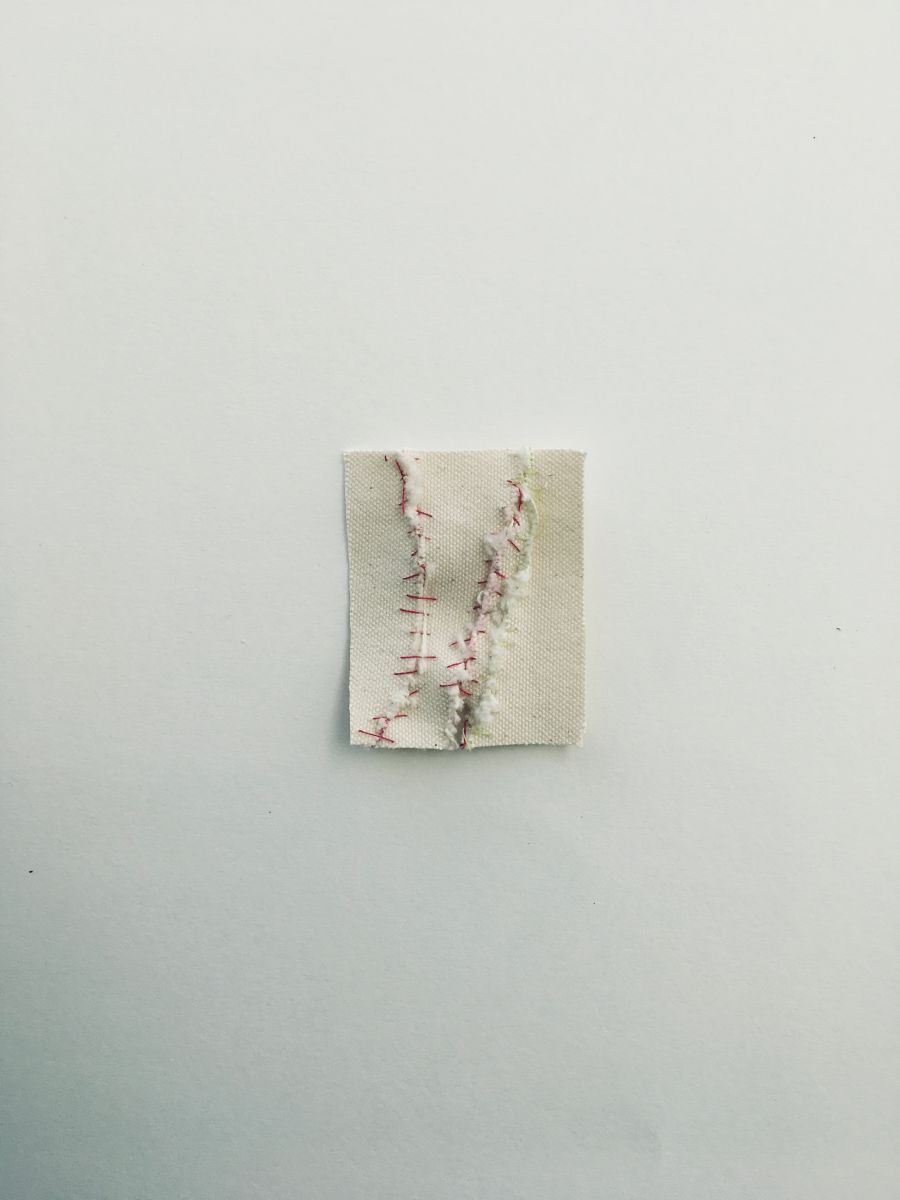
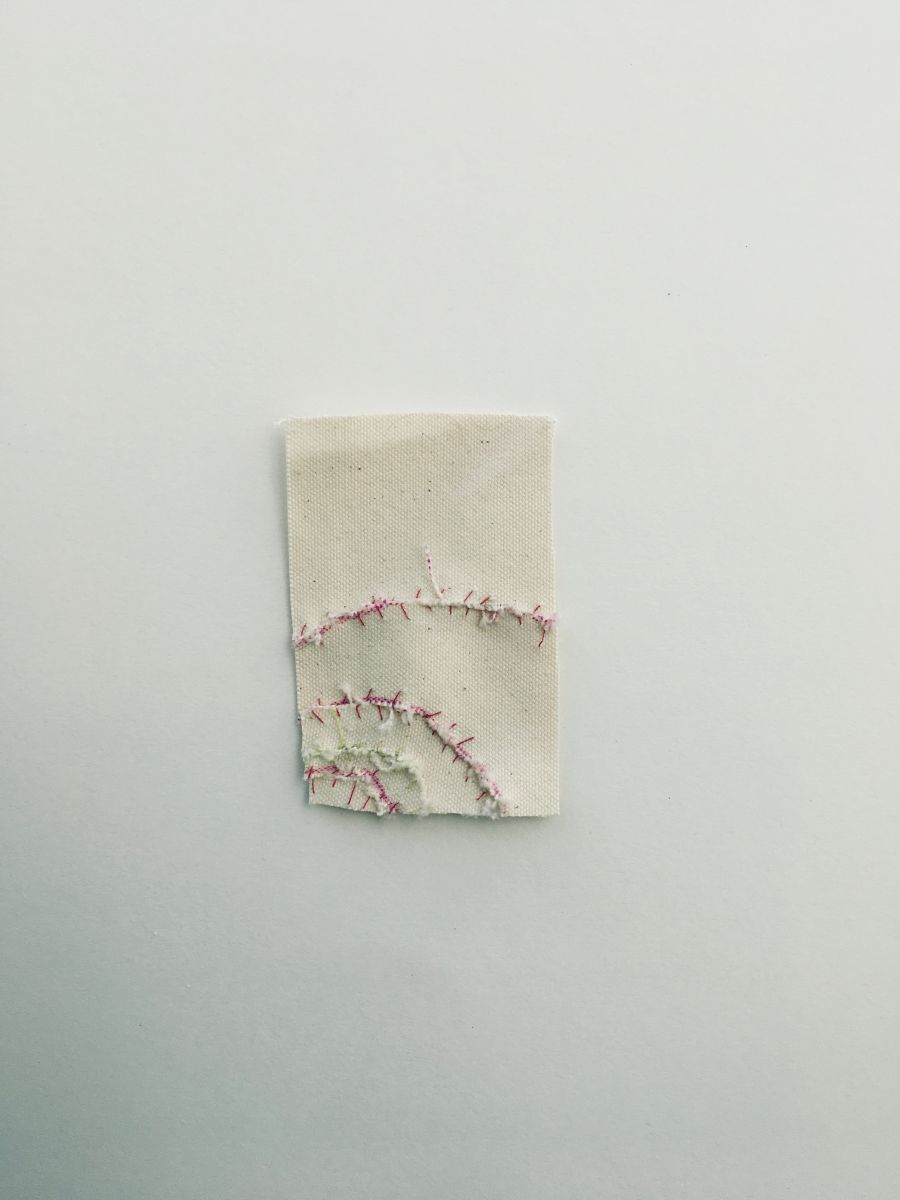
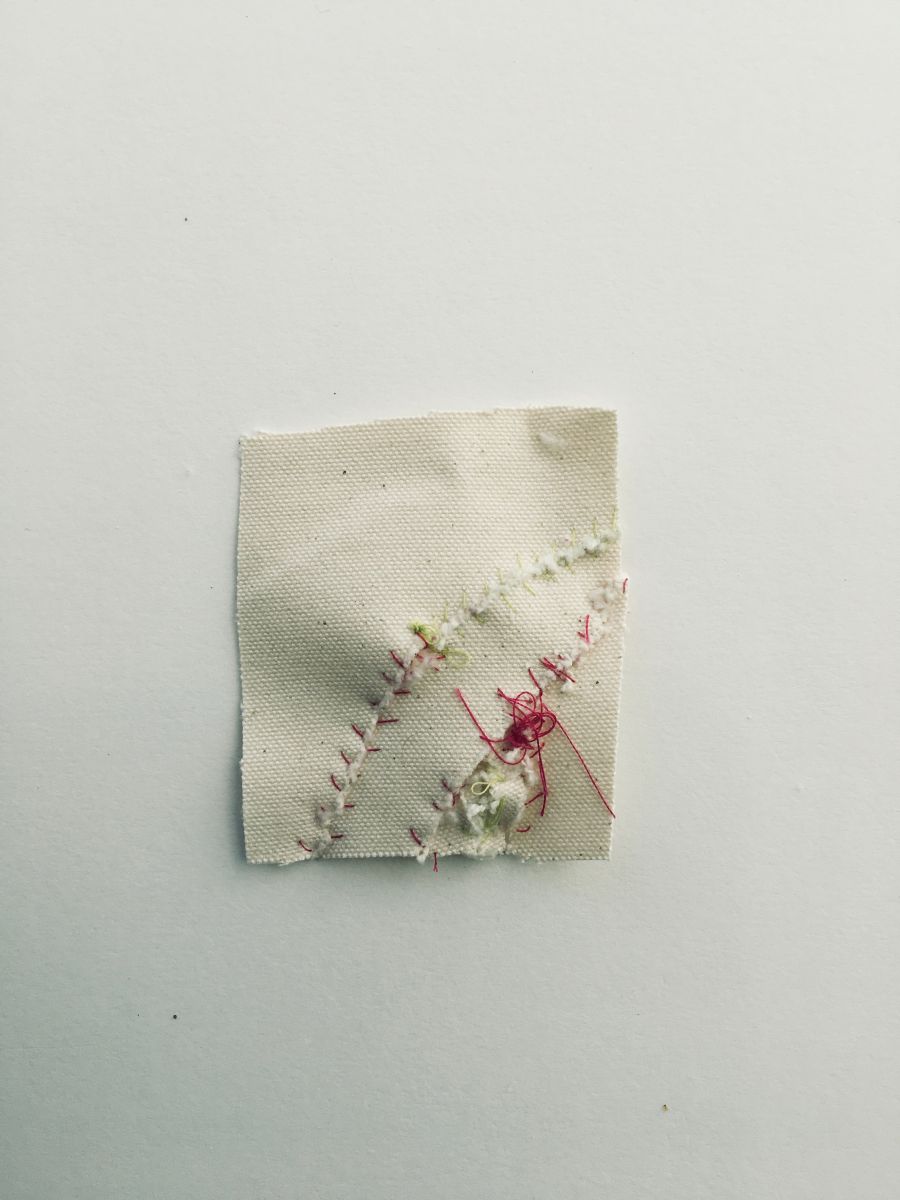
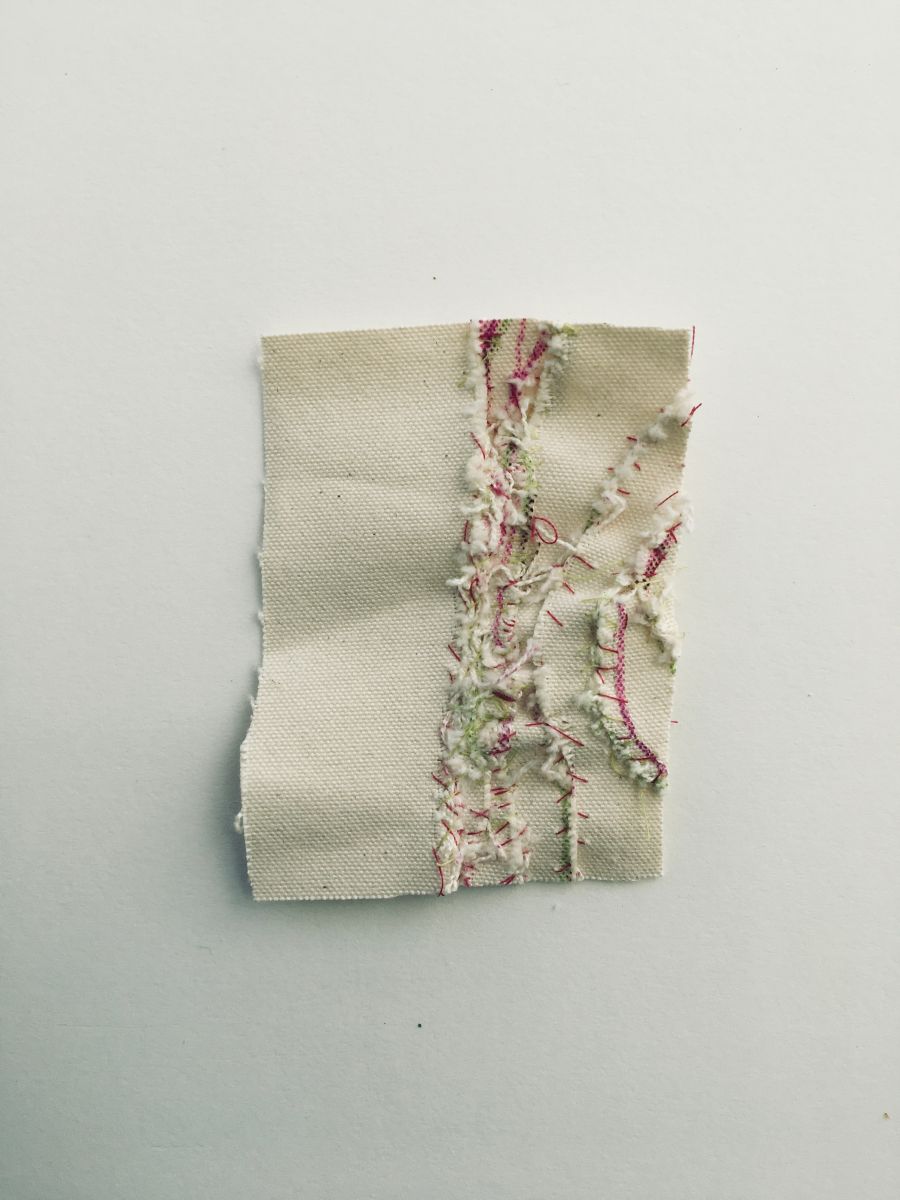
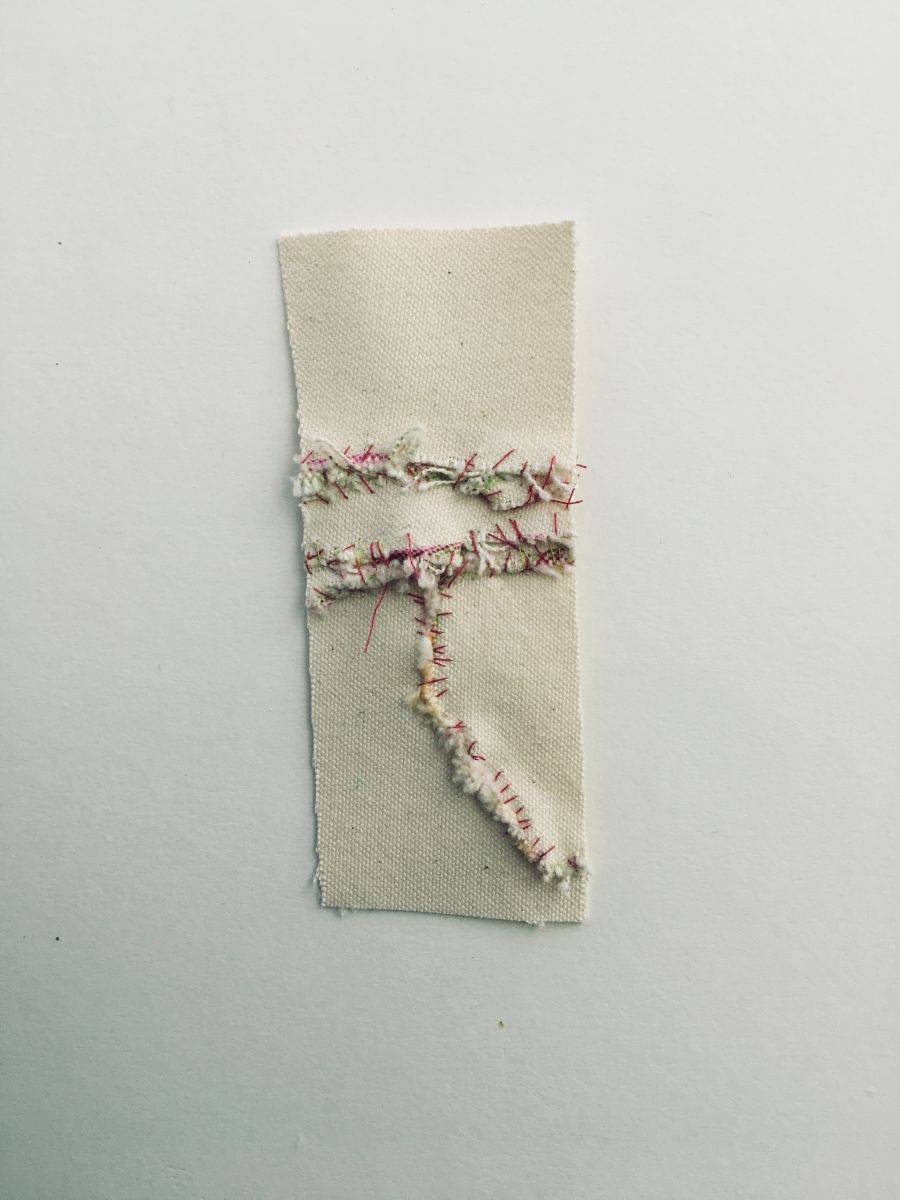
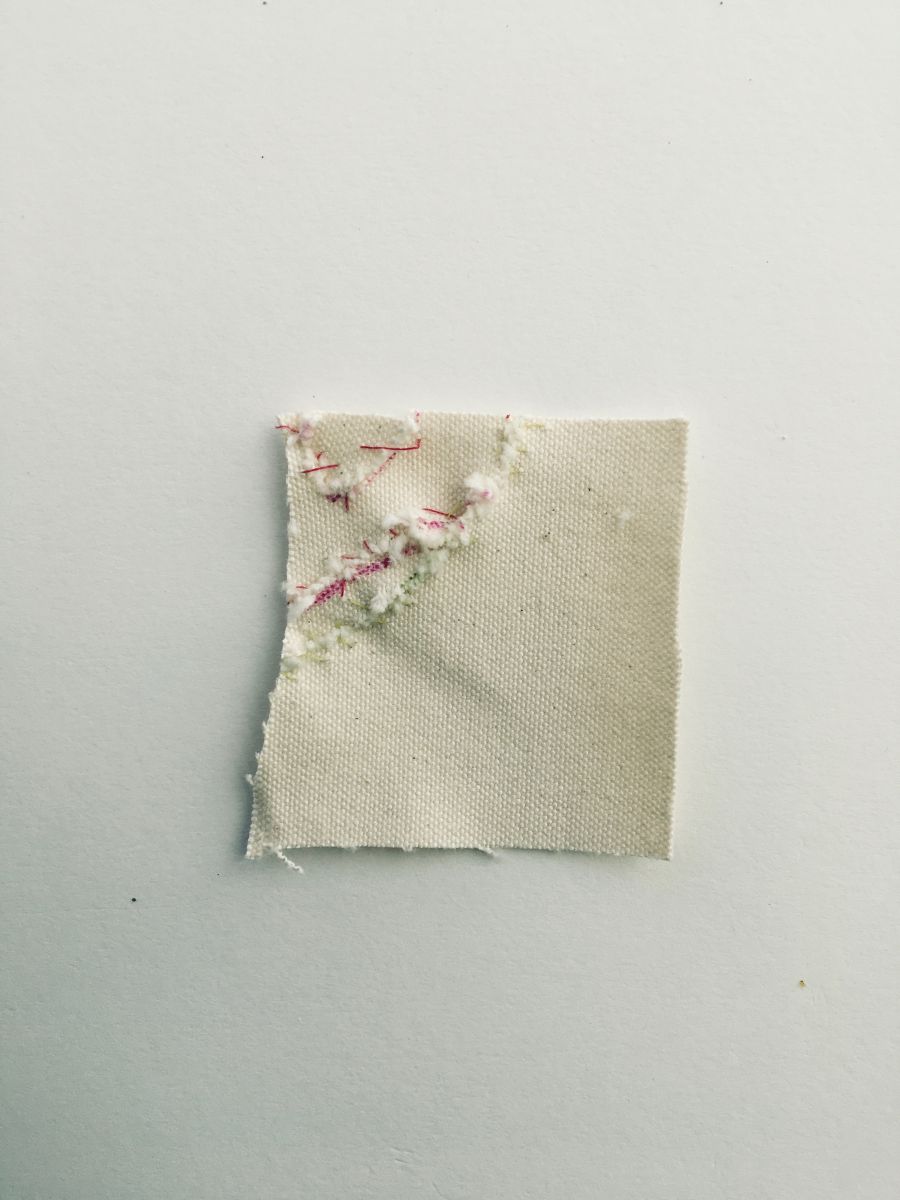
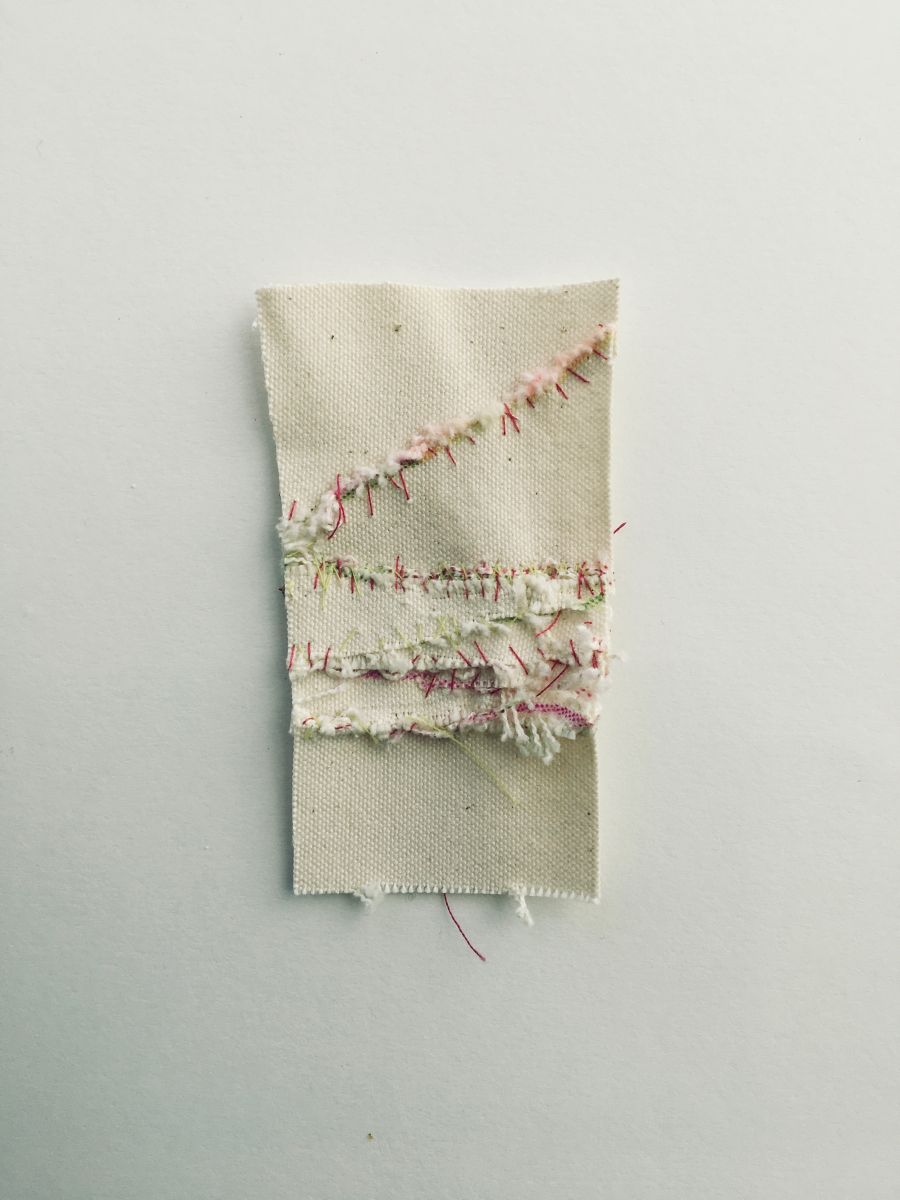
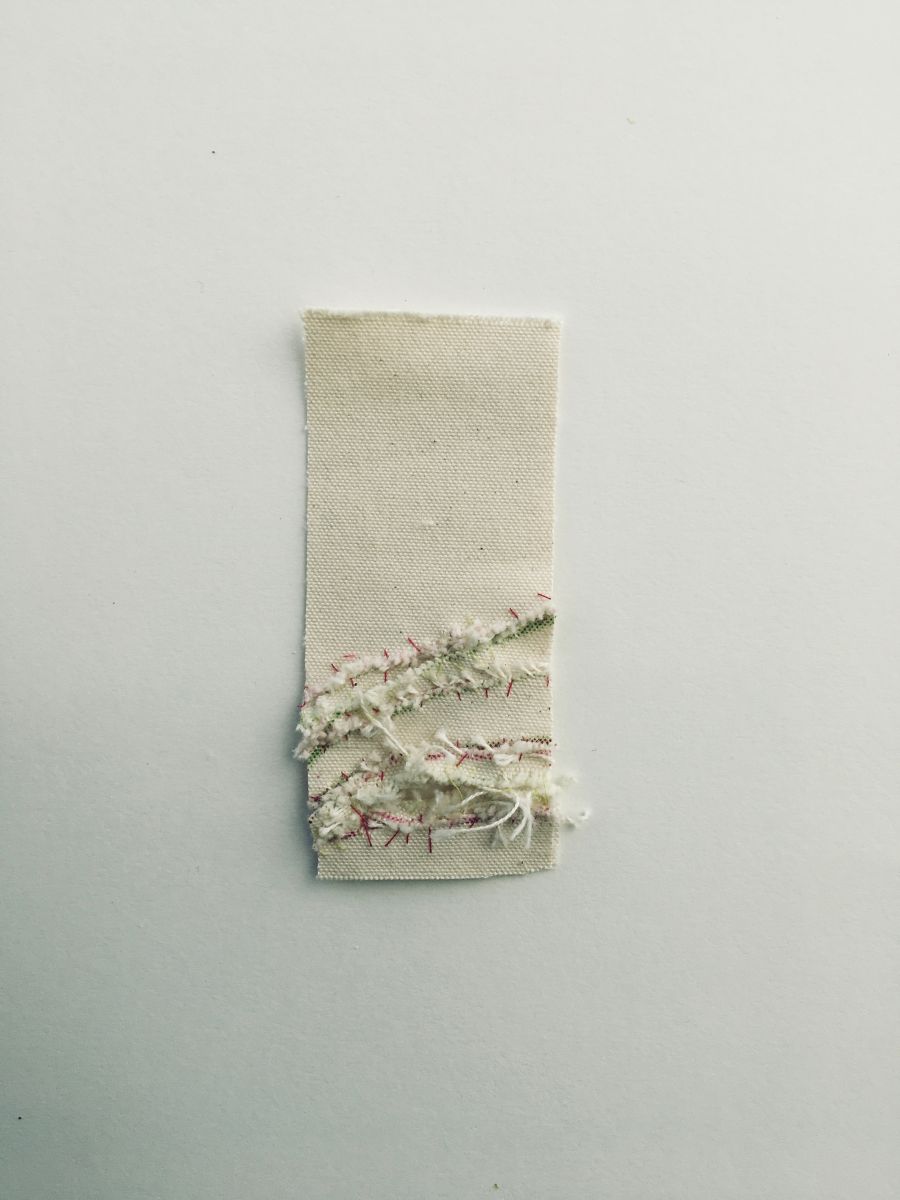
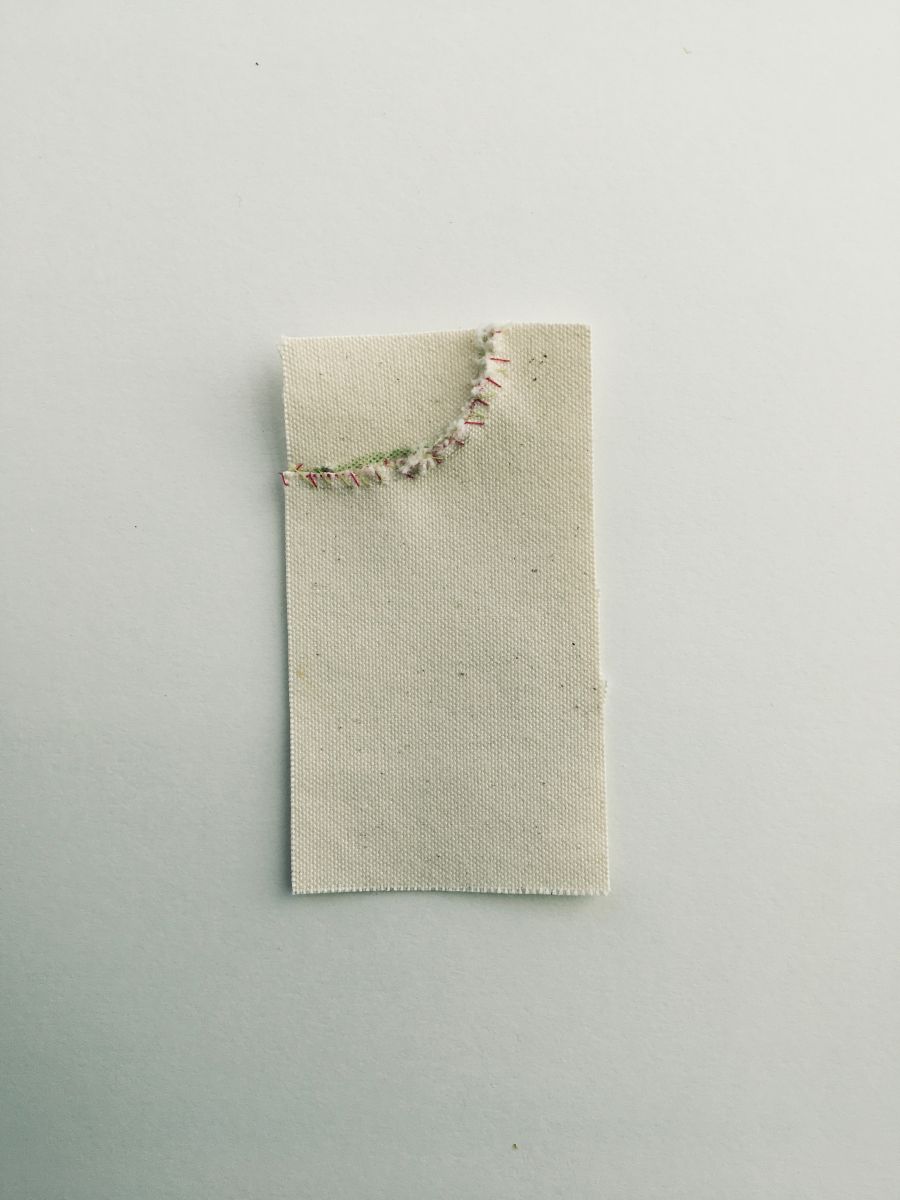
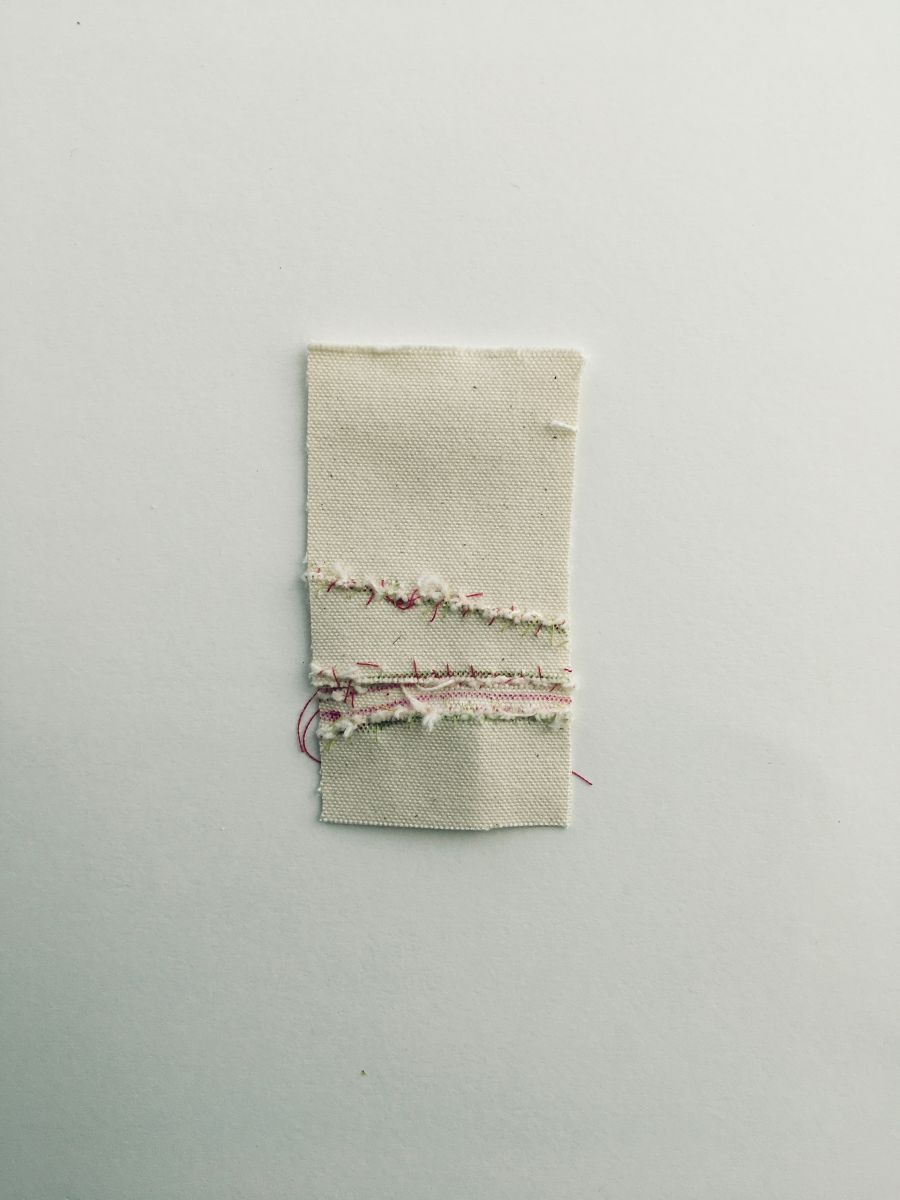
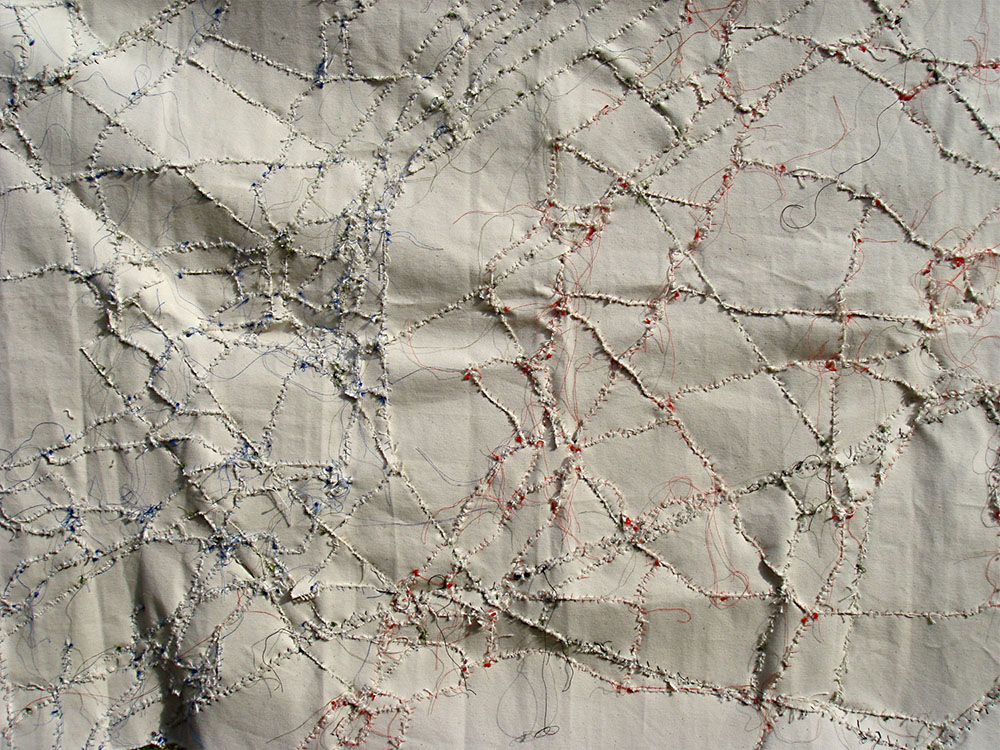
Having completed the stitching for ‘”Missded’ 3″, I’ve now cut it up to create the ‘tokens’ shown below.
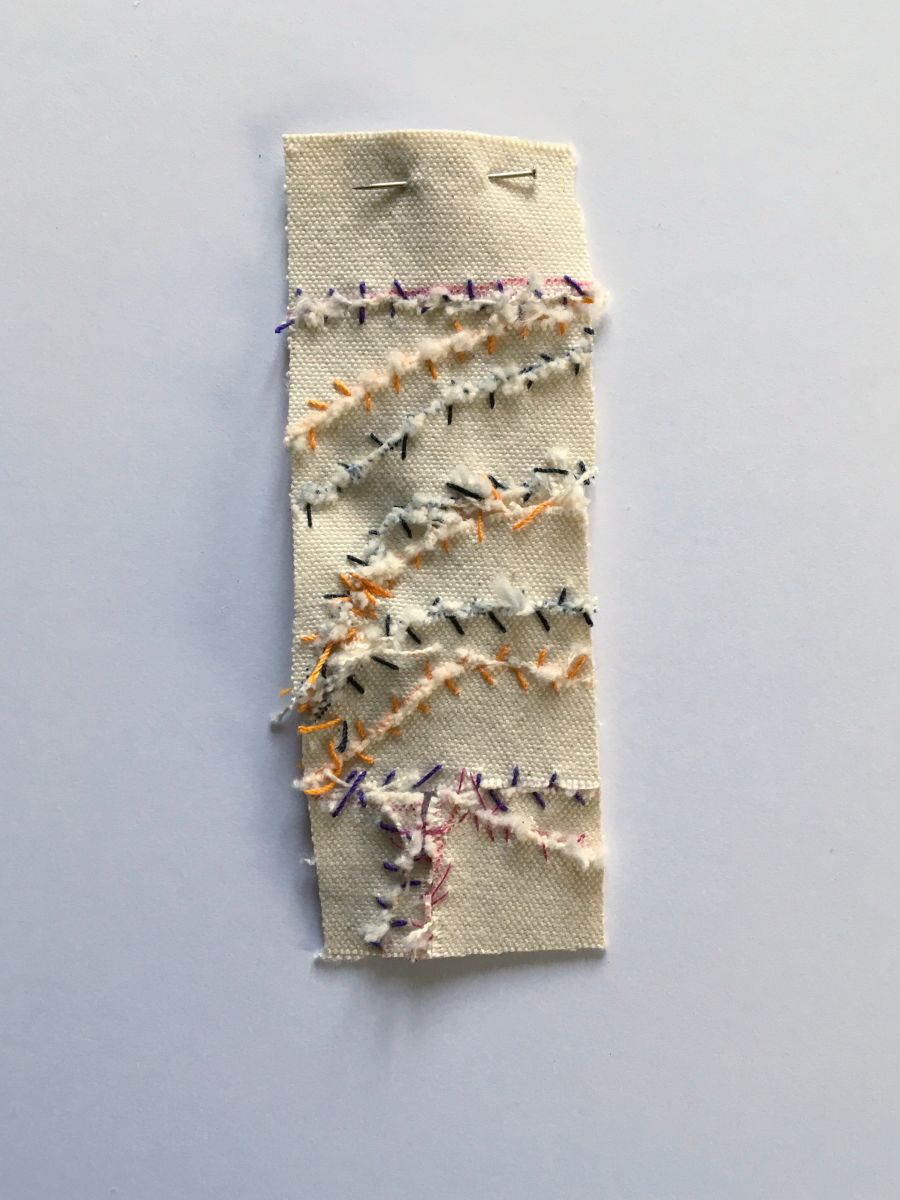
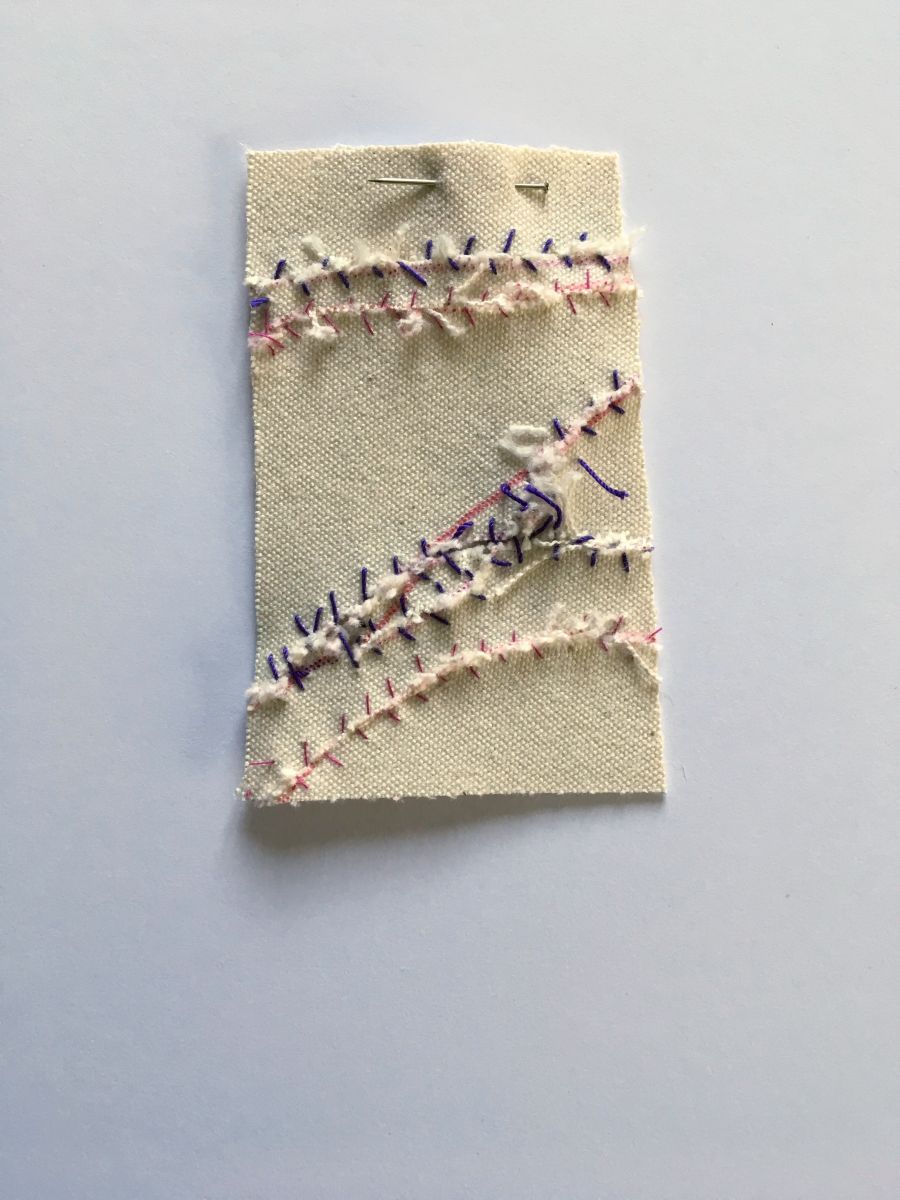
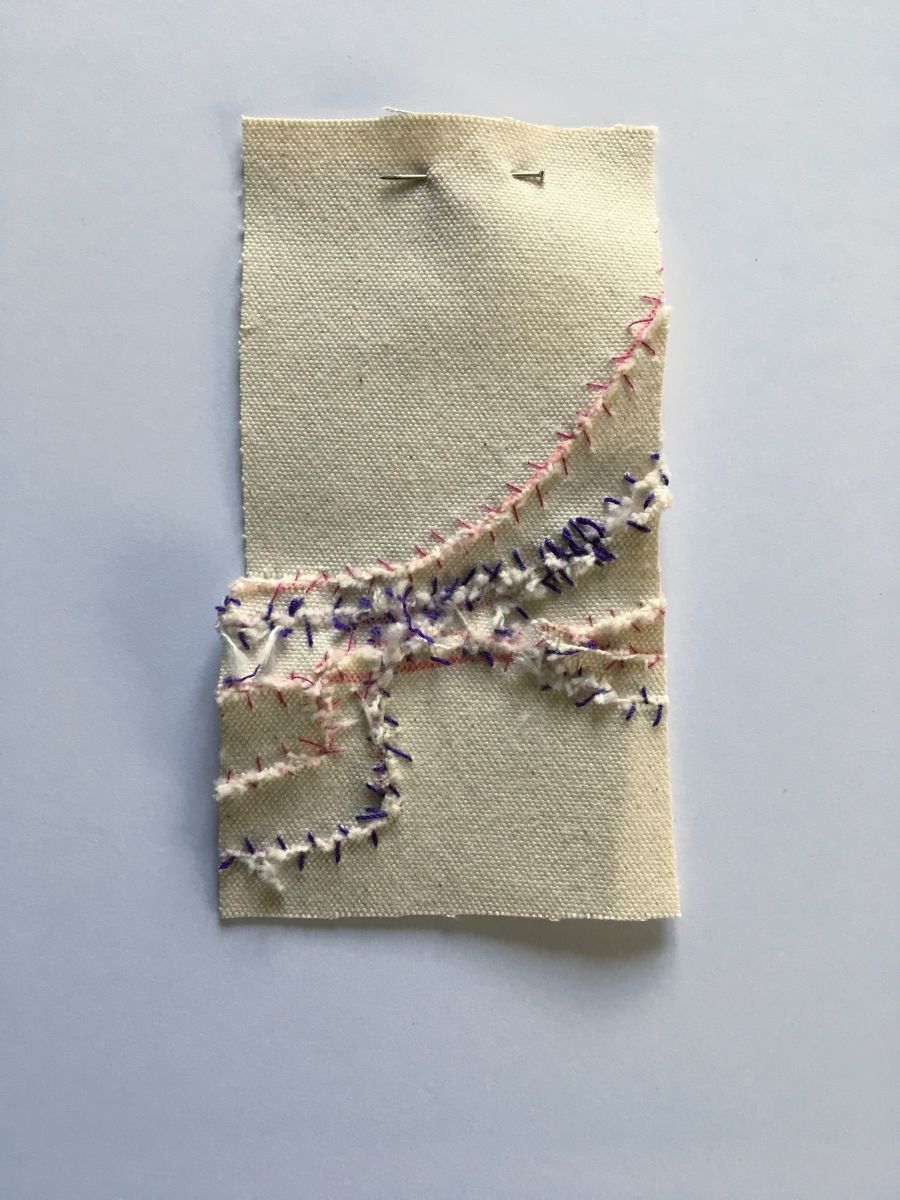
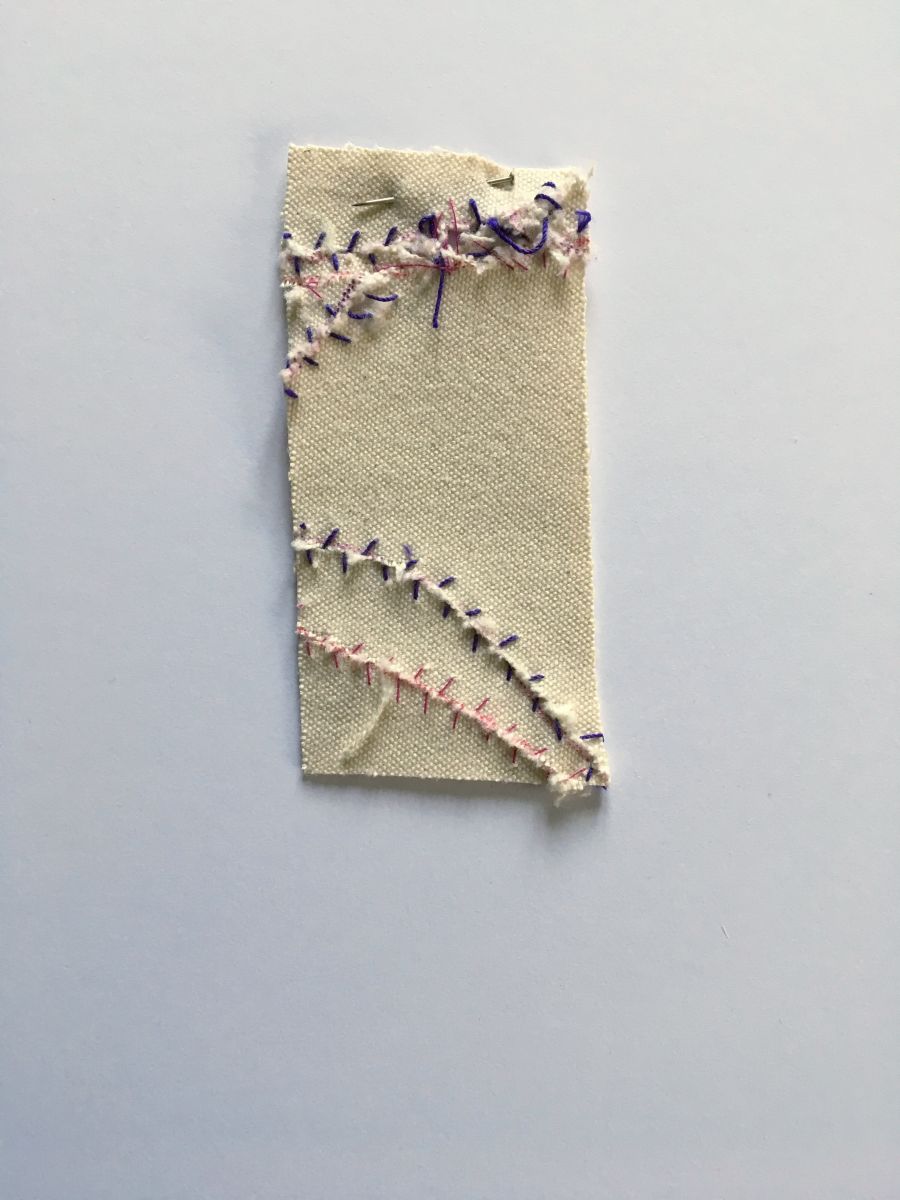
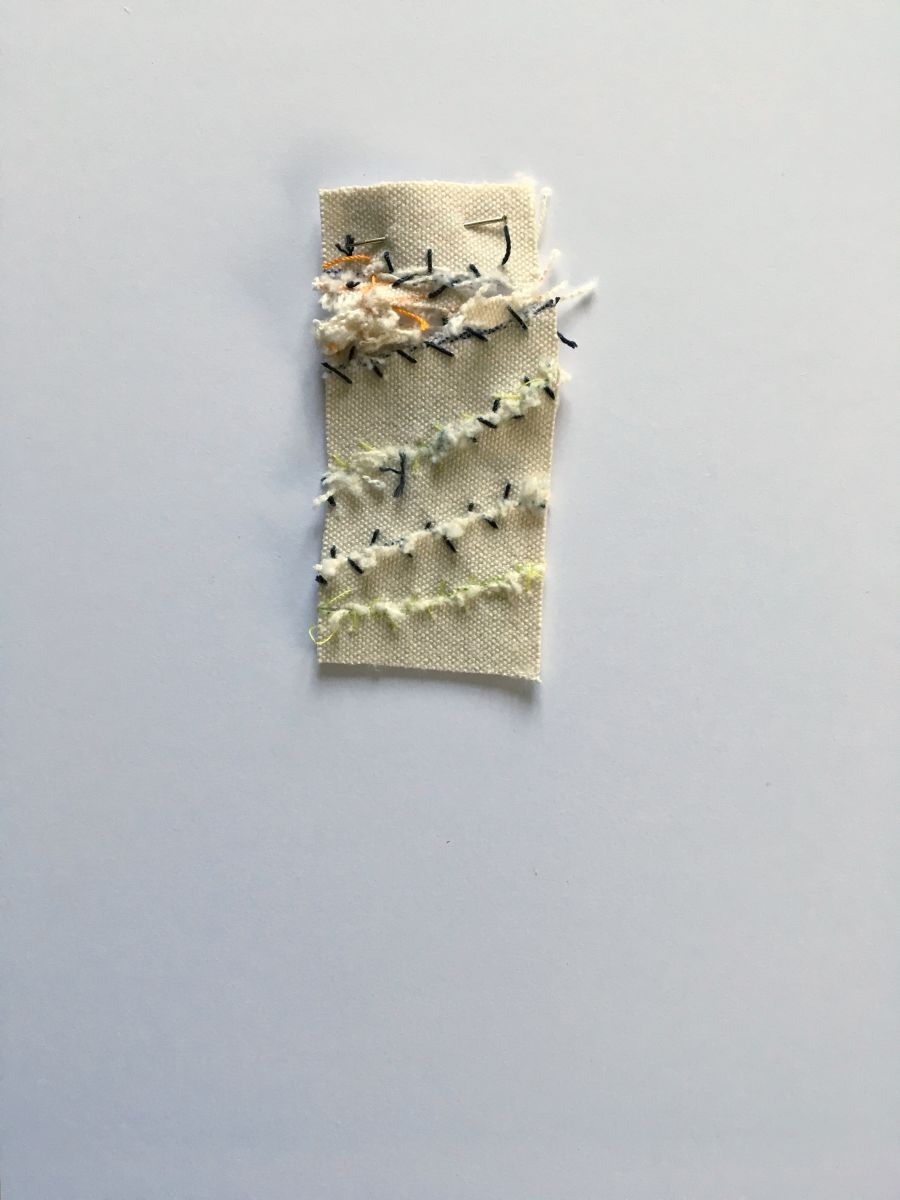
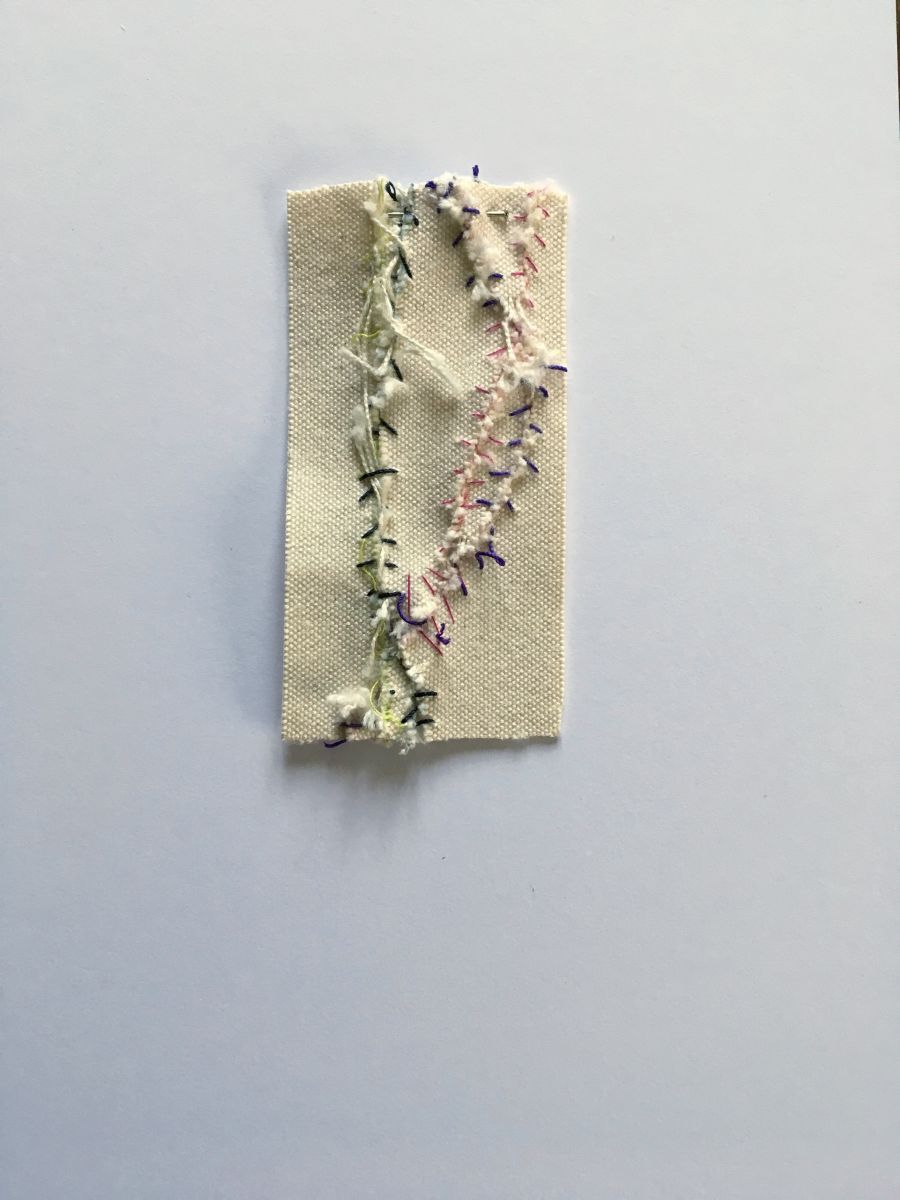
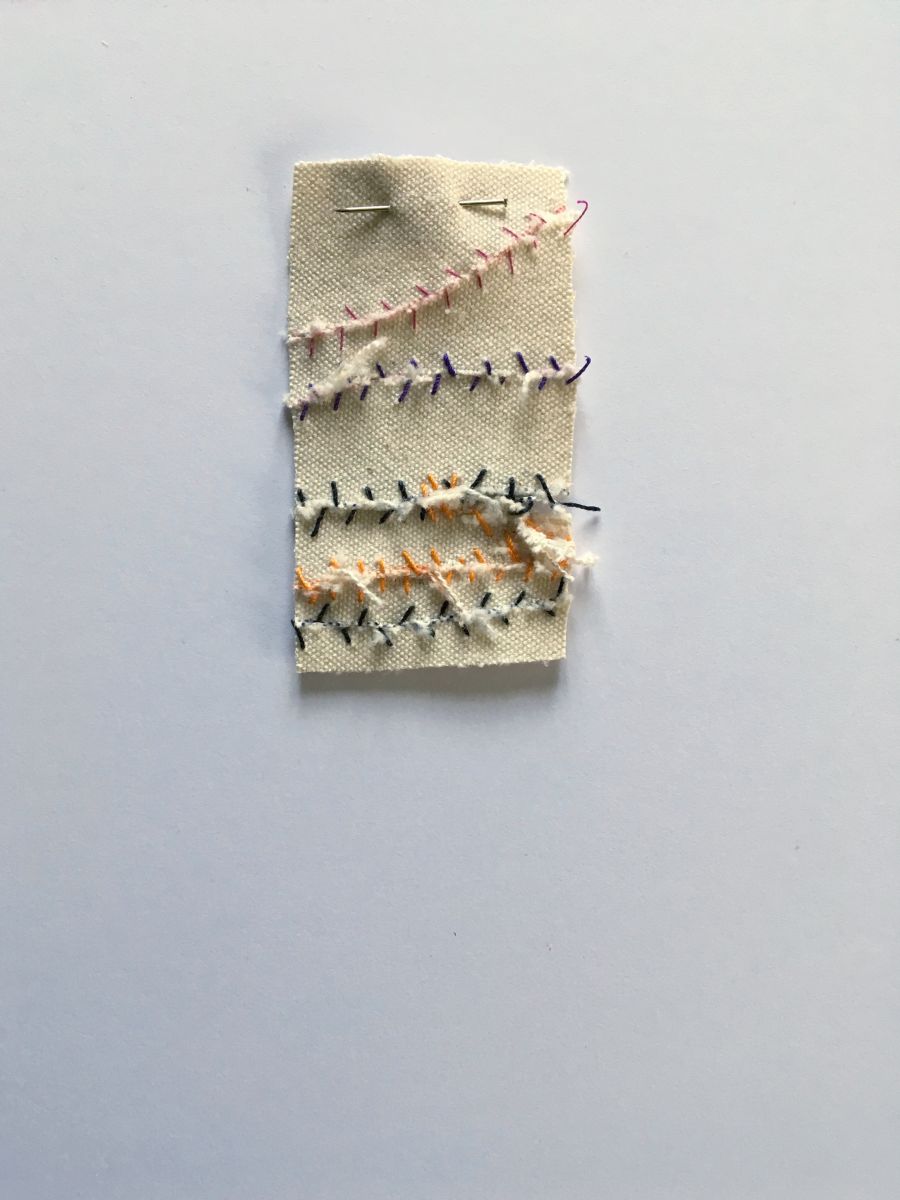
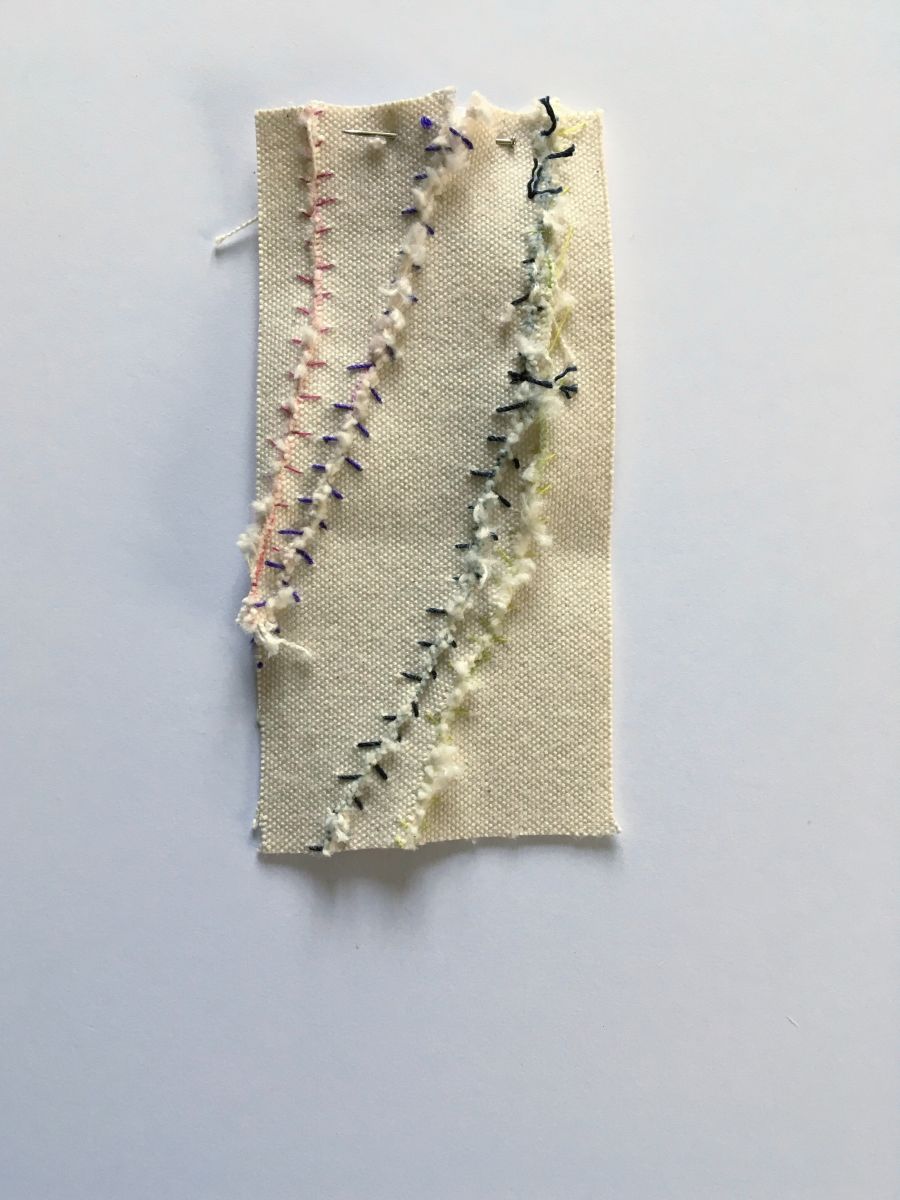
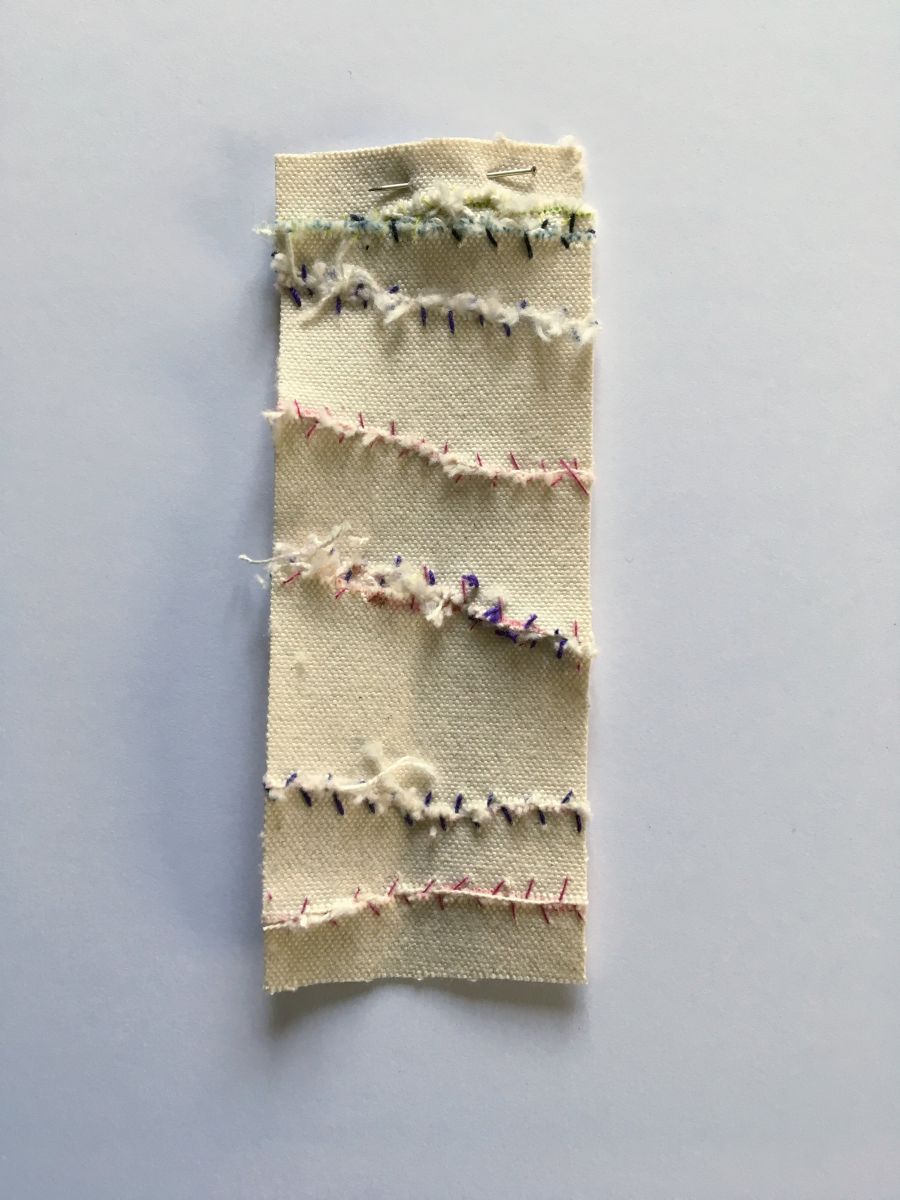
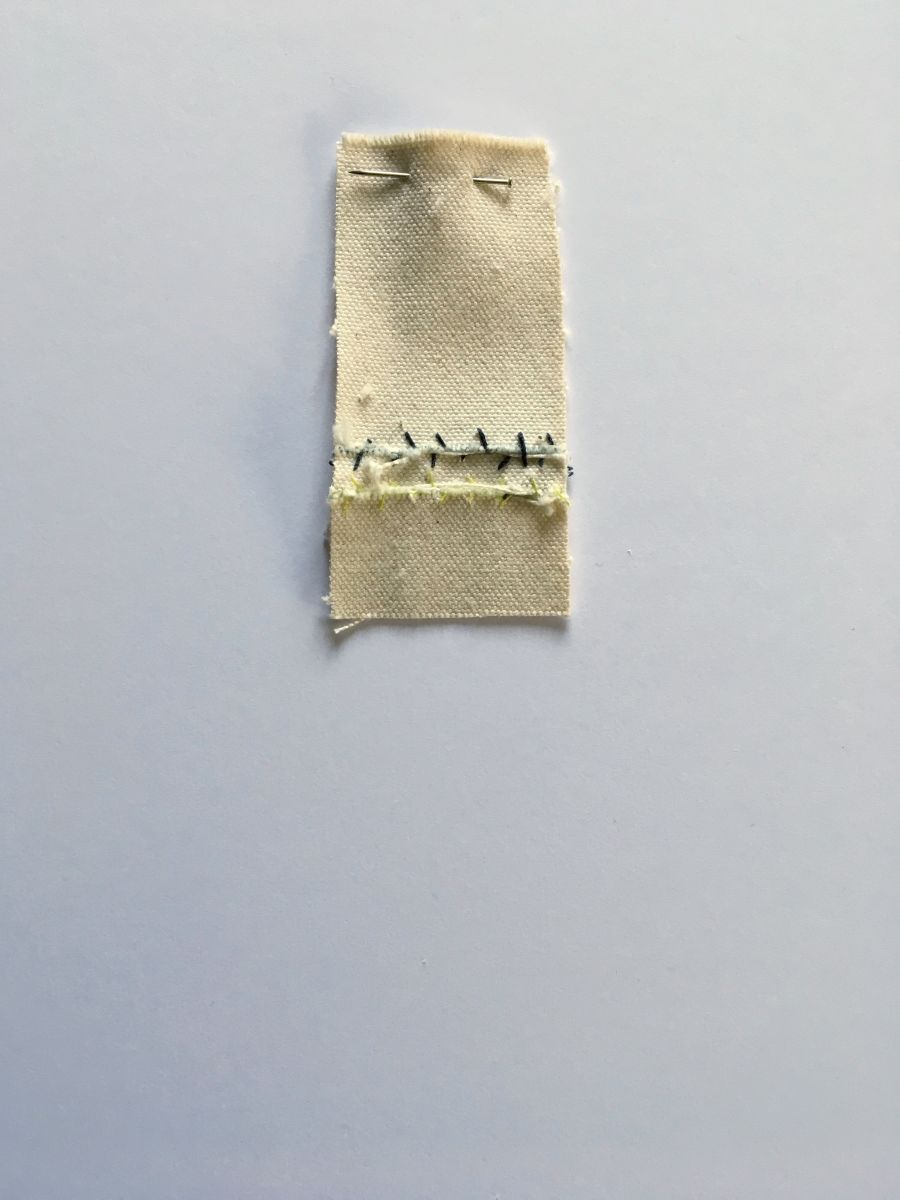
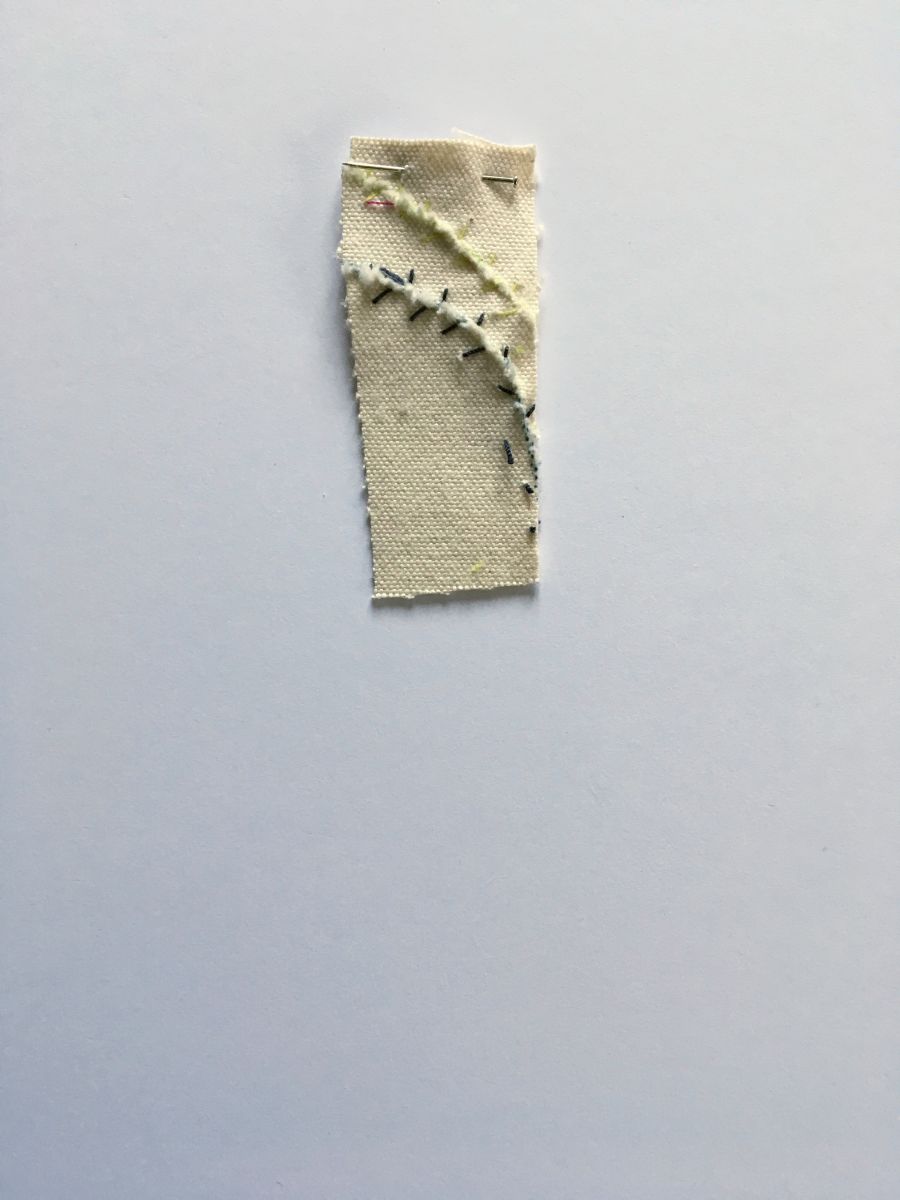
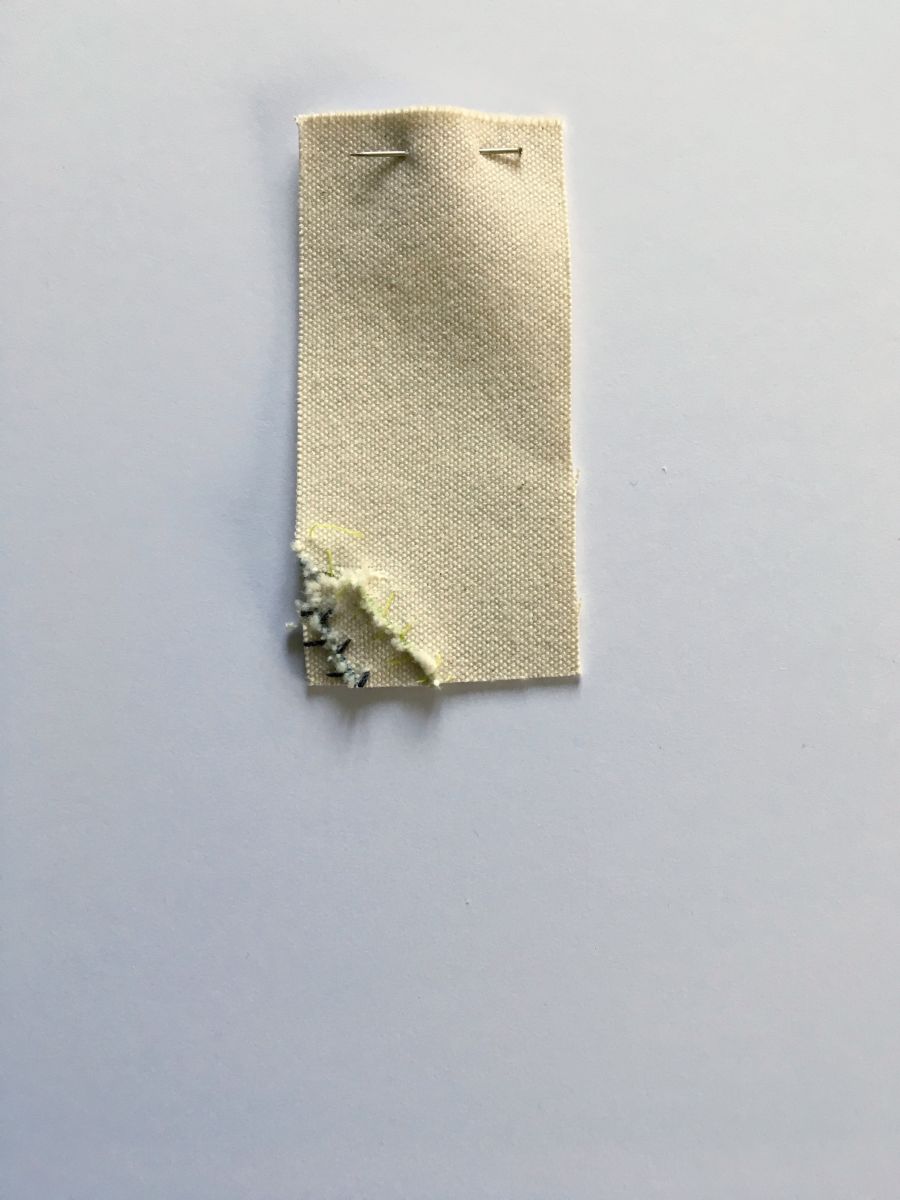
‘Missded’ 3
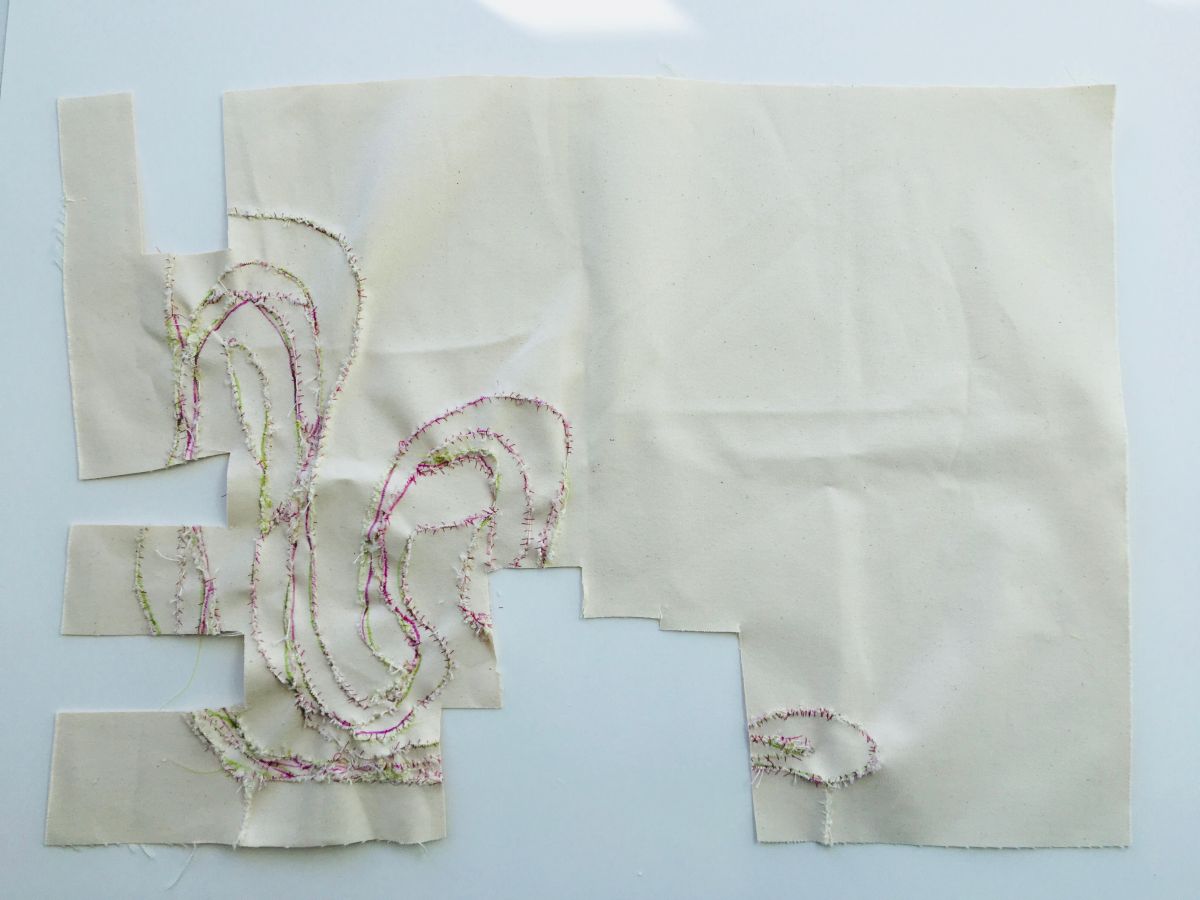
I’ve finally completed another of the stitched works – “‘Missded’ 3”.
Below is the original drawing made by me and my son.
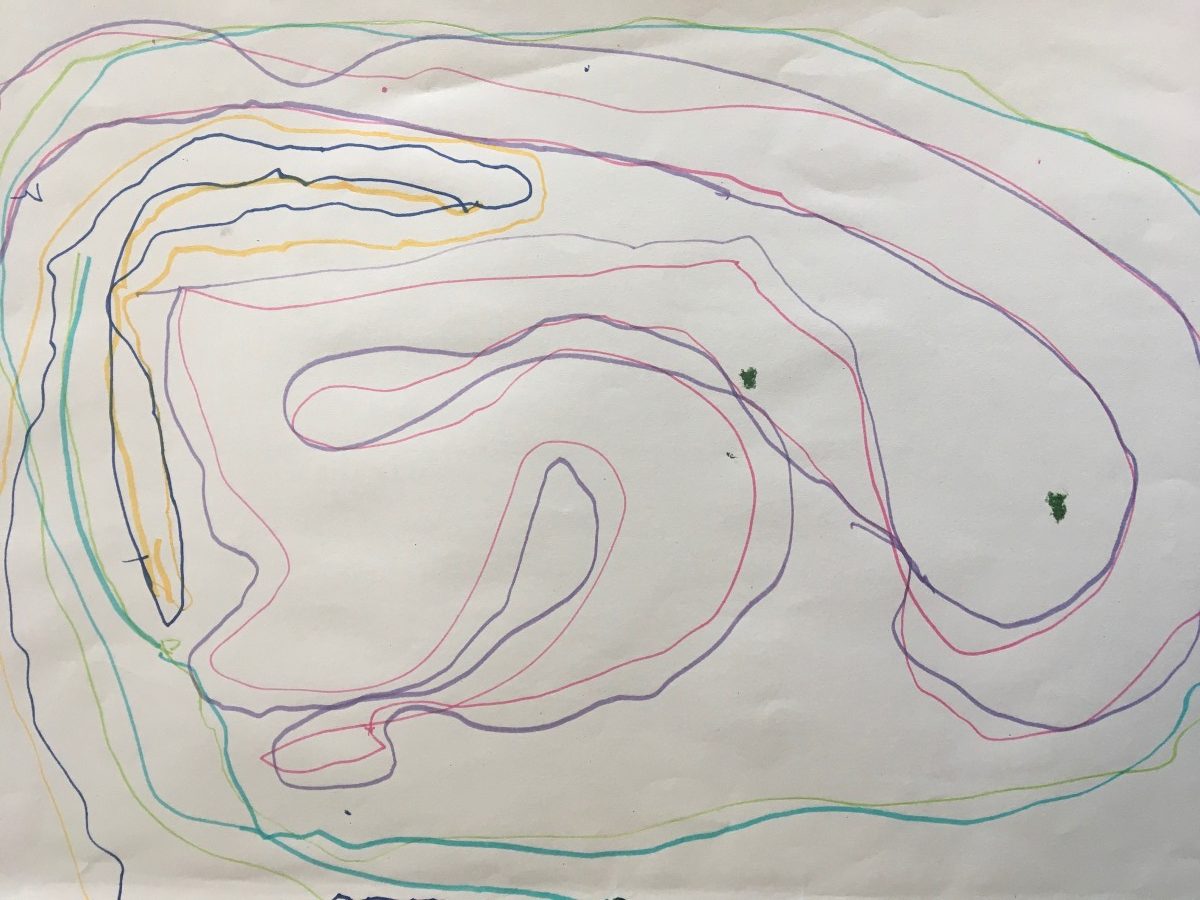
‘Missded’ 1 – A Framed Token
When one of the ‘tokens’ is put in a frame, it becomes a thing in its own right; a fragment still, but one quite divorced from the others and from that from which they were cut.
What started with this (a drawing made in seconds by me and my son):
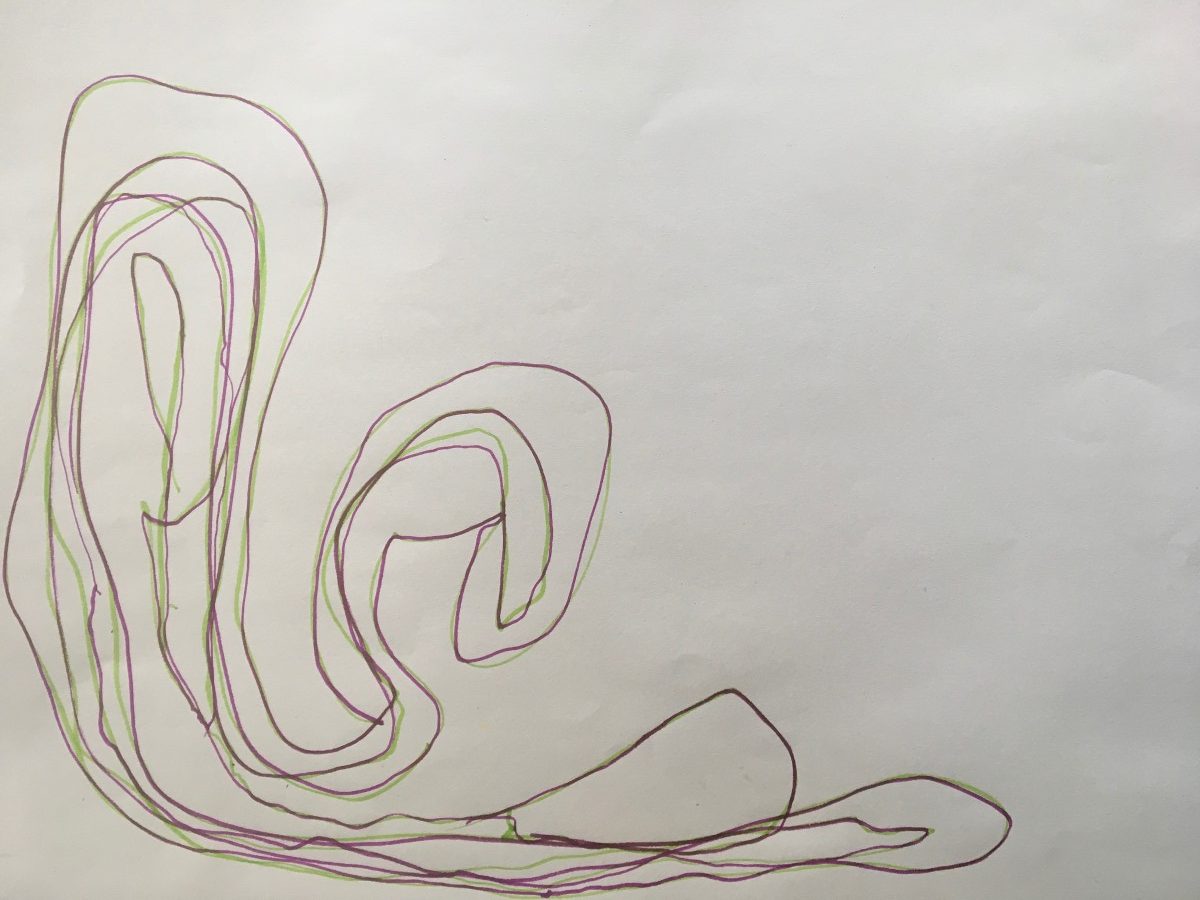
became this (a stitched version made over several days):
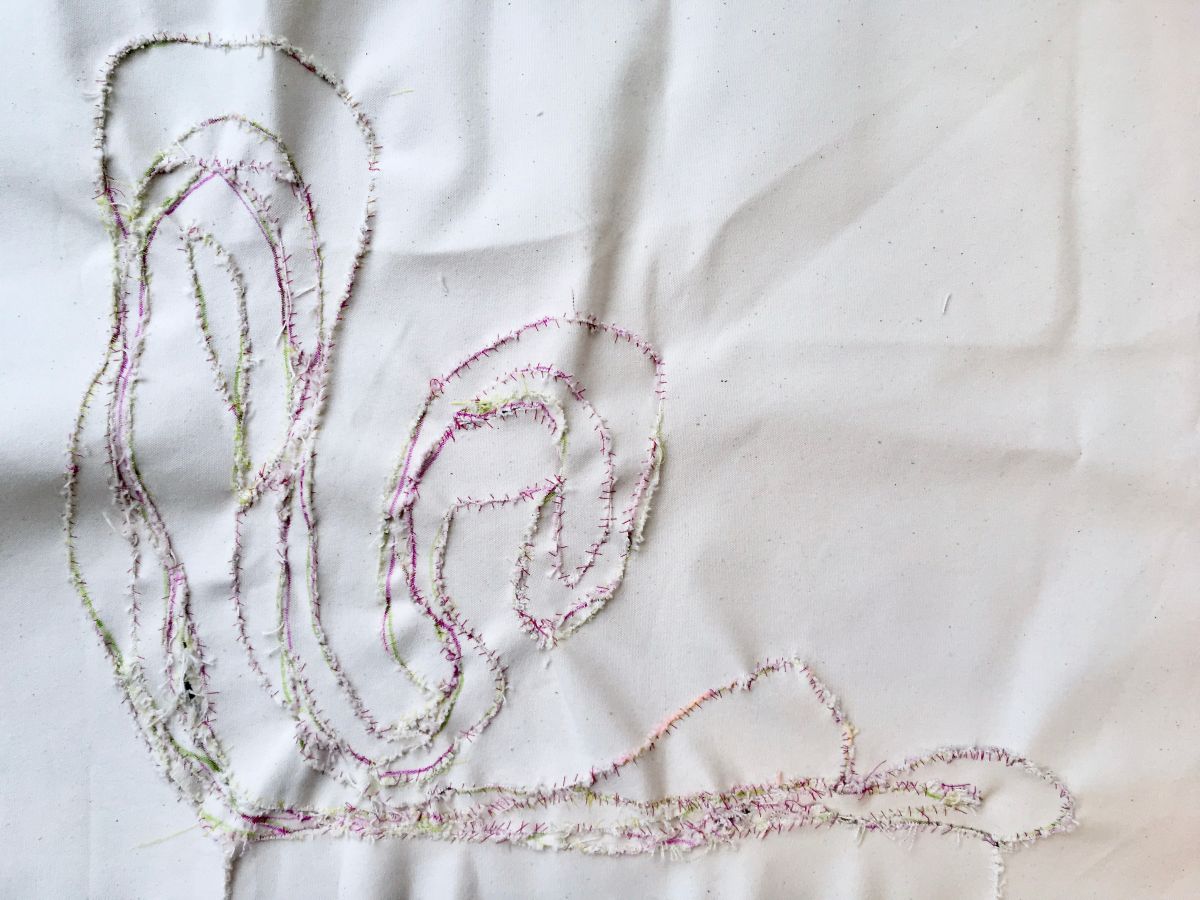
and ended up as this (one of many ‘tokens’ cut from the above):
The following shows one of the tokens in a frame:
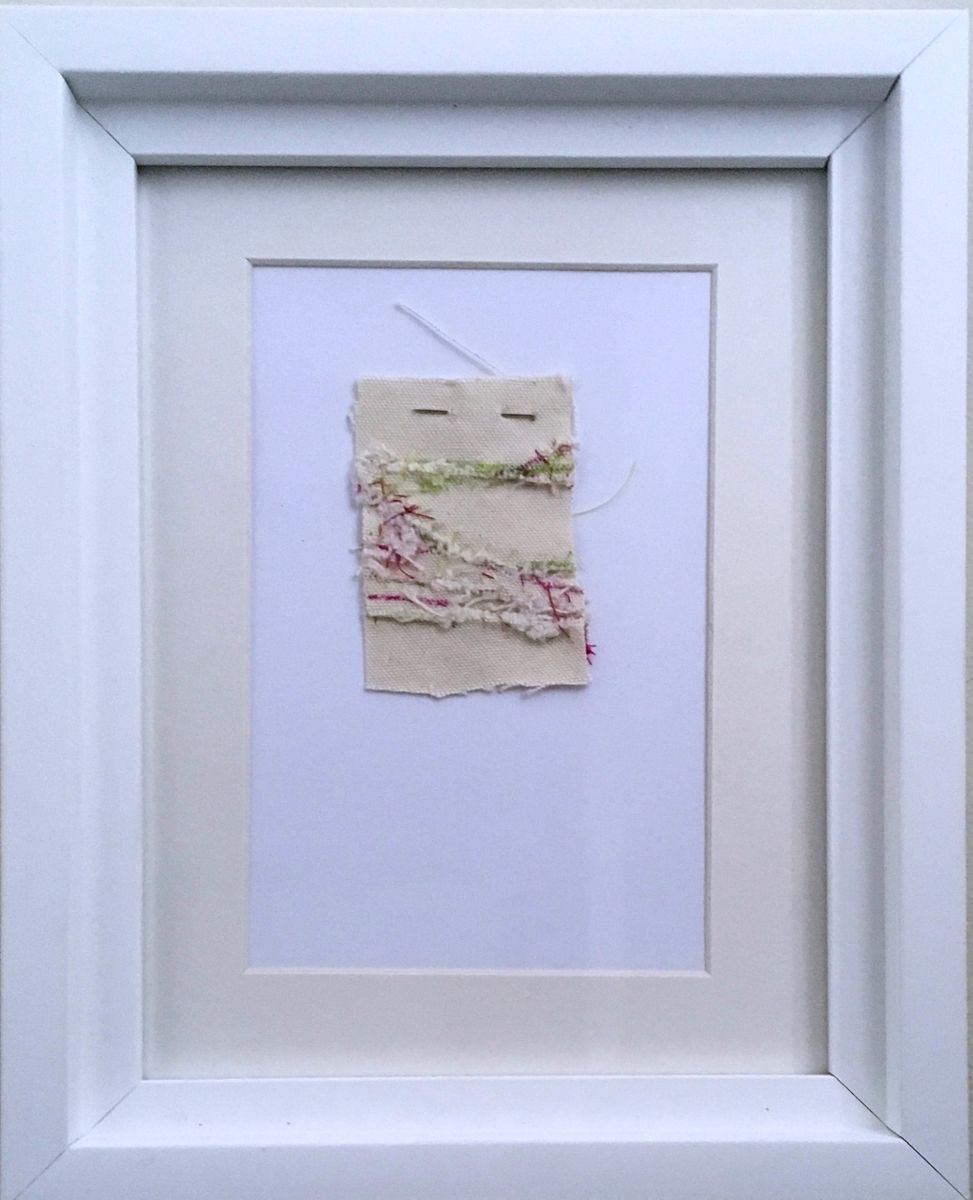
What this made me think about was how I would show these works: as individual objects such as that above or in a group? If there were several of these shown together, then their relationship to the original stitched work (and therefore the original drawn work) would be obvious. There would be a sense of the repetition of times when I’ve missed having the children. Grouping them together would therefore turn them into a work about remembering; remembering in those times when I haven’t had the children, what we did when in the times we spent together.
The original stitched work is about two things:
- the difference (in timespan) between those times when I have the children and when I have not. i.e. it’s an attempt to recreate a brief moment (the original drawing) in a form which takes many hours and days to complete
- the act of remembering and savouring those particular moments, holding onto them in times when I am on my own (the act of stitching is repetitive, akin to remembering something (or looking at a photograph) over and over again
The tokens made from this stitched piece are about the fragmenting of my time with my children. As an individual piece (such as that above) it’s about a time when I’ve said goodbye. Grouping them together therefore would show a lot of ‘goodbyes’ but also an equal number of ‘hellos’.
What I’m wondering now, as I’m about to complete the second of these stitched works, is whether when grouping a number of these fragments together (and as they are grouped together, so a wider memory is rediscovered) I should mix up the pieces, so that some from different drawings are placed alongside, after all, memory is not linear and memories often become mixed up with others. What will be palpable from seeing the grouped tokens is a sense of many goodbyes and indeed hellos; fragments of times when I’ve been without them and thinking of them, but on a positive note, a sense of many memories shared with them as well.
Morning Has Broken
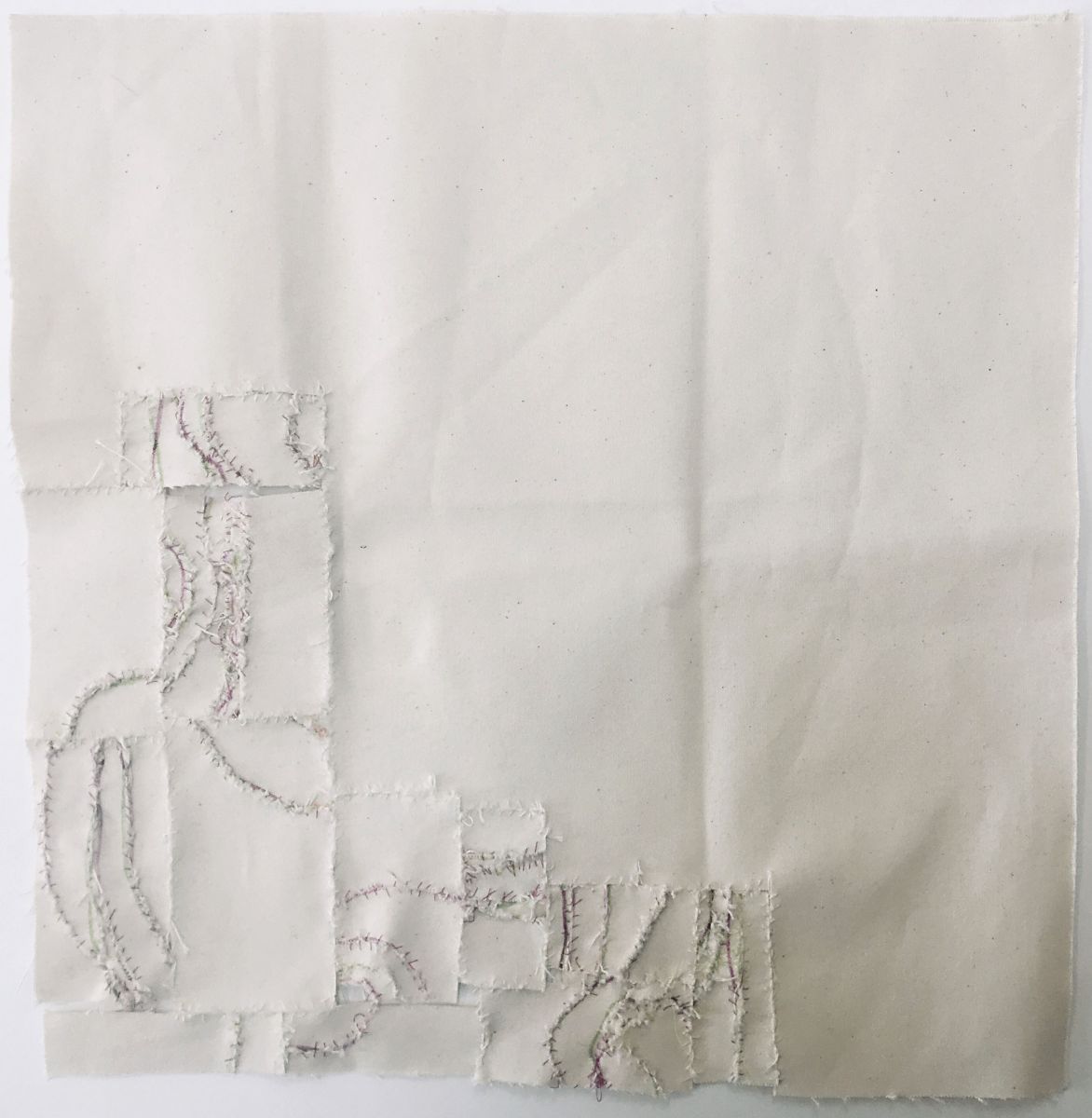
Following on from my last post, I’ve now completed all the tokens along with another piece comprising some of them stitched back together.
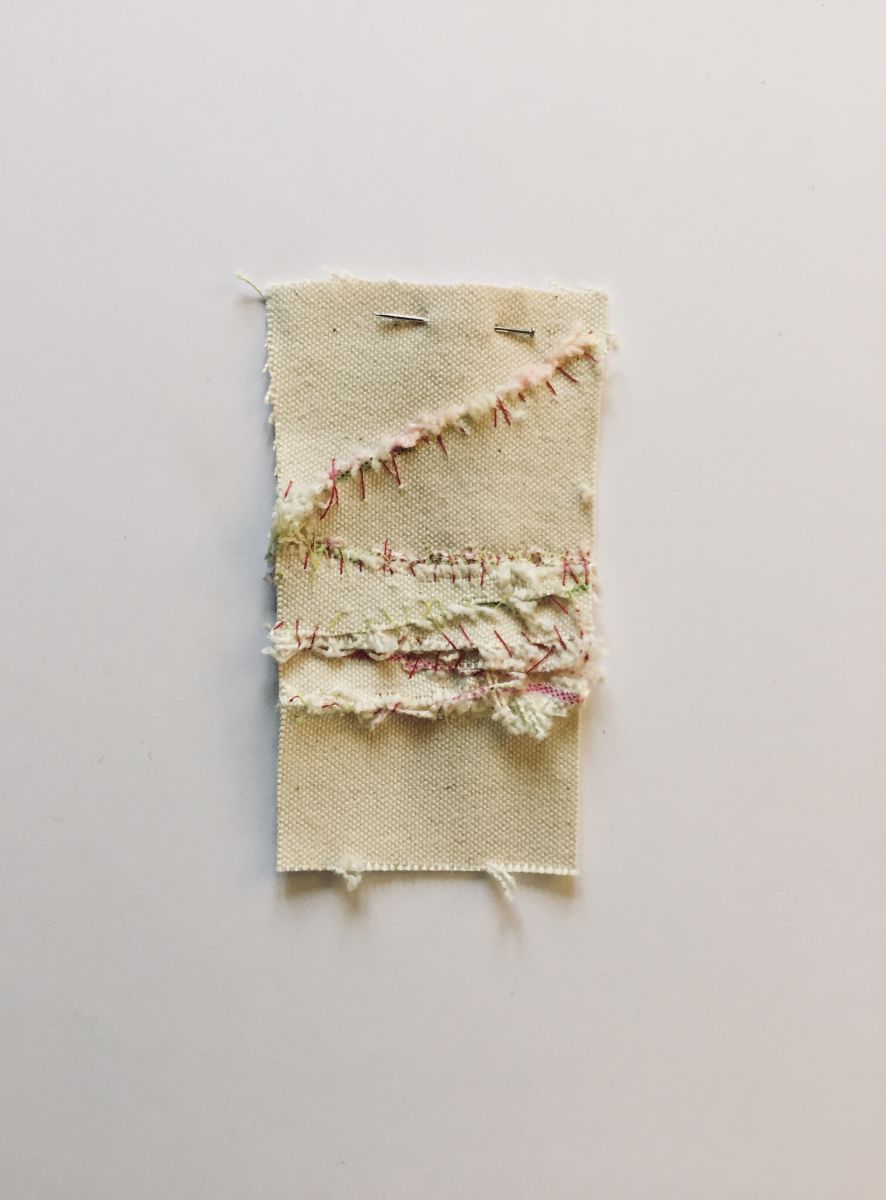
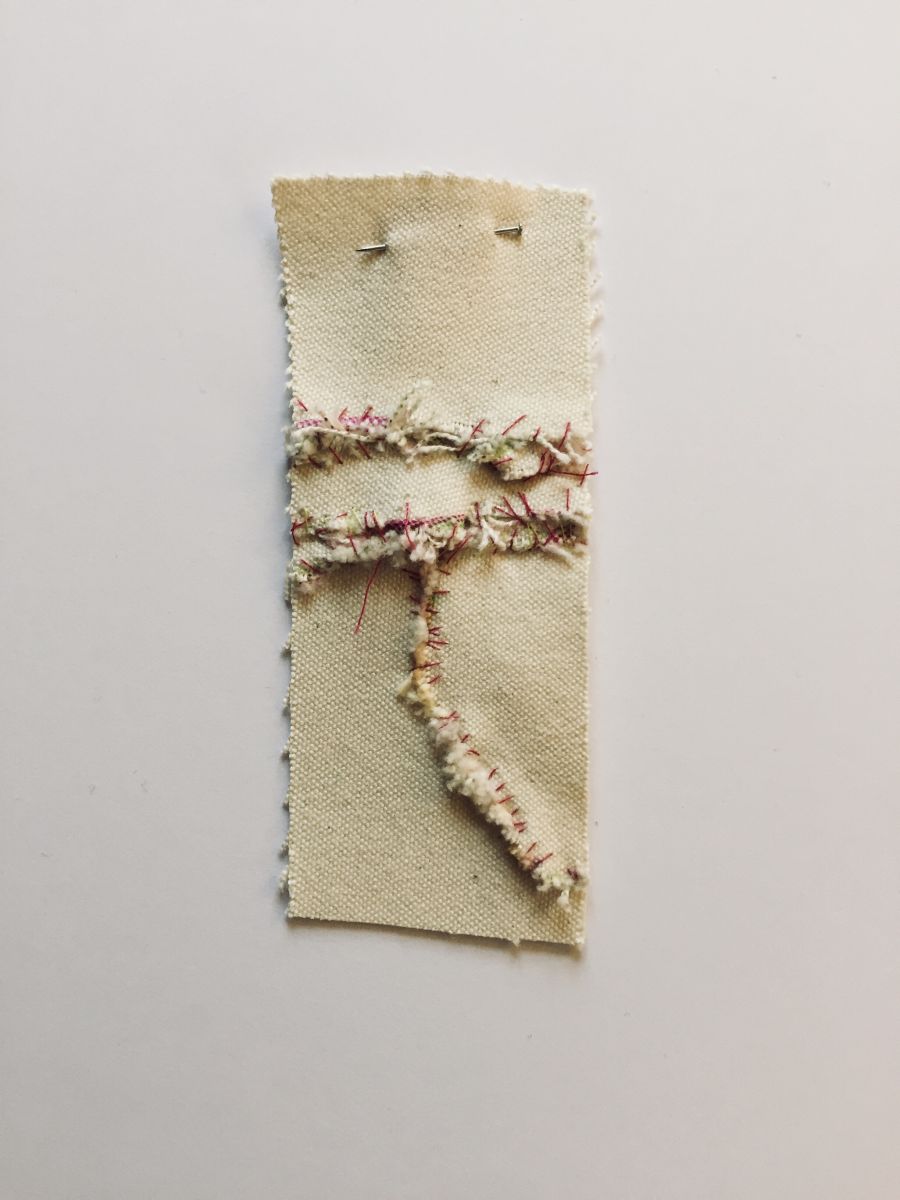
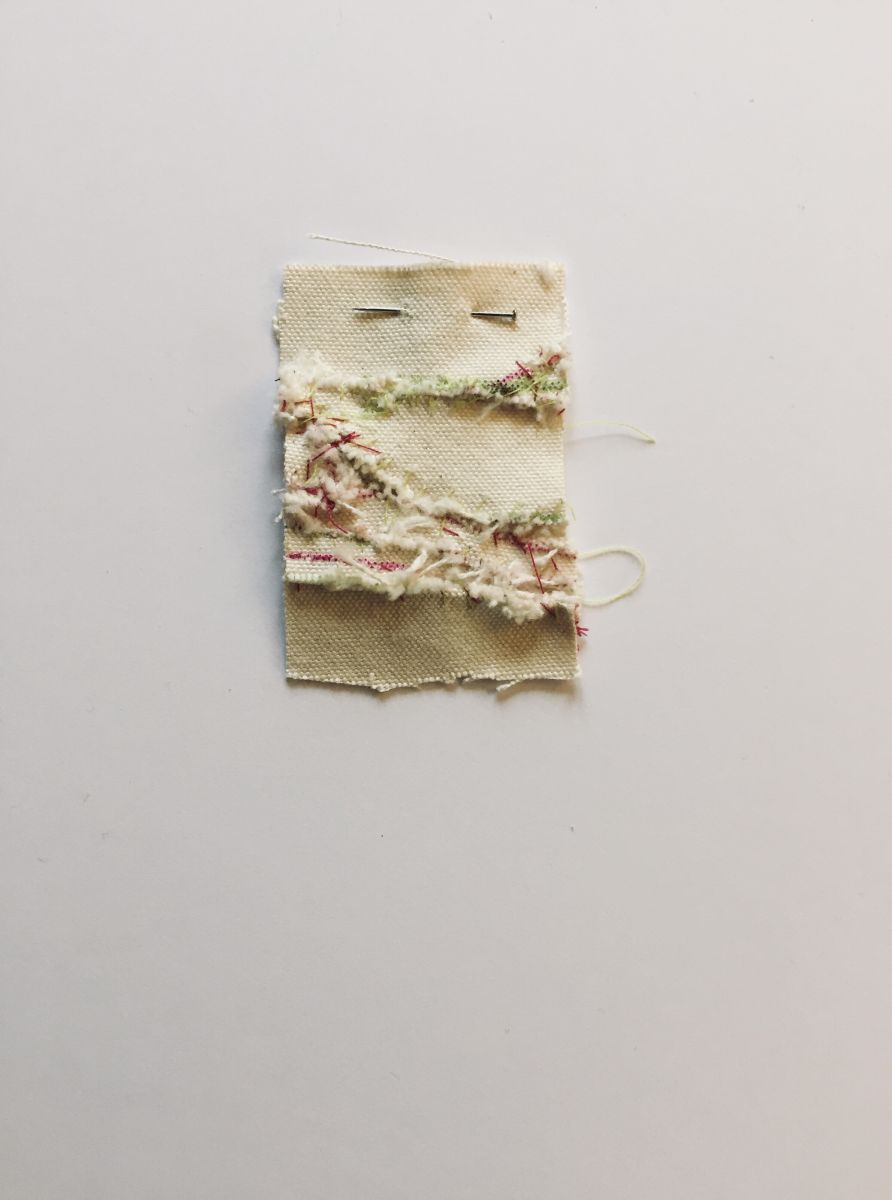
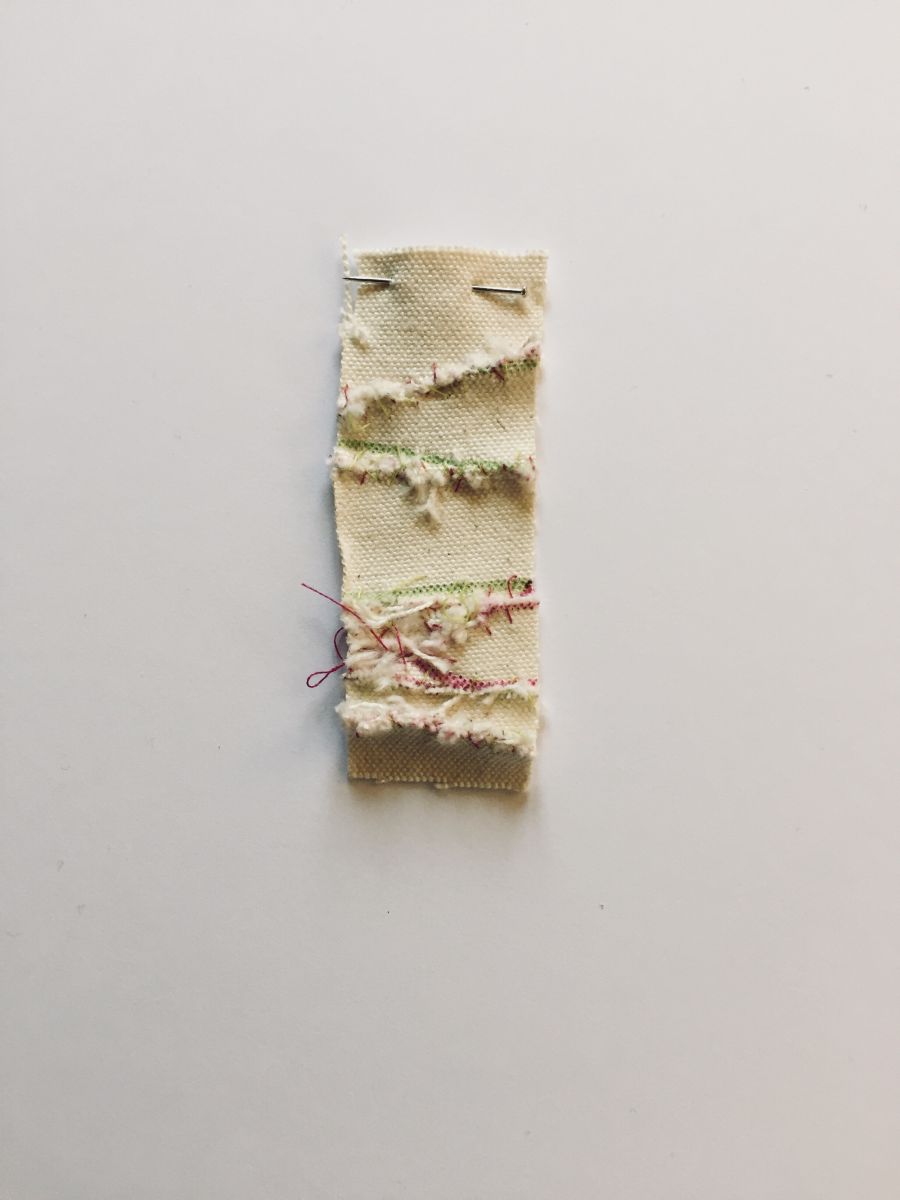
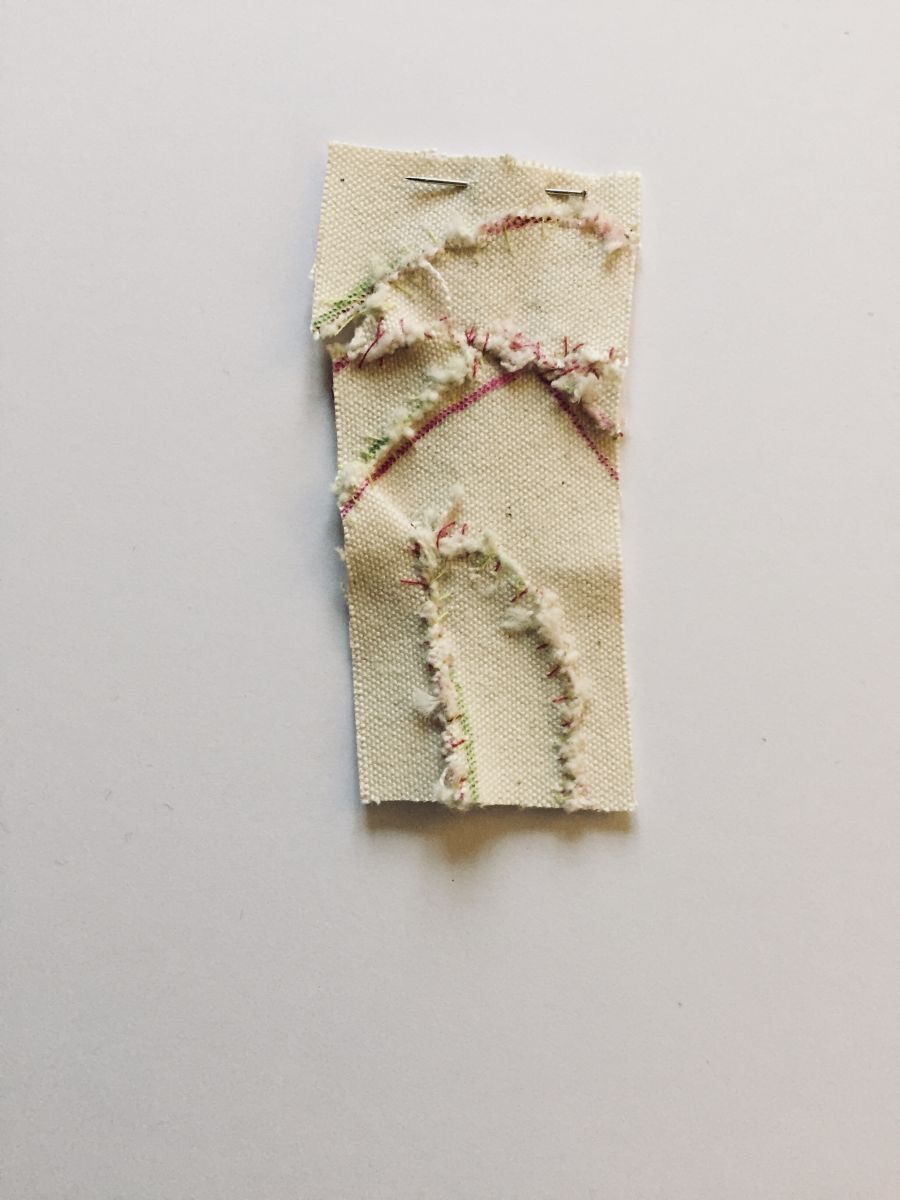
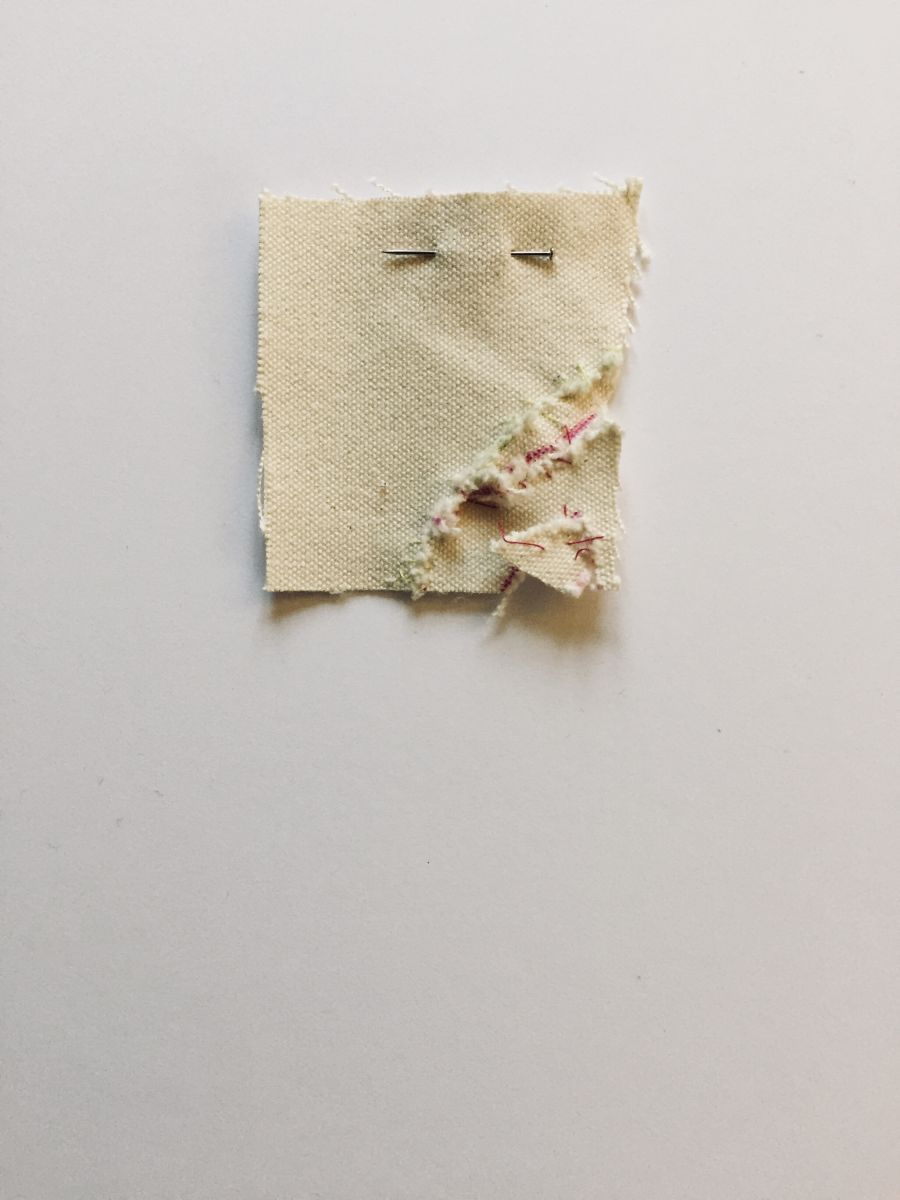
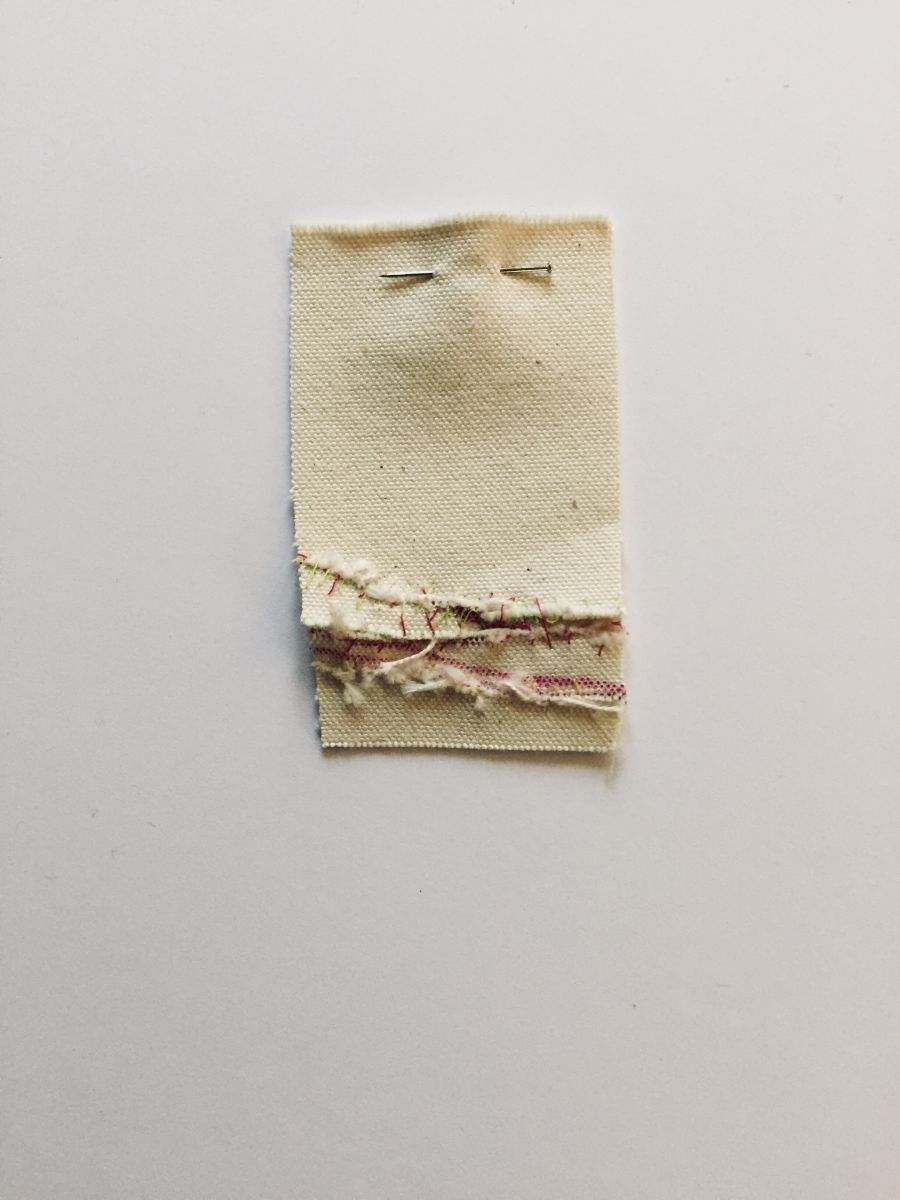
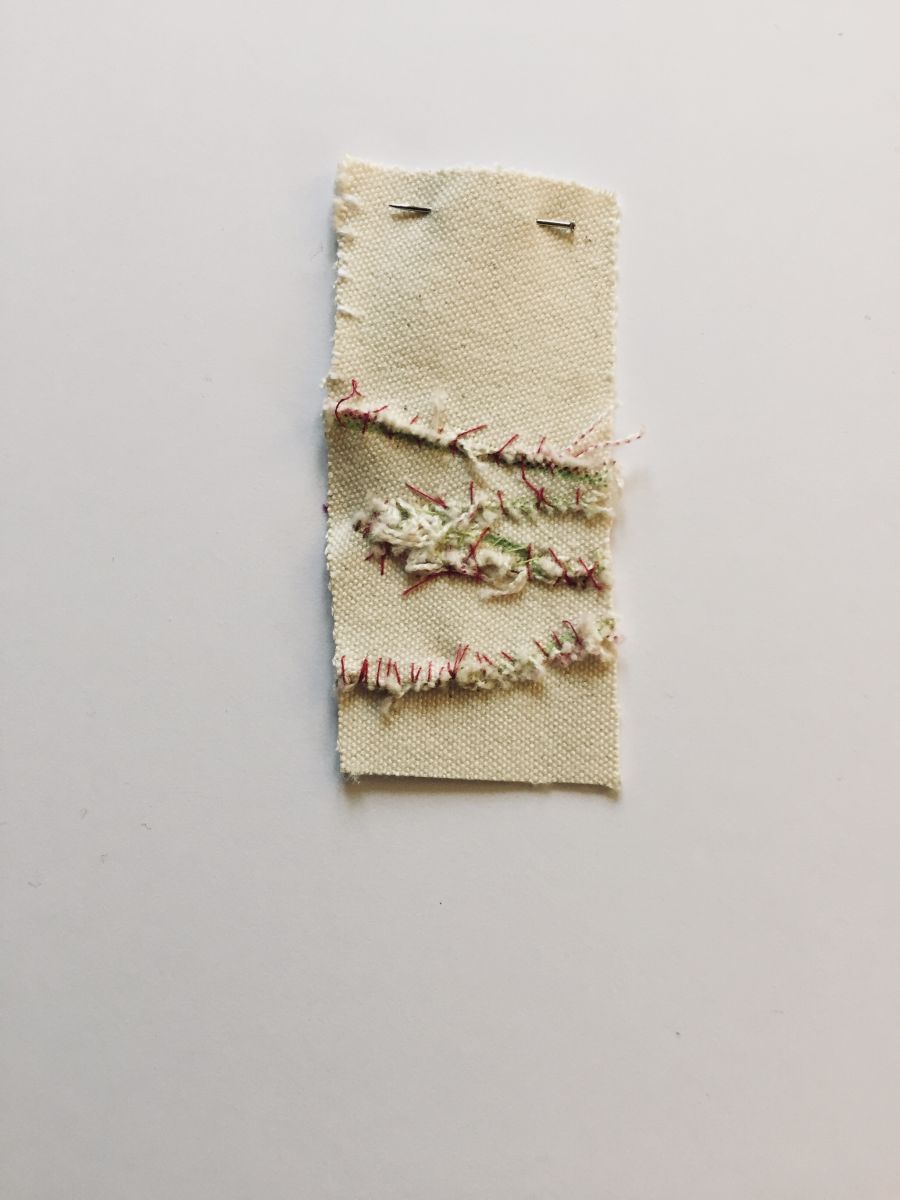
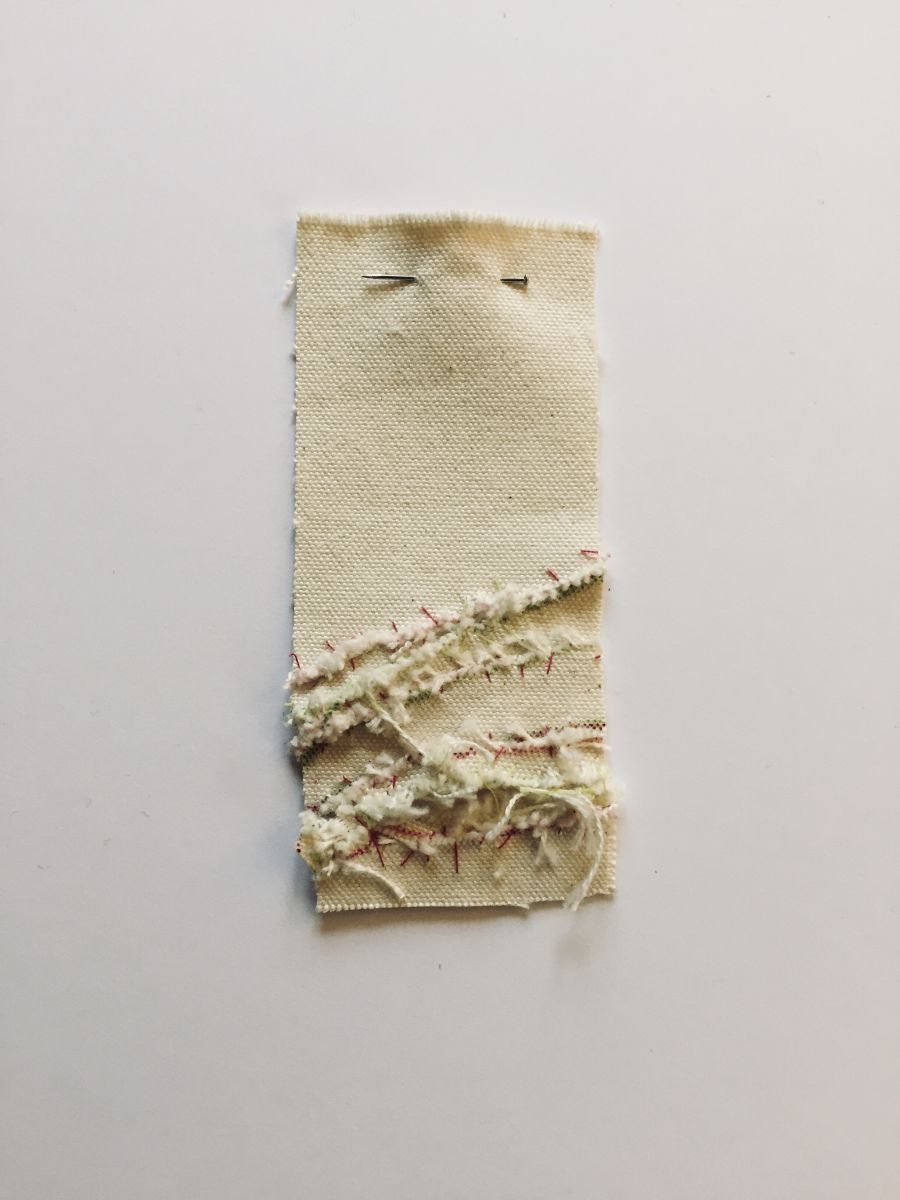
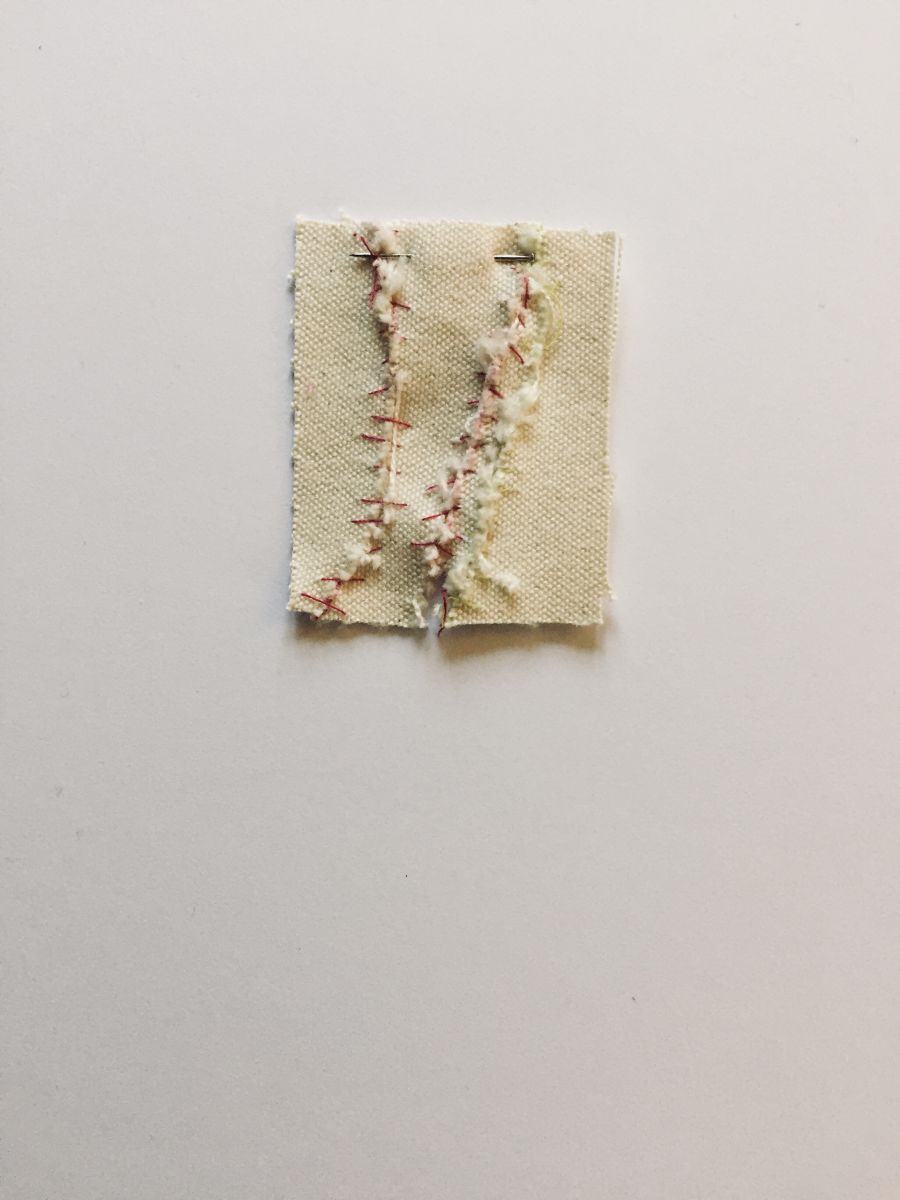
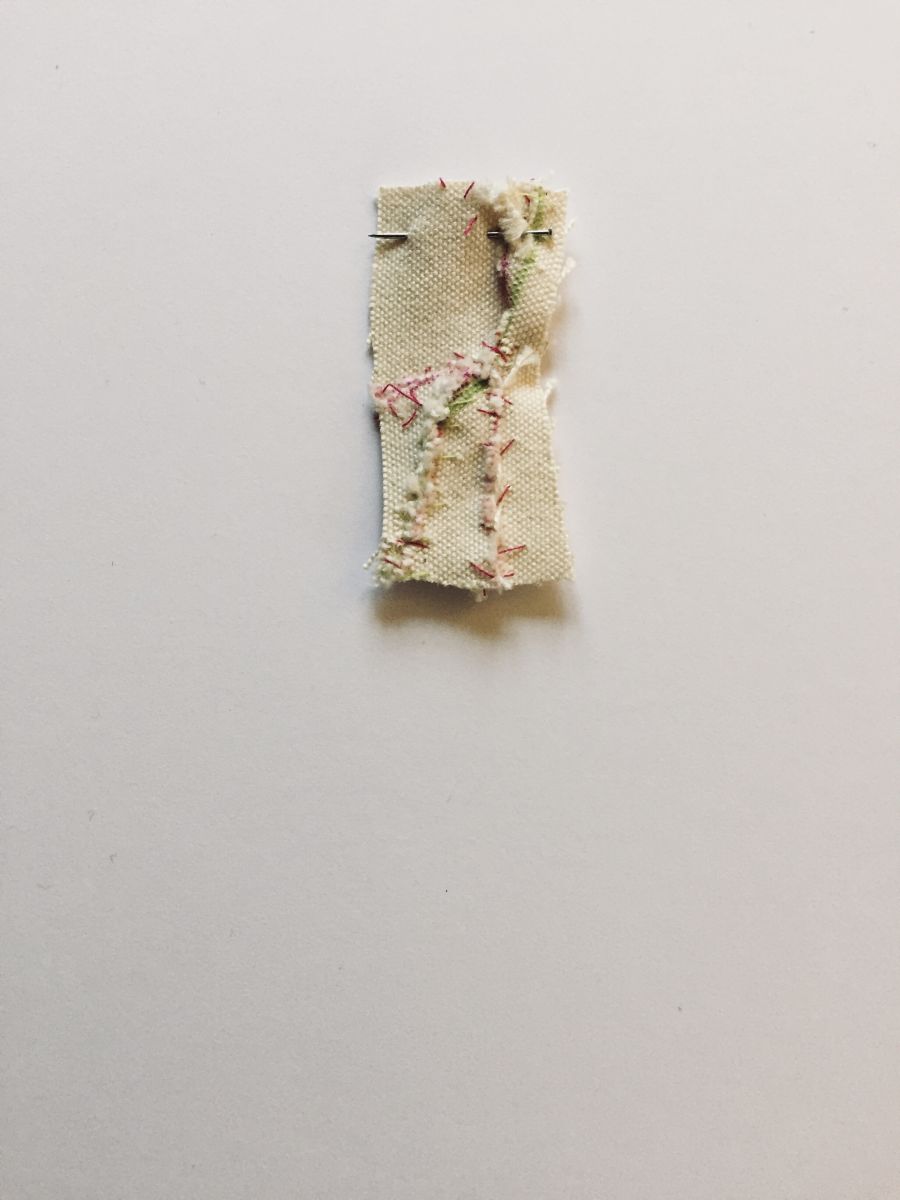
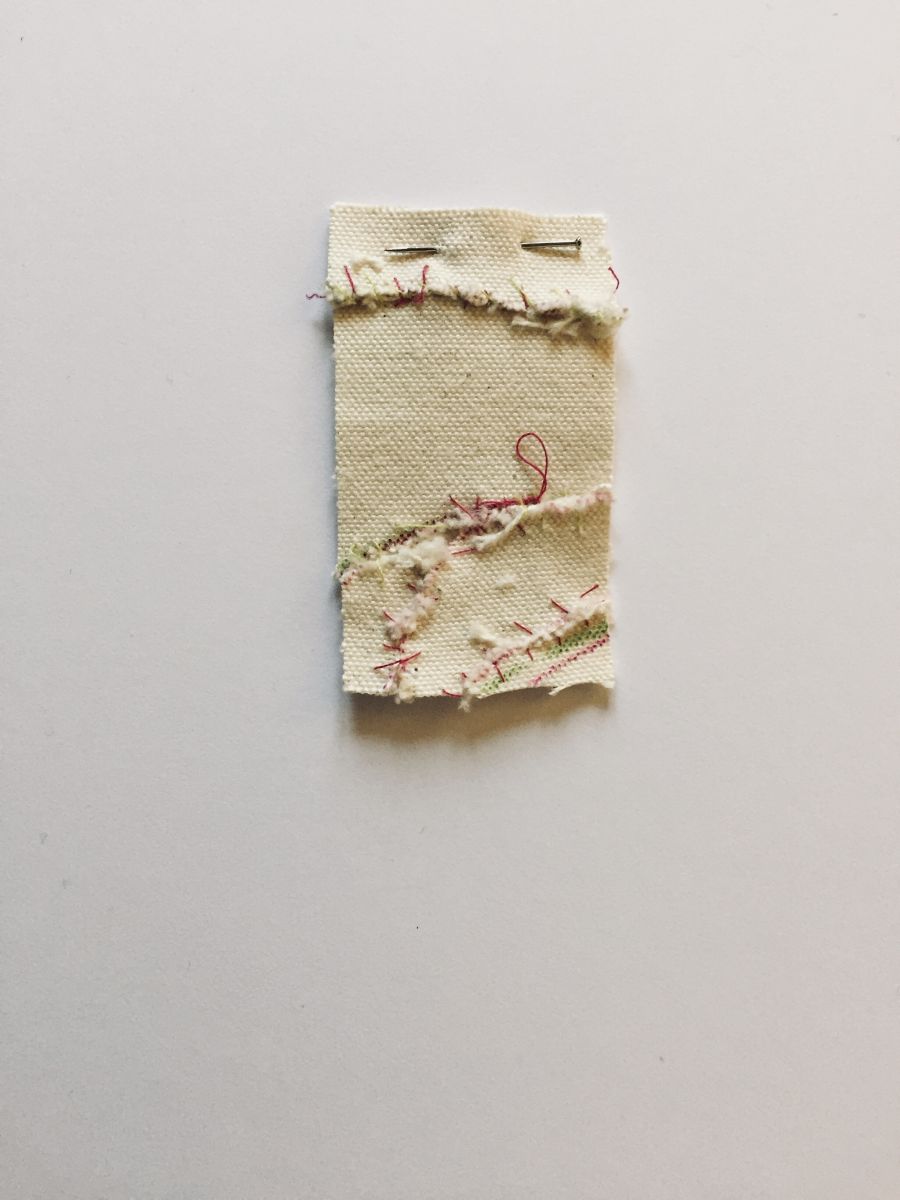
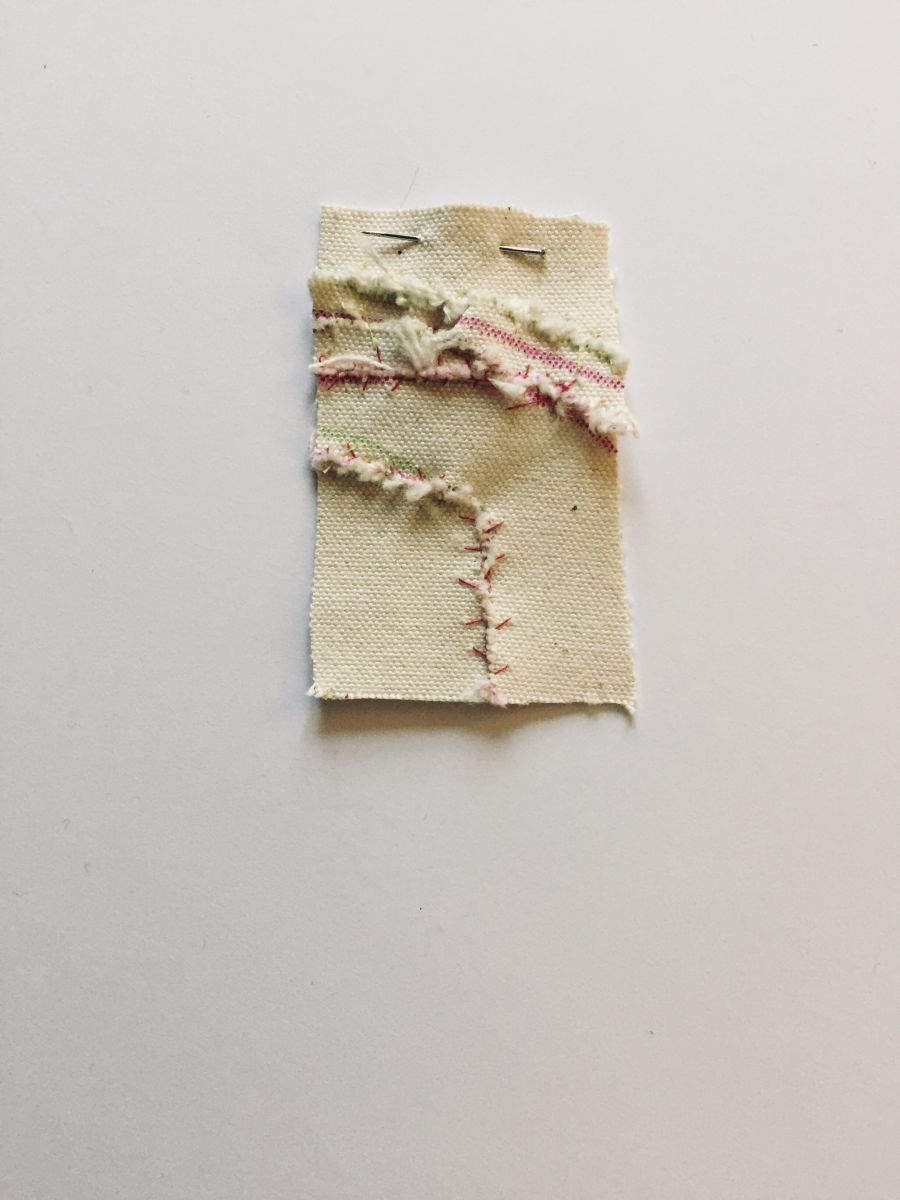
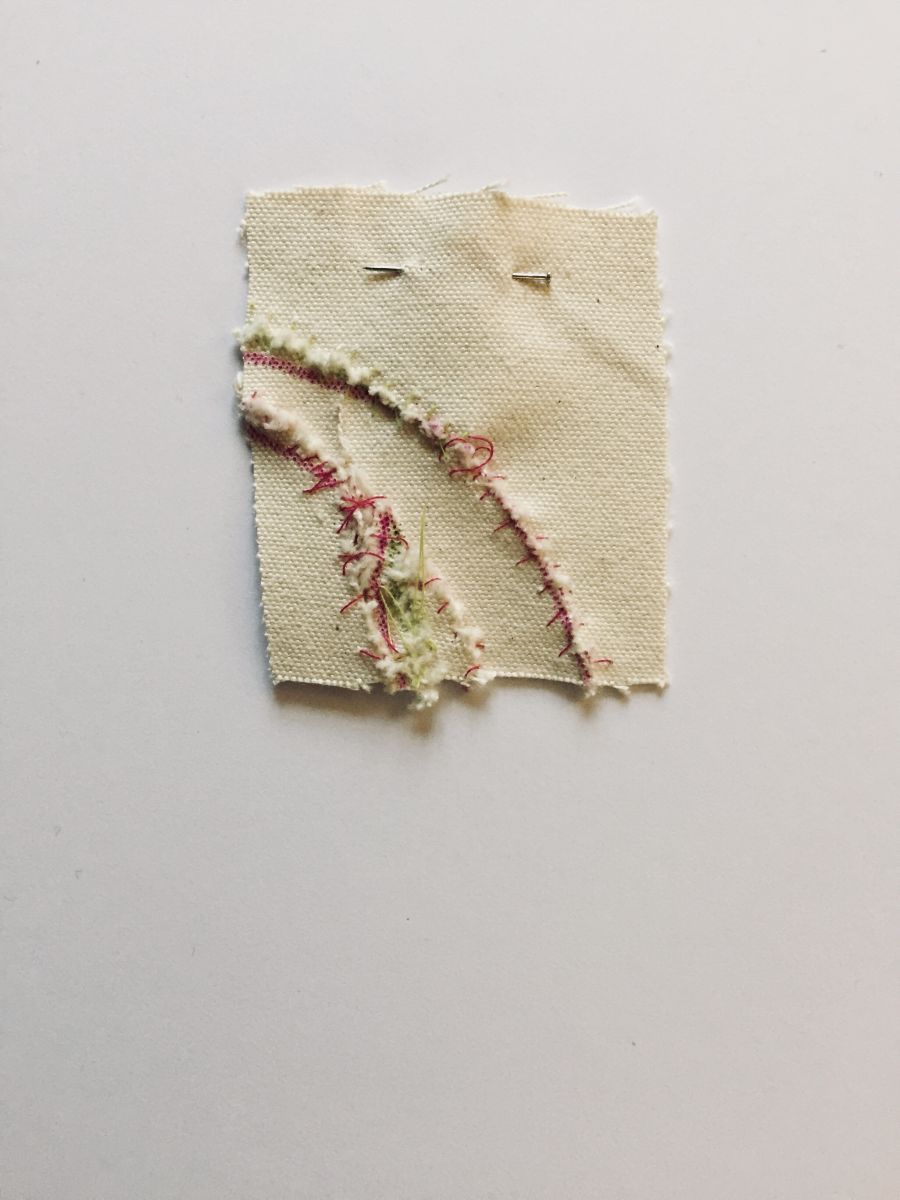
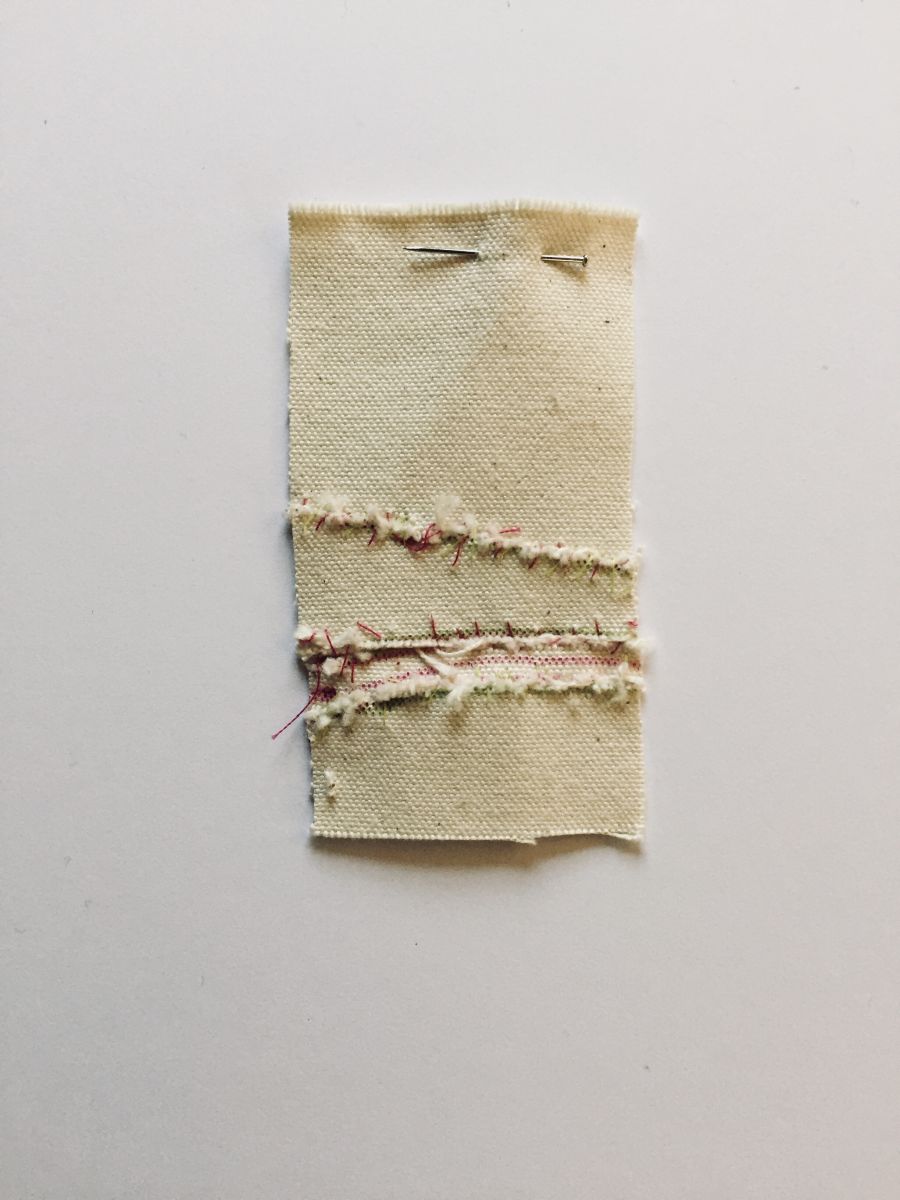
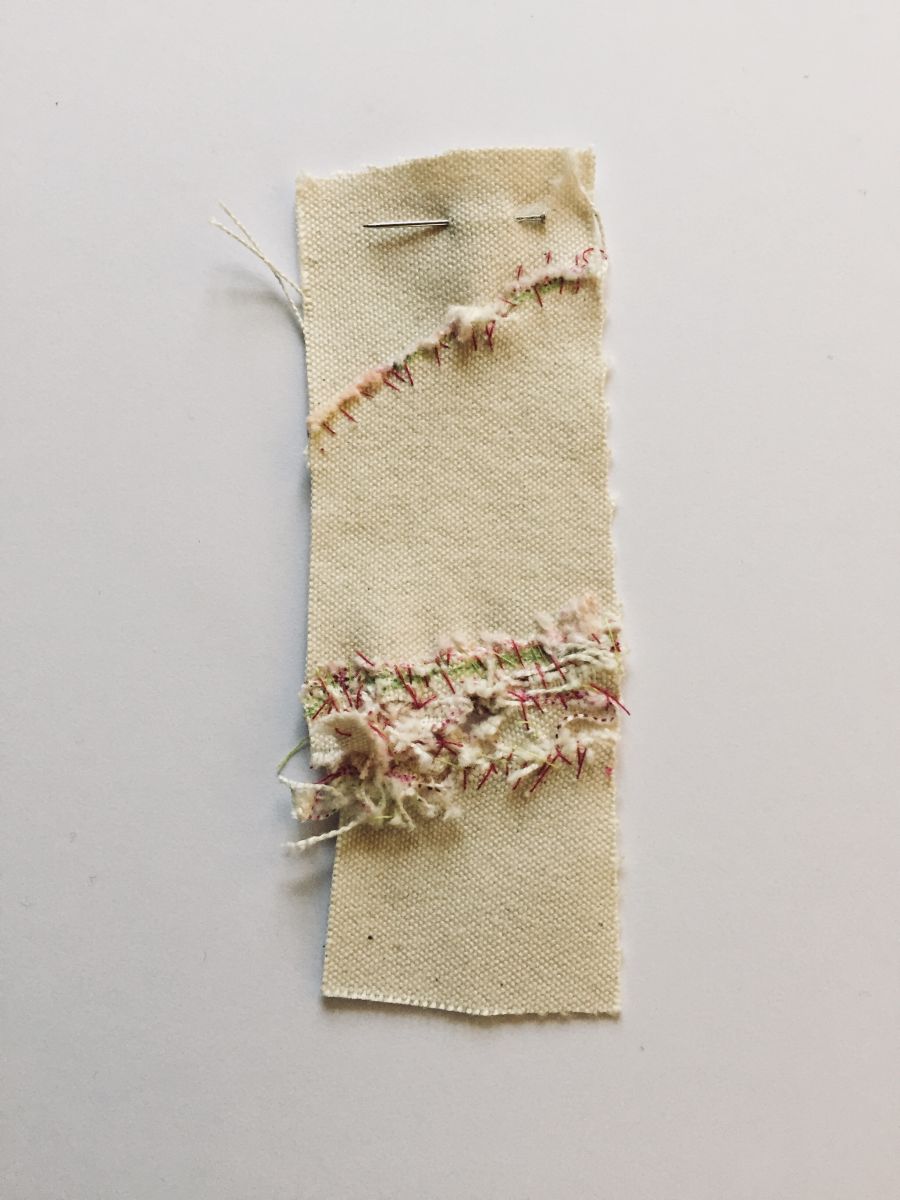
In the eighteenth century, some mothers would reclaim their children from the Foundling hospital and one supposes they might have also reclaimed the tokens left with them. Either way, the reclaiming of the tokens seemed a good way for me to articulate the time I spend with the children, as if my picking them up is a kind of reclaiming. The fact the number of days I have with them are far fewer than the number of days I don’t means I only wanted to use a small proportion of the tokens to create a new piece.
I called the new piece ‘Morning Has Broken’ after the Cat Stevens song, which my son and I were singing together.
Tokens of absence
A few months ago I visited the Foundling Hospital in London, established in 1739 to receive and care for abandoned children. It was a deeply emotional experience, not least because of the tokens left by mothers with their babies as a means of identifying them both as parent and child. More often than not, these tokens were pieces of fabric (they now comprise Britain’s largest collection of 18th century textiles amounting to over 5000 items) pinned to sheets of paper on which a few basic facts about the child were recorded.
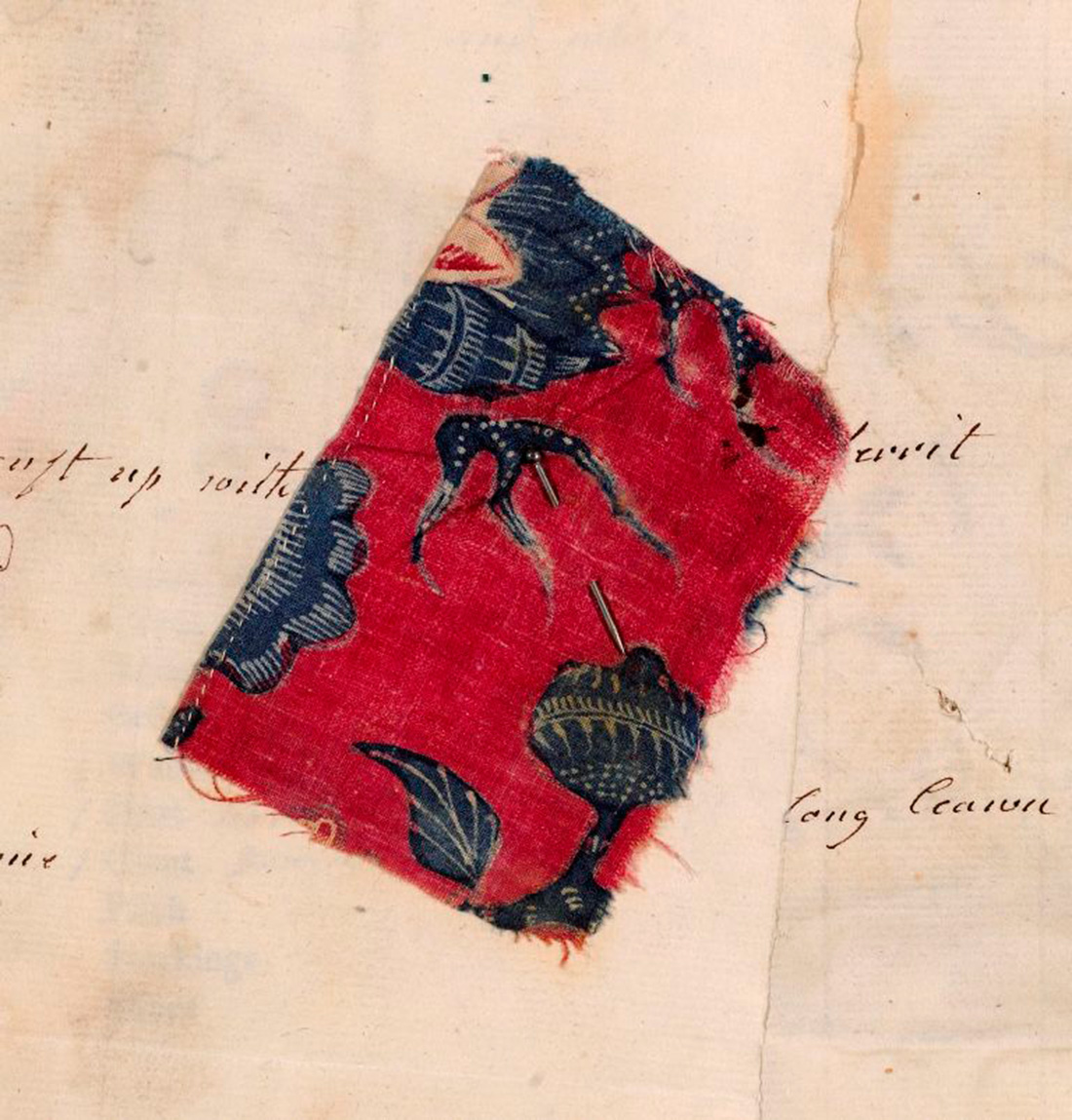
These pieces of fabric ultimately speak of the missing mother and in such small, seemingly insignificant objects one is faced with the remnants of an overwhelming sorrow. Perhaps, somewhere, the mother would have carried a similar piece which spoke to her of her absent child?
With my latest stitched works, I wanted to convey not only the contrast between the times I have my children and when I don’t, but also the sense of absence I carry around when they’re away, and so, inspired by the tokens, I made a cut in the work I’d recently completed.
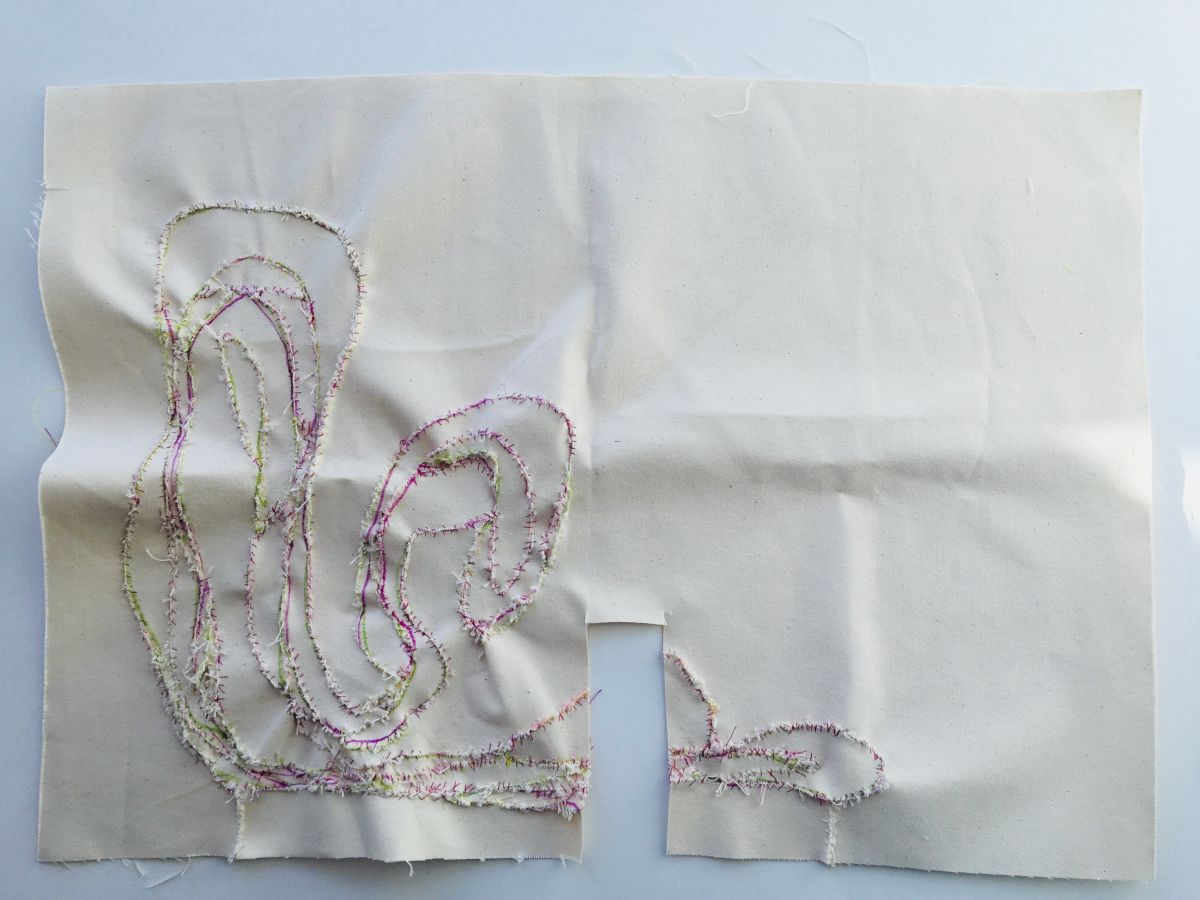
Almost at once, these smaller pieces began to articulate what I often feel; that sense of absence which comes again and again, with more and more ‘tokens’ cut from the cloth.
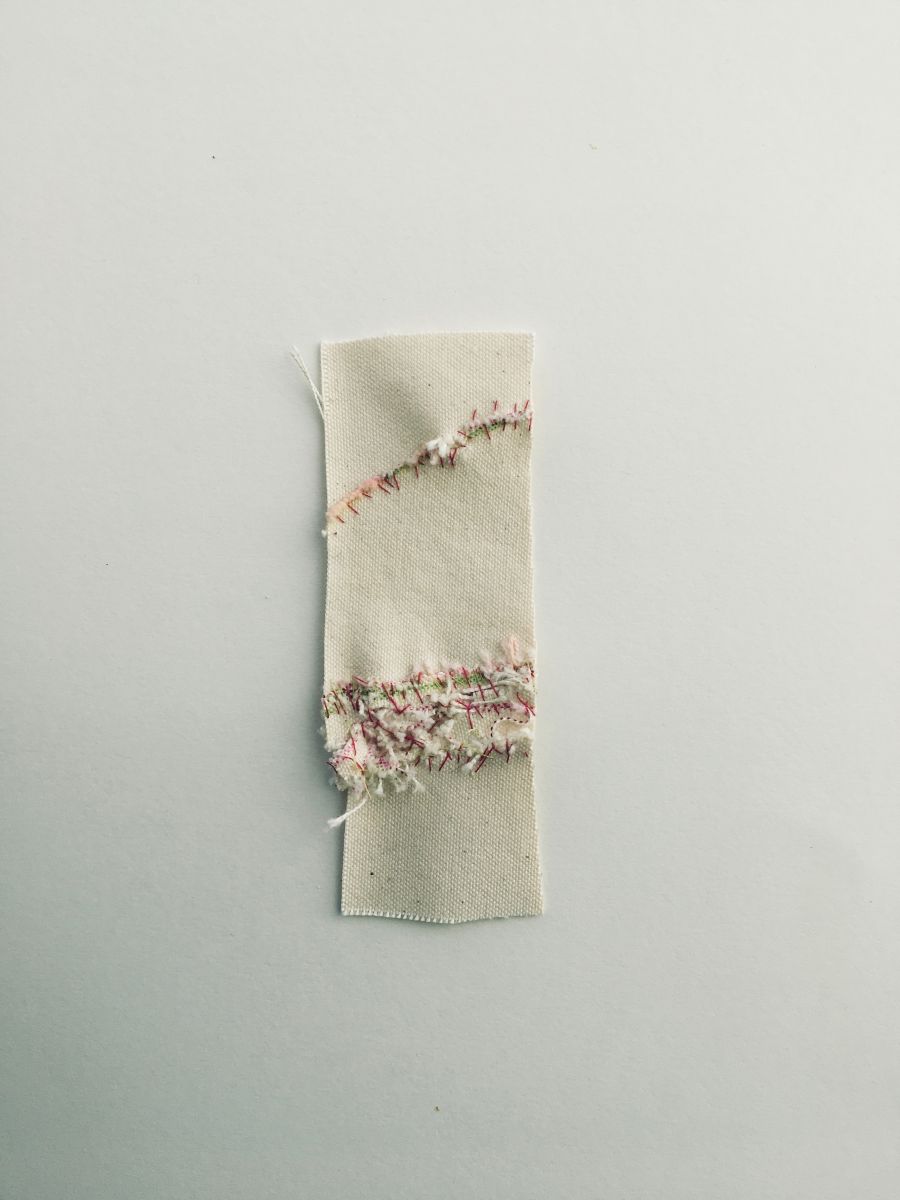
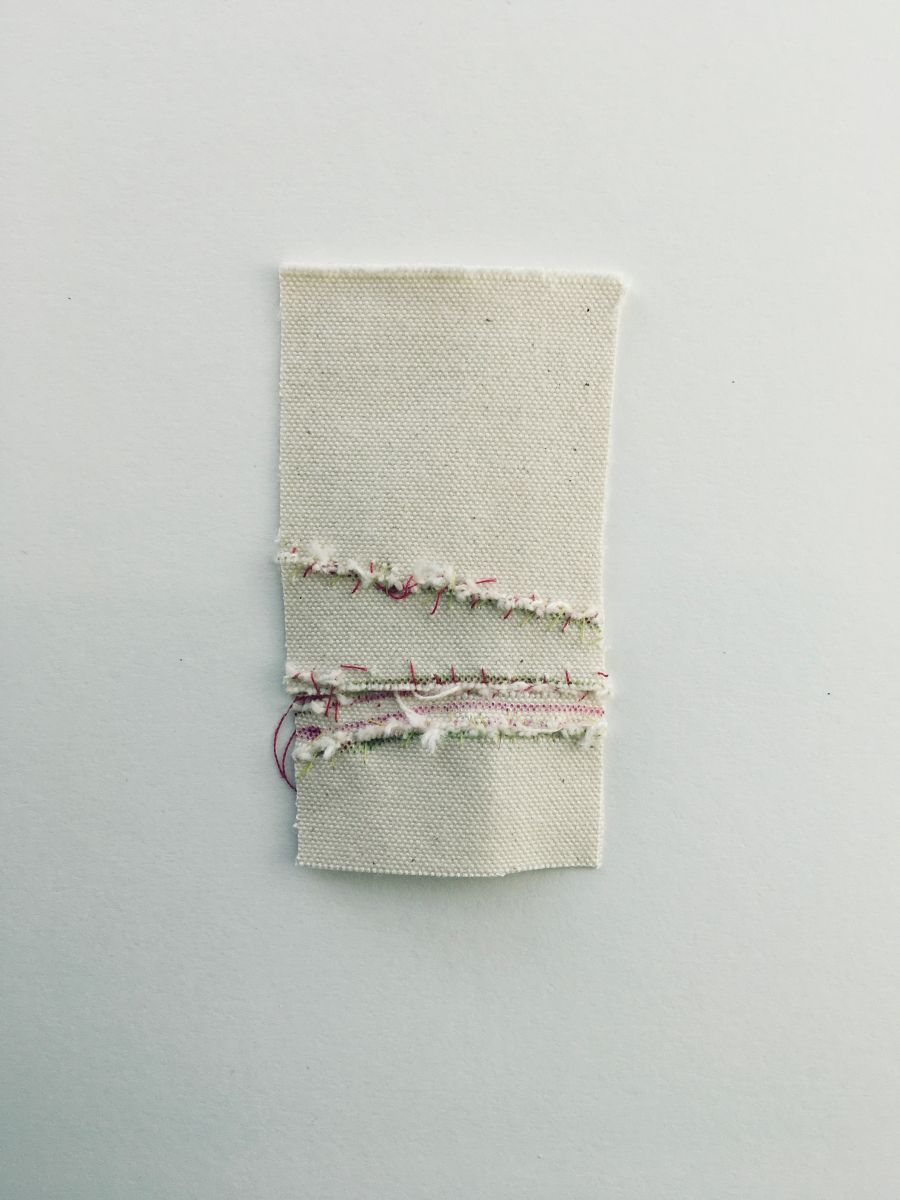
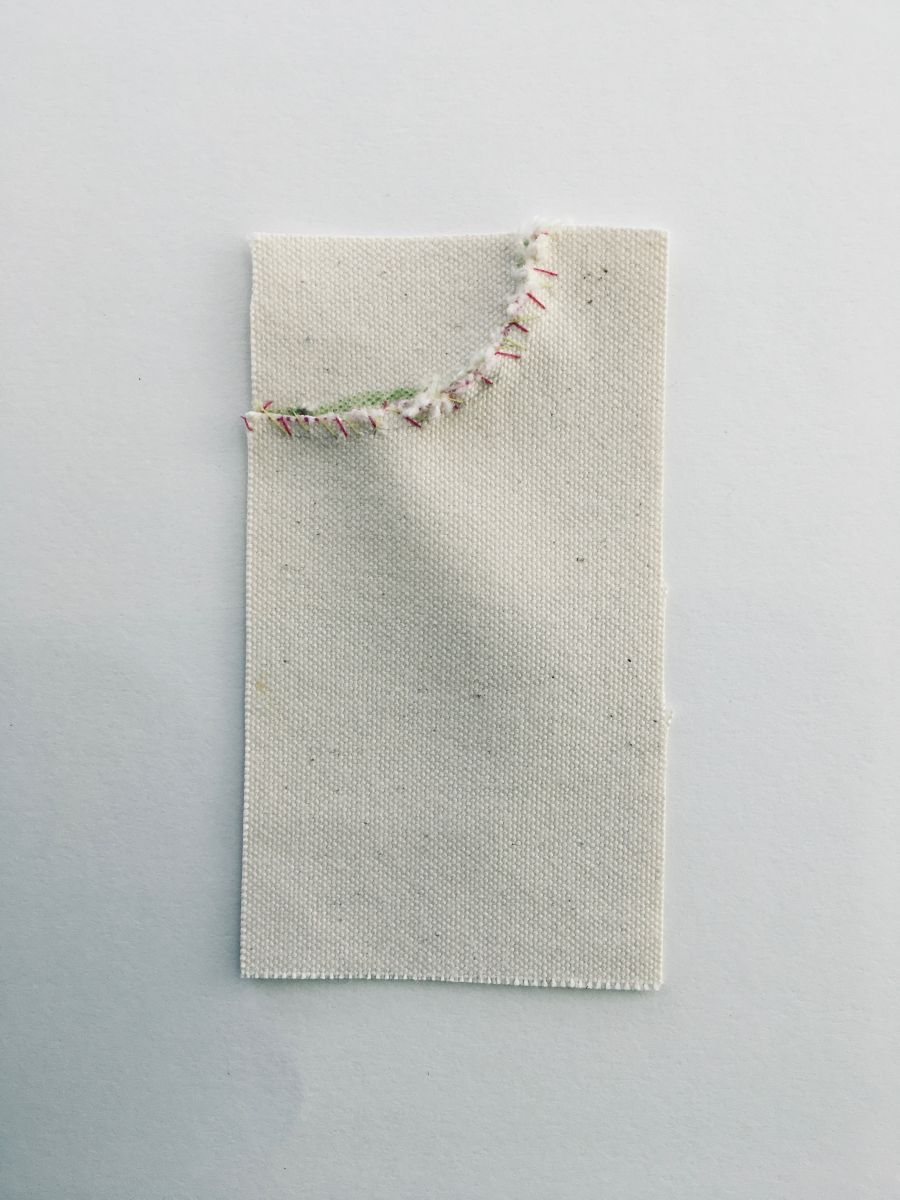
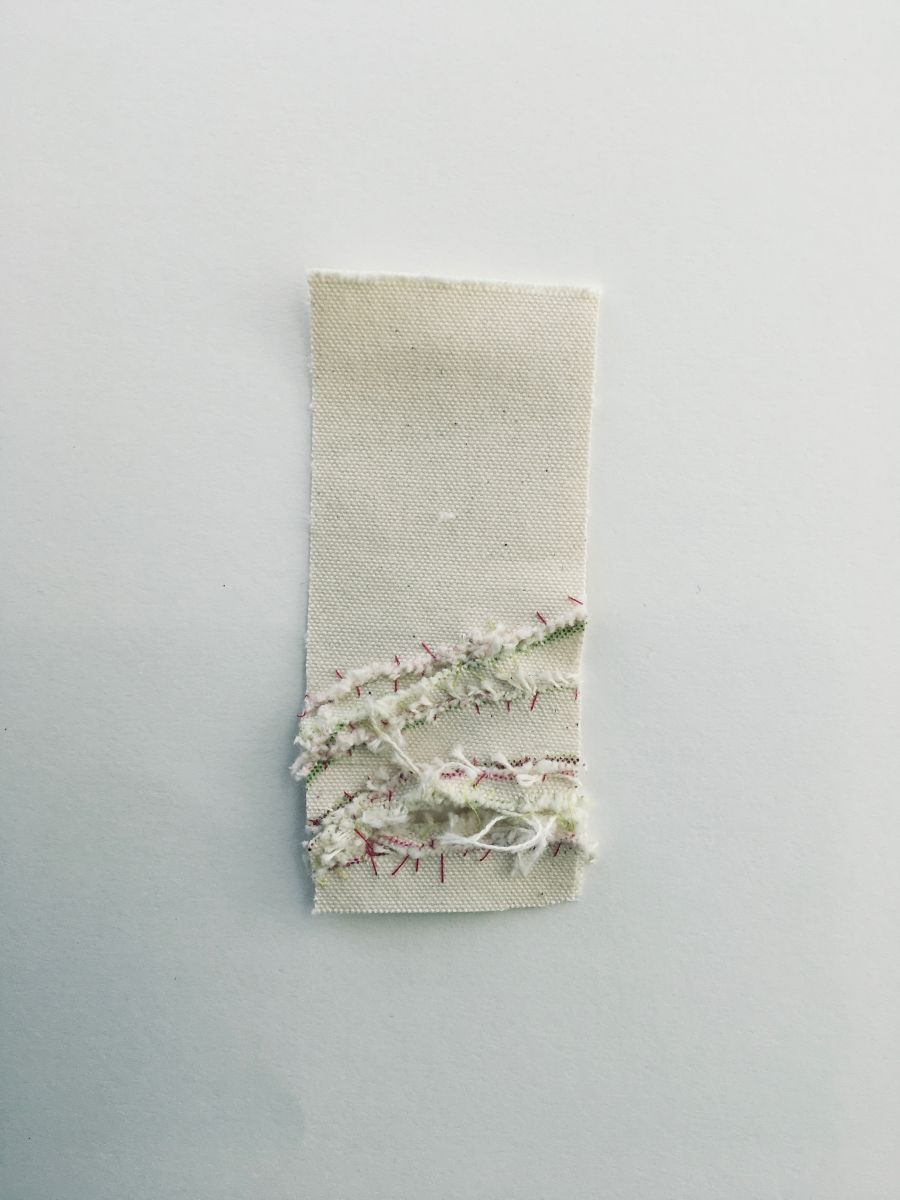
‘Missded’ 1, stitched
The stitched versions of my son’s drawings are objects which, in contrast to the quickly made drawings on which they’re based, take many hours to complete; a contrast that speaks of the difference between the relatively short times I have the children to stay and the long periods between their visits.
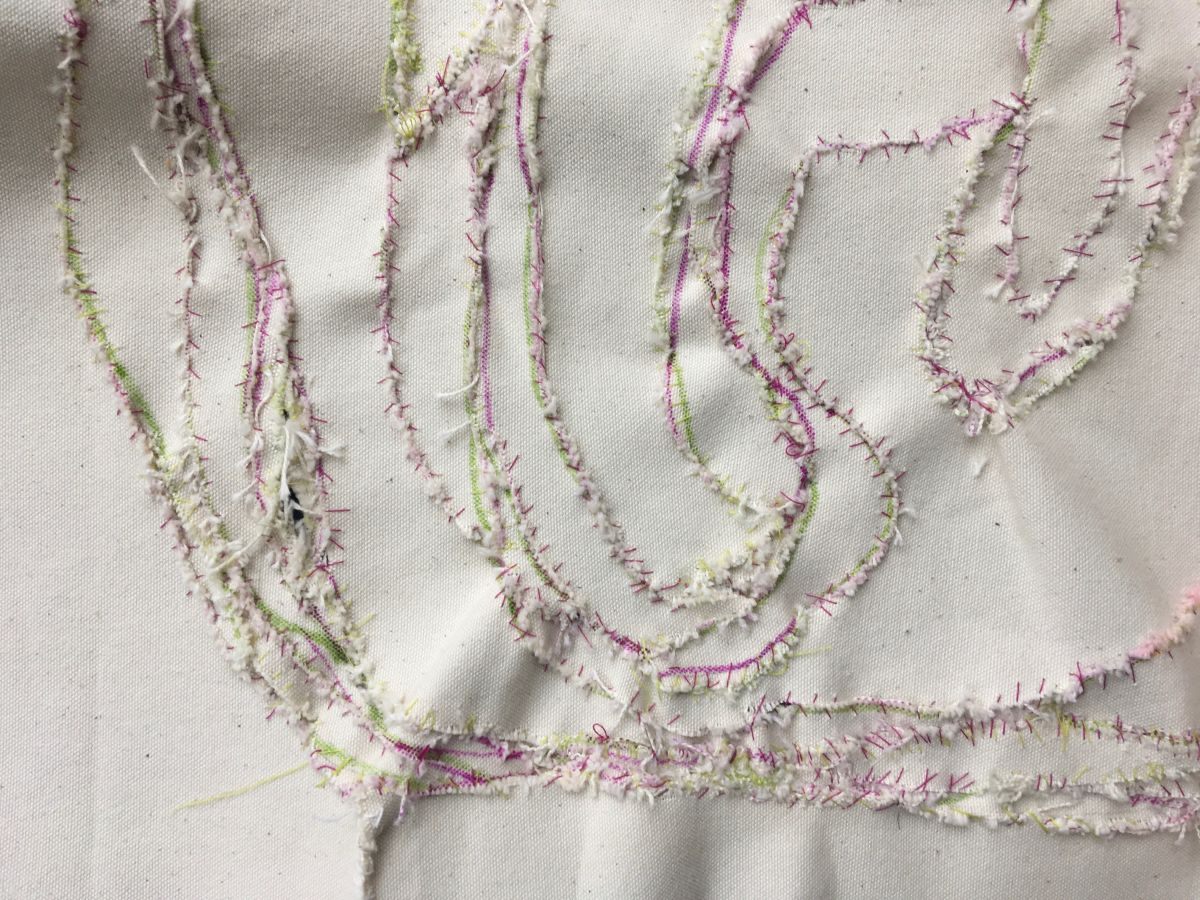
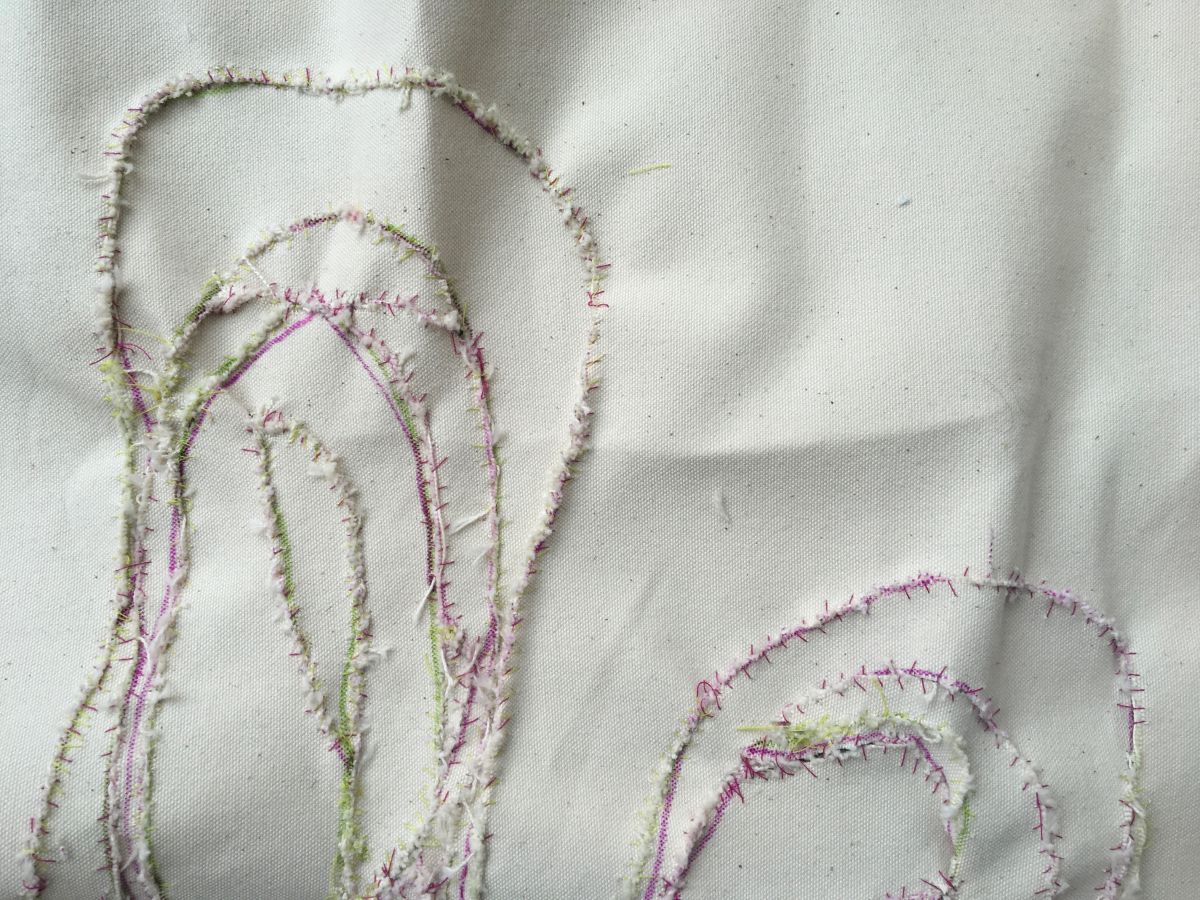
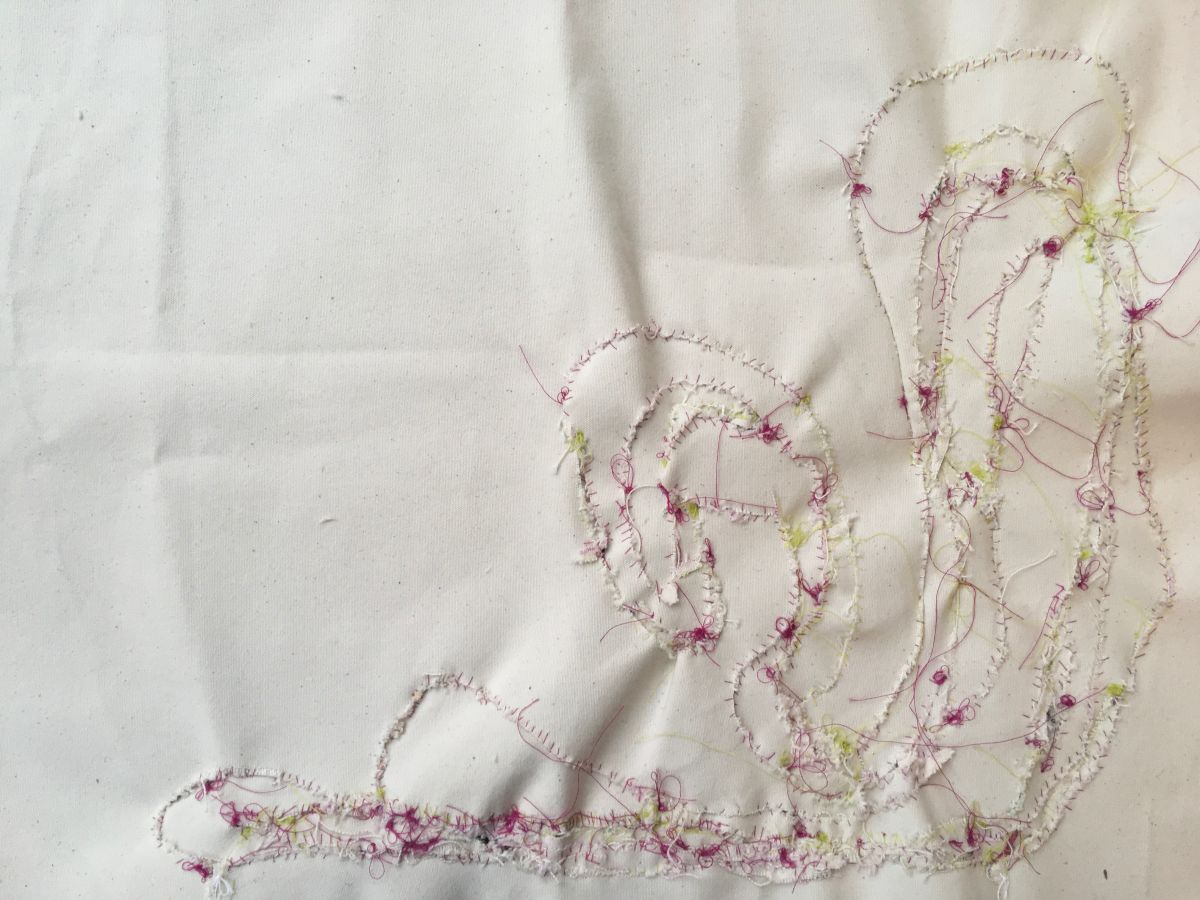
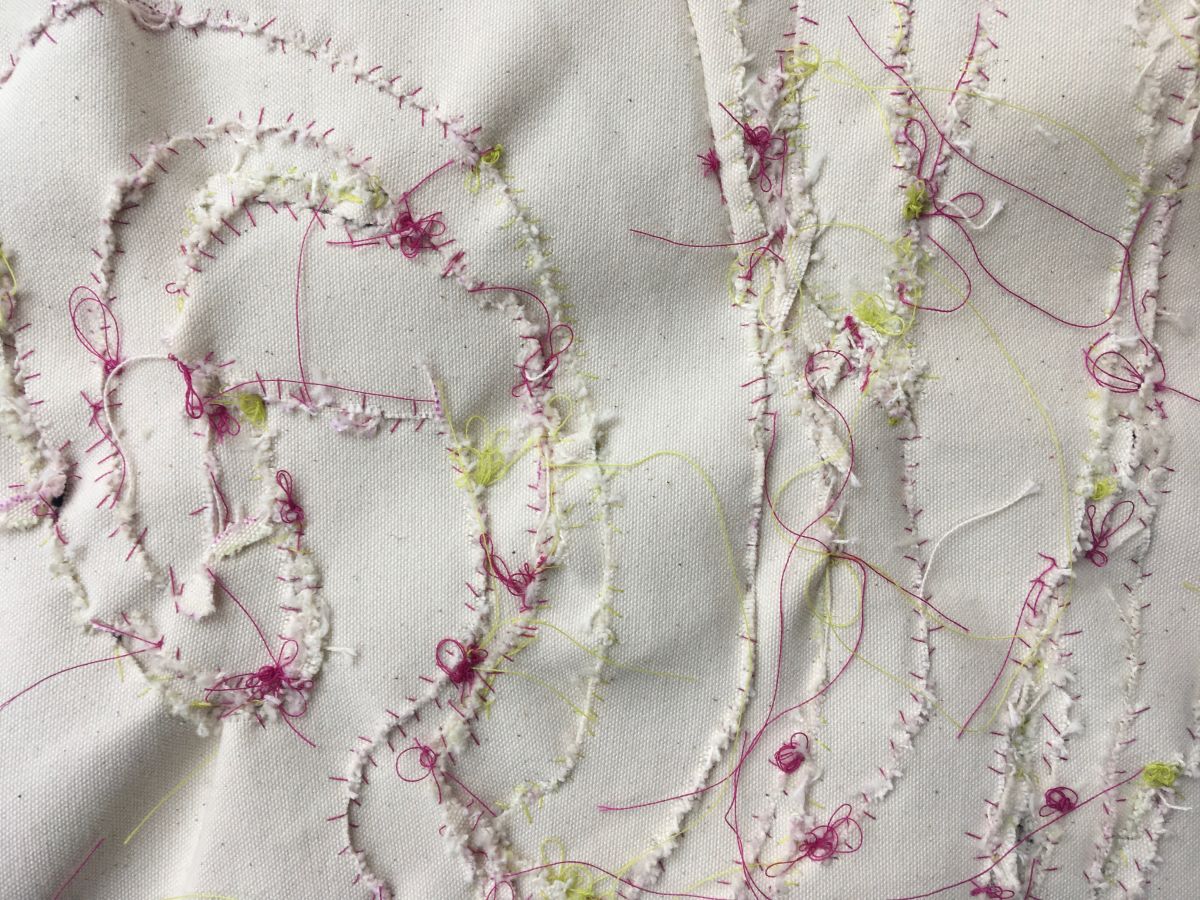
In those long periods, I content myself with thinking of the things we’ve done together, and as such our relationship often finds expression in the photographs I take and the various things they make when they’re here – like Eliot’s drawings. Ultimately therefore, these works are about absence and it’s that sense of absence which is starting to take this project in another direction…
More Little Words
Leading on from my last post about my son’s scribbled post-it notes, I looked again at the tracings I made and was reminded me of the work I did in the summer, painting shadows under the trees at Shotover.
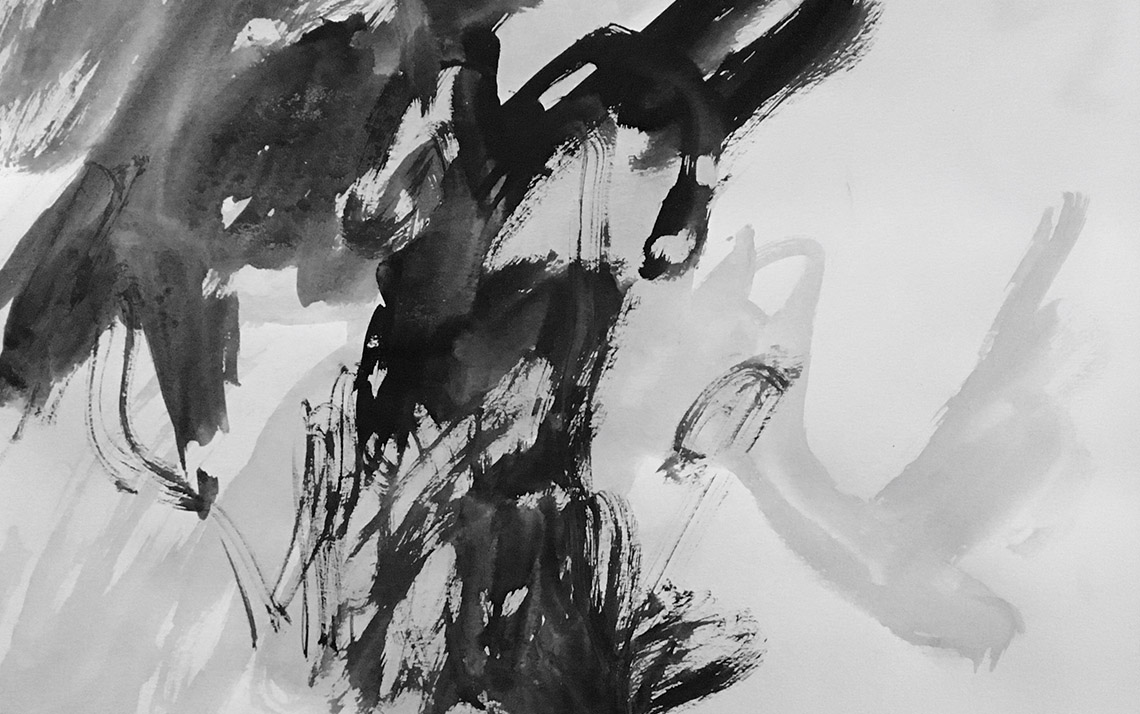
Inspired of course by Chinese and Japanese calligraphy, the ‘three little words’ copied from my son’s scribbles shared something with these shadow paintings and so, I traced the lines again, this time using a brush.
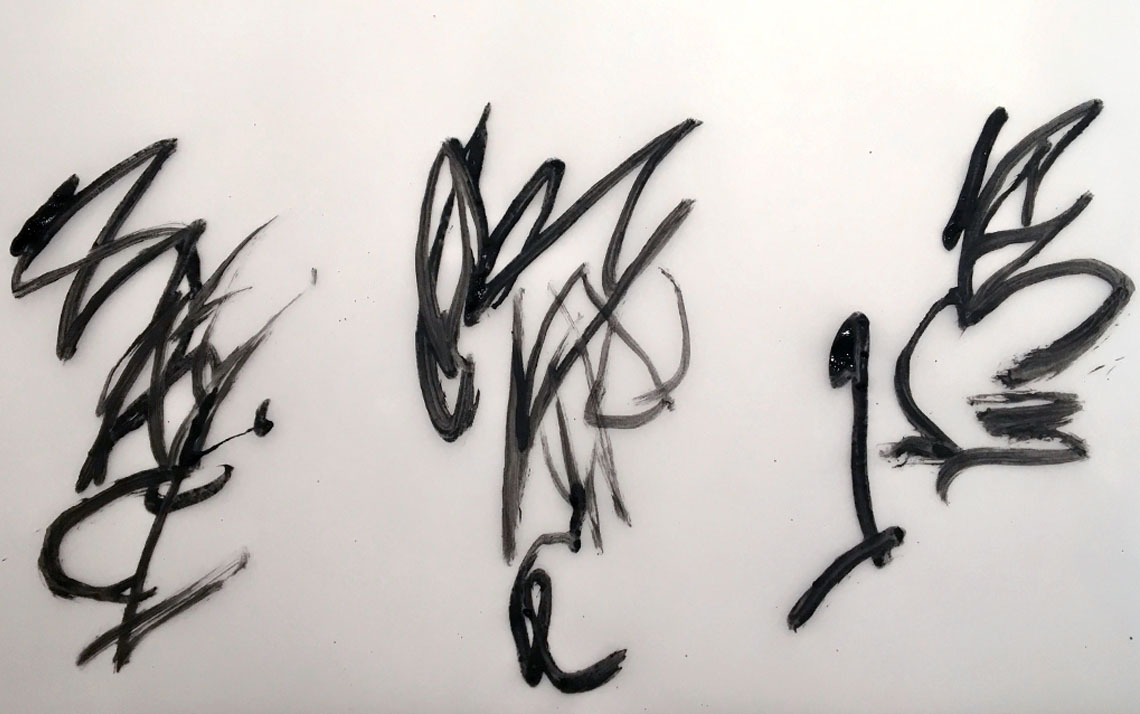
Three Little Words
Iris created a treasure hunt for me and Eliot; a trail of post-it notes stuck around the flat, each containing a clue as to the location of the next. Once we’d completed the hunt and solved the puzzle (letters which formed the words ‘I am Amazing’), Eliot decided to do one of his own. He too stuck dozens of post-it notes around the flat, each with a scribbled line which he told me was writing.
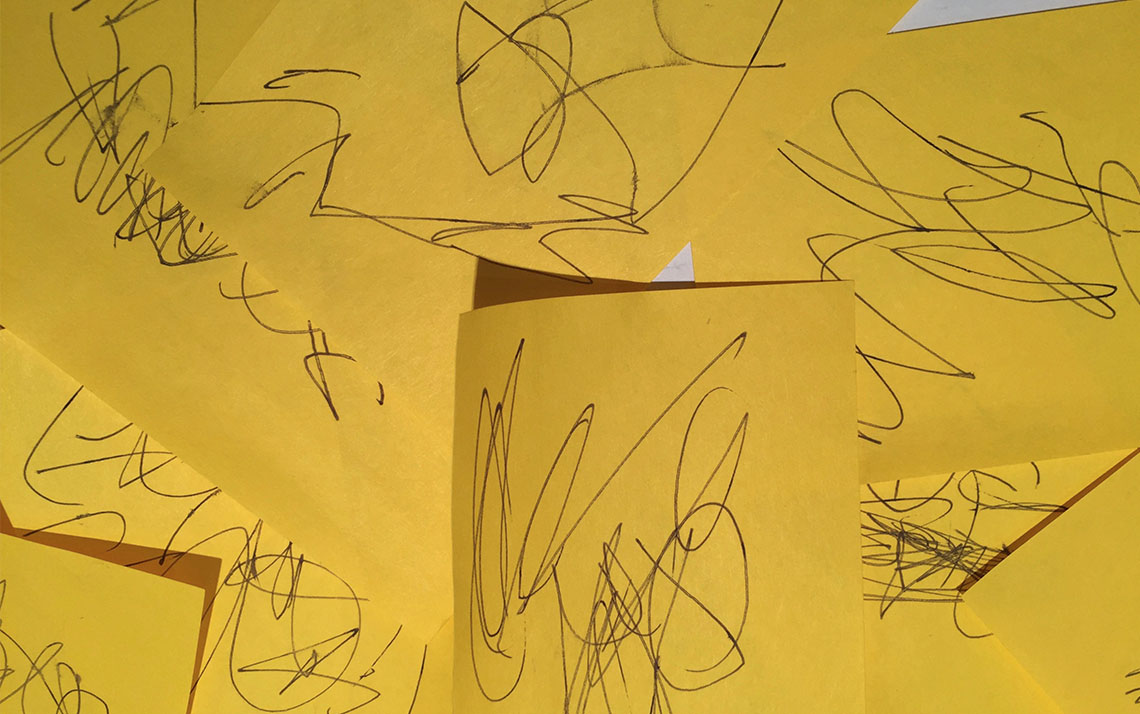
It goes without saying that I thought it a very sweet thing to do and again I used the notes as a source for some play of my own, tracing the lines he’d drawn – written – on the post-its, and then drawing over them in felt-tip pen. I was immediately struck by the fact that they did indeed resemble a writing of sorts, albeit one as yet unknown and undeciphered.
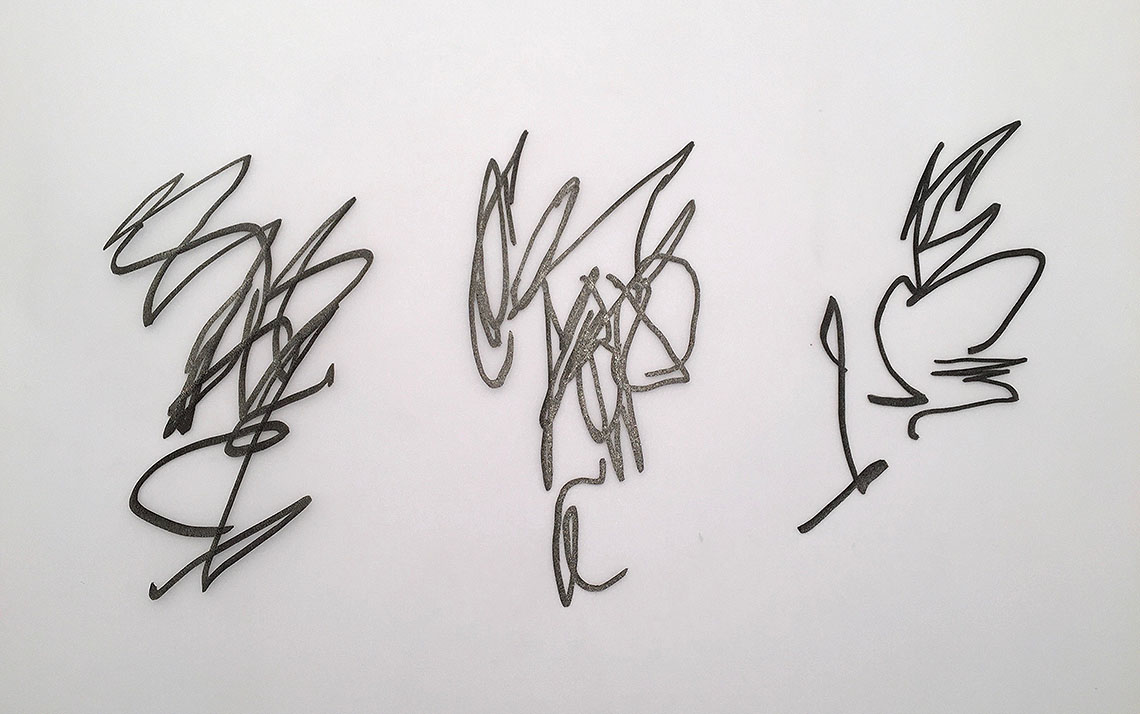
Spaces In Between
Much of my work of the last ten years or so has been to do with the past, with imagining a moment in the past in all its lost ‘presentness’. The work I’ve been making recently with my 3 year old son’s drawings (‘Missded’) has thrown up what could be an interesting metaphor in that regard.
As I’ve written recently, where my son’s original drawings were ‘about’ lines, the transferring of those drawings to canvas is a process more concerned with spaces. In other words, the lines on the canvas, which echo the original pattern of the drawings, are lines drawn around spaces rather than a single line drawn through a space as in my son’s original drawing. It’s this contrast which interests me.
It reminds me of some work I did quite a few years ago when I walked a route around town, capturing what I could see in lists of words. When I looked at the route ‘drawn’ on my GPS unit I was interested in the spaces between the lines of my walk and all that had happened in those spaces – all the things which were part of the same moments captured on my lists, but which I hadn’t witnessed.
The past moment, in all its ‘presentness’, is like that line drawn in a matter of seconds across the paper, and history, the recreation of that line through the delineation of many empty spaces.
With a pile of cut out spaces left after the job of transferring the image to canvas, I started another piece which used those fragments, arranging them on the fly to create a pattern.
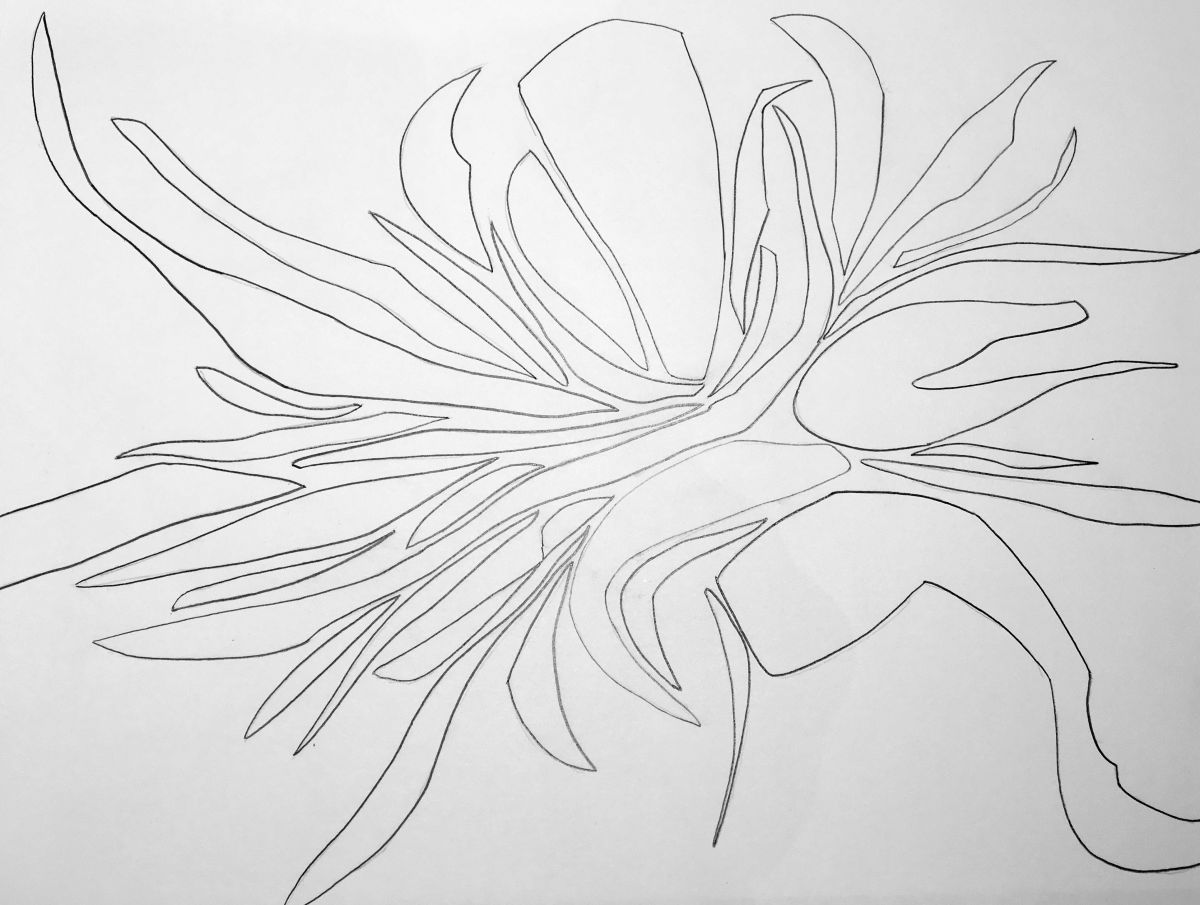
I’ve no idea yes what this will lead to, but I like the organic feel of the piece. I’m imagining that it will become a more intricate, finished work, and again, this will provide an interesting contrast between the piece made by my son (an intricate pattern made in seconds) and that made by me (an intricate pattern, derived from the drawings, but made over many hours).
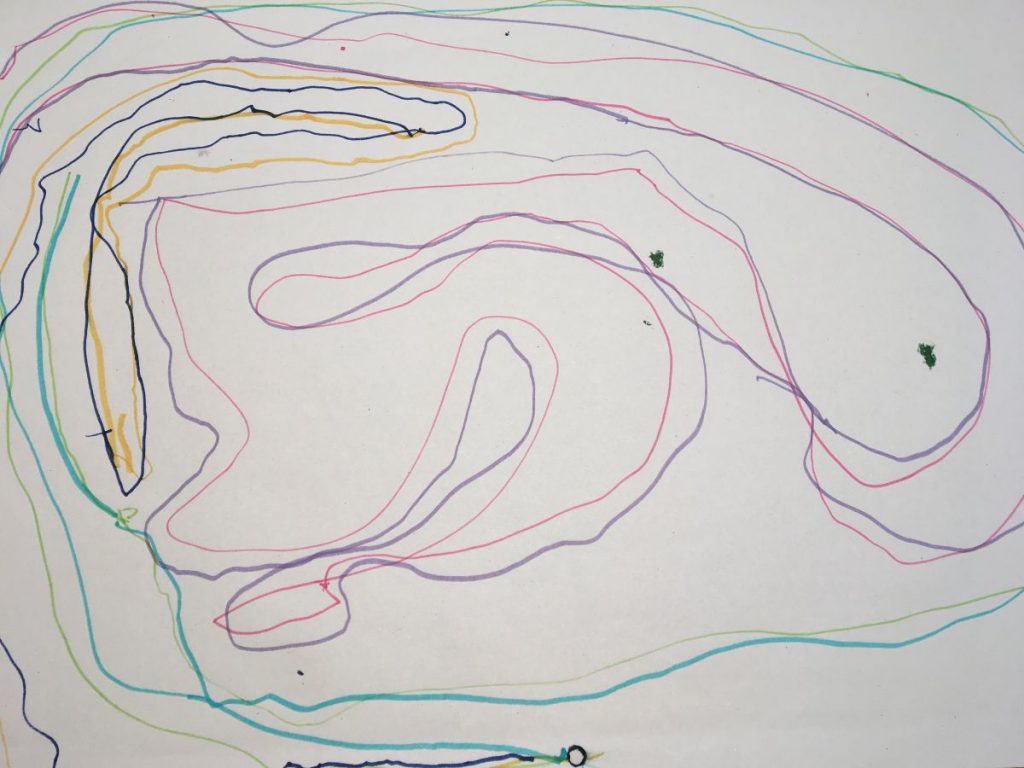
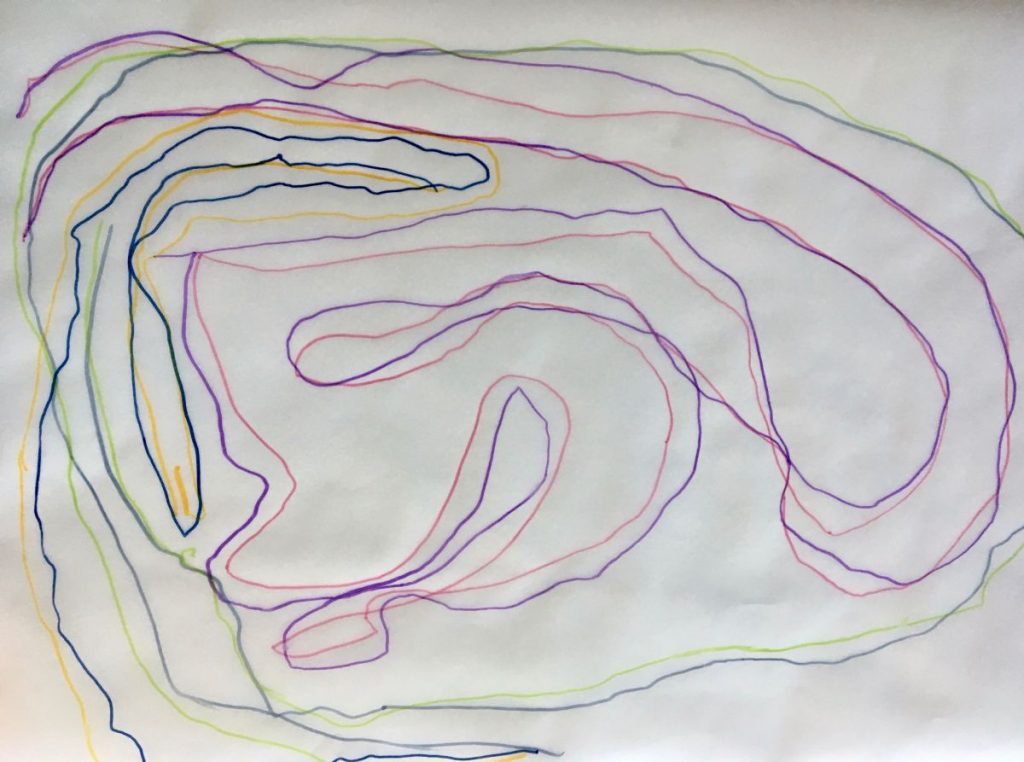
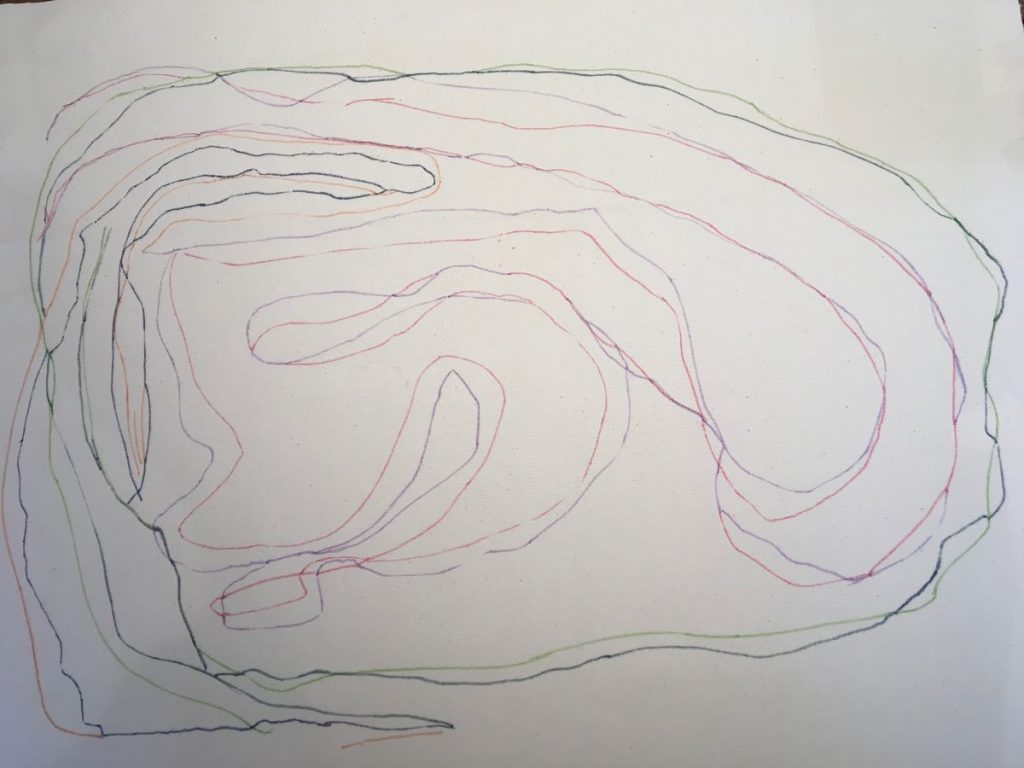
‘Missded’ 3
The latest in a series of works entitled ‘Missded’. Photos below show original drawing, tracing and template drawn onto canvas.
‘Missded’ 2
Second piece showing original drawing, tracing and template drawn onto canvas.
‘Missded’ 1
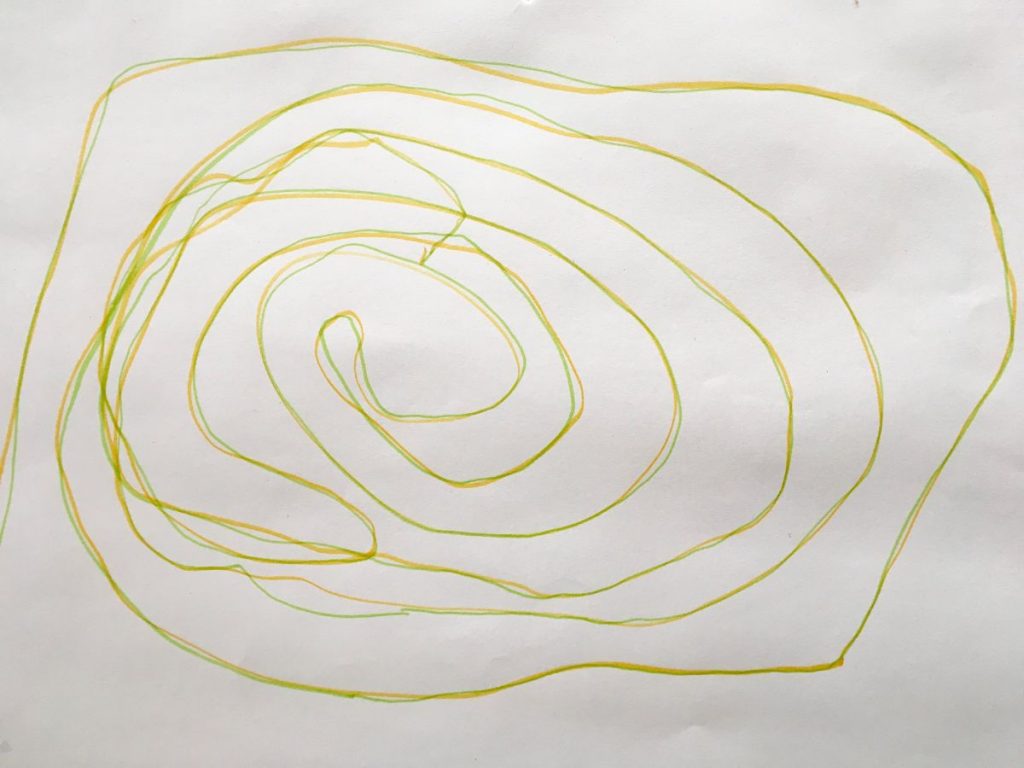
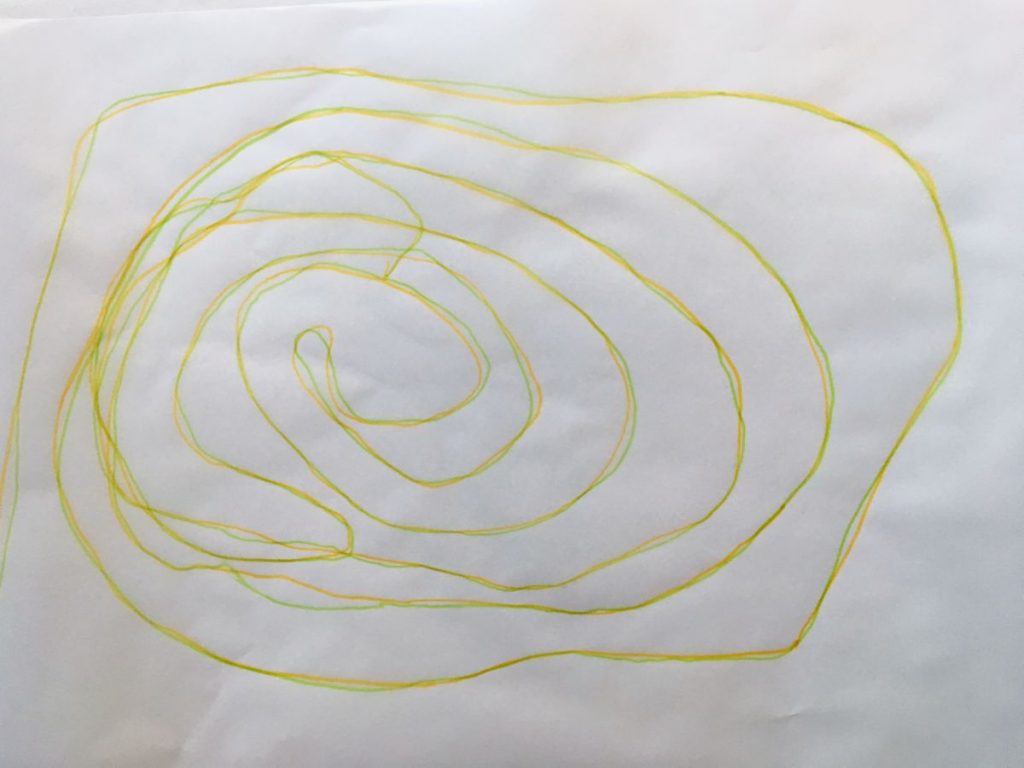
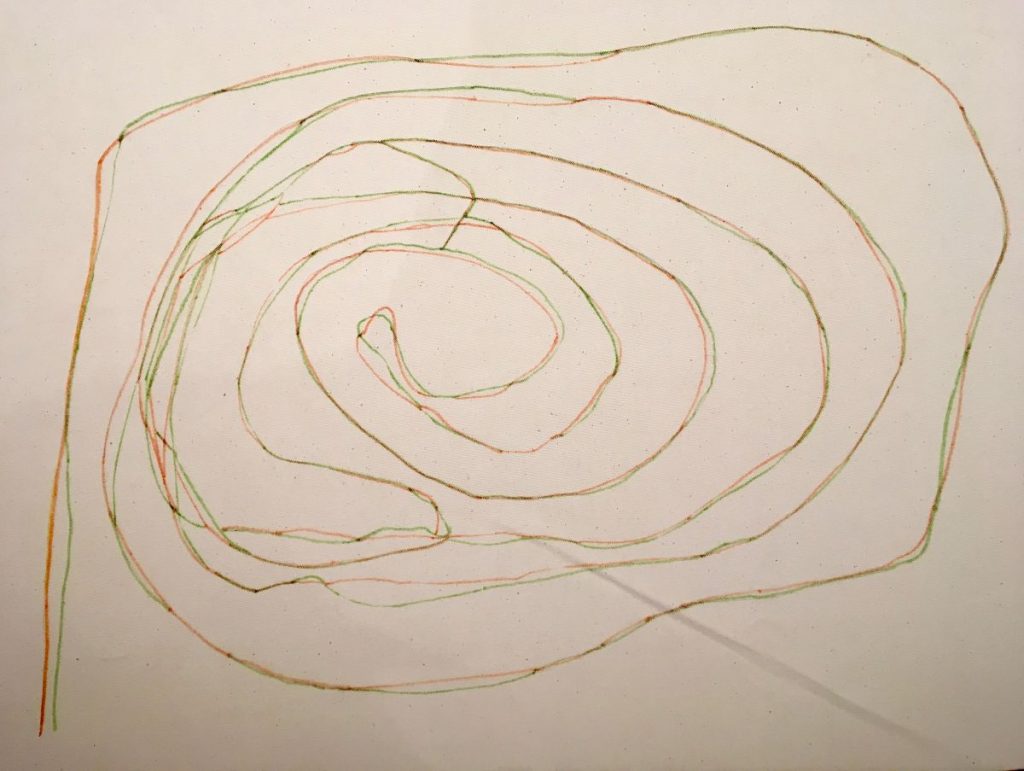
The images below show the three stages (so far completed) of the first in a series of works entitled “Missded”. The word ‘missded’ is one my son used when he’d said he’d missed me: “I missded you daddy”.
The first image is the original drawing we made together, the second is the tracing I made of that drawing and the third, the canvas onto which I have outlined the pattern (having cut out the shapes from the tracing).
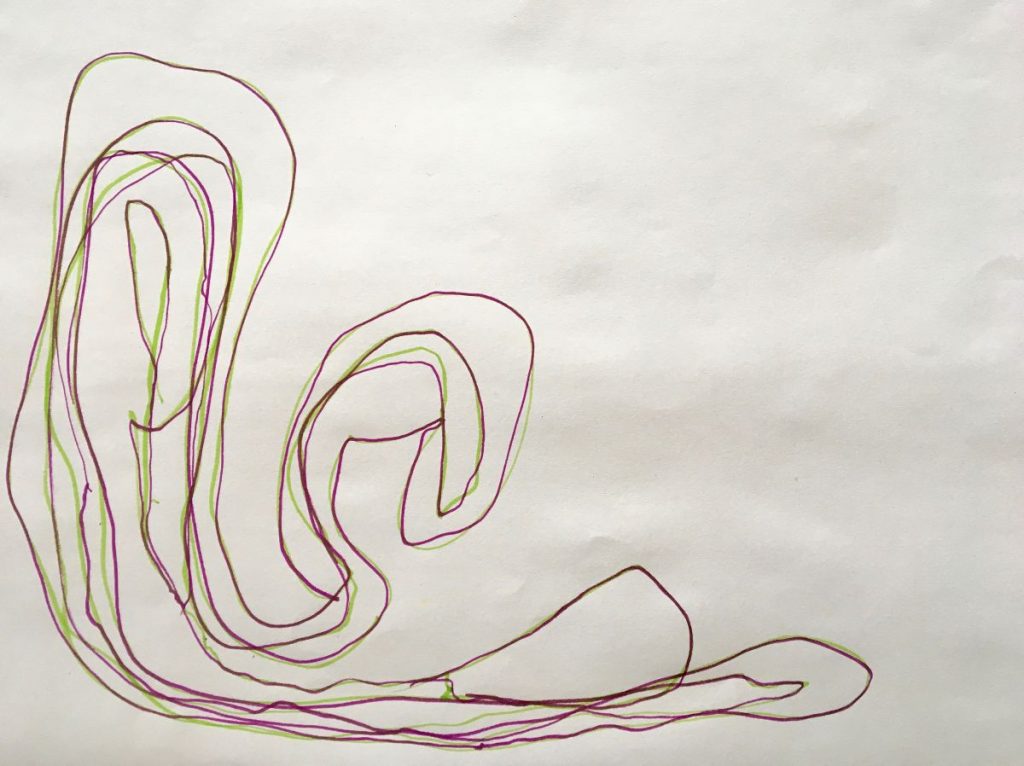
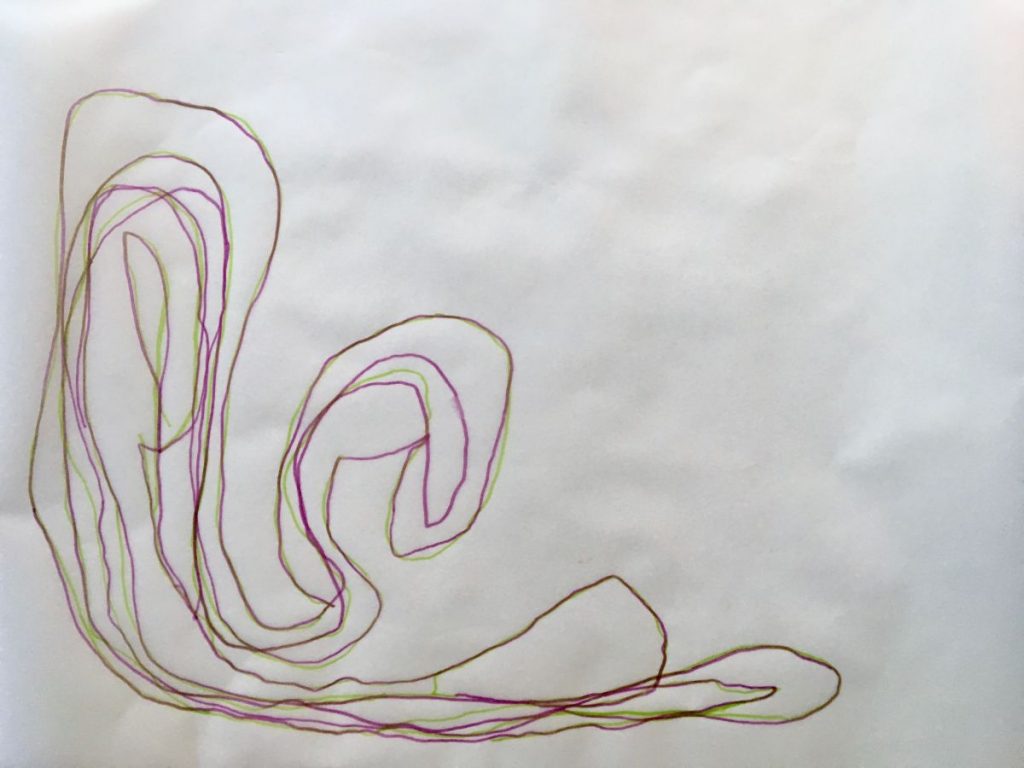
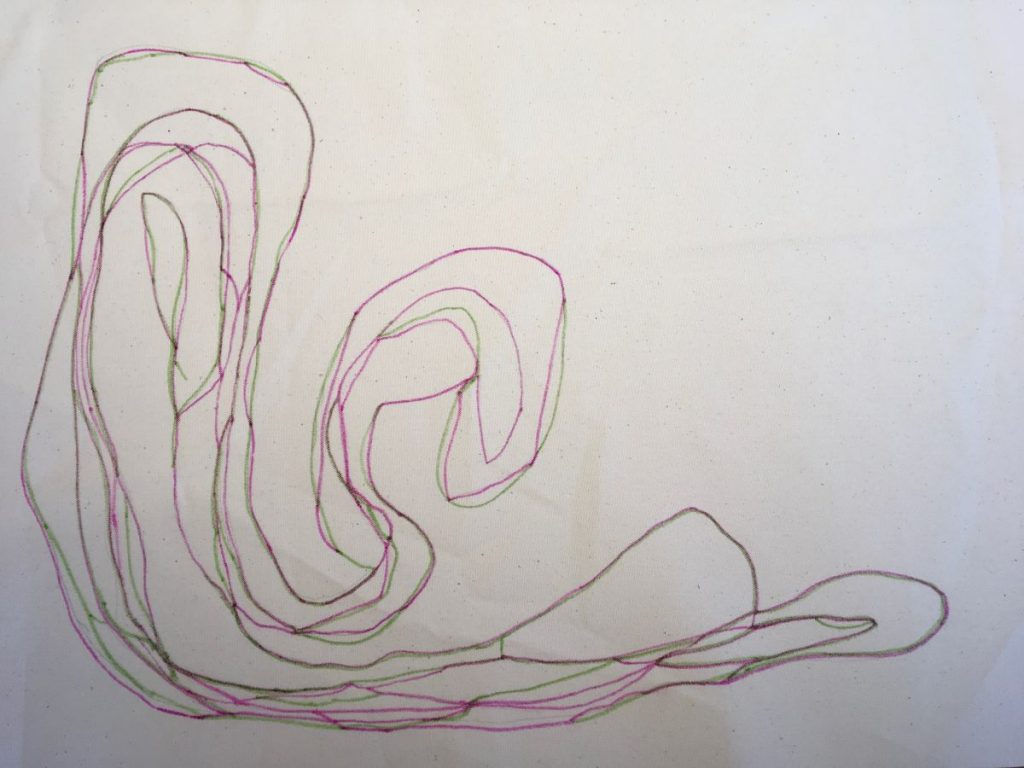
It was a difficult job, trying to cut such difficult shapes – and to remember where they were meant to go on the canvas – but that uncertainty and the lack of accuracy reflects in some ways the theme of the work itself; the remembered act, that is, me and my son drawing together.
What was interesting was the difference between the making of the drawing and the creation of the template, in that the original drawing is very much about the lines we made whereas the template is much more concerned with the spaces between – the shapes which I could cut out and draw around.
Again this somehow reflects the nature of the work’s theme; that is missing someone. The days on which I do see my children are the lines outlining the gaps when I don’t – the spaces in between. This could become a whole other area which I shall explore later.
Locks
Following on from my last post, the images below show tracings I made of the same drawings made with my son, this time in pencil. There was no particular reason why I made them in pencil; it was something that seemed a good idea. Aesthetically, I’ve always liked pencilled lines and, as a result, I really liked these particular tracings.
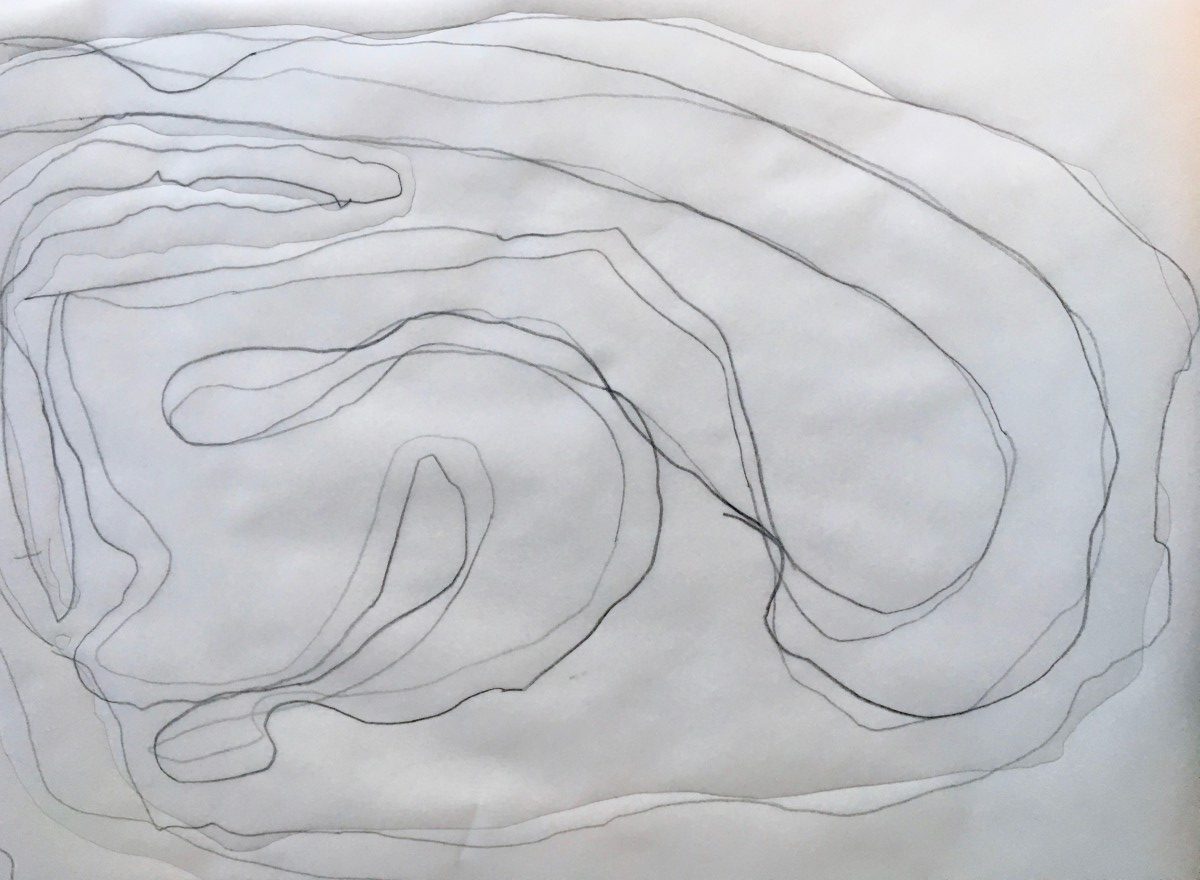
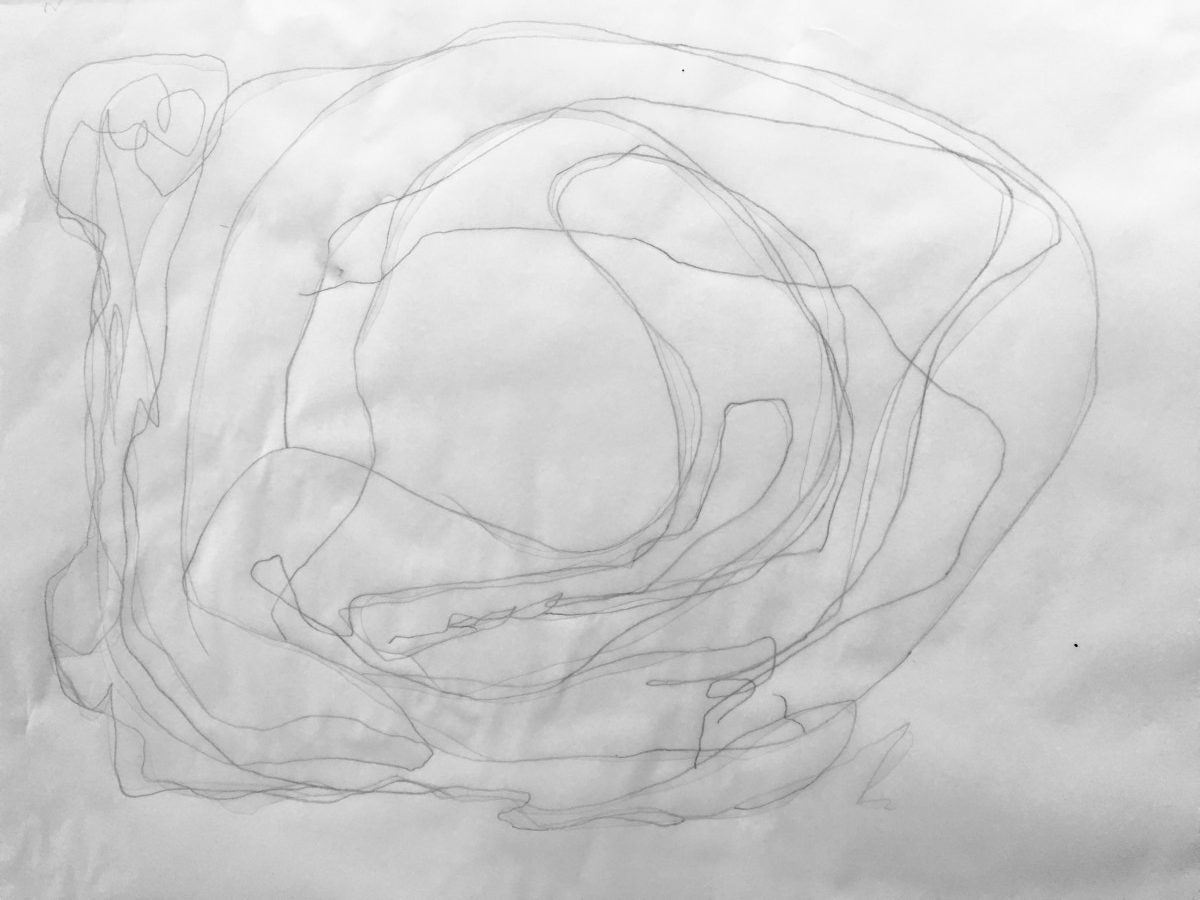
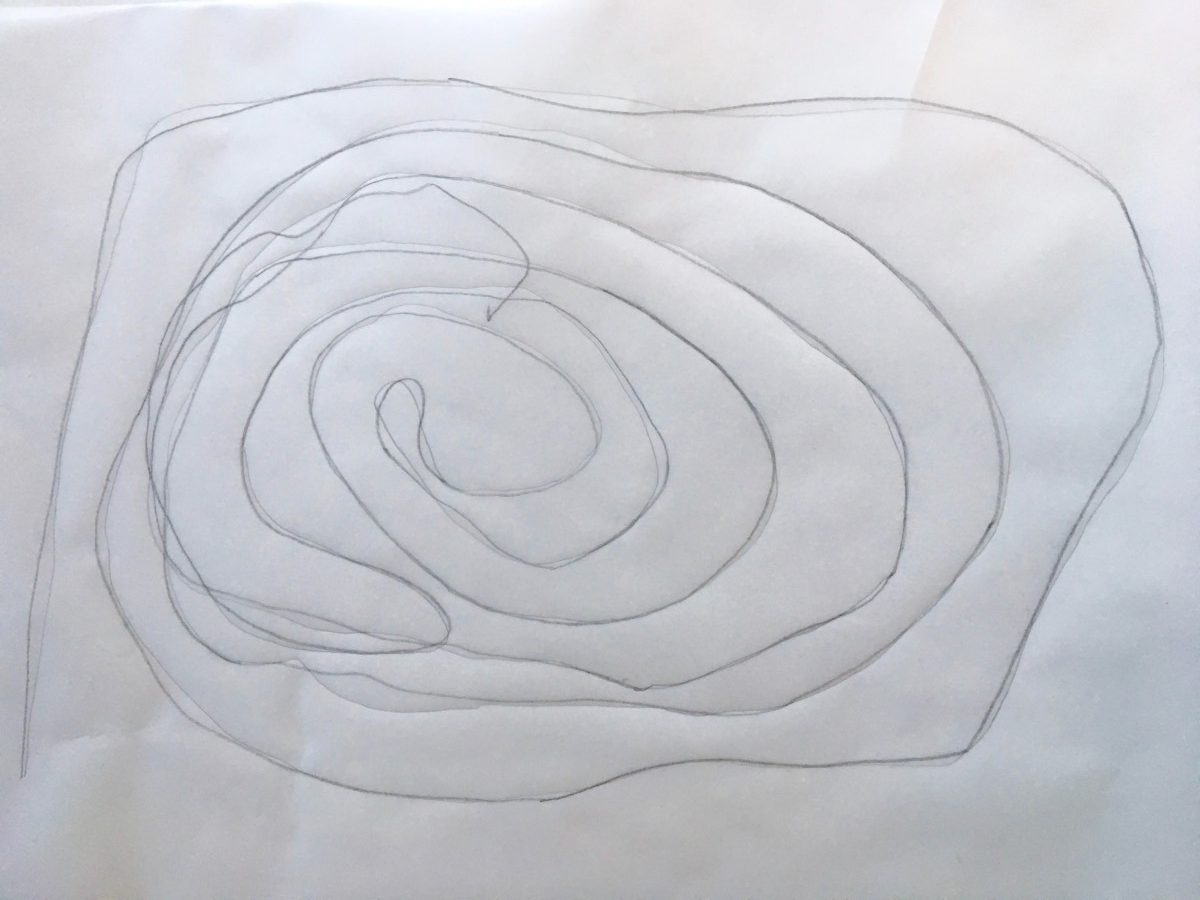
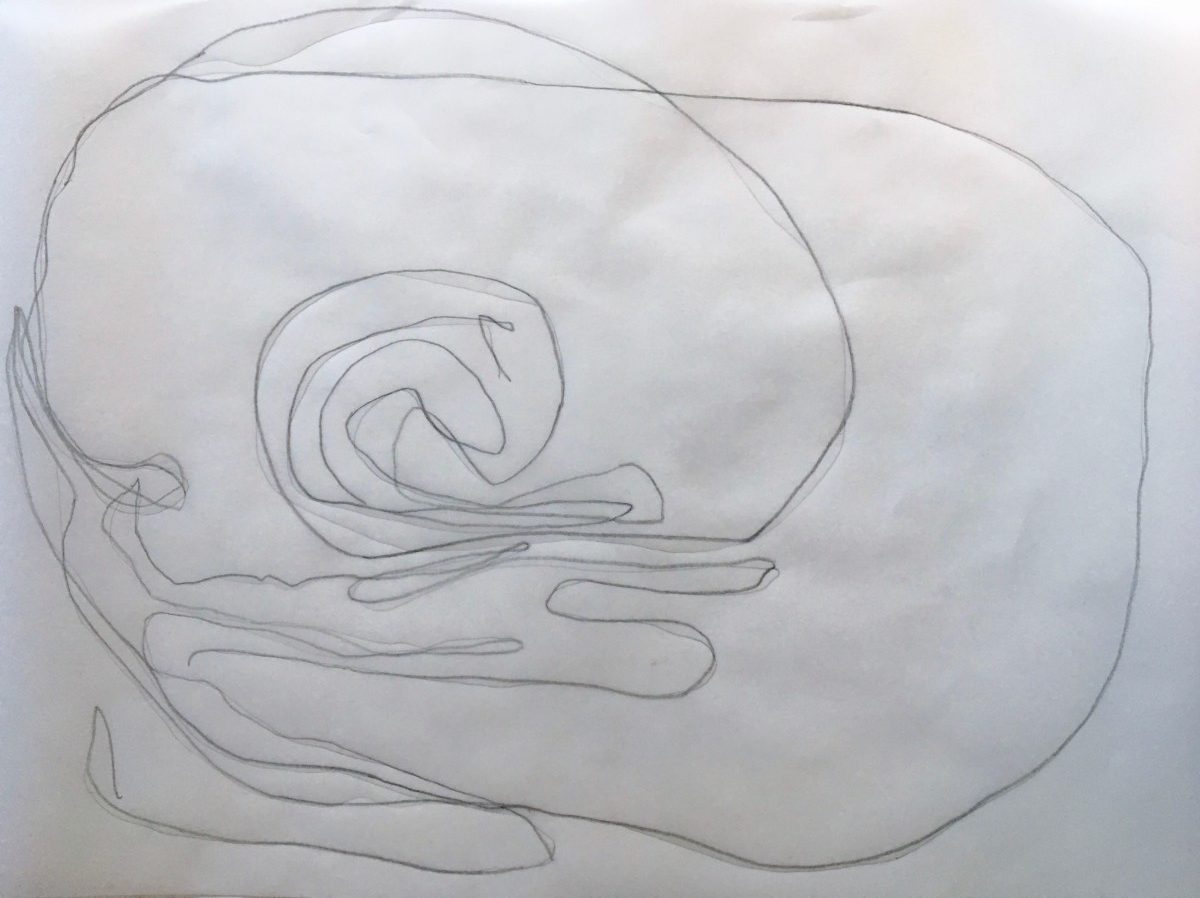
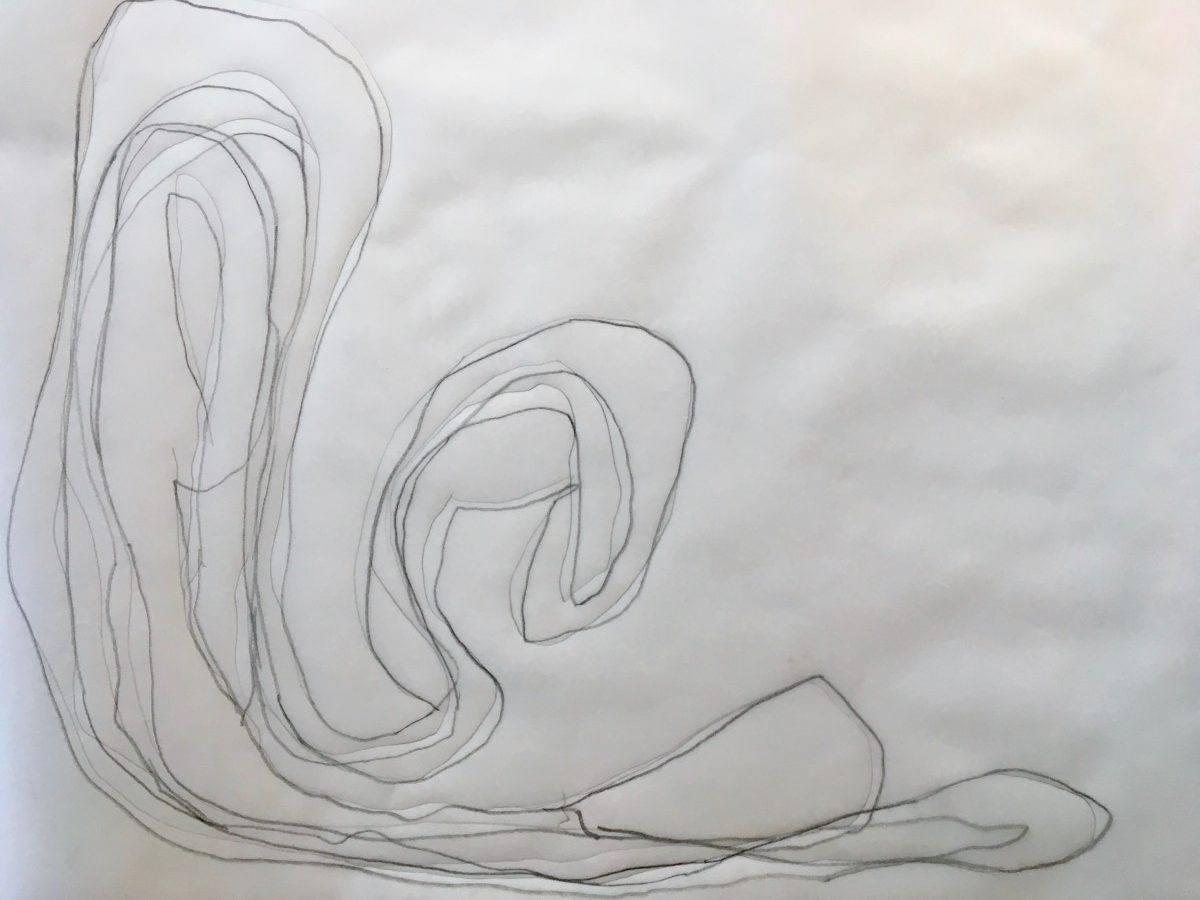
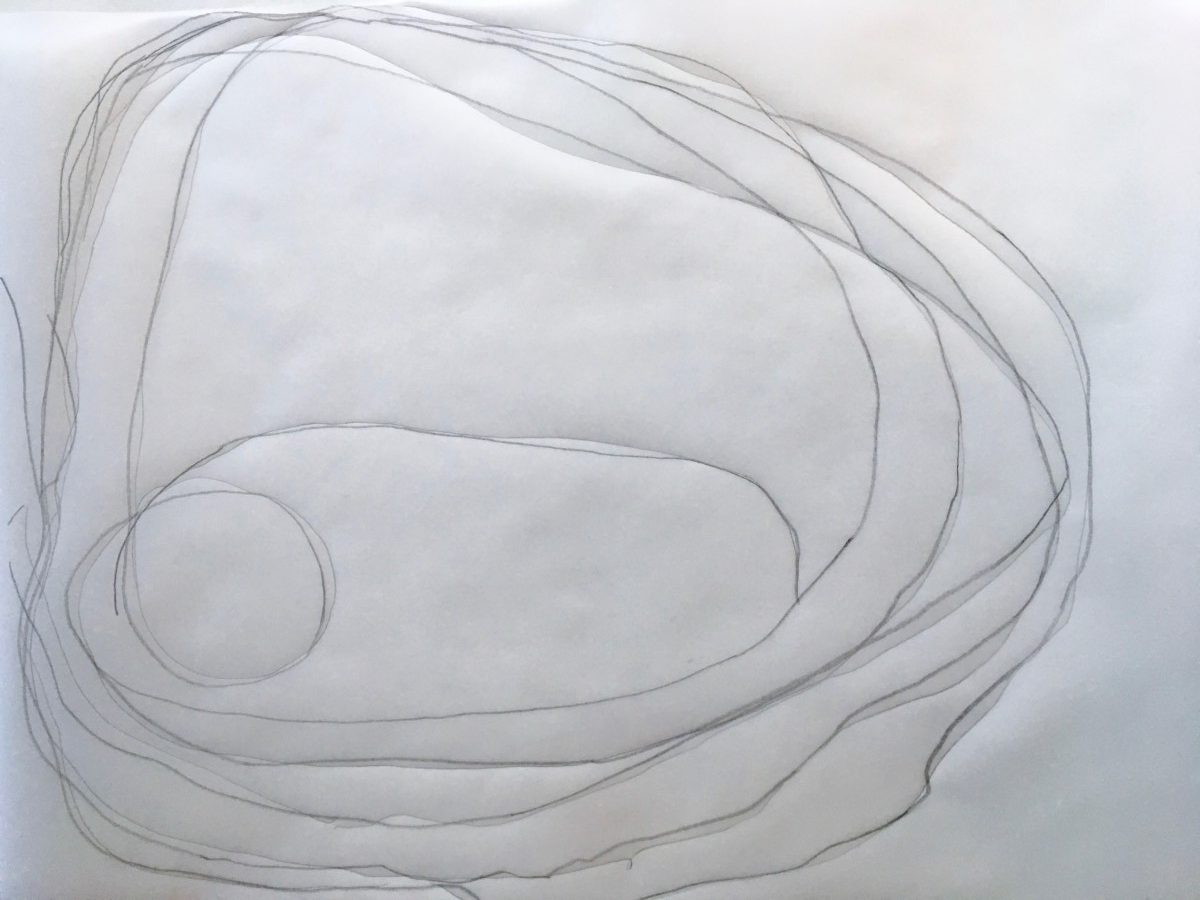
As with the coloured versions, I stacked them in a pile and it was only then that I realised what these images reminded me of.
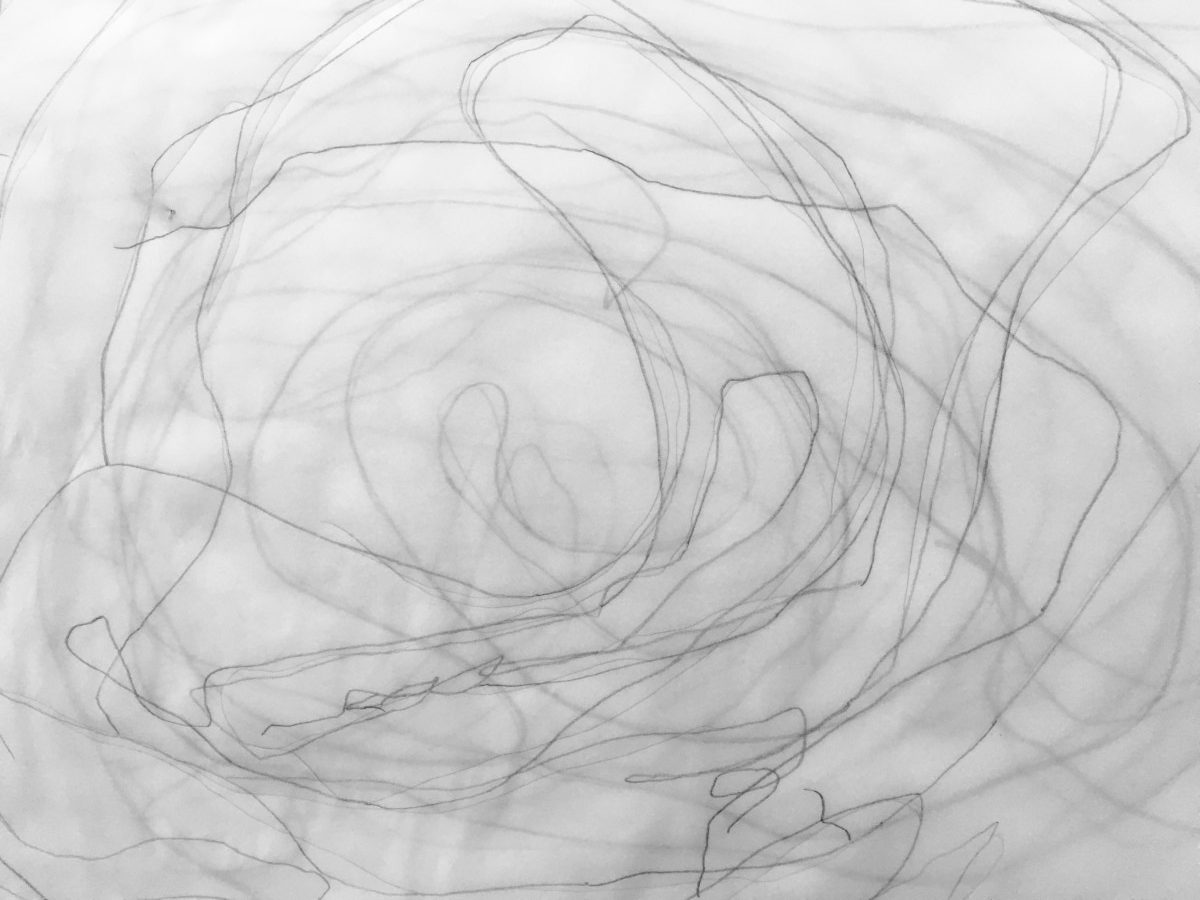
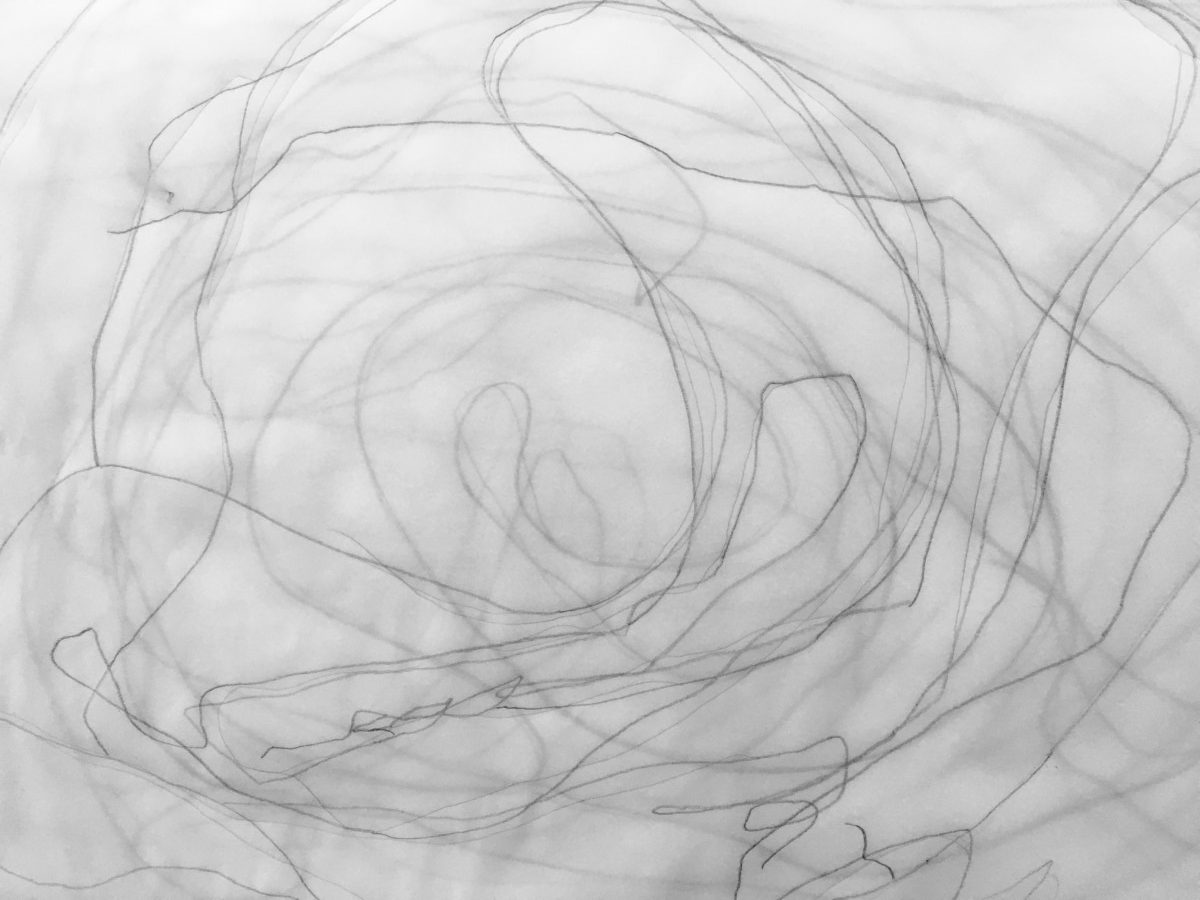
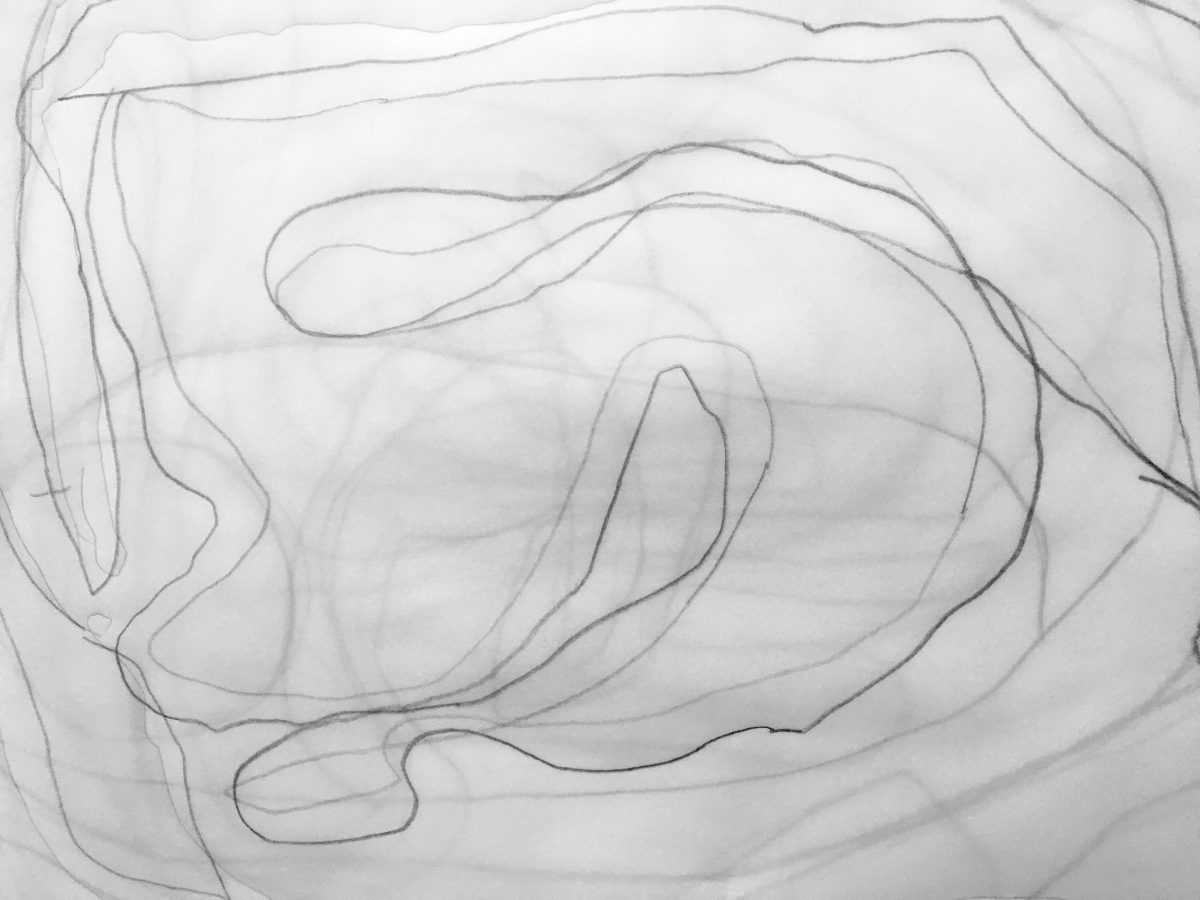
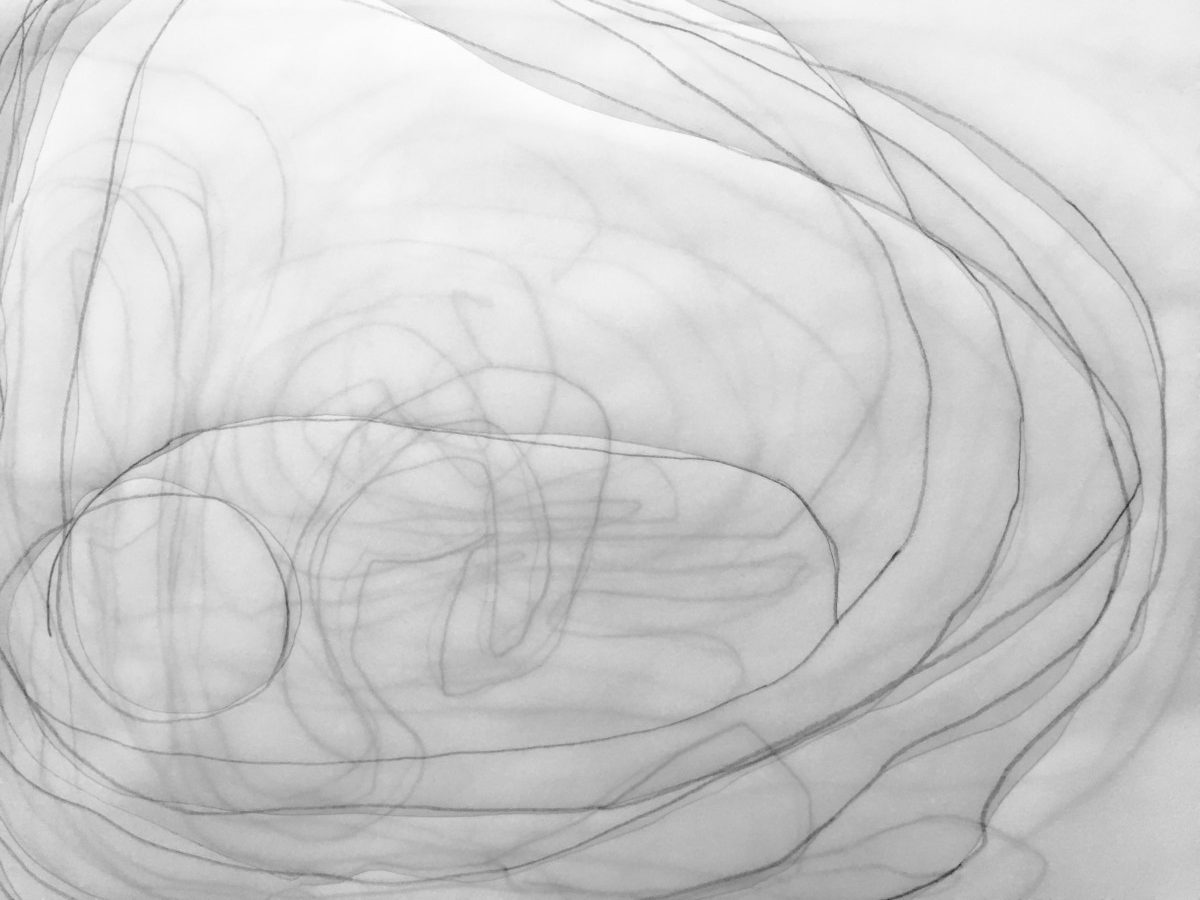
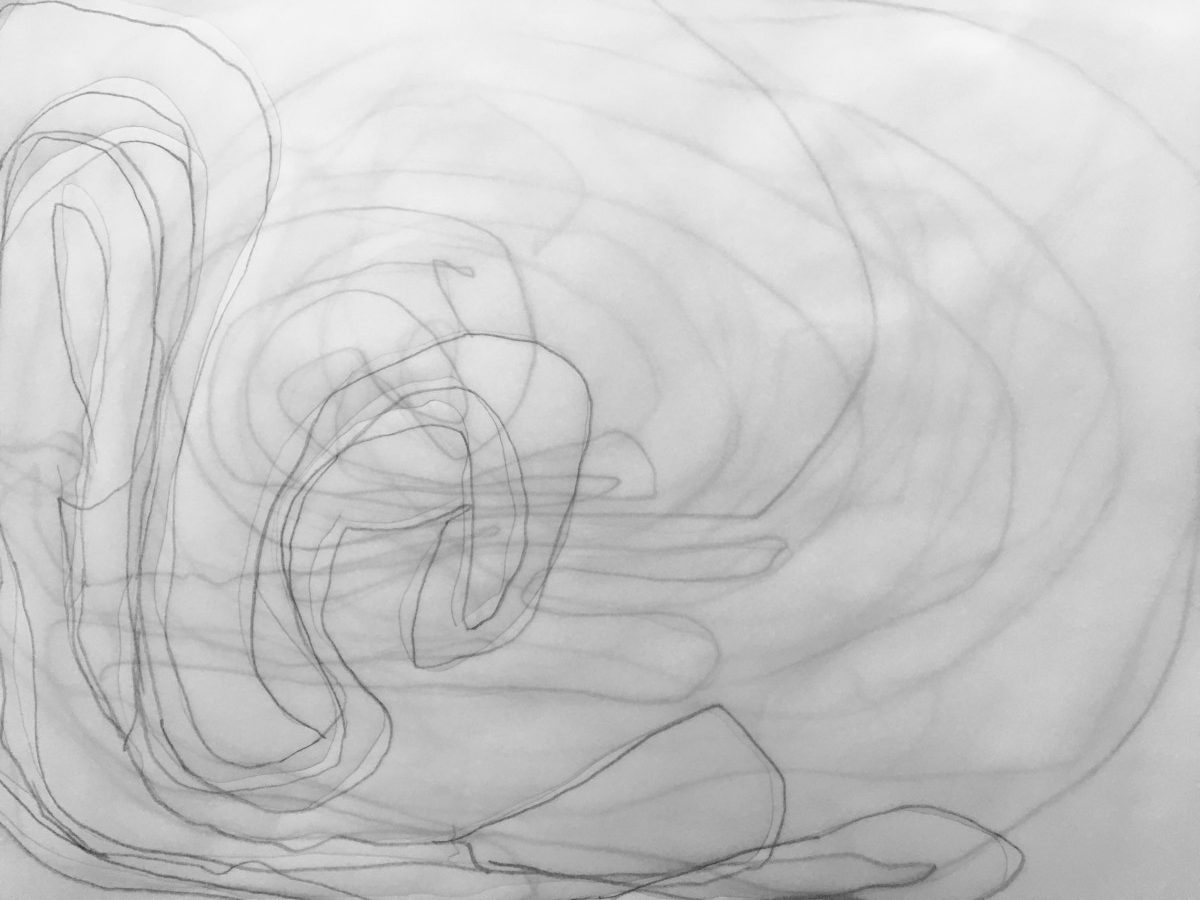
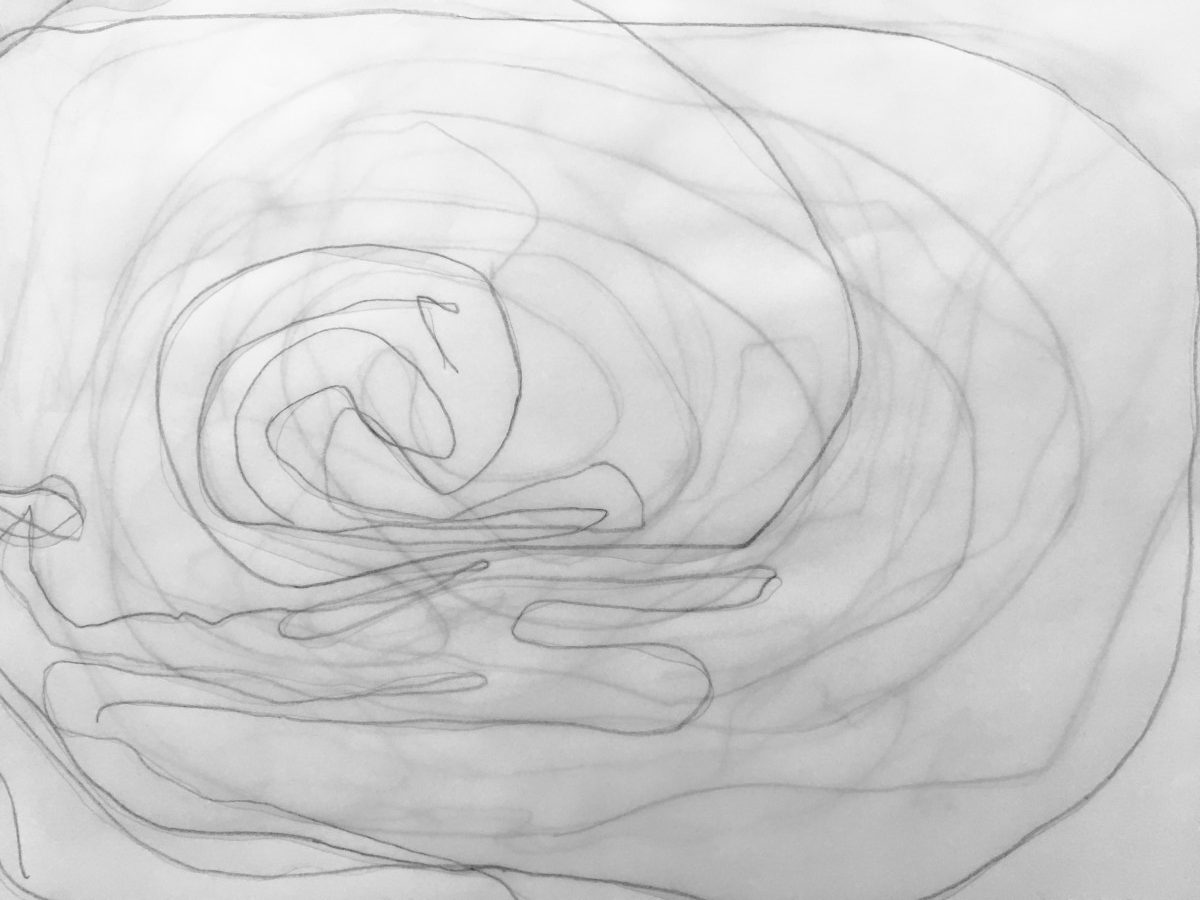
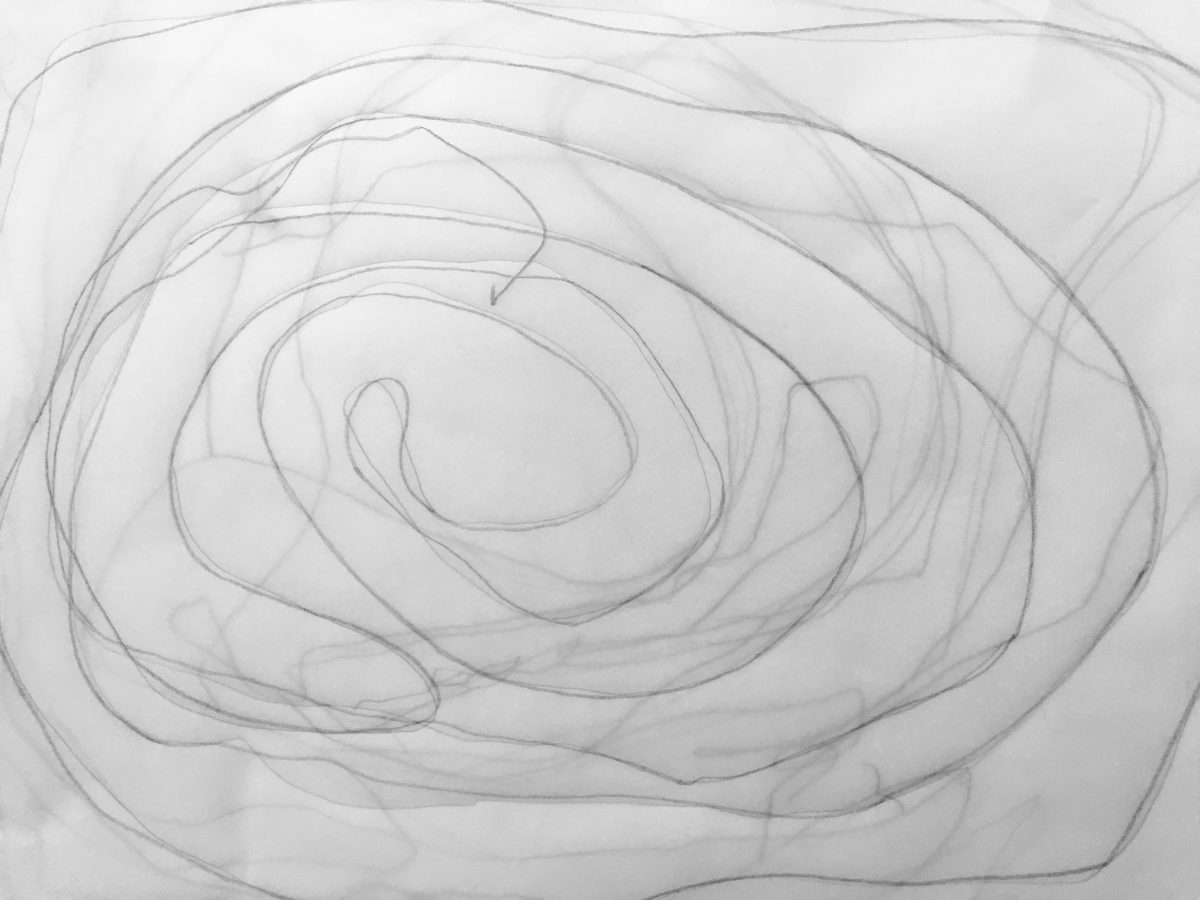
To me, they were like preserved locks of hair – keepsakes of people and times and as such they’ve become a perfect line of work to explore.
Tracings
When you’re a father, separated from your children a few days each week, the things you do with your children when you have them become especially precious. I find I take more photographs when I have them as they somehow sustain me in the days when I don’t see them. The same applies to the things they make; drawings, paintings and so on.
A few weeks ago, Eliot asked me to do some drawings with him, whereby he would draw on the page and I would follow the line he made. It was a very simple thing, but he loved it, and the images we made were lovely.
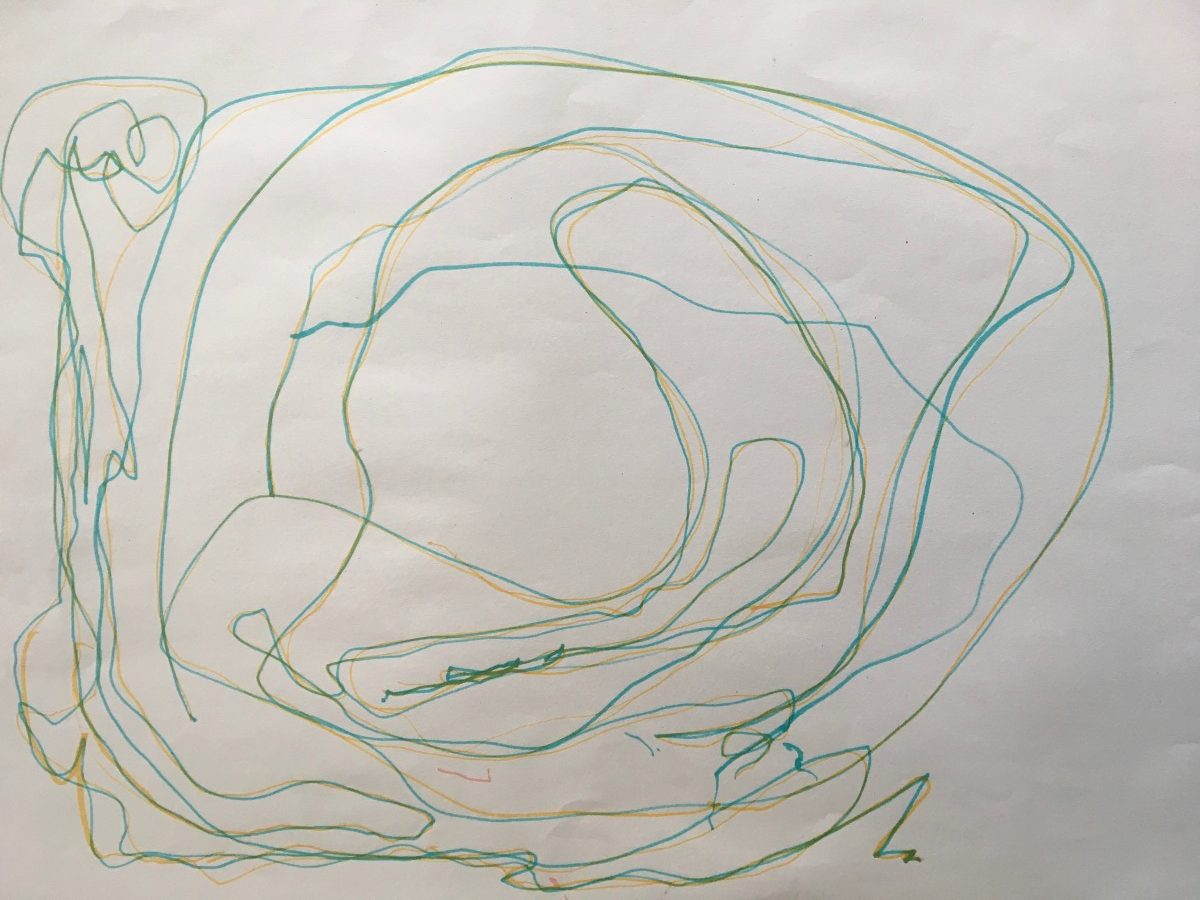
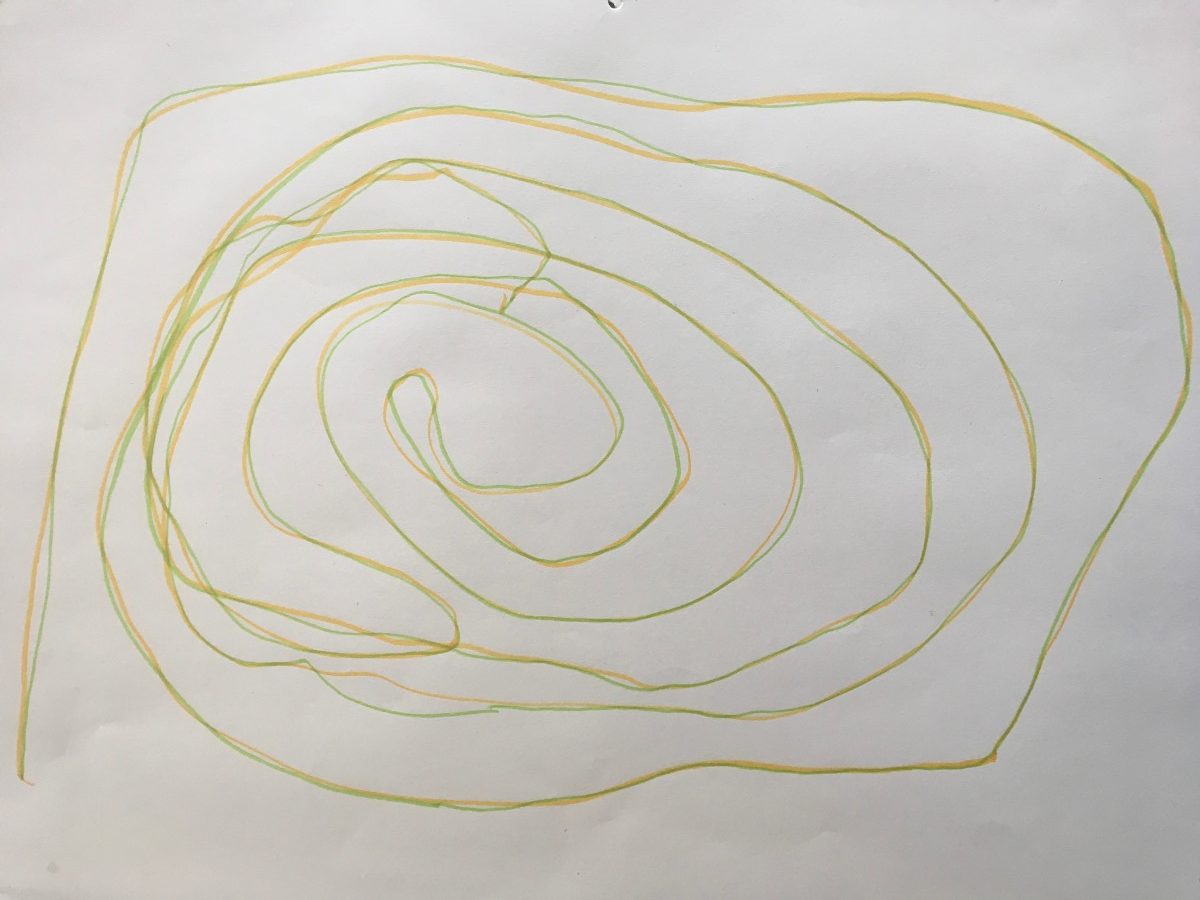
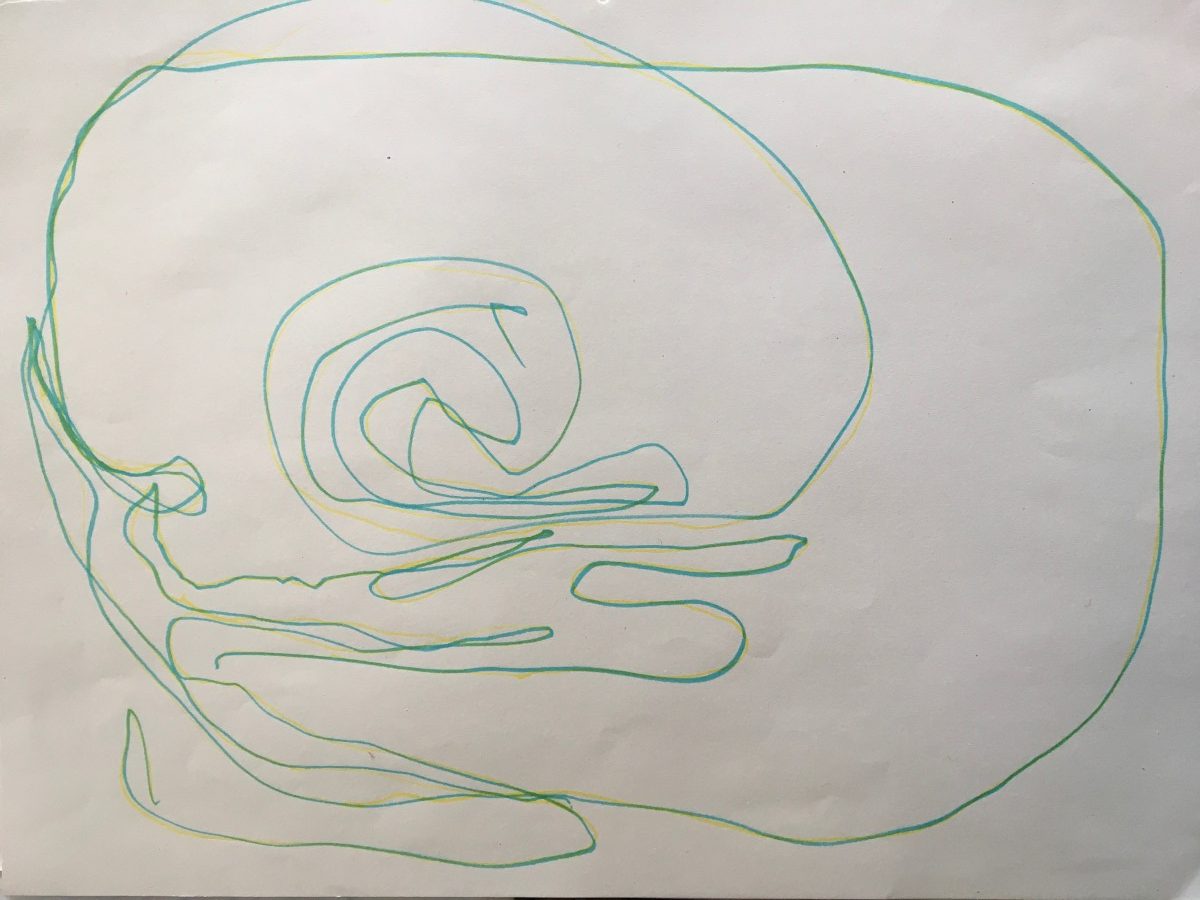
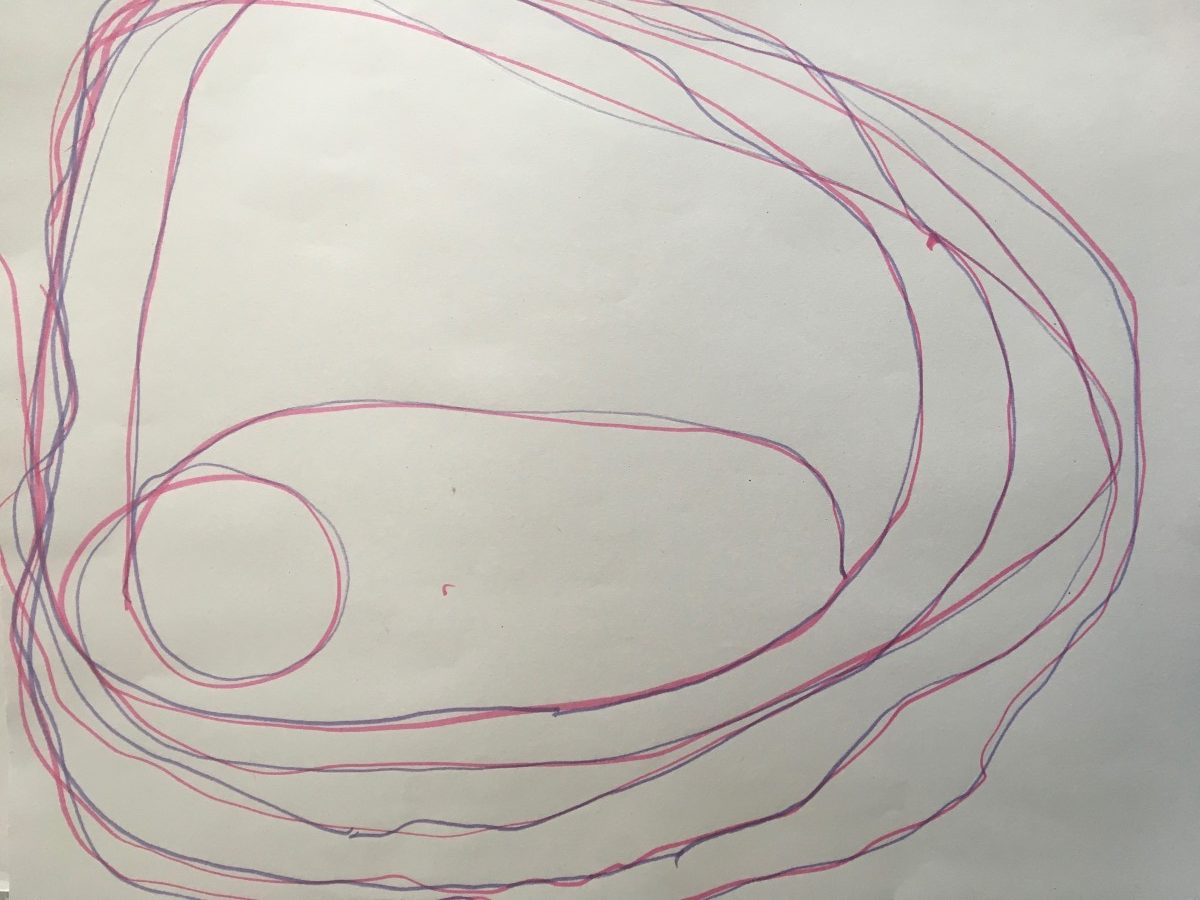
It’s drawings like these which become so important in those days when I don’t have the children, and, as I mentioned in my last post, these in particular seem to lend themselves to work I made a few years back, where I would stitch ‘images’ from sources such as GPS data (taken from walks), or old trench maps.
As a start, I began by tracing the drawings using the same felt-tips as we used in the original drawings. Given that these stitched works will, in some respects, be about memory, the fact these tracings are not entirely accurate, alludes nicely to the idea of memory itself not being an entirely accurate draughtsman.
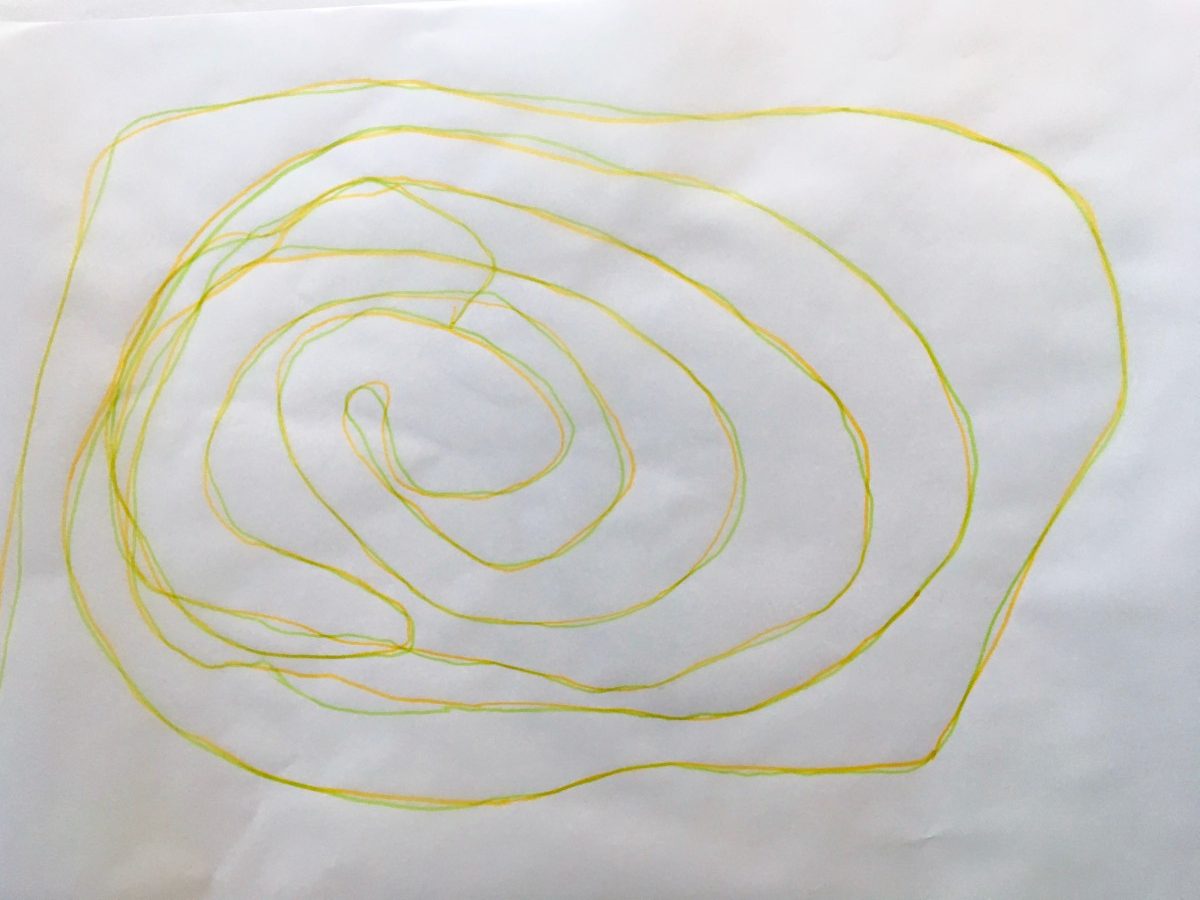
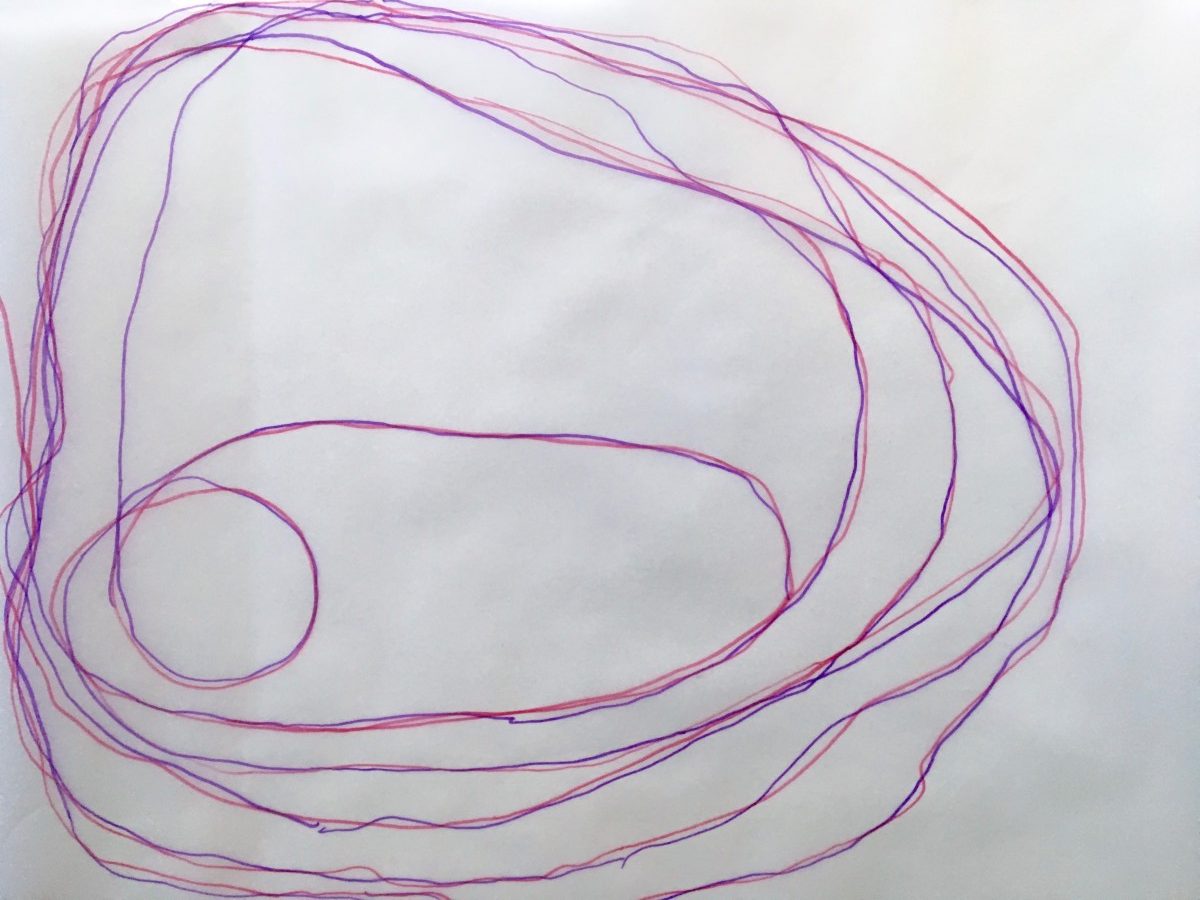
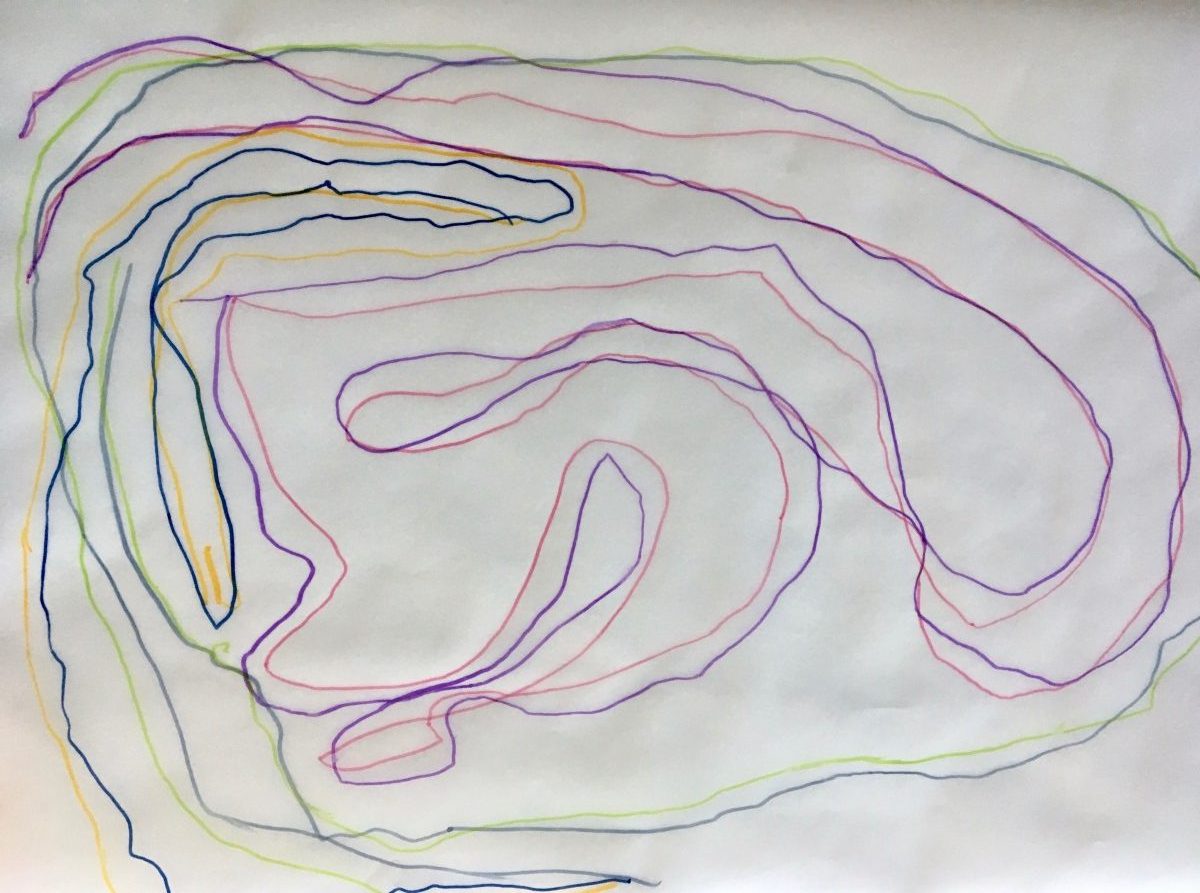
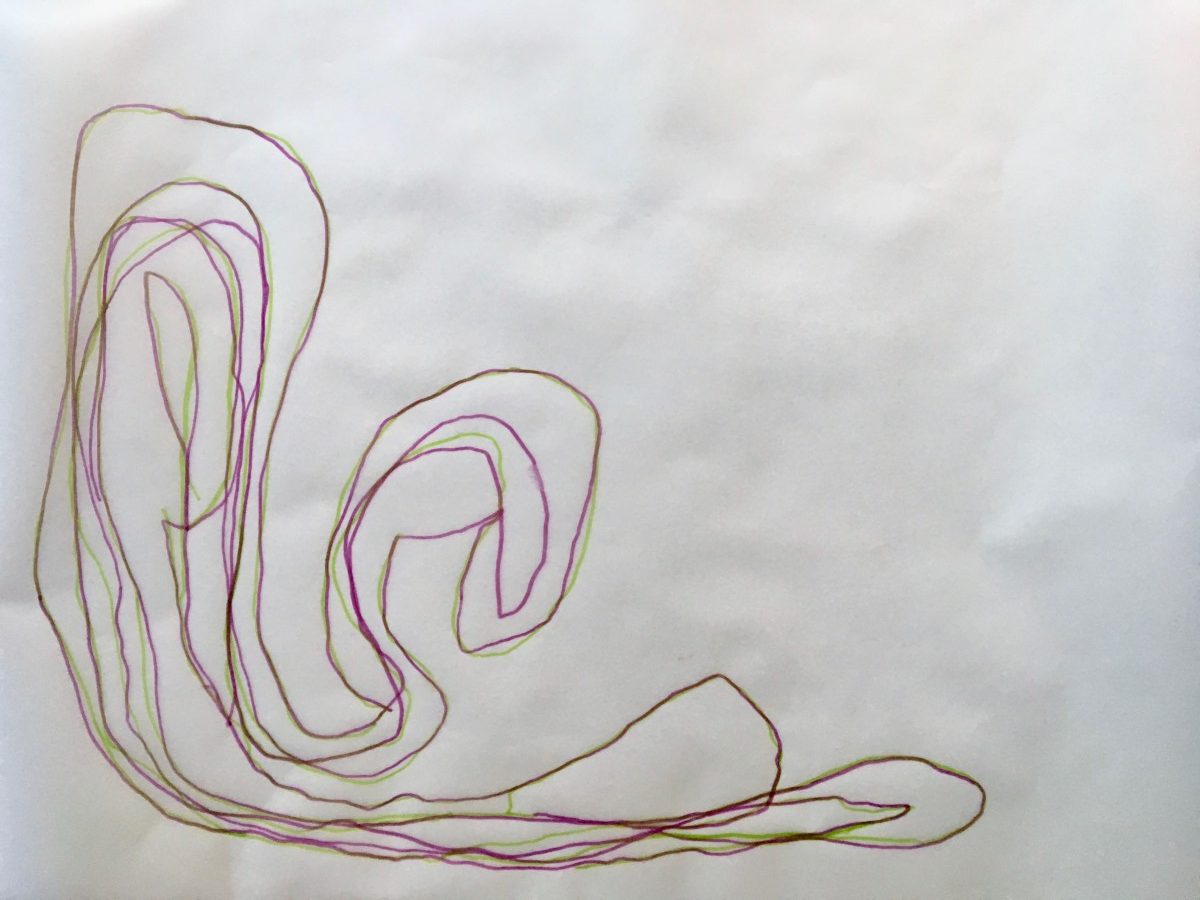
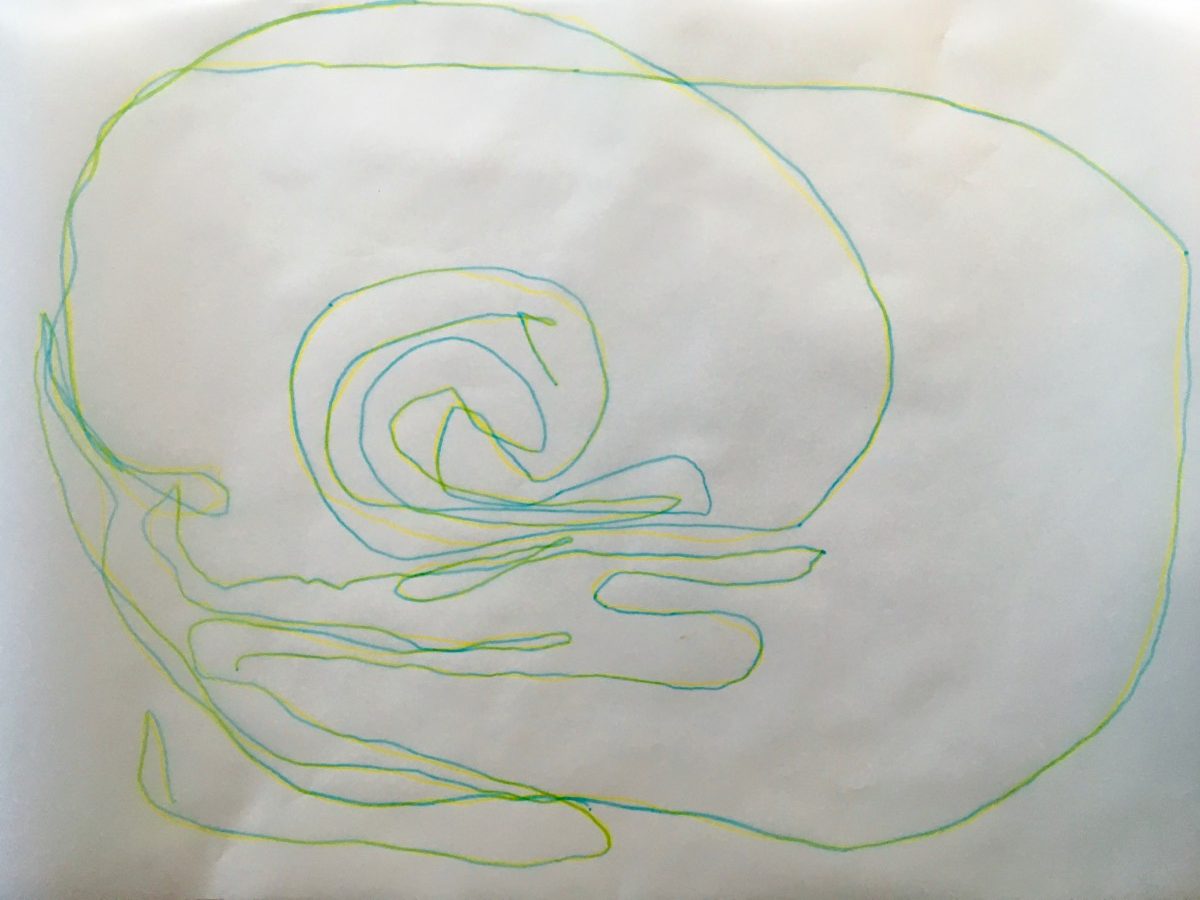
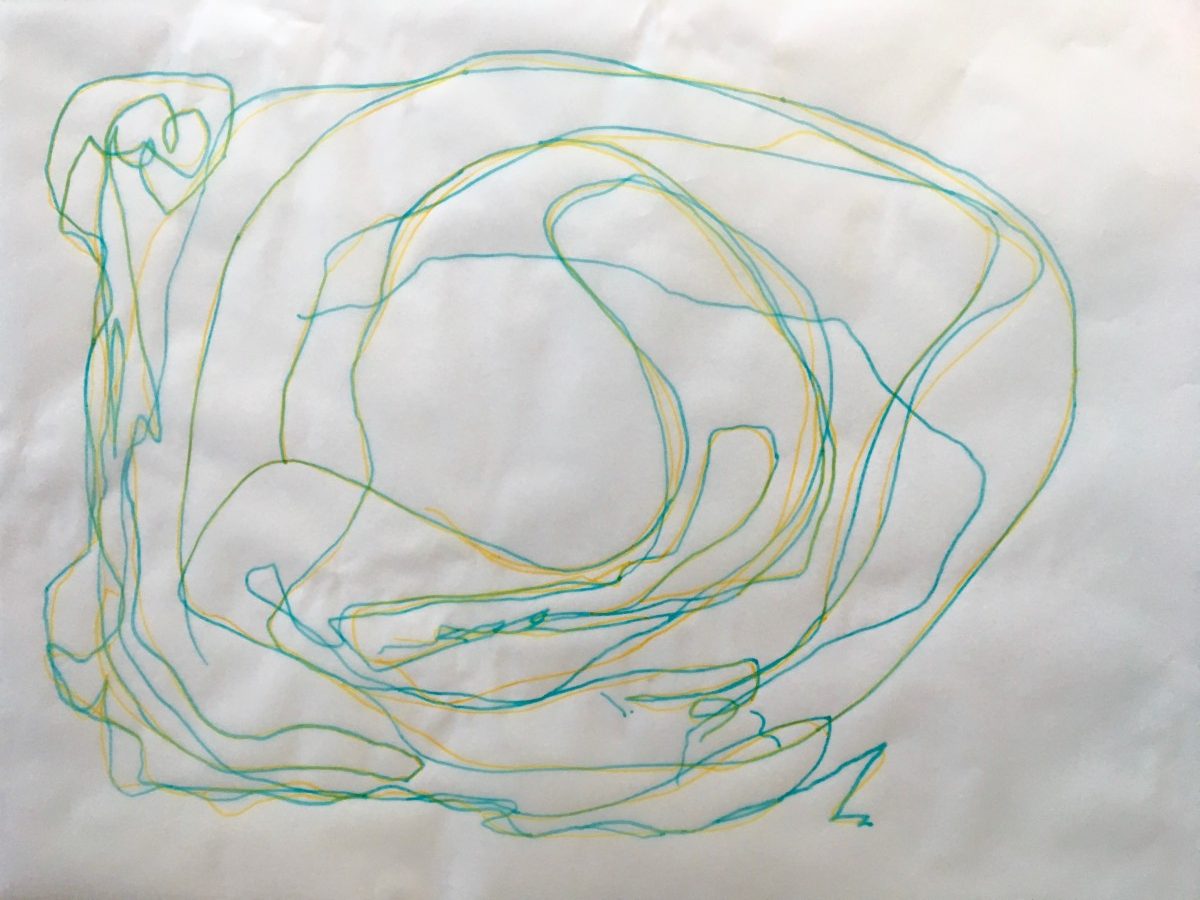
As I drew them (the time difference between the ‘moment’ in which they were made and the length of time it took me to trace them also alludes to the idea of working to recapture a moment in the past) I piled them up and began to appreciate the aesthetic of the piles of tracings, where previous drawings would show through.
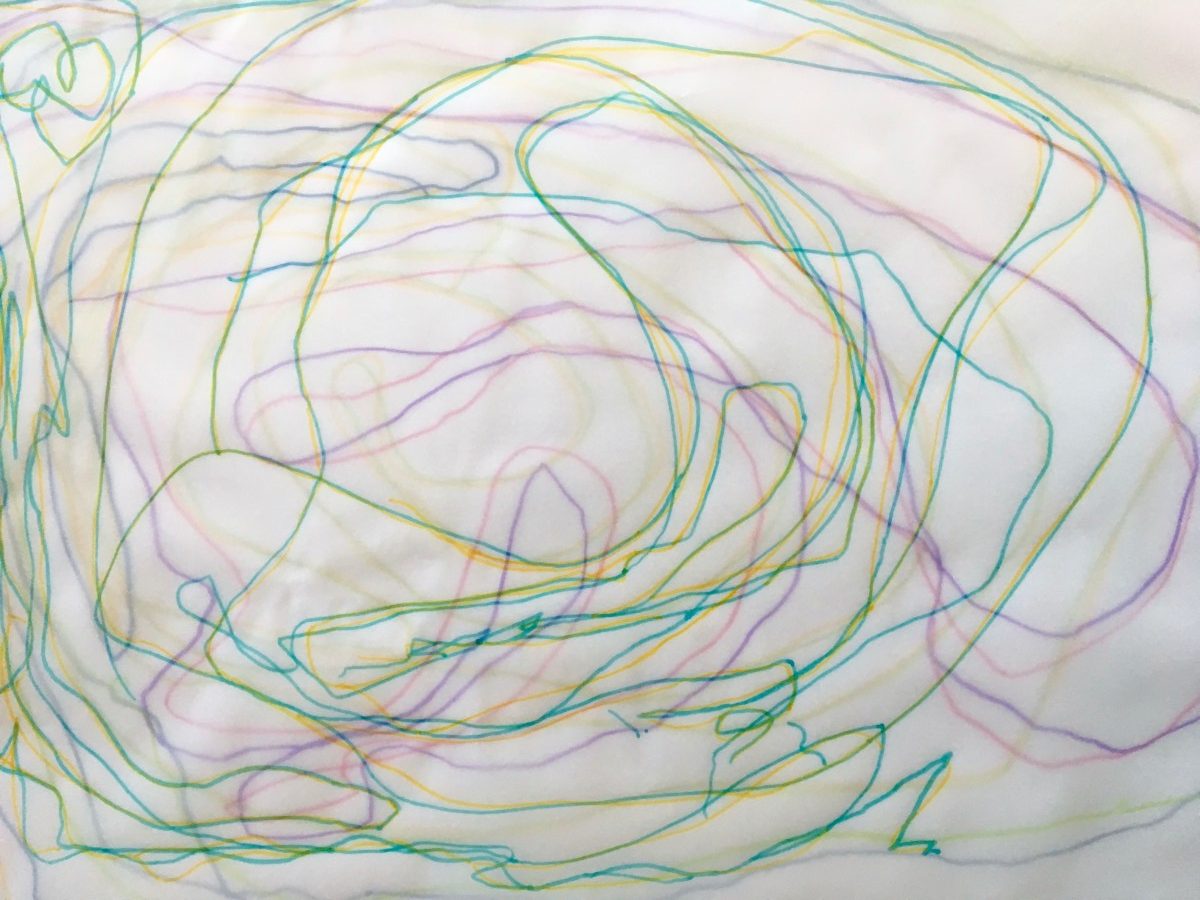
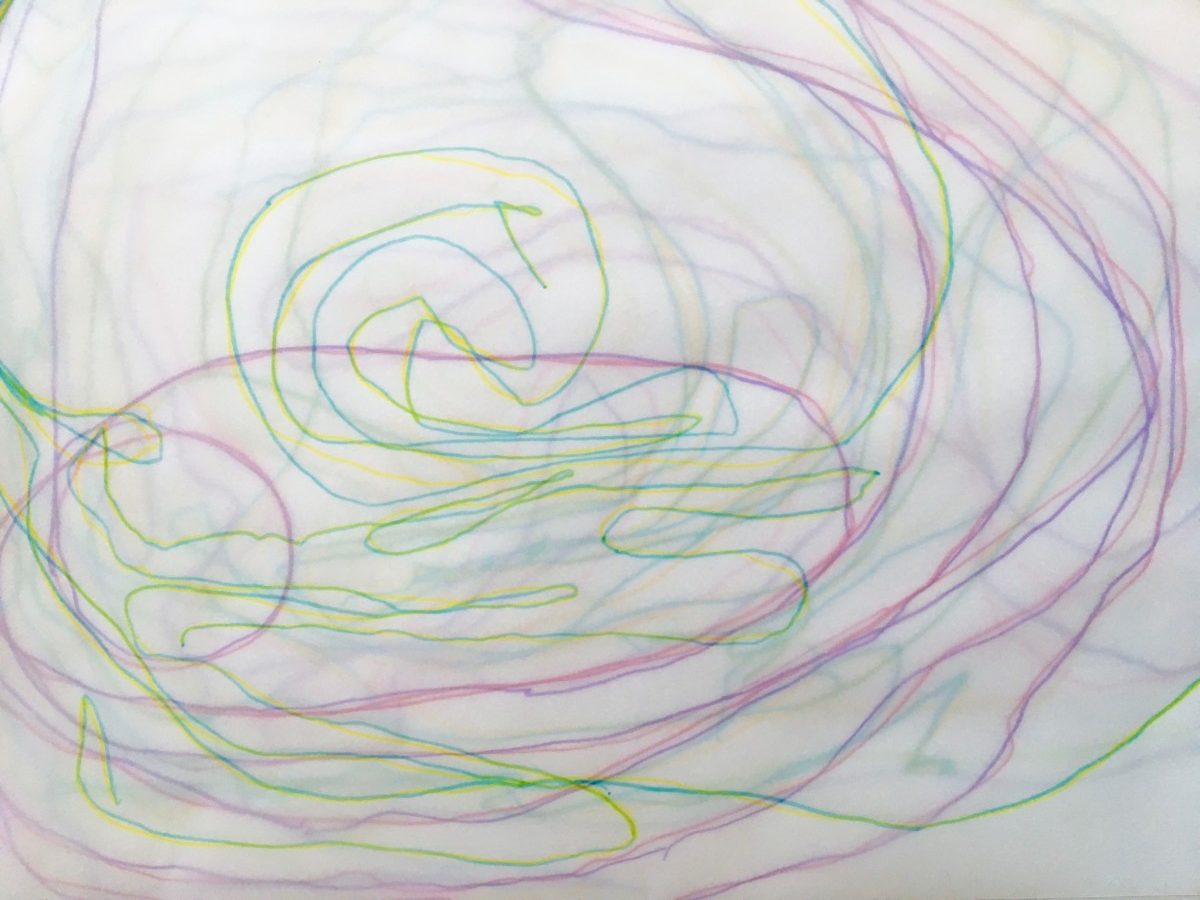
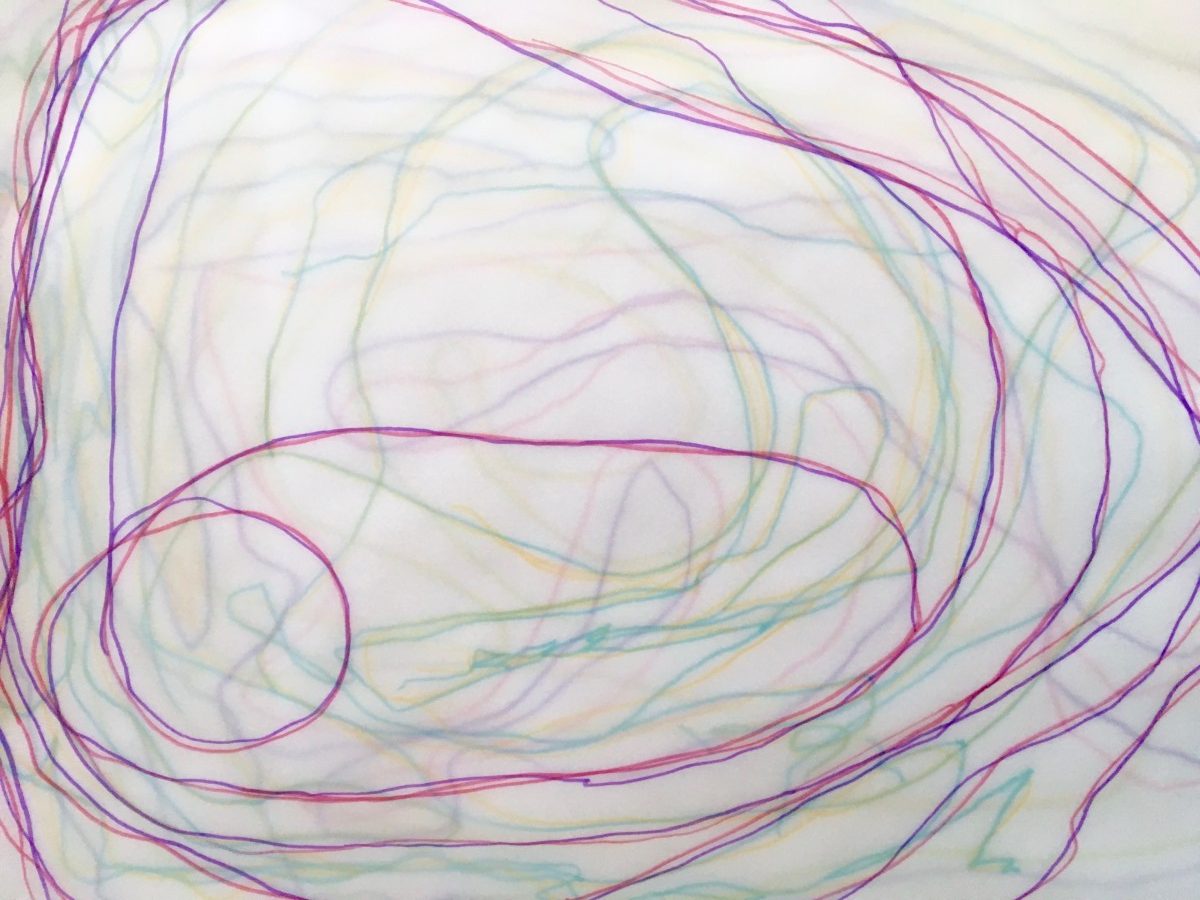
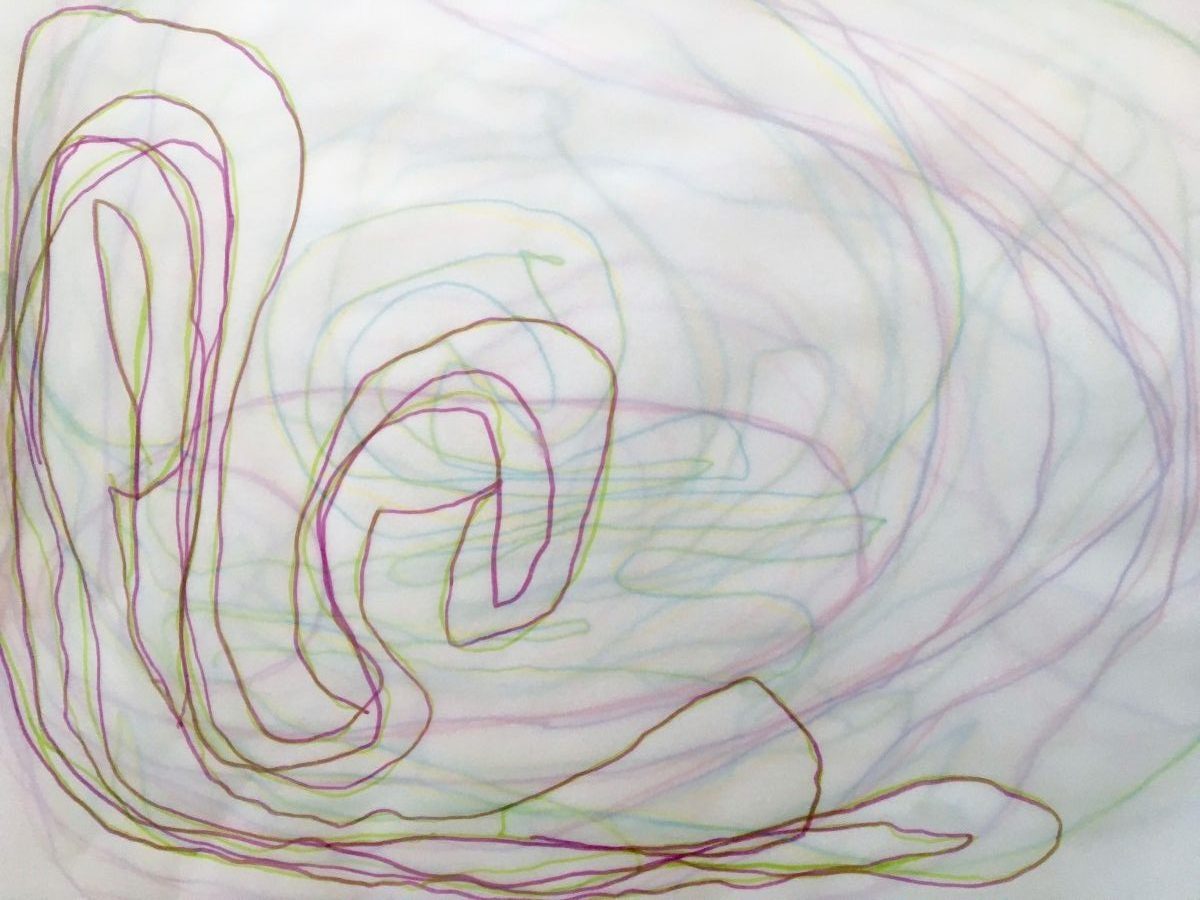
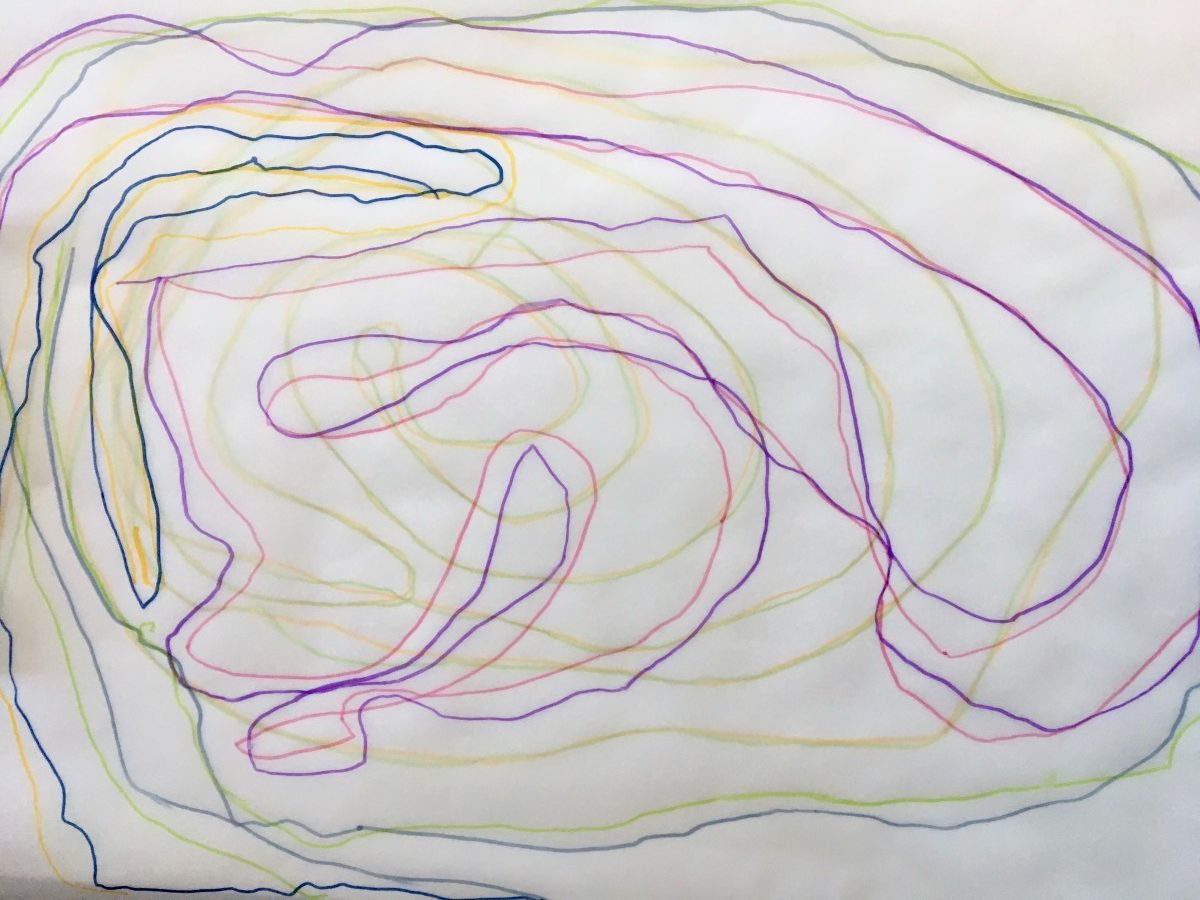
I’ve always loved drawings or paintings with scribbles and lines and these piles seemed to point to another way of using these drawings – another possible outcome. It was only when I did the same with tracings I made in pencil that another possible work began to emerge, one which was exactly in keeping with the idea of memory, family and recovering past times.
My Son’s Paintings
As a proud father I love my son’s paintings. If they were but monochrome blobs – which they sometimes are – I would love them, but recently he’s created some which seem to me quite unusual, especially for one so young (he’s only 3). He has a very delicate touch when it comes to painting and drawing – indeed, some of what he produces reminds me of the work of Cy Twombly.
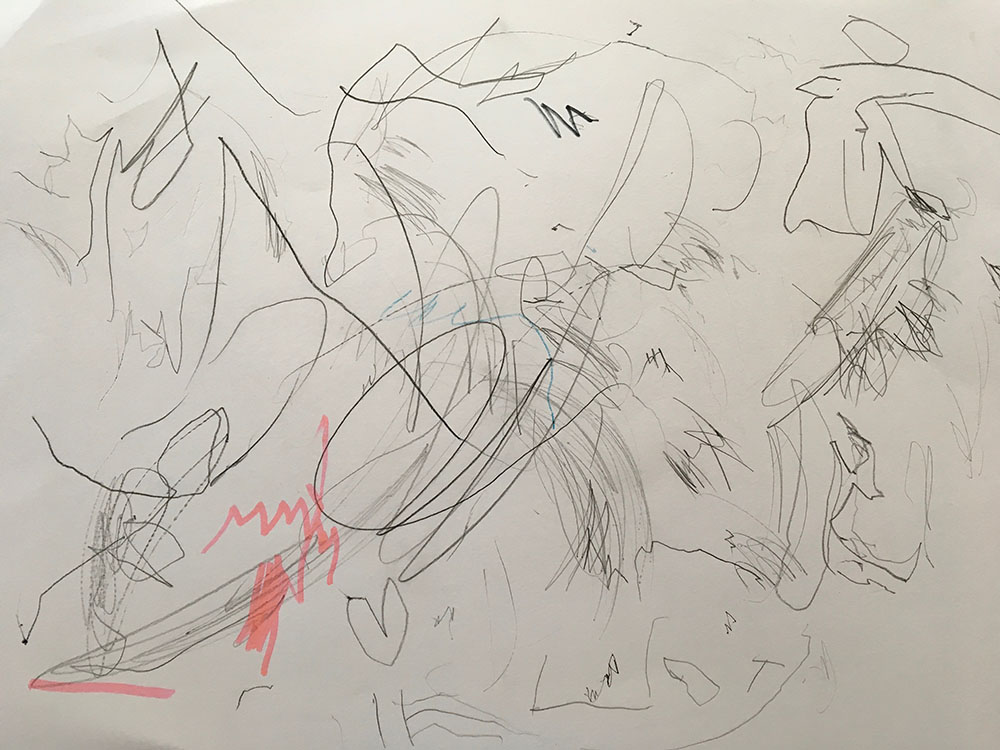
His paintings also show the same careful touch and can be very ‘precise’ such as those below.
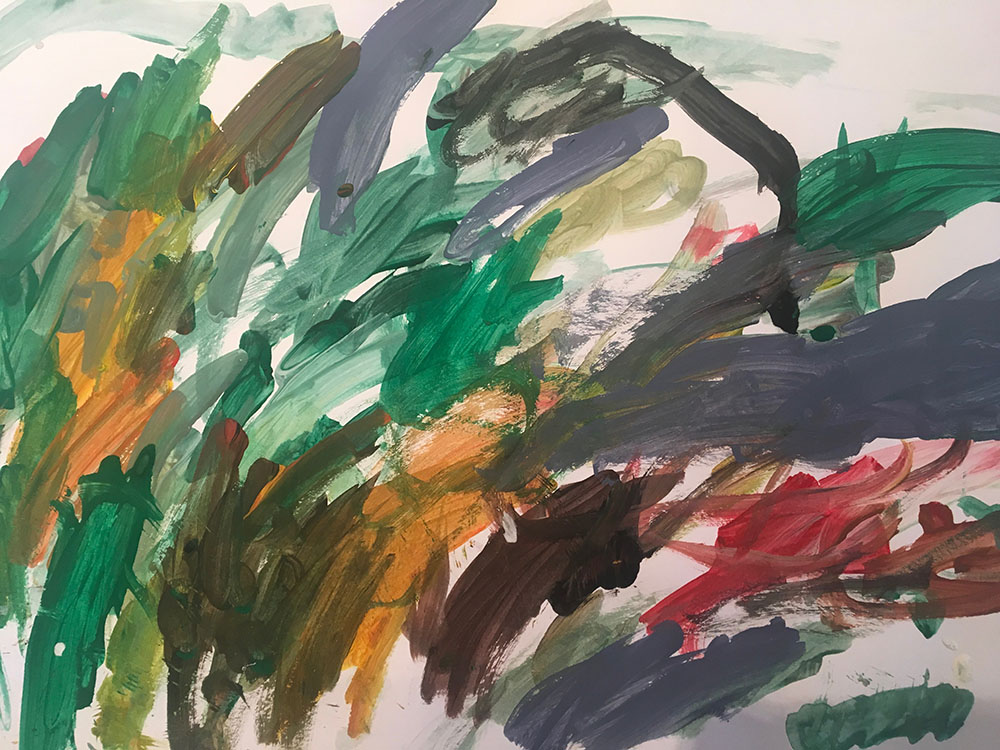
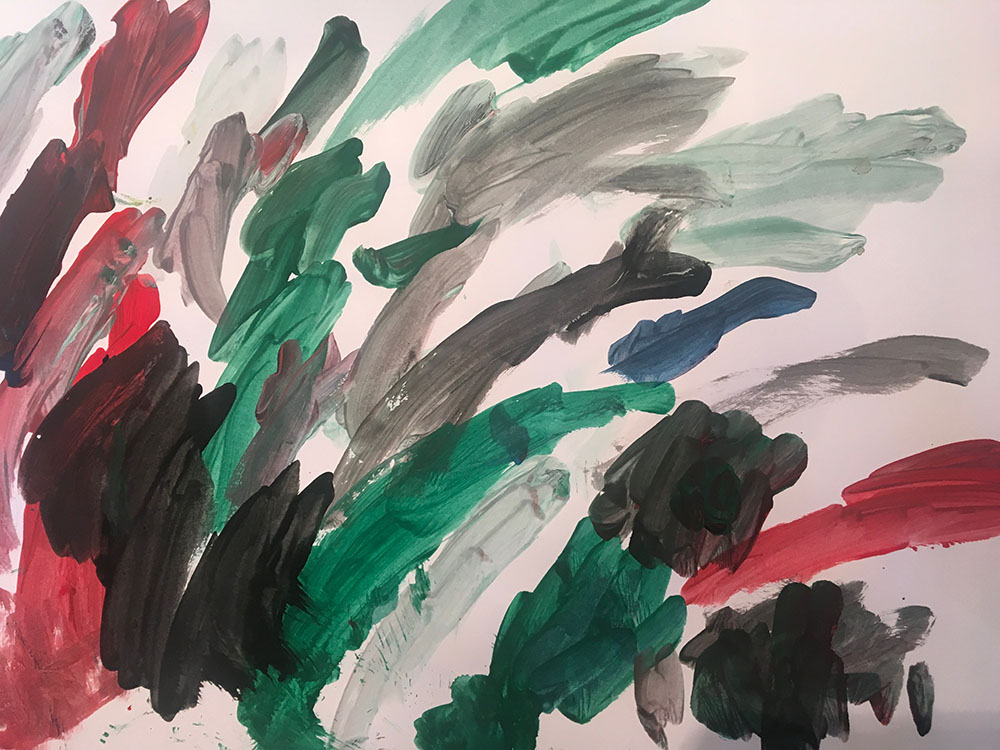
In the paintings above, I love the way he’s carefully separated the colours, along with the angle of the brushstrokes and looking at them, I’m reminded of the paintings I made of shadows whilst sitting in the woods at Shotover a couple of months back.
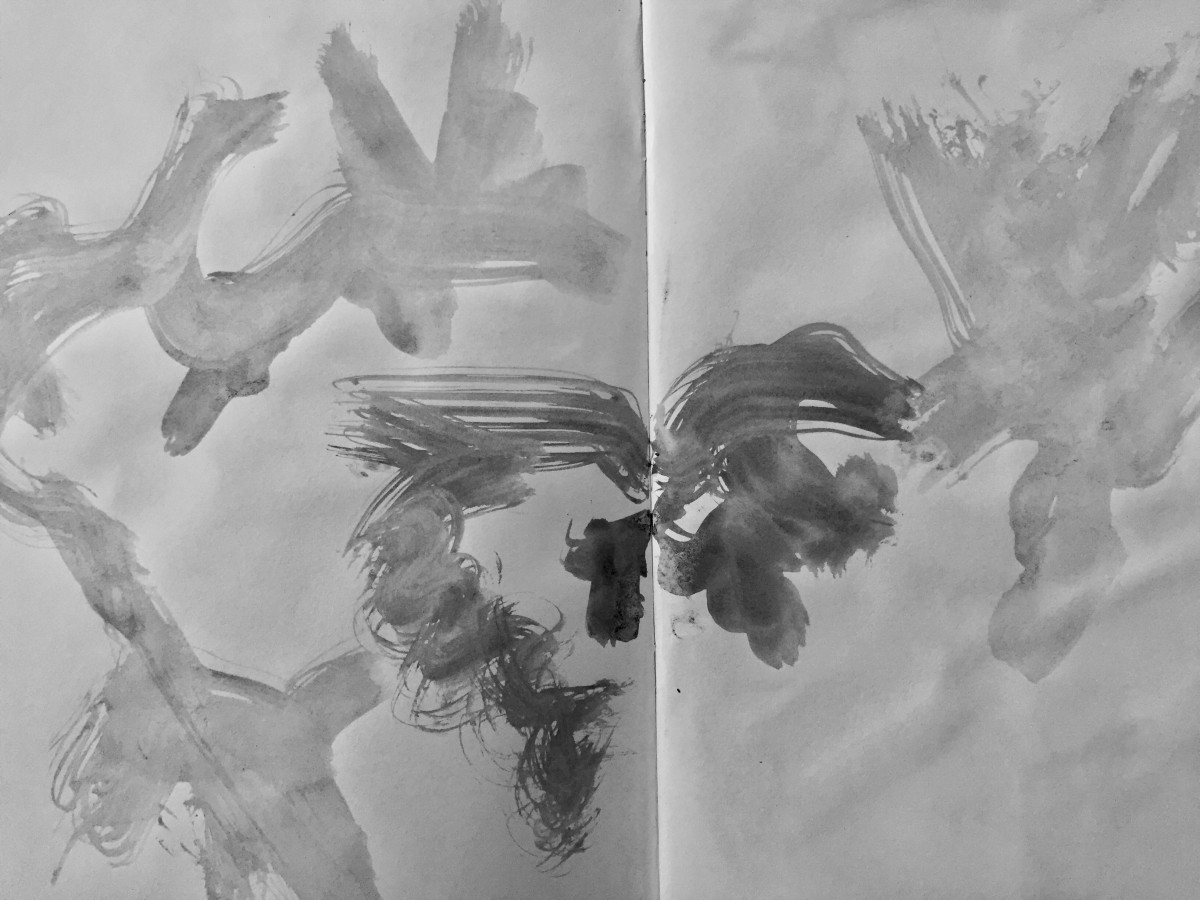
More recently I have been making work about memory. As a separated father, I see my children twice a week. It’s never enough, and in the time I don’t see them, I’m always remembering things I’ve done with them, whether it’s looking at photographs or the creative things we’ve done together.
One such line of work is based on drawings I made with my son, where he would draw on a piece of paper and I would try and follow (hid idea) the lines he made, such as that below.
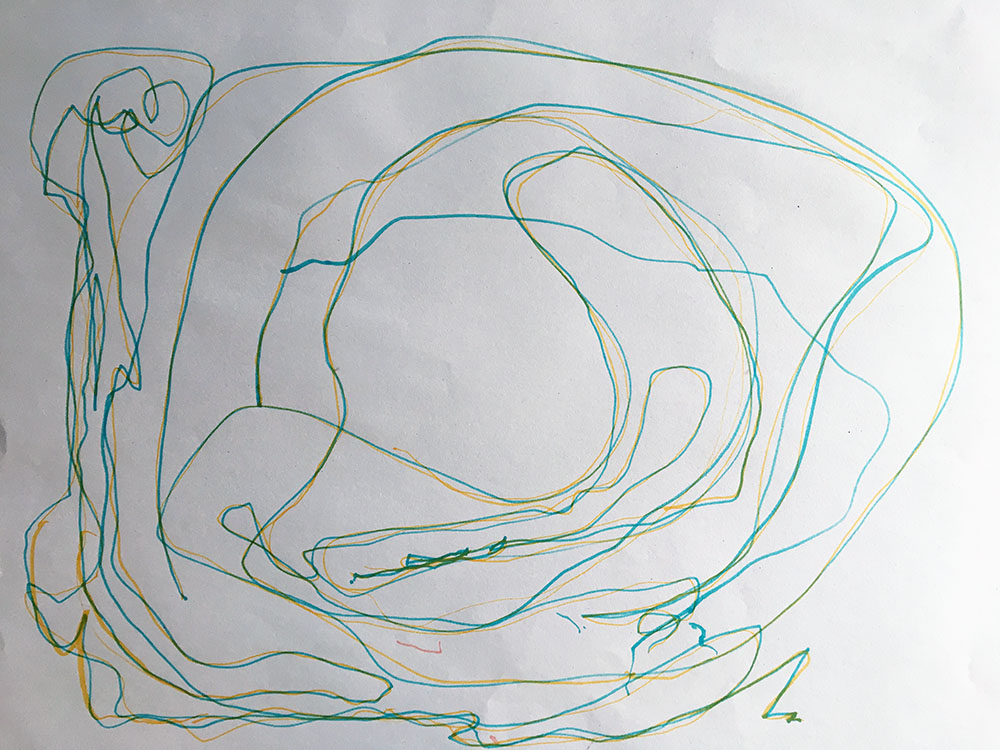
Taking this drawing as a starter, I’ve started to create a piece based on work I originally made in Australia about my transported ancestor, and then about the First World War
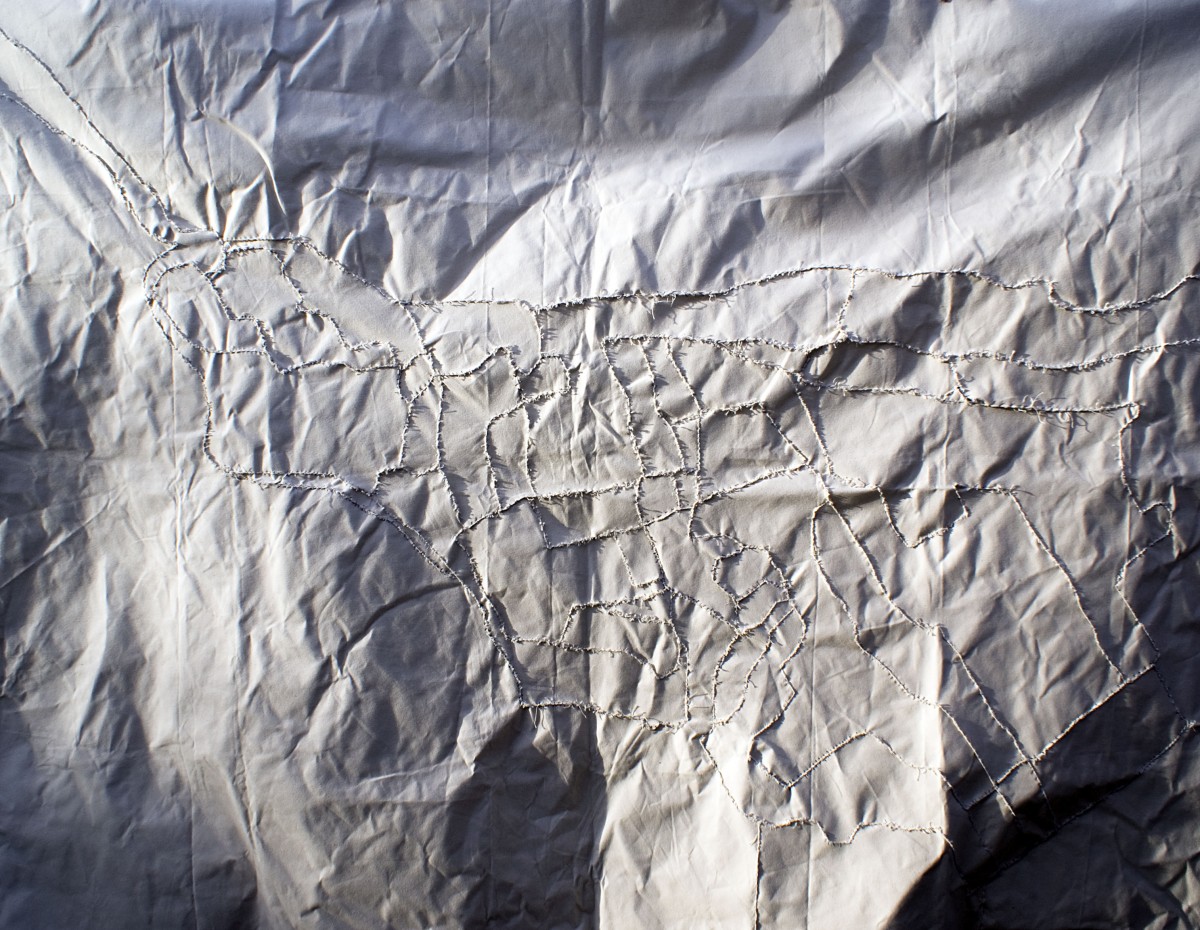
The aim is to trace these drawings to then create a stitched version, illustrating the idea that re-creating the past through memory will always be inexact, and that what occurred in an instant can never really be known again, no matter how hard one works. There is also something about absence in these works and the bond that exists between parent and child, something which is of key significance when looking at events such as the First World War. One is, after all, not only trying to recreate the past through the imagining of the Western Front, but also the ties which bound families together.


Writing Shadows
On Tuesday I made my way to Shotover to work on a piece I’ve been thinking about for quite some time. The piece, about absent-presence, will, eventually, comprise videos of shadows in a wood, a few stills from which can be seen below.
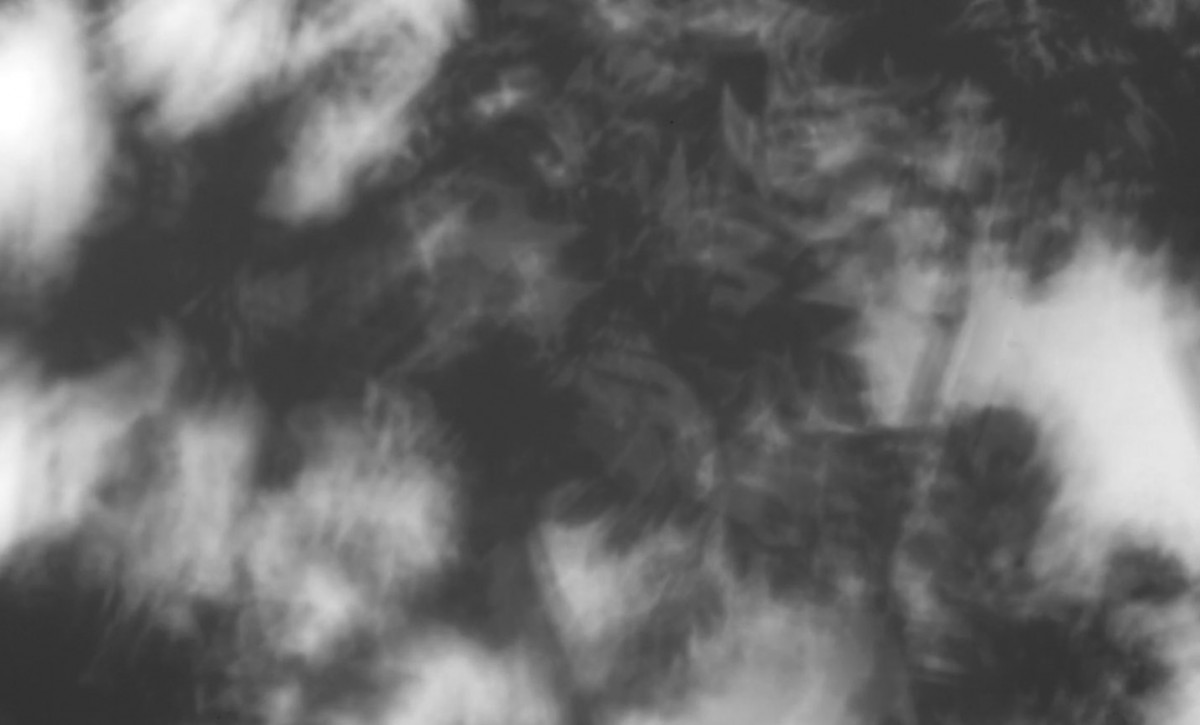
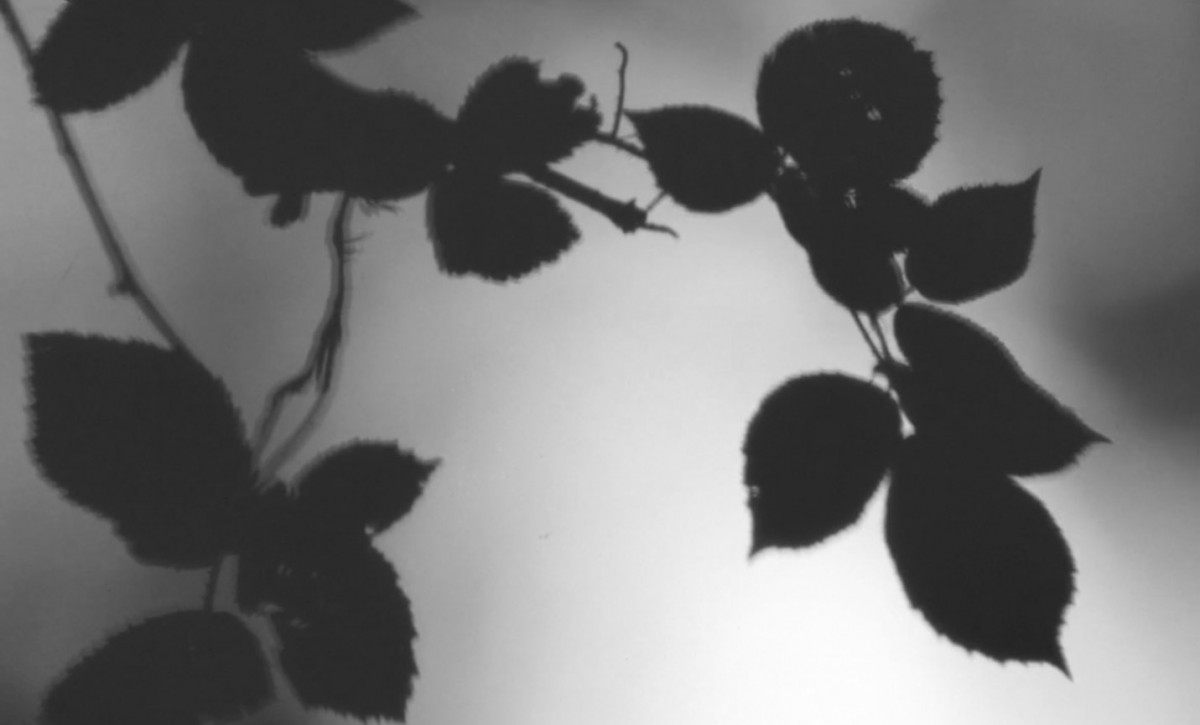
But why woods?
Woods
Since I was a child, the image of the forest or wood has been an important one. From when I was 7 or 8, the past seemed like another place – a ‘foreign county’ – rather than another ‘dimension’ of the place in which I lived, and that place, when imagined, was always thickly forested. I’m not sure why exactly, but I can remember being enthralled by the oft quoted ‘fact’ that in the past, a squirrel could travel the length of England without touching the ground. (See: Postcard from Corfe Castle 1978)
As an older child in the 1980s, when the tension of the cold war was still a part of everyday life, the thickly wooded past became a place of retreat, a world to which I could escape the threat of nuclear war. It was also around this time I started reading role-playing books (like Fighting Fantasy) whilst developing an interest in magic and adventure (if not quite Dungeons and Dragons). I began to create maps of imagined lands which, again, were often thickly wooded. These too were places to which I could escape and were in many ways a conflation of the past and my imagination. (See: Maps for Escaping)
Of course, as I became an adult, my imagined landscape changed. The past was no longer a place, in parts indistinguishable from worlds of monsters and magic, but indeed a different dimension of the place in which I lived. And yet, despite this difference, the symbol of the forest/wood remained a backdrop to my work (See: A Backdrop to Eternity). To imagine the past was, for me, to imagine a wood, vast and untouched, and in some respects, it would be true to say that my interest in the Environment developed as much as a means of preserving and accessing the past as safeguarding the future. The fact that many of these forests have vanished or been so depleted means their absence in the present – a stark difference between now and then – has become a metaphor for absence itself.
Even when I have sought to connect with those in the past, who lived through the most horrific events, the image of the wood returns as a means of reaching out to them.
A quote to which I’ve often referred from Paul Fussell:
…if the opposite of war is peace, the opposite of experiencing moments of war is proposing moments of pastoral.
(See: Proposing Moments of Patsoral
I discovered this quote whilst making work about World War I and it tied in with what I had been thinking, how it was impossible (and indeed unethical) to make work about these events directly (i.e. as though one were there), but possible to make work about the difference between now and then – about the attempt to empathise with people in the past, especially those who have lived through such traumatic events.
(See: Somewhere Between Writing and Trees)
The Woods, Breathing
This brings me onto Adam Czerniakow, another figure I have discussed extensively in relation to my work. (See: The Woods, Breathing)
As I wrote in that blog: For almost three years, Adam Czerniakow was ‘mayor’ of the Warsaw Ghetto. One of the inspirations for this work is a line taken from his diary, which he kept whilst living in Warsaw in occupied Poland from 1939 to his death in 1942. On September 14th 1941 he wrote:
In Otwock. The air, the woods, breathing.
On occasion, Czerniakow was allowed to leave the ghetto to visit the Jewish Sanatorium at Otwock just outside Warsaw. It was one place he could find some respite from the horror and torment he endured in the ghetto.
For Czerniakow, the woods were a place in which he could escape the horrors of life under Nazi occupation. He would also seek escape in books, and one night, on January 19th 1940, he wrote in his dairy:
…During the night I read a novel, ‘Pilgrims of the Wild’ – Grey Owl… The forest, little wild animals – a veritable Eden.
Paul Fussell’s quote is worth repeating here:
…if the opposite of war is peace, the opposite of experiencing moments of war is proposing moments of pastoral.
This brings me back to what I wrote earlier, how it’s impossible for me to make work about the experience of war.
What I can do however is allude to war through its opposite – to borrow from Fussell – in “proposing of moments of pastoral”. This opposition between war and pastoral is there in the line about Otwock. It’s there too in Czerniakow’s reading of Grey Owl’s book set in the wilds of Canada. The question is, how can proposing moments of pastoral, enable us to bridge the divide between now and then, between those who suffered the horrors of Wold War I and the Holocaust and those of us who read about them?
In many respects, we can empathise with them not as victims but as people who lived lives before the war or whatever trauma they were faced with.
Shadow Writing
Before I get onto the ‘shadow paintings’ I made at Shotover, I want to remind myself about a blog I wrote on Chinese painting (See: Chinese Landscape Painting)
It contains a quote I have come back to time and time again from Christopher Tilley:
The painter sees the trees and the trees see the painter, not because the trees have eyes, but because the trees affect, move the painter, become part of the painting that would be impossible without their presence. In this sense the trees have agency and are not merely passive objects… The trees ‘see’ the painter in a manner comparable to how a mirror ‘sees’ the painter: that is, the trees like the mirror, let him become visible: they define a point of view on him which renders for him something that would otherwise remain invisible – his outside, his physiognomy, his carnal presence… the trees and mirror function as other.
And my final paragraph discussing the work of Yu Jian:
Like the trees, the mountains [Yu Jian painted] share that agency; they too ‘see’ the painter’ and it’s almost as if the painting becomes a painting, not of Yu Jian looking at the mountains, but of the mountain ‘seeing’ Yu Jian. It’s not the mountain that is made visible on the paper, but the artist’s outside, his physiognomy, his carnal presence.
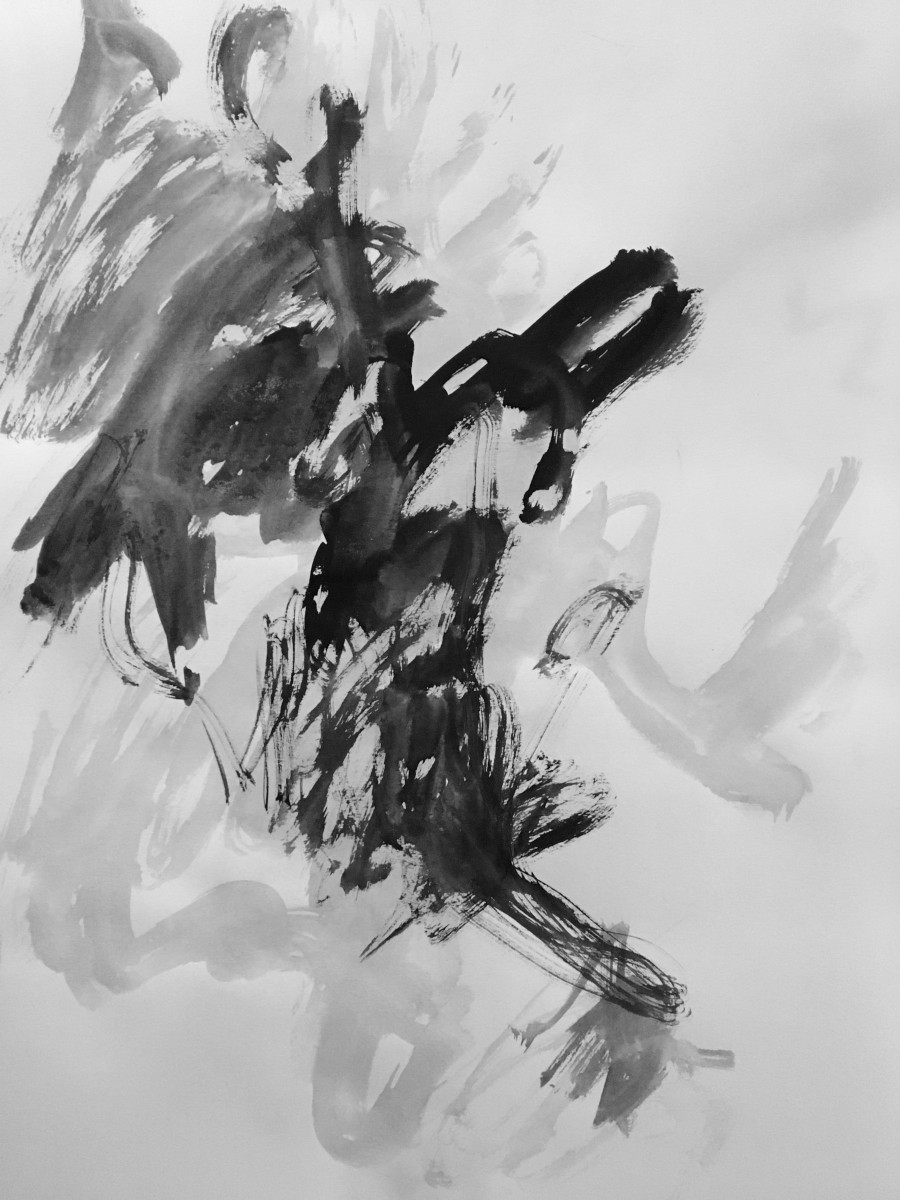
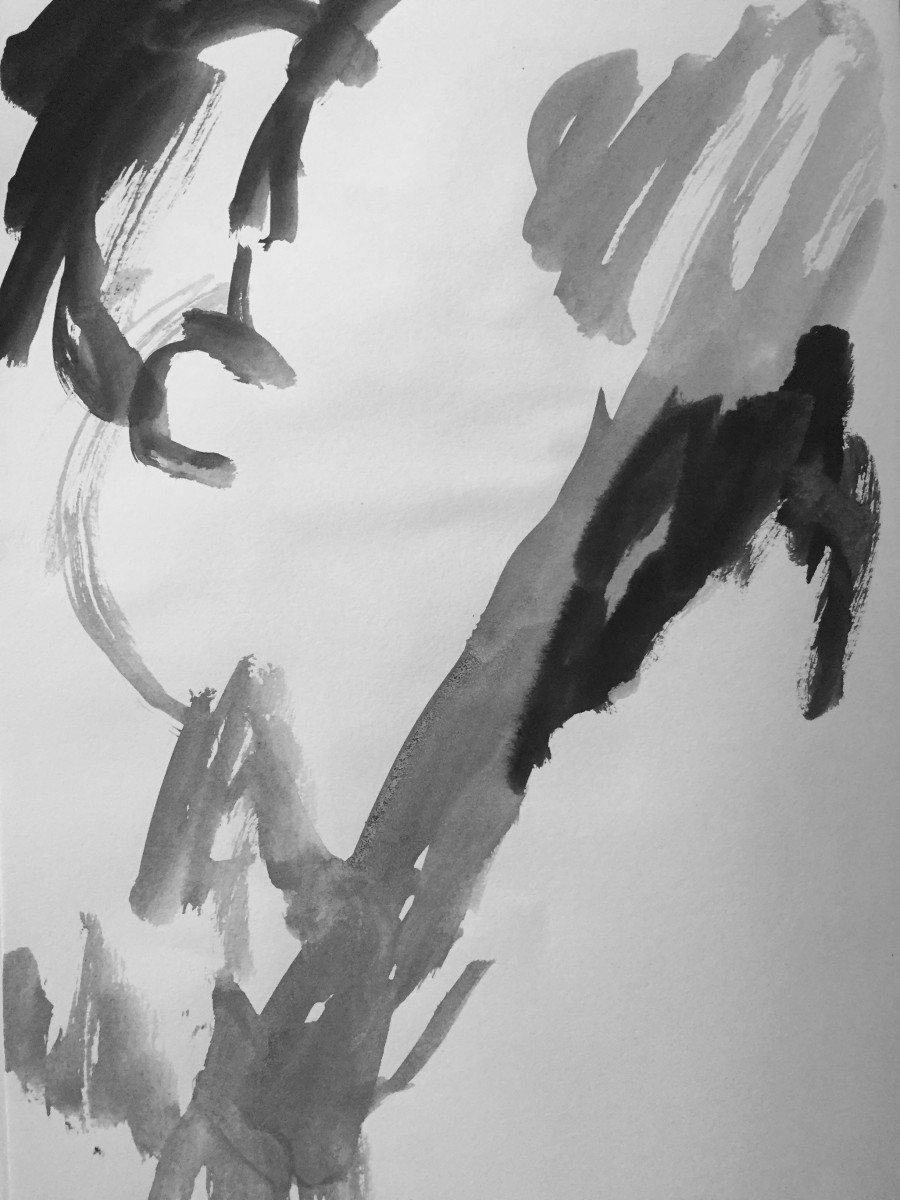
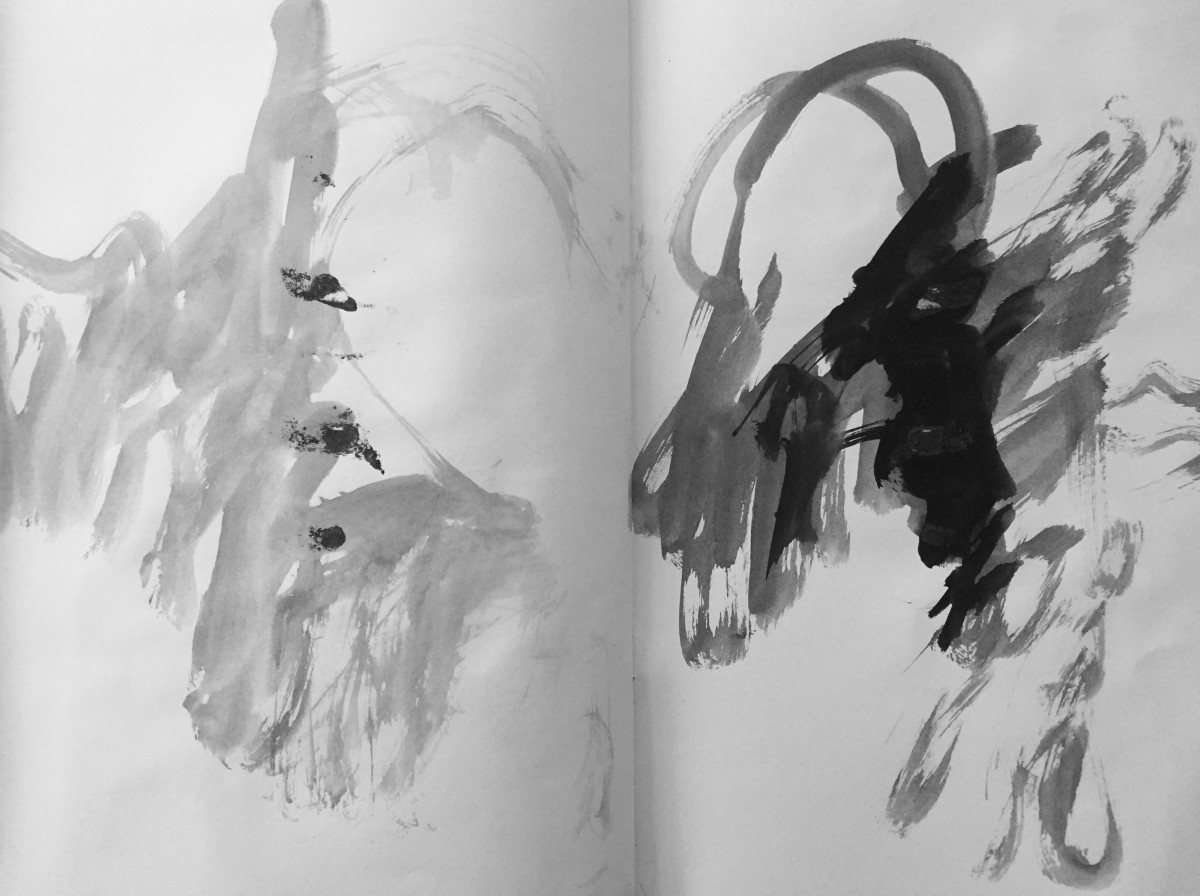
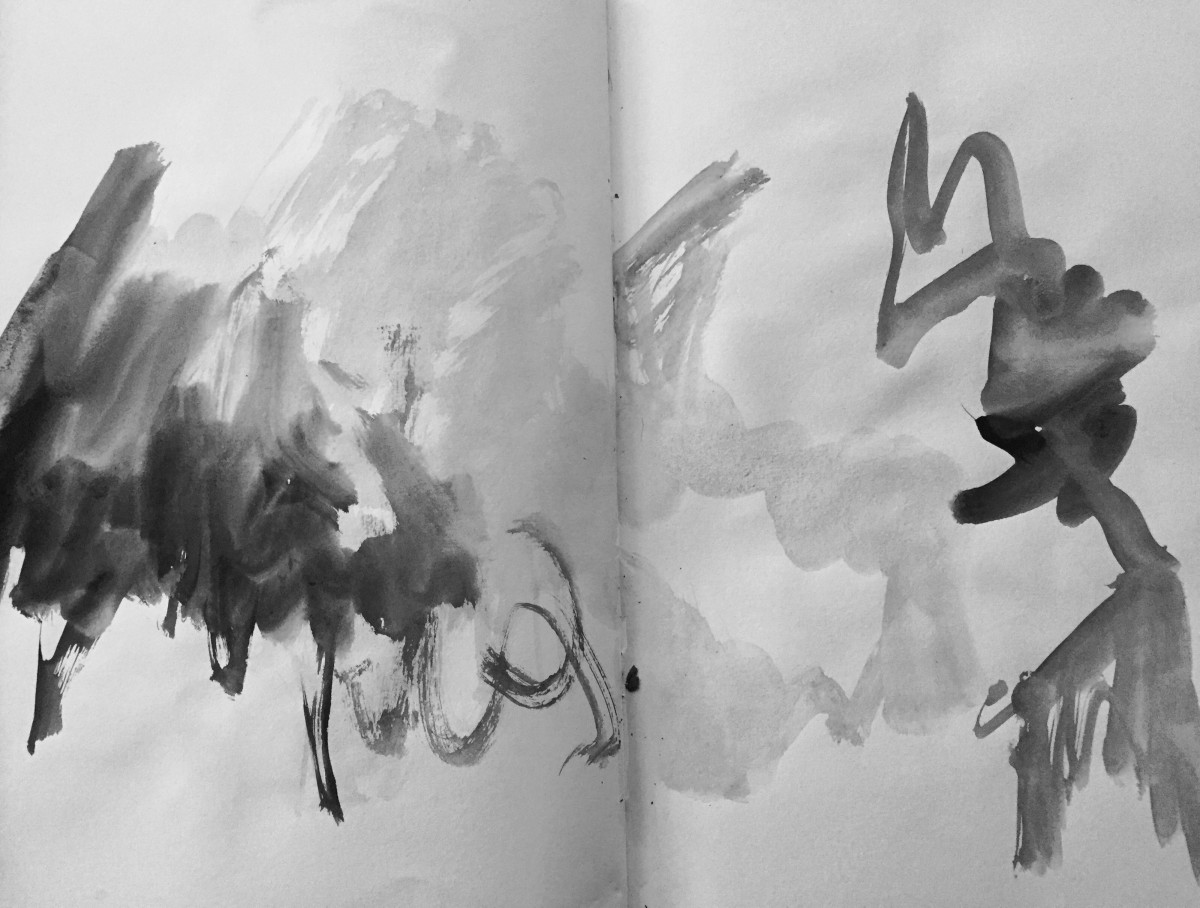
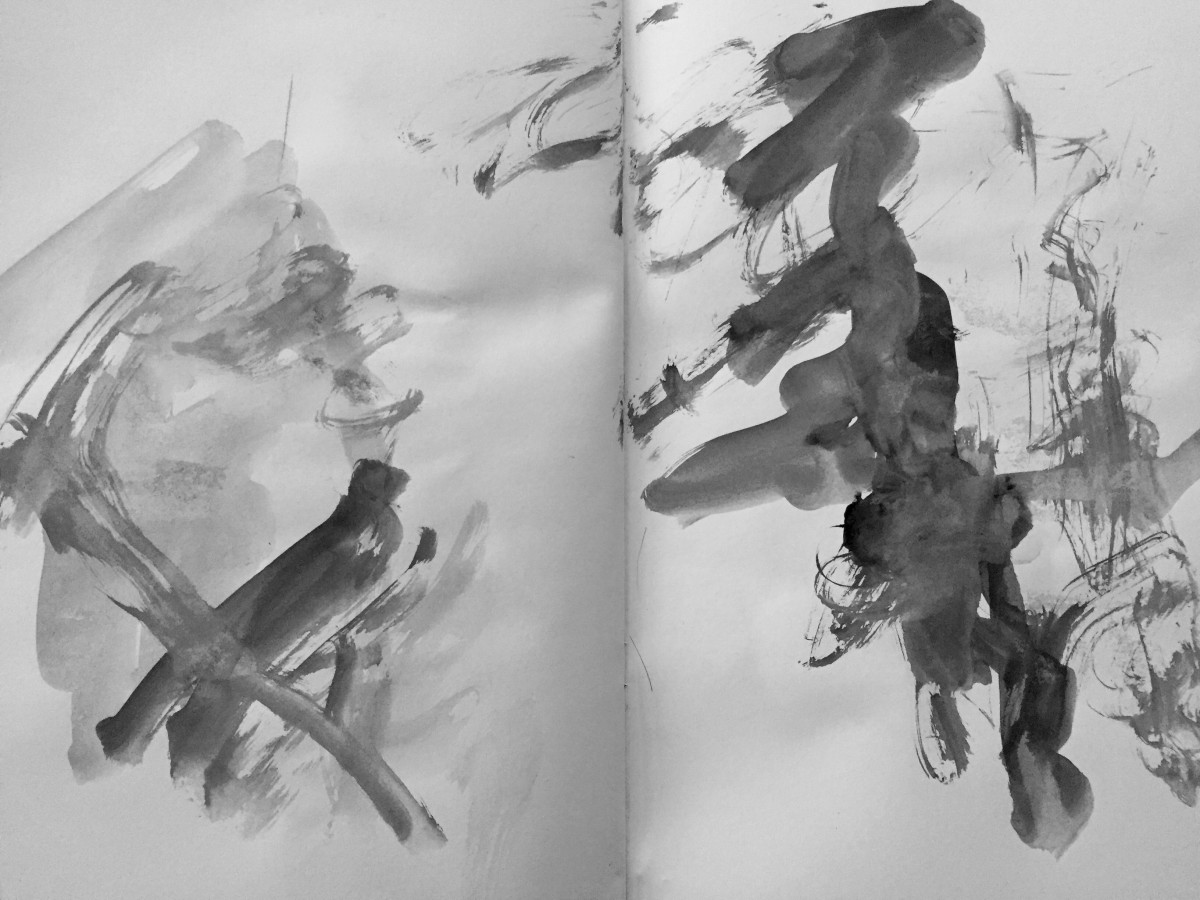
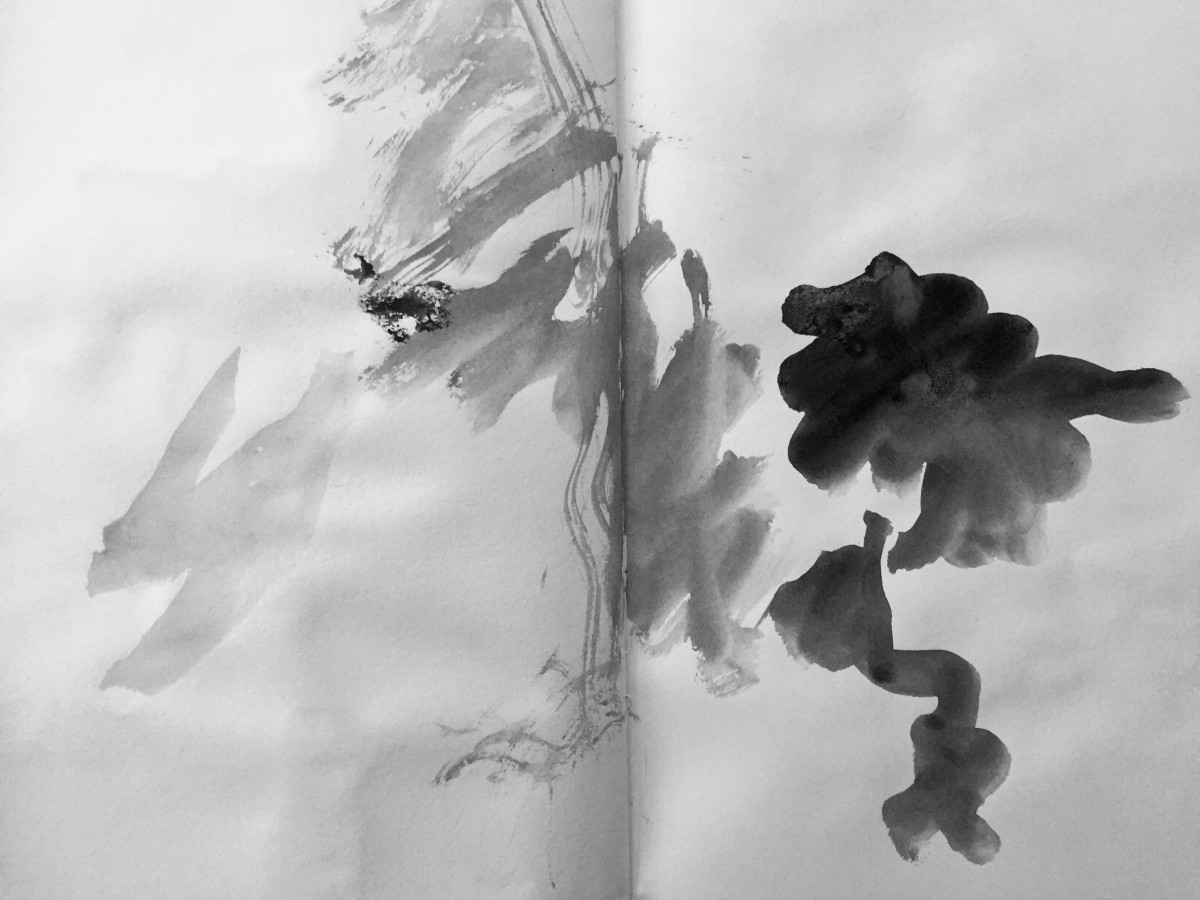
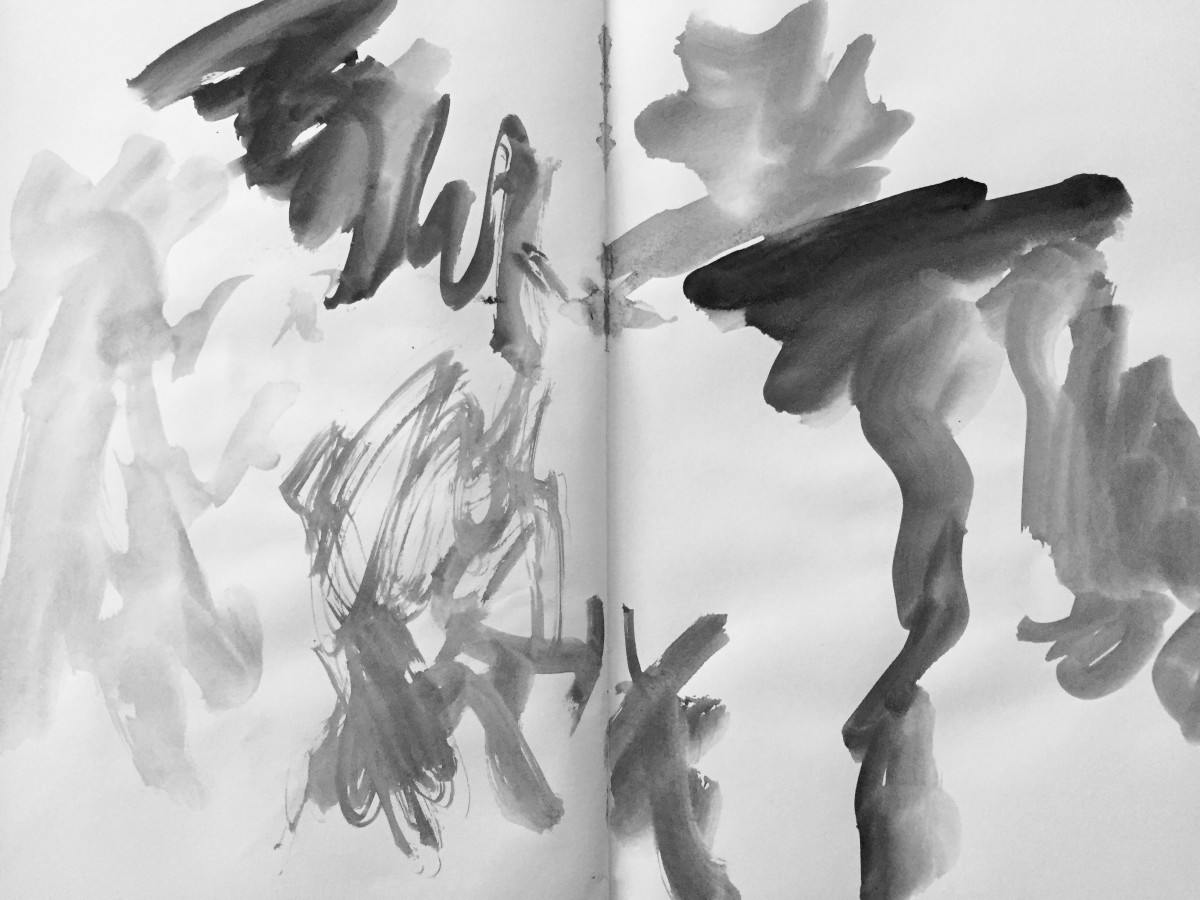
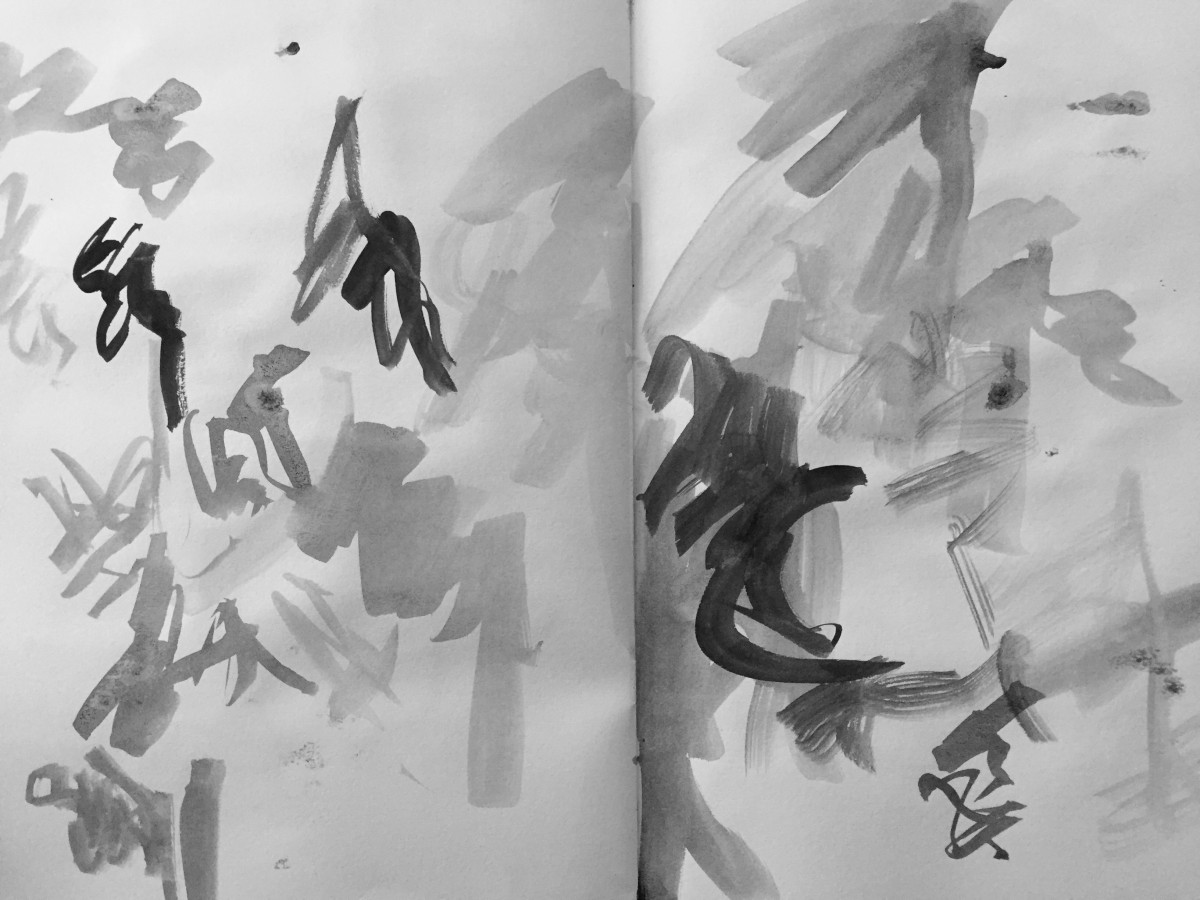
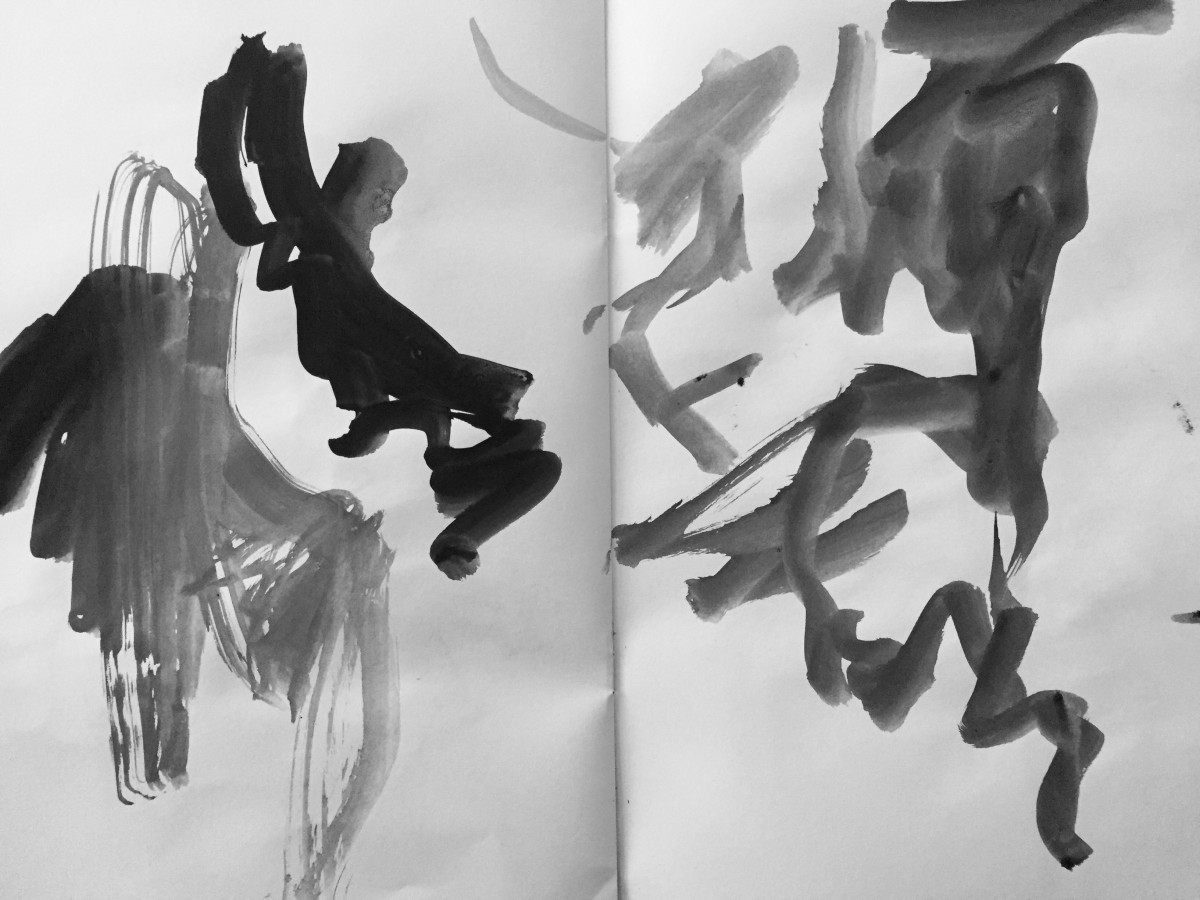
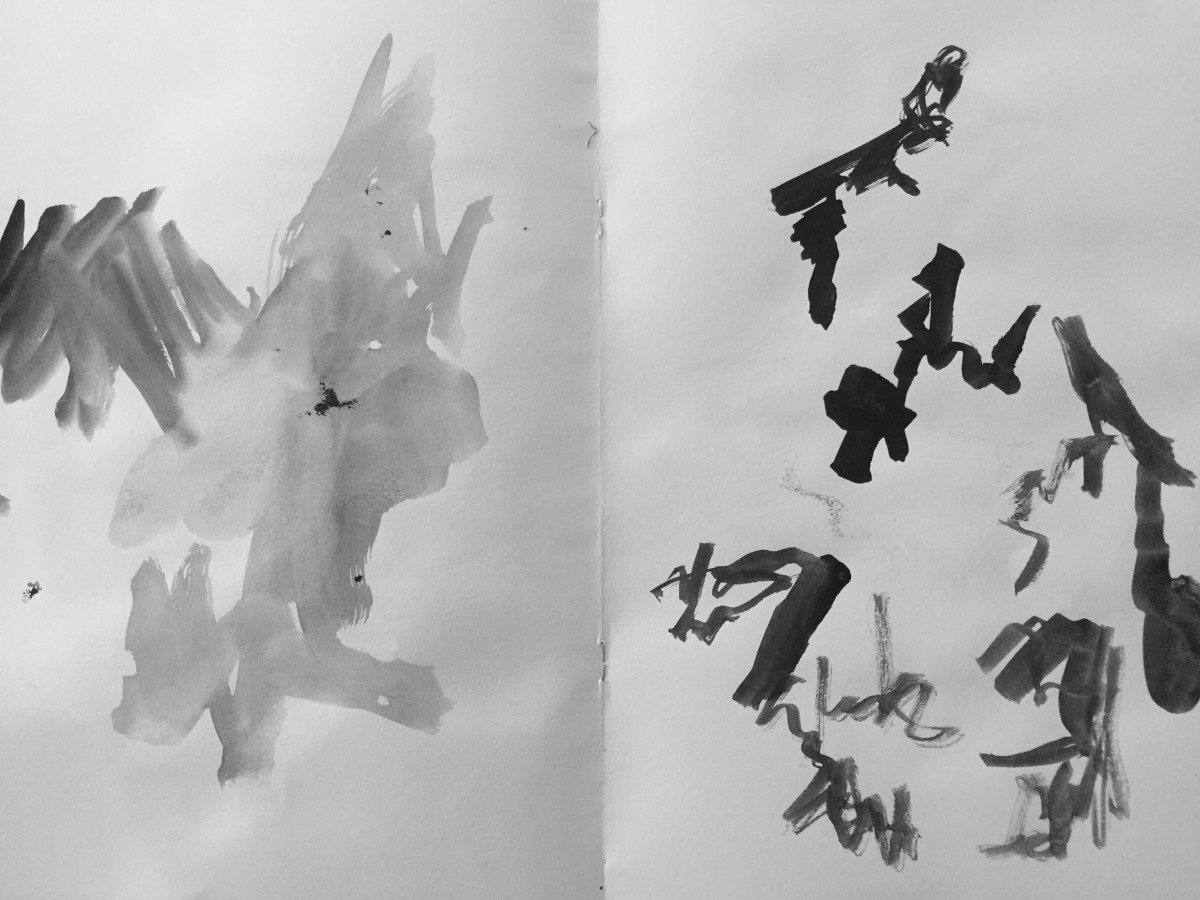
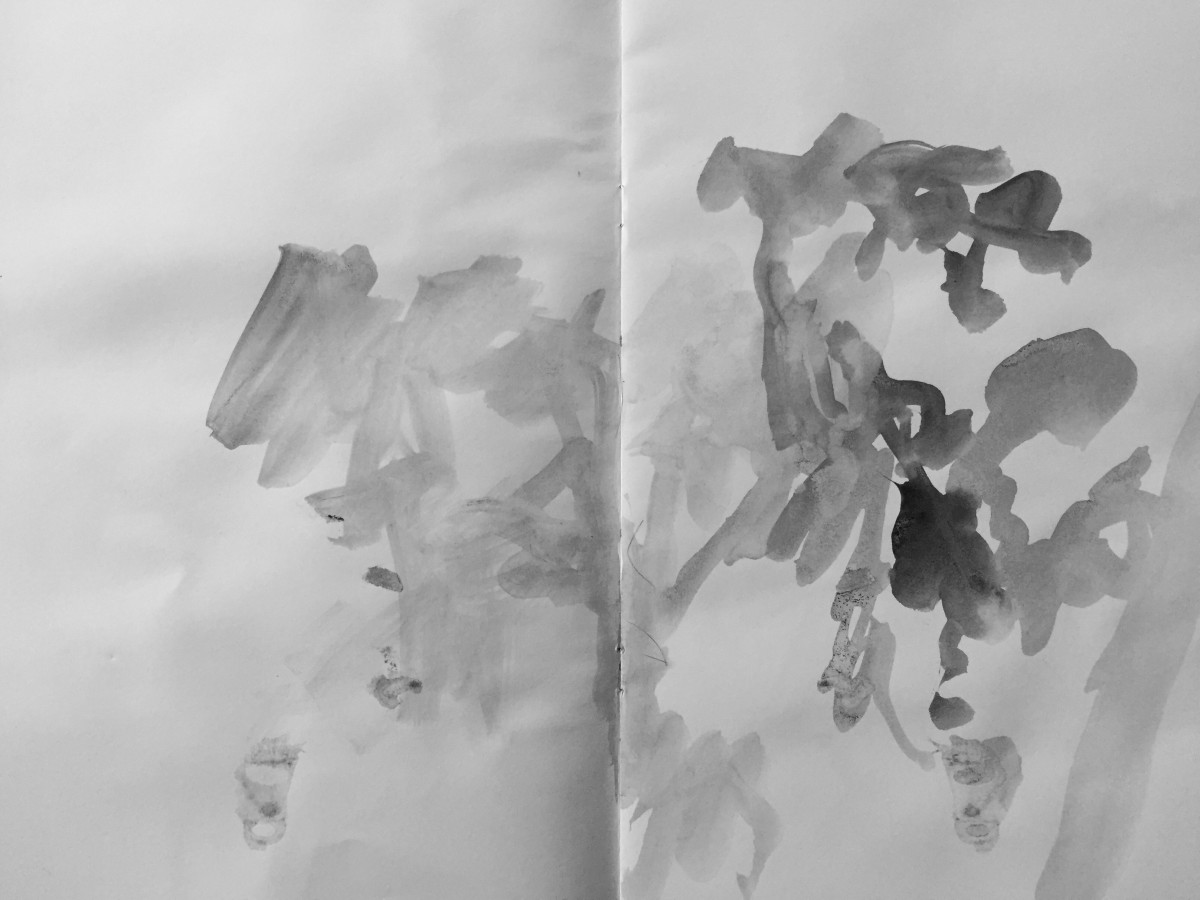
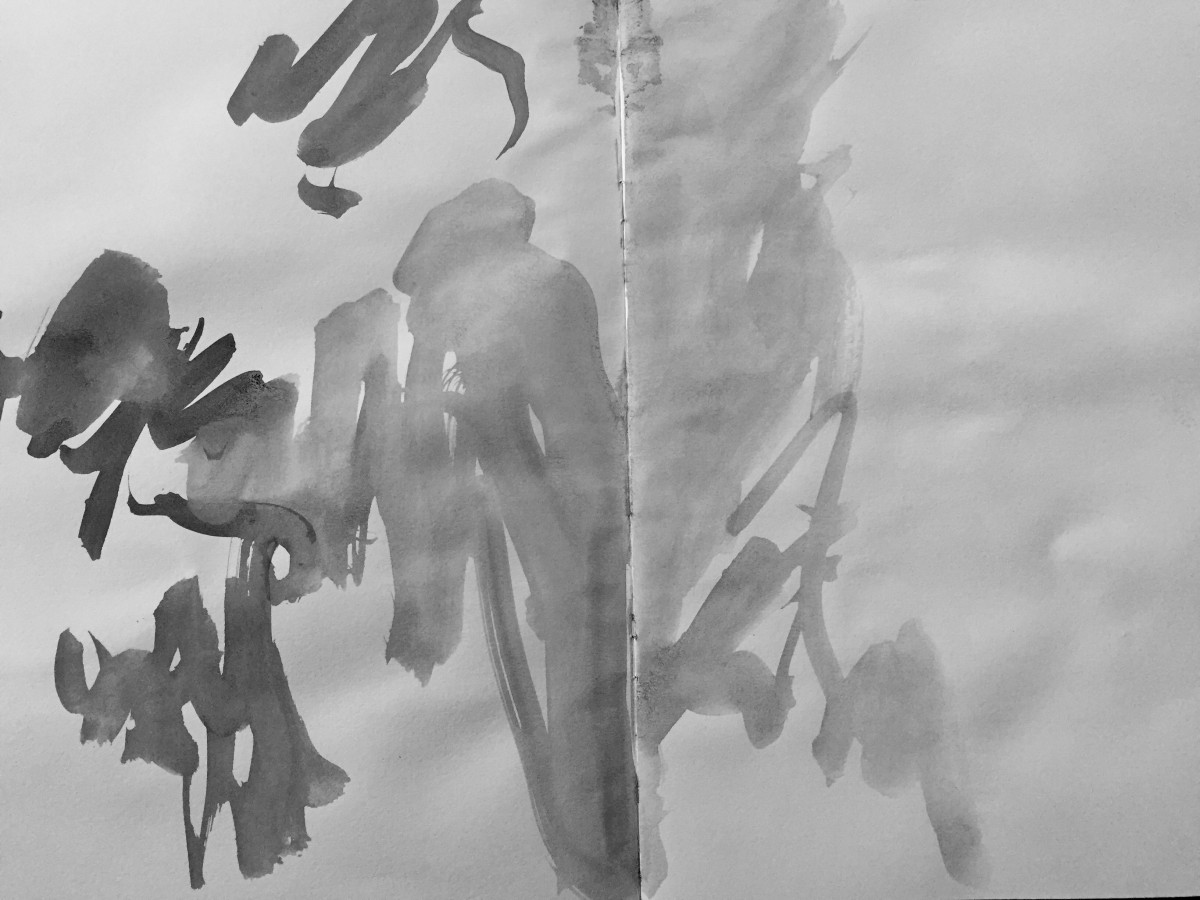
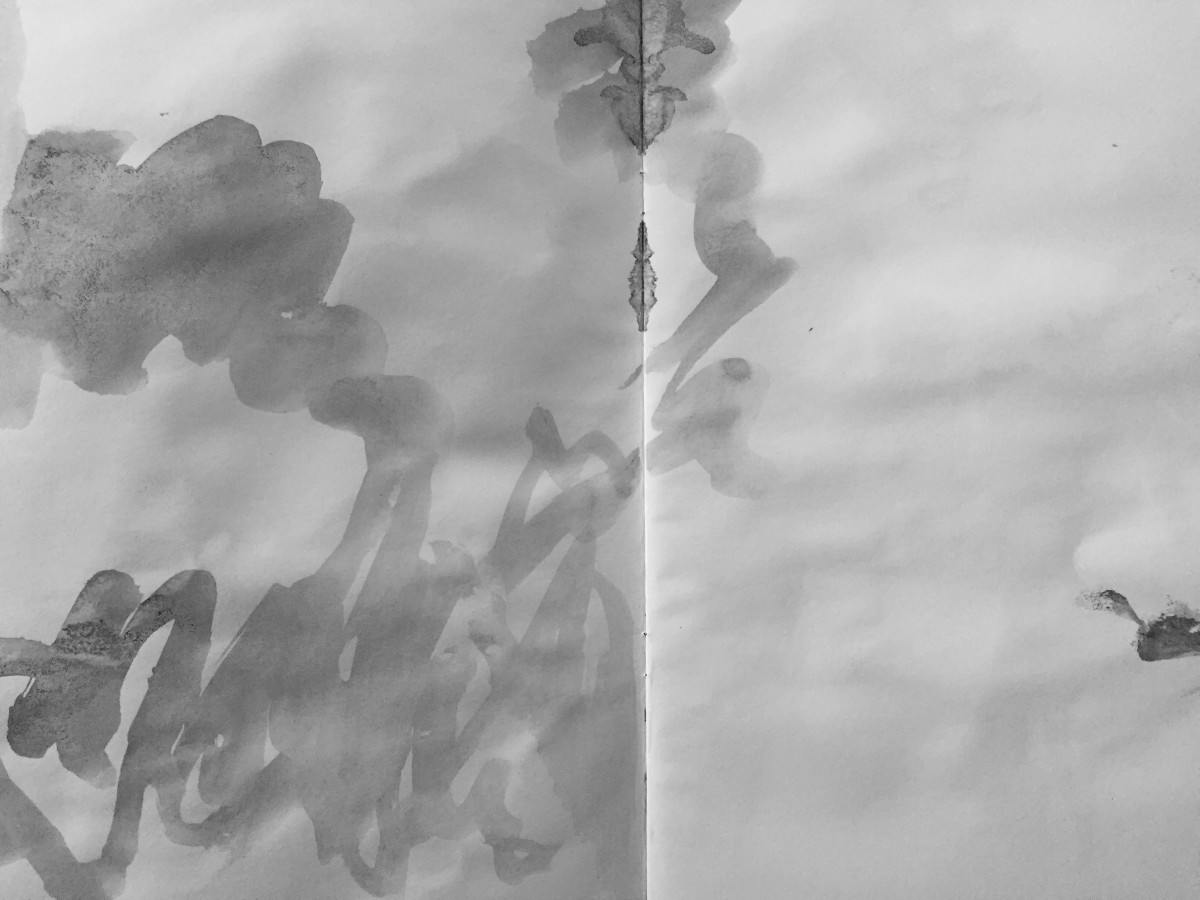
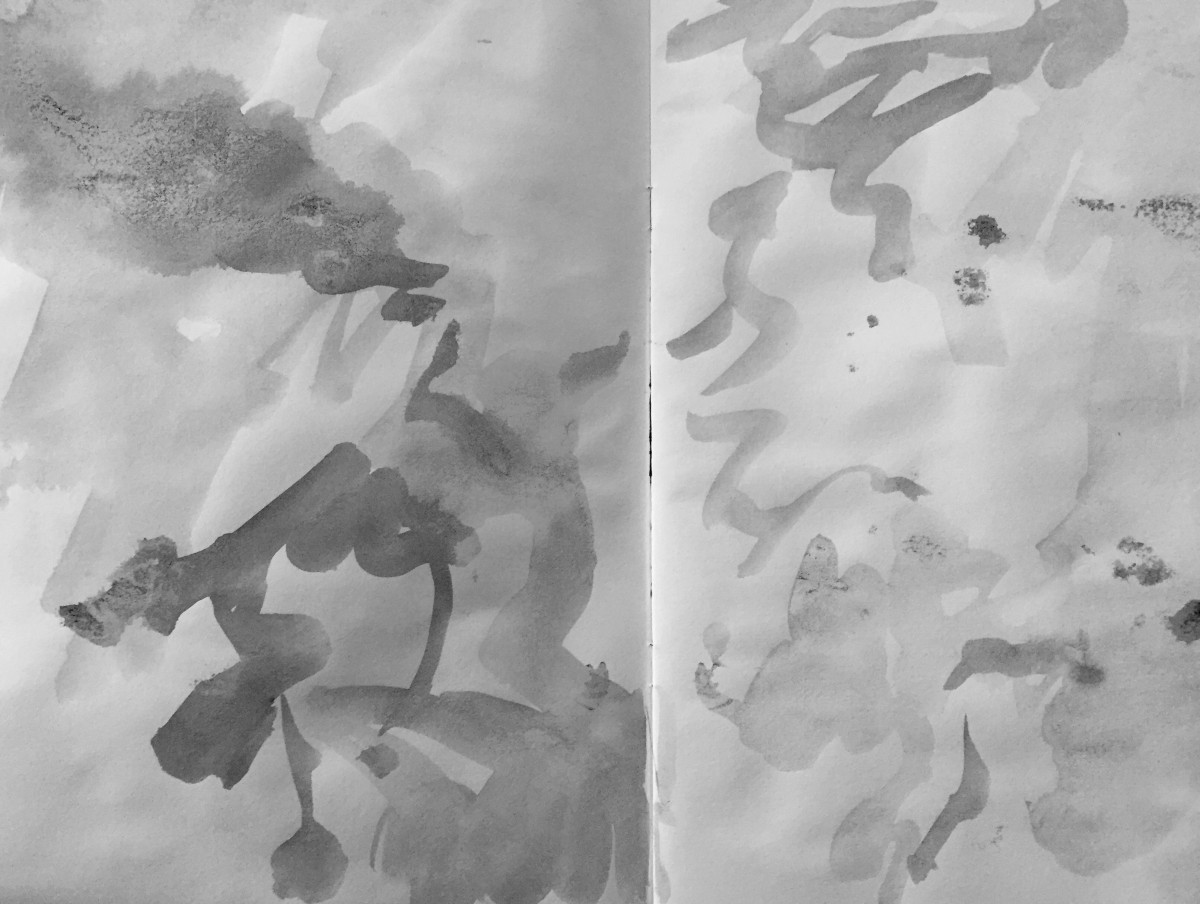
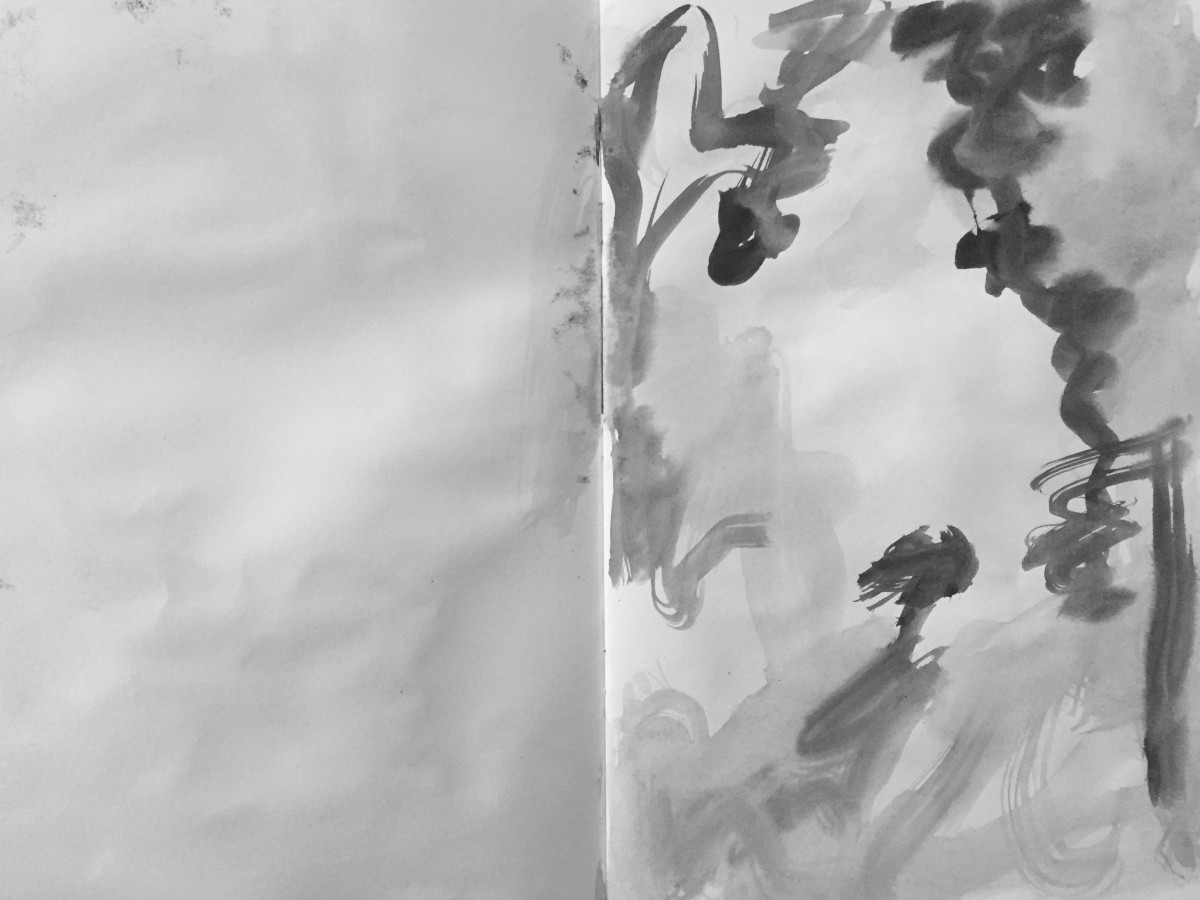
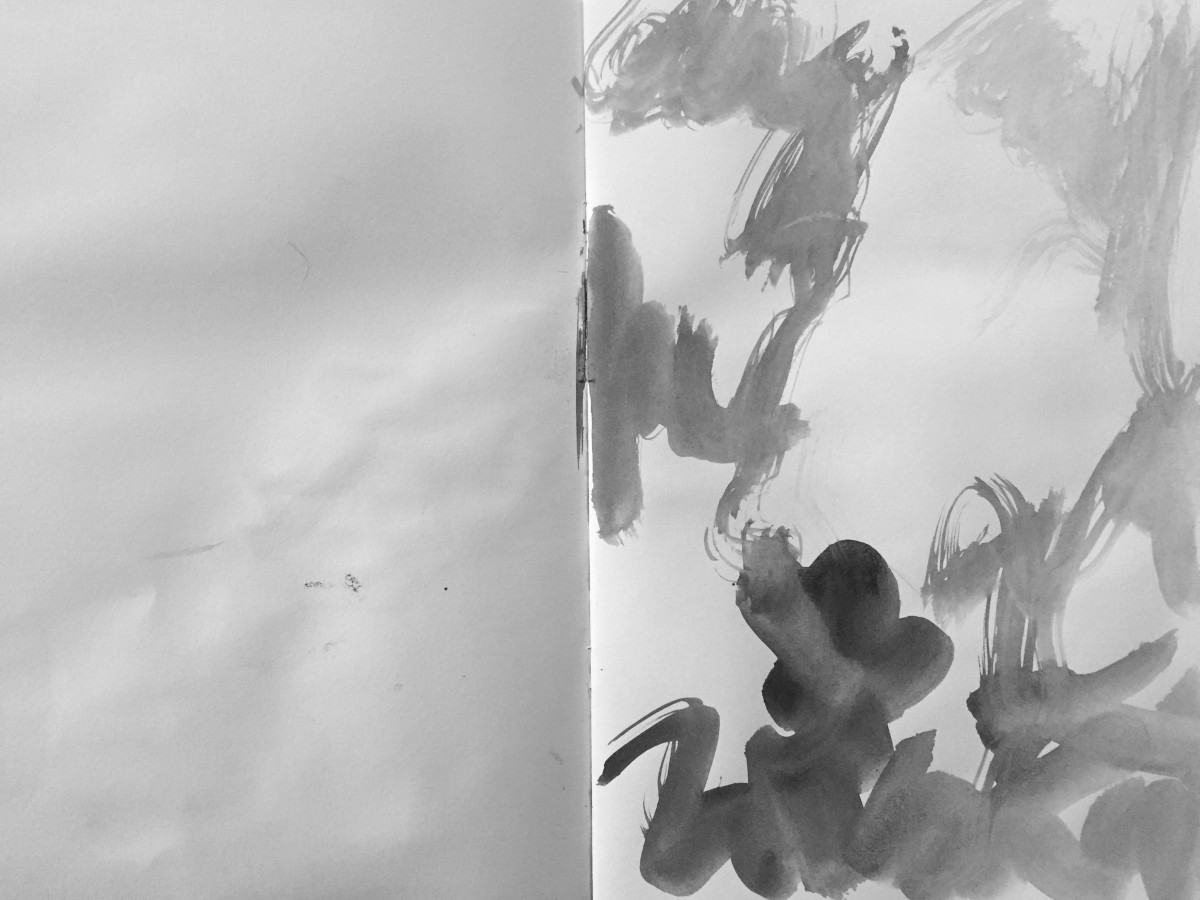
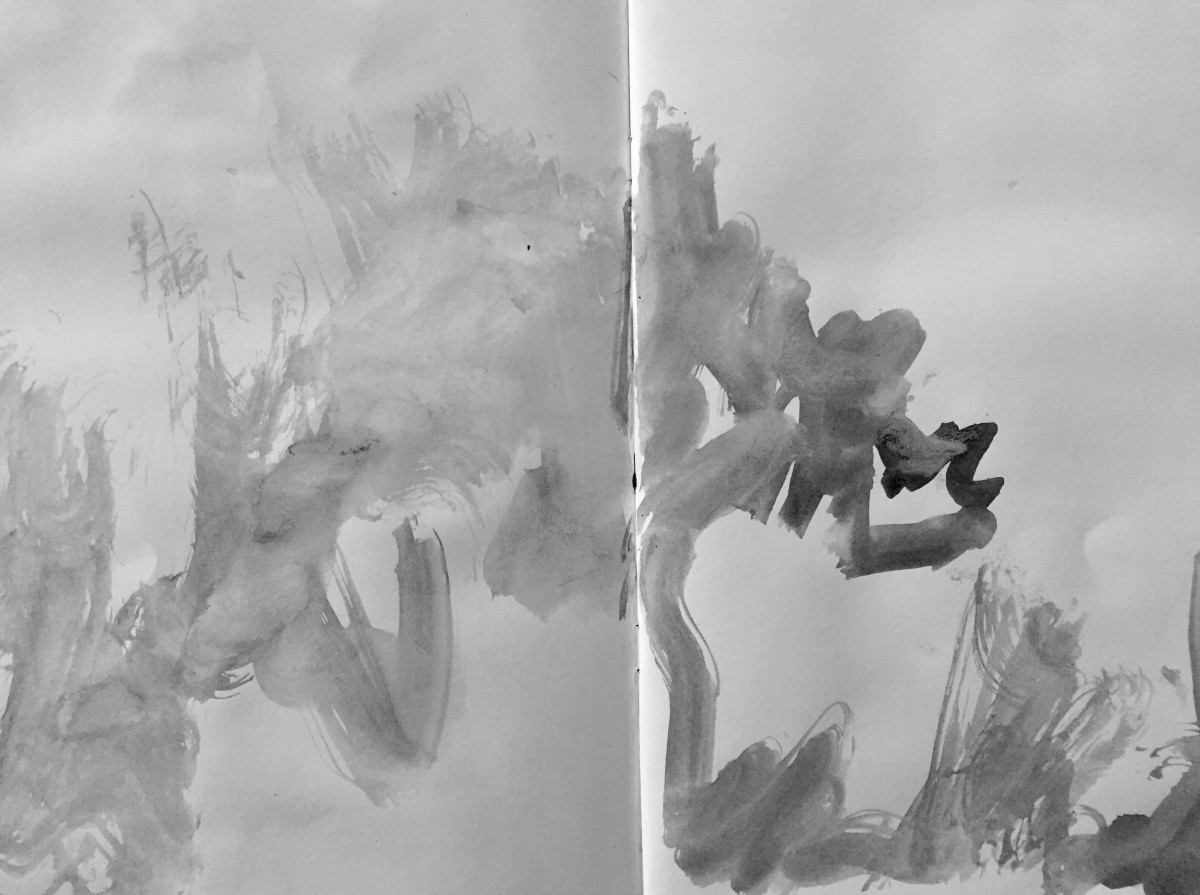
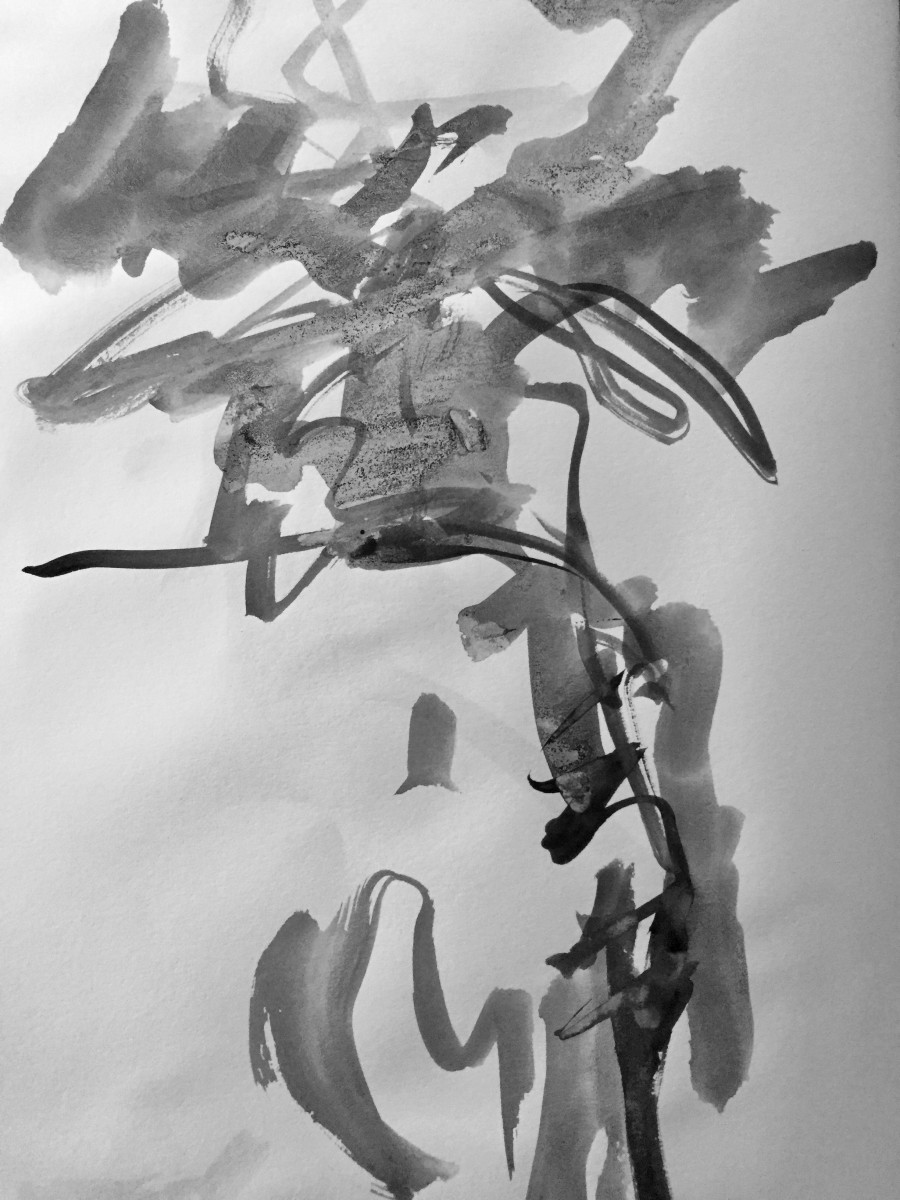
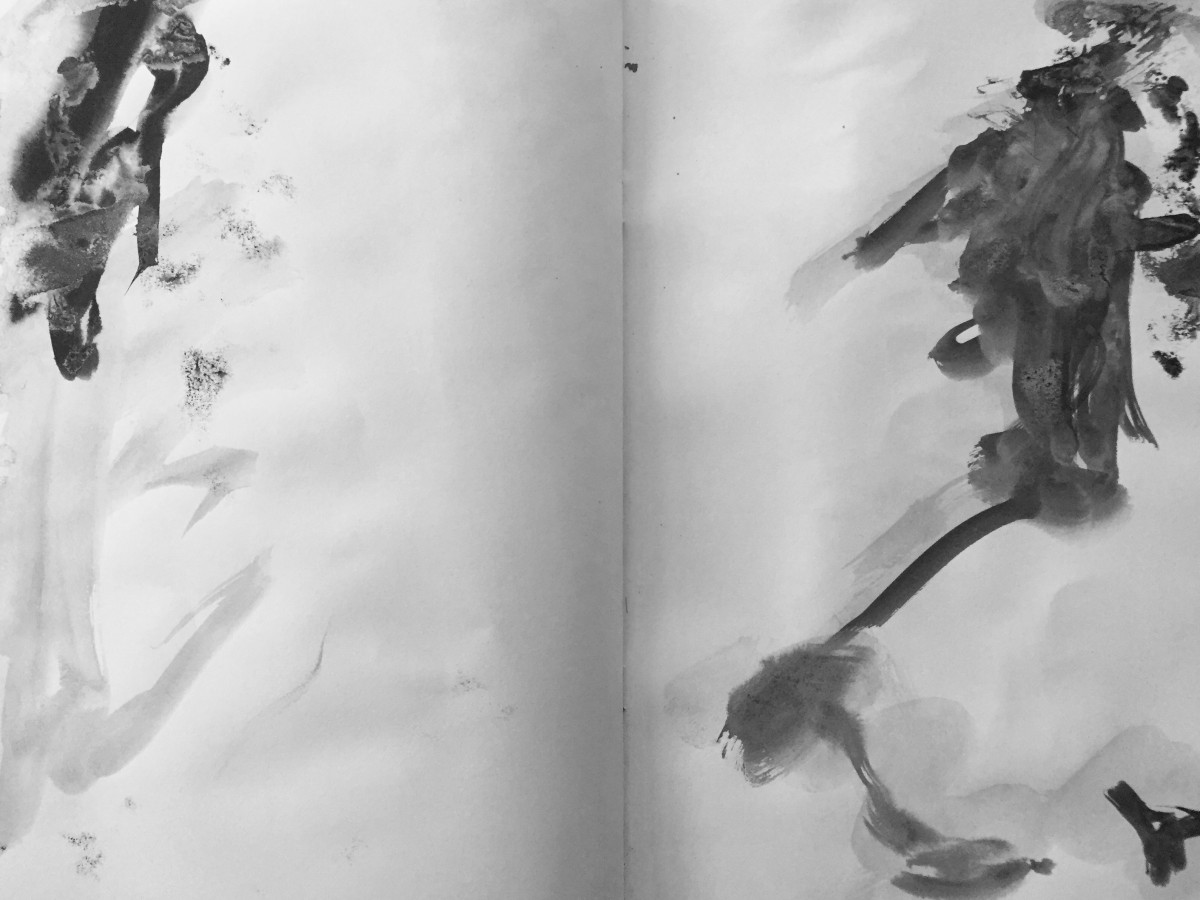
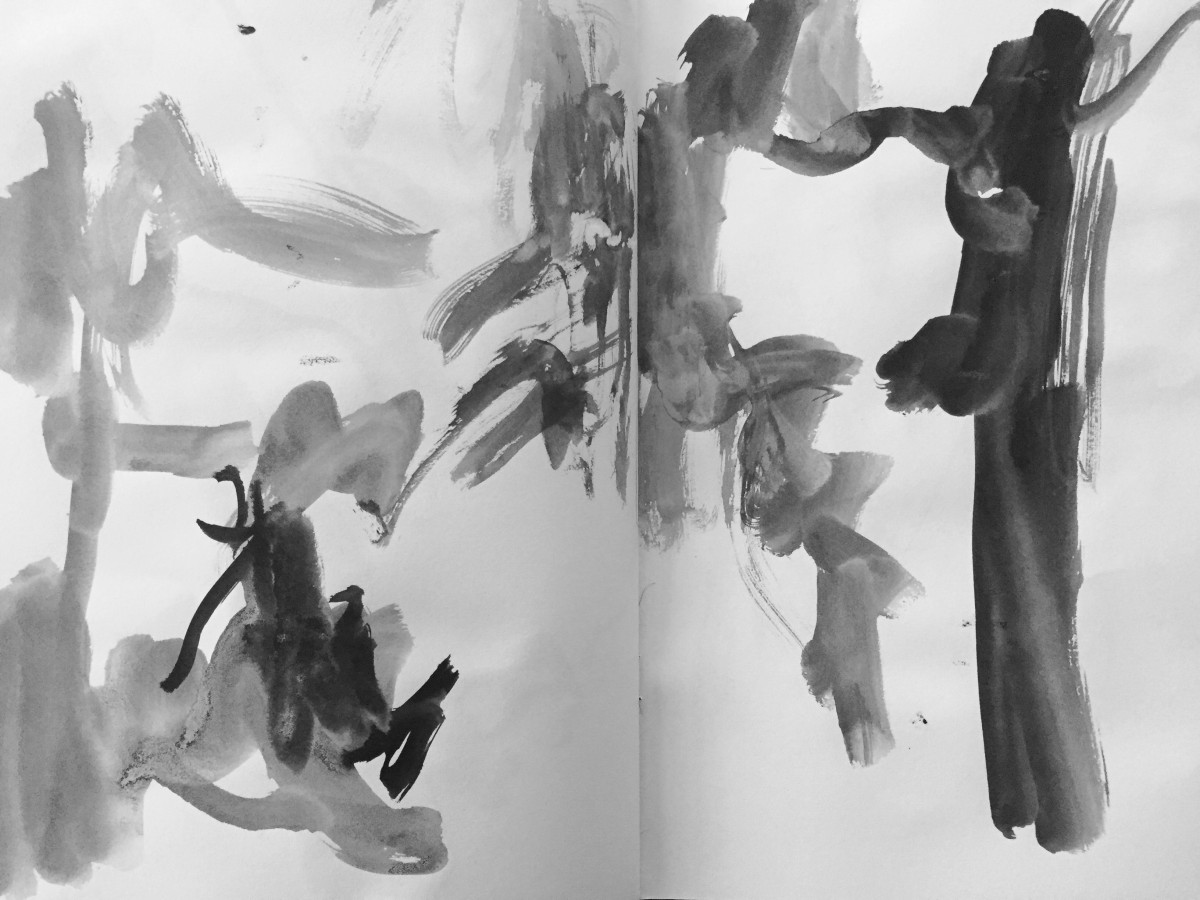
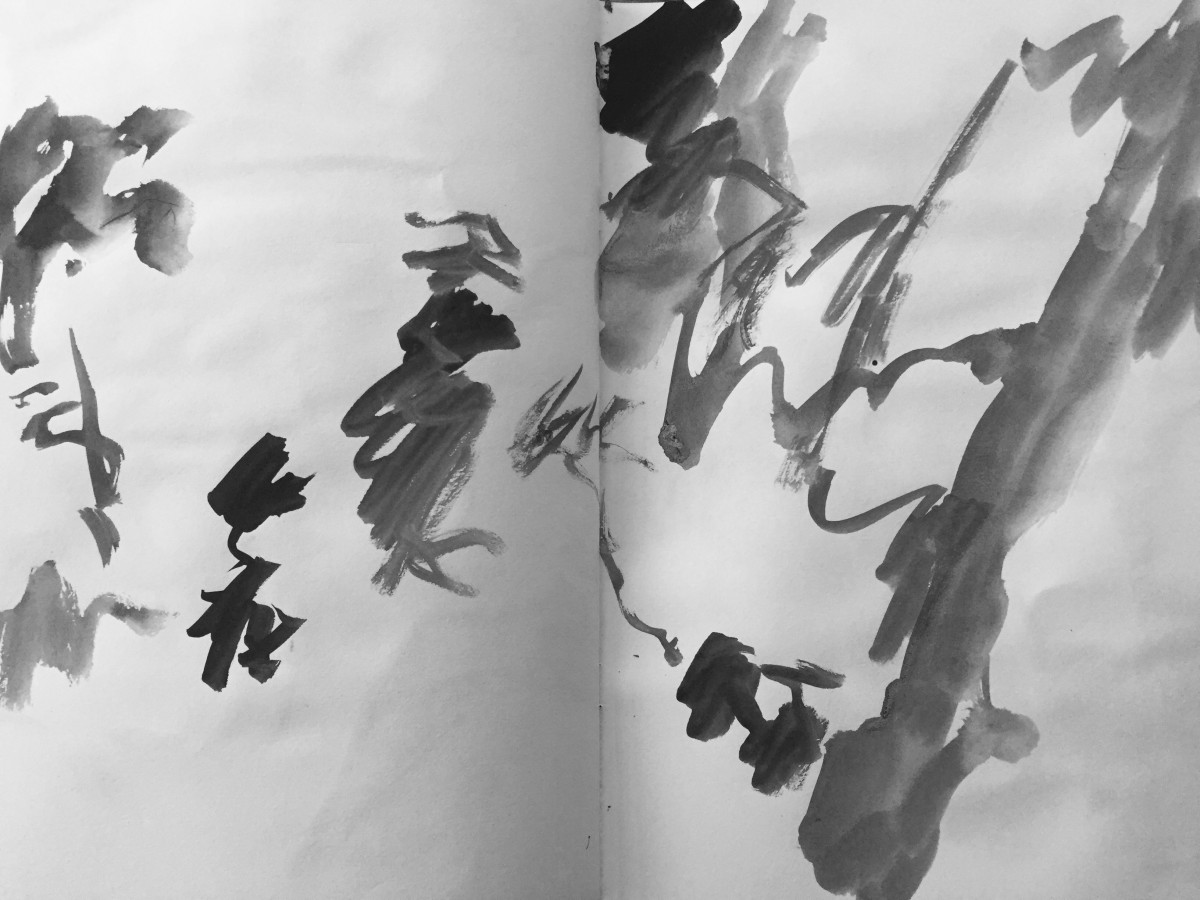
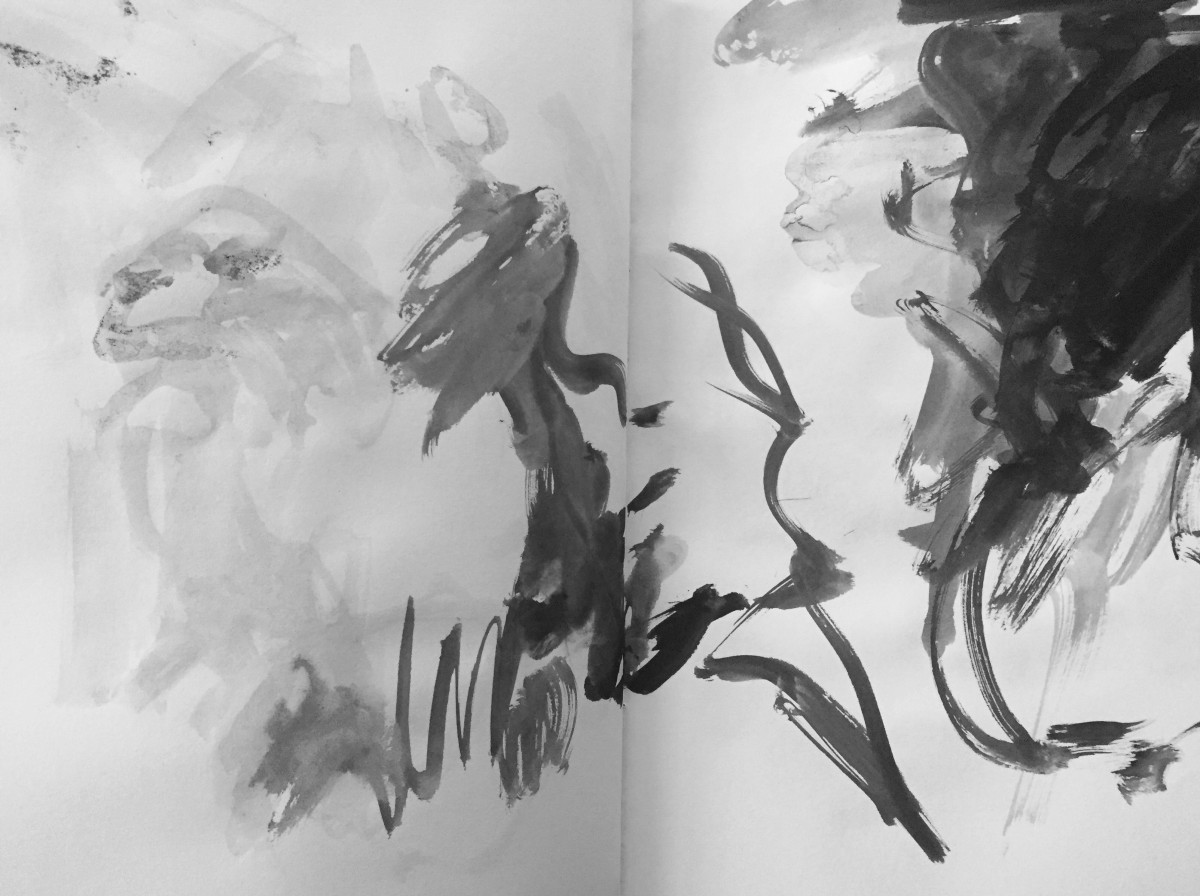
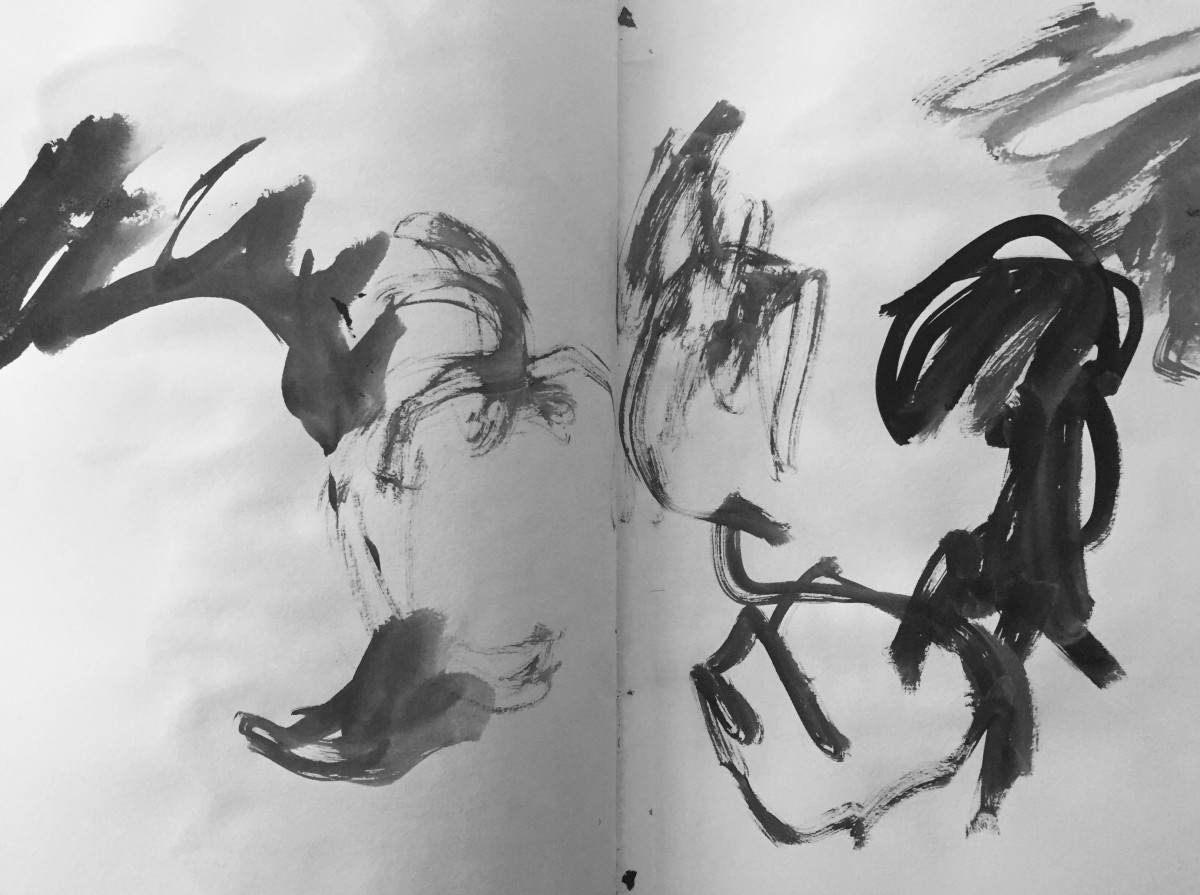
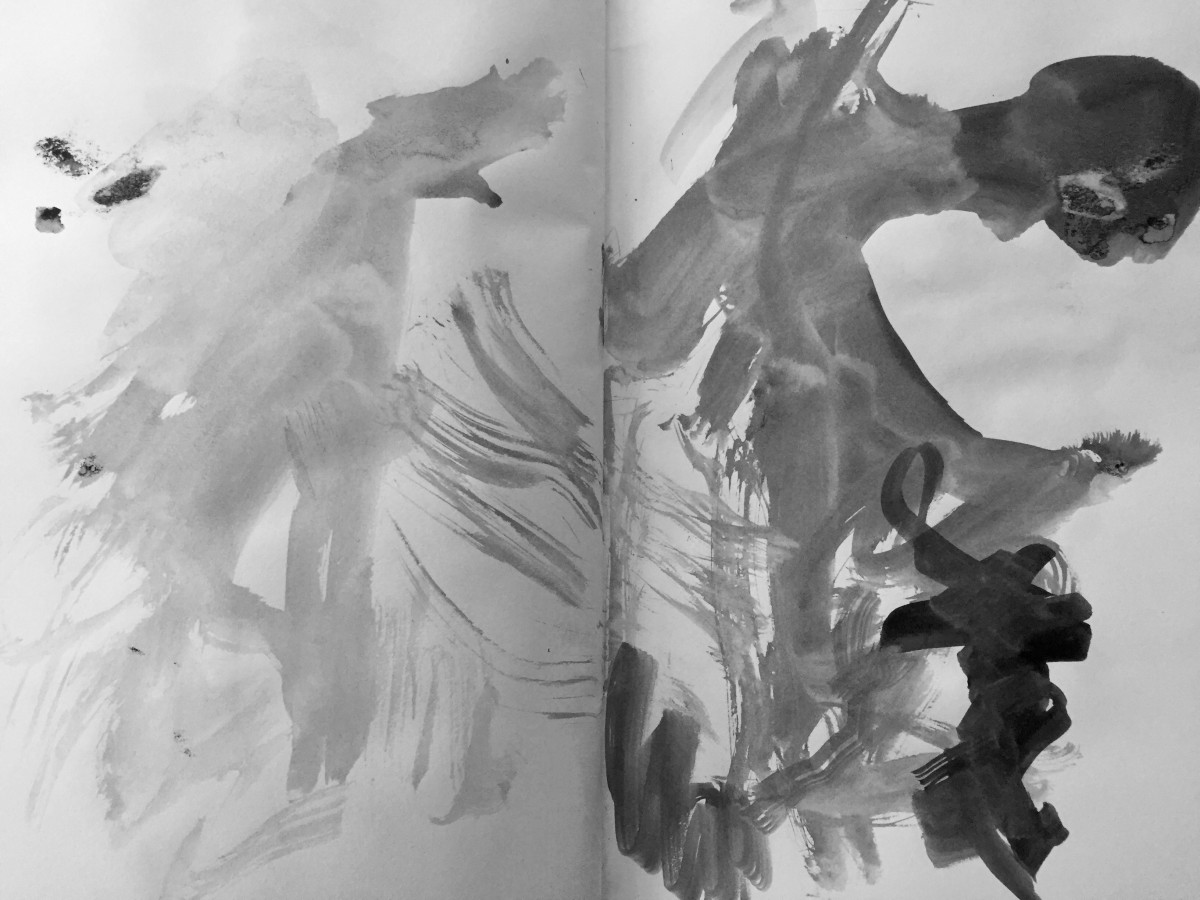
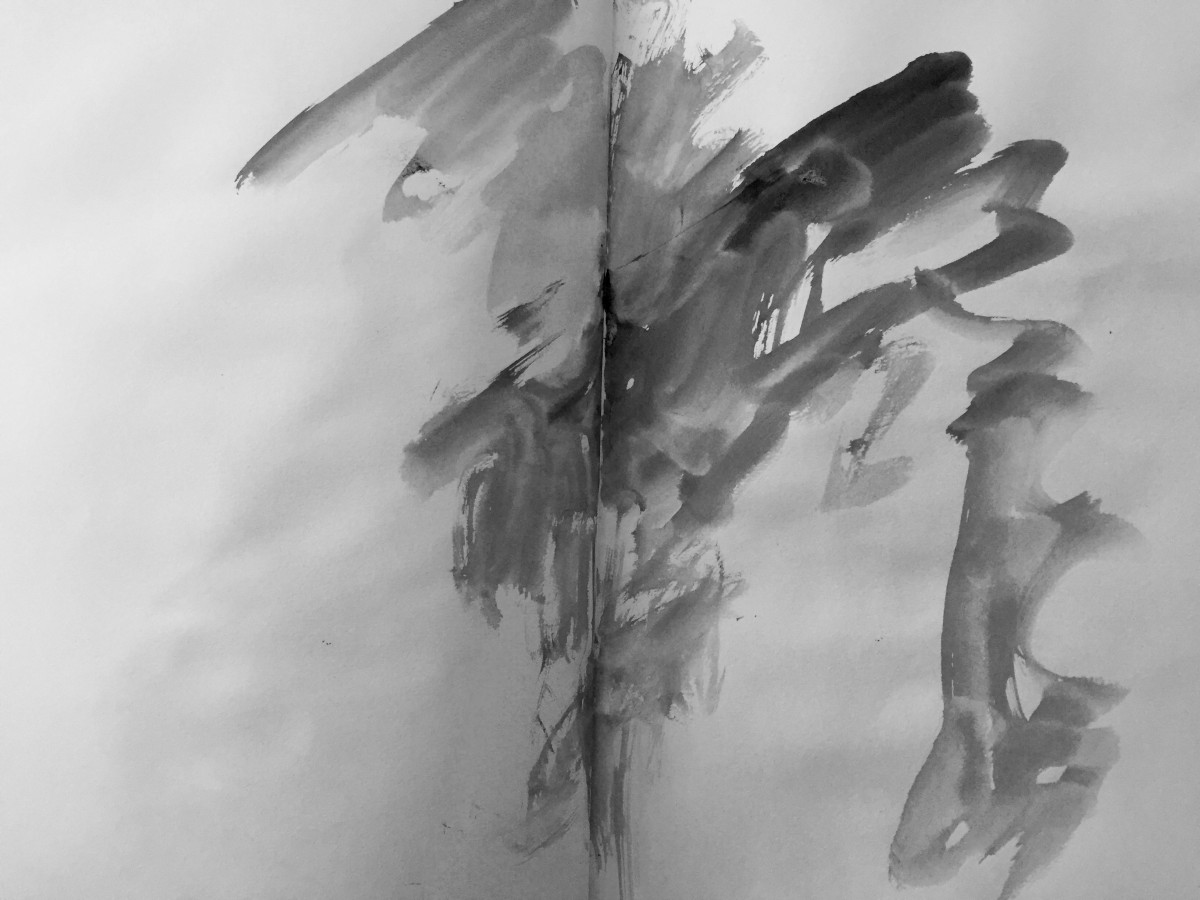
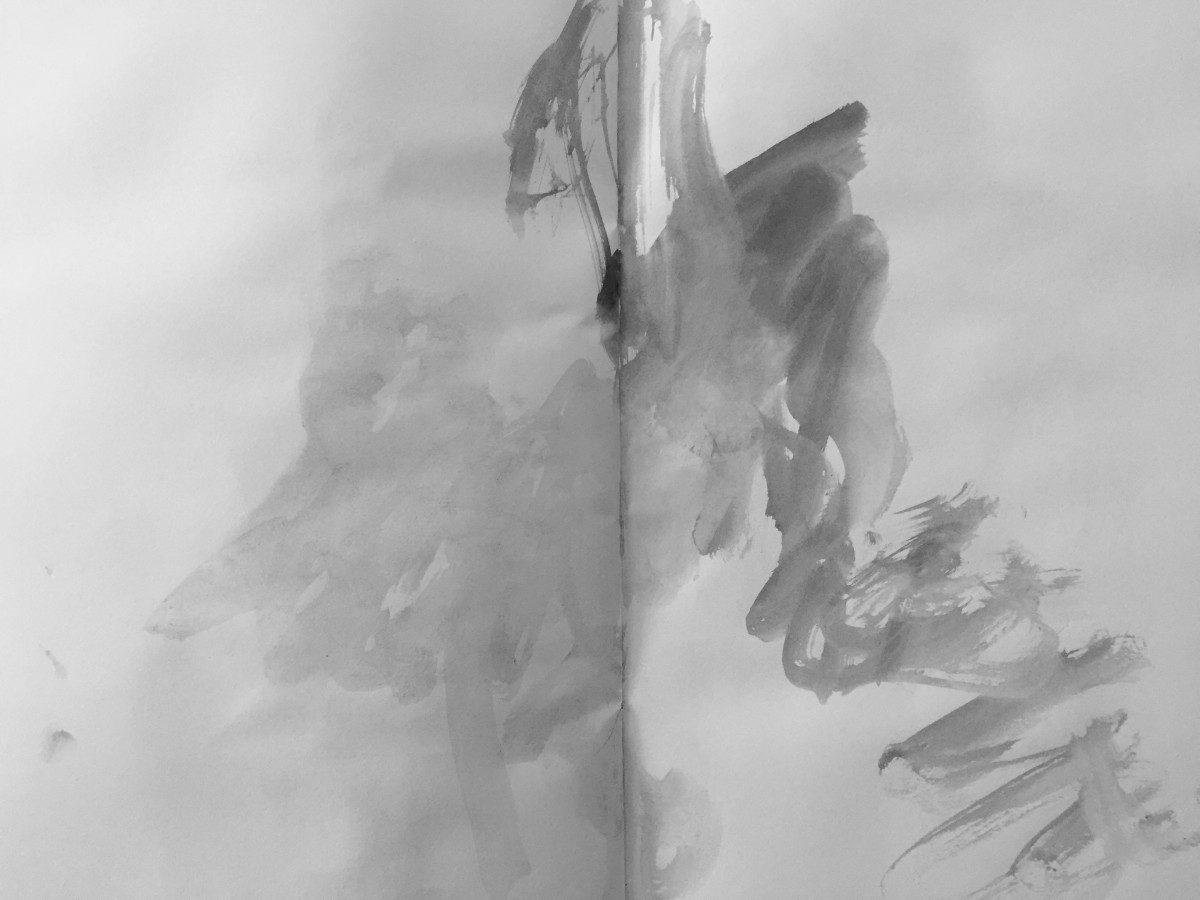
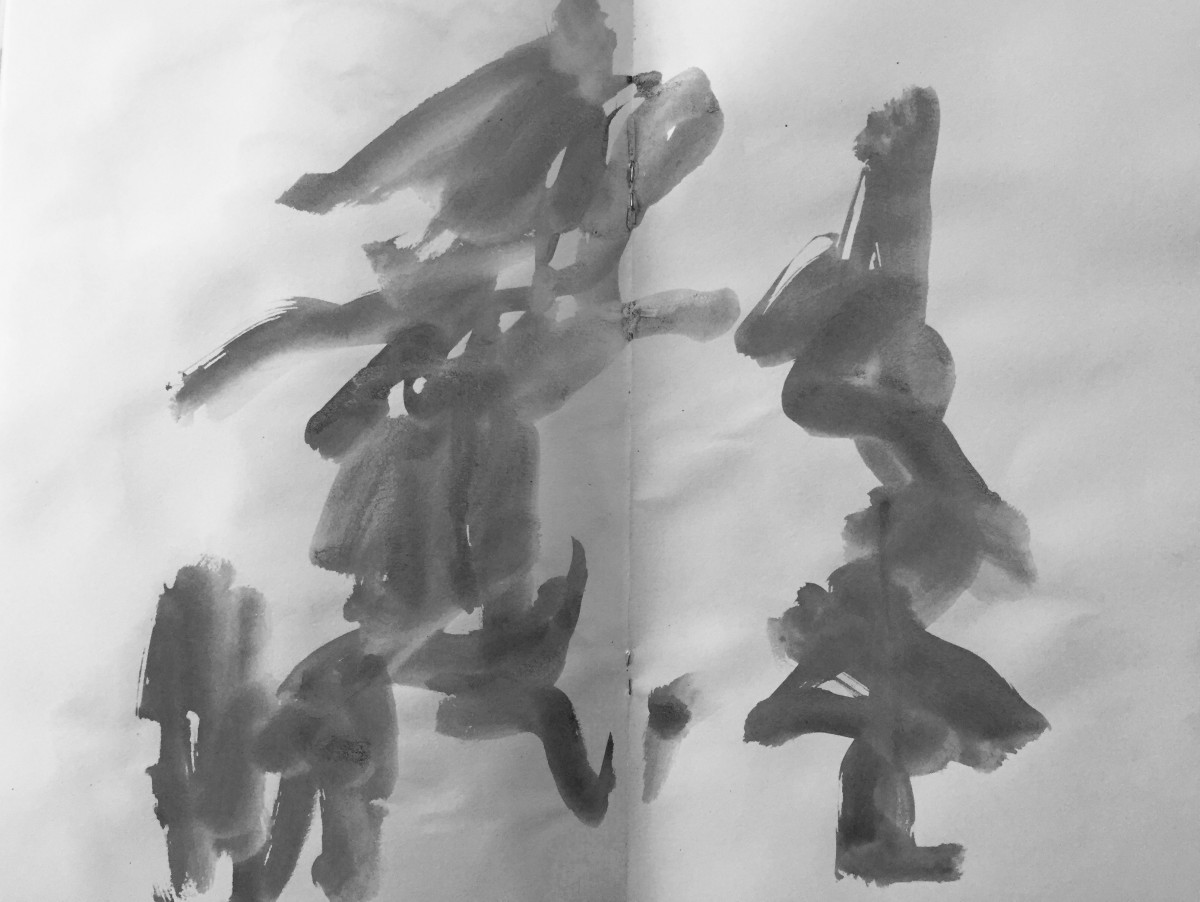
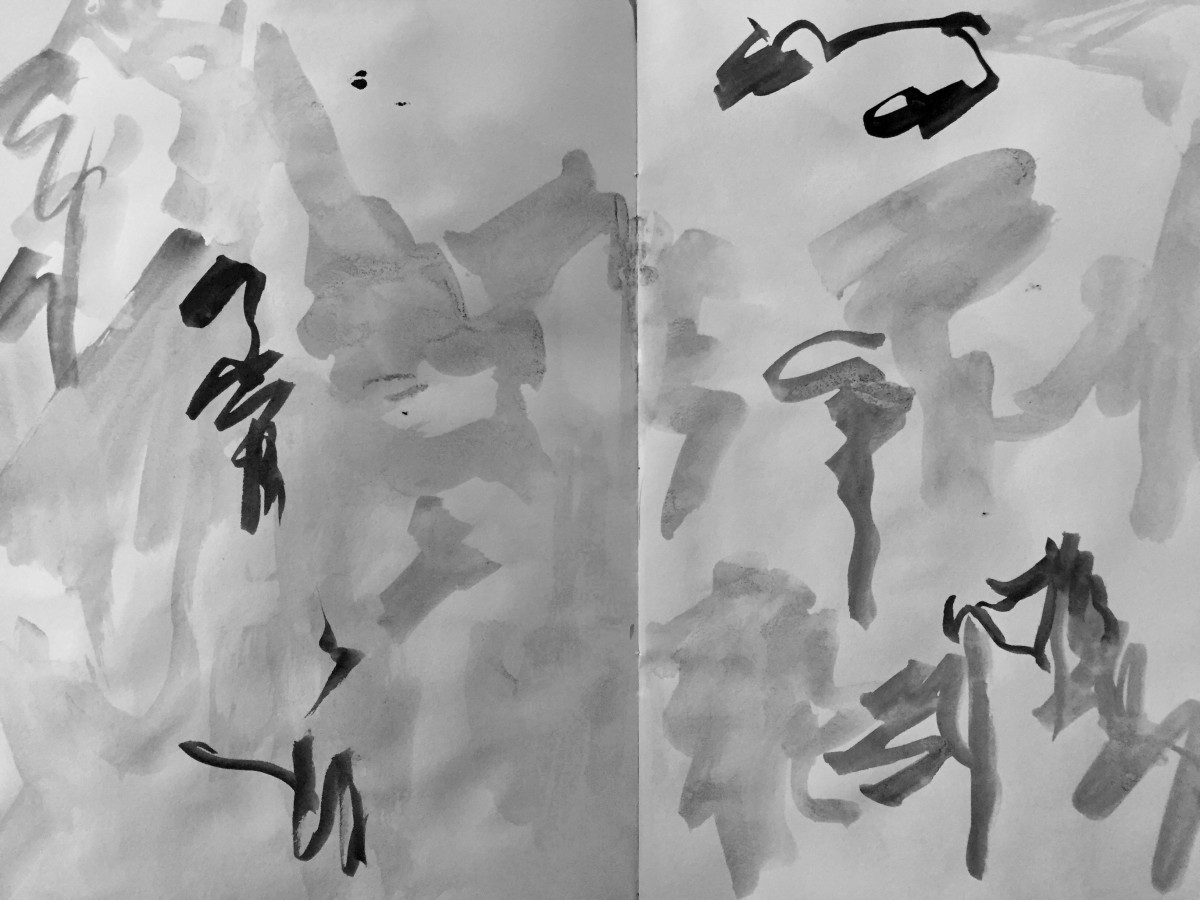
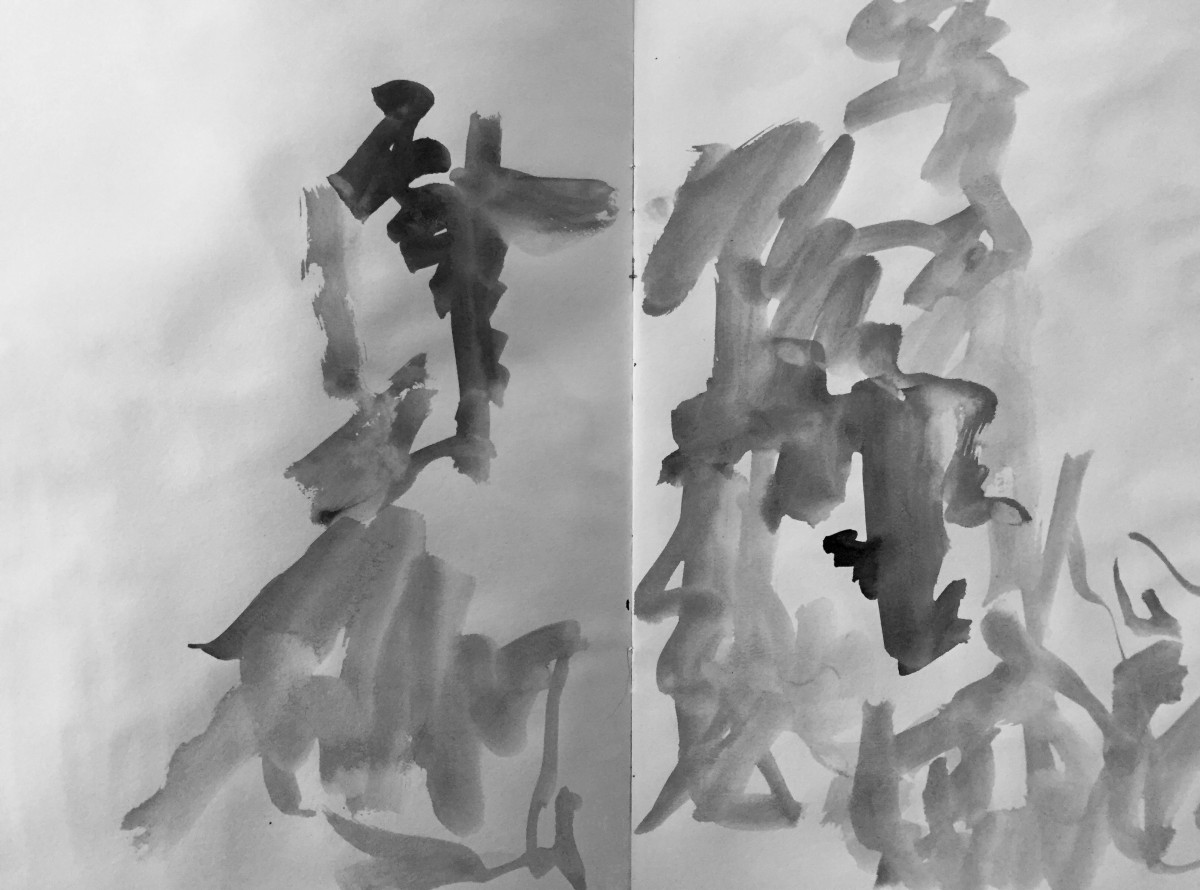
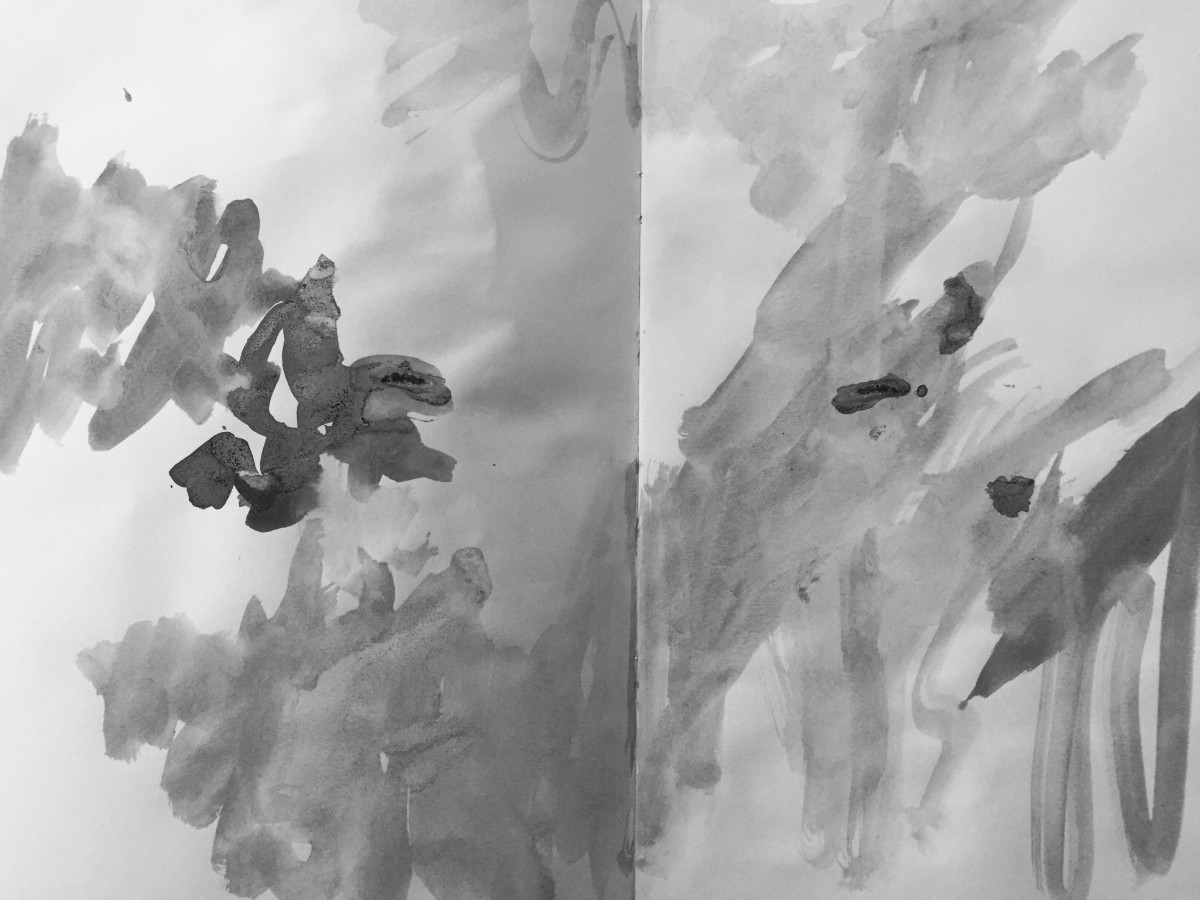
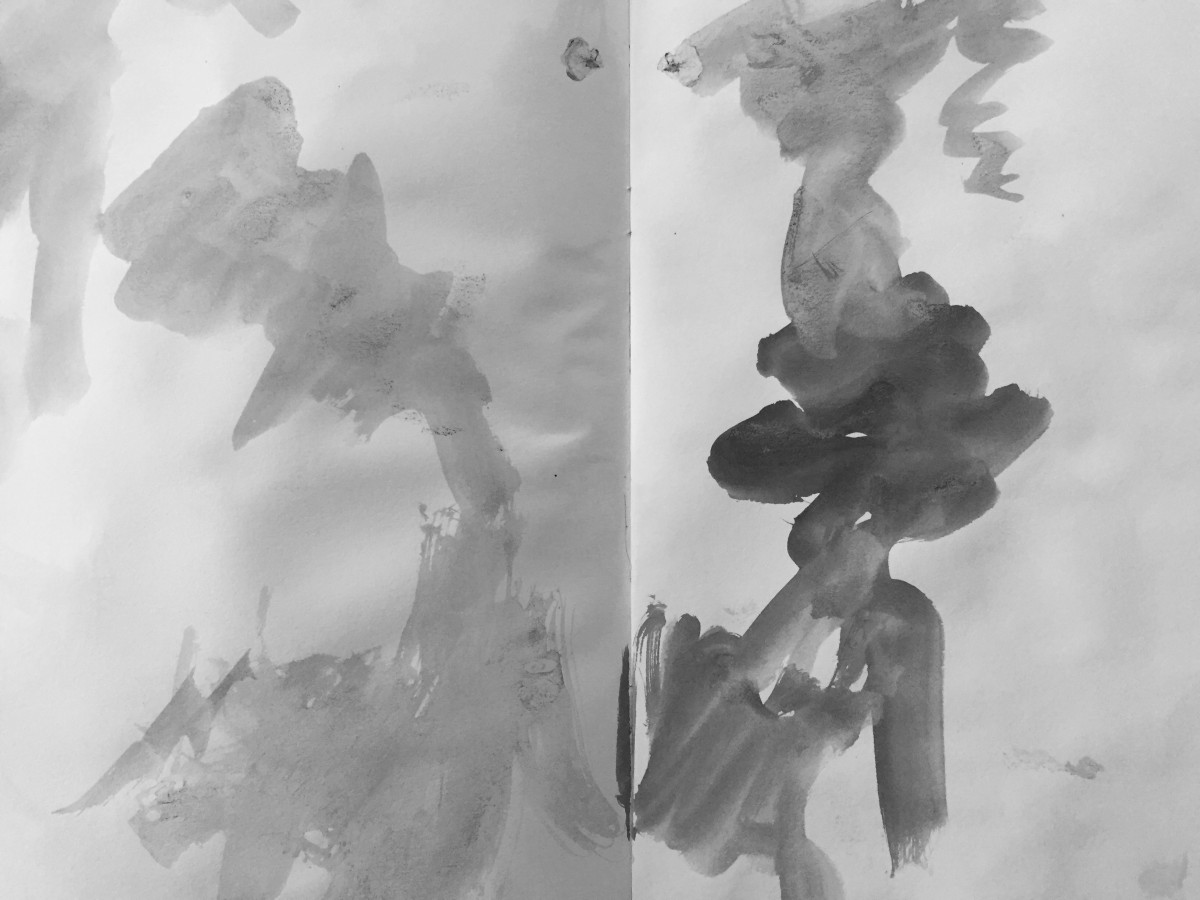
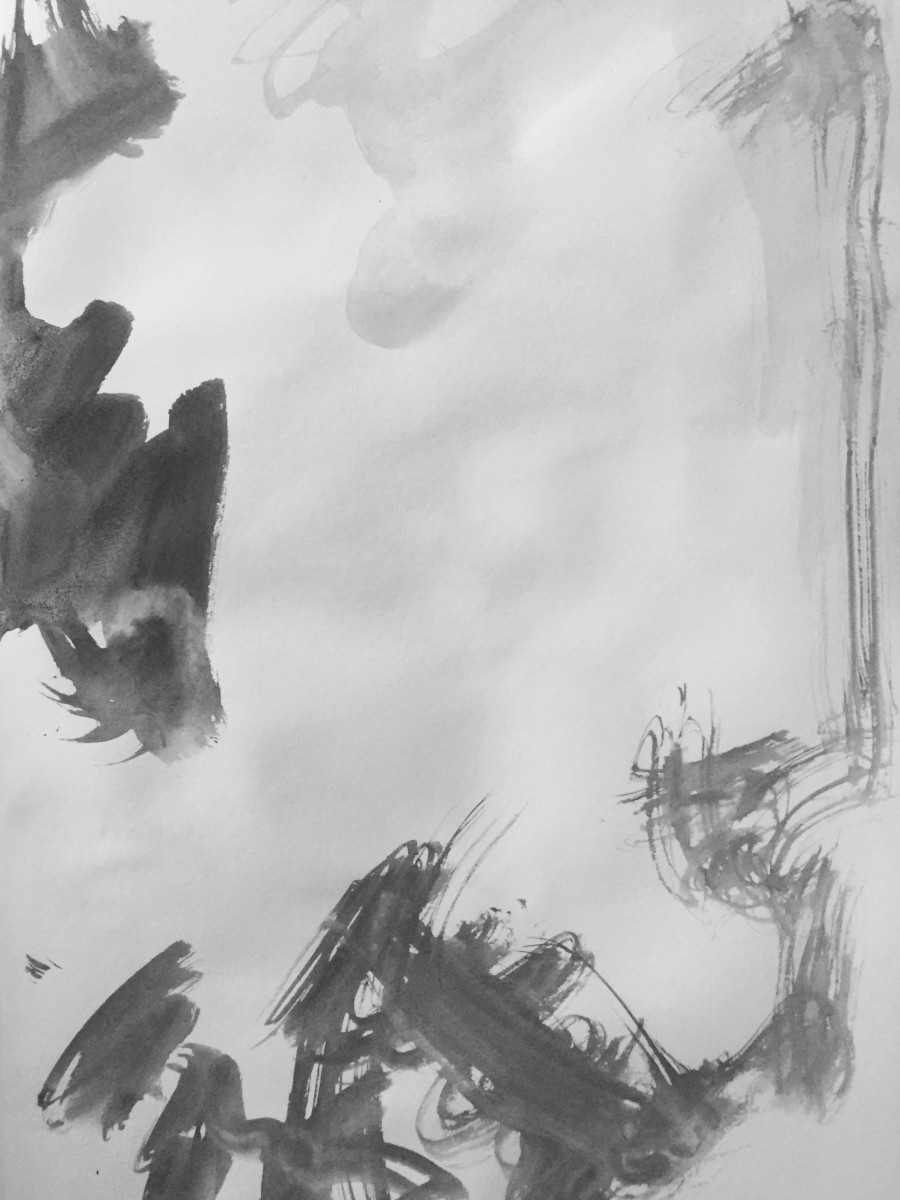
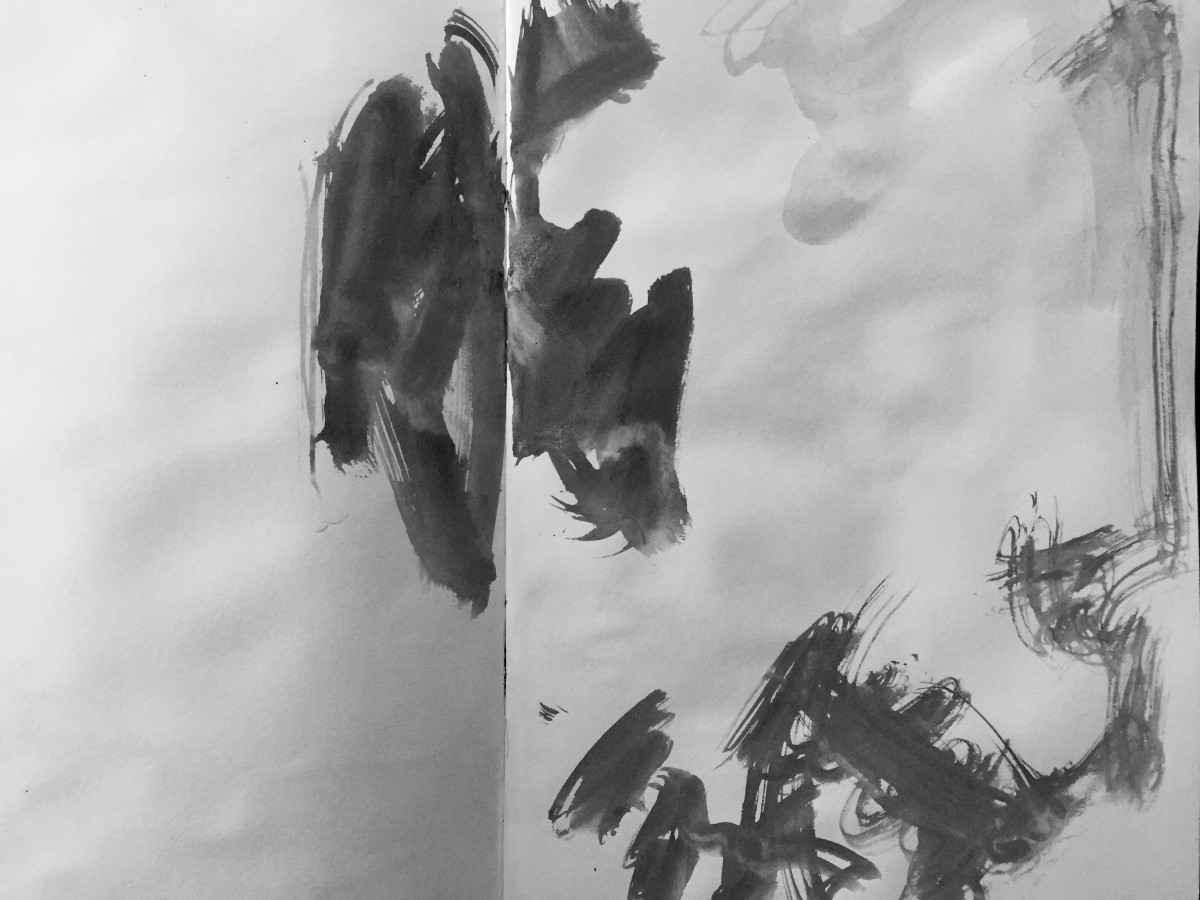
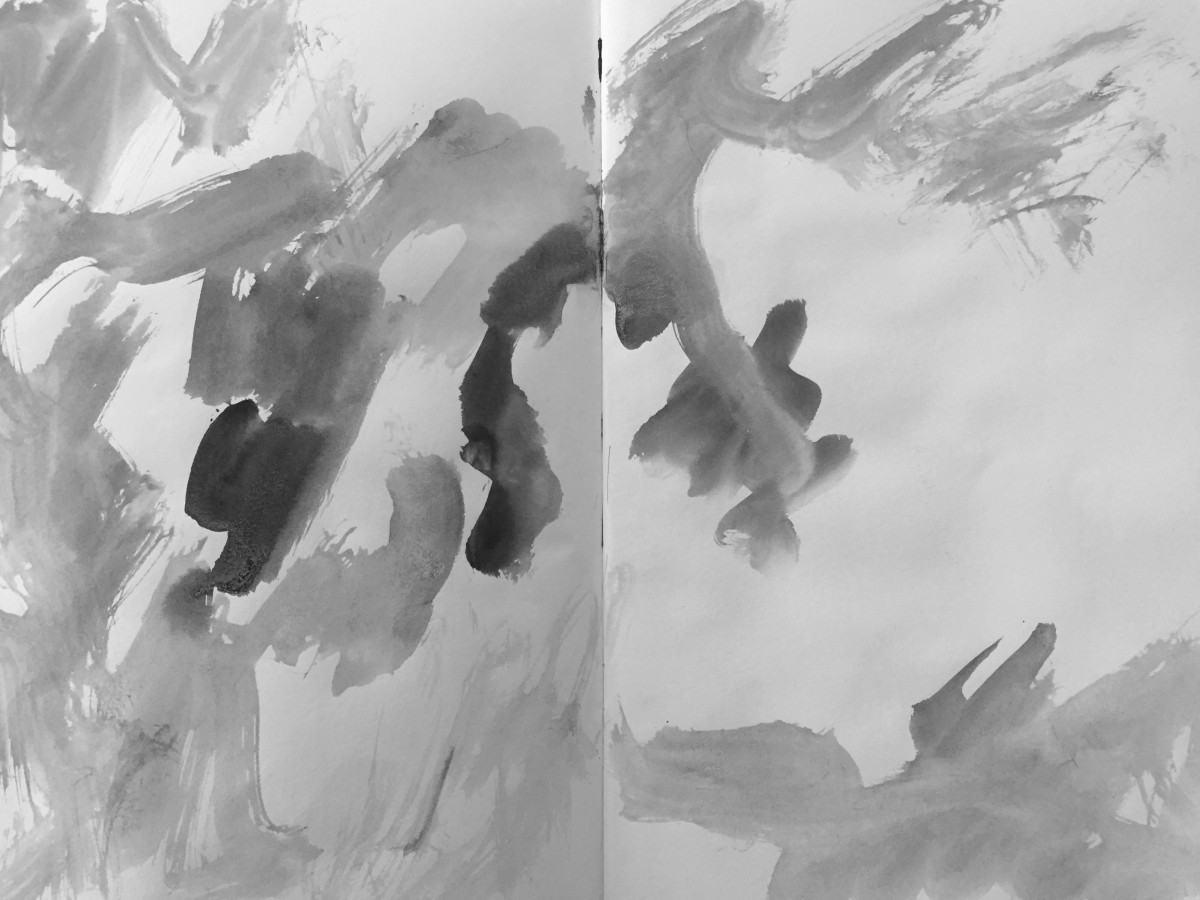
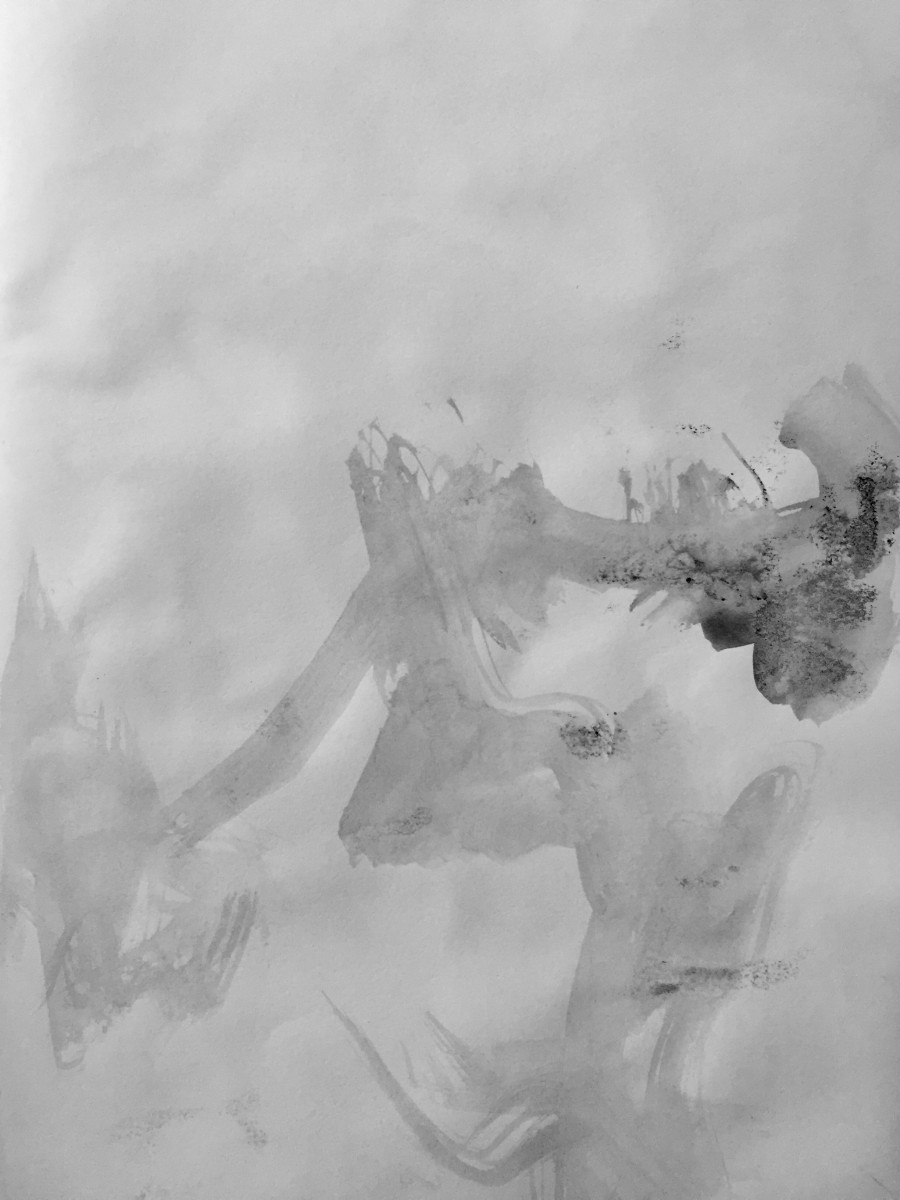
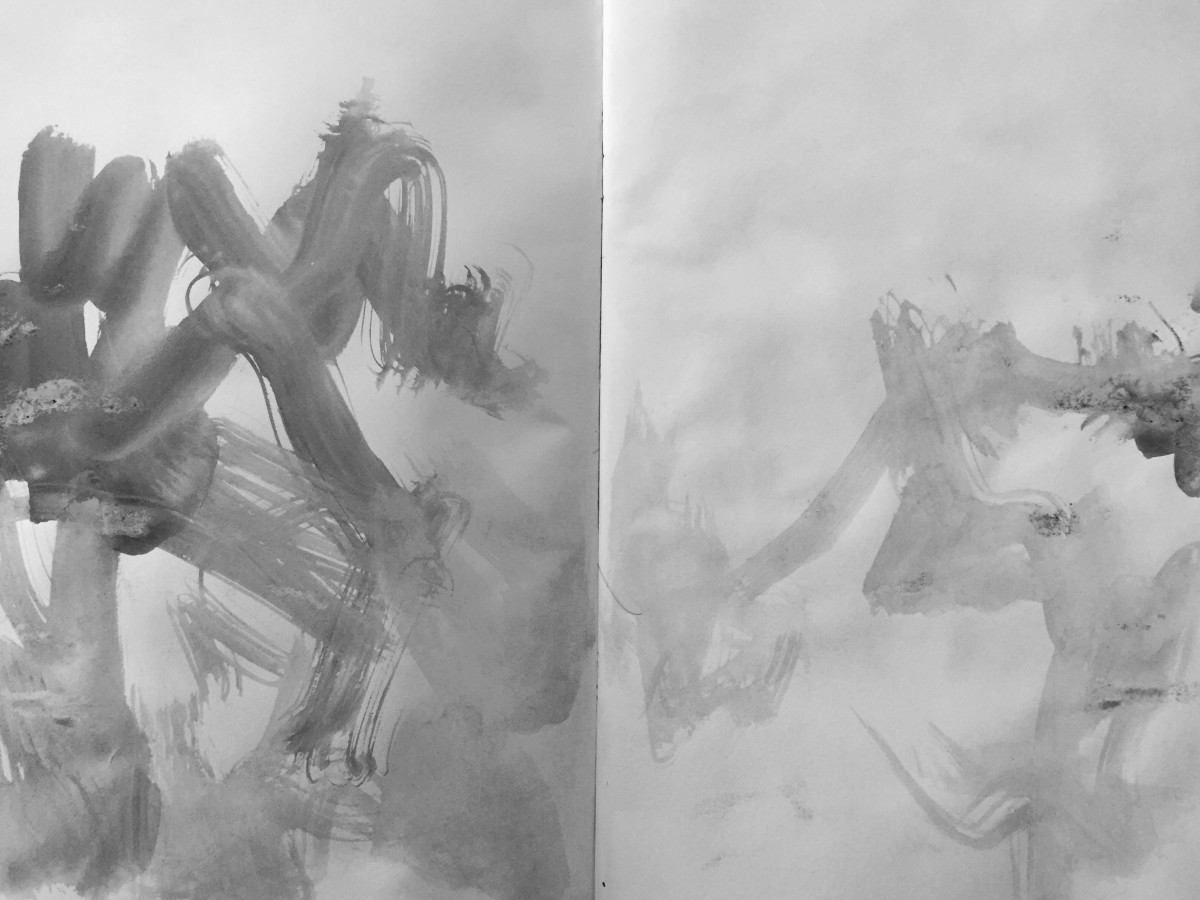
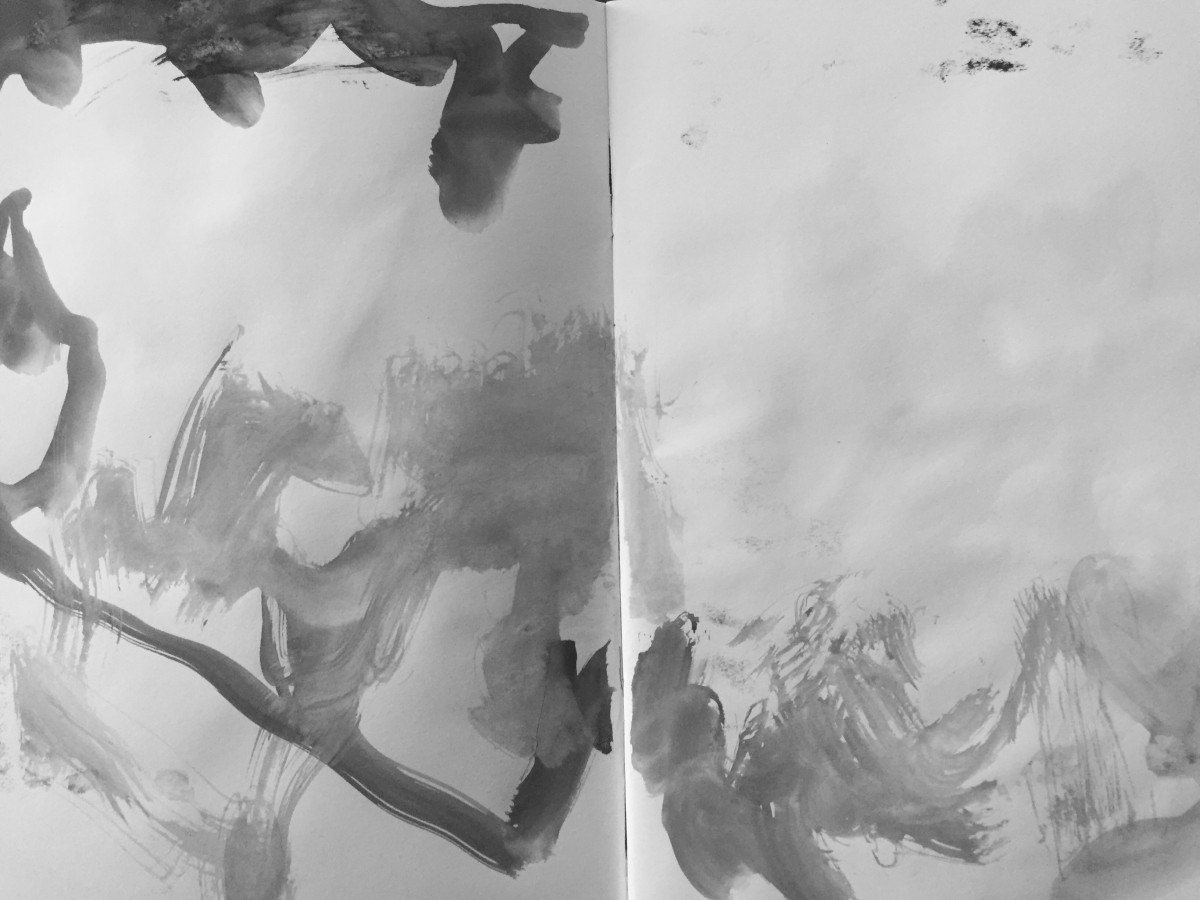
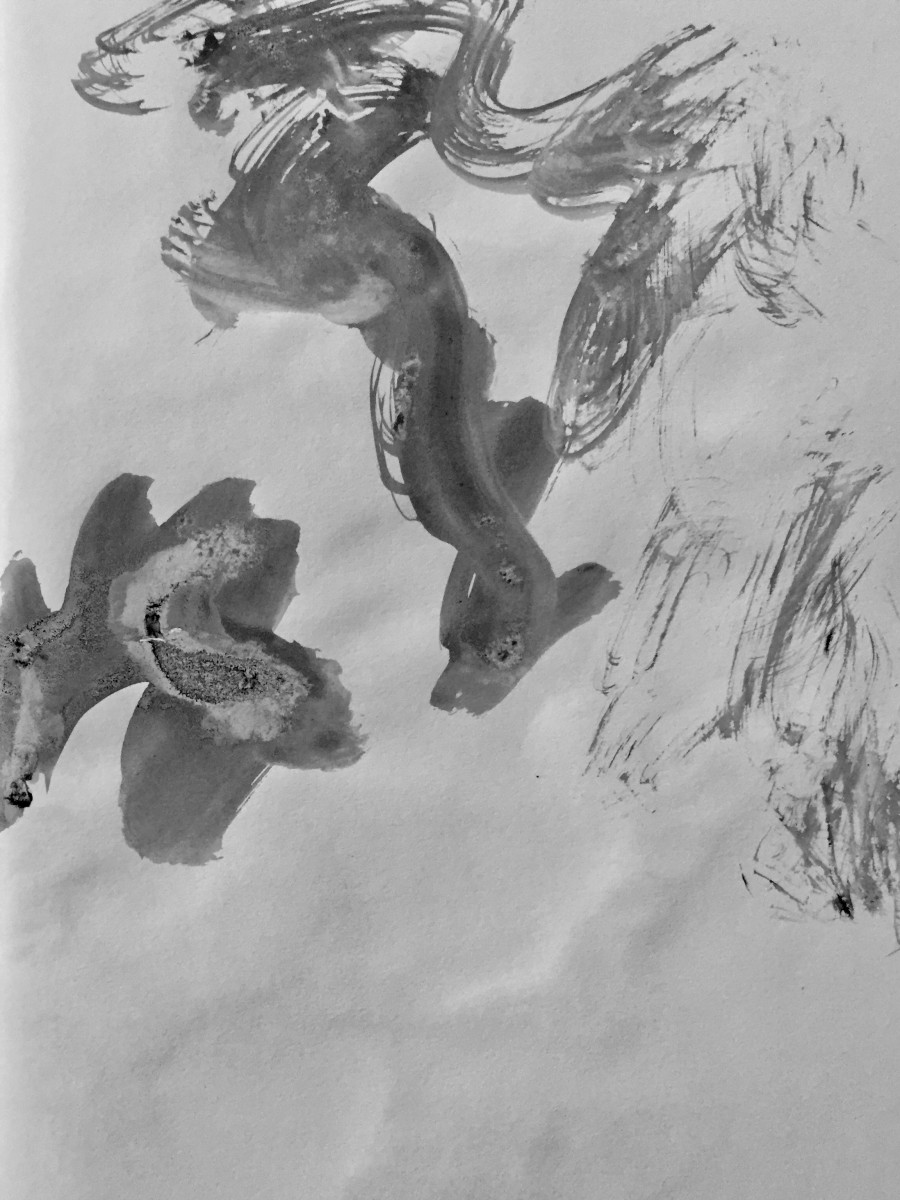
I wanted these paintings to be images, not of shadows per se, but of a moment in time. They are as much about the rapidly painted strokes delineating that moment as the shadows they are tracing. I also like the way they resemble Chinese or Japanese calligraphy and could almost be a language whose meaning is lost; the language of a moment that has been lost.
Samuel Borton’s Post Chaises
Yesterday I received an email regarding some research I’d done on my 6x Great-Grandfather Samuel Borton (1706-1769) owner of the Dolphin Inn in Oxford. The email concerned a poster which advertised Samuel Borton’s Post Chaise service to Piccadilly via Nettlebed, Maidenhead and Colnbrook.
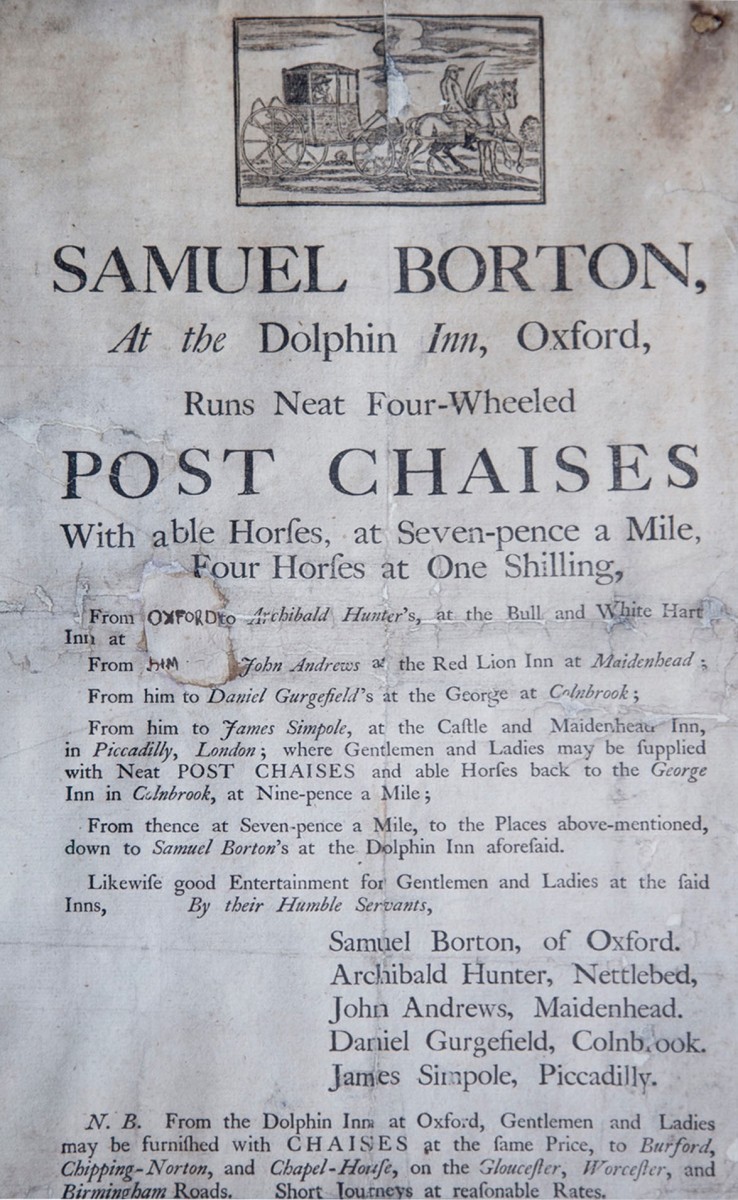
The owner of the poster was wondering about the date. Initially I had thought it was later 18th century and that the Samuel Borton was Samuel Senior’s son, also called Samuel (born 1737). But having found a number of advertisements in Jackson’s Oxford Journal, I wasn’t so sure.
The first from 1756…
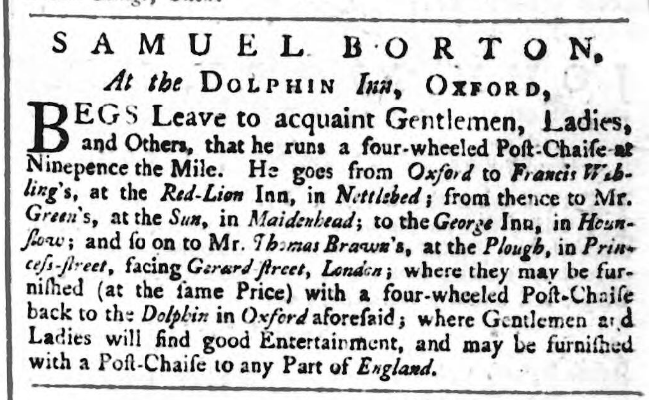
The second from 1764…
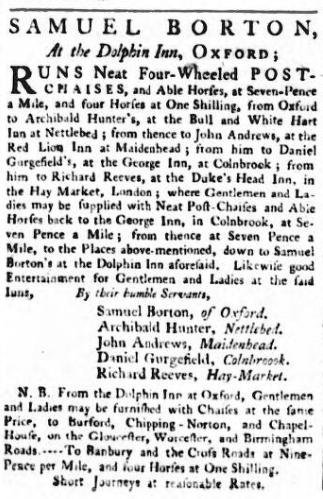
And finally from 1766…
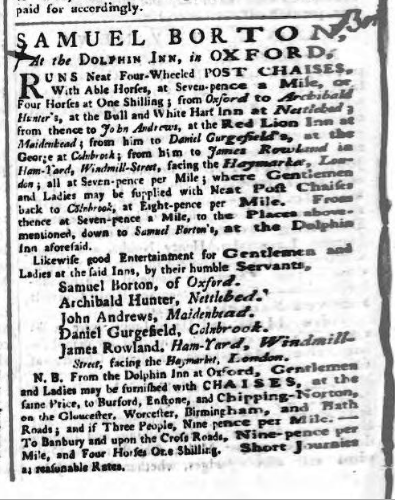
The route is pretty much the same between them, save for London where the final destination changes. Perhaps a telling point is the price. Between 1764 and 1766 this was 7d a mile and I’m wondering if we can assume that the poster, also advertising the route at 7d a mile, is of a similar time? (I did think that 7d a mile sounded very expensive, and having run the price through an historical inflation calculator, I was shocked to discover that 7d a mile equates to £12.88 a mile in today’s money!
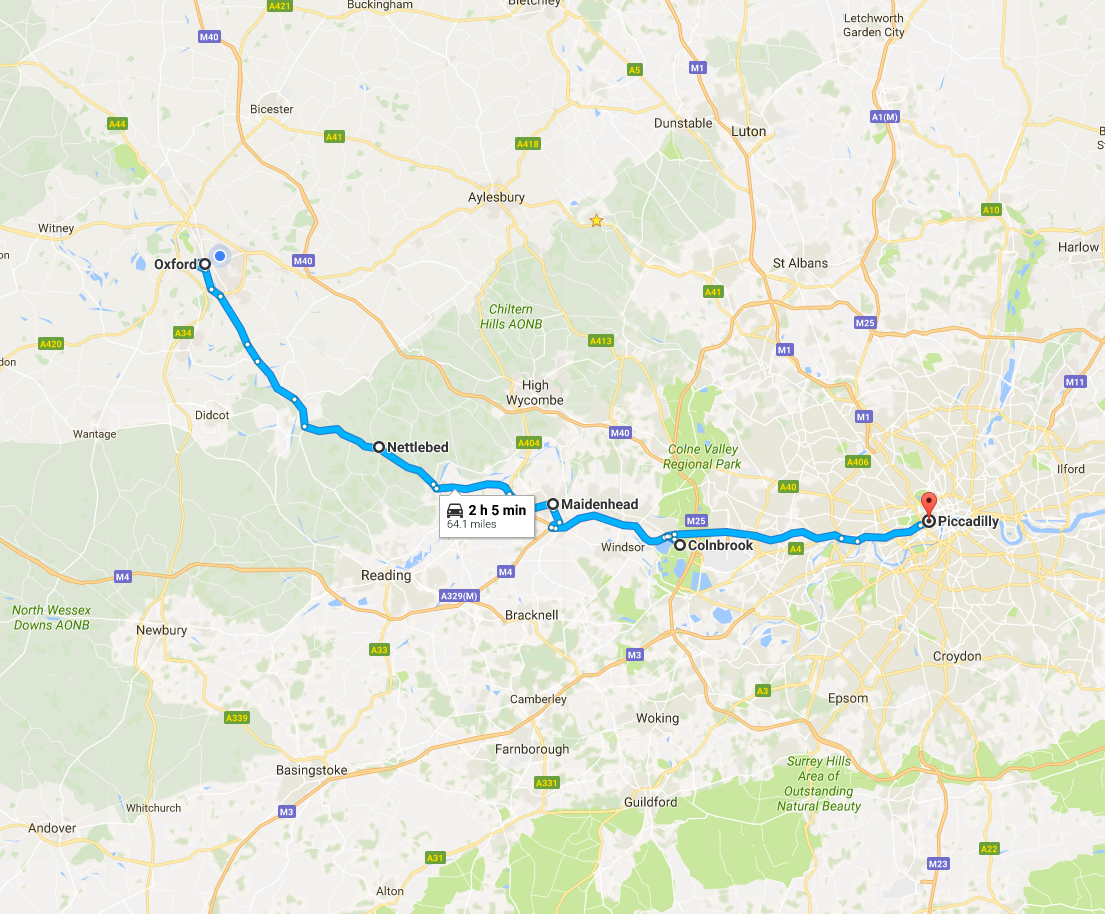
Having plotted the route in Google Maps, I could estimate that the total cost to London would be over £800!!
Anyway, it was a wonderful thing for me to see and I will try and determine one way or another which Samuel Borton it is!
Dawid Sierakowiak
I visited Auschwitz in October 2006 and explored my reaction over the course of my MA in Contemporary Art (completed 2008). It’s a theme I developed over the proceeding years, during which time, I was sometimes asked the question: ‘is it still relevant?’
‘Yes’, I answered. Of course it was. For although, 70 years on, such an atrocity might never be perpetrated in such a systematically brutal way again, atrocities will still be perpetrated. The numbers might not be on the appalling scale of six million Jews but terrible things will still be done to individual people. And, despite the anonymising pall of vast statistics, those who died in the Holocaust were individuals.
10 years on and the question of relevance is even more pertinent. European politics has lurched to the right and the present incumbent of the White House is a rabid fool who understands nothing of the plight of individuals, whatever their religion, their country or culture. His attacks on the press and the arts make the role of the journalist, writer and artist all the more vital.
And so, I shall take up arms and return to my work as an artist, something which has languished of late for all manner of reasons.
In the time I’ve spent researching the Holocaust, I’ve read numerous first hand experiences of those appalling events. But I hadn’t encountered the diary of Dawid Sierakowiak.
Dawid was, according to the foreword (written by Lawrence L. Langer) an extremely talented young man; someone who, had he lived, might have become a writer of some renown. As it was, he died of starvation in the Łódź ghetto, Poland, at the age of 19, leaving behind a number of notebooks, in which he had written of his battle to survive life in the ghetto.
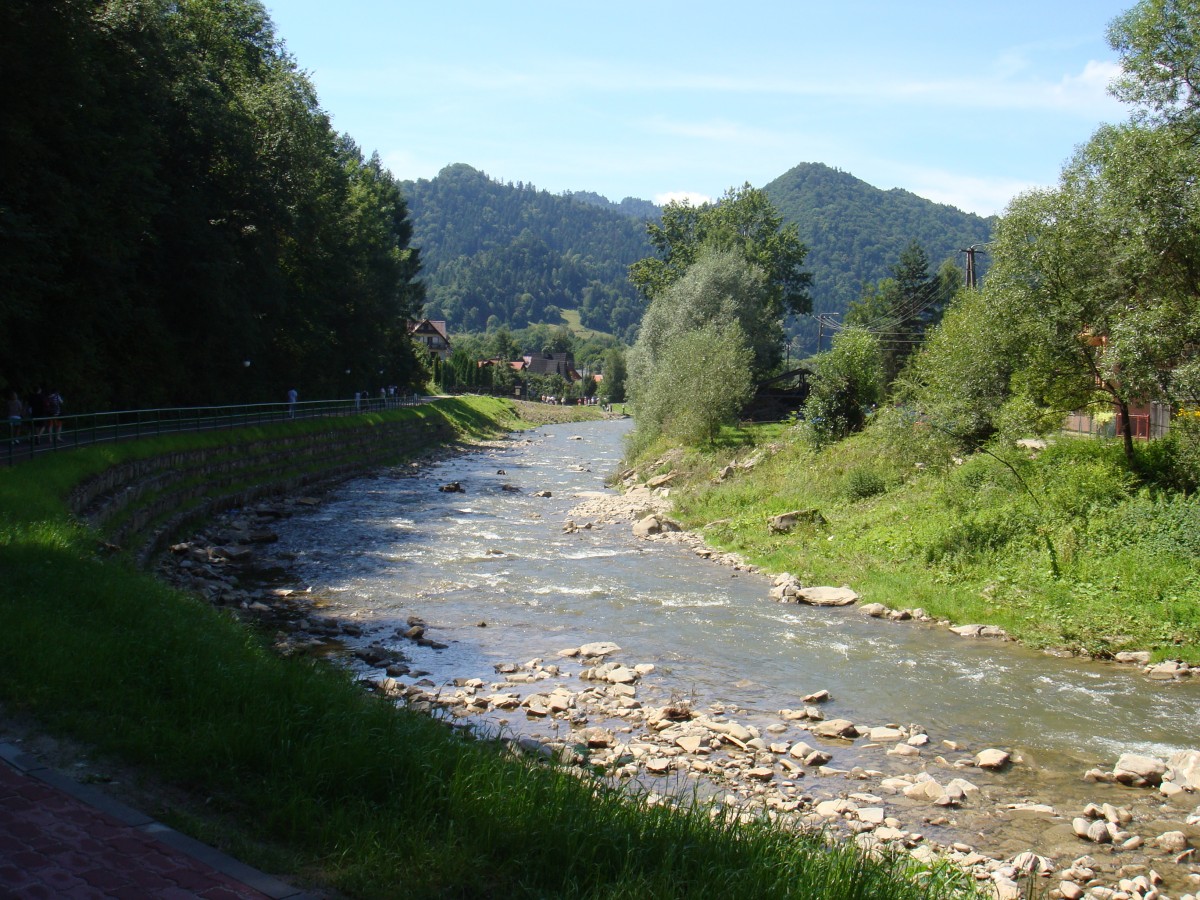
I’ve only just started reading the diary which begins shortly before the start of War, on Wednesday, June 28 1939 with his arrival on a summer camp in Krościenko nad Dunajcem (Krościenko on the Dunajcec). Knowing what happens to Dawid, his family and friends makes this first entry so incredibly sad.
“We arrived safely today at summer camp. After a fourteen-hour train ride and an hour by bus, dinner was waiting in Krościenko. The food is excellent, plentiful and tasty…”
Looking at a map of Poland, I realised that I had once stayed very near Krościenko in the town of Szczawnica and my memories of that beautiful place served to colour the ‘black and white’ memories imparted by these first entries.
This is, in a very small way, a link to Dawid.
Pitchipoi
I’ve read many books about the Holocaust, but that written by Marceline Loridan-Ivens, But You Did Not Come Back, is one of the most moving; in particular, a passage early on about Pitchipoi.
Other words you said haunted me then. Those words were more important than anything. You said them at Drancy, when we still didn’t know where we were going. Like everyone else, we said over and over again, ‘We’re going to Pitchipoi,‘ that Yiddish word that stands for an unknown destination and sounds so sweet for children. They would use it when they talked about trains as they set off. ‘They’re going to Pitchipoi,’ they’d said out loud, to reassure themselves.
It’s almost unbearable to read. The idea of children having to reassure themselves, in the light of such terrible uncertainty, with the name of a ‘place’ that ultimately stood for death.
In an old blog entry I quoted Jorge Luis Borges:
“A single moment suffices to unlock the secrets of life, and the key to all secrets is History and only History, that eternal repetition and the beautiful name of horror.”
Pitchipoi is a beautiful name for horror.
Latest Tree Drawings
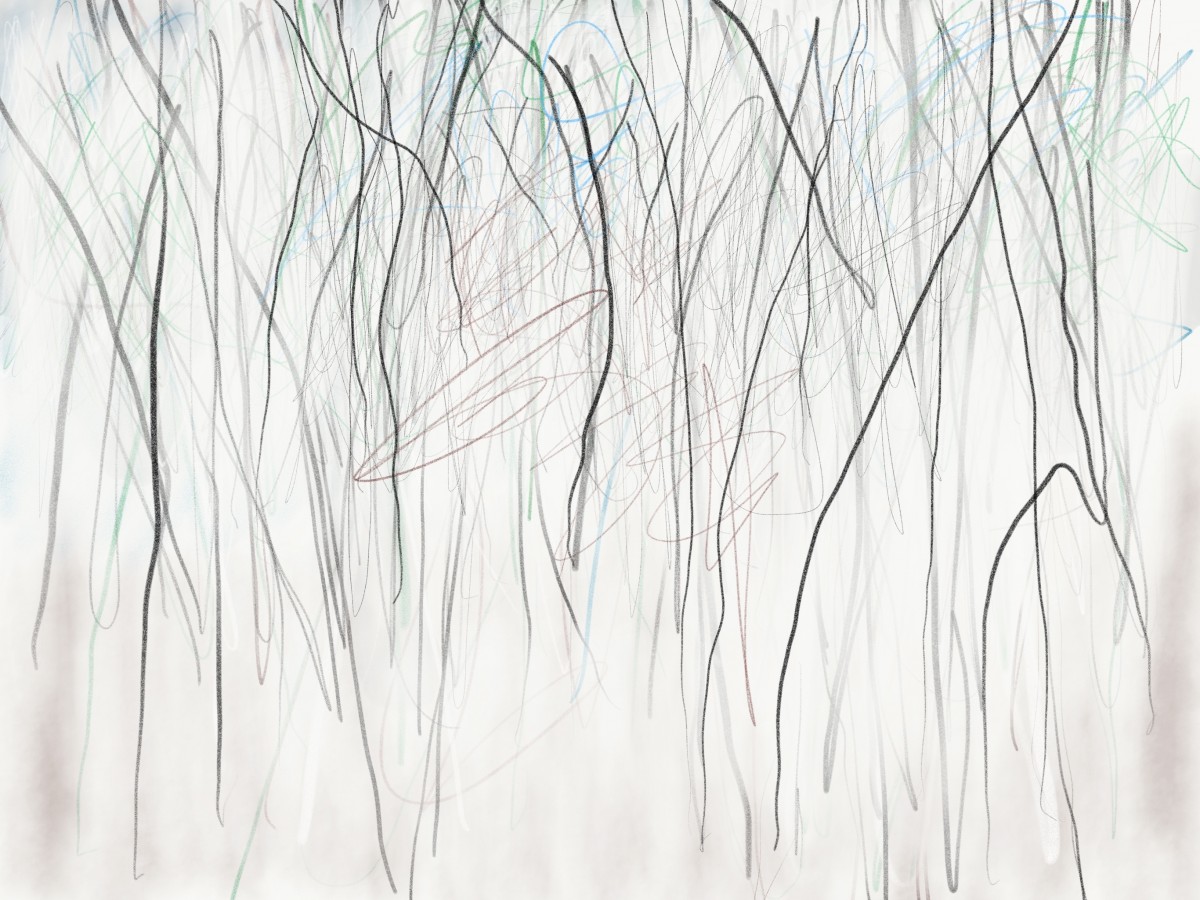
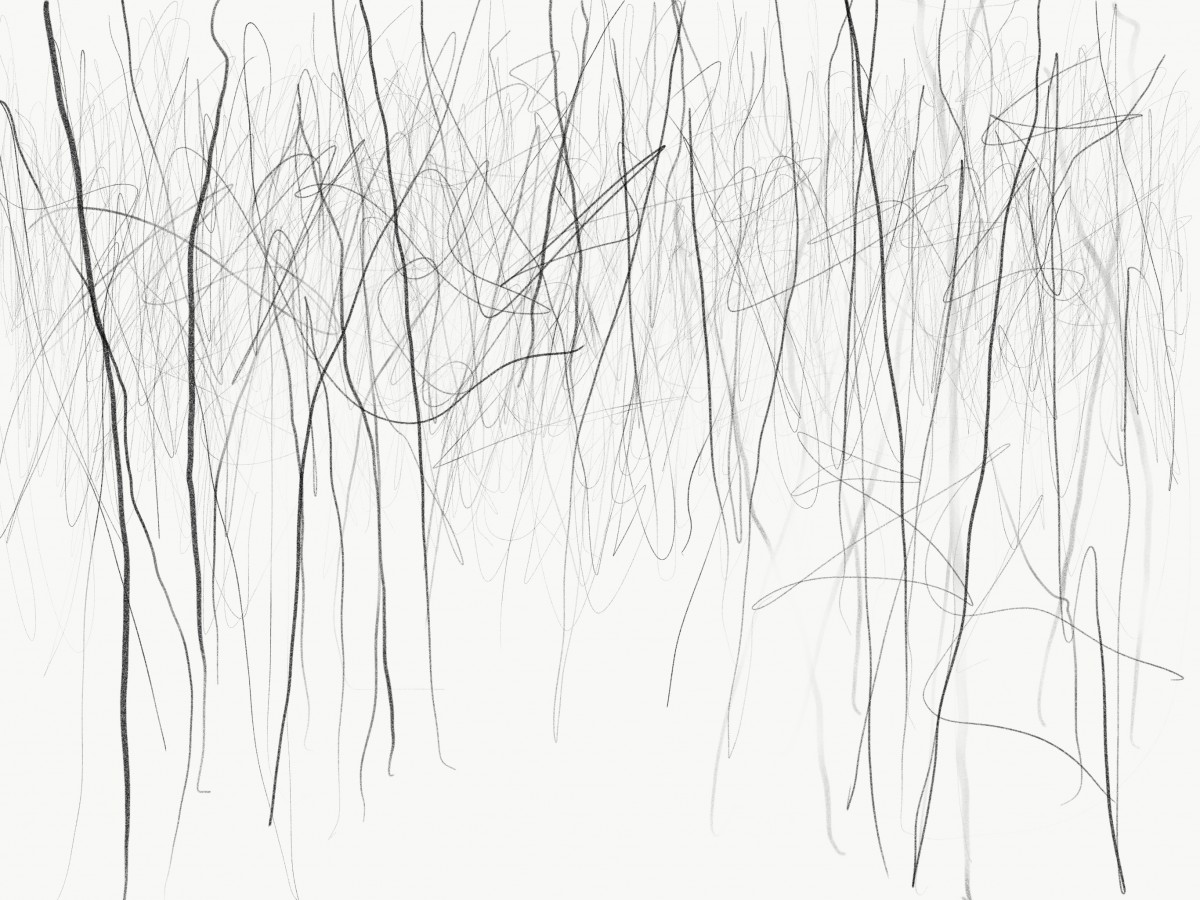
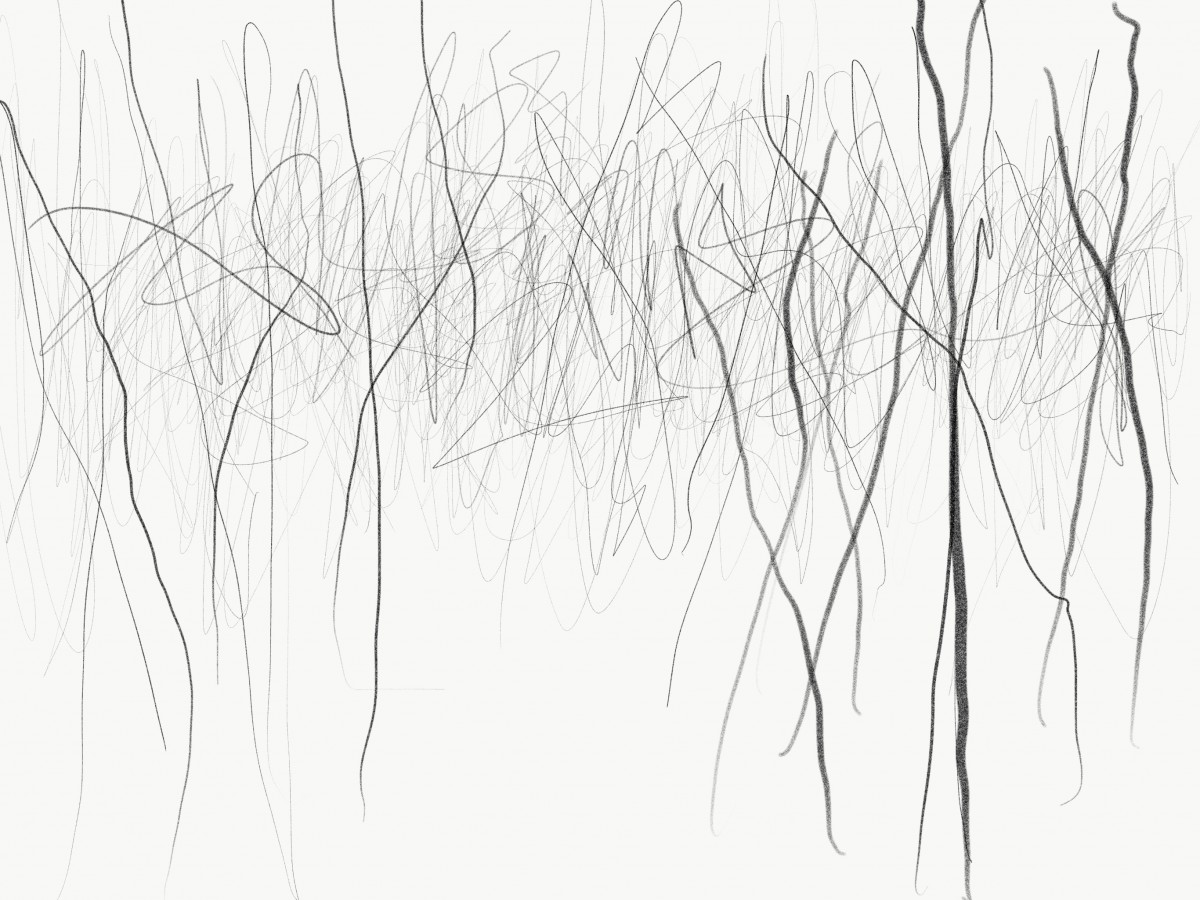
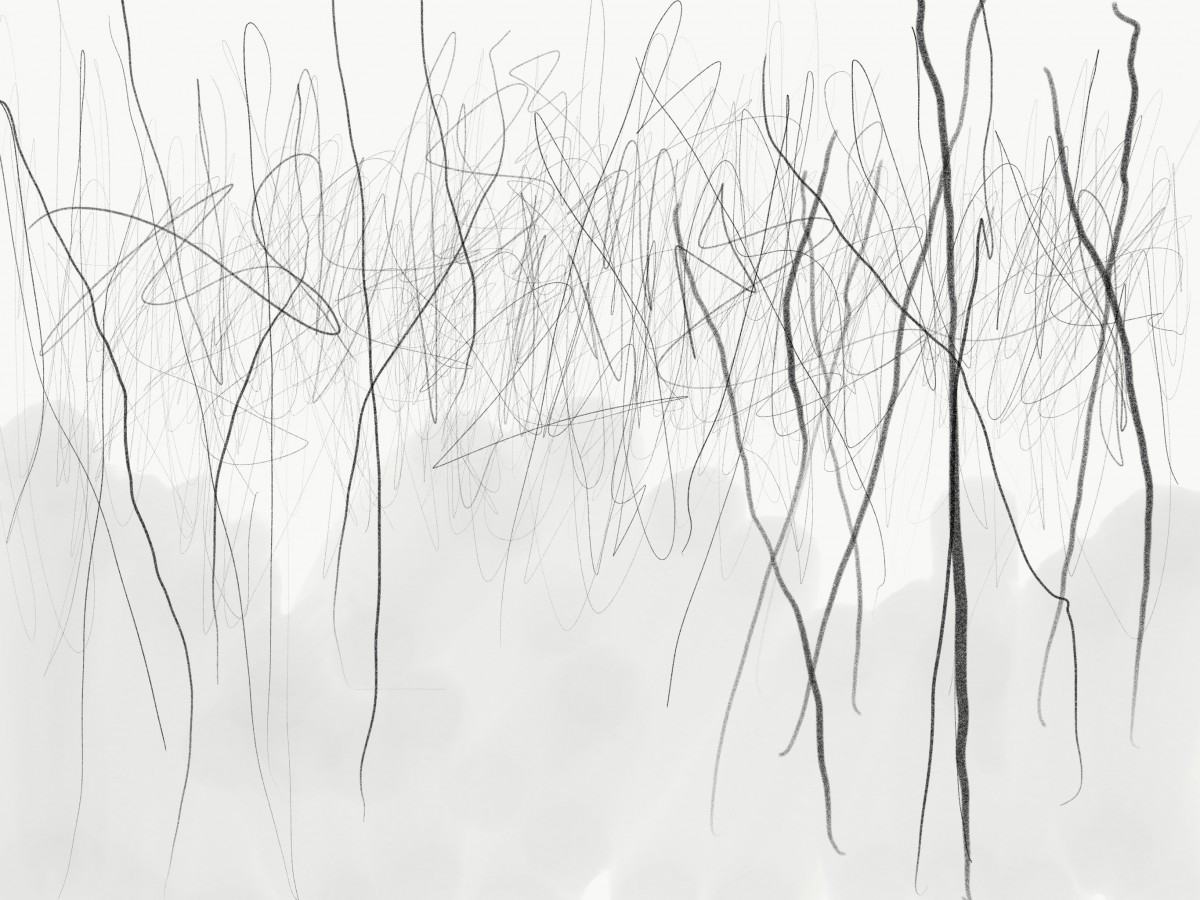
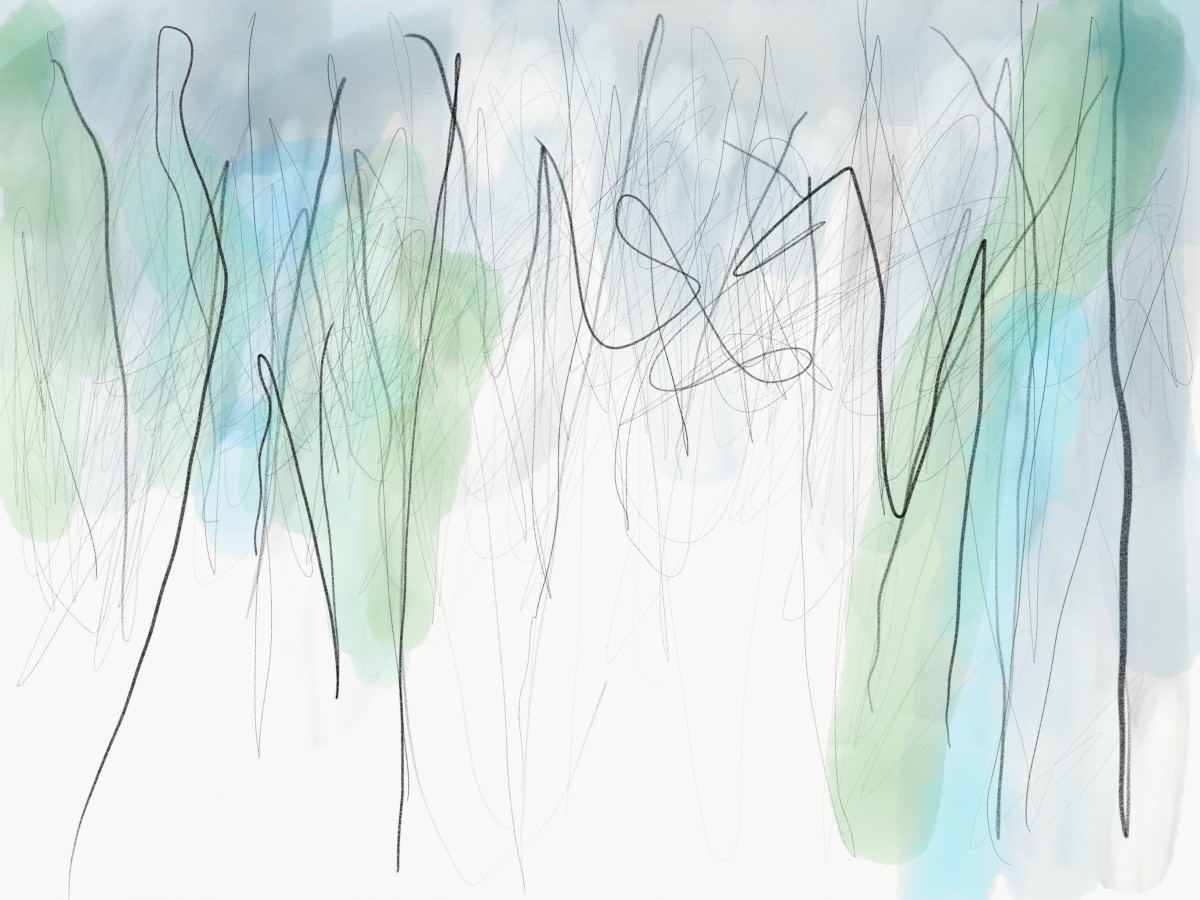
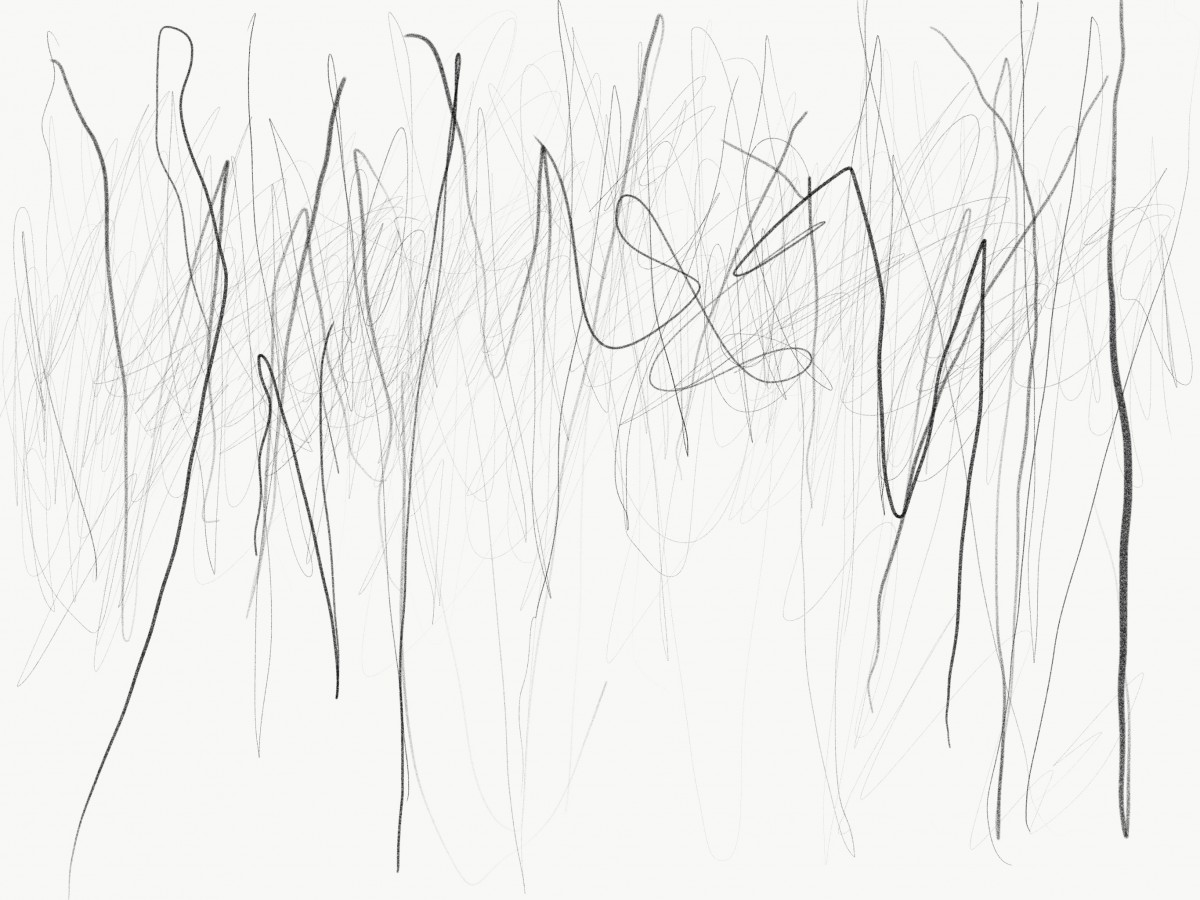
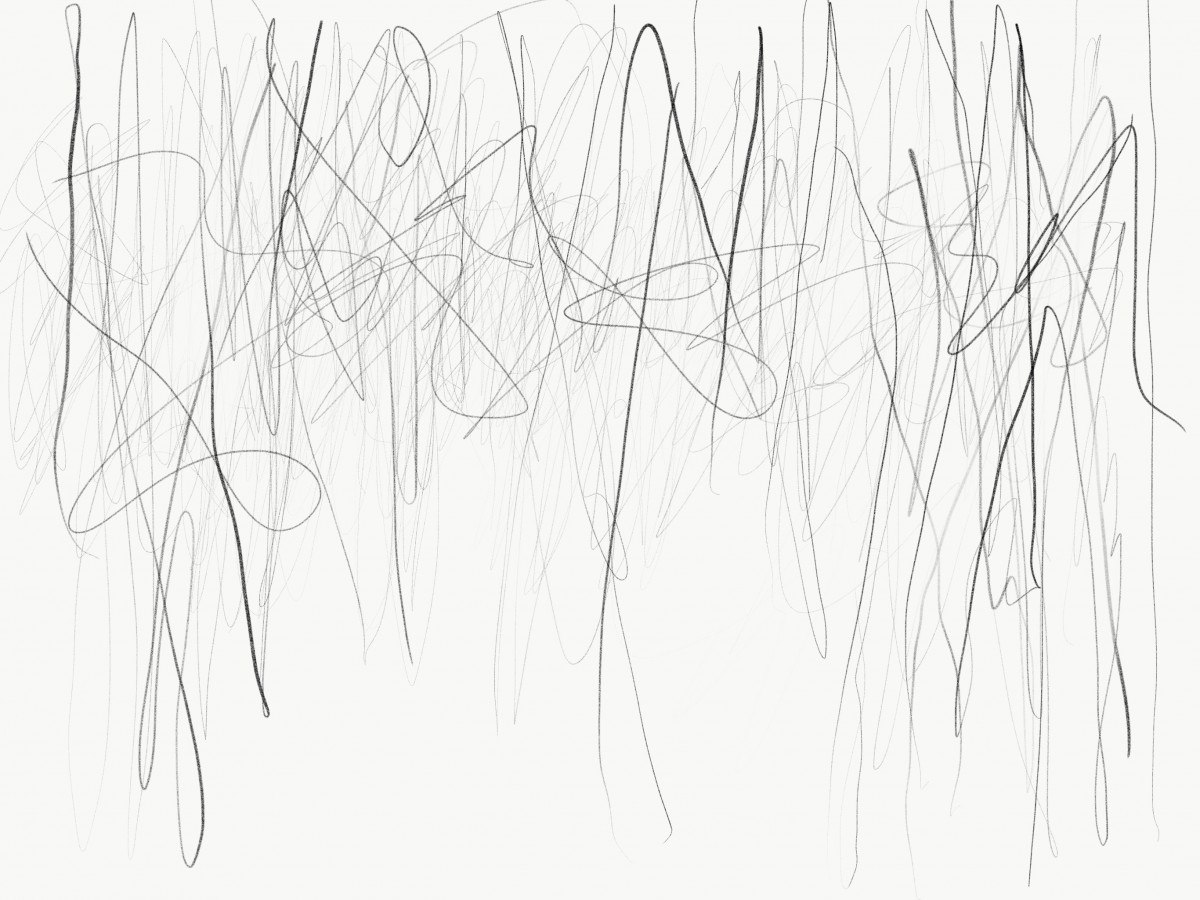
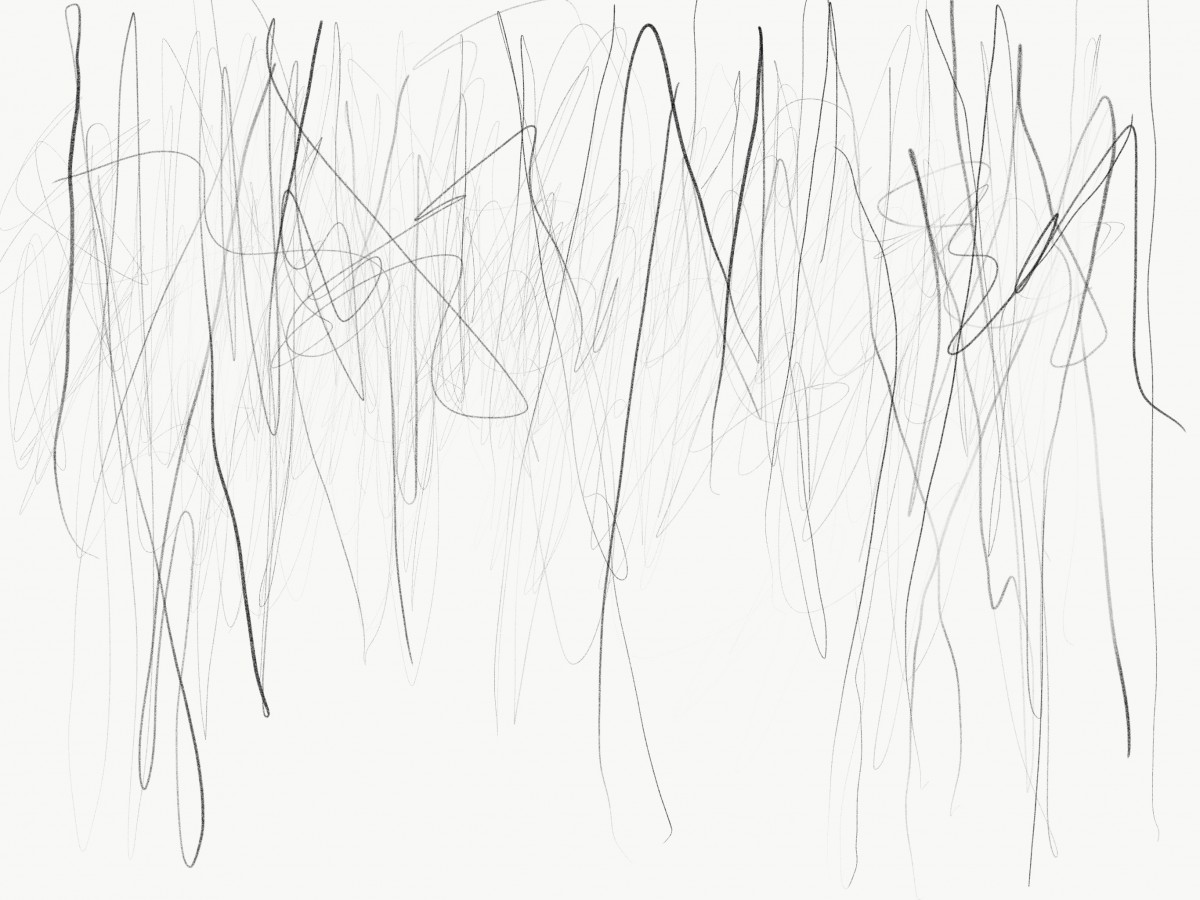
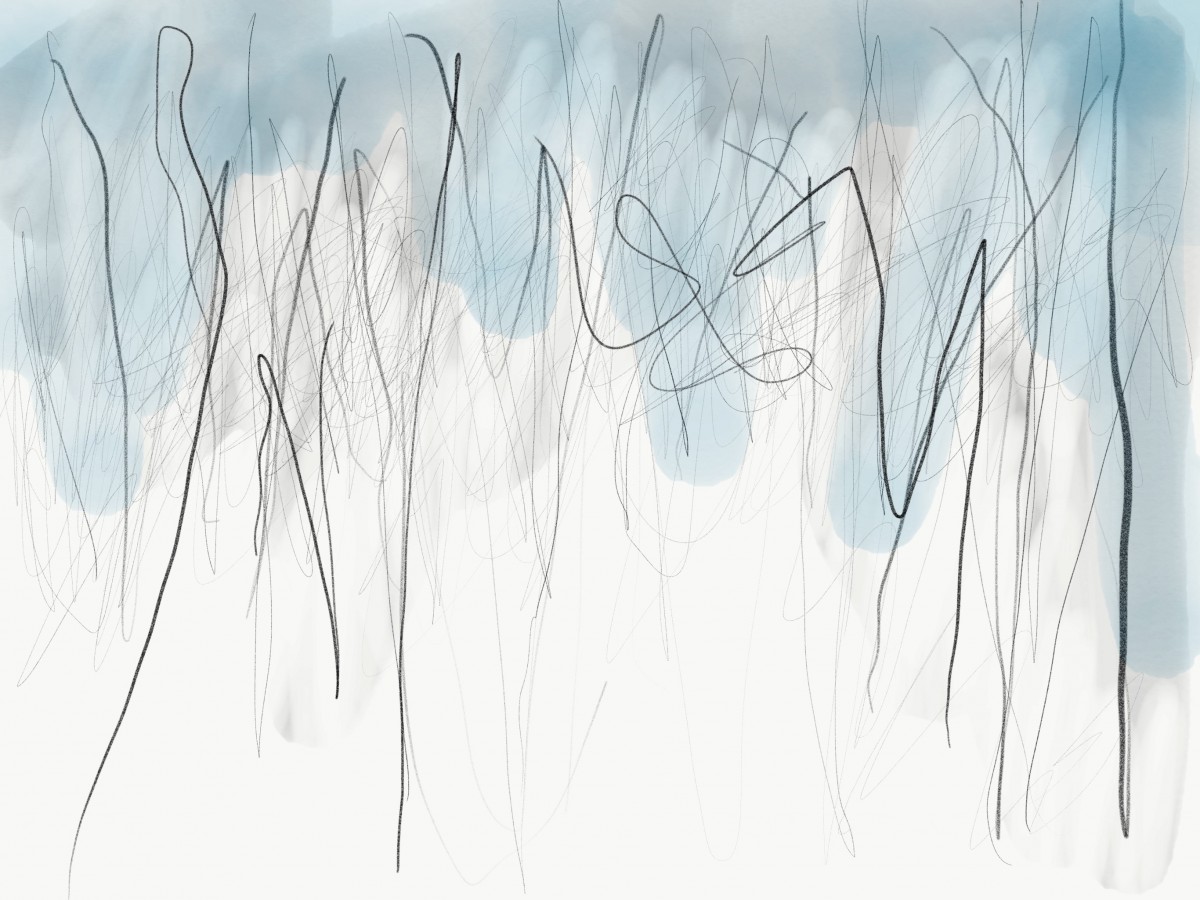
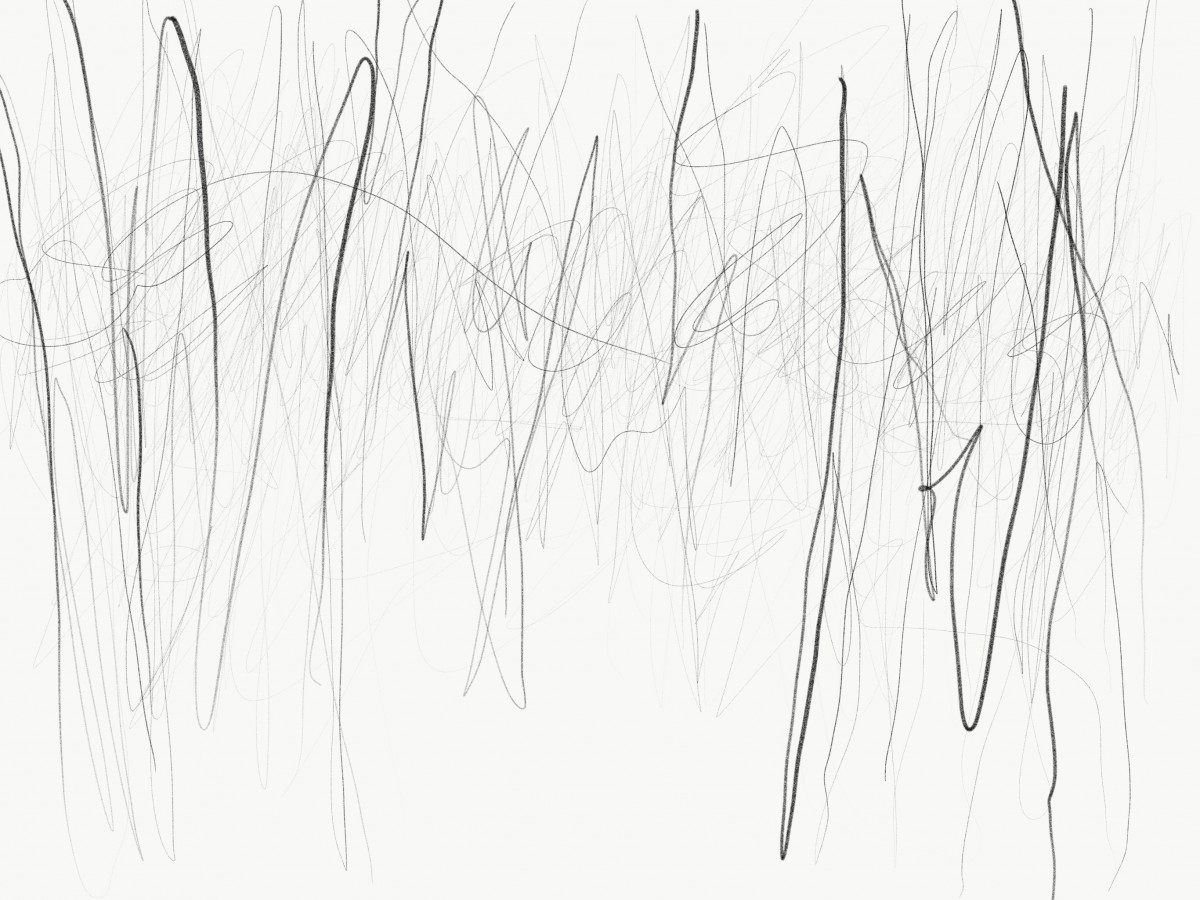
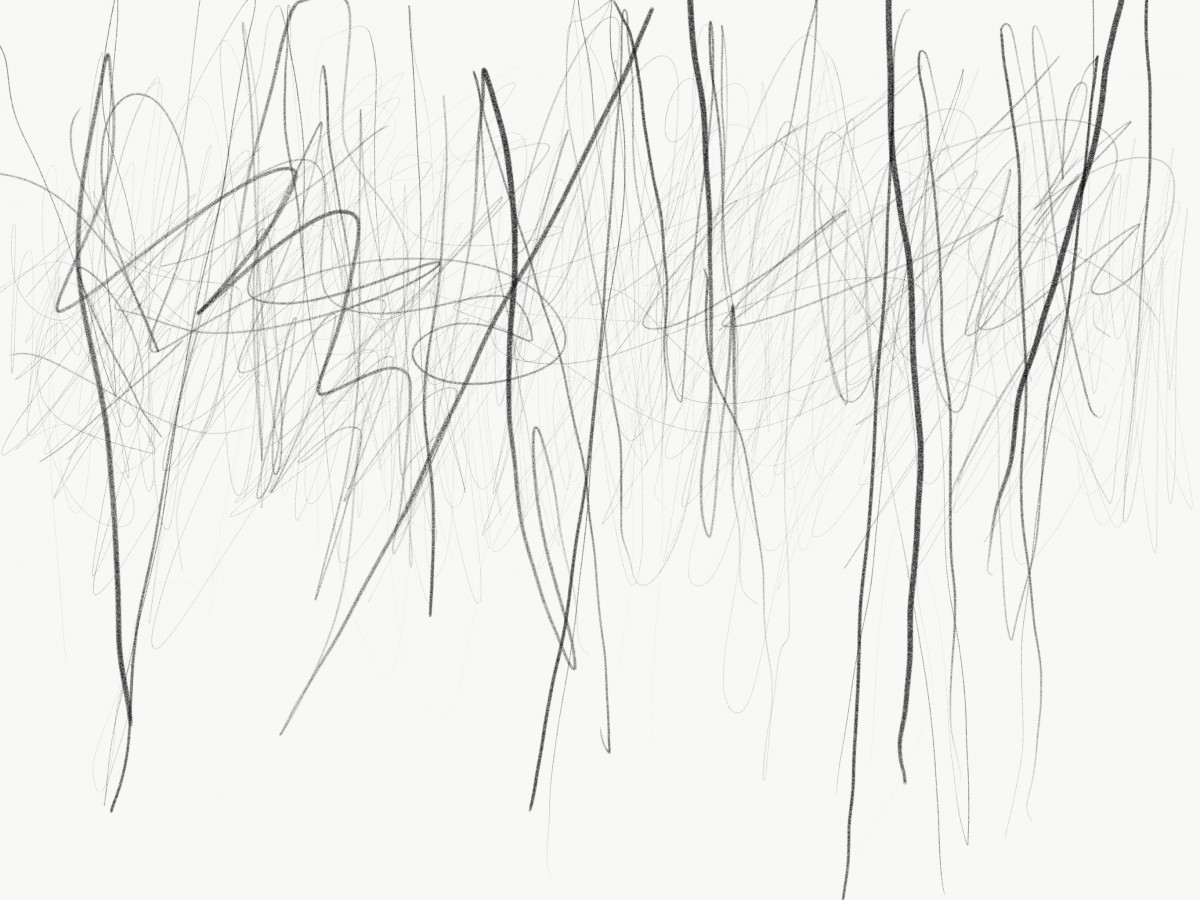
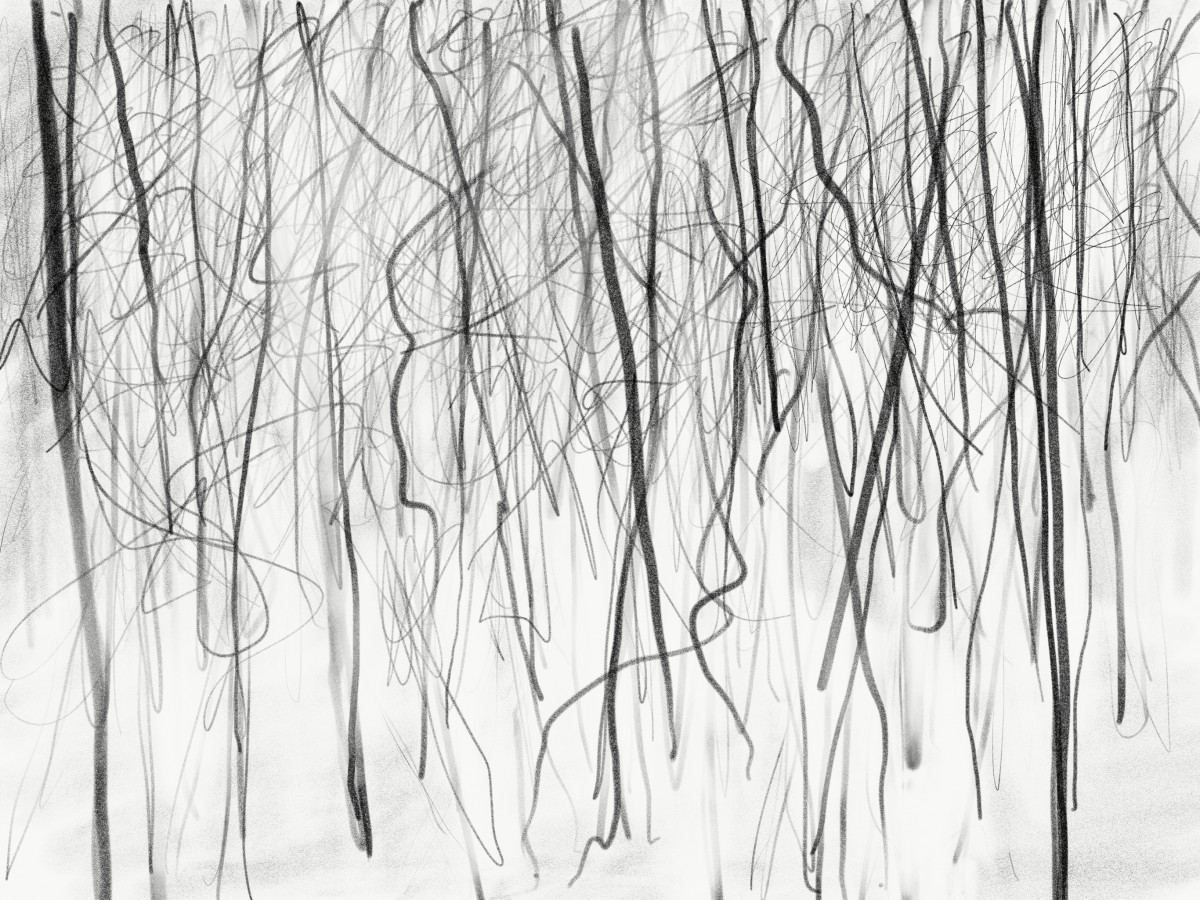
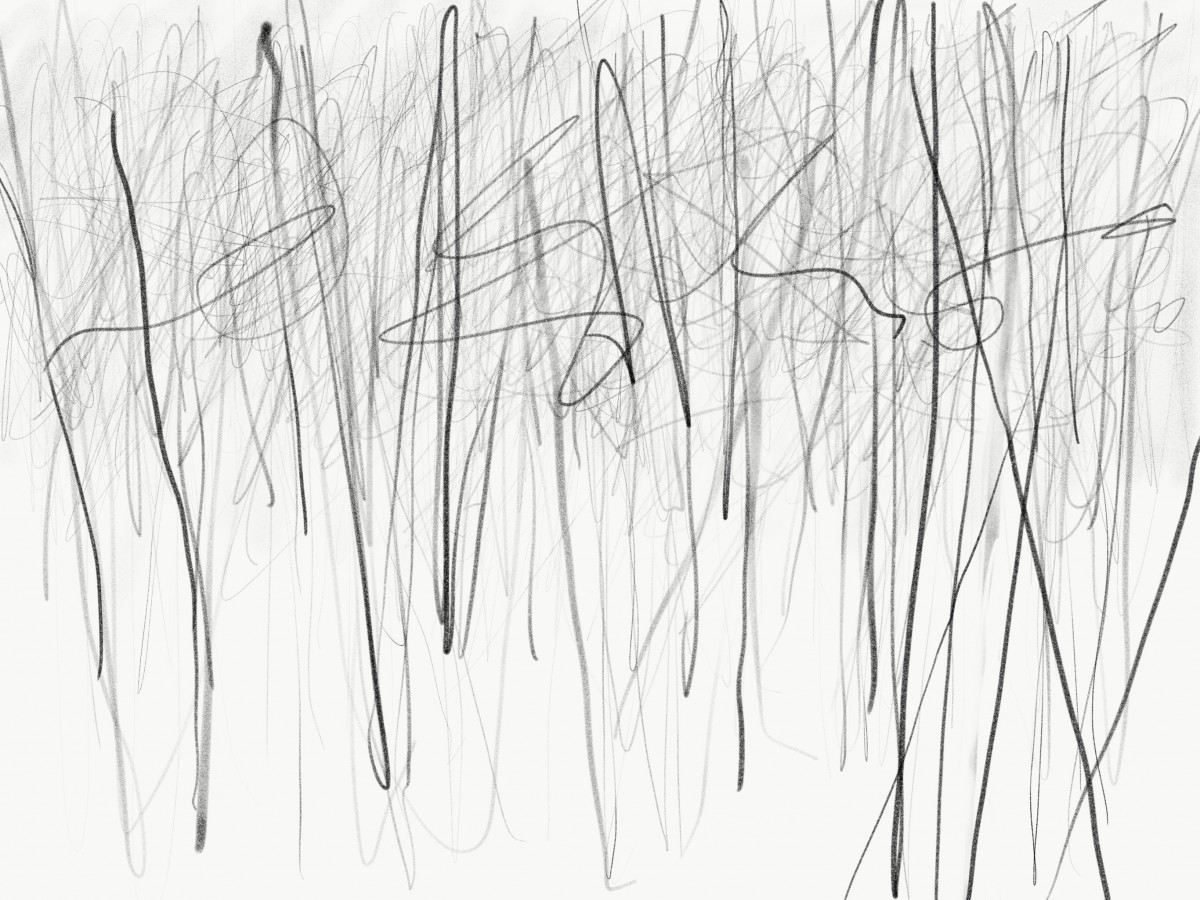
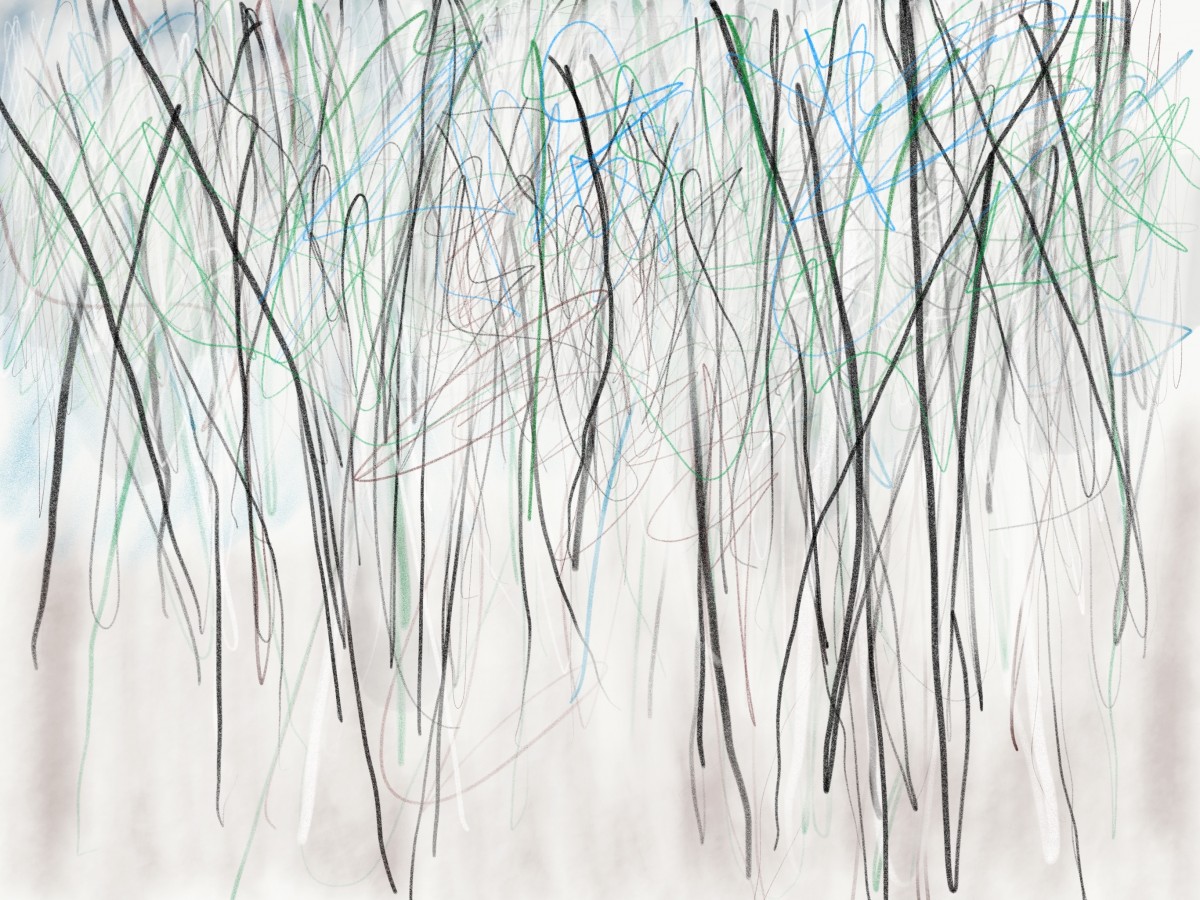
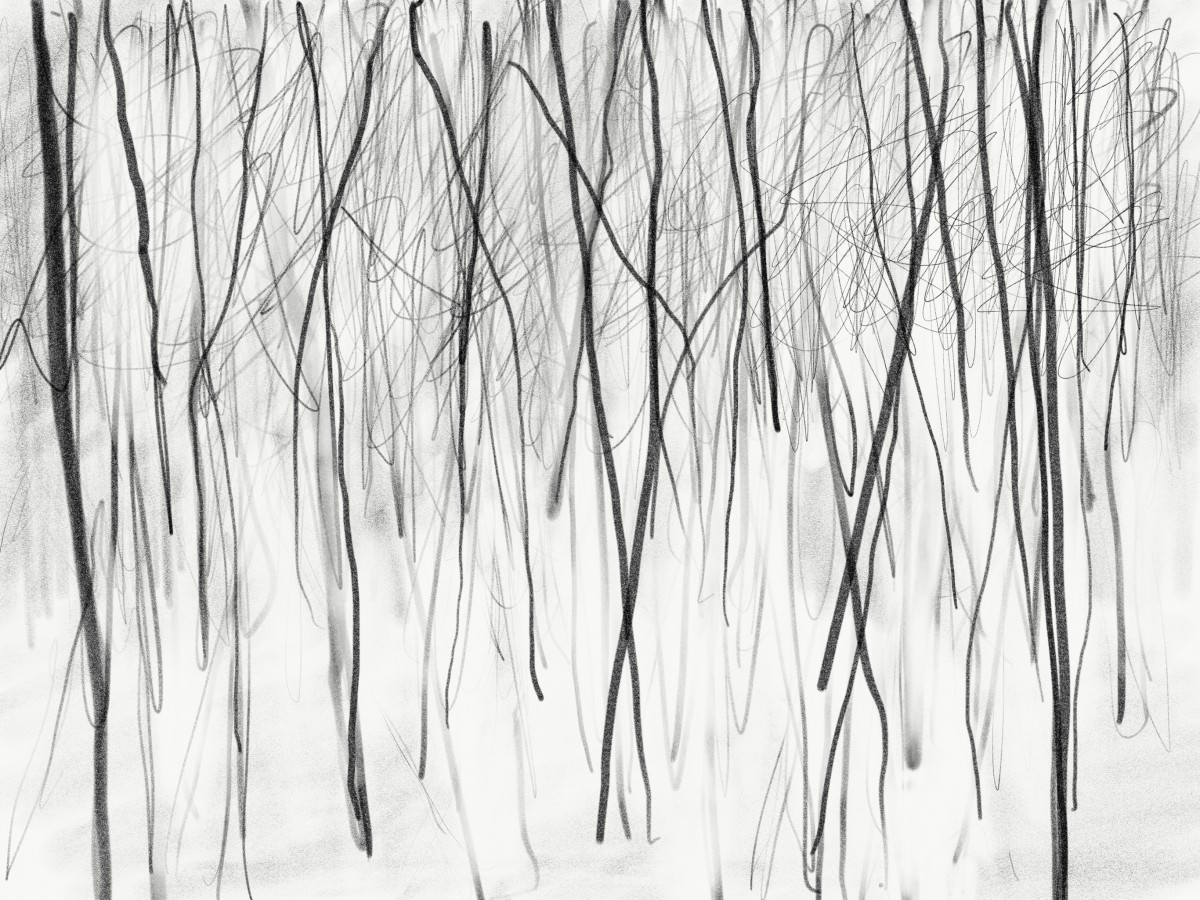
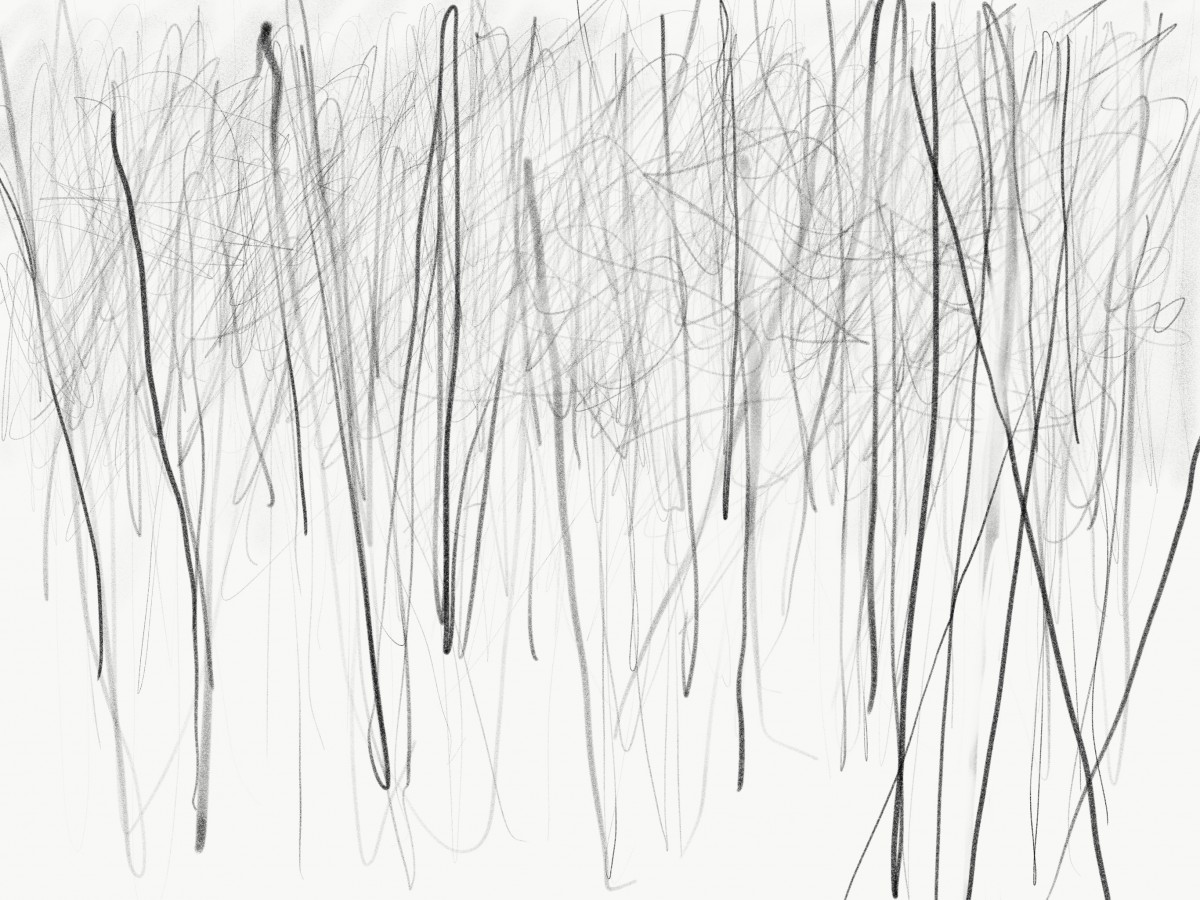
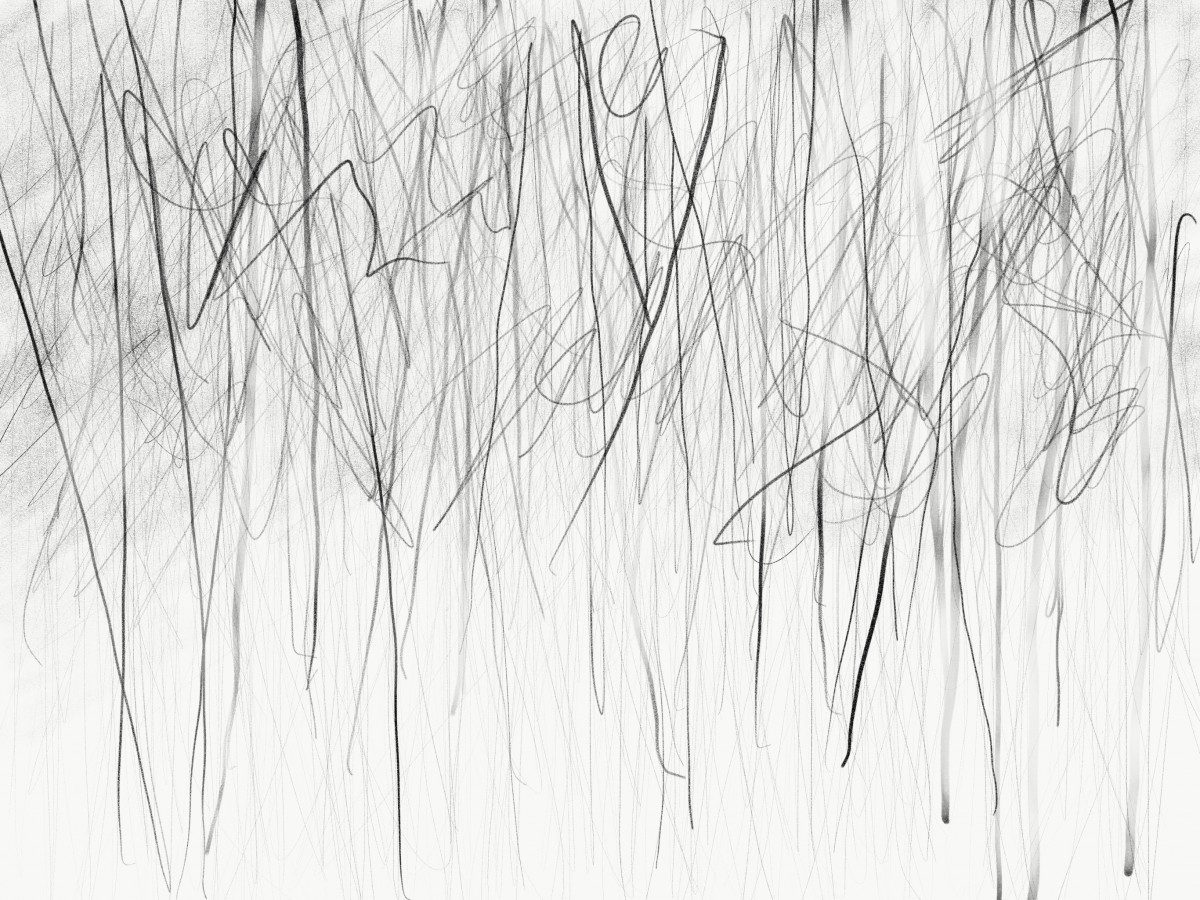
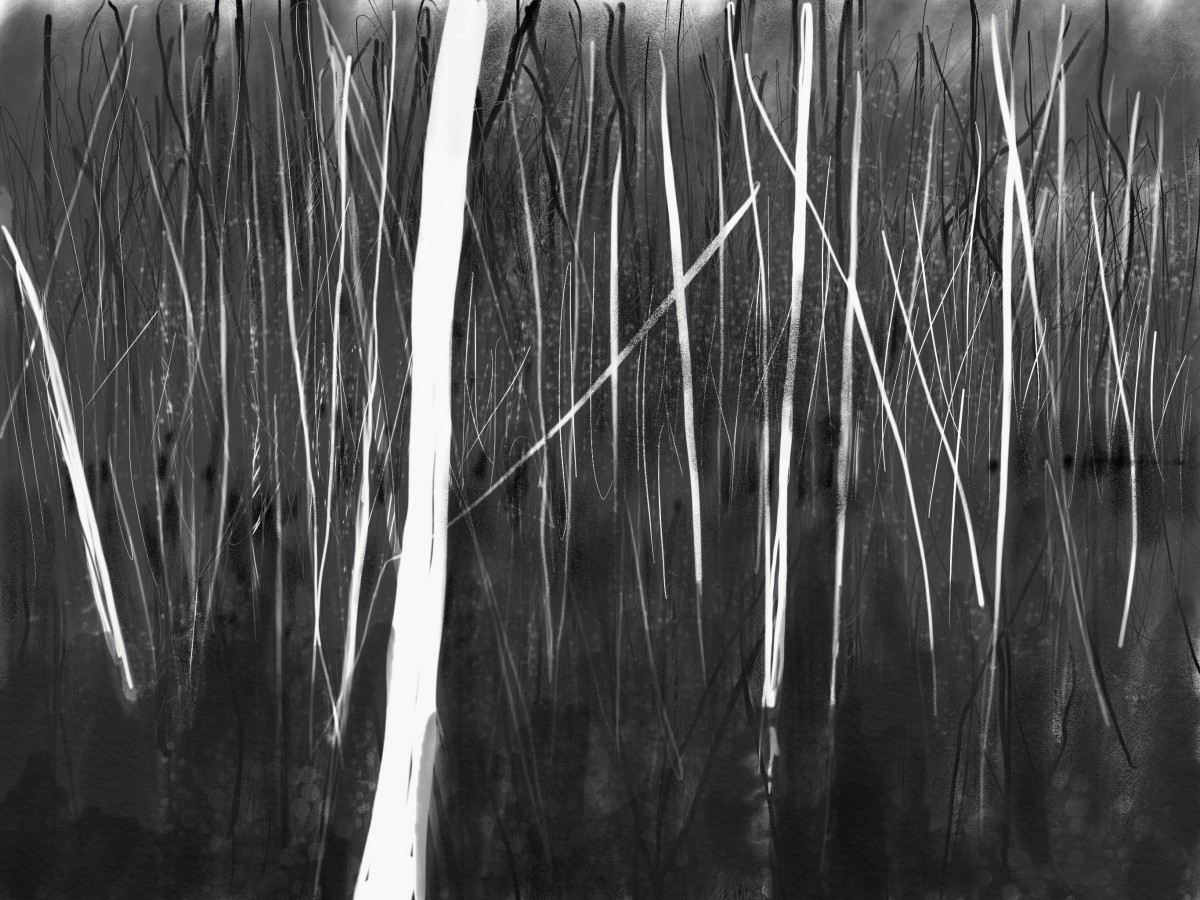
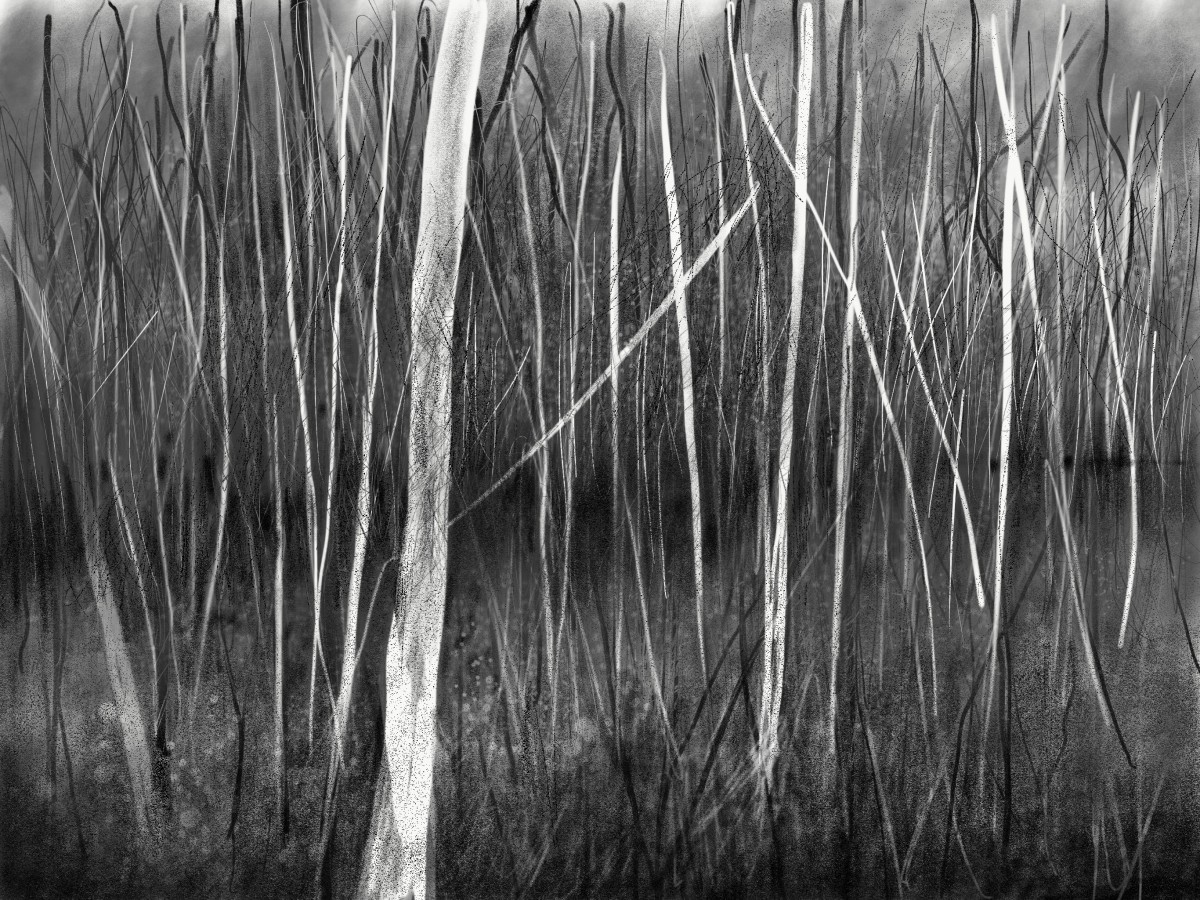
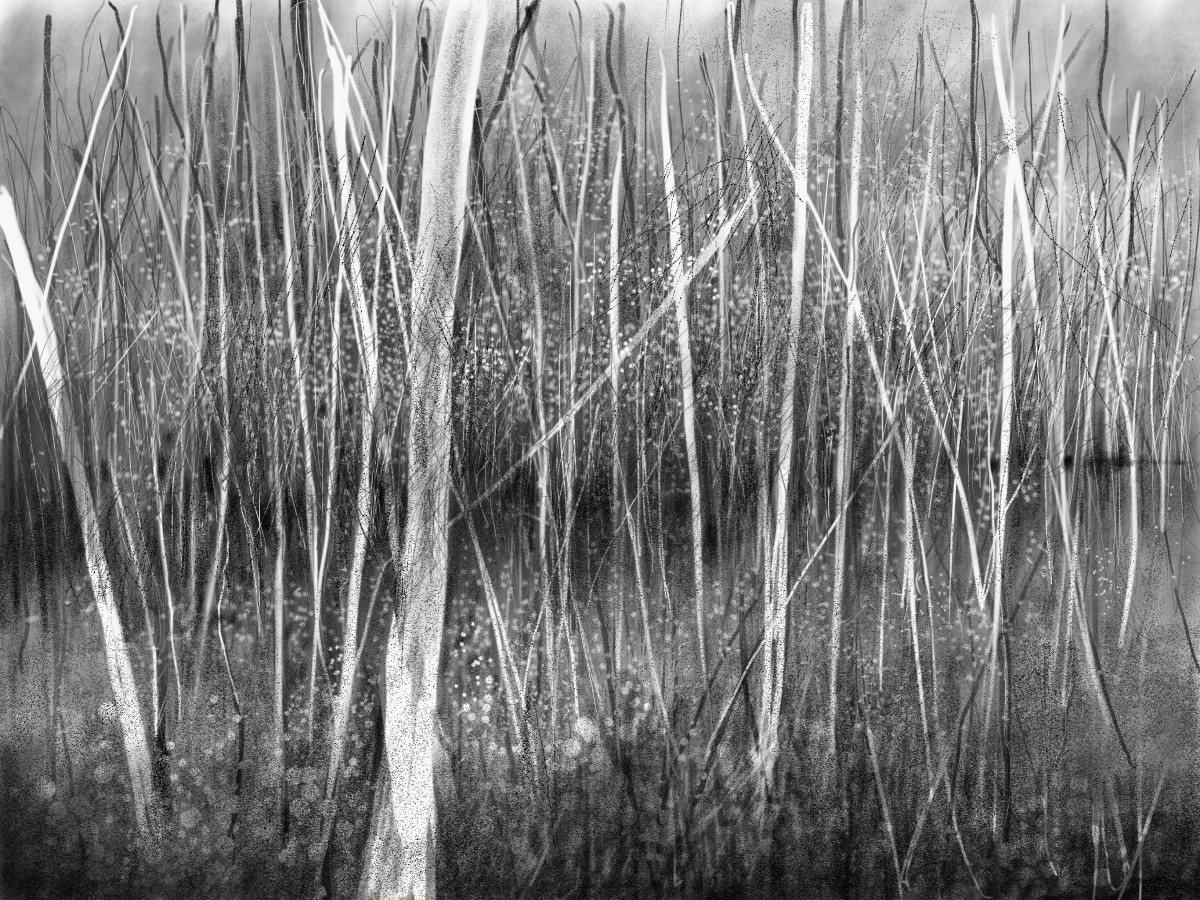
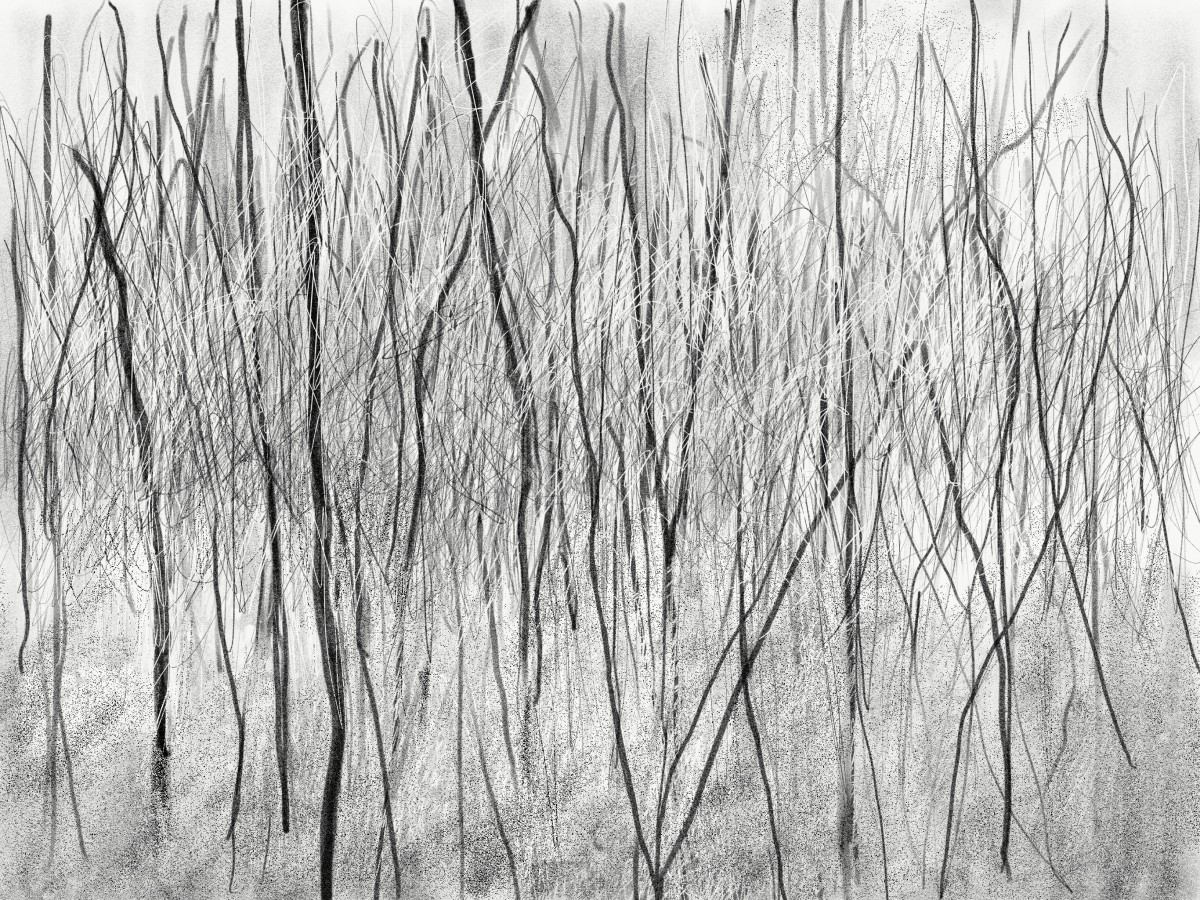
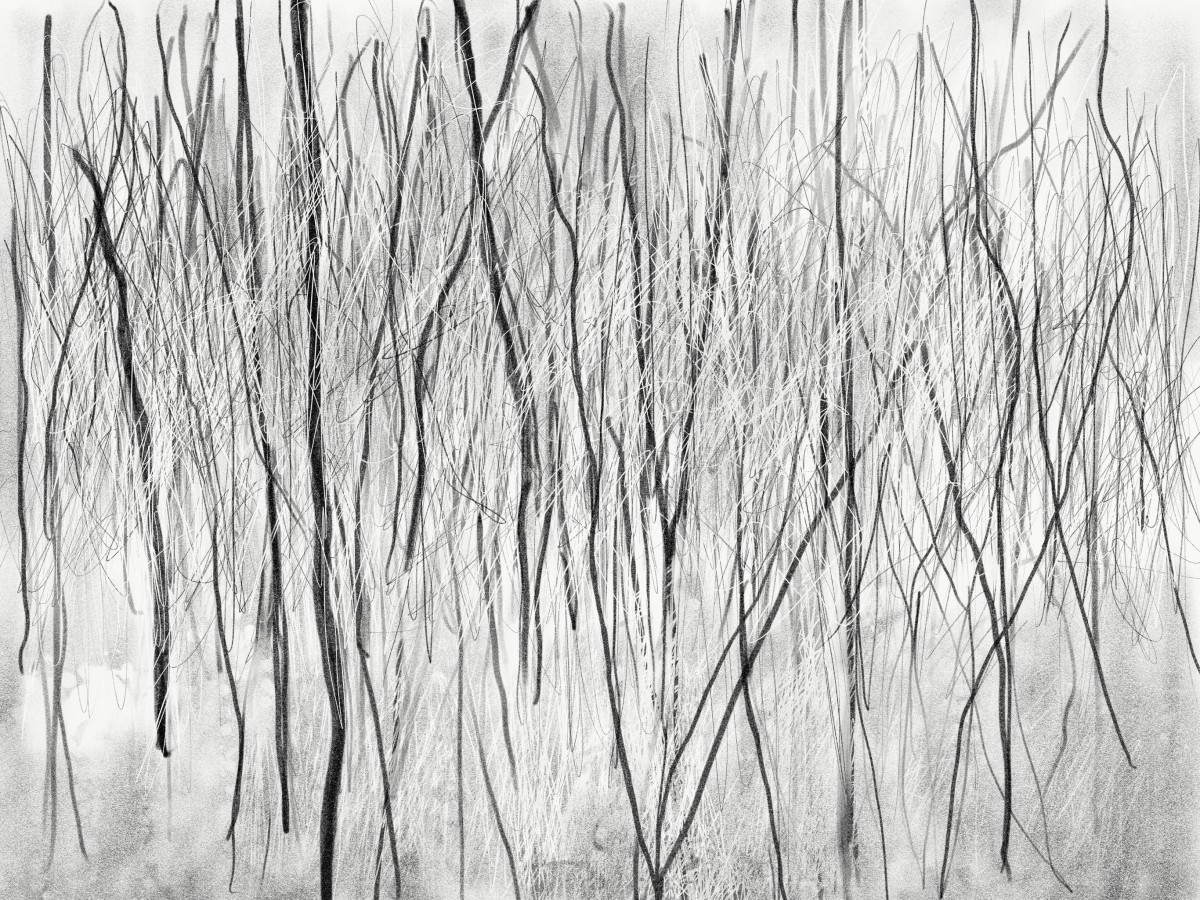
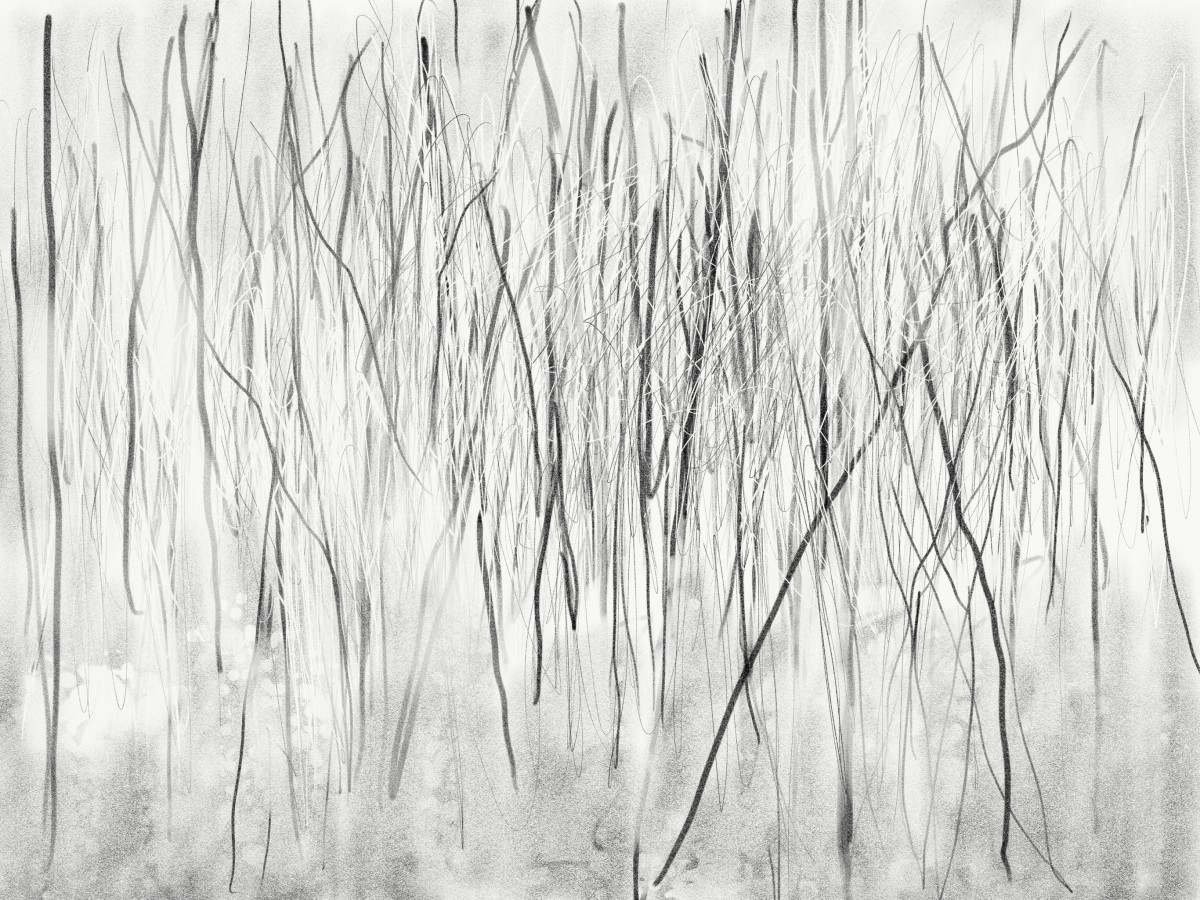
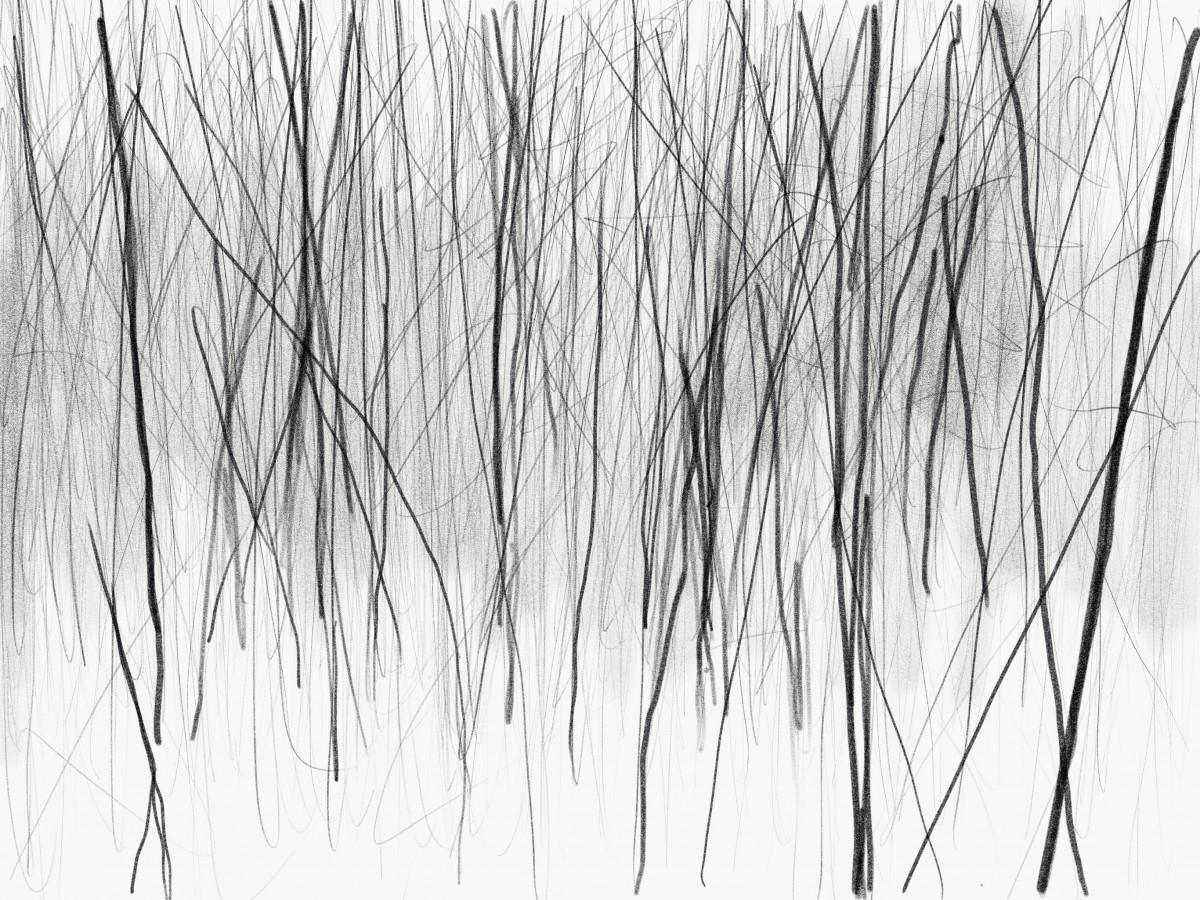
I’ve been working on a series of drawings for a while now, the development of which can be seen in the pictures below.
- « Previous Page
- 1
- …
- 3
- 4
- 5
- 6
- 7
- …
- 32
- Next Page »