Nicholas Hedges

Art, Writing and Research

  • Amazon
  • Behance
  • Facebook
  • Instagram
  • Pinterest
  • YouTube
  • Art
    • Digital
    • Drawing
    • Grids
      • Correspondence
      • The Wall
      • The Tourist
    • Ink on paper
      • Shadow Calligraphy
    • Installation
      • Murder
      • Echo
    • Painting
    • Patterns
    • Mixed Media
    • Photographic installation
      • St. Giles Fair 1908
      • Cornmarket 1907
      • Headington Hill 1903
      • Queen Street 1897
    • Research/Sketches
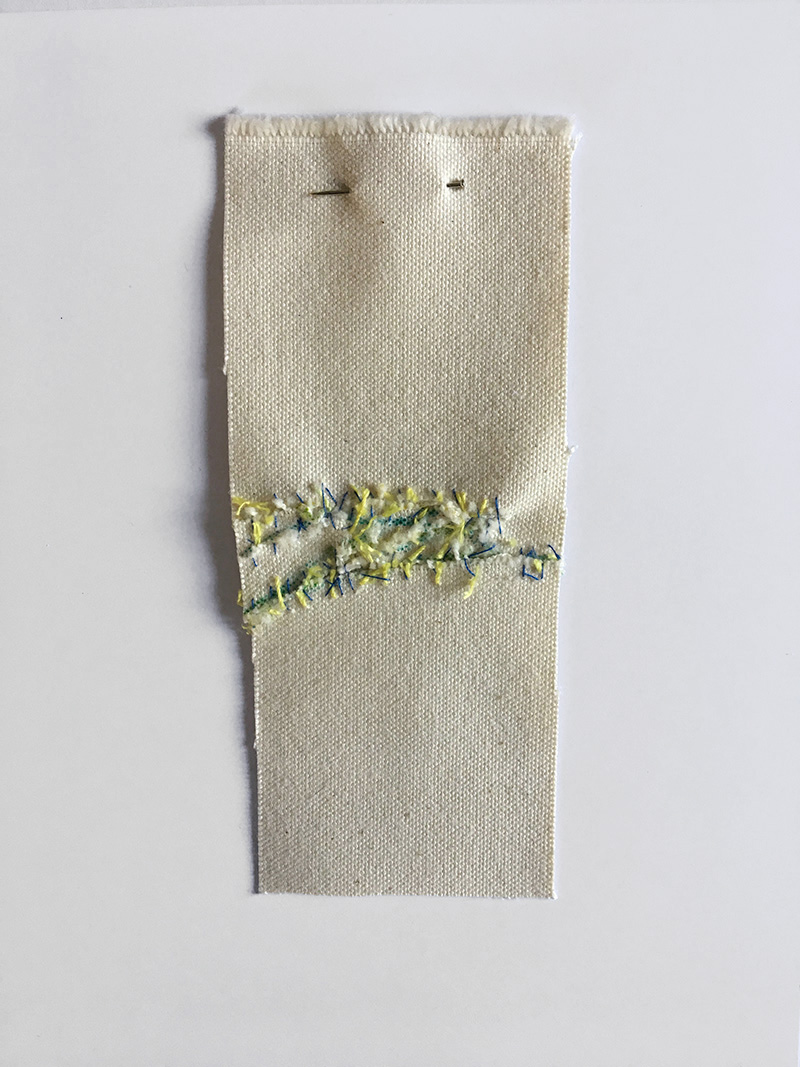
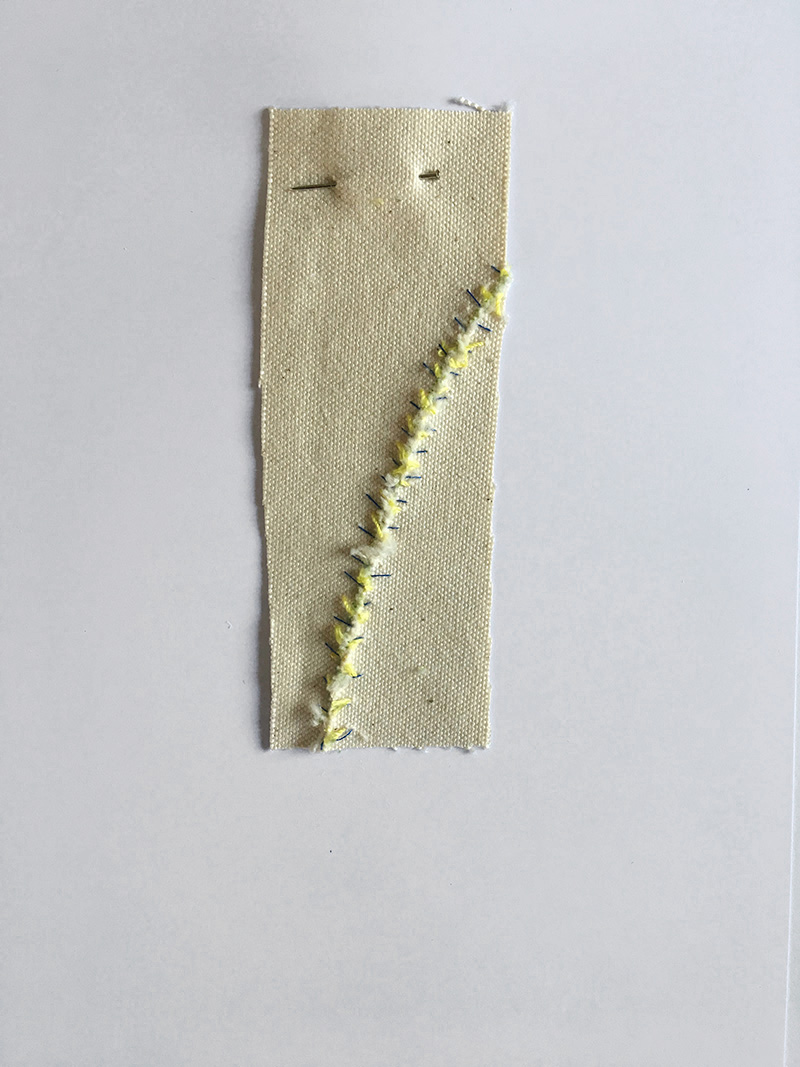
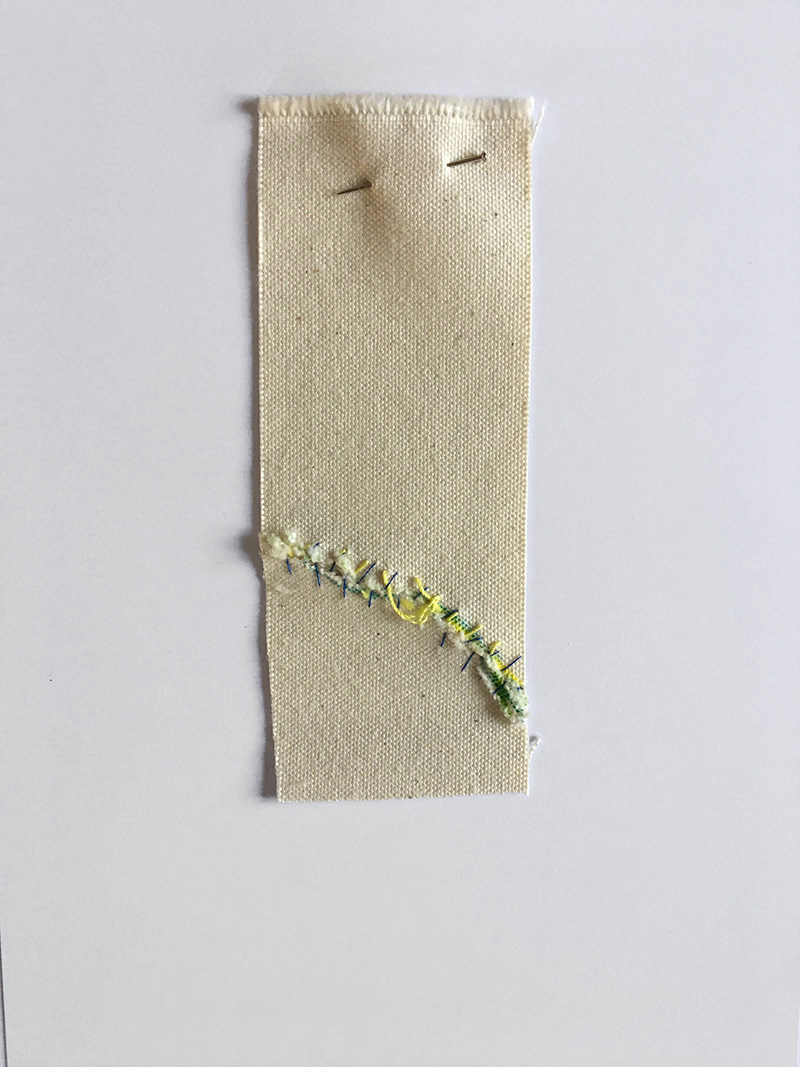
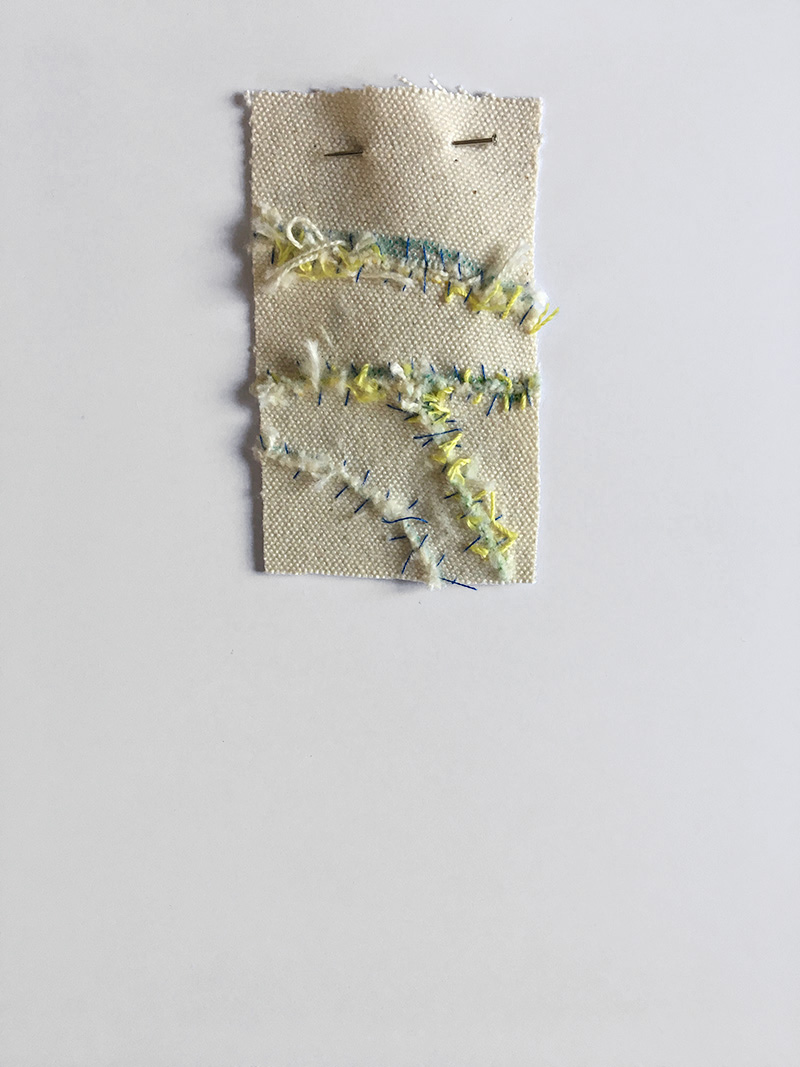
    • Stitched Work
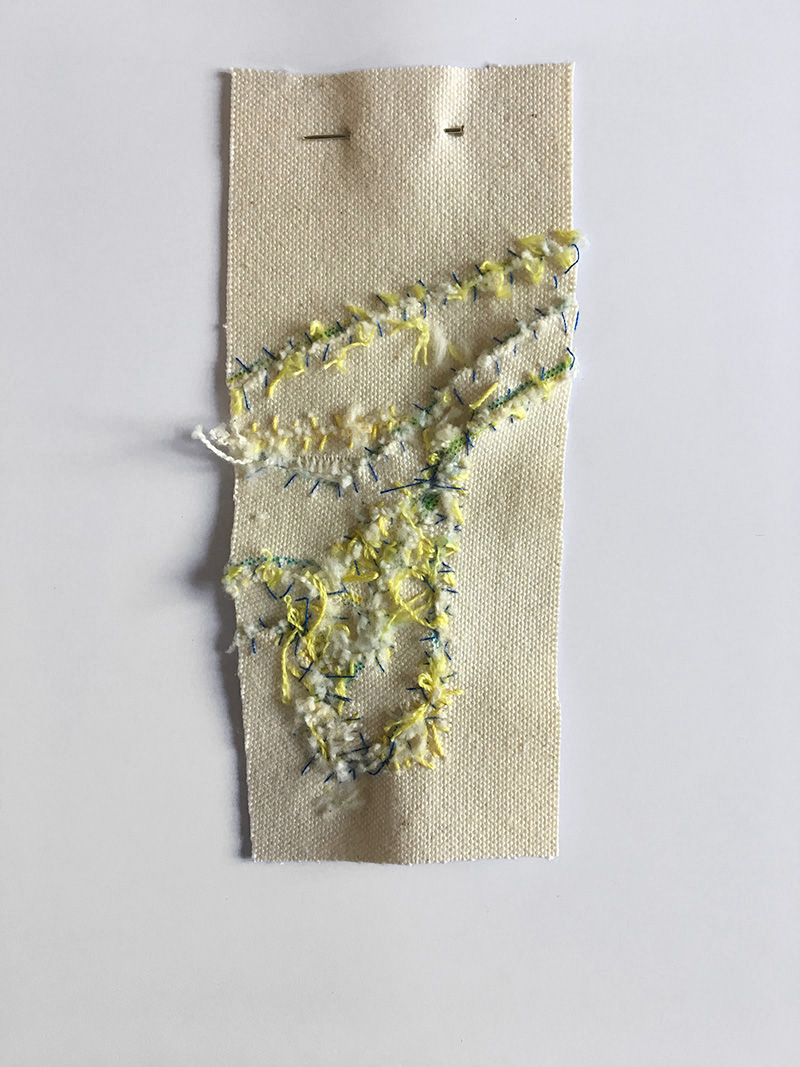
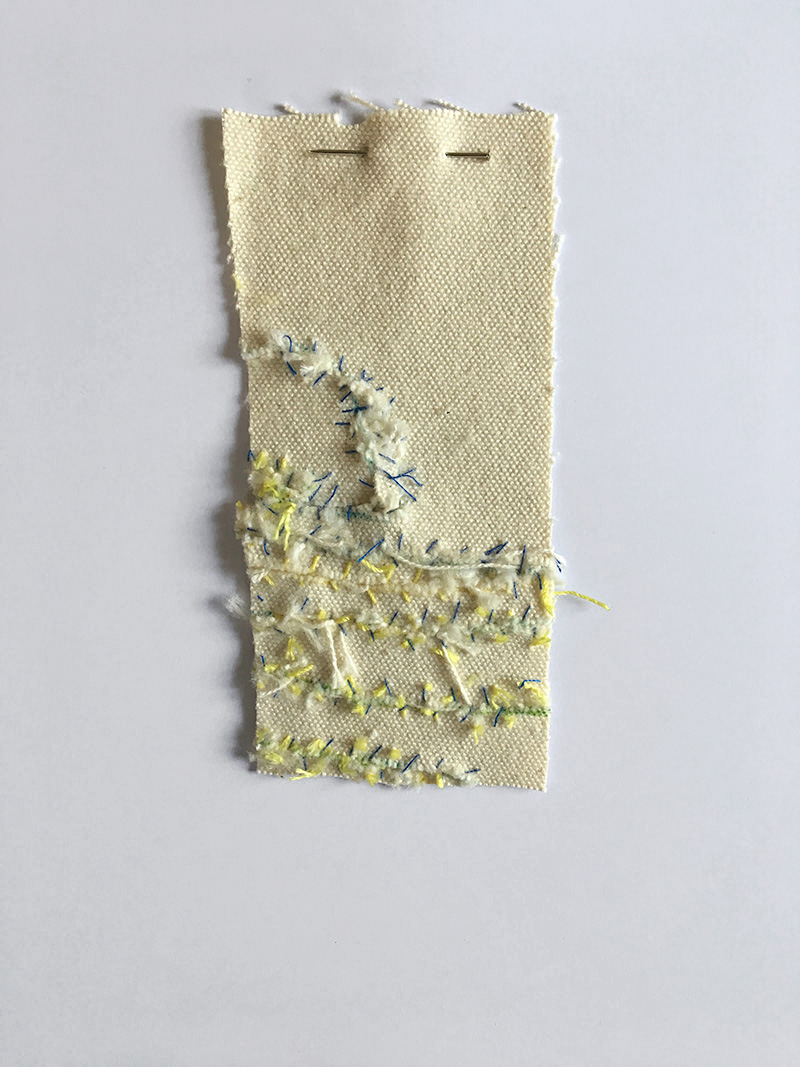
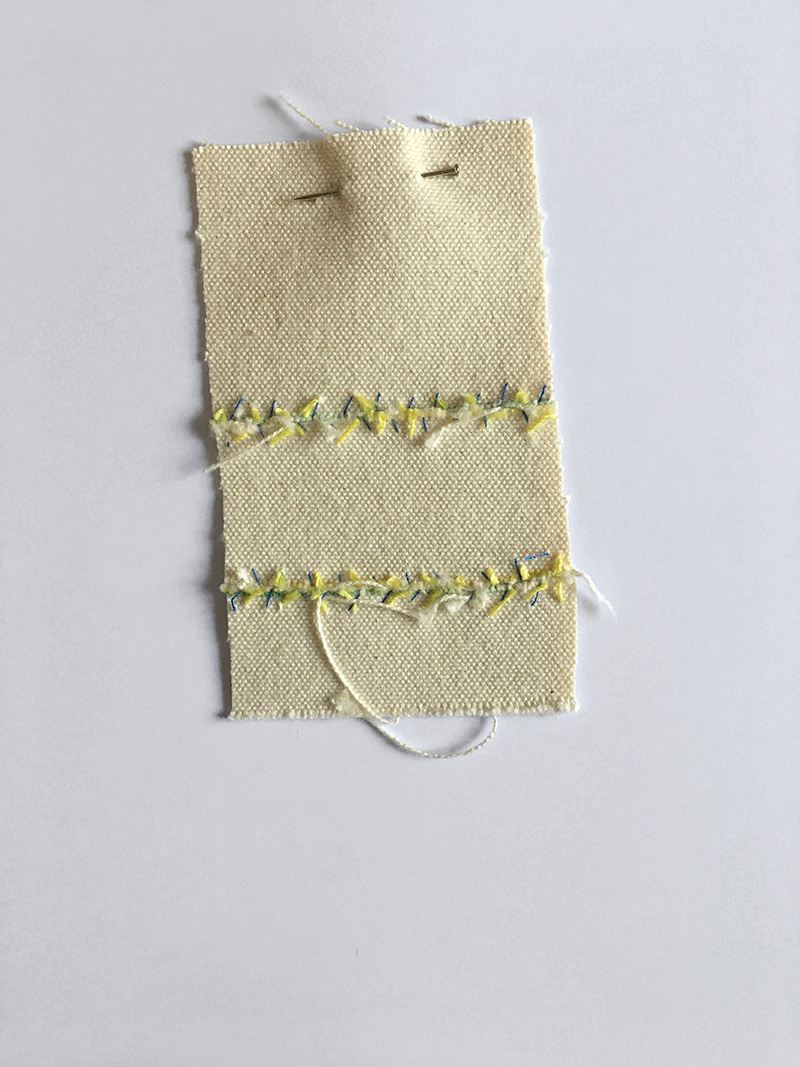
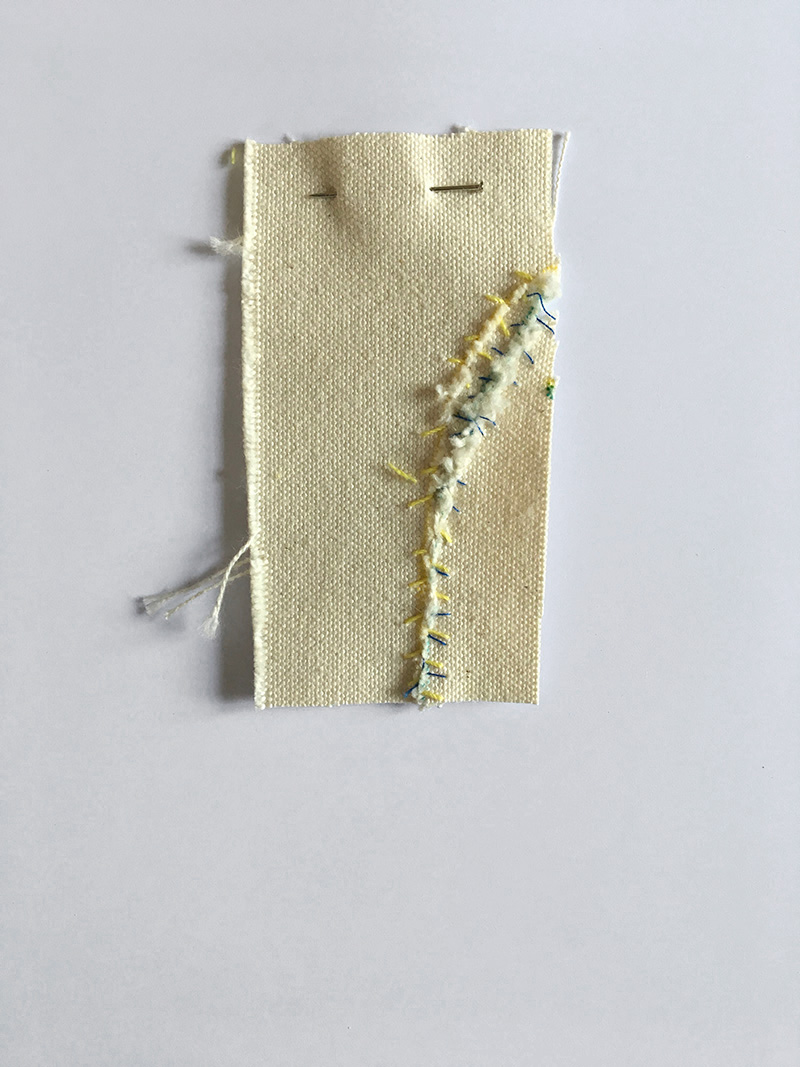
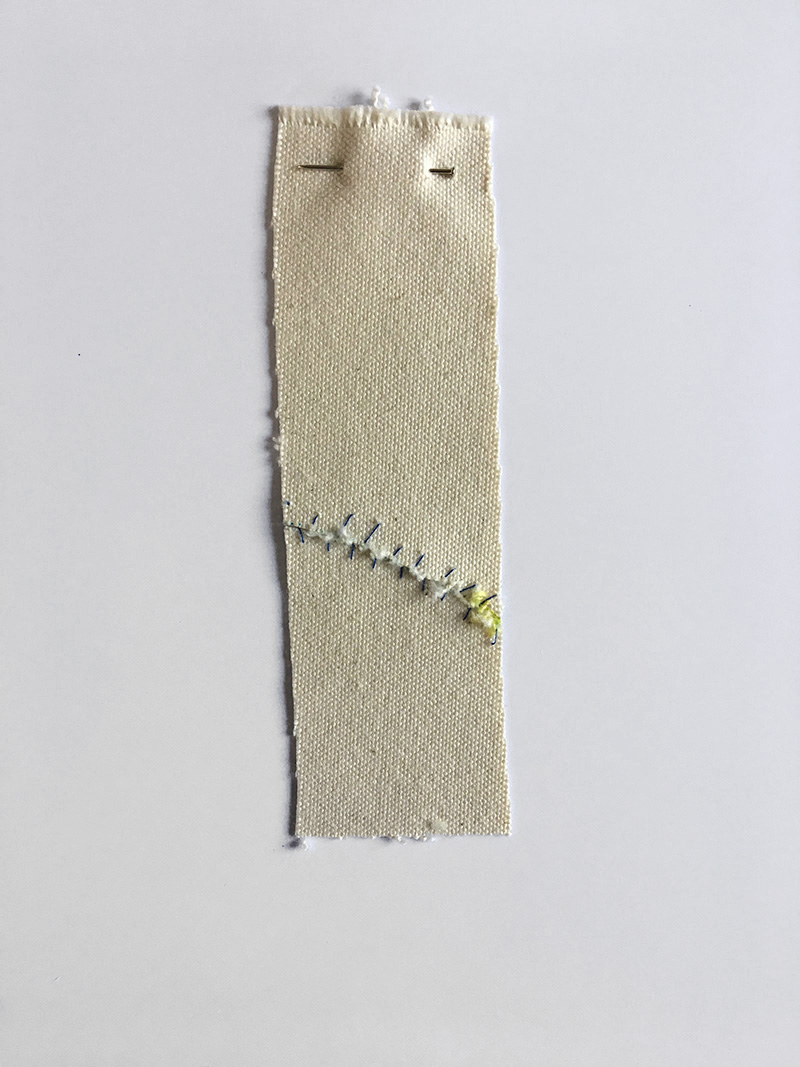
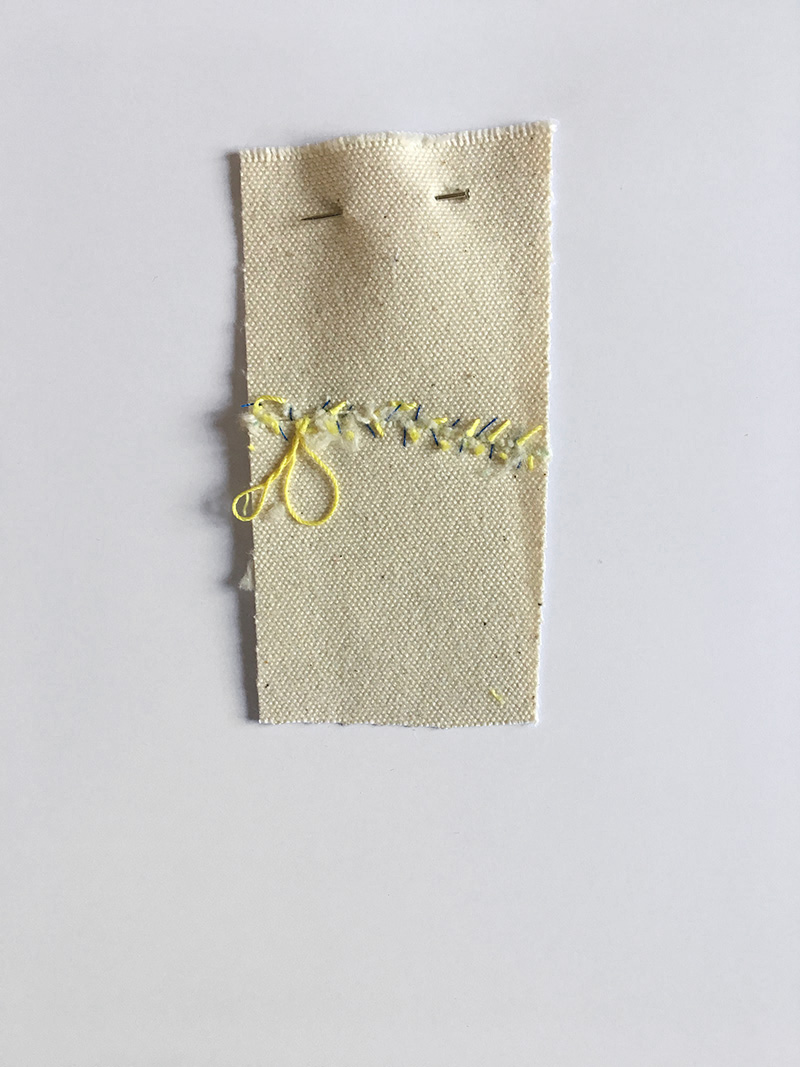
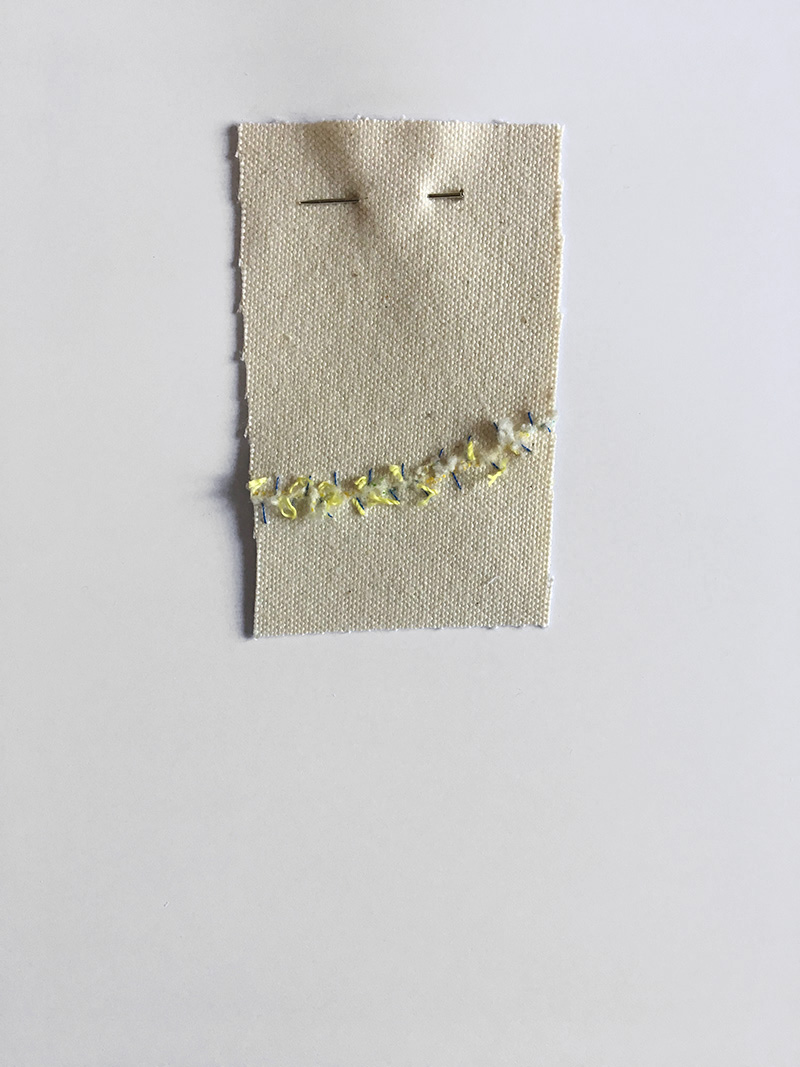
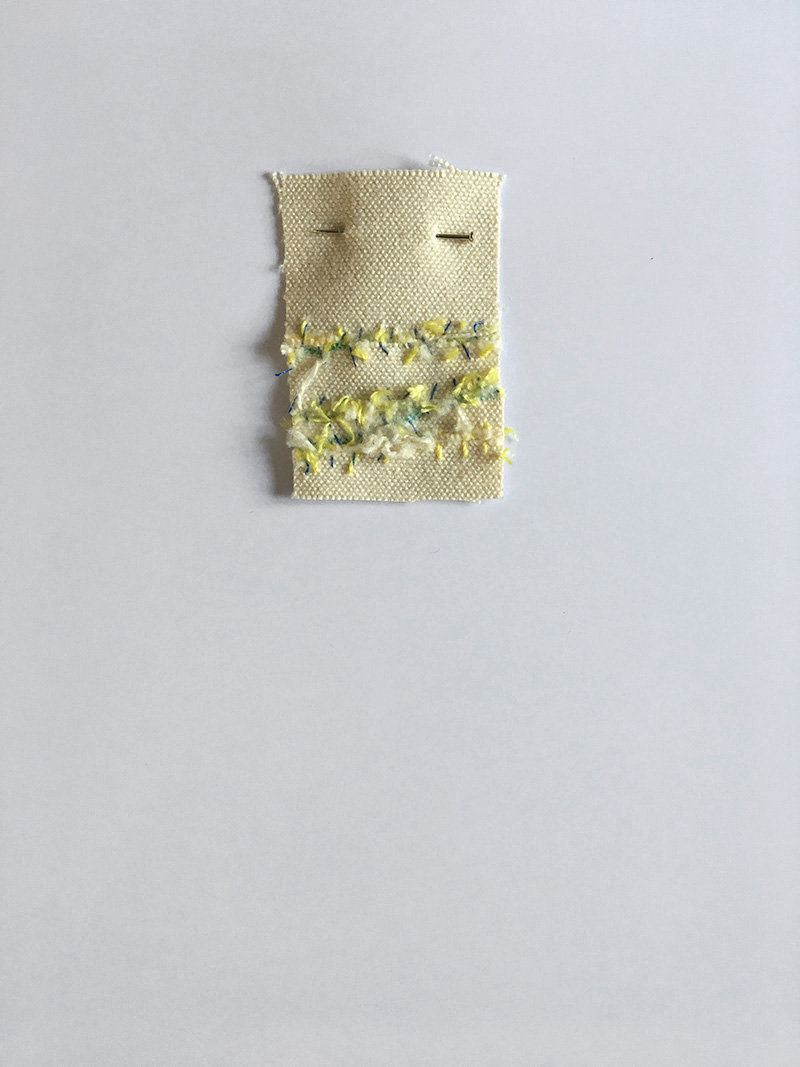
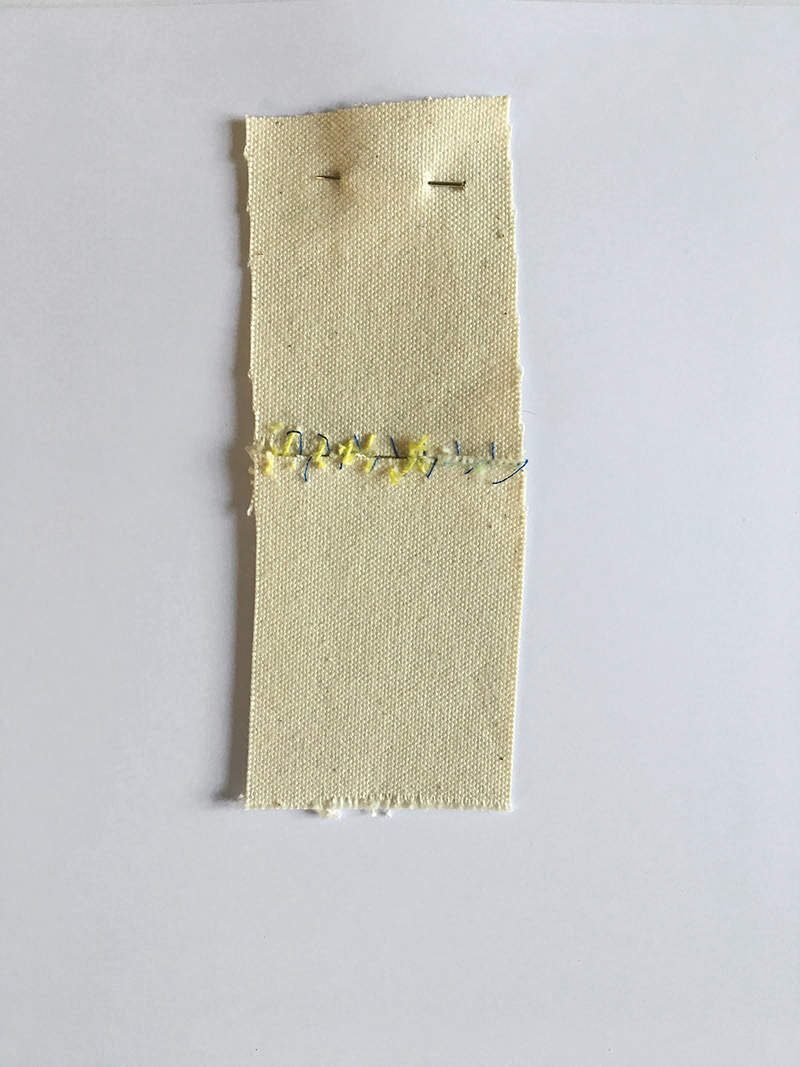
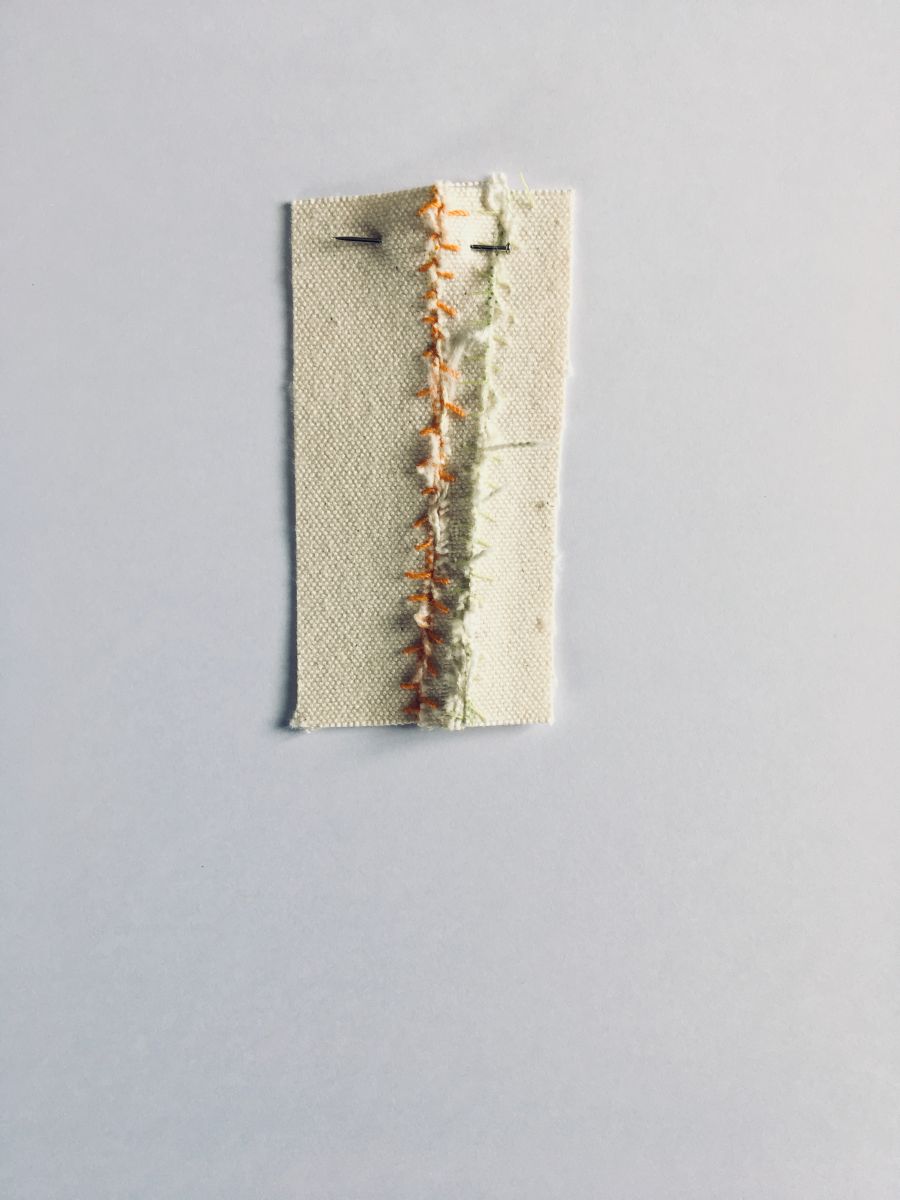
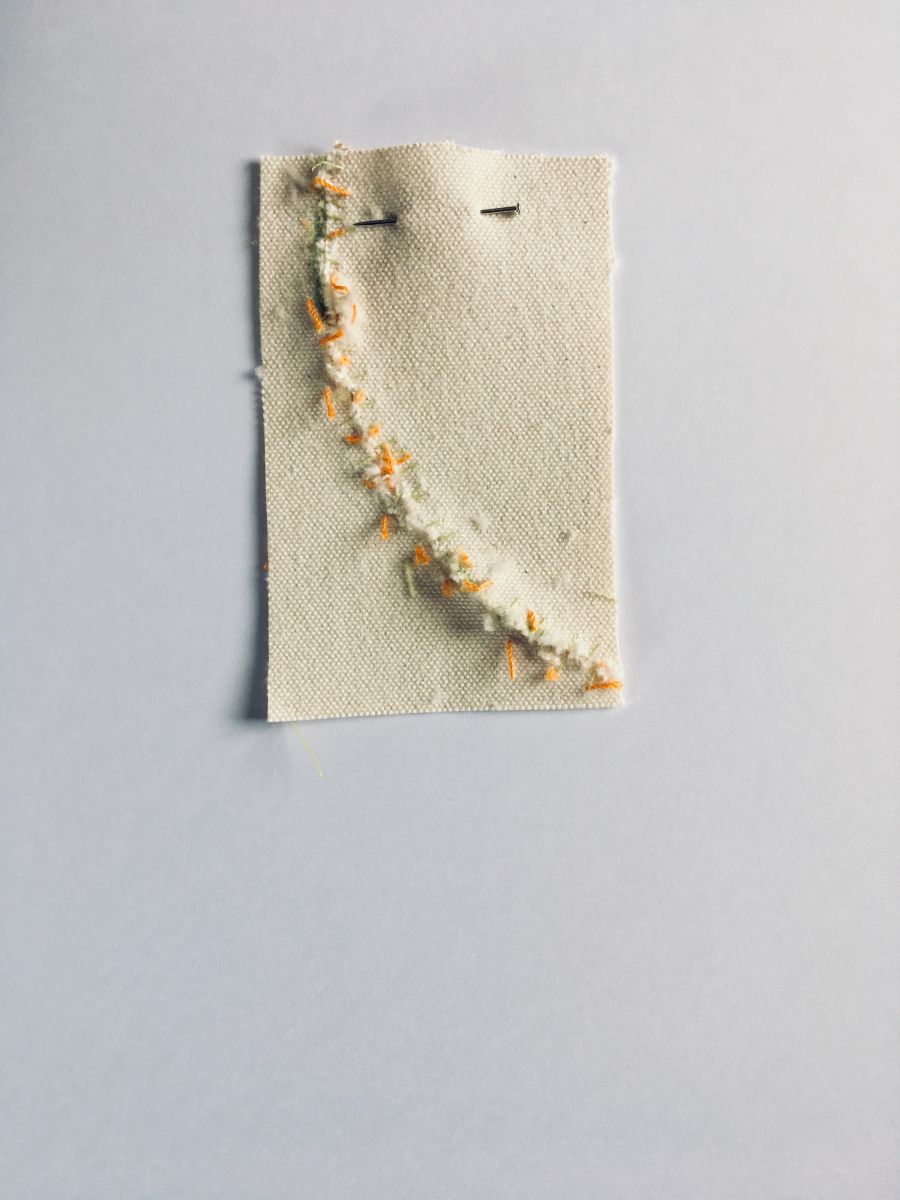
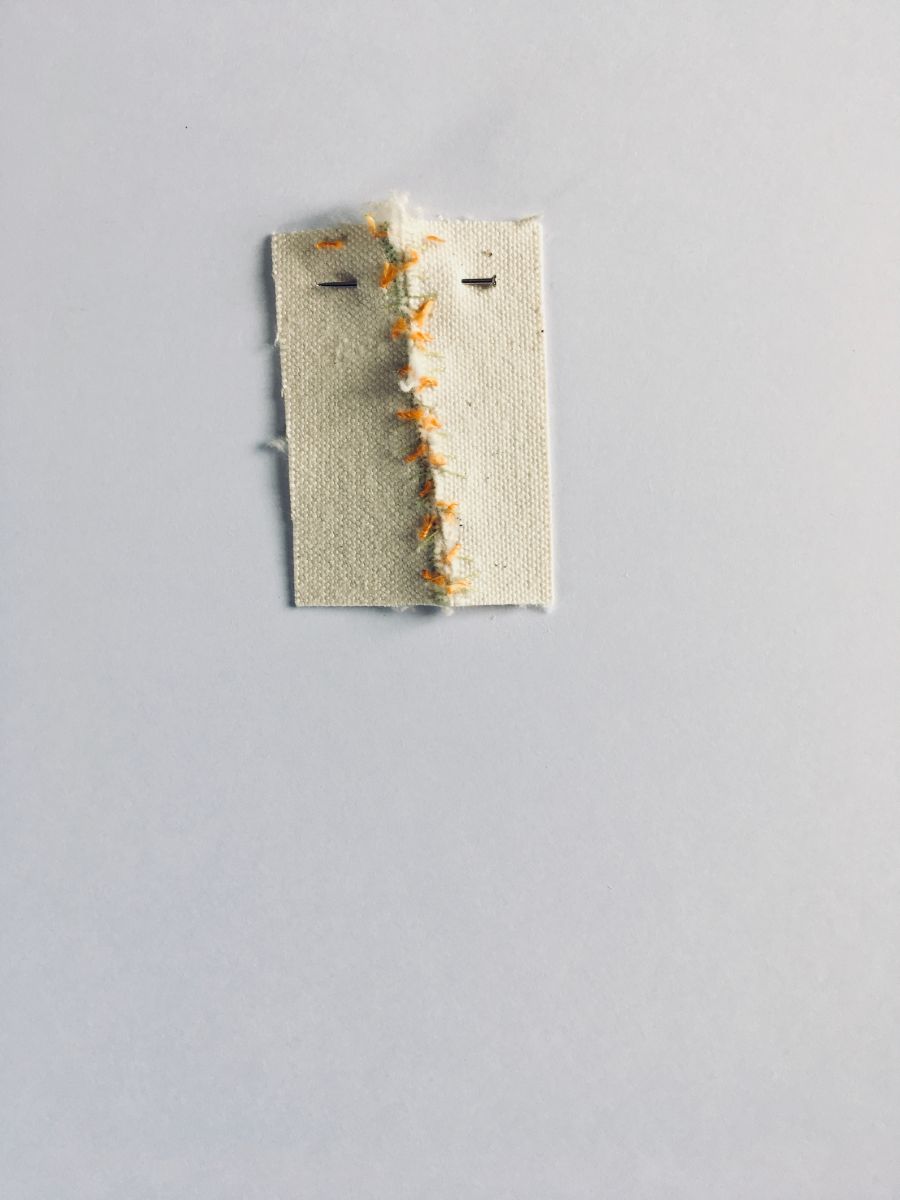
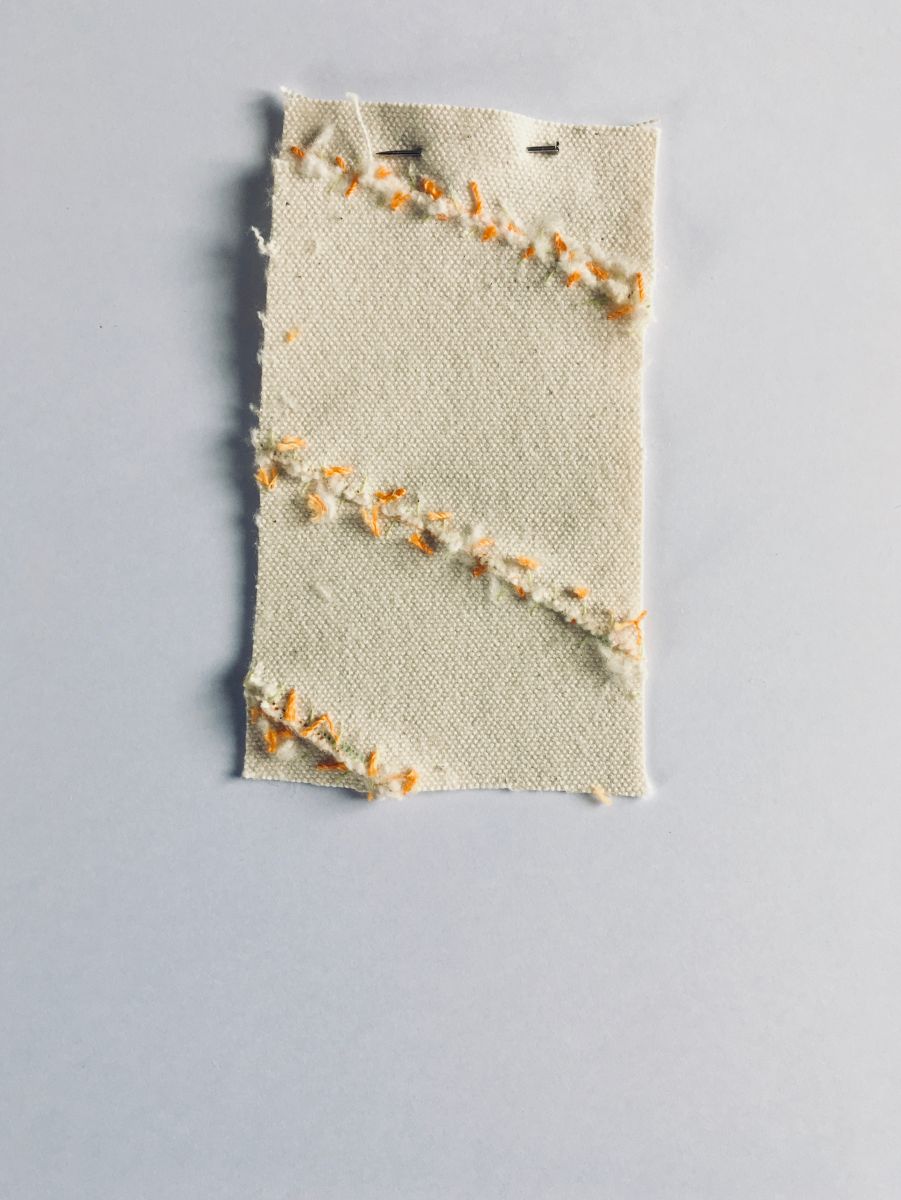
      • Missded 1
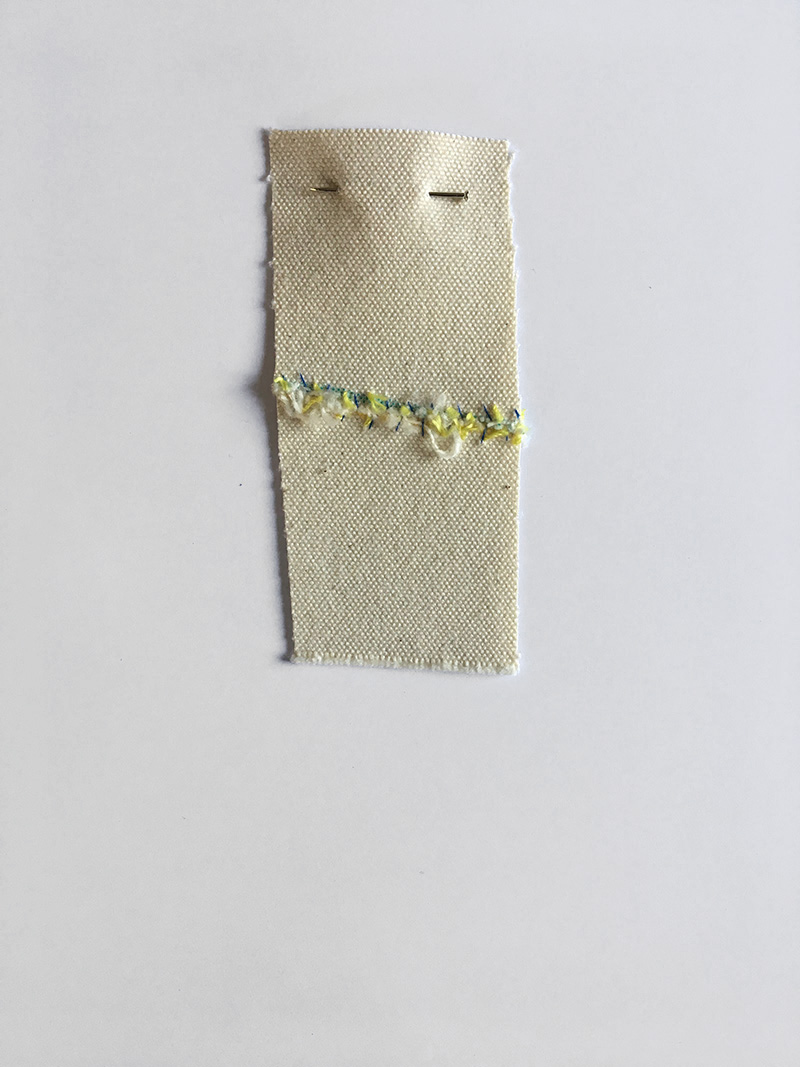
      • Missded 2
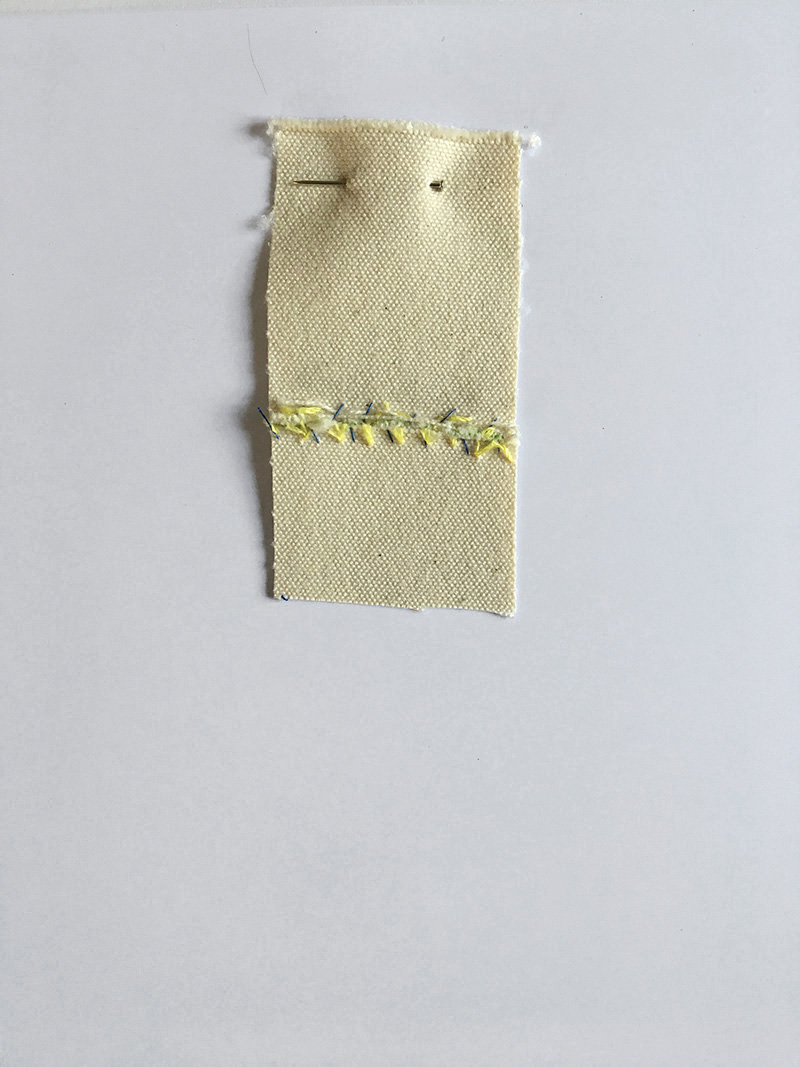
      • Missded 3
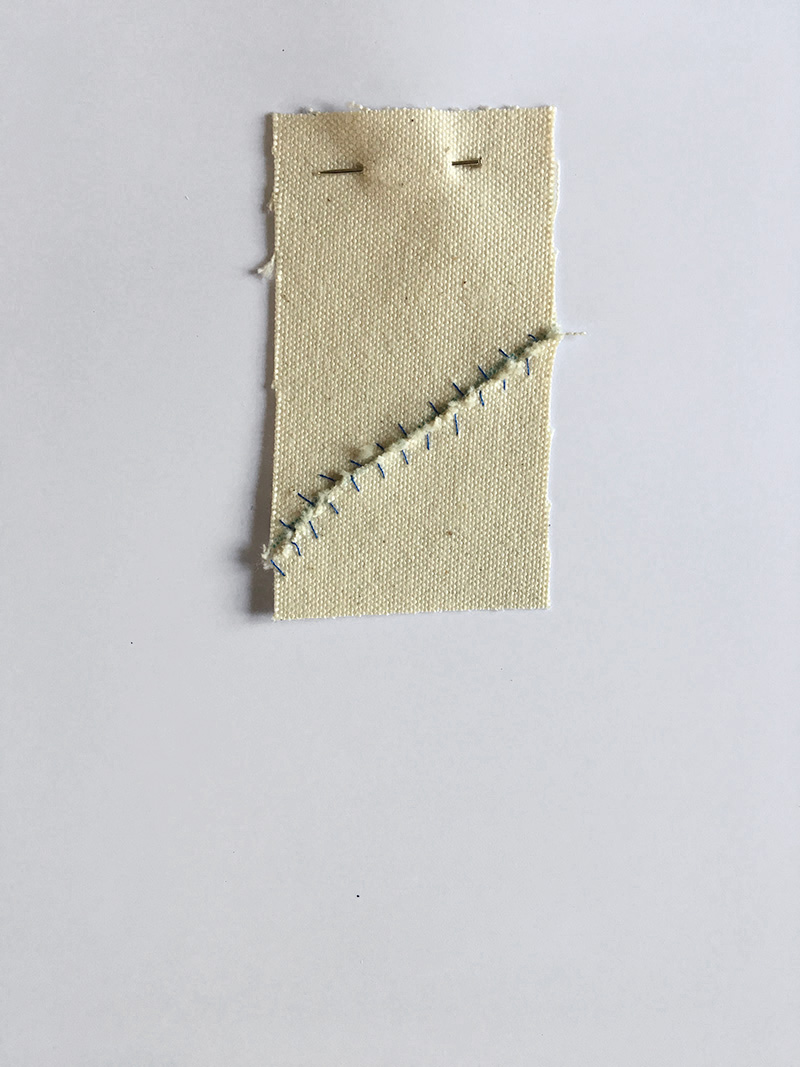
      • Missded 4
    • Text Work
  • Blogs
    • Family History
    • Goethean Observations
    • Grief
    • Light Slowed But Never Stilled
    • Lists
    • Present Empathy
    • Shadow Calligraphy
    • Trees
    • Time
    • Walking Meditations
  • Video
  • Photography
    • Pillars of Snow
    • Creatures
    • The Trees
    • Snow
    • St. Giles Fair 1908
    • Cornmarket 1907
    • Headington Hill 1903
    • Queen Street 1897
    • Travel
  • Illustration and Design
  • Music
  • Projects
    • Dissonance and Rhyme
    • Design for an Heirloom
    • Backdrops
    • Shadow Calligraphy
  • Exhibitions
    • A Line Drawn in Water
      • Artwork
    • A Line Drawn in Water (Blog)
    • Mine the Mountain 3
      • Artwork
    • Mine the Mountain 2
      • Artwork
      • The Wall
    • The Woods, Breathing
      • Artwork
    • Snow
      • Artwork
    • Echo
      • Artwork
    • Murder
      • Artwork
    • The Tourist
    • Dreamcatcher
    • Mine the Mountain
      • Artwork
      • The Tourist
    • M8
    • The Gate
    • Creatures
      • Artwork
    • Residue
      • Artwork
    • A visit to Auschwitz
      • Artwork
  • Me
    • Artist’s Statement

The Gone Forest

June 7, 2020 by Nicholas Hedges

Two years ago I shot some video at Shotover Country Park (see ‘Writing Shadows’) and finally, this weekend, I had the chance to edit the clips together to make a piece entitled ‘The Gone Forest’. The piece is something viewers can dip in and out of rather than sit through from beginning to end, and while it is a finished piece, there are lots of other ways I want to explore using these clips.

For now, here is the video:

Filed Under: Present Empathy, Shadow Calligraphy, Shadows, Trees, Video

Empathy/Exchange: 668 grams

April 8, 2020 by Nicholas Hedges

This follows on from my last post – Goethean Observation: Pilgrims of the Wild, 1935.

I made this observation after struggling with an idea I’ve had for a long time. The idea came from work I made several years ago on the theme of the Holocaust which led to an installation at Shotover Country park in Oxford (2009) entitled ‘The Woods, Breathing’, pictures from which can be seen here. What I’ve since become interested in is the book that inspired the piece – that which Adam Czerniakow had read on January 19th 1940, remarking in his diary: “…During the night I read a novel, ‘Pilgrims of the Wild’ – Grey Owl… The forest, little wild animals – a veritable Eden.”

I knew there must be a way of using this book, this text, as a means of establishing some kind of empathetic link with Czerniakow. It would be as if by reading the words, I was following Czerniakow through that forest, following the words as if following a trail. The idea of the forest as a means of augmenting empathy was something I’d used in ‘The Woods, Breathing,’ but what of the text itself?

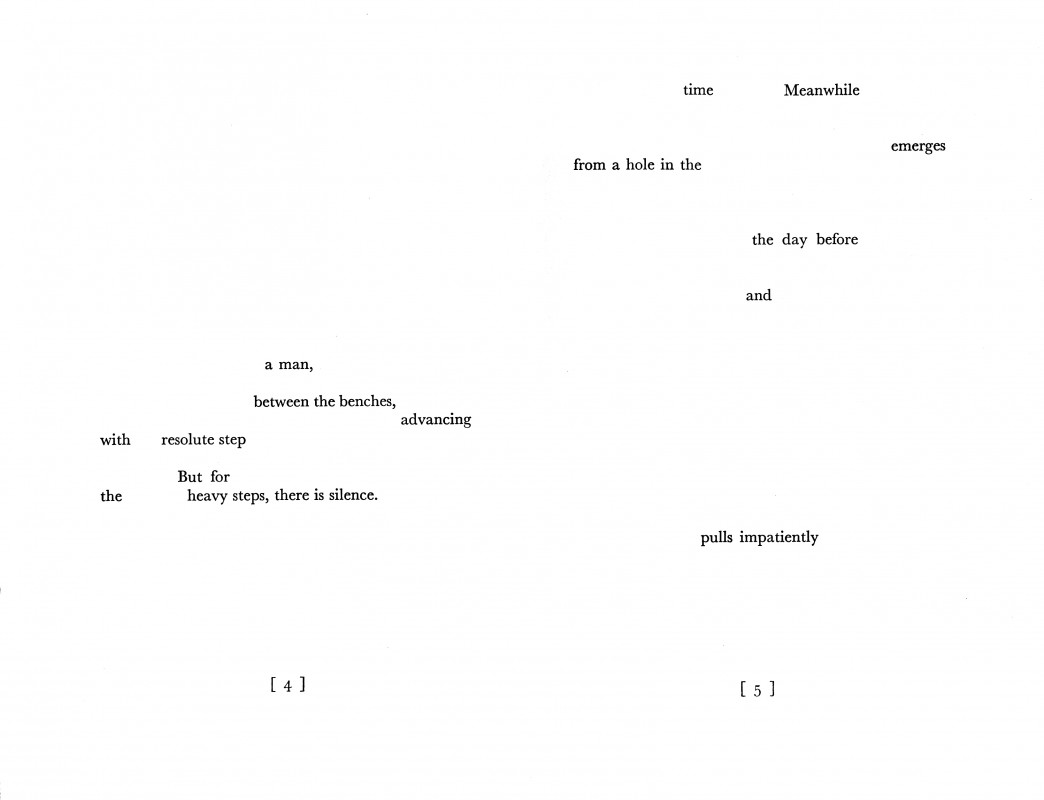
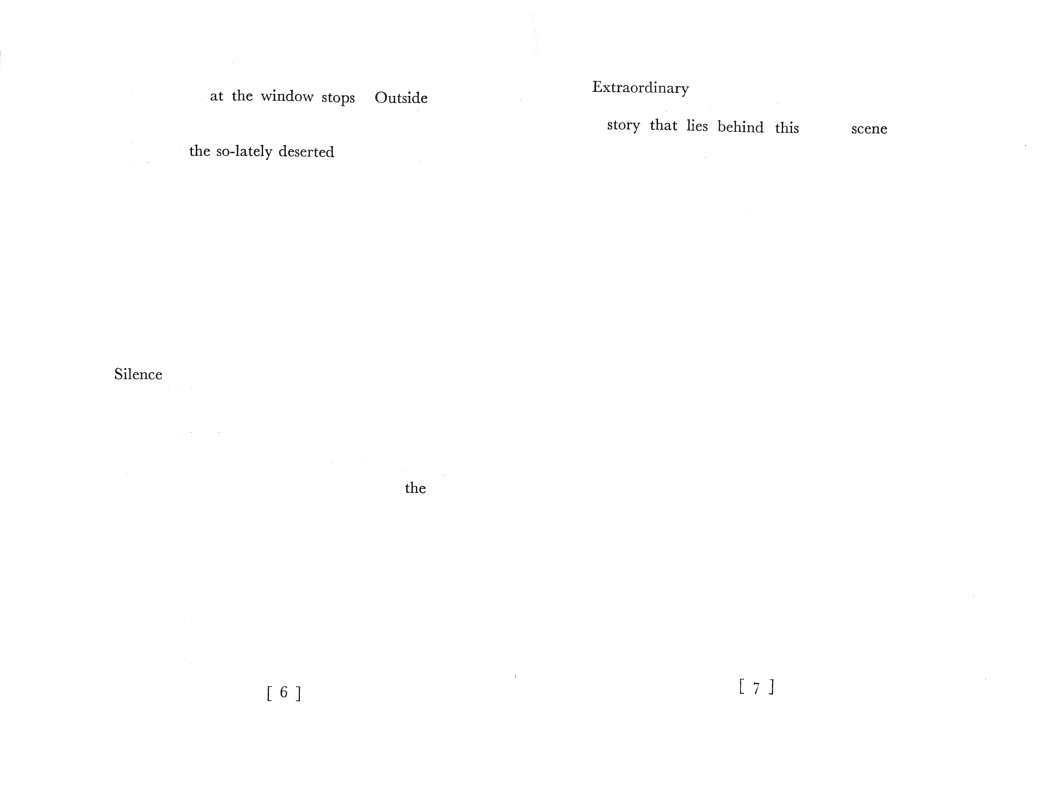
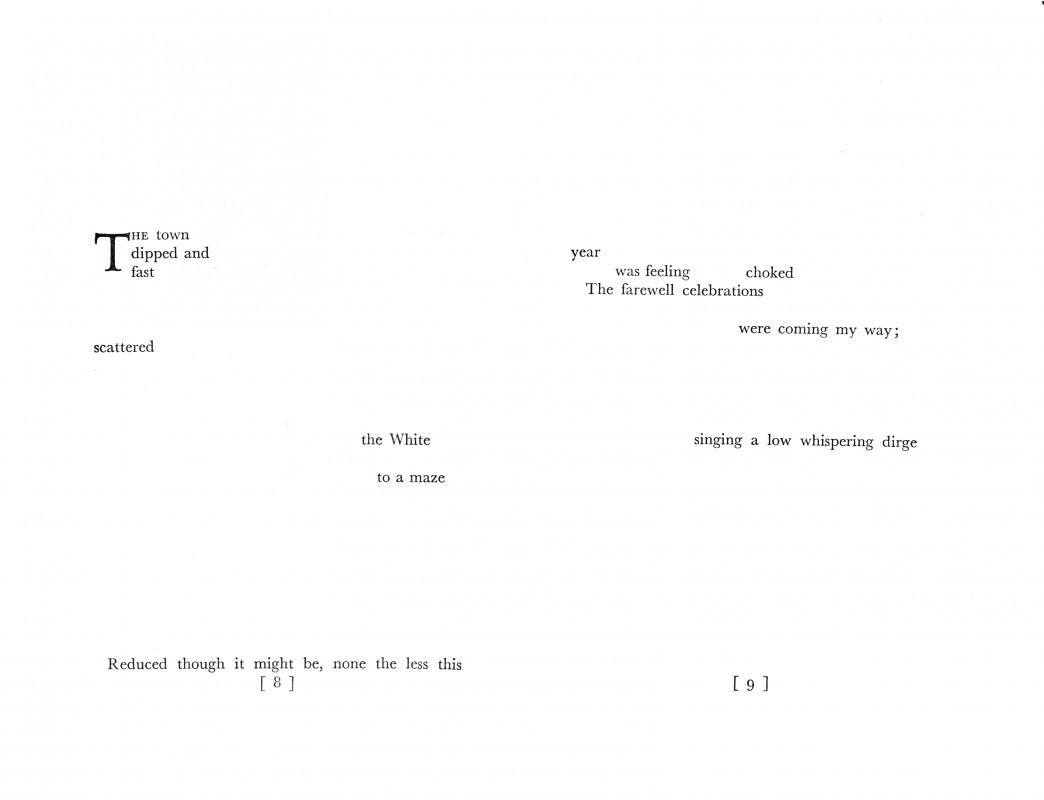
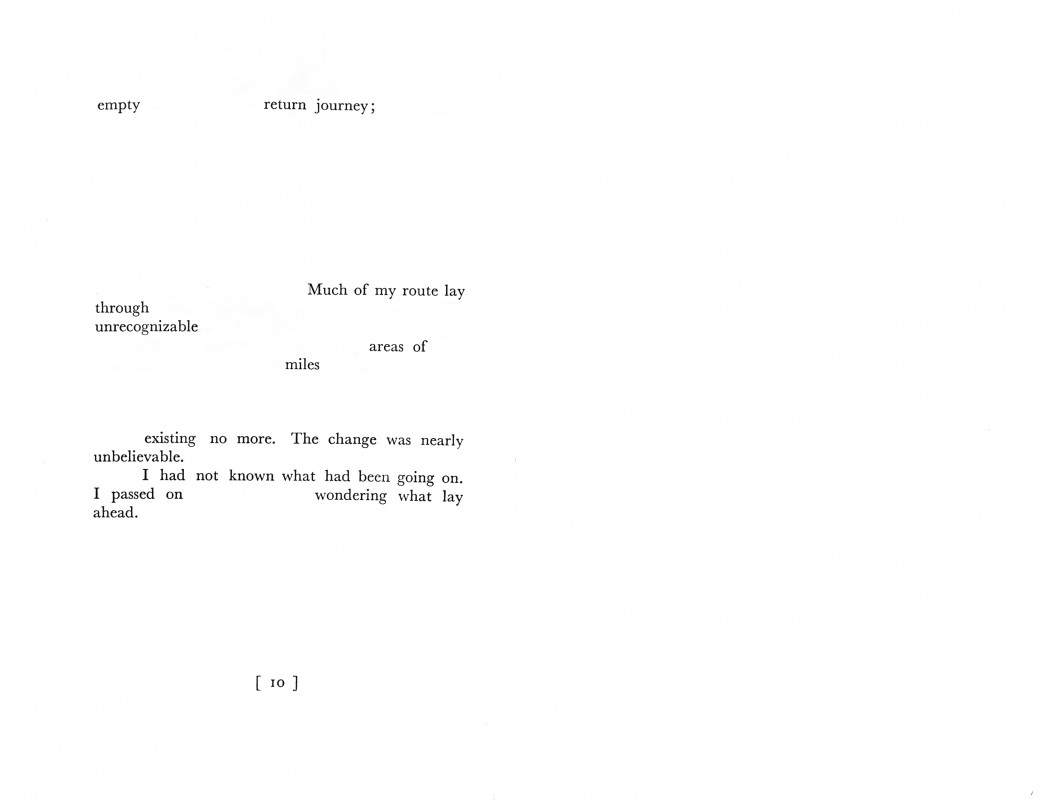
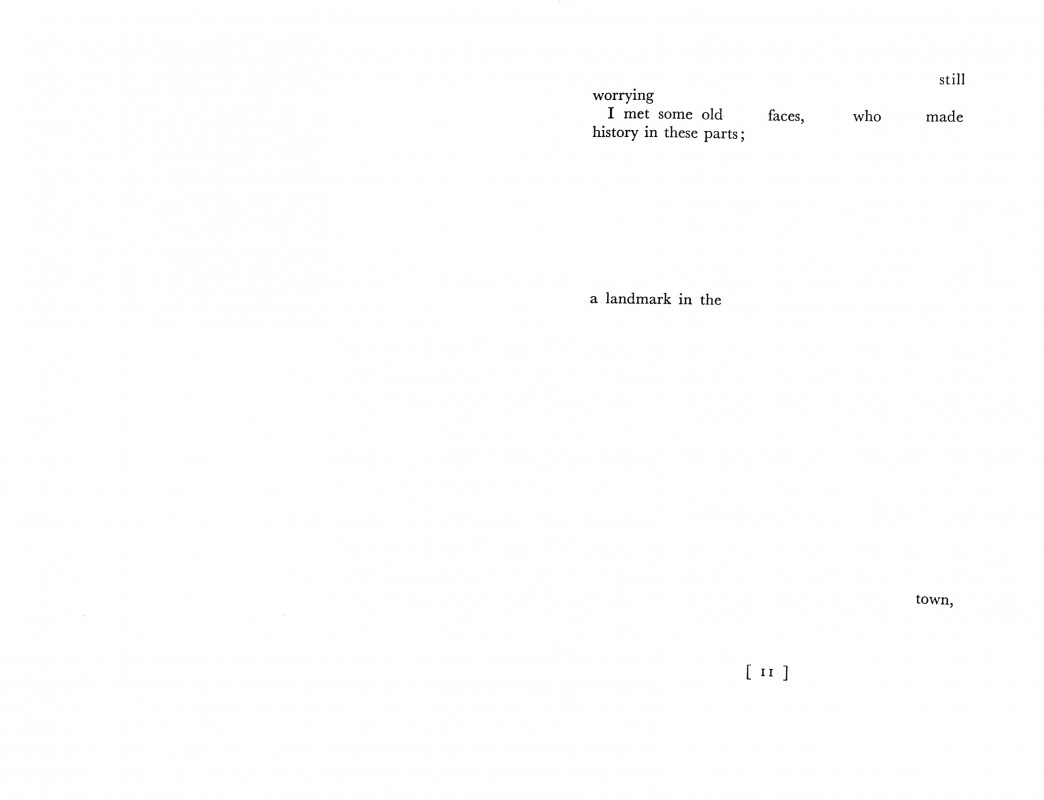
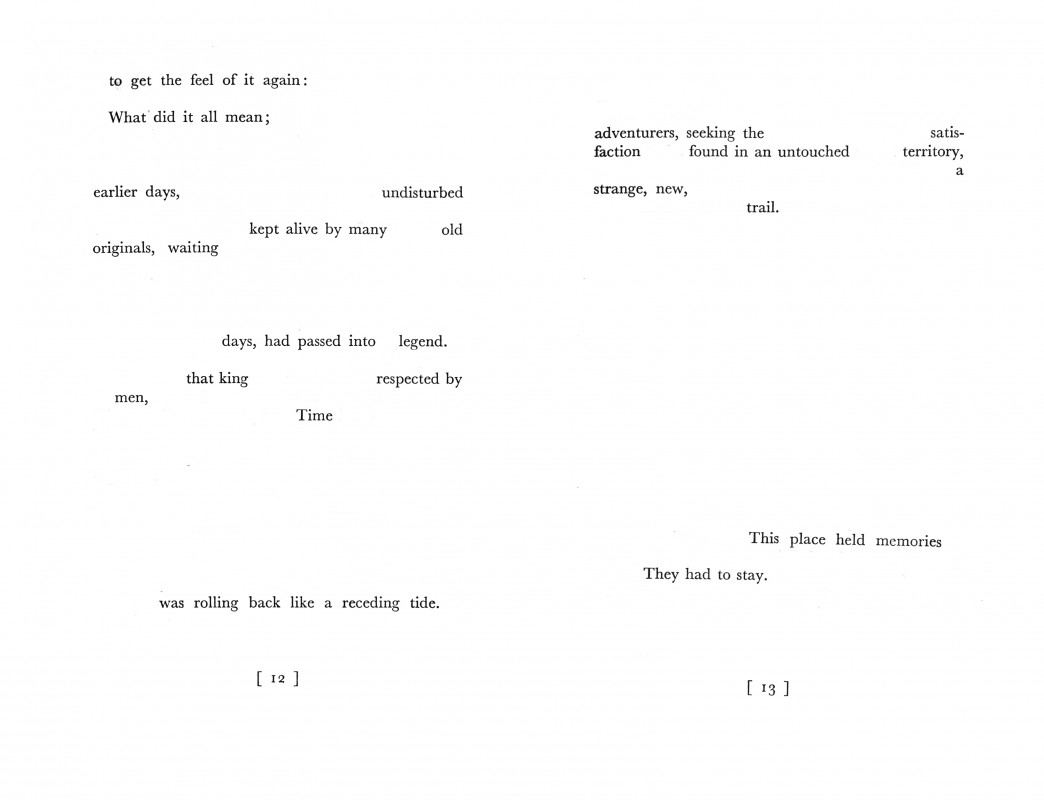
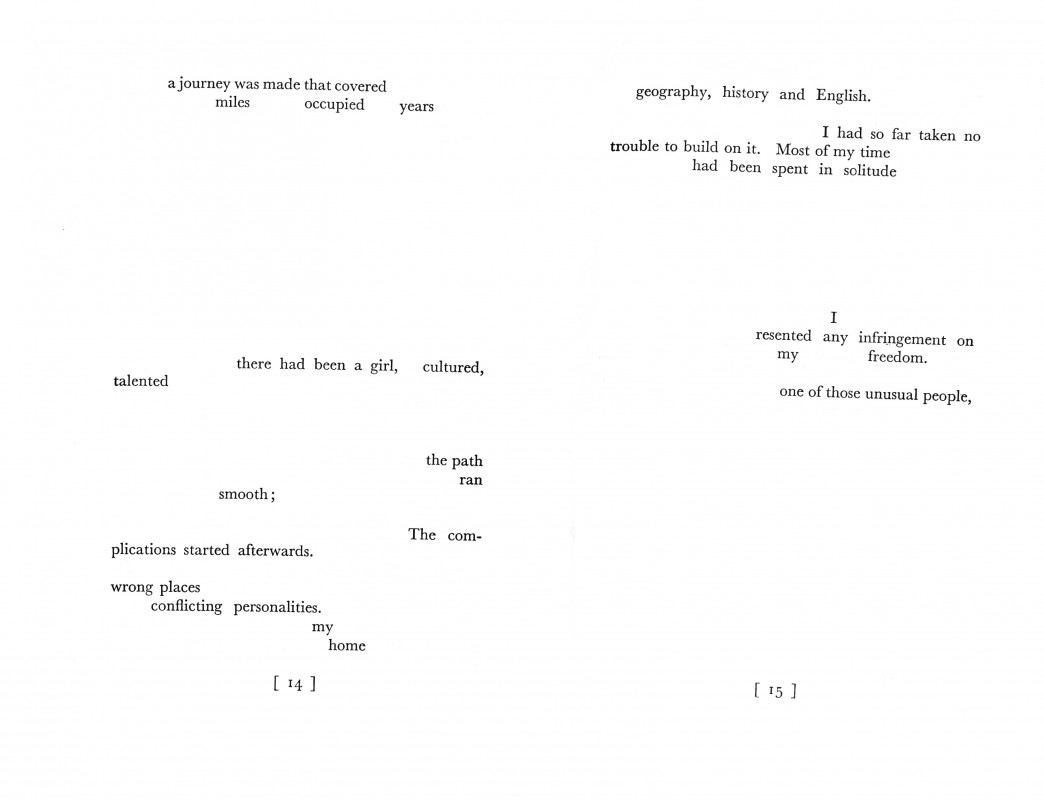
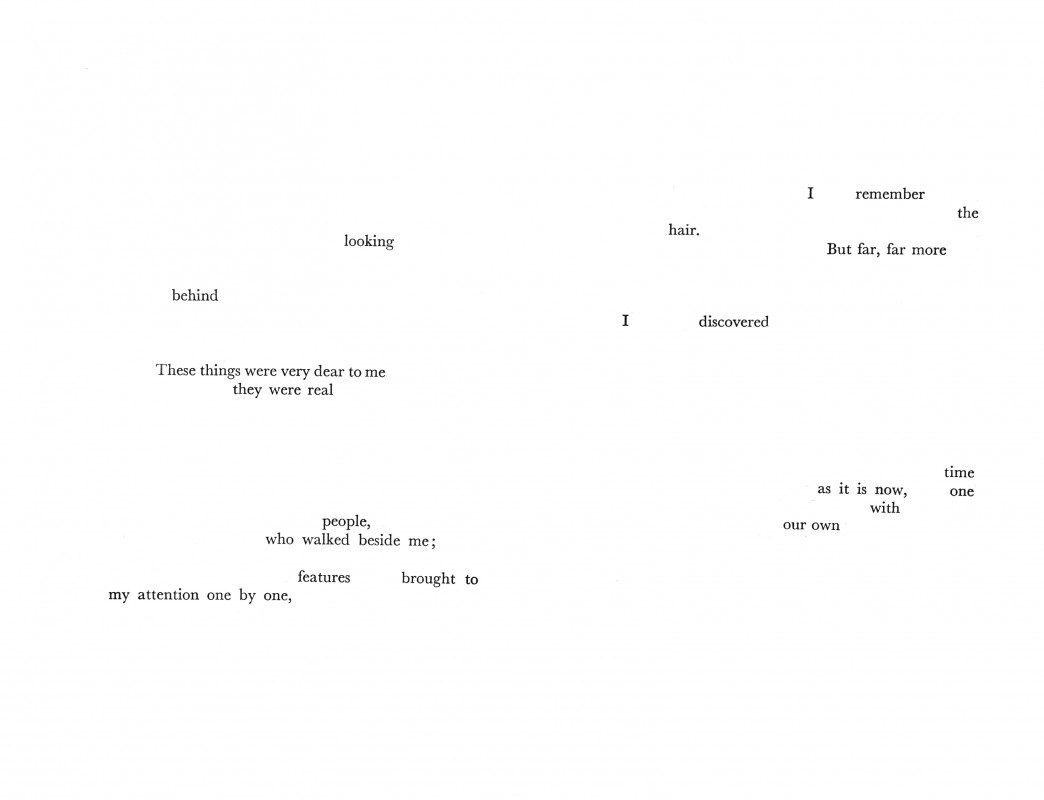
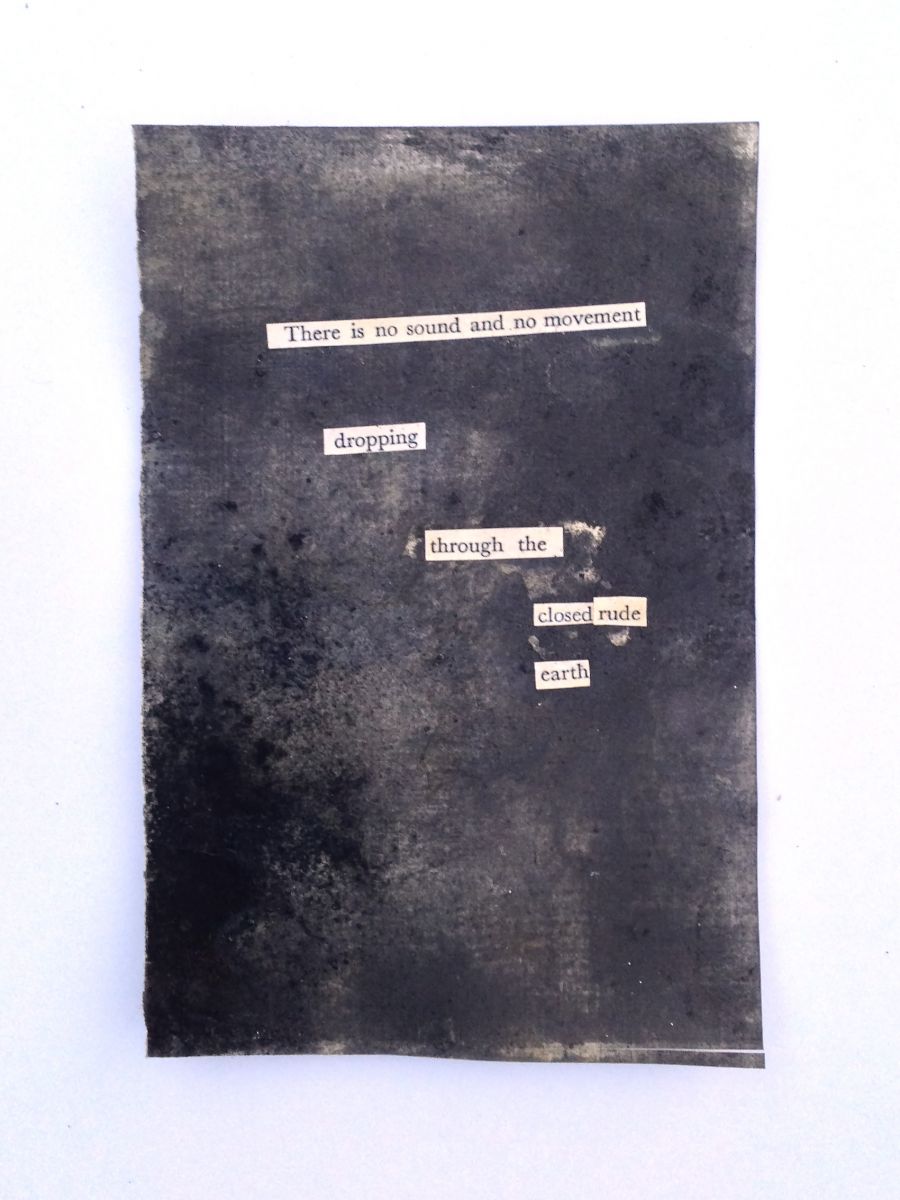
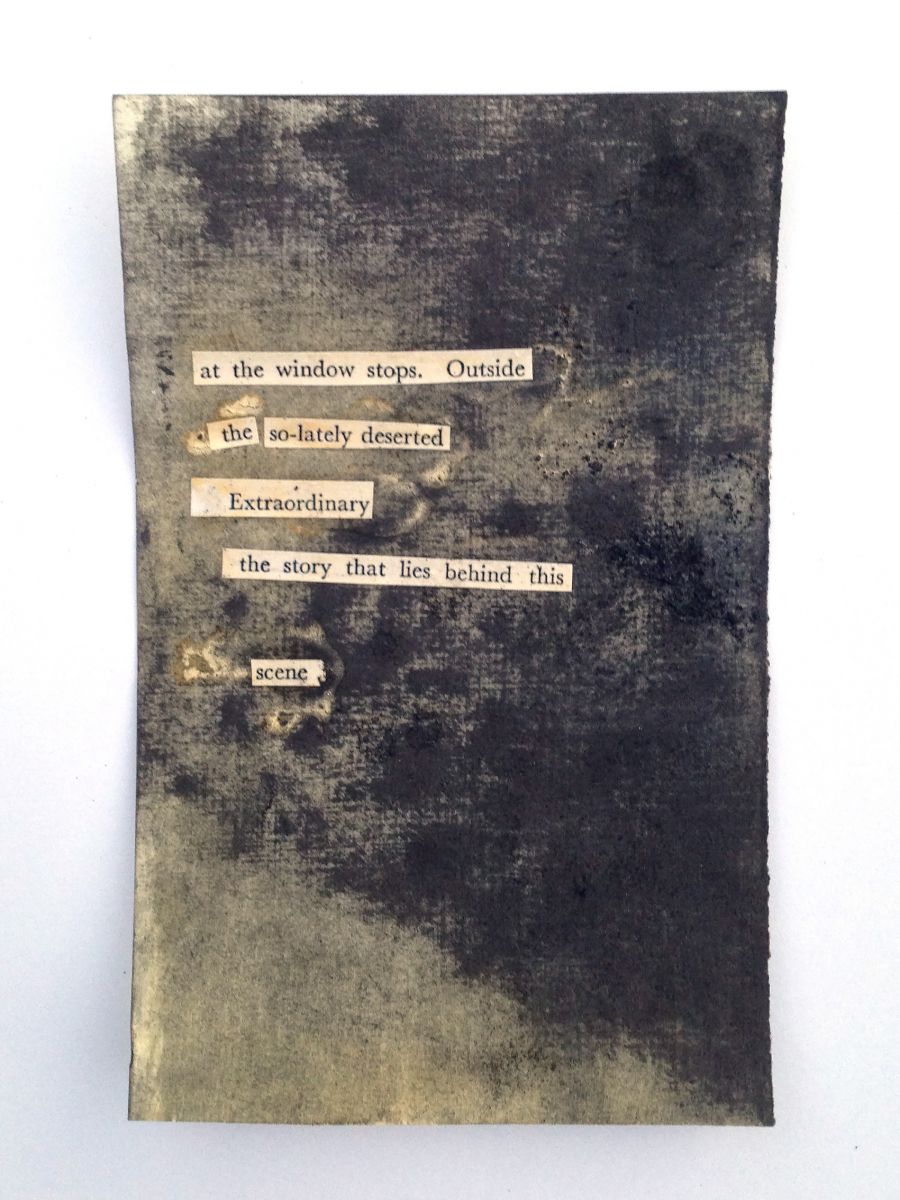
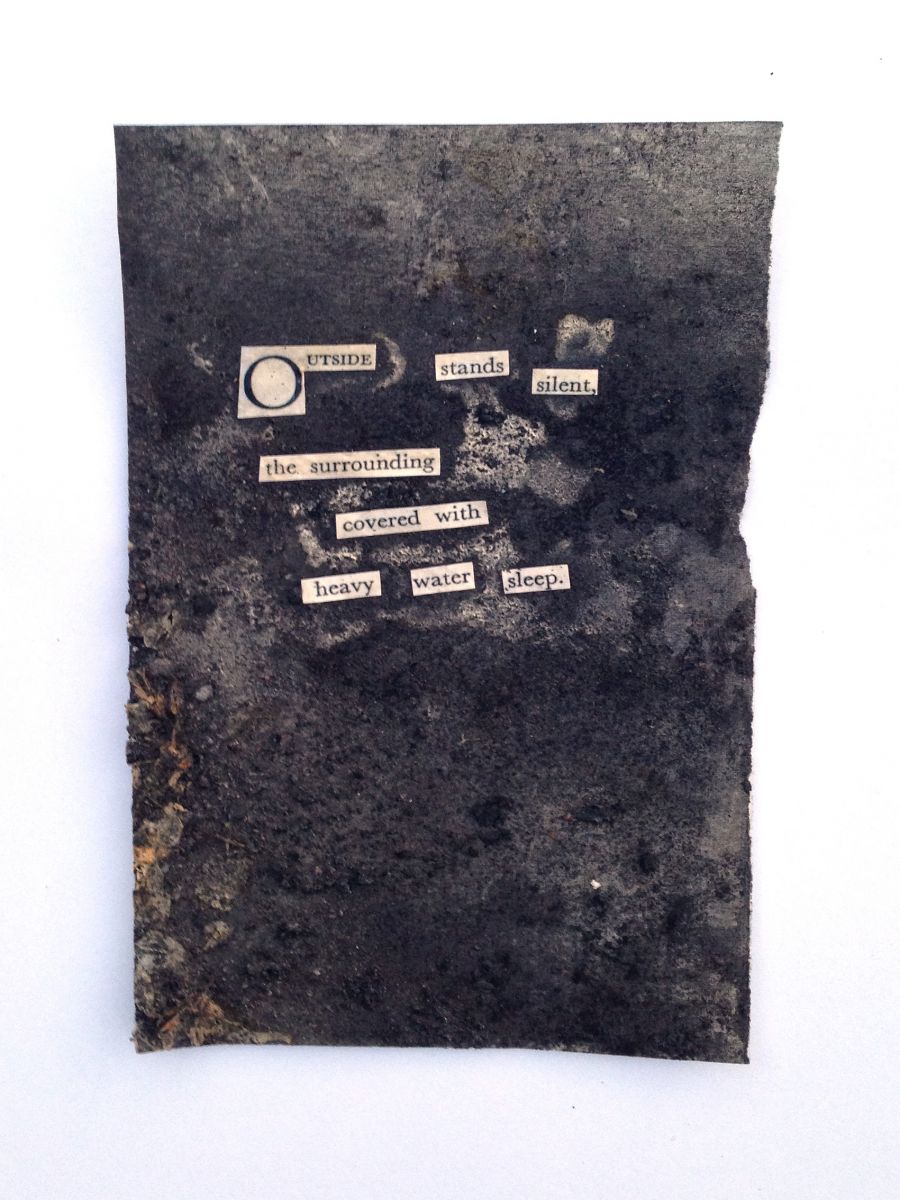
I began by creating ‘blackout poems’ which, although I liked the derived text, didn’t do what I wanted the work to do, that being, to establish some kind of link with the past – with Czerniakow.

I tried incorporating these texts into other works…

…and although I liked the work, they didn’t serve the purpose.

I realised I was, to some degree, putting the cart before the horse. I was falling into bad habits – thinking about the form of the piece much too soon. What I needed was go back to what I had learned during my MA and research the idea properly; that meant starting with looking at the book which I did through a Goethean Observation of Grey Owl’s ‘Pilgrims of the Wild’.

I’d always thought of the text when thinking about this piece, but in doing the observation, that completely changed. As is often the case with these observations, a few words from the thousand or so written stood out:

I’m aware of the book’s weight.

There is an exchange of sorts.

When the inscription was made it became something else – a gift.

The book lends its weight; the weight borrowed from another time and given to this.

From these few words I get: Weight. Exchange. Gift.

Empathy is a kind of exchange where you swap with another to understand the predicament they are in. What you can swap or exchange is of course limited, especially when dealing with events which are both unimaginable in their horror and/or set in the distant past.

Art itself is an exchange and that is where I want to focus my attention.

That is the starting point of this piece: not the text, but the weight of the book, the exchange. So I weighed the book: 668 grams.

Exchanging the weight of the book for the weight of something else and interpreting that weight in the form of something new is also a means of illustrating the idea of taking someone else’s life/predicament and in some small way reinterpreting it within your own.

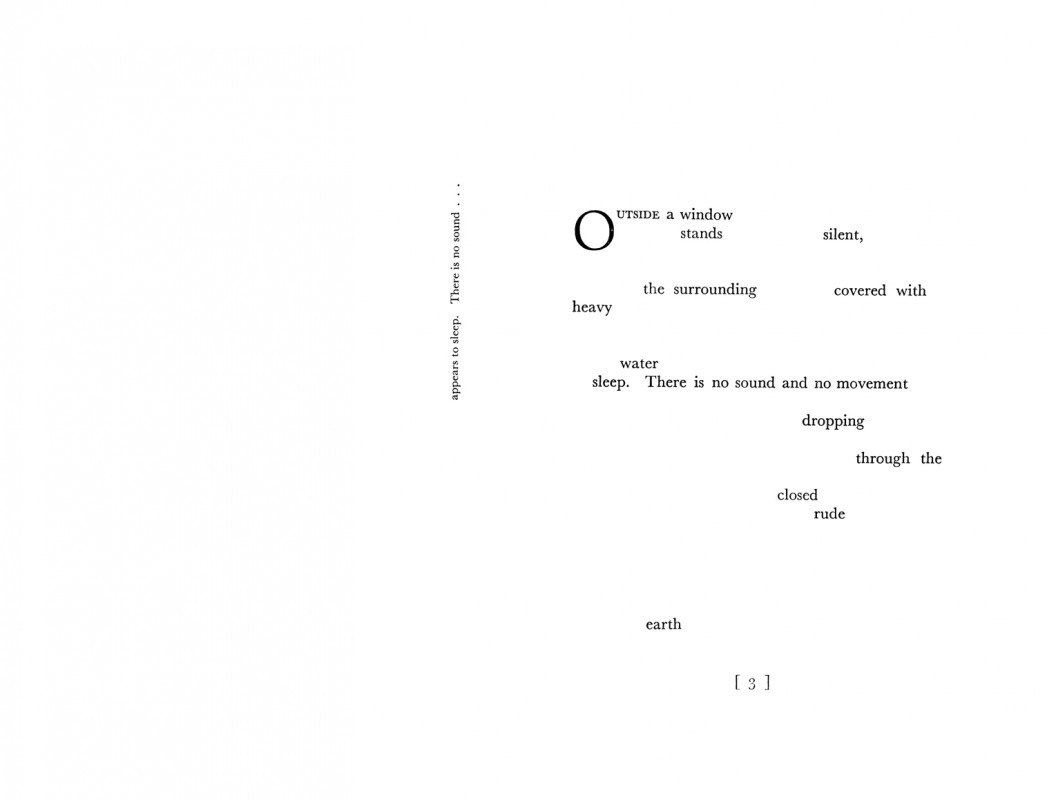
It’s also interesting that the title of the project, derived from the blackout poem, is Heavy Water Sleep (something which I saw a alluding to snow).

Filed Under: Heavy Water Sleep, Holocaust

Goethean Observation: Pilgrims of the Wild, 1935

April 7, 2020 by Nicholas Hedges

As with observations of this type, the text is written almost as a stream-of-consciousness, as a result of which there might be a fair amount of repetition, dropped sentences, and parts that won’t make an awful lot sense! But that is the nature of the thing; to find a hook – a few words that might be the foundation of something else.

Goethean observation of a book; Grey Owl’s ‘Pilgrims of the Wild’, published in 1935.

1

The object is a book with around 300 pages. It’s hardback, grey with a fair amount of wear and tear; mottled with patches of lighter grey. The spine has the title and the name of the author and publisher. The front and back covers are both blank with the same discolouration.

Most of the pages are taken up with text but several of the pages contain black and white photographs.

As I flick through the pages my eyes jump from word to word, picking out fragments of sentences.

Never
Barricade
Next day
I did
Discovered
Lady
We watched the two V’s

I read in my head – aware of the sound of the boiler, the clock on the wall and the odd car outside; not so many due to the current pandemic and the restrictions placed on movement.

I can, as I flick through the pages, smell the age of the book; the smell of fusty paper. The spine and covers crack as I turn them. The paper is yellowish with age.

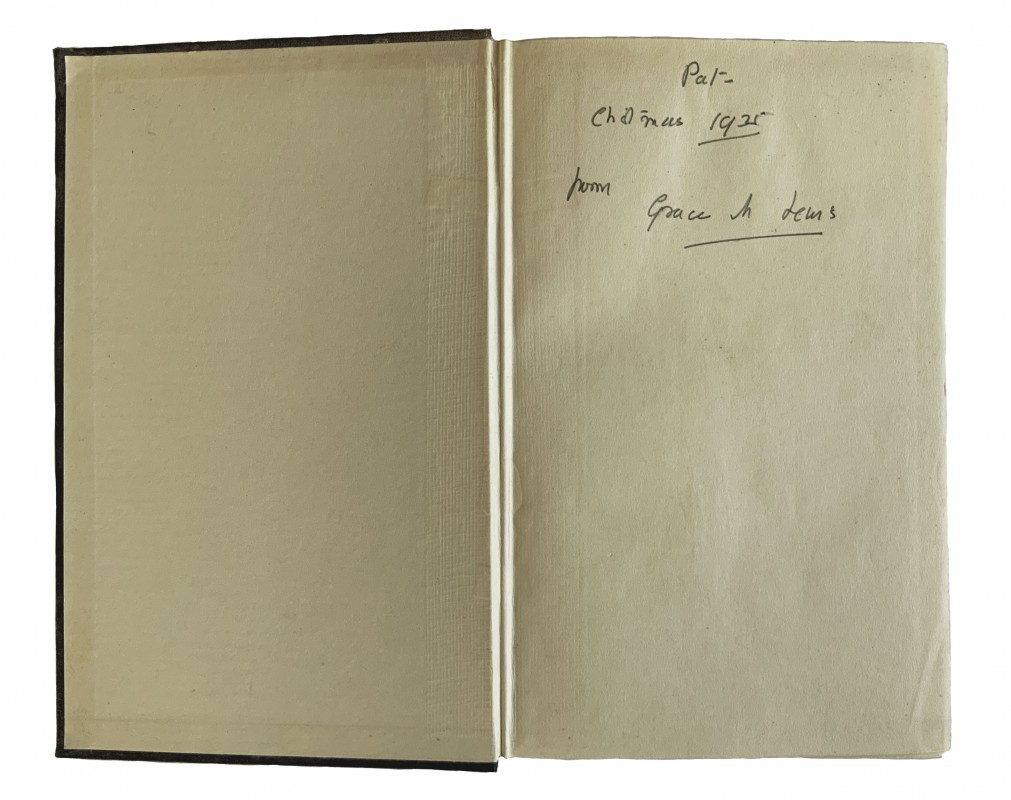
On the first blank page is an inscription:

Pat,
Christmas 1935
From Grace M Jones

A Christmas present from 85 years ago.

I’m aware of the book’s weight.

2

Reading the inscription one imagines two things; the moment the inscription is written by the giver and when it’s read by the recipient.

Grace wrote the words with a fountain pen, blew on the words and then, having left it to dry, closed it again, smoothing the cover which I have just done. Is it wrapped? Is it unwrapped? Was it given in person? Was Grace there when Pat opened it?

Who was Grace? Who was Pat?
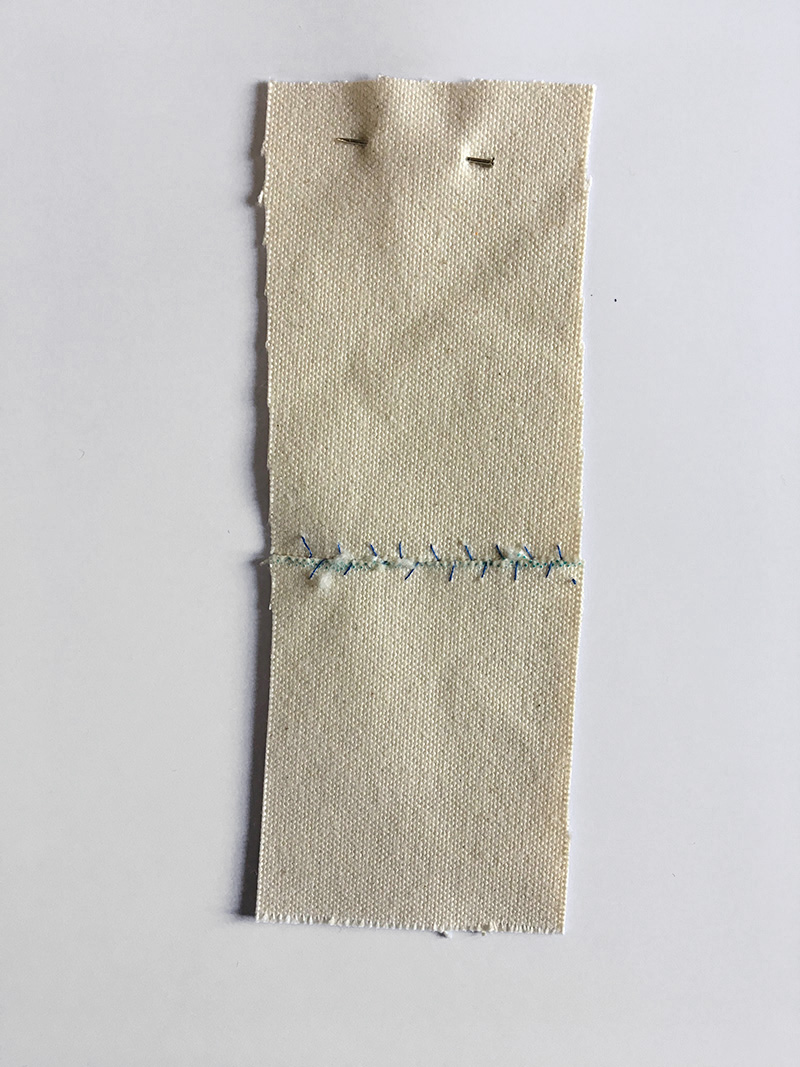
How did they know each other?

The book is a token of friendship.

There was a point when the first page was blank. Before the inscription was written. Then the book was just that – a book. When the inscription was made it became something else – a gift. The words of the inscription became as much a part of the book as the words of author had written and published.

What did Pat do on receiving it? He/she probably flicked through the pages as I just did – their eyes picking/snatching odd words from the pages.

Maybe he/she smiled?

Maybe he/she said thank you.

The book would be put down and Christmas 1935 would begin its drift into the distant past.

Was it was read over a period of time or in one go? As I read the the words on a random page I find myself in time with Pat. When I read a sentence further on, I find myself in a slightly different time – perhaps a different place.

My reading is like a sound wave, aligning with another, becoming in phase with another.

This phasing occurs within the mind; Pat reads the book in 1935/36 – his/her words sounding silently in their mind.

When I read, the words too are sounded silently in my mind. It is in our minds that the phasing occurs. I become aware again of the sounds around me as I read the words, as I sound them in my mind, and I wonder what sound Pat could hear when she read these words.

And what of others who have read the book throughout the intervening years?

I read the last two lines of the book: The cycle goes on. The pilgrimage is over.

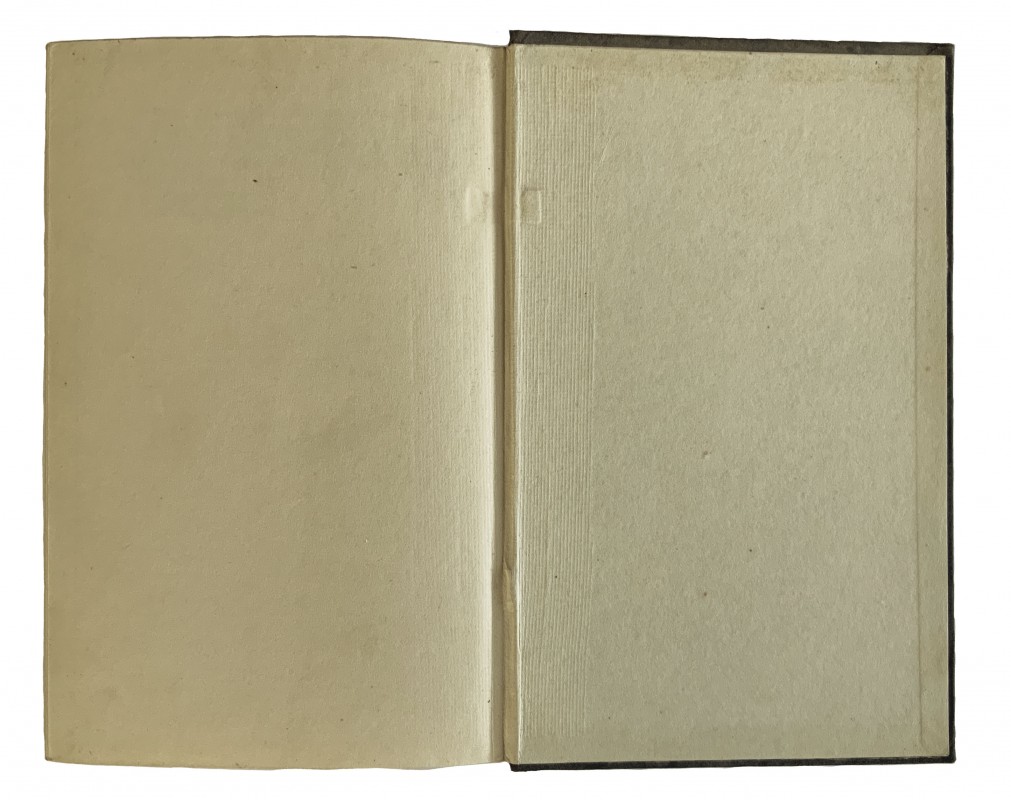
I turn over and rest my eyes on the blank pages.

I’m aware in my time of the foxing on the paper; the stains where the tape is showing through. I become aware for a second of the book’s production; the binding of it – the binder.

I close the book and put it down. It’s as if the book has collected time, as if each reading builds a layer within its pages; becoming with each reading slightly – imperceptibly – heavier.

The pages when looked at from the top and the side are like layers – strata within which these readings are buried.

Each word becomes an object and its shadow, The words, read that first time create an image in the reader’s mind and simultaneously become a shadow of that image within the reader’s mind.

It’s as if the words are taken from the page and replaced. There is an exchange of sorts.

Everything takes place within the readers’ minds, but there is the physical link of the book itself; its weight in my hands.

Back on the shelf it becomes weightless.

3

When you polish something, you take a very thin layer off the thing being polished – imperceptible.

Reading a book is like that. One is removing but then replacing at the same time.

Reading a book is like listening to a record but your voice comes out – silently in your own mind.

The book not only imparts, it records; it collects as much as it gives, in silence.

At the end of the book, the words have become shadows of the pictures the reader has imagined, but no less diminished as a result.

The blank page at the end becomes a mirror within which you see these imperceptible traces of everyone who has read that book before.

The book held lends its weight.
The book is a mirror which does not reflect.
I ‘polish’ to see, but it is only in my mind that I see.
My reflection is not revealed. It is kept.

The book lends its weight; the weight borrowed from another time and given to this.
The book is a mirror which does not reflect. I polish to see, but see only that in my mind’s eye.
My reflection is not revealed, only kept by the book.

Each reading is also an inscribing – a wordless inscription.
The gesture of inscribing without writing (shadows).

The gesture of the book is an inscribing without words on the blank page at the end before the book is closed.

The weight is relinquished,

A polishing to see what’s in my mind’s eye; like my reflection revealed to the book.

Filed Under: Goethean Observations

Nazareth O

May 31, 2019 by Nicholas Hedges

As part of my family history research (as described in my previous post), I chanced upon a name which leapt from the pages of an old parish register: Nazareth.

Nazareth was the wife of my 8th great-uncle William Oakley (born in St. Thomas’ parish, Oxford in 1673), and as things stand, that is all I know. But the more I’ve thought about her and who she was, the more I’ve considered how long she’s been forgotten, completely lost among the brier of ancient words that make up entries in the register. It’s strange to think that that is all that remains of her life; a fragment – a name scratched in ink on the pages of a book.

Who was she? What did she look like? What did she do in her life?
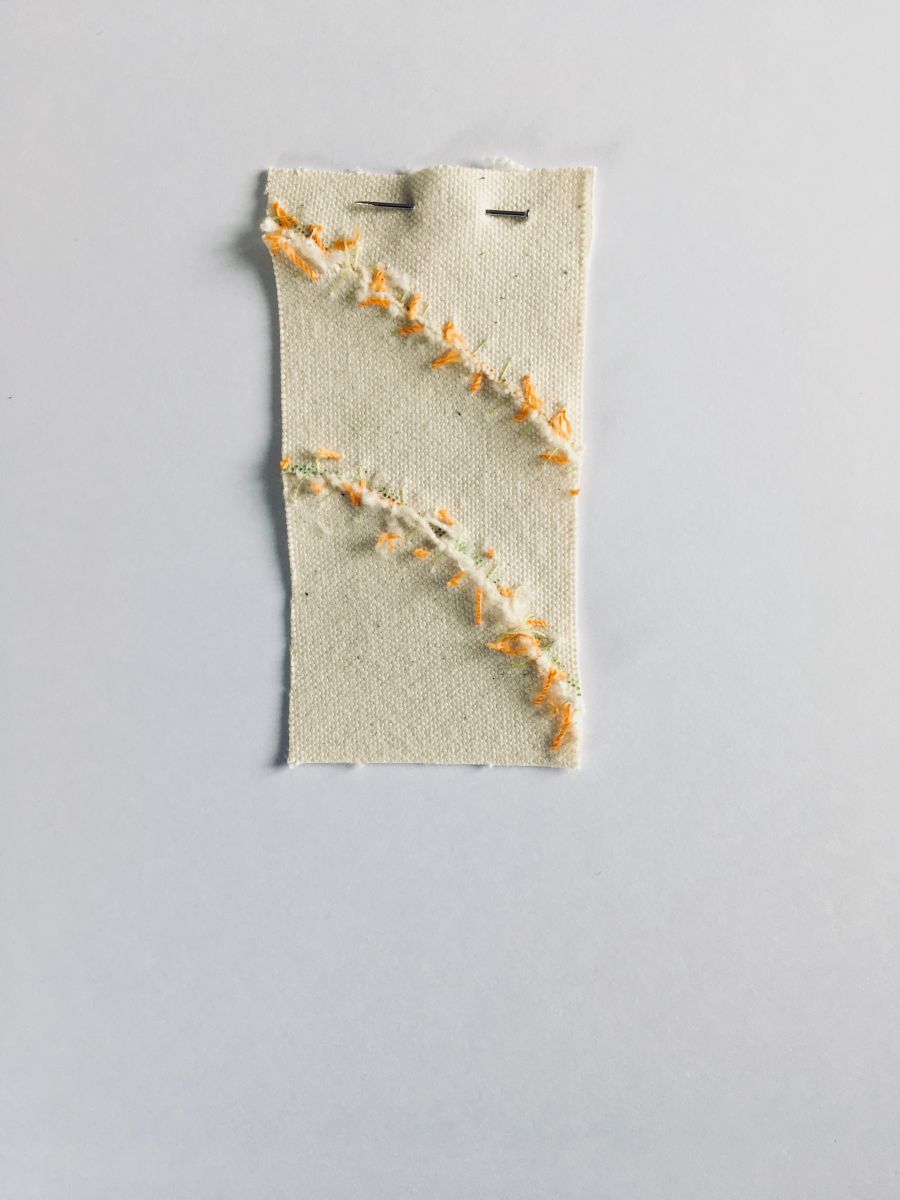
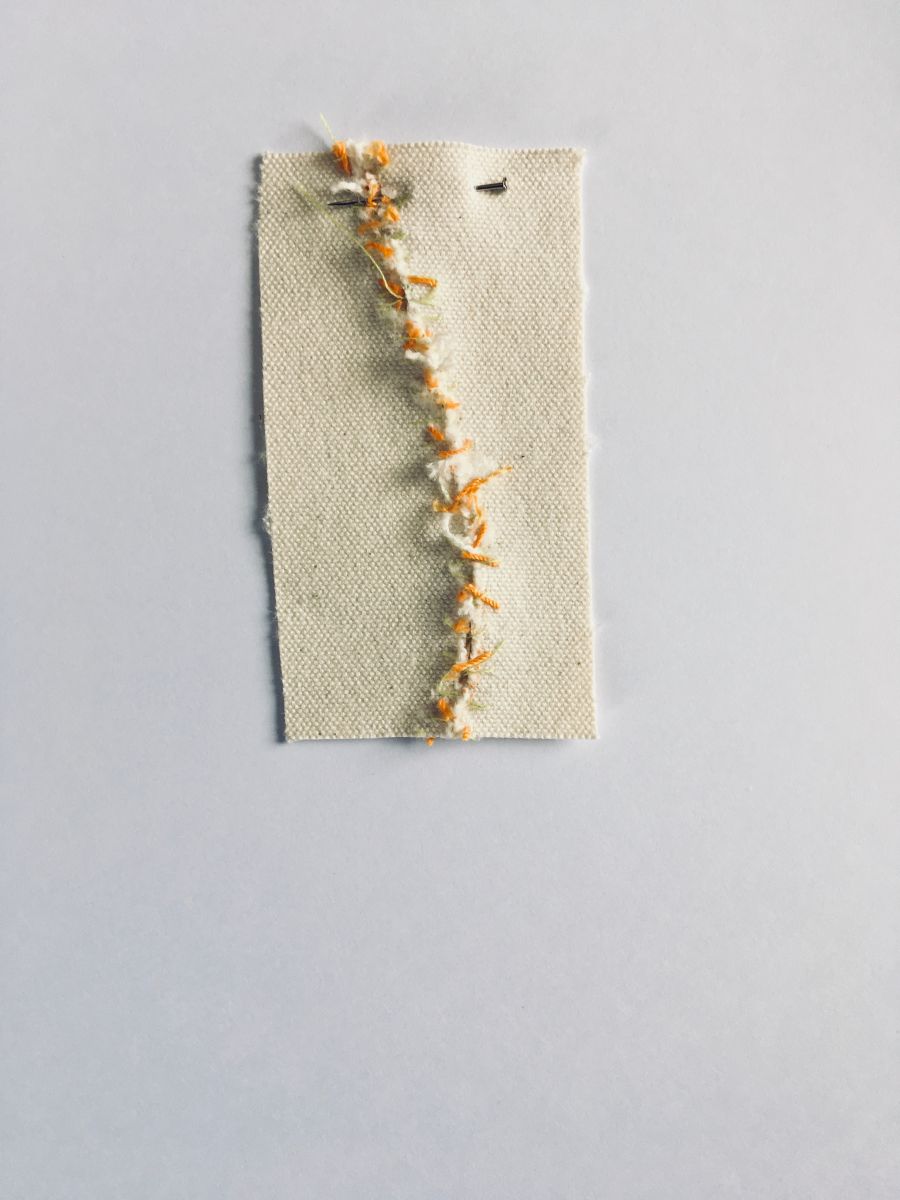
I thought then of recent work I’ve made which, based on textile fragments, aims to articulate the idea of a lost and distant life, lived well beyond that which remains. Nazareth Oakley is an example of someone who has all but been forgotten, but who, in the fact of her name written and later read in a register, is, in some small way, remembered and snatched at the last from oblivion.

I’ve been working on new ideas for work and a new piece (following on from a painting called Raspberry, named after someone else long since forgotten) which I have decided to call Nazareth O. 

Although this is very much at the research stage, I think giving it a title will help with its development. I’m beginning to see these developing into small packets, where the map is folded and things placed within based upon the title.

Filed Under: Family History, Paintings

Several Johns and St. Thomas

May 31, 2019 by Nicholas Hedges

I’ve recently returned to researching my family tree – something I’ve been doing on and off since 2007, and have been following a line on my maternal grandfather’s side in my hometown of Oxford. My mother, like her father and grandfather, was actually born in Reading and it was something of a surprise to find that her ancestors (on her own paternal grandfather’s side) originated (as far as extant records show) in Oxford – the town to which she moved as a child with her family in 1952.

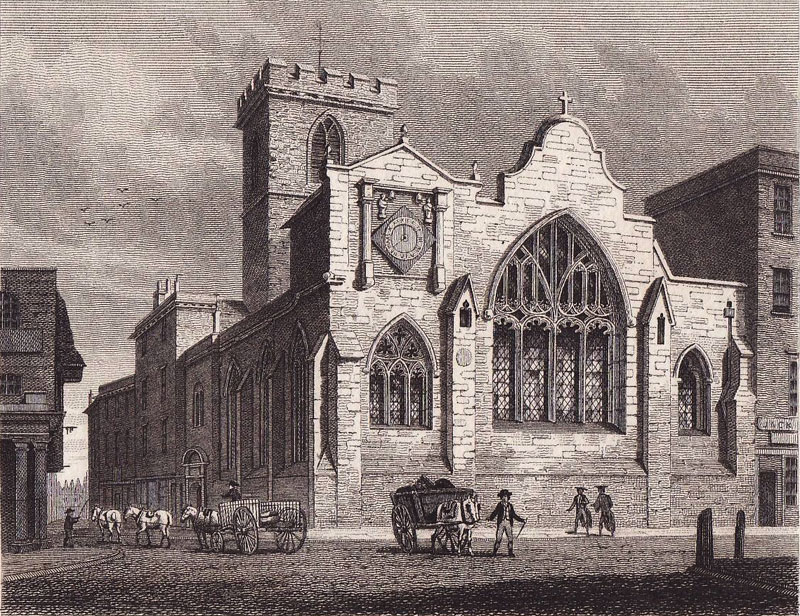
It was my great-great grandfather, Jabez Stevens who was the first Stevens to be born in Reading in December 1847 – his father, John, the last to be born in Oxford, in the parish of St. Aldates, in 1811. His father, my 4th great-grandfather, was born nearby in the parish of St. Martin’s in 1776 and baptised in a church that no longer stands (see image below), save for its 14th century tower, now known as Carfax Tower.

His father was also called John and married Lydia Borton in 1764 (Lydia was the daughter of Samuel Borton, an Oxford innkeeper who, along with his father (Richard) before him ran The Dolphin Inn in St. Giles). That was about as far as I’d got, but with the online availability of parish registers, I’ve now taken the line all the way back to another John Stevens, who, although I don’t know when he was born, died in St. Thomas Parish, Oxford, in 1681. This means of course, that he would have grown up in what was a tumultuous time in the city’s and country’s history – that is, the English Civil War.

John and his wife Jane had a son, another John, who was also born in St. Thomas’ parish in 1667. In 1695, he married Mary Oakley, born in the same parish in 1668 and together they had another John (1701-1747) who married another Mary and who had themselves yet another John who married, as I’ve written above, Lydia Borton in 1764.

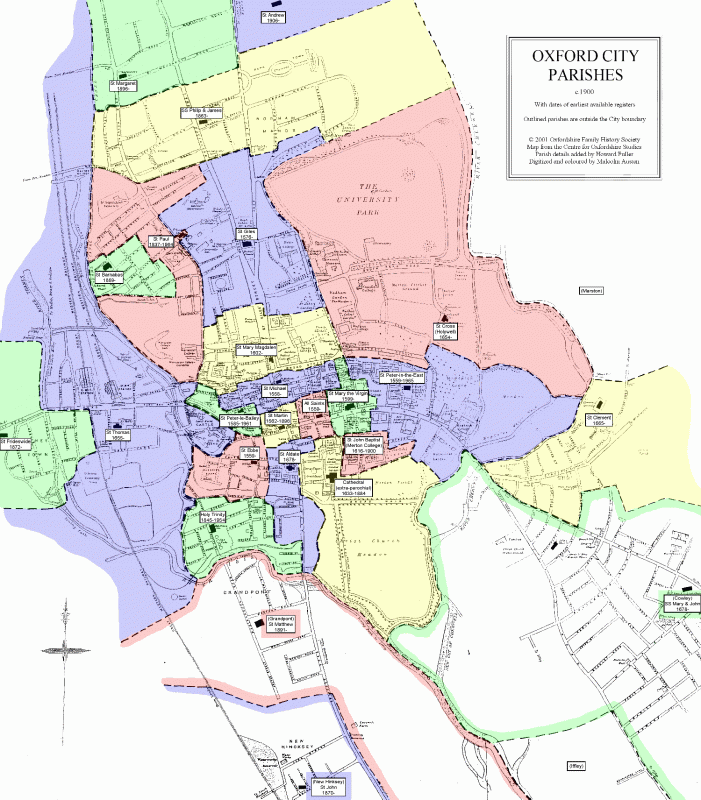
St. Thomas’ Parish occupies an area which with the clearance of St. Ebbes in the 1960s and 70s and the subsequent development of the Westgate Shopping Centre was almost cut away from the rest of the town. Today it includes the castle and the ice-rink as well as Oxford station and of course, St. Thomas’ church which still stands. I think of it still as a nowhere place, a kind of hinterland where people enter or leave the town. Growing up, it was little more (in my mind at least) than a large car park and in my teenage years, the place where we’d go clubbing at The Coven. Discovering that my ancestors lived in this area over so many years has made me want to reconnect with that part of the city – first and foremost by visiting the parish church.

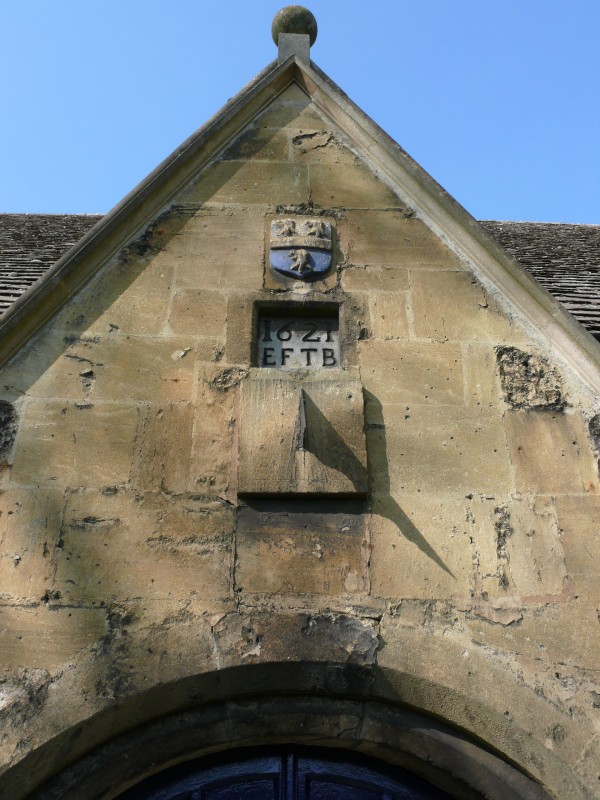
Looking online at information about the church, I found this photograph; an image of the gable of the south porch. The coat of arms carries the date 1621 and is therefore something my ancestors would have seen with their very own eyes.

Filed Under: Family History

Raspberry

April 27, 2019 by Nicholas Hedges

Continuing with my research, I’ve gone back a few years to some work I did on World War I, specifically an ‘observation’ made of a trench map and graphite paintings using that map as a basis for the work.

I’ve always liked the idea of using the map format as it articulates both the idea of place and of someone in that place. Combining it therefore with the recent work I’ve been doing on fabric tokens works well; the token describes an absence (and also, in some respect, a presence in that it’s a fragment of a lived life), while the map onto which it’s pinned articulates the space beyond that fragment. As I’ve written before:

“Every object in a museum, every relic (whether an object or building, or part of a building) is surrounded by space; that time and space from which they are now estranged. The fabric tokens in the Foundling Museum are likewise surrounded by space, into which the patterns seem to seep.”

The token, the seeping pattern and the map all combine therefore to articulate the ideas I’ve been working with over the years.

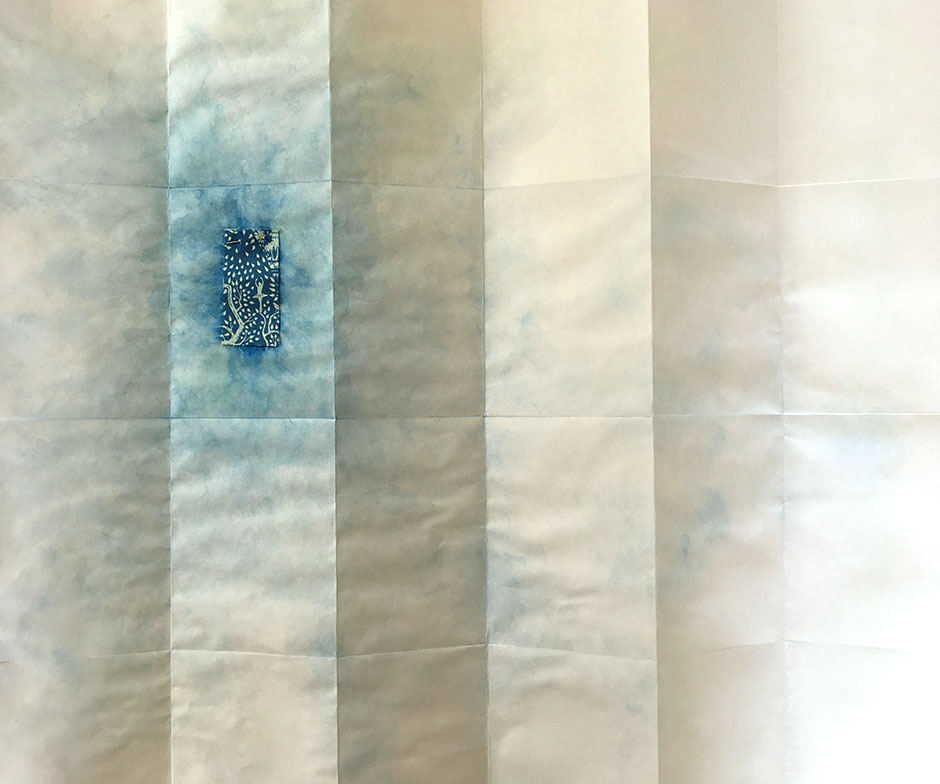
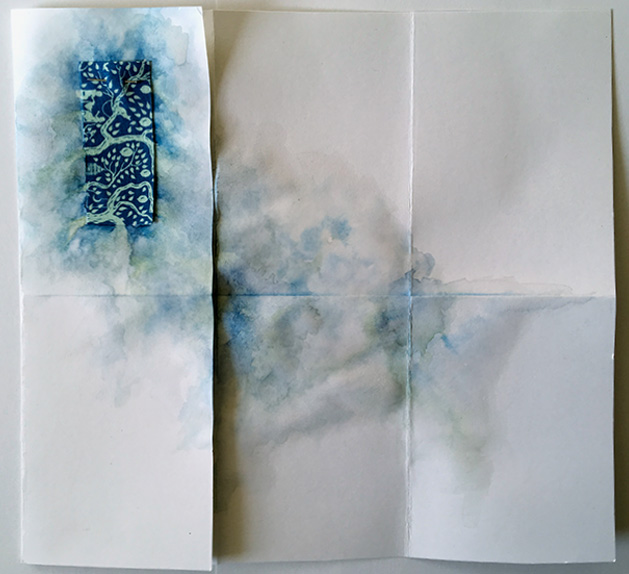
Using some folded paper, I made a sketch…

There is something about this pattern and the seeping image which somehow refers to childhood. Therefore I’ve decided to work this up into a bigger piece called ‘Raspberry’, named after a girl, Raspberry Hovel, who lived at the start of the 19th century  and who I discovered in my family history research.

This image also reminds me of mediaeval manuscripts  (the token being the drop-cap) and in some respects, the blankness surrounding the text is like the space I’ve described above. I’m always fascinated by annotations and marginalia in such works as they serve to bring us face to face with those who read those books hundreds of years ago. The seeping pattern becomes in a way a kind of marginalia.

Taking this further, I’m reminded of an installation I made in 2008/09 called ‘The Woods, Breathing.‘ This was based on my reading a book which Adam Czerniakow had read during the dark years of the Holocaust. A text work I made called ‘Heavy Water Sleep‘, based on that book, also lends itself perfectly to this form.

Filed Under: Paintings Tagged With: Annotations, czerniakow, manuscripts, marginalia, mediaeval, raspberry, The Woods Breathing

Tokens and Shadows

April 26, 2019 by Nicholas Hedges

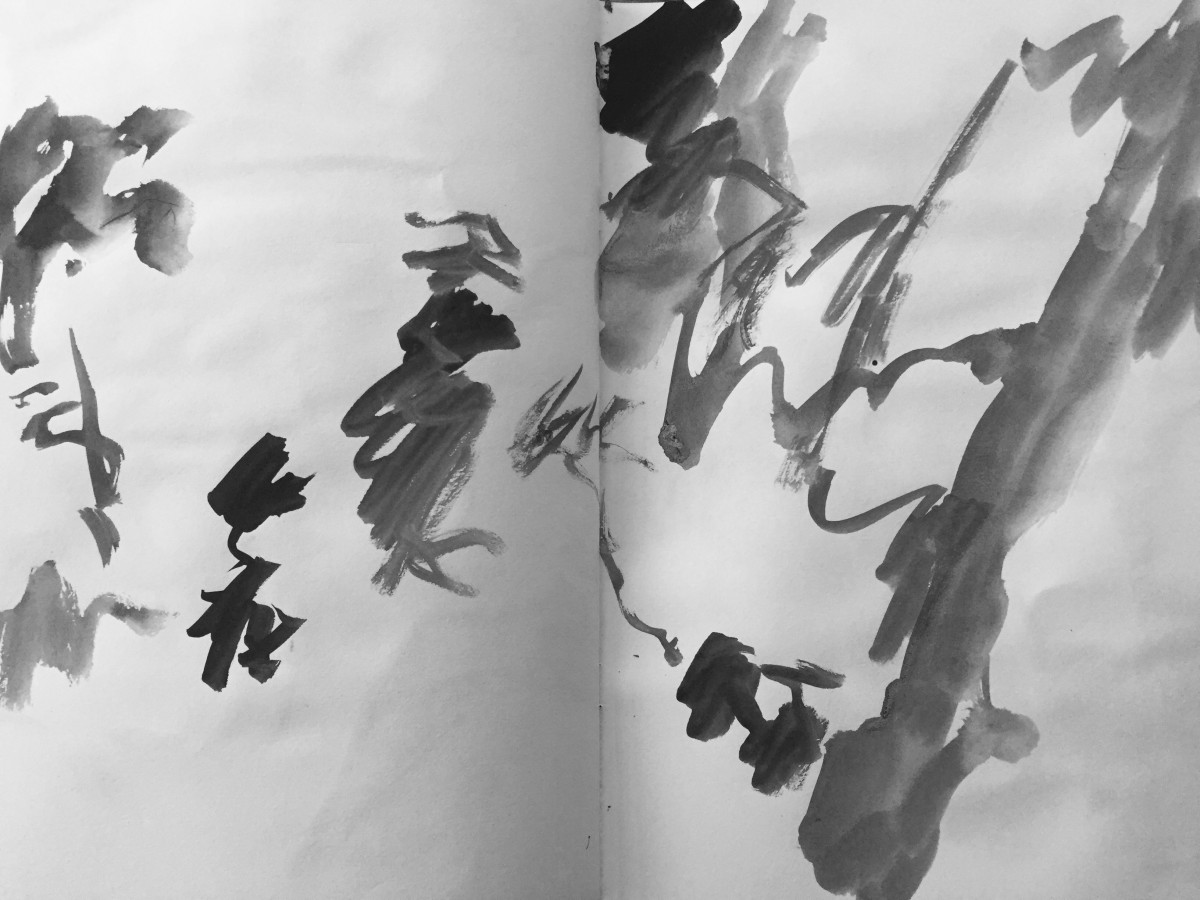
A while ago I made some sketches at Shotover Wood, tracing shadows with ink.

Thinking back to these and with regards the work I’m currently making, I looked again at these sketches and applied the idea of the quick, gestural painting to the patterns. The shadow paintings, like the related video work, were themselves about absence, of time passing, something being there (the woods at a specific time) and now being absent (revealed only through their shadows). This seemed to chime with the idea of the fabric tokens as also being about absence.

Filed Under: Present Empathy, Shadow Calligraphy, Shadows

Patterns Seeping (II)

April 21, 2019 by Nicholas Hedges

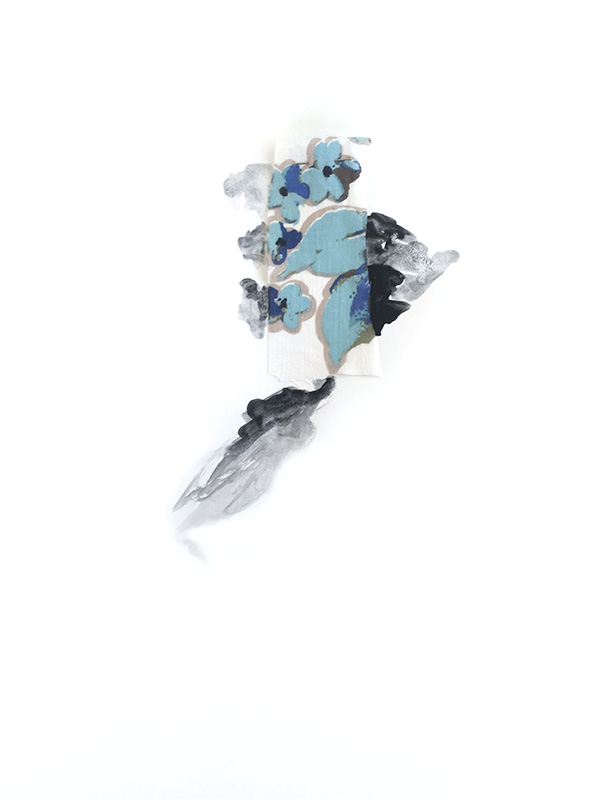
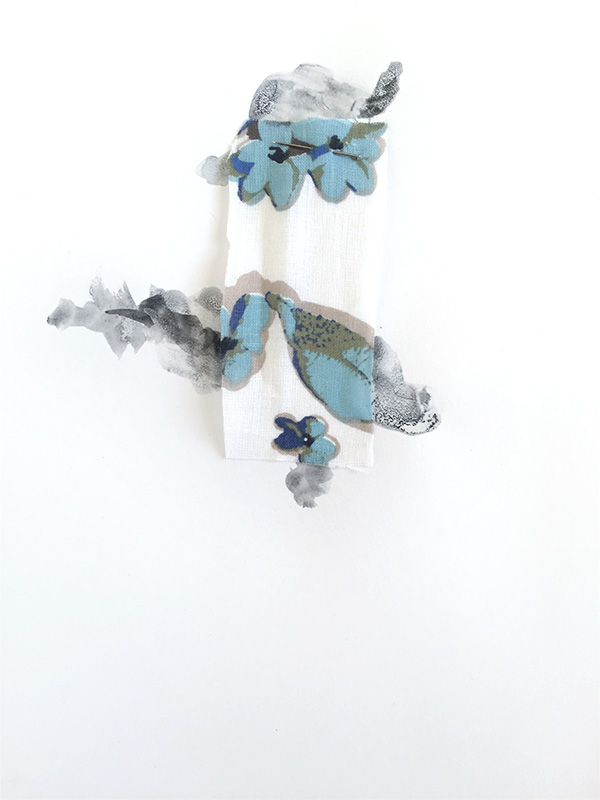
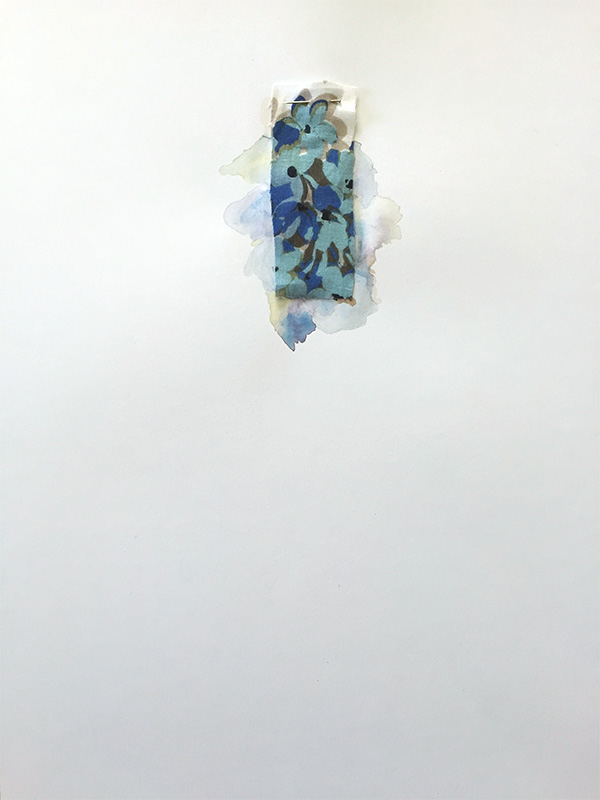
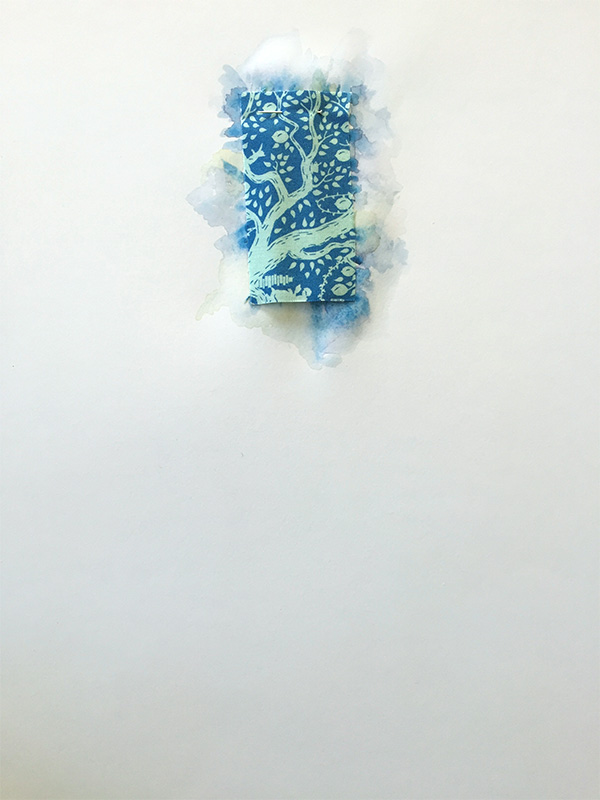
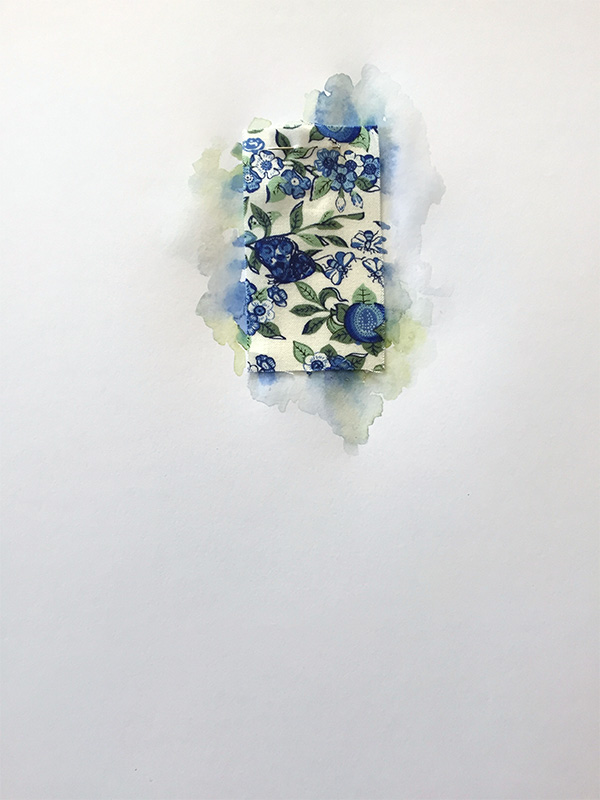
Following on from a previous blog (‘Patterns Seeping‘) I’ve been working on a few preliminary sketches using some fabric I recently purchased. The idea of the work is to show how when one is looking at an object (or any relic of the past), the mind tries to take that object back into the spaces it once occupied many years – maybe centuries – ago, and thereby to make a connection with those who have long since died.

With these ‘tokens’ therefore, the idea is to extended the pattern into the space of the paper surrounding it whilst avoiding a simple recreation of the pattern within those spaces. These are, as I’ve said, very much the beginnings of a thought process, but I like the way they seem to be heading.

Filed Under: Paintings

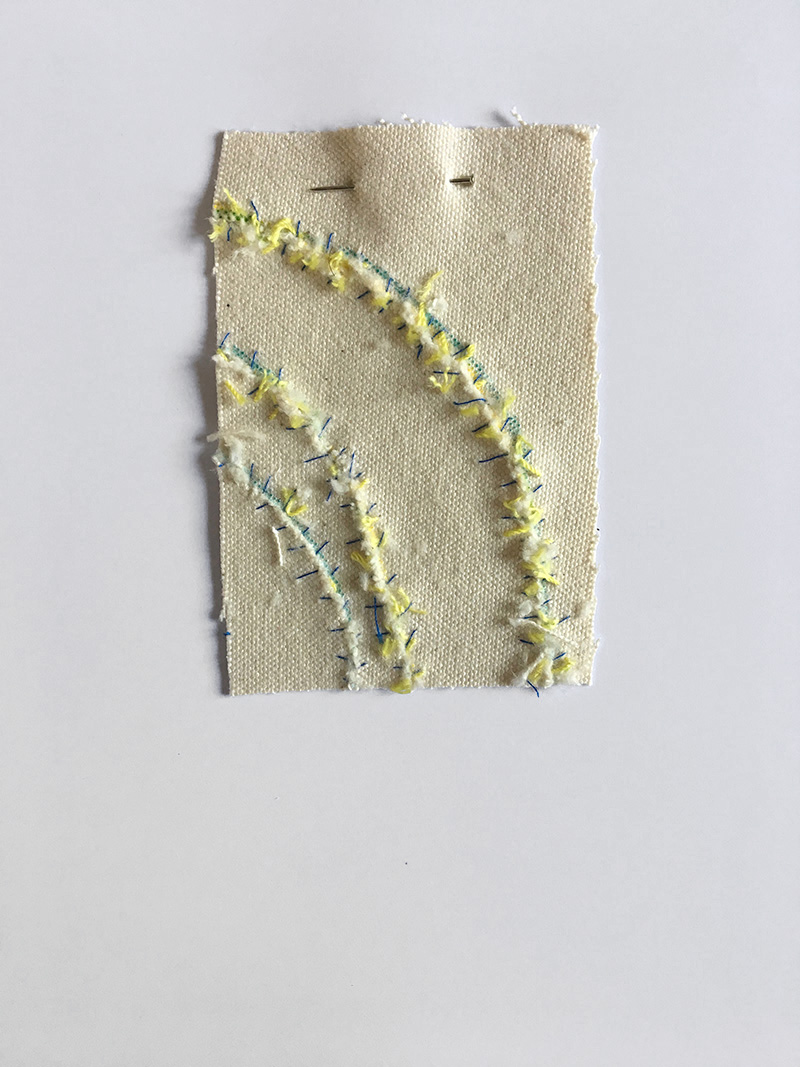
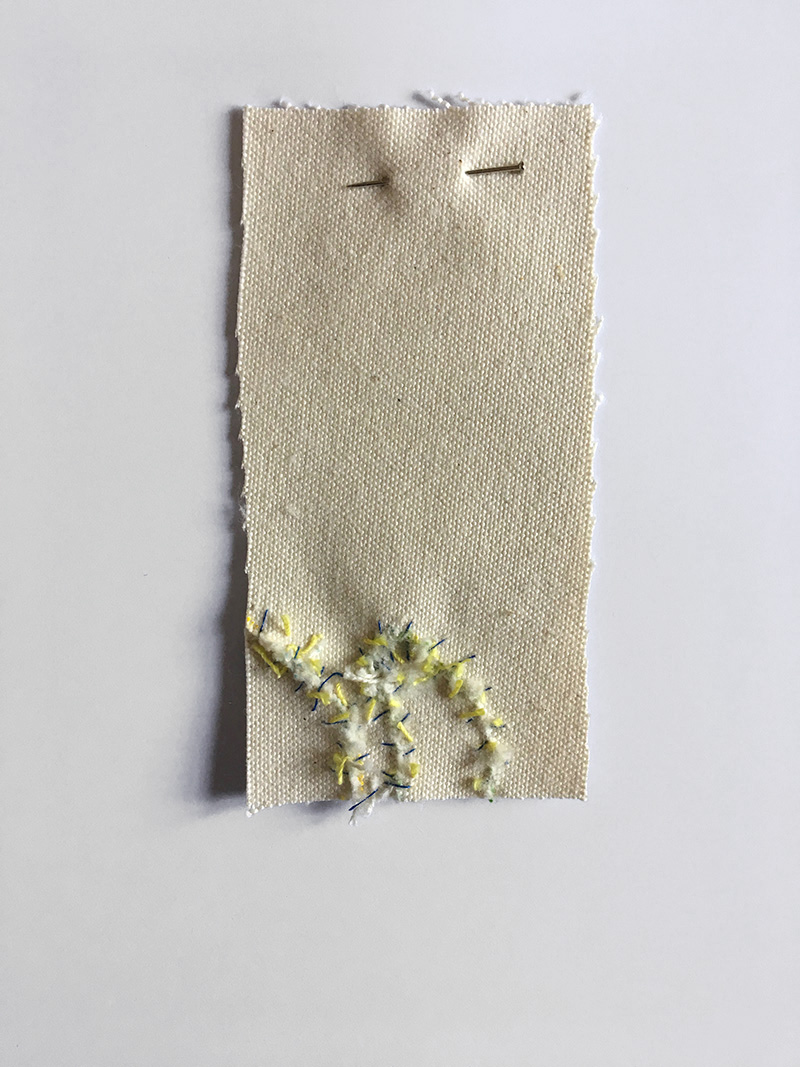
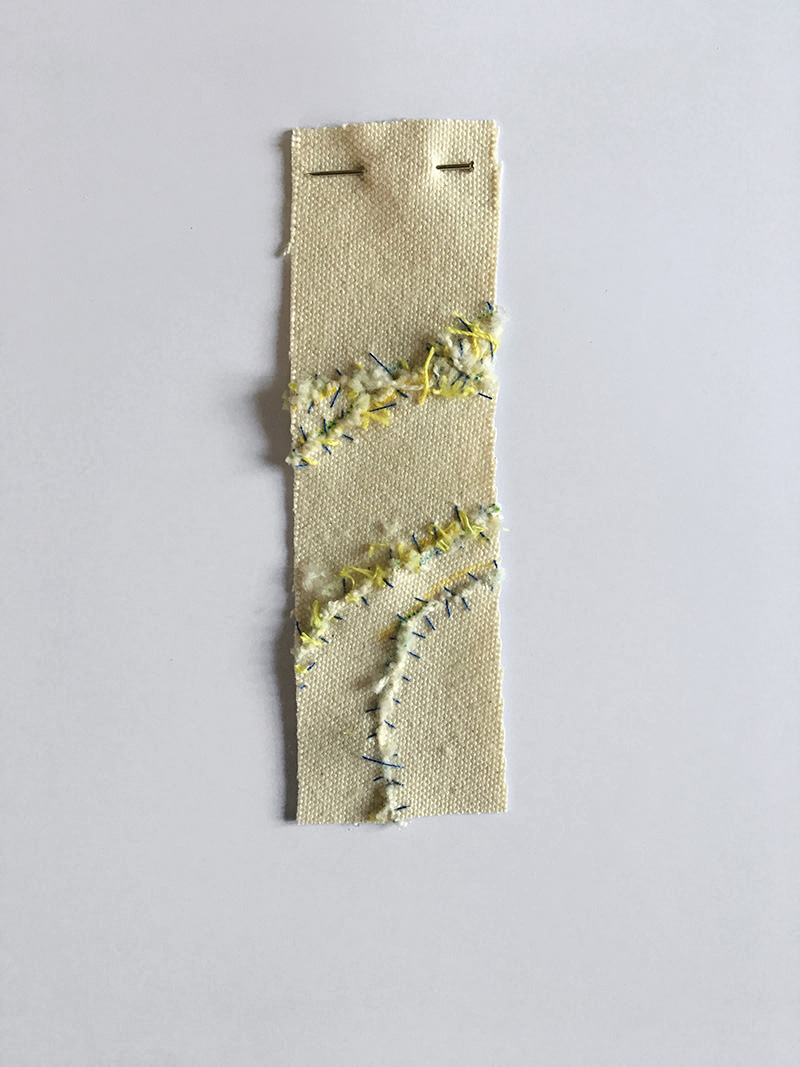
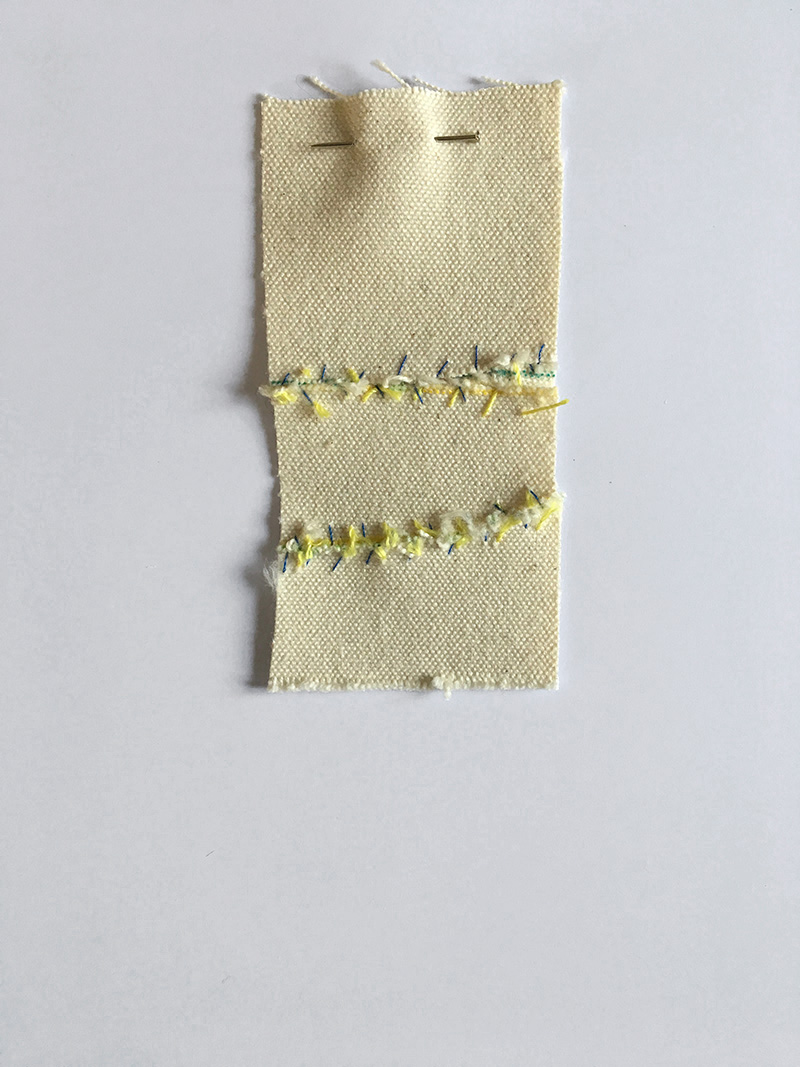
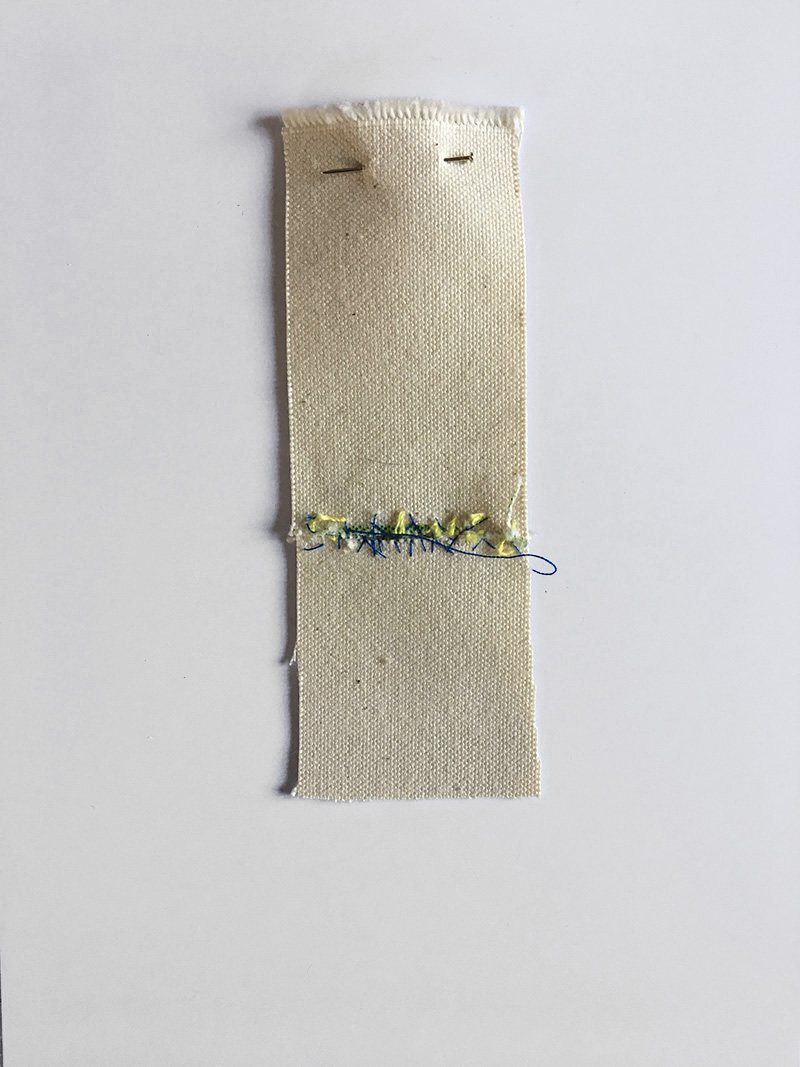
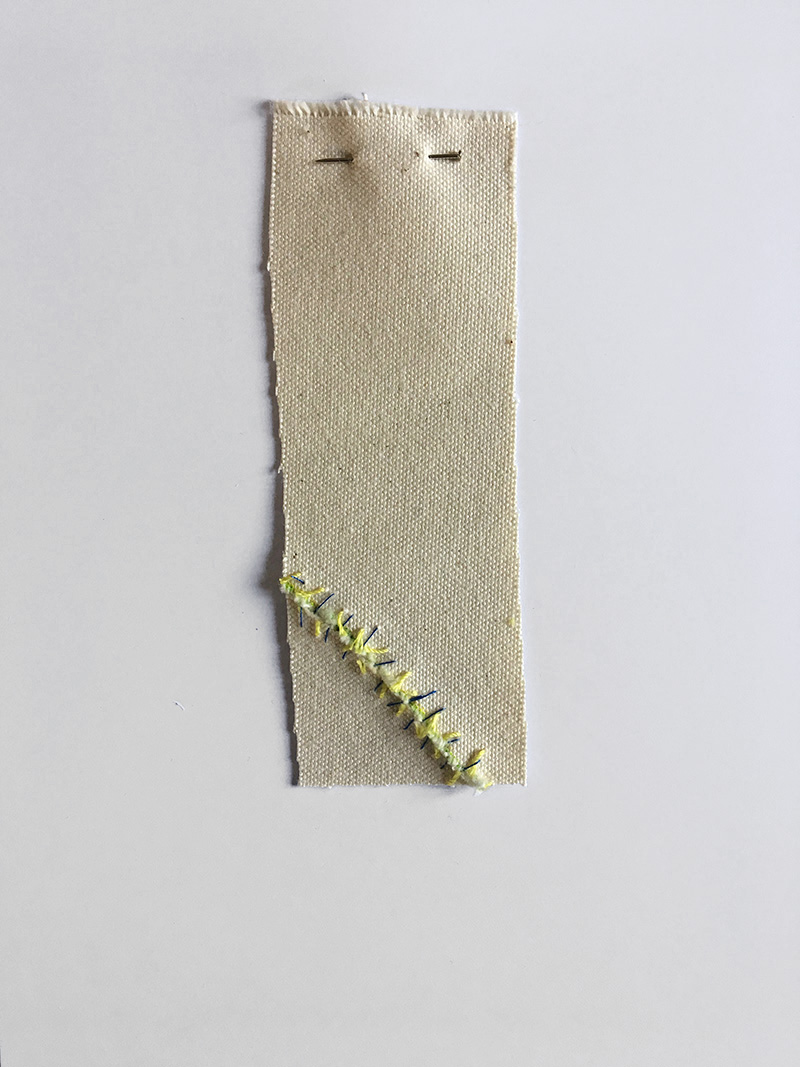
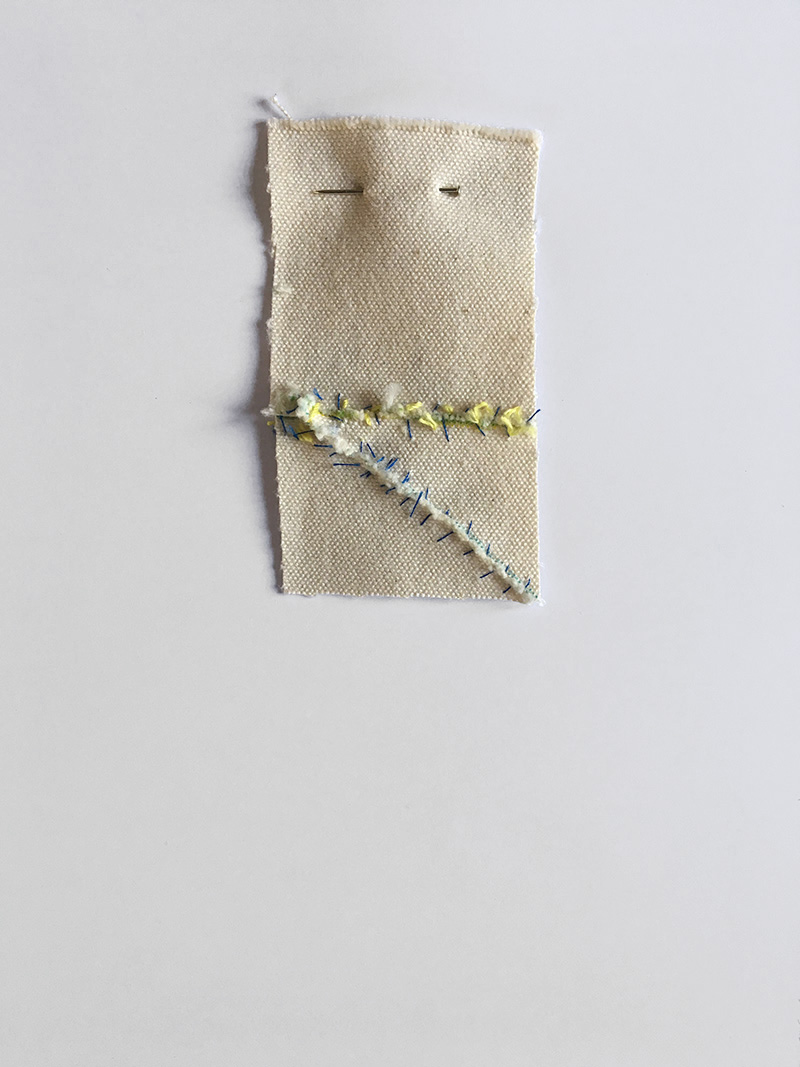
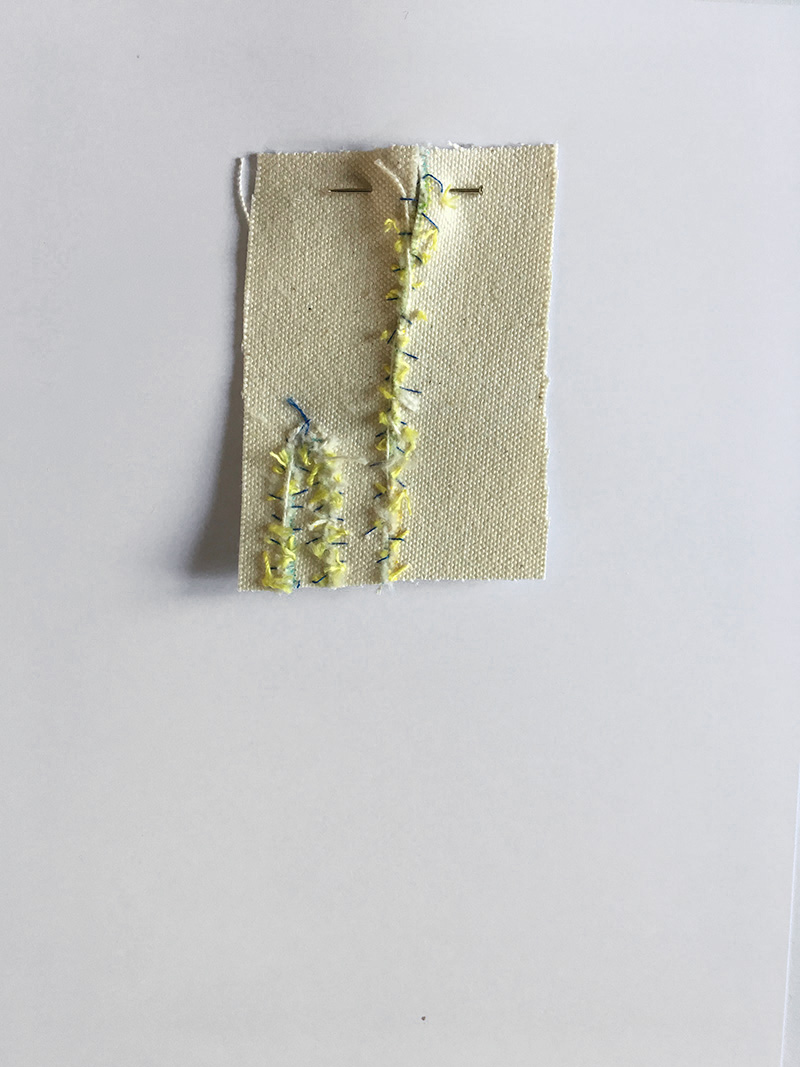
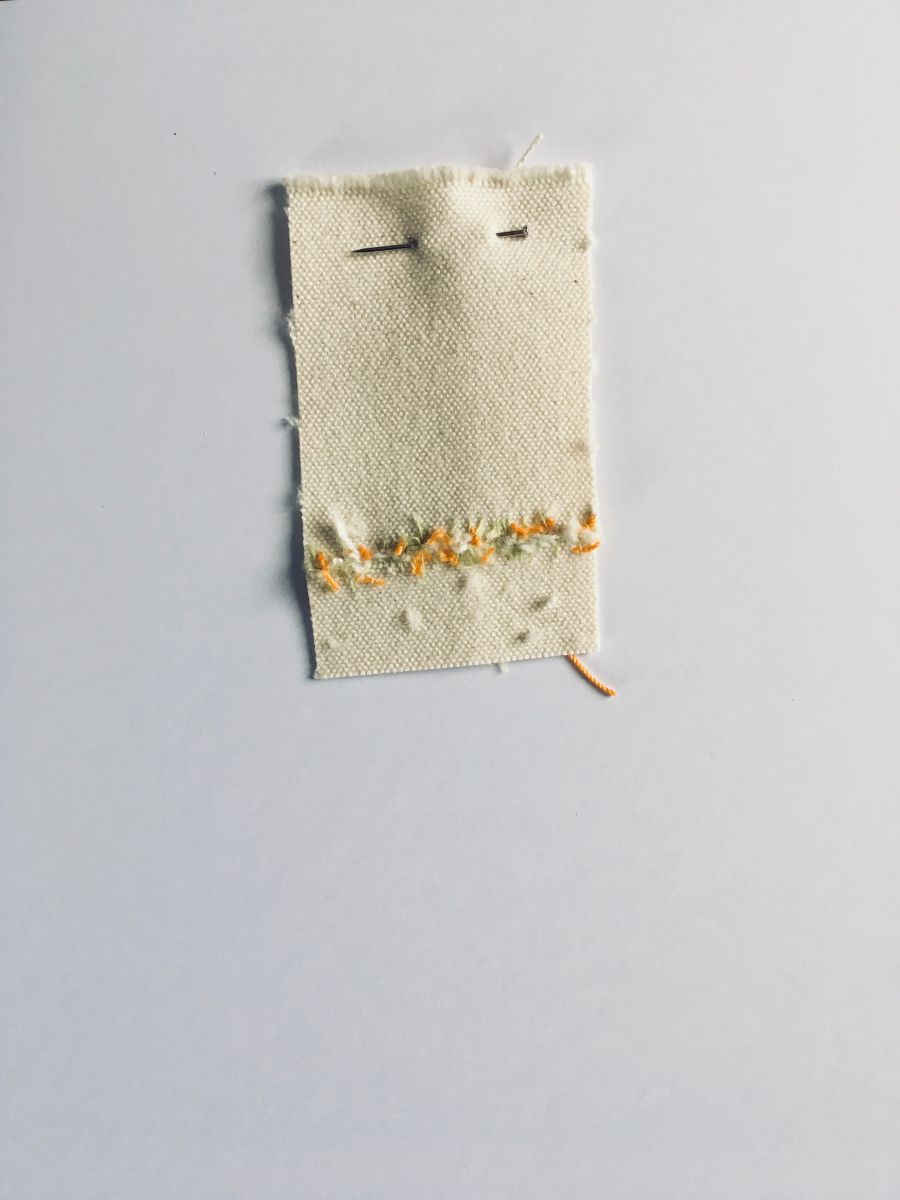
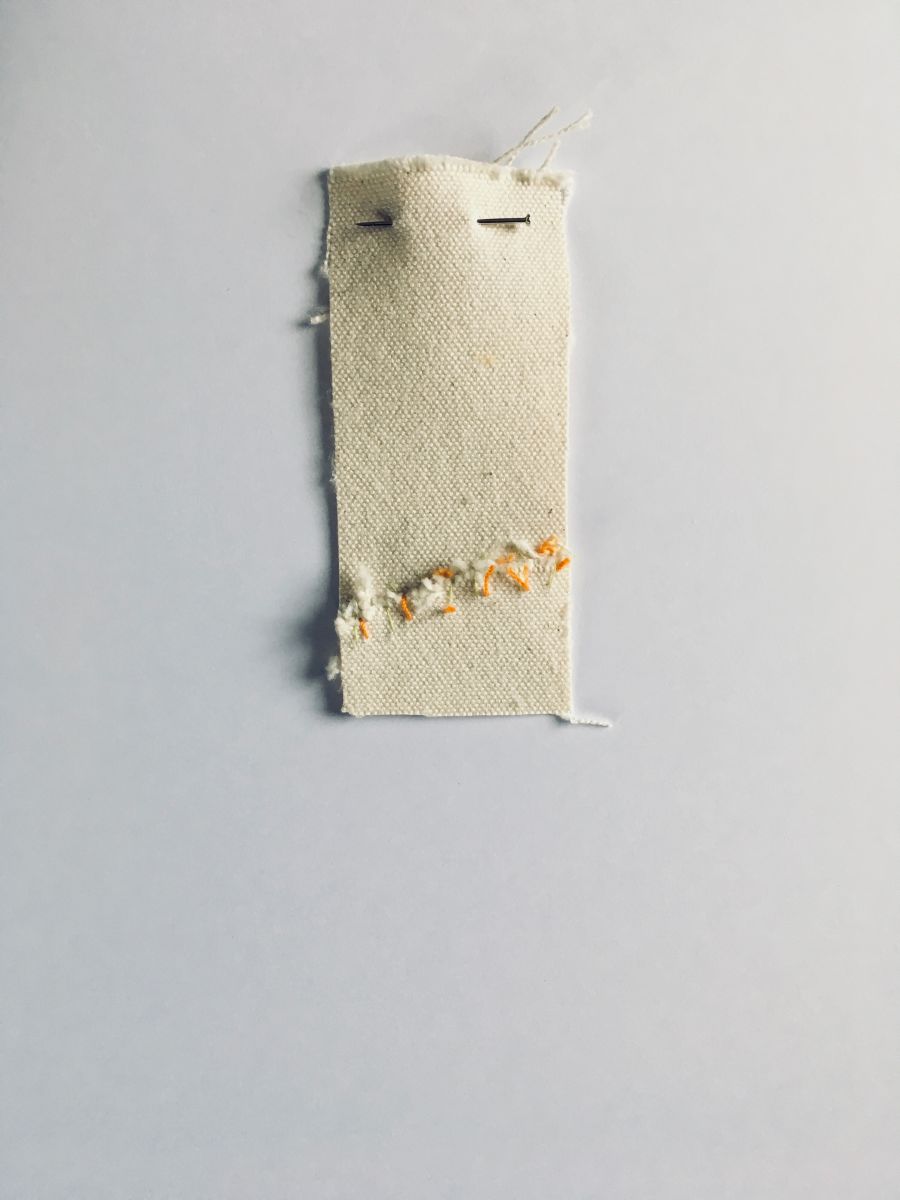
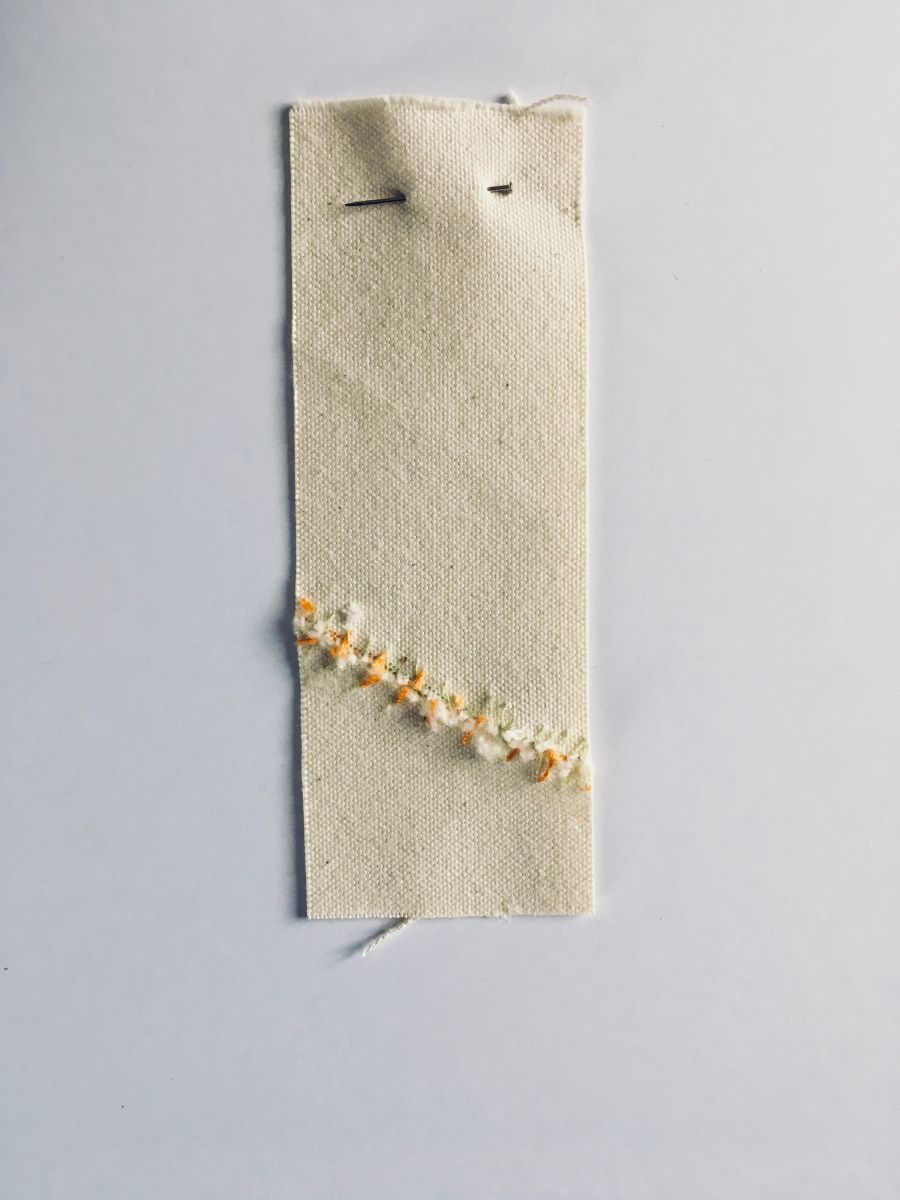
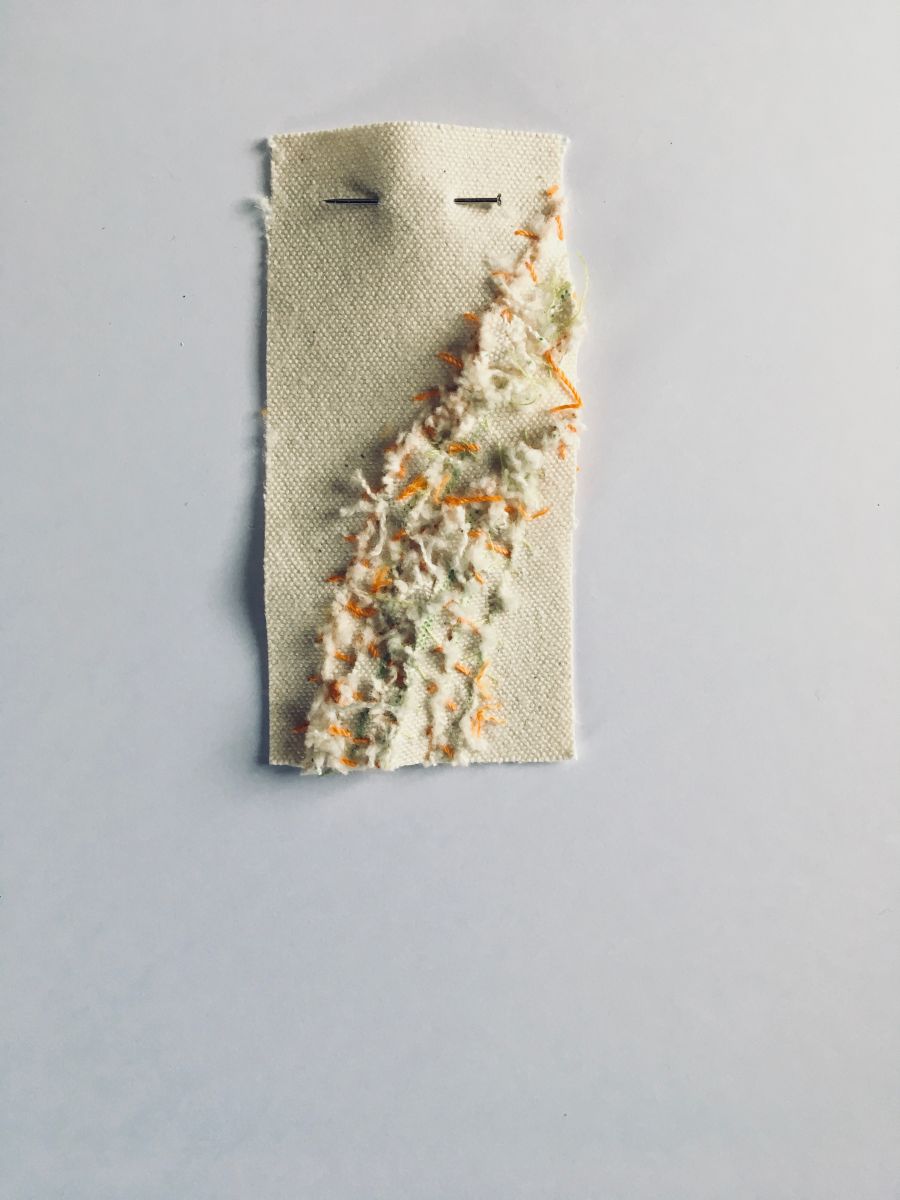
‘Missded’ 4 – Tokens

April 17, 2019 by Nicholas Hedges

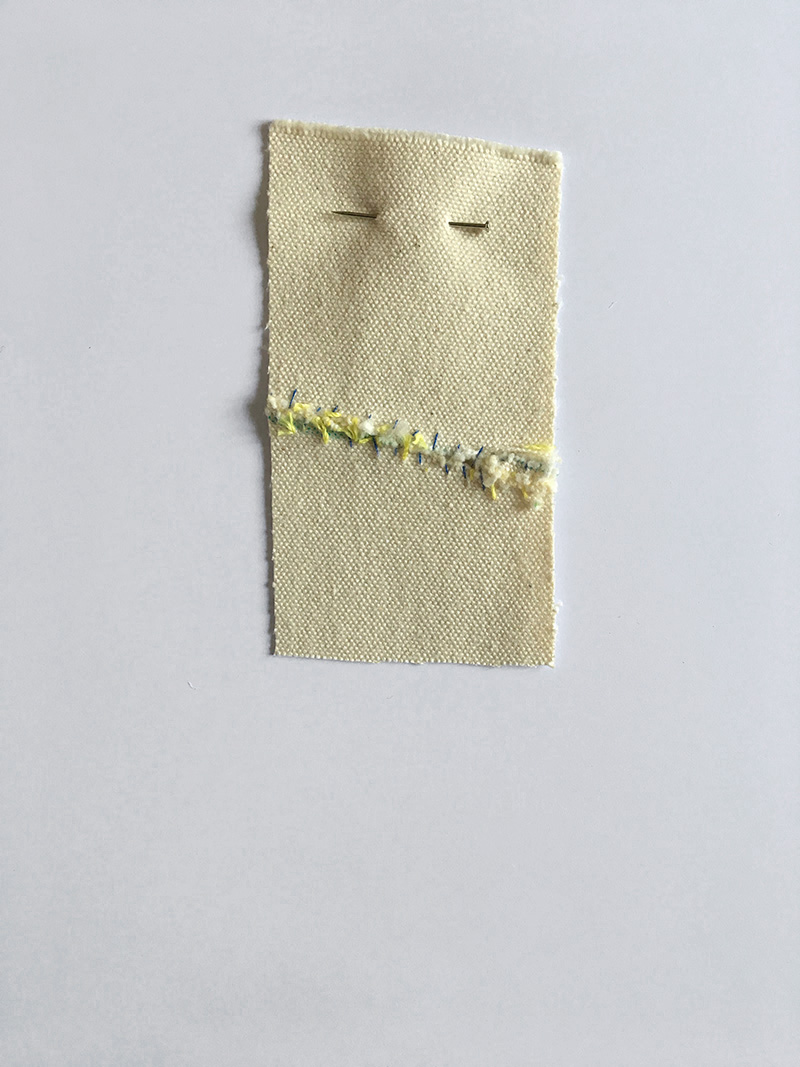
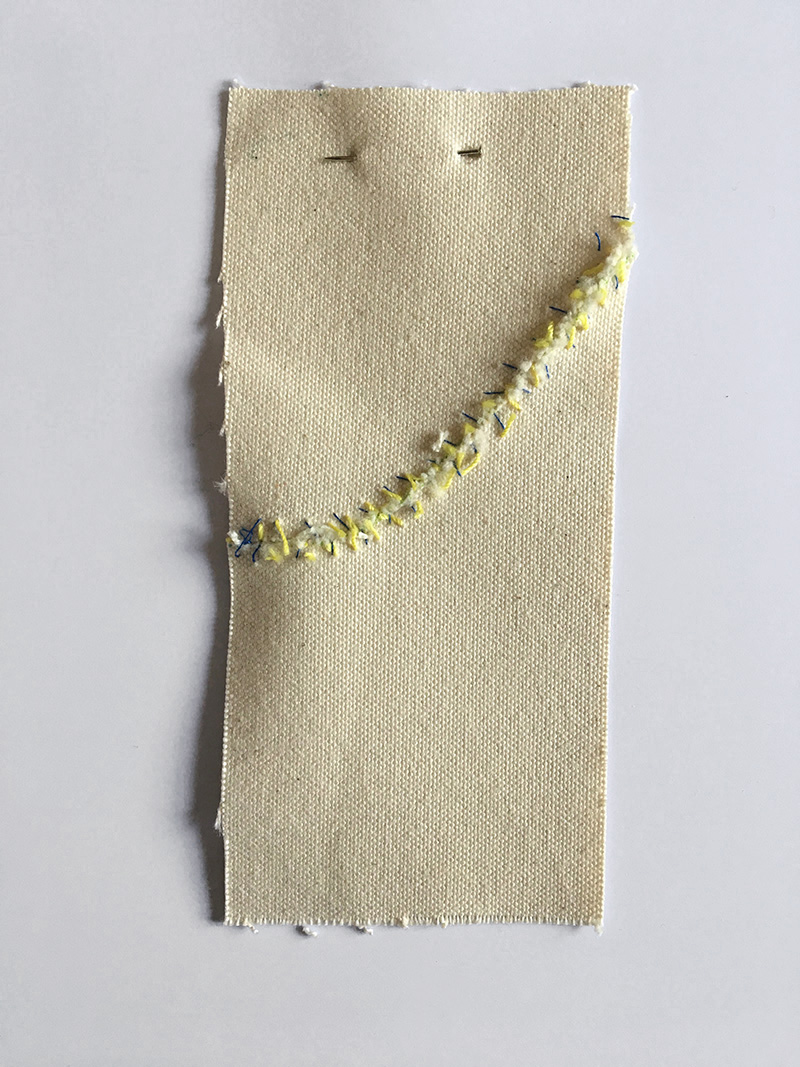
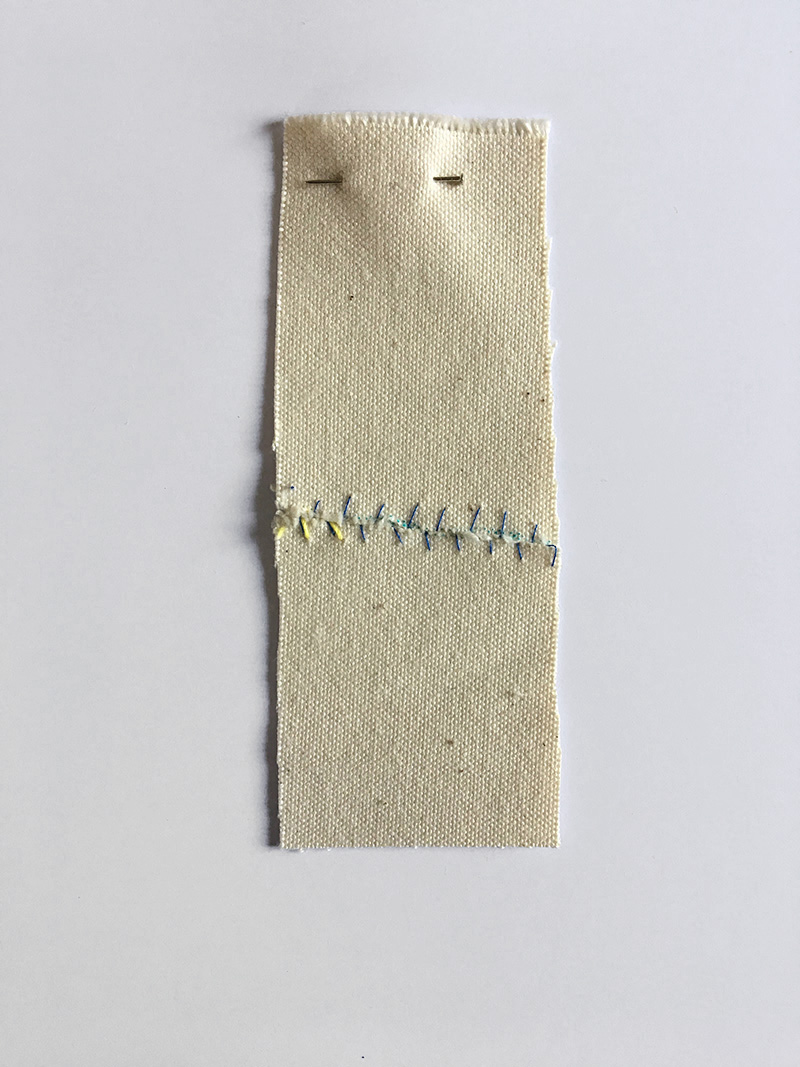
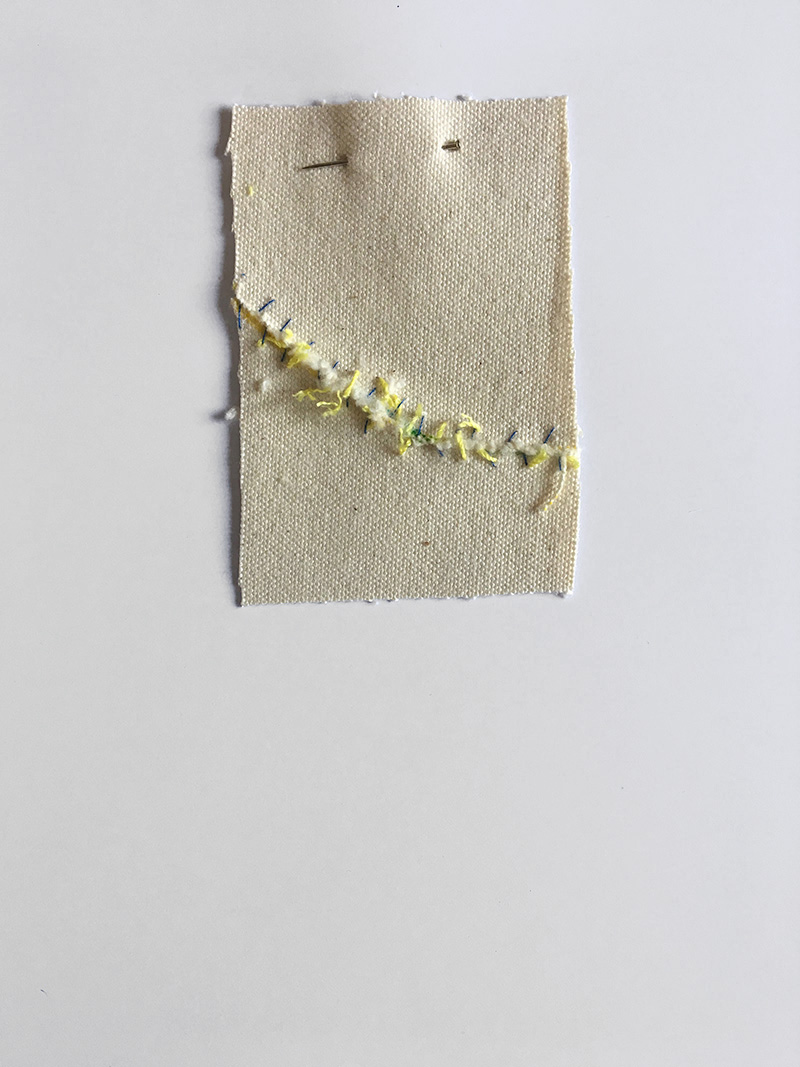
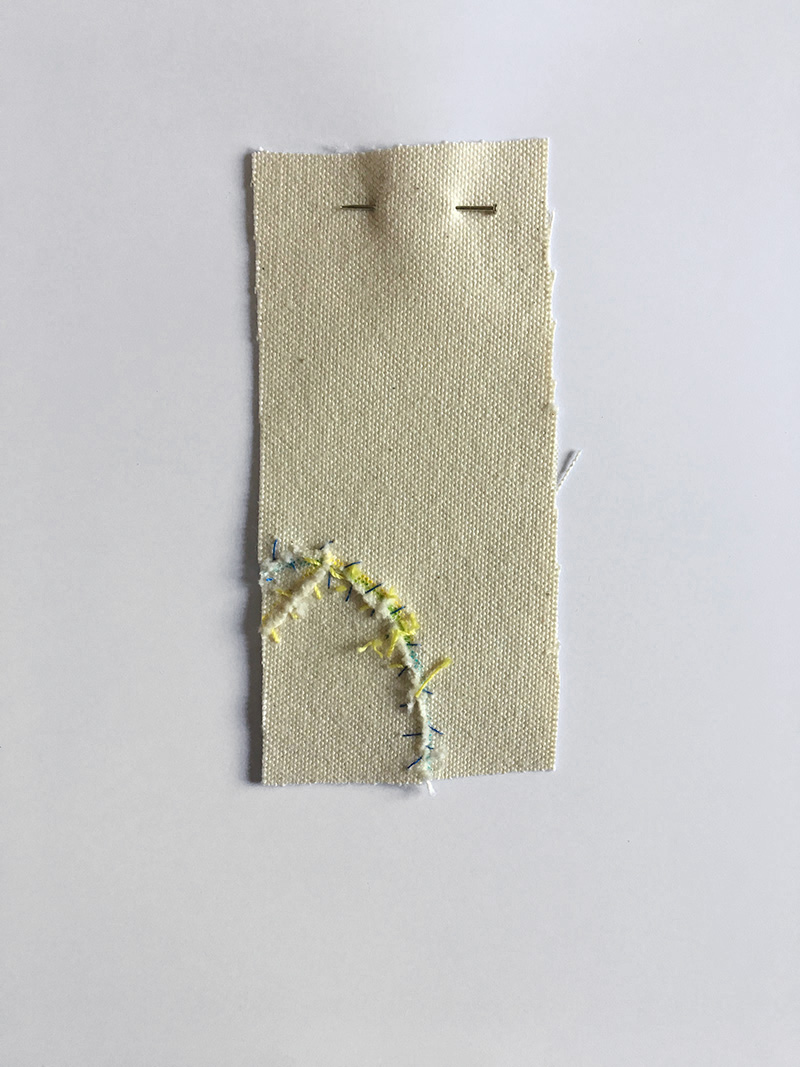
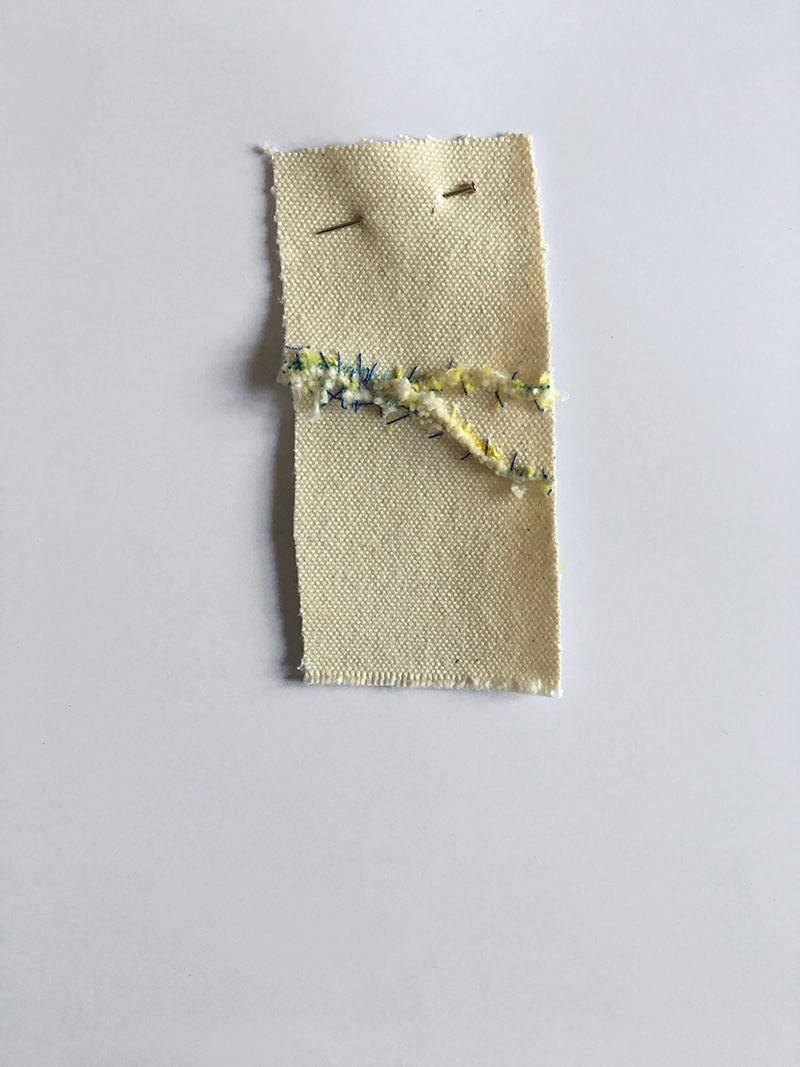
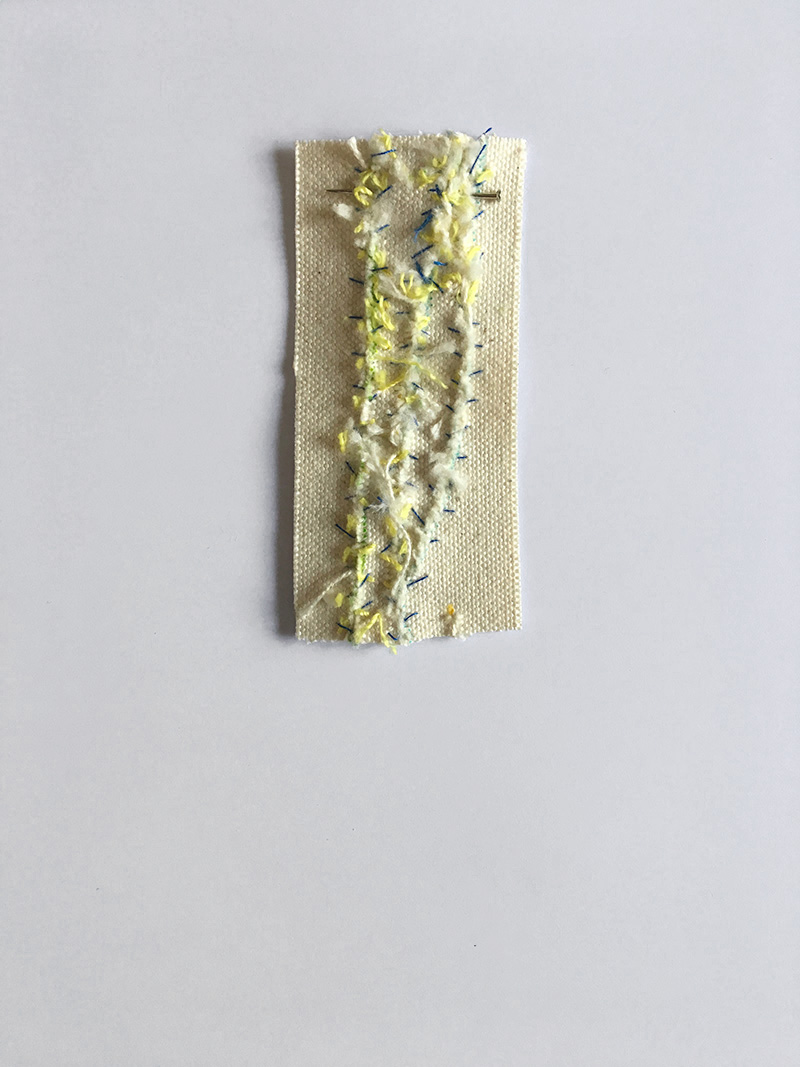
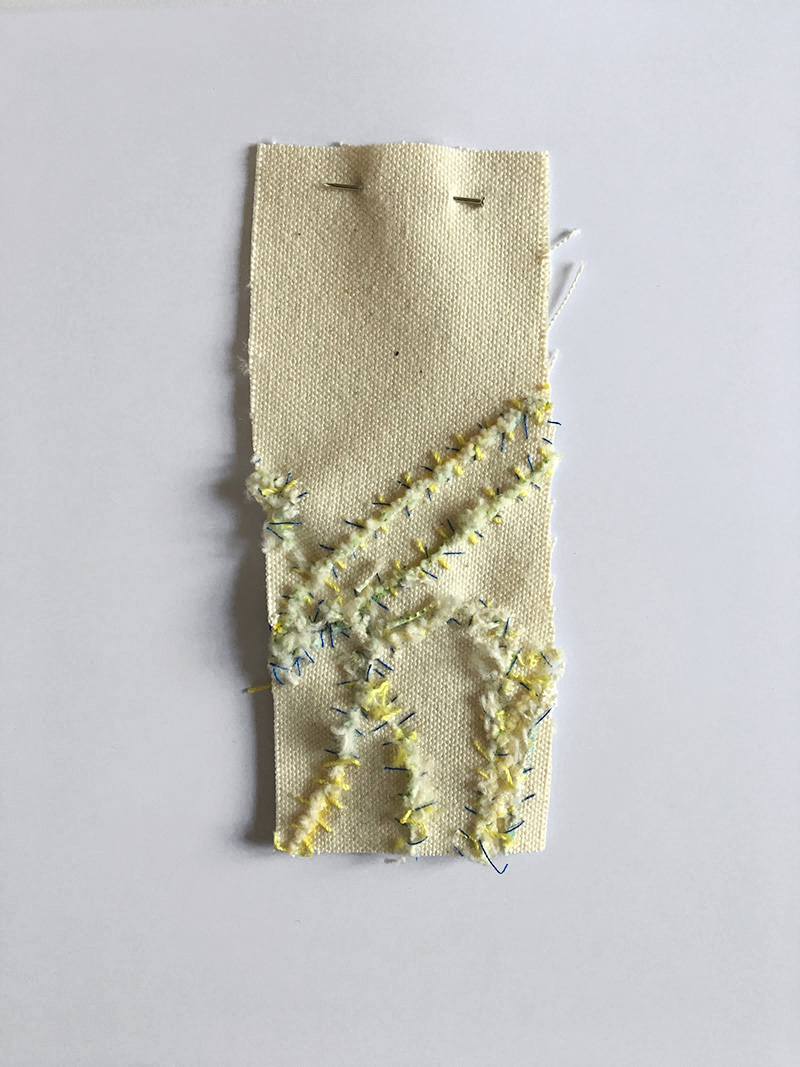
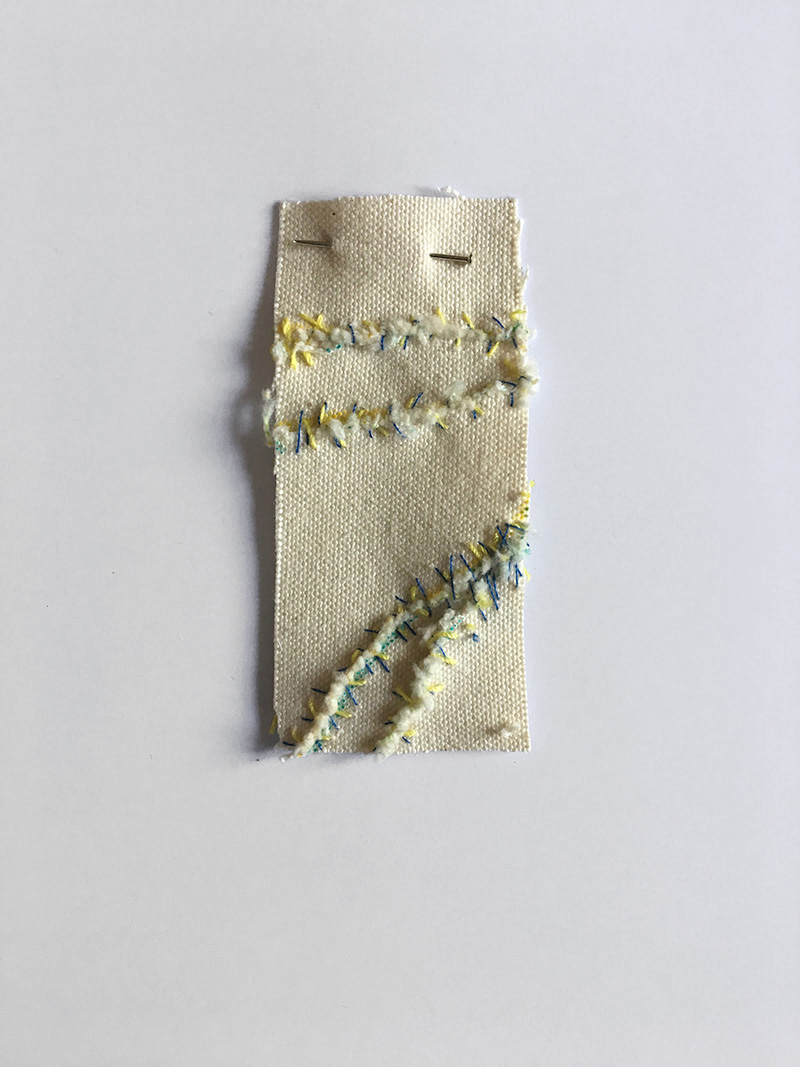
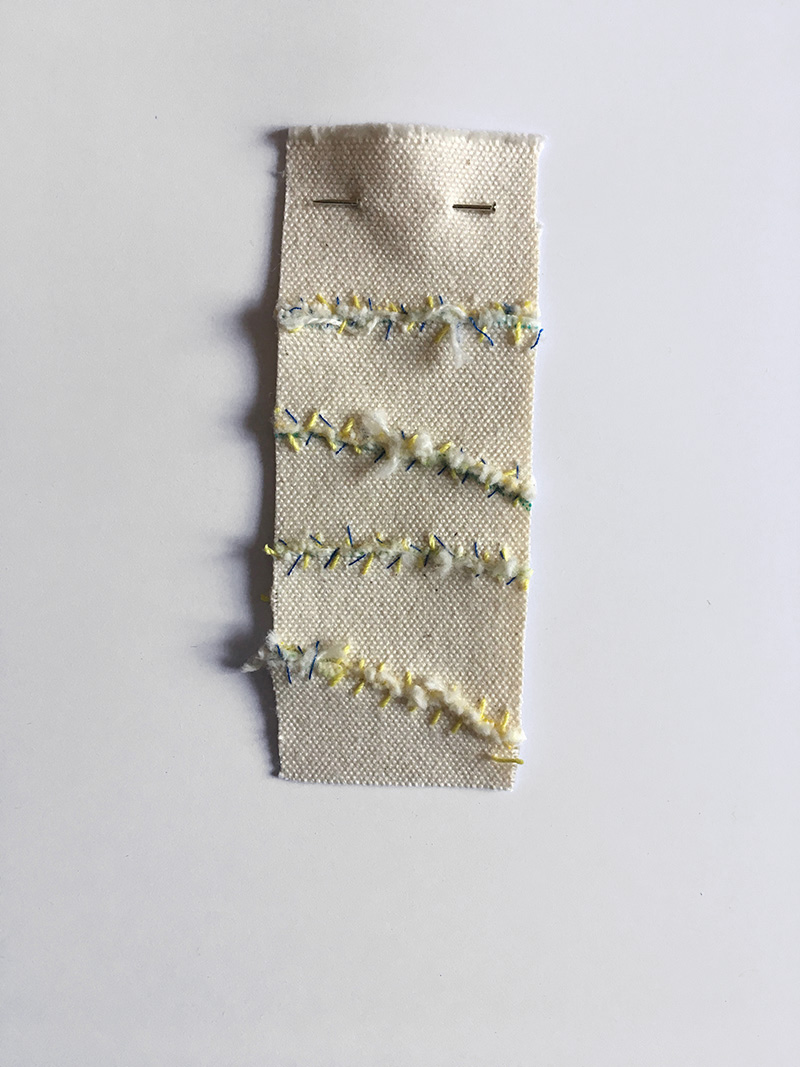
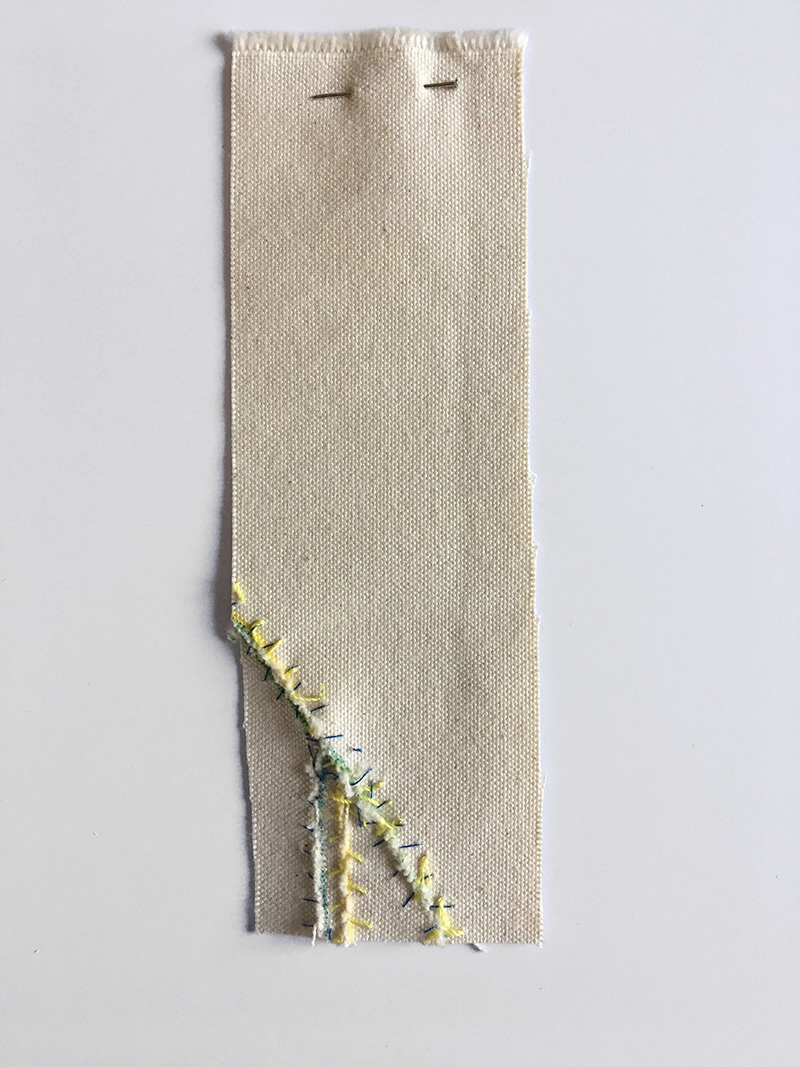
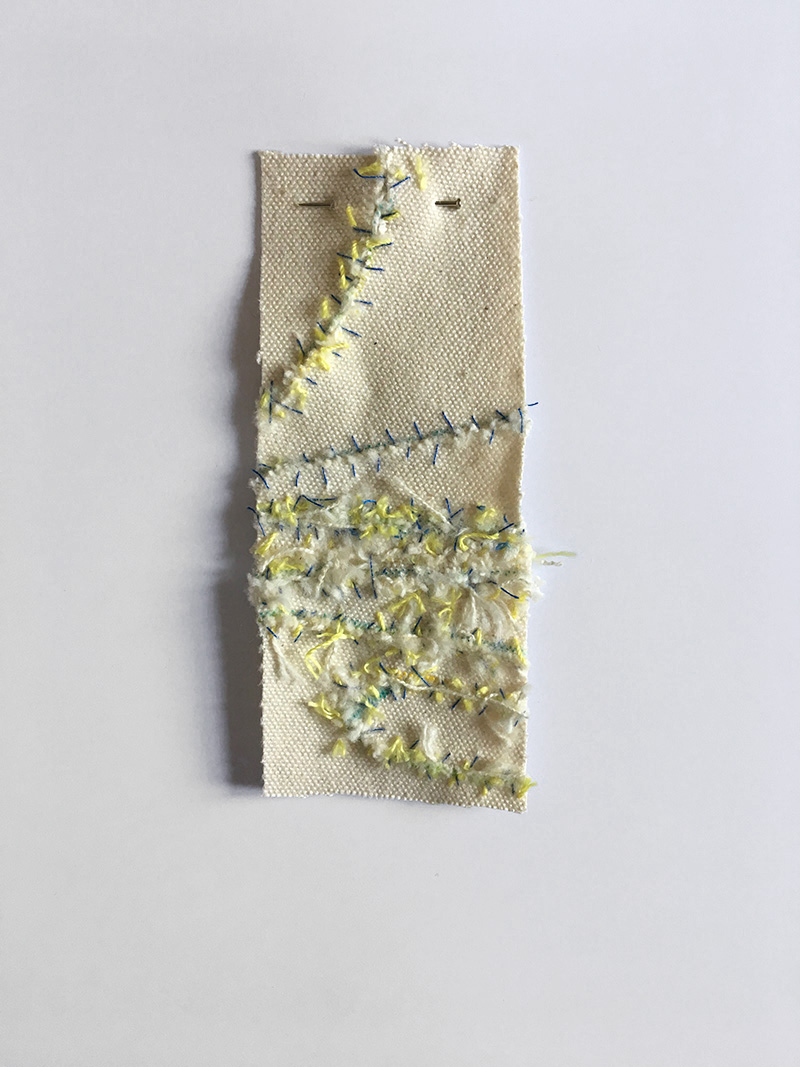
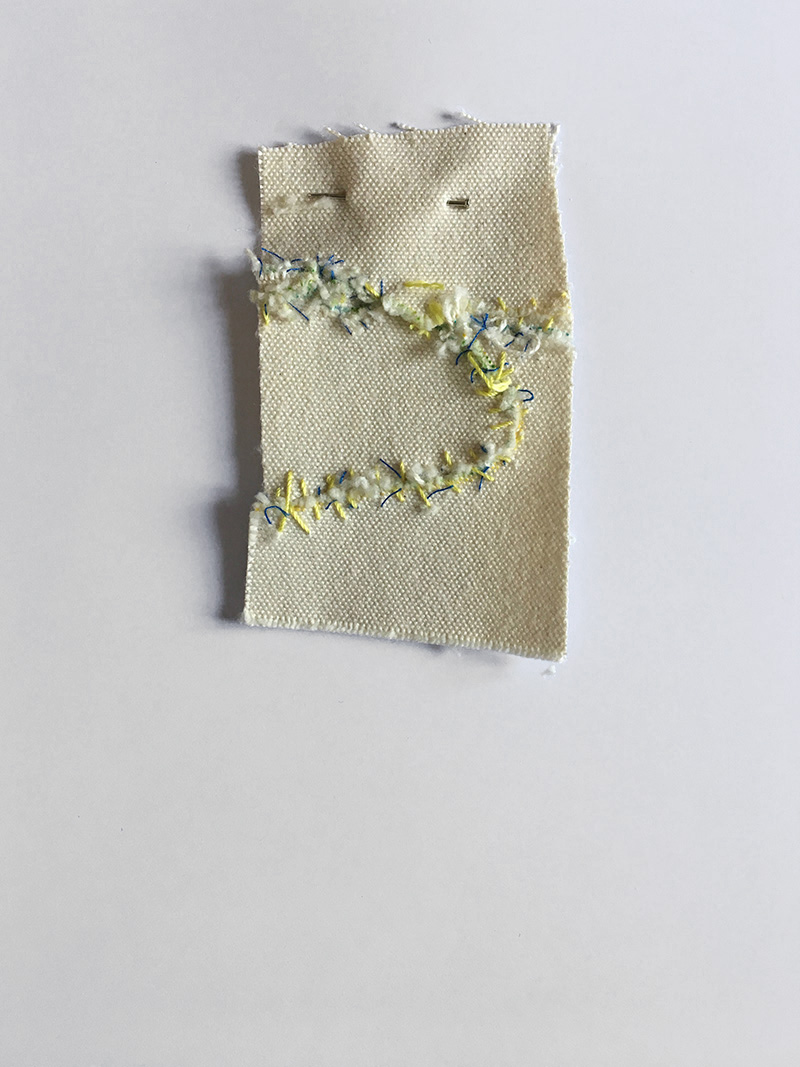
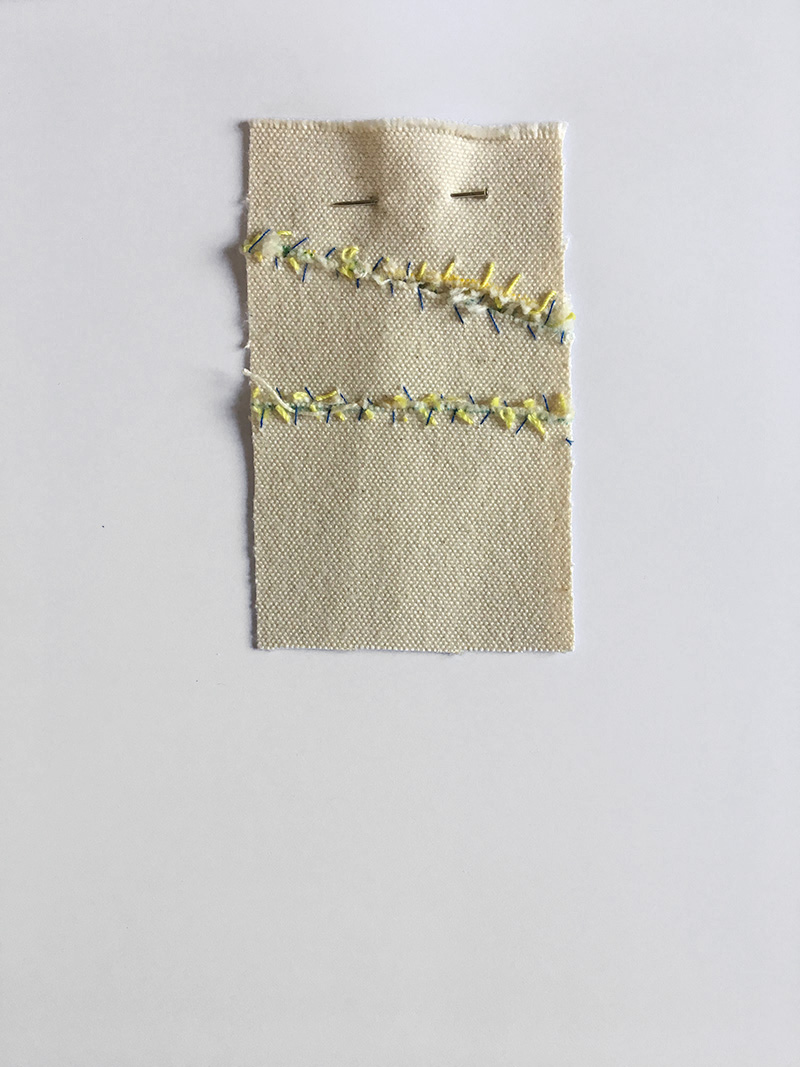
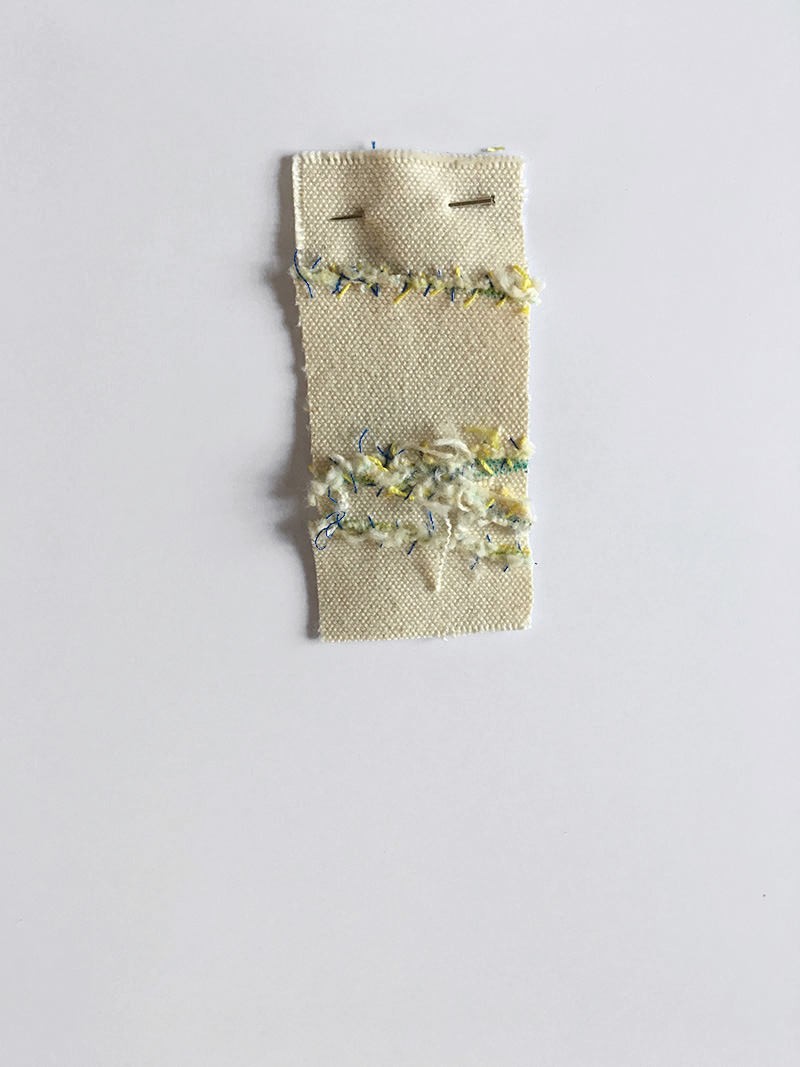
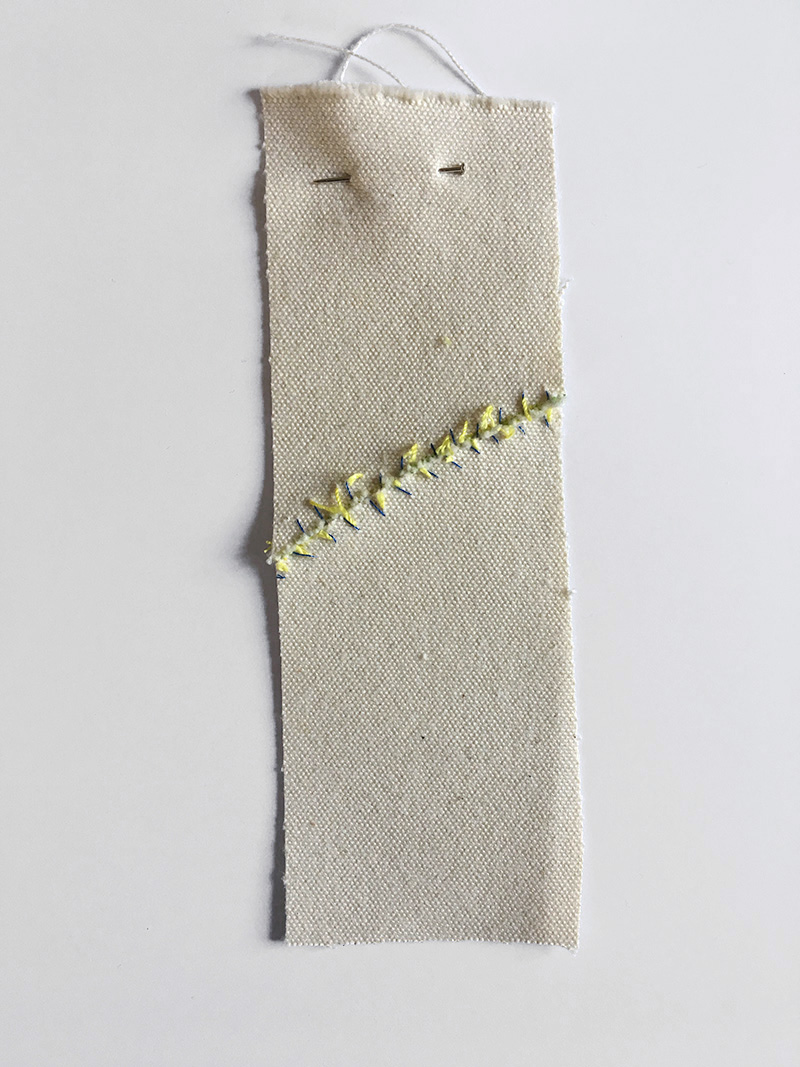
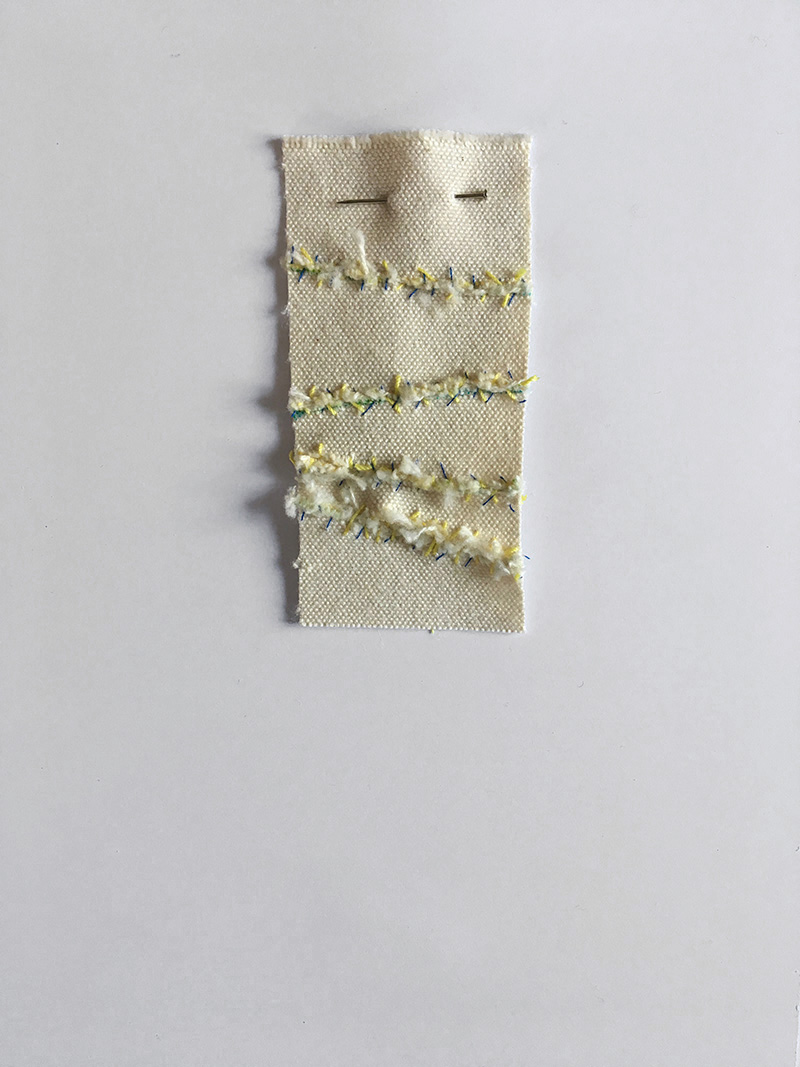
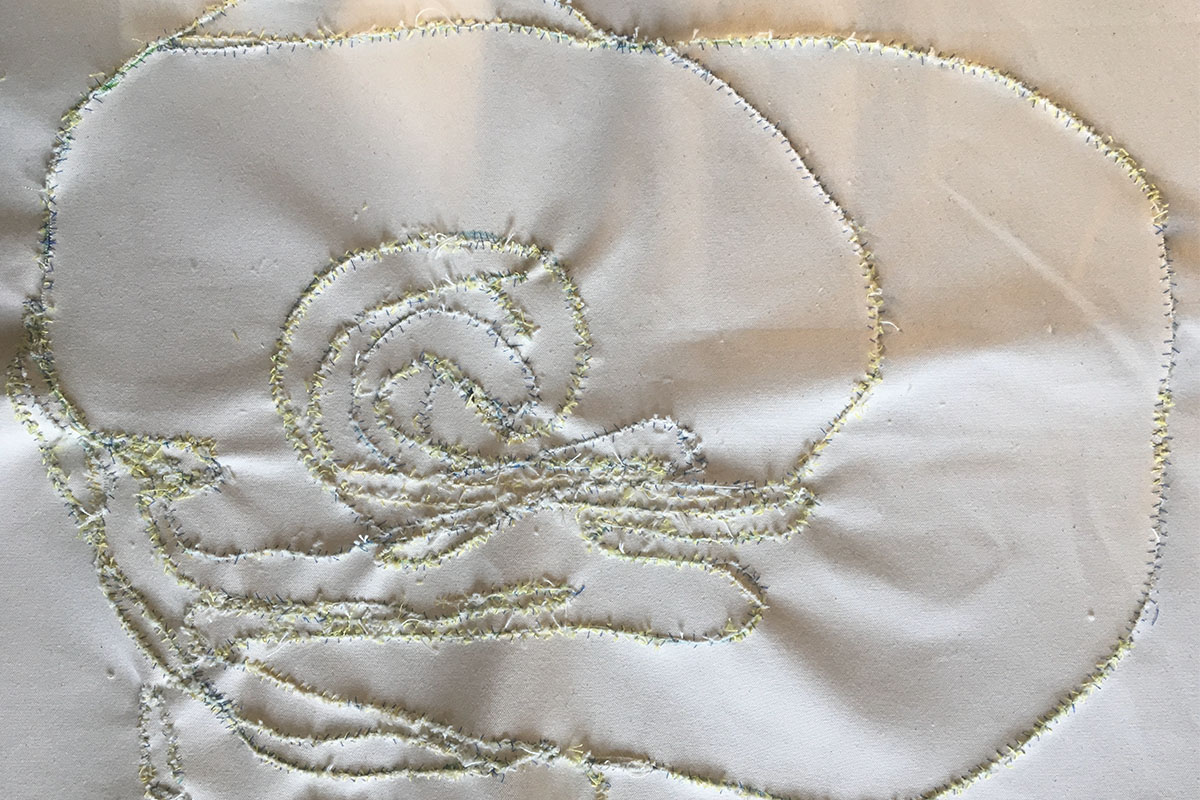
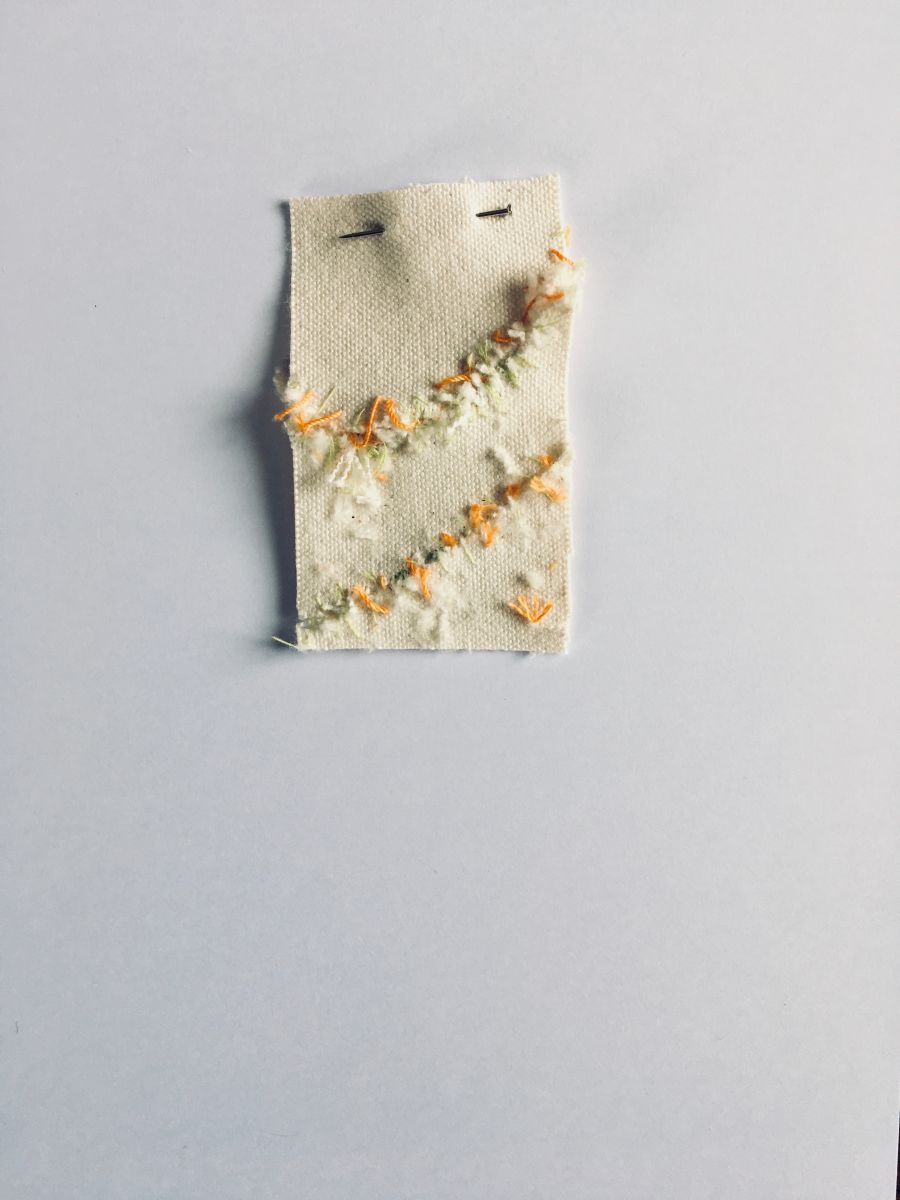
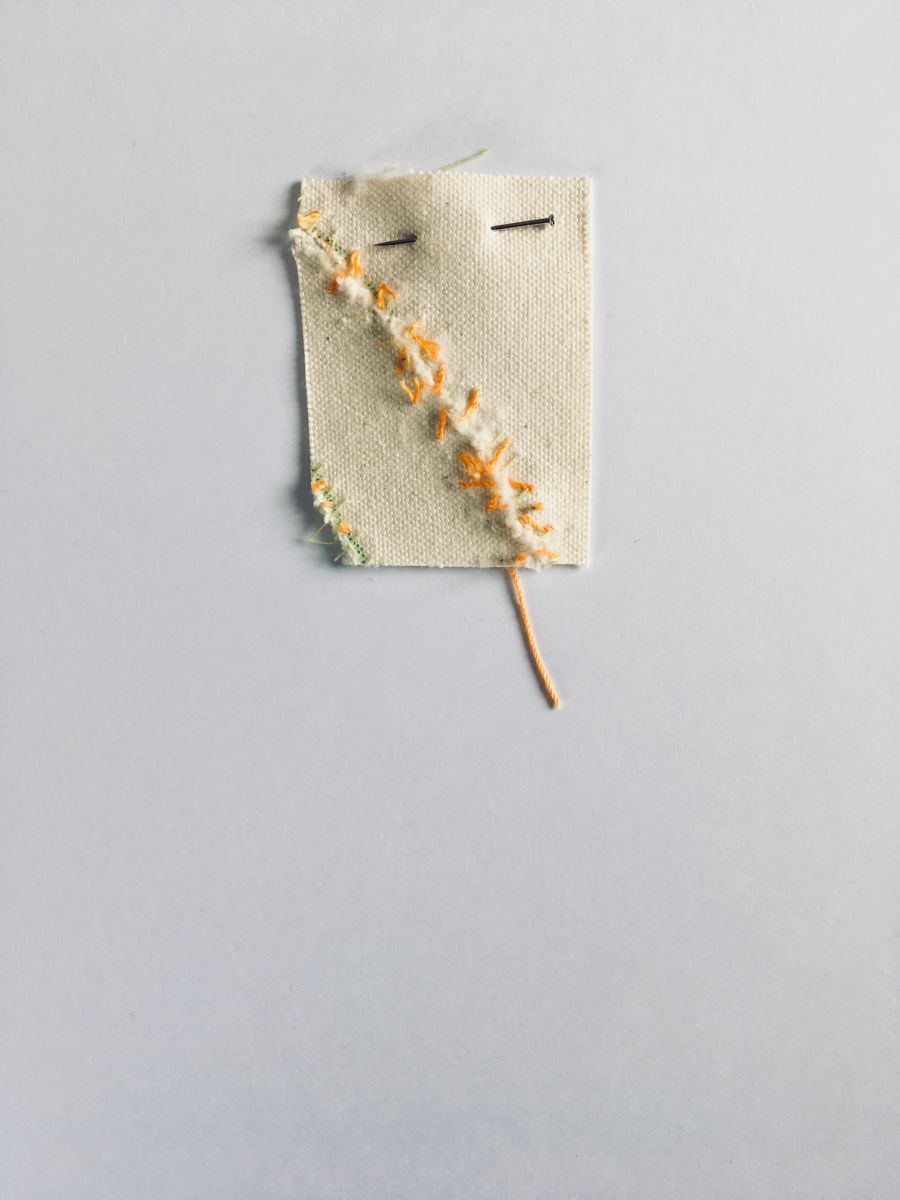
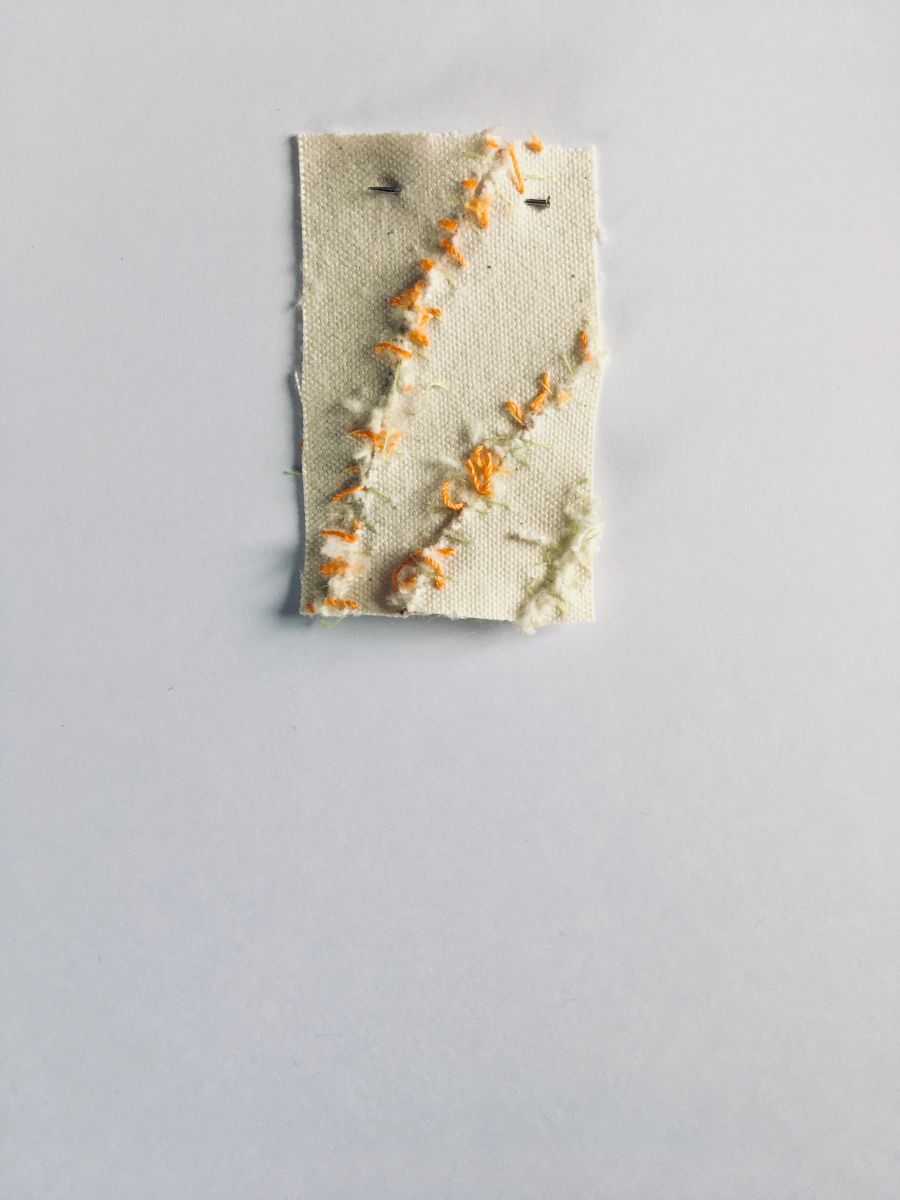
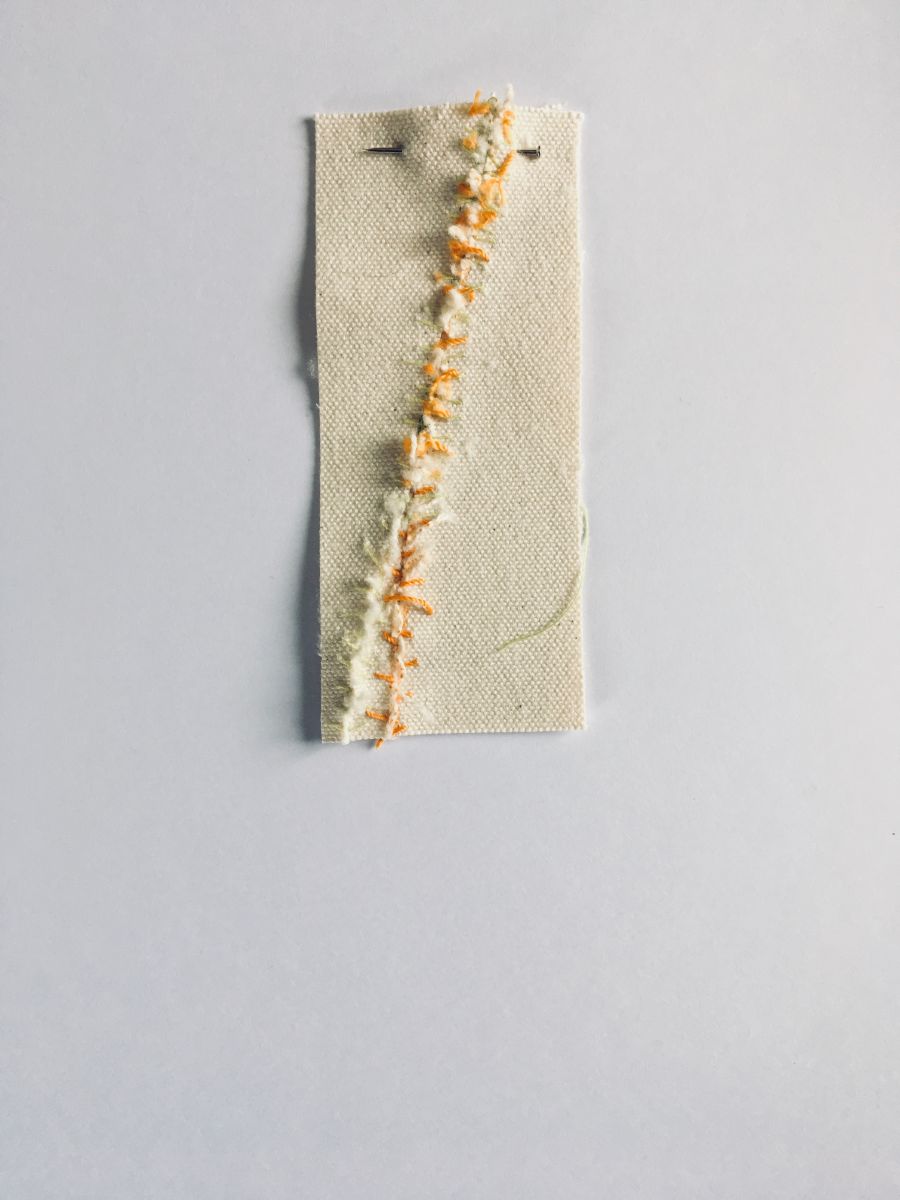
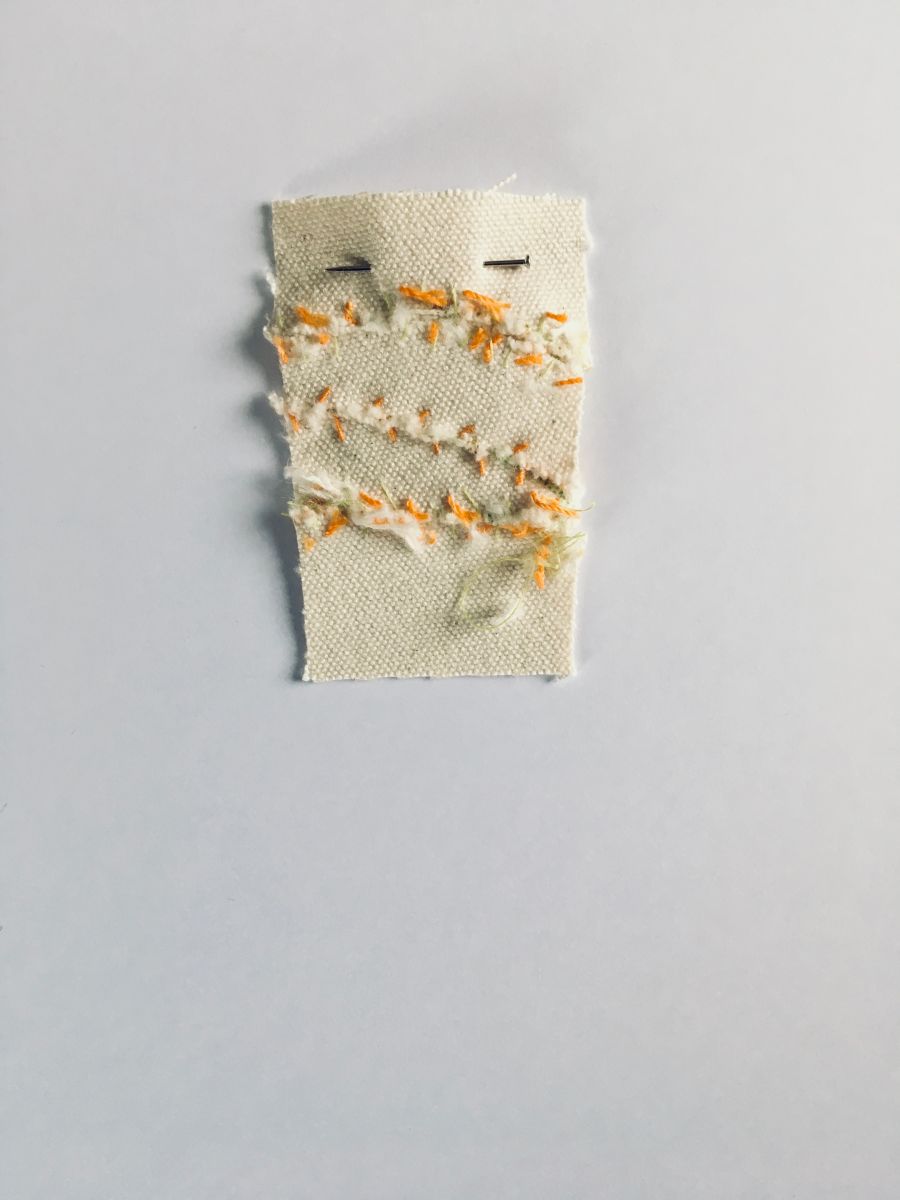
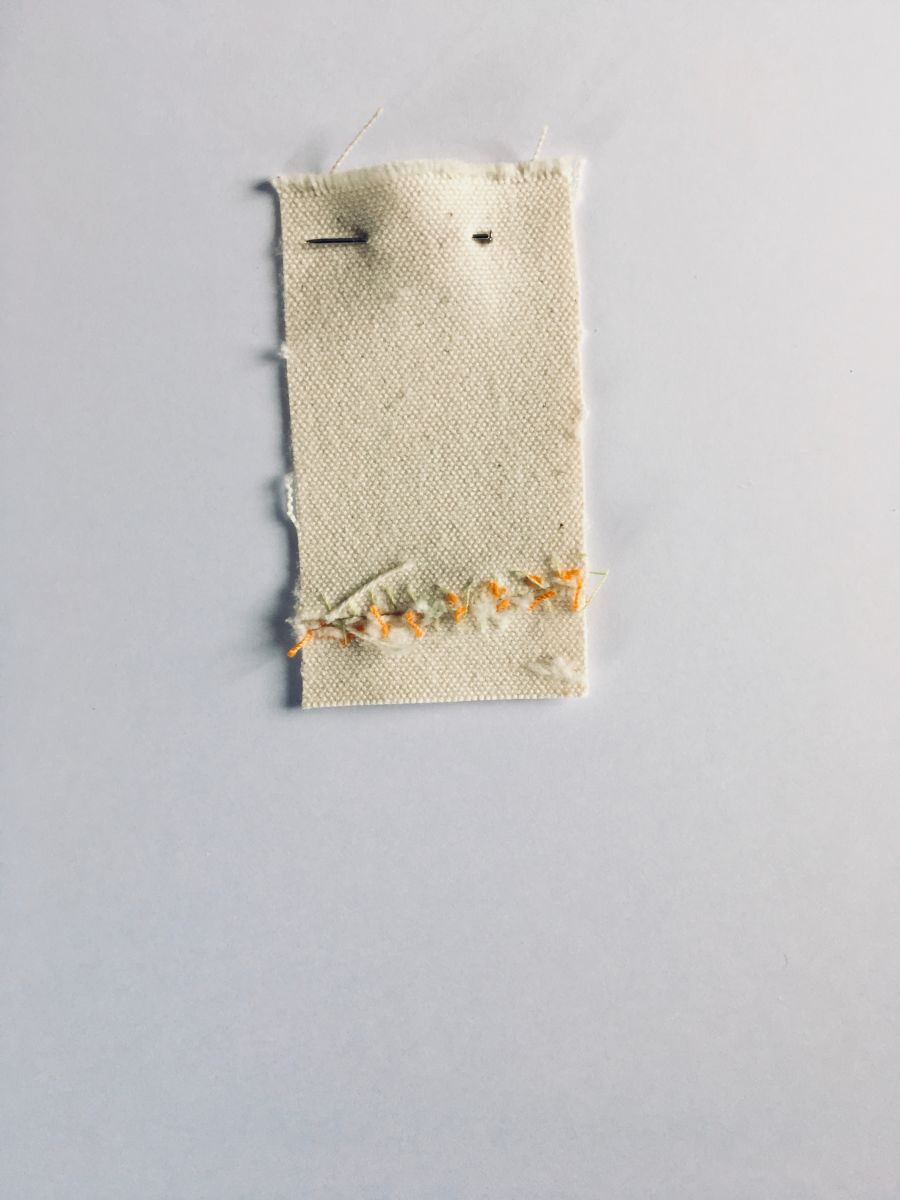
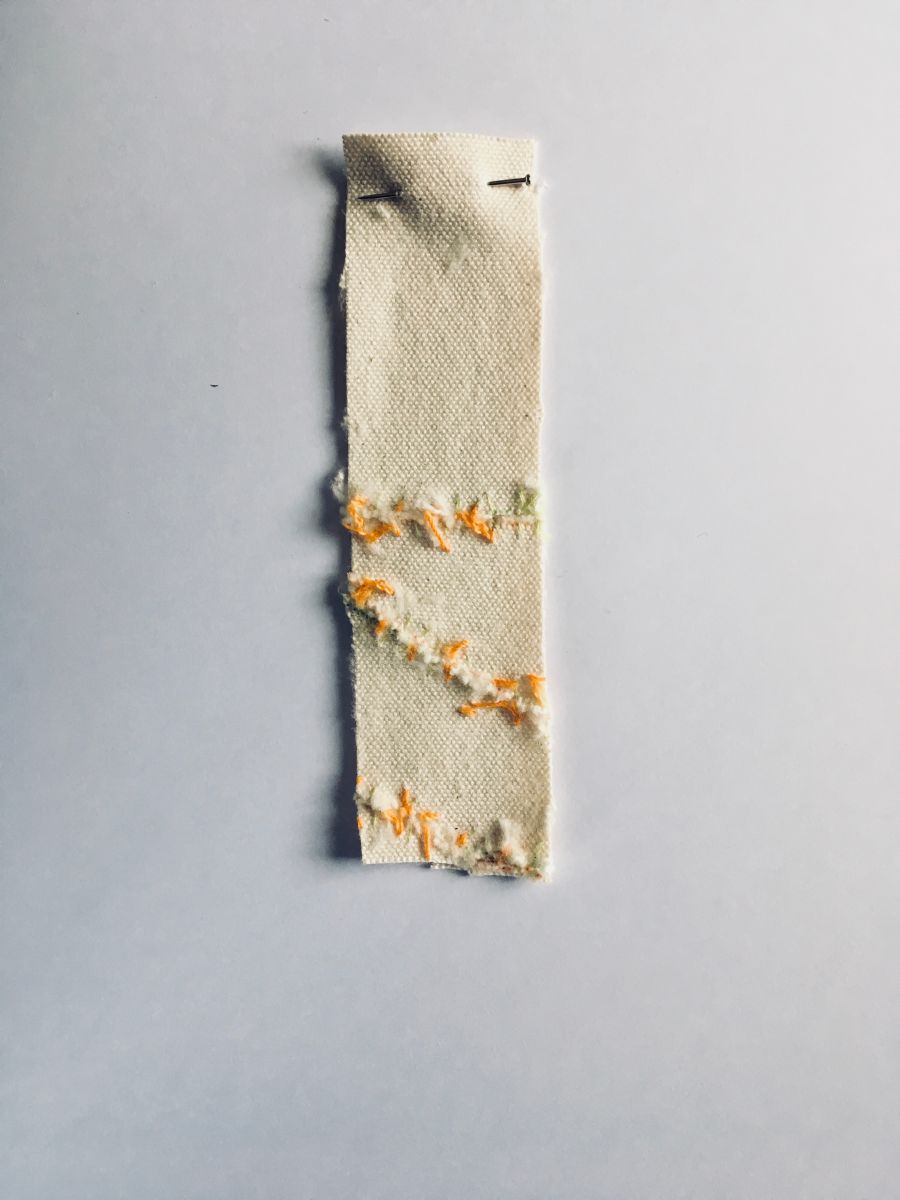
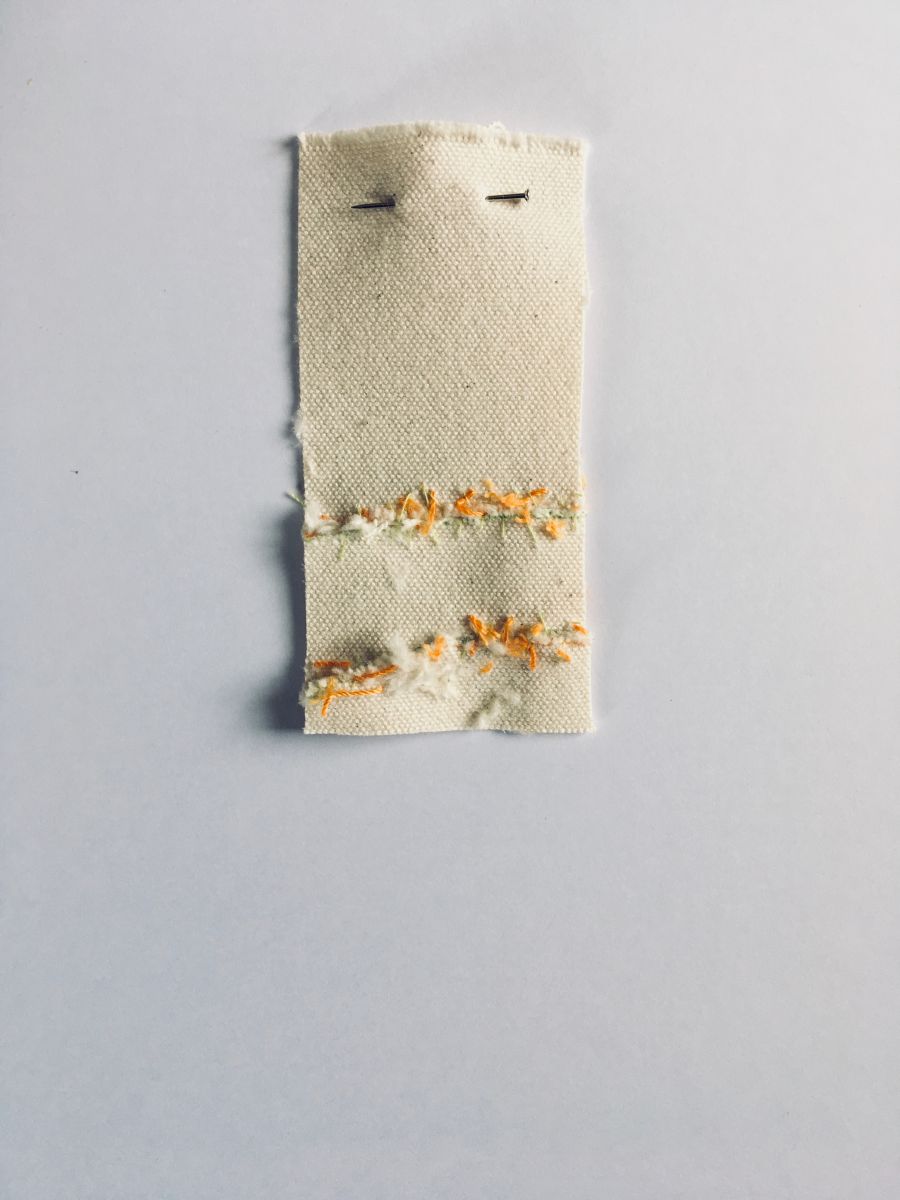
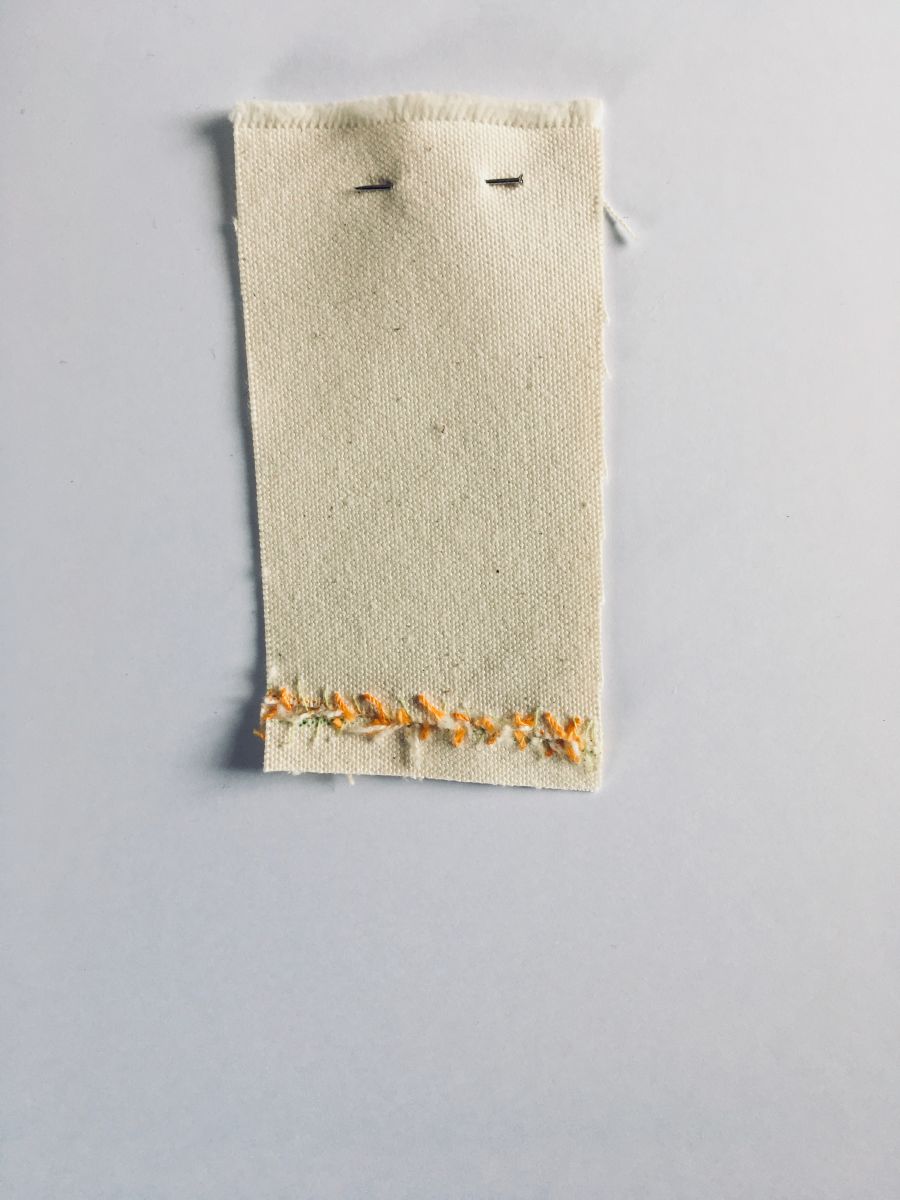
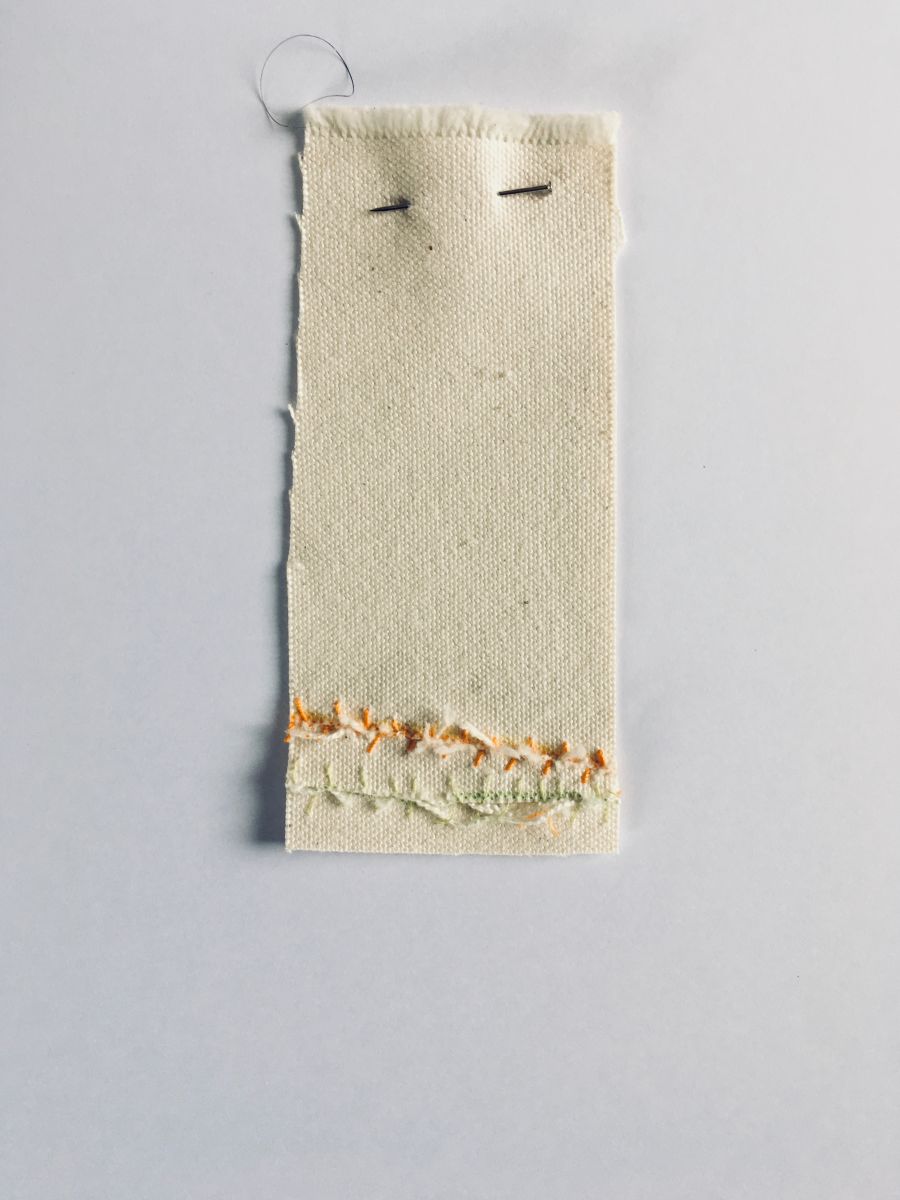
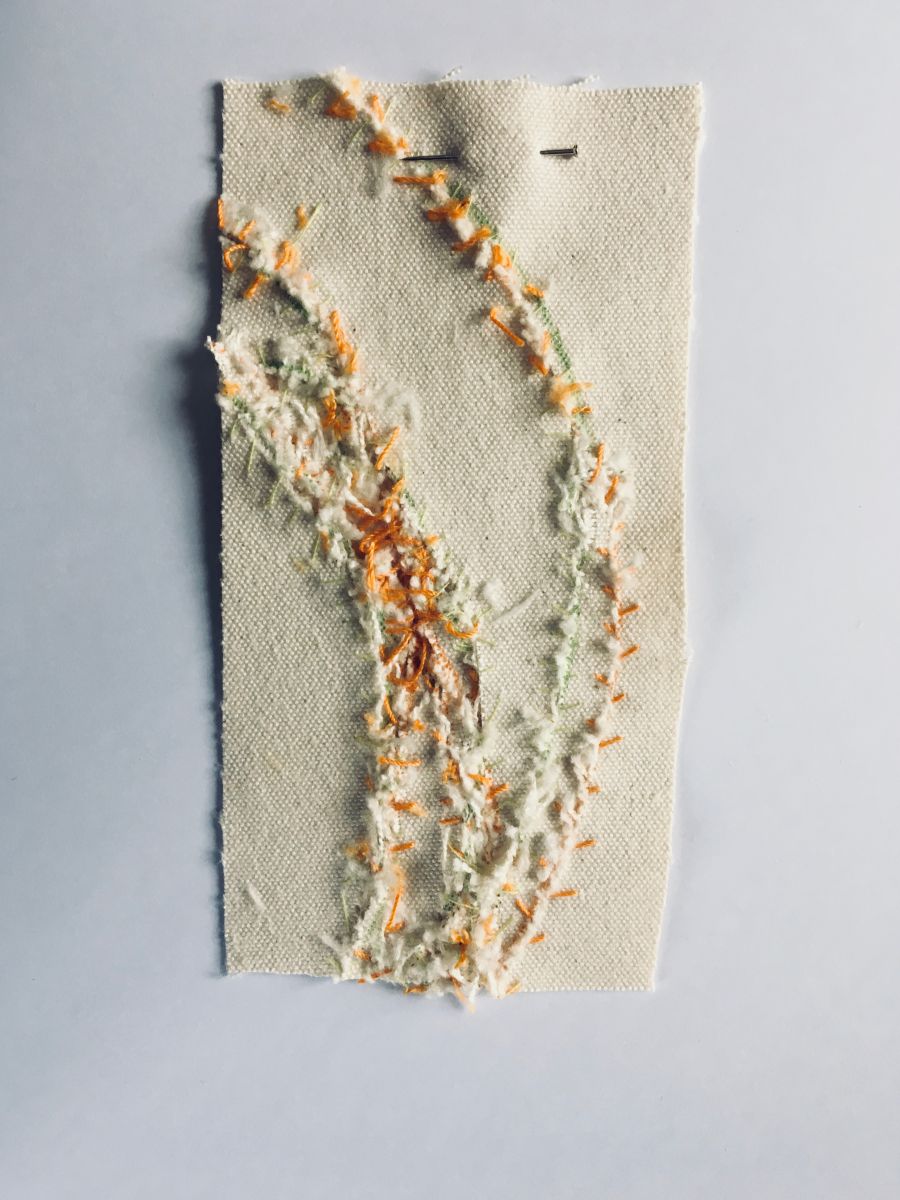
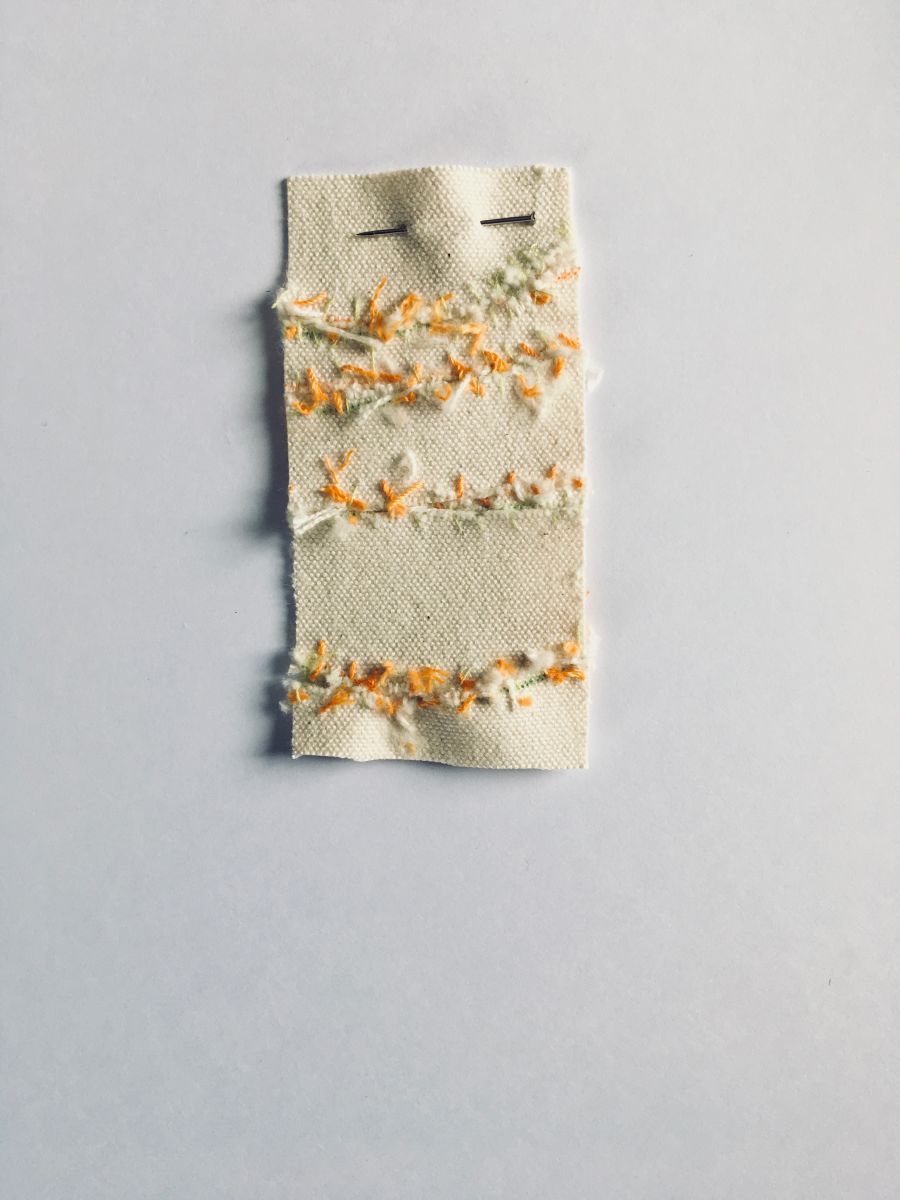
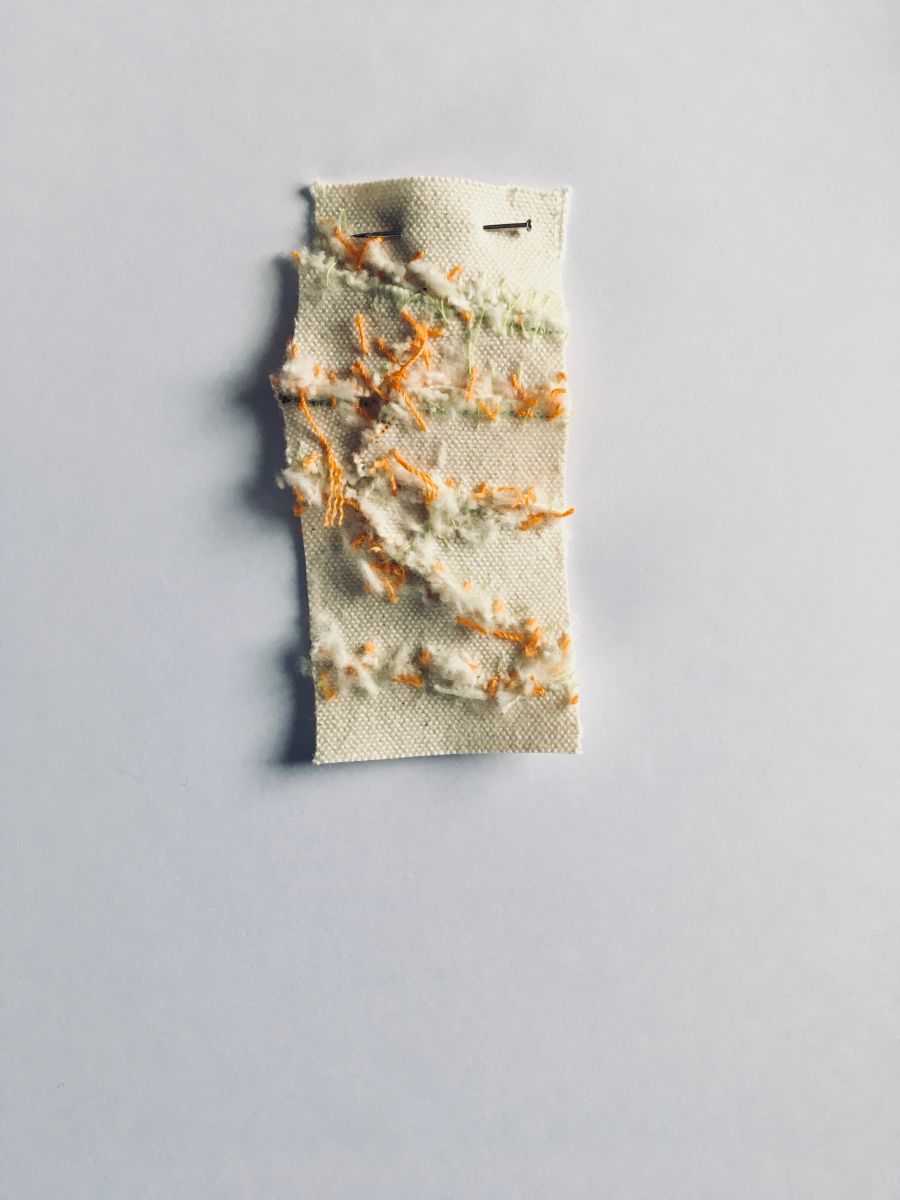
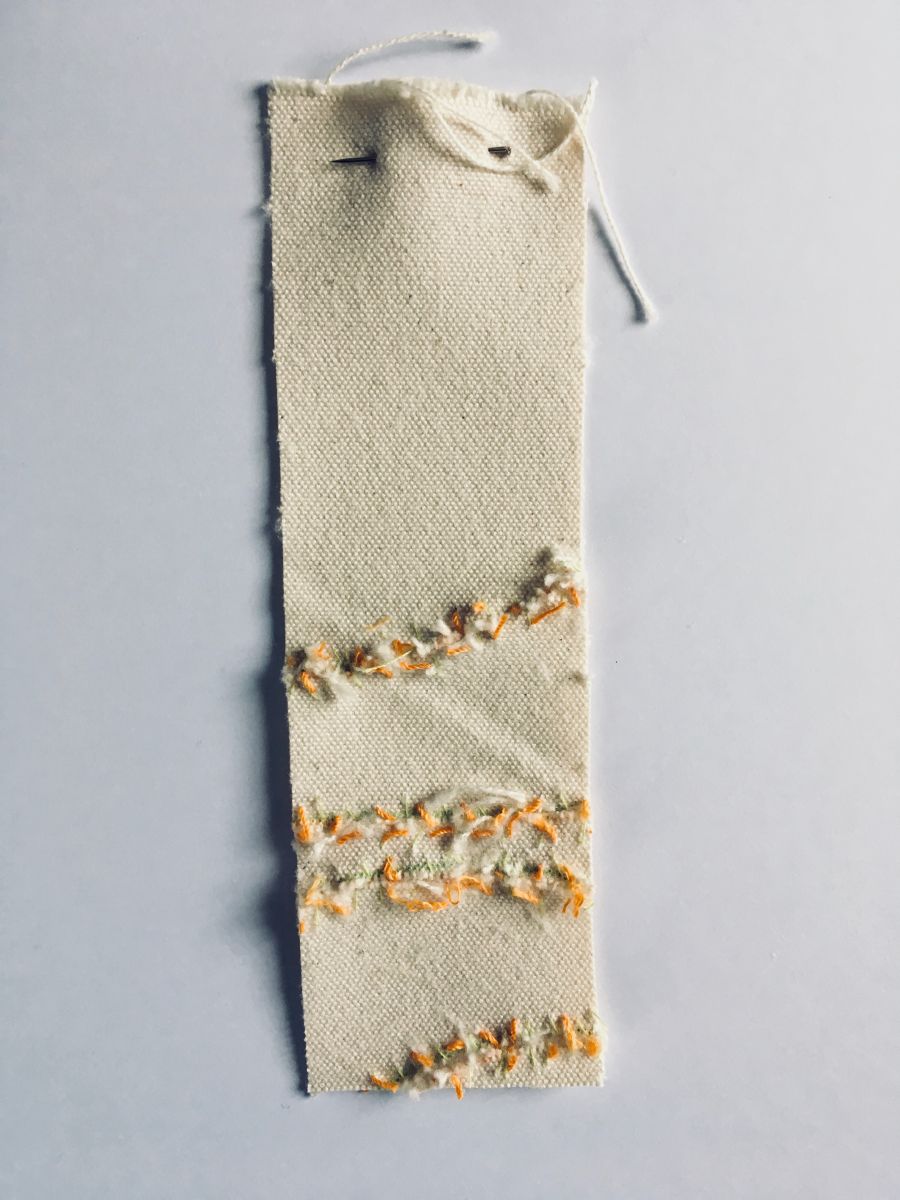
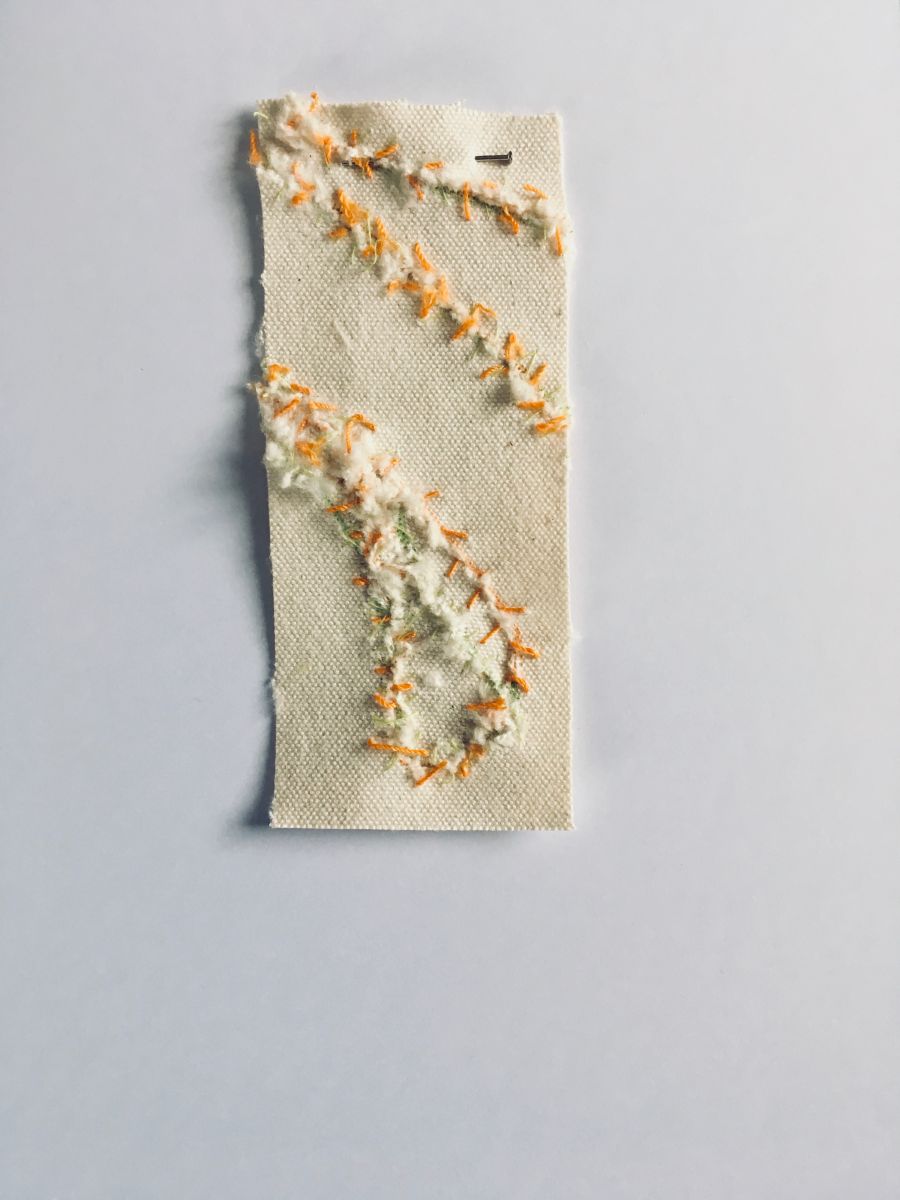
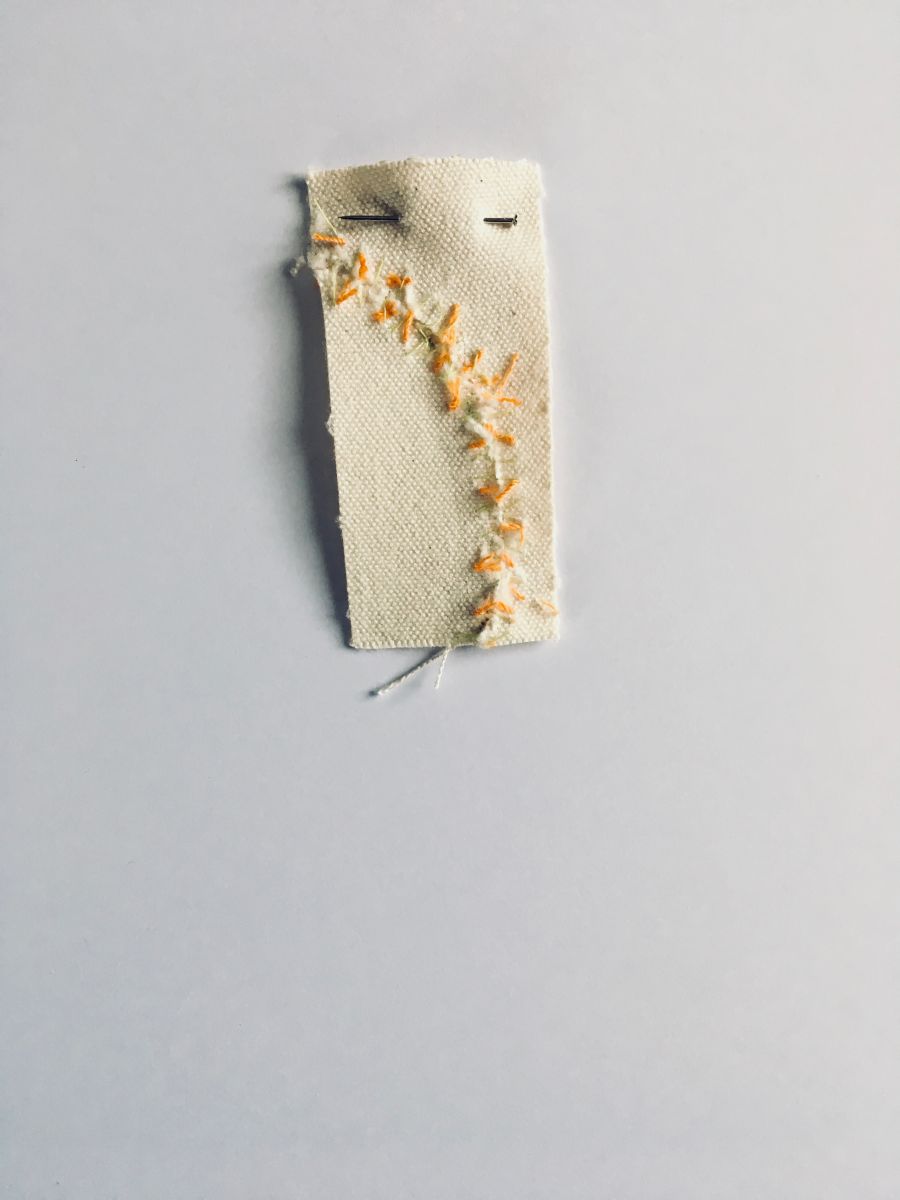
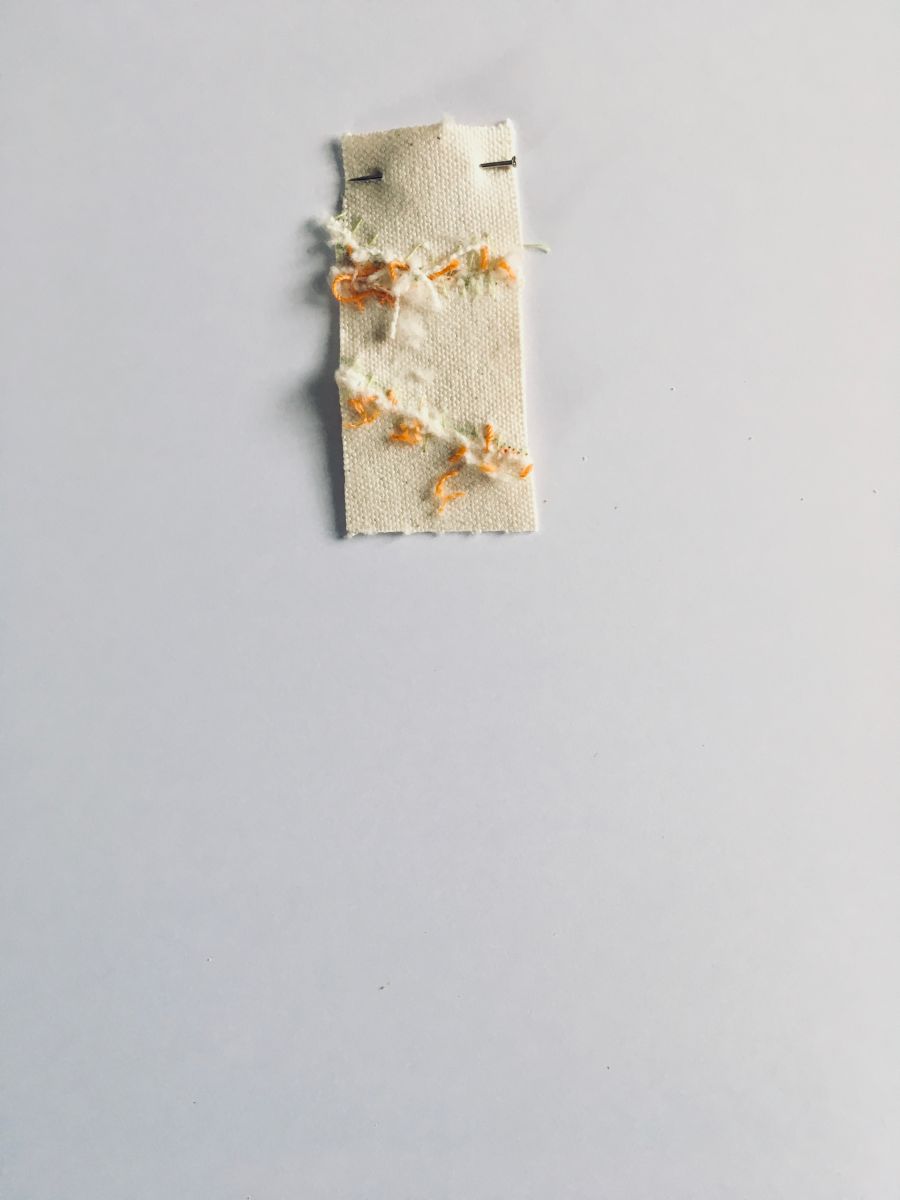
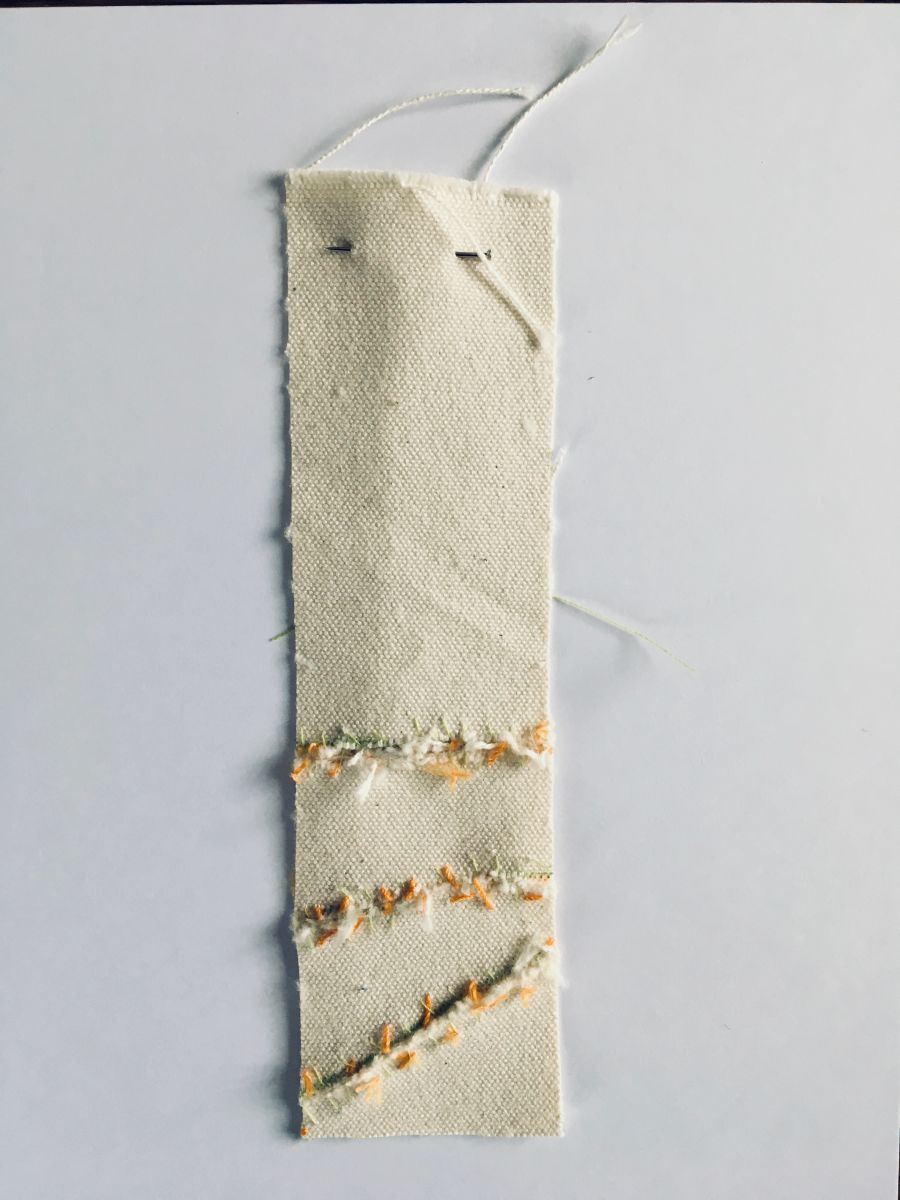
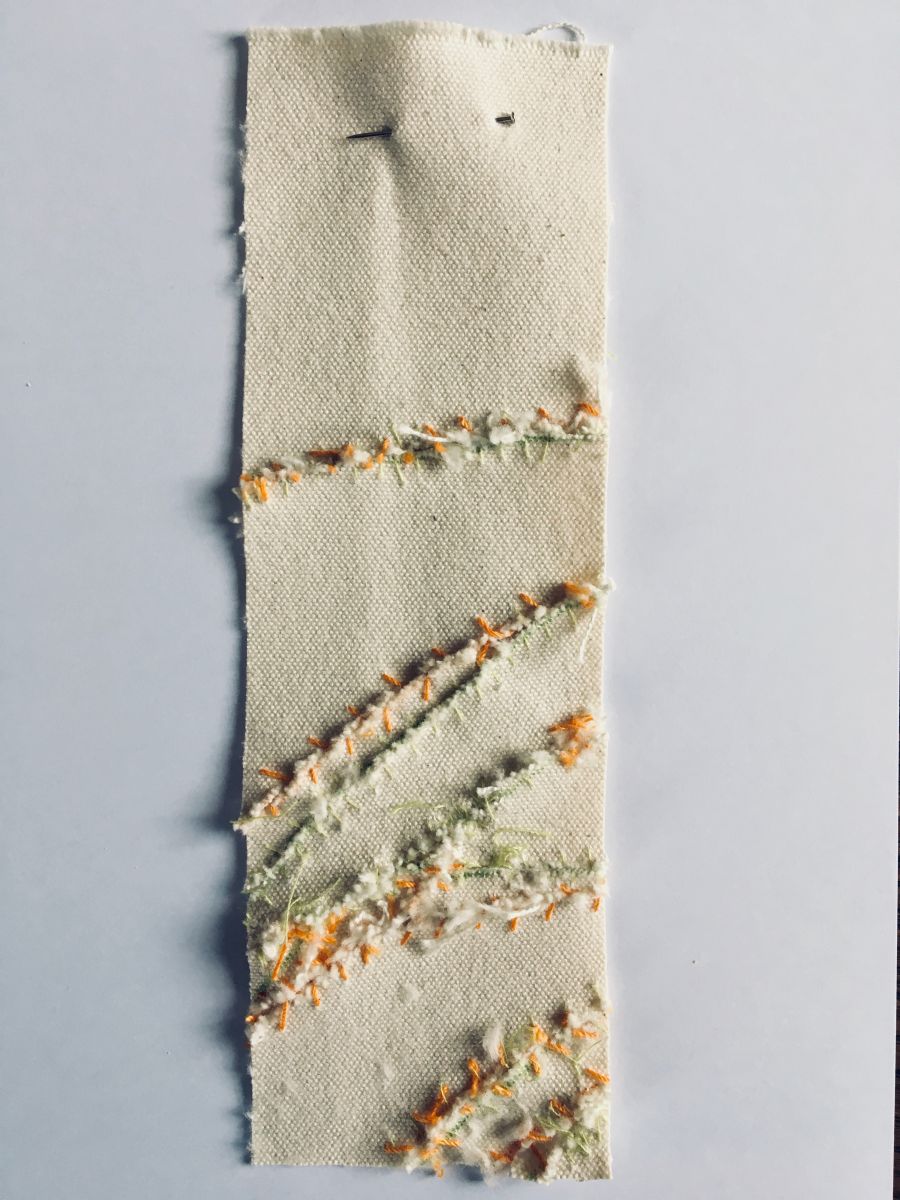
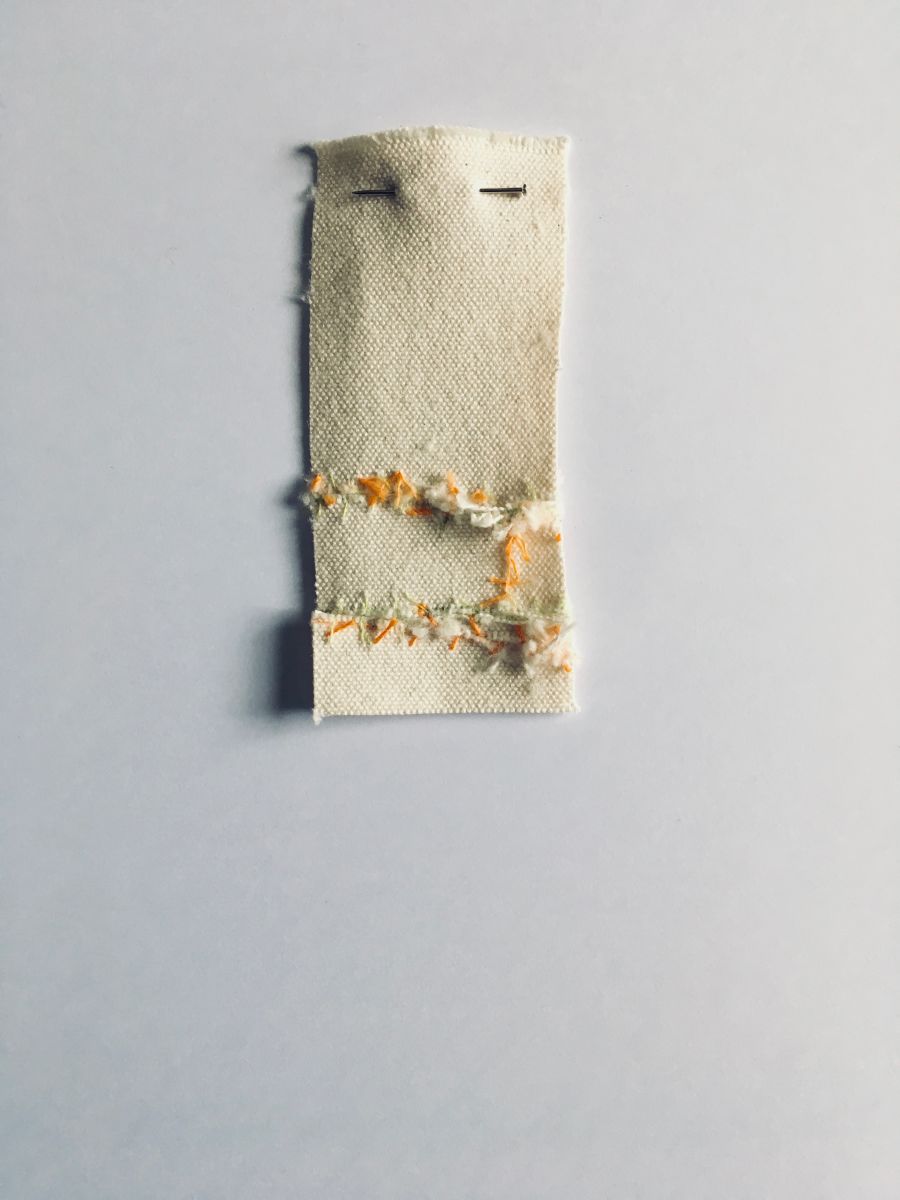
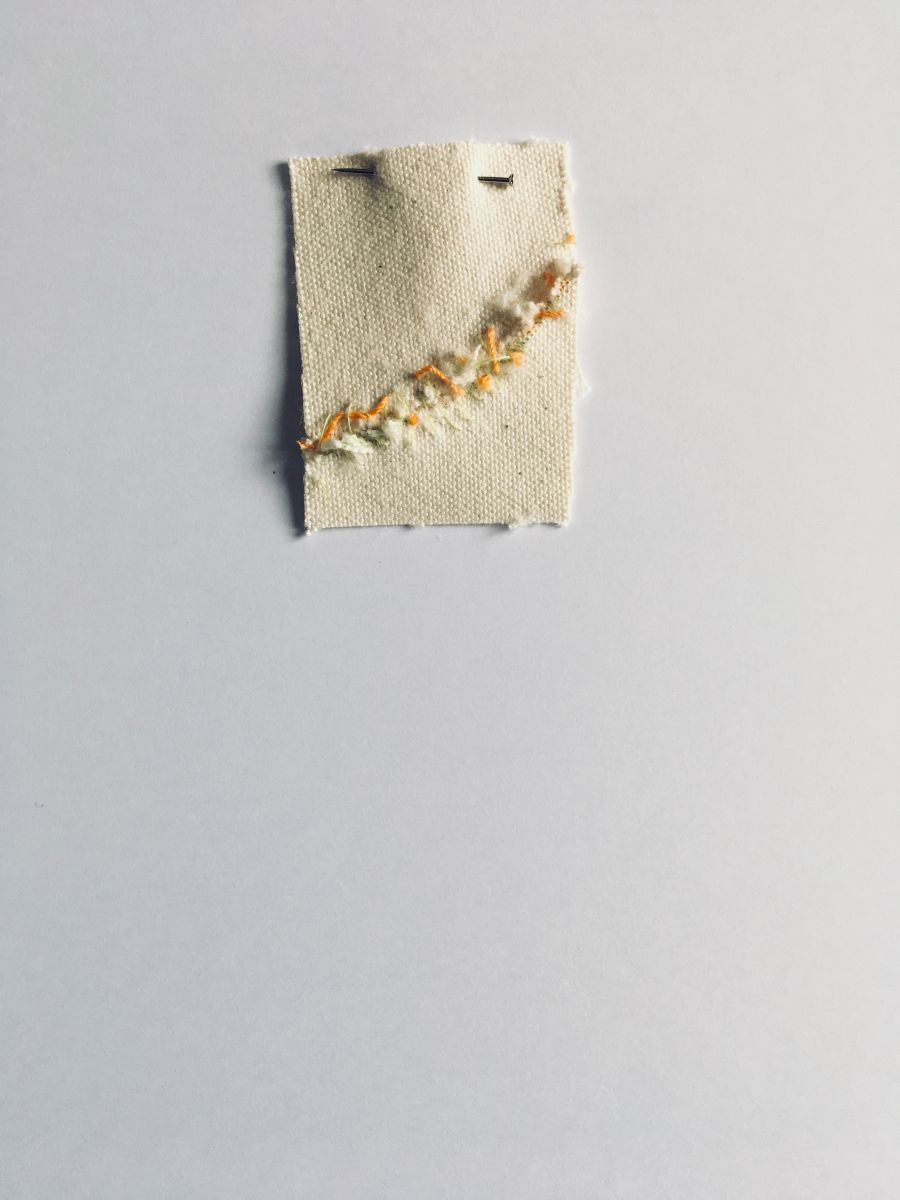
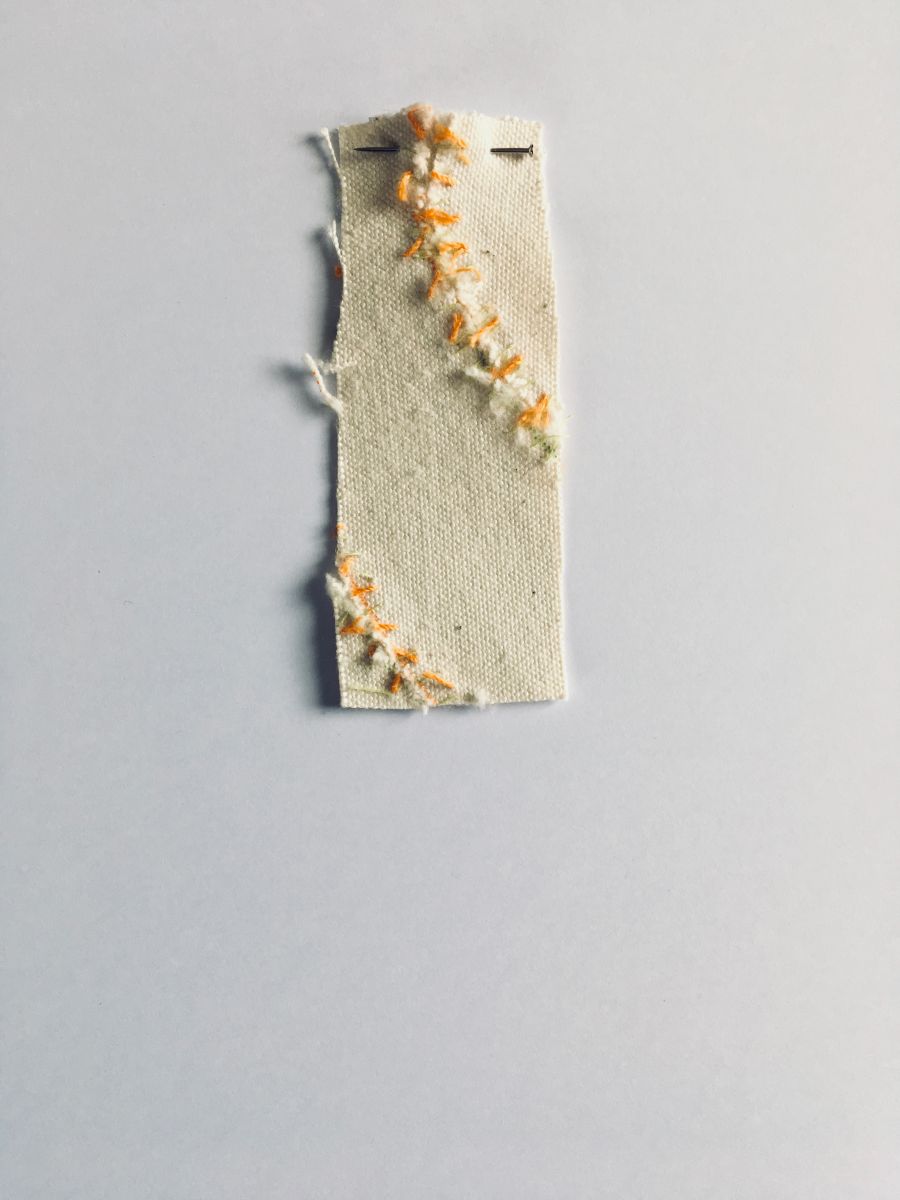
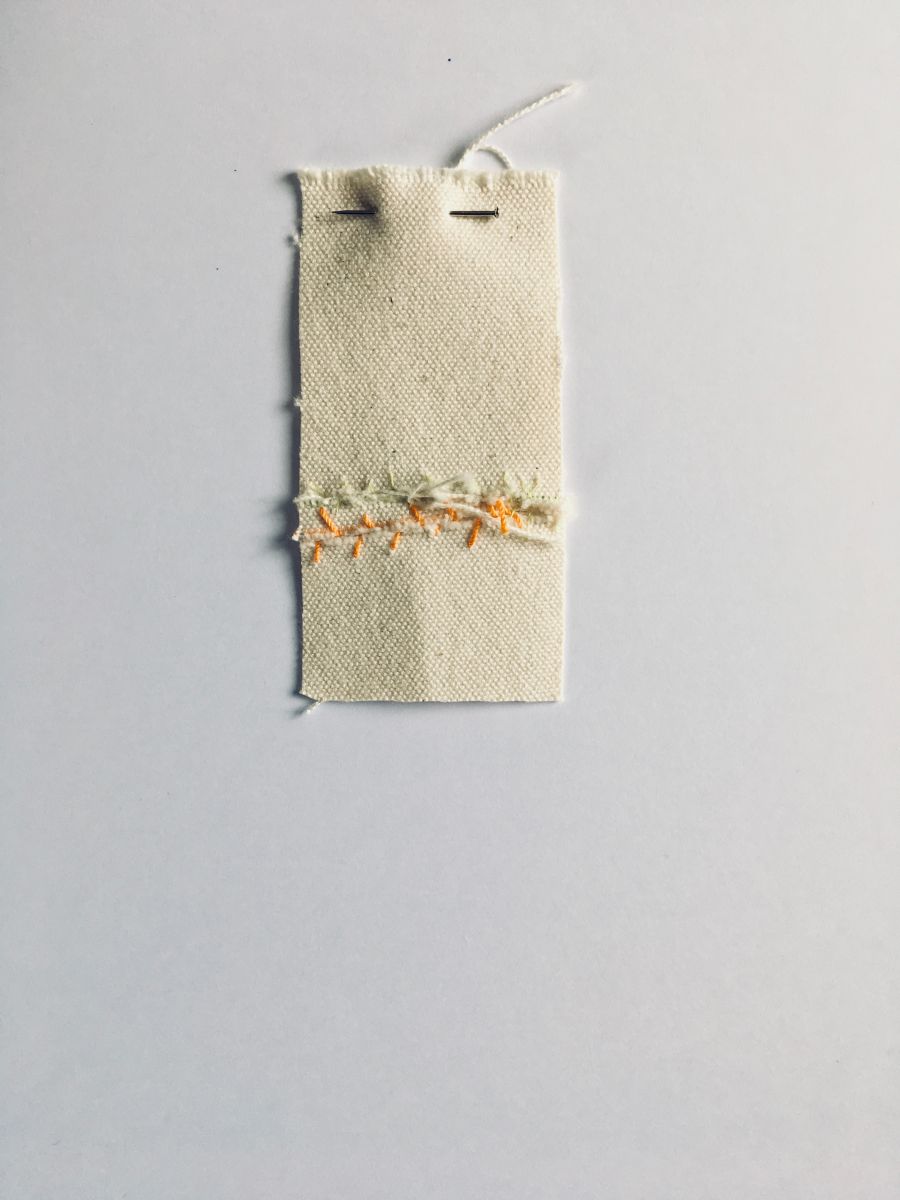
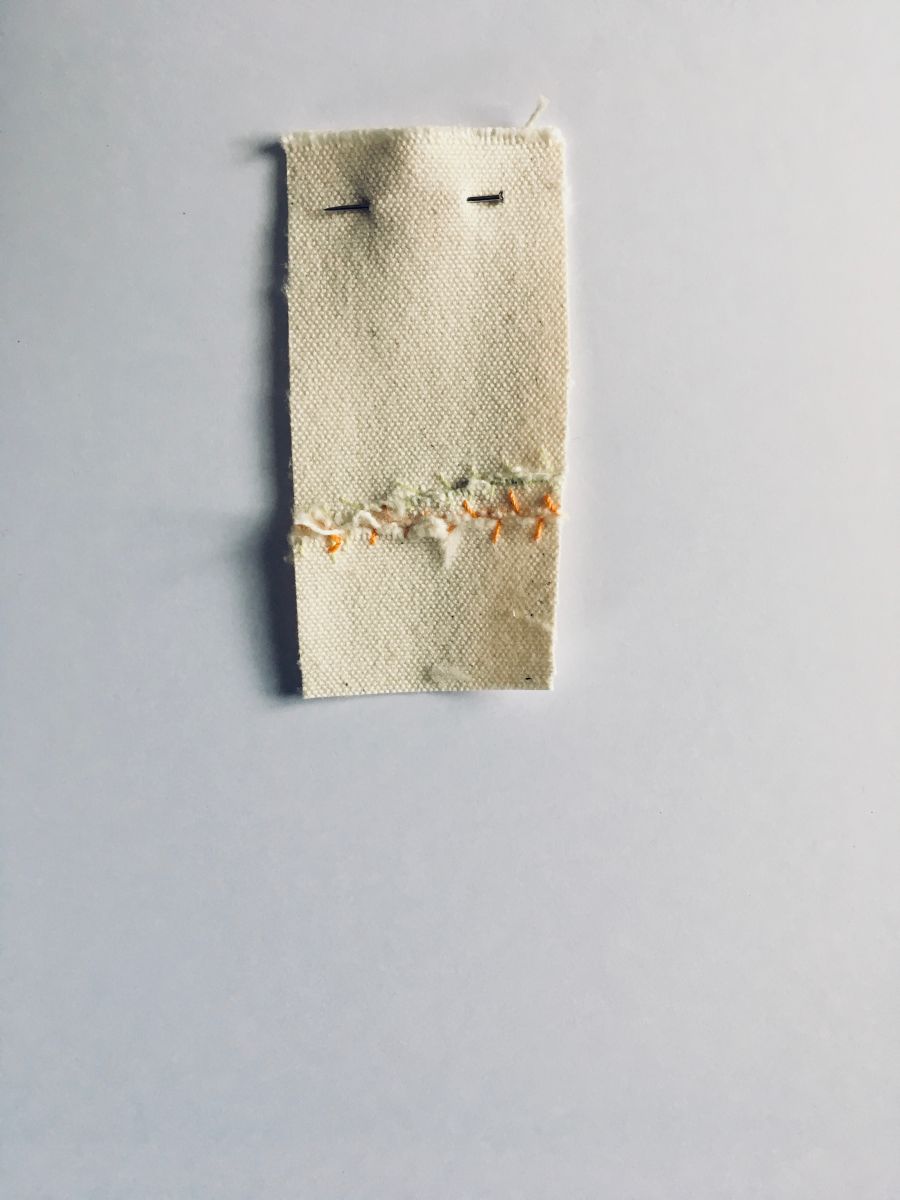
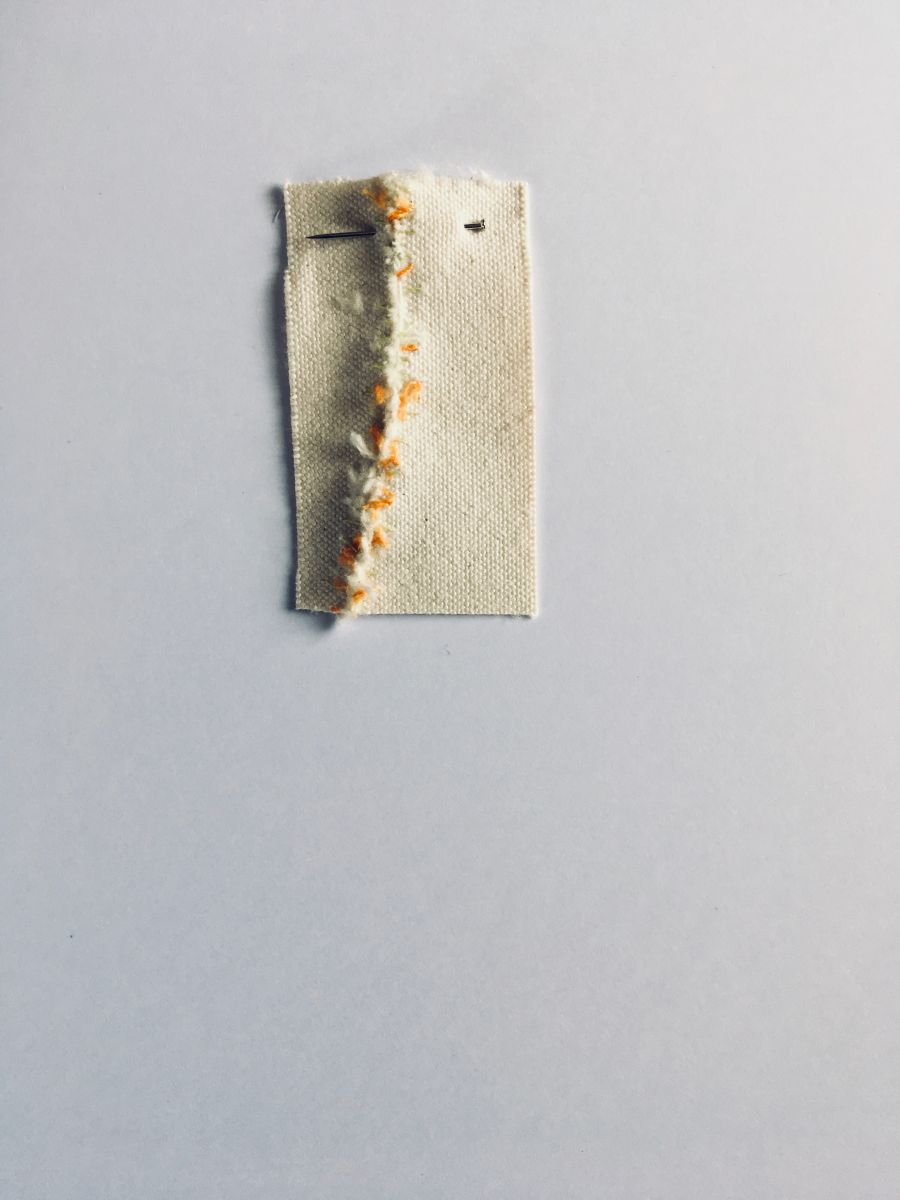
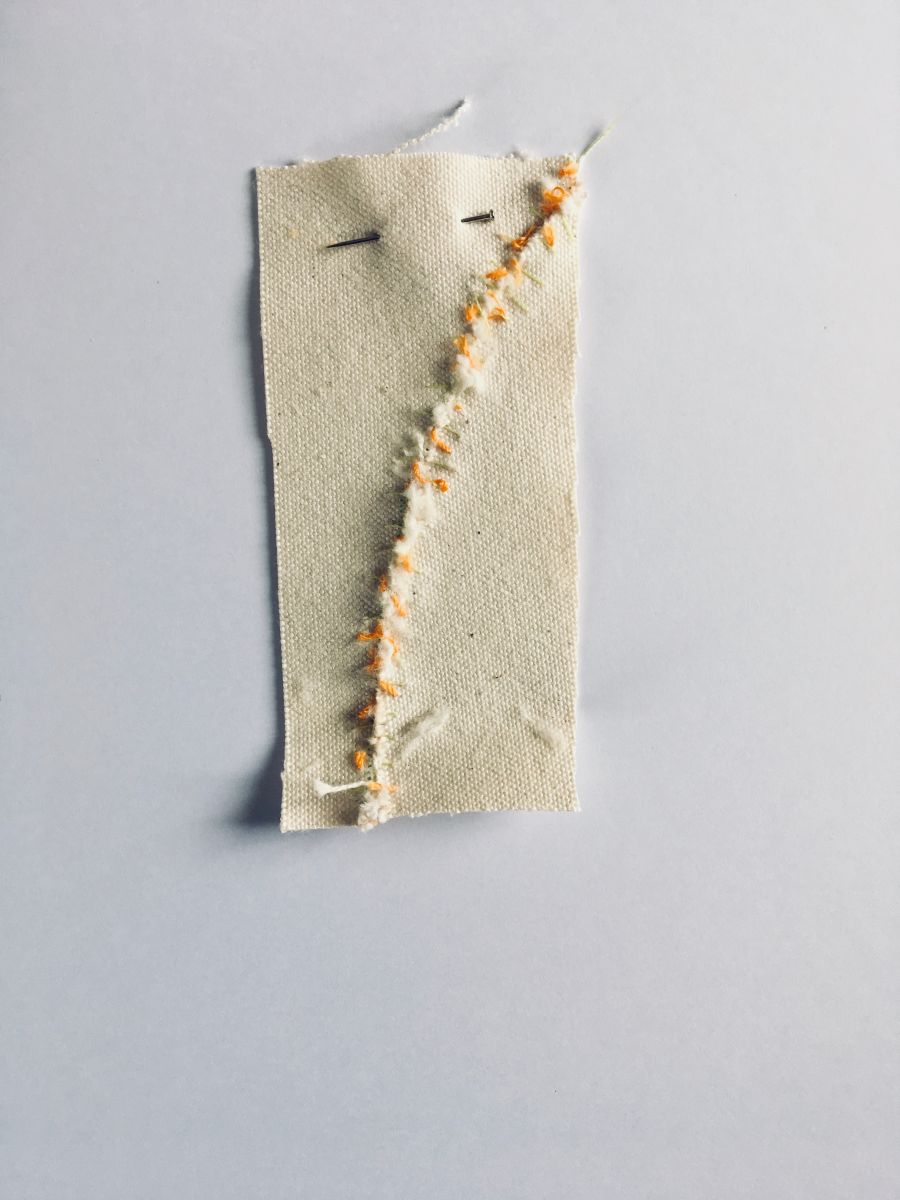
Having completed stitching the ‘Missded’ 4 canvas, I have now cut it up into tokens.

Filed Under: Missded

Patterns seeping

April 16, 2019 by Nicholas Hedges

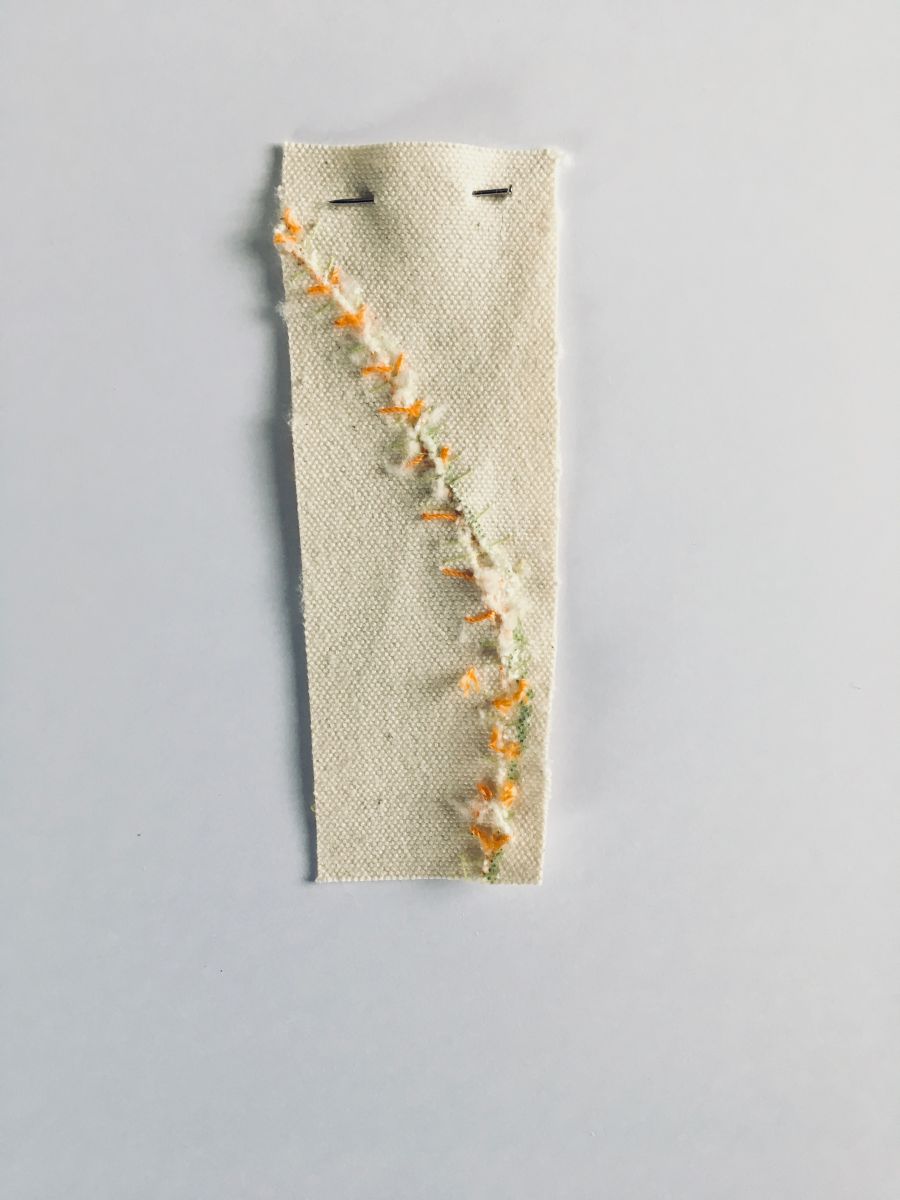
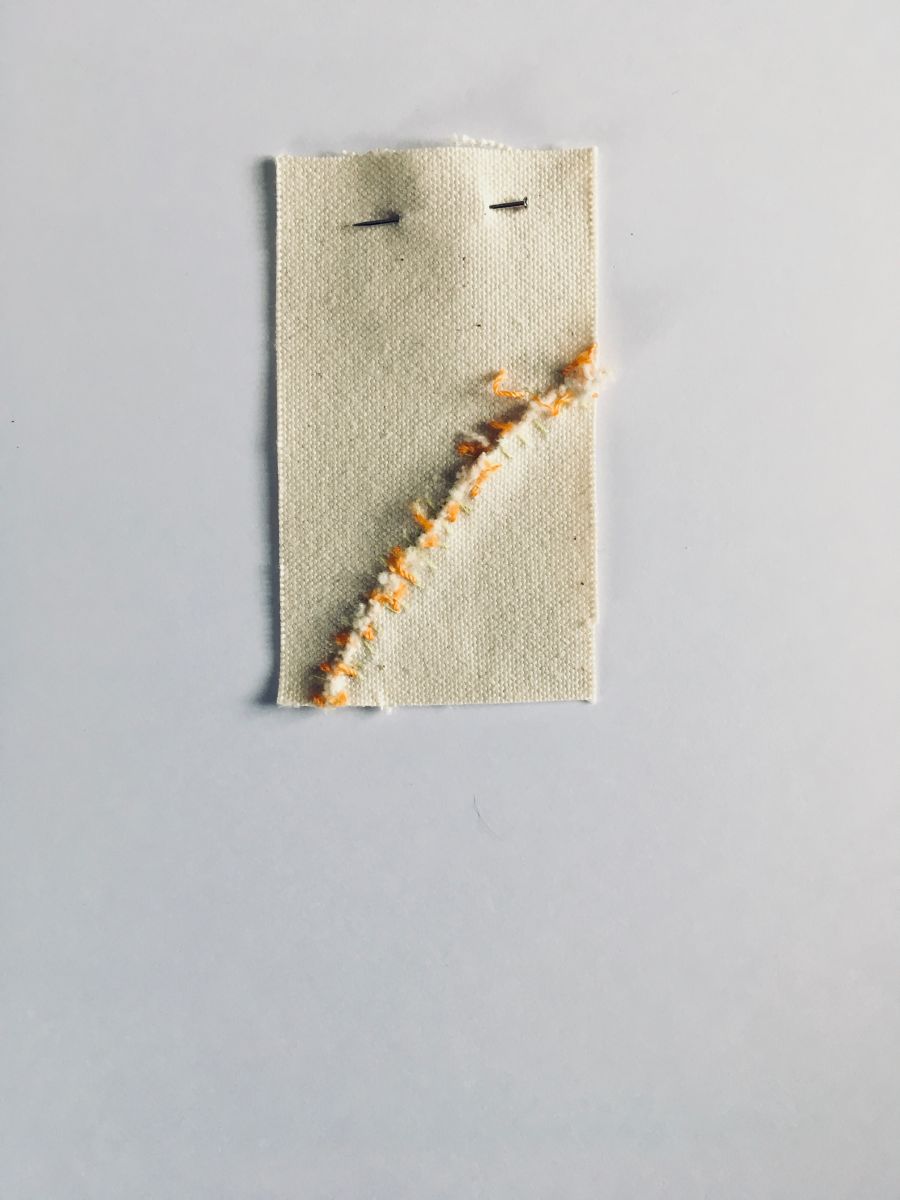
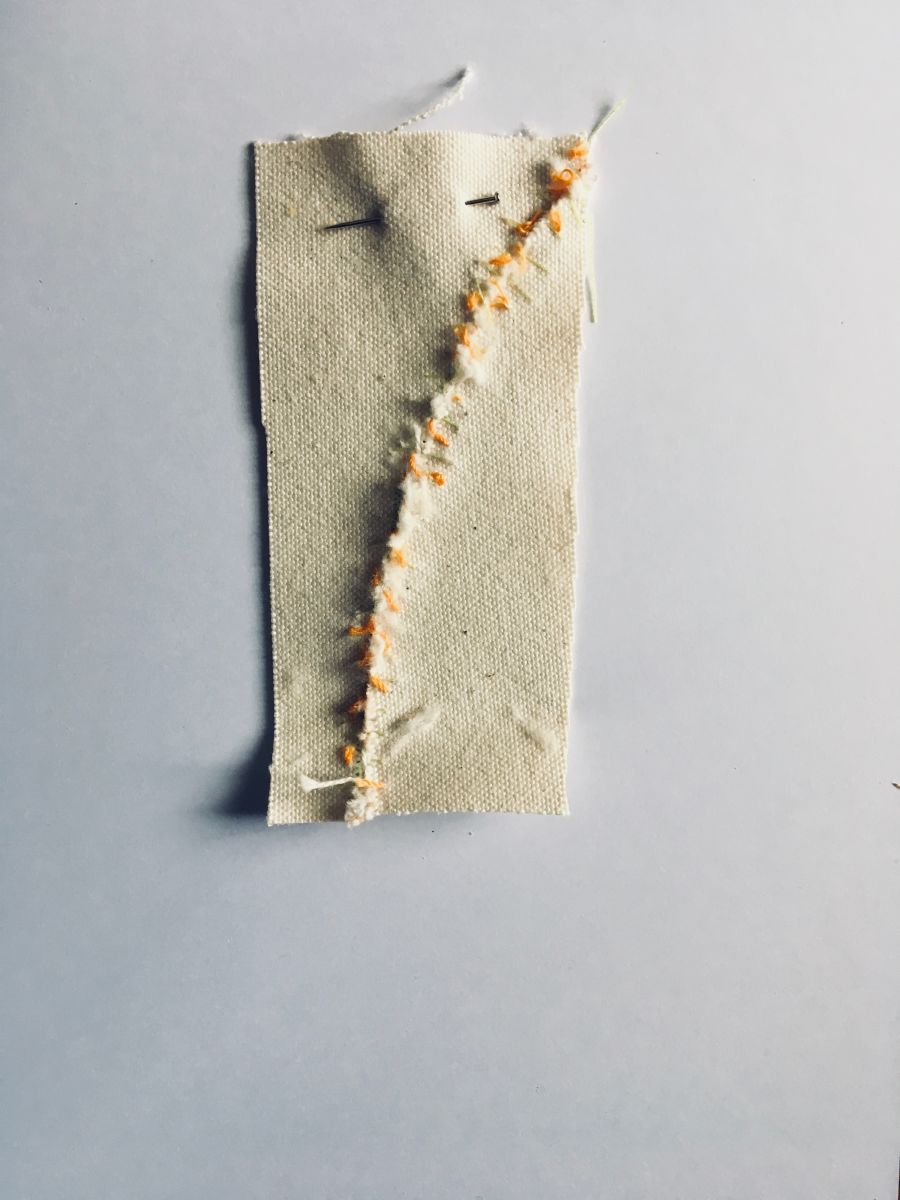
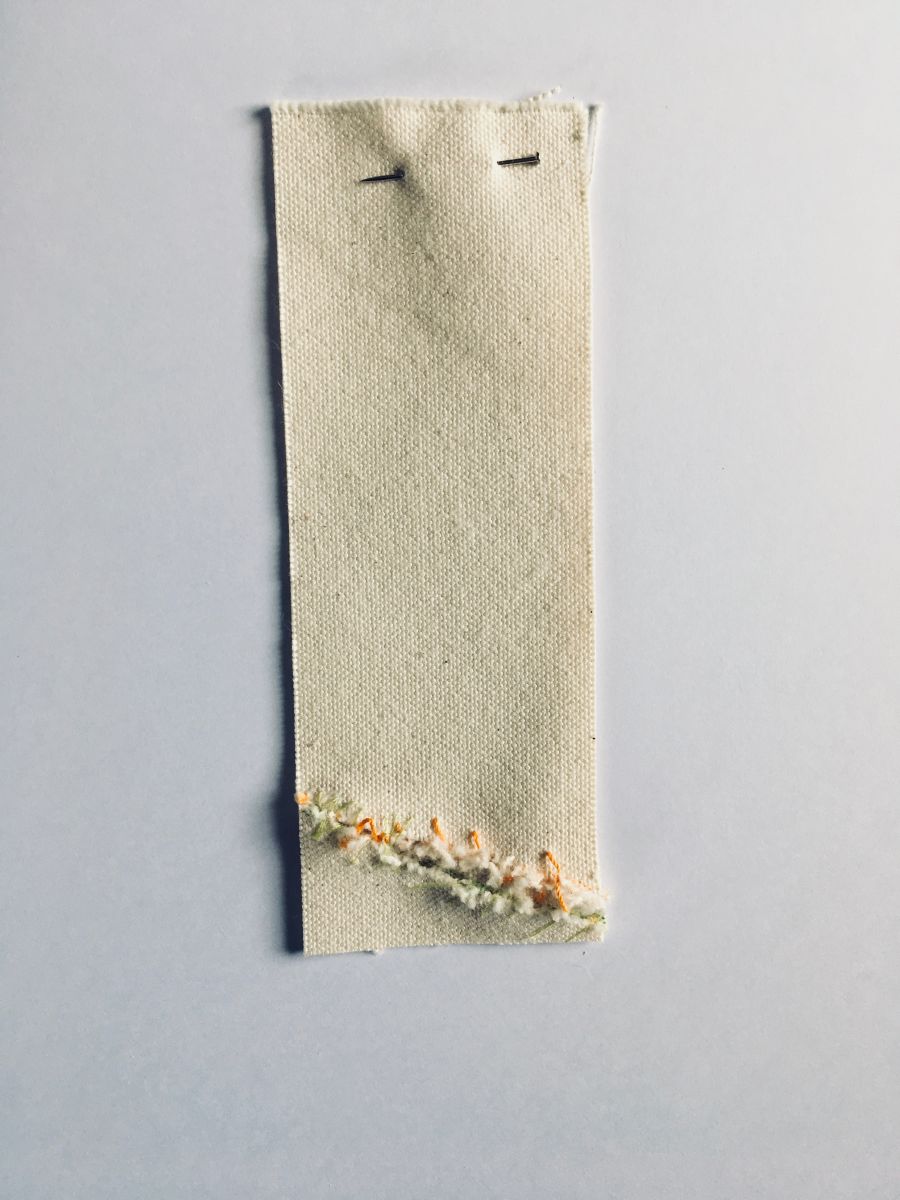
With my latest set of tokens (for ‘Missded’ 4) I wanted to work with a few of them and try something new. As I’ve stated before, the tokens – the originals on which they’re based at the Foundling Museum – represent an individual given up; an individual made absent. They were the means by which the mother could claim her child back if she were once again able to look after him or her. Now, more than two hundred years later, they are the only means by which we can ‘know’ those children. Like everything that comes down to us from the past, much is anonymous and fragmentary.

For the purposes of my ‘Missded’ project, they represent my having my children to stay for a time before they return to their mum. In particular, they represent their absence in the days when I don’t see them. The patterns from which they’re cut, were drawings made by me and my son which were traced, cut and stitched together, representing the idea of a memory cherished and replayed, over and over. The drawings were made in an instant, but the process of making the stitched versions (the memory) took weeks and months.

Every object in a museum, every relic (whether an object or building, or part of a building) is surrounded by space; that time and space from which they are now estranged. The fabric tokens in the Foundling Museum are likewise surrounded by space, into which the patterns seem to seep.

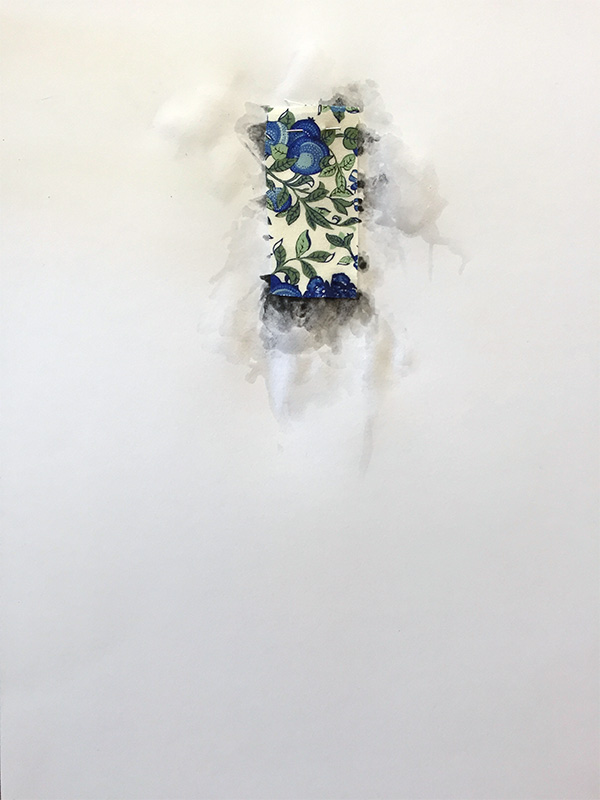
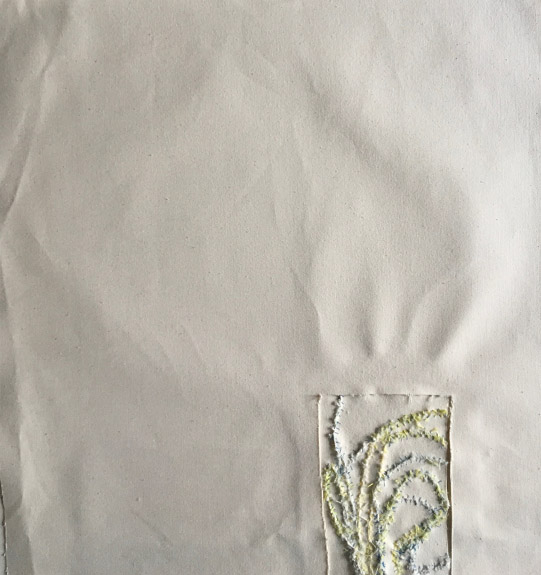
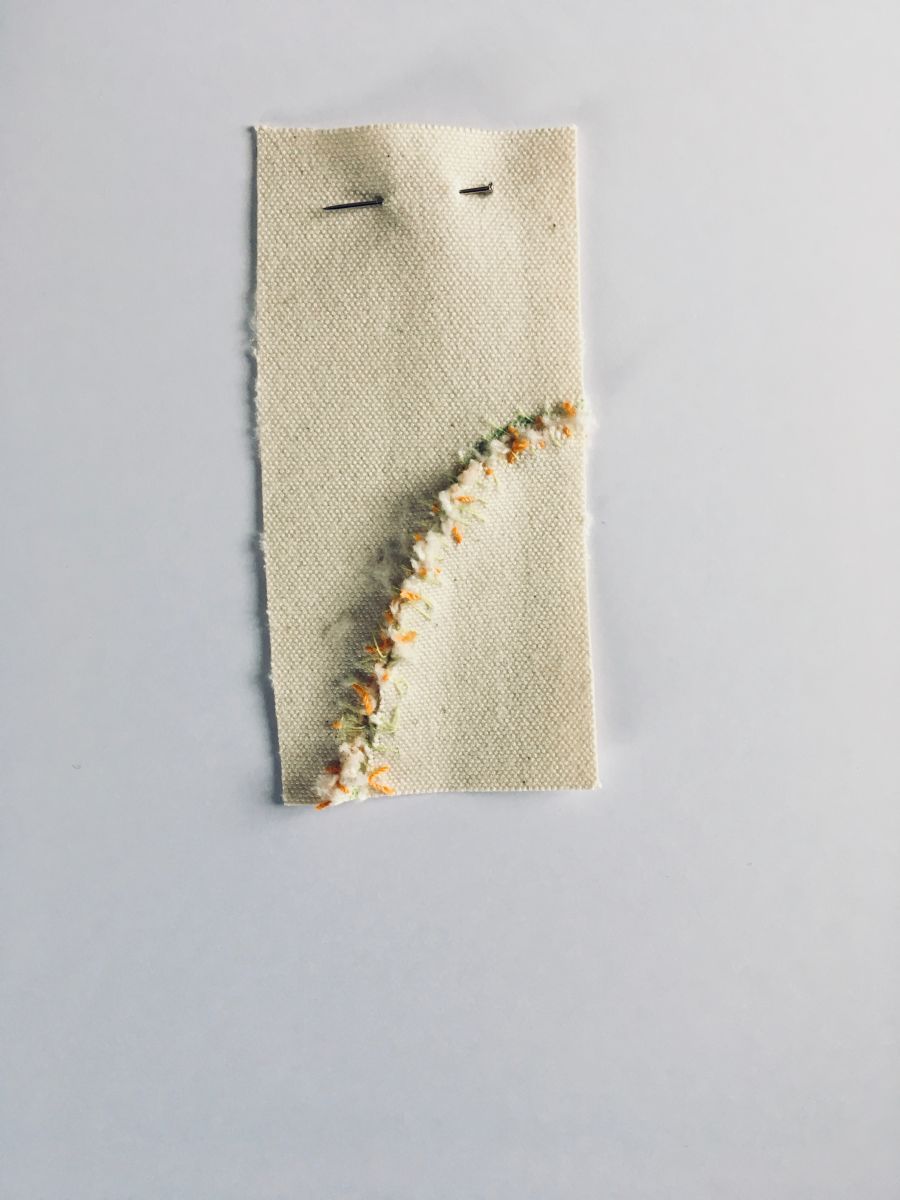
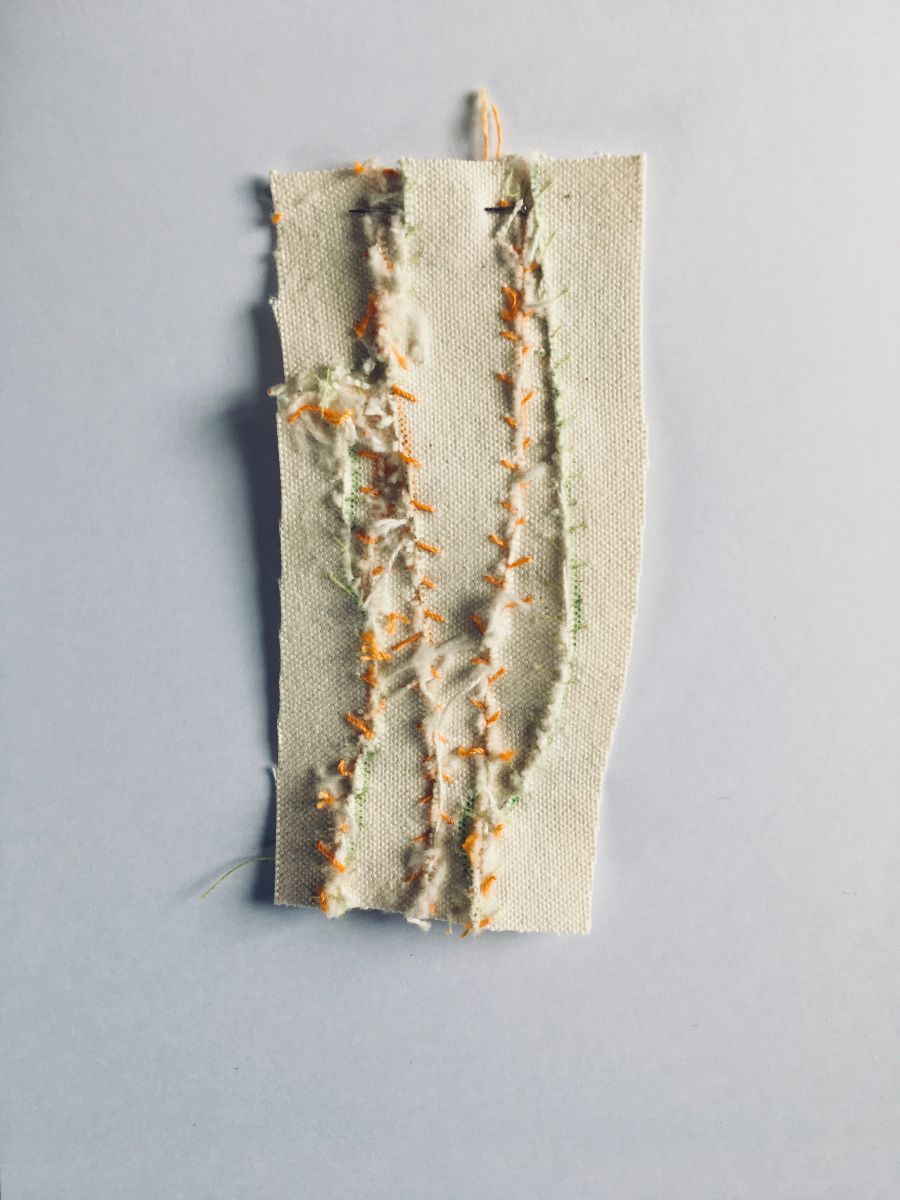
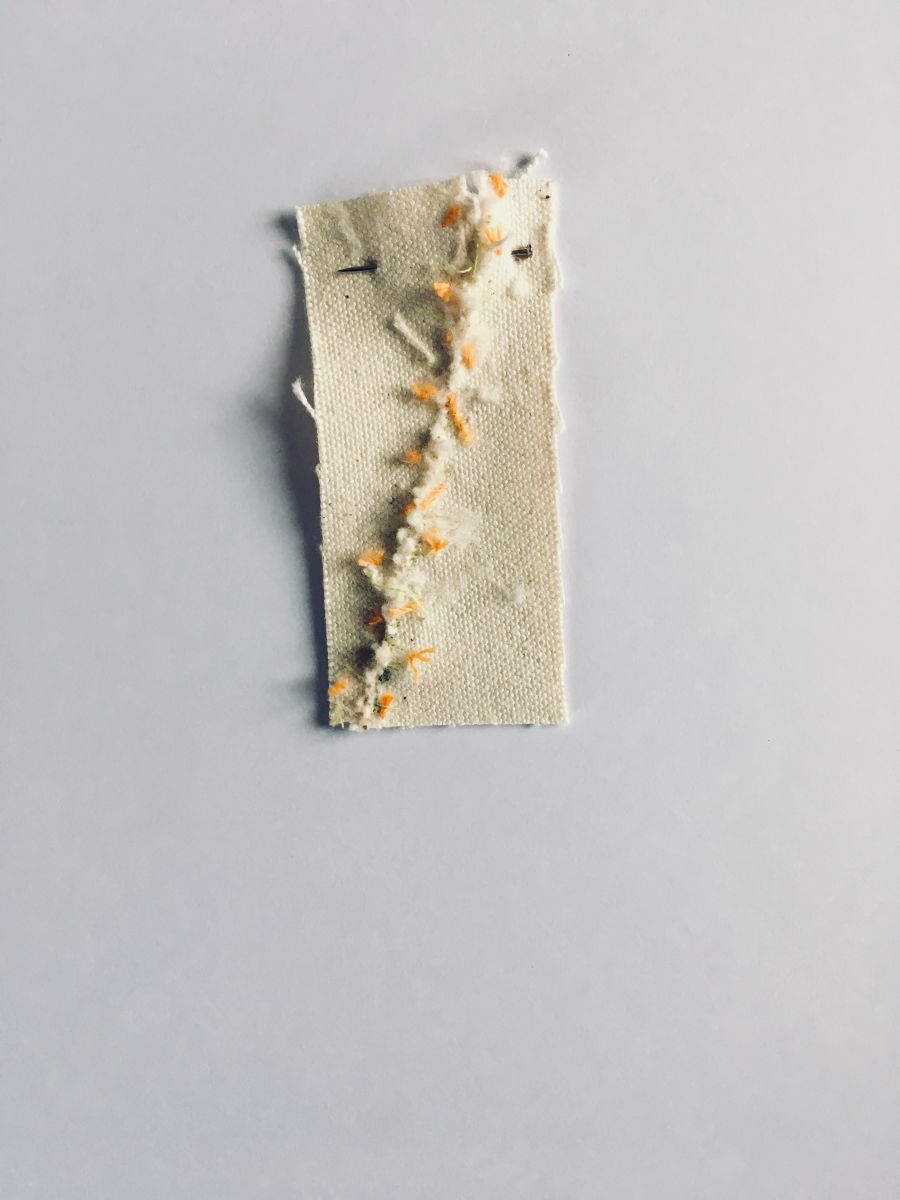
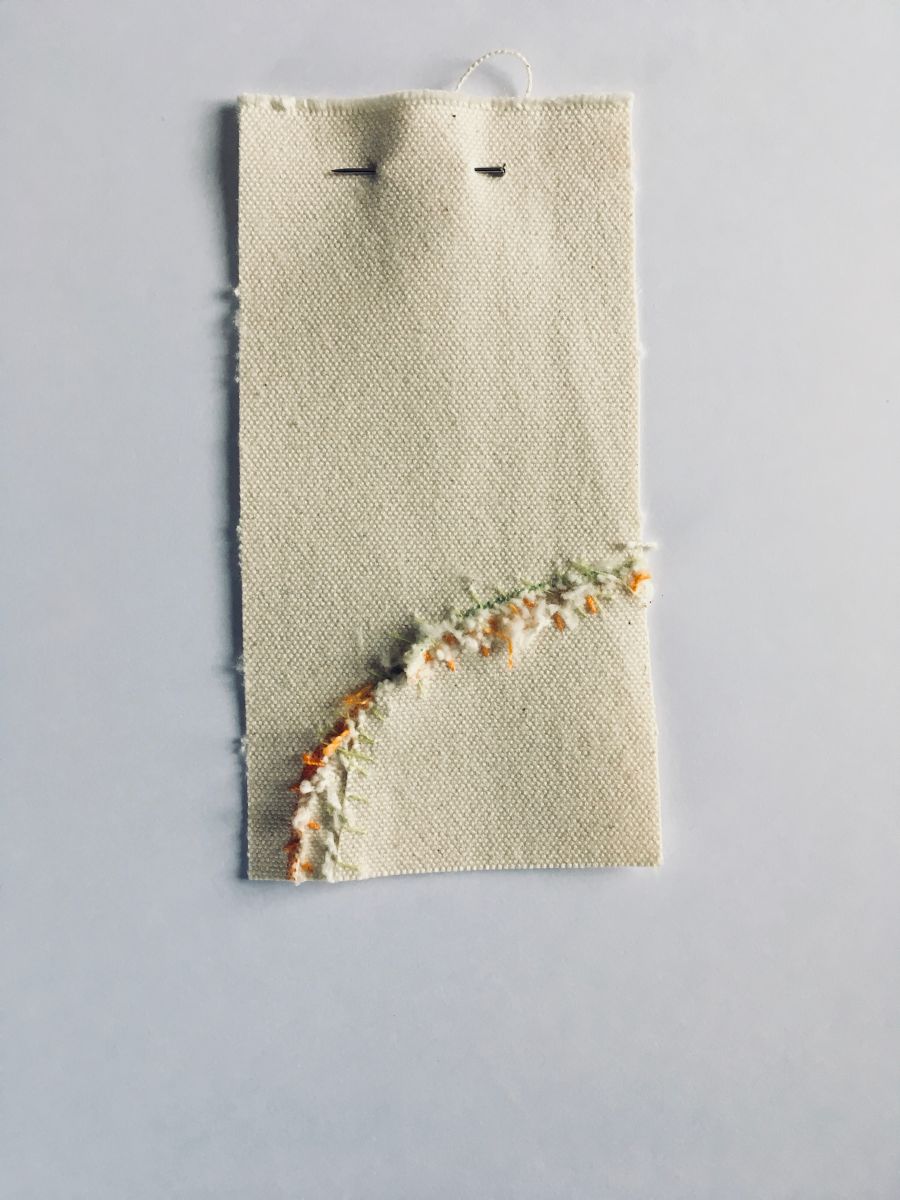
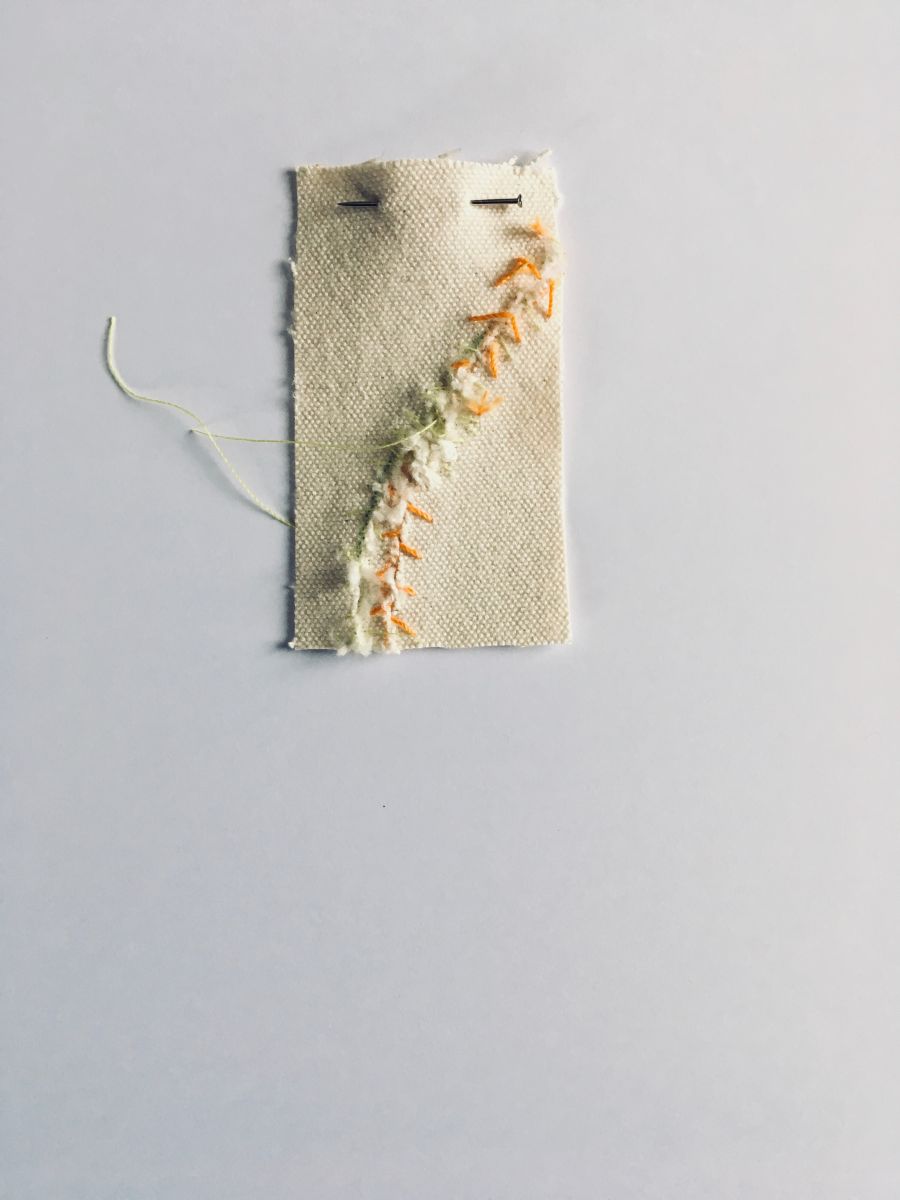
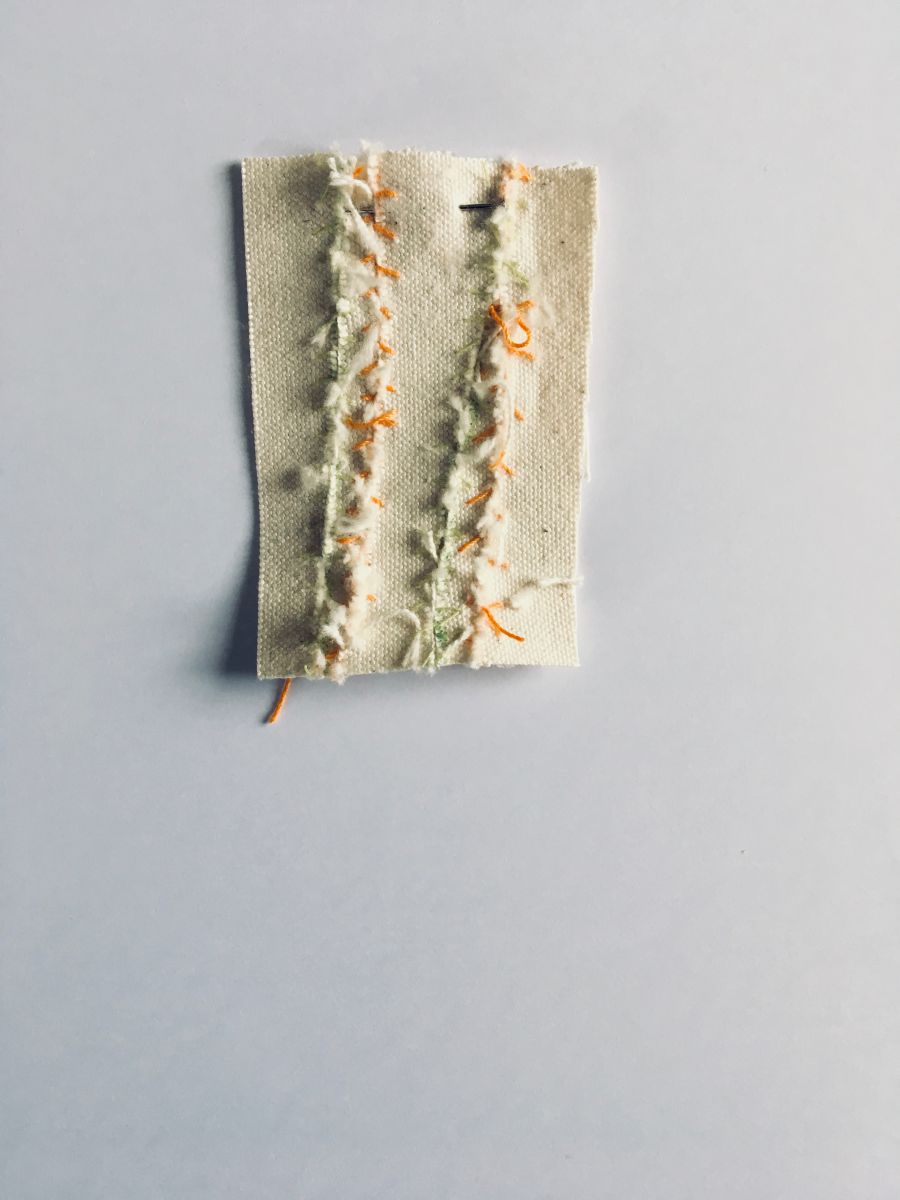
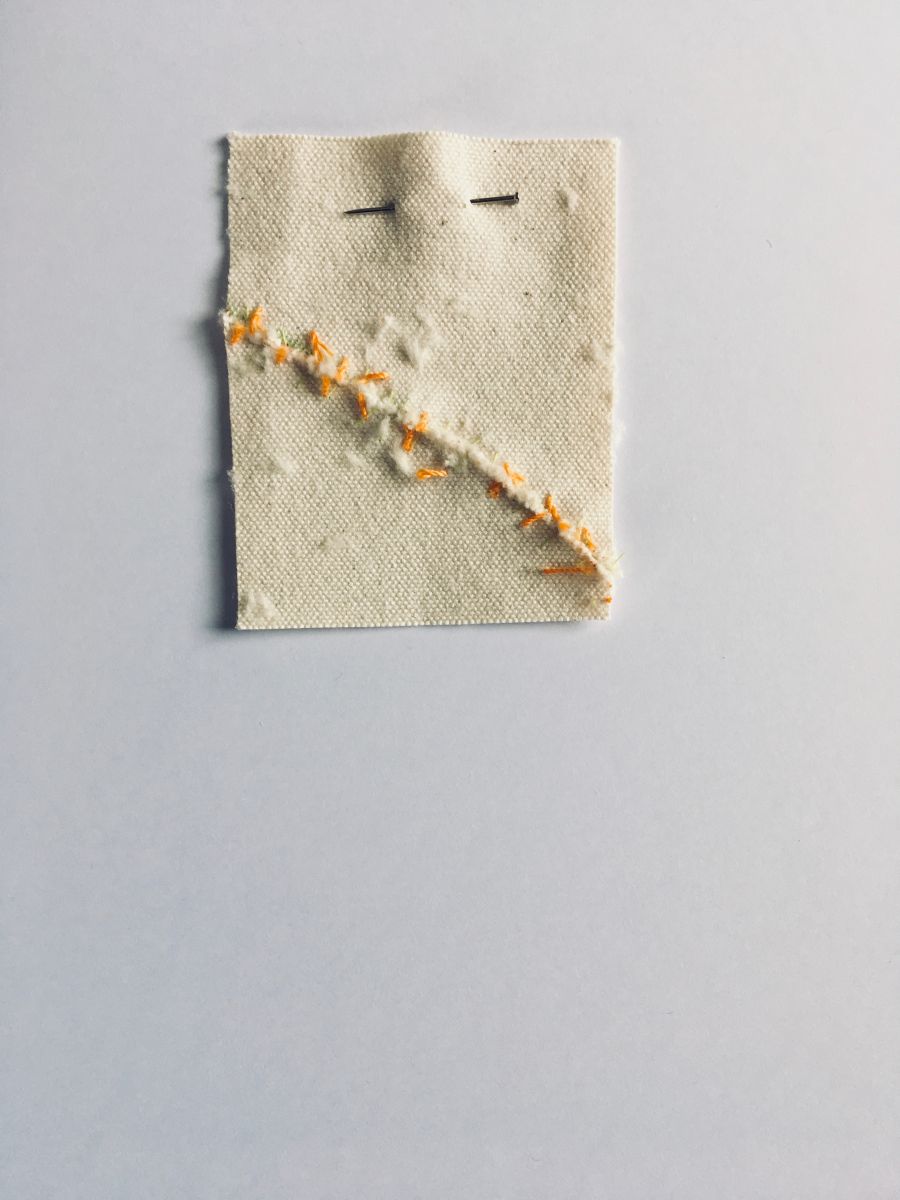
With one of the tokens I made for ‘Missded’ 4, I wanted to somehow show that space – that absence, the ‘missingness’ as it were and so I thought of placing them within another canvas. The result can be seen below.

The thing which struck me with this was how the stitched lines of the token seemed to want to encroach on the space above and to the sides, reminding me how, when looking at objects in museums, one tries to push the boundaries of the object on display into the space that can’t be seen; the space of the distant past. It is, as I’ve said above, like the patterns seeping out from the fabric tokens. This token resembles the stems of a plant, which I think helped in that idea of growing out and beyond the limits of its own space.

So, although I like this image, it demands something else. The question is, how is that to be realised?

Filed Under: Stitched

Cut Paintings

April 16, 2019 by Nicholas Hedges

I have some old paintings which have for many years been stored in a shed. I have nowhere else to put them and the shed is needed for other things. So having removed the canvases from the frames (the canvases were little worse for wear as a result of their not-ideal storage) I looked at the ‘Missded’ work I’ve done and wondered if they – the paintings – could be re-worked by cutting them down into similar sized pieces.

These paintings were originally created in response to historic traumas – such as the Holocaust and World War I – and also themes of absence and therefore the idea of creating smaller works seemed to make sense; the original tokens are after all – for wont of a much better, more appropriate word – a ‘transaction’ where someone – a child – has been given up. They are, as I have written previously, tokens of absence.

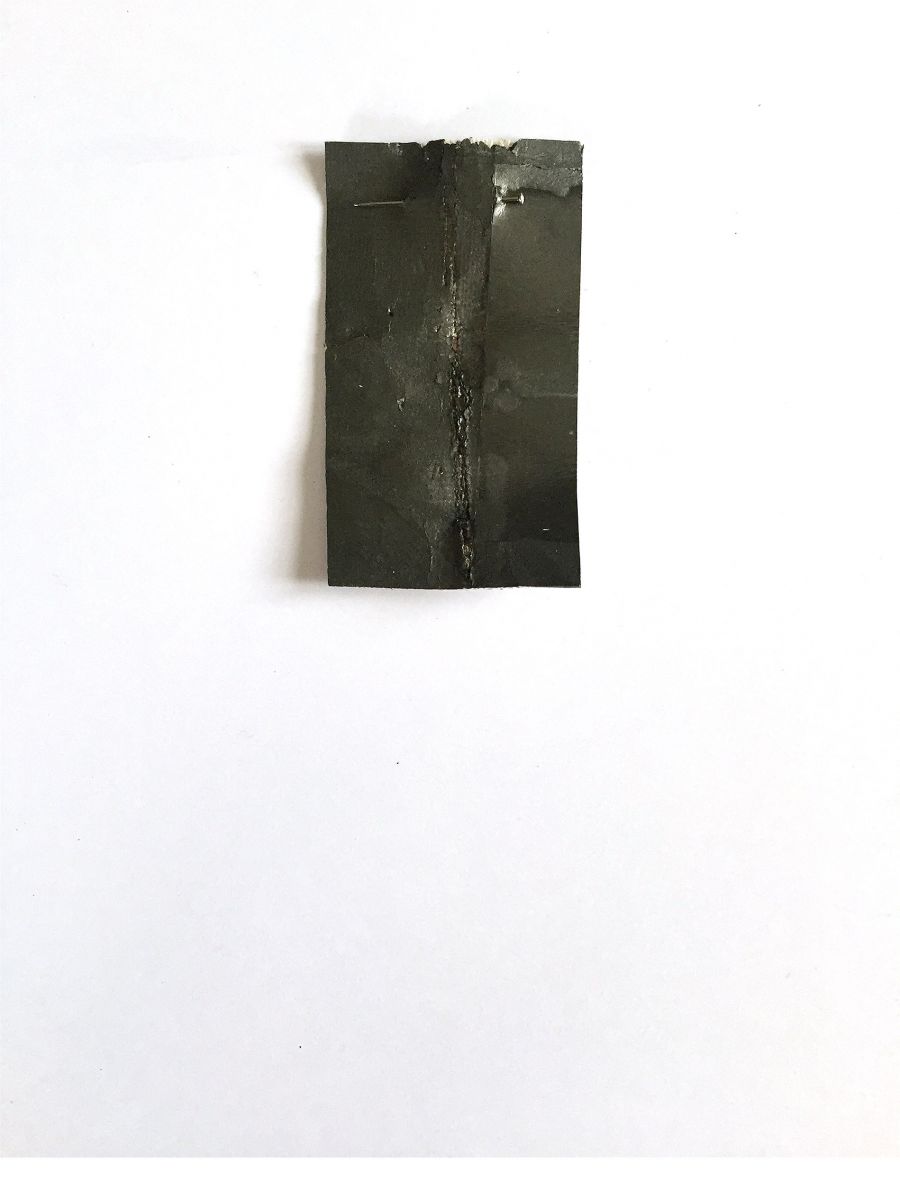
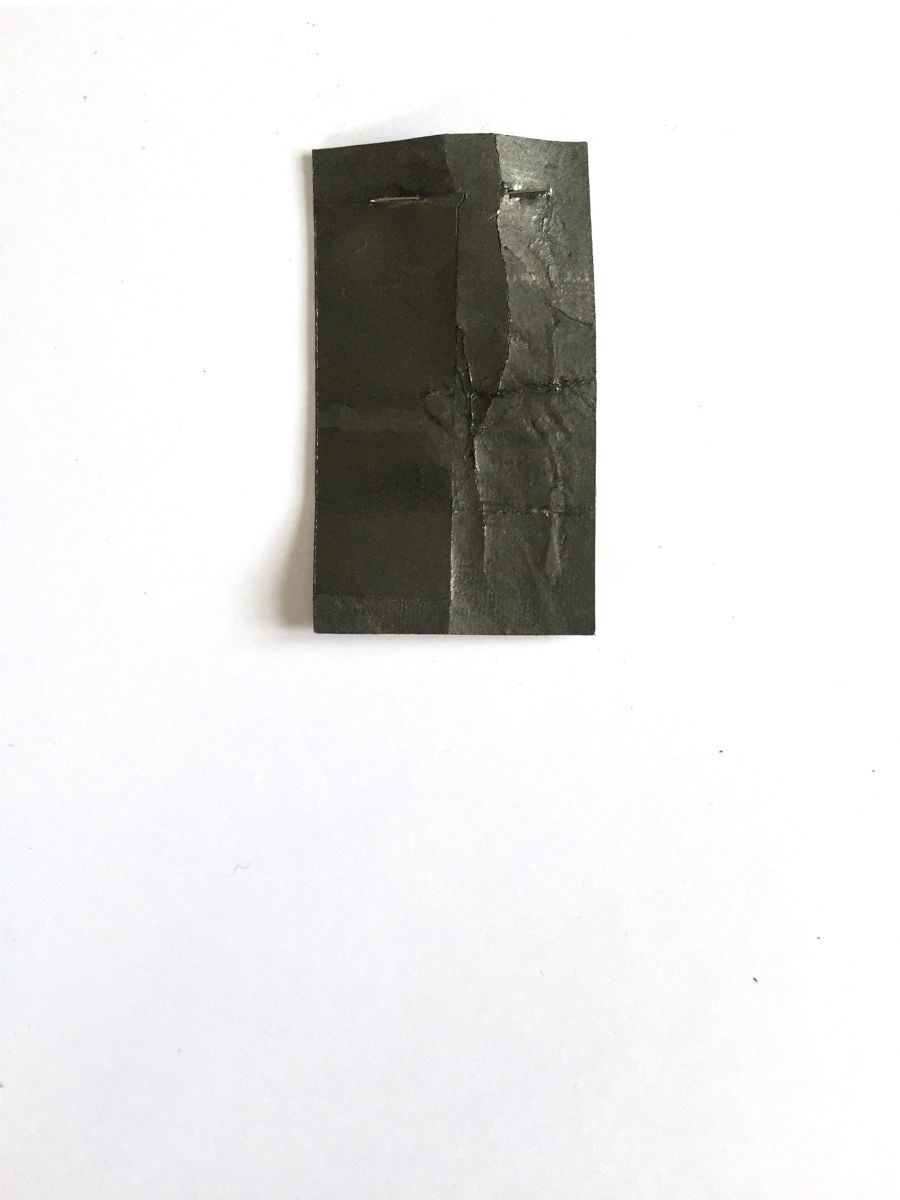
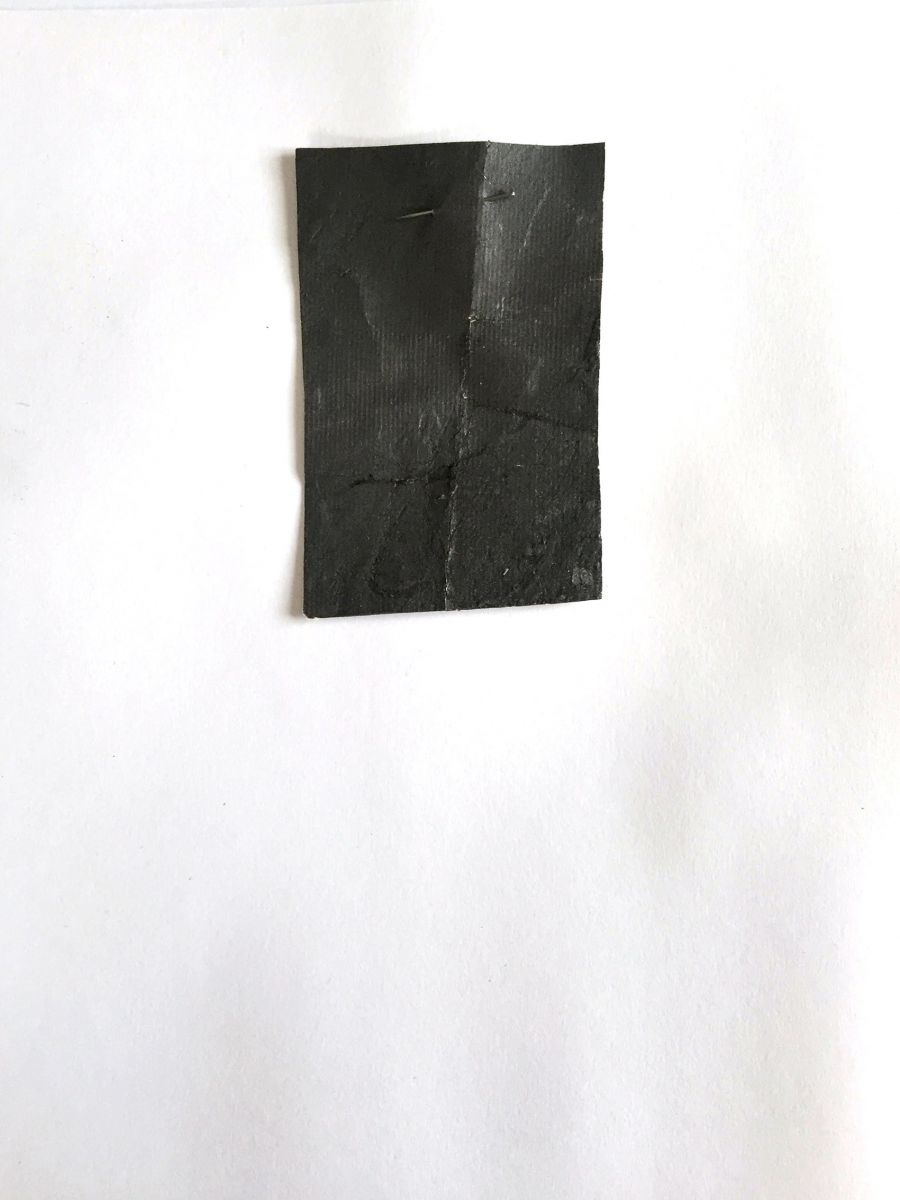
So as a test, I cut some ‘tokens’ from the original canvases and pinned them as I have the tokens made for my ‘Missded’ project.

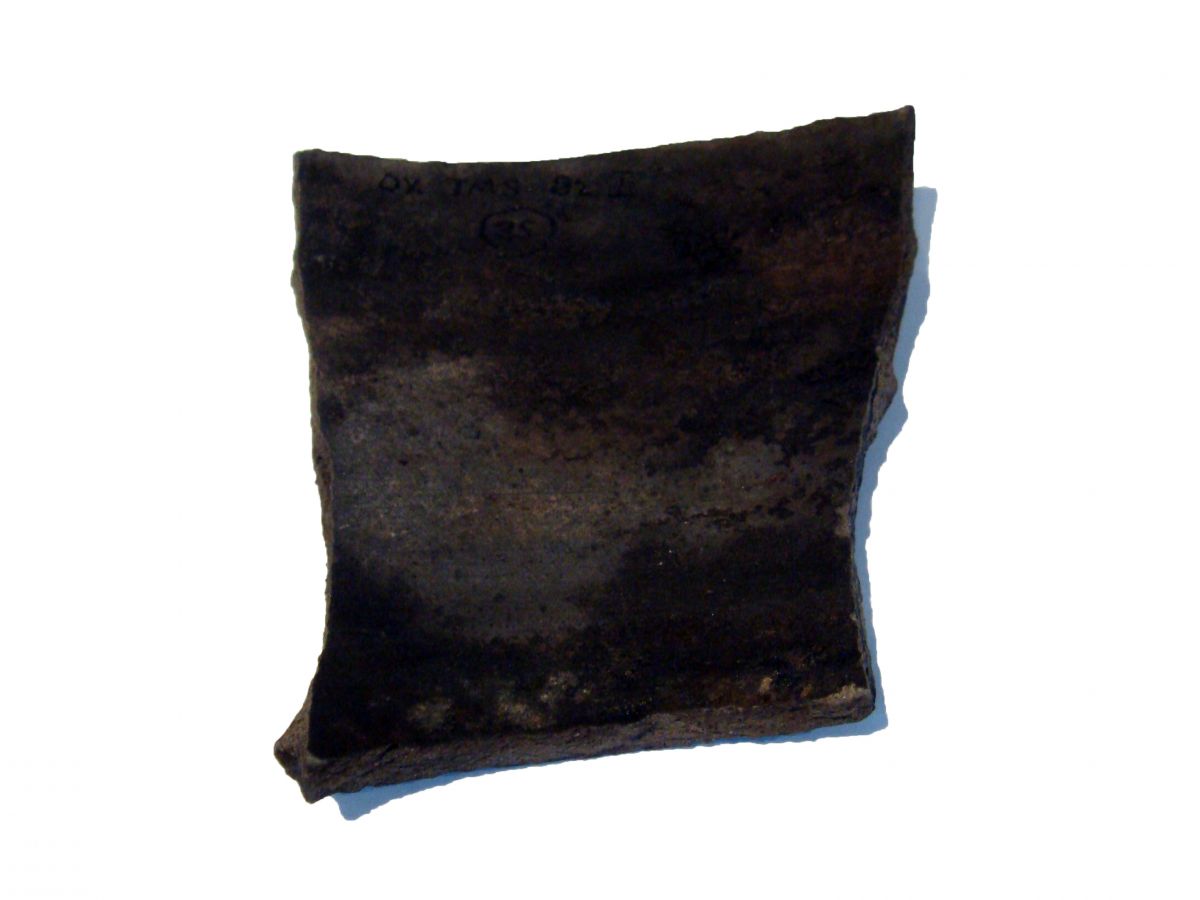
As an addendum to this post, I was reminded of some work I did in regards to a fragment of pottery many years ago. The pottery shard can be seen below.

Filed Under: Holocaust, Stitched

‘Missded’ 4

April 11, 2019 by Nicholas Hedges

I’ve finally finished stitching the fourth in the ‘Missded’ series of stitched works which I began some time ago. The complete piece, prior to being cut into ‘tokens’ can be seen below.

Filed Under: Missded, Stitched

Locks III

March 26, 2019 by Nicholas Hedges

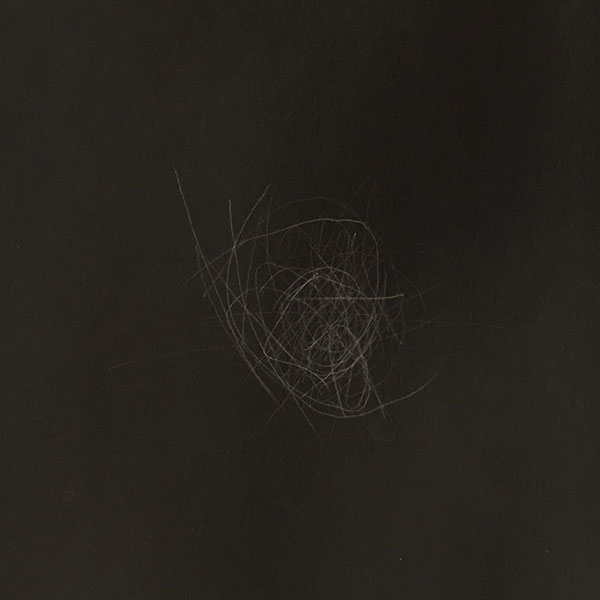
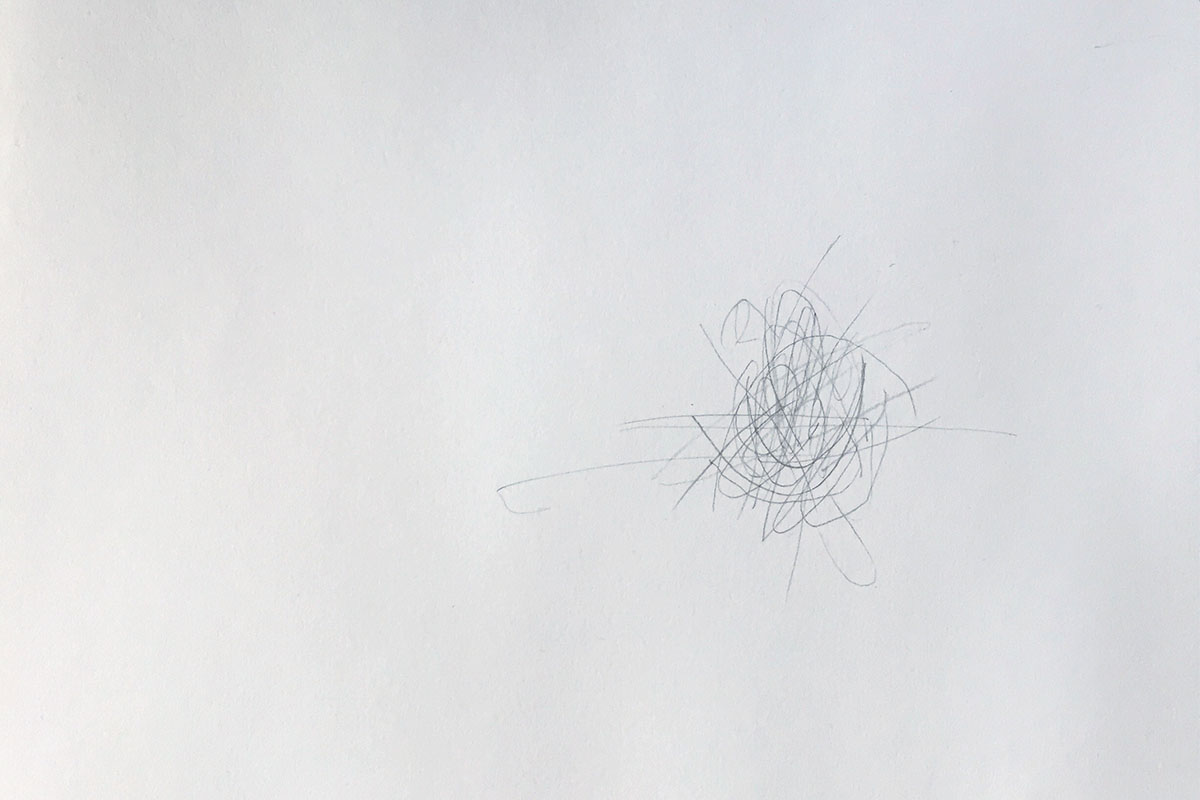
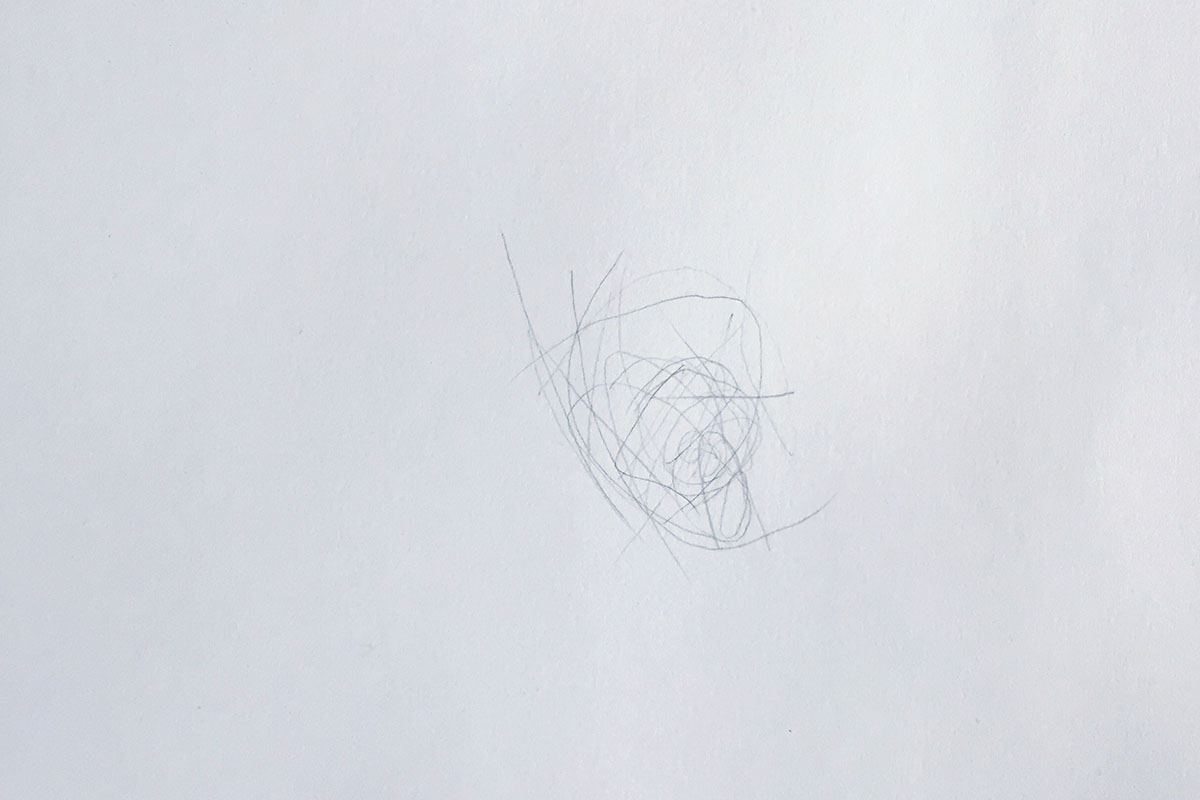
Progressing the images from my previous post, I’ve started to arrive at something more akin to what I had in mind from the outset.

The first in these three images in particular has the subtlety I am after, and, combining the three ‘locks’ gave me even more – something not entirely obvious once compressed for the web.

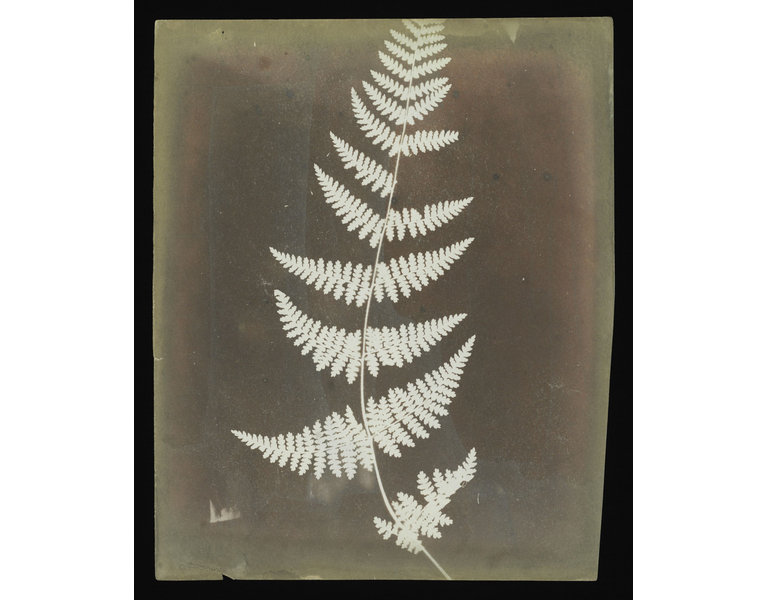
There’s something too of early Victorian photography in this image, in particular, the early experiments of the Henry Fox-Talbot such as the fern reproduced below.

Filed Under: Locks

Locks II

March 26, 2019 by Nicholas Hedges

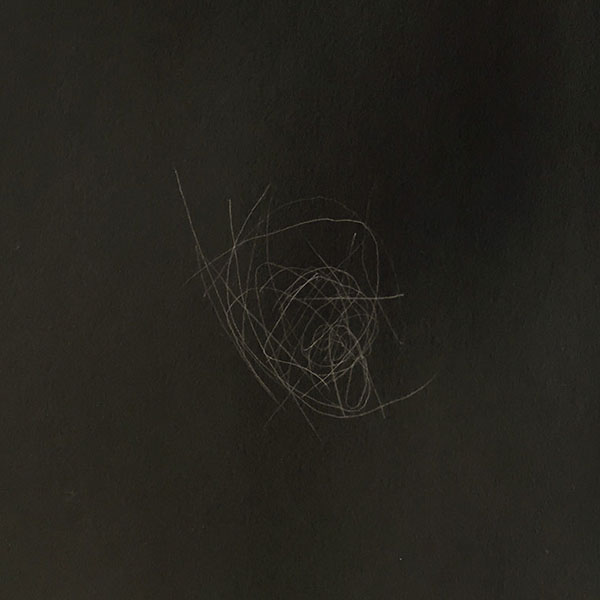
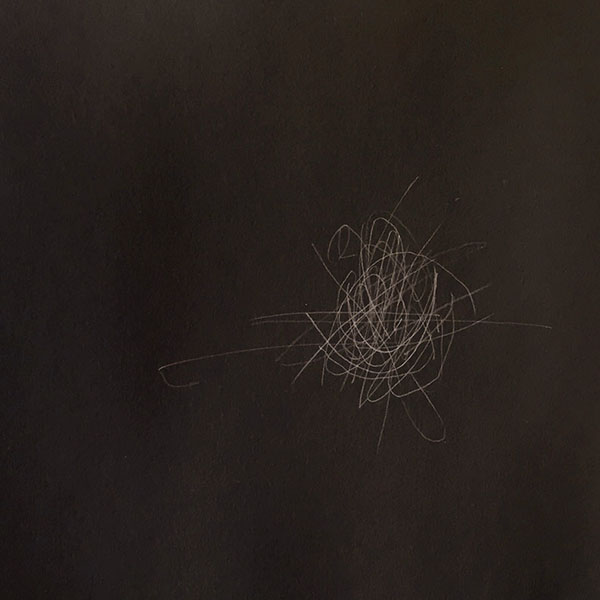
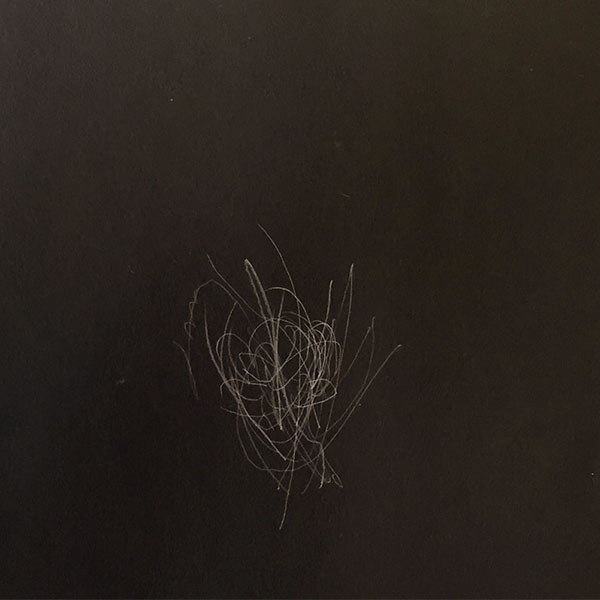
Following a post I wrote back in 2017 (Locks) I’ve been looking again at the idea of creating small works using drawings made by my son and somehow reflecting the idea of the drawings as keepsakes and mementoes of times spent together. I took some of his drawings and using a lightbox, traced parts of them in both pen and pencil, trying to create images that were like locks of hair, the results of which can be found below.

Photographing work like this always strips it of its subtlety, but nonetheless, I was quite pleased with what I made. They don’t quite have the ‘lock of hair’ look I want just yet, but it’s a start.

Filed Under: Eliot's drawings, Locks

‘Missded’ 2 – Tokens

August 20, 2018 by Nicholas Hedges

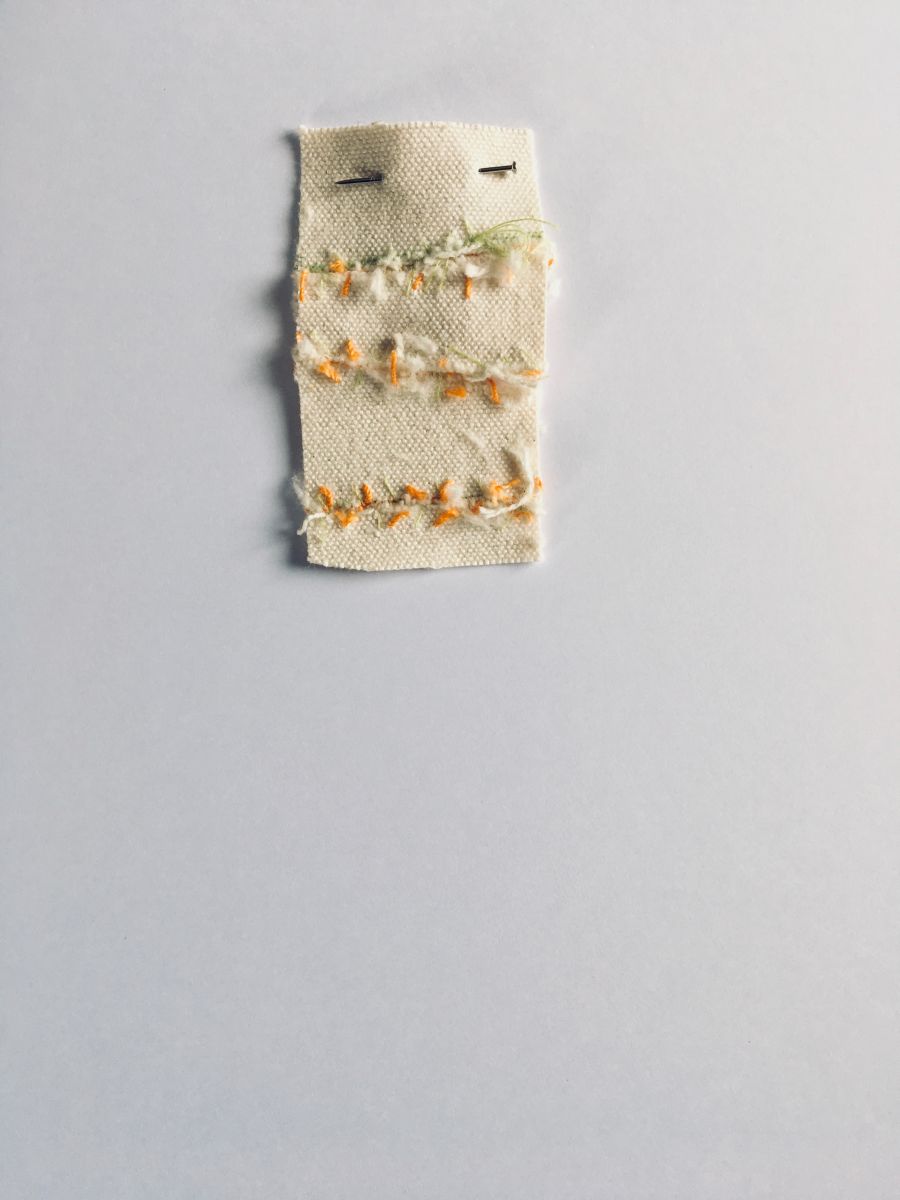
Having completed the stitching for ‘”Missded’ 2″, I’ve now cut it up to create the ‘tokens’ shown below.

Filed Under: Missded, Stitched

My Son’s Drawings II

August 17, 2018 by Nicholas Hedges

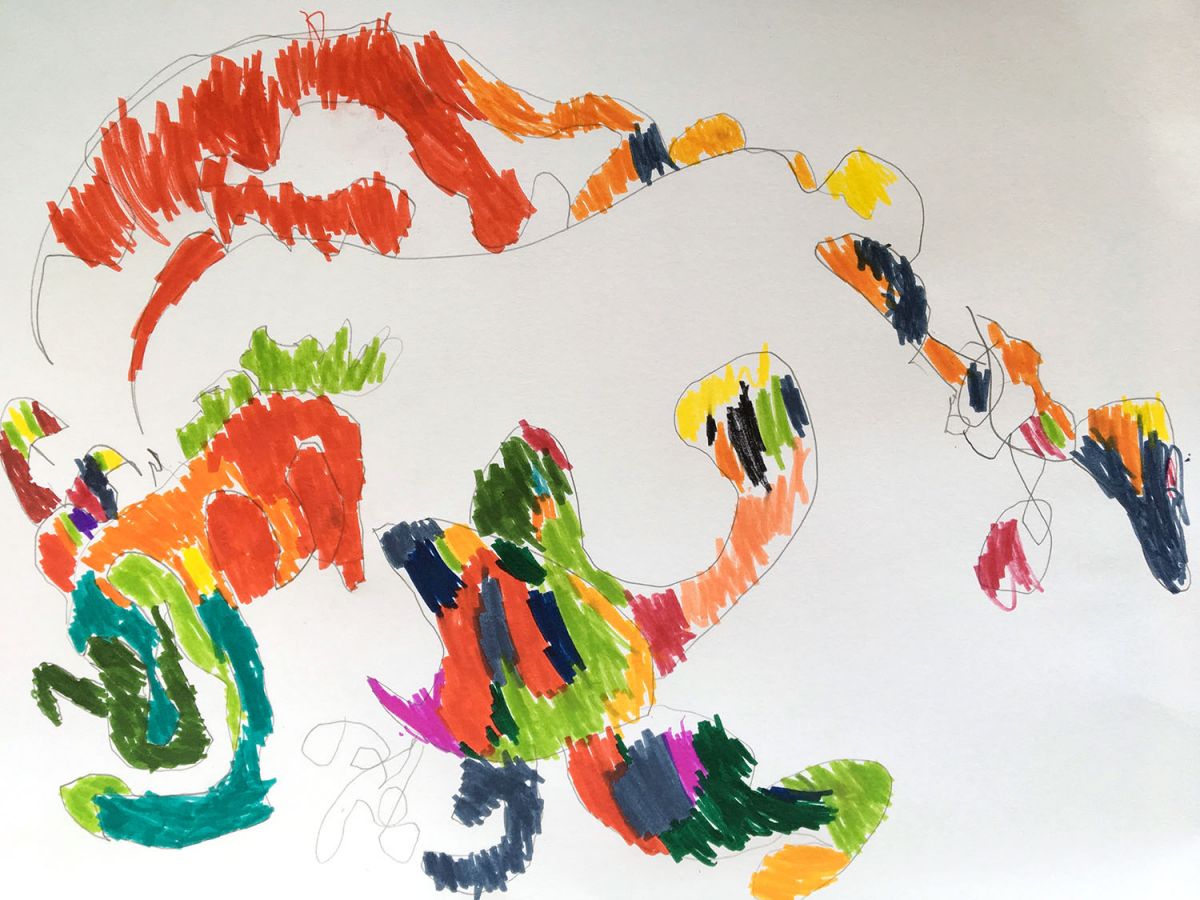
I’ve written before about how I find inspiration in my young son’s drawings, or in how he draws. He drew this picture before breakfast one day and I was very taken aback by it, particularly the way he’d coloured it in, using (in the main) fairly neat blocks of different colours. It has inspired me to just draw, to not think too much about what one is drawing, or rather how one is drawing, but to just take, as Paul Klee famously said, the line for a walk.

It shares something with a painting he did some times ago in which again, he painted using blocks of individual colour.

Filed Under: Eliot's drawings

‘Missded’ 2

August 17, 2018 by Nicholas Hedges

I recently completed the third (although titled as the second) in my series of stitched works based on drawings completed by me and my son several months ago. Tomorrow I will cut the piece up to create the ‘tokens’.

The original drawing is shown below:

Filed Under: Eliot's drawings, Missded, Stitched

‘Missded’ 3 – Tokens

April 7, 2018 by Nicholas Hedges

Having completed the stitching for ‘”Missded’ 3″, I’ve now cut it up to create the ‘tokens’ shown below.

Filed Under: Missded, Stitched

‘Missded’ 3

April 3, 2018 by Nicholas Hedges

I’ve finally completed another of the stitched works – “‘Missded’ 3”.

Below is the original drawing made by me and my son.

Filed Under: Missded

‘Missded’ 1 – A Framed Token

April 2, 2018 by Nicholas Hedges

When one of the ‘tokens’ is put in a frame, it becomes a thing in its own right; a fragment still, but one quite divorced from the others and from that from which they were cut.

What started with this (a drawing made in seconds by me and my son):

became this (a stitched version made over several days):

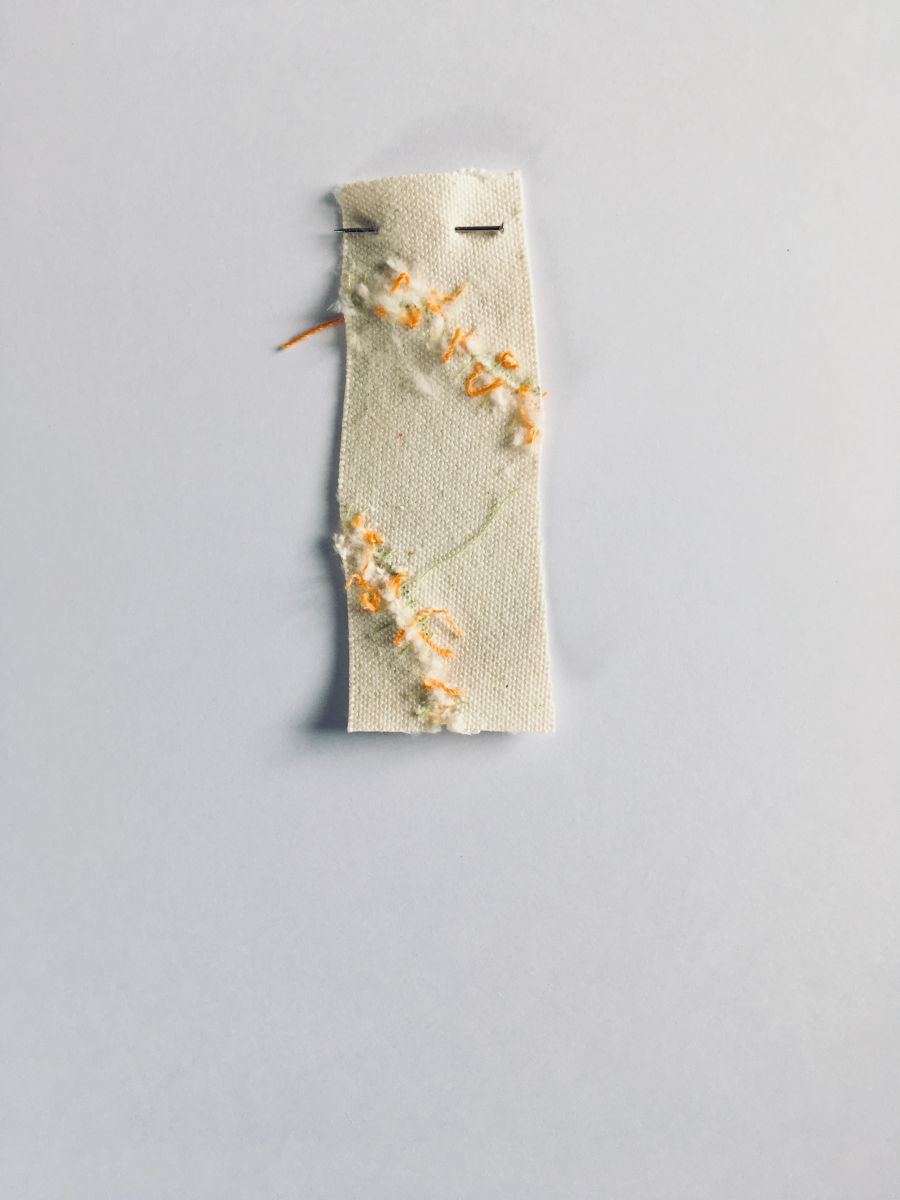
and ended up as this (one of many ‘tokens’ cut from the above):

The following shows one of the tokens in a frame:

What this made me think about was how I would show these works: as individual objects such as that above or in a group? If there were several of these shown together, then their relationship to the original stitched work (and therefore the original drawn work) would be obvious. There would be a sense of the repetition of times when I’ve missed having the children. Grouping them together would therefore turn them into a work about remembering; remembering in those times when I haven’t had the children, what we did when in the times we spent together.

The original stitched work is about two things:

  • the  difference (in timespan) between those times when I have the children and when I have not. i.e. it’s an attempt to recreate a brief moment (the original drawing) in a form which takes many hours and days to complete
  • the act of remembering and savouring those particular moments, holding onto them in  times when I am on my own (the act of stitching is repetitive, akin to remembering something (or looking at a photograph) over and over again

The tokens made from this stitched piece are about the fragmenting of my time with my children. As an individual piece (such as that above) it’s about a time when I’ve said goodbye. Grouping them together therefore would show a lot of ‘goodbyes’ but also an equal number of ‘hellos’.

What I’m wondering now, as I’m about to complete the second of these stitched works, is whether when grouping a number of these fragments together (and as they are grouped together, so a wider memory is rediscovered) I should mix up the pieces, so that some from different drawings are placed alongside, after all, memory is not linear and memories often become mixed up with others. What will be palpable from seeing the grouped tokens is a sense of many goodbyes and indeed hellos; fragments of times when I’ve been without them and thinking of them, but on a positive note, a sense of many memories shared with them as well.

Filed Under: Missded, Stitched

  • « Previous Page
  • 1
  • 2
  • 3
  • 4
  • 5
  • 6
  • …
  • 32
  • Next Page »
  • The ‘Now of Then’
  • Artist’s Statement
  • Designs for an Heirloom
  • Dissonance and rhyme
  • Wildflowers
  • Emptiness
  • Wave (goodbye)
  • Now In The Past Of An Unreal Place
  • Return to Graphite
  • Genius
  • Latest Backdrops
  • Extended Backdrops
  • Backdrops
  • Komorebi
  • Acorns
  • Scroll Work
  • Goethean Observation: Japanese Scroll
  • Mistakes
  • The Leaf Is Singing Still
  • Past Present
  • Scrolls
  • As Yet Untitled
  • Holes
  • Scroll
  • A Calligraphy of Shadows
  • More Paintings
  • Latest Paintings
  • Walking Meditation 2
  • Knowing We Are There
  • Venice by Moonlight 1840
  • Fragments and Additions
  • Reimagining The Past
  • Walking Meditation 1
  • Mindful Walking I
  • Grief II
  • Three New Paintings
  • Nana’s Mountain
  • Painting
  • Iridescence
  • Roman Bottle
  • Rinsho
  • Shadow Calligraphy
  • Becoming Memory
  • Fox Talbot’s Glassware
  • Goethean Observation: Diffuser II
  • Goethean Observation: Diffuser
  • A Remembrance of Things We Never Have Known
  • A Moment’s Language
  • Take Me Home
  • Arrival/Departure
  • Diffusers
  • Grief
  • Mum
  • Measuring the past
  • Disordered Time
  • Entropy
  • Wicked Magician, Fly
  • The Quanta of History
  • Empathy Forward
  • The Natural World of 978
  • The Gone Forest
  • Empathy/Exchange: 668 grams
  • Goethean Observation: Pilgrims of the Wild, 1935
  • Nazareth O
  • Several Johns and St. Thomas
  • Raspberry
  • Tokens and Shadows
  • Patterns Seeping (II)
  • ‘Missded’ 4 – Tokens
  • Patterns seeping
  • Cut Paintings
  • ‘Missded’ 4
  • Locks III
  • Locks II
  • ‘Missded’ 2 – Tokens
  • My Son’s Drawings II
  • ‘Missded’ 2
  • ‘Missded’ 3 – Tokens
  • ‘Missded’ 3
  • ‘Missded’ 1 – A Framed Token
  • Morning Has Broken
  • Tokens of absence
  • ‘Missded’ 1, stitched
  • More Little Words
  • Three Little Words
  • Spaces In Between
  • ‘Missded’ 3
  • ‘Missded’ 2
  • ‘Missded’ 1
  • Locks
  • Tracings
  • My Son’s Paintings
  • Writing Shadows
  • Samuel Borton’s Post Chaises
  • Dawid Sierakowiak
  • Pitchipoi
  • Latest Tree Drawings
  • Notebook
  • Somewhere Between Writing and Trees II
  • Somewhere Between Writing and Trees

© Nicholas Hedges 2024

  • Facebook
  • Instagram
  • Twitter
  • YouTube

Copyright © 2025 · Outreach Pro on Genesis Framework · WordPress · Log in