Nicholas Hedges

Art, Writing and Research

  • Amazon
  • Behance
  • Facebook
  • Instagram
  • Pinterest
  • YouTube
  • Art
    • Digital
    • Drawing
    • Grids
      • Correspondence
      • The Wall
      • The Tourist
    • Ink on paper
      • Shadow Calligraphy
    • Installation
      • Murder
      • Echo
    • Painting
    • Patterns
    • Mixed Media
    • Photographic installation
      • St. Giles Fair 1908
      • Cornmarket 1907
      • Headington Hill 1903
      • Queen Street 1897
    • Research/Sketches
    • Stitched Work
      • Missded 1
      • Missded 2
      • Missded 3
      • Missded 4
    • Text Work
  • Blogs
    • Family History
    • Goethean Observations
    • Grief
    • Light Slowed But Never Stilled
    • Lists
    • Present Empathy
    • Shadow Calligraphy
    • Trees
    • Time
    • Walking Meditations
  • Video
  • Photography
    • Pillars of Snow
    • Creatures
    • The Trees
    • Snow
    • St. Giles Fair 1908
    • Cornmarket 1907
    • Headington Hill 1903
    • Queen Street 1897
    • Travel
  • Illustration and Design
  • Music
  • Projects
    • Dissonance and Rhyme
    • Design for an Heirloom
    • Backdrops
    • Shadow Calligraphy
  • Exhibitions
    • A Line Drawn in Water
      • Artwork
    • A Line Drawn in Water (Blog)
    • Mine the Mountain 3
      • Artwork
    • Mine the Mountain 2
      • Artwork
      • The Wall
    • The Woods, Breathing
      • Artwork
    • Snow
      • Artwork
    • Echo
      • Artwork
    • Murder
      • Artwork
    • The Tourist
    • Dreamcatcher
    • Mine the Mountain
      • Artwork
      • The Tourist
    • M8
    • The Gate
    • Creatures
      • Artwork
    • Residue
      • Artwork
    • A visit to Auschwitz
      • Artwork
  • Me
    • Artist’s Statement

Scrolls

May 17, 2024 by Nicholas Hedges

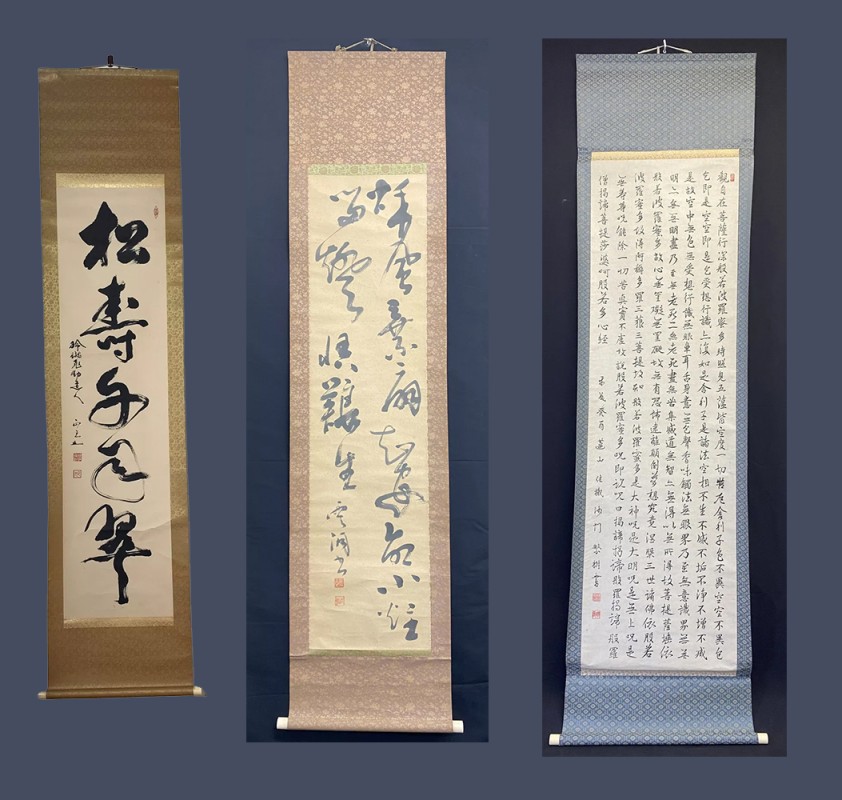
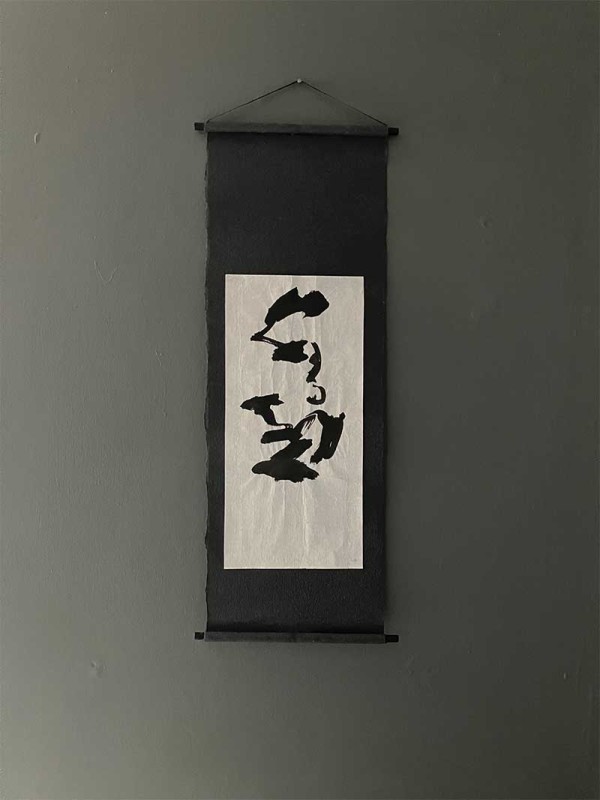
I’m going to be producing some scrolls using the shadow calligraphy I’ve created in the woods and having had a scroll made recently, I’ve been looking at how to take this further, using the whole scroll as an artwork, rather than acting simply as a framing device for the painted character.

To help with this I’ve been looking at buying a scroll and the image below shows three that I found for sale on eBay.

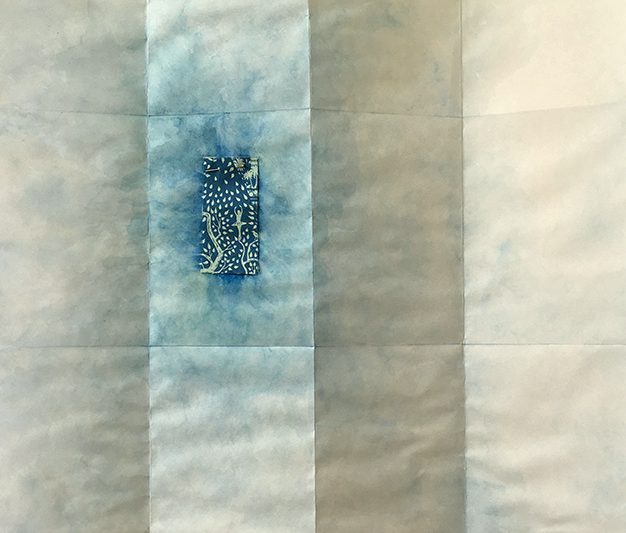
Looking at the material used in these, I was reminded of some work I did a while back using fragments of fabric which I then extended onto paper.

I like the idea of the backing for the painted ‘characters’ incorporating this idea of the fragment which would then extended into the body of the scroll support. This would itself support the idea behind the characters; that they are all that remains of a moment in the woods which we can interpret as a ‘word’, thereby returning, in our minds, to that lost moment in time. The pattern of the fragment in the support might be foliage which which would then be extended across entire support, echoing the idea of the moment being extended in our mind’s eye.

I think this idea would work well both with paper and fabric, so I shall be busy trying these out soon.

Filed Under: Present Empathy, Shadow Calligraphy

As Yet Untitled

May 14, 2024 by Nicholas Hedges

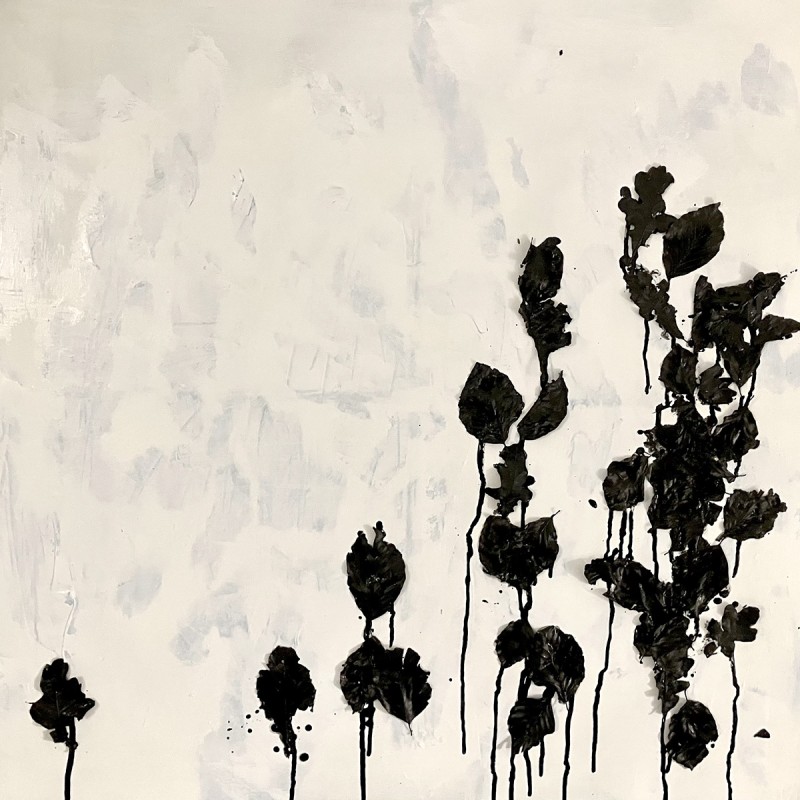
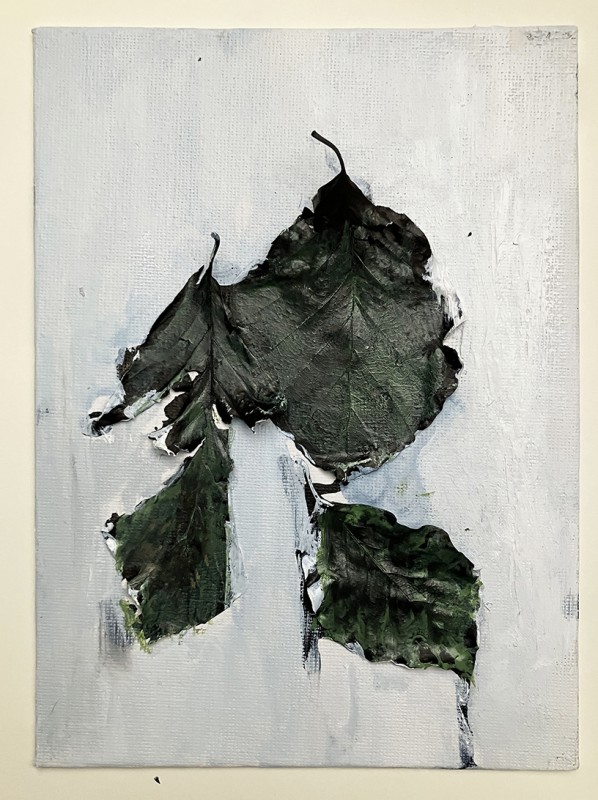
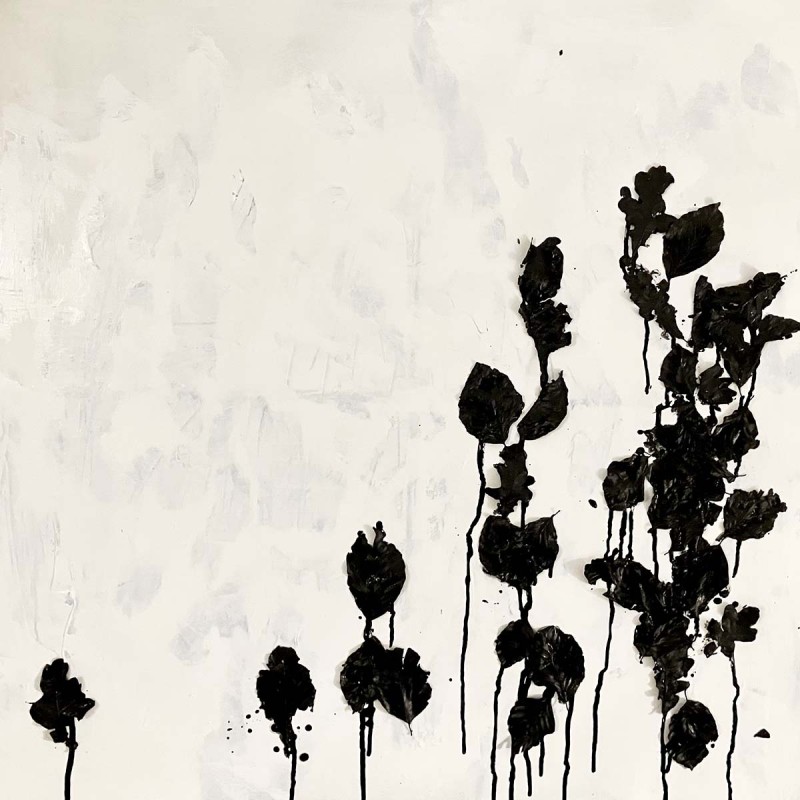
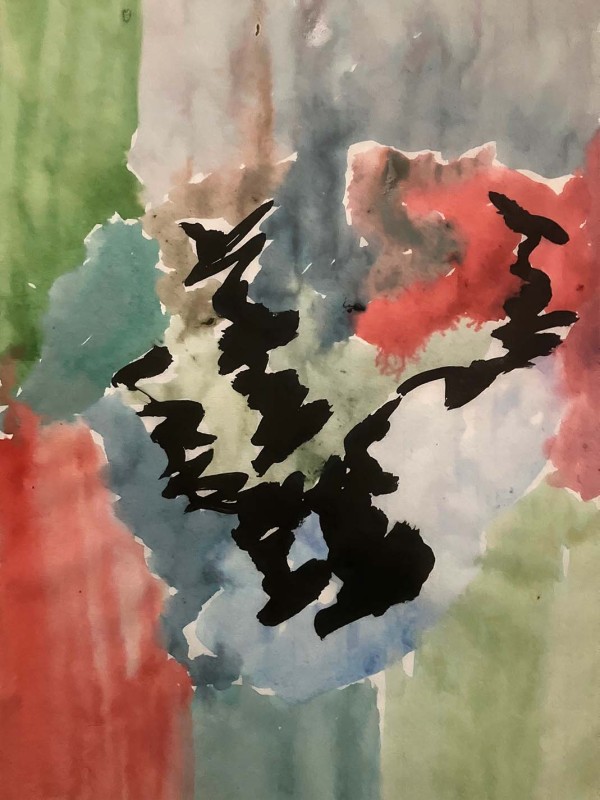
I’ve started a new painting on an 80cm square canvas which takes the concept of shadows cast by trees in the woods by using actual leaves. These are first dipped in black ink to simulate the black ink brushstrokes of my other paintings – for example those I painted in situ at Shotover, then placed on the canvas painted with white oil paint.

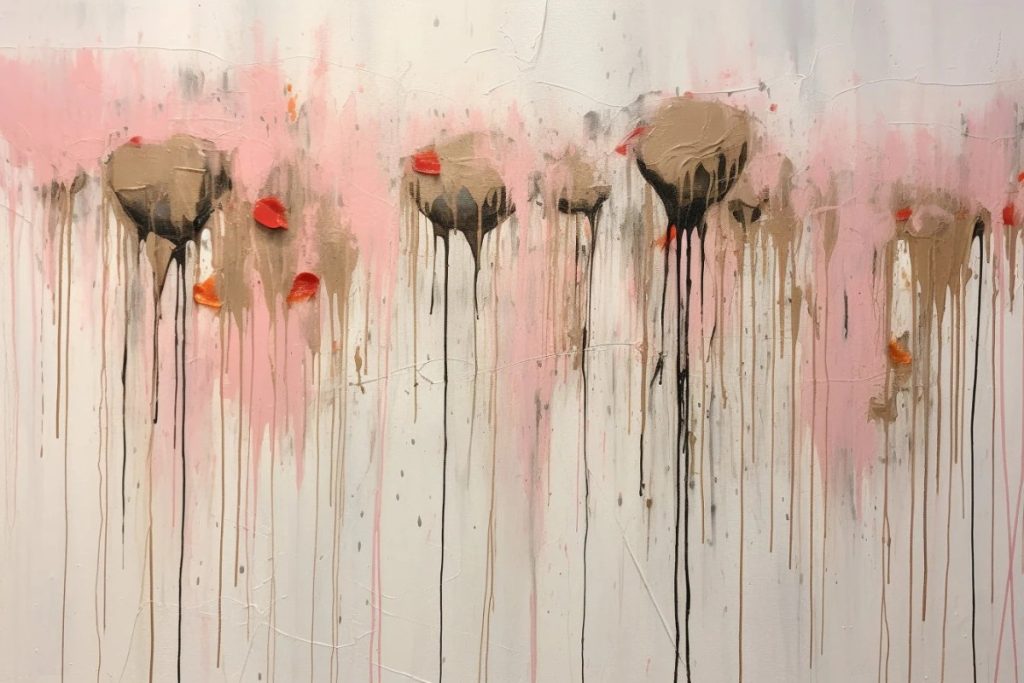
I’m not sure where this will lead, but the idea behind the painting is that of re-imagining the past. Taking the idea of the shadow paintings, the shadows are then ‘re-imagined’ as actual leaves, still with the idea of simulating the same calligraphic style. I will now introduce colour into the work as the next phase of the re-imagining process is to imagine the actual leaves, trees and sky etc. How that will look… I don’t know as yet. One artist who does keep popping into my mind however is Cy Twombly.

Filed Under: Present Empathy, Shadow Calligraphy, Shadows

Holes

May 13, 2024 by Nicholas Hedges

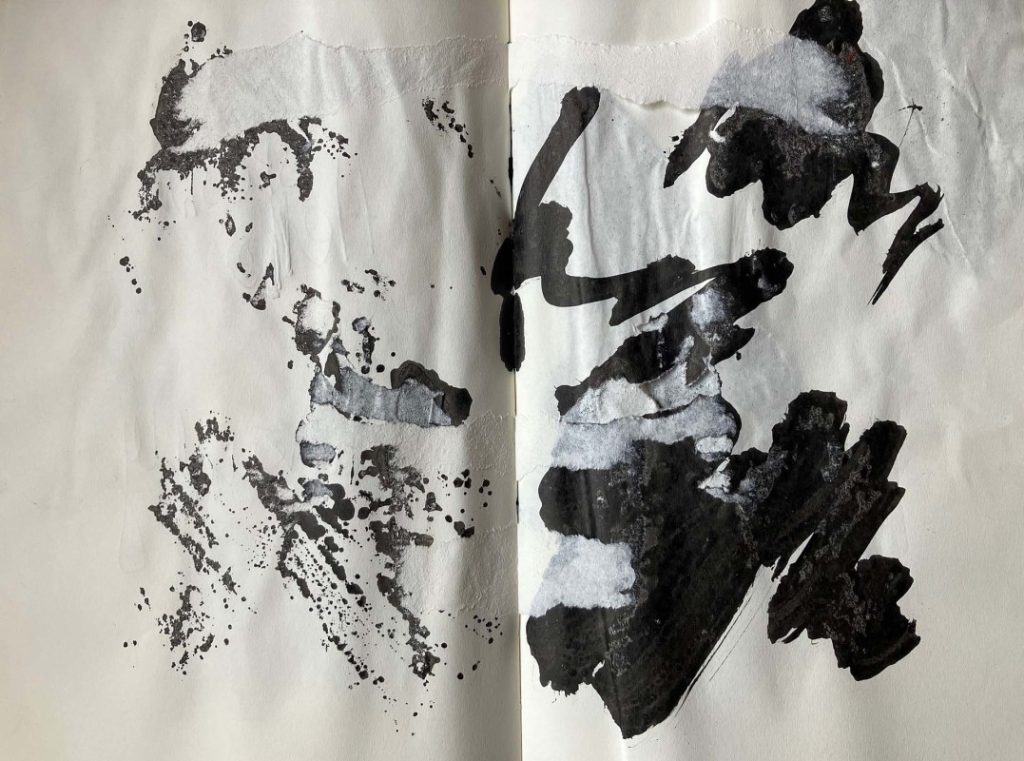
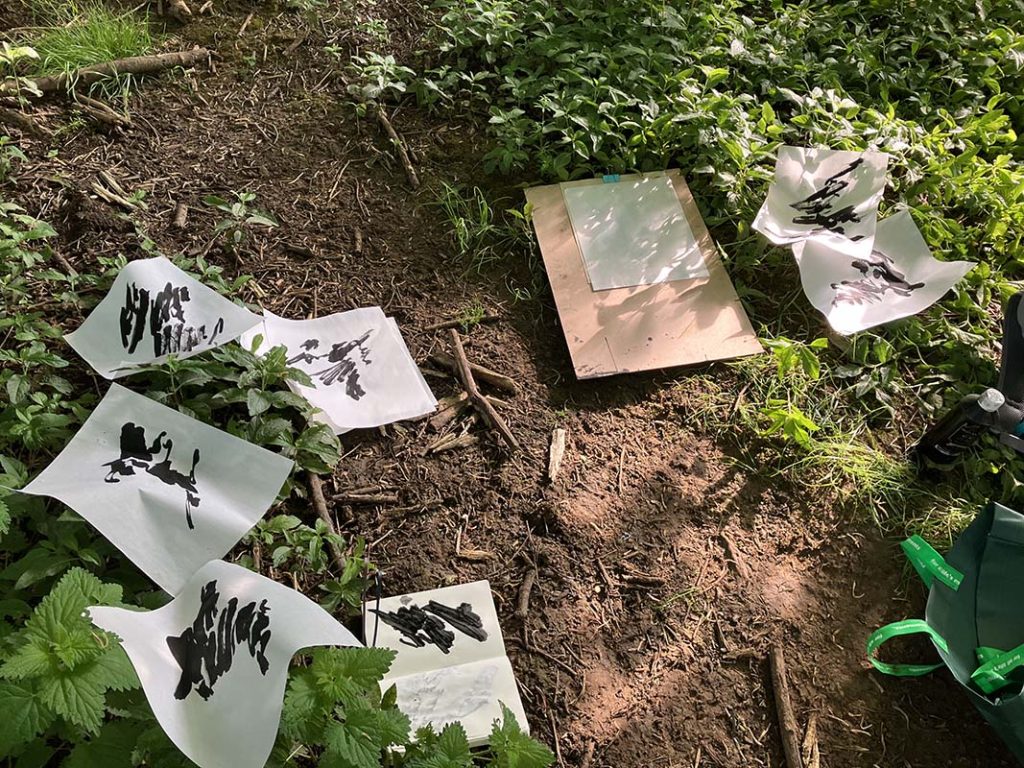
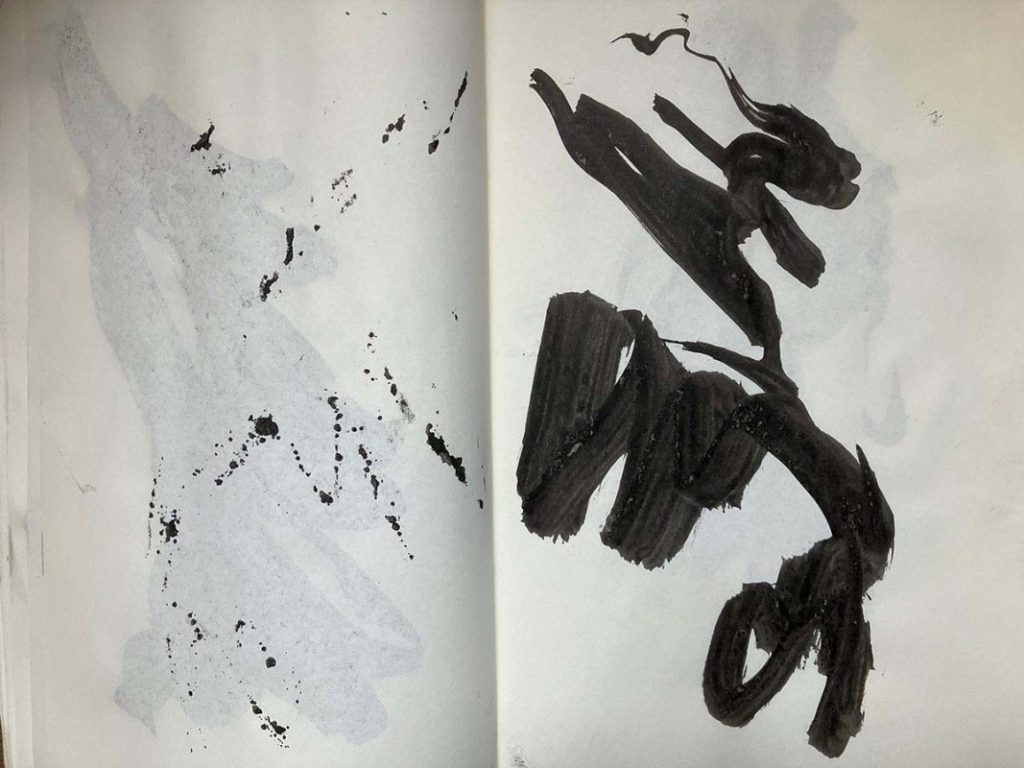
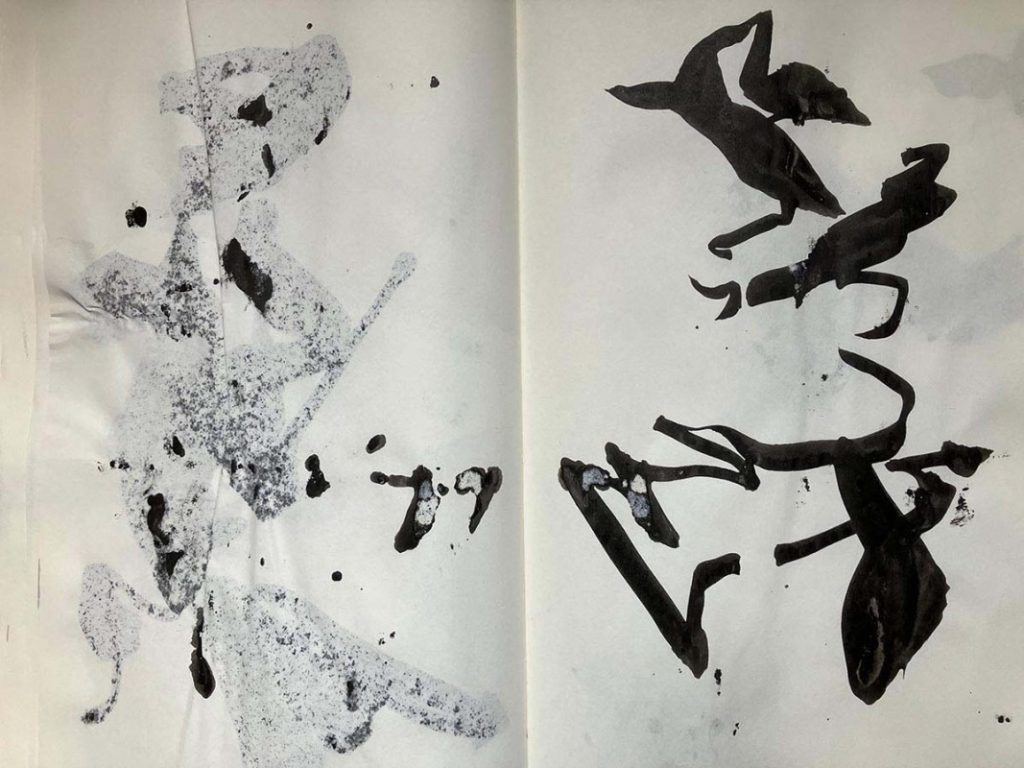
Whilst painting in the woods at the weekend, I also used my shadows notebook, painting some of the shadows which invariably meant the pages stuck together as the ink dried.

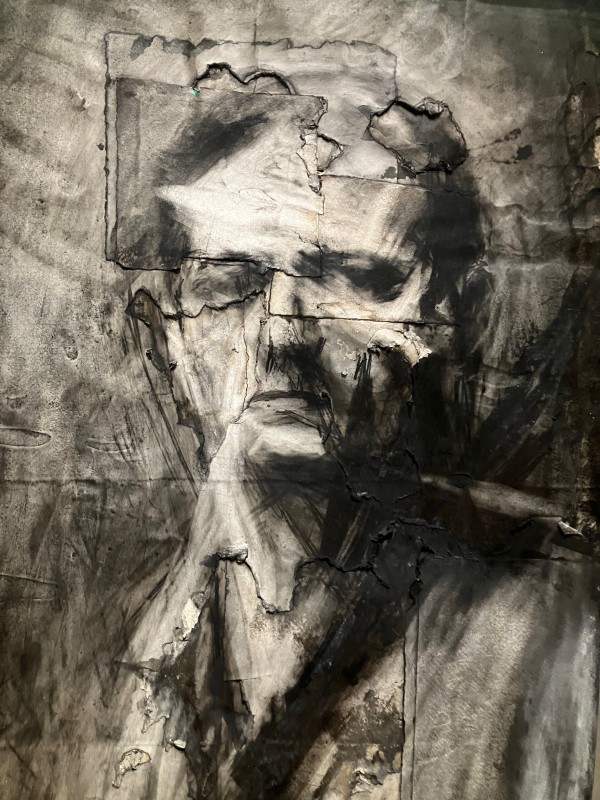
I like the effect however and in particular the holes left by the ripping paper as I peeled the pages apart. They called to mind the exhibition I went to see recently at The Courtauld Gallery in London, featuring the charcoal portraits of Frank Auerbach.

These drawings were carried out over long periods of times, during which they were worked and reworked, causing the paper to rip which the artist would then mend. I loved seeing the rips and the mendings and wonder if I could do the same with my own shadow pieces, building up, in the process, a palimpsest of moments.

Filed Under: Present Empathy, Shadow Calligraphy

Scroll

May 13, 2024 by Nicholas Hedges

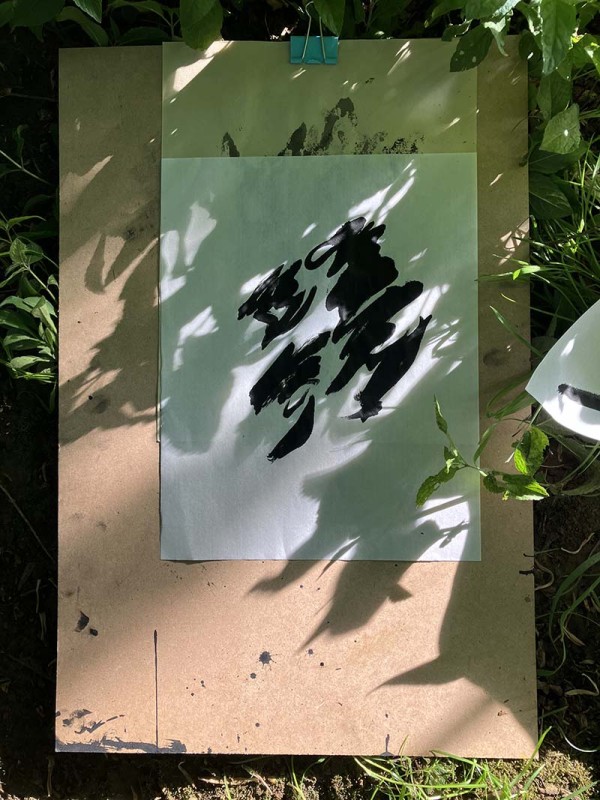
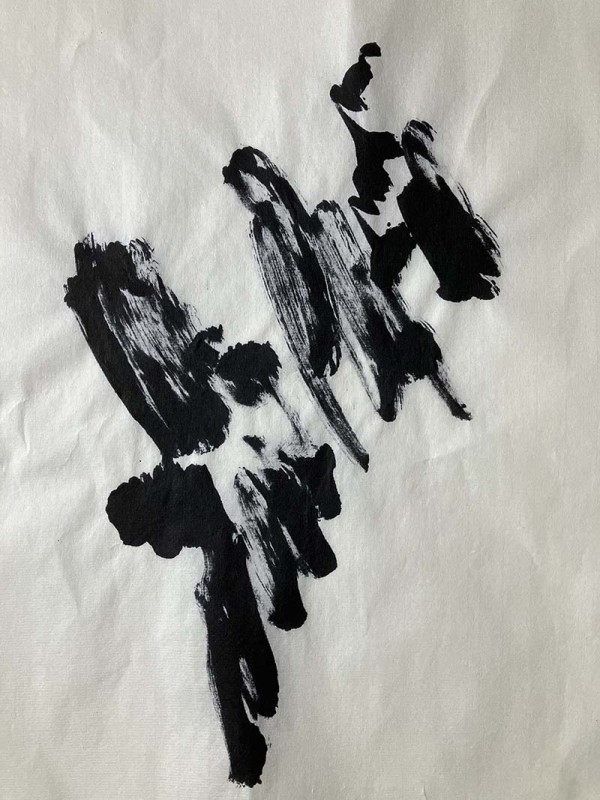
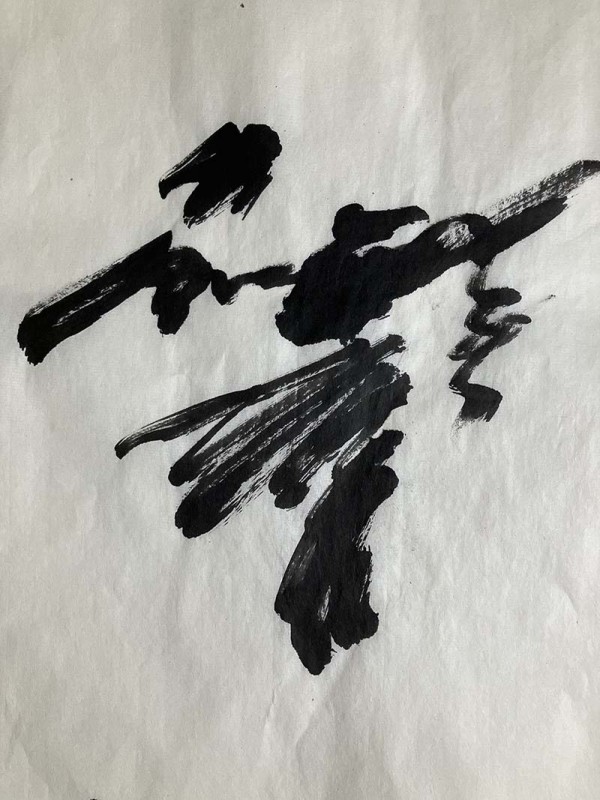
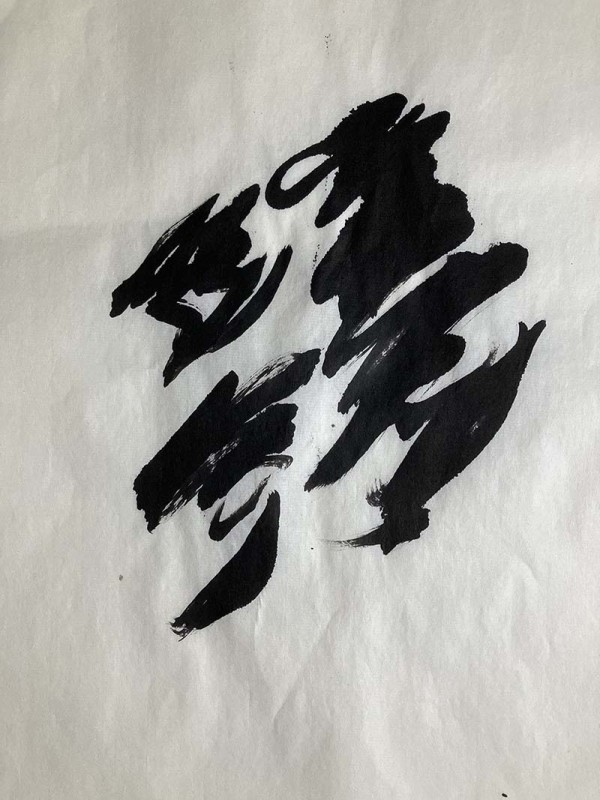
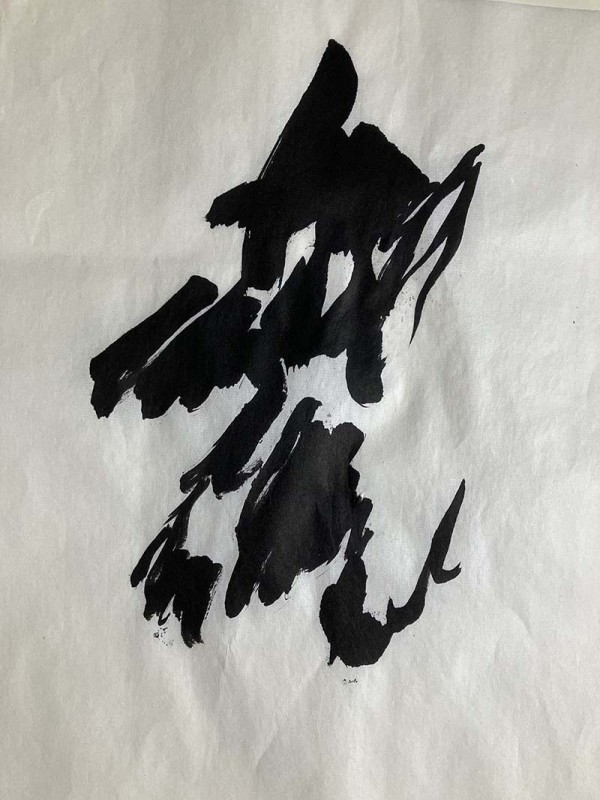
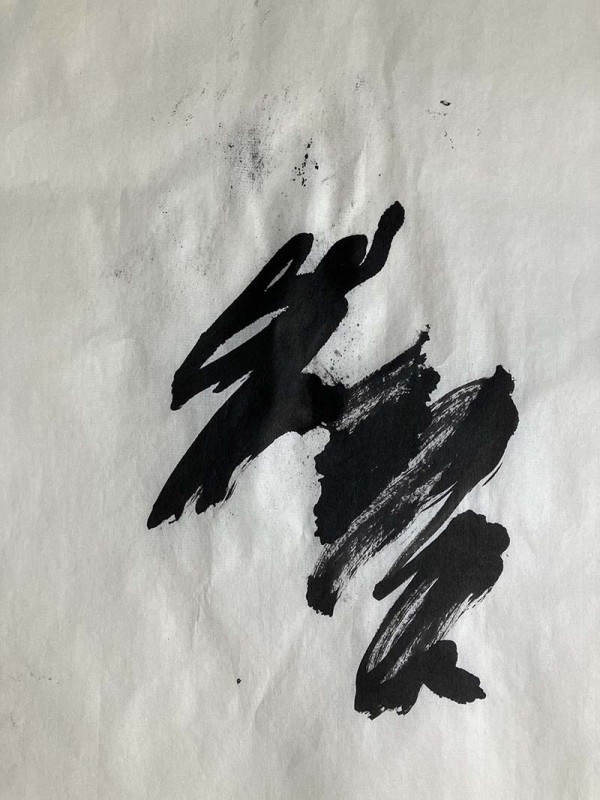
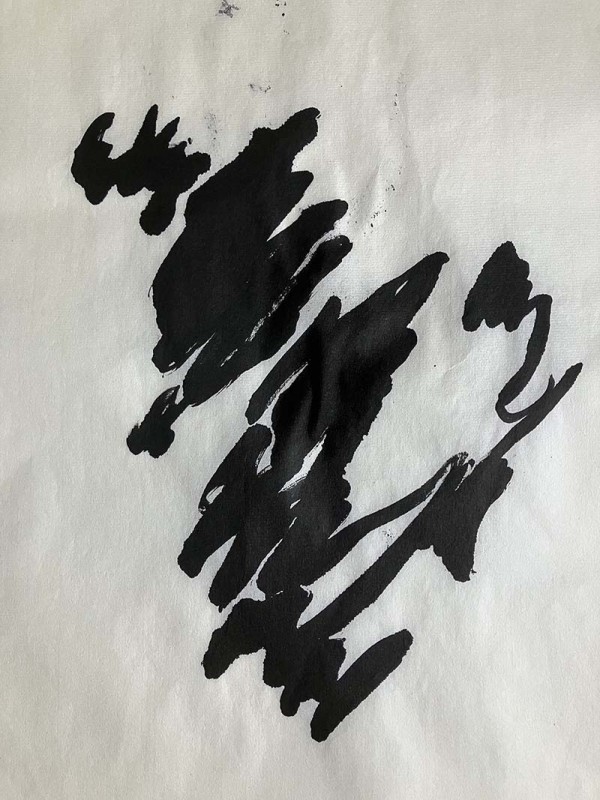
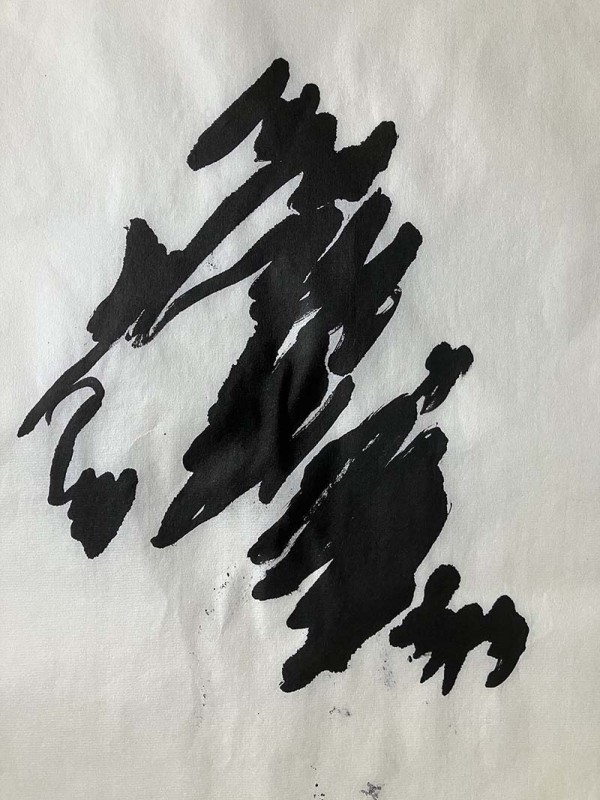
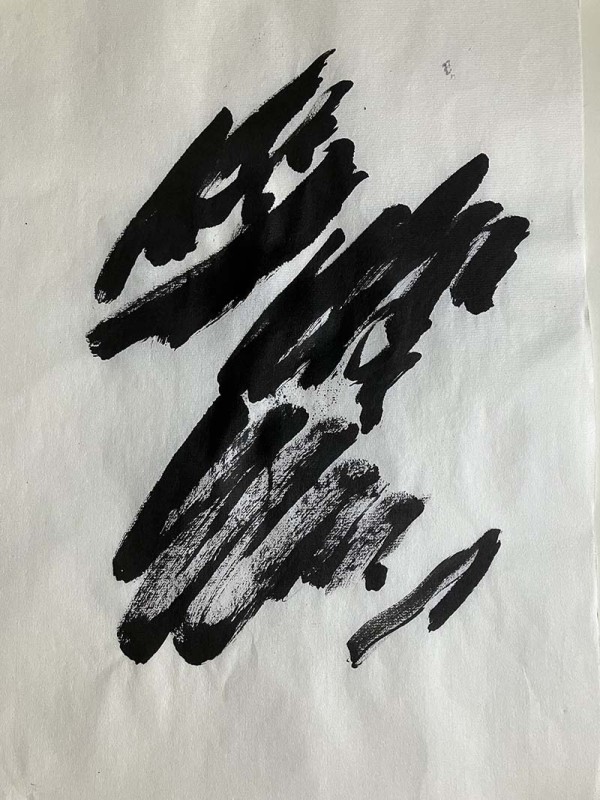
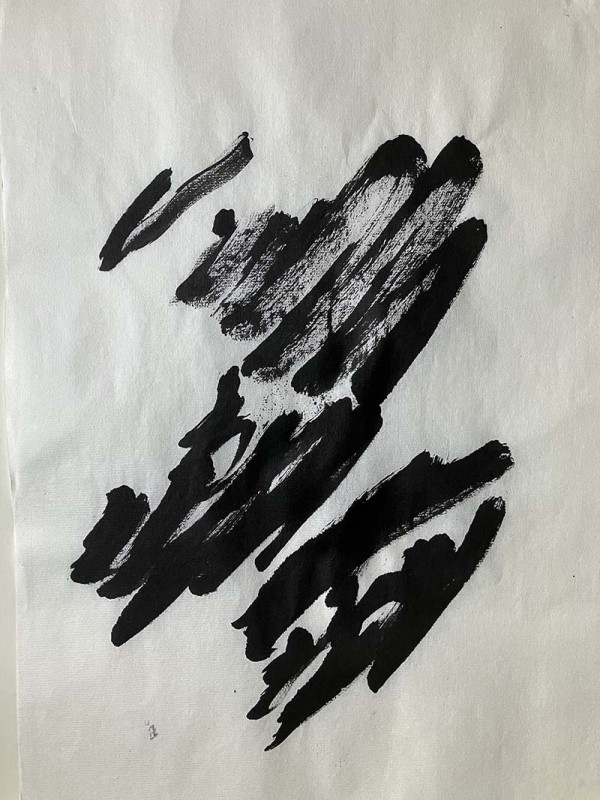
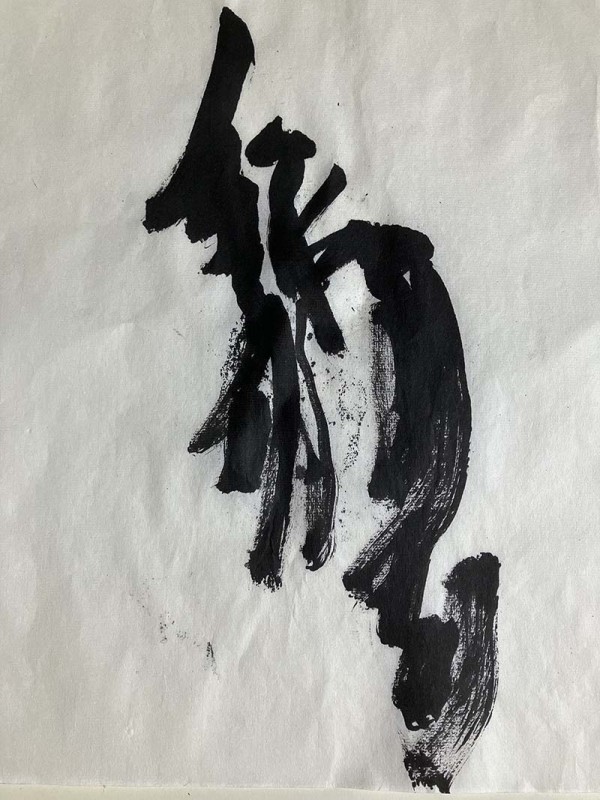
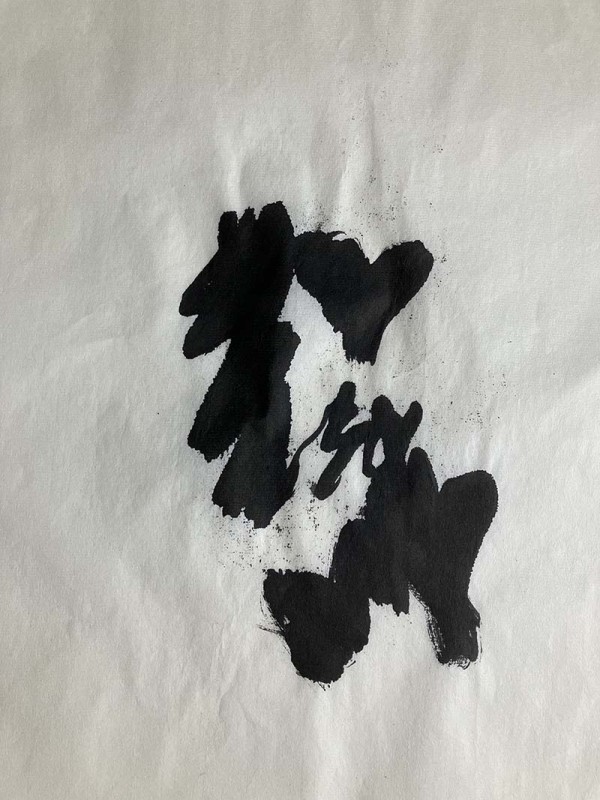
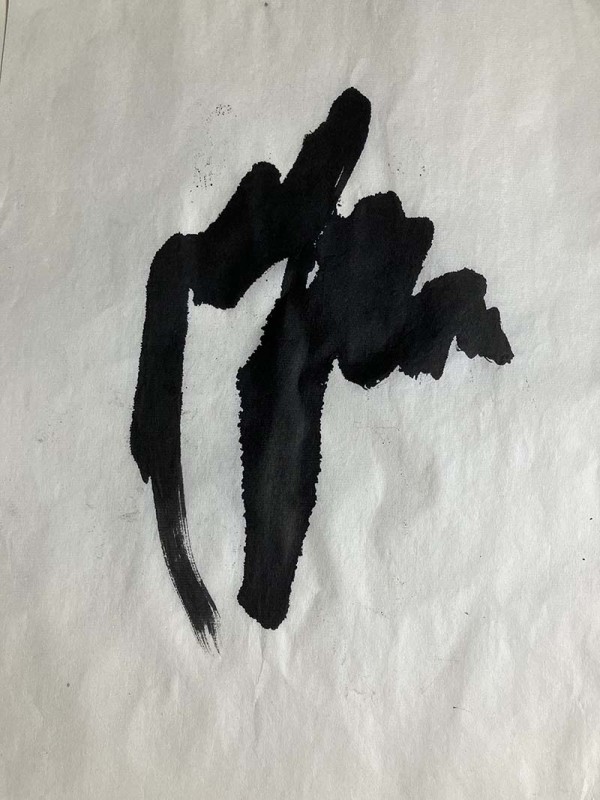
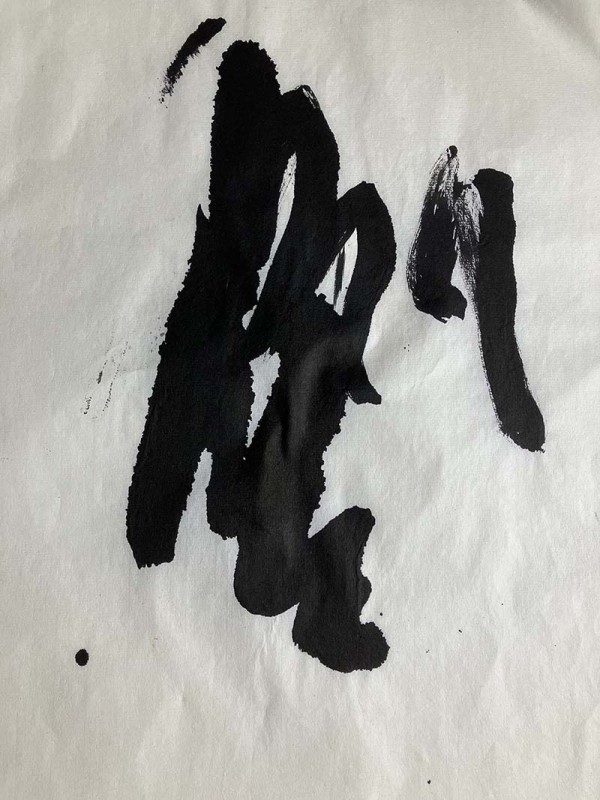
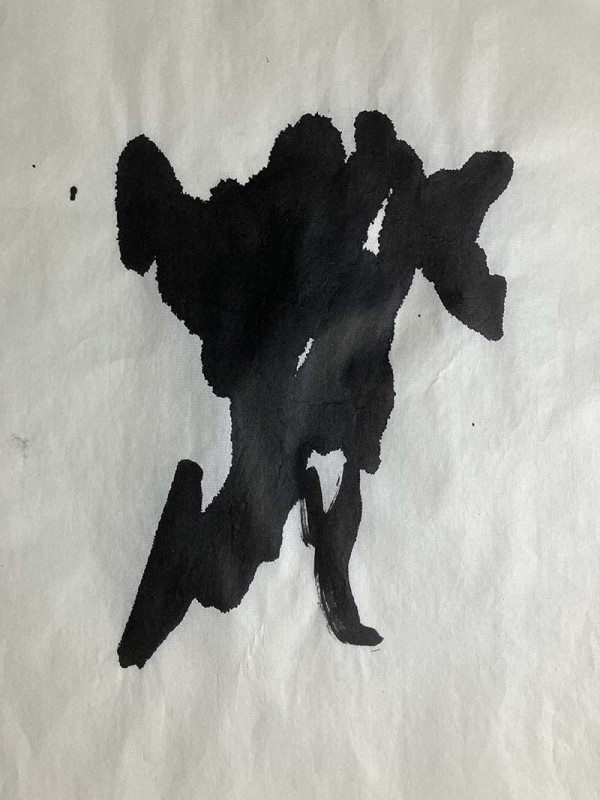
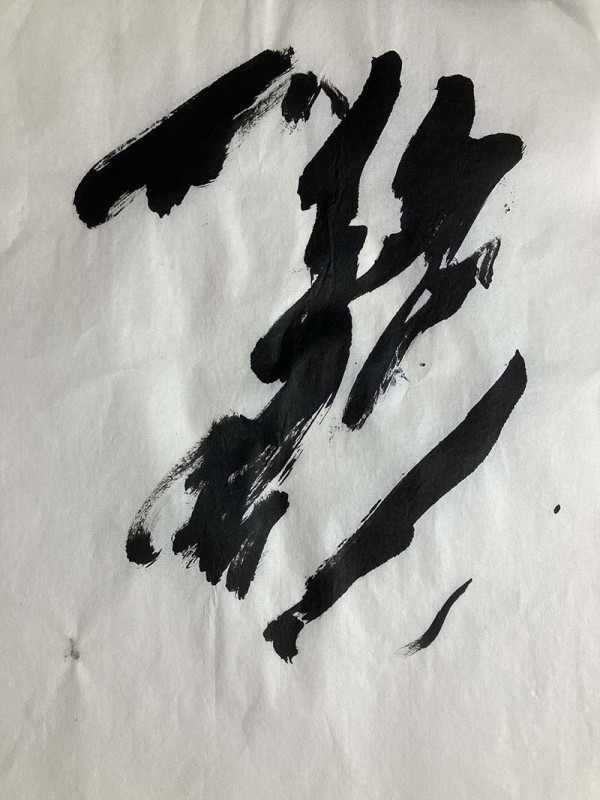
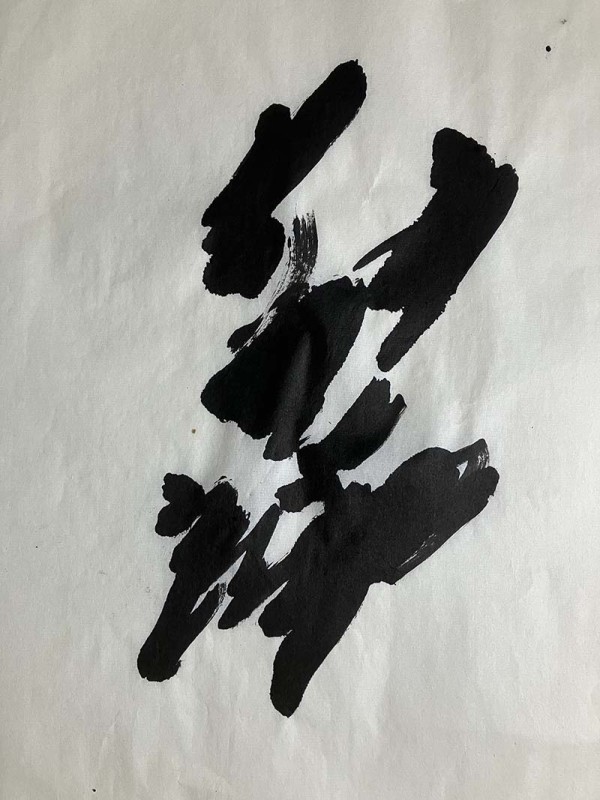
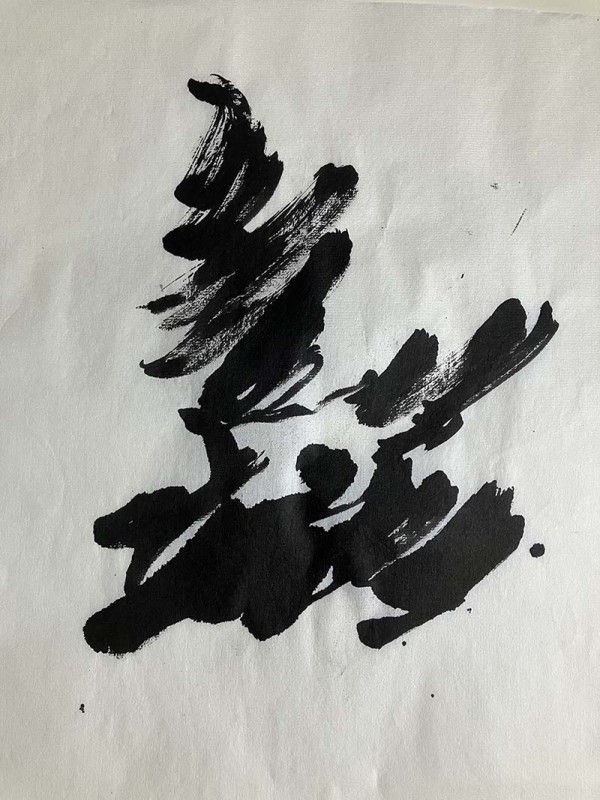
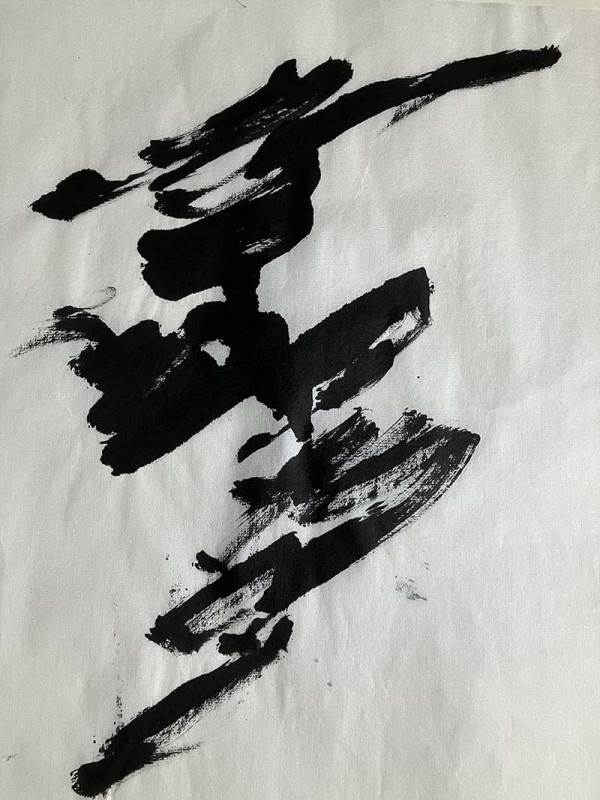
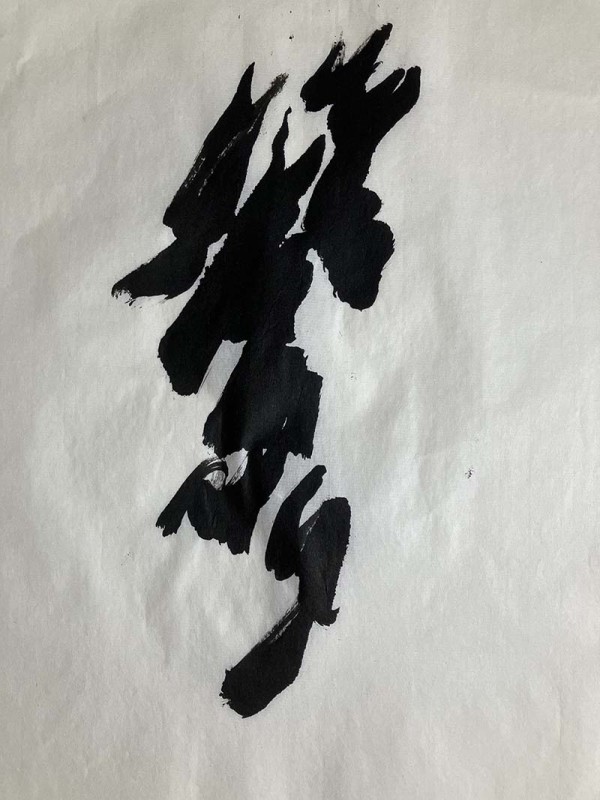
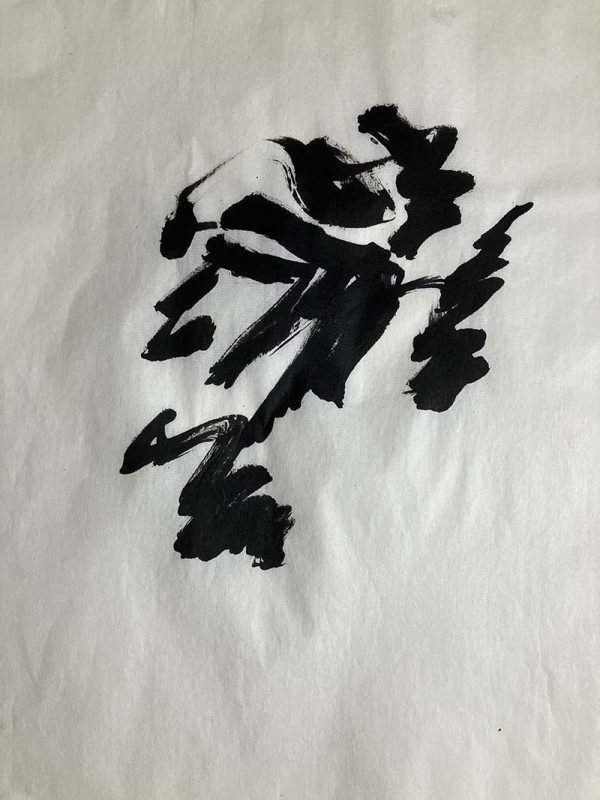
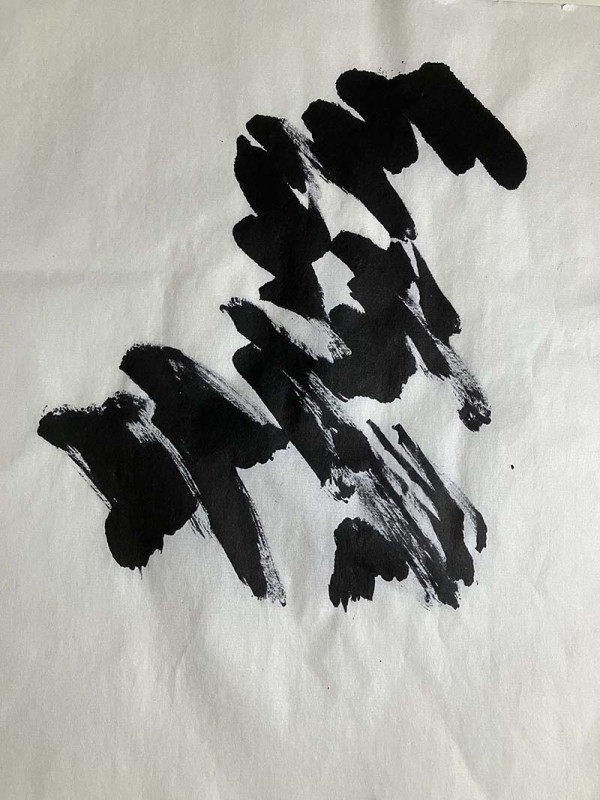
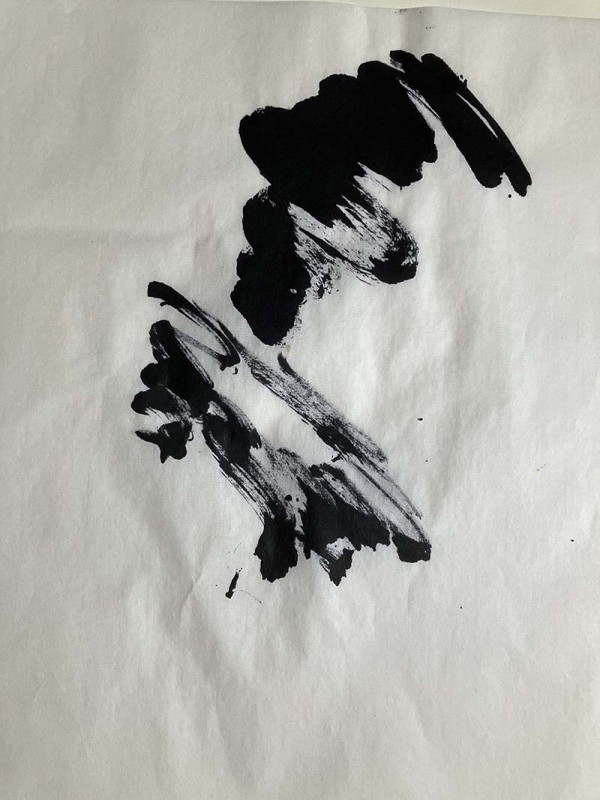
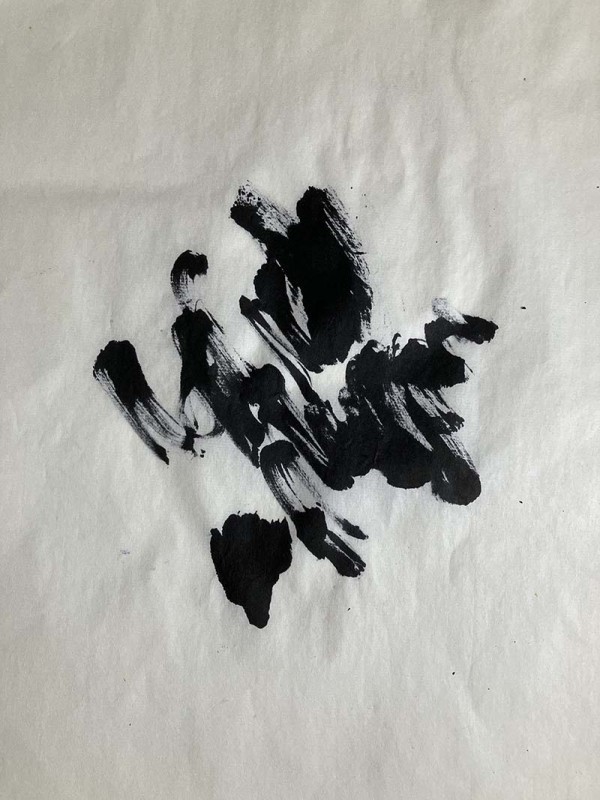
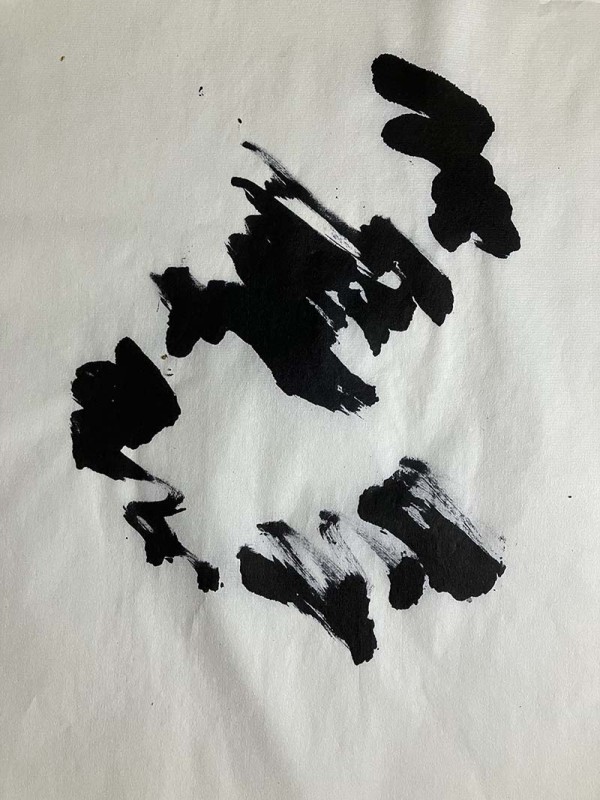
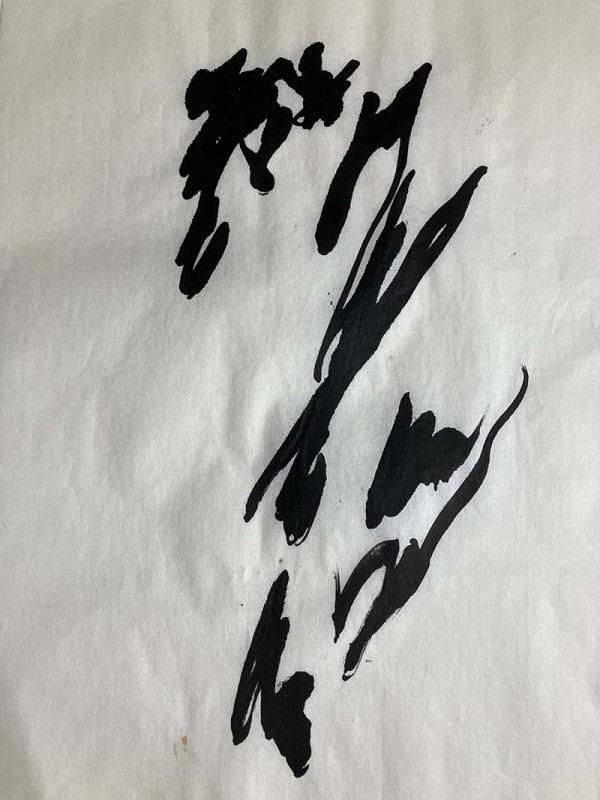
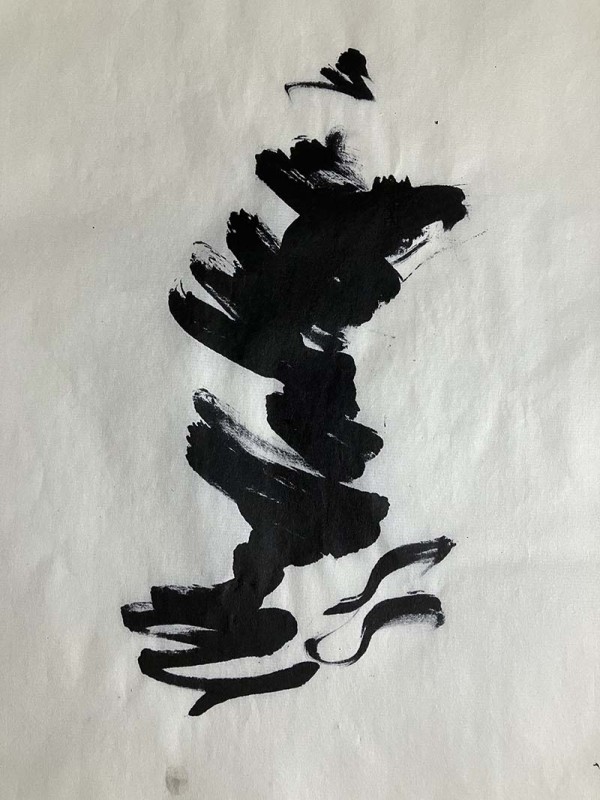
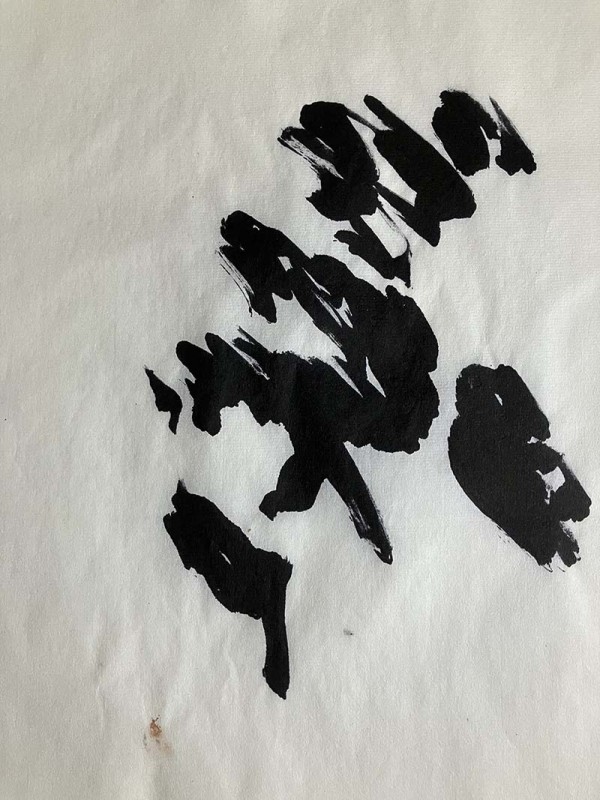
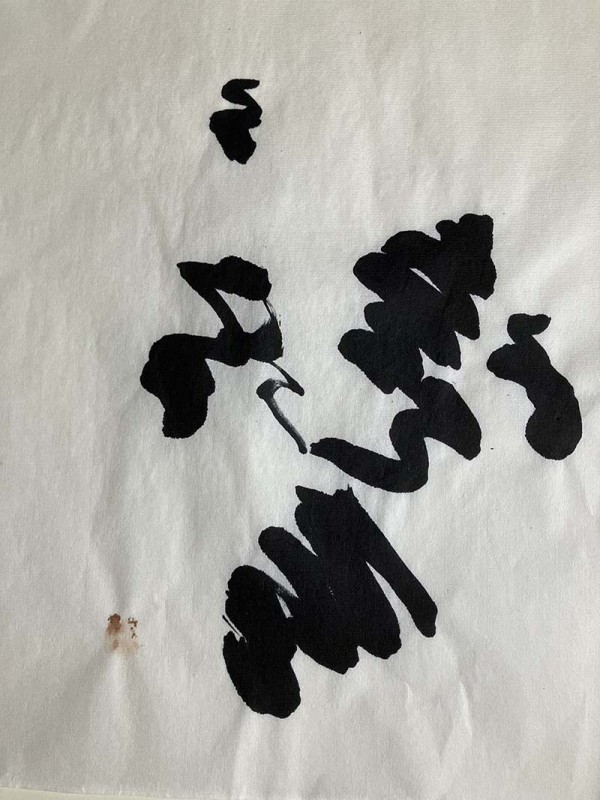
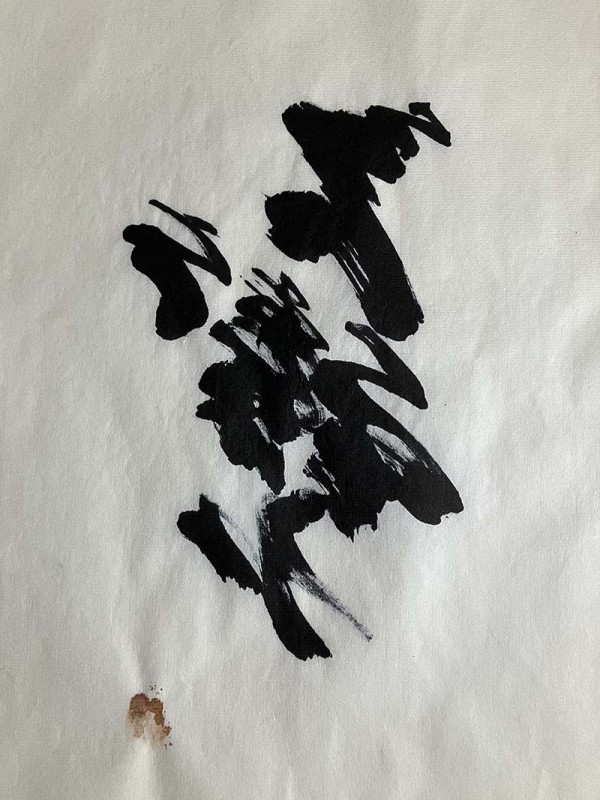
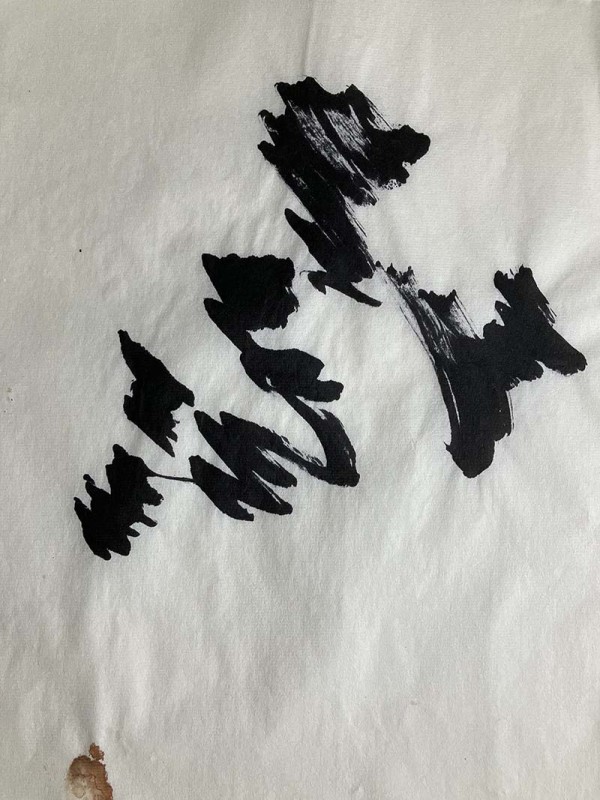
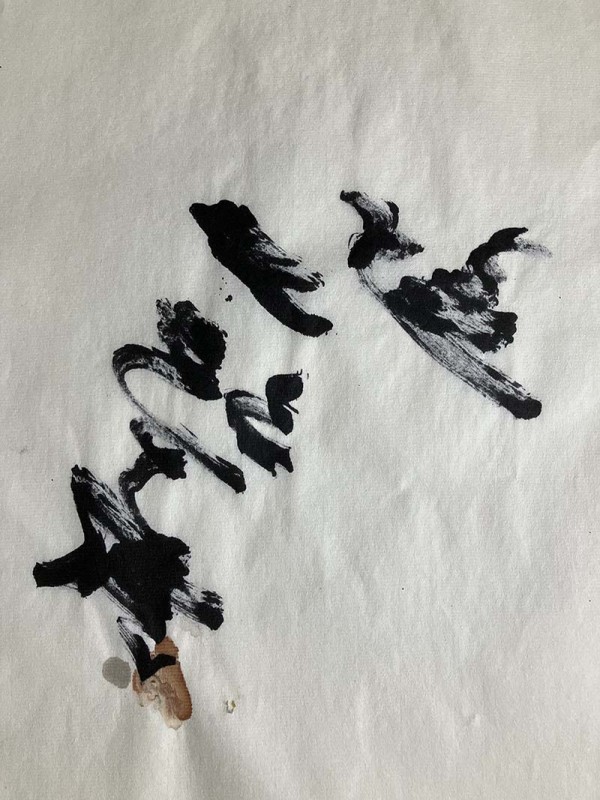
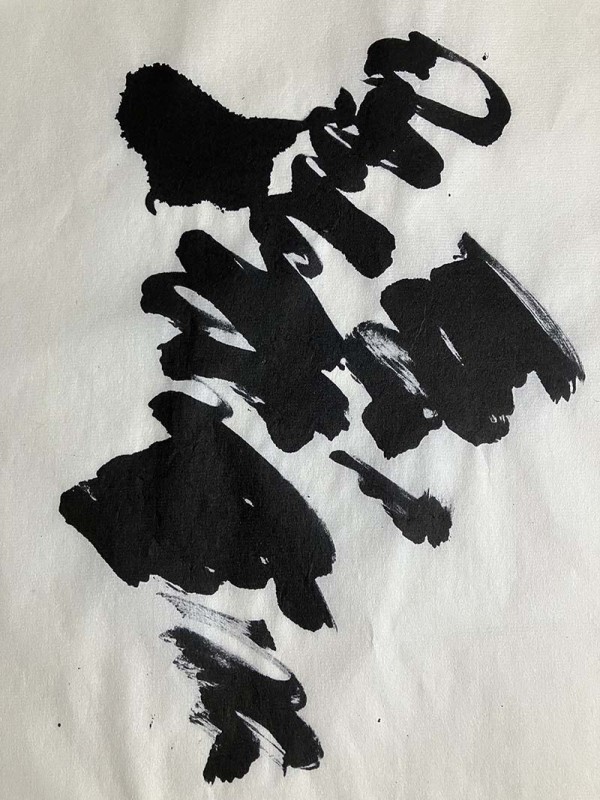
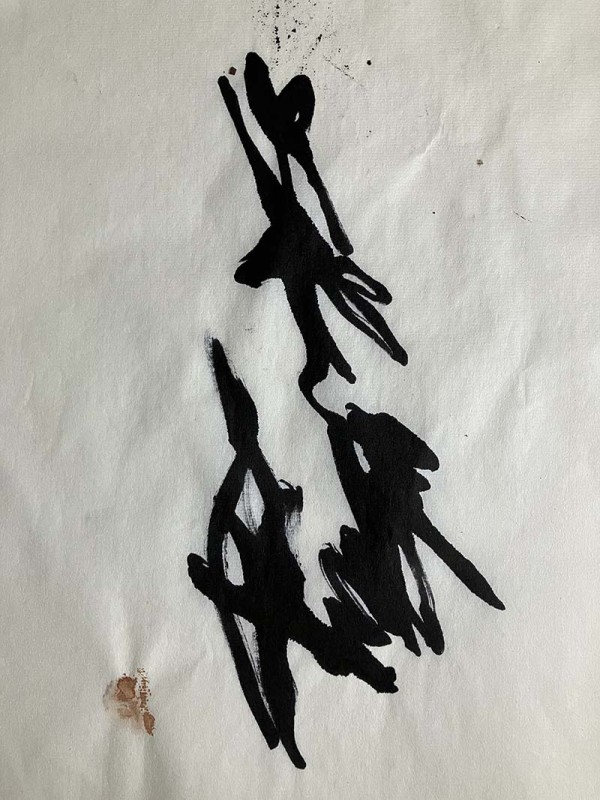
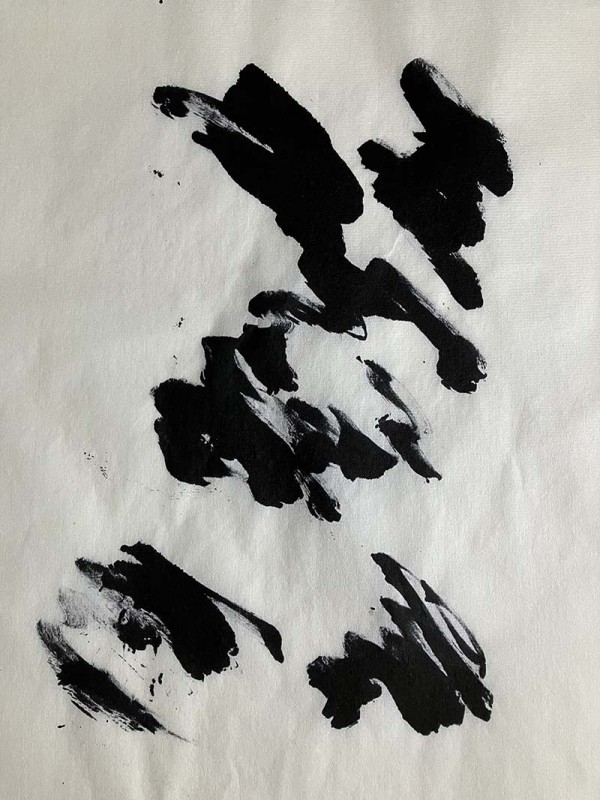
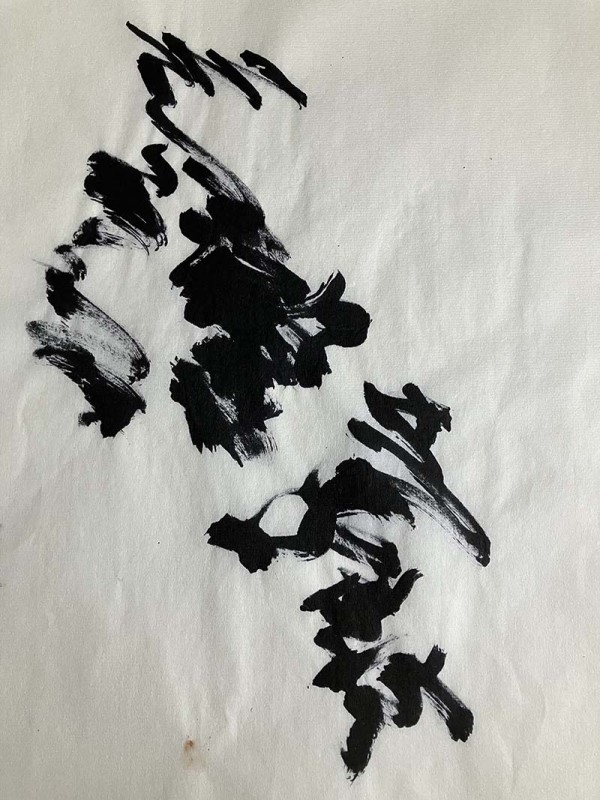
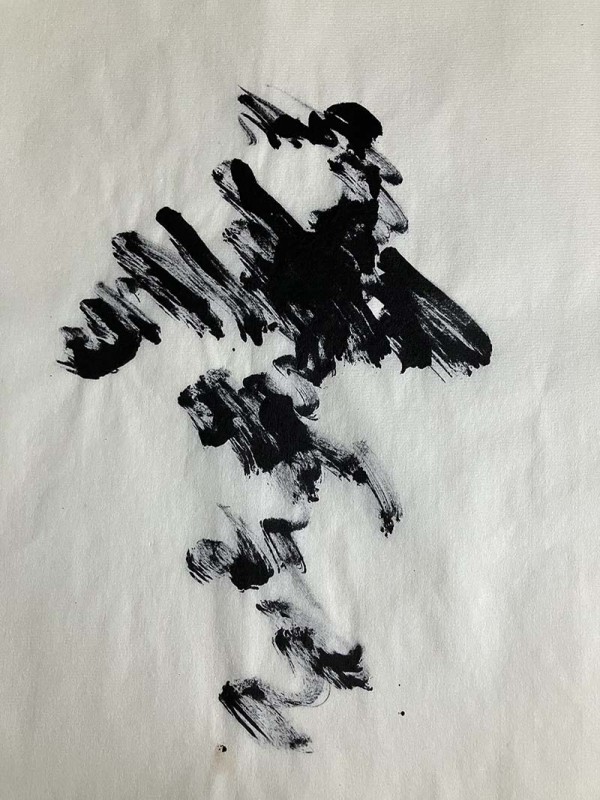
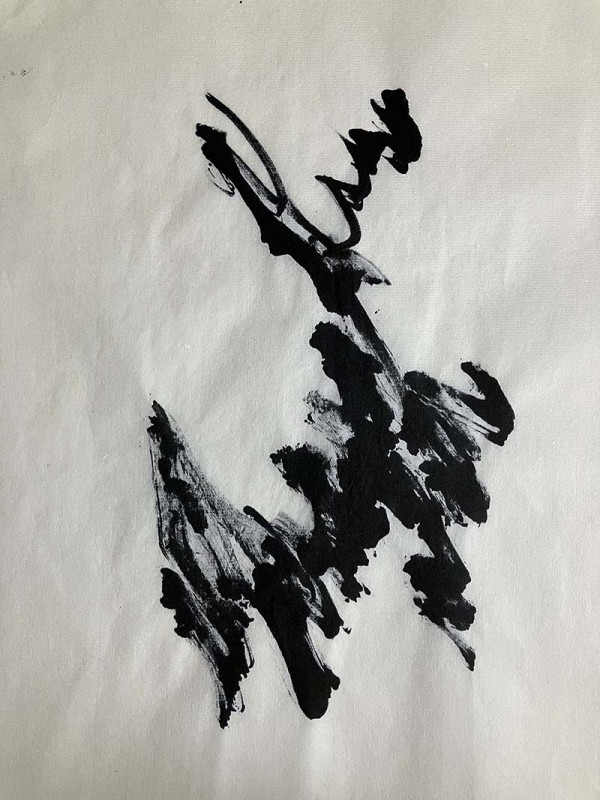
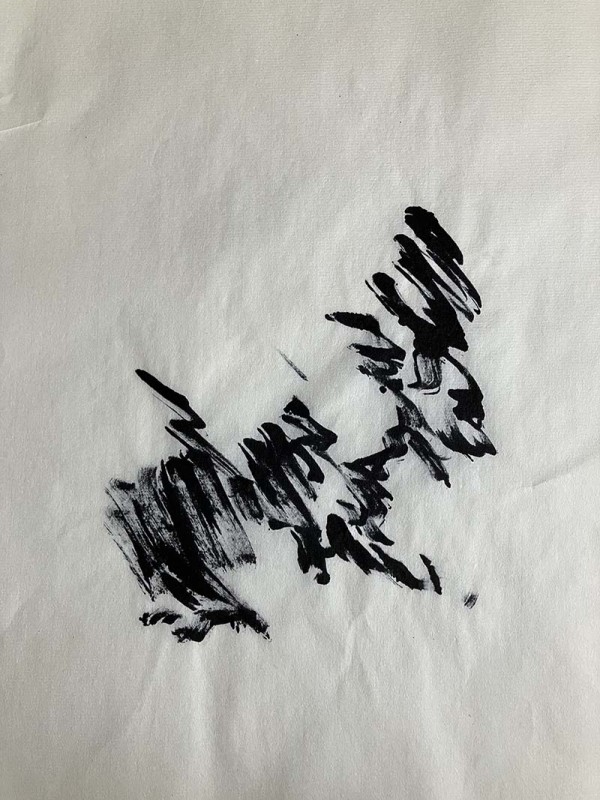
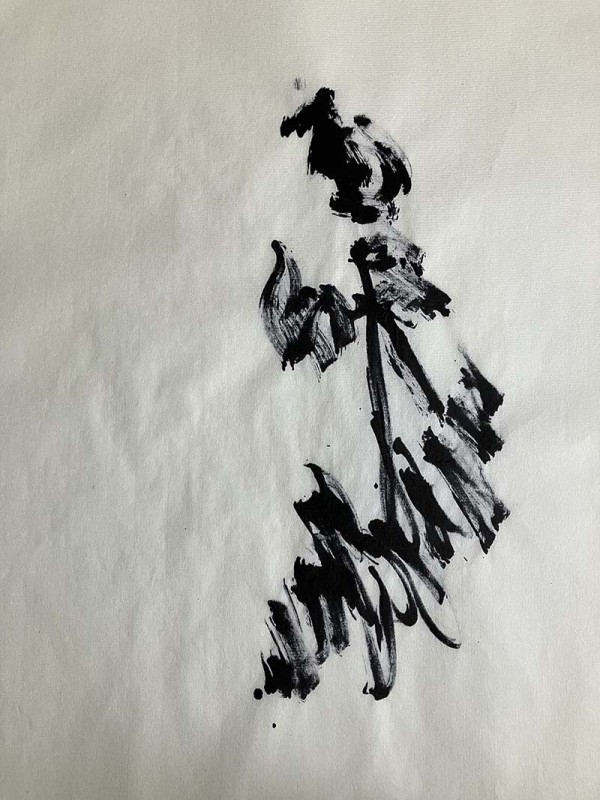
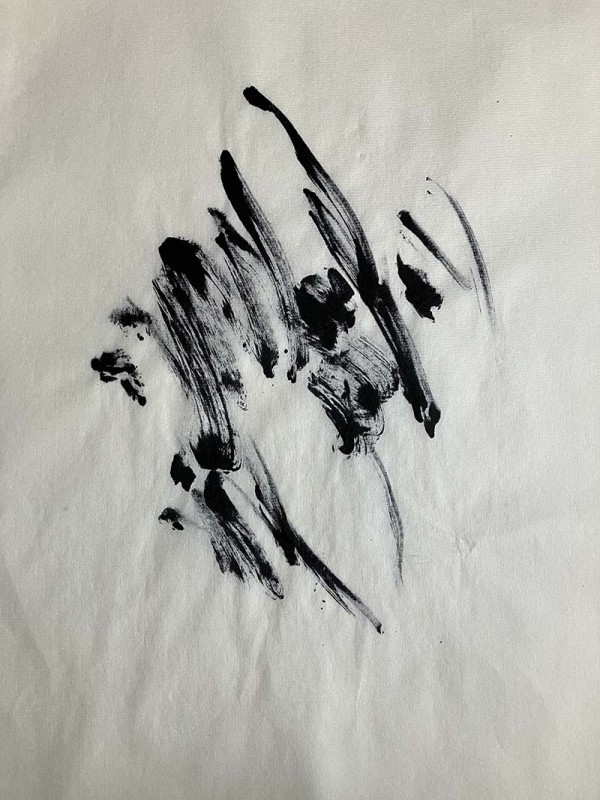
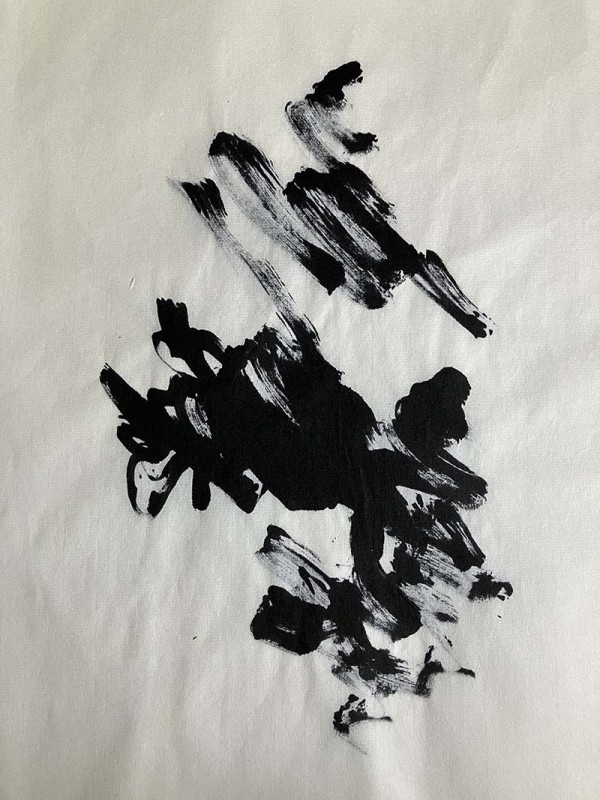
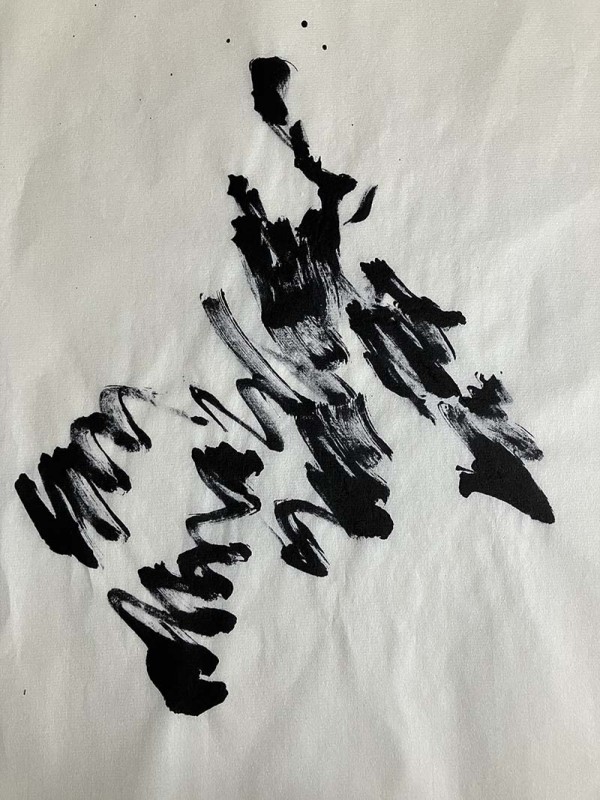
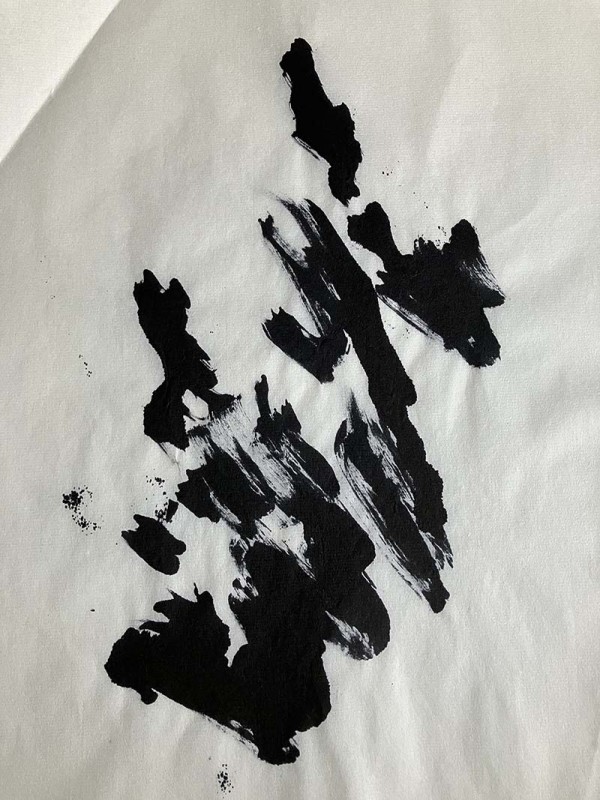
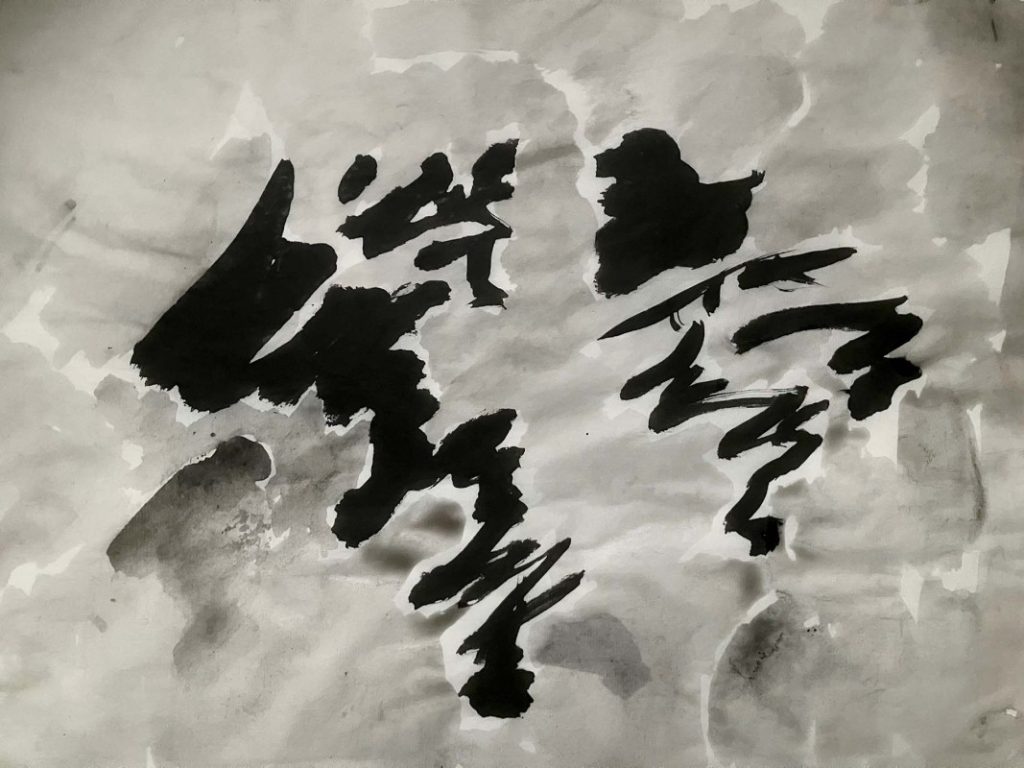
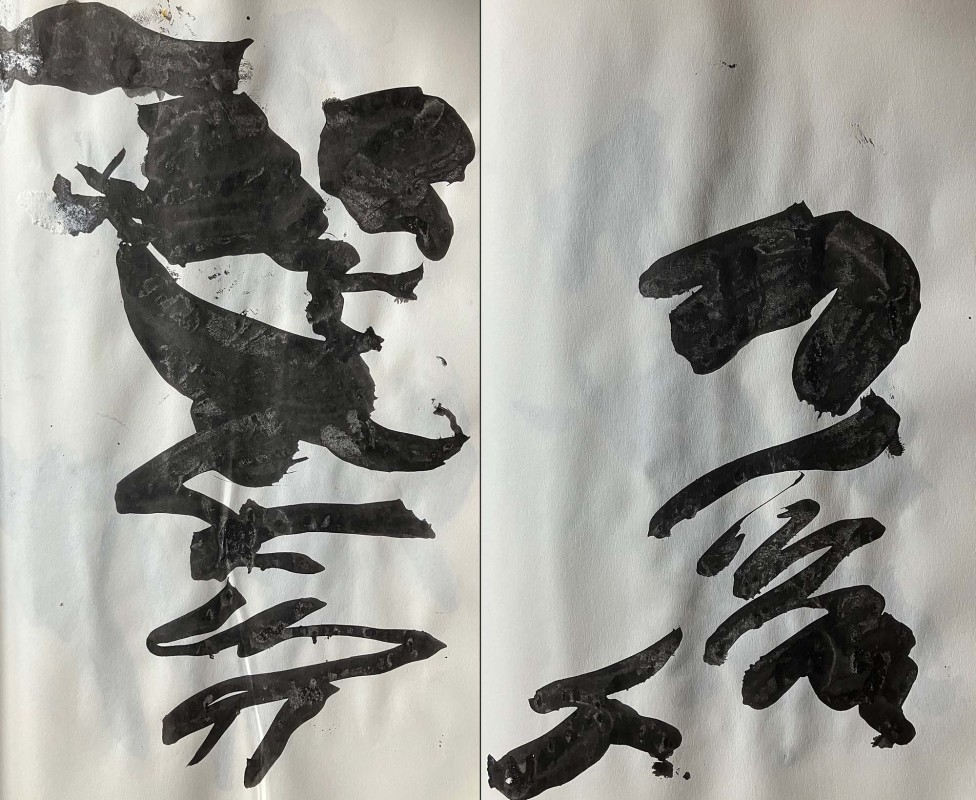
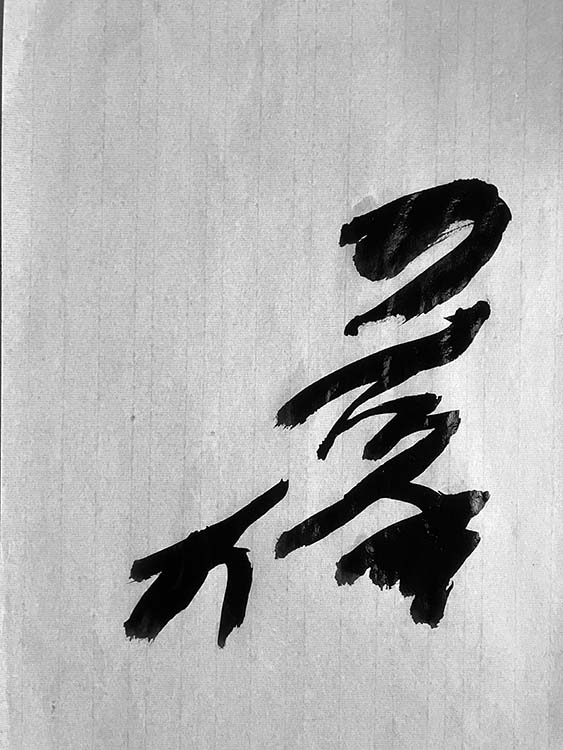
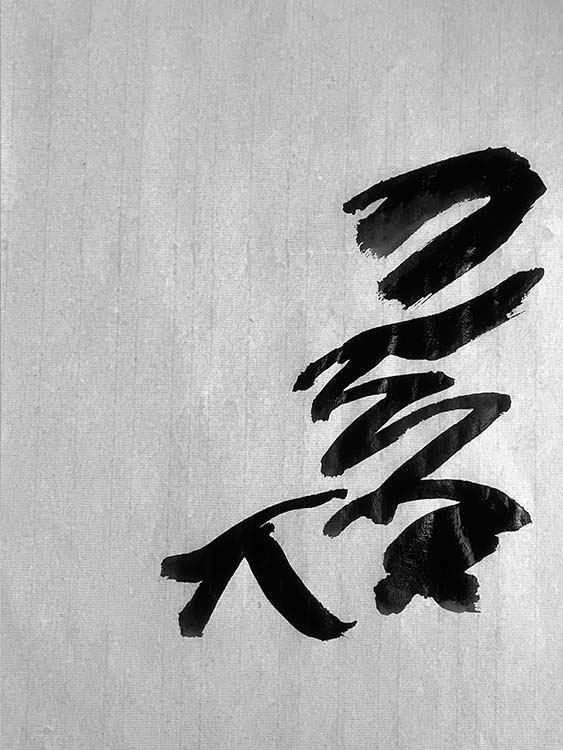
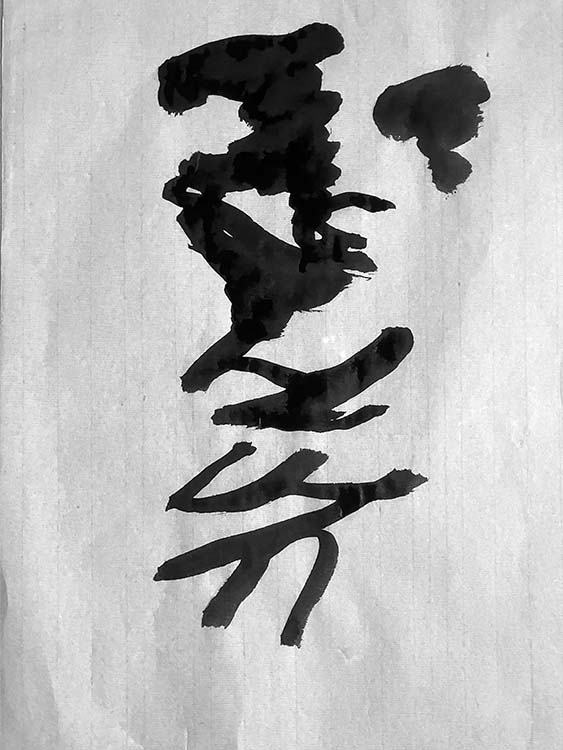
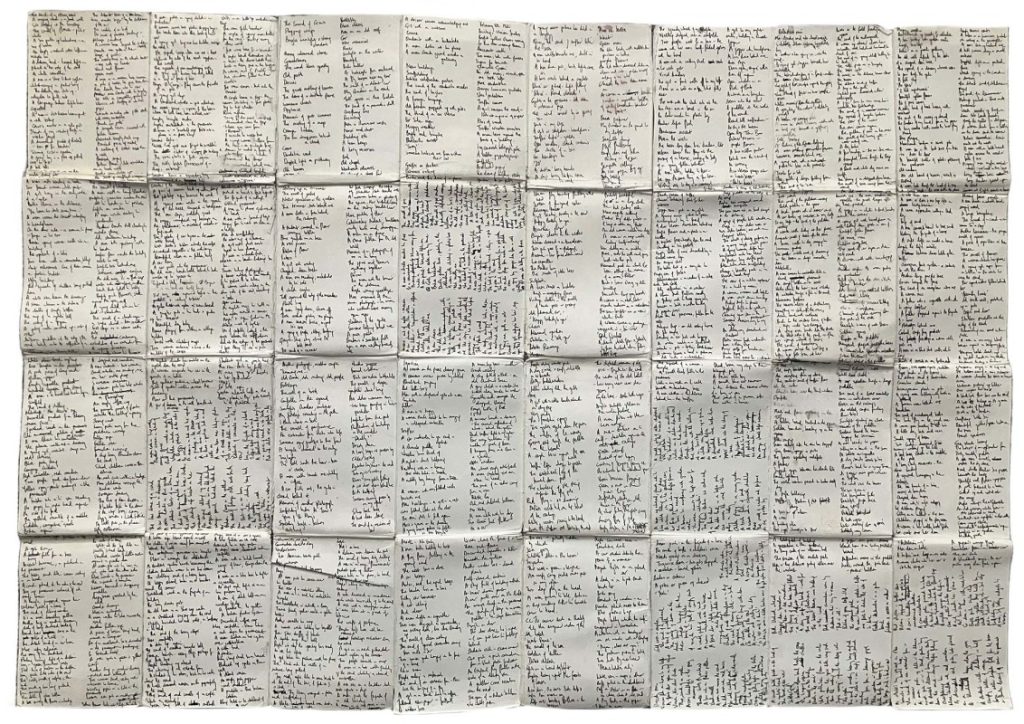
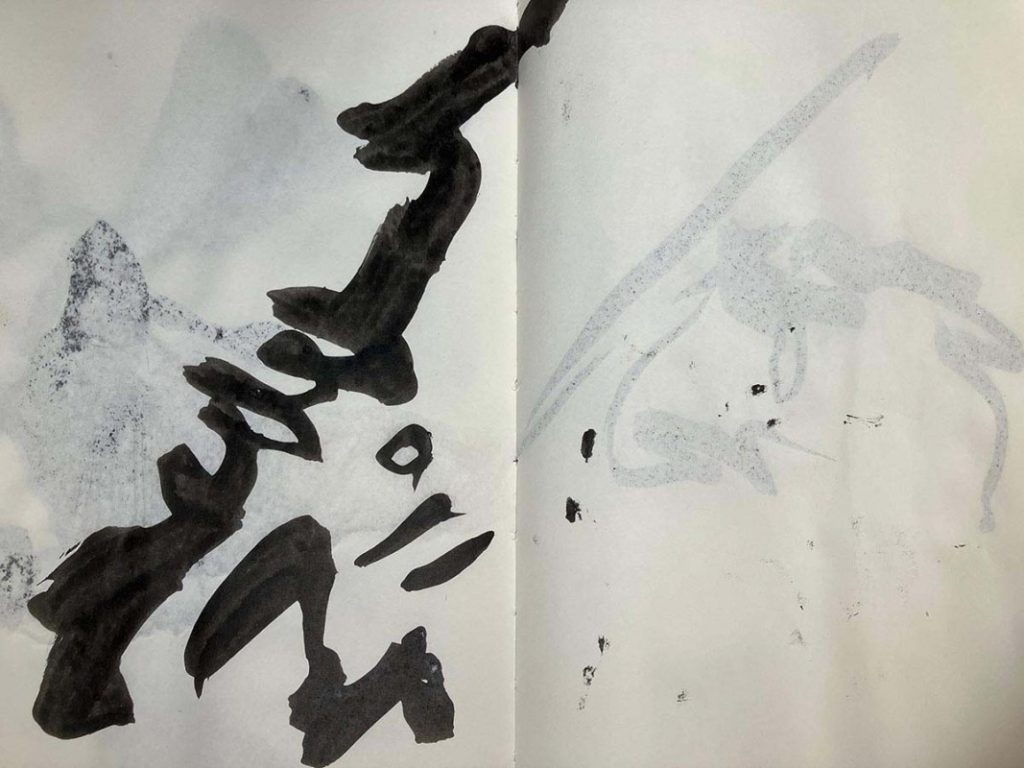
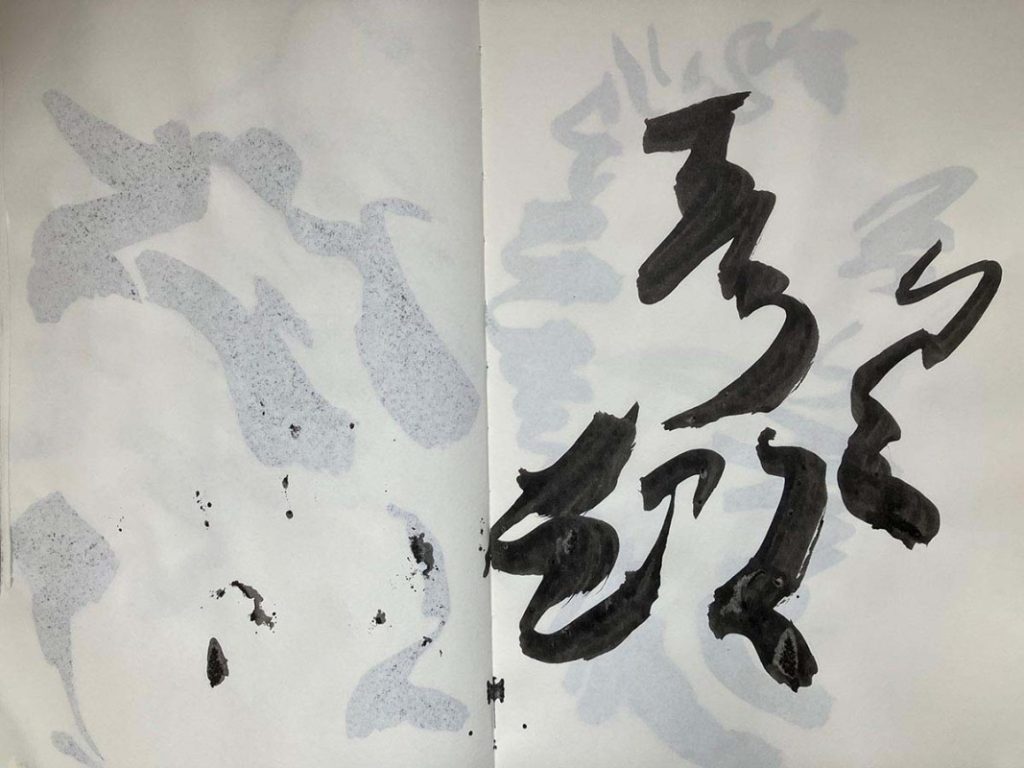
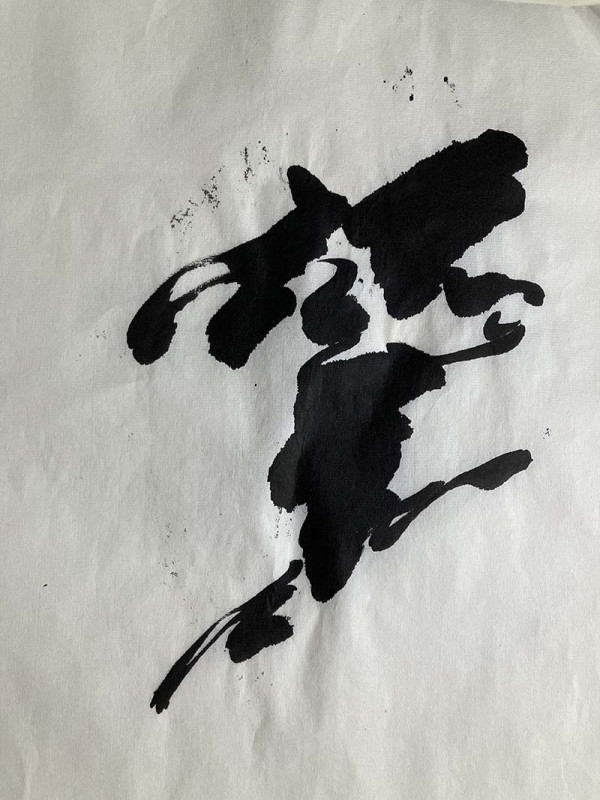
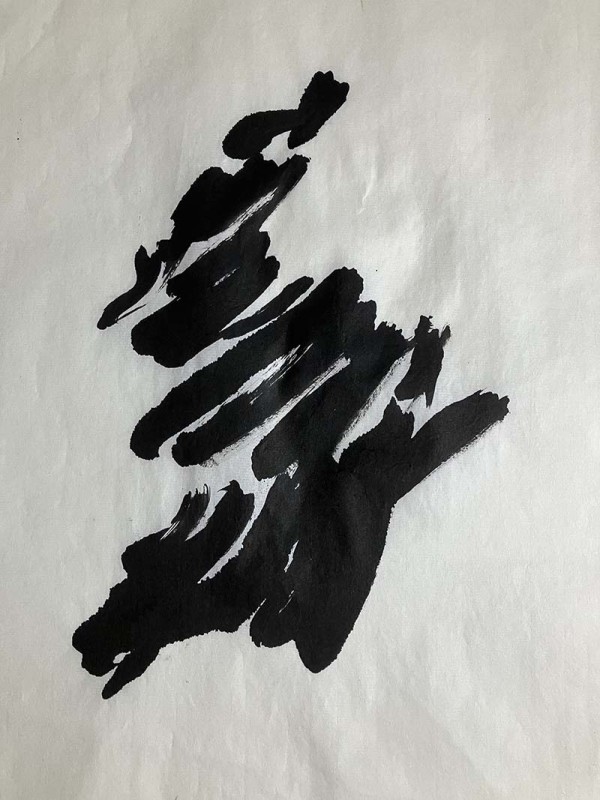
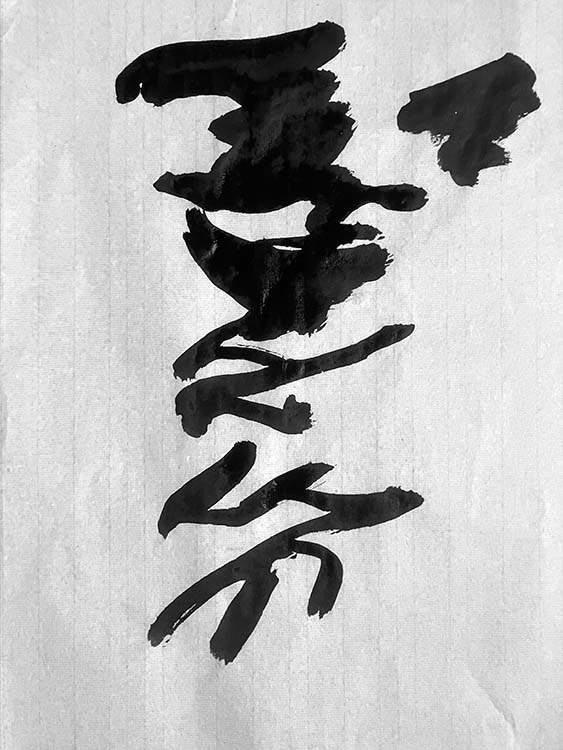
The paintings I made at Shotover, using ink, rice paper and calligraphy brushes, are like written characters from an unknown language; a language which is created then lost the moment it is written down.

It is the language of the present, which comes and goes in the blink of an eye; a series of ‘nows’ renewed and discarded second by second (‘Forever is composed of nows’ – Emily Dickinson).

A friend of mine recently mounted one of these paintings as a scroll and, framed in this way, that sense of the paintings being part of a language is enhanced, causing the viewer to ask, not so much ‘what does it mean?’ (as an artwork), but rather, ‘what does it say?’ (as a word).

Because it is saying something. We just can’t read it.

The only way we can engage with it on that level – the only way we can read it, is by following the gesture of the marks themselves; following with our eyes the strokes of the brush – perhaps even going so far as to copy them onto paper. That way, we re-create, kinaesthetically, the moment, lost to time, in which they were made.

Whenever I’m in an historic place, whether a building or a part of the landscape, it’s my embodied imagination which helps bring me closer to the people who once walked and lived in those spaces. By tracing or copying the paths they took, I am able, in some small way, to connect with them.

The same is true of these works. The viewer can understand them only by following the marks; by recreating within their embodied imaginations the gestures I made as I painted them.

As I’ve said, the scroll confers on the marks the sense that they are part of a language. That the scroll is hung on a wall also tells us the marks are important, or at least worthy of display. Perhaps they are reminders that the present moment is important; that eventually, all our present moments will be reduced to this – however we live our lives; a single trace, like a fleeting shadow.

In terms of the paintings themselves, these marks are the tracings of shadows cast in a small part of the woods in which they were made. It is all that remains of me, my thoughts, my actions, the trees, the birds, the breeze, the light, the weather in that moment; everything that existed in that particular moment in time is reduced to his single character.

I haven’t titled these pieces, but I’m wondering whether, when I next go out to paint, I should make a note of a few words (as per the lists I’ve made when carrying out walking meditations) and use those. In that way, the viewer can perhaps use the gesture of the brush strokes to recreate the scene from which it was taken.

Filed Under: Shadow Calligraphy, Shadows

A Calligraphy of Shadows

May 12, 2024 by Nicholas Hedges

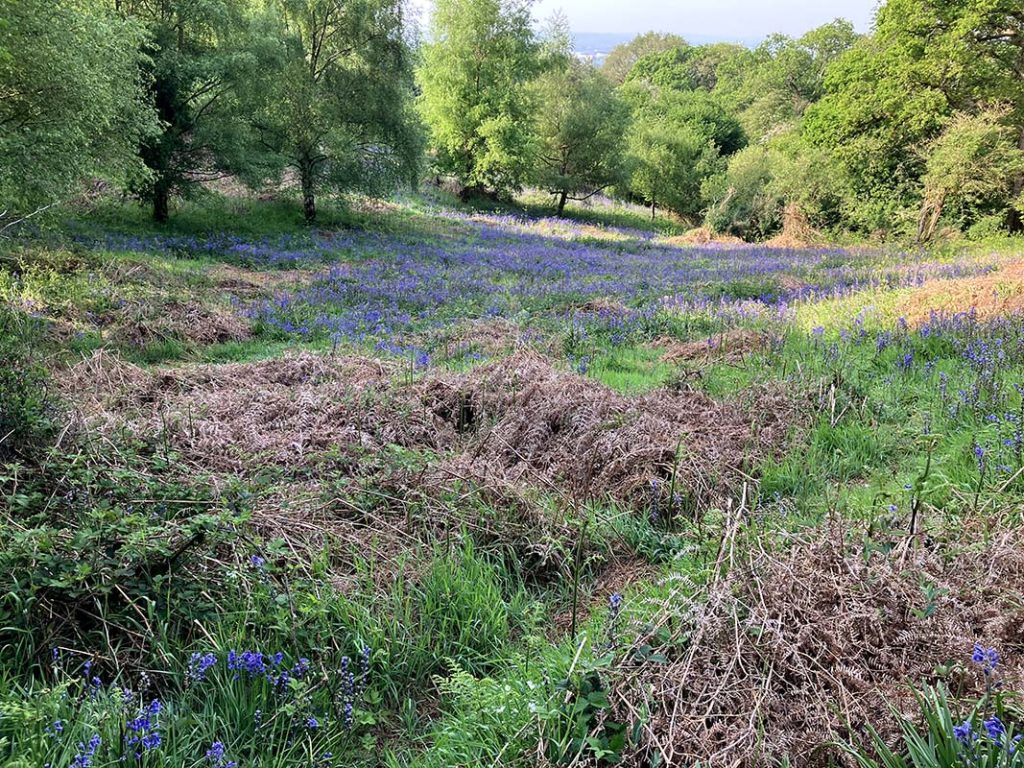
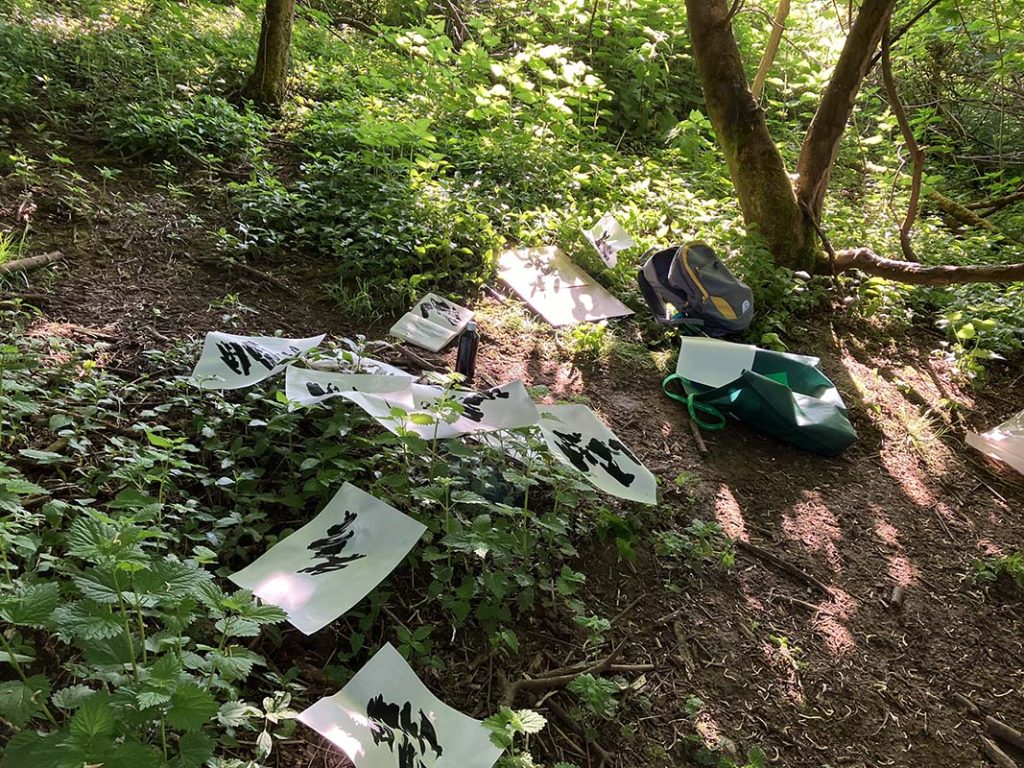
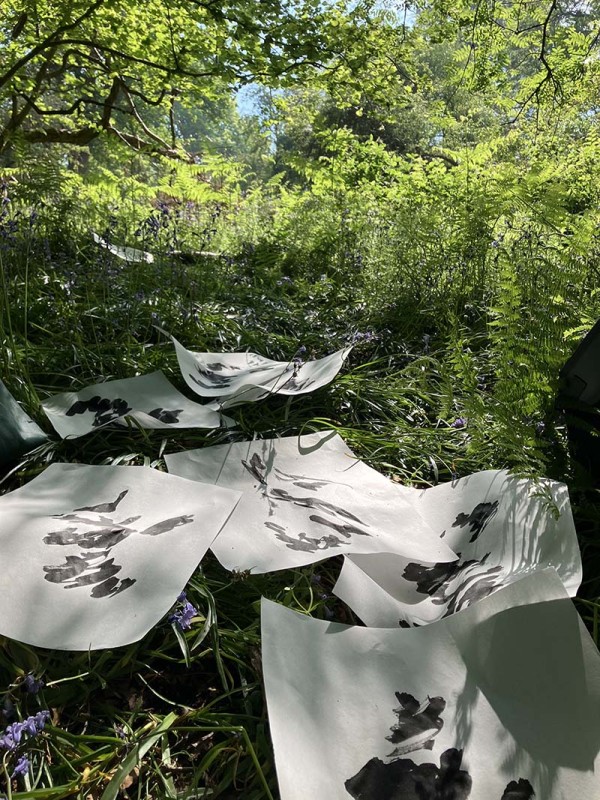
Taking advantage of the beautiful, sunny weather today, I got up at the crack of dawn and drove over to Shotover Wood to collect some shadows. Armed with my drawing board, rice paper, calligraphy brushes and ink, I walked among the trees and bluebells and found a number of spots in which to paint undisturbed.

It really was just so beautiful to sit among the birdsong and paint for several hours and by the end of the session, I had painted 43 shadows which I was really pleased with.

Filed Under: Shadow Calligraphy, Shadows

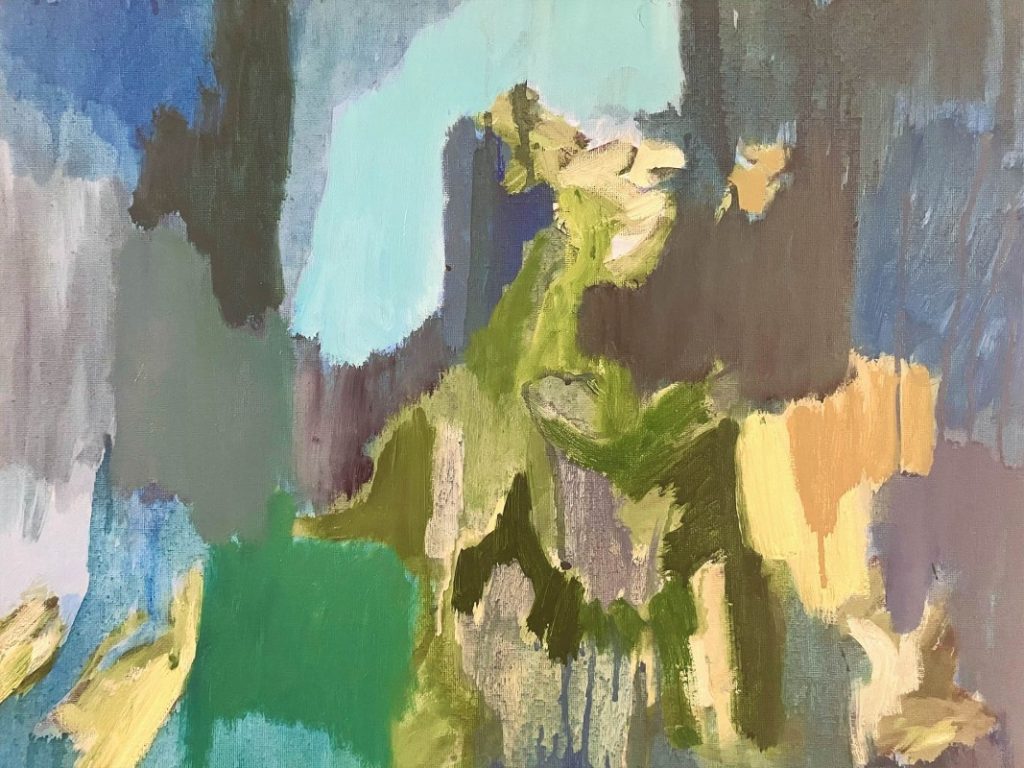
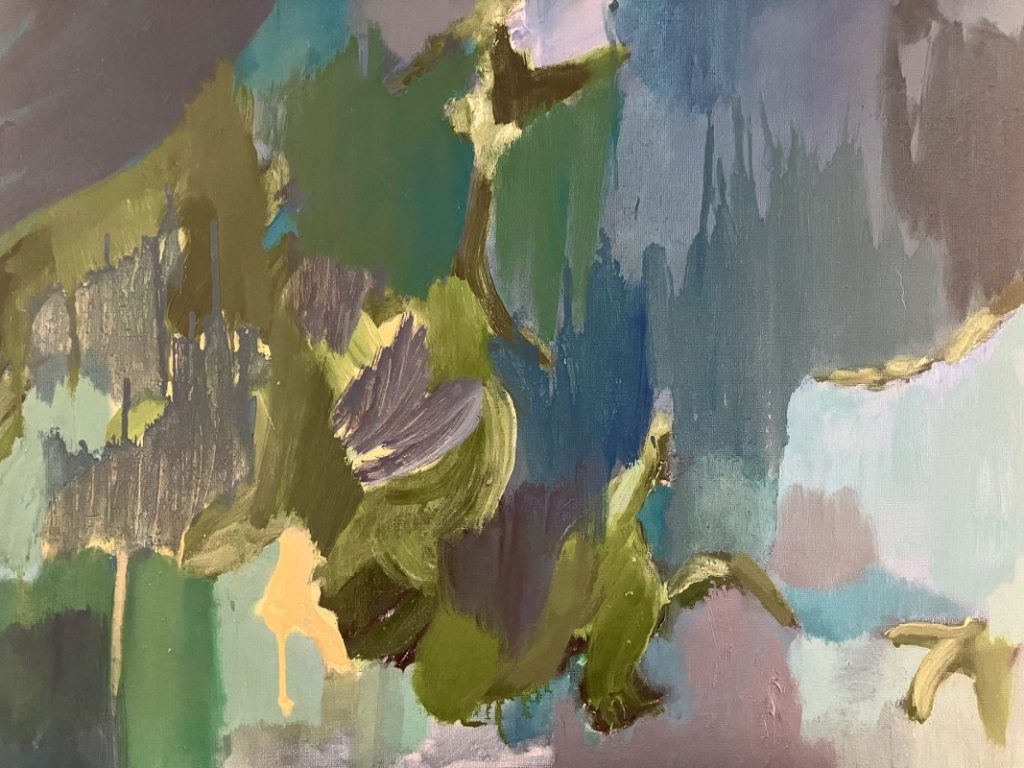
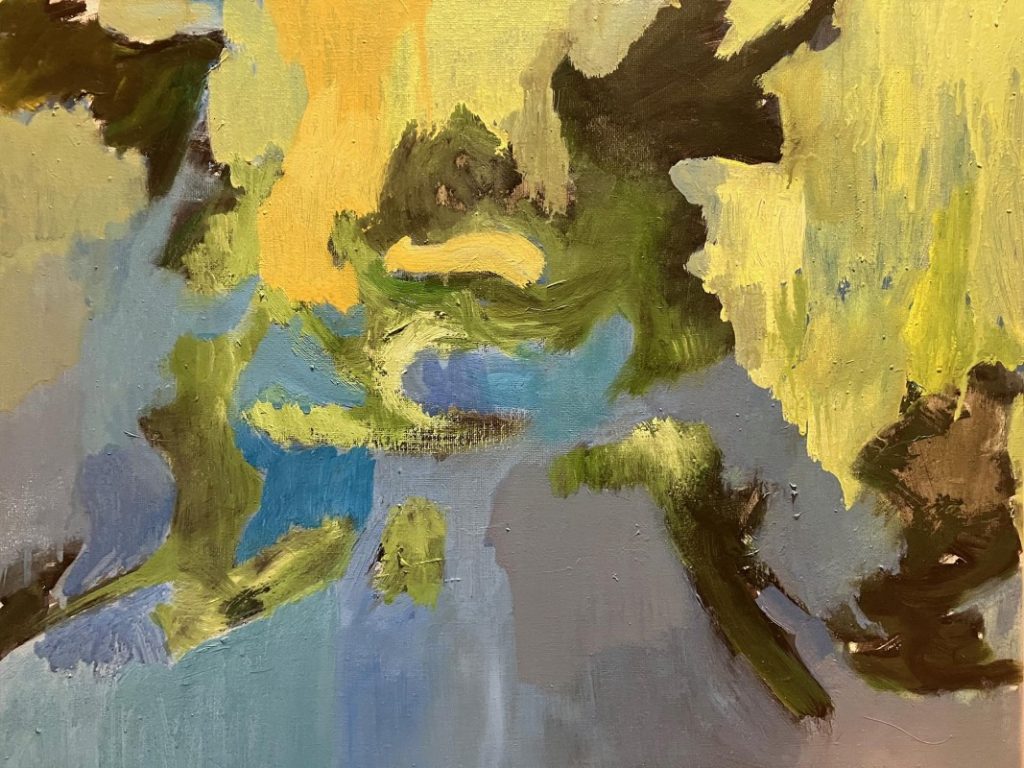
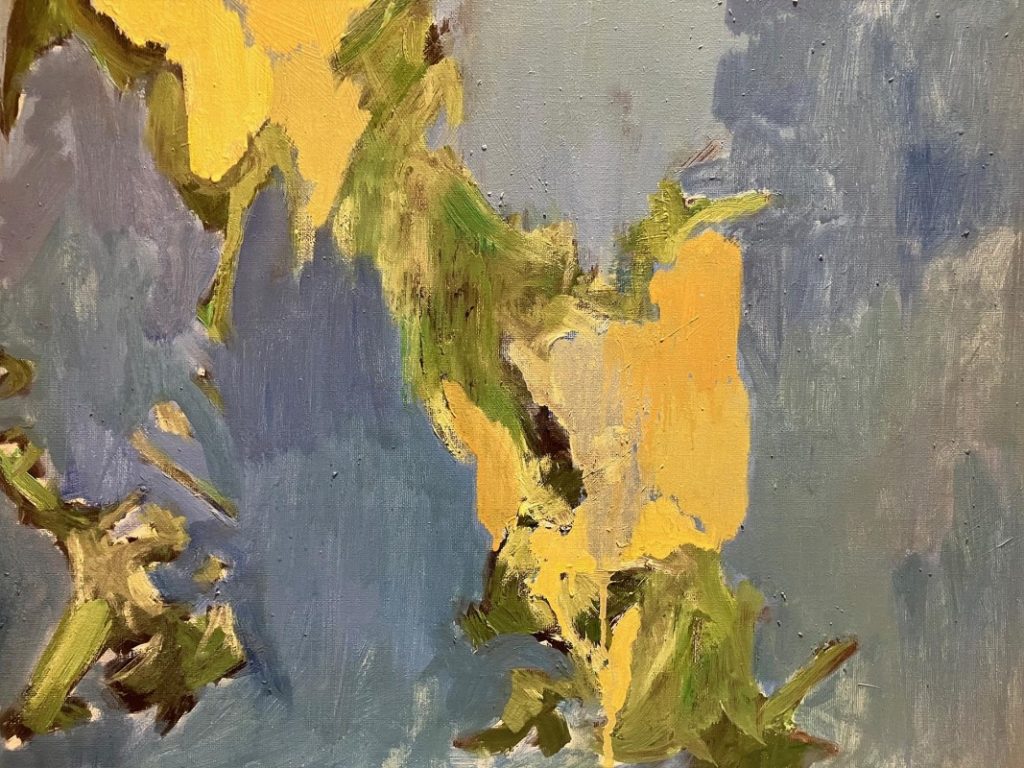
More Paintings

March 28, 2024 by Nicholas Hedges

Emergence I
Emergence II
Emergence III
Emergence IV

Filed Under: Paintings

Latest Paintings

March 28, 2024 by Nicholas Hedges

Through the Shadows I oil on canvas
Through the Shadows I
Through the Shadows II oil on canvas
Through the Shadows II
Through the Shadows III oil on canvas
Through the Shadows III
Through the Shadows IV oil on canvas
Through the Shadows IV

Filed Under: Paintings

Walking Meditation 2

March 10, 2024 by Nicholas Hedges

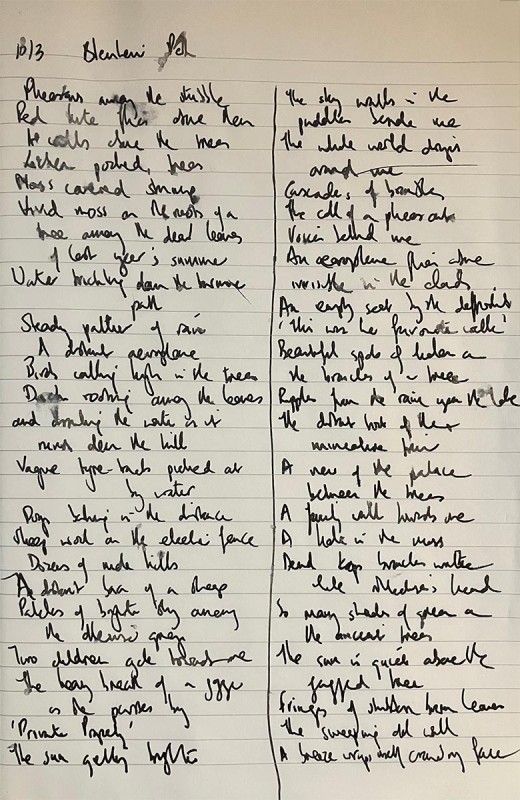
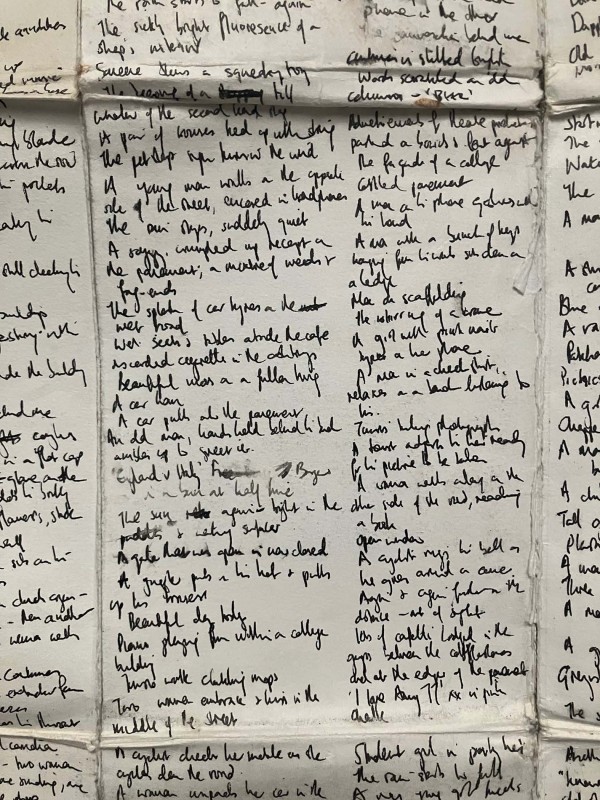
Following on from my first walking meditation, I did another, again around Blenheim Park, the list from which is below.

Pheasants among the stubble
Red kit flies above them and calls above the trees
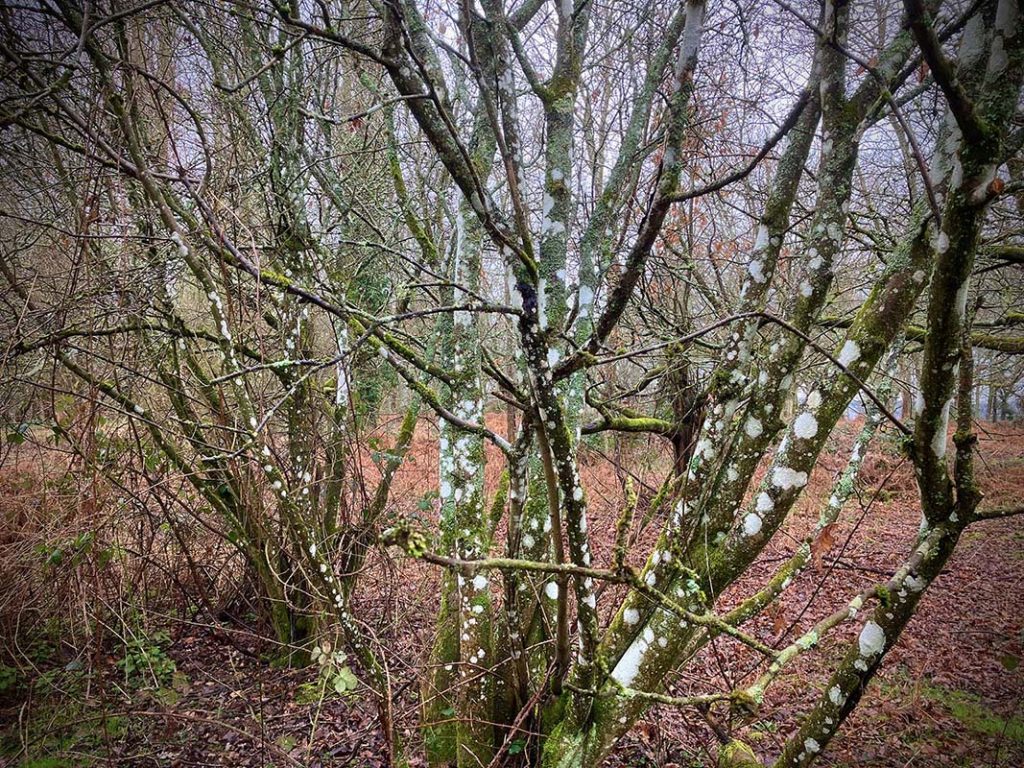
Lichen pocked trees
Mass covered stump
Vivid moss on the roots of a tree among the dead leaves of last year’s summer
Water trickling down the tarmac path
Steady patter of rain
A distant aeroplane
Birds calling high in the trees
Ducks rooting among the leaves and drinking the water as it runs down the hill
Vague tyre tracks picked out by water
Dogs barking in the distance
Sheep wool on the electric fence
Dozens of mole hills
The distant baa of a sheep
Patches of brighter sky among the otherwise grey
Two children cycle past me
The heavy breath of a jogger as she passes by
‘Private Property’
The sun getting brighter

The sky walks in the puddles beside me
The whole world drips around me
Cascades of branches
The call of a pheasant
Voices behind me
An aeroplane flies above, invisible in the clouds
An empty seat by the daffodils
‘This was her favourite walk’
Beautiful spots of lichen on the branches of a tree
Ripples from the rain upon the lake
The distant toot of the miniature train
A view of the palace between the trees
A family walk towards me
A hole in the moss
Dead branches writhe like Medusa’s head
So many shades of green on the ancient trees
The sun is quiet above the jagged tree
Fringes of stubborn leaves
The sweeping old wall
A breeze wraps itself around my face

Filed Under: Present Empathy, Walking Meditations

Knowing We Are There

March 7, 2024 by Nicholas Hedges

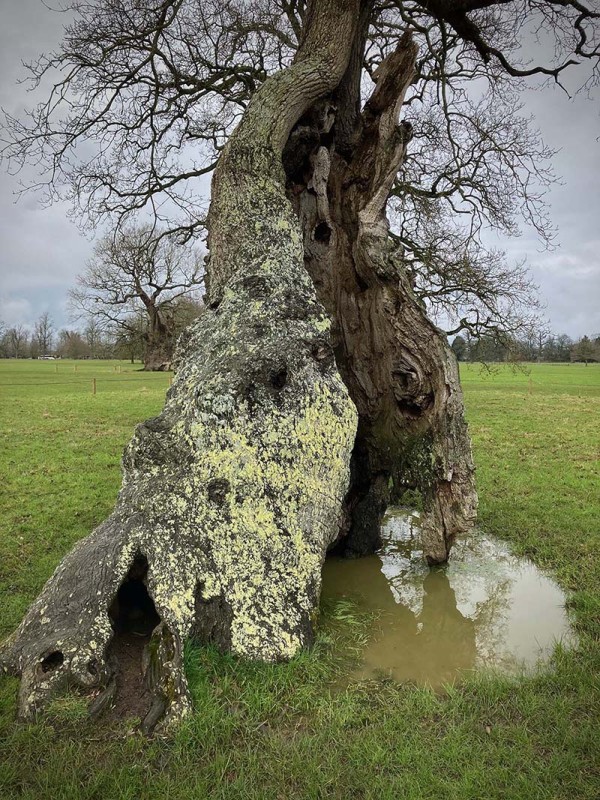
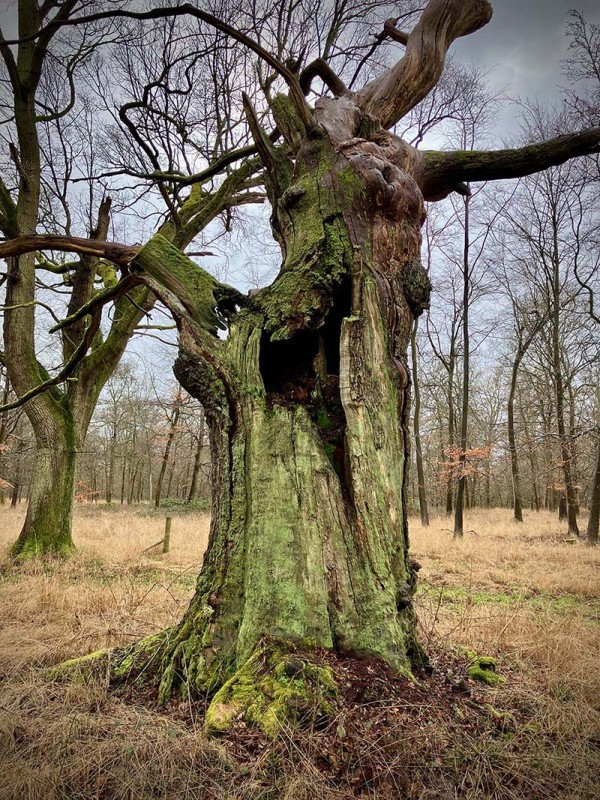
I was reading ‘Landmarks’ by Robert McFarlane last night and was struck by a quote from American author and essayist Barry Lopez:

“One must wait for the moment when the thing — the hill, the tarn, the lunette, the kiss tank, the caliche flat, the bajada – ceases to be a thing and becomes something that knows we are there.”

This wonderful quote reminds me of many others I have used extensively in my work, some of which you can read in the blog below.

Arrival/Departure

In particular that by Christopher Tilley who, in his book ‘The Materiality of Stone, Explorations in Landscape Phenomenology’, writes: “The trees ‘see’ the painter in a manner comparable to that in which the mirror ‘sees’ the painter: that is, the trees, like the mirror, let him become visible: they define a point of view on him which renders visible for him something that otherwise would remain invisible – his outside, his physiognomy, his carnal presence… The trees and mirror function as Other.”

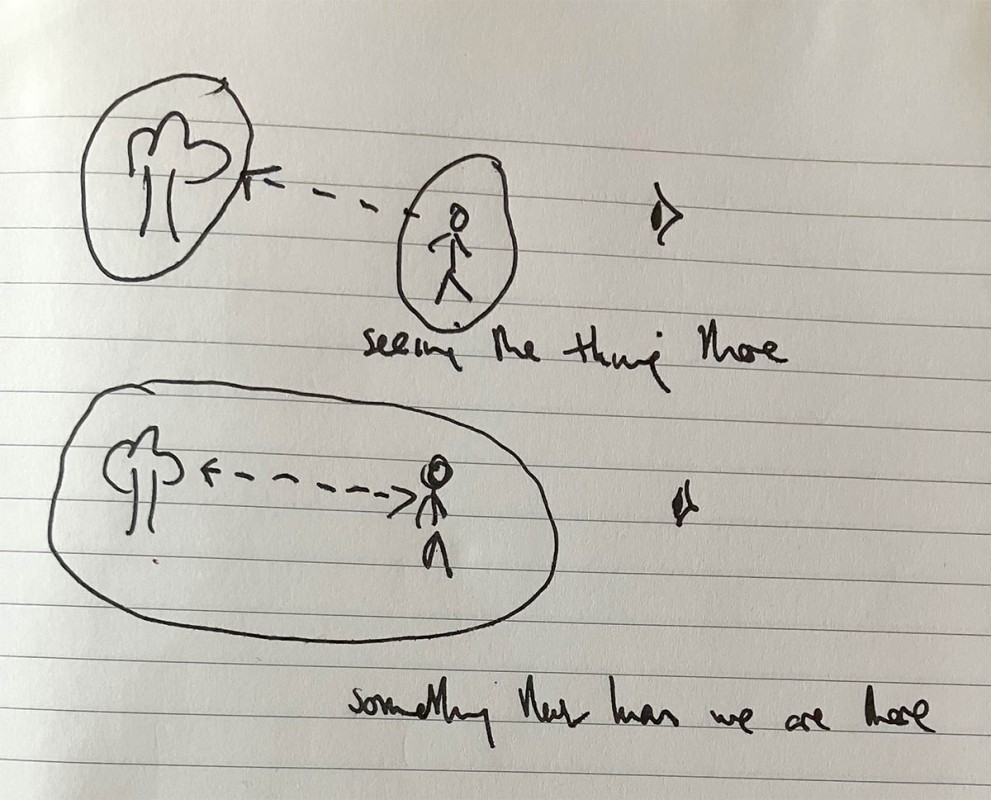
That moment when a thing, like a tree, functions as ‘other’ is, I think, the same as the moment when, as Lopez puts it, the thing knows we are there. There is a connection, between us and the thing, which is much more than us simply seeing it. It is, in Goethean Observation, akin to the stage of ‘Seeing in Beholding’, characterised by the human gesture of ‘self-disspation’; the effort of holding back of our own activity – a form of receptive attentiveness that offers the phenomenon (the thing) a chance to express its own gesture.”

This is a sketch I made in my notebook when I read Lopez’s quote.

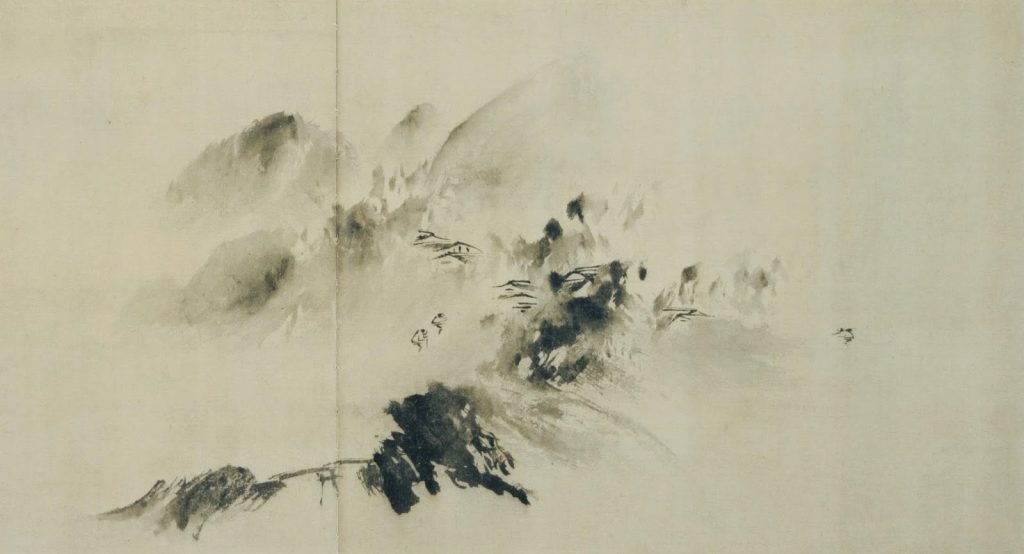
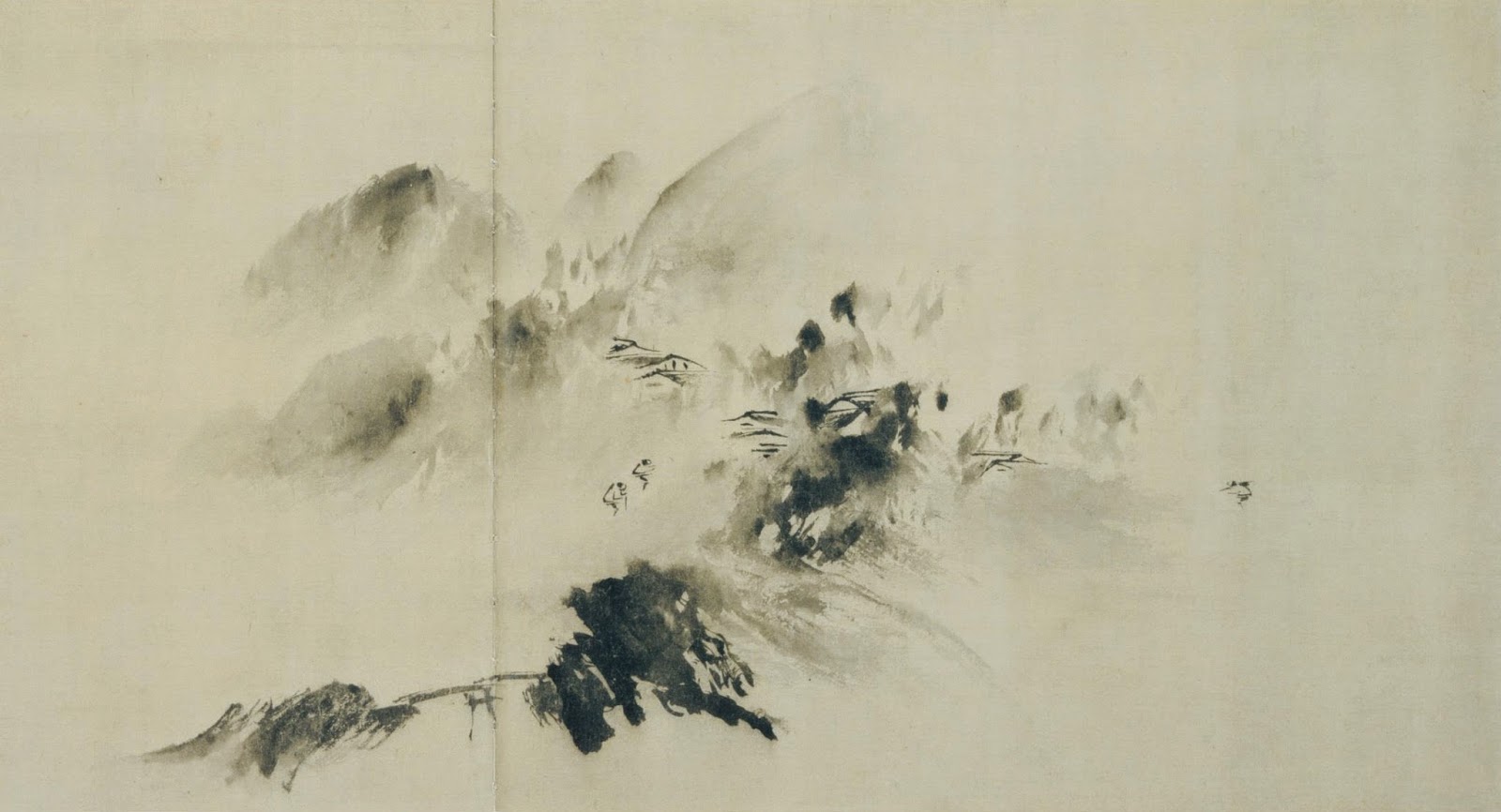
Looking at this image also reminds me of the Buddhist concept of interbeing, the deep interconnection we have with everything else around us, for example, the tree. The same can be true of things which existed centuries ago. Again I have used this example several times – a painting by Yu Jian entitled Mountain Village in Clearing Mist and a piece I wrote about it for a book.

Clearing in the mist by Yu Jian

“This seemingly rapid work transported me to a time long gone. It revealed – much as with the Japanese haiku of Basho – an ancient and vanished moment, not so much through what it showed but how it was depicted. It was almost as if I could see the landscape before the painter himself. I could see the work as a whole (the landscape as a whole), but then, whilst picking through the gestures of the artist, evident enough in the brushstrokes, I could see the landscape as it was revealed. Yu Jian’s painting was not a painting of what was experienced, but rather the experiencing of what was experienced. It was almost as if the painting had become a painting, not of Yu Jian looking at the mountains, but of the mountain ‘seeing’ Yu Jian. It wasn’t the mountain that was made visible on the paper, but the artist himself – his presence at that moment. 800 years after his death, and Yu Jian was as good as sitting next to me. Or to put it another way, 800 years before I was born, I was as good as sitting next to him.“

Again we have the idea of the ‘thing’, in this case the mountain, seeing the artist, but in this instance, this is a moment from 800 years ago. We are not simply seeing the painting by Yu Jian, we are experiencing the moment when the painting ‘knows’ we are there and by proxy, experiencing the moment it was made.

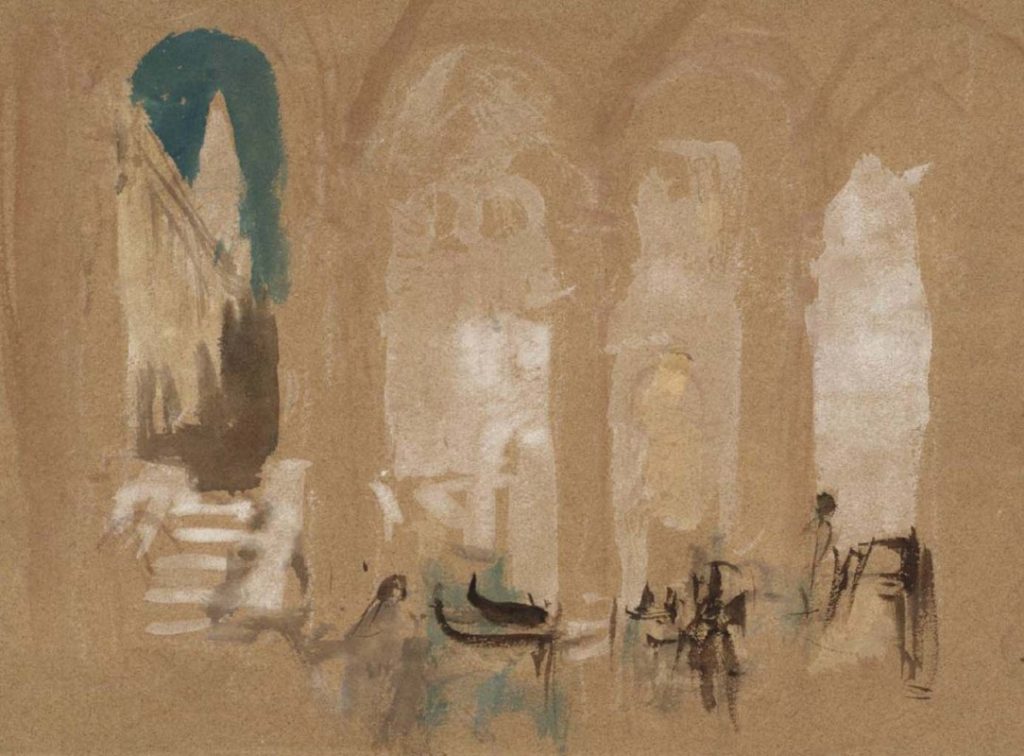
A similar thing happened last week when I went to London and saw the sketches of JMW Turner at Tate Britain. I had walked around the gallery for a while ‘seeing’ the paintings, but on coming across these sketches, it was as if in Lopez’s words, the paintings also saw me.

It was like with the diagram in my notebook, where seeing becomes beholding and the arch rendered quickly with a few quick strokes, becomes something I can walk through.

Filed Under: Notebook, Paintings, Present Empathy, Time

Venice by Moonlight 1840

March 6, 2024 by Nicholas Hedges

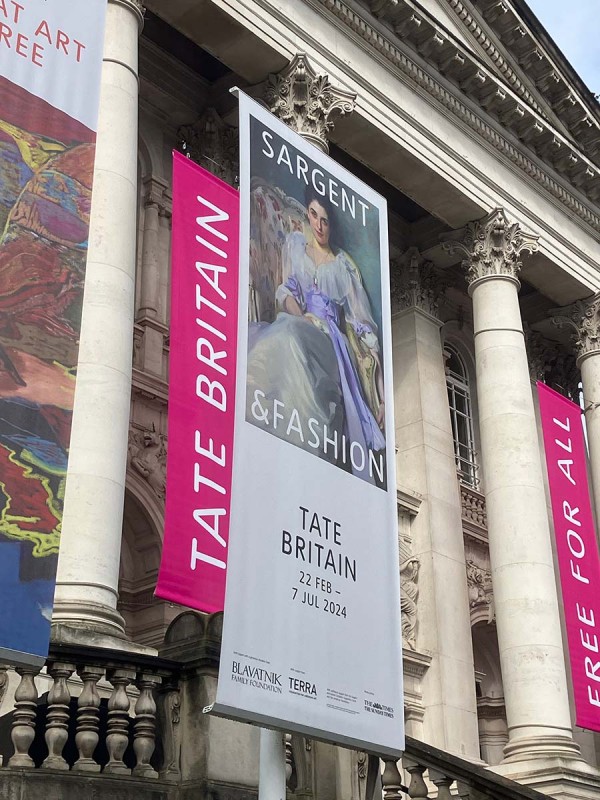
Yesterday I made my way to London to see the ‘Sargent and Fashion’ exhibition at Tate Britain which really is a fabulous show and well worth a visit.

I love Sargent’s work and have always had an interest in late 19th fashion, and love to see portrait with the actual dresses worn by the sitters displayed alongside. It’s utterly beguiling to look at the details and see them captured in brushstrokes over a hundred years ago; looking at the dress then at the canvas, just as that artist would have done.

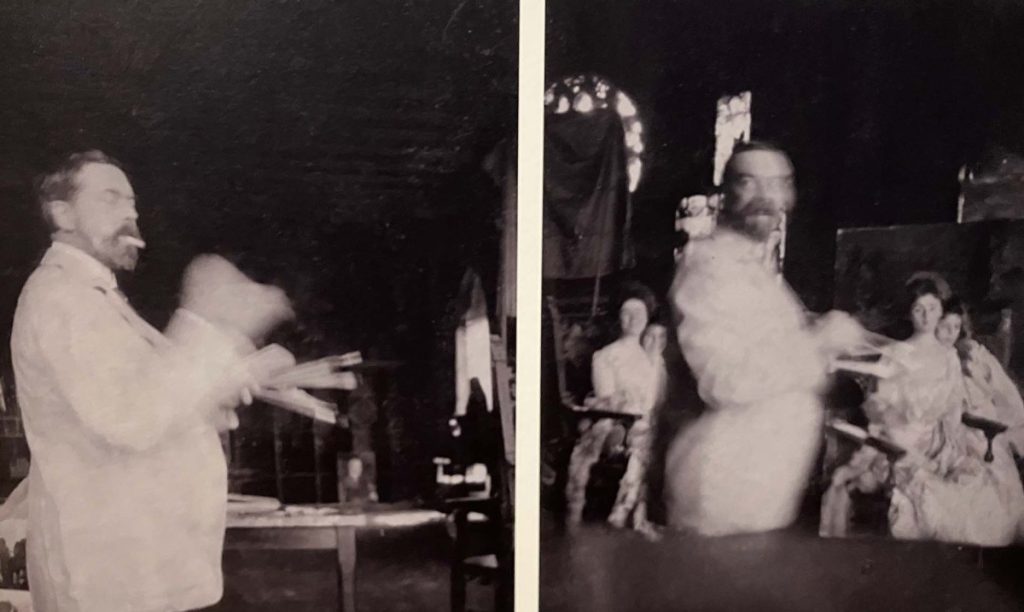
I loved these photographs of Sargent painting a portrait. I love the blurred hands and face, signalling a sense of movement – of ‘nowness’ in the distant past.

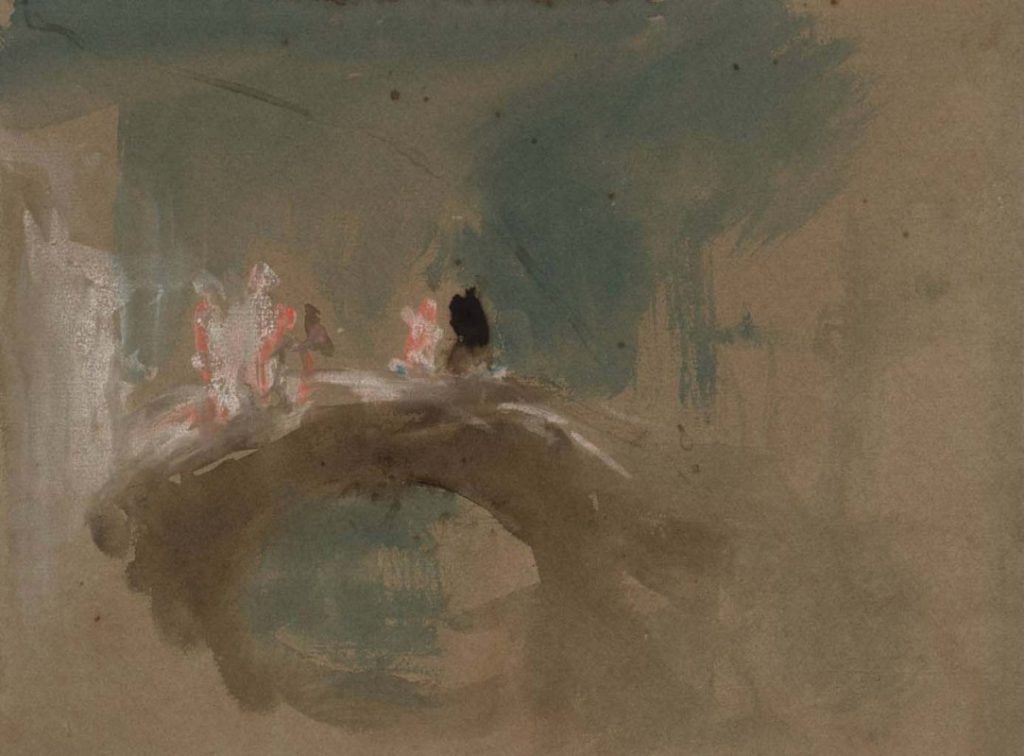
But even though this was a fabulous show, the thing that captivated me most was in the Turner collection. Now, Turner was obviously a genius and although I love his more painterly works, I’m not such a fan of his earlier landscapes. What I love above all else are his watercolours and smaller works in chalk and gouache. And the works I loved the most were his 1840 scenes of Venice moonlight, two of which I’ve reproduced below.

It’s hard to put my finger on why these had such an impact. I think though, it’s the immediacy of the images. Standing in front of something painted almost 200 years ago, where the brushstrokes are so quick and fluid, one gets a sense of the moment it was made. In the image above, this is made the more so by the small patch of night sky seen through the arch.

The same is true of this image where the sky is so sketch and the figures are reduced almost to daubs.

Filed Under: Paintings

Fragments and Additions

February 29, 2024 by Nicholas Hedges

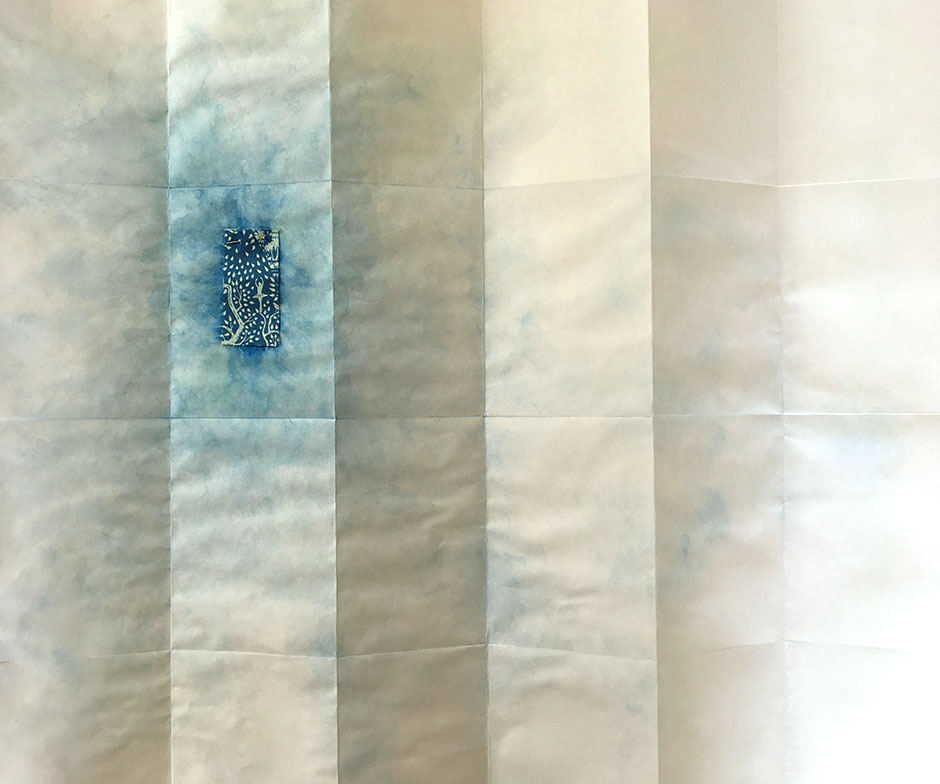
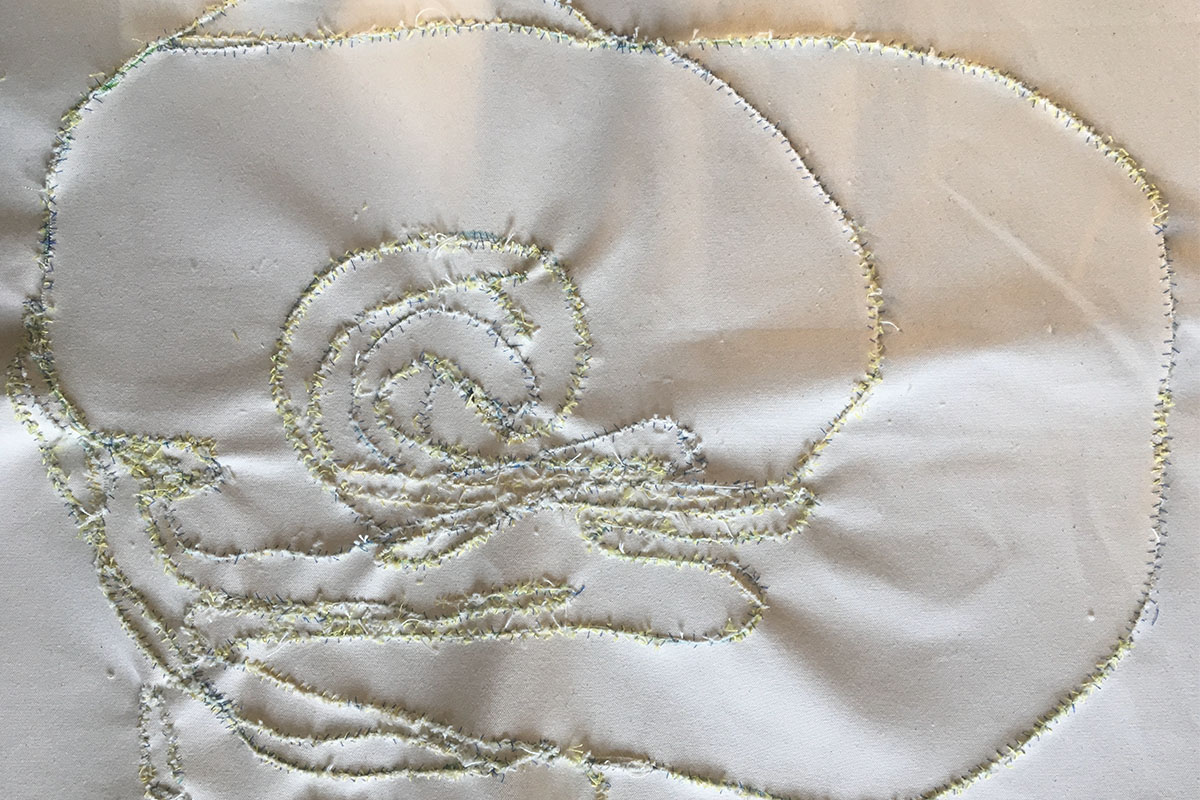
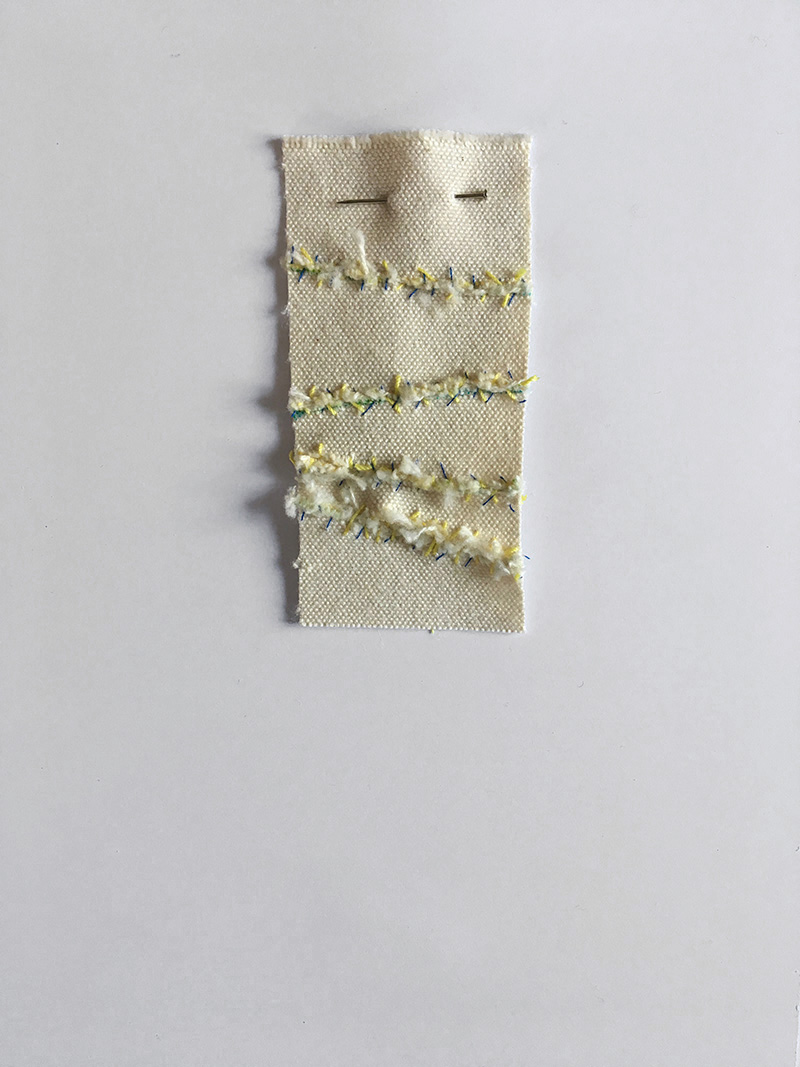
I’ve always been interested in the idea of fragments of the past and how, mentally, we add to them in order to create a view of that past. I did some work on this with some patches of fabric following a visit to the Foundling Museum in London (see Patterns Seeping and Patterns Seeping II).

Sometimes I have reversed the process to make fragments of work I have alreadymade. Again, the examples below (‘Missded’) were made in response to a visit I made to the Foundling Museum (see ‘Missded 1‘, ‘Missded 1 Stitched‘, ‘Missded 1 – A Framed Token‘).

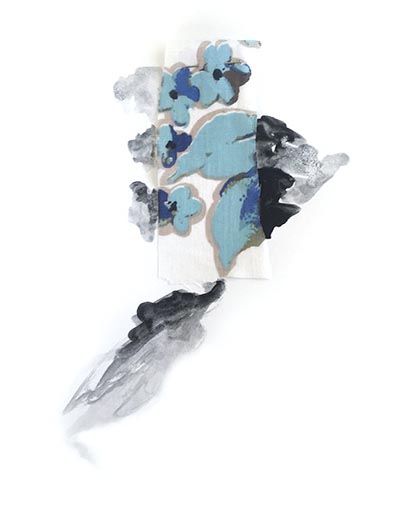
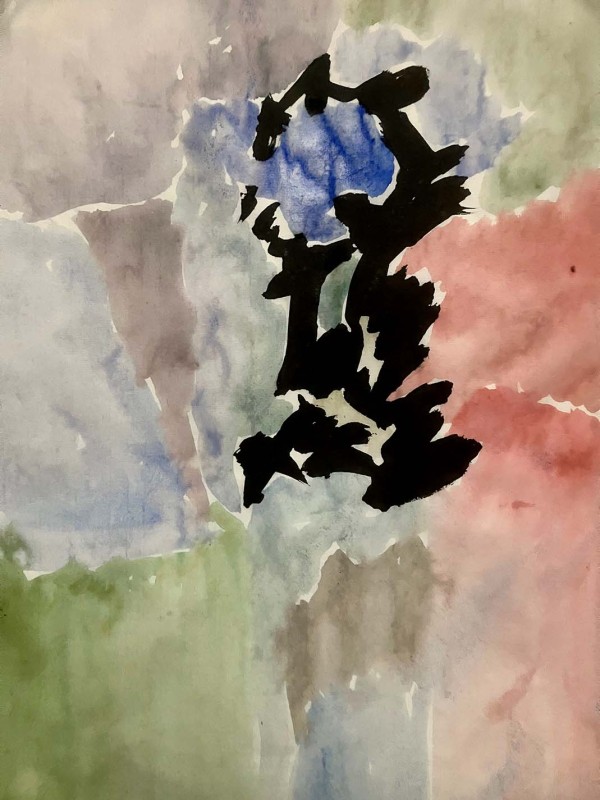
Taking this idea, I’ve applied it to the ‘Shadow Calligraphy characters’ I’ve recently painted. I’m not suggesting for one minute the results make for good art, but I like the idea that a remnant of the past (the ‘character’) can be added to, just as when we try and imagine the past, we create the colours and sounds that went with the original fragment.

My choice of inks was extremely limited and these aren’t quite right, but it’s an idea I’ll continue to explore, as I have done with some oil paintings already.

Nana's Mountain

Filed Under: Fragment

Reimagining The Past

February 28, 2024 by Nicholas Hedges

This post follows on from one I wrote previously on ‘Rinsho’. Below are two painting I made in woods in my notebook.

With the art of Rinsho, the idea is to practice your calligraphy by copying, from books, that of the old masters. I like to think of the paintings made in the field, so to speak, as like those versions made by old masters and that copying them is like trying to reimagine a past event, where the body is trying to echo, through the gesture of painting, that of the original painter sitting in the woods; trying to imagine the trees, the sky, the sounds etc.

These are some of the copies I made of the characters above.

Filed Under: Present Empathy, Shadow Calligraphy, Shadows

Walking Meditation 1

February 26, 2024 by Nicholas Hedges

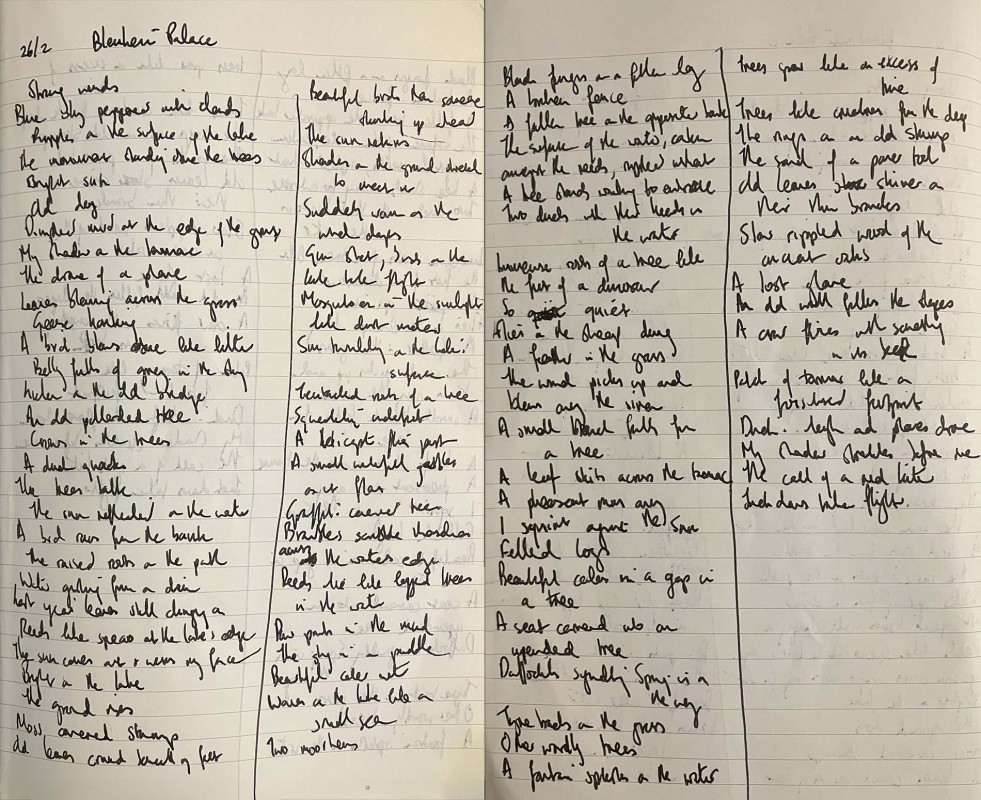
Blenheim Palace Park

I discovered this walk with my children at the weekend and so I returned today to do another walk, incorporating within that a walking meditation.

The idea of a walking meditation is to try and remain fully in the present, taking in everything that you see while not letting your mind wander. When you’re dealing with a difficult issue in your life and it’s one which seems to stop you thinking of anything else, then it’s a good way to let your mind breathe. It’s not a quick fix of course, but bit by bit, it should help reset your thoughts; especially if they are prone to going round and round a question that’s quite impossible to answer.

The list below comprises the things I noticed and chose to write down. There’s no particular reason why I chose these particular observations.

Walking meditation observations made at Blenheim Palace Park

Strong winds
Blue sky peppered with clouds
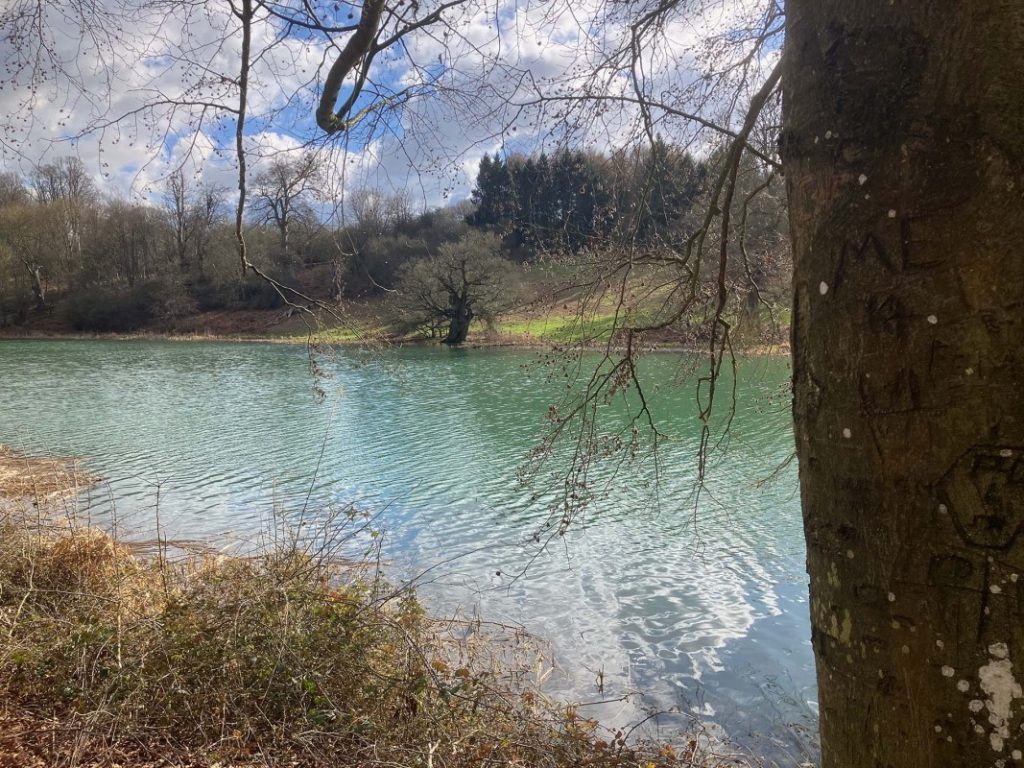
Ripples on the surface of the lake
The monument standing above the trees
Bright sun
Old dog
Dimpled mud at the edge of the grass
My shadow on the tarmac
The drone of a plane
Leaves blowing across the grass
Geese honking
A bird blows above like litter
Belly fulls of grey in the sky
Lichen on the old bridge
An old pollarded tree
Crows in the trees
A duck quacks
The trees talk
The sun reflected on the water
A bird runs from the bank
The raised roots on the path
Water gushing from a drain
Last year’s leaves still clinging on
Reeds like spears at the lake’s edge
The sun comes out and warms my face
Bright on the lake
The ground rises
Moss covered stump
Old leaves crunch beneath my feet
Beautiful birds then someone shouts up ahead
The sun returns
Shadows on the ground stretch to meet it
Suddenly warm as the wind drops
Gun shot, birds on the lake take flight
Mosquitoes in the sunlight like dust motes
Sun twinkling on the lake’s surface
Tentacled roots of a tree
Squelching underfoot
A helicopter flies past
A small waterfall gabbles as it flows
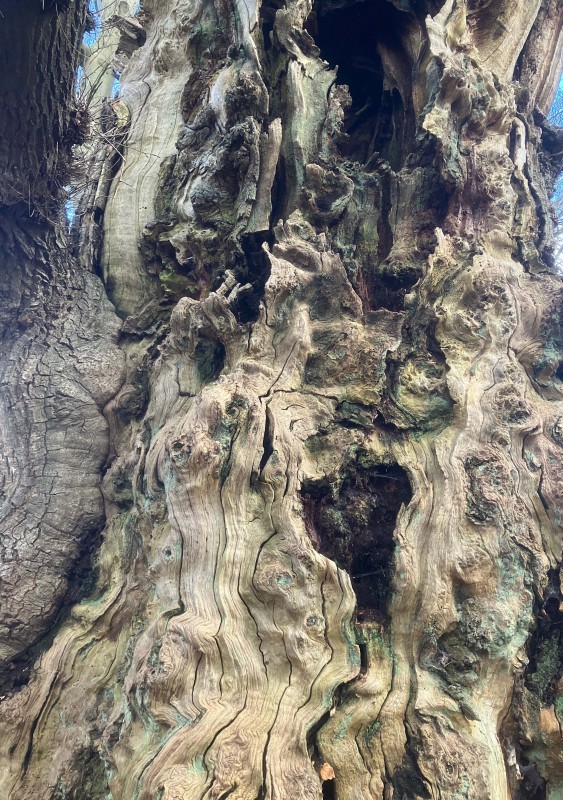
Graffiti covered tree
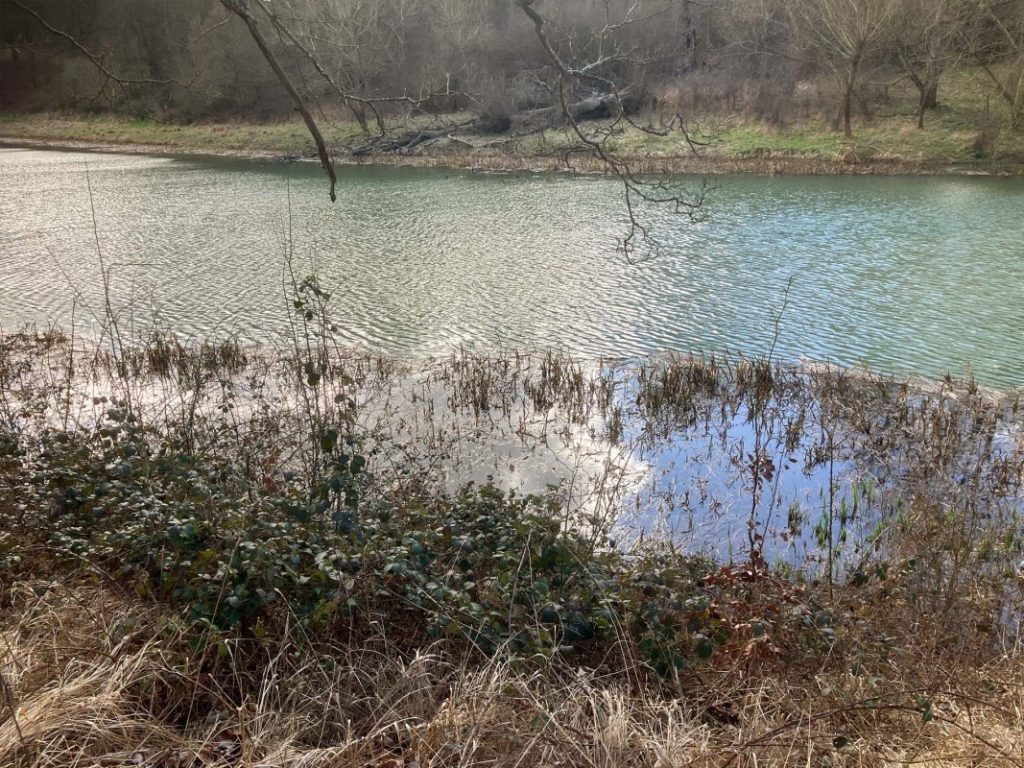
Brambles scribble themselves across the water’s edge
Reeds lie like logged trees in the water

Paw prints in the mud
The sky in a puddle
Beautiful colour water
Waves on the lake like a small sea
Two moorhens
Black fungus on a fallen log
A broken fence
A fallen tree on the opposite bank
The surface of the water, calm amongst the reeds, rippled without
A tree stands waiting to embrace
Two ducks with their heads in the water
Immense roots of a tree like the foot of a dinosaur
So quiet
Flies on the sheep dung
A feather in the grass
The winds picks up and blows away the siren
A small branch falls from a tree
A leaf skits across the tarmac
A pheasant runs away
I squint against the sun
Felled logs
Beautiful colours in a gap in a tree
A seat carved from an upended tree
Daffodils signalling Spring is on the way
Tyre tracks on the grass
Otherwordly trees
A fountain splashes water
Trees grow like an excess of time
Trees like creatures from the deep
The rings of an old stump
The sound of a power tool
Old leaves shiver on their branches
Slow rippled wood of the ancient oaks
A lost glove
An old wall follows the slopes
A crow flies with something in its beak
Patch of tarmac like a fossilised footprint
Ducks laugh ad planes drone
My shadow stretches before me
The call of a red kite
Jackdaws take flight

Filed Under: Lists, Lists (New), Present Empathy, Walking Meditations

Mindful Walking I

February 23, 2024 by Nicholas Hedges

One of the ways in which I have helped myself during recent low points has been the practice of mindful walking, where instead of walking as the mind spins around thinking on a problem, you try and focus on what you’re experiencing now, in the present. This stops the mind racing and connects you with the moment, allowing any despair and anxiety to take a back seat for a while.

Several years ago, when I was looking at ways of connecting with the ‘nowness’ of the past, I used walking as a method, making lists of things I was experiencing in the moment such as that below.

‘The splash of car tyres on the wet road’ – I can hear the sound in my mind as I read the text; the moment from over 15 years ago suddenly very present.

Reading these lines is a great way of connecting to the past, just as the act of making the lists – of mindful walking – is a great way to reconnect to the present, and to yourself. And by connecting with yourself, to be more embodied, allows you to better empathise with those in the past.

The video below, which I made as part of a Residency in Australia, was filmed in an old lockup. At the time it was meant to represent the idea of recalled everyday moments being a means of reaching from the present in order to reconnect with the past (the present being me, walking around the confines of the cell). Watching it now, I see how it could be interpreted differently, where walking and being mindful of the present, can help one to escape the prison of one’s suffering.

Filed Under: Lists, Lists (New), Present Empathy, Walking Meditations

Grief II

February 22, 2024 by Nicholas Hedges

We have all lost someone in our lives, whether that’s through death or the breakdown of a relationship. Both are painful and both require us to grieve for the missing loved one. In many ways, the loss of a partner when a relationship ends feels worse; perhaps because the grief has been chosen for us. It fits us like a second skin, but when someone dies, the grief, although painful and also made to measure, is like the remembrance of a close and comforting hug.

I have experienced both these things of late and want to express that grief through my work.

The video below was made a few years back. Filmed in Shotover Wood in Oxford, it shows the shadows cast by trees on a summer’s day and was a way of visualising the idea that all that’s left of the past is like the shadows in the film; that if we want to imagine what the past was really like, we have to imagine the trees, the sky, the sun, the colours and the sounds.

The idea of the everyday within the present moment has always been of interest to me, particularly in regards to how we can empathise with those in the past; particularly those who experienced times of trauma. When I visited Auschwitz-Birkenau in 2006, I was struck by the movement of the trees, aware that those who had suffered so much would have seen exactly what I was seeing. It was something so everyday, but something which had the power to link us together despite the difference in time and of course experience.

“‘…You have no idea how tremendous the world looks when you fall out of a closed, packed freight car! The sky is so high…’
‘…and blue…’
‘Exactly, blue, and the trees smell wonderful. The forest – you want to take it in your hand!’”

Tadeusz Borowski

“Another leap in time, to a different landscape and different colours. The colour is blue: clear blue skies of summer. Silver-coloured toy aeroplanes carrying greetings from distant worlds pass slowly across the azure skies while around them explode what look like white bubbles. The aeroplanes pass by and the skies remain blue and lovely, and far off, far off on that clear summer day, distant blue hills as though not of this world make their presence felt. That was the Auschwitz of that eleven-year-old boy.”

Otto Dov Kulka

“The air, the woods, breathing.”

Adam Czerniakow

The important thing here is how things we experience in the natural world, like trees and the sky, the wind and the rain, can connect us to those in the distant past, because they too would have experienced them. Our lives might be completely different, but those things stay the same.

Back to the trees at Shotover…

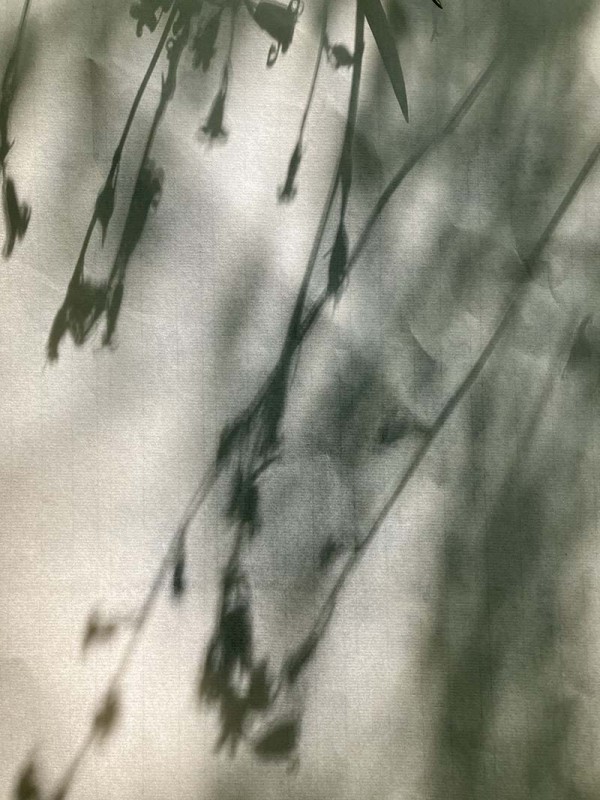
I loved the ‘calligraphy’ of the shadows as they wrote themselves on the blank piece of paper on the ground, and used that idea to paint those shadows using ink and calligraphic brushes. It was as if the trees were using me to write. They were like the words of a language created and forgotten in a moment. No-one can read these words; they speak only of a presence – my presence – in the woods at that particular moment.

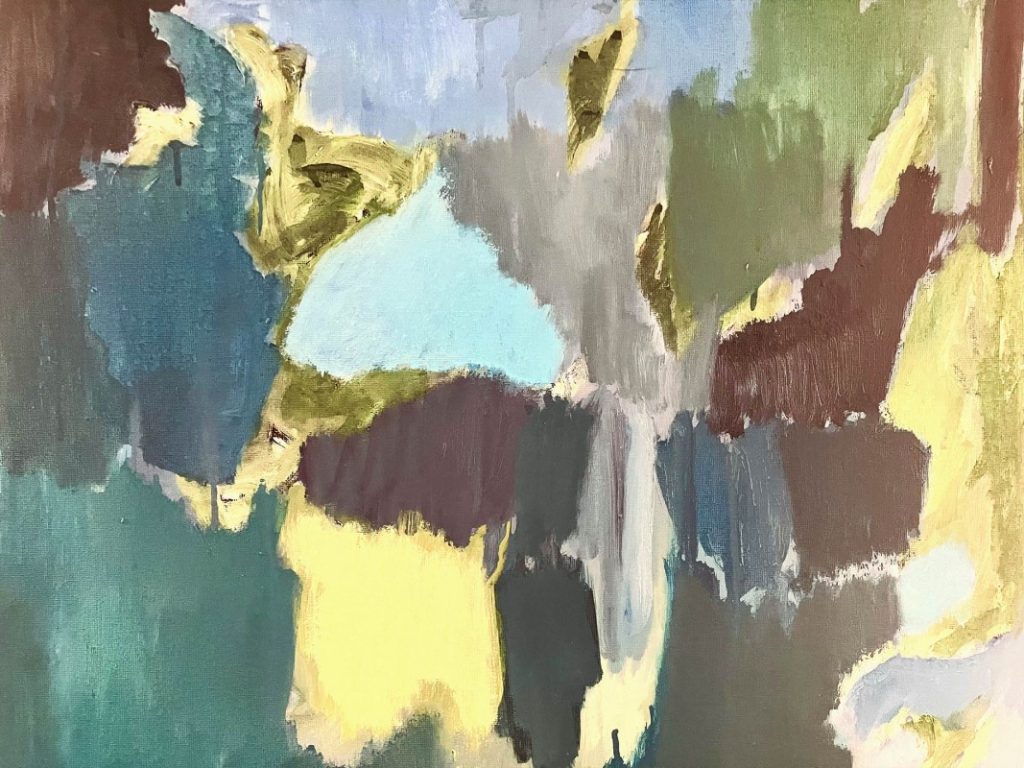
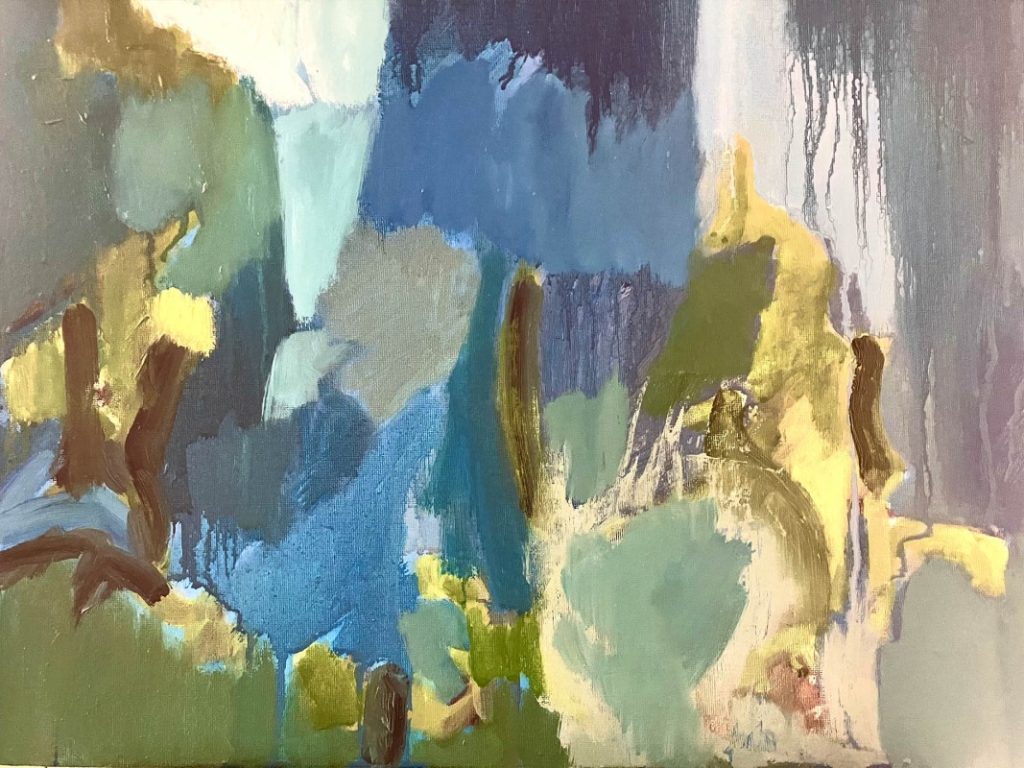
As I wrote above, if we want to imagine what the past was really like, we have to imagine the trees, the sky, the sun, the colours and the sounds. So having transferred these ‘characters’ to canvas, I began to paint, adding colour, as if, with the video, trying to imagine the fullness of the moment from which they were taken.

Nana's Mountain

So where does this with my own feelings of grief?

Grief is an expression of our relationship to someone’s absence. Its language is written in shadows like the patterns cast by the trees. But these shadows are cast by the memory of our loved one. Remembering the colours, the sounds and how it felt is painful. But remember them we must – and without regret.

Holding on to regret is like clutching feelings of anger. Soon they will start to eat away at us, damage us. We have to let them go by transforming them, just as we can try and transform our own suffering.

To transform our suffering we must ground ourselves in the present moment. When a relationship ends, it’s all too easy to become entangled in our thoughts, trying to make sense of the other person’s actions. I found myself doing just that for days and days, walking round in circles, going nowhere except down. And what would it achieve anyway? Trying to work out why something happened won’t change the fact that it did happen.

All I could learn to do was be as present in the moment as I could, to let go of my thinking about the past. That’s not to say I had to try and forget her; the memories of our time together would always be with me and precious with it. But when I think of those memories, I’m not trying to understand them or change them. I just had to stop striving for answers which I’d no chance of knowing, as if knowing them would somehow change the outcome and alleviate the pain.

I still walk and I still think, but walking meditation, where one is grounded step by step in the moment, helps still the mind and cultivate a sense of peace. Looking at the trees, the clouds, the sky. Feeling the wind or the rain (or both) helps me find the peace and contentment within. It helps my mind reconnect with my body just as I can try and connect with those who lived generations before us.

Filed Under: Grief

Three New Paintings

November 23, 2023 by Nicholas Hedges

Completed this evening…

Old Note, oil on canvas, 2023
Old Note, oil on board, 2023
Sun Breaks Through, oil on canvas, 2023
Sun Breaks Through, oil on board, 2023
Sunburst, oil on board, 2023

Filed Under: Present Empathy, Shadow Paintings Colour

Nana’s Mountain

November 21, 2023 by Nicholas Hedges

First painting I’ve finished in a long while. I called this one ‘Nana’s Mountain’, after the hill behind her garden, up which she used to watch her dad walk on his way to the mines.

Nana's Mountain

Filed Under: Uncategorized

Painting

November 14, 2023 by Nicholas Hedges

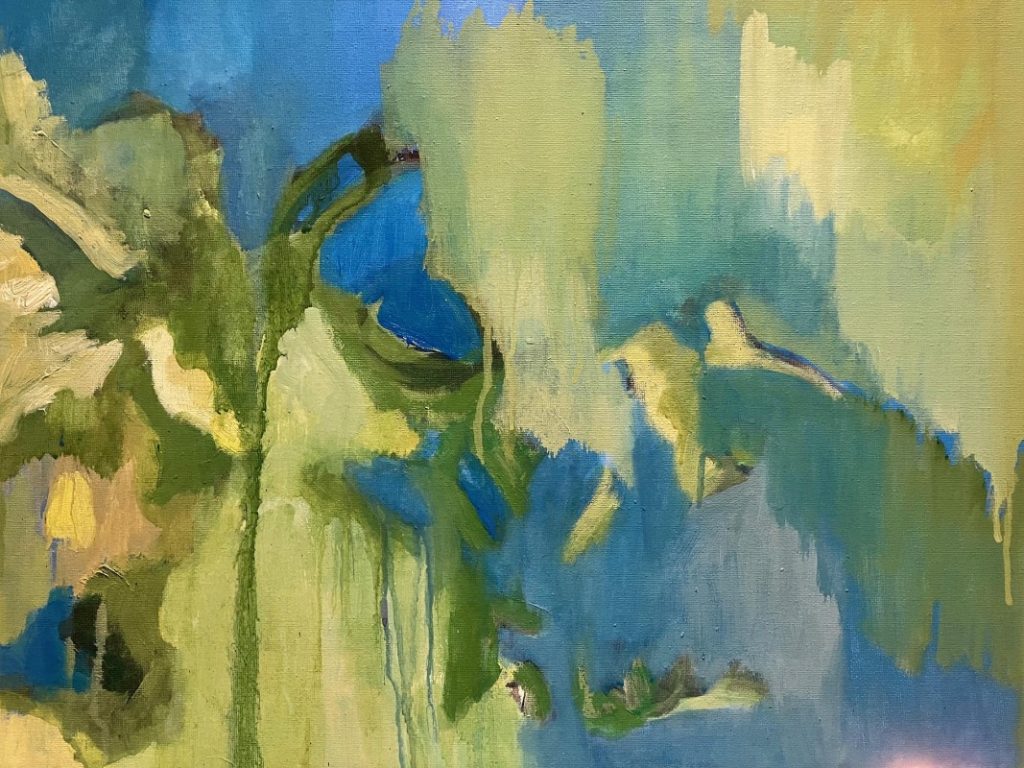
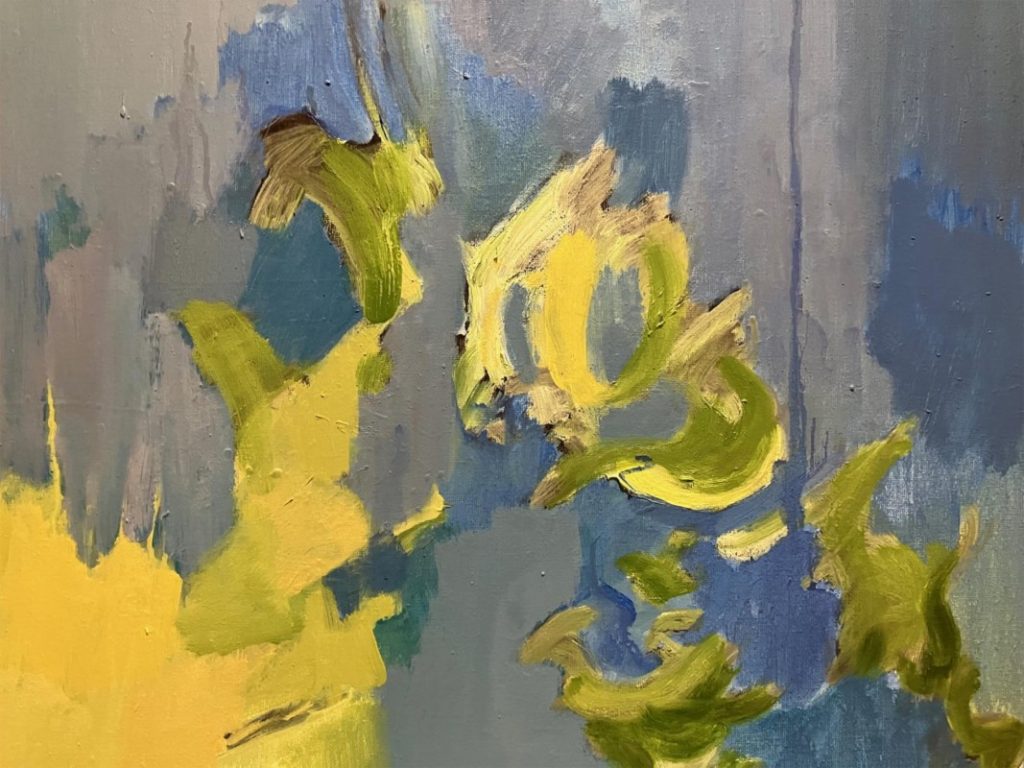
I’ve started painting again and have begun my journey using water-based oils which I must say are rather good. The question has been, at the start of this journey – what to paint?

Having worked on my tree shadow paintings using inks, I decided to do the same with the oils, projecting the video onto a canvas and tracing the shadows in black paint.

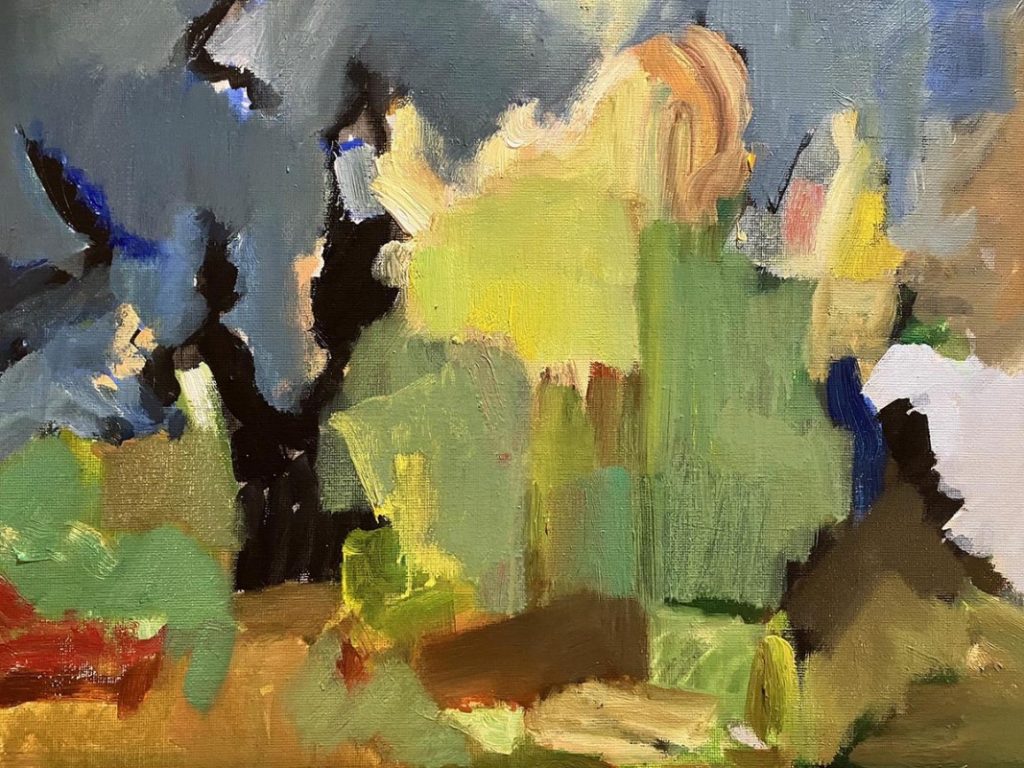
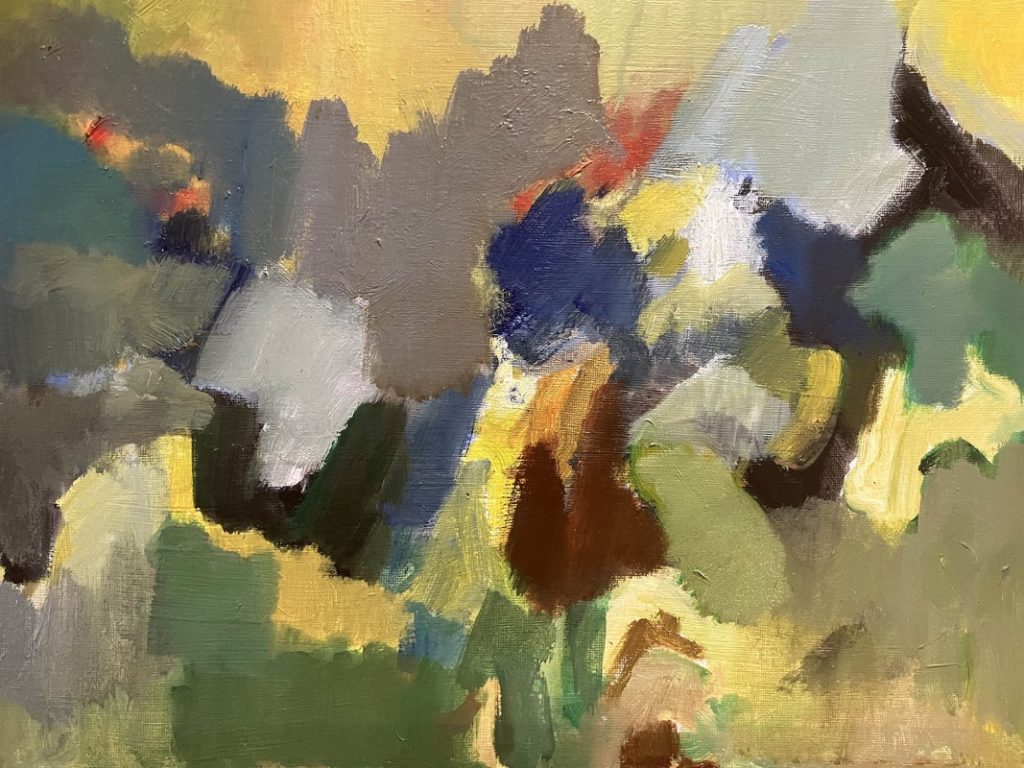
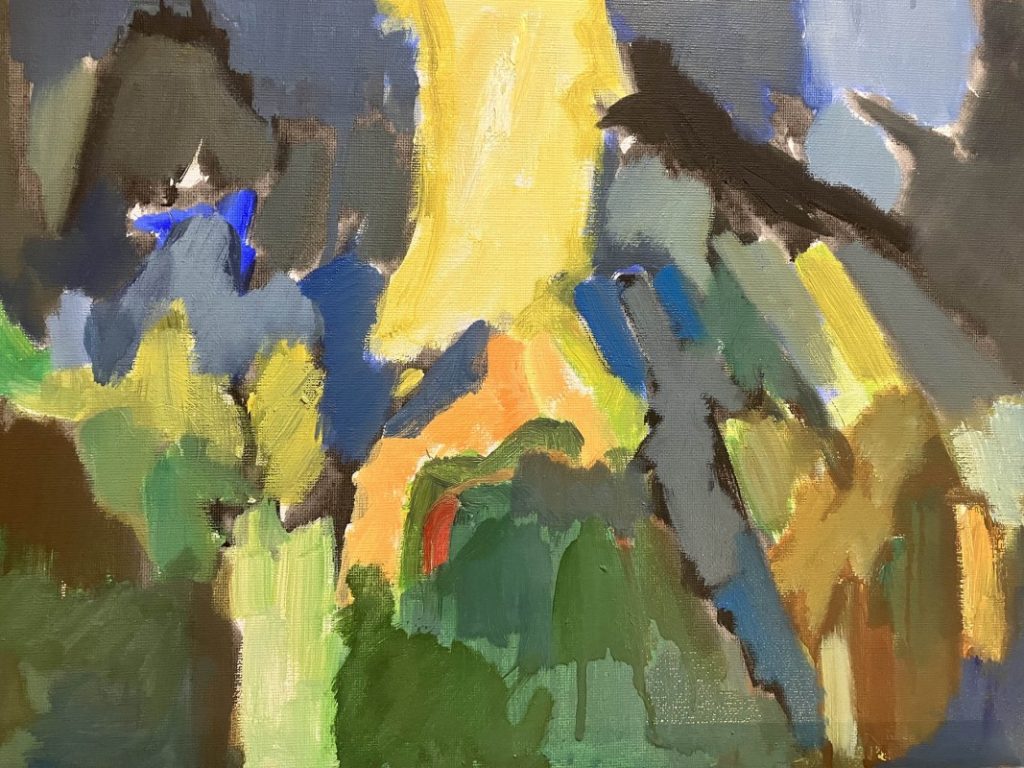
Having completed a few of these, I knew I wanted to look at the spaces between the shadows, as if to imagine the world in which the shadows were filmed – a world of colour (just like the world of black and white photographs and films). It’s been a while since I painted, so I was also interested in feeling my way with the paints again and getting back into painting onto canvas.

As well as painting again I’ve been reading about painting too, in particular about an artist I’ve admired for a while; Ivon Hitchens. I’ve been looking also at Howard Hodgkin and his attempts to paint memories, something which I’ve been interested in trying myself (see below).

So over the last week or so I’ve continued exploring the paint as a medium and the surface of the canvas, pushing the image and seeing where it leads which has been a very liberating experience.

As well as these, I attempted tis evening to start painting memories. The first attempt was whilst listening to my late mum singing at St. Martin’s in the Fields in London in 1984. I’d expected to find myself painting a version of that night and the interior of the church, but found myself instead painting the garden of my childhood home as it was in my head – at dusk on a summer’s night.

Now I’m not saying in anyway these are (even though they are not finished) successful images, but I just found it interesting to see what came out on the canvas. I did the same with a specific memory, again set in a garden, but this time that of my Nan and Grandad’s house when my brother and I were staying there. One summer’s night we couldn’t sleep, so my Nan came to our room and took us out in the garden to watch the storm. It’s one of my most vivid memories and again it was interesting to see what turned up on the canvas.

Filed Under: Present Empathy, Shadow Paintings Colour

Iridescence

November 2, 2023 by Nicholas Hedges

Since buying the piece of Roman glass I described in my previous post, I’ve been interested in its iridescent surface and what causes it.

Having done a quick search I discovered the following on an ancient glass website:

Caused by weathering on the surface, the iridescence… is due to the refraction of light by thin layers of weathered glass. How much a glass object weathers depends mainly on burial conditions and to a lesser extent the chemistry of it… The word iridescence comes from Iris, the Greek Goddess of rainbows and refers to rainbow-like colours seen on the glass which change in different lighting.  It is simply caused by alkali (soluble salt) being leached from the glass by slightly acidic water and then forming fine layers that eventually separate slightly or flake off causing a prism effect on light bouncing off and passing through the surface which reflects light differently, resulting in an iridescent appearance.

On another website:

Water leaches the alkali (soda) from the surface of the glass, especially in slightly acidic burial environments. This leaves behind fine layers of silica that can flake off the surface. The iridescence is purely a visual effect; in the same way that water droplets in the air cause rainbows, light is bent and split into its separate colours as it passes through the thin layers of deteriorated glass and air.

Having read the above, I decided to view the glass through a microscope, the rather beautiful results of which can be found below:

In these images you can see the fine, flaking layers and how they refract the light to create the iridescence visible on the glass.

Filed Under: Uncategorized

Roman Bottle

November 1, 2023 by Nicholas Hedges

I recently purchased a beautiful Roman Unguentarium (2nd or 3rd century AD) and have undertaken a Goethean observation of it. For information on this process, please see below.

The process of 'Goethean Observation'

Introduction

There are many different interpretations of the Geothean (a method of observing as described by Johann Wolfgang von Goethe (1749 – 1832)) method, but the one I prefer to use is that described by Iris Brook in her paper, “Goethean Science as a Way to Read Landscape,” which is, basically, as follows:

1. exact sense perception [bare facts: perception]
2. exact sensorial fantasy [time-life of object: imagination]
3. seeing in beholding [heartfelt getting to know – inspiration]
4. being one with the object [intuition]

1. Exact Sense Perception [Perception]

Now the observer attempt to approach the object from a clearer, more objective standpoint.. This stage was called by Goethe, exact sense perception and is characterised by a detailed observation of all the ‘bare facts’ of the phenomenon that are available to our ordinary senses. It is an attempt to see what is present with as little personal judgement and evaluation as possible.

An example of trying to let the facts speak for themselves from Goethe’s own work is his extraordinarily detailed observations of colour phenomena. Rather than draw hypotheses or work from a theory his investigations involve colour as experienced by himself, as used by artists, as created by dyers, as used symbolically, as seen in animals and plants and so on.

For the student attempting to carry out this stage with their own phenomenon, drawing can be a useful tool, because in drawing our attention is brought to previously unnoticed detail or patterns.

Another tool used is to ignore some knowledge, for example the names of things… Attempting to find another word to describe the part you are indicating to someone else often leads to a looking again.”

2. Exact Sensorial Fantasy [imagination]

“The second stage of looking at the phenomenon is what Goethe called ‘exact sensorial fantasy’ (Exact sinnliche Phantasie). An aspect of this activity is to perceive the time-life of the phenomenon, that is to see the phenomenon in time. This means no longer seeing the thing in an objective frozen present as prompted by the first stage, but as a thing with history. That history can be drawn from the phenomenon with the use of an imaginative faculty that cultivates temporal and physical relationships…

The shift between the two modes of seeing is a small one, but the world does look very different when seen in a state of flux.

In this phase the imagination can be used as a tool to vary what is seen and attempt to imagine it otherwise. The obvious link to the phenomenology here is with the use of free imaginative variation. First suggested by Husserl, this is a means of deriving the essence of a phenomenon by pushing the eidos of the thing beyond what can be imagined. The second stage could be seen as a training of the imaginative faculty in two directions: firstly to free up the imagination and then to constrain it within the realms of what is possible for the phenomenon being studied.”

3. Seeing in Beholding [Inspiration]

The first two stages of Goethean method could be characterised as an engagement with the phenomena, first by seeing its outer static appearance objectively and then by experiencing something of its inner processes. In the third stage one attempts to still active perception to allow the thing to express itself through the observer. We attempt to step outside of what has gone before and make space for the thing to articulate in its own way.

The detailed information is somehow transcended, but just as exact sensorial fantasy requires exact sense perception to anchor its dream-like activity, seeing in beholding needs the content and the preparation of the other two stages if the researcher is to articulate the thing. Goethe terms the changes necessary to our everyday consciousness as the development of ‘new organs of perception’.

To experience the being of a phenomenon requires a human gesture of ‘self-disspation’. This effort is a holding back of our own activity – a form of receptive attentiveness that offers the phenomenon a chance to express its own gesture.”

4. Being One with the Object [Intuition]

“The first three stages of the Goethean method involve different activities and ways of thinking and these could be characterised as first using perception to see the form, second using imagination to perceive its mutability, and, third, inviting inspiration to reveal the gesture. The fourth stage uses intuition both to combine and go beyond the previous stages.

Being one with the object in this fourth stage allows the human ability to conceptualise to serve the thing: we lend it this human capacity. When the phenomenon being explored does not have the ability to think, it is the most participatory part of Goethean observation.

Our ability to think creatively and to initiate future action is the faculty being used here and thus the dangers of abstract creation not tied to the phenomenon are great.

Being one with the object allows an appreciation of the content or meaning of the form as well as the form itself… At this stage of the process of Goethean observation it is acknowledged that the phenomenon is at its least independent of human reason.”

1

This is a bottle about a hand’s length in height. It has a bulblike shape tapering to a neck which is short of half the bottle’s height. Its base is flat allowing it to stand on the table. It is clearly an object designed to be held.

It is not perfectly shaped and is uneven in its symmetry. It has a lip at the top covered with a brown encrustation, which also runs a little down the neck from the rim.

It looks like glass, but the glass is not entirely transparent. It looks almost like marble with veins of colour running its length. It is a blue green colour with patches of silvery grey and gold-brown. Turning the bottle around, I can see the patches cover its surface but there are small patches where the glass is clear.

In the light of the lamps in my room, the bottle shimmers with iridescent hues of turquoise and purple-blues. Holding the object in my hand, I am struck by how light it is and how thin I suppose the glass is. As I turn in my hands, I can hear it against my skin. It almost rings when my hands turn it, and as I do so, I am more aware of the unevenness of its shape.

Picking it up. I look down inside the neck. All I see is the cloudy mottled glass, flecked here and there with brown. It is clearly a very fragile object, and picking up again. I can feel its cool surface. I see the lights reflected on its surface. It almost has the feel of a lightbulb, but its surface is much less smooth. Running my thumbs over its surface. I can feel that in small parts, it is rough, in others very smooth. This is where the glass is almost completely transparent. 

2

This bottle is almost 2000 years old, and the fact it has remained intact all that time is remarkable. It is a blown piece of glass, meaning that in the second or third century A.D. someone blew to make it shape. The fact that its shape is slightly irregular lends it a very human quality. Someone’s breath – the act of breathing out 1800 years ago – gave it its shape and with its beautiful iridescent surface, I think of a bubble, albeit one which is not a perfect sphere. This bottle has the fragility of a bubble; one which, after so many centuries still hasn’t burst. It’s as if the breath which made it is somehow contained within and with that sense of exhalation comes the expectation of a breath about to be taken; a breathing in to compliment the breathing out.

I now become aware of the life of its maker. Their breathing in and out; something they did – like we all do – without thinking. I’m aware of their heart beating, aware that it has long since stopped. And yet, in this bottle, the memory of a pulse remains.

It’s almost the opposite of my mum‘s final breath, when she breathed in and passed away. This bottle, instead, contains a breath exhaled, but with both my mother’s last breath and the breath of the bottle’s maker, there is the expectation of another. With my mum it never came. Now this bottle too seems to be waiting. It’s as if the bottle has been breathed out slowly over the course of 18 or 19 centuries. Picking it up. It’s like holding a breath, but one breathed out nearly 2 millennia ago.

I think about that moment when it was first breathed into existence, when it would have glowed white hot. Who made it? What was it like where it was made? Obviously it would have been hot, a stark contrast to its cool surface. Now I think of whoever made it watching its shape form, before setting it down to cool with the others they had made that day.

Once cooled and finished it would’ve been sold, I presume, and I wonder who bought it. Who used it? I know it was used to hold unguent. But what exactly did it contain? I imagine it being lifted and whatever was inside poured out. I find myself doing the action of pouring. It would have felt different then heavier with the liquid inside.

Back then it was just a bottle sitting on a shelf or a table witnessing a world which seems to us impossibly remote. What reflections found their way to its surface? Did it have a stopper – a piece of fabric perhaps? What did it smell like inside? It doesn’t smell of much now of course

I look at its shadow cast by my modern lamp; its harsh outline, and I wonder about its shadows all those years ago – shadows made by the sun which might also have pricked its surface as my lightbulb does this evening. Or perhaps the soft glow of a flame. Then its shadow would not be still and on its surface the flames would shift.

It was an everyday object, and yet it speaks now of many centuries. The person who made it those who owned it and used it have long since gone, their memory lost to the past. Generations of their descendants have also followed, and yet this insignificant, everyday and very fragile object has outlived them all. Yet, despite its age, it is vulnerable. It is therefore a curious mixture of extreme vulnerability and strength.
In its fragility, it has held the breath of whosoever made it for hundreds and hundreds of years. With that held breath comes  the ‘possibility’ of its breathing. It has the feel and look of a living thing. The breath exhaled by the maker becomes the inhalation of the bottle.

Patches of iridescence break to reveal patches of clear glass, through which, when the glass was untarnished, we might imagine one could see the unguent inside. The iridescence is caused by the deterioration of the glass, which draws a beautiful veil over its distant past. I wonder where the object has lain for so many years, where it has been, and how it could survive intact all those hundreds of years. Will the iridescence continue to cover its surface, cocooning it? Will the encrustation on the lip of the bottle and a part of the neck continue to grow, to cover this long-held breath. 

Before the bottle was even a bottle, it was the sand, the soda and lime, from which it was made, and the intention of the maker. The sand, perhaps part of a beach – an ancient shoreline on which the waves lapped just as they do today. But then they would come loaded with mystery. Back then there were lands still undiscovered and fantastical creatures beyond the horizon; creatures as ‘real’ as the sand on the beach. That sand would, in time, be gathered and used to make the glass. Sand which itself had been millions of years in the making. Its origins extend to a time before there were people people to imagine such fantastical creatures; a time when people were just as absent from the real world, as we now know these creatures to be. Reason is a clarity like glass which we can see through. Glass is the way we see beyond our own world, both at the ‘impossibly’ big universe to the ‘impossibly’ small realm of the particle.

On that ancient shoreline, the sand would’ve been gathered, and with the other ingredients turned into glass by the skill of the glassmaker; a skill which would’ve been learned over many years. The bottle is there for a mix, not only of the raw materials needed to make the glass, but also the skill of the glassmaker, learned and perfected over many years. In his hands, with his actions and his breath, the glass bottle would have come into existence. 

The bottle is almost like the memory of a moment; the moment when it was made; the memory of the maker, his actions, his breath, the hour of the bottle’s production. The memory was clear and then it became clouded, changing from what really was to a distorted version. Whoever owned the bottle (maybe it was several people) died and was buried. Perhaps the bottle was buried with them and for hundreds of years it lay in the dark, quiet of the ground, unseen by anyone until it’s rediscovery. Underground it underwent a change; chemical changes caused by water in the soil leached out the salt from the glass and over hundreds of years thin layers were built up on the surface of the glass. Only when the glass saw light again did that process reveal itself through the iridescence of its surface.

It’s almost as if the bottle, whilst underground, ceased to be a bottle (it’s only a bottle in the mind of someone looking at it instead it became a process. 

3

A breath given.
A breath held.
Held by the bottle.
Held in my hand.
Fragility and strength.
Air inside a bubble, its surface slipping with iridescence.

4

I find myself inside the bottle, looking out through the patches of clear glass, out at the room in which I stand. I see the room and everything in it. It’s rather vague, like my shadow cast by the candles and lamps. Now, all these centuries later, I am an object in my own right rather than a mere vessel for whatever I once contained. It’s as if my eyes have been turned in on myself. My shape is not that of the liquid I once contained. I have now become the shape. 

The shape of the breath that made me. 

The breath I hold which to exhale would see me break.

All the while I hold it, I can remember.

When I breathe out, then I will forget.

Filed Under: Goethean Observations

  • « Previous Page
  • 1
  • 2
  • 3
  • 4
  • …
  • 32
  • Next Page »
  • The ‘Now of Then’
  • Artist’s Statement
  • Designs for an Heirloom
  • Dissonance and rhyme
  • Wildflowers
  • Emptiness
  • Wave (goodbye)
  • Now In The Past Of An Unreal Place
  • Return to Graphite
  • Genius
  • Latest Backdrops
  • Extended Backdrops
  • Backdrops
  • Komorebi
  • Acorns
  • Scroll Work
  • Goethean Observation: Japanese Scroll
  • Mistakes
  • The Leaf Is Singing Still
  • Past Present
  • Scrolls
  • As Yet Untitled
  • Holes
  • Scroll
  • A Calligraphy of Shadows
  • More Paintings
  • Latest Paintings
  • Walking Meditation 2
  • Knowing We Are There
  • Venice by Moonlight 1840
  • Fragments and Additions
  • Reimagining The Past
  • Walking Meditation 1
  • Mindful Walking I
  • Grief II
  • Three New Paintings
  • Nana’s Mountain
  • Painting
  • Iridescence
  • Roman Bottle
  • Rinsho
  • Shadow Calligraphy
  • Becoming Memory
  • Fox Talbot’s Glassware
  • Goethean Observation: Diffuser II
  • Goethean Observation: Diffuser
  • A Remembrance of Things We Never Have Known
  • A Moment’s Language
  • Take Me Home
  • Arrival/Departure
  • Diffusers
  • Grief
  • Mum
  • Measuring the past
  • Disordered Time
  • Entropy
  • Wicked Magician, Fly
  • The Quanta of History
  • Empathy Forward
  • The Natural World of 978
  • The Gone Forest
  • Empathy/Exchange: 668 grams
  • Goethean Observation: Pilgrims of the Wild, 1935
  • Nazareth O
  • Several Johns and St. Thomas
  • Raspberry
  • Tokens and Shadows
  • Patterns Seeping (II)
  • ‘Missded’ 4 – Tokens
  • Patterns seeping
  • Cut Paintings
  • ‘Missded’ 4
  • Locks III
  • Locks II
  • ‘Missded’ 2 – Tokens
  • My Son’s Drawings II
  • ‘Missded’ 2
  • ‘Missded’ 3 – Tokens
  • ‘Missded’ 3
  • ‘Missded’ 1 – A Framed Token
  • Morning Has Broken
  • Tokens of absence
  • ‘Missded’ 1, stitched
  • More Little Words
  • Three Little Words
  • Spaces In Between
  • ‘Missded’ 3
  • ‘Missded’ 2
  • ‘Missded’ 1
  • Locks
  • Tracings
  • My Son’s Paintings
  • Writing Shadows
  • Samuel Borton’s Post Chaises
  • Dawid Sierakowiak
  • Pitchipoi
  • Latest Tree Drawings
  • Notebook
  • Somewhere Between Writing and Trees II
  • Somewhere Between Writing and Trees

© Nicholas Hedges 2024

  • Facebook
  • Instagram
  • Twitter
  • YouTube

Copyright © 2025 · Outreach Pro on Genesis Framework · WordPress · Log in