Nicholas Hedges

Art, Writing and Research

  • Amazon
  • Email
  • Facebook
  • Instagram
  • YouTube
  • Art
    • Digital
    • Drawing
    • Grids
      • Correspondence
      • The Wall
      • The Tourist
    • Ink on paper
      • Shadow Calligraphy
    • Installation
      • Murder
      • Echo
    • Painting
    • Patterns
    • Mixed Media
    • Photographic installation
      • St. Giles Fair 1908
      • Cornmarket 1907
      • Headington Hill 1903
      • Queen Street 1897
    • Research/Sketches
    • Stitched Work
      • Missded 1
      • Missded 2
      • Missded 3
      • Missded 4
    • Text Work
  • Blogs
    • Family History
    • Goethean Observations
    • Grief
    • Light Slowed But Never Stilled
    • Lists
    • Present Empathy
    • Shadow Calligraphy
    • Trees
    • Time
    • Walking Meditations
  • Video
  • Photography
    • Pillars of Snow
    • Creatures
    • The Trees
    • Snow
    • St. Giles Fair 1908
    • Cornmarket 1907
    • Headington Hill 1903
    • Queen Street 1897
    • Travel
  • Illustration and Design
  • Music
  • Projects
    • Dissonance and Rhyme
    • Design for an Heirloom
    • Backdrops
    • Shadow Calligraphy
  • Exhibitions
    • A Line Drawn in Water
      • Artwork
    • A Line Drawn in Water (Blog)
    • Mine the Mountain 3
      • Artwork
    • Mine the Mountain 2
      • Artwork
      • The Wall
    • The Woods, Breathing
      • Artwork
    • Snow
      • Artwork
    • Echo
      • Artwork
    • Murder
      • Artwork
    • The Tourist
    • Dreamcatcher
    • Mine the Mountain
      • Artwork
      • The Tourist
    • M8
    • The Gate
    • Creatures
      • Artwork
    • Residue
      • Artwork
    • A visit to Auschwitz
      • Artwork
  • Me
    • Artist’s Statement

Unfolding of Enfolding

August 27, 2026 by Nicholas Hedges

“If we start from this position, we must at least insist on moving in both directions at once, so that we have neither the resultant whole as a sum nor the transcendental whole as a dominant authority, but the emergent whole which comes forth into its parts. The character of this emergence is the ‘unfolding of enfolding’, so that the parts are the place of the whole where it bodies forth into presence. The whole imparts itself; it is accomplished through the parts it fulfills.” Henri Bortoft, The Wholeness of Nature (1996)

The tokens left with children at the Foundling Hospital were intended to act as identifiers. A mother who later found herself in a position to reclaim her child could describe the token she had left behind; the sealed billet would then be opened and the object inside compared with her account. A ribbon, a coin, a button, a scrap of cloth: the smallest object might hold the possibility of reunion.

Copyright © Coram

The billets were folded tightly around these tokens and sealed. In the middle of the nineteenth century, long after the system had ceased to function, many of the surviving billets were opened and archived. Their contents were pinned to the admission forms and bound into volumes. By then, however, there was nobody left to make the comparison. The mothers and children were gone. The act of opening remained, but the possibility of reunion had disappeared.

What survived was the token and the folded paper that had held it.

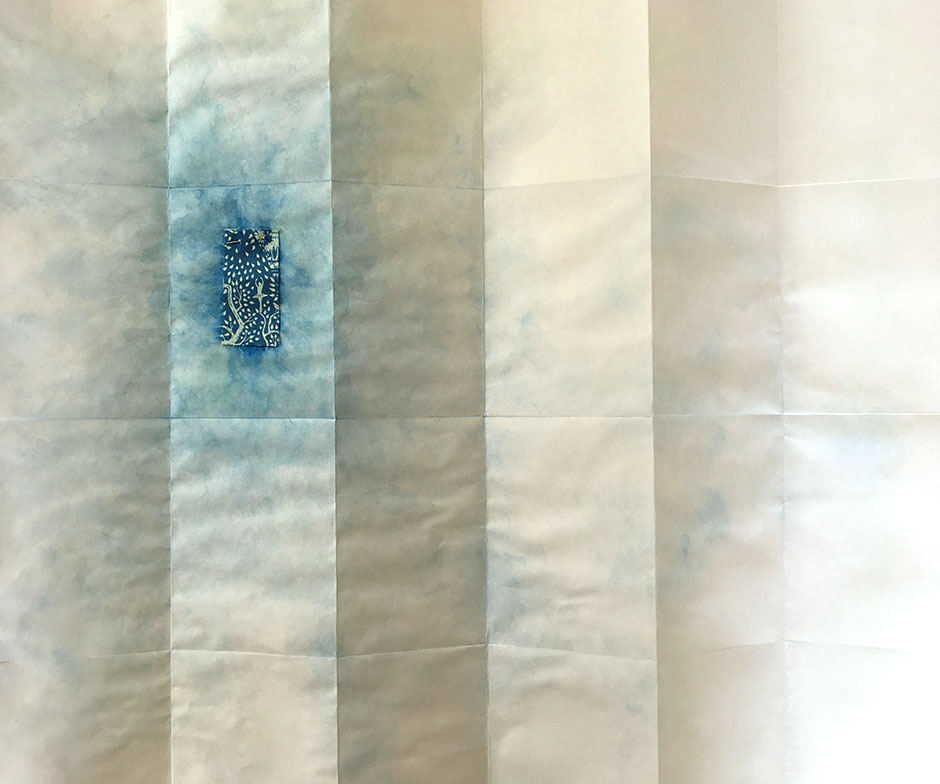
The opened billets retain the memory of having been closed. Creases cross the paper where it was folded for perhaps a hundred years around a ribbon or other small object. They seem to hold the shape of an expectation: the folds of a century of hope, clutched around the token like a jewel in a fist. Even after the paper is flattened, that gesture of enclosure remains present. The billet has been opened, but it has never entirely become flat. Hope and love have not entirely vanished.

This has become a way for me to think about historical objects more broadly. An object encountered in a museum is, like the opened billet, exposed. It has been removed from the dense network of relations that once surrounded it and placed in the foreground. A Roman bottle stands alone in a case. A garment is displayed without the body that wore it. A fragment of ribbon is pinned to a sheet. The very act that allows us to examine the object also separates it from the world that once made it ordinary.

In my work inspired by these tokens, my response has been to imagine one of the pieces of fabric and extend its pattern until it reaches the limits of imagination. The fabric becomes a dress, the dress becomes the woman, the woman walks through the town and so on. But empathising with unknown people of the past may require a contrary movement. To find my way back to that moment in the past, when the tokens still held the possibility of reunion, I would have to imaginatively refold the billet back around the token, to restore that sense of possibility pregnant in the nowness of the time. So, rather than exposing or extending the object further, imagination begins to conceal it again. In a museum, therefore, I look at the surviving object and try to recognise the gestures preserved within it, much as I recognise the creases in an opened billet. A bottle suggests grasping, pouring, placing. A garment retains folds made by a body. A ribbon carries the gestures of cutting, tying, holding and giving. These gestures become the creases along which the imagination can unfold the world. I am extending the object into the world to which it once belonged.

However, as I do that, the object is gradually enfolded within that lost world. The Roman bottle returns to a shelf among other bottles, within a room, within the rhythms of a household. It becomes something reached for rather than something displayed. Clothing folds once more around a body. The ribbon is no longer simply an archival fragment but something chosen and touched by a person who imagined that it might one day lead back to a child.

This is not an attempt to reconstruct the past completely, nor to claim access to another person’s experience. The folds place a limit upon the imagination as much as they enable it. I can only follow the gestures that the surviving thing permits. The object provides the creases.

There is, then, for me, a correspondence between the mother’s act and the imaginative act of encountering the past. Her folded billet held a desire to overcome separation: the hope that she might one day find her child again. My encounter with the historical object also begins in separation, with a desire to reach a world that is irretrievably distant. The two desires are, obviously, far from equivalent, but they share the form of a gesture: an attempt to draw what has been separated back into relation.

And in both cases the reunion remains incomplete.

The billet must finally be unfolded again. The ribbon returns to the page. The bottle returns to the museum case. The past cannot be possessed or restored. Yet the attempt has left its mark. Something remains in the crease.

I have begun to think of empathy in these terms: an unfolding and an enfolding taking place at once. We expose the fragment in order to see it, we tease out its gestures to reconstruct the vanished world to which it once belonged, then imaginatively fold the vanished world around it again. We approach the past not by claiming to recover it, but by following the gestures its objects have preserved, as if they were the creases in the billets.
Filed Under: Fragment

Fragments and Additions

February 29, 2024 by Nicholas Hedges

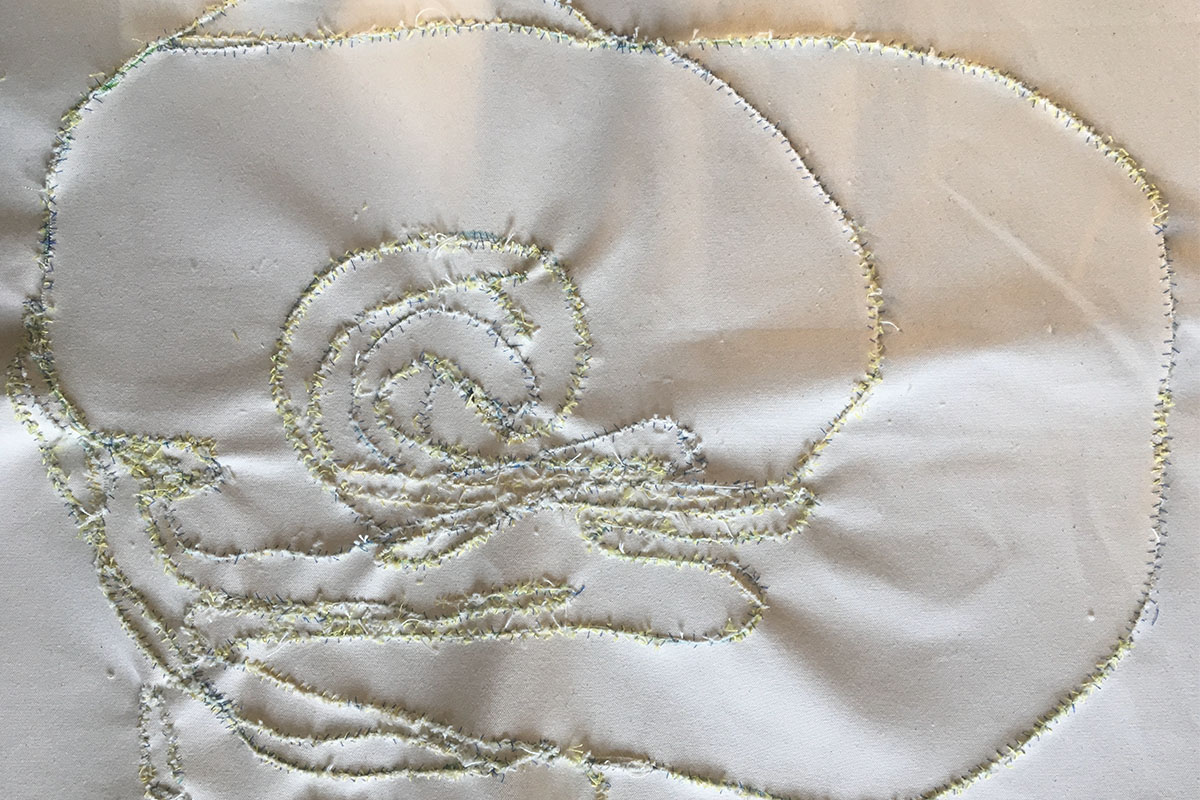
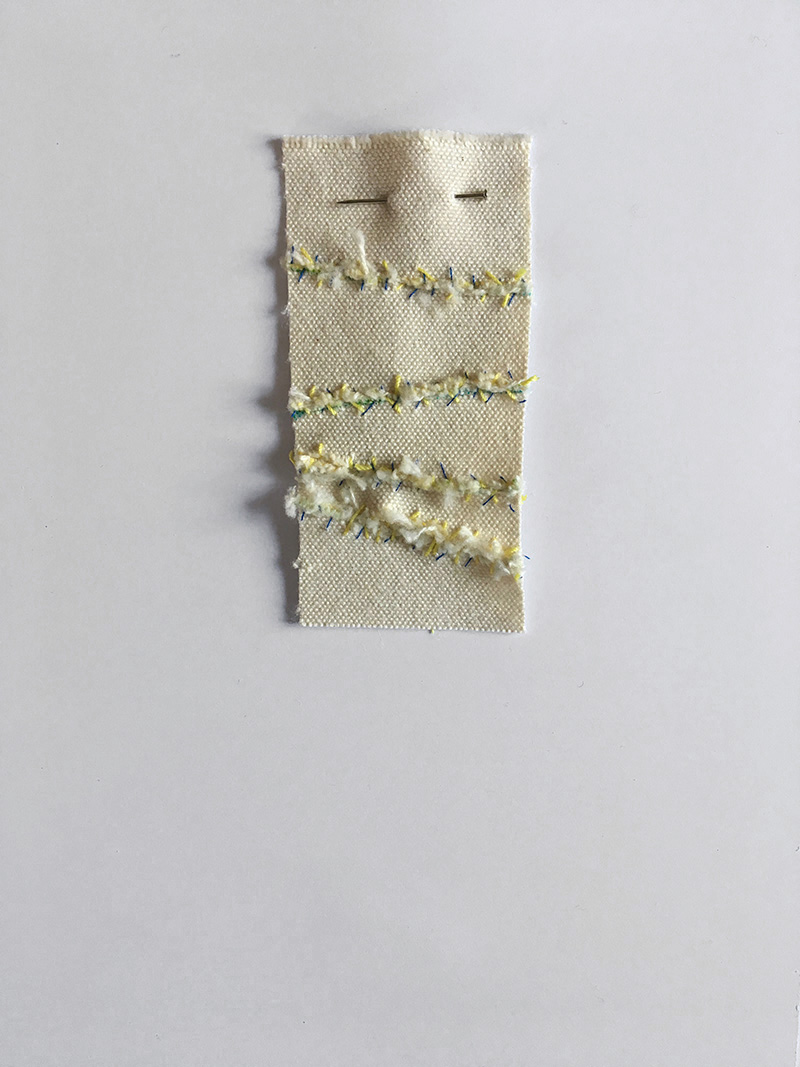
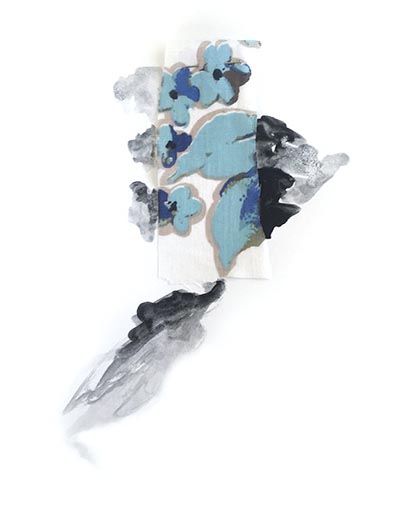
I’ve always been interested in the idea of fragments of the past and how, mentally, we add to them in order to create a view of that past. I did some work on this with some patches of fabric following a visit to the Foundling Museum in London (see Patterns Seeping and Patterns Seeping II).

Sometimes I have reversed the process to make fragments of work I have alreadymade. Again, the examples below (‘Missded’) were made in response to a visit I made to the Foundling Museum (see ‘Missded 1‘, ‘Missded 1 Stitched‘, ‘Missded 1 – A Framed Token‘).

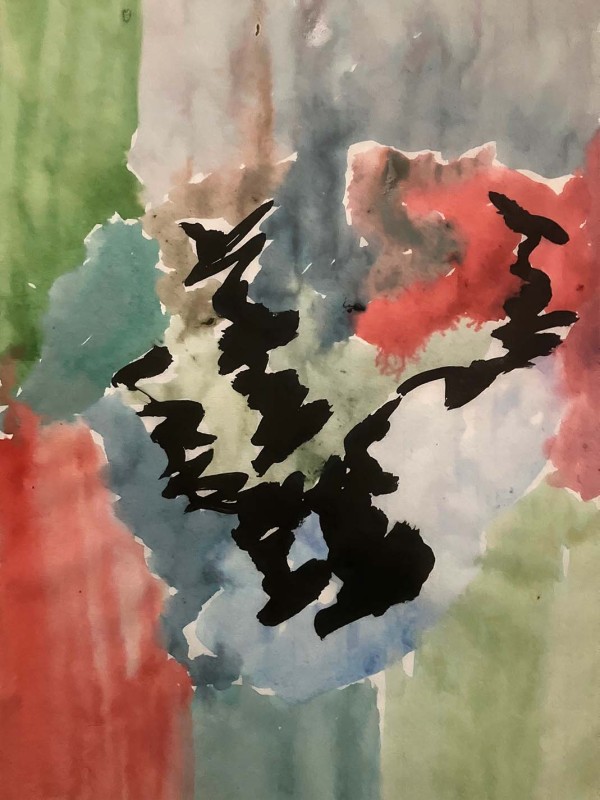
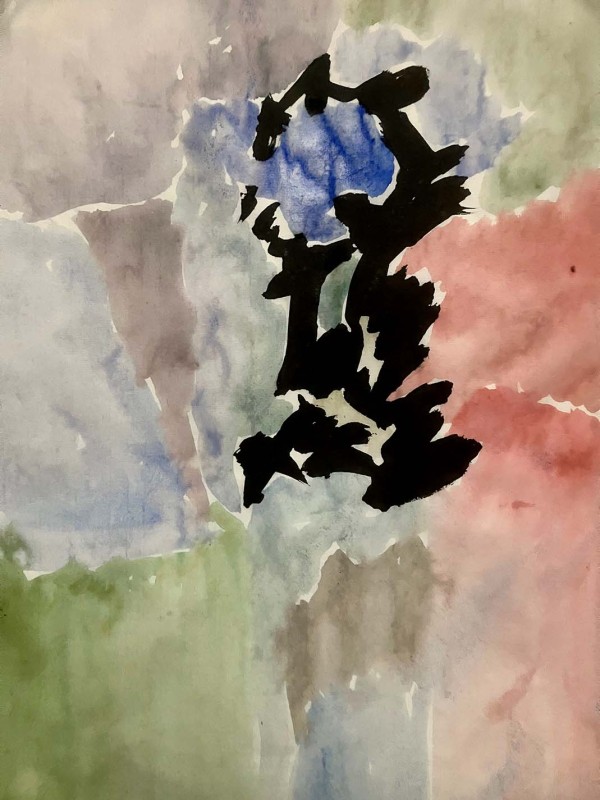
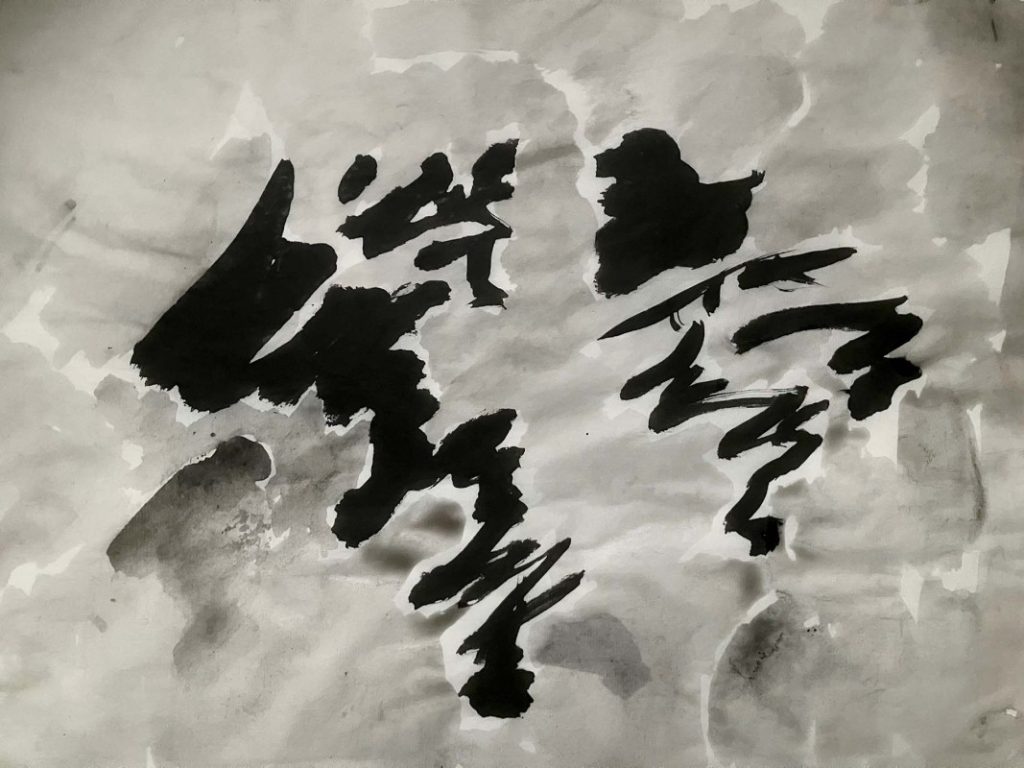
Taking this idea, I’ve applied it to the ‘Shadow Calligraphy characters’ I’ve recently painted. I’m not suggesting for one minute the results make for good art, but I like the idea that a remnant of the past (the ‘character’) can be added to, just as when we try and imagine the past, we create the colours and sounds that went with the original fragment.

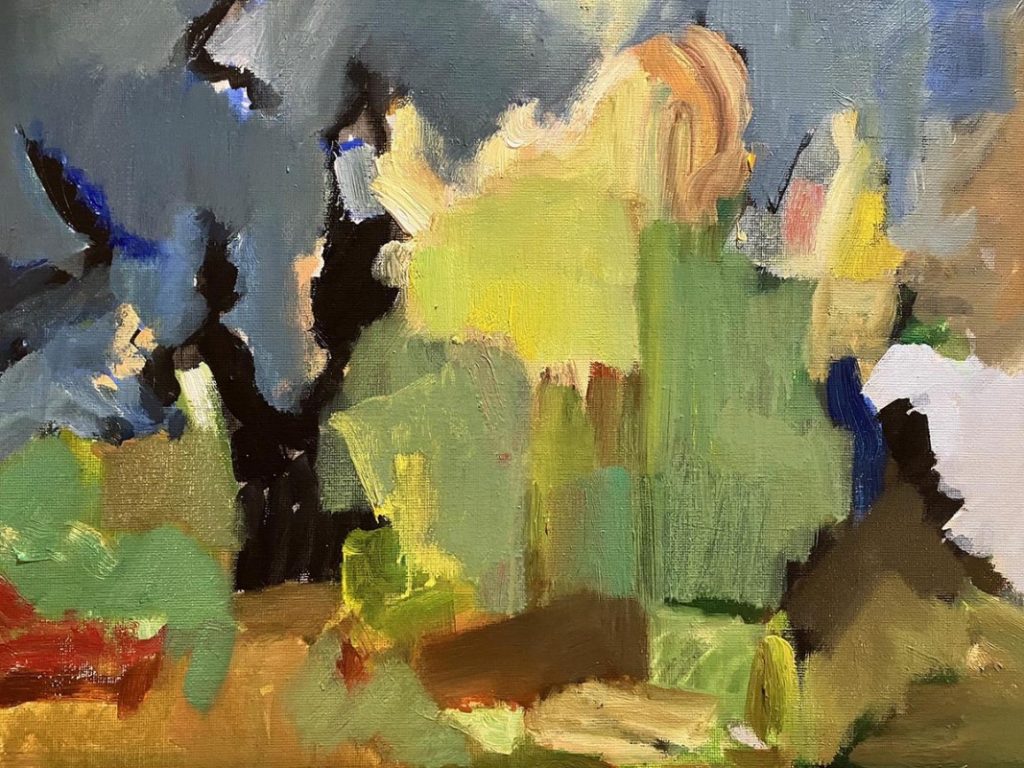
My choice of inks was extremely limited and these aren’t quite right, but it’s an idea I’ll continue to explore, as I have done with some oil paintings already.

Nana's Mountain

Filed Under: Fragment

Fragment: GPS to Midi

December 22, 2010 by Nicholas Hedges

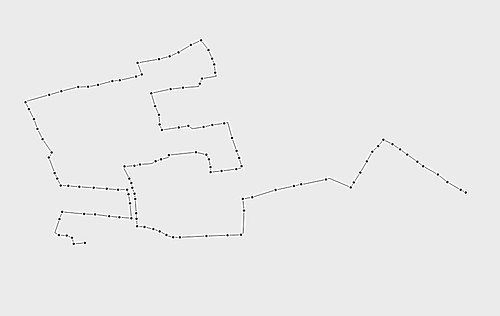
I’ve been looking for a way of converting GPS data to midi as part of a project based on a fragment of mediaeval pottery which I found in the Museum stores at Standlake in Oxfordshire. The GPS data derives from a walk I made around the area where the pot was discovered during an excavation in 1986 (St. Aldates in Oxford).

Part of the project articulates the idea of the pot’s creation (on a potters wheel) by using a turntable on which a vinyl record will play a fragment of an audio piece, the rest being composed of silence (or at least the crackle of the vinyl). The idea for the audio composition was to create something using GPS data. But how could this be turned into midi information?

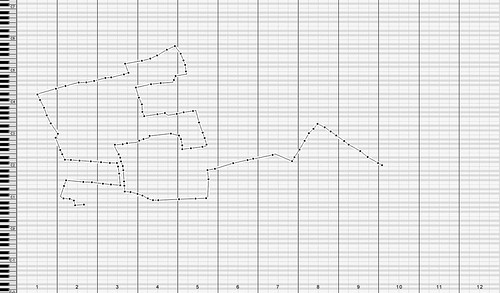
The image below shows the route recorded on my GPS device.

Fragment Sound Walk 01 Garmin

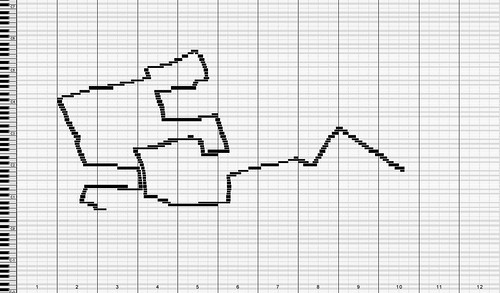
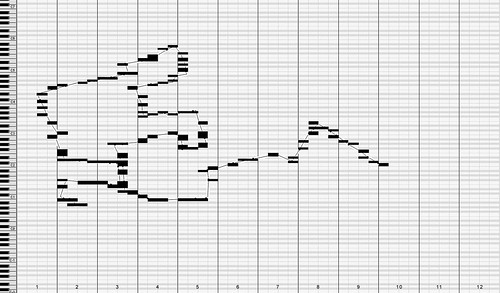
Originally, I’d coverted the data into midi (via photoshop) as in the image below, but the result was too complicated, and not a little messy.

Fragment Sound Walk 01 Midi

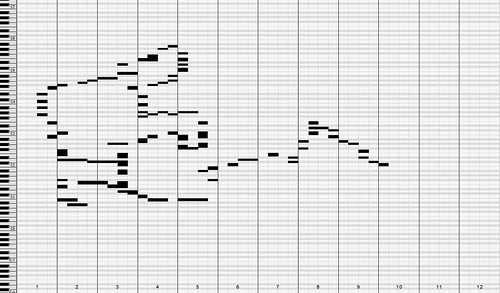
It was whilst considering how one makes paper snowflakes, that I went from cutting holes in a fragment of paper to the holes of old piano rolls. What I needed was something which was more like this. Instead of trying to copy the line of the walk completely therefore, I have instead blocked in notes where there are points on the GPS map as in the images below.

Firstly, in Photoshop, I combine a screenshot of the map with one of the midi inspector in Cubase.

Fragment 1

Then, where there’s a circle on the GPS line, I create a note in the nearest ‘box’.

Fragment 2

The result, when compared with my earlier attempt is now much neater and easier to work with.

Fragment 3

Filed Under: Fragment Tagged With: Fragment, Fragments, GPS, Lines, Midi, Positioning, Silence

Fragment

February 10, 2010 by Nicholas Hedges

I’ve spent the last day or so working on a new composition which will form part of an art installation based around a fragment of mediaeval pottery… (all will be revealed in due course).

Anyway, for now, here is a very short part of what I’ve written and recorded. By the way, the vinyl crackle is important as regards the visual element.

Fragment.mp3

Filed Under: Fragment Tagged With: Fragment, Sonic Work

Mediaeval Pottery

June 10, 2009 by Nicholas Hedges

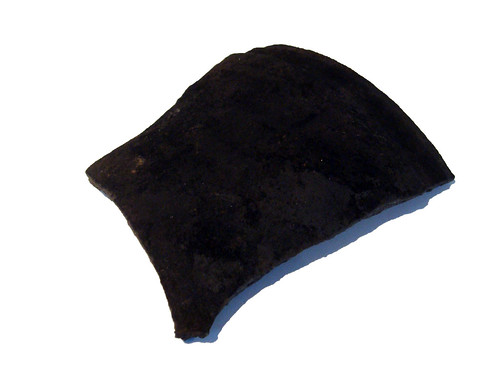
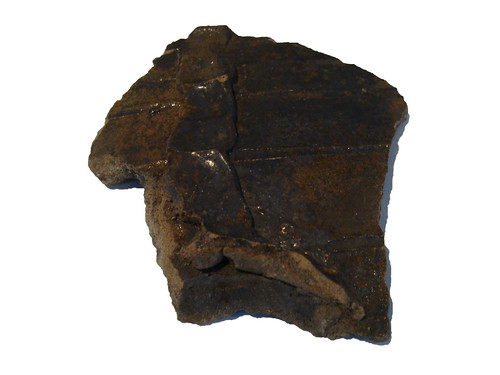
As part of a future project I have been loaned two fragments of mediaeval pottery by the Museum resource Centre at Standlake, Oxfordshire. I visited the MRC today and with their help rummaged through a few box-loads of pottery shards and decided on the two pictured below.
Mediaeval Pottery Shards

Mediaeval Pottery Shards

Both pieces are mediaeval and were found around the Trill Mill Stream area of Oxford during an excavation in 1985.

Filed Under: Archaeology, Fragment Tagged With: Archaeology, Fragment, Fragments, Pottery

© Nicholas Hedges 2024

  • Facebook
  • Instagram
  • Twitter
  • YouTube

Copyright © 2026 · Outreach Pro on Genesis Framework · WordPress · Log in