Nicholas Hedges

Art, Writing and Research

  • Amazon
  • Behance
  • Facebook
  • Instagram
  • Pinterest
  • YouTube
  • Art
    • Digital
    • Drawing
    • Grids
      • Correspondence
      • The Wall
      • The Tourist
    • Ink on paper
      • Shadow Calligraphy
    • Installation
      • Murder
      • Echo
    • Painting
    • Patterns
    • Mixed Media
    • Photographic installation
      • St. Giles Fair 1908
      • Cornmarket 1907
      • Headington Hill 1903
      • Queen Street 1897
    • Research/Sketches
    • Stitched Work
      • Missded 1
      • Missded 2
      • Missded 3
      • Missded 4
    • Text Work
  • Blogs
    • Family History
    • Goethean Observations
    • Grief
    • Light Slowed But Never Stilled
    • Lists
    • Present Empathy
    • Shadow Calligraphy
    • Trees
    • Time
    • Walking Meditations
  • Video
  • Photography
    • Pillars of Snow
    • Creatures
    • The Trees
    • Snow
    • St. Giles Fair 1908
    • Cornmarket 1907
    • Headington Hill 1903
    • Queen Street 1897
    • Travel
  • Illustration and Design
  • Music
  • Projects
    • Dissonance and Rhyme
    • Design for an Heirloom
    • Backdrops
    • Shadow Calligraphy
  • Exhibitions
    • A Line Drawn in Water
      • Artwork
    • A Line Drawn in Water (Blog)
    • Mine the Mountain 3
      • Artwork
    • Mine the Mountain 2
      • Artwork
      • The Wall
    • The Woods, Breathing
      • Artwork
    • Snow
      • Artwork
    • Echo
      • Artwork
    • Murder
      • Artwork
    • The Tourist
    • Dreamcatcher
    • Mine the Mountain
      • Artwork
      • The Tourist
    • M8
    • The Gate
    • Creatures
      • Artwork
    • Residue
      • Artwork
    • A visit to Auschwitz
      • Artwork
  • Me
    • Artist’s Statement

Absence

January 15, 2014 by Nicholas Hedges

In the Tenth Elegy of Rilke’s Duino Elegies we read:

‘…Our ancestors
worked the mines, up there in the mountain range.
Among men, sometimes you still find polished lumps
of original grief or – erupted from an ancient volcano –
a petrified clinker of rage. Yes. That came
from up there. Once we were rich in such things…’

And gently she guides him through the vast
Keening landscape, shows him temple columns,
ruins of castles from which the Keening princes
Once wisely governed the land. She shows him
the towering trees of tears, the fields of melancholy
in bloom (the living know this only in gentle leaf).
And she shows him grazing herds of mourning
and sometimes a startled bird draws far off
and scrawls flatly across their upturned gaze
and flies an image of its solitary cry….

[…]

Dizzied still by his early death, the youth’s eyes
can hardly grasp it. But her gaze frightens
an owl from the crown’s brim so it brushes
slow strokes downwards on the cheek – the one
with the fullest curve – and faintly,
in death’s newly sharpened sense of hearing,
as on a double and unfolded page,
it sketches for him the indescribable outline.

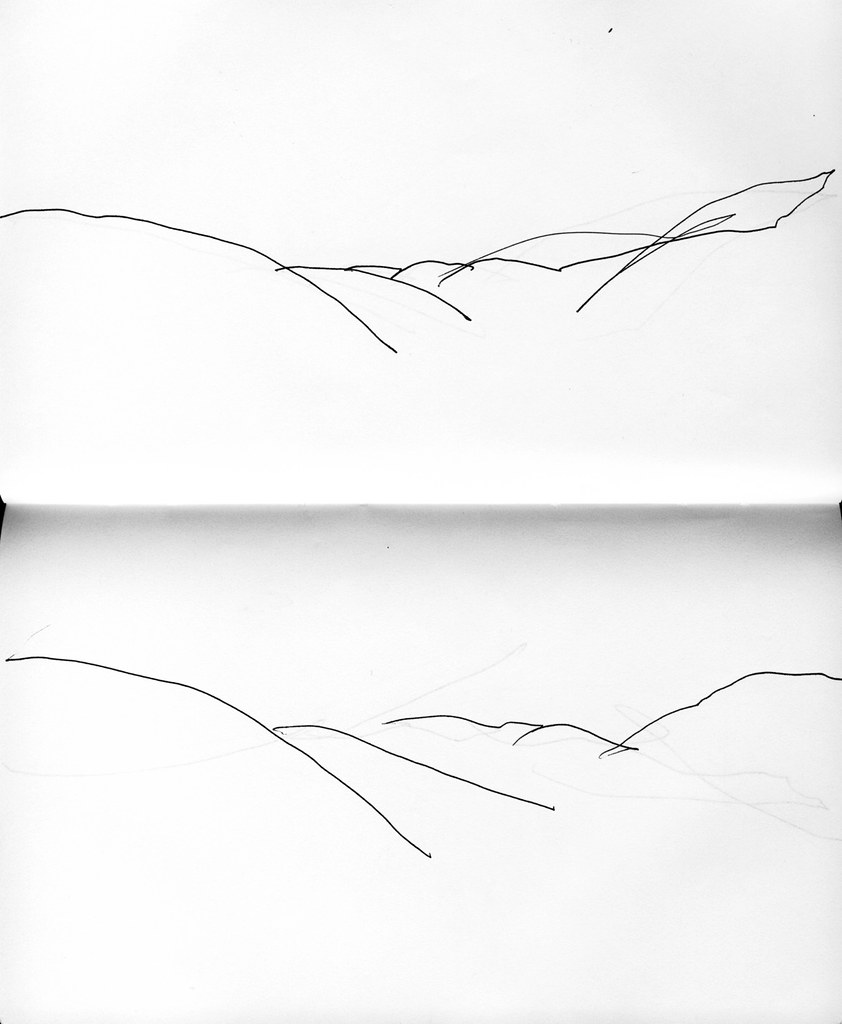
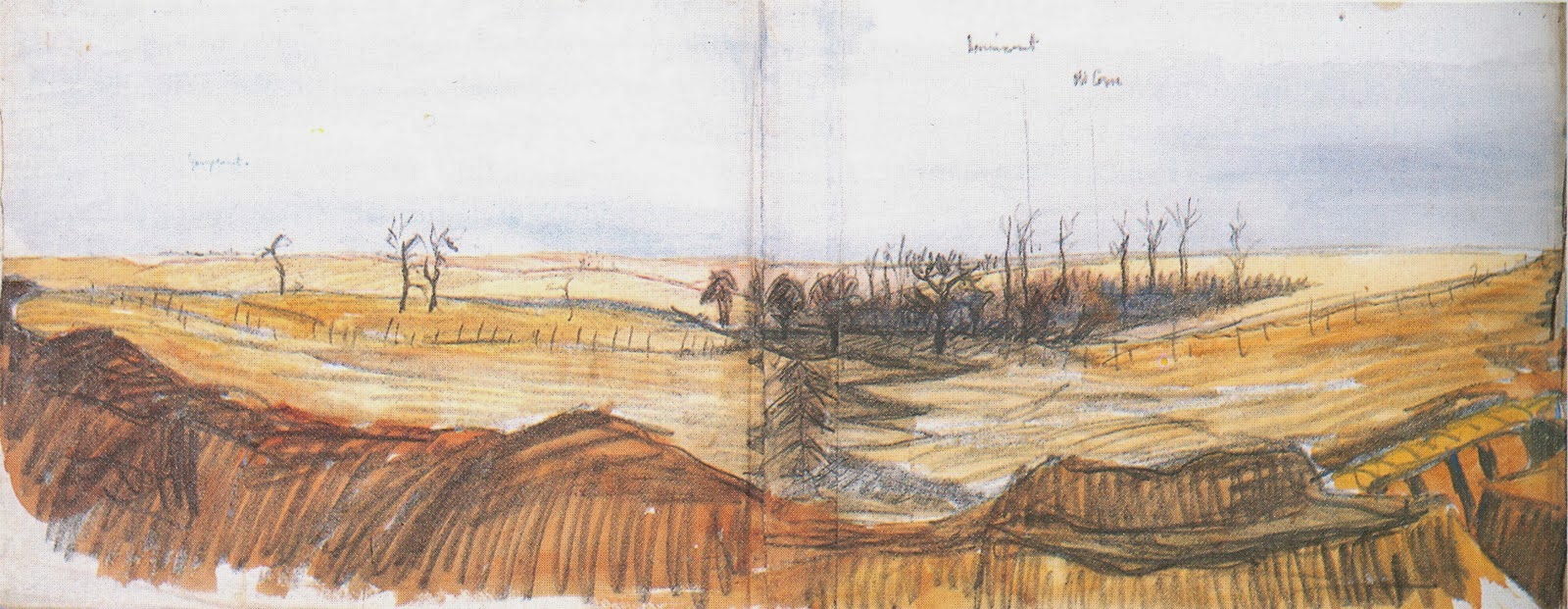
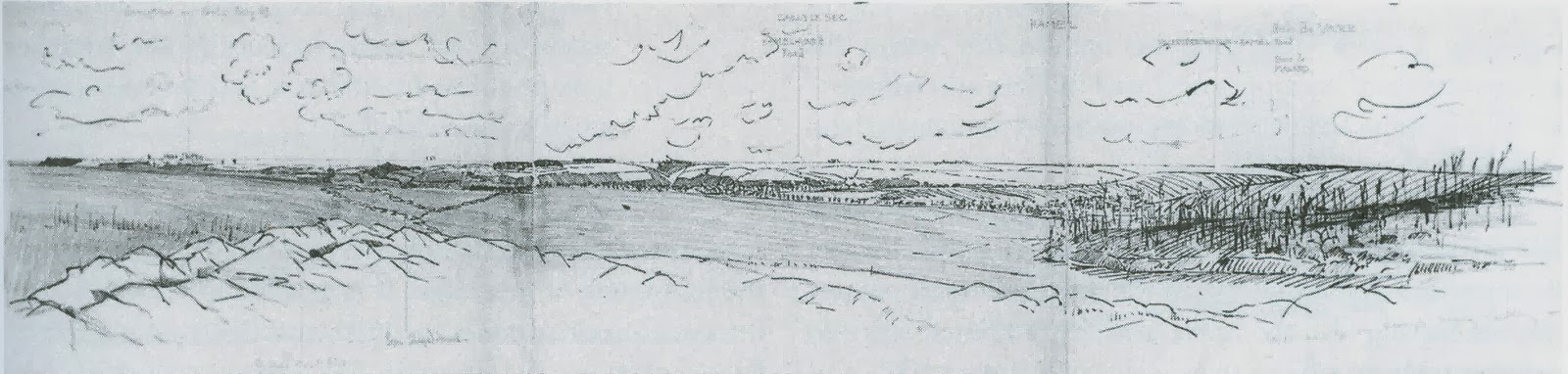
I’ve read this poem numerous times but on a recent reading, the first and last two lines reminded me of some sketches I made during a visit to Hafodyrynys, a town in Wales where my grandmother was born. My great-grandfather, Elias, used to walk from their house, up ‘the mountain’ as my grandmother called it, to Llanhilleth where he worked in the mine. Following in his footsteps, and walking the path he walked almost every day over 100 years ago, I thought of how the shape of the view had barely changed. I sketched it: an indescribable outline on a double and unfolded page.
Something indescribable is – of course – a thing which defies (or at least seems to defy) description. In my work that ‘thing’ is the ‘nowness’ of a past event. Indeed, if I was to describe what I attempt to do in my work, I would say ‘to walk in the landscape of the past as it is now’.
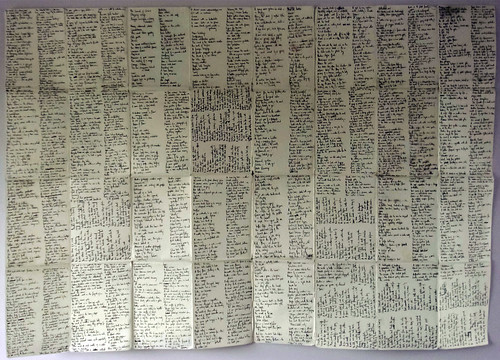
As a means towards this, I attempt to capture the nowness of the present through single gestures (like the sketches) or a few written words, creating lists of short observations as I walk:

A young boy in a flat cap pulled over his face
A bell tolls
A girl on her computer sits at the window looking out
Blue, yellow and white balloons
Two distant blasts of a train horn made bigger by the stillness of the air
The cackle of a bird

With regards gesture: Rilke said that the “depth of time” was revealed more in human gestures than in archaeological remains or fossilised organisms. The gesture is a “fossil of movement”; it is, at the same time, the very mark of the fleeting present and of desire in which our future is formed.

The concept of a ‘depth of time’ leads me to consider the phrase ‘a distant past’. How can the past be distant (or otherwise) if the past no longer exists? How can we measure that which we cannot empirically observe? My getting up this morning is as much a part of the past as, for example, the death of Richard III, yet of course there is a difference; a scale of pastness. But how can we measure pastness? We can of course use degrees of time, seconds through to years and millennia, but somehow it seems inadequate. For me, pastness can also be expressed through absence (in particular that of people) and it is this absence which the trees express so silently, so eloquently. “William Wordsworth, writing in his Guide to the District of the Lakes, wrote that we can only imagine ‘the primeval woods shedding and renewing their leaves with no human eye to notice or human heart to regret or welcome the change.'”

‘Look,’ says Rilke, ‘trees exist.
The houses we live in continue to stand. Only we
pass away like air traded for air and everything
conspires to maintain silence about us, perhaps
half out of shame, half out of unspeakable hope.’

In his book The Materiality of Stone – Explorations in Landscape Phenomenology, Christopher Tilley writes: “The painter sees the trees and the trees see the painter, not because the trees have eyes, but because the trees affect, move the painter, become part of the painting that would be impossible without their presence. In this sense the trees have agency and are not merely passive objects… The trees ‘see’ the painter in a manner comparable to how a mirror ‘sees’ the painter: that is, the trees like the mirror, let him become visible: they define a point of view on him which renders for him something that would otherwise remain invisible – his outside, his physiognomy, his carnal presence… the trees and mirror function as other.” 
When the painter leaves, it’s as if the trees remember him.

When speaking of distance in relation to the past (the distant past), I think of distance as it’s perceived in the landscape; a measurement defining the space between me and something else. Putting the two together, the ‘distant past’ becomes something internal, carried in relation to the external world; the sum of those absences I carry through the landscape.

Rilke’s description of the Keening landscape reminded me too of the landscapes which I created as a child (see also Maps). These were ‘places’ based on how I perceived the landscape of the past; in particular, its swathes of ancient and unspoiled forests. As Richard Hayman puts it: “woods are poised between reality and imagination…” Whenever I was in a wood – however small – I always experienced it with my imagination.

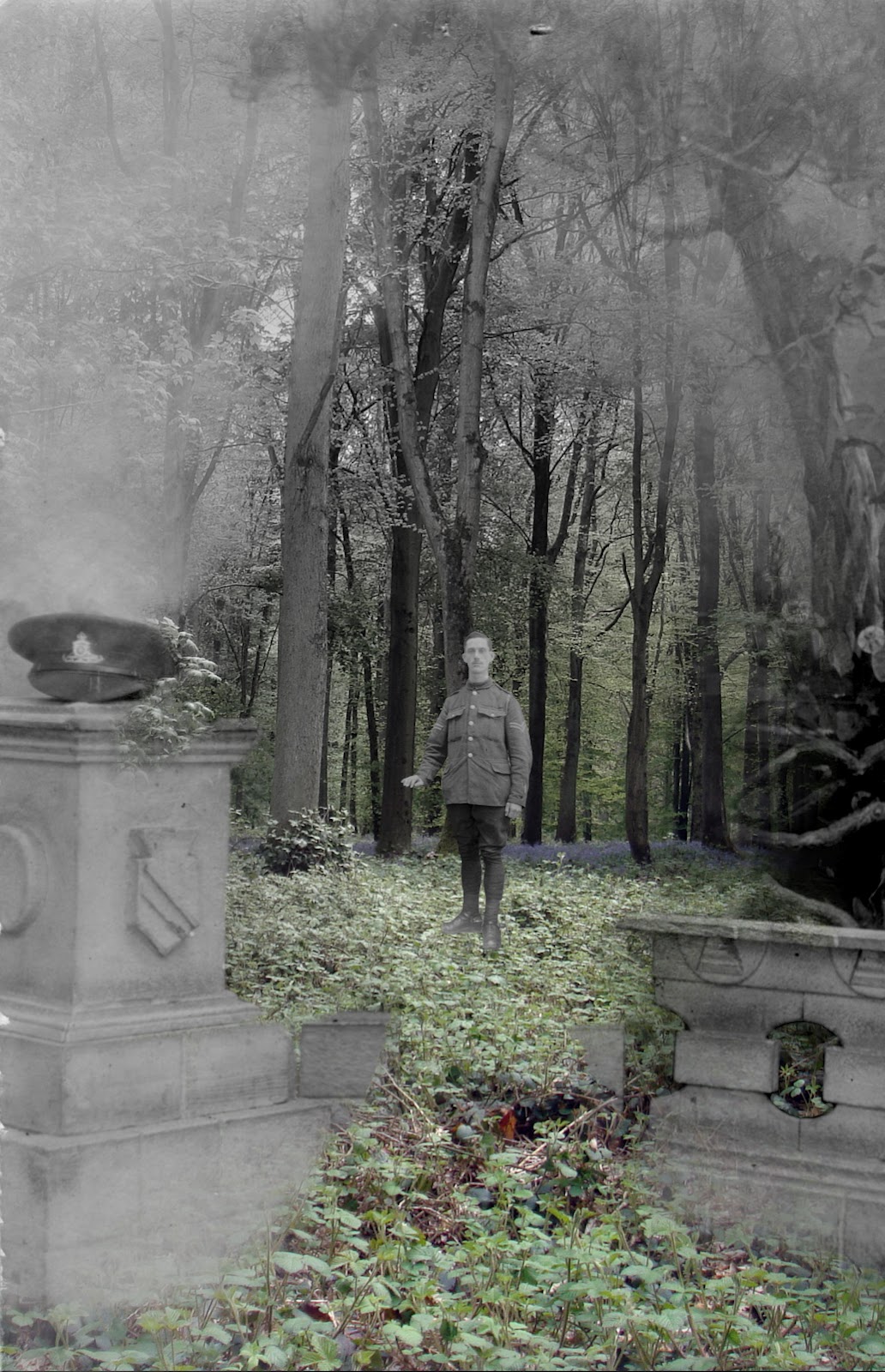
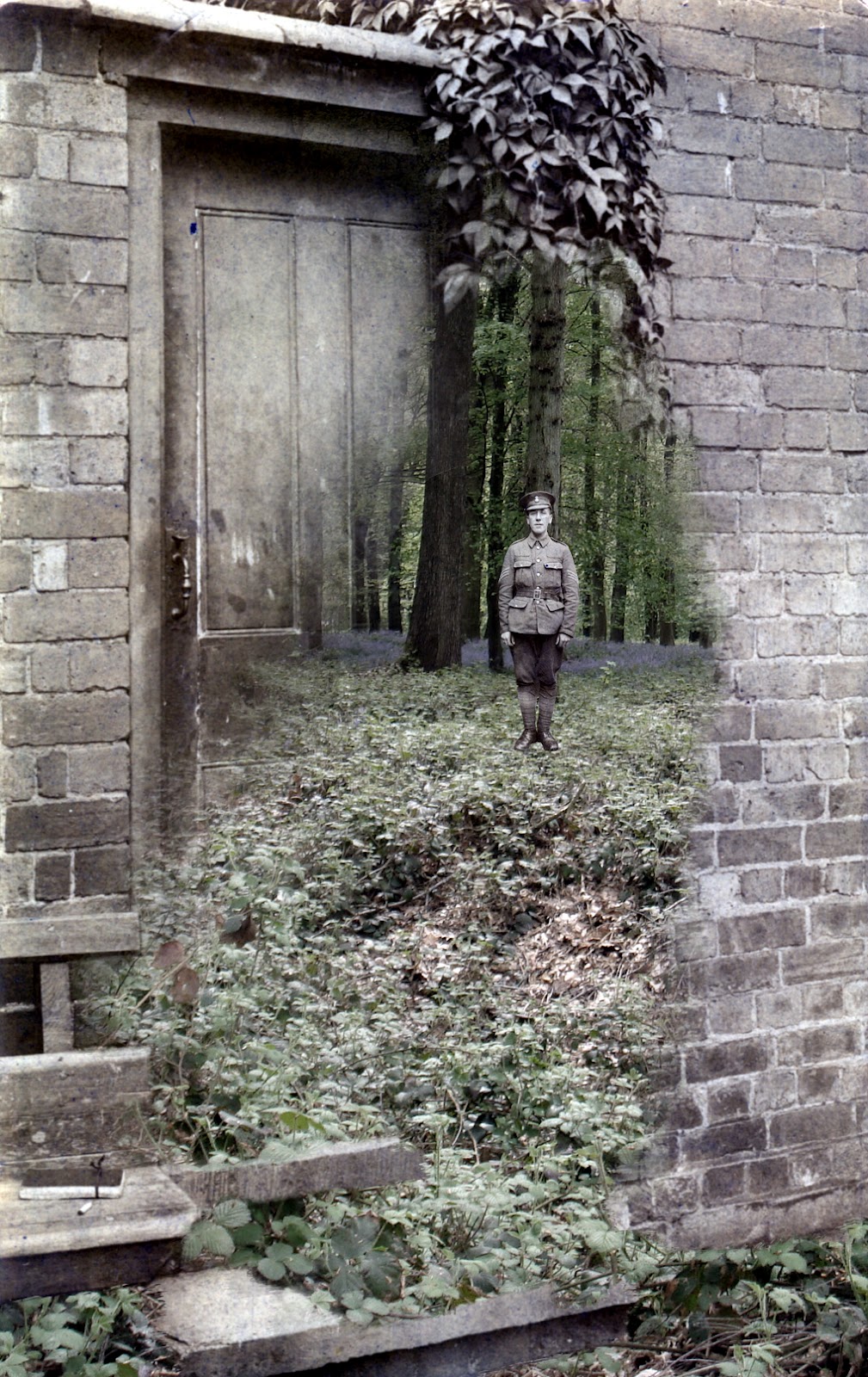
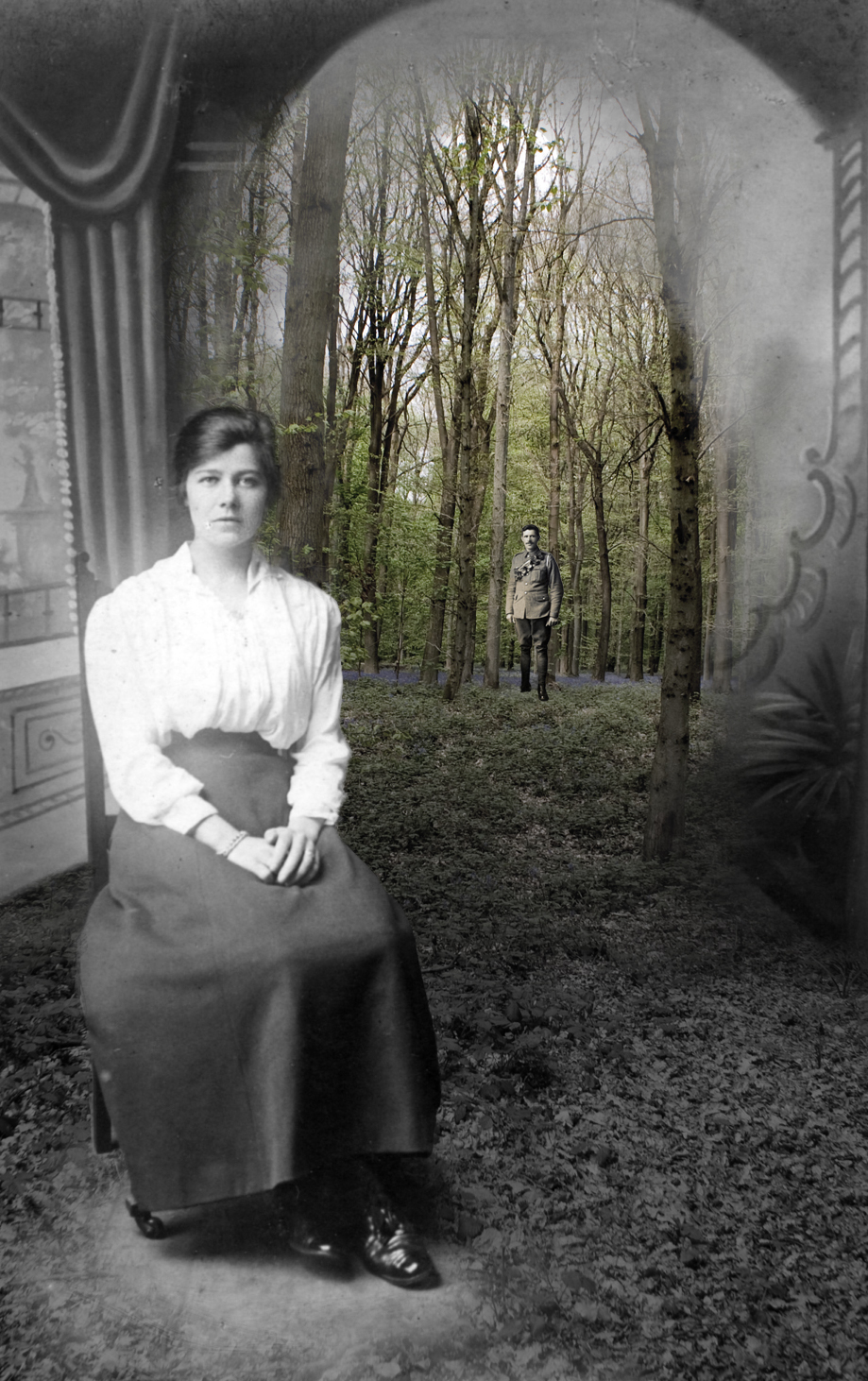
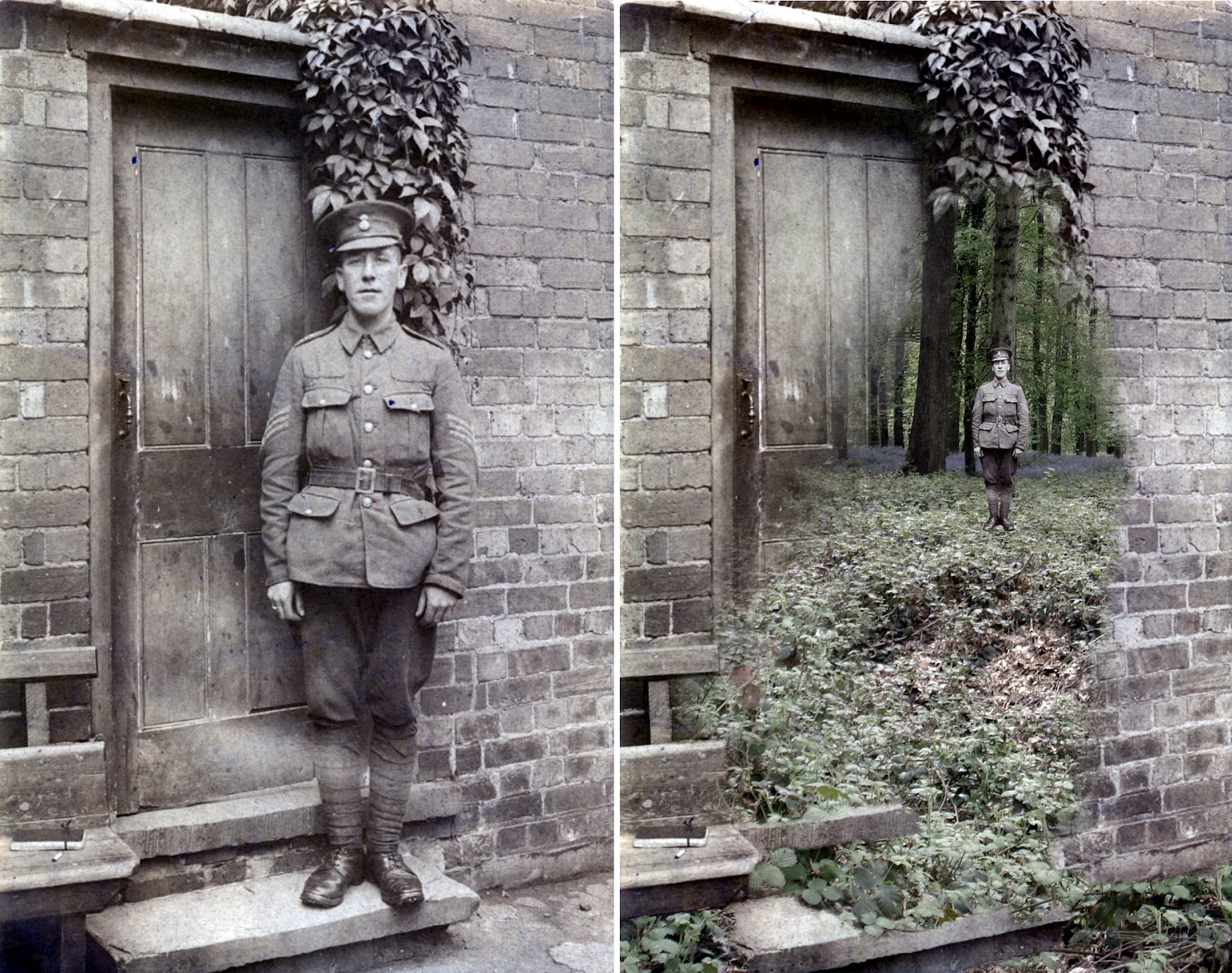
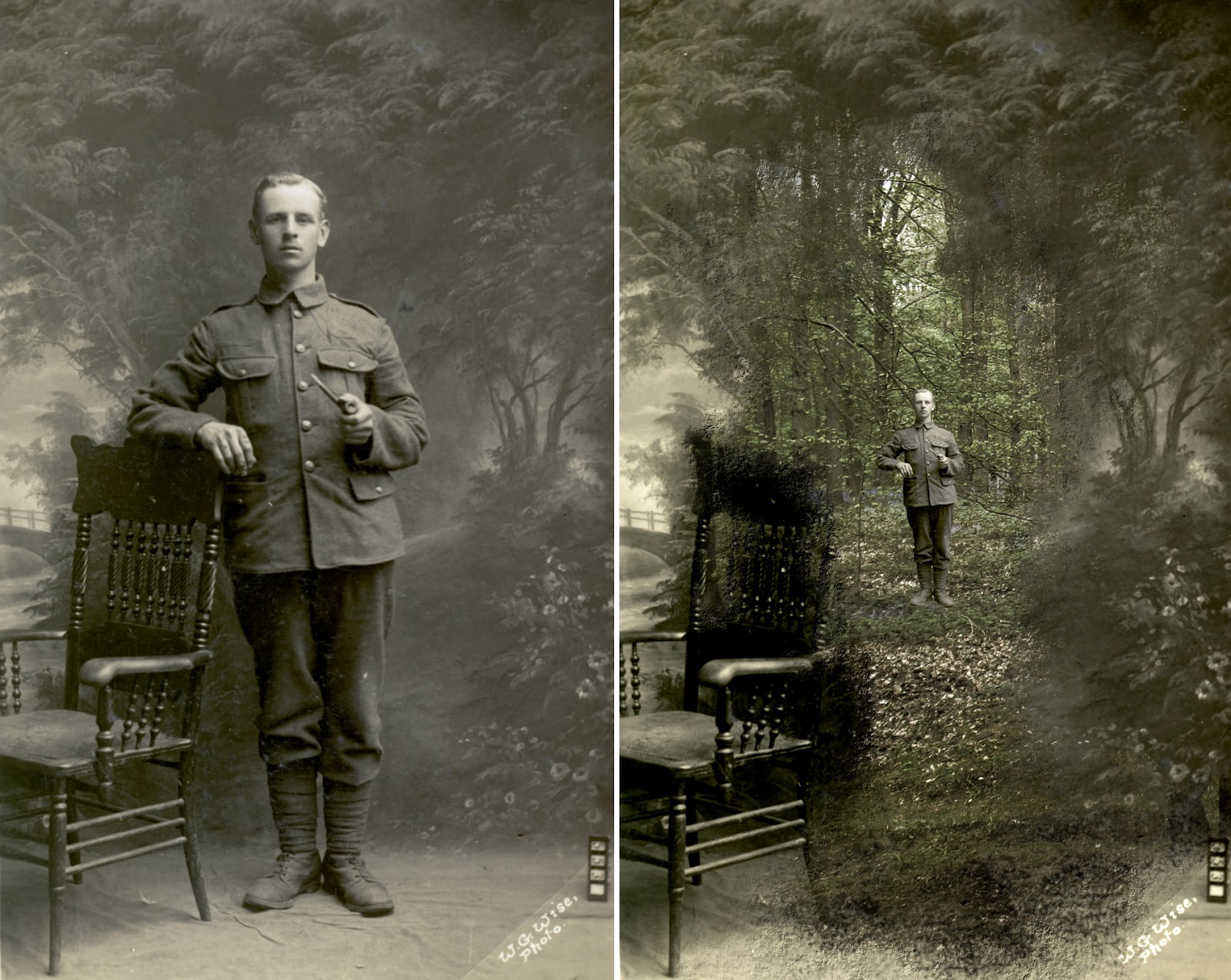
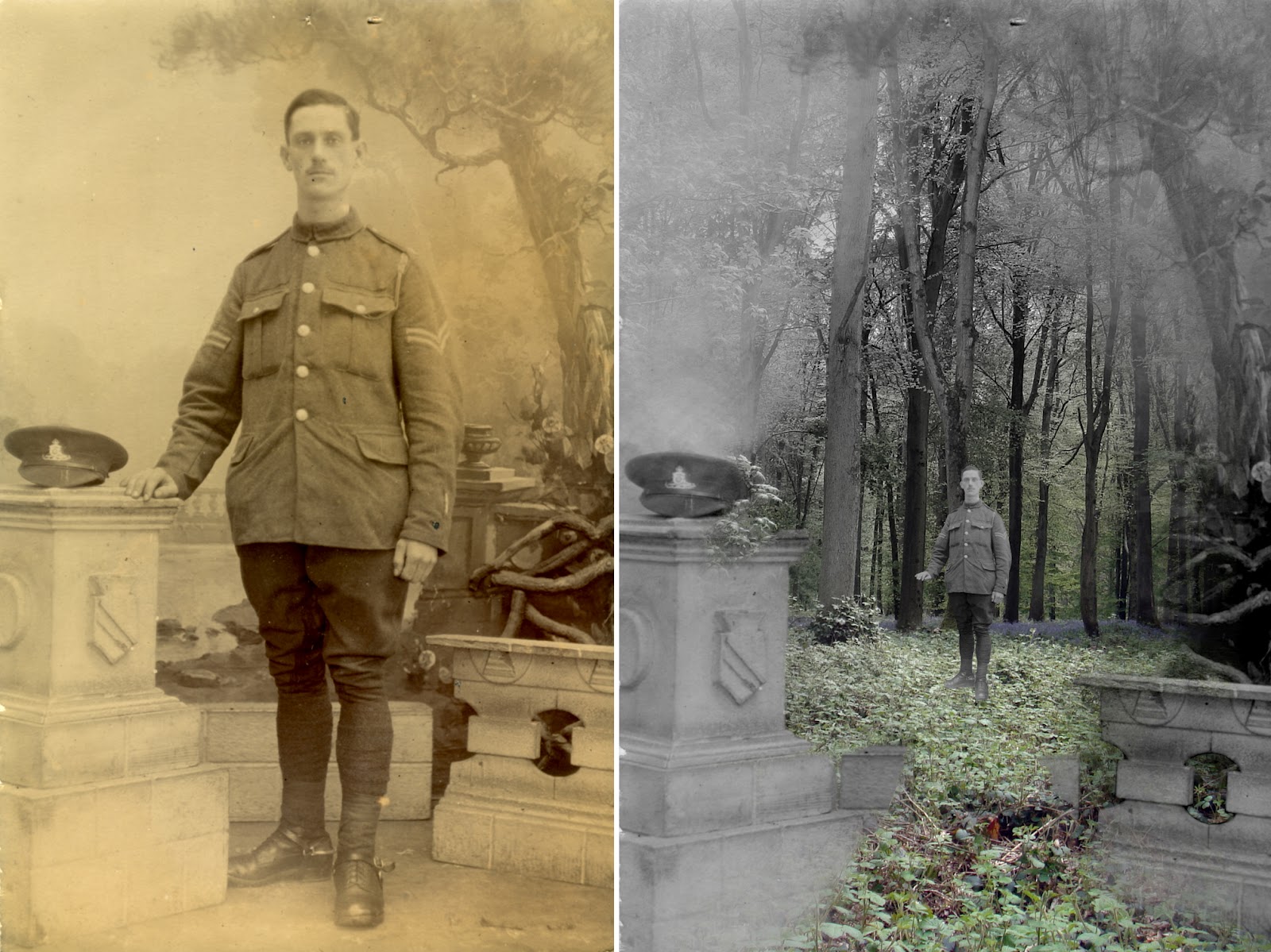
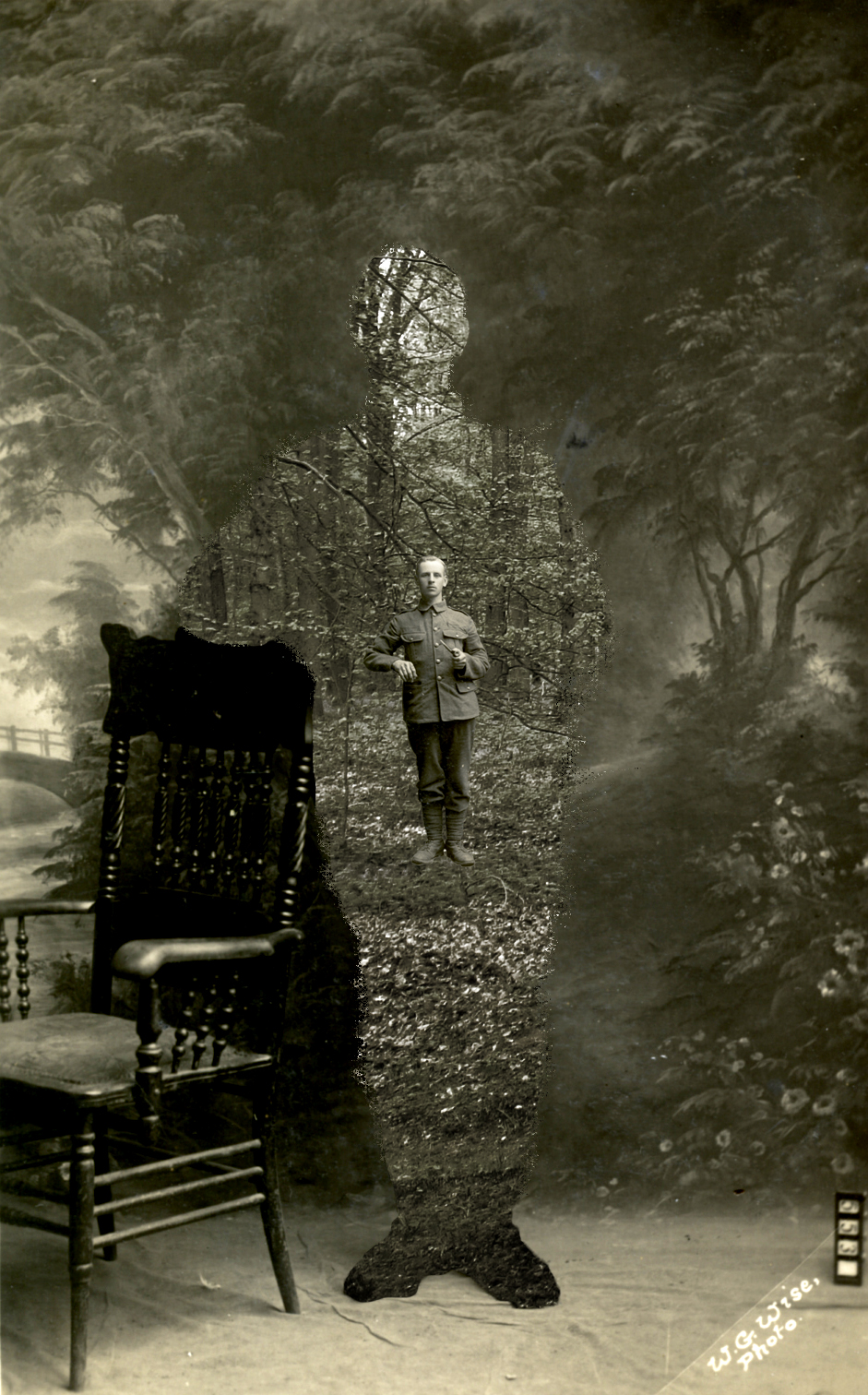
Which brings me round to recent work I’ve been doing on World War I backdrops.

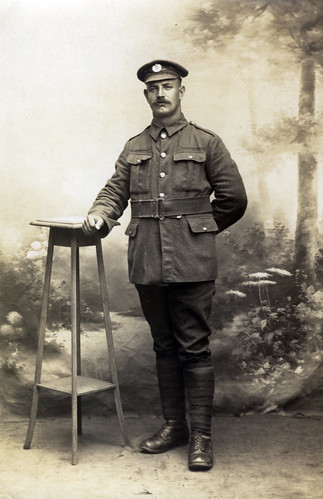
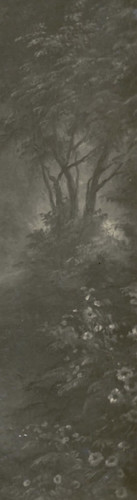
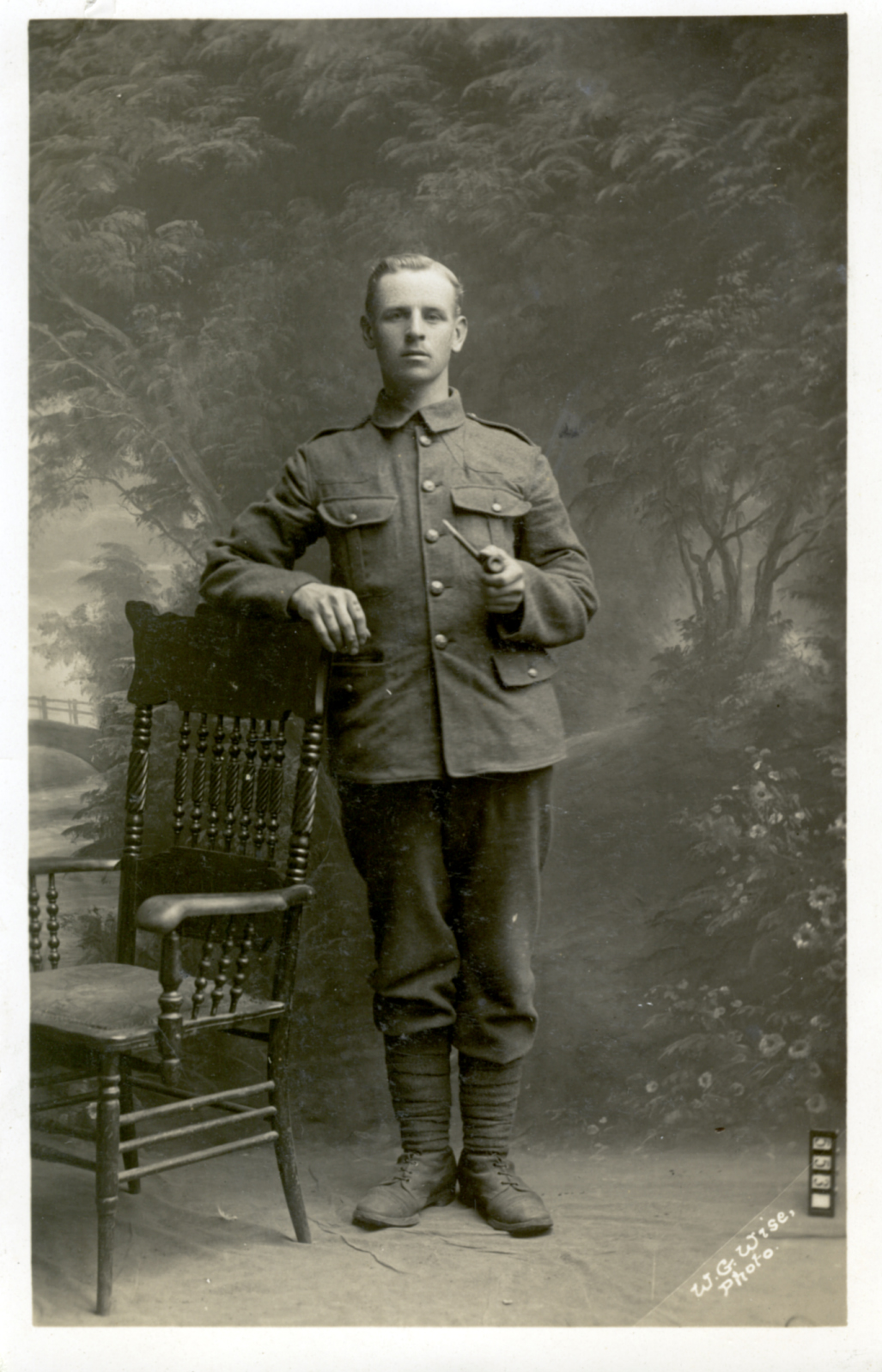
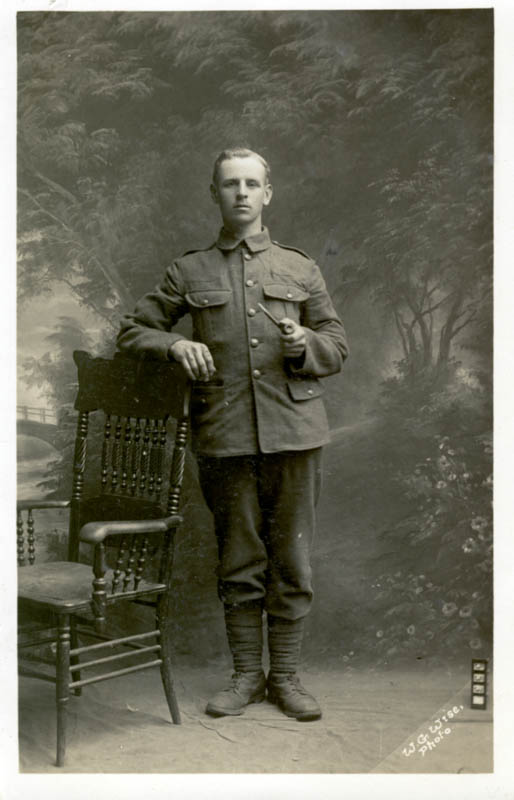
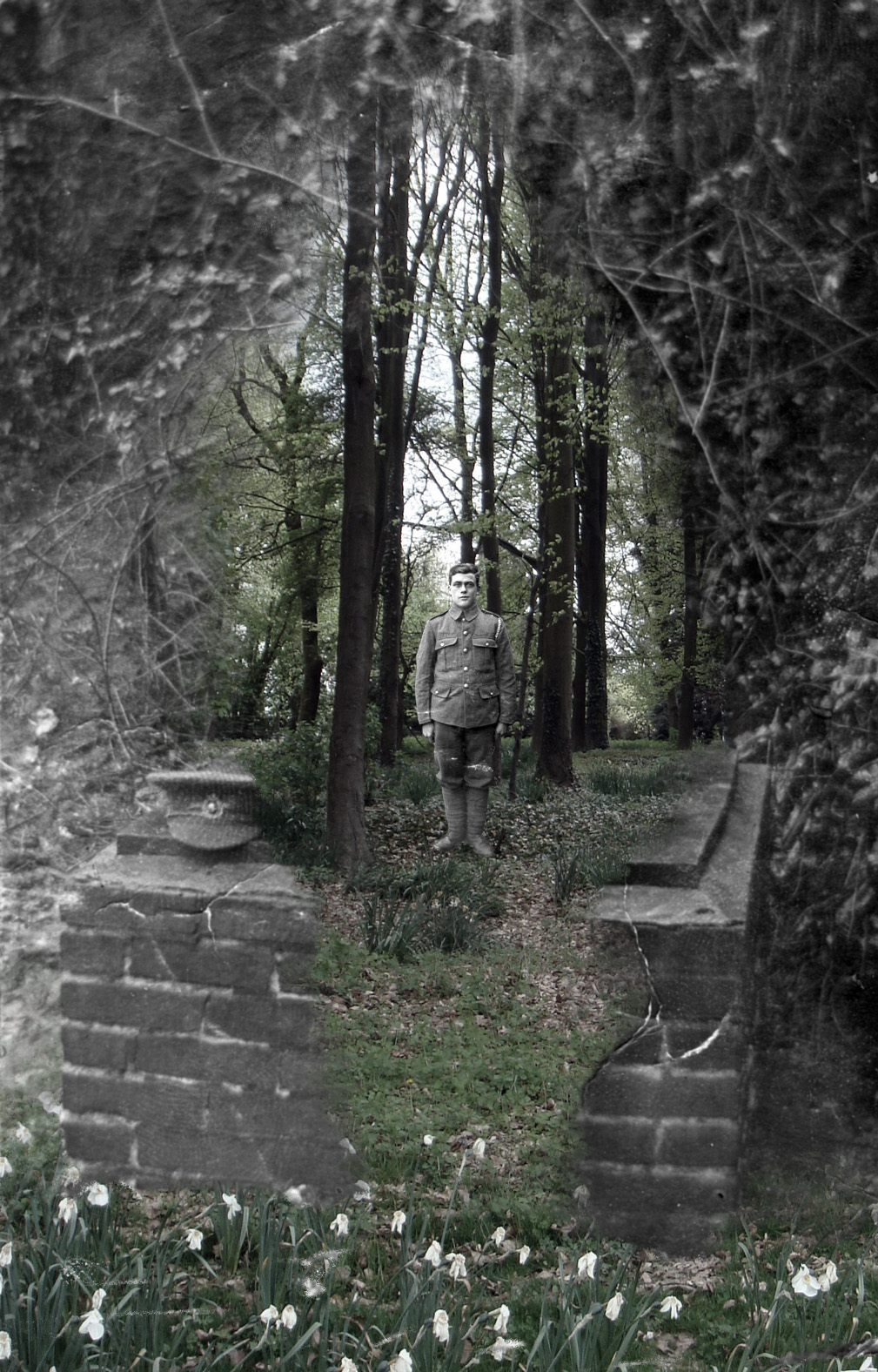
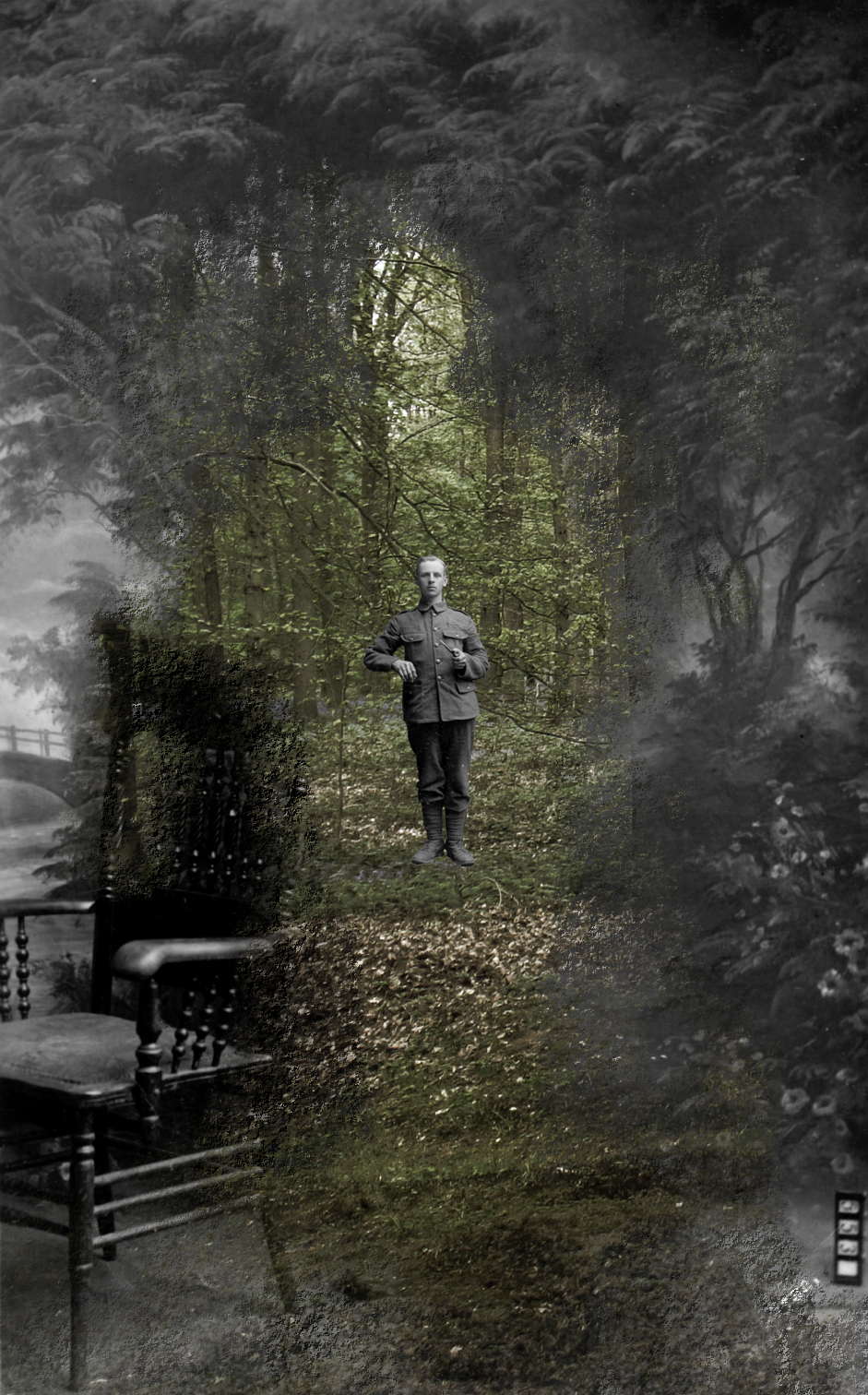
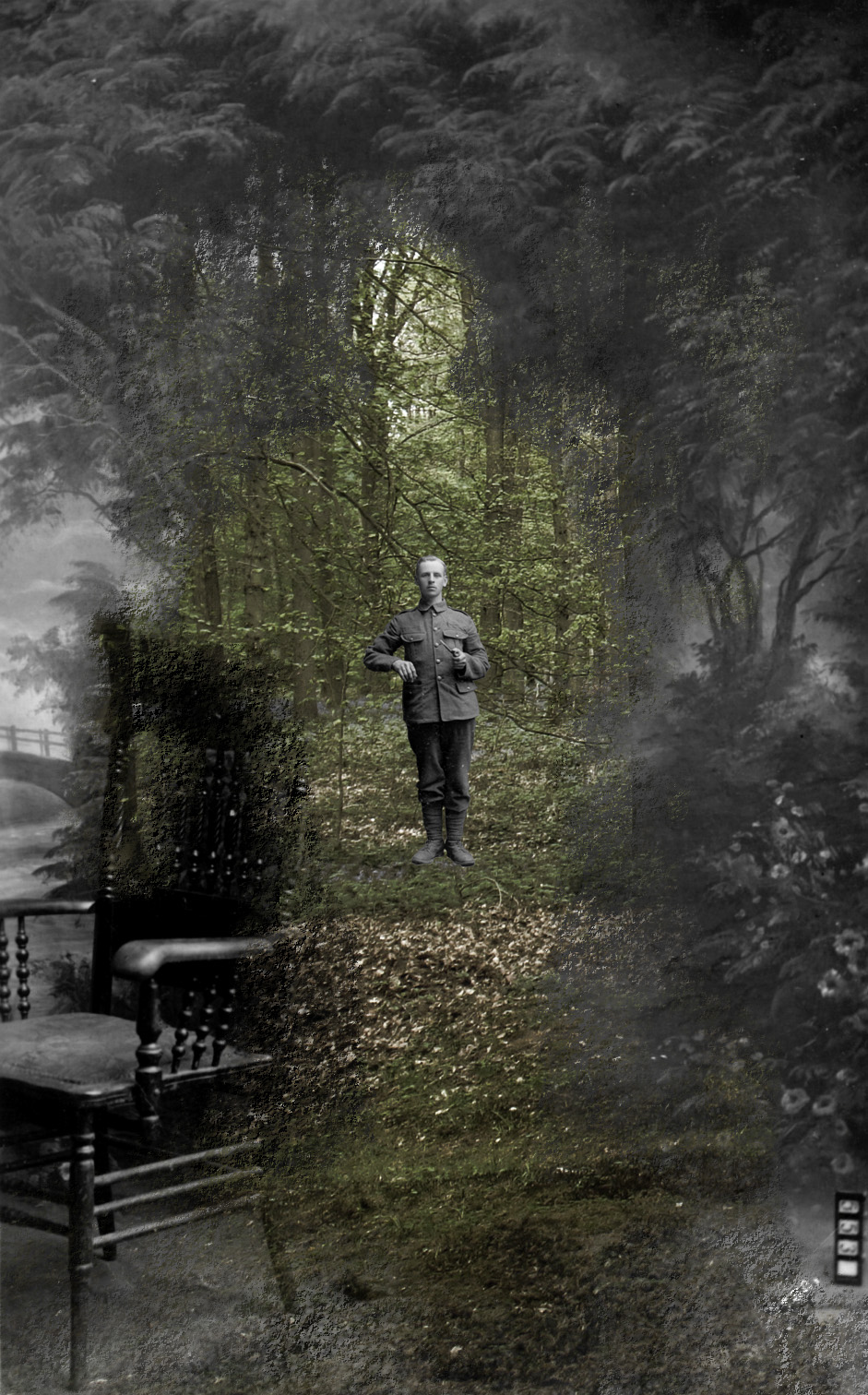
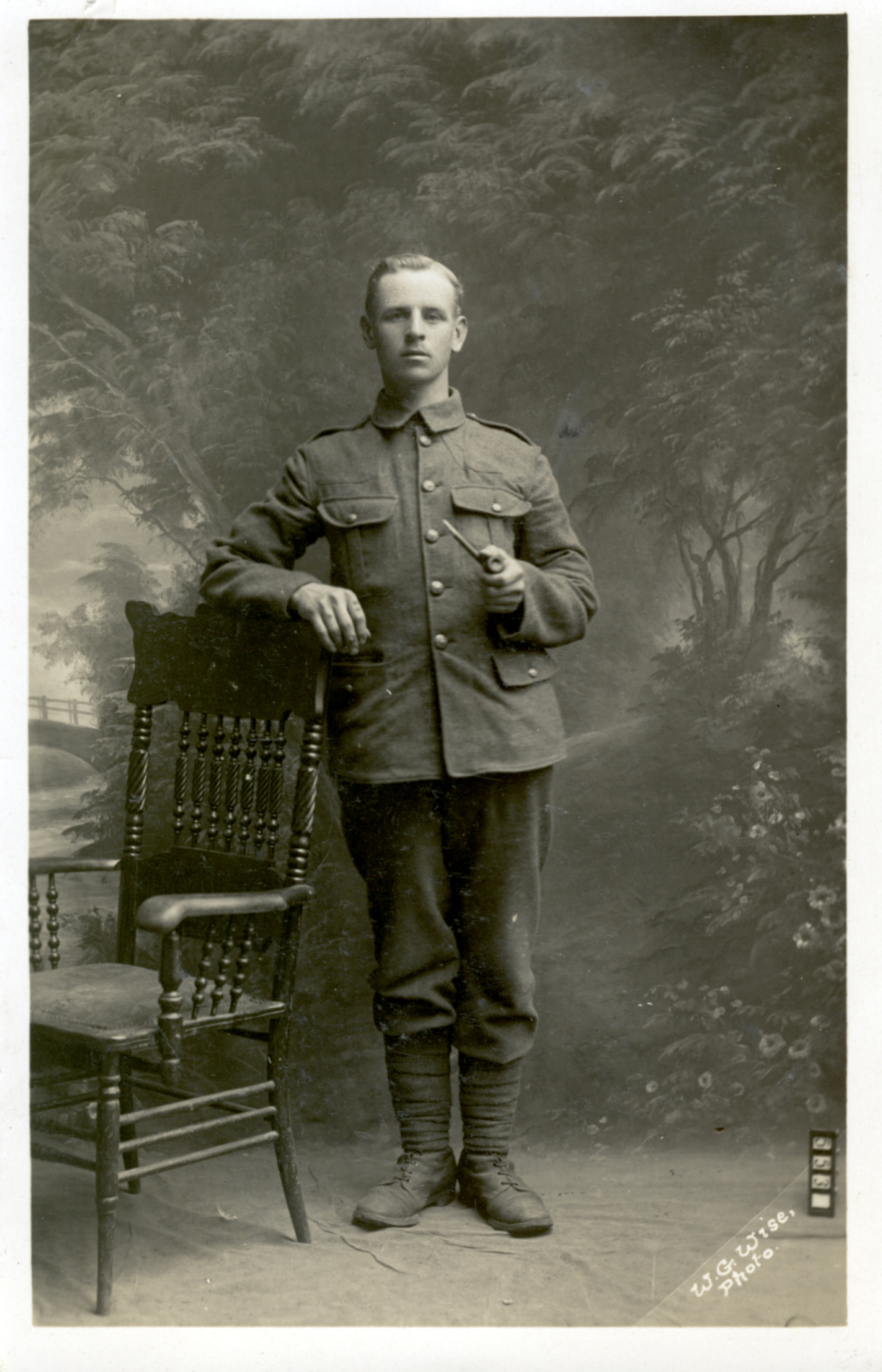
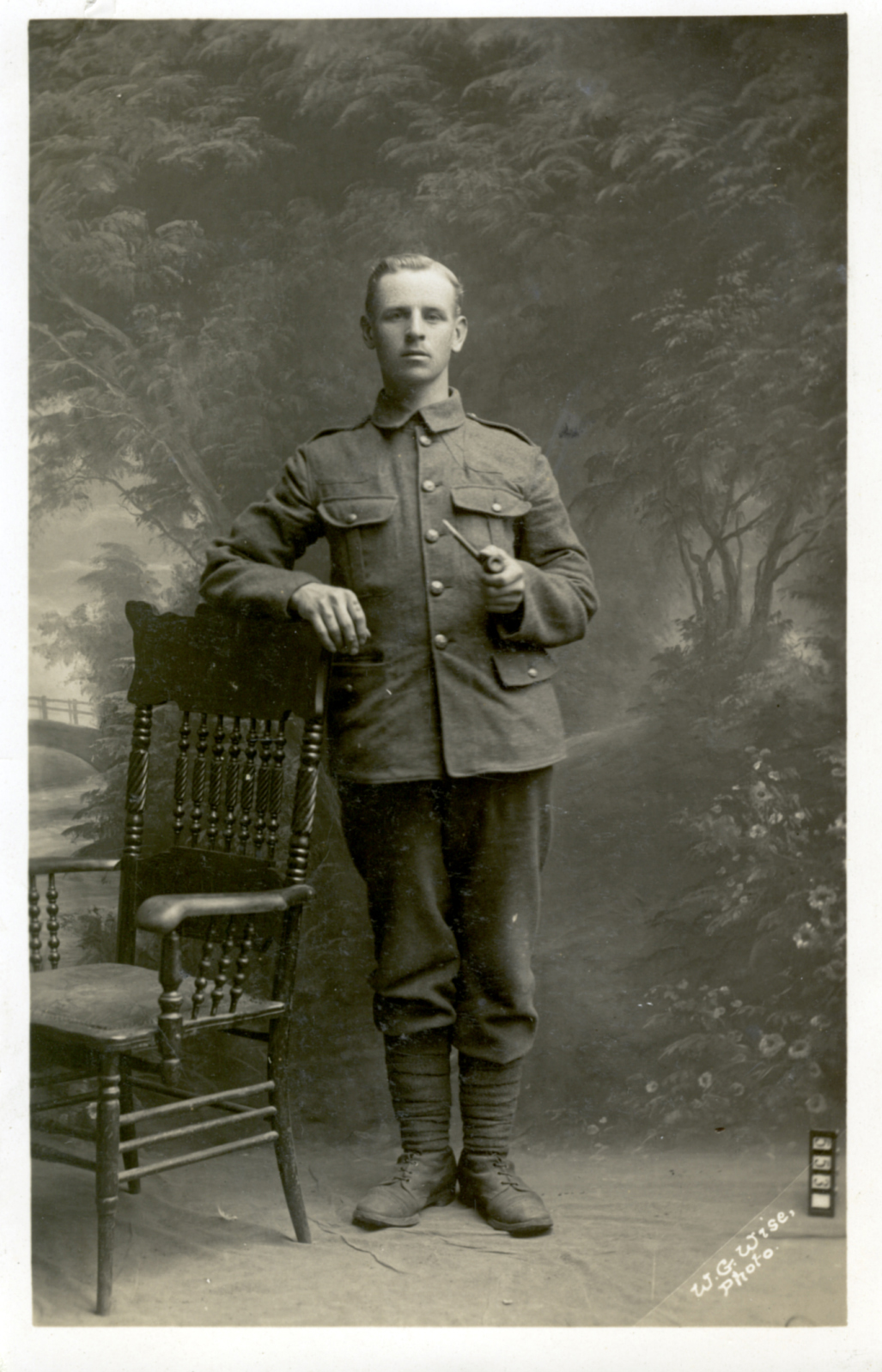
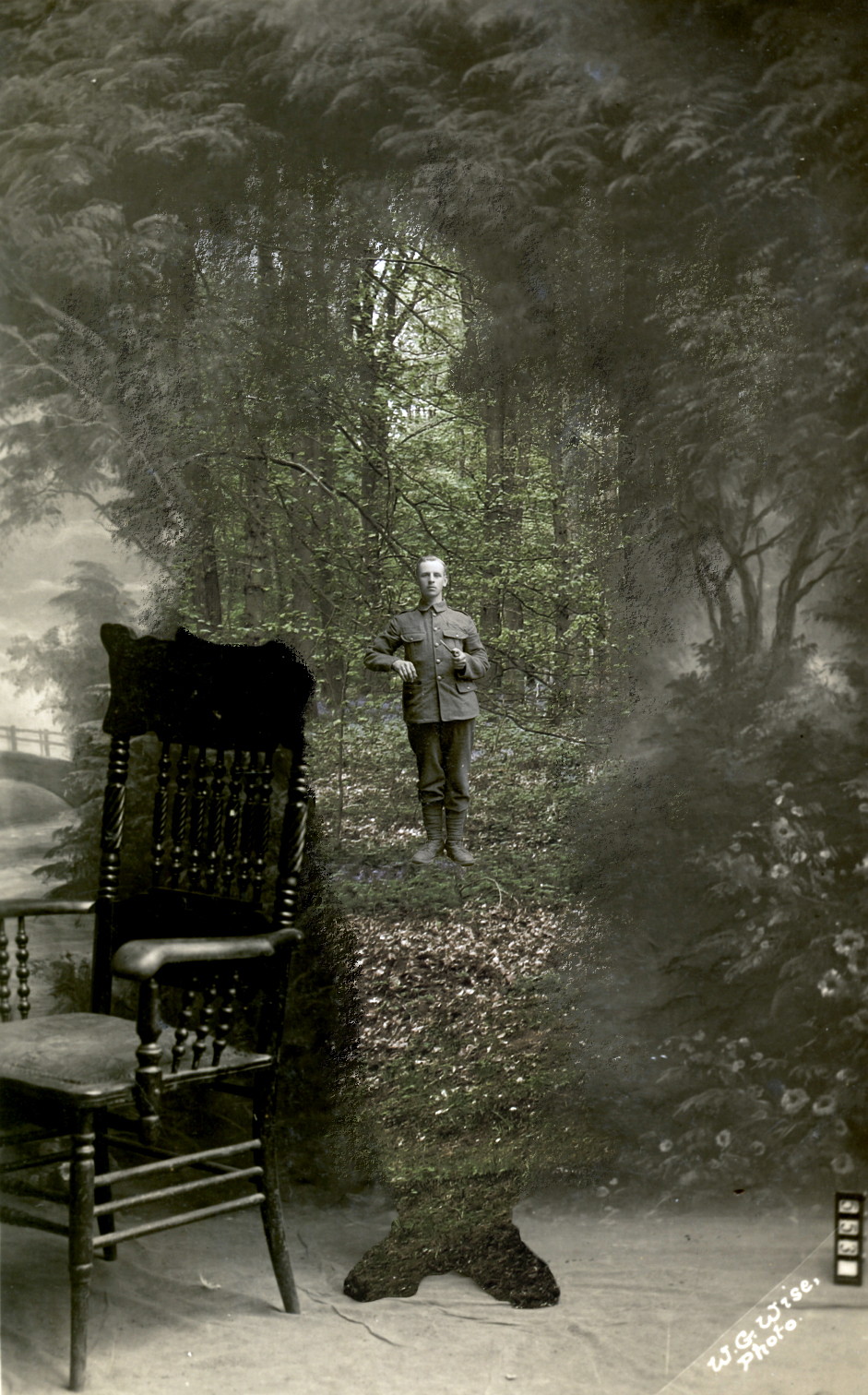
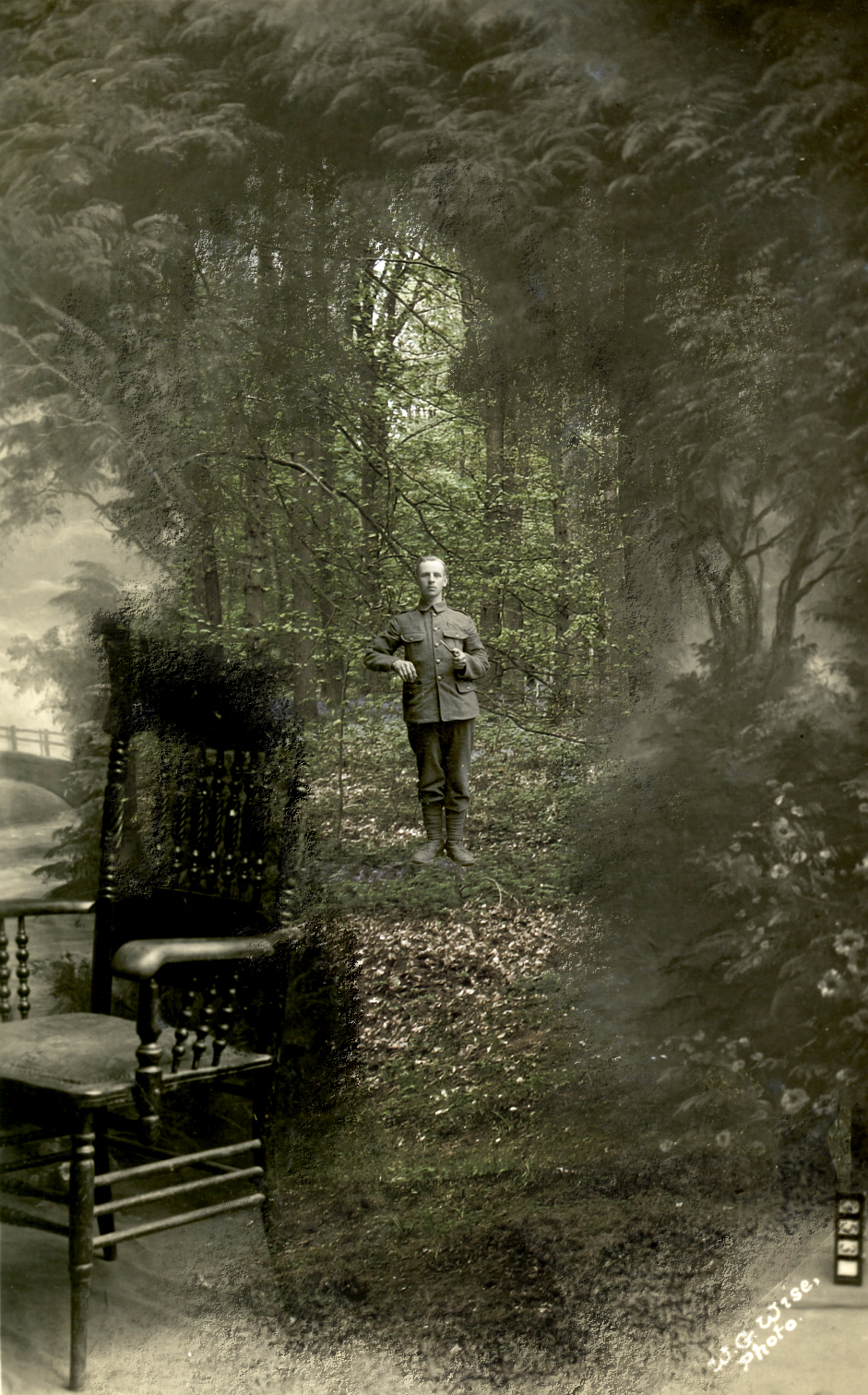
Seeing the young soldier standing before a bucolic backdrop, one is reminded of the youth in Rilke’s poem being led through the Keening landscape.
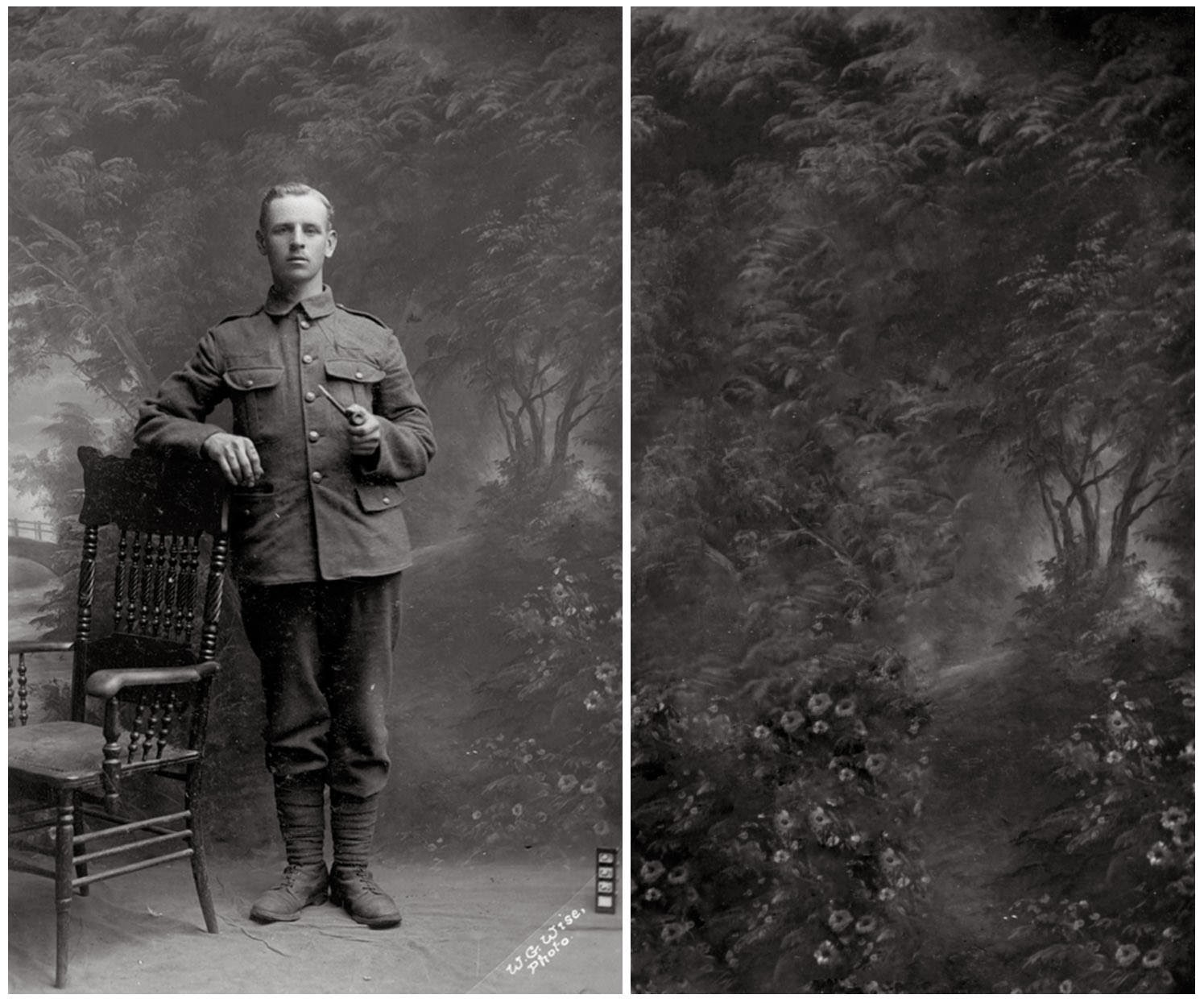
For some time, I’ve been wanting to create landscapes based on these postcards, landscapes about the Great War which do not seek to illustrate its horrors but articulate our present day relationship to it. A quote by Paul Fussell is important in this respect:

“…if the opposite of war is peace, the opposite of experiencing moments of war is proposing moments of pastoral.”

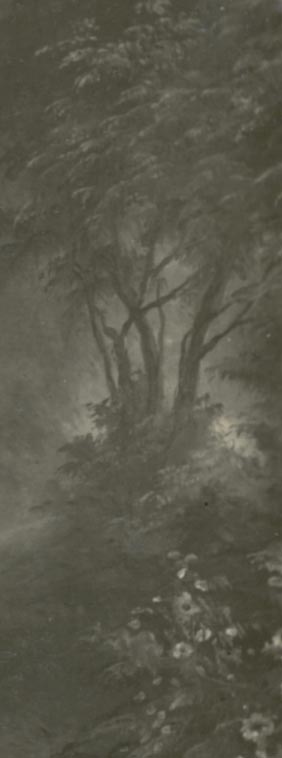
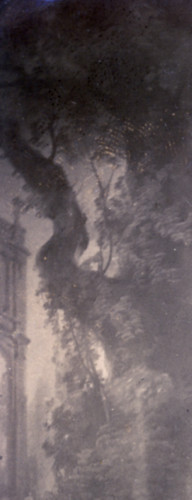
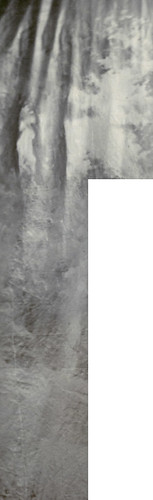
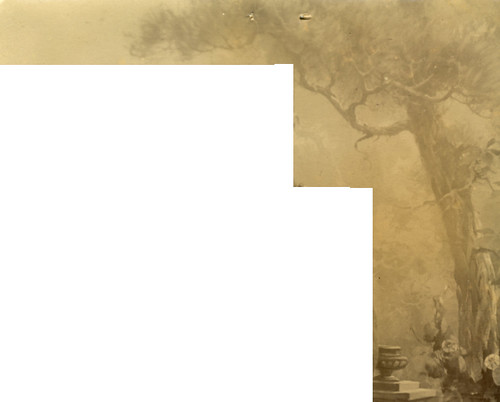
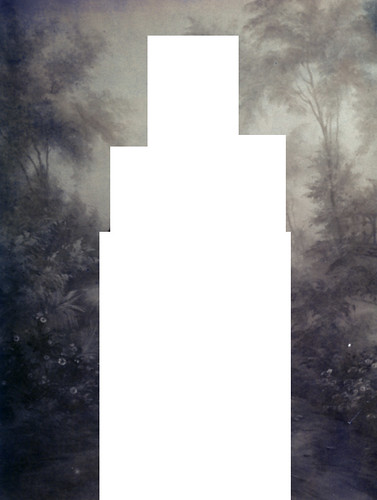
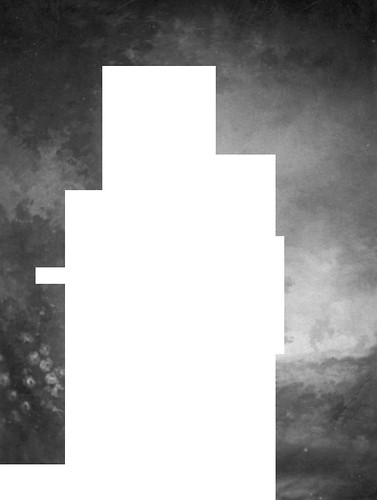
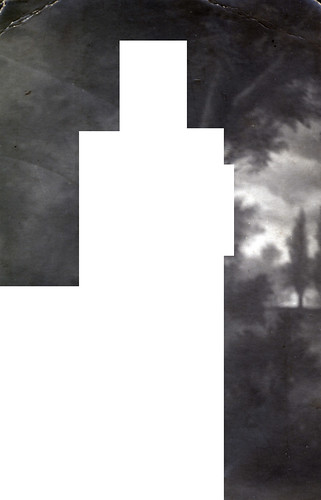
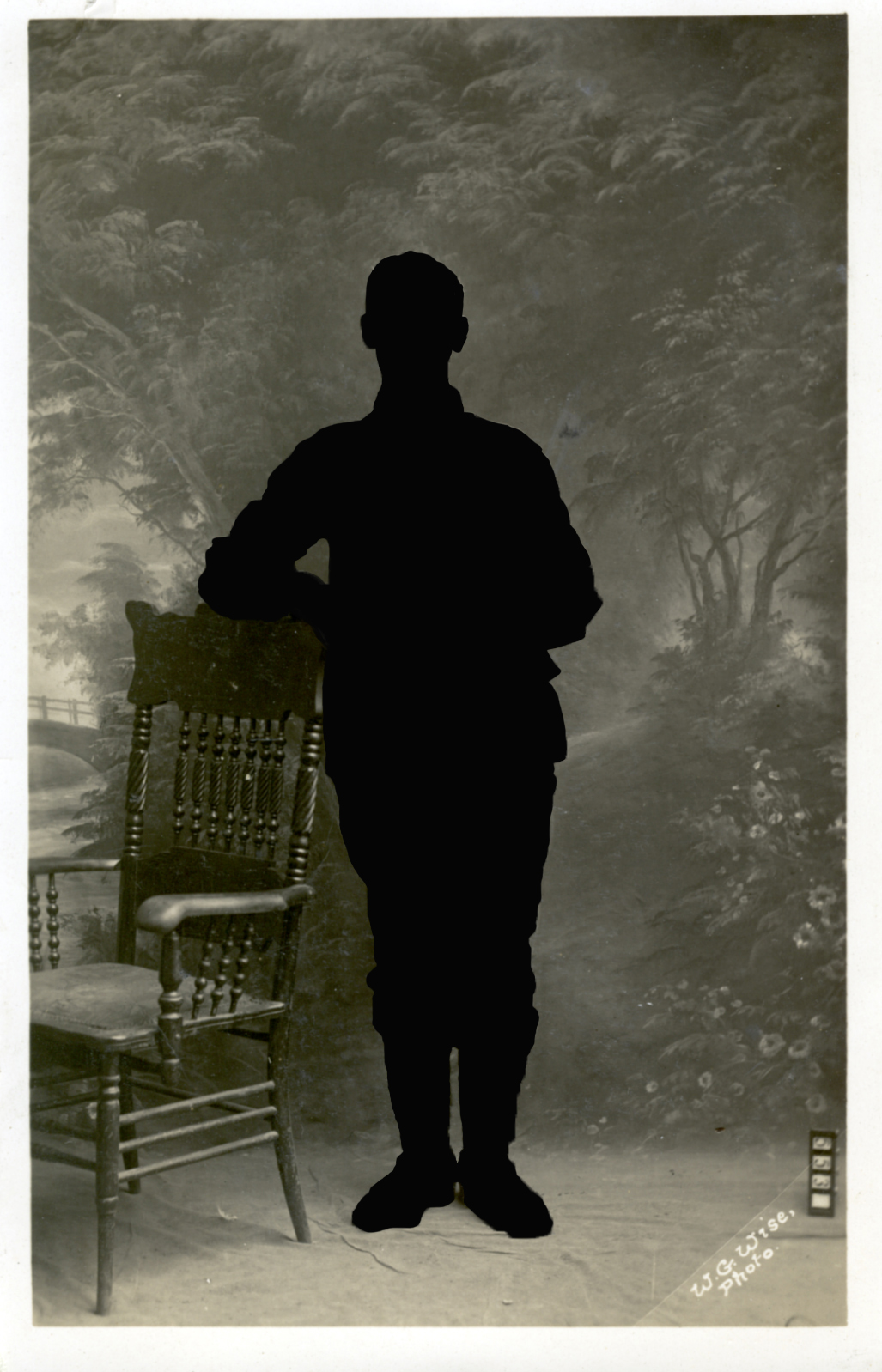
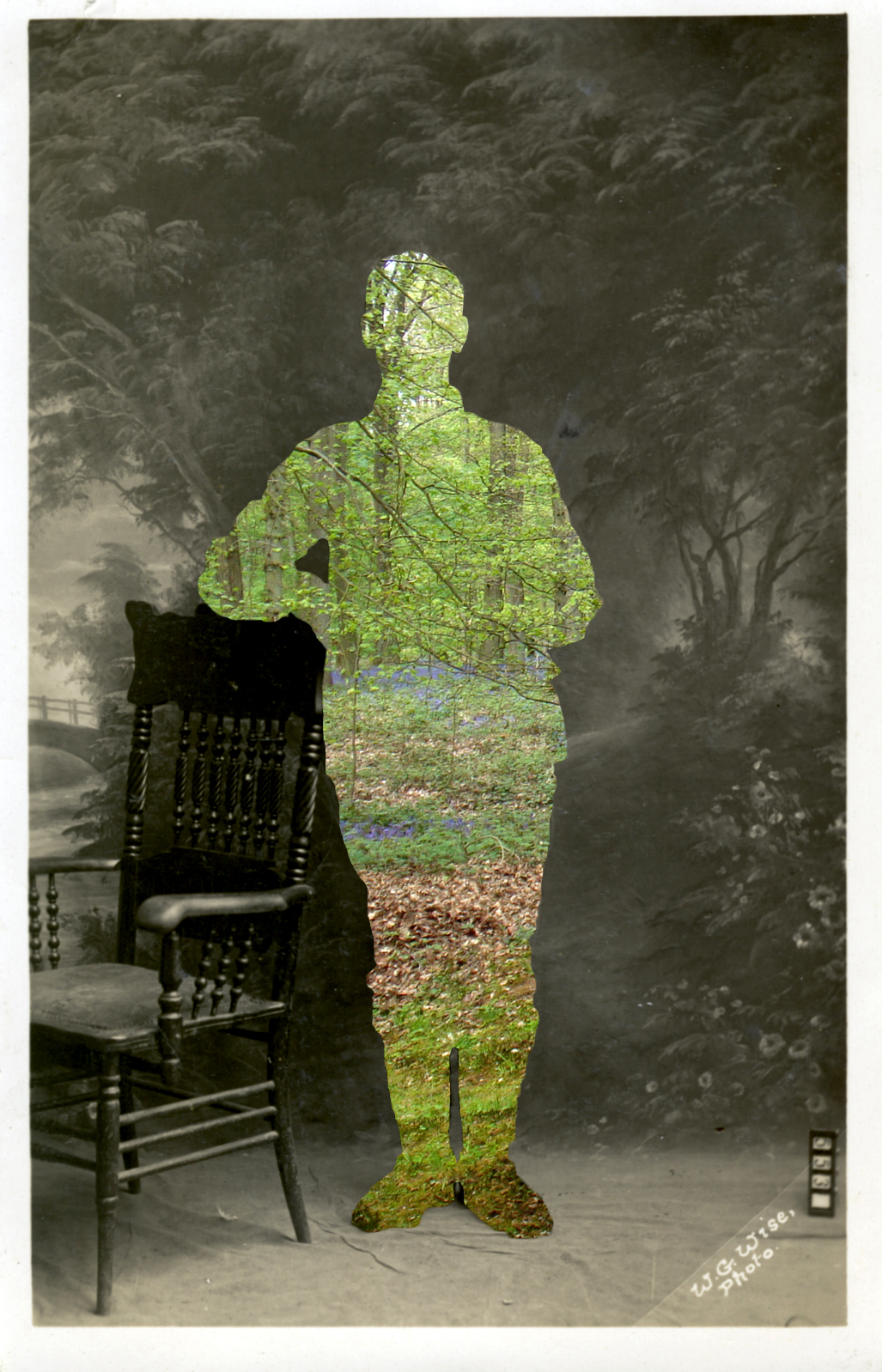
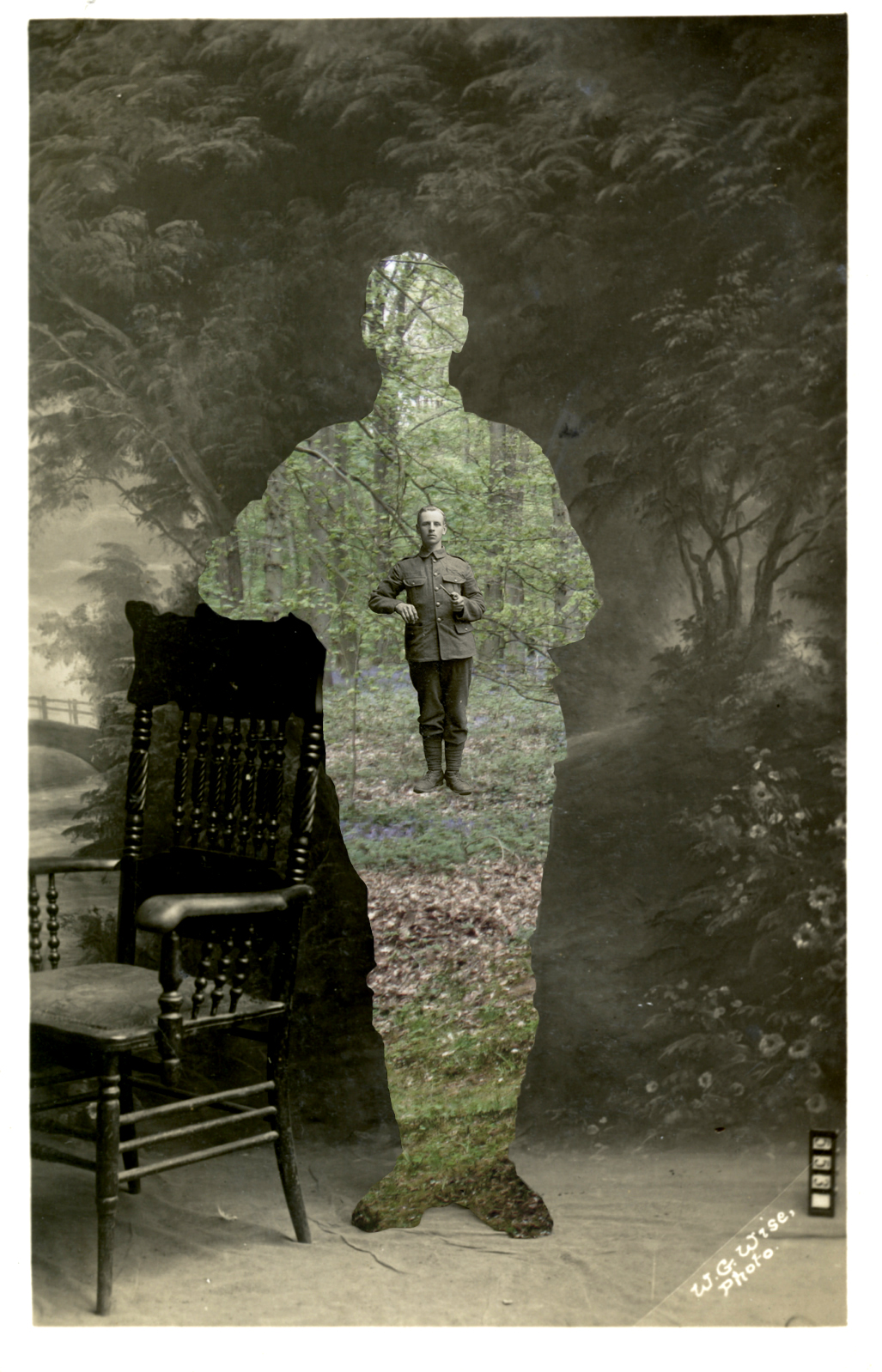
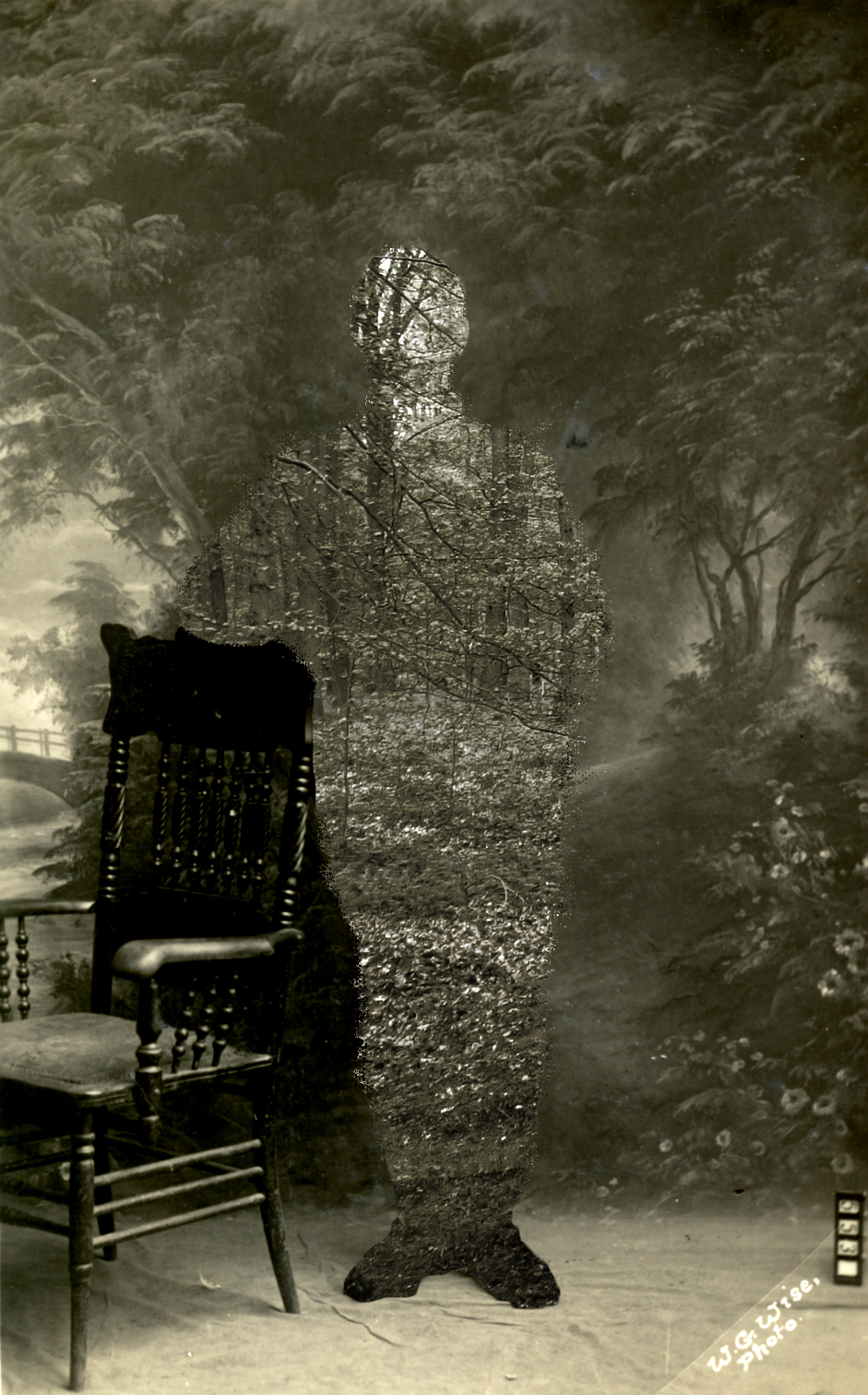
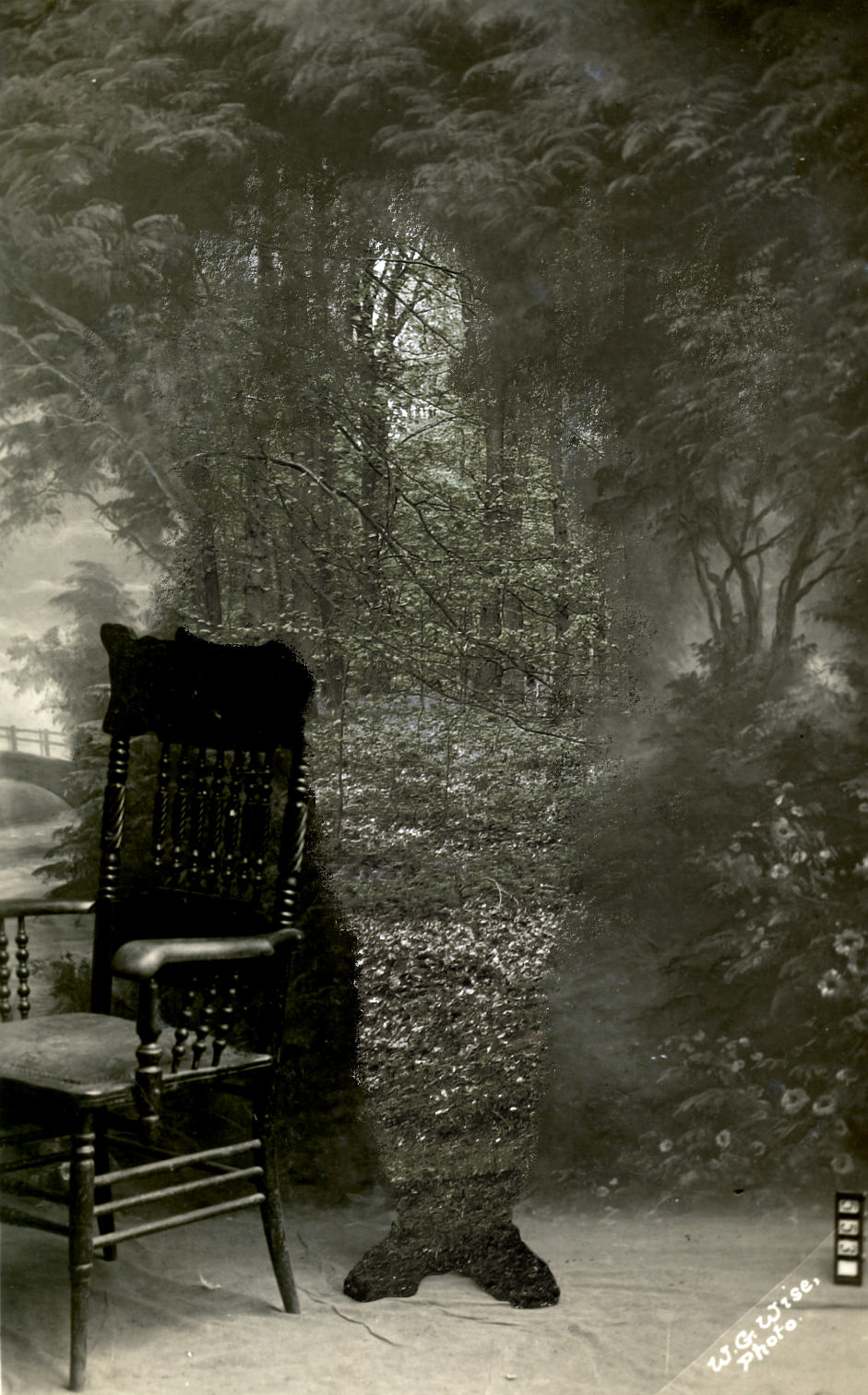
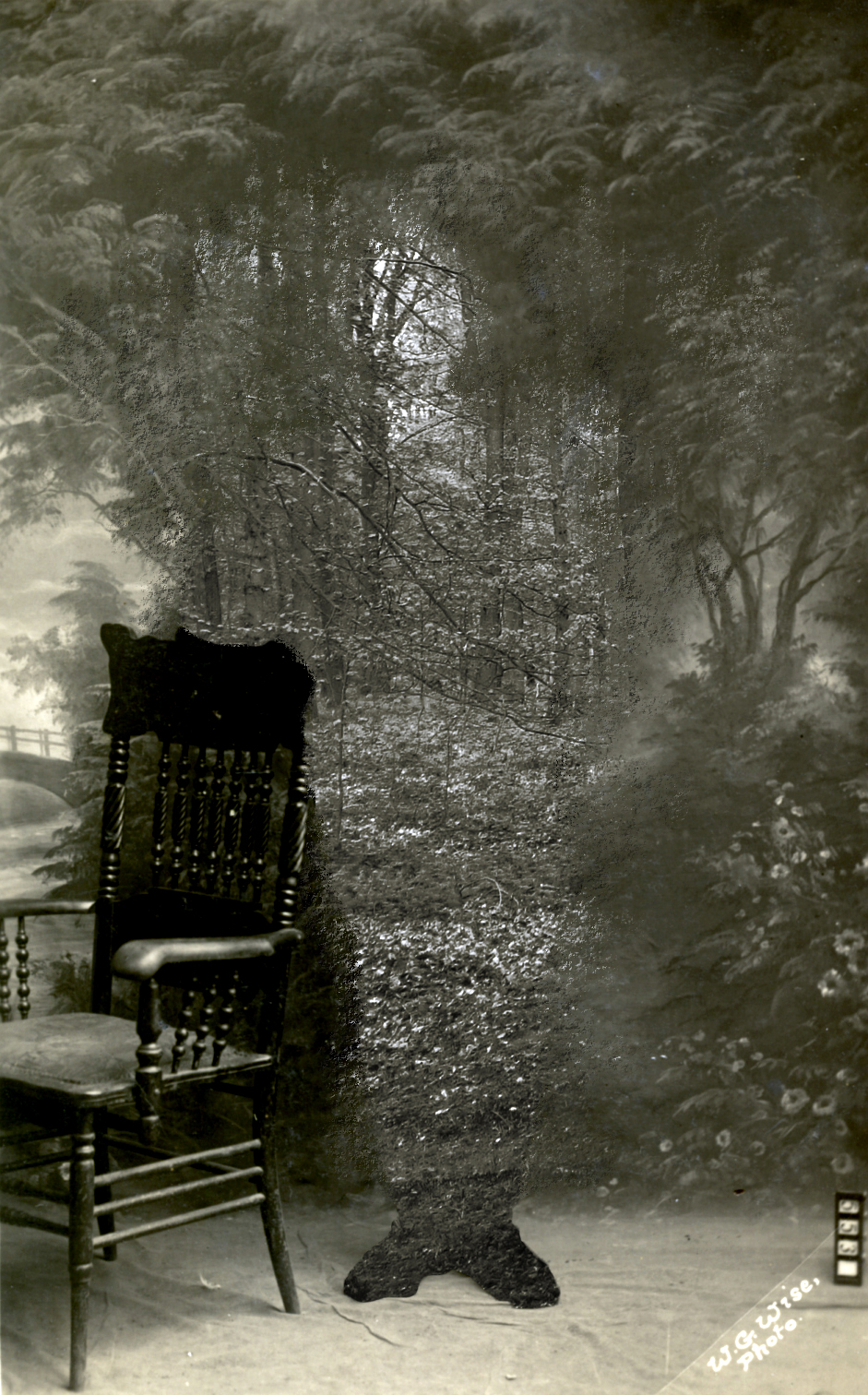
The landscape behind the soldier becomes the Keening landscape described by Rilke, a moment of pastoral as described by Fussell. In the right hand image, the soldier has gone; the landscape is one filled with ‘the towering trees of tears, the fields of melancholy.’ It is an image of the past: as Ruskin wrote: a tree “is always telling us about the past, never about the future.” It is an image of absence, a kind of which only the trees can speak.
Filed Under: Trees, World War I Tagged With: absence, Nowness, Pastoral, Rilke, Silence, The Trees, Trees, World War I, WWI, WWI Postcards

Paul Fussell Quote

January 12, 2014 by Nicholas Hedges

“…if the opposite of war is peace, the opposite of experiencing moments of war is proposing moments of pastoral.”

Taken from ‘A Terrible Beauty’ by Paul Gough

Filed Under: World War I Tagged With: Bucolic, Pastoral, Paul Fussell, Useful Quotes, World War I

Paul Maze (1887-1979)

January 12, 2014 by Nicholas Hedges

Two images of work by Paul Maze, discovered whilst reading ‘A Terrible Beauty’ by Paul Gough.
Filed Under: World War I Tagged With: Art, World War I

Backdrops (Odilon Redon)

October 28, 2013 by Nicholas Hedges

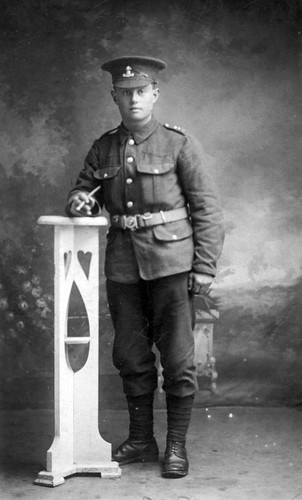
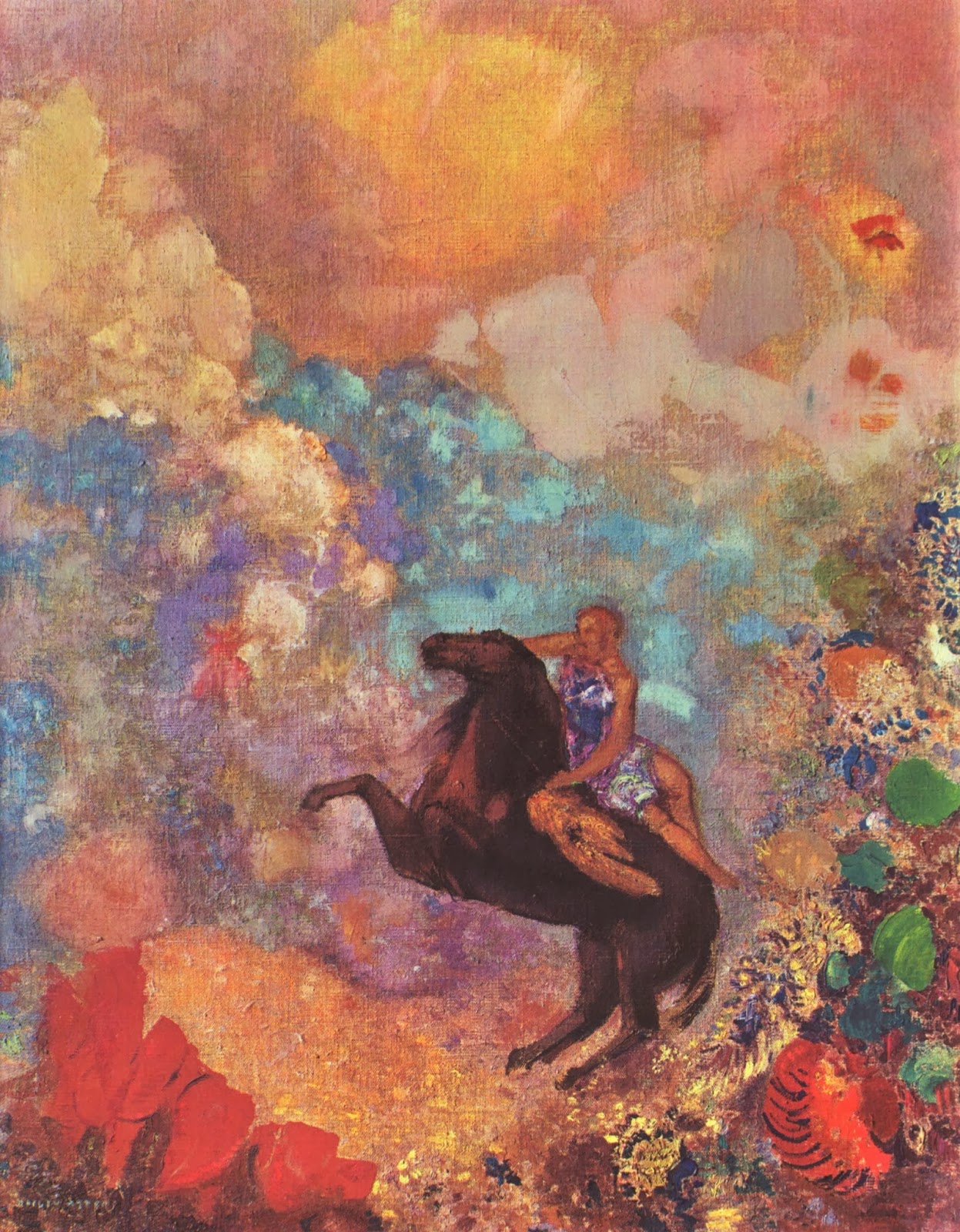
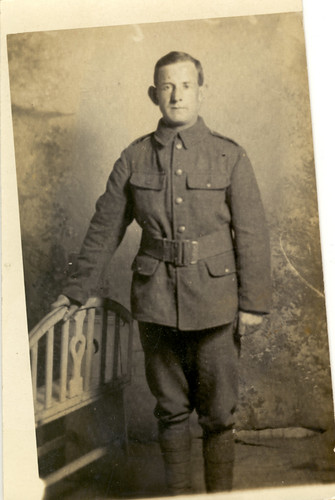
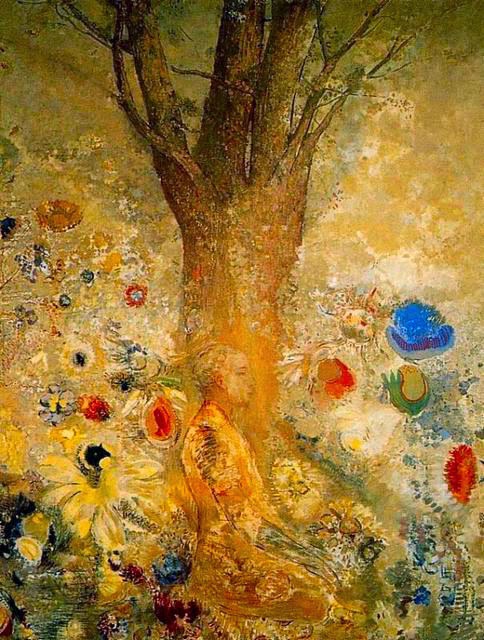
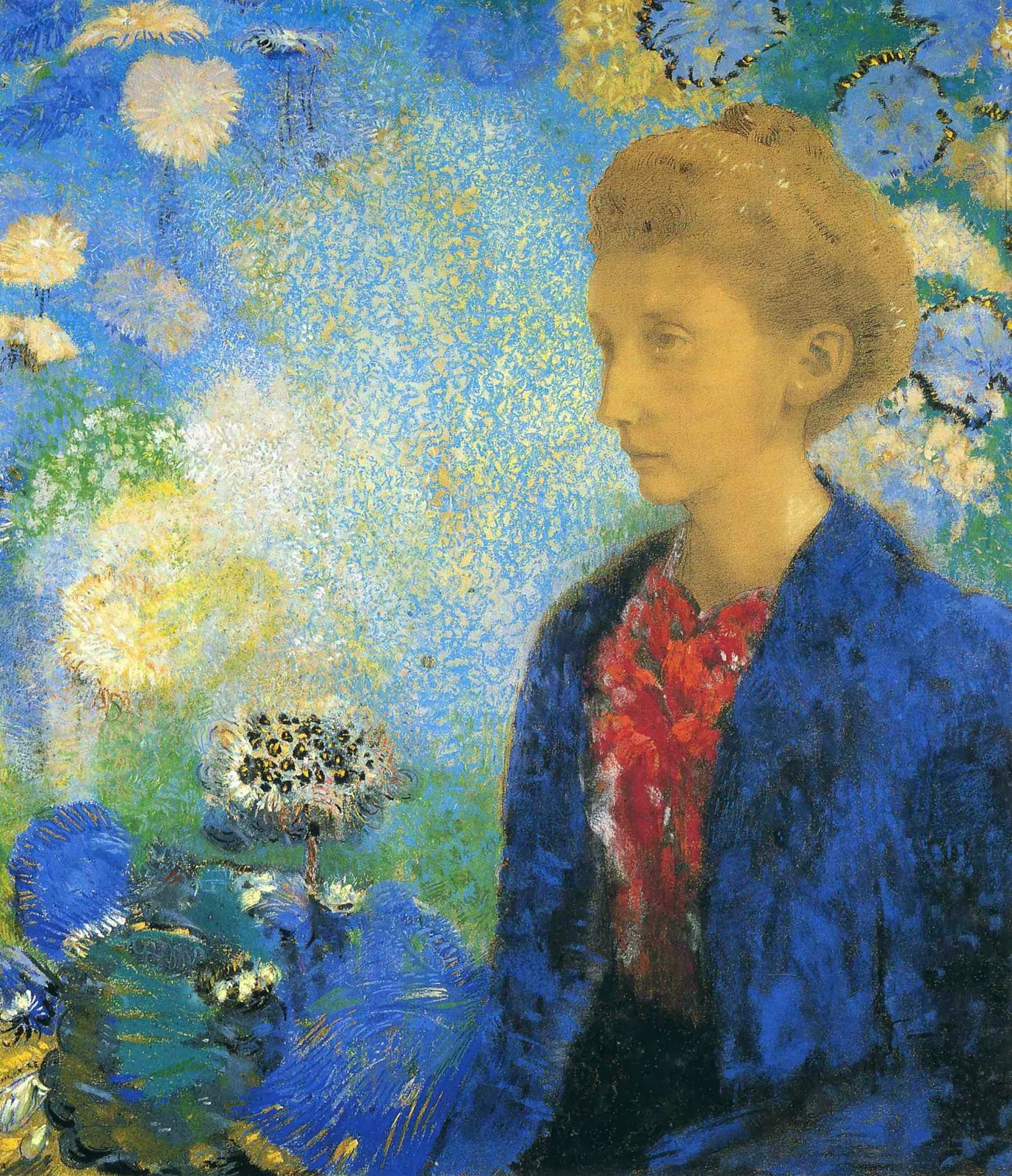
Looking at the backdrops of some of World War I postcards, I was reminded of the work of one of my favourite artists, Odilon Redon.

World War 1 Serviceman

World War 1 Serviceman

World War 1 Serviceman

WW1 Backdrops

Filed Under: World War I Tagged With: WWI Postcards

A Backdrop to Eternity

October 25, 2013 by Nicholas Hedges

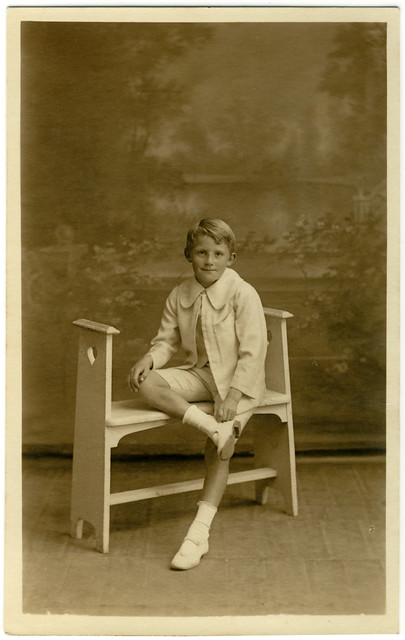
Below is a typical, early 20th century studio portrait. The subject – a boy – sits on a prop. Behind him hangs a backdrop on which is painted an idealised scene – something like the view of a country estate with trees, balcony and lake.

When I first got the photo (as part of a job-lot of old photographs) I gave it a cursory look and that was that. I hardly noticed the backdrop behind, which is perhaps the point.

The image below is another studio portrait from around the same time. The subject rests upon a prop – in this case a chair. Behind him hangs a backdrop – a bucolic scene replete with woodland path, flowers, river and bridge – and again, when I first looked at the photograph – given to me as part of a collection of around 200 – I hardly noticed the backdrop; my eyes were drawn only to the soldier. But as I began analysing the backdrops of other postcards in the collection, becoming more aware of the differences between studio-based portraits, and those taken in more informal, often domestic settings, I started to think more about these backdrops.

The photograph is of course that of a soldier bound for the Front in the Great War of 1914-18, and it is this context which makes the backdrop interesting. In the picture of the boy above, the backdrop – when considered a little more deeply – becomes an aspirational image; that of the boy’s idealised future: the image’s inherent sense of distance perhaps adding to this idea. Which is probably what makes the backdrop in the image of the soldier so provocative. For many of those bound for the battlefields of Ypres and The Somme, the future had cast distance aside and charged headlong towards them, dragging with it, that erstwhile companion of their old age – death.
It is strange to think that this image of the soldier, clutching his pipe, his arm resting on the wooden chair, might be all that remains of this man. An insignificant moment in front of the camera is all that’s left to tell of a whole life lived.
Death of course is the ultimate distance. As Sir Thomas Browne wrote:

“We whose generations are ordained in this setting part of time, are providentially taken off from such imaginations. And being necessitated to eye the remaining particle of futurity, are naturally constituted unto thoughts of the next world, and cannot excusably decline the consideration of that duration, which maketh Pyramids pillars of snow, and all that’s past a moment.”

World War 1 Serviceman

That click of the camera, that moment, would, when pressed against the face of eternity, encompass all that has so far come and gone since the Universe began. It’s a concept quite impossible for the human mind to hold and so – in some – the void is filled with God and an afterlife. After the war, many of the bereaved tried to fill the void left in their lives through Spiritualism, attempting to contact their loved ones in an eternity filled perhaps with pre-war, picture-postcard landscapes; trees, fields, flowers, rivers and so on. And in many ways, the photographs of the soldiers above, become not images of insignificant moments made before their departure, but images of their place in an eternal moment once the war was done.

After the war, the sense of emptiness must have been everywhere. Every insignificant moment – barely acknowledged before the war – now pregnant with a pervasive sense of incomprehensible loss. The world was outwardly the same, shifted just a little, but it had taken the lives of millions to push it there.

Filed Under: Trees, World War I Tagged With: WWI, WWI Postcards

Redshift

October 20, 2013 by Nicholas Hedges

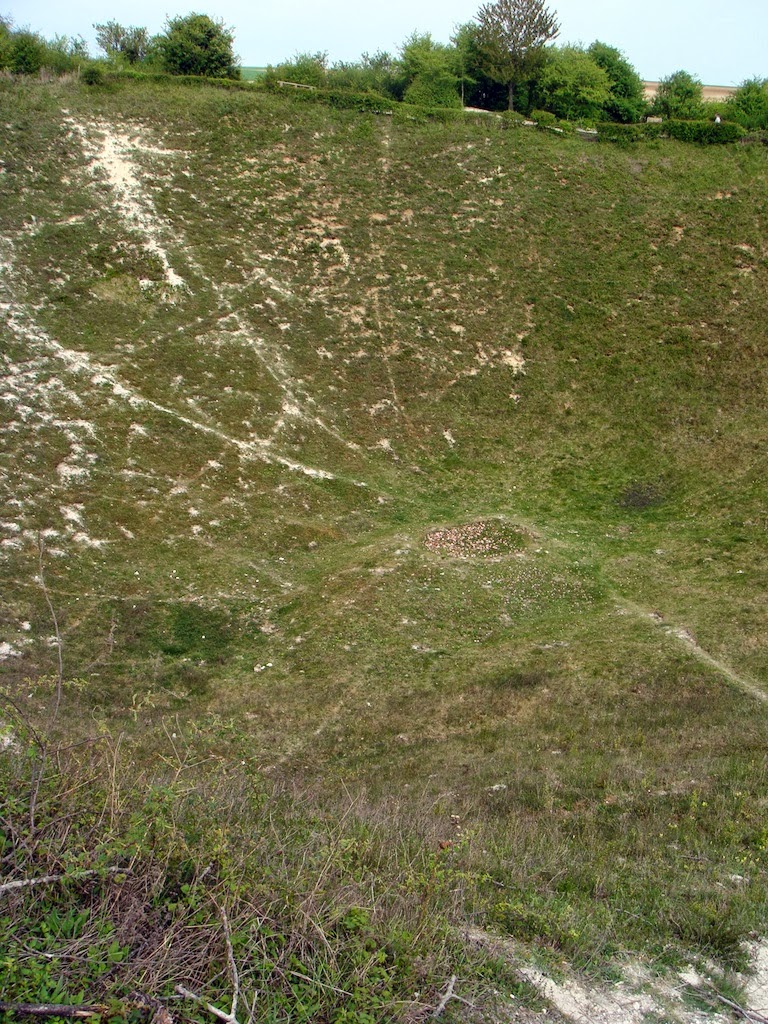
Anyone who has stood on the edge of the Lochnagar crater at La Boiselle in France, cannot help but be overawed by its vast size. The result of a huge mine, detonated below ground at 7:28am on 1st July 1916 (the first day of the Battle of the Somme), the crater is almost 300 feet in diameter and 70 feet deep.

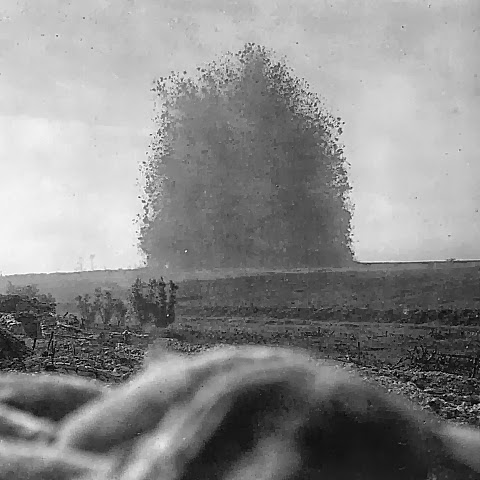
“The whole earth heaved and flashed, a tremendous and magnificent column rose up in the sky. There was an ear-splitting roar drowning all the guns, flinging the machine sideways in the repercussing air. The earth column rose higher and higher to almost 4,000 feet. There it hung, or seemed to hang, for a moment in the air, like the silhouette of some great cypress tree, then fell away in a widening cone of dust and debris.” The words of 2nd Lieutenant C.A. Lewis of No. 3 Squadron RFC who witnessed the blast.

The image and video clip below shows a similar explosion, which took place a few minutes earlier at Hawthorn Redoubt, also on The Somme.

The obvious thing missing from this clip is the sound. Standing on the edge of the Lochnagar crater, one is aware of the noise this blast must have made – a sound so loud, it was said to have been heard in London. It’s almost as if the crater itself is an echo; one made from the mud of The Somme.

Thinking more on this, I had in my mind’s eye an image of the past receding – a past moving away from us here in the present-day. I thought about sound and how, as it moves away, its pitch shifts due to the fact its wavelength stretches (what’s known as the Doppler effect). I thought then about light, how as it moves away, its wavelength stretches and shifts towards the red end of the spectrum. It’s through this redshift that scientists can deduce how far away an object (such as a star) is from the Earth and how fast it is travelling. Redshift is often used as a way of explaining the Big Bang. If you imagine the Big Bang (or indeed any explosion), you can easily visualise how everything emanating from within it would move away from its centre. Everything we see in space today is a result of that first explosion. As a result, everything is moving away – something we can see in the redshift of distant galaxies.

As we move away from the catastrophic events of World War I, and as we approach its centenary, the craters and shell-holes that pockmark the old Western Front, become – like the trenches – filled with earth. They become grown over with grass, flowers and trees; and this gradual retreat towards the natural world is, I think, a kind of redshift in the landscape.

I want to explore this idea and to think more about an audio piece I’ve been working on: a recording of my mum and aunts singing Where Have All The Flowers Gone in 1962.

Filed Under: Trees, World War I Tagged With: Doppler Effect, Redshift, Shells, Stars, World War I, WWI

Landscape Therapy

September 24, 2013 by Nicholas Hedges

It isn’t uncommon, when faced with an issue or issues in one’s life, to seek help from a psychotherapist or counsellor. I have recently done just that and found it a rewarding experience. I spoke at length, the therapist listened intently, then aimed a well-honed question. In an instant the angle from which I’d been viewing my problem shifted; there wasn’t an answer as such, but an increased sense of clarity. It was almost like walking lost through a thicket, meeting a guide and being taken to hitherto unknown vantage points from which the landscape could be seen more clearly. By the end of the session, I not only had a better understanding – and appreciation – of the ‘terrain’ through which I’d come, but I could see the path along which I’d walked, with all its twists and many wrong turns.

IMG_1243.jpg

Traumatic landscapes have always interested me and my work over the last six or seven years has looked at how we – through art – can empathise with those who suffered in such environments, for example in the Holocaust or World War I. These landscapes – and I’m thinking in particular of battlefield sites on the Western Front – have suffered incredible trauma and as we walk through them, the relationship between landscape and walker becomes like that between patient and therapist.

In those moments of clarity I mentioned before, it was as if my therapist and I had for second become one and I have often experienced the same thing when walking, where for a second, I become one with the landscape and vice-versa. A turn of the head, a shift in viewpoint becomes the well honed question, to which the landscape responds with an answer; a depth is revealed, empathy established with some unknown person in the past. Often its fleeting, but one’s understanding of that particular place is enhanced beyond measure.

The landscape knows itself a little better. So does the walker.

“For the things of this world are their stories, identified not by fixed attributes but by their paths of movement in an unfolding field of relations. Each is the focus of ongoing activity. Thus in the storied world… things do not exist, they occur.” Tim Ingold, Being Alive: Essays on Movement, Knowledge and Description.

Filed Under: World War I Tagged With: Empathy, Landscape, Psychogeography, Therapy, Walking, World War I, WWI

WWI Portraits: Inside, Outside

September 18, 2013 by Nicholas Hedges

Below are two portraits, each of a soldier about to leave home to fight in what we now know as the Great War.

I’m interested in these two particular pictures because they reveal how differences in their immediate surroundings affect out ability to empathise with them as individuals.

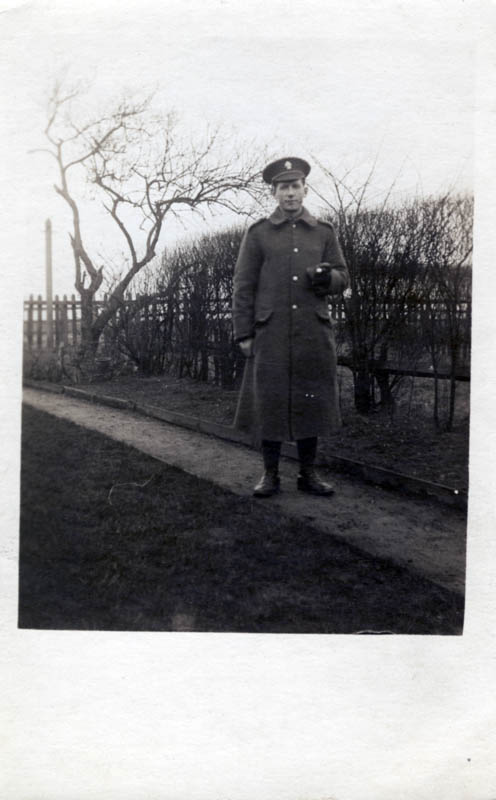
In the first picture, taken in a studio, the soldier is pictured in front of a painted backdrop. In this idealised landscape, the leaves of the trees are out,  the flowers are always in bloom, and behind an incongruous chair a river flows nowhere beneath a bridge. In the second picture the trees are bare, there are no flowers and a path leads to the rear of what appears to be a garden.

In the first picture, the soldier could almost be an actor standing on a stage. In the second, the soldier is – one assumes – at home, although in a sense, he too is playing a part. His however is a picture of departure; an image pregnant with the weight of all we know was about to befall him and thousands like him. The image of the soldier standing in the studio, tells me only about that time between the shutter’s opening and closing. There is no sense of an entrance or indeed an exit – whereas with the second image, one can imagine the soldier standing in place, then leaving once the picture was taken.

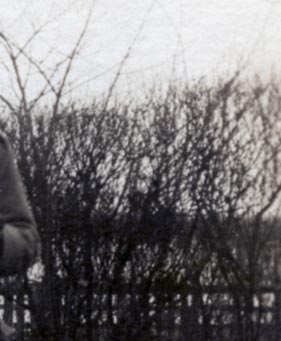
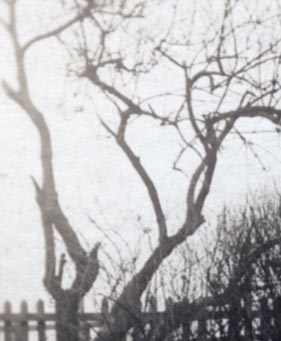
I can empathise with the second soldier much more readily because I know what it’s like to stand in a garden in winter. Somehow, the fact the trees are bare, along with the hedge running the length of the garden helps me make a connection. The branches and twigs are stark, vivid, real. With the first soldier, the backdrop is a fantasy and connecting with him is like trying to connect with someone else’s dream.

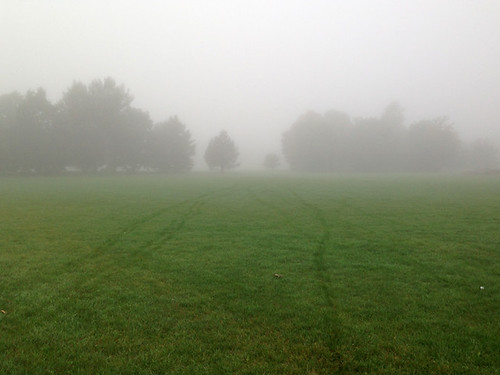
The main difference between the image above and those below is that in all those below I can feel the scene I’m looking at. I can almost hear it.

It was, I think, taken as the sun came up in the morning or as it set in the late afternoon…

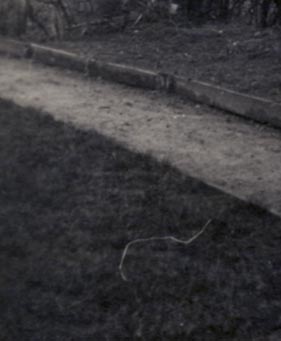
You can almost feel the dampness of the grass and smell the earth…

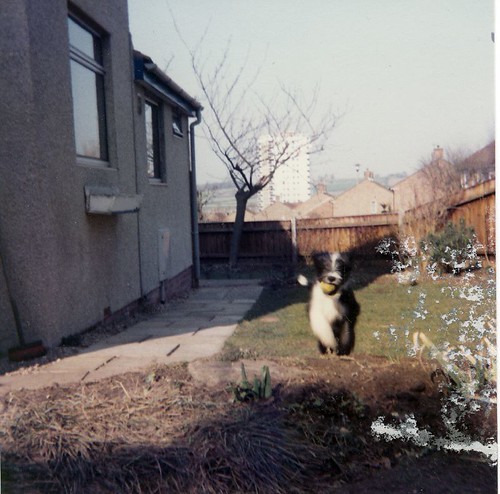
Looking at it, I’m reminded of a photograph from my own childhood (below), taken in the winter of 1984.

Sukey and Her Ball
The bare cherry tree at the bottom of the garden echoes the tree in the one above (as does, in some respects, the path). I can clearly remember the dog (Sukey) and the places beyond the limits of the photograph; the image – and my memory – opens out like a flower. 
The same is true in part of the image of the soldier standing in his own garden; his world opens out, not in terms of the surroundings beyond the limits of the picture (the gardens of his neighbours for example) but rather the history of the war about to be played out. I know what happened on an historical level, but now I can imagine this war from a different angle; from that of this small patch of ground in an undisclosed part of the UK; from the perspective of this particular soldier in the cold, milky light of a winter’s morning or afternoon.
I look at his image not only with my eyes but with my body – with an embodied imagination. I use my own memories to ‘colour in’ this image taken almost a hundred years ago, not in terms of green for grass, blue for sky etc. but in terms of the cold, the sharpness of the temperature. With the the soldier in the studio, there is very little to support any sense of an empathetic connection. His image is, a sense, just that – an image; one no different to the painted backdrop in front of which he stands. 

Filed Under: Trees, World War I Tagged With: Empathy, Nowness, Place, World War I, WWI, WWI Postcards

Shadows 3

July 7, 2013 by Nicholas Hedges

I was looking at something recently which made me think of the work I’ve been exploring around the backdrops used in World War One postcards, such as that below:

WW1 Backdrops
The idea of movement has played a key part in my ongoing research, and I’ve been thinking for some time of giving these backdrops a sense of movement which, I realised I could do by videoing the shadows cast by trees onto a canvas, as per the video below.

Another shadow is that in the photograph below, taken on the stairwell of William Wordsworth’s school in Hawkshead, in the Lake District. The shadow is something he might well have seen in that very same place over 200 years ago and as such, is something that is simultaneously both ancient and fleeting – much like history itself. 

SAM_2150.jpg
History of course comprises events that are by their nature transient. A shadow is also an everyday occurrence – something quite insignificant; and yet behind every significant historical event – including those of our own personal histories – lies a vast, incomprehensible network of everyday events. It is mind-blowing to think that every one of my ancestors had to lead their lives exactly as they did in order for me to be born me. From the time (literally) they got up every day, to when they went to bed, everything they did in between had to be as it was. One step out of place and I would not be here. 

Filed Under: Trees, World War I Tagged With: Shadows, The Trees, Trees, Wordsworth, World War I, WWI, WWI Postcards

Aerial Views

August 19, 2012 by Nicholas Hedges

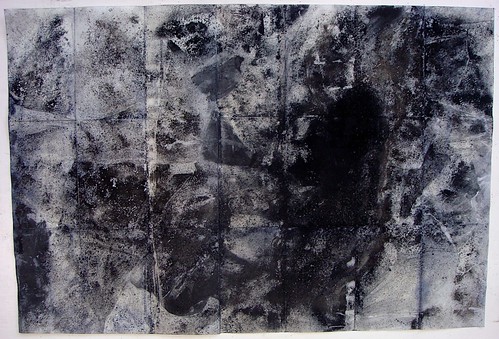
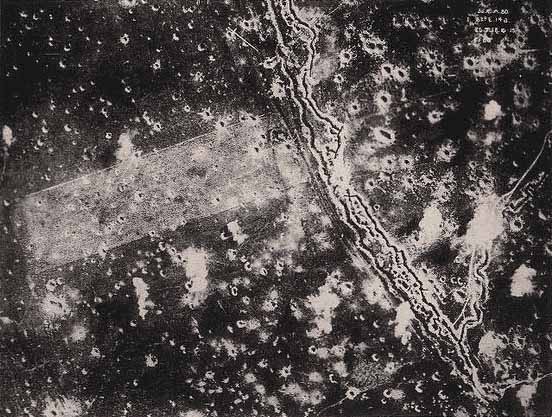
I worked on a piece yesterday, the origins of which were a GPS trace of trench systems around the village of Serre. I had the idea of ‘colouring’ each segment using ash, graphite and coal dust, but of course the boundaries between these segments blurred into more or less one. However, I liked the look of what I’d produced, which reminded me – in particular where I’d made the lines visible using a palette knife – of aerial photographs I’d seen of the trenches.

The first image I produced:

DSC07650

An aerial view of battlefields taken during the First World War:

The coal dust is significant for me as it alludes to the miners who worked beneath the battlefields, as well as those miners who were called up for duty such as my own great-great-uncle, Jonah Rogers who was killed near Ypres in 1915.
What I’d like to do now, is do another piece, creating the same texture but only using the folds of the paper to create the lines (and perhaps the creases).

Filed Under: World War I Tagged With: Aerial Views, Family History, Jonah Rogers, World War I, WWI

Painted Trees

July 16, 2012 by Nicholas Hedges

Taken from World War I studio portraits.

WW1 Backdrops

WW1 Backdrops

WW1 Backdrops

WW1 Backdrops

WW1 Backdrops

WW1 Backdrops

WW1 Backdrops

WW1 Backdrops

WW1 Backdrops

WW1 Backdrops

WW1 Backdrops

WW1 Backdrops

WW1 Backdrops

WW1 Backdrops

WW1 Backdrops

WW1 Backdrops

Filed Under: Trees, World War I Tagged With: Backdrops, The Trees, Trees, World War I, WWI, WWI Postcards

Maps and Ivory Gurney

July 16, 2012 by Nicholas Hedges

On the bus into work this morning I read the following in Robert Macfarlane’s ‘The Wild Places.’

“Woods and forests have been essential to the imagination of these islands, and of countries throughout the world, for centuries. It is for this reason that when woods are felled, when they are suppressed by tarmac and concrete and asphalt, it is not only unique species and habitats that disappear, but also unique memories, unique forms of thought. Woods, like other wild places, can kindle new ways of being or cognition in people, can urge their minds differently.”

Woods have always been places of intense interest to me, particularly as a boy when I would love to imagine England as being covered in ancient woodland. My interest in history wasnt so much an interest in the characters and machinations of past times, but a means of accessing the landscape of those times – a way into the woods. 

I would create maps of imagined places, all of which would be home to vast swathes of untouched and unspoiled forests. And while those maps were ‘of places’, they were much more a means into a place, a path into and through my imagination.

In the same book ‘The Wild Places,’ Macfarlane briefly discusses the poet, composer and songwriter Ivor Gurney (1890-1937) who like the poet Edward Thomas, loved to explore the countryside of his native county – Gloucestershire. In 1915, Gurney enlisted to fight in the Great War, and in the battlefields of the Ypres Salient, discovered what Macfarlane describes as an ‘anti-landscape,’ a place in which the only evidence of forests ‘were upright bare dead trunks, stripped of leaves, branches and bark by shrapnel and gunfire.’ As Macfarlane writes: ‘On the military maps of the area that Gurney used, some of the old names of the landscape remained. But many of the new names spoke of the avoidance of death, or of its arrival. Shrapnel Corner, Crump Farm, Hellfire Corner, Halfway House, Dead Dog Farm, Battle Wood, Sanctuary Wood. The woods were no longer there, however; these were ghost names only. The trees had been felled for revetting, or blasted from the earth by shells.’

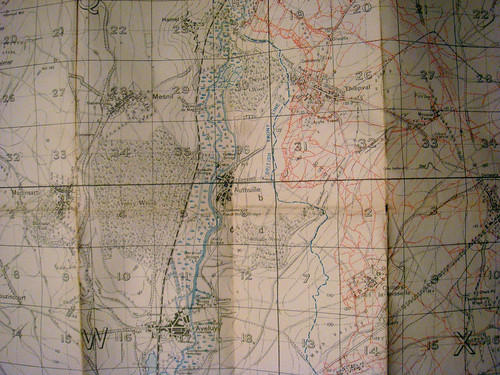
As someone with an interest in maps and in trench maps, the above passage interested me, particularly as I’ve often thought about how the landscape of the First World war, replete with all its new names and new features, had been superimposed, or rather gouged out of the landsape, only to smoothed over with the passage of time. Its was a sudden landscape. A few scars, smoothed over with grass – or hidden by trees – are all that’s left, but the wounds are still weeping in its names – not so much those of soldiers inscribed on the thousands of headstones, but rather the names of places – Arras, The Somme, Ypres and Passchendaele. 

Trench Map 1916
Trench Map (1915)

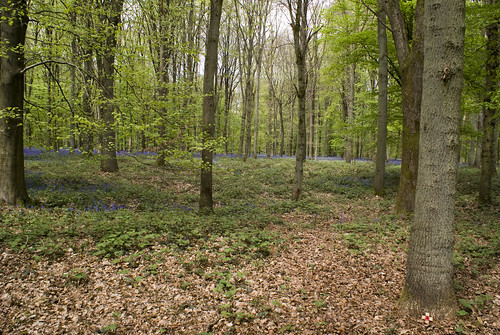
In many places the woods have returned, and while the landscape today bears little resemblance to that of the war  – in which ‘the rich and complicated pasts of the trees that Gurney cherished’ had been so utterly effaced, it is nonetheless within those woods that one’s imagination picks up the voices of the past – of the fallen; voices which spoke in the midst of battle, of places and people cherished back home.

The Somme
Woods in The Somme

After returning from the war, Ivor Gurney, like so many others suffered a breakdown (he’d suffered his first in 1913) and a passage in Macfarlane’s book, which describes the visits to Gurney – within the Dartford asylum – by Helen Thomas, the widow of Edward Thomas is particularly moving. Helen took with her one of her husband’s Ordnance survey maps of Gloucestershire:

‘She recalled afterwards that Gurney, on being shown the map, took it at once from her, and spread it out on his bed, in his hot little white-tiled room in the asylum, with the sunlight falling in patterns upon the floor. Then the two of them kneeled together by the bed and traced out, with their fingers, walks that they and Edward had taken in the past.’

The map they laid on the bed was one that showed the familiar trails and paths of the countryside. But it was also one which, like that I made in my childhood, gave Gurney access to his imagination – to his own past. Together, the patient and his visitor read it with their fingers, following the trails as one follows words on a page. A narrative of sorts was revealed, memories stitched together by the threads of roads, paths and trails.

Filed Under: Trees, World War I Tagged With: Edward Thomas, Ivor Gurney, Maps, The Somme, Trench Maps, War Poets, World War I, WWI

Completed Map

July 10, 2012 by Nicholas Hedges

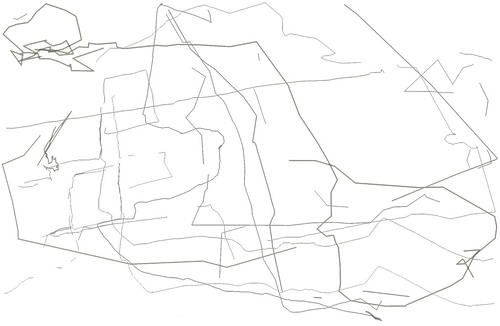
Today, on a walk around Oxford, I completed my first text map which I began in Ampney Crucis about a month ago. Below is both the map and an image of the walks as recorded on my GPS (and then ‘arranged’ in Photoshop).

Map Work
Map Work

Filed Under: Lists, World War I Tagged With: GPS, Lines, Listmaking, Lists, Map, Positioning, Text Work, Walks, World War I, WWI

New Work 3

February 20, 2012 by Nicholas Hedges

Filed Under: World War I Tagged With: Soldiers, The Somme, The Trees, Trees, World War I, WWI, WWI Postcards, WWI Postcards

New Work 2

February 9, 2012 by Nicholas Hedges

Filed Under: World War I Tagged With: Soldiers, The Somme, The Trees, Trees, World War I, WWI, WWI Postcards, WWI Postcards

New Work

February 7, 2012 by Nicholas Hedges

Filed Under: World War I Tagged With: Soldiers, The Somme, The Trees, Trees, World War I, WWI, WWI Postcards, WWI Postcards

Past and Present Postcard

January 25, 2012 by Nicholas Hedges

The image below is the last in a series I’ve made using both an original World War One postcard and a photograph I took in Verdun. All are works in progress.

I’ve been fascinated with the backdrops in some of these postcards for quite some time now and have been looking at ways of using them in works relating to the Great War and, in particular, the issue of empathy.

The original postcard is of course in black and white (with a greenish tint) and shows a soldier about to head to the Front, standing, leaning on a chair.

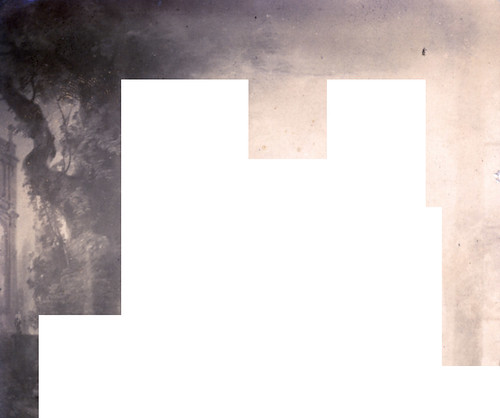
Behind him is an idealised image – an idyllic, invented landscape, a far cry from what he was, perhaps, about to encounter, but close in some respects to what we find on battlefields today; where there were trenches, arms, barbed wire and bodies, there are now trees. And amidst the trees, incongruous concrete Pill Boxes stand and watch as the seasons come and go. Everything is slowly reclaimed. The trees in the image at the top of the blog spill to reclaim the past – the interior of the studio – through the gap left by the missing soldier.

I have placed the solider back beyond the gap left by the vague shape of his own body, to remind us that people like the soldiers we see in all these postcards, were once like those of us who have visited the battlefields. They too would have known what it was to stand in a wood. To listen to the wind blowing through the branches.

To stand and do just that, is one way to remember them.

Filed Under: Trees, World War I Tagged With: Soldiers, The Somme, The Trees, Trees, World War I, WWI, WWI Postcards

Work in Progress

January 24, 2012 by Nicholas Hedges

Filed Under: World War I Tagged With: Soldiers, The Somme, The Trees, Trees, World War I, WWI, WWI Postcards, WWI Postcards

New Work in Progress (WW1)

October 7, 2011 by Nicholas Hedges


Filed Under: World War I Tagged With: Serre Palimpsest, Stitchwork, Trench Maps, World War I, WWI, WWI Postcards, WWI Postcards

Projections

October 7, 2011 by Nicholas Hedges

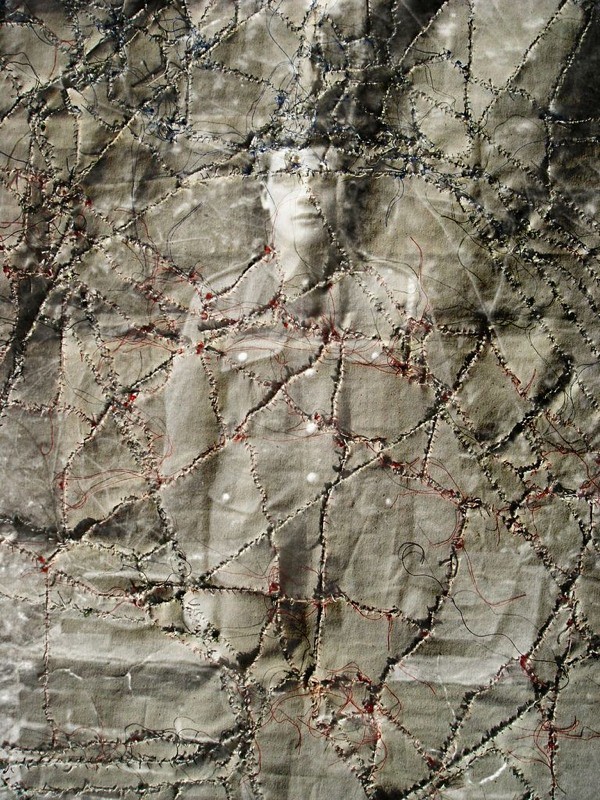
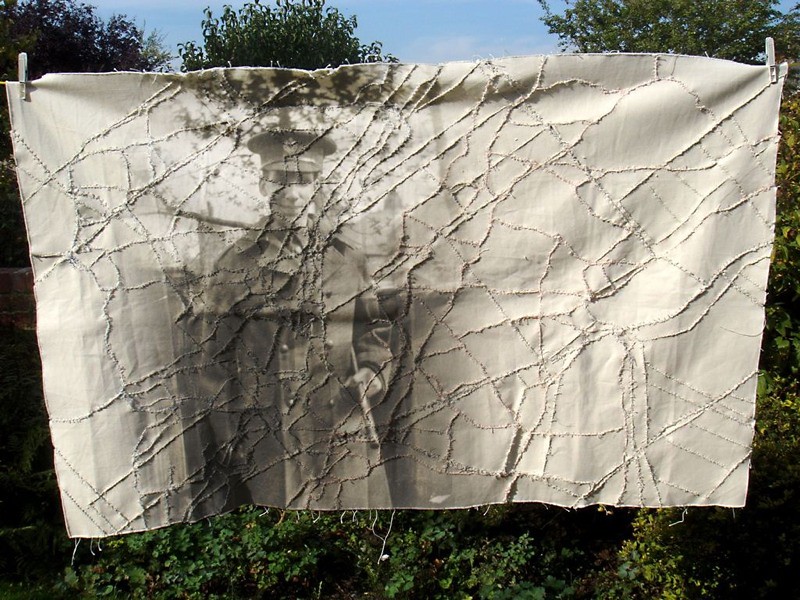
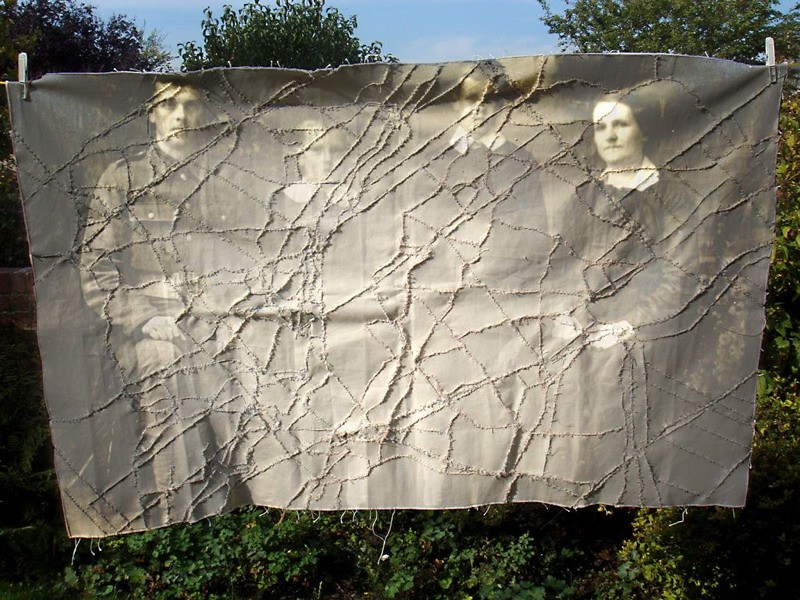
Having completed my last stitching project based on trench maps from World War I, I decided to try and superimpose some postcard portraits onto them, of soldiers headed for the Front. In the first (below) I used the photograph of a family which I ‘projected’ onto the map as shown hanging on a washing line.


What strikes me about this image as a whole, is the contrast between now and then as it exists in the contrast between the black and white of the photograph and the colour of the day. This colour, and the sense of the nowness of the present, helps strengthen my own empathetic feelings towards those long since lost – and all but forgotten – to history.

The fact the map hangs on a line like an item of washing, also reinforces the sense of domesticity which is a theme running through some of the postcard portraits, many of which were taken in the backyards of soldiers (or their parents), where evidence of the everydayness of domestic life is in abundance.

One such photograph shows a young couple who’ve recently been married. They stand, unsure of what the future brings, both wearing a look full of apprehension, staring into the lens of the camera, as if this ‘clock for seeing’ as Barthes once referred to them, really could show them the future.

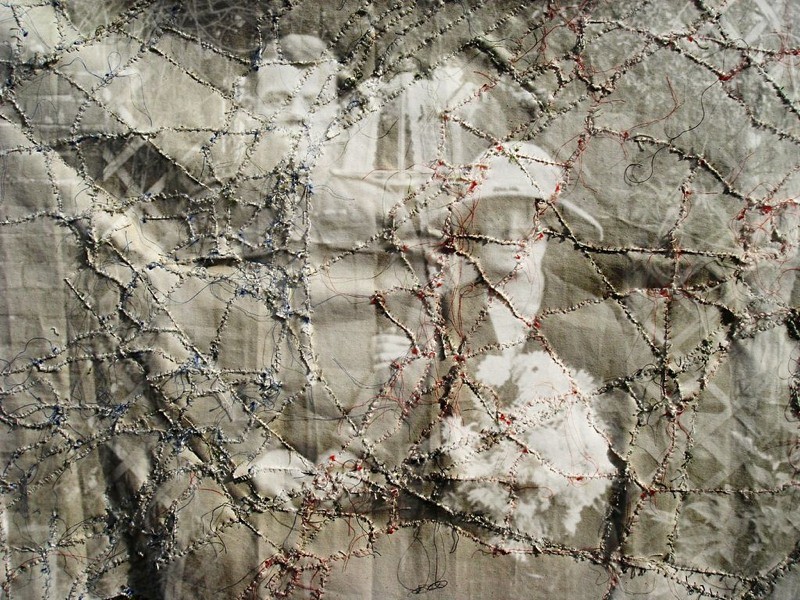
The image onto which their portrait has been projected shows the reverse side of the map, where the threads used to stitch the past together hang like the cut threads of countless lives.

Filed Under: World War I Tagged With: Empathy, Serre Palimpsest, Stitchwork, Trench Maps, World War I, WWI, WWI Postcards, WWI Postcards

  • « Previous Page
  • 1
  • 2
  • 3
  • 4
  • Next Page »

© Nicholas Hedges 2024

  • Facebook
  • Instagram
  • Twitter
  • YouTube

Copyright © 2025 · Outreach Pro on Genesis Framework · WordPress · Log in