Nicholas Hedges

Art, Writing and Research

  • Amazon
  • Behance
  • Facebook
  • Instagram
  • Pinterest
  • YouTube
  • Art
    • Digital
    • Drawing
    • Grids
      • Correspondence
      • The Wall
      • The Tourist
    • Ink on paper
      • Shadow Calligraphy
    • Installation
      • Murder
      • Echo
    • Painting
    • Patterns
    • Mixed Media
    • Photographic installation
      • St. Giles Fair 1908
      • Cornmarket 1907
      • Headington Hill 1903
      • Queen Street 1897
    • Research/Sketches
    • Stitched Work
      • Missded 1
      • Missded 2
      • Missded 3
      • Missded 4
    • Text Work
  • Blogs
    • Family History
    • Goethean Observations
    • Grief
    • Light Slowed But Never Stilled
    • Lists
    • Present Empathy
    • Shadow Calligraphy
    • Trees
    • Time
    • Walking Meditations
  • Video
  • Photography
    • Pillars of Snow
    • Creatures
    • The Trees
    • Snow
    • St. Giles Fair 1908
    • Cornmarket 1907
    • Headington Hill 1903
    • Queen Street 1897
    • Travel
  • Illustration and Design
  • Music
  • Projects
    • Dissonance and Rhyme
    • Design for an Heirloom
    • Backdrops
    • Shadow Calligraphy
  • Exhibitions
    • A Line Drawn in Water
      • Artwork
    • A Line Drawn in Water (Blog)
    • Mine the Mountain 3
      • Artwork
    • Mine the Mountain 2
      • Artwork
      • The Wall
    • The Woods, Breathing
      • Artwork
    • Snow
      • Artwork
    • Echo
      • Artwork
    • Murder
      • Artwork
    • The Tourist
    • Dreamcatcher
    • Mine the Mountain
      • Artwork
      • The Tourist
    • M8
    • The Gate
    • Creatures
      • Artwork
    • Residue
      • Artwork
    • A visit to Auschwitz
      • Artwork
  • Me
    • Artist’s Statement

Centenary

May 15, 2015 by Nicholas Hedges

100 years ago, on 8th May 1915, my great-great-uncle was killed in the Second Battle of Ypres.
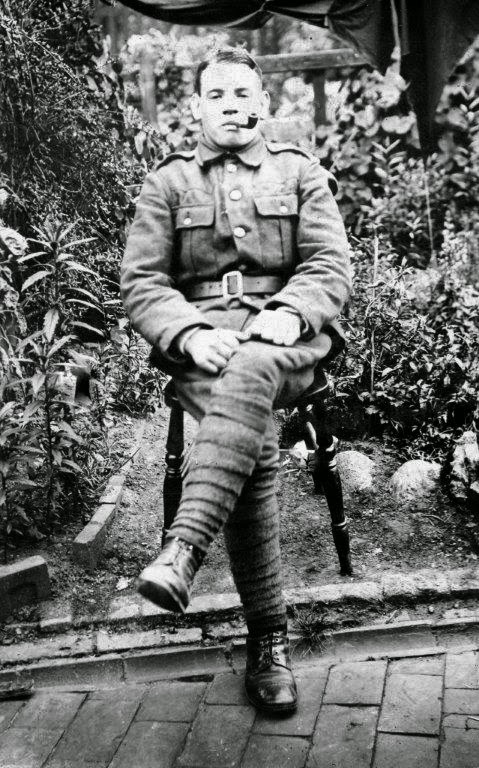

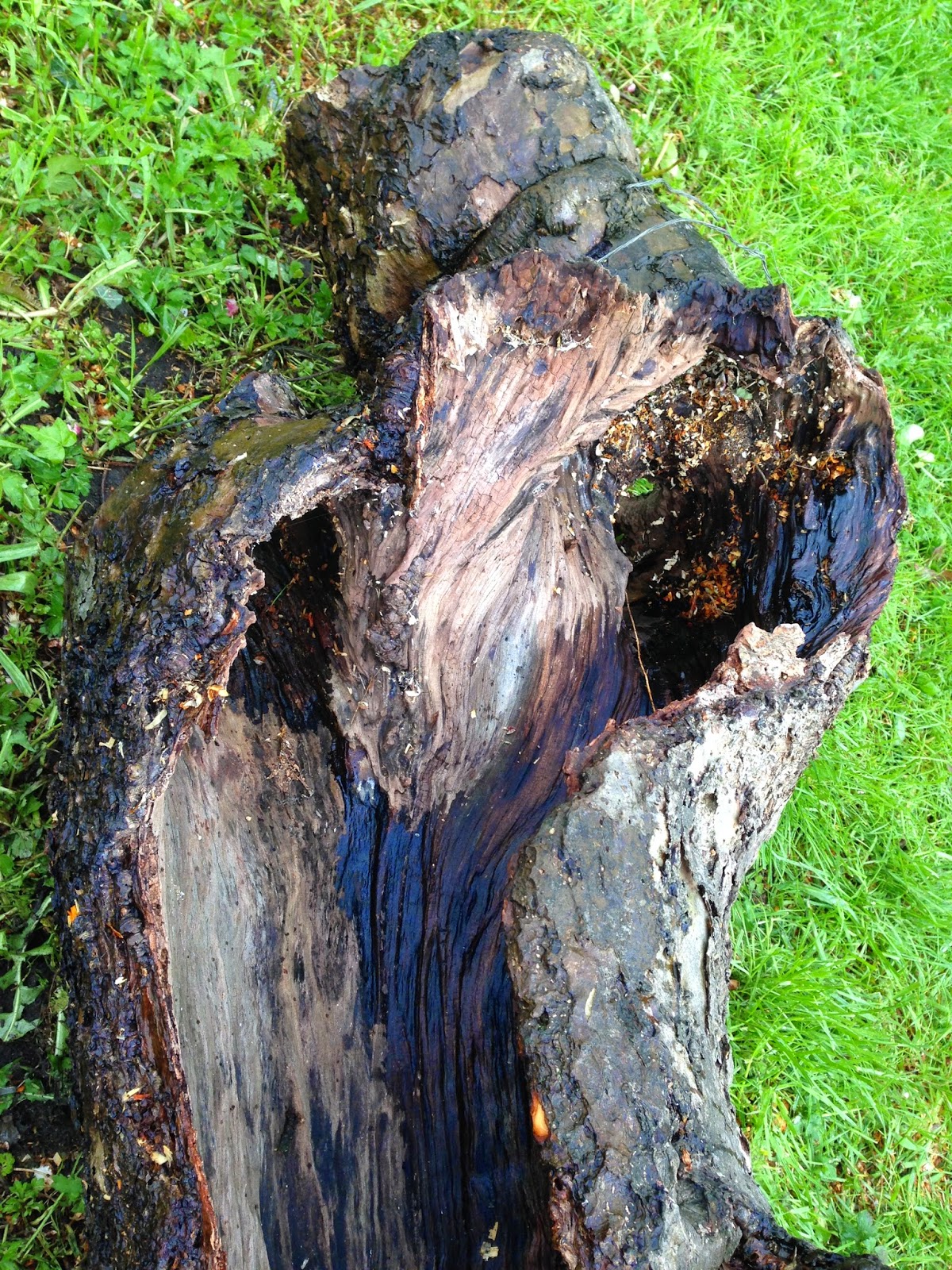
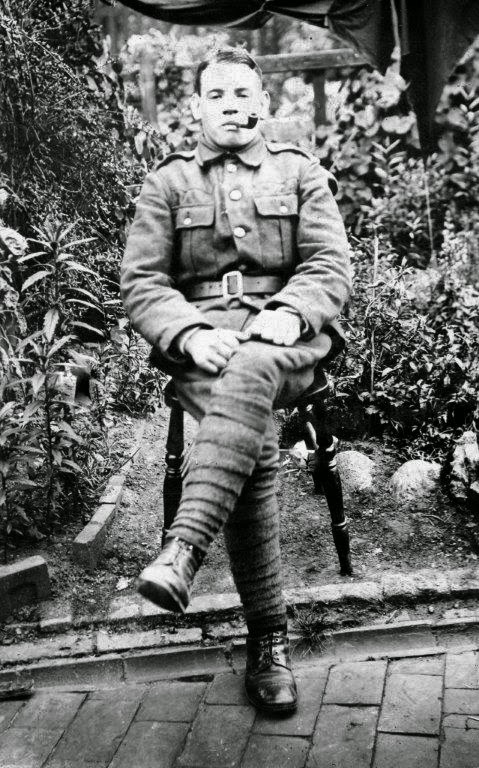
I’ve written before about this photograph and in particular its location; the idea of the garden as a shared space of memory and experience. Recently, in our own garden we had to have an apple tree taken down due to the fact it had been hollowed out by heart-rot and was in danger of toppling over. I asked for the trunk of the tree to be save in one piece, and when I saw it on the ground, I was reminded again of the idea of gardens as described above.

The trunk of the tree resembled a torso missing its head and limbs.
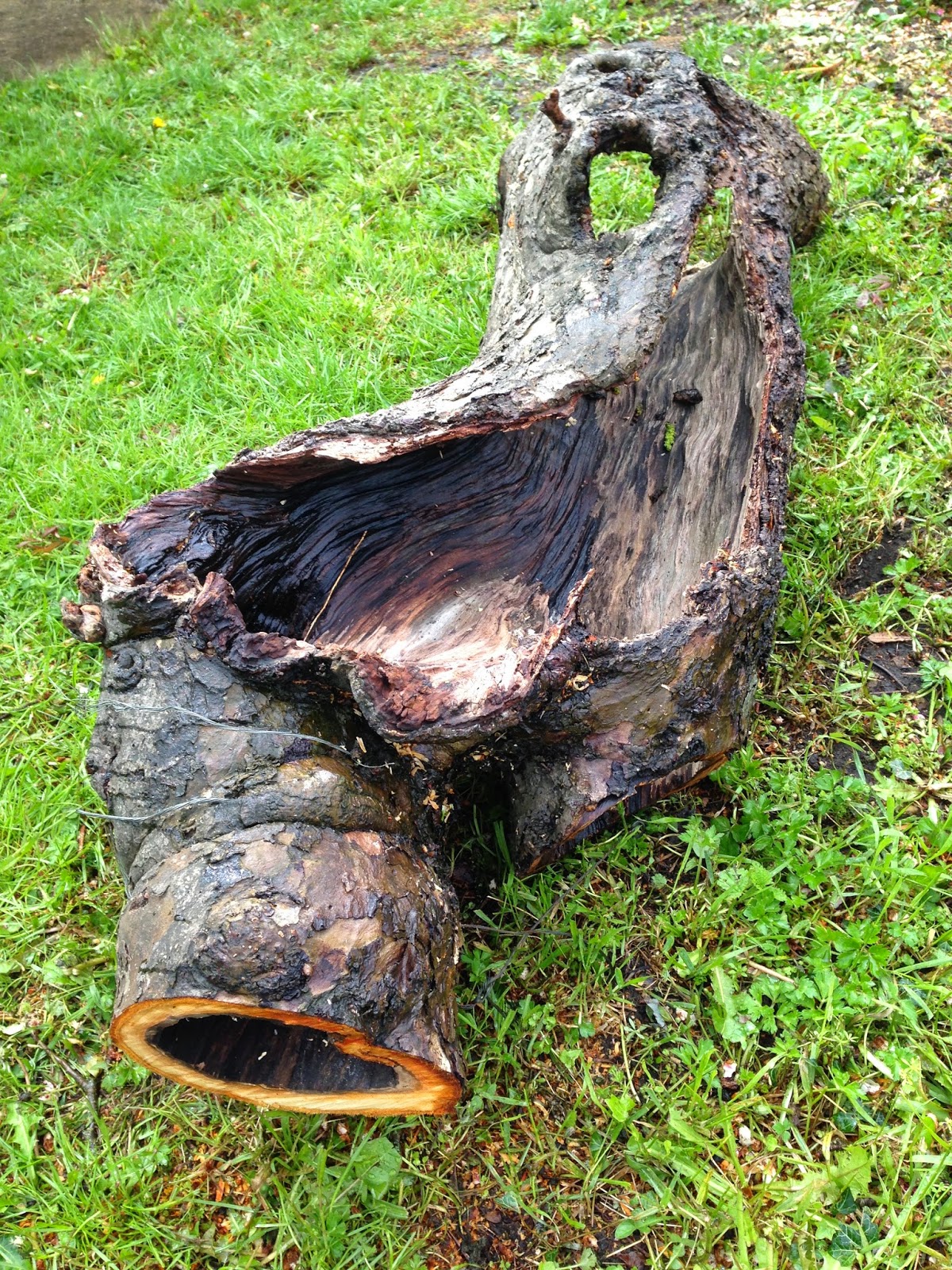

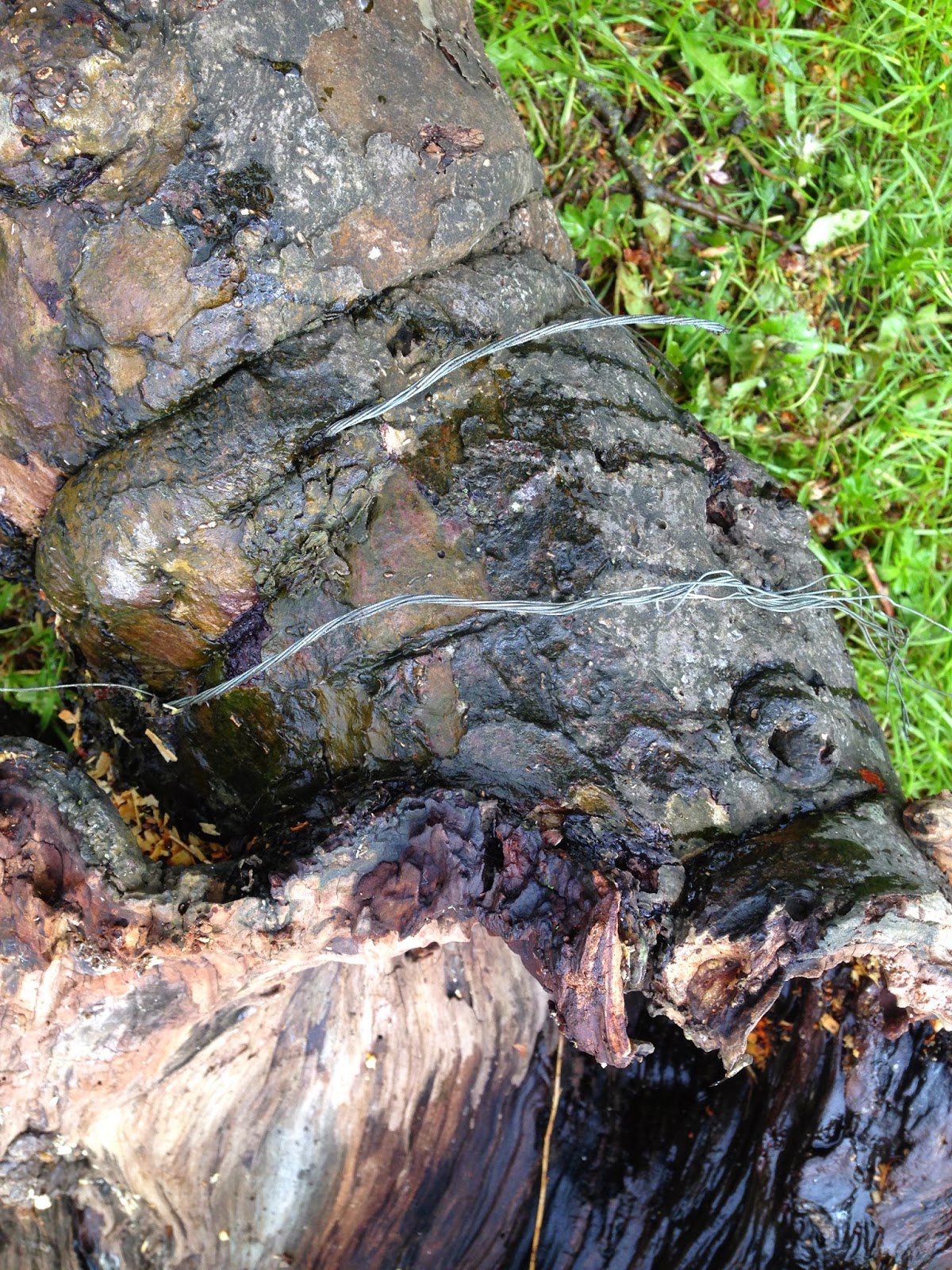
There was something interesting in the way the bark had grown over a length of wire which had been wrapped around the trunk years ago. It called to mind the cascading lengths of barbed wire rolled out in front of the trenches. It also seemed to turn the trunk into a corpse.

At the same time the tree Is symbolic of a lost idyll; that of the garden of childhood memories.
Filed Under: World War I Tagged With: Family History, Family Jones, Gardens, Jonah Rogers, World War I, WW1 Centenary, WWI, WWI Postcards

P is for Pastoral

March 13, 2015 by Nicholas Hedges

In her book H is for Hawk, Helen Macdonald writes [my paragraphing]:

“Long walks in the English countryside, often at night, were astonishingly popular in the 1930s. Rambling clubs published calendars of full moons, train companies laid on mystery trains to rural destinations, and when in 1932 the Southern Railway offered an excursion to a moonlit walk along the South Downs, expecting to sell forty or so tickets, one and a half thousand people turned up. 

The people setting out on these walks weren’t seeking to conquer peaks or test themselves against maps and miles. They were looking for a mystical communion with the land; they walked backwards in time to an imagined past suffused with magical, native glamour: to Merrie England, or to prehistoric England, pre-industrial visions that offered solace and safety to sorely troubled minds. For though railways and roads and a burgeoning market in countryside books had contributed to this movement, at heart it had grown out of the trauma of the Great War, and was flourishing in fear of the next. 

The critic Jed Esty has described this pastoral craze as one element in a wider movement of national cultural salvage in these years…”

This quote interested me in that it tied in with another by Paul Fussell who wrote:

“…if the opposite of war is peace, the opposite of experiencing moments of war is proposing moments of pastoral.”

Putting these together, I’m reminded as I’ve often written about before of my childhood, when I would create maps of imagined countries (which were in effect imagined pasts) in which I would mentally walk whilst out walking.

Filed Under: World War I Tagged With: Helen Macdonald, Maps, Pastoral, Paul Fussell, Walking, World War I, WWI

All Present Standing in Silence

November 21, 2014 by Nicholas Hedges

“On Sunday last, at the close of the evening service, the Society Meeting was held, and references to the death of Private Rogers were made by several members of the Church. Private Rogers’s mother is one of the oldest members of the Church. The meeting passed a vote of condolence with the relatives, all present standing in silence.”

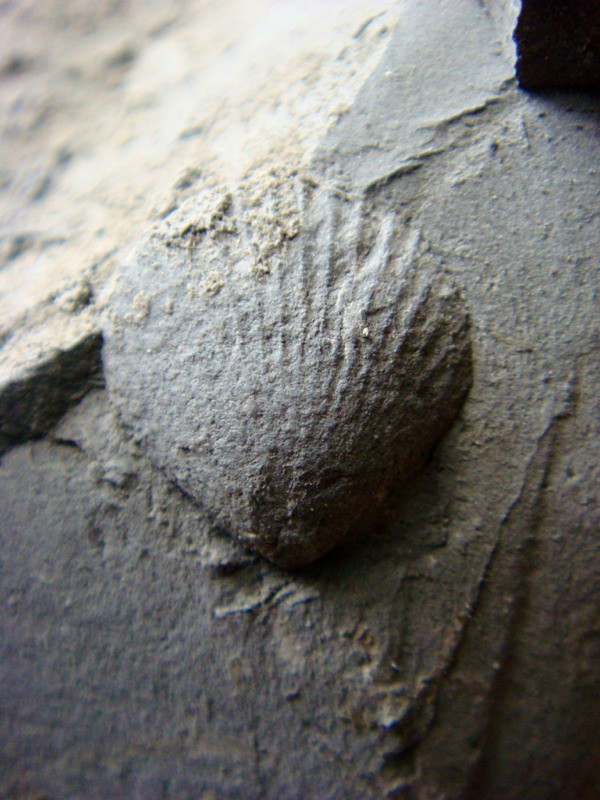
It’s strange to think these words have lain silent for 100 years – hidden like fossil-shells pressed between the pages of a cliff face. Recounting, as the fossil recalls a vanished sea, a contemplative scene of remembrance, the scene now remembers as much itself as it does the fallen soldier.

A few years ago, I happened upon a quote of Rilke’s, paraphrased as part of an exhibition. The ‘depth of time’ it said, was revealed more in human gestures than in archaeological remains or fossilised organisms. The gesture is a ‘fossil of movement’; it is, at the same time, the very mark of the fleeting present and of desire in which our future is formed’

Reading the passage with which I began, I am struck in particular by the last few words: ‘all present standing in silence.’ As I read the words, the quiet gestures of my ancestors 100 years ago are made visible, felt. Like the lines on a fossil-shell – such as that pictured below – recalling in their pattern the vanished seas in which their signified others once lived, so in the words of Jonah Rogers’ obituary, one can hear the faintest echoes of World War I, not the sound of the battlefield, but the speeches and reciprocal silence of those inside the chapel.

But it’s not only their gestures – those inside the chapel – which, as I read the text, I can see and feel. It’s also those of a time before the war; times which like the gestures released by the text, were no doubt remembered by the mourners, recalled by limbs, nerves and twitching muscles as well as the very fabric of the place in which they were standing. Perhaps those who made “references to the death of Private Rogers” were talking about such times.


The lines of the shell’s imprint, in the photograph above, were made 195 million years ago, when mankind was beyond even the furthest reaches of improbability. When I read the closing words of my great-great uncle’s obituary, I imagine those gathered inside the church, struggling within the limits of their imaginations, to comprehend that other place which, although certain, exists – within the human mind – beyond the reaches of improbability; death.

This obituary concerns the death of Jonah Rogers (pictured above) and yet all those inside the chapel are now dead; it is now as much about their deaths as his. And reading this text I am aware too of my own fragile existence. When that meeting took place, sometime in the summer of 1915 I did not exist. I too was also well beyond the reaches of improbability. And yet, it is in my imagination that this scene is taking place.

Filed Under: World War I Tagged With: Fossils, Gesture, Jonah Rogers, Obituary, Rilke, Silence, WW1 Centenary, WWI

Children’s Names

November 11, 2014 by Nicholas Hedges

Today is Armistice Day. A day on which the lists of names arrayed in marble and stone, on plaques and in books are at the forefront of many people’s thoughts. Names left behind, as Rilke so beautifully puts it, ‘as a child leaves off playing with a broken toy’.


It was whilst standing with my children on Remembrance Sunday, holding my son as we watched the laying of the wreathes on the town’s memorial that I thought of those names and how, once, they had indeed belonged to children.

Jonah Rogers was just 22 years old when he was killed near Ypres in 1915. At the end of his obituary there is a moving passage which reads:

“On Sunday last, at the close of the evening service, the Society Meeting was held, and references to the death of Private Rogers were made by several members of the Church. Private Rogers’s mother is one of the oldest members of the Church. The meeting passed a vote of condolence with the relatives, all present standing in silence.”

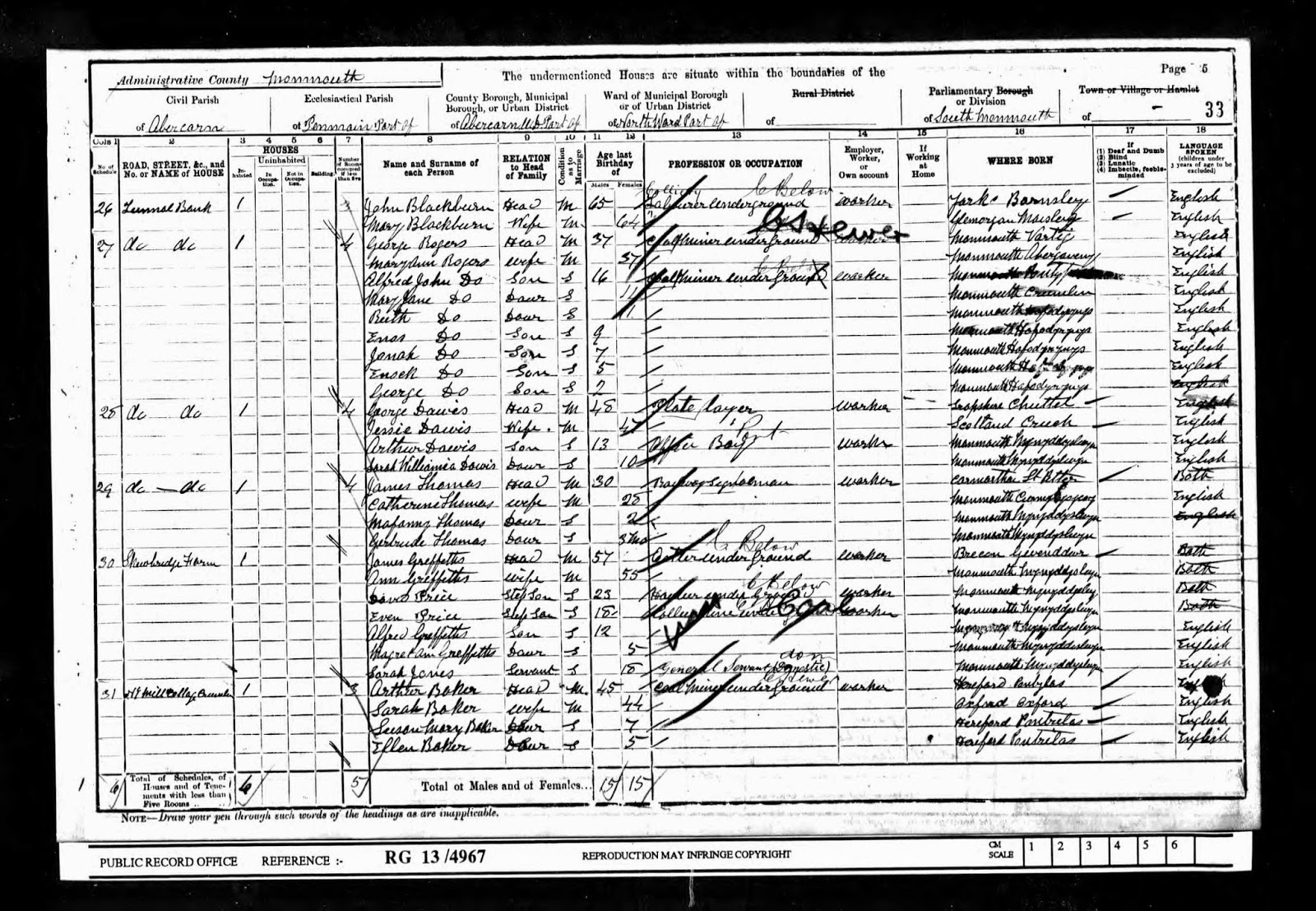
There is something about that silence which, almost 100 years on, speaks to me about Jonah. It’s as if one can hear the thoughts of his parents and siblings, remembering their son and brother in years passed; not the man dressed in his uniform, sitting on a chair as he poses in a garden for a photograph, but the boy who played in the garden of Tunnel Bank Cottage, Hafodyrynys.

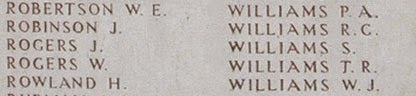
So whilst we remember the names on lists, like Jonah’s on the Menin Gate above, I want to think of two lists that are altogether different, not least because they contain the names of children – of Jonah aged 7 in 1901 and 17 in 1911.

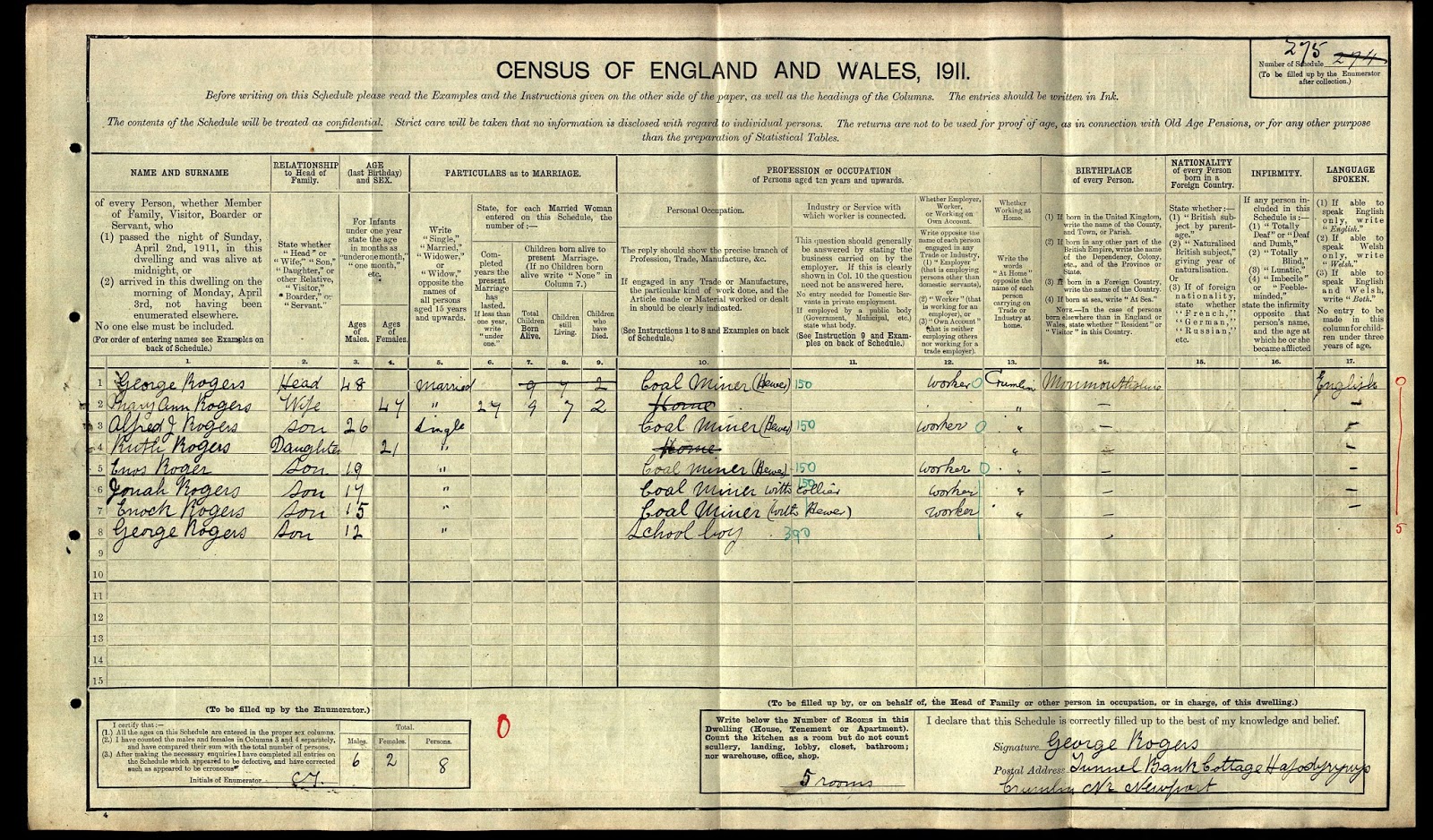
The census from 1901.

The census from 1911.

Filed Under: World War I Tagged With: Family Jones, Jonah Rogers, Silence, World War I, WW1 Centenary, WWI

Silence

September 24, 2014 by Nicholas Hedges

In a previous blog, looking at a photograph of Jonah Rogers, I mentioned Roland Barthes’ concept of Punctum; “…that accident which pricks me (but also bruises me, is poignant to me)…” In that photograph (reproduced below) I found it (that poignancy) in the left foot and the missing brick of the flower bed.

In my last blog, in the newspaper clipping reporting Jonah’s death, there is also an especially poignant moment – the clipping’s punctum as it were. And it’s this:

“On Sunday last, at the close of the evening service, the Society Meeting was held, and references to the death of Private Rogers were made by several members of the Church. Private Rogers’s mother is one of the oldest members of the Church. The meeting passed a vote of condolence with the relatives, all present standing in silence.”

It’s there in the last line: The meeting passed a vote of condolence with the relatives, all present standing in silence. 

The past is silent (as the tomb which it becomes) and that silence of the relatives, beating inside the church, is one hewn from that immense quietude; a grave cut into another grave. And yet it’s all the louder for it. Imagining the scene, one can hear the silence, punctuated by coughs, scrapes and fidgeting bodies (it’s amazing to think that my grandmother, then three years old, might have been there). There is something too in the silence which serves to throw into relief the image of my ancestors. The writing sets them apart from the rest of those gathered inside. They are silent and just as one imagines those everyday sounds from which silence is made, one can imagine those relatives, standing and recalling everyday things about Jonah… And it’s there that we can get a better picture of Jonah than we can from any photograph.

It’s almost as if the words in that penultimate paragraph, describe something entirely different. One can almost imagine the vote of condolence, the kind words spoken, coming only as murmurs to the relatives; all made shapeless by their mournful introspection.

Filed Under: World War I Tagged With: Family History, Family Jones, Jonah Rogers, Silence, World War I, WWI

Jonah Rogers – Newspaper Cutting

September 23, 2014 by Nicholas Hedges

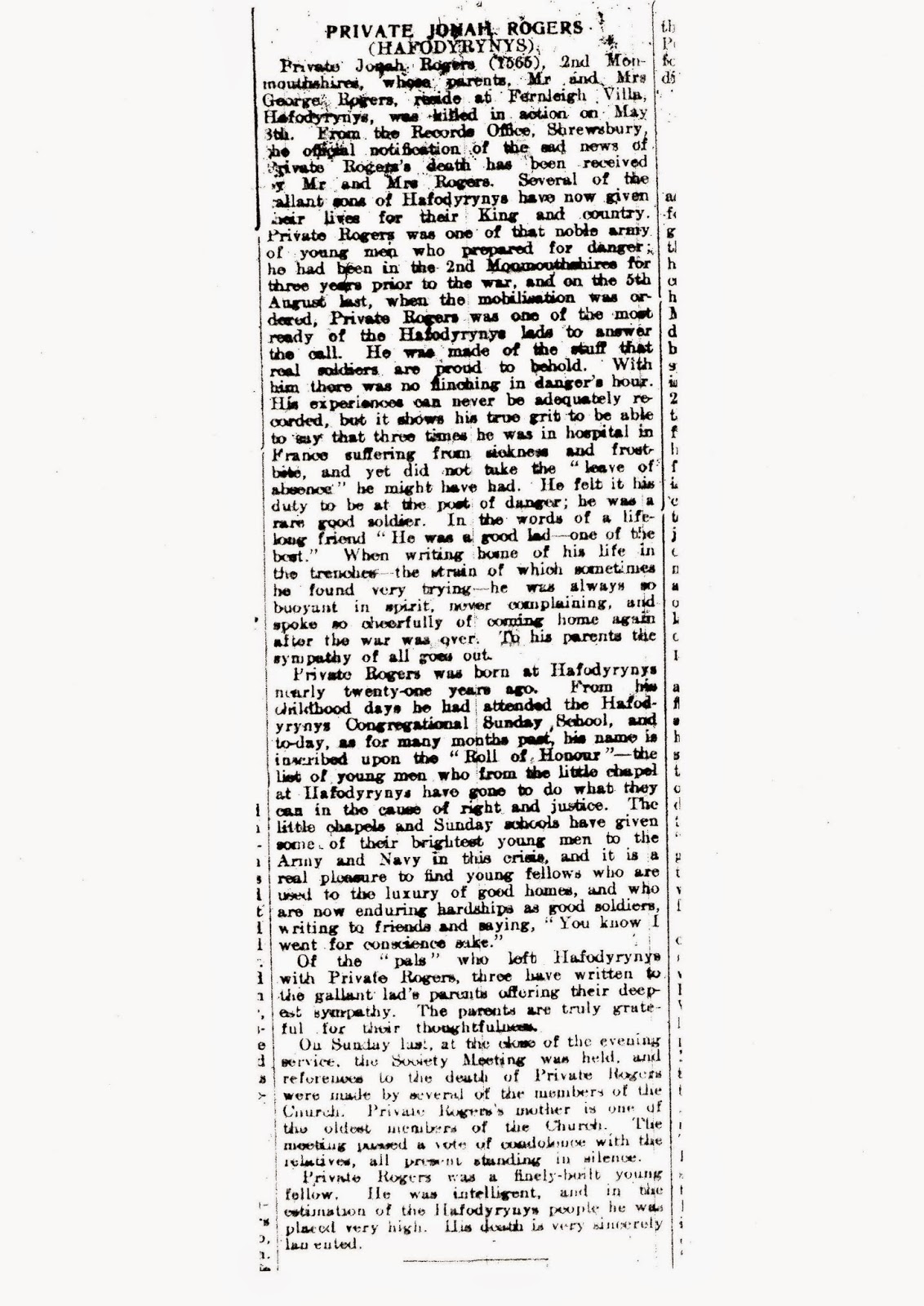
I am grateful to Keith Morgan for the following newspaper cutting recording the death of my great-great-uncle, Private Jonah Rogers in 1915. I have transcribed the story below.

PRIVATE JONAH ROGERS 
(HAFODYRYNYS)

Private Jonah Rogers (1565), 2nd Monmouthshires, whose parents, Mr. and Mrs. George Rogers reside at Fernleigh Vila, Hafodyrynys, was killed in action on May 8th. From the Records Office, Shrewsbury, the official notification of the sad news of Private Rogers’s death has been received by Mr. and Mrs. Rogers. Several of the gallant sons of Hafodyrynys have now given their lives for their King and country. Private Rogers was one of that noble army of young men who prepared for danger; he had been in the 2nd Monmouthshires for three years prior to the war and on the 5th August last, when the mobilisation was ordered, Private Rogers was one of the most ready of the Hafodyrynys lads to answer the call. He was made of the stuff that real soldiers are proud to behold. With him there was no flinching in danger’s hour. His experiences can never be adequately recorded, but it shows his true grit to be able to say that three times he was in hospital in France suffering from sickness and frostbite, and yet did not take the “leave of absence” he might have had. He felt it his duty to be at the post of danger; he was a rare good solider. In the words of a lifelong friend “He was a good lad – one of the best.” When writing home of his life in the trenches – the strain of which sometimes he found very trying – he was always so buoyant in spirit, never complaining, and spoke so cheerfully of coming home again after the war was over. To his parents the sympathy of all goes out.

Private Rogers was born at Hafodyrynys nearly twenty-one years ago. From his childhood days he had attended the Hafodyrynys Congregational Sunday school, and to-day, as for many months past, his name is inscribed upon the “Roll of Honour” – the list of young men who from the little chapel at Hafodyrynys have gone to do what they can in the cause of right and justice. The little chapels and Sunday schools have given some of their brightest young men to the Army and Navy in this crisis, and it is a real pleasure to find young fellows who are used to the luxury of good homes, and who are now enduring hardships as good soldiers, writing to friends and saying, “You know I went for conscience sake.”

Of the “pals” who left Hafodyrynys with Private Rogers, three have written to the gallant lad’s parents offering their deepest sympathy. The parents are truly grateful for their thoughtfulness.

On Sunday last, at the close of the evening service, the Society Meeting was held, and references to the death of Private Rogers were made by several members of the Church. Private Rogers’s mother is one of the oldest members of the Church. The meeting passed a vote of condolence with the relatives, all present standing in silence.

Private Rogers was a finely-built young fellow. He was intelligent, and in the estimation of the Hafodyrynys people he was placed very high. His death is very sincerely lamented.

Filed Under: World War I Tagged With: Jonah Rogers, Silence, World War I, WW1 Centenary, WWI

Photography: The Colour of Shadows

August 25, 2014 by Nicholas Hedges

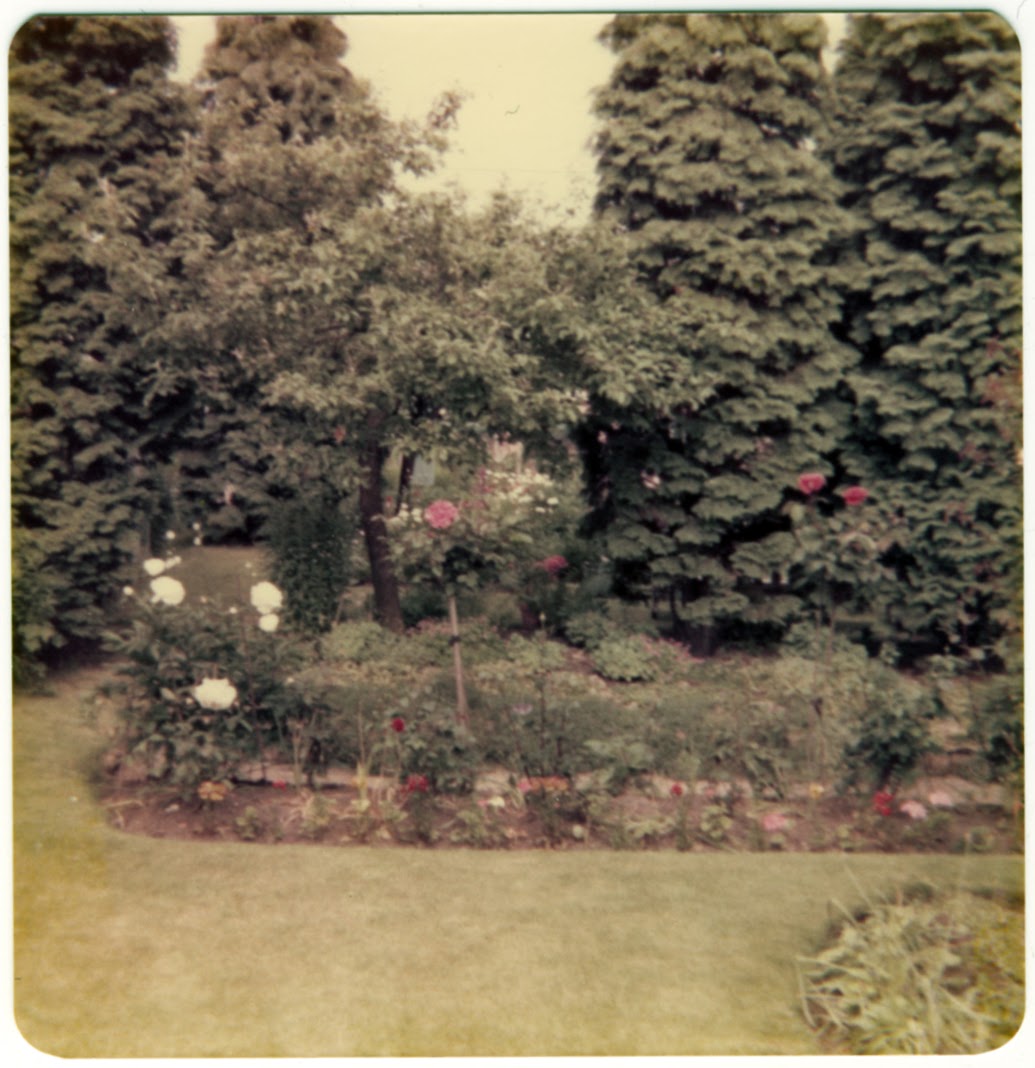
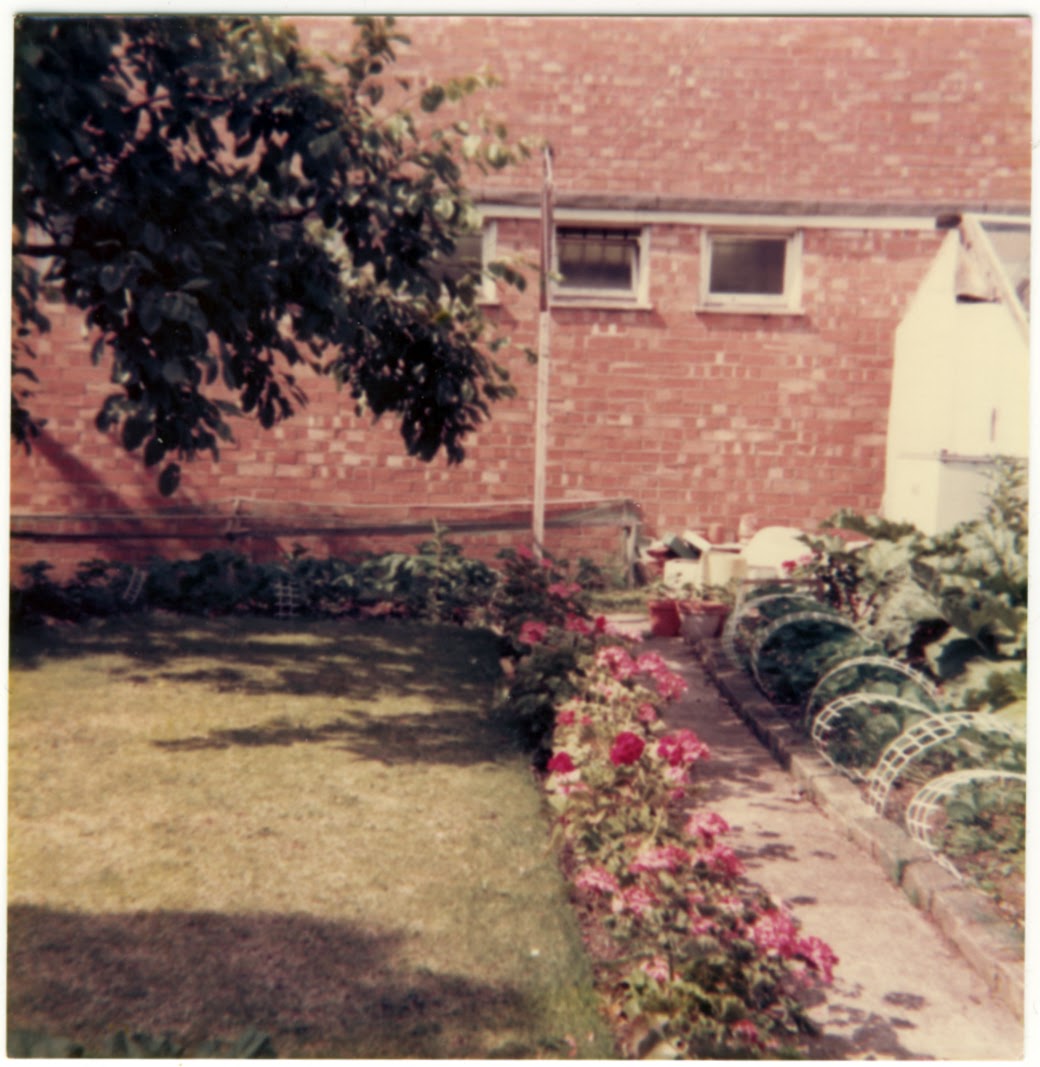
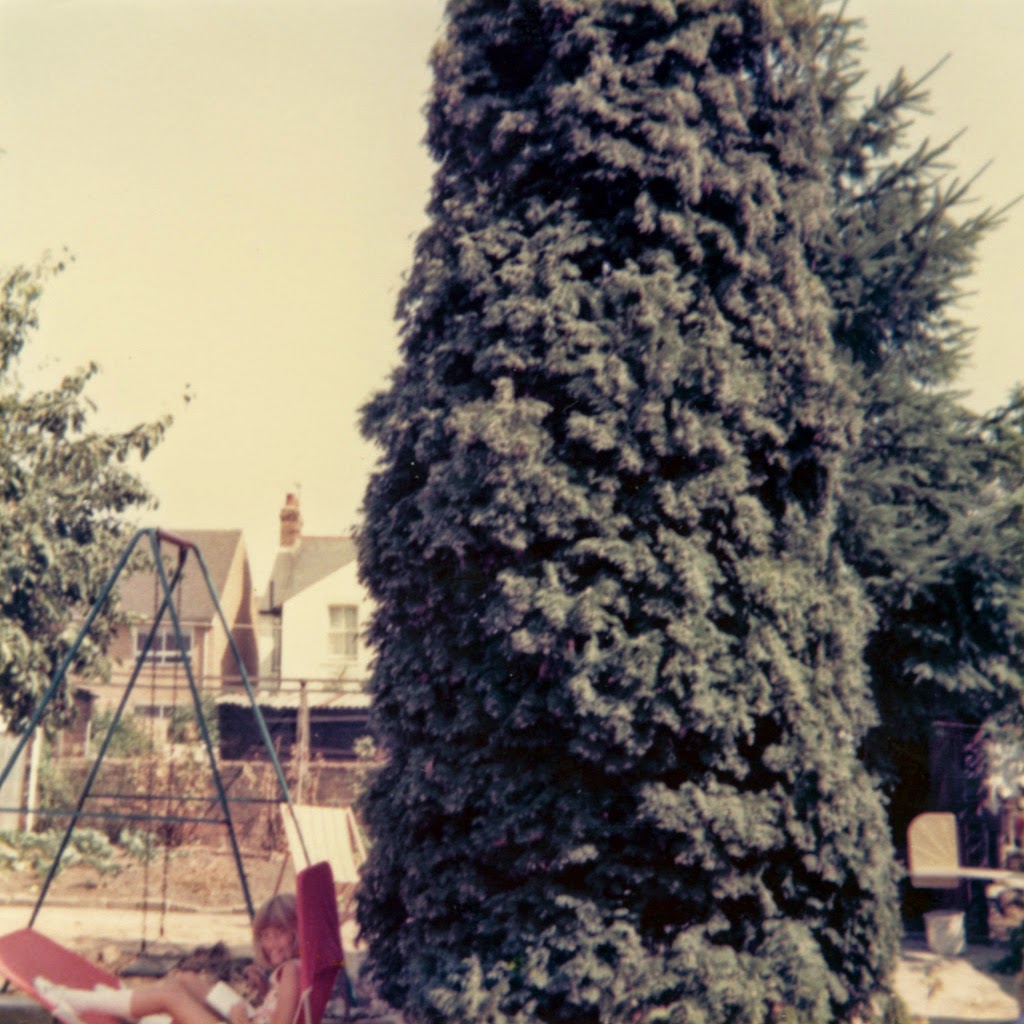
As shown in a previous blog, this is a picture of my grandparents’ garden in Headington, Oxford, taken sometime in the mid 1970s.

This was, growing up, a very special place for me…

…I remember well my grandad’s vegetable patch, the plastic greenhouse and the Victoria plum tree (all shown above);  the brick outhouses with their giant spiders (in which the red tricycle was kept); the large apple tree and the wooden lattice-work gate. I remember too the giant Christmas tree (pictured below behind the fir tree), planted – when the tree was considerably smaller – when my mum was a girl.

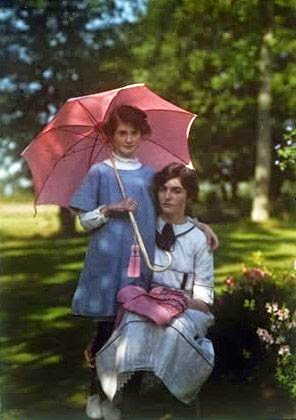
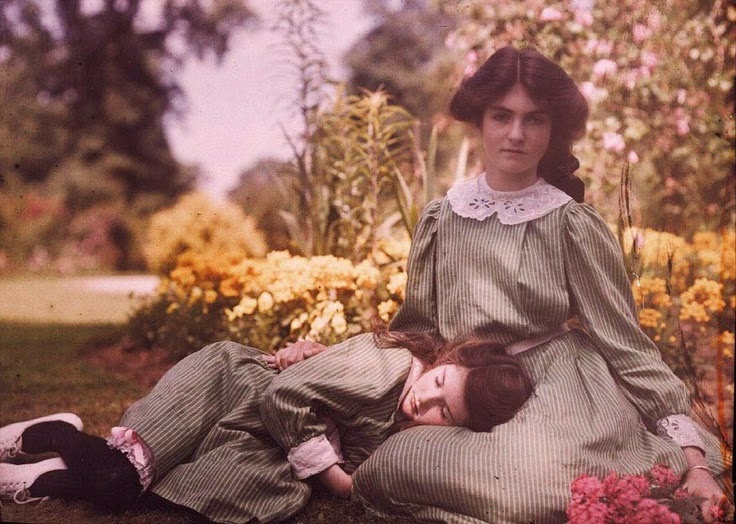
The following two photographs were also taken in Headington, some 60 years earlier at the time of the First World War (or a few years before – the second photograph is possibly 1908). They are by one of the pioneers of autochrome photography, Ethelreda Laing and show her two daughters, Janet and Iris.

What’s interesting about these photographs is that they were taken in what is now Bury Knowle Park at a time when the house was a private residence. What makes them even more interesting is the fact they are in colour. But what is it about a colour photograph that enables me to better connect with the referent? (This is a subject I started to discuss before: see ‘Empathy and the First World War (Part 2)‘.)

The photograph below shows me and my brother in the garden of the house where we grew up, also in Headington.

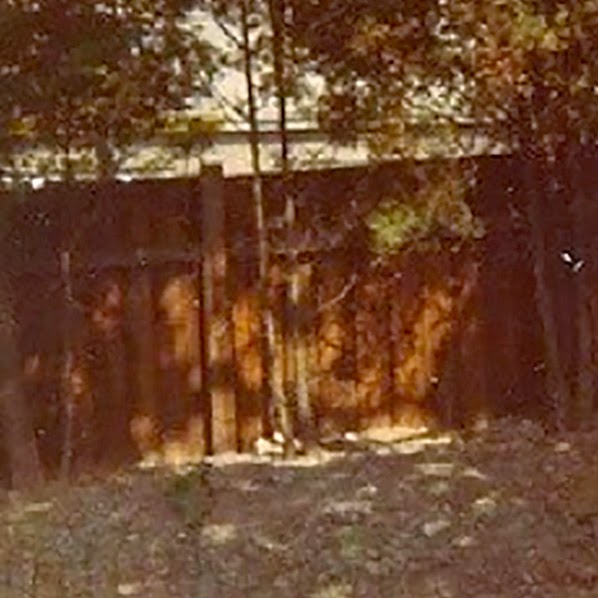
This photograph which, like the photograph from Bury Knowle, shows two children enjoying the garden, was taken c.1974. Looking at it now, I’m drawn to the patterns of light and shadow on the fence behind.
The fences were always well creosoted and when the sun shone they exuded a wonderful smell. I can smell it now, just by looking at this image, but what is more, I can feel the pattern of sun and shadow, the sensation of the cool dry earth below – the smell of the firs. It’s a synaesthetic image in that I can almost taste the pattern.
If the image above was in black and white, I doubt I’d have the same response. When we look at an image in black and white, it seems to me that our memory is stimulated less than if the image is in colour. When looking at photographs taken long before we were born this hardly seems to matter, but when looking at a colour image – such as that of the girls above – taken long ago, something strange seems to happen.
It seems to me, that a colour photograph is more likely to trigger a physical response than one which is black and white.
First of all, I’ll look at a selection of black and white images.
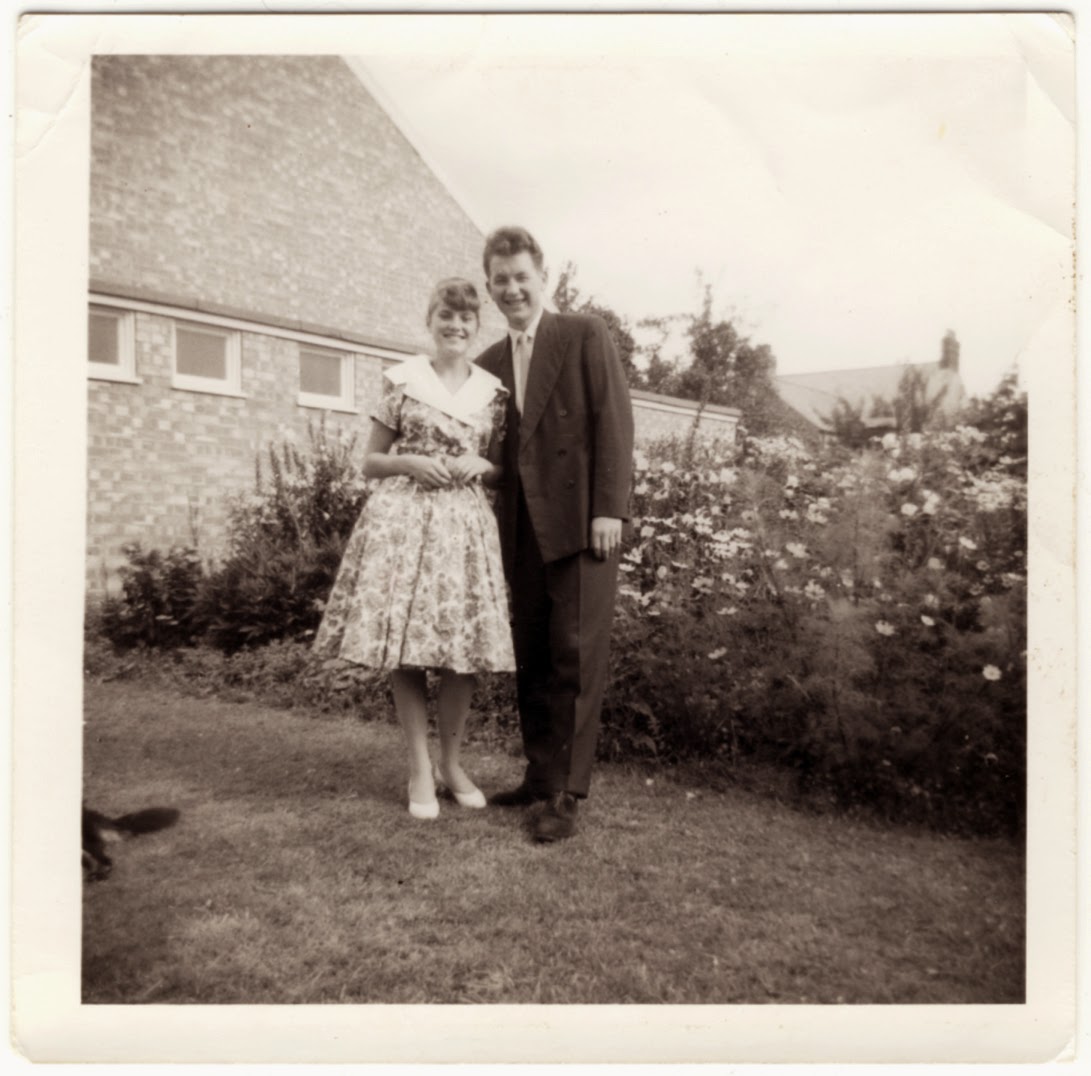
The image below is of my mum and dad. It was taken c.1960 in my grandparents’ garden (as can be gleaned from the windows – seen in the second image above).
This image, of course, elicits a response in that I recognise my parents and the location. But that is all.
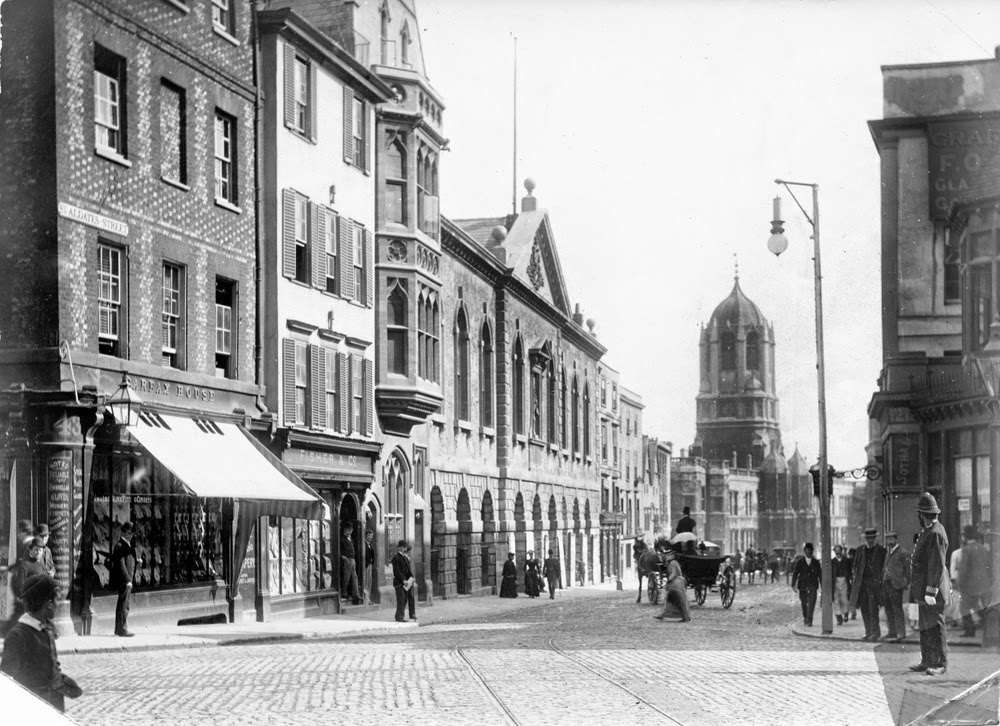
The next image was taken at Carfax, Oxford in 1893 and shows St. Aldates looking south towards Christ Church.
The image also elicits a response in that although most of the buildings shown have all disappeared, Tom Tower – in the distance – is still standing. I recognise the location as one I have experienced countless times before – although of course I could not have experienced what is shown in the photograph. 
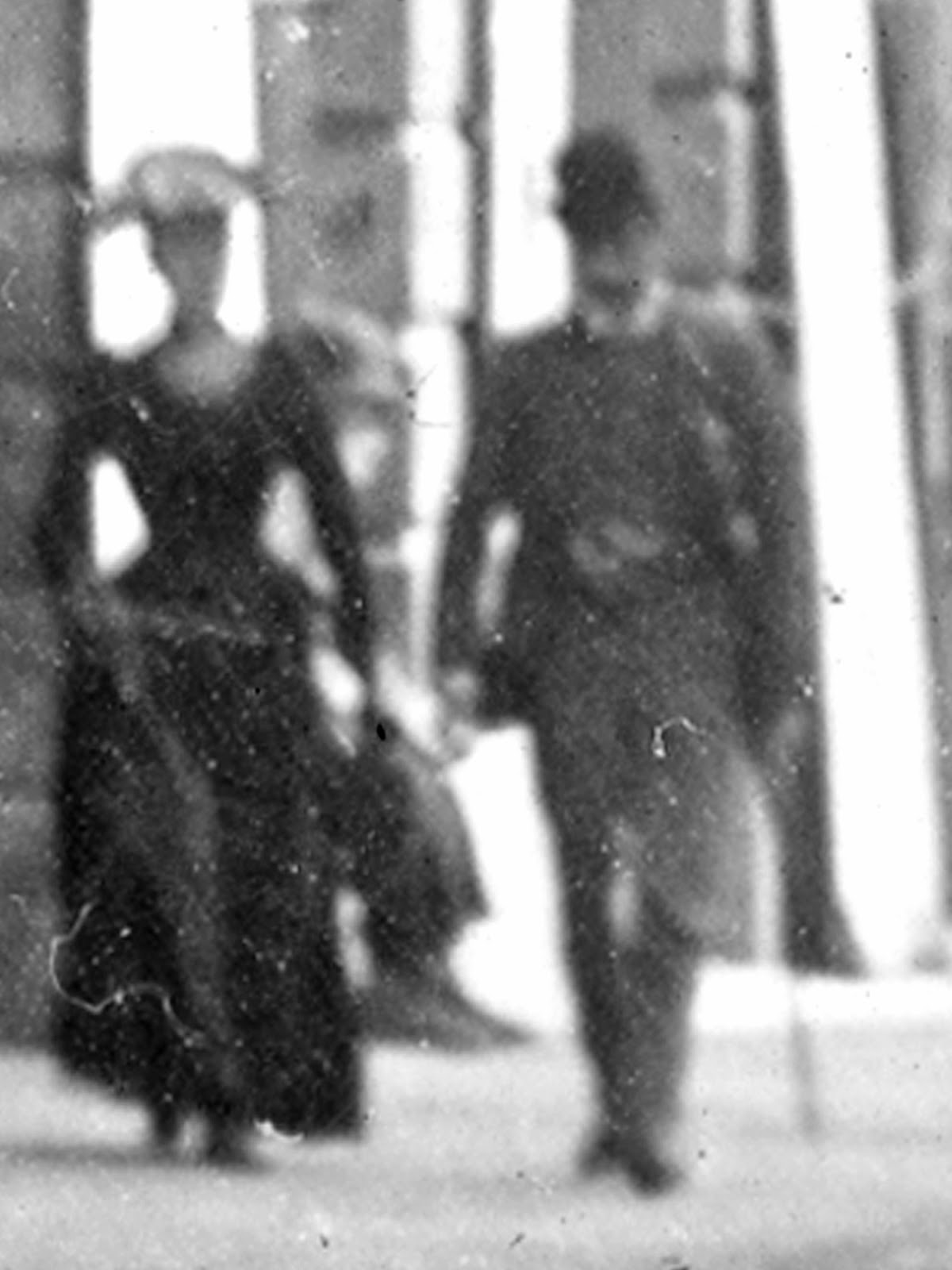
Looking at the photo more closely, one does begin to establish an empathetic response based on more than just recognition.
Again this is something I have talked about before but here, empathy is established through the movement of the man and woman. They have no idea that they are being photographed, an obliviousness which is vital for an empathetic response. It is an image of now, of the everyday. We can easily imagine the man and woman, unfrozen by time and the camera’s shutter, continuing up past the old Town Hall towards Carfax, deep in conversation.
But how do old photographs differ when they are in colour?
This photograph was taken 13 years after the one above and what strikes me about it, is the fact that like the one above, taken in my garden, I can feel it. And what I feel is the temperature difference between the shadows and the lawn where the sun is shining. I can imagine the texture of the grass and the tree, I can hear the wind and feel the air; and yet this photograph was taken 108 years ago. The shadows are living – they are not dead as they can often be in black and white photographs; they have a colour.
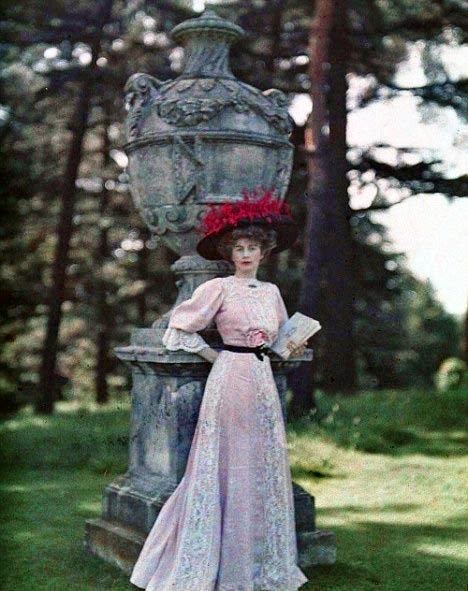
The same can be said of the next image, taken during the First World War.
One can feel the light, the heat of the sun; the cool of the shadows. Again the shadows live. The image too is abundant with texture which I know would be absent if the image was in black and white.
It seems to me that I’m responding to these images kinaesthetically; my mind, memories and experience read them, which is why perhaps I find often these old colour photographs – while amazing – so unsettling. My mind reads them, my body feels them and yet when the image was taken, I did not exist. There is a conflict between existence and non-existence; the age old tussle between life and death.
There is no time in the past; all those things shown in the images above are as much a part of the past as each other. All there is to separate them is a rule against which, the increasing improbability of my coming into being is measured.

Filed Under: World War I Tagged With: Autochromes, Colour, Colour Photography, Gardens, Shadows, Synaesthesia, WWI

Fragments – New WWI Work

August 25, 2014 by Nicholas Hedges

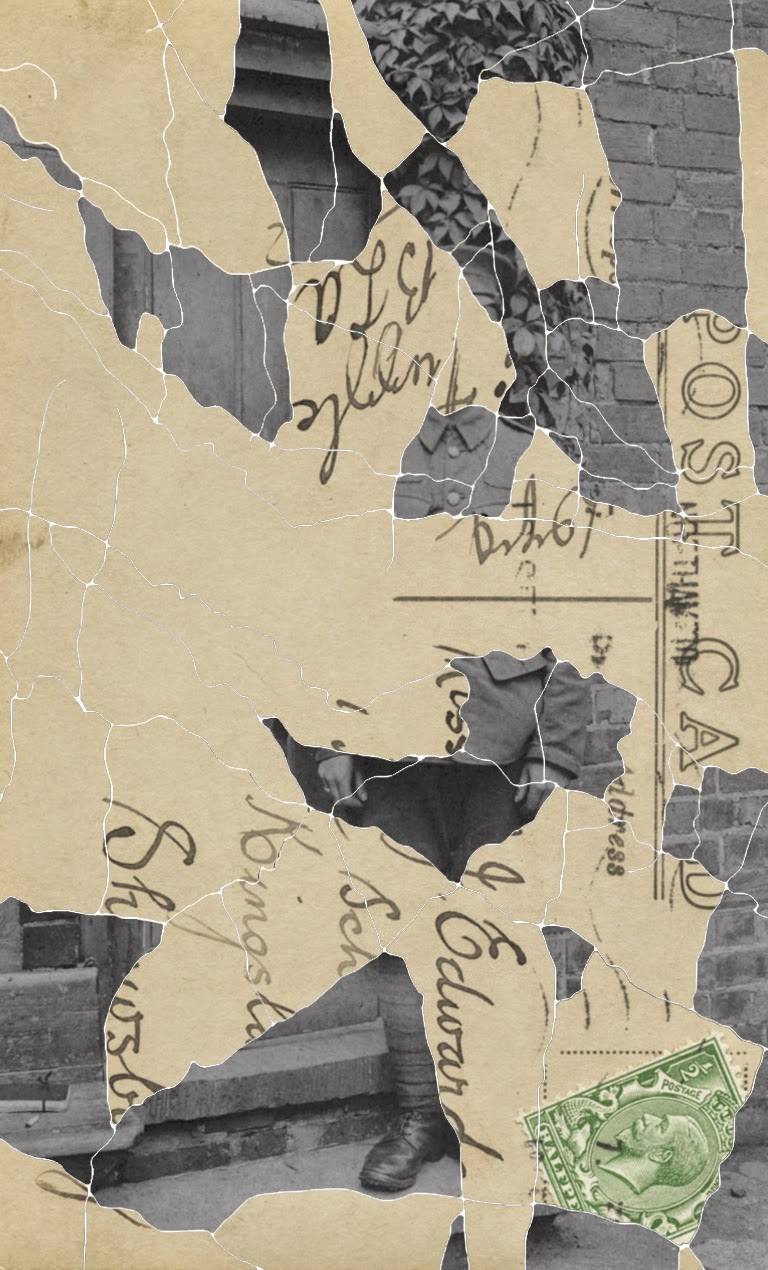
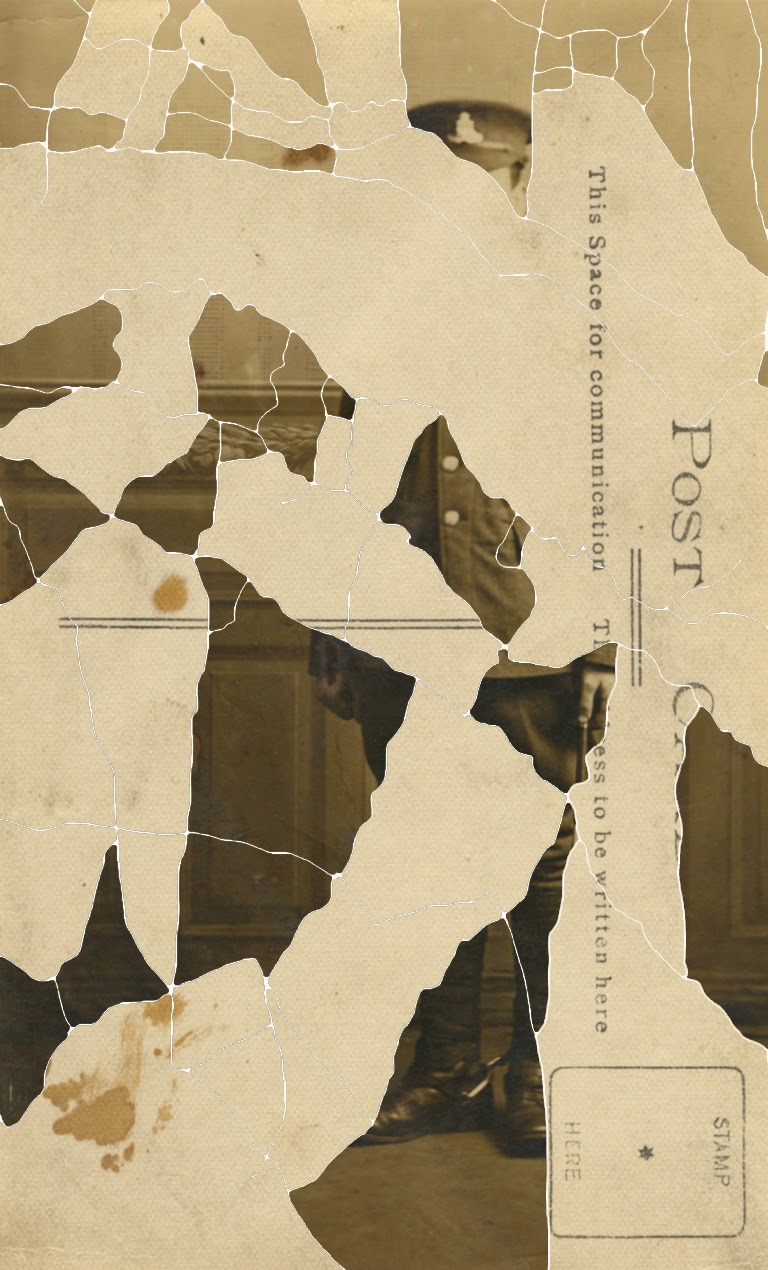
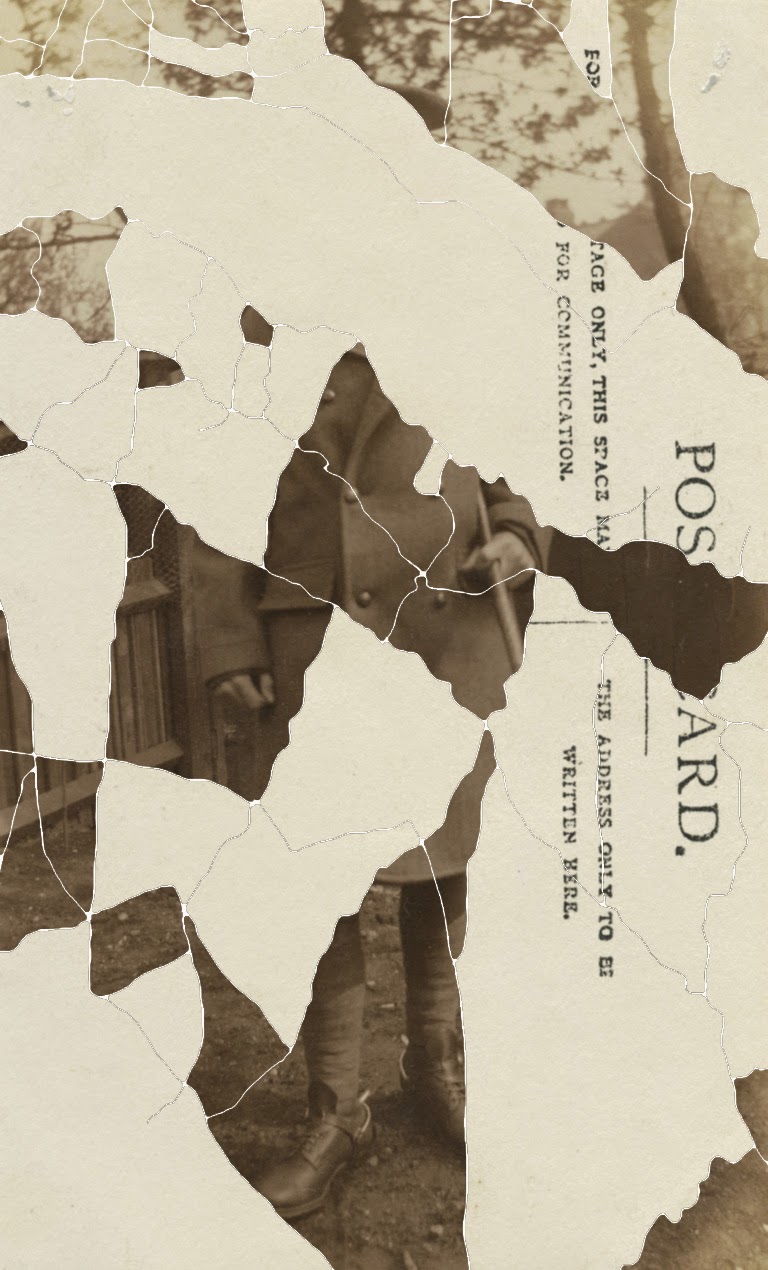
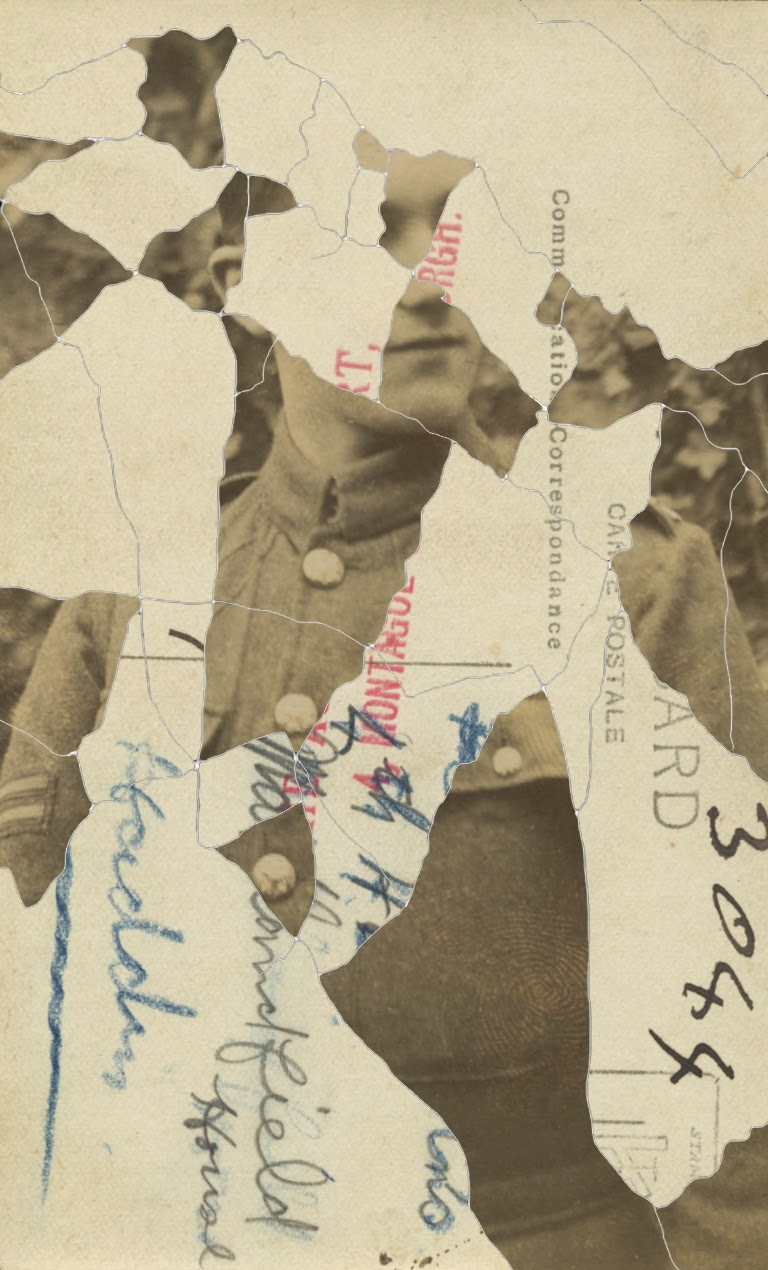
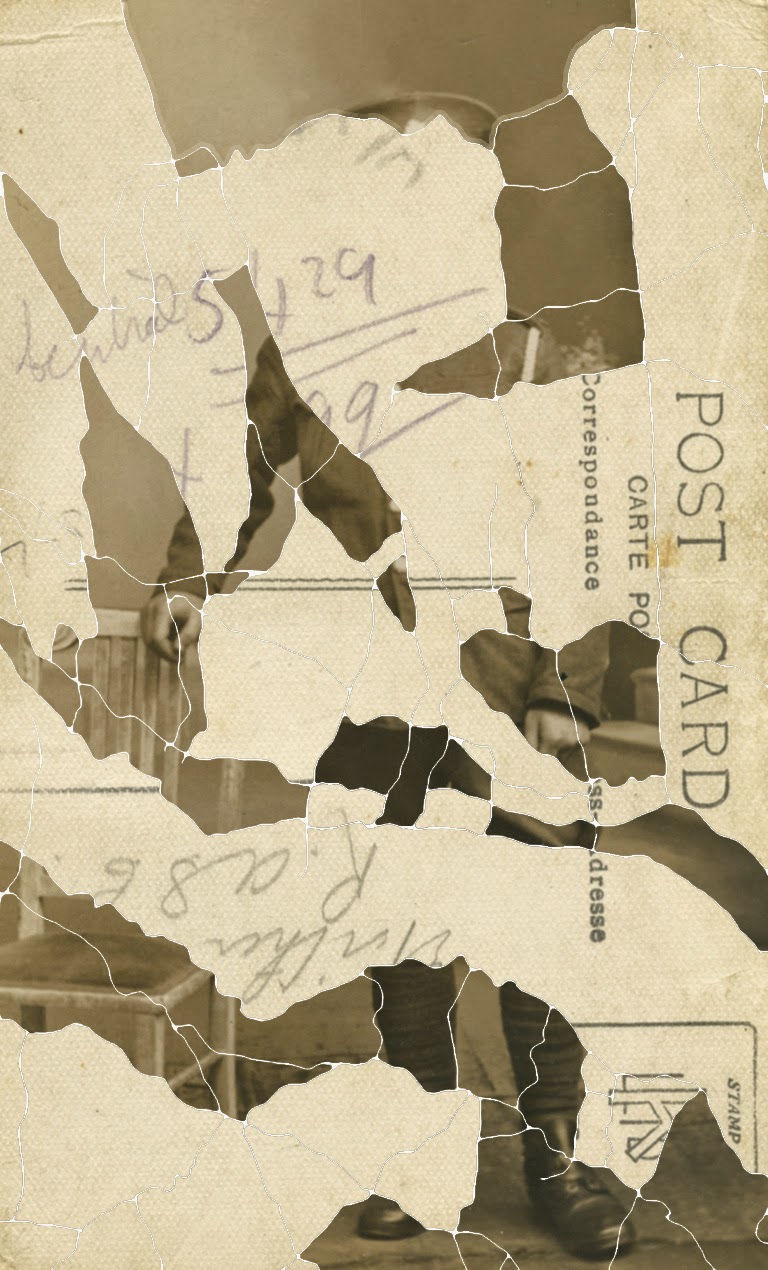
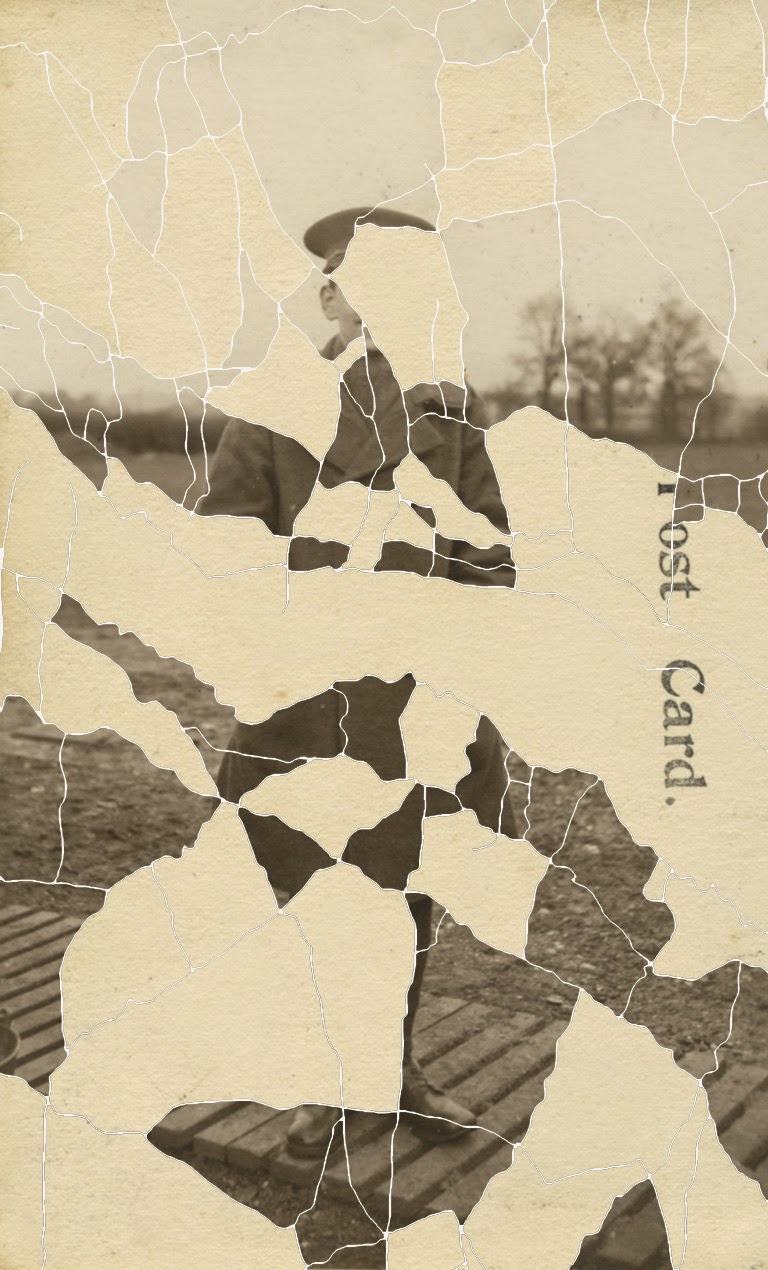
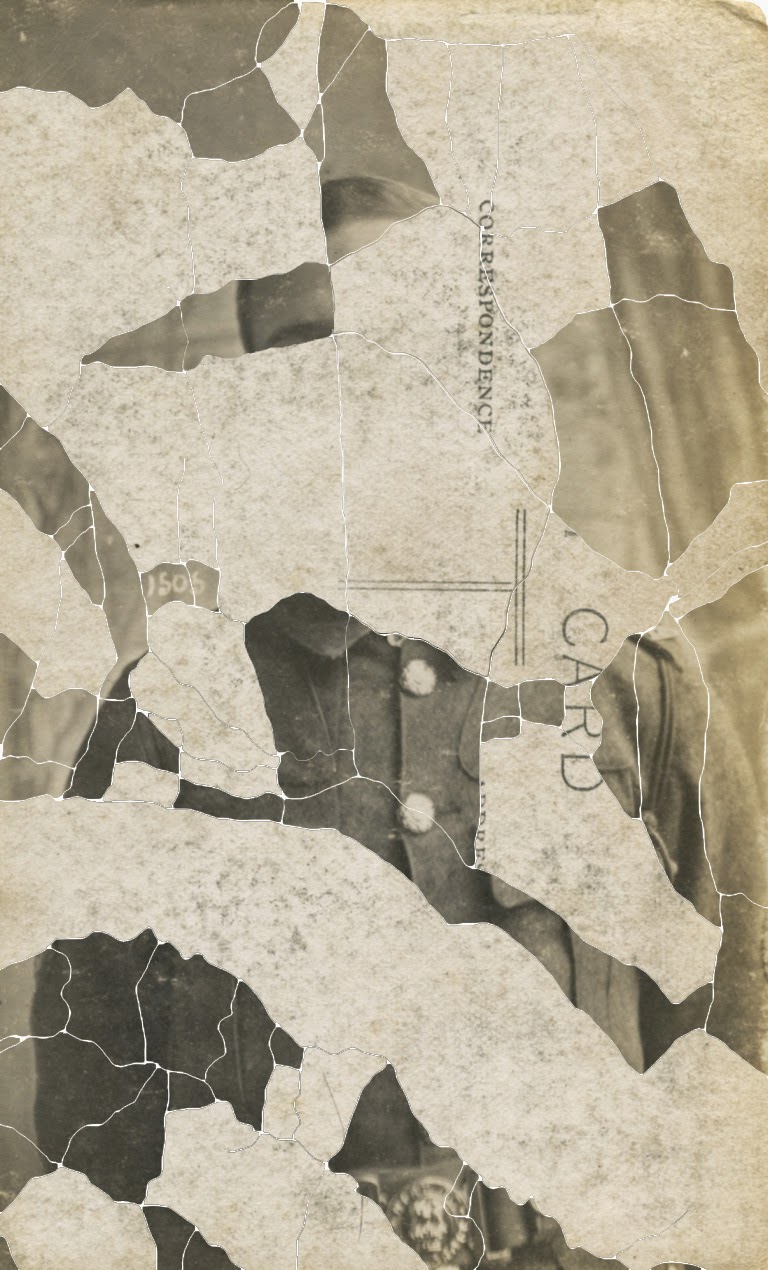
Below are a series of images inspired by my collection of World War I postcards (‘Fragments I-VII).

Filed Under: World War I Tagged With: Art, Postcards, World War I, WW1 Centenary, WWI, WWI Postcards

Jonah Rogers – New Photograph

August 12, 2014 by Nicholas Hedges

It’s been six years since I discovered my great-great-uncle, Jonah Rogers, killed in action on May 8th 1915. In that time I have also been collecting World War I postcards, portraits of soldiers taken before they left for the Front. Now, thanks to a descendent of Jonah’s sister Ruth (my grandmother was the daughter of another sister, Mary Jane) I have, in this centenary year, been sent a postcard of Jonah Rogers. The quality of the reproduction isn’t high but I’m hoping to see the original soon.

Filed Under: World War I Tagged With: Gardens, Jonah Rogers, WWI, WWI Postcards

4th August 2014

August 4, 2014 by Nicholas Hedges

“I never saw them again; they were hurried once more, fast as corks on a millstream, without complaint into the bond service of destruction.” Edmund Blunden

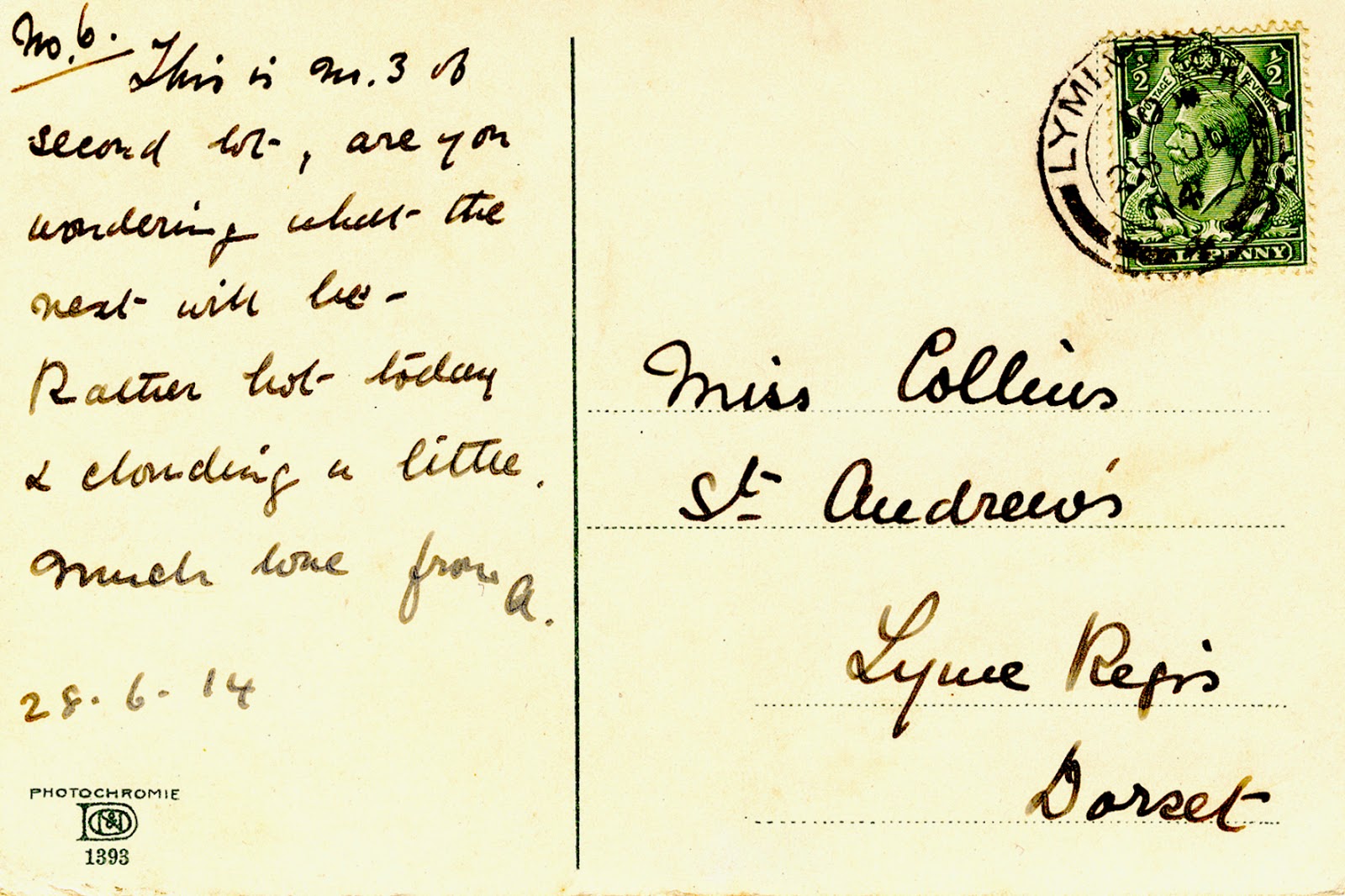
Thinking of my post from 28th June 2014, I wonder if ‘A’ was one like them.

Filed Under: World War I Tagged With: WW1 Centenary, WWI

Her Privates We

July 1, 2014 by Nicholas Hedges

Whilst reading Frederic Manning’s wonderful novel ‘Her Privates We’, a couple of quotes leapt off the page, particularly as regards my work and the ongoing theme of empathising with past individuals.

“Then for a moment the general sense of loss would become focused on one individual name, while some meagre details would be given by witnesses of the man’s fate; and after that he, too, faded into the past.”

“And they were gone again, the unknown shadows, gone almost as quickly and as inconspicuously as bats into the dusk; and they would all go like that ultimately, as they were gathering to go now, migrants with no abiding place, whirled up on the wind of some irresistible impulse. What would be left of them soon would be no more than a little flitting memory in some twilit mind.”

Filed Under: World War I Tagged With: Books, Frederic Manning, Her Privates We, Literature, World War I, WWI

With love from ‘A’ – 100 Years on

June 28, 2014 by Nicholas Hedges

With the centenary of the start of World War I (August 4th) almost upon us, today’s date is no less significant. 28th June 1914 was the day on which Archduke Franz Ferdinand was assassinated in Sarajevo, thus precipitating a chain of events which was to lead to the chaos and carnage of World War I.

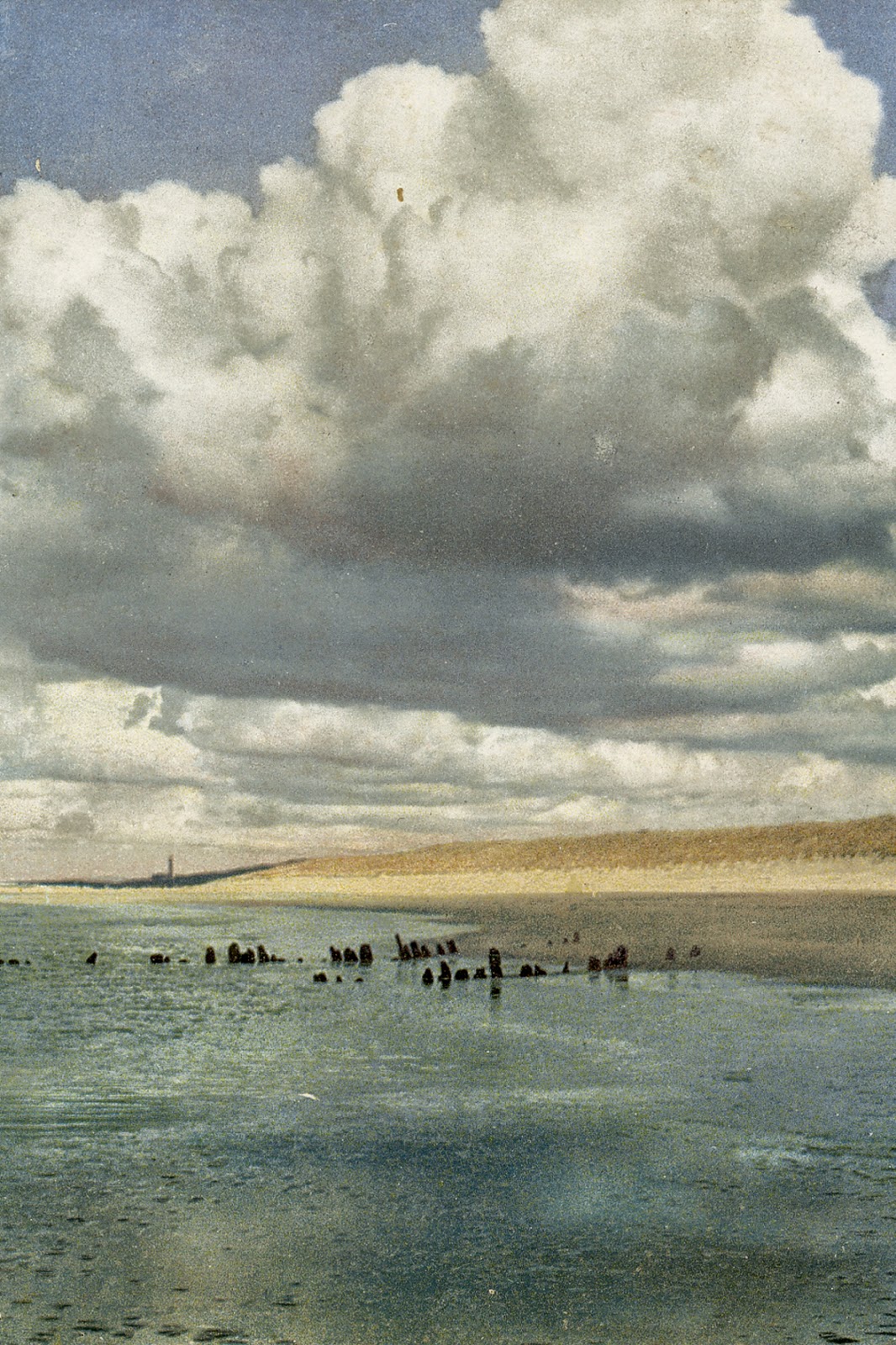
The postcard shown below (both front and reverse) was written on that day, exactly 100 years ago.

Filed Under: World War I Tagged With: Postcards, World War I, WWI, WWI, WWI Postcards

Irony

June 11, 2014 by Nicholas Hedges

“The irony which memory associates with the events, little as well as great, of the First World War has become as inseparable element of the general vision of war in our time.”

Paul Fussell
The Great War and Modern Memory

Filed Under: World War I Tagged With: Paul Fussell, World War I, WWI

A Backdrop to Eternity

October 25, 2013 by Nicholas Hedges

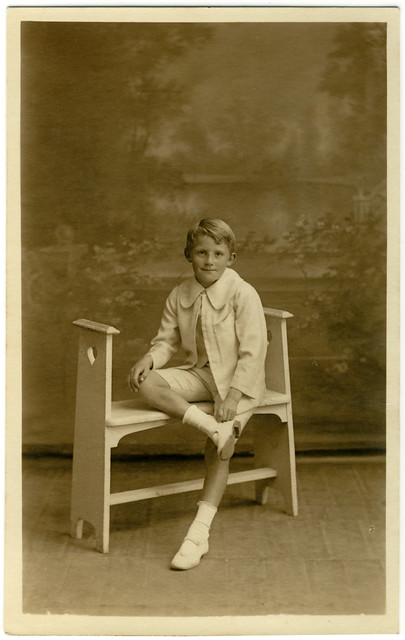
Below is a typical, early 20th century studio portrait. The subject – a boy – sits on a prop. Behind him hangs a backdrop on which is painted an idealised scene – something like the view of a country estate with trees, balcony and lake.

When I first got the photo (as part of a job-lot of old photographs) I gave it a cursory look and that was that. I hardly noticed the backdrop behind, which is perhaps the point.

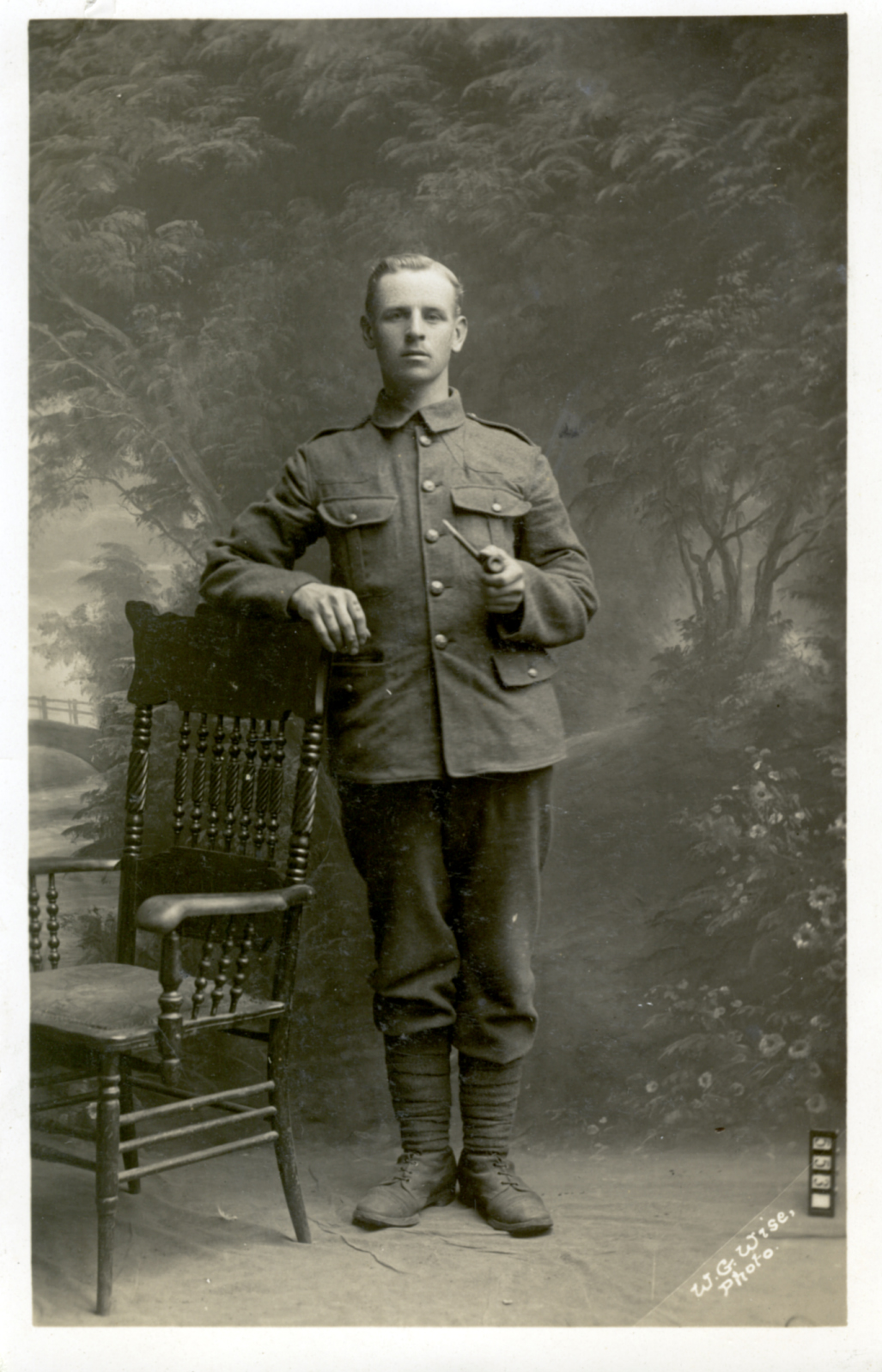
The image below is another studio portrait from around the same time. The subject rests upon a prop – in this case a chair. Behind him hangs a backdrop – a bucolic scene replete with woodland path, flowers, river and bridge – and again, when I first looked at the photograph – given to me as part of a collection of around 200 – I hardly noticed the backdrop; my eyes were drawn only to the soldier. But as I began analysing the backdrops of other postcards in the collection, becoming more aware of the differences between studio-based portraits, and those taken in more informal, often domestic settings, I started to think more about these backdrops.

The photograph is of course that of a soldier bound for the Front in the Great War of 1914-18, and it is this context which makes the backdrop interesting. In the picture of the boy above, the backdrop – when considered a little more deeply – becomes an aspirational image; that of the boy’s idealised future: the image’s inherent sense of distance perhaps adding to this idea. Which is probably what makes the backdrop in the image of the soldier so provocative. For many of those bound for the battlefields of Ypres and The Somme, the future had cast distance aside and charged headlong towards them, dragging with it, that erstwhile companion of their old age – death.
It is strange to think that this image of the soldier, clutching his pipe, his arm resting on the wooden chair, might be all that remains of this man. An insignificant moment in front of the camera is all that’s left to tell of a whole life lived.
Death of course is the ultimate distance. As Sir Thomas Browne wrote:

“We whose generations are ordained in this setting part of time, are providentially taken off from such imaginations. And being necessitated to eye the remaining particle of futurity, are naturally constituted unto thoughts of the next world, and cannot excusably decline the consideration of that duration, which maketh Pyramids pillars of snow, and all that’s past a moment.”

World War 1 Serviceman

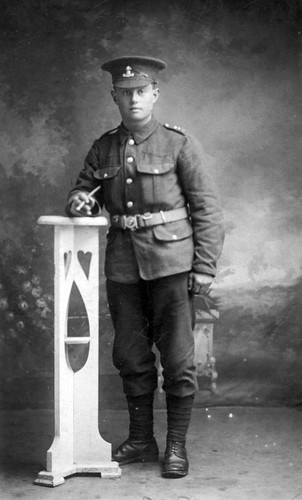
That click of the camera, that moment, would, when pressed against the face of eternity, encompass all that has so far come and gone since the Universe began. It’s a concept quite impossible for the human mind to hold and so – in some – the void is filled with God and an afterlife. After the war, many of the bereaved tried to fill the void left in their lives through Spiritualism, attempting to contact their loved ones in an eternity filled perhaps with pre-war, picture-postcard landscapes; trees, fields, flowers, rivers and so on. And in many ways, the photographs of the soldiers above, become not images of insignificant moments made before their departure, but images of their place in an eternal moment once the war was done.

After the war, the sense of emptiness must have been everywhere. Every insignificant moment – barely acknowledged before the war – now pregnant with a pervasive sense of incomprehensible loss. The world was outwardly the same, shifted just a little, but it had taken the lives of millions to push it there.

Filed Under: Trees, World War I Tagged With: WWI, WWI Postcards

Empathy and the First World War (Part 2)

March 4, 2011 by Nicholas Hedges

This image was taken almost a year after the end of the First World War, on August 27th 1919 and is unusual in that, unlike the vast majority of photographs from this period, it’s in colour. What it shares with the image I described previously however – see Empathy and the First World War (Part 1) – is that it shows the process of burying the dead, long after the last guns have fired. We don’t see any corpses here, but we see the holes in the ground. On the right hand side, three crosses mark recent burials, while seven men look at the camera. A man sitting down by the tree seems to be writing.
With this photograph I can, perhaps not surprisingly, engage much more easily on an empathetic level compared with that I discussed previously. The colour and the texture of the soil, which the colour conveys, means that I can almost feel the ground. I can imagine walking into it, whereas with the previous image I’m kept at a distance. This photograph is about the soil and if the previous image seemed to me, to be about the thin divide between life and death, this image seems to say much the same thing. Like the (living) men in the previous image, these men are also all dead. The graves they’ve dug could easily be their own. But whereas the men in the previous image were looking at the bodies of their fallen friends, the gravediggers in this image, look directly at us. This is what awaits us all.

In many respects then, this image is, for me, quite an unsettling one – even more than that I discussed before. ‘The men that we’re about to bury,’ the men seem to be saying, ‘are just like you’. (I was reminded, looking at this image, of the fact that when soldiers marched to the front, just before an attack, they sometimes saw the huge pits dug in preparation for their deaths.)

But would such interpretations arise if the image were black and white? My feeling is they wouldn’t and having made the image monochrome, I can see why.

For one thing, it ceases to be an image into which I feel I could step; it remains very much an image. Colour delineates distance, whereas in black and white the image seems a lot flatter. (I have to point out that I’m not suggesting black and white photos don’t convey distance, or that this colour image, made black and white accurately reflects how it would look if shot on black and white film. The autochrome process, when made black and white like this, makes the resulting image very grainy). Secondly, the men no longer seem to be looking at me, but rather at the photographer. But most importantly, as a black and white image, this picture ceases to be about the soil, the substance which, during the war claimed both the living and the dead. The distinction between the soil and the grass is lost – a distinction which, in light of the time (1919), is especially poignant. Nature returns to reclaim what’s hers, and following the gaze of the diggers, that includes us. World War I was about, amongst many other things, the soil and vast ruination – and that is what this image is about. The grass comes as it comes upon castles ruined over long stretches of time. But as Christopher Woodward writes in his book In Ruins ‘Nature’s agent does not have to be flowers or fig-trees. In the case of Van Gogh, it was the miserable mud of Flanders.’

I see this photograph very much in terms of its texture. I see its weight, as if its colour makes it synaesthetic: I see in terms of touch. Empathy – as regards an empathetic understanding of this image – does not mean I empathise with what these men were doing when the photograph was taken, or what they too had certainly endured in the preceding years of war, but that I can see this moment as having once been now. As I wrote before, if anything hinders an empathetic engagement with the war, it’s the sense that it’s always already happened. In this image, it has already happened, but the wounds are still raw.

Empathy is a dialogue between bodily experience and knowledge. Visiting a battlefield, what we know of the war influences our bodily experience and vice-versa. Empathy is in many respects articulated through metaphor. The same is true of the photograph; but whereas on a battlefield we stand in the landscape, we can only look at the image, such is where a synaesthetic response is so important, and synaesthesia is after all a kind of metaphorical discourse.

Filed Under: Photography, Trees Tagged With: Colour, Empathy, Photographs, Vintage Photographs, World War I, WWI, WWI Postcards

Jonah Rogers (1893-1915)

November 3, 2008 by Nicholas Hedges

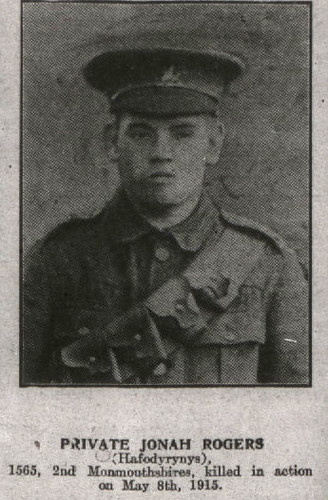
Thanks to the efforts of Martyn Gibson and David Nicholas and their work on the 1st, 2nd and 3rd Battalions of the Monmouthshire regiment, I have managed to get hold of a photograph of my great-great-uncle, Jonah Rogers, whose image was published in David Nicholas’ history of the 2nd Monmouthshire’s experiences in the Great War ‘They Fought With Pride‘.

The image, taken from a newspaper cutting (the notice of his death) can be seen below:

Jonah Rogers (1893-1915)

Filed Under: Family History Tagged With: A Line Drawn In Water, Jonah Rogers, World War I, WWI

2nd Battalion Monmouthshire Regiment

May 9, 2008 by Nicholas Hedges

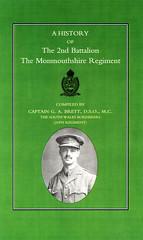
Having discovered that my great great-uncle, Jonah Rogers, was a Private in the 2nd Battalion of the Monmouthshire Regiment (he was killed in active service on May 8th 1915 and is commemorated on the Menin Gate) I began searching for anything which might tell me more about the place in which he fought and died. Fortunately, I happened upon a book which couldn’t be more useful; ‘A History of The 2nd Battalion The Monmouthshire Regiment’ compiled by Captain G.A. Brett, D.S.O., M.C. in the 1930s.

The 2nd Battalion Monmouthshire Regiment

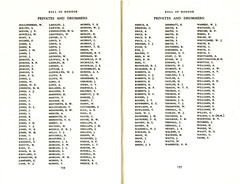
The first thing I wanted to do was be sure that this book covered the history relevant to Jonah, and in the back, in the Roll of Honour, I found him, ROGERS J., one amongst many other names.


In the book, the author relates in great detail information concerning the preparations for war and the route the Battalion took as it moved into the theatre of this terrible conflict. It seems that there were three units of the 2nd Battalion, the first formed from the outset of war in August 1914, with two and three following thereafter. I wondered to which unit Jonah had belonged. The following is a passage taken from the book:

“The 7th November, 1914, is an historic date for the and Monmouthshires, for early on the morning of that day the Battalion landed at Havre on active service. Over four long and terrible years were to drag their slow length before it would recross the narrow sea from France, and few of those who disembarked with it were fated to return with it. Its strength on landing was 30 Officers and 984 Other Ranks. Before it came home t8o Officers and 3,878 Other Ranks had passed through it. But they had earned for their Battalion a name for fighting and endurance of which their county, with all its old traditions of border pugnacity, could well be proud. While some of the officers came from other counties, a few indeed from the colonies and abroad, the vast majority of the men were from the mining valleys of Monmouthshire, every town, village and hamlet of which must at one time or another have been represented in the 2nd Battalion.”

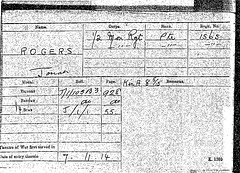
The key part of this passage is of course the date, 7th November, 1914, and having consulted Jonah’s medal records, I discovered ‘the date of entry therein’ corresponded exactly: 7-11-14.

Jonah Rogers Medals Record

The movements of Jonah Rogers and the 2nd Battalion can be listed as follows:
5th August 1914 – Orders to mobilise the Battalion.
6th August 1914 – 7.30pm. The Company entrained at Crumlin nearly 100 strong, en route for Pembroke Dock.
Evening of 7th August 1914 – The transport moved off and halting for the nights at Llanellen, Hereford, Ludlow and Church Stretton, completed the march to Oswestry on the afternoon of the 11th August 1914.
20th August 1914 – The Brigade moved to Northampton where the Welsh Division was concentrating.
Evening of 5th November 1914 – The Battalion embarked at Southampton on the ‘Manchester Importer’.
6th November 1914 – Arrived off Le Havre and anchored until night.
7th November 1914 – The Battalion landed in Havre.
8th November 1914 – Entrained, arrived at St. Omer, 10th November 1914.
18th/19th November 1914, passed fit by Inspector or Reserve Troops, marched to Bailleul, halting for the night at Hazebrouck and reaching Le Bizet the following day.
21st November 1914 – ‘C’ and ‘D’ company enter the trenches, relieved by ‘C’ and ‘D’ on the 23rd.
2nd December 1914 – 2nd Monmouthshires relieve the 2nd Essex, taking over a battalion frontage of eleven hundred yards of trenches.
Christmas Day 1914 – Informal Truce
January 1915 – Redistribution of troops. The forward company of the 2nd Monmouthshires, which was relieved every 2 days, held some cottages and some trenches behind Le Ghier Wood.
20th February 1915 to end of March 1915 – The Battalion relieved the 2nd Essex taking over the same frontage occupied in December.
2nd May 1915 – 2nd Monmouthshires experienced the heaviest shelling they had yet encountered. Later in the day, the enemy launched a fierce attack under cover of asphyxiating gas.
Night of 4th/5th May 1915 – The Battalion relieved the 5th South Lancashires about Weiltje. Another heavy gas attack, not followed up by infantry assault. The position included Mouse Trap Farm (known also to the British as Shell Trap Farm).
8th May 1915 – Battle of Frezenberg Ridge with desperate fighting ensuing for the following six days. Private Jonah Rogers was killed in action on the 8th May 1915.
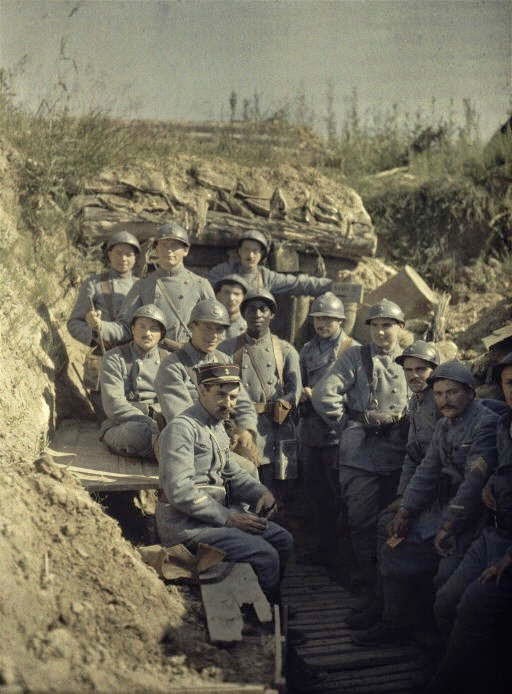
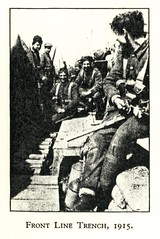
Although I have no photographs of Jonah, there is a photograph in the book showing a front-line trench in 1915. It’s impossible to say whether one of these men is Jonah, but what one can say is, he was no doubt just like them.

Trench 1915

The following is a map of positions occupied by the 2nd Monmouthshires during the 2nd Battle of Ypres. You can see (click on the image for large view) that on the day Jonah was killed, they were positioned in Shell Trap Farm.

Positions of 2nd Monmouthshires

Filed Under: Family History Tagged With: A Line Drawn In Water, Jonah Rogers, World War I, WWI

© Nicholas Hedges 2024

  • Facebook
  • Instagram
  • Twitter
  • YouTube

Copyright © 2025 · Outreach Pro on Genesis Framework · WordPress · Log in