Nicholas Hedges

Art, Writing and Research

  • Amazon
  • Behance
  • Facebook
  • Instagram
  • Pinterest
  • YouTube
  • Art
    • Digital
    • Drawing
    • Grids
      • Correspondence
      • The Wall
      • The Tourist
    • Ink on paper
      • Shadow Calligraphy
    • Installation
      • Murder
      • Echo
    • Painting
    • Patterns
    • Mixed Media
    • Photographic installation
      • St. Giles Fair 1908
      • Cornmarket 1907
      • Headington Hill 1903
      • Queen Street 1897
    • Research/Sketches
    • Stitched Work
      • Missded 1
      • Missded 2
      • Missded 3
      • Missded 4
    • Text Work
  • Blogs
    • Family History
    • Goethean Observations
    • Grief
    • Light Slowed But Never Stilled
    • Lists
    • Present Empathy
    • Shadow Calligraphy
    • Trees
    • Time
    • Walking Meditations
  • Video
  • Photography
    • Pillars of Snow
    • Creatures
    • The Trees
    • Snow
    • St. Giles Fair 1908
    • Cornmarket 1907
    • Headington Hill 1903
    • Queen Street 1897
    • Travel
  • Illustration and Design
  • Music
  • Projects
    • Dissonance and Rhyme
    • Design for an Heirloom
    • Backdrops
    • Shadow Calligraphy
  • Exhibitions
    • A Line Drawn in Water
      • Artwork
    • A Line Drawn in Water (Blog)
    • Mine the Mountain 3
      • Artwork
    • Mine the Mountain 2
      • Artwork
      • The Wall
    • The Woods, Breathing
      • Artwork
    • Snow
      • Artwork
    • Echo
      • Artwork
    • Murder
      • Artwork
    • The Tourist
    • Dreamcatcher
    • Mine the Mountain
      • Artwork
      • The Tourist
    • M8
    • The Gate
    • Creatures
      • Artwork
    • Residue
      • Artwork
    • A visit to Auschwitz
      • Artwork
  • Me
    • Artist’s Statement

Proposing Moments of Pastoral

June 17, 2015 by Nicholas Hedges

Through my research on World War I, I’ve accumulated a large amount of data – postcards, quotes, maps, texts, photographs, personal thoughts and experiences – which I want to start distilling into a new body of work. To do that, I’ve been looking for a ‘lens’ through which I might look again at this archive and thus begin shaping my research into something I can use in a work.

Quotes

A lens could be anything; an image, an experience, a thought, or in this case a quote – or quotes. I’ve discussed them before, but here they are again, the first from Neil Hanson, the second, Paul Fussell:

“As the torrents of machine-gun bullets ripped through the grassy slopes up which the British troops were advancing, the smell of an English summer – fresh cut grass – filled the air. For thousands it would be the last scent they would ever smell.”

“…if the opposite of war is peace, the opposite of experiencing moments of war is proposing moments of pastoral.”

The smell of an English summer – fresh cut grass – and the idea of moments of pastoral come together to make a lens through which I can re-examine my research. I’ve used Neil Hanson’s quote before, as the title of a piece in 2007 (pictured below), but combined with Paul Fussell’s quote it becomes even more interesting.
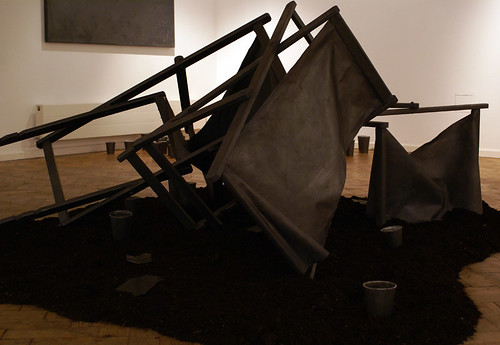
The Smell of an English Summer 1916 (Fresh Cut Grass)

The smell of fresh cut grass is a smell I often associate with the past, in particular, my childhood, and as a child, my notion of the past was a pastoral one. To me, the past was an unspoilt place, where squirrels could run the length of the country without touching the ground (a ‘fact’ I always loved). I loved the idea – and I still do – of untouched swathes of forest.

The past was always pastoral.

Maps

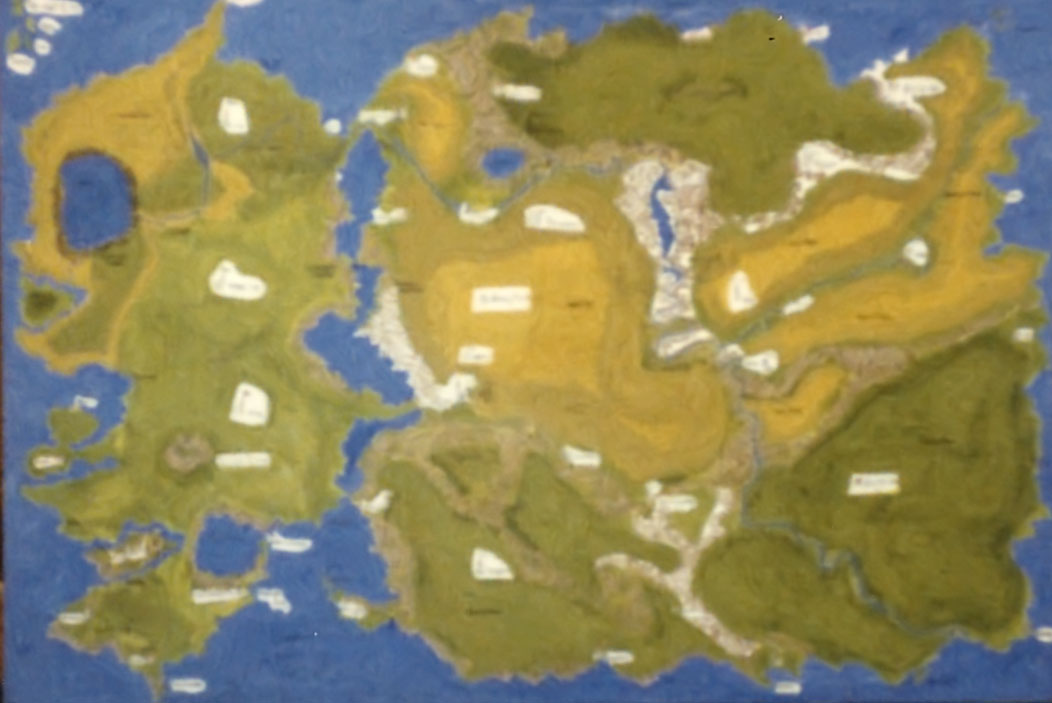
To pursue my pastoral fantasy, I would create maps of imagined landscapes (something I’ve also discussed numerous times before) and this too has become a lens through which to look at my research. When we think of those who fought in World War I, we often consider only their deaths. We don’t imagine their lives beforehand, especially the fact that not so long before the war, many were still children.

My maps were well-wooded.
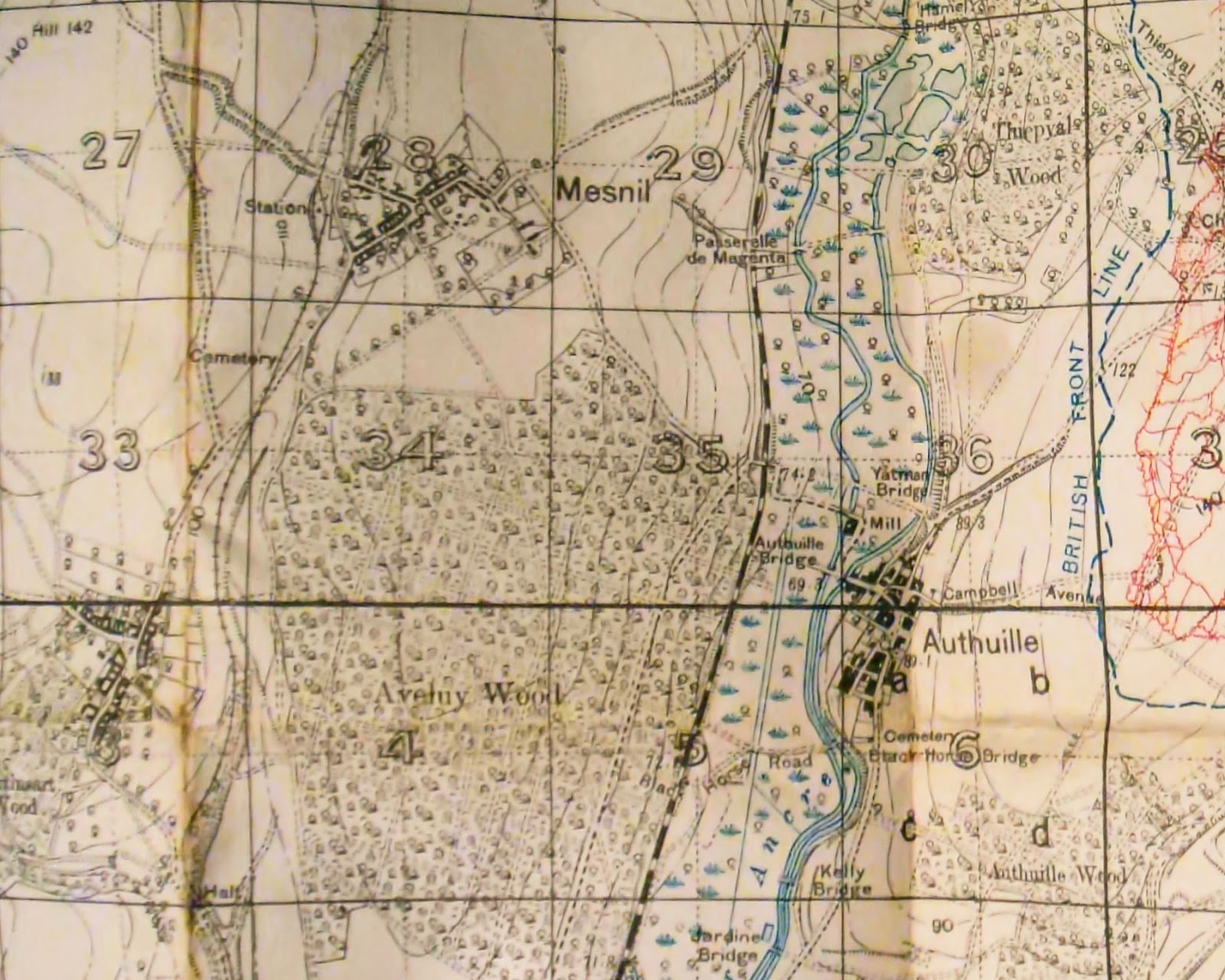
As are the trench maps I have in my collection.
Postcards and gardens

There is a link therefore between a pastoral past, my childhood and the consideration of those who died in World War I as children years before – as real people who existed beyond the theatre of war.

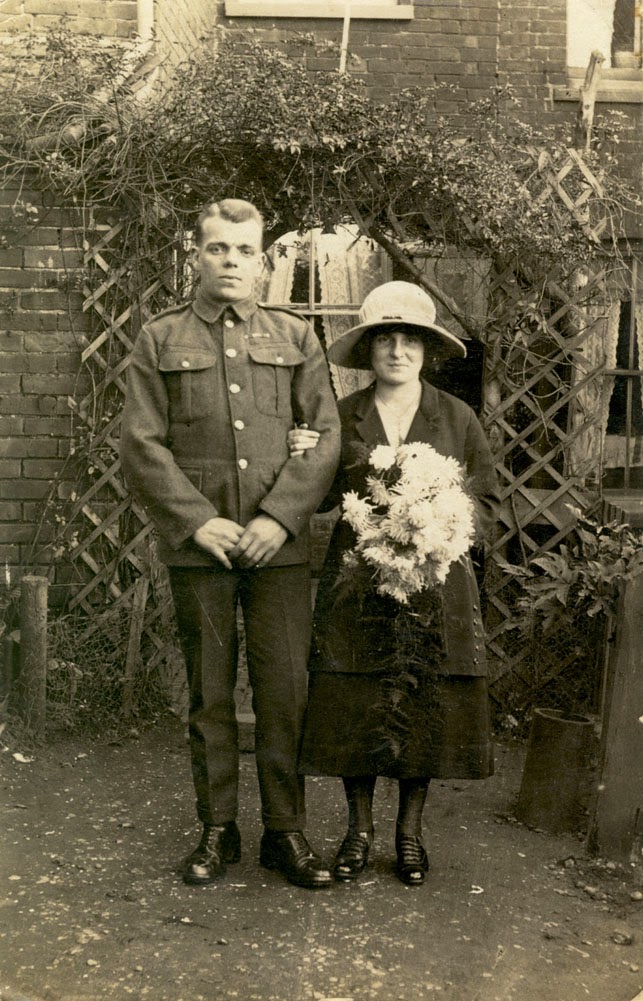
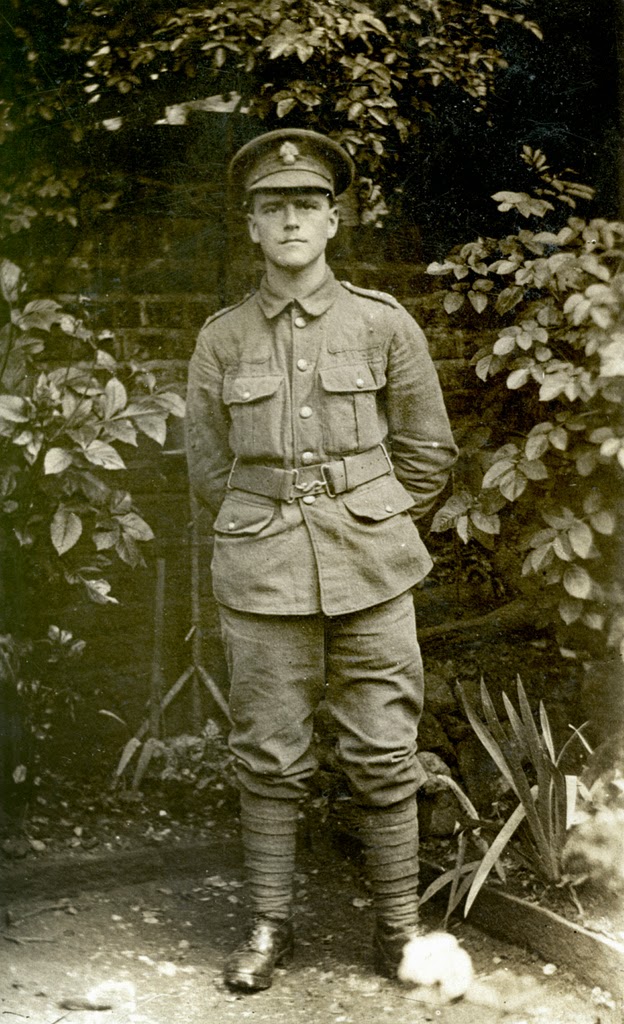
This leads me to postcards, such as the one below:
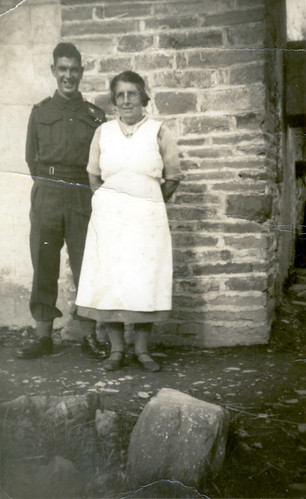
World War 1 Serviceman

This postcard shows a soldier posing with his mother(?) standing in what might have been his garden, in the place where, perhaps, he grew up as a child. I might not be able to empathise with him as a soldier directly, but I can well imagine his garden. Part of the landscape of my childhood comprises the gardens of my home and those of my grandparents, as well as parks and playing fields at school. They are pastoral landscapes in miniature, where the grass was cut on a summer’s day.
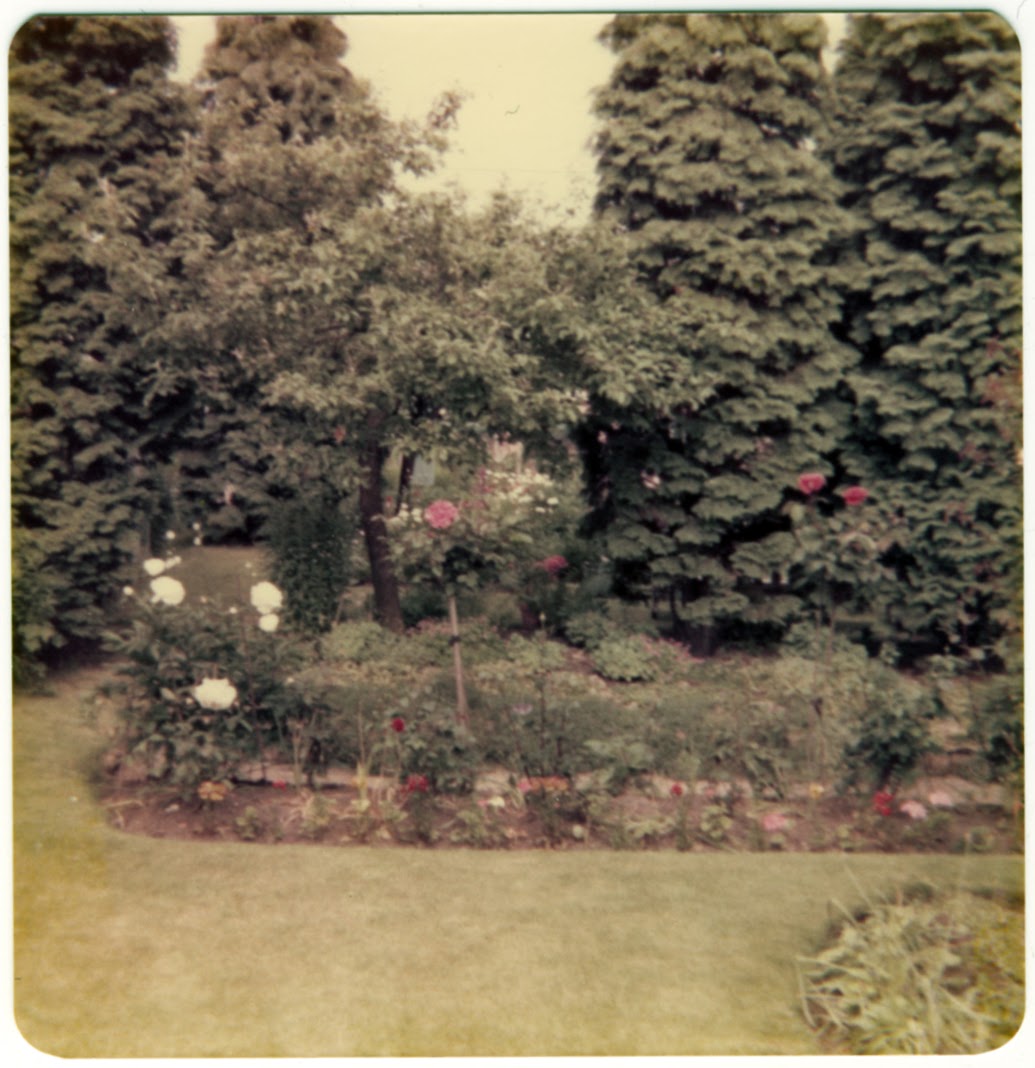
Proposing moments of pastoral

The question which I haven’t asked is: how do you propose moments of pastoral? The answer to this, I think, is crucial to the development of any work.

To propose is to suggest, invite. It is something given to another.

Maps are objects which propose. But what are they proposing? On the one hand, they propose journeys. More often than not, we use them to plan a journey in the future, for example a day trip or holiday. They require us to use our imaginations; to imagine the future, the landscape and our position within in. They can however propose journeys into the past. In a previous blog about Ivor Gurney, I wrote:

After returning from the war, Ivor Gurney, like so many others suffered a breakdown (he’d suffered his first in 1913) and a passage in Macfarlane’s book, which describes the visits to Gurney – within the Dartford asylum – by Helen Thomas, the widow of Edward Thomas is particularly moving. Helen took with her one of her husband’s Ordnance survey maps of Gloucestershire:

“She recalled afterwards that Gurney, on being shown the map, took it at once from her, and spread it out on his bed, in his hot little white-tiled room in the asylum, with the sunlight falling in patterns upon the floor. Then the two of them kneeled together by the bed and traced out, with their fingers, walks that they and Edward had taken in the past.”

The map they laid on the bed was one that showed the familiar trails and paths of the countryside. But it was also one which, like that I made in my childhood, gave Gurney access to his imagination – to his own past. Together, the patient and his visitor read it with their fingers, following the trails as one follows words on a page. A narrative of sorts was revealed, memories stitched together by the threads of roads, paths and trails.

Maps can also be used of course to orient ourselves in the present. We might consult them to find out where we are or where we ought to go. In fact, they can be used to orient ourselves in the past, present and future.

As an artist wishing to propose moments of pastoral, I want to use the form of the map as a starting point. The map might show a pastoral scene, using, for example, the ‘vocabulary’ of the trench map to show the trees.
Filed Under: Trees, World War I Tagged With: Gardens, Maps, Pastoral, Trench Maps, World War I, WWI, WWI Postcards

The Lawn and the Woods

June 1, 2015 by Nicholas Hedges

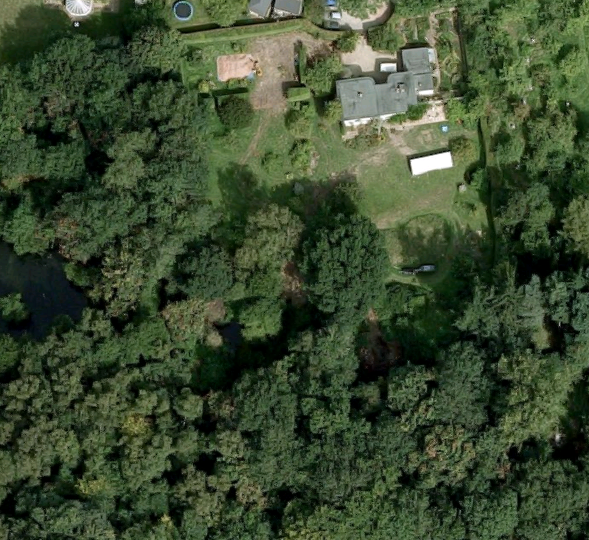
I remember as a small boy how my Nana would on occasion take me and my older brother to where she worked as a Housekeeper. The house was – at far as I recall – a big, white, Modernist building with a large well-kept lawn at the rear. But what I remember most was the wood which stood at the edge of the garden. I can see it now – that contrast between the manicured lawn and the wild dark of the trees, and with the work that I’ve been doing on gardens, trees and contrasts, this particular memory has suddenly sprung to life.

Indeed, given what I’ve written about childhood landscapes, this memory seems even more relevant. 
On Google Maps, I looked to see if I could find the house, and I believe it’s shown in the image below.


You can see the house and the lawn (which wasn’t perhaps quite as well-kept as I’d remembered) and the encroaching woods surrounding it. 

Filed Under: Family History, Trees Tagged With: Family Hedges, Family History, Gardens, The Trees, Trees, Woods

Centenary

May 15, 2015 by Nicholas Hedges

100 years ago, on 8th May 1915, my great-great-uncle was killed in the Second Battle of Ypres.


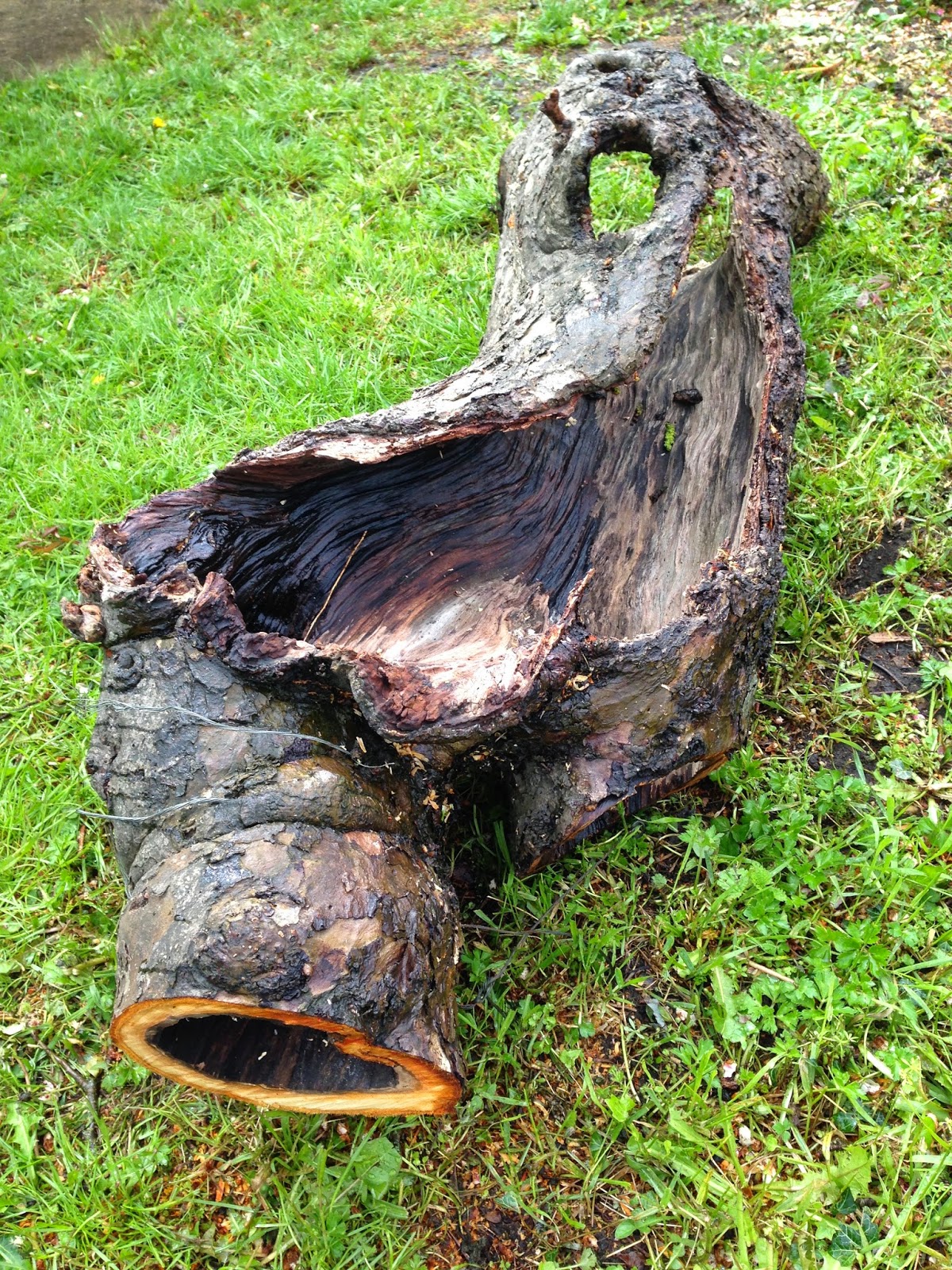
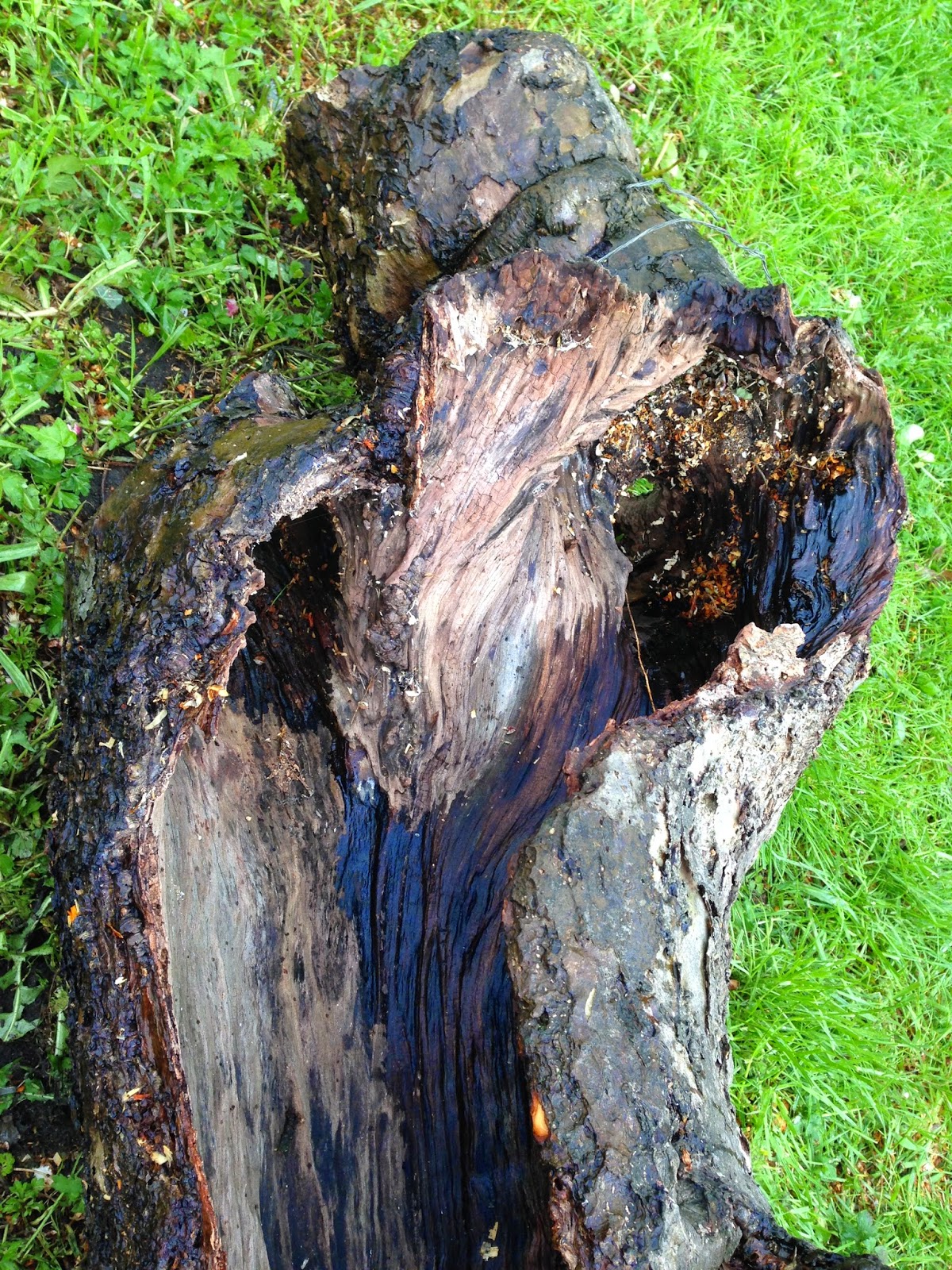
I’ve written before about this photograph and in particular its location; the idea of the garden as a shared space of memory and experience. Recently, in our own garden we had to have an apple tree taken down due to the fact it had been hollowed out by heart-rot and was in danger of toppling over. I asked for the trunk of the tree to be save in one piece, and when I saw it on the ground, I was reminded again of the idea of gardens as described above.

The trunk of the tree resembled a torso missing its head and limbs.


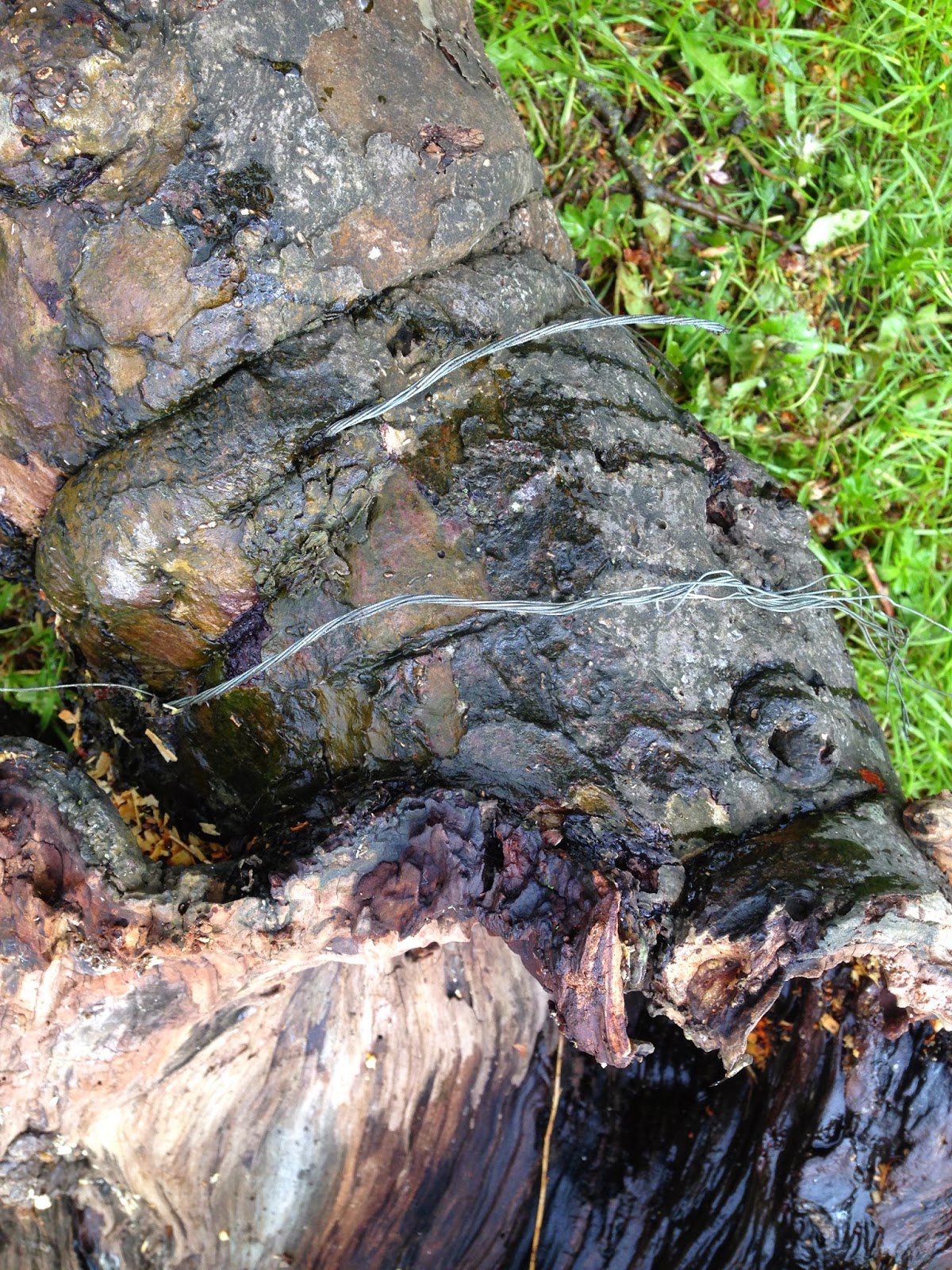
There was something interesting in the way the bark had grown over a length of wire which had been wrapped around the trunk years ago. It called to mind the cascading lengths of barbed wire rolled out in front of the trenches. It also seemed to turn the trunk into a corpse.

At the same time the tree Is symbolic of a lost idyll; that of the garden of childhood memories.

Filed Under: World War I Tagged With: Family History, Family Jones, Gardens, Jonah Rogers, World War I, WW1 Centenary, WWI, WWI Postcards

Childhood Landscapes

October 15, 2014 by Nicholas Hedges

‘I can see him now,’ my Nana told me, talking about her dad, ‘because he went up our garden over the road and the mountain started from there up… and he’d go so far up and he’d turn back and wave to us, and if we went out to play, our Mam would say, “you can go up the mountain to play…” but every now and then our Mam would come out in the garden and we had to wave to her to know that we were alright you know… always remember going up the mountain…’

Hafodyrynys and Surrounds
Nana’s mountain

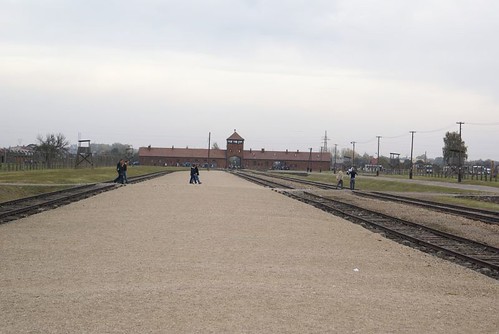
I interviewed my Nana in 2007, the year before she died. What she was describing was a scene from her childhood landscape in the years after the First World War. During the Second World War, a young boy called Otto Dov Kulka was a prisoner in Auschwitz-Birkenau. He recalls his childhood landscape thus:

“The colour is blue: clear blue skies of summer. Silver-coloured toy aeroplanes carrying greetings from distant worlds pass slowly across the azure skies while around them explode what look like white bubbles. The aeroplanes pass by and the skies remain blue and lovely, and far off, far off on that clear summer day, distant blue hills as though not of this world make their presence felt.”

Auschwitz-Birkenau
Auschwitz-Birkenau

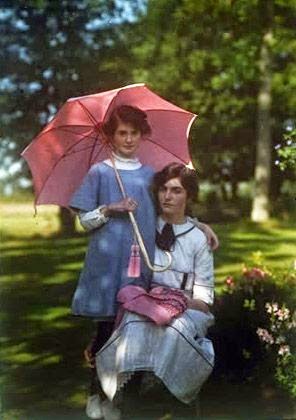
In previous blogs I have described my childhood landscapes, both real and imagined; most recently in the context of childhood landscapes pre World War I, this time of two girls who lived in what is now Bury Knowle Park in Headington, Oxford.

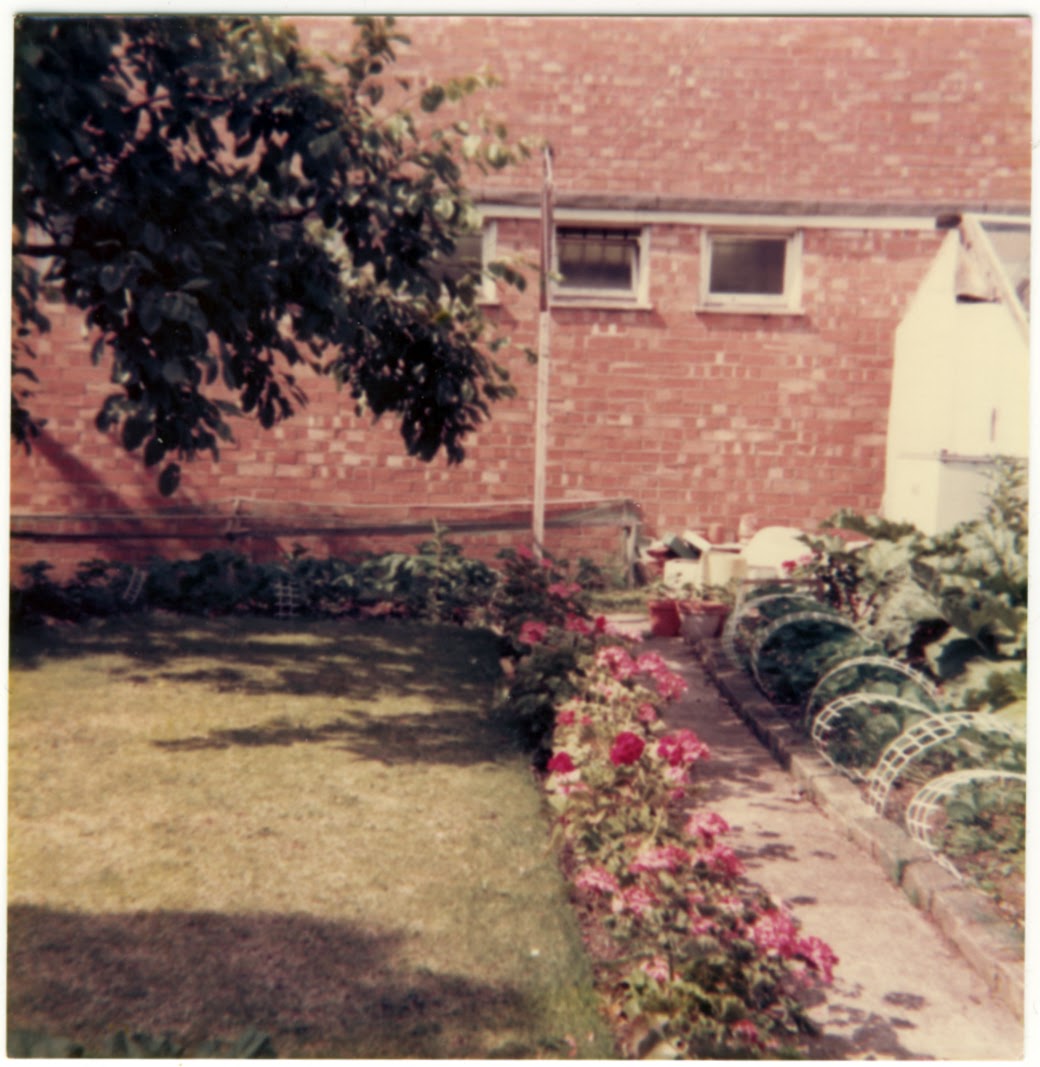
My childhood landscapes are bound up with journeys to and from my grandparents’ houses and in particular, my Nan’s garden (pictured below) also in Headington.

I have walked in all these places; in my grandparents’ garden; in Bury Knowle Park, on the ‘mountain’ in Wales and in Auschwitz. I spent many happy years in the garden of my childhood home (which has all but disappeared under a vast extension to the house).

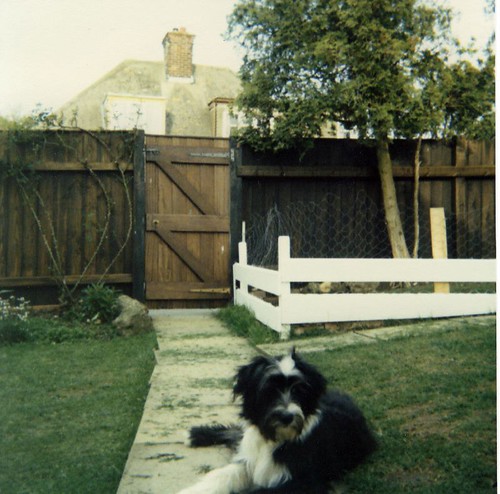
Sukey

Filed Under: Holocaust Tagged With: Bury Knowle Park, Childhood, Gardens, Holocaust, Imagined Landscapes, Landscape, Memory, Nana

Photography: The Colour of Shadows

August 25, 2014 by Nicholas Hedges

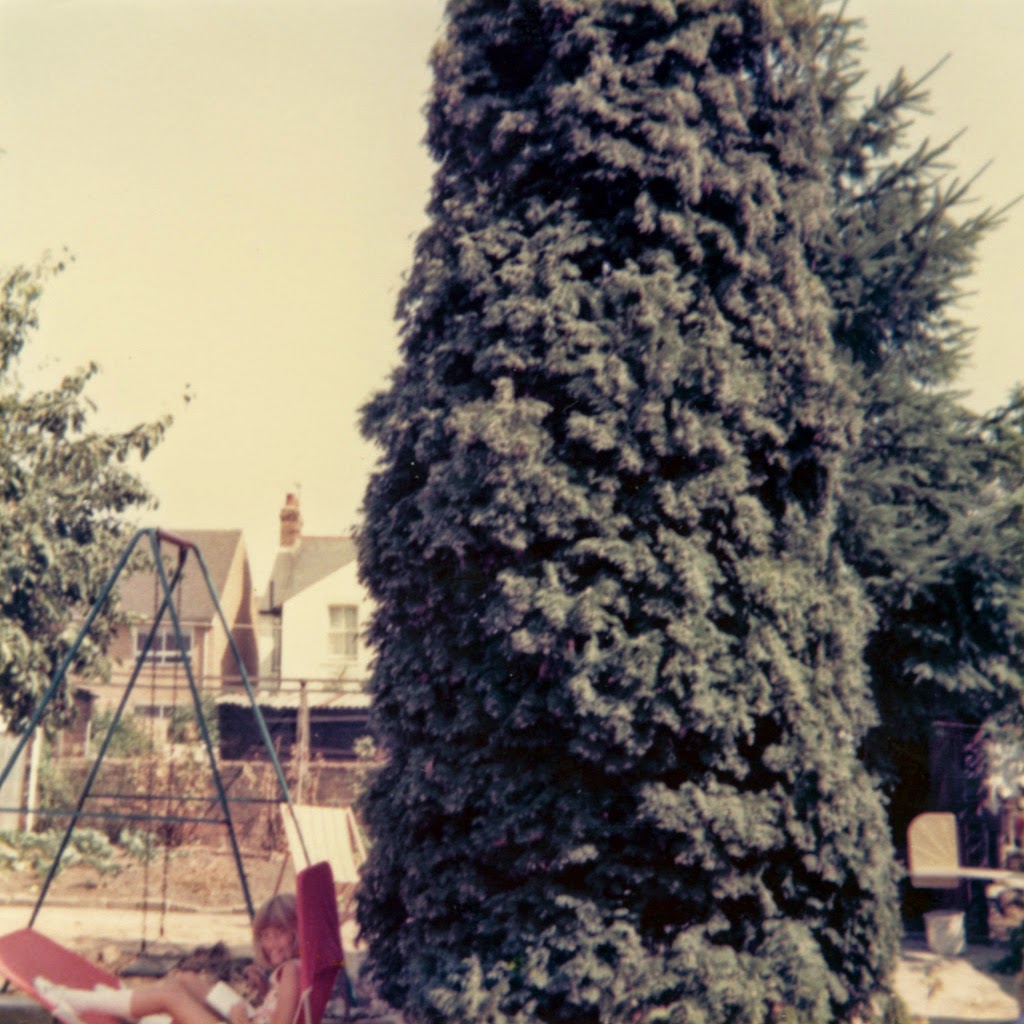
As shown in a previous blog, this is a picture of my grandparents’ garden in Headington, Oxford, taken sometime in the mid 1970s.

This was, growing up, a very special place for me…

…I remember well my grandad’s vegetable patch, the plastic greenhouse and the Victoria plum tree (all shown above);  the brick outhouses with their giant spiders (in which the red tricycle was kept); the large apple tree and the wooden lattice-work gate. I remember too the giant Christmas tree (pictured below behind the fir tree), planted – when the tree was considerably smaller – when my mum was a girl.

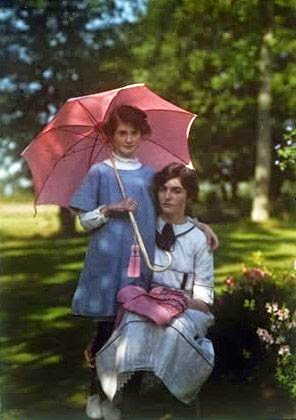
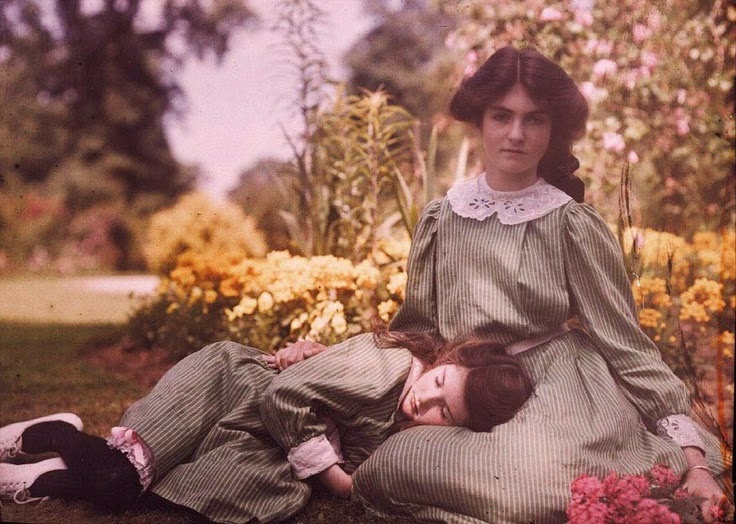
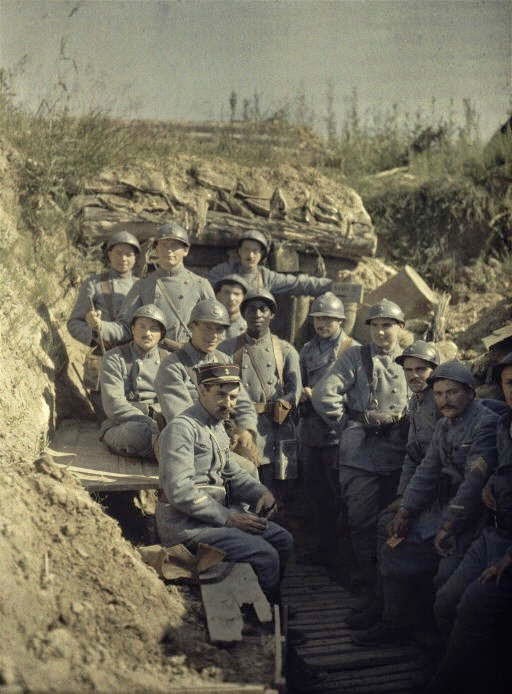
The following two photographs were also taken in Headington, some 60 years earlier at the time of the First World War (or a few years before – the second photograph is possibly 1908). They are by one of the pioneers of autochrome photography, Ethelreda Laing and show her two daughters, Janet and Iris.

What’s interesting about these photographs is that they were taken in what is now Bury Knowle Park at a time when the house was a private residence. What makes them even more interesting is the fact they are in colour. But what is it about a colour photograph that enables me to better connect with the referent? (This is a subject I started to discuss before: see ‘Empathy and the First World War (Part 2)‘.)

The photograph below shows me and my brother in the garden of the house where we grew up, also in Headington.

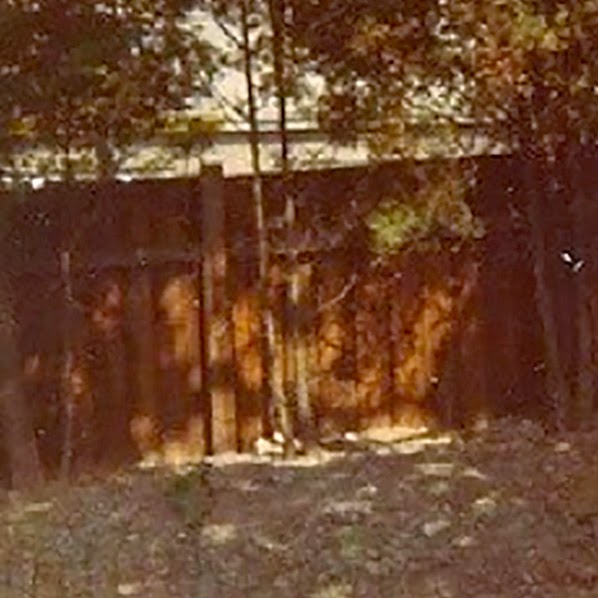
This photograph which, like the photograph from Bury Knowle, shows two children enjoying the garden, was taken c.1974. Looking at it now, I’m drawn to the patterns of light and shadow on the fence behind.
The fences were always well creosoted and when the sun shone they exuded a wonderful smell. I can smell it now, just by looking at this image, but what is more, I can feel the pattern of sun and shadow, the sensation of the cool dry earth below – the smell of the firs. It’s a synaesthetic image in that I can almost taste the pattern.
If the image above was in black and white, I doubt I’d have the same response. When we look at an image in black and white, it seems to me that our memory is stimulated less than if the image is in colour. When looking at photographs taken long before we were born this hardly seems to matter, but when looking at a colour image – such as that of the girls above – taken long ago, something strange seems to happen.
It seems to me, that a colour photograph is more likely to trigger a physical response than one which is black and white.
First of all, I’ll look at a selection of black and white images.
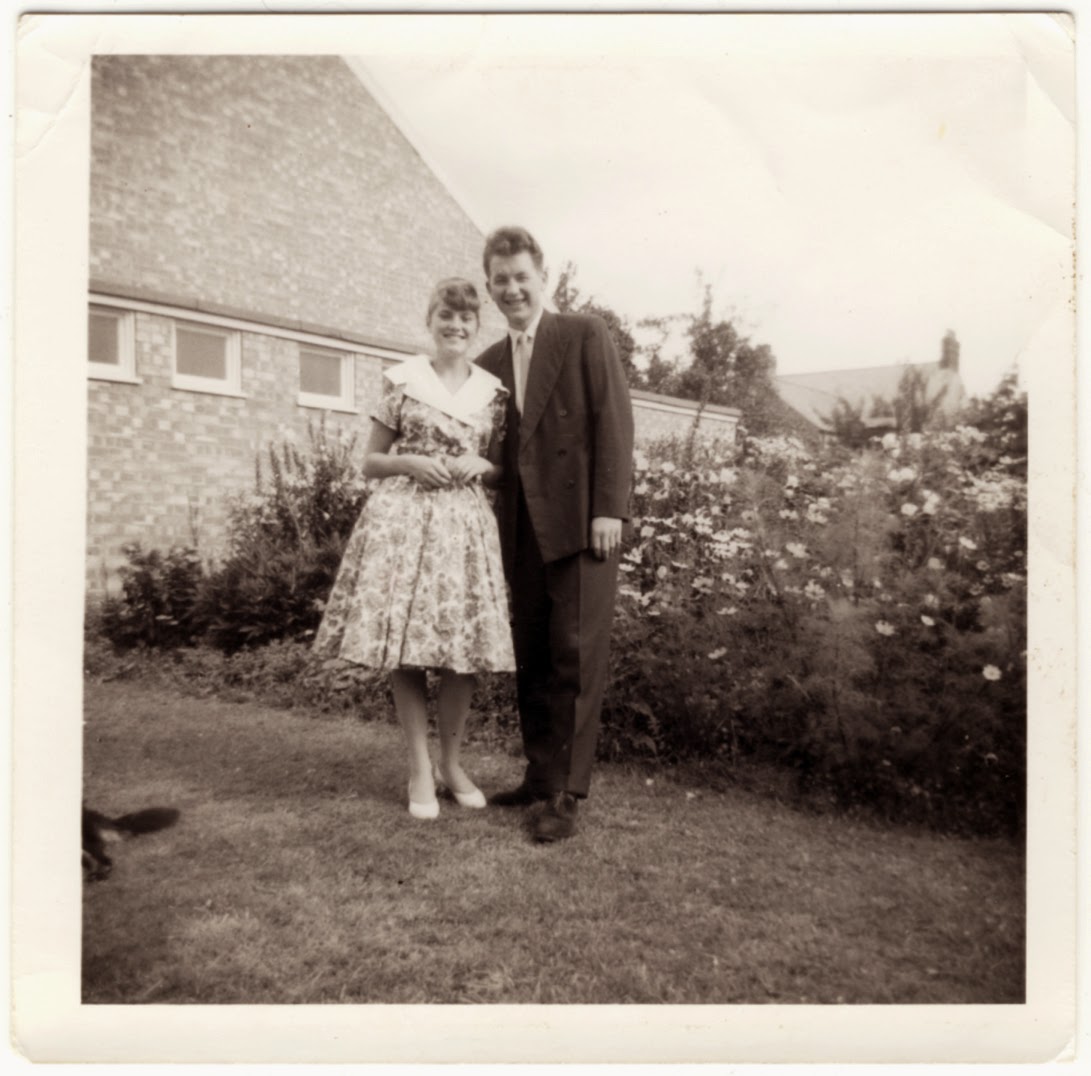
The image below is of my mum and dad. It was taken c.1960 in my grandparents’ garden (as can be gleaned from the windows – seen in the second image above).
This image, of course, elicits a response in that I recognise my parents and the location. But that is all.
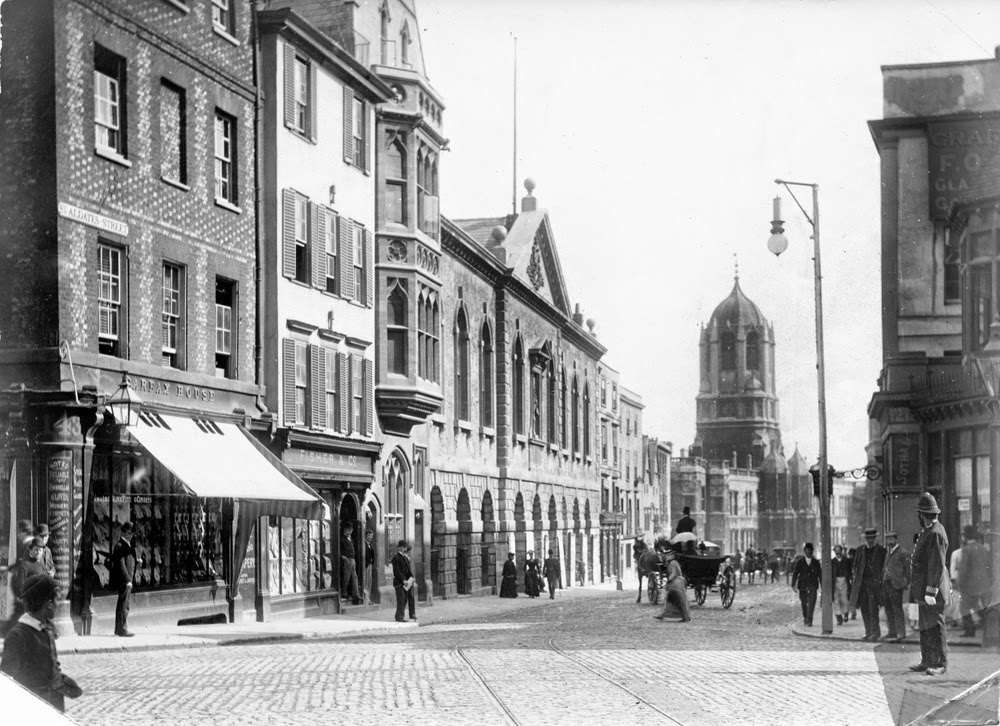
The next image was taken at Carfax, Oxford in 1893 and shows St. Aldates looking south towards Christ Church.
The image also elicits a response in that although most of the buildings shown have all disappeared, Tom Tower – in the distance – is still standing. I recognise the location as one I have experienced countless times before – although of course I could not have experienced what is shown in the photograph. 
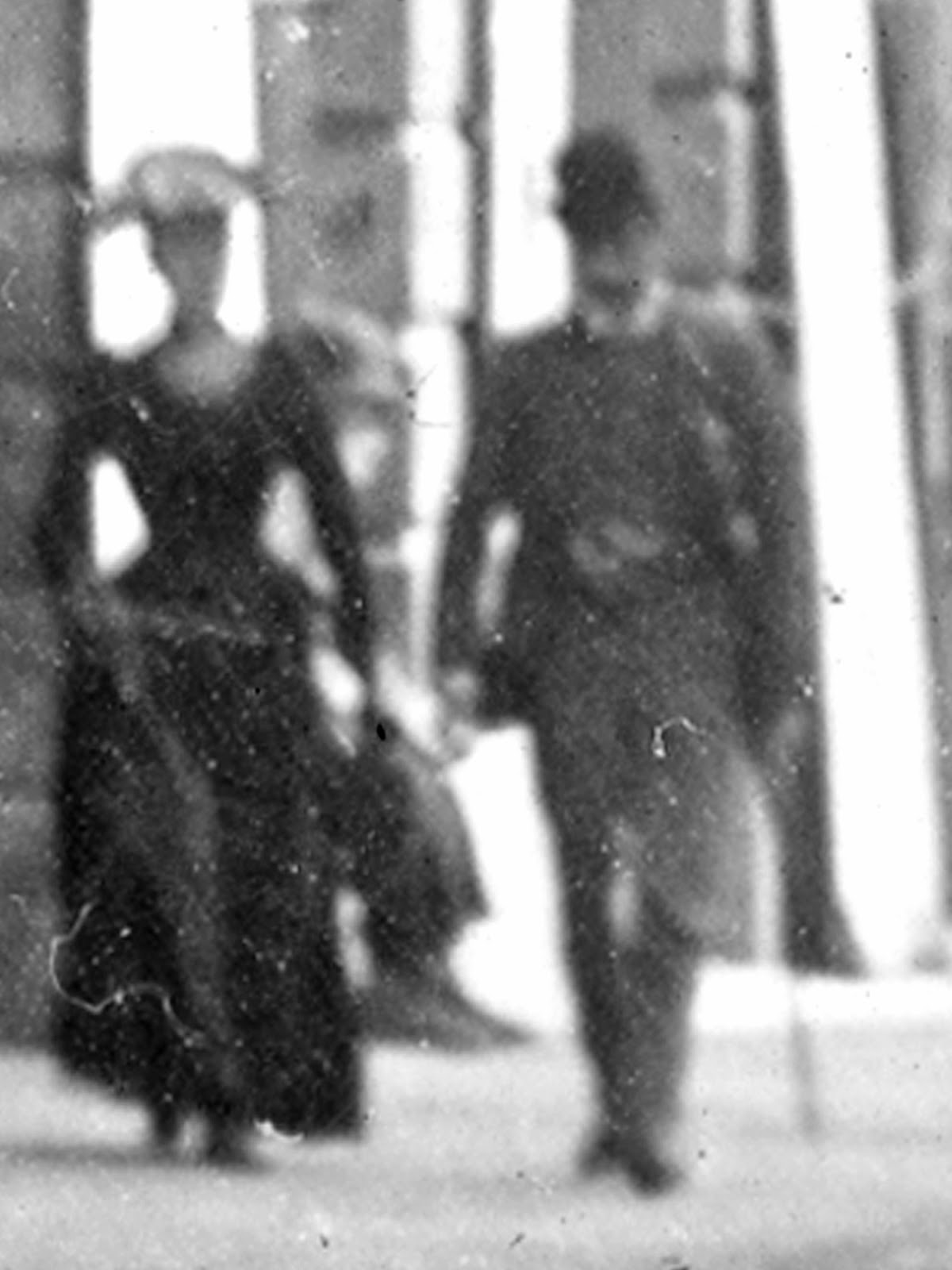
Looking at the photo more closely, one does begin to establish an empathetic response based on more than just recognition.
Again this is something I have talked about before but here, empathy is established through the movement of the man and woman. They have no idea that they are being photographed, an obliviousness which is vital for an empathetic response. It is an image of now, of the everyday. We can easily imagine the man and woman, unfrozen by time and the camera’s shutter, continuing up past the old Town Hall towards Carfax, deep in conversation.
But how do old photographs differ when they are in colour?
This photograph was taken 13 years after the one above and what strikes me about it, is the fact that like the one above, taken in my garden, I can feel it. And what I feel is the temperature difference between the shadows and the lawn where the sun is shining. I can imagine the texture of the grass and the tree, I can hear the wind and feel the air; and yet this photograph was taken 108 years ago. The shadows are living – they are not dead as they can often be in black and white photographs; they have a colour.
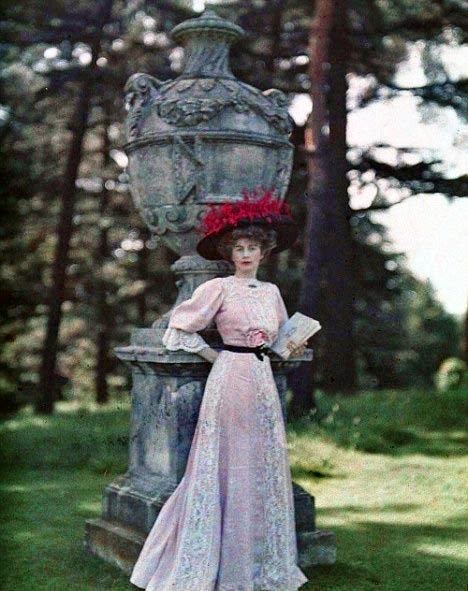
The same can be said of the next image, taken during the First World War.
One can feel the light, the heat of the sun; the cool of the shadows. Again the shadows live. The image too is abundant with texture which I know would be absent if the image was in black and white.
It seems to me that I’m responding to these images kinaesthetically; my mind, memories and experience read them, which is why perhaps I find often these old colour photographs – while amazing – so unsettling. My mind reads them, my body feels them and yet when the image was taken, I did not exist. There is a conflict between existence and non-existence; the age old tussle between life and death.
There is no time in the past; all those things shown in the images above are as much a part of the past as each other. All there is to separate them is a rule against which, the increasing improbability of my coming into being is measured.

Filed Under: World War I Tagged With: Autochromes, Colour, Colour Photography, Gardens, Shadows, Synaesthesia, WWI

Gardens

August 15, 2014 by Nicholas Hedges

In Camera Lucida, Roland Barthes describes the concept of punctum thus:

“…it is this element which rises from the scene, shoots out of it like an arrow, and pierces me. A Latin word exists to designate this wound, this prick, this mark made by a pointed instrument… punctum; for punctum is also: sting, speck, cut, little hole – and also a cast of the dice. A photograph’s punctum is that accident which pricks me (but also bruises me, is poignant to me).”

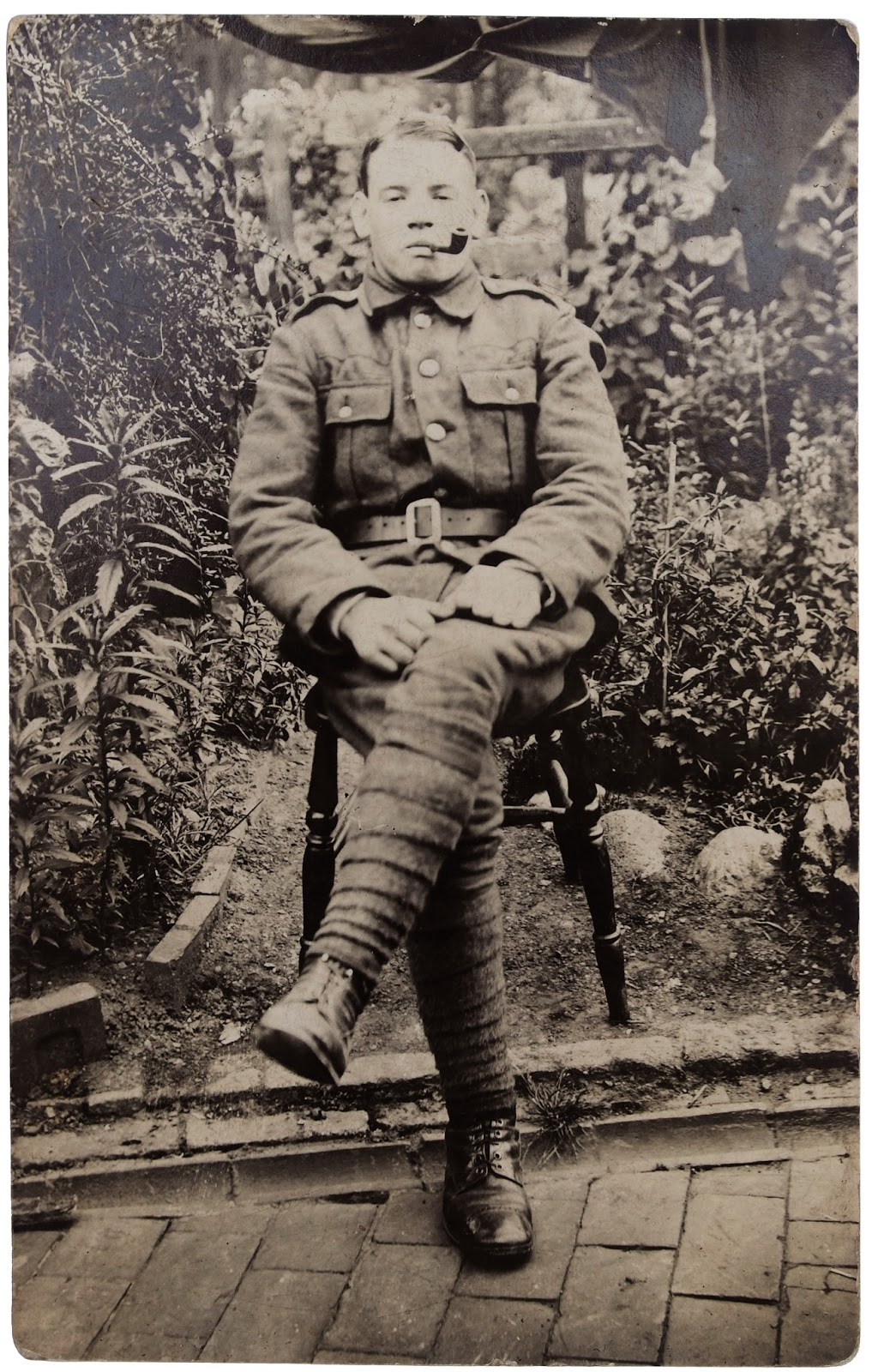
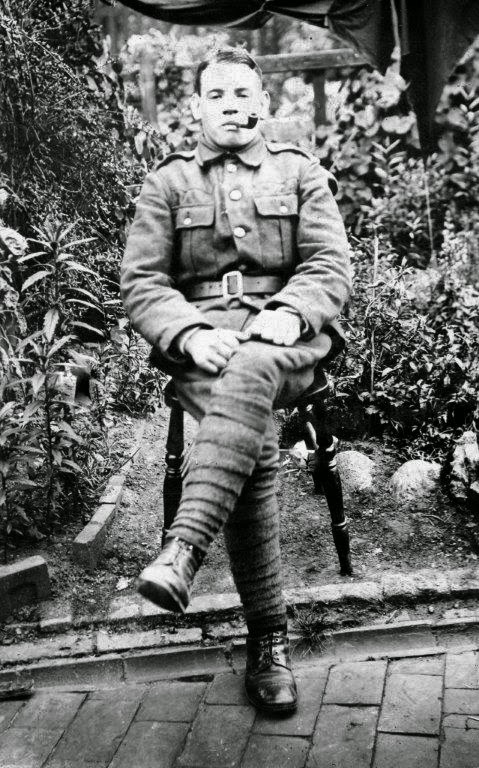
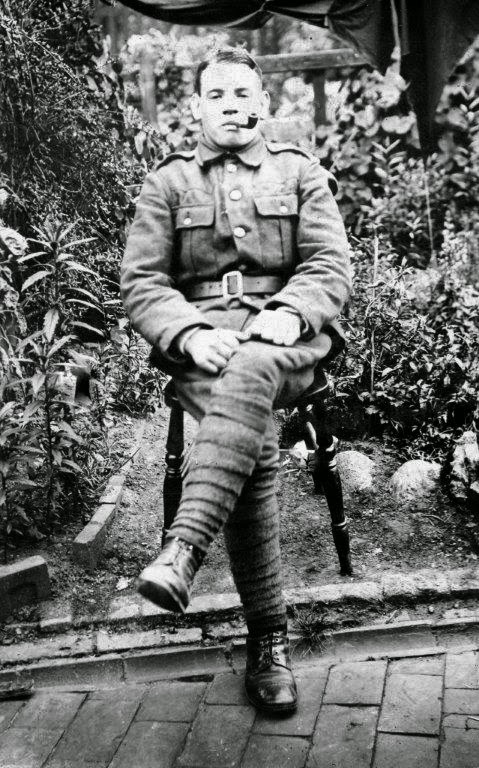
Looking again at the photo of Jonah Rogers, I became aware of something which, as Barthes might have put it, ‘pricked me’.

This is the photo…

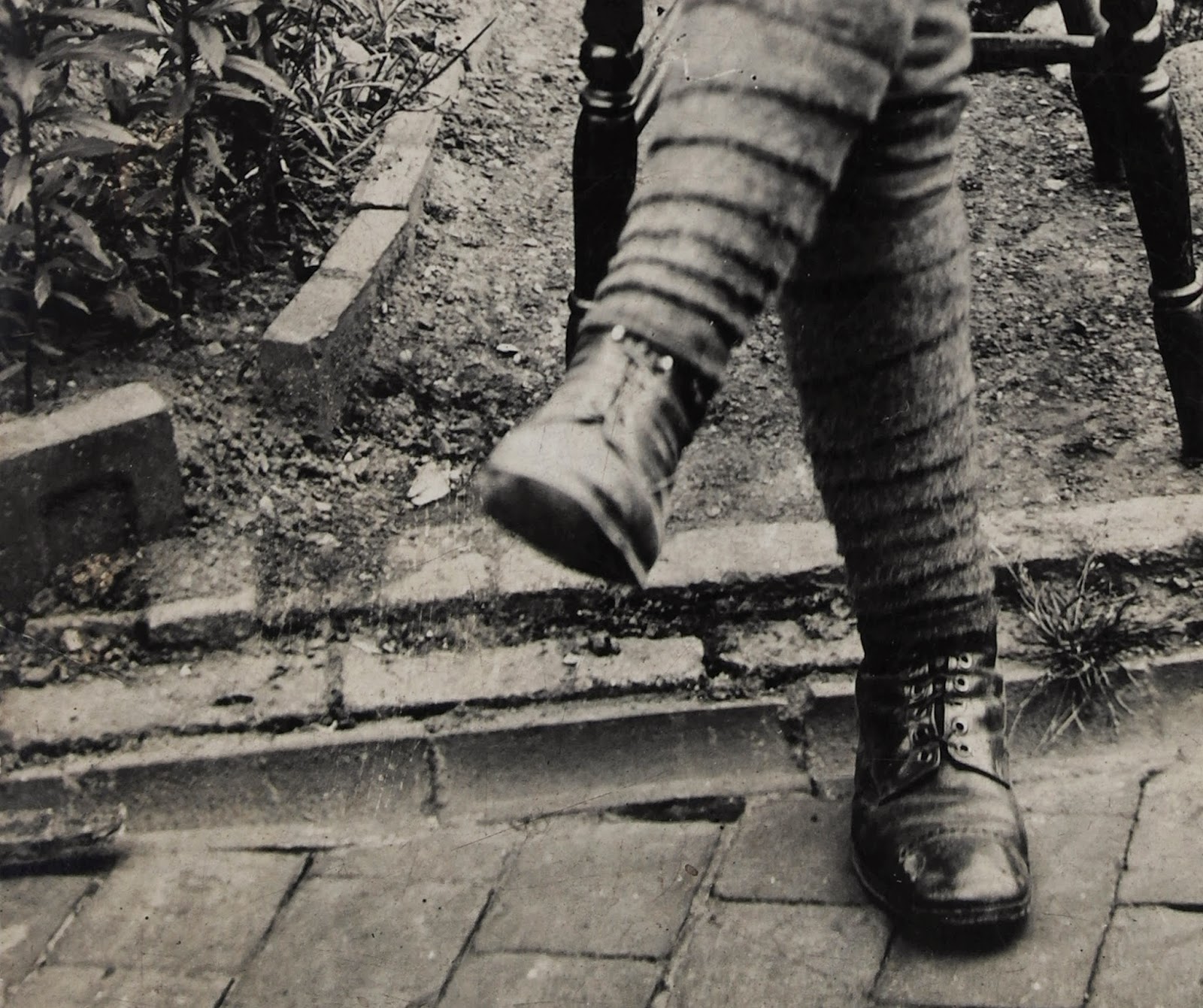
…and here is the ‘punctum‘.

In actual fact there are two things about this detail which interest me.

First, the left foot.

The fact it’s blurred implies that it was moving when the picture was taken. Otherwise Jonah appears stock still, unnaturally rigid, his hands curled into fists on his lap. One detects through this foot a sense of anxiety – not so much because of what he’d have to face on the battlefield, but rather because he was having his picture taken; he doesn’t seem comfortable in front of the camera – his foot is constantly moving. The pipe in his mouth also seems a little incongruous – especially when one considers those clenched fists; his hands look as if they’ve never held a pipe before. It’s almost as if someone has placed the pipe in his mouth.

The second thing is the ‘missing’ brick in the flower bed.

That there must have been a brick implies a passage of time between when the brick was laid and when it became dislodged – kicked perhaps out of place. That brick hasn’t been replaced, the flower bed and path have tumbled into one another and time has fallen from the photograph like the mud and mulching leaves. Or perhaps there was never a brick at all and the gap is some sort of conduit for water – the gutter running across the photograph implies this might be the case. This would still suggest a sense of time bound up in the thinking of whosoever laid the bricks in the garden, and indeed the flow of water itself. Whatever the gap is – drain or accident – both possibilities point to a time before the picture was taken; they give the photograph – to use an apt metaphor – temporal roots.

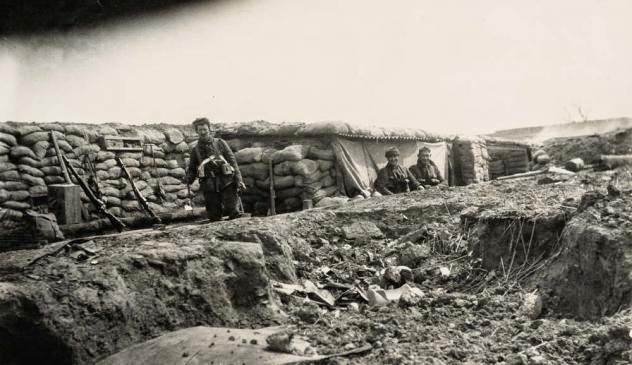
Jonah was killed in 1915 in the second battle of Ypres and I can’t help drawing a parallel between the soil of the garden and the infamous mud of the trenches such as those pictured below in which some of the 2nd Monmouthsires (Jonah’s battalion) can be seen.

This then brings me to the Paul Fussell quote I often return to:

“…if the opposite of war is peace, the opposite of experiencing moments of war is proposing moments of pastoral.”

I have for a time been thinking of the phrase ‘moments of pastoral’ and have come to regard it on a domestic level, i.e. moments of pastoral as experienced in a garden. I have always considered it vital, when establishing an empathetic link with those who died in the war, to consider their lives before the war. As I’ve written in a previous blog:

Neil Hanson, writing in ‘The Unknown Soldier’ talks of how, on the eve of the Battle of the Somme, the smell in the air was that of an English summer – of fresh cut grass; the smell – one could say – of memories; of childhood.

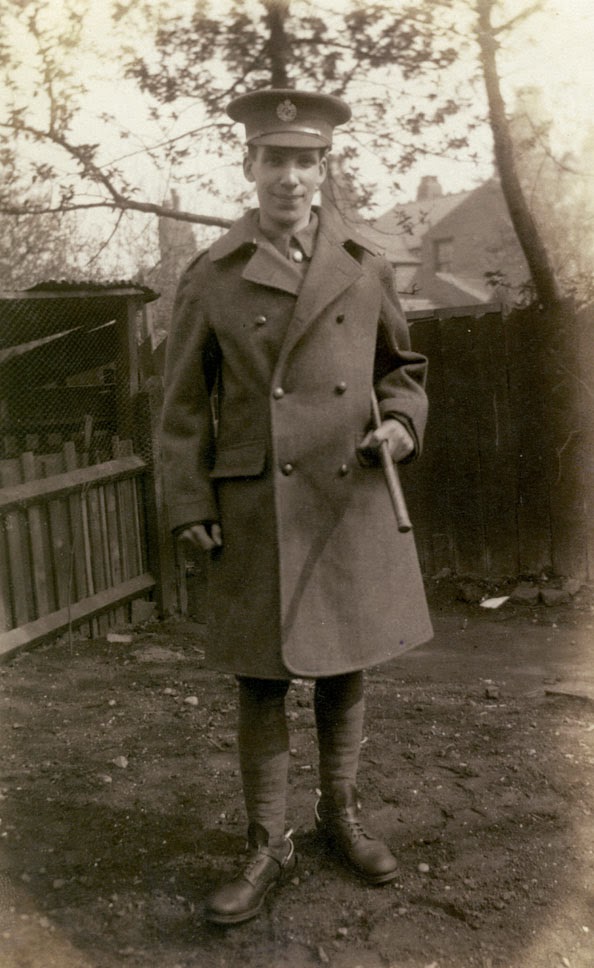
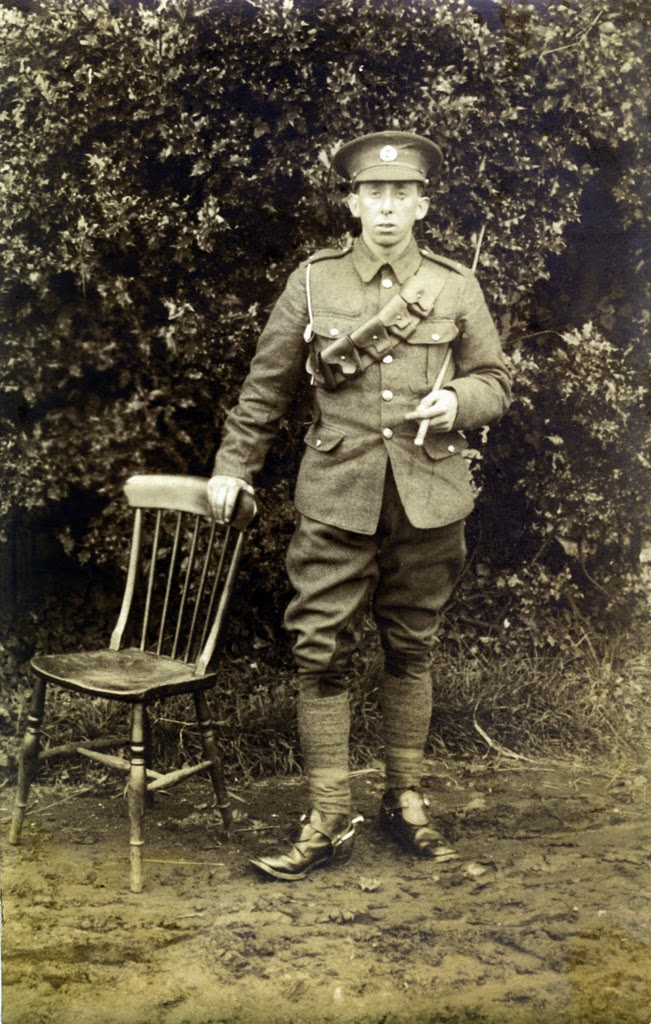
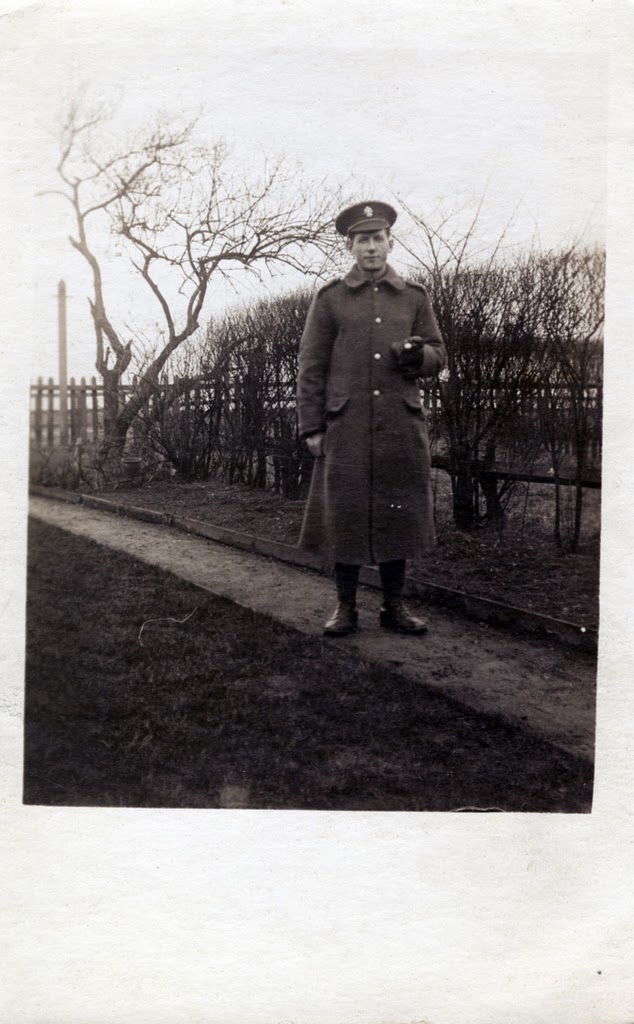
The garden then is a link to a time before the war and again this is reflected in some of the postcard portraits I have in my collection, where soldiers were photographed – prior to leaving – in their gardens.

I have always found these images especially poignant and have written about them before but there is something here I want to explore further; that is the empathetic link between ourselves and soldiers who fought and died in the war and the idea of the garden as a shared space of memory and experience, a conduit through which an empathetic link might be established.

Filed Under: Photography Tagged With: Gardens, Jonah Rogers, Pastoral, Photographs, Roland Barthes, WWI, WWI Postcards

Jonah Rogers – New Photograph

August 12, 2014 by Nicholas Hedges

It’s been six years since I discovered my great-great-uncle, Jonah Rogers, killed in action on May 8th 1915. In that time I have also been collecting World War I postcards, portraits of soldiers taken before they left for the Front. Now, thanks to a descendent of Jonah’s sister Ruth (my grandmother was the daughter of another sister, Mary Jane) I have, in this centenary year, been sent a postcard of Jonah Rogers. The quality of the reproduction isn’t high but I’m hoping to see the original soon.

Filed Under: World War I Tagged With: Gardens, Jonah Rogers, WWI, WWI Postcards

© Nicholas Hedges 2024

  • Facebook
  • Instagram
  • Twitter
  • YouTube

Copyright © 2025 · Outreach Pro on Genesis Framework · WordPress · Log in