Nicholas Hedges

Art, Writing and Research

  • Amazon
  • Behance
  • Facebook
  • Instagram
  • Pinterest
  • YouTube
  • Art
    • Digital
    • Drawing
    • Grids
      • Correspondence
      • The Wall
      • The Tourist
    • Ink on paper
      • Shadow Calligraphy
    • Installation
      • Murder
      • Echo
    • Painting
    • Patterns
    • Mixed Media
    • Photographic installation
      • St. Giles Fair 1908
      • Cornmarket 1907
      • Headington Hill 1903
      • Queen Street 1897
    • Research/Sketches
    • Stitched Work
      • Missded 1
      • Missded 2
      • Missded 3
      • Missded 4
    • Text Work
  • Blogs
    • Family History
    • Goethean Observations
    • Grief
    • Light Slowed But Never Stilled
    • Lists
    • Present Empathy
    • Shadow Calligraphy
    • Trees
    • Time
    • Walking Meditations
  • Video
  • Photography
    • Pillars of Snow
    • Creatures
    • The Trees
    • Snow
    • St. Giles Fair 1908
    • Cornmarket 1907
    • Headington Hill 1903
    • Queen Street 1897
    • Travel
  • Illustration and Design
  • Music
  • Projects
    • Dissonance and Rhyme
    • Design for an Heirloom
    • Backdrops
    • Shadow Calligraphy
  • Exhibitions
    • A Line Drawn in Water
      • Artwork
    • A Line Drawn in Water (Blog)
    • Mine the Mountain 3
      • Artwork
    • Mine the Mountain 2
      • Artwork
      • The Wall
    • The Woods, Breathing
      • Artwork
    • Snow
      • Artwork
    • Echo
      • Artwork
    • Murder
      • Artwork
    • The Tourist
    • Dreamcatcher
    • Mine the Mountain
      • Artwork
      • The Tourist
    • M8
    • The Gate
    • Creatures
      • Artwork
    • Residue
      • Artwork
    • A visit to Auschwitz
      • Artwork
  • Me
    • Artist’s Statement

The (Georgian) Stevens Family

February 26, 2014 by Nicholas Hedges

Having done a bit more research in the library this afternoon, I believe I have discovered the dates of birth and death of Lydia Stevens’ husband John.

I know he died before Lydia (1822) and that he was alive in 1777 when his son William was born. Looking through the parish registers for St. Martin’s (the parish in which Lydia lived at the time of her death) I discovered a John Stevens who died in 1803 at the age of 66. This would put his birth year at 1737: Lydia, his widow, was born in 1734/5 which leads me to think that this is indeed my John.

I then looked at their children and found the following, all baptised in the same parish:

  • Lydia Stevens
 (Jan 18 1765)
  • John Stevens
 (Dec 26 1765)
  • Samuel Stevens
 (Jan 29 1767)
  • James Stevens
 (Oct 23 1768) 
  • Frances Stevens
 (May 15 1770)
  • Mary Stevens
 (Sep 28 1771) 
  • John Stevens
 (Aug 20 1773)
  • John Stevens
 (Dec 1 1774) 
  • Samuel Stevens
 (Apr 4 1776) 
  • William Stevens
 (Dec 31 1777) 

Given that there are 3 Johns and 2 Samuels, one can assume that the first John died some time before 1773 and that the second John died before 1774. Clearly the name John was important which leads me to believe that John’s father might have been called John as well.

The first Samuel must have died some time before 1776 when my direct ancestor was born.

Looking again at the wedding of John and Lydia, I found that the witnesses were Sam Borton and Mary Stevens. I’ve no idea of course what their relationship was to the couple; Sam could have been Lydia’s father or brother, but clearly the name Samuel or Sam was important and seems to have come from that side of the family. Mary Stevens might have been John’s mother or sister. The couple’s third daughter was named Mary so I’m no clearer on whether this was John’s mother’s name or not.
Filed Under: Family History Tagged With: Family History, Family Stevens, John Stevens, Lydia Stevens, Stevens

Lydia Stevens (1734-1822)

February 26, 2014 by Nicholas Hedges

Almost five years ago, I published a blog entry about my 3 x great-grandfather John Stevens (1811-1876):

Researching John Stevens in the library today, I found what I’m sure must be his parents. Having looked at the Index of Baptisms for the time around his birth (1811) I found only one person matching his dates. John Stevens was born on 7th October 1811 in St. Aldate’s parish. His parents are given as Samuel and Mary Stevens, and looking at John Stevens’ children, I found that his second born son is named Samuel (his first son is called John). I decided to see if I could locate a Samuel Stevens in the Parish Registers. I couldn’t be sure that he was born in the city but it seemed quite likely. Sure enough I found a Samuel Stevens born on the 4th April 1776, baptised in St. Martin’s (now demolished). His parents were given as John and Lydia Stevens and so I looked for a record of their marriage in the city. Again my luck was in and I found that they were married on March 24th 1764 in St. Mary Magdalen. Lydia’s maiden name was Borton and the witnesses at the wedding were Sam Borton and Mary Stevens. John is described as being from St. Martin’s which is where Samuel was baptised.
At the same time I also wrote the following:

A year or so ago, I started work on a piece of work based around John Gwynn’s survey of 1772. The piece was called (as a working title) ‘6 Yards 0 Feet 6 inches’ based on the measurement of John Malchair‘s home in Broad Street. Having discovered an ancestor – John Stevens – born in the city in 1811, I wondered if there was any chance that one of the Mr Stevens’ listed on the survey was an ancestor of mine? It seemed a long shot but after today’s research I’m rather more optimistic. 

If I did have an ancestor in Oxford at the time of the survey and if my research is correct, then that ancestor would be John Steven, the grandfather of the one previously mentioned. I’ve no idea when he was born but I do know that he was married in 1764 and is described as coming from St. Martin’s Parish, where his son Samuel, John Jr’s father was baptised in 1776. One could assume therefore that I did indeed have ancestors living in the parish of St. Martin’s at the time of the survey. 

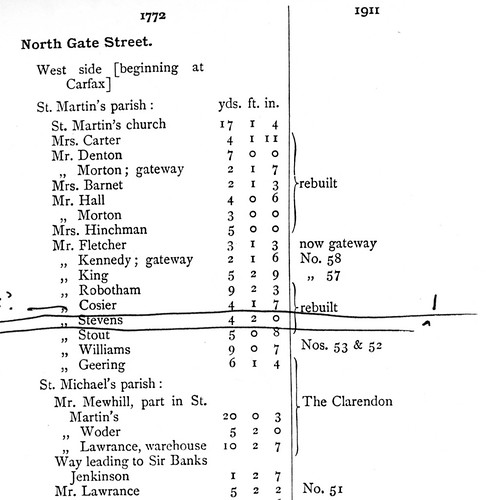
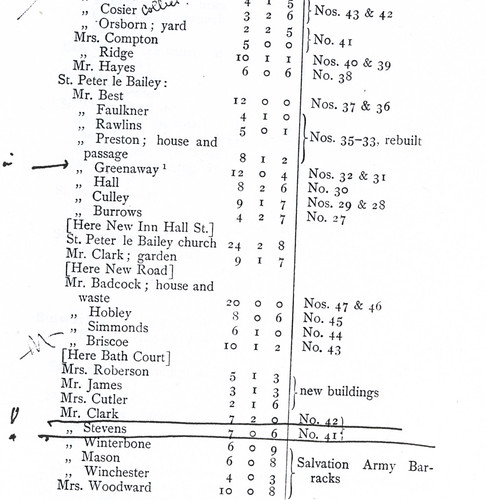
The images below are taken from the survey and show two Stevens one of which might well be my ancestor.

Gwynn fails to include (at least on the copy I have) first names from the survey but within the parish of St Martin’s two Mr Stevens are recorded along with a Mrs Stevens. One can assume however, that those most likely to be mine are the two Mr Stevens mentioned as living in the parish, one in Butcherrow (now Queen Street), the other in North Gate Street (now Cornmarket). The residence in Butcherrow is 7 yards 0 feet and 6 inches. That in North Gate Street is 4 yards 2 feet 0 inches.

John Gwynn's Survey 1772

John Gwynn's Survey 1772

Of course more work is required to see if one of these is indeed my ancestor, but I must admit to being very inspired by the prospect.

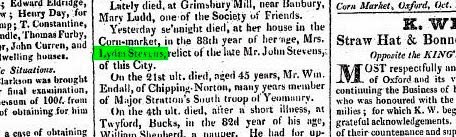
Yesterday, I was looking through Jackson’s Oxford Journal online and decided to search for a number of my ancestors. I’d already done as much with the Hedges side of the family (discovering in the process that they were often in trouble – see ‘The Victorians‘) and decided to check on my maternal side. I searched for Lydia Stevens (my 5 x great-grandmother) and discovered the following from an edition of the newspaper printed on November 2nd 1822:

‘Yesterday se’nnight [a week] died, at her house in the Corn-market, in the 88th year of her age, Mrs. Lydia Stevens, relict [widow] of the late Mr. John. Stevens, of this city.’

Not only did this notice give me her dates of birth and death (1734 – Friday, 25th October 1822), it also seemed to indicate that the Mr. Stevens recorded in John Gwynn’s survey on 1772 was my 5 x great-grandfather. Of course there is a 50 year gap between the date of the survey and the date of Lydia’s death, but it seems quite probable nonetheless.

Filed Under: Family History Tagged With: Cornmarket, Family History, Family Stevens, History, John Stevens, Lydia Stevens, Stevens

Beneath the floor

May 5, 2013 by Nicholas Hedges

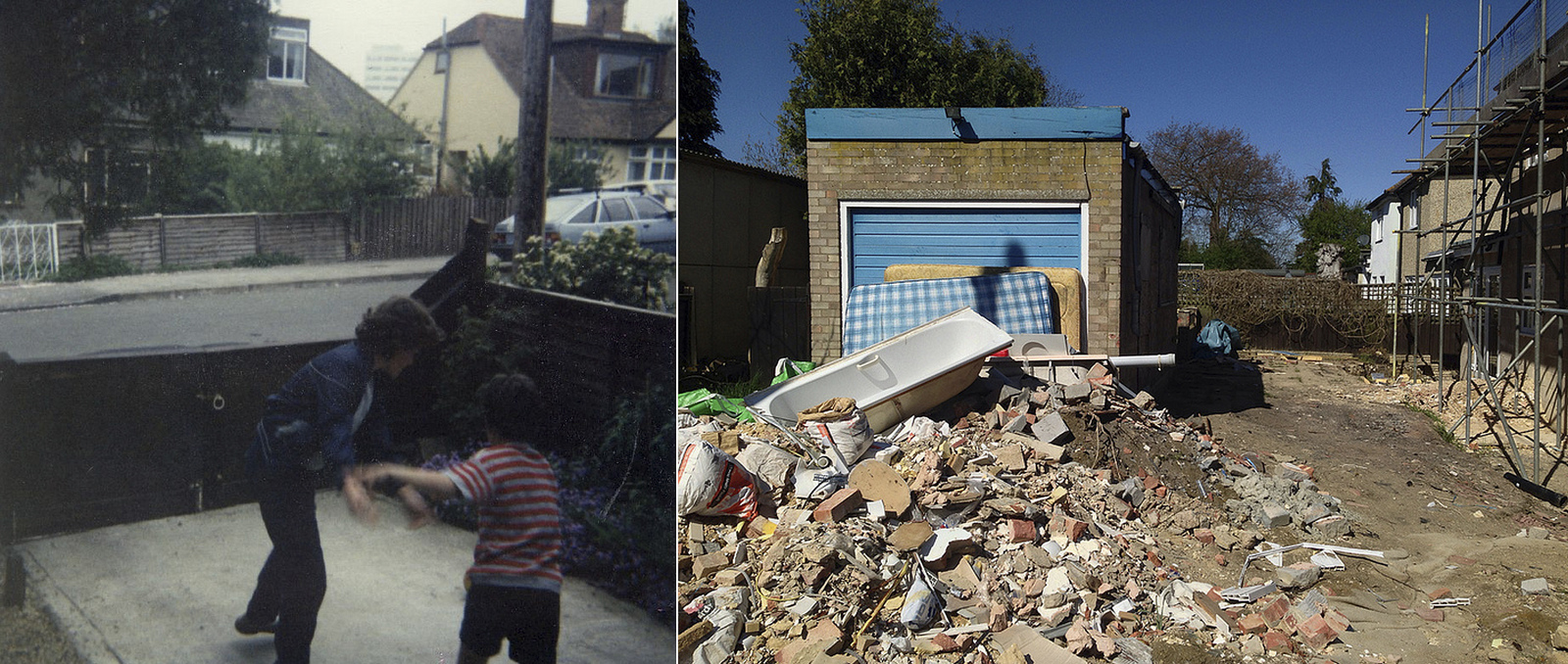
I’ve always found it amazing, when, on a programme like Time Team, an apparently empty field is shown to have once been the site of some vast Roman villa; how something so grand and seemingly permanent can one day be lost to both memory and the landscape; a memento mori of inscribed lines on quite an epic scale. The recent discovery of the tomb of Richard III is perhaps the most vivid illustration of this; how the grave of so eminent a man could be buried (albeit hastily) in the choir of a friary, only for all trace (of both the grave and the friary) to be lost beneath the tarmac of a nondescript car park. In Urne Burial (1658), Sir Thomas Browne wrote:

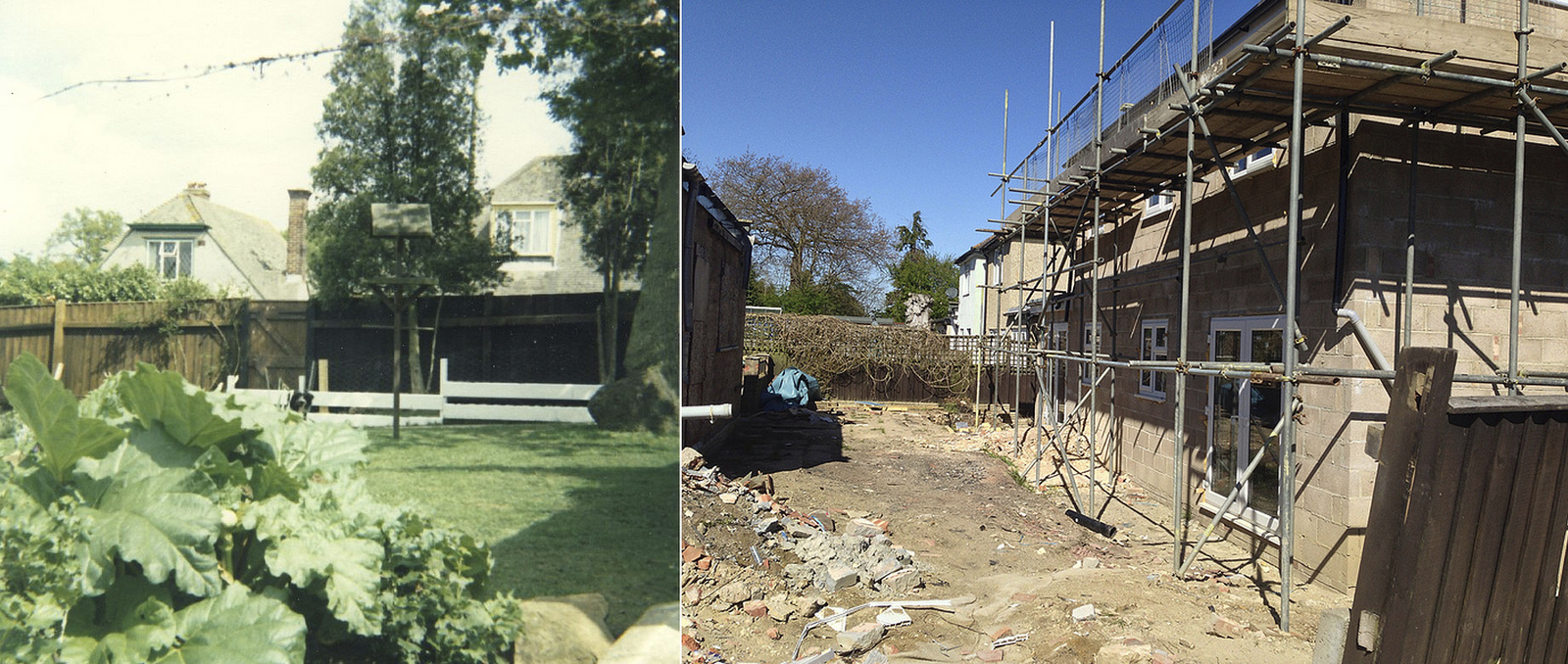
“There is no antidote against the Opium of time, which temporally considereth all things; Our Fathers finde their graves in our short memories, and sadly tell us how we may be buried in our Survivors. Grave-stones tell truth scarce fourty years; Generations passe while some trees stand, and old Families last not three Oaks.” In the garden of the house in which I grew up, there was an oak tree – now lost; a victim of the relentless drive to build flats and houses on every scrap of space ‘available’.

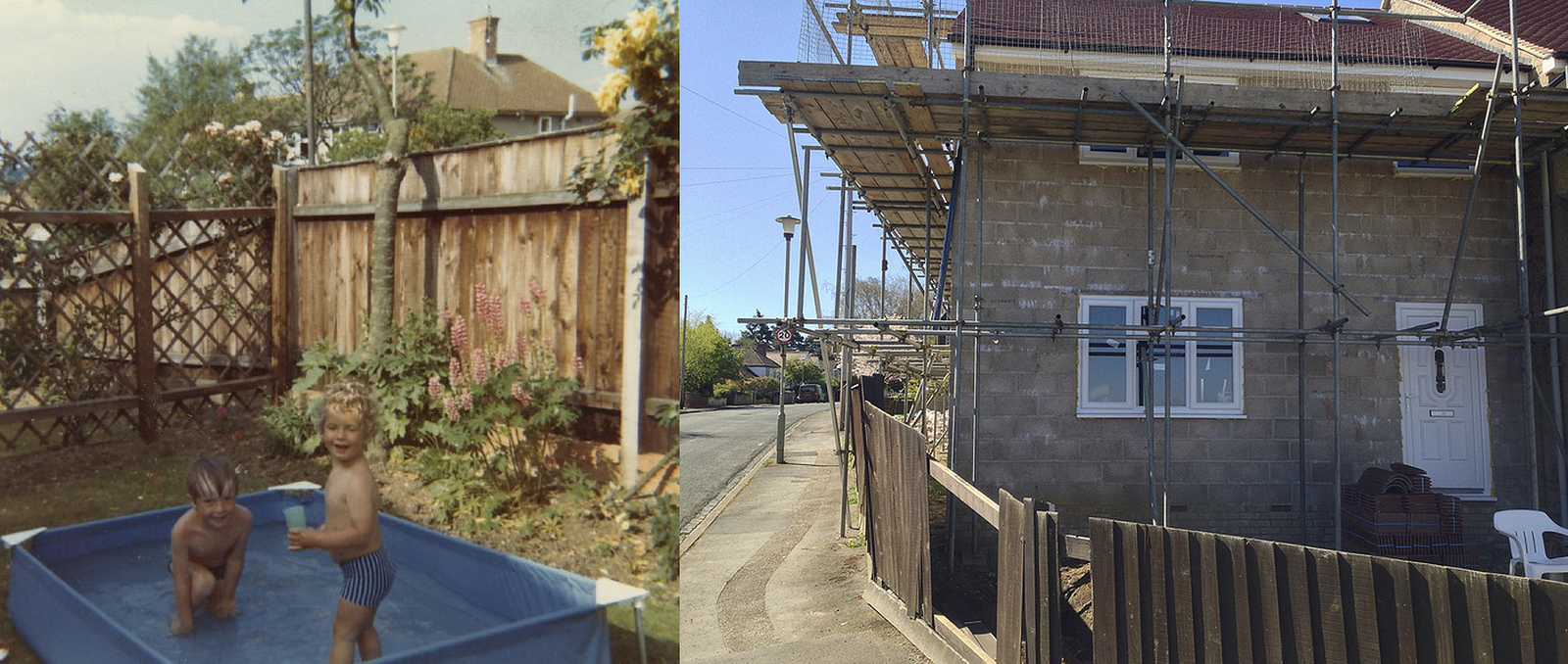
In the shade of that tree (visible above on the right hand side) and the lawn beyond its reach, I spent many childhood days, playing football, high-jumping (badly), playing at being ‘The Professionals’ and, on one occasion, holding a sale to raise money for charity. But in the last year, a few years since my dad sold up and left, half the house has been pulled down (including most of my bedroom) and a new one built alongside, covering most of the garden.

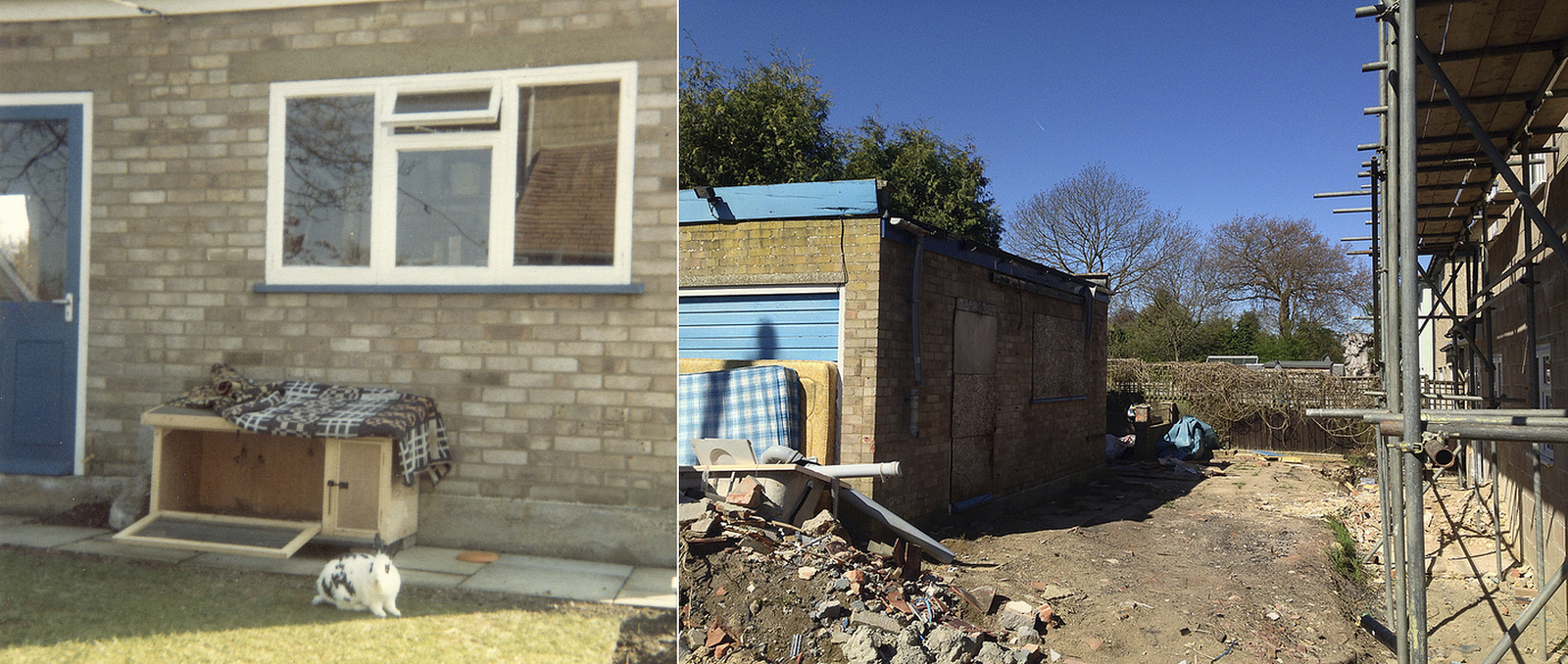
The lawn on which we had picnics, over which the rabbit – Patch – thundered, chasing Sammy the cat – and the beds beneath which those same animals, amongst many others, were interred, is now itself buried beneath new concrete floors and builder’s rubble.

It’s strange to think of someone standing in a kitchen, or sitting in a living room, on the exact same space where we once played.

And that’s what made me think of those Roman villas lost to the past beneath the ground; all those memories attached to those buildings which have soaked away like water, into the ground over the course of two millennia.

The garage is now a particularly mournful sight. Here, I spent many hours (often with enormous hair as evidenced by the photograph) on the drive, playing football with my brother and friends – or sometimes by myself (I can still hear the sound of the plastic ball skitting across the concrete and the bash of the blue metal door which was sometimes the goal). The sounds too at night of my dad arriving home in the car, the radio blaring as the wooden gates were opened; the whoosh of the garage door being lifted, are memories more permanent than the concrete drive itself. Now the garage is a sorry looking creature, whose full demise is certain, along with the shed tucked away behind (in which we sometimes slept on warm summer nights).

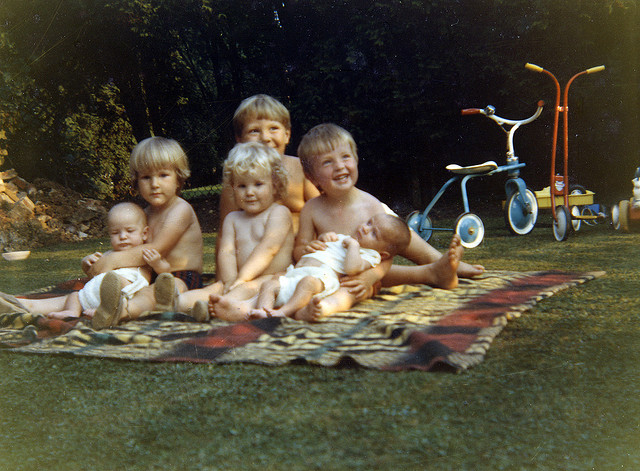
The photo below of me and my cousins (on my dad’s side) was taken when I was a baby in the summer of 1971.

The patch of grass on which we’re sitting would soon become the garage….

Filed Under: Family History, Trees Tagged With: Childhood, Coniston Avenue, Family History, Memory, Place

Lines Drawn in Water

October 22, 2012 by Nicholas Hedges

The following passage is taken from ‘The Old Ways: A Journey on Foot’ by Robert Macfarlane. In a chapter on water he writes:

“The second thing to know about sea roads is that they are not arbitrary. There are optimal routes to sail across open sea, as there are optimal routes to walk across open land. Sea roads are determined by the shape of the coastline (they bend out to avoid headlands, they dip towards significant ports, archipelagos and skerry guards) as well as by marine phenomena. Surface currents, tidal streams and prevailing winds all offer limits and opportunities for sea travel between certain places…”

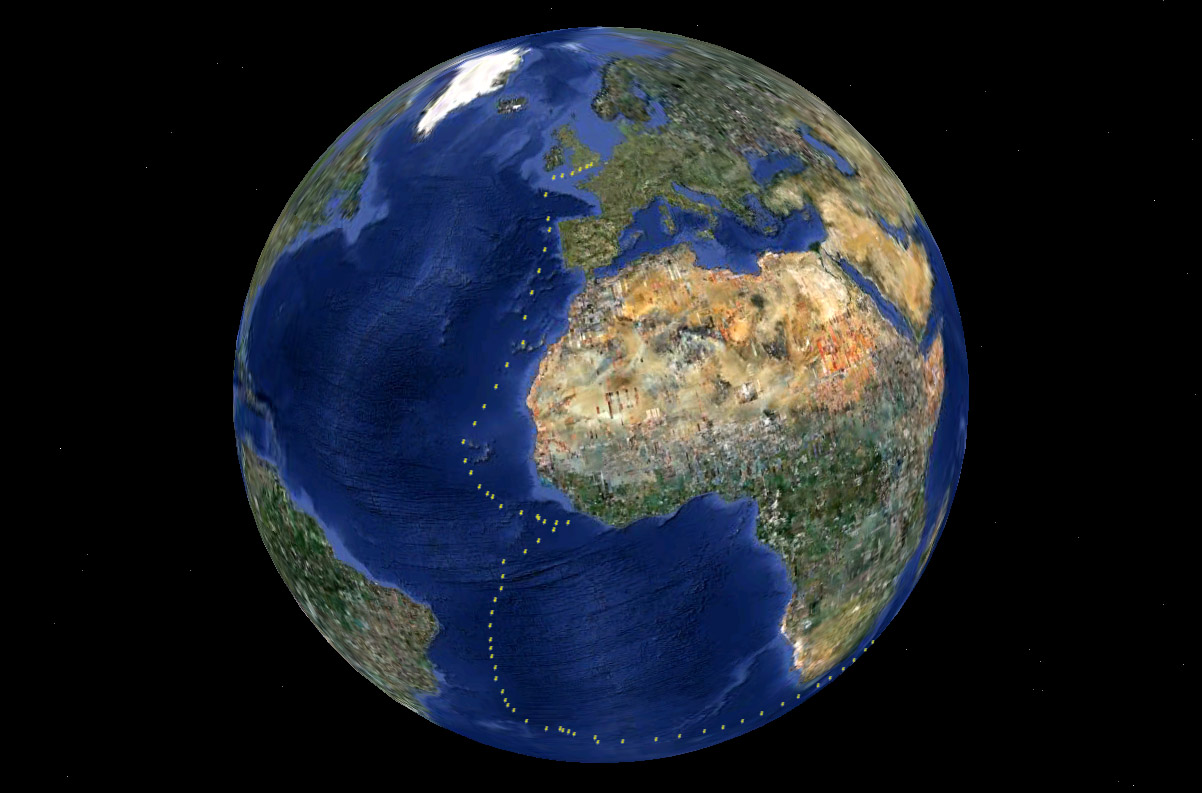
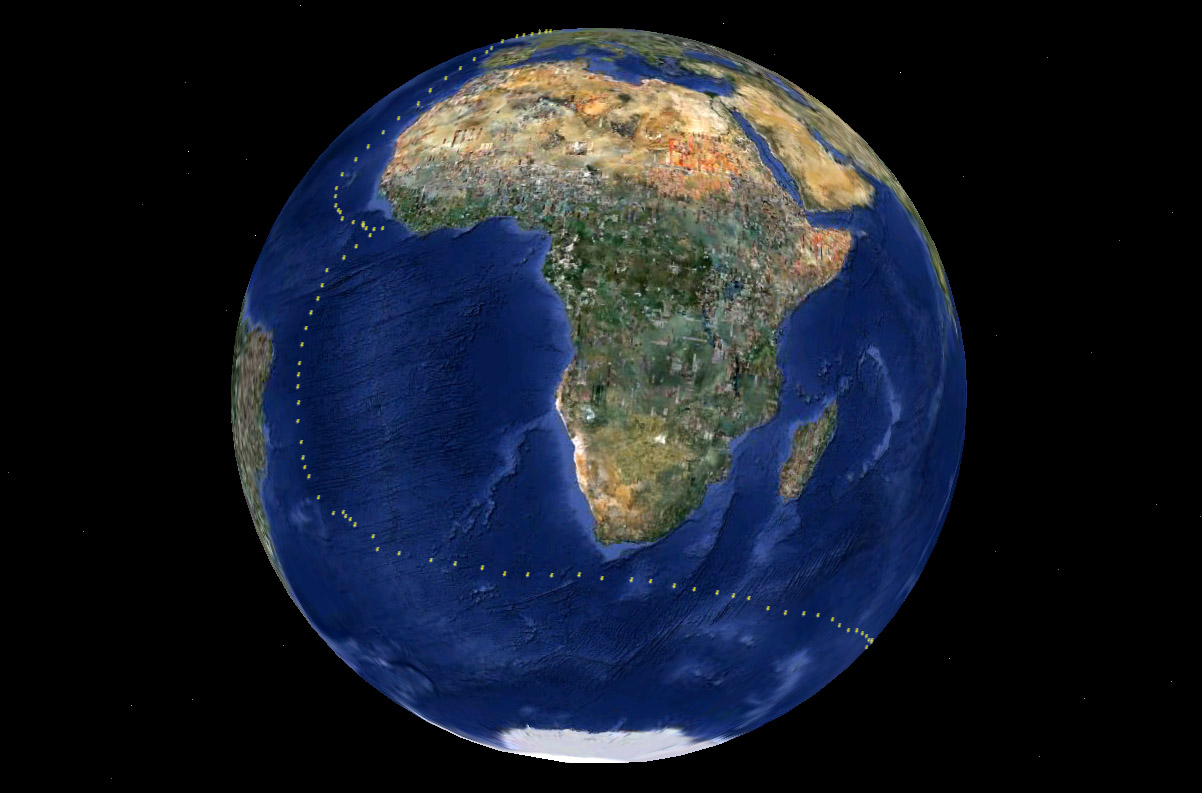
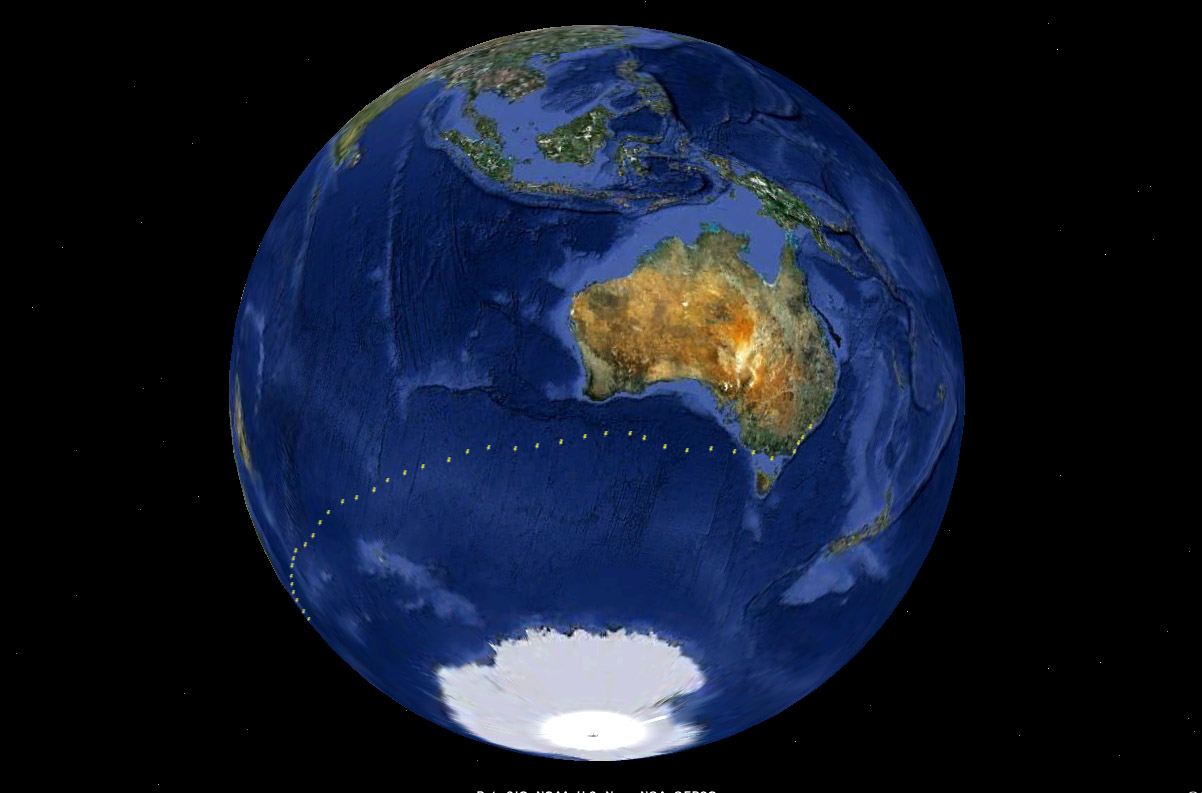
This reminded me of some work I did on my ancestor Stephen Hedges who was transported to Australia in 1828. In particular I thought about the route The Marquis of Hastings (the ship on which he sailed) took from Portsmouth to Port Jackson (Sydney) which I mapped using Google Earth and coordinates written down in a logbook by the ship’s surgeon, William Rae.

Macfarlane also writes:

“Such methods would have allowed early navigators to keep close to a desired track, and would have contributed over time to a shared memory map of the coastline and the best sea routes, kept and passed on as story and drawing…

Such knowledge became codified over time in the form of rudimentary charts and peripli, and then as route books in which sea paths were recorded as narratives and poems…

To Ian, traditional stories, like traditional songs, are closely kindred to the traditional seaways, in that they are highly contingent and yet broadly repeatable. ‘A song is different every time it’s sung,’ he told me, ‘and variations of wind, tide, vessel and crew mean that no voyage along a sea route will ever be the same.’ Each sea route, planned in the mind, exists first as anticipation, then as dissolving wake and then finally as logbook data. Each is ‘affected by isobars, / the stationing of satellites, recorded ephemera / hands on helms’. I liked that idea; it reminded me both of the Aboriginal Songlines, and of [Edward] Thomas’s vision of path as story, with each new walker adding a new note or plot-line to the way.”

One of the things I like about William Rae’s logbook of the journey aboard the Marquis of Hastings is the description of the weather. The world aboard a prison ship in 1828 is far removed from our experience, but we know weather and can therefore use his descriptions to bridge the gap between now and then; moving from – to use Macfarlane’s words – “logbook data” through “dissolving wake” and “anticipation,” all the way back to “planned in the mind.” The description of the weather therefore becomes a poem of sorts, echoing what Macfarlane writes above; how sea paths become narratives and poems, allowing me to step back into the mind of my ancestor.

Fresh Breeze. Mist and rain.
Strong Breeze. Cirro stratus. Horizon hazy.
Hard gale & raining. Heavy Sea.
Hard rain & Violent Squalls. Hail & rain.

Click here for a PDF transcript I made of the journey.

Filed Under: A Line Drawn in Water, Artist in Residence Tagged With: A Line Drawn In Water, Artist in Residence, Everydayness, Family Hedges, Family History, GPS, Hedges, Listmaking, Lists, Positioning, Stephen Hedges, Walks, Weather

Aerial Views

August 19, 2012 by Nicholas Hedges

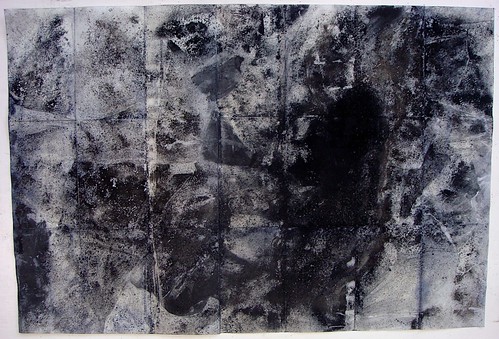
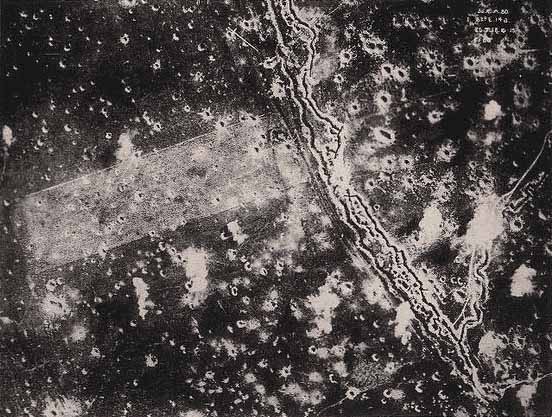
I worked on a piece yesterday, the origins of which were a GPS trace of trench systems around the village of Serre. I had the idea of ‘colouring’ each segment using ash, graphite and coal dust, but of course the boundaries between these segments blurred into more or less one. However, I liked the look of what I’d produced, which reminded me – in particular where I’d made the lines visible using a palette knife – of aerial photographs I’d seen of the trenches.

The first image I produced:

DSC07650

An aerial view of battlefields taken during the First World War:

The coal dust is significant for me as it alludes to the miners who worked beneath the battlefields, as well as those miners who were called up for duty such as my own great-great-uncle, Jonah Rogers who was killed near Ypres in 1915.
What I’d like to do now, is do another piece, creating the same texture but only using the folds of the paper to create the lines (and perhaps the creases).

Filed Under: World War I Tagged With: Aerial Views, Family History, Jonah Rogers, World War I, WWI

The Trial of Stephen Hedges 1828 in Morse Code

June 17, 2011 by Nicholas Hedges

Transcript

Berkshire Easter Sessions Newbury 1815. H. Stockwell, J. Harper (not in custody,) and S. Hedges of Abingdon, were indicted for stealing 154 lbs of lead, at Radley, the property of Benjamin Kent and Charles Jones, of Oxford, for receiving the lead, knowing it to be stolen. Stockwell and Hedges pleaded Guilty, but Jones pleaded “Not Guilty”. Jones was then put on trial for receiving the lead with a felonious knowledge etc. from the two prisoners who pleaded guilty. Mr. Shepherd said, he appeared on behalf of Mr. Kent, the prosecutor of Jones, under a new statute, (sec. 447, Geo. IV. C.29) which made the offence a felony. By the 54th sec. of the same statute the receiving of property feloniously stolen would constitute a felony. The circumstances of the case were sufficiently strong to satisfy the Jury that the lead was stolen. Mr. Kent examined I live at RadleyHouse about 100 yards from the office is a larder the roof is covered with lead. In January last a considerable quantity of it was stolen. Crossexamined by Mr. Talfourd I am tenant of the house. Sir James Bowyer is the proprietor. I am yearly tenant. James Smith examined I am servant to Mr. Kent the hips of the larder were covered with lead. The lead was stolen in January last I saw it gone on the 29th January. There was a ladder found near to the ditch. There were three hips cleared of lead. Richard Burgess examined I live at Abingdon, I am a sawyer on the 28th of January I went to Oxford, and on the road, having some bones in my cart to sell, I met the three men, Stockwell, Hedges and Harper. Hedges asked me if I were going to Oxford? And would I carry a parcel? I carried a parcel for them. Harper went back for something, for a bag the other two went on with me. Near Sir G. Bowyer’s Lodge I was desired to stop. I at first objected, but I did stop about five minutes.

Harper soon afterwards came up with a bag they went into a plantation, near where Mr. Kent lives they were not five minutes away when they brought a bag, which appeared to be very heavy. I never saw what was in the bag. Stockwell carried a piece of lead on his shoulder. This was afterwards put in the bag by Hedges and Stockwell. Shortly after Jones met the prisoners, and they had some conversation together. I went on to Oxford, to Mr. Round’s wharf and near the gates I put the parcel of lead down, and delivered the bones to be weighed. Stockwell and Jones came up in about half an hour, and put the bag with the lead into the cart again. I said, where are you to take this? And Jones said “Come on back again follow me.” I followed him up the Cityroad and near the Castle met Hedges and Harper. They turned back with us through Butcherrow when Jones called out, “Hold off there here it is,” meaning the place where it was to be taken to. The bag was taken out of the cart by Jones and Stockwell, and carried up a passage by Stockwell. They soon after came back, but I did not notice they had the bag. Jones said, “What are you going to give the man for bringing it?” When Stockwell said give him sixpence, and Jones did so. Crossexamined by Mr. Talfourd I am a sawyer I don’t collect bones. I don’t deal in lead. I did not know what was in the bag I had no suspicion whatever. I was carrying the bones for Mr. Owen of Abingdon. Mr. John King examined I am a glazier, in Oxford. I know Jones on the 28th January I saw him at my house. He came to say he had some lead to sell. I told him I wanted lead and asked him what price he wanted? He said 16s a hundred. I said lead was low in price, and if it was good for any thing I would buy it. He brought me the lead in about half an hour he said he had a hundred and a half.

Three young men came with him, but I should not know them again. I paid Jones for the lead he received 20s. 6d. It was in three pieces, I believe. Some pieces were afterwards cut up by my shopman. It corresponded with the hips from which it had been taken. James Smith produced the lead. The lead was given to me by Mr. Walker, the gaoler. I marked the lead before the Magistrates. Crossexamined. The price I gave was a fair price. I had before dealt with Jones, and have known him three or four years. I had never heard any thing against his character. Mr. D. Godfrey examined. I was present at the examination of Jones what he said I took down myself. This is the signature of Mr. Bowles, the Magistrate. The prisoner declined signing his statement. [It stated that the three prisoners asked him where there was a fence for lead. And then corroborated a good deal of the testimony as adduced by the prosecution.] Mr. Talfourd submitted there was no evidence of receiving to go to the Jury no actual receiving into possession. Mr Shepherd. That will be for the Jury to decide upon. Mr. Talfourd. And that is precisely what I mean to say. Chairman. He receives the lead, and makes a bargain for the sale of it. And if that is not receiving, I am at a loss to know what receiving is. Rev. Mr. Sawbridge. And he pays the carriage of the lead. E. Gardener Esq. Yes, and he helped to carry it up the passage. The prisoner in his defence said, I asked Stockwell how he came by the lead, when he replied Hedges is captain, and got it where he had been at work.

I said I would go to Mr. King, for there I could get a fair price. Stockwell wanted 14s or more for the hundred weight, and I told them all to go to Mr. King if they pleased. At last it was agreed I was to have all above 13s. for the first hundred, and all above 14s for the remainder. I have been left friendless for nine years, and have got the best living I could buying sheepskins, rabbitskins, or anything else, for I was not nice. When the young gentleman are at the University, I make pastry, and carry it about from house to house. I have one friend in court, a Mr. Dyer. Isaac Dyer called. I am brotherinlaw to the prisoner I am a confectioner at Abingdon I have known Jones for twelve years nearly, and always understood him to be an upright and bright character. He has been a youth of a thousand honestyry, and for getting through difficulties by industrysy. The Chairman summed up the case to the Jury. If the Jury were of opinion, that he did not know the lead was stolen that he had not a guilty knowledge, they must acquit him. Verdict Not Guilty. The Chairman cautioned Jones, previous to his discharge, to avoid purchasing lead and other articles, in future he had had a very narrow escape. Jones. I trust in God I shall it shall be a thorough caution. Hedges and Stockwell were ordered to stand at the bar, and were told their offence was not of a trifling nature, for, by a very old statute, it was severely punished and by the present statute the course may pass sentence of transportation. Under all the circumstances the sentence of the court was, that they be transported for seven years. In quitting the bar, Stockwell struck Hedges familiarly on the back, and laughed.

Transcript in Morse Code

-… . .-. -.- … …. .. .-. . / . .- … – . .-. / … . … … .. — -. … / -. . .– -… ..- .-. -.– / .—- —.. .—- ….. .-.-.- / …. .-.-.- / … – — -.-. -.- .– . .-.. .-.. –..– / .— .-.-.- / …. .- .-. .–. . .-. / -.–.- -. — – / .. -. / -.-. ..- … – — -.. -.– –..– -.–.- / .- -. -.. / … .-.-.- / …. . -.. –. . … / — ..-. / .- -… .. -. –. -.. — -. –..– / .– . .-. . / .. -. -.. .. -.-. – . -.. / ..-. — .-. / … – . .- .-.. .. -. –. / .—- ….. ….- / .-.. -… … / — ..-. / .-.. . .- -.. –..– / .- – / .-. .- -.. .-.. . -.– –..– / – …. . / .–. .-. — .–. . .-. – -.– / — ..-. / -… . -. .— .- — .. -. / -.- . -. – / .- -. -.. / -.-. …. .- .-. .-.. . … / .— — -. . … –..– / — ..-. / — -..- ..-. — .-. -.. –..– / ..-. — .-. / .-. . -.-. . .. …- .. -. –. / – …. . / .-.. . .- -.. –..– / -.- -. — .– .. -. –. / .. – / – — / -… . / … – — .-.. . -. .-.-.- / … – — -.-. -.- .– . .-.. .-.. / .- -. -.. / …. . -.. –. . … / .–. .-.. . .- -.. . -.. / –. ..- .. .-.. – -.– –..– / -… ..- – / .— — -. . … / .–. .-.. . .- -.. . -.. / .-..-. -. — – / –. ..- .. .-.. – -.– .-..-. .-.-.- / .— — -. . … / .– .- … / – …. . -. / .–. ..- – / — -. / – .-. .. .- .-.. / ..-. — .-. / .-. . -.-. . .. …- .. -. –. / – …. . / .-.. . .- -.. / .– .. – …. / .- / ..-. . .-.. — -. .. — ..- … / -.- -. — .– .-.. . -.. –. . / . – -.-. .-.-.- / ..-. .-. — — / – …. . / – .– — / .–. .-. .. … — -. . .-. … / .– …. — / .–. .-.. . .- -.. . -.. / –. ..- .. .-.. – -.– .-.-.- / — .-. .-.-.- / … …. . .–. …. . .-. -.. / … .- .. -.. –..– / …. . / .- .–. .–. . .- .-. . -.. / — -. / -… . …. .- .-.. ..-. / — ..-. / — .-. .-.-.- / -.- . -. – –..– / – …. . / .–. .-. — … . -.-. ..- – — .-. / — ..-. / .— — -. . … –..– / ..- -. -.. . .-. / .- / -. . .– / … – .- – ..- – . –..– / -.–.- … . -.-. .-.-.- / ….- ….- –… –..– / –. . — .-.-.- / .. …- .-.-.- / -.-. .-.-.- ..— —-. -.–.- / .– …. .. -.-. …. / — .- -.. . / – …. . / — ..-. ..-. . -. -.-. . / .- / ..-. . .-.. — -. -.– .-.-.- / -… -.– / – …. . / ….. ….- – …. / … . -.-. .-.-.- / — ..-. / – …. . / … .- — . / … – .- – ..- – . / – …. . / .-. . -.-. . .. …- .. -. –. / — ..-. / .–. .-. — .–. . .-. – -.– / ..-. . .-.. — -. .. — ..- … .-.. -.– / … – — .-.. . -. / .– — ..- .-.. -.. / -.-. — -. … – .. – ..- – . / .- / ..-. . .-.. — -. -.– .-.-.- / – …. . / -.-. .. .-. -.-. ..- — … – .- -. -.-. . … / — ..-. / – …. . / -.-. .- … . / .– . .-. . / … ..- ..-. ..-. .. -.-. .. . -. – .-.. -.– / … – .-. — -. –. / – — / … .- – .. … ..-. -.– / – …. . / .— ..- .-. -.– / – …. .- – / – …. . / .-.. . .- -.. / .– .- … / … – — .-.. . -. .-.-.- / — .-. .-.-.- / -.- . -. – / . -..- .- — .. -. . -.. / .. / .-.. .. …- . / .- – / .-. .- -.. .-.. . -.– …. — ..- … . / .- -… — ..- – / .—- —– —– / -.– .- .-. -.. … / ..-. .-. — — / – …. . / — ..-. ..-. .. -.-. . / .. … / .- / .-.. .- .-. -.. . .-. / – …. . / .-. — — ..-. / .. … / -.-. — …- . .-. . -.. / .– .. – …. / .-.. . .- -.. .-.-.- / .. -. / .— .- -. ..- .- .-. -.– / .-.. .- … – / .- / -.-. — -. … .. -.. . .-. .- -… .-.. . / –.- ..- .- -. – .. – -.– / — ..-. / .. – / .– .- … / … – — .-.. . -. .-.-.- / -.-. .-. — … … . -..- .- — .. -. . -.. / -… -.– / — .-. .-.-.- / – .- .-.. ..-. — ..- .-. -.. / .. / .- — / – . -. .- -. – / — ..-. / – …. . / …. — ..- … . .-.-.- / … .. .-. / .— .- — . … / -… — .– -.– . .-. / .. … / – …. . / .–. .-. — .–. .-. .. . – — .-. .-.-.- / .. / .- — / -.– . .- .-. .-.. -.– / – . -. .- -. – .-.-.- / .— .- — . … / … — .. – …. / . -..- .- — .. -. . -.. / .. / .- — / … . .-. …- .- -. – / – — / — .-. .-.-.- / -.- . -. – / – …. . / …. .. .–. … / — ..-. / – …. . / .-.. .- .-. -.. . .-. / .– . .-. . / -.-. — …- . .-. . -.. / .– .. – …. / .-.. . .- -.. .-.-.- / – …. . / .-.. . .- -.. / .– .- … / … – — .-.. . -. / .. -. / .— .- -. ..- .- .-. -.– / .-.. .- … – / .. / … .- .– / .. – / –. — -. . / — -. / – …. . / ..— —-. – …. / .— .- -. ..- .- .-. -.– .-.-.- / – …. . .-. . / .– .- … / .- / .-.. .- -.. -.. . .-. / ..-. — ..- -. -.. / -. . .- .-. / – — / – …. . / -.. .. – -.-. …. .-.-.- / – …. . .-. . / .– . .-. . / – …. .-. . . / …. .. .–. … / -.-. .-.. . .- .-. . -.. / — ..-. / .-.. . .- -.. .-.-.- / .-. .. -.-. …. .- .-. -.. / -… ..- .-. –. . … … / . -..- .- — .. -. . -.. / .. / .-.. .. …- . / .- – / .- -… .. -. –. -.. — -. –..– / .. / .- — / .- / … .- .– -.– . .-. / — -. / – …. . / ..— —.. – …. / — ..-. / .— .- -. ..- .- .-. -.– / .. / .– . -. – / – — / — -..- ..-. — .-. -.. –..– / .- -. -.. / — -. / – …. . / .-. — .- -.. –..– / …. .- …- .. -. –. / … — — . / -… — -. . … / .. -. / — -.– / -.-. .- .-. – / – — / … . .-.. .-.. –..– / .. / — . – / – …. . / – …. .-. . . / — . -. –..– / … – — -.-. -.- .– . .-.. .-.. –..– / …. . -.. –. . … / .- -. -.. / …. .- .-. .–. . .-. .-.-.- / …. . -.. –. . … / .- … -.- . -.. / — . / .. ..-. / .. / .– . .-. . / –. — .. -. –. / – — / — -..- ..-. — .-. -.. ..–.. / .- -. -.. / .– — ..- .-.. -.. / .. / -.-. .- .-. .-. -.– / .- / .–. .- .-. -.-. . .-.. ..–.. / .. / -.-. .- .-. .-. .. . -.. / .- / .–. .- .-. -.-. . .-.. / ..-. — .-. / – …. . — .-.-.- / …. .- .-. .–. . .-. / .– . -. – / -… .- -.-. -.- / ..-. — .-. / … — — . – …. .. -. –. –..– / ..-. — .-. / .- / -… .- –. / – …. . / — – …. . .-. / – .– — / .– . -. – / — -. / .– .. – …. / — . .-.-.- / -. . .- .-. / … .. .-. / –. .-.-.- / -… — .– -.– . .-. .—-. … / .-.. — -.. –. . / .. / .– .- … / -.. . … .. .-. . -.. / – — / … – — .–. .-.-.- / .. / .- – / ..-. .. .-. … – / — -… .— . -.-. – . -.. –..– / -… ..- – / .. / -.. .. -.. / … – — .–. / .- -… — ..- – / ..-. .. …- . / — .. -. ..- – . … .-.-.- / …. .- .-. .–. . .-. / … — — -. / .- ..-. – . .-. .– .- .-. -.. … / -.-. .- — . / ..- .–. / .– .. – …. / .- / -… .- –. / – …. . -.– / .– . -. – / .. -. – — / .- / .–. .-.. .- -. – .- – .. — -. –..– / -. . .- .-. / .– …. . .-. . / — .-. .-.-.- / -.- . -. – / .-.. .. …- . … / – …. . -.– / .– . .-. . / -. — – / ..-. .. …- . / — .. -. ..- – . … / .- .– .- -.– / .– …. . -. / – …. . -.– / -… .-. — ..- –. …. – / .- / -… .- –. –..– / .– …. .. -.-. …. / .- .–. .–. . .- .-. . -.. / – — / -… . / …- . .-. -.– / …. . .- …- -.– .-.-.- / .. / -. . …- . .-. / … .- .– / .– …. .- – / .– .- … / .. -. / – …. . / -… .- –. .-.-.- / … – — -.-. -.- .– . .-.. .-.. / -.-. .- .-. .-. .. . -.. / .- / .–. .. . -.-. . / — ..-. / .-.. . .- -.. / — -. / …. .. … / … …. — ..- .-.. -.. . .-. .-.-.- / – …. .. … / .– .- … / .- ..-. – . .-. .– .- .-. -.. … / .–. ..- – / .. -. / – …. . / -… .- –. / -… -.– / …. . -.. –. . … / .- -. -.. / … – — -.-. -.- .– . .-.. .-.. .-.-.- / … …. — .-. – .-.. -.– / .- ..-. – . .-. / .— — -. . … / — . – / – …. . / .–. .-. .. … — -. . .-. … –..– / .- -. -.. / – …. . -.– / …. .- -.. / … — — . / -.-. — -. …- . .-. … .- – .. — -. / – — –. . – …. . .-. .-.-.- / .. / .– . -. – / — -. / – — / — -..- ..-. — .-. -.. –..– / – — / — .-. .-.-.- / .-. — ..- -. -.. .—-. … / .– …. .- .-. ..-. / .- -. -.. / -. . .- .-. / – …. . / –. .- – . … / .. / .–. ..- – / – …. . / .–. .- .-. -.-. . .-.. / — ..-. / .-.. . .- -.. / -.. — .– -. –..– / .- -. -.. / -.. . .-.. .. …- . .-. . -.. / – …. . / -… — -. . … / – — / -… . / .– . .. –. …. . -.. .-.-.- / … – — -.-. -.- .– . .-.. .-.. / .- -. -.. / .— — -. . … / -.-. .- — . / ..- .–. / .. -. / .- -… — ..- – / …. .- .-.. ..-. / .- -. / …. — ..- .-. –..– / .- -. -.. / .–. ..- – / – …. . / -… .- –. / .– .. – …. / – …. . / .-.. . .- -.. / .. -. – — / – …. . / -.-. .- .-. – / .- –. .- .. -. .-.-.- / .. / … .- .. -.. –..– / .– …. . .-. . / .- .-. . / -.– — ..- / – — / – .- -.- . / – …. .. … ..–.. / .- -. -.. / .— — -. . … / … .- .. -.. / .-..-. -.-. — — . / — -. / -… .- -.-. -.- / .- –. .- .. -. / ..-. — .-.. .-.. — .– / — . .-.-.- .-..-. / .. / ..-. — .-.. .-.. — .– . -.. / …. .. — / ..- .–. / – …. . / -.-. .. – -.– .-. — .- -.. / .- -. -.. / -. . .- .-. / – …. . / -.-. .- … – .-.. . / — . – / …. . -.. –. . … / .- -. -.. / …. .- .-. .–. . .-. .-.-.- / – …. . -.– / – ..- .-. -. . -.. / -… .- -.-. -.- / .– .. – …. / ..- … / – …. .-. — ..- –. …. / -… ..- – -.-. …. . .-. .-. — .– / .– …. . -. / .— — -. . … / -.-. .- .-.. .-.. . -.. / — ..- – –..– / .-..-. …. — .-.. -.. / — ..-. ..-. / – …. . .-. . / …. . .-. . / .. – / .. … –..– .-..-. / — . .- -. .. -. –. / – …. . / .–. .-.. .- -.-. . / .– …. . .-. . / .. – / .– .- … / – — / -… . / – .- -.- . -. / – — .-.-.- / – …. . / -… .- –. / .– .- … / – .- -.- . -. / — ..- – / — ..-. / – …. . / -.-. .- .-. – / -… -.– / .— — -. . … / .- -. -.. / … – — -.-. -.- .– . .-.. .-.. –..– / .- -. -.. / -.-. .- .-. .-. .. . -.. / ..- .–. / .- / .–. .- … … .- –. . / -… -.– / … – — -.-. -.- .– . .-.. .-.. .-.-.- / – …. . -.– / … — — -. / .- ..-. – . .-. / -.-. .- — . / -… .- -.-. -.- –..– / -… ..- – / .. / -.. .. -.. / -. — – / -. — – .. -.-. . / – …. . -.– / …. .- -.. / – …. . / -… .- –. .-.-.- / .— — -. . … / … .- .. -.. –..– / .-..-. .– …. .- – / .- .-. . / -.– — ..- / –. — .. -. –. / – — / –. .. …- . / – …. . / — .- -. / ..-. — .-. / -… .-. .. -. –. .. -. –. / .. – ..–.. .-..-. / .– …. . -. / … – — -.-. -.- .– . .-.. .-.. / … .- .. -.. / –. .. …- . / …. .. — / … .. -..- .–. . -. -.-. . –..– / .- -. -.. / .— — -. . … / -.. .. -.. / … — .-.-.- / -.-. .-. — … … . -..- .- — .. -. . -.. / -… -.– / — .-. .-.-.- / – .- .-.. ..-. — ..- .-. -.. / .. / .- — / .- / … .- .– -.– . .-. / .. / -.. — -. .—-. – / -.-. — .-.. .-.. . -.-. – / -… — -. . … .-.-.- / .. / -.. — -. .—-. – / -.. . .- .-.. / .. -. / .-.. . .- -.. .-.-.- / .. / -.. .. -.. / -. — – / -.- -. — .– / .– …. .- – / .– .- … / .. -. / – …. . / -… .- –. / .. / …. .- -.. / -. — / … ..- … .–. .. -.-. .. — -. / .– …. .- – . …- . .-. .-.-.- / .. / .– .- … / -.-. .- .-. .-. -.– .. -. –. / – …. . / -… — -. . … / ..-. — .-. / — .-. .-.-.- / — .– . -. / — ..-. / .- -… .. -. –. -.. — -. .-.-.- / — .-. .-.-.- / .— — …. -. / -.- .. -. –. / . -..- .- — .. -. . -.. / .. / .- — / .- / –. .-.. .- –.. .. . .-. –..– / .. -. / — -..- ..-. — .-. -.. .-.-.- / .. / -.- -. — .– / .— — -. . … / — -. / – …. . / ..— —.. – …. / .— .- -. ..- .- .-. -.– / .. / … .- .– / …. .. — / .- – / — -.– / …. — ..- … . .-.-.- / …. . / -.-. .- — . / – — / … .- -.– / …. . / …. .- -.. / … — — . / .-.. . .- -.. / – — / … . .-.. .-.. .-.-.- / .. / – — .-.. -.. / …. .. — / .. / .– .- -. – . -.. / .-.. . .- -.. / .- -. -.. / .- … -.- . -.. / …. .. — / .– …. .- – / .–. .-. .. -.-. . / …. . / .– .- -. – . -.. ..–.. / …. . / … .- .. -.. / .—- -…. … / .- / …. ..- -. -.. .-. . -.. .-.-.- / .. / … .- .. -.. / .-.. . .- -.. / .– .- … / .-.. — .– / .. -. / .–. .-. .. -.-. . –..– / .- -. -.. / .. ..-. / .. – / .– .- … / –. — — -.. / ..-. — .-. / .- -. -.– / – …. .. -. –. / .. / .– — ..- .-.. -.. / -… ..- -.– / .. – .-.-.- / …. . / -… .-. — ..- –. …. – / — . / – …. . / .-.. . .- -.. / .. -. / .- -… — ..- – / …. .- .-.. ..-. / .- -. / …. — ..- .-. / …. . / … .- .. -.. / …. . / …. .- -.. / .- / …. ..- -. -.. .-. . -.. / .- -. -.. / .- / …. .- .-.. ..-. .-.-.- / – …. .-. . . / -.– — ..- -. –. / — . -. / -.-. .- — . / .– .. – …. / …. .. — –..– / -… ..- – / .. / … …. — ..- .-.. -.. / -. — – / -.- -. — .– / – …. . — / .- –. .- .. -. .-.-.- / .. / .–. .- .. -.. / .— — -. . … / ..-. — .-. / – …. . / .-.. . .- -.. / …. . / .-. . -.-. . .. …- . -.. / ..— —– … .-.-.- / -…. -.. .-.-.- / .. – / .– .- … / .. -. / – …. .-. . . / .–. .. . -.-. . … –..– / .. / -… . .-.. .. . …- . .-.-.- / … — — . / .–. .. . -.-. . … / .– . .-. . / .- ..-. – . .-. .– .- .-. -.. … / -.-. ..- – / ..- .–. / -… -.– / — -.– / … …. — .–. — .- -. .-.-.- / .. – / -.-. — .-. .-. . … .–. — -. -.. . -.. / .– .. – …. / – …. . / …. .. .–. … / ..-. .-. — — / .– …. .. -.-. …. / .. – / …. .- -.. / -… . . -. / – .- -.- . -. .-.-.- / .— .- — . … / … — .. – …. / .–. .-. — -.. ..- -.-. . -.. / – …. . / .-.. . .- -.. .-.-.- / – …. . / .-.. . .- -.. / .– .- … / –. .. …- . -. / – — / — . / -… -.– / — .-. .-.-.- / .– .- .-.. -.- . .-. –..– / – …. . / –. .- — .-.. . .-. .-.-.- / .. / — .- .-. -.- . -.. / – …. . / .-.. . .- -.. / -… . ..-. — .-. . / – …. . / — .- –. .. … – .-. .- – . … .-.-.- / -.-. .-. — … … . -..- .- — .. -. . -.. .-.-.- / – …. . / .–. .-. .. -.-. . / .. / –. .- …- . / .– .- … / .- / ..-. .- .. .-. / .–. .-. .. -.-. . .-.-.- / .. / …. .- -.. / -… . ..-. — .-. . / -.. . .- .-.. – / .– .. – …. / .— — -. . … –..– / .- -. -.. / …. .- …- . / -.- -. — .– -. / …. .. — / – …. .-. . . / — .-. / ..-. — ..- .-. / -.– . .- .-. … .-.-.- / .. / …. .- -.. / -. . …- . .-. / …. . .- .-. -.. / .- -. -.– / – …. .. -. –. / .- –. .- .. -. … – / …. .. … / -.-. …. .- .-. .- -.-. – . .-. .-.-.- / — .-. .-.-.- / -.. .-.-.- / –. — -.. ..-. .-. . -.– / . -..- .- — .. -. . -.. .-.-.- / .. / .– .- … / .–. .-. . … . -. – / .- – / – …. . / . -..- .- — .. -. .- – .. — -. / — ..-. / .— — -. . … / .– …. .- – / …. . / … .- .. -.. / .. / – — — -.- / -.. — .– -. / — -.– … . .-.. ..-. .-.-.- / – …. .. … / .. … / – …. . / … .. –. -. .- – ..- .-. . / — ..-. / — .-. .-.-.- / -… — .– .-.. . … –..– / – …. . / — .- –. .. … – .-. .- – . .-.-.- / – …. . / .–. .-. .. … — -. . .-. / -.. . -.-. .-.. .. -. . -.. / … .. –. -. .. -. –. / …. .. … / … – .- – . — . -. – .-.-.- / ? .. – / … – .- – . -.. / – …. .- – / – …. . / – …. .-. . . / .–. .-. .. … — -. . .-. … / .- … -.- . -.. / …. .. — / .– …. . .-. . / – …. . .-. . / .– .- … / .- / ..-. . -. -.-. . / ..-. — .-. / .-.. . .- -.. .-.-.- / .- -. -.. / – …. . -. / -.-. — .-. .-. — -… — .-. .- – . -.. / .- / –. — — -.. / -.. . .- .-.. / — ..-. / – …. . / – . … – .. — — -. -.– / .- … / .- -.. -.. ..- -.-. . -.. / -… -.– / – …. . / .–. .-. — … . -.-. ..- – .. — -. .-.-.- ? / — .-. .-.-.- / – .- .-.. ..-. — ..- .-. -.. / … ..- -… — .. – – . -.. / – …. . .-. . / .– .- … / -. — / . …- .. -.. . -. -.-. . / — ..-. / .-. . -.-. . .. …- .. -. –. / – — / –. — / – — / – …. . / .— ..- .-. -.– / -. — / .- -.-. – ..- .- .-.. / .-. . -.-. . .. …- .. -. –. / .. -. – — / .–. — … … . … … .. — -. .-.-.- / — .-. / … …. . .–. …. . .-. -.. .-.-.- / – …. .- – / .– .. .-.. .-.. / -… . / ..-. — .-. / – …. . / .— ..- .-. -.– / – — / -.. . -.-. .. -.. . / ..- .–. — -. .-.-.- / — .-. .-.-.- / – .- .-.. ..-. — ..- .-. -.. .-.-.- / .- -. -.. / – …. .- – / .. … / .–. .-. . -.-. .. … . .-.. -.– / .– …. .- – / .. / — . .- -. / – — / … .- -.– .-.-.- / -.-. …. .- .. .-. — .- -. .-.-.- / …. . / .-. . -.-. . .. …- . … / – …. . / .-.. . .- -.. –..– / .- -. -.. / — .- -.- . … / .- / -… .- .-. –. .- .. -. / ..-. — .-. / – …. . / … .- .-.. . / — ..-. / .. – .-.-.- / .- -. -.. / .. ..-. / – …. .- – / .. … / -. — – / .-. . -.-. . .. …- .. -. –. –..– / .. / .- — / .- – / .- / .-.. — … … / – — / -.- -. — .– / .– …. .- – / .-. . -.-. . .. …- .. -. –. / .. … .-.-.- / .-. . …- .-.-.- / — .-. .-.-.- / … .- .– -… .-. .. -.. –. . .-.-.- / .- -. -.. / …. . / .–. .- -.– … / – …. . / -.-. .- .-. .-. .. .- –. . / — ..-. / – …. . / .-.. . .- -.. .-.-.- / . .-.-.- / –. .- .-. -.. . -. . .-. / . … –.- .-.-.- / -.– . … –..– / .- -. -.. / …. . / …. . .-.. .–. . -.. / – — / -.-. .- .-. .-. -.– / .. – / ..- .–. / – …. . / .–. .- … … .- –. . .-.-.- / – …. . / .–. .-. .. … — -. . .-. / .. -. / …. .. … / -.. . ..-. . -. -.-. . / … .- .. -.. –..– / .. / .- … -.- . -.. / … – — -.-. -.- .– . .-.. .-.. / …. — .– / …. . / -.-. .- — . / -… -.– / – …. . / .-.. . .- -.. –..– / .– …. . -. / …. . / .-. . .–. .-.. .. . -.. / …. . -.. –. . … / .. … / -.-. .- .–. – .- .. -. –..– / .- -. -.. / –. — – / .. – / .– …. . .-. . / …. . / …. .- -.. / -… . . -. / .- – / .– — .-. -.- .-.-.- / .. / … .- .. -.. / .. / .– — ..- .-.. -.. / –. — / – — / — .-. .-.-.- / -.- .. -. –. –..– / ..-. — .-. / – …. . .-. . / .. / -.-. — ..- .-.. -.. / –. . – / .- / ..-. .- .. .-. / .–. .-. .. -.-. . .-.-.- / … – — -.-. -.- .– . .-.. .-.. / .– .- -. – . -.. / .—- ….- … / — .-. / — — .-. . / ..-. — .-. / – …. . / …. ..- -. -.. .-. . -.. / .– . .. –. …. – –..– / .- -. -.. / .. / – — .-.. -.. / – …. . — / .- .-.. .-.. / – — / –. — / – — / — .-. .-.-.- / -.- .. -. –. / .. ..-. / – …. . -.– / .–. .-.. . .- … . -.. .-.-.- / .- – / .-.. .- … – / .. – / .– .- … / .- –. .-. . . -.. / .. / .– .- … / – — / …. .- …- . / .- .-.. .-.. / .- -… — …- . / .—- …– … .-.-.- / ..-. — .-. / – …. . / ..-. .. .-. … – / …. ..- -. -.. .-. . -.. –..– / .- -. -.. / .- .-.. .-.. / .- -… — …- . / .—- ….- … / ..-. — .-. / – …. . / .-. . — .- .. -. -.. . .-. .-.-.- / .. / …. .- …- . / -… . . -. / .-.. . ..-. – / ..-. .-. .. . -. -.. .-.. . … … / ..-. — .-. / -. .. -. . / -.– . .- .-. … –..– / .- -. -.. / …. .- …- . / –. — – / – …. . / -… . … – / .-.. .. …- .. -. –. / .. / -.-. — ..- .-.. -.. / -… ..- -.– .. -. –. / … …. . . .–. … -.- .. -. … –..– / .-. .- -… -… .. – … -.- .. -. … –..– / — .-. / .- -. -.– – …. .. -. –. / . .-.. … . –..– / ..-. — .-. / .. / .– .- … / -. — – / -. .. -.-. . .-.-.- / .– …. . -. / – …. . / -.– — ..- -. –. / –. . -. – .-.. . — .- -. / .- .-. . / .- – / – …. . / ..- -. .. …- . .-. … .. – -.– –..– / .. / — .- -.- . / .–. .- … – .-. -.– –..– / .- -. -.. / -.-. .- .-. .-. -.– / .. – / .- -… — ..- – / ..-. .-. — — / …. — ..- … . / – — / …. — ..- … . .-.-.- / .. / …. .- …- . / — -. . / ..-. .-. .. . -. -.. / .. -. / -.-. — ..- .-. – –..– / .- / — .-. .-.-.- / -.. -.– . .-. .-.-.- / .. … .- .- -.-. / -.. -.– . .-. / -.-. .- .-.. .-.. . -.. .-.-.- / .. / .- — / -… .-. — – …. . .-. .. -. .-.. .- .– / – — / – …. . / .–. .-. .. … — -. . .-. / .. / .- — / .- / -.-. — -. ..-. . -.-. – .. — -. . .-. / .- – / .- -… .. -. –. -.. — -. / .. / …. .- …- . / -.- -. — .– -. / .— — -. . … / ..-. — .-. / – .– . .-.. …- . / -.– . .- .-. … / -. . .- .-. .-.. -.– –..– / .- -. -.. / .- .-.. .– .- -.– … / ..- -. -.. . .-. … – — — -.. / …. .. — / – — / -… . / .- -. / ..- .–. .-. .. –. …. – / .- -. -.. / -… .-. .. –. …. – / -.-. …. .- .-. .- -.-. – . .-. .-.-.- / …. . / …. .- … / -… . . -. / .- / -.– — ..- – …. / — ..-. / .- / – …. — ..- … .- -. -.. / …. — -. . … – -.– .-. -.– –..– / .- -. -.. / ..-. — .-. / –. . – – .. -. –. / – …. .-. — ..- –. …. / -.. .. ..-. ..-. .. -.-. ..- .-.. – .. . … / -… -.– / .. -. -.. ..- … – .-. -.– … -.– .-.-.- / – …. . / -.-. …. .- .. .-. — .- -. / … ..- — — . -.. / ..- .–. / – …. . / -.-. .- … . / – — / – …. . / .— ..- .-. -.– .-.-.- / .. ..-. / – …. . / .— ..- .-. -.– / .– . .-. . / — ..-. / — .–. .. -. .. — -. –..– / – …. .- – / …. . / -.. .. -.. / -. — – / -.- -. — .– / – …. . / .-.. . .- -.. / .– .- … / … – — .-.. . -. / – …. .- – / …. . / …. .- -.. / -. — – / .- / –. ..- .. .-.. – -.– / -.- -. — .– .-.. . -.. –. . –..– / – …. . -.– / — ..- … – / .- -.-. –.- ..- .. – / …. .. — .-.-.- / …- . .-. -.. .. -.-. – / -. — – / –. ..- .. .-.. – -.– .-.-.- / – …. . / -.-. …. .- .. .-. — .- -. / -.-. .- ..- – .. — -. . -.. / .— — -. . … –..– / .–. .-. . …- .. — ..- … / – — / …. .. … / -.. .. … -.-. …. .- .-. –. . –..– / – — / .- …- — .. -.. / .–. ..- .-. -.-. …. .- … .. -. –. / .-.. . .- -.. / .- -. -.. / — – …. . .-. / .- .-. – .. -.-. .-.. . … –..– / .. -. / ..-. ..- – ..- .-. . / …. . / …. .- -.. / …. .- -.. / .- / …- . .-. -.– / -. .- .-. .-. — .– / . … -.-. .- .–. . .-.-.- / .— — -. . … .-.-.- / .. / – .-. ..- … – / .. -. / –. — -.. / .. / … …. .- .-.. .-.. / .. – / … …. .- .-.. .-.. / -… . / .- / – …. — .-. — ..- –. …. / -.-. .- ..- – .. — -. .-.-.- / …. . -.. –. . … / .- -. -.. / … – — -.-. -.- .– . .-.. .-.. / .– . .-. . / — .-. -.. . .-. . -.. / – — / … – .- -. -.. / .- – / – …. . / -… .- .-. –..– / .- -. -.. / .– . .-. . / – — .-.. -.. / – …. . .. .-. / — ..-. ..-. . -. -.-. . / .– .- … / -. — – / — ..-. / .- / – .-. .. ..-. .-.. .. -. –. / -. .- – ..- .-. . –..– / ..-. — .-. –..– / -… -.– / .- / …- . .-. -.– / — .-.. -.. / … – .- – ..- – . –..– / .. – / .– .- … / … . …- . .-. . .-.. -.– / .–. ..- -. .. … …. . -.. / .- -. -.. / -… -.– / – …. . / .–. .-. . … . -. – / … – .- – ..- – . / – …. . / -.-. — ..- .-. … . / — .- -.– / .–. .- … … / … . -. – . -. -.-. . / — ..-. / – .-. .- -. … .–. — .-. – .- – .. — -. .-.-.- / ..- -. -.. . .-. / .- .-.. .-.. / – …. . / -.-. .. .-. -.-. ..- — … – .- -. -.-. . … / – …. . / … . -. – . -. -.-. . / — ..-. / – …. . / -.-. — ..- .-. – / .– .- … –..– / – …. .- – / – …. . -.– / -… . / – .-. .- -. … .–. — .-. – . -.. / ..-. — .-. / … . …- . -. / -.– . .- .-. … .-.-.- / .. -. / –.- ..- .. – – .. -. –. / – …. . / -… .- .-. –..– / … – — -.-. -.- .– . .-.. .-.. / … – .-. ..- -.-. -.- / …. . -.. –. . … / ..-. .- — .. .-.. .. .- .-. .-.. -.– / — -. / – …. . / -… .- -.-. -.- –..– / .- -. -.. / .-.. .- ..- –. …. . -.. .-.-.

Filed Under: A Line Drawn in Water, Artist in Residence Tagged With: Artist in Residence, Australia, Family History, Morse Code, Stephen Hedges

Reading Roads

March 8, 2011 by Nicholas Hedges

Introduction

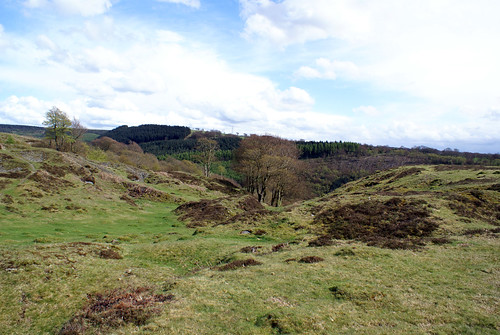
In Wales in 2008 I walked a path along which my great grandfather had walked every day from his home to the mines in which he worked. He died in 1929 (as a consequence of his work) and all I knew of him, before my visit, were what he looked like (from two photographs) and things my grandmother had told me. But on that path I felt I found him on a much deeper level. The feel of the wind, the way the clouds moved, the sound of the trees and the line of the horizon were all things he would have experienced in much the same way. It was as if these elements had combined to ‘remember’ him to me.

Hafodyrynys and Surrounds

As a consequence of my walk, the line which linked us on my genealogical chart changed to become instead a path, for when I follow lines in my family tree from one ancestor to the next and find myself at the end, so that path in Wales had led to my being born. That path on which I walked for the very first time, was as much a part of who I was as my great grandfather: “places belong to our bodies and our bodies belong to these places.” [i]
Roads (paths, tracks and traces) have become an important part of my research and it was whilst reading Edward Thomas’ poem Roads that I found connections between what he had written and what I was thinking. I’ve reproduced the poem below, and where necessary added my thoughts.

Roads by Edward Thomas (1878-1917)
I love roads:
The goddesses that dwell
Far along invisible
Are my favourite gods.
Roads go on
While we forget, and are
Forgotten like a star
That shoots and is gone.
The reference to stars (or a star) in this verse, reminds me of a quote (to which I often refer) from Roland Barthes’ book Camera Lucida, in which he writes:

“From a real body, which was there, proceed radiations which ultimately touch me, who am here; the duration of the transmission is insignificant; the photograph of the missing being as Sontag says, will touch me like the delayed rays of a star. A sort of umbilical cord links the body of the photographed thing to my gaze – light though impalpable, is here a carnal medium, a skin I share with anyone who has been photographed.”

The star shoots its light and is gone and similarly we walk and are gone. But what is left behind is the road, a version of the light left by the disappeared star; a ‘delayed’ ray which allows us to ‘see’ those who went before us. I use the word ‘see’, but we ‘see’ with our bodies. We see the light from the star, but we feel the road. This in turn brings me to the idea of empathy as something which is tactile and kinaesthetic.  Roads and paths become ‘a sort of umbilical cord… a carnal medium, a skin I share’ with those who’ve walked that road or path before – precisely what I’d felt in Wales.

On this earth ’tis sure
We men have not made
Anything that doth fade
So soon, so long endure:

In the third verse we might interpret the lines as a description of the difference between the act of walking and the road itself. We walk in the moment – a moment which fades in an instant (‘so soon’) and yet, behind us a record of the sum of all those moments is lined up along the road behind us – one which endures for centuries. It’s the same difference as that between speaking and writing; one is fleeting, the other endures. Christopher Tilley writes that “…if writing solidifies or objectifies speech into a material medium, a text which can be read and interpreted, an analogy can be drawn between a pedestrian speech act and its inscription or writing on the ground in the form of the path or track.” [ii] Paths and roads ‘record’ our movements, they are texts which we can read with our feet. 
The idea of the ‘moment’ is also discussed by artist Bill Viola who writes that:
“We have been living this same moment ever since we were conceived. It is memory, and to some extent sleep, that gives the impression of a life of discrete parts, periods or sections, of certain times or highlights. [iii]
This ‘same moment’ is in many respects like the act of walking and the road rolled into one; it fades and yet endures at one and the same time. There is an echo of this idea in Camera Lucida when Barthes writes:
“In the photograph, Time’s immobilisation assumes only an excessive, monstrous mode: Time is engorged…” [iv]
I described earlier, how the path on which I walked in Wales was as much a part of me as my great grandfather; it was the first time I’d ever walked it and yet I was a part of it long before I was born. There is then a continuous moment running along all paths and roads, and it’s memory and to some extent birth and death that gives the impression of discrete parts. This ‘universal’ moment is the ‘nowness’ of the present and it was this ‘nowness’ which I experienced on that path in Wales and which I’ve since been exploring in my work as regards empathy.
“The feel of the wind, the way the clouds moved, the sound of the trees and the line of the horizon were all things he would have experienced in much the same way.”
The third verse in Thomas’ poem seems to me to allude to the idea of experiencing the moment:

The hill road wet with rain
In the sun would not gleam
Like a winding stream
If we trod it not again.

The ‘we’ in the last line refers to us as individuals, whether ‘we’ were walking that path in 1915 or today in 2011; if ‘we’ weren’t there to see it, it wouldn’t be seen at all. 
In the fourth verse we read the following:

They are lonely
While we sleep, lonelier
For lack of the traveller
Who is now a dream only.

Before I look at this verse, I want to look at another quote; this time from the catalogue of a Paul Nash exhibition in which David Fraser Jenkins writes how Nash:
“…did not often show people in the landscape, even walking about in his lanes and paths, and as a result his pictures look deserted… Despite this absence, there is in his pictures a remarkable sense of drama, and it is this reaction between things – the trees or the buildings… that these pictures are about.” [v]
Looking at the fourth verse above, we can say that the ‘lack of the traveller’ alludes to the passing of that traveller, whether from the immediate scene, or perhaps life itself. Either way, all that’s left of what Sontag called ‘the missing being’ is the trace of the road on which they walked, the text written as they travelled. That traveller is now a dream, dreamt by the road and the elements by which it’s surrounded, a dream which I see expressed by David Fraser Jenkins as a ‘remarkable sense of drama’. The road might be lonely, but it’s never empty; the trees, the buildings, the feel of the wind and the way the clouds move all dream of the traveller – the missing being. There’s also a parallel to be found here in Rainer Maria Rilke’s Duino Elegies, where in the second elegy we read:
Look – trees exist.
The houses we live in continue to stand. Only we
pass away like air traded for air and everything
conspires to maintain silence about us, perhaps
half out of shame, half out of unspeakable hope. [vi]
This ‘silence’ alludes I think to what Jenkins describes as a ‘remarkable sense of drama’ and what I have called a ‘dream’. But how can we connect with these? In his book The Materiality of Stone,  Explorations in Landscape Phenomenology, Christopher Tilley writes:
“The painter sees the tree and the trees see the painter, not because the trees have eyes, but because the trees affect, move the painter, become part of the painting that would be impossible without their presence. In this sense the trees have agency and are not merely passive objects. [Martin] Dillon comments: “The trees ‘see’ the painter in a manner comparable to that in which the mirror ‘sees’ the painter: that is, the trees, like the mirror, let him become visible: they define a point of view on him which renders visible for him something that otherwise would remain invisible – his outside, his physiognomy, his carnal presence… The trees and mirror function as Other.” [vii]
Just as the trees function as what Dillon calls ‘Other’, so does everything else. It’s as if the shapes of disappeared travellers are somehow retained, like the people-shaped holes in the ash of Pompeii, which when filled with plaster, revealed the presence of people lost for almost 2000 years. Similarly, people-shaped holes exist along every road or path; gaps which can only be filled with our own bodies, by our own presence; by our experience of the nowness of the present.
In a definition of the Metaphysical poets, Georg Lukács described their common trait of ‘looking beyond the palpable’ whilst ‘attempting to erase one’s own image from the mirror in front so that it should reflect the not-now and not-here.’ [viii] For me, the road is the mirror which Lukács describes, and as I walk along it, I try to look beyond the palpable, to erase my own image so that the road reflects the not-­now and not-here. The palpable is the present (as opposed to the nowness of the past); the not-now and not-here is the nowness of that continuous moment in its entirety. To erase one’s image is to imagine one’s own non-existence, to see a part of that continuous moment when one did not exist, when that part was nonetheless now. It is about seeing the presentness of past events.  

From dawn’s twilight
And all the clouds like sheep
On the mountains of sleep
They wind into the night.

The next turn may reveal
Heaven: upon the crest
The close pine clump, at rest
And black, may Hell conceal.

Often footsore, never
Yet of the road I weary,
Though long and steep and dreary,
As it winds on for ever.

Helen of the roads,
The mountain ways of Wales
And the Mabinogion* tales
Is one of the true gods,

(*In the tale of Lludd and Lleuelys from the Mabinogion, you will find the following text: “Some time after that, Lludd had the island measured in length and breadth; the middle point was found to be in Oxford. There he had the earth dug up, and in that hole he put a vat full of the best mead that could be made, with a silk veil over the surface. He himself stood watch that night.” I discovered this passage whilst researching my Welsh ancestry, and being as I am from Oxford, found it rather appealing.)

Abiding in the trees,
The threes and fours so wise,
The larger companies,
That by the roadside be,

And beneath the rafter
Else uninhabited
Excepting by the dead;
And it is her laughter

At morn and night I hear
When the thrush cock sings
Bright irrelevant things,
And when the chanticleer

Calls back to their own night
Troops that make loneliness
With their light footsteps’ press,
As Helen’s own are light.

Now all roads lead to France
And heavy is the tread
Of the living; but the dead
Returning lightly dance:

Whatever the road bring
To me or take from me,
They keep me company
With their pattering,

Crowding the solitude
Of the loops over the downs,
Hushing the roar of towns
And their brief multitude.

The line ‘Now all roads lead to France’ reminds us that those who fell and are buried in France (and indeed other countries) were men with lives beyond the theatre of war – that the theatre of war extends well beyond the boundaries of any trench map. To know them and to know the missing, we have to follow the roads from France back to the towns and villages where they lived, just as to know ourselves we should follow the roads and paths from our own hometowns to those of our ancestors. To walk those streets, paths and tracks, is to turn them back into ‘consanguineal lines’; to restore lost connections in forgotten family trees; to remind us that those who fought and died were each part of a family as well as a wider community of friends and acquaintances.
The road brings and takes away and the dead keep us company at every step ‘with their pattering’. Again this could refer to the idea of the moment as being both fleeting and enduring. The moment is like a looped recording which plays and records at the same time, creating a kind of palimpsest, where all that’s gone before is contained in a moment, like light, tens of thousands of years old seen in a single second.
The line ‘Crowding the solitude,’ echoes what I wrote earlier, that roads might be lonely, but they’re never empty. And finally in the last two lines, Thomas reminds us of our own mortality; where the multitudes that make the towns roar are themselves brief. 


i Christopher Tilley, 1994, A Phenomenology of Landscape, Oxford, England, Berg
ii Christopher Tilley, 2004, The Materiality of Stone – Explorations in Landscape Phenomenology, Oxford, England, Berg
iii Bill Viola, 2005, Reasons for Knocking at an Empty House, Writings 1973-1994, Thames & Hudson
iv Camera Lucida, Roland Barthes, Vintage, 2000
v David Fraser Jenkins, 2010, Paul Nash – The Elements, London, Scala Publishers Ltd.
vi Rainer Maria Rilke, Tr. Martyn Crucefix, 2006, Duino Elegies, London, Enitharmon Press
vii Christopher Tilley, 2004, The Materiality of Stone – Explorations in Landscape Phenomenology, Oxford, England, Berg
viii http://en.wikipedia.org/wiki/Metaphysical_poets

Filed Under: Paintings, Trees Tagged With: Barthes, Bill Viola, Christopher Tilley, Family History, Family Jones, Jones, Paintings, Paths, Paul Nash, Rilke, Roads, Silence, Stars, War Poets, World War I, WWI

Light and Sound

December 22, 2010 by Nicholas Hedges

Whilst updating the Family Tree section of my website, I listened again to part of an interview I recorded with my Nana in December 2007. She died just under a year later and the three hours I spent with her that afternoon, talking about her life have come to be amongst the most important I can remember. And whilst the content of our conversations were often moving, listening to it now, two years after her death, I began to think about how the act of listening to her, now that she is no longer with us affected me, comparing it to how I feel, when looking at photographs of those who have died. Does the difference between the two media, between light and sound, change the way we respond to the past? And if so, how?

Filed Under: Family History Tagged With: Family History, Family Jones, Interview, Jones, Nana

Sail

November 27, 2010 by Nicholas Hedges

Carrying on with the work I did in Australia, I’ve spent the last couple of days videoing the canvas ‘sail’ that I made there, which was itself made from the pattern of several walks made around Newcastle, NSW. This work (‘Repaired Sail of HMS York (1828)’) is in many respects linked to a piece I made for my third Mine the Mountain exhibition called  ‘Old Battle Flags‘ and is about the feel of the wind – the wind being something which although one may read about in history (particularly in the context of sailing) one can only experience in the present (of course the same could be said of everything else, but in light of the theme of this residency, the wind is especially pertinent).

This piece is about the disparity between language and experience. The wind we feel today is the same wind that’s blown over – and indeed through – the centuries and millennia. In winter the wind may blow from the east, from the vast and distant land of Siberia – a place well beyond the horizon but nevertheless a place which exists all the same. 

The sail is made from my own past experiences, and the wind a reminder of movement in the past – that which is missing from the pages of history. It’s also about the everydayness of the past – something which we take often for granted like so much else but which is integral to our experience of the world.

Filed Under: A Line Drawn in Water, Artist in Residence Tagged With: A Line Drawn In Water, Artist in Residence, Australia, Everydayness, Family Hedges, Family History, Hedges, Lines, Stephen Hedges, Walks

The Geographer

November 21, 2010 by Nicholas Hedges

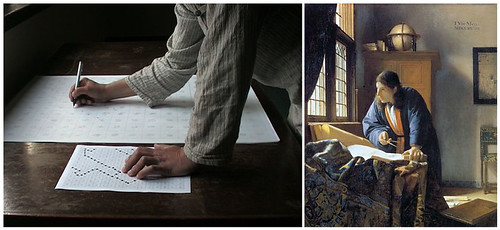
The Geographer

A still from some video footage of me in Australia, drawing out a map of one of the walks I did there alongside Vermeer’s ‘Geographer.’ I’m interested in the idea of performance and had something like Vermeer’s image in mind whilst I was creating my work.

Filed Under: A Line Drawn in Water, Artist in Residence Tagged With: A Line Drawn In Water, Artist in Residence, Australia, Everydayness, Family Hedges, Family History, Hedges, Lines, Stephen Hedges, Walks

Birds and Words

November 21, 2010 by Nicholas Hedges

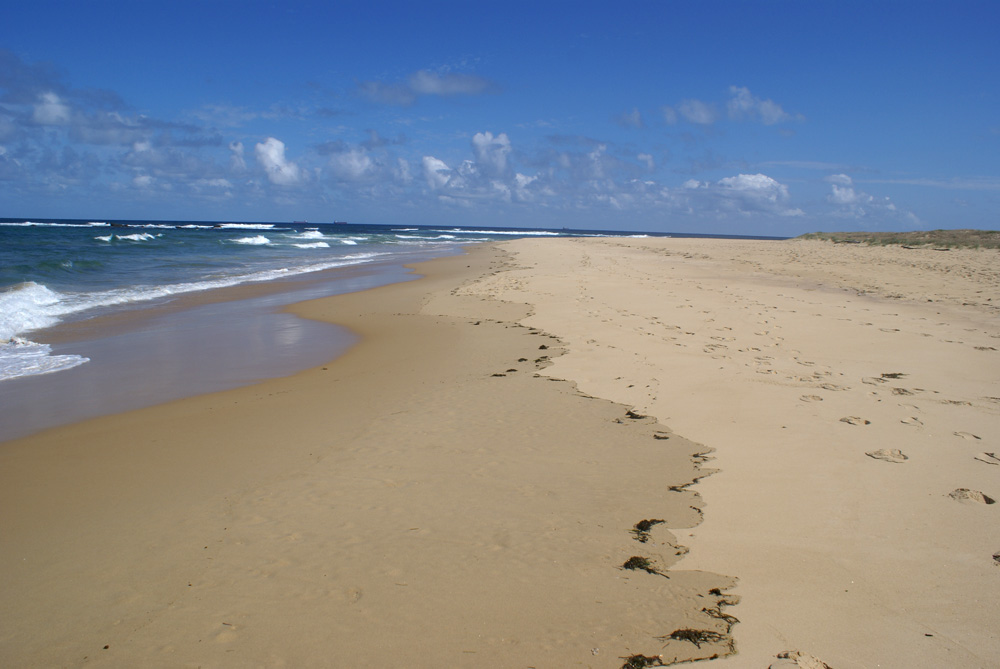
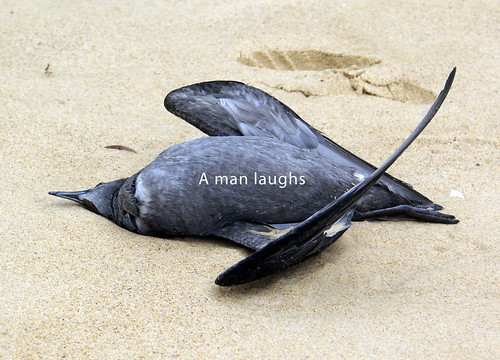
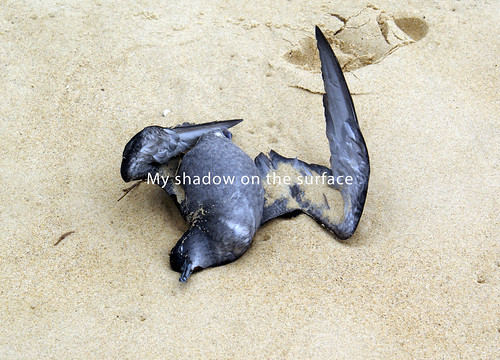
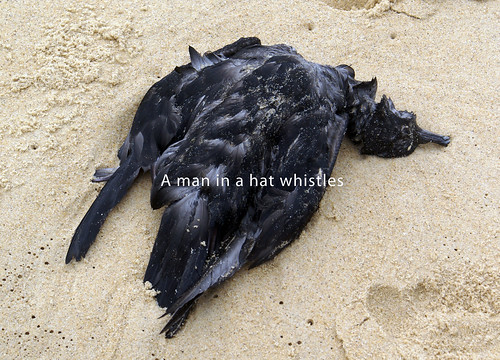
The photographs of dead birds which I took on Newcastle beach are particularly poignant; the lifeless bodies which had once soared high in the sky above are analogous with lost moments in time and, indeed, with the photograph itself. Dying out at sea, the birds had been washed up on the beach, joined in a line marked by that of the tide, rather like the words in my sketchbook, joined by the trace of the line of a walk.

Putting the two together seems to make sense; the words of the walks referring to moments which once lived and which in the instant they were written down fell to the ground like the birds themselves. With every reading they are as those birds washed back up on the beach, joined again by a line – this time, the act of reading in sequence, or of reading them out loud.

Birds and Words

Birds and Words

Birds and Words

Filed Under: Artist in Residence Tagged With: A Line Drawn In Water, Artist in Residence, Australia, Birds, Everydayness, Family Hedges, Family History, Hedges, Lines, Stephen Hedges, Walks

Return to England

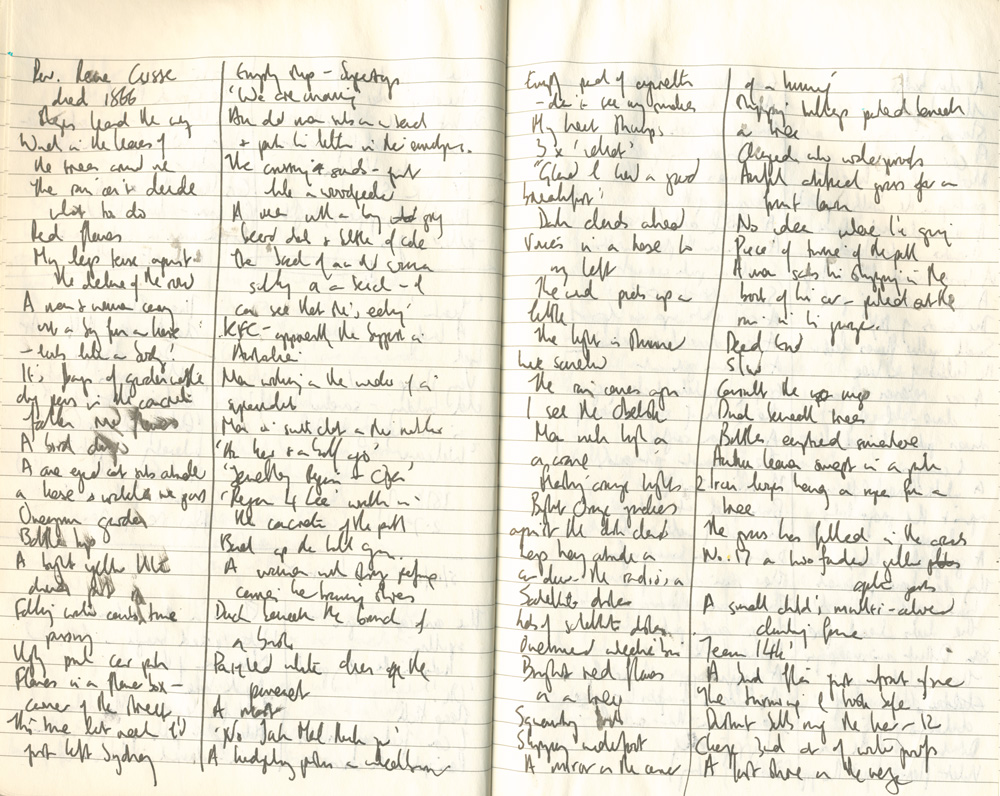
November 20, 2010 by Nicholas Hedges

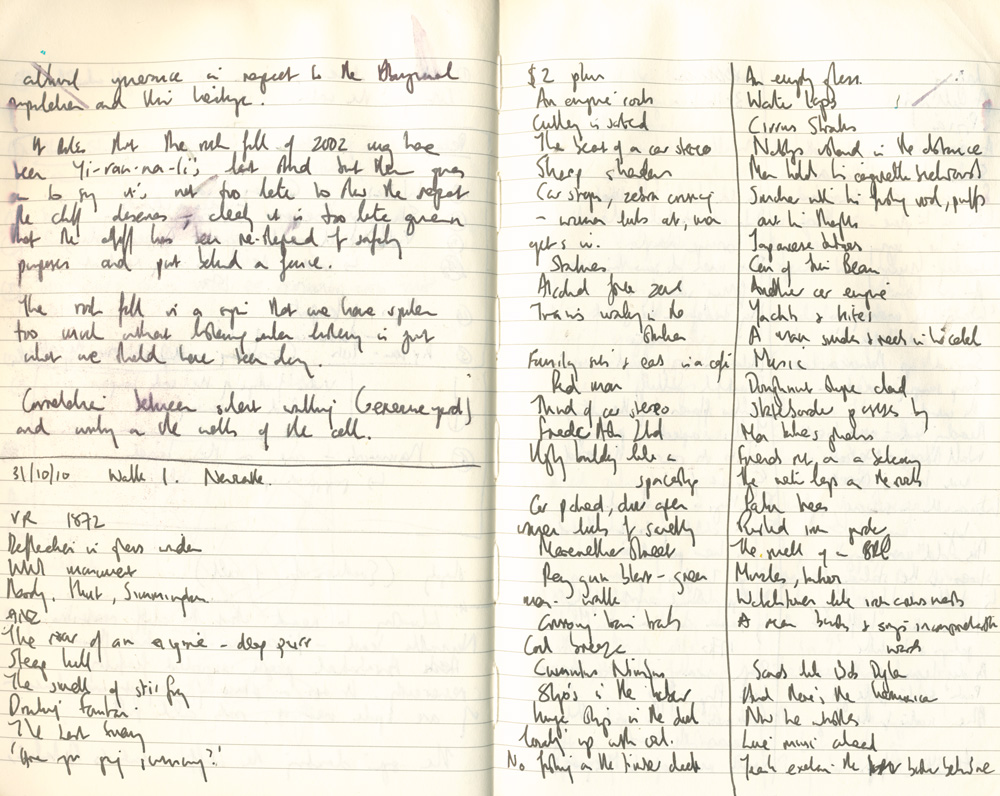
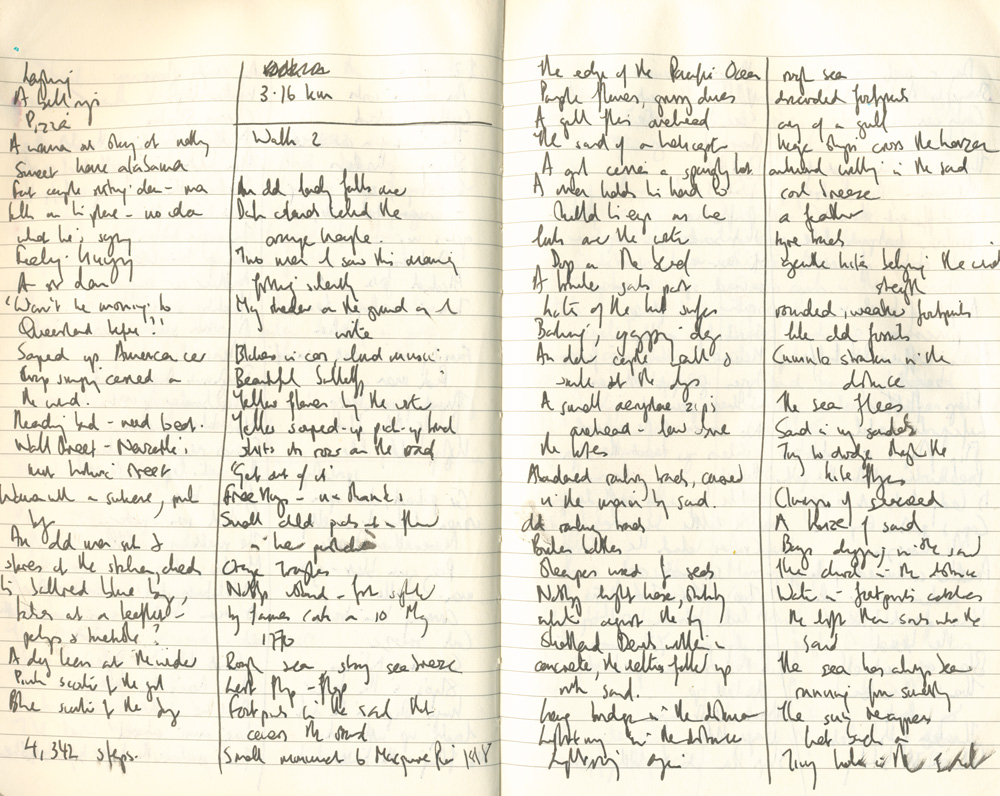
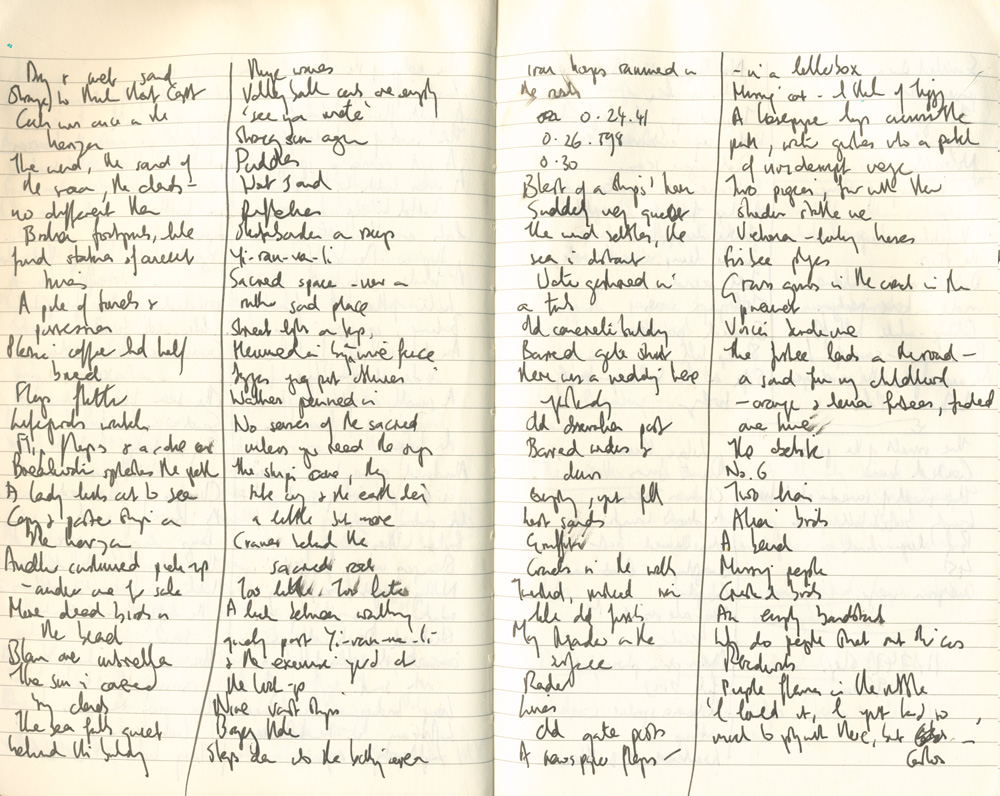
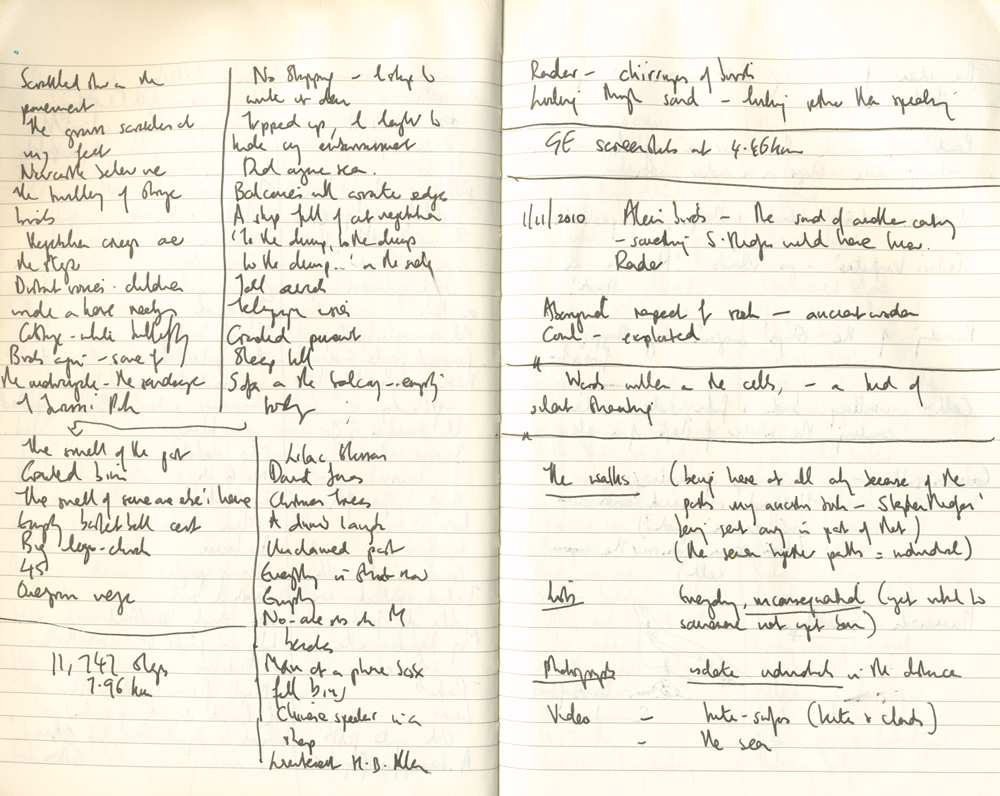
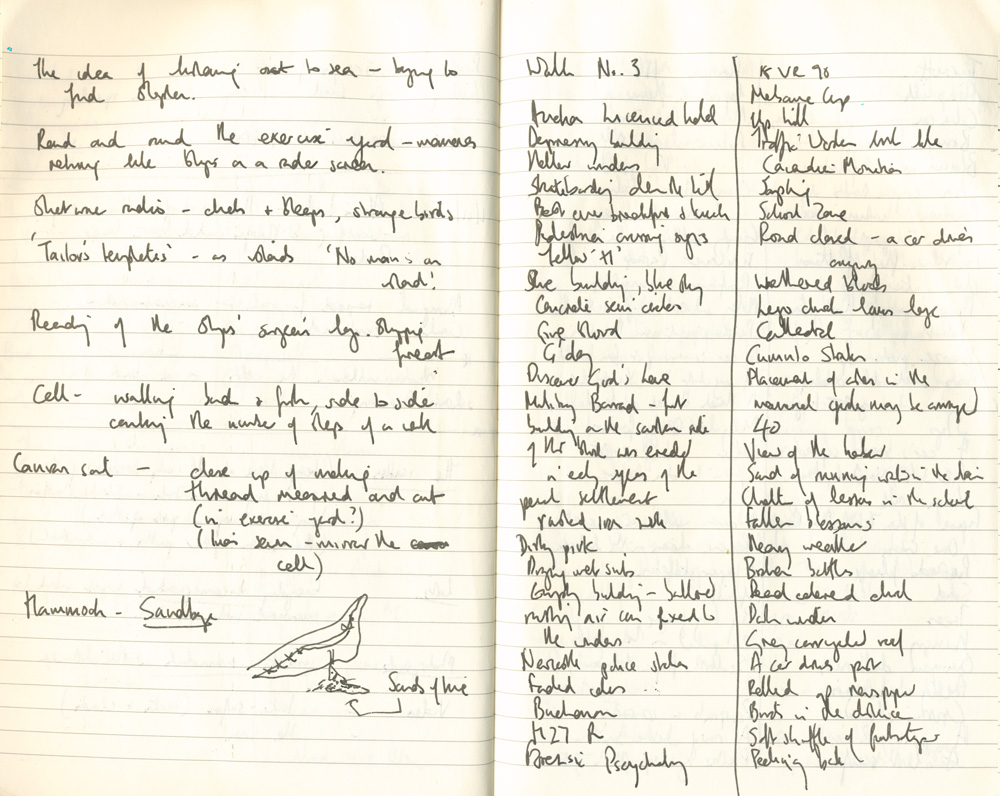
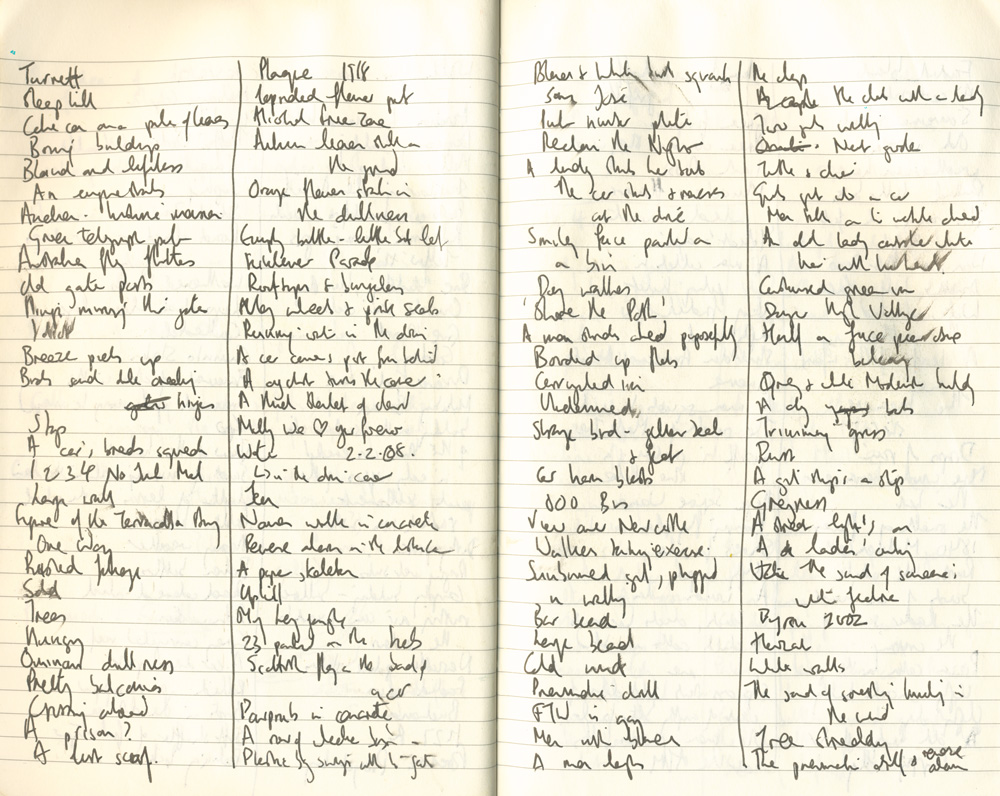
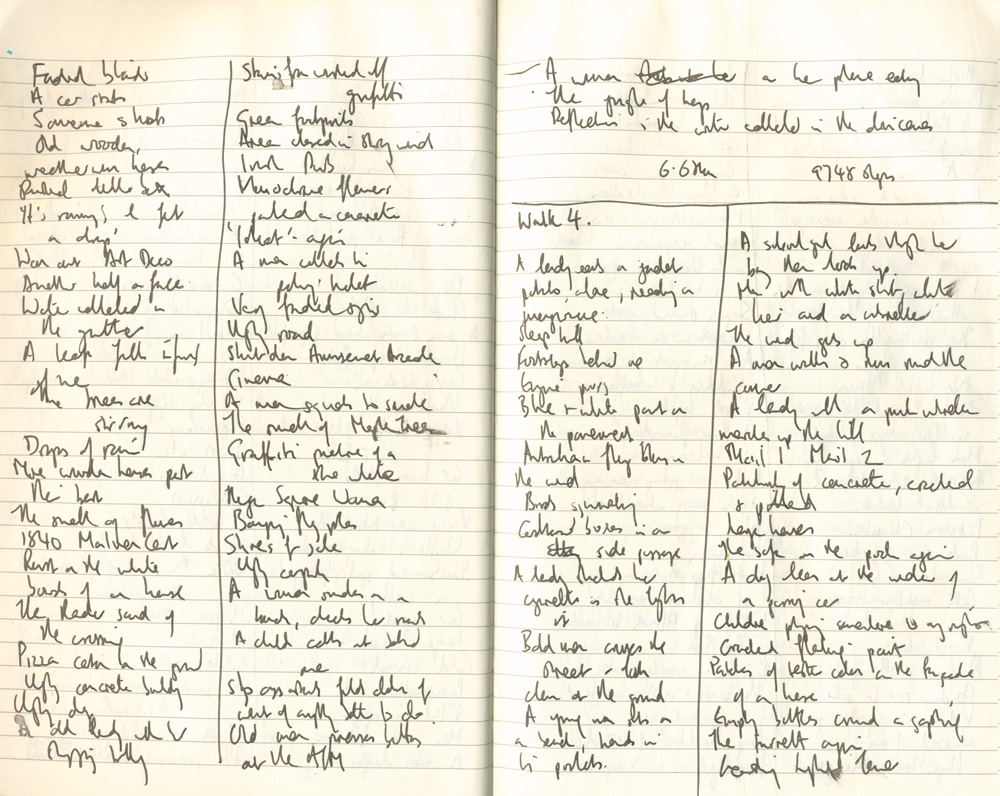
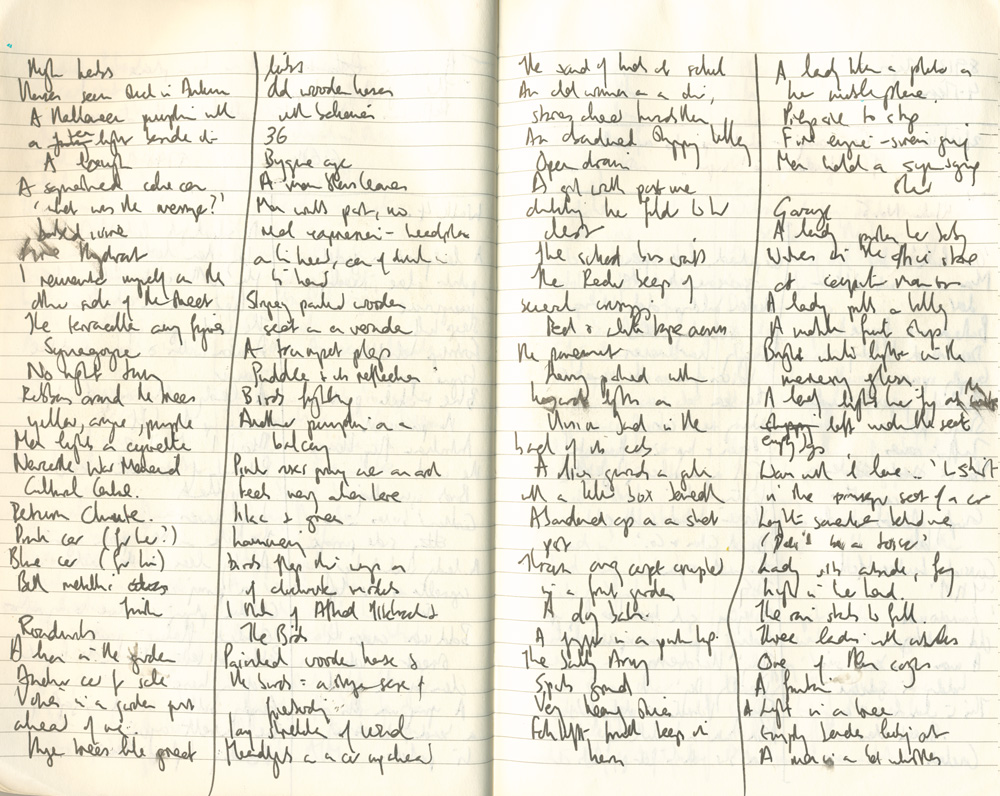
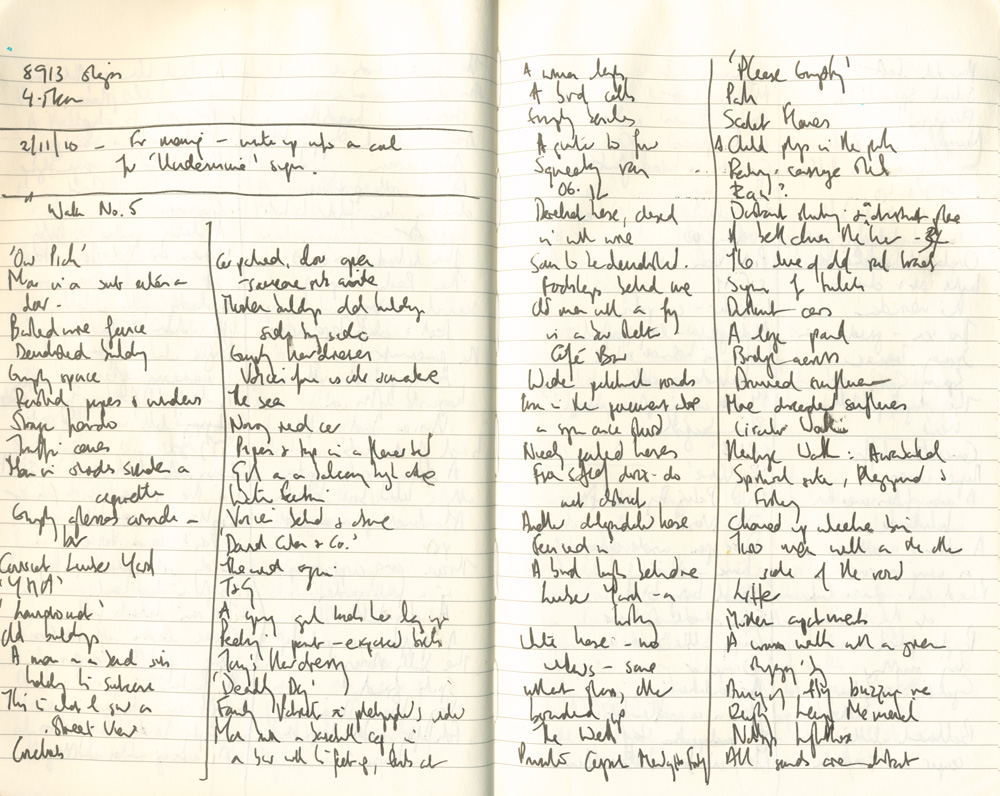
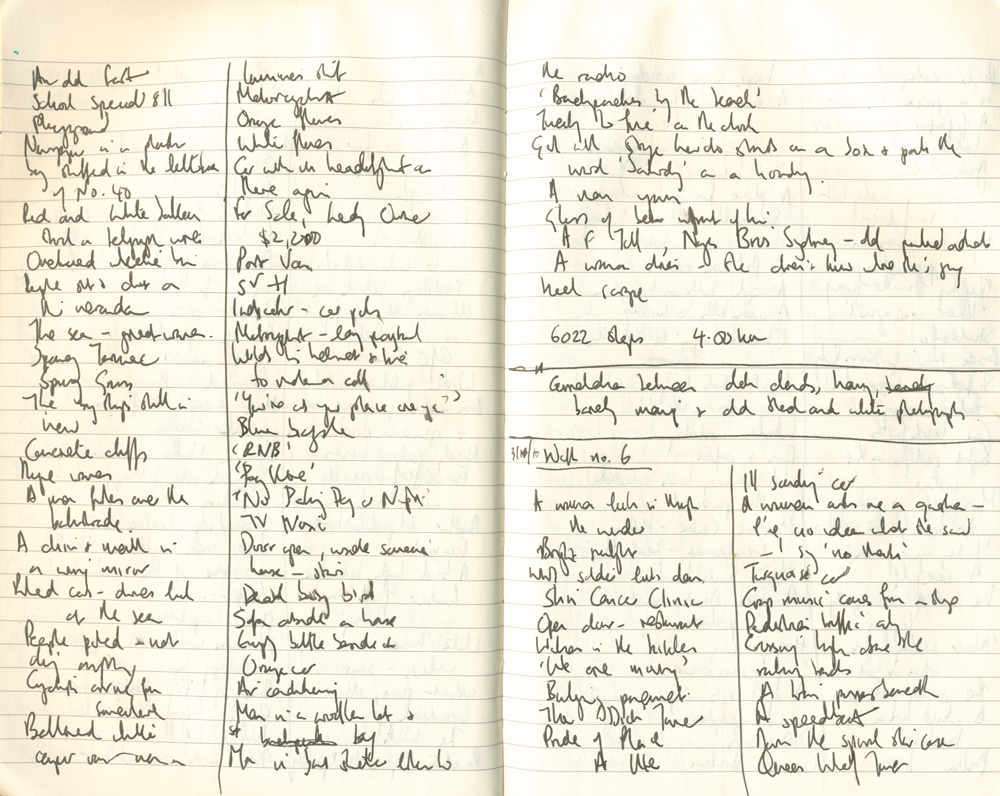
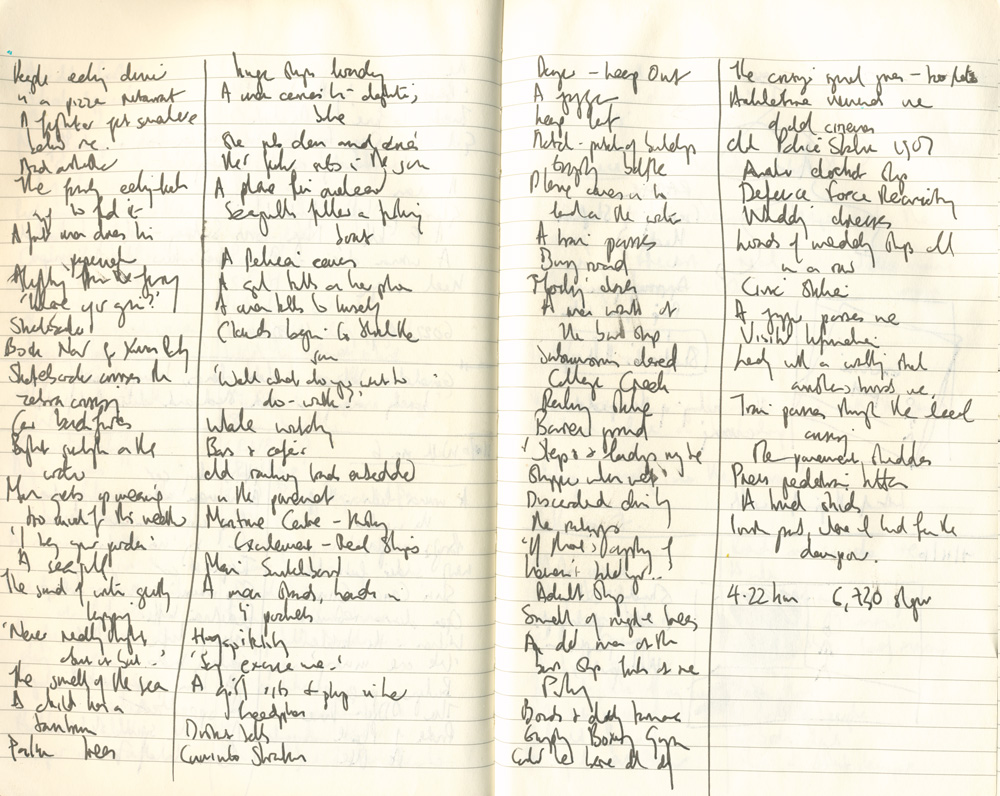
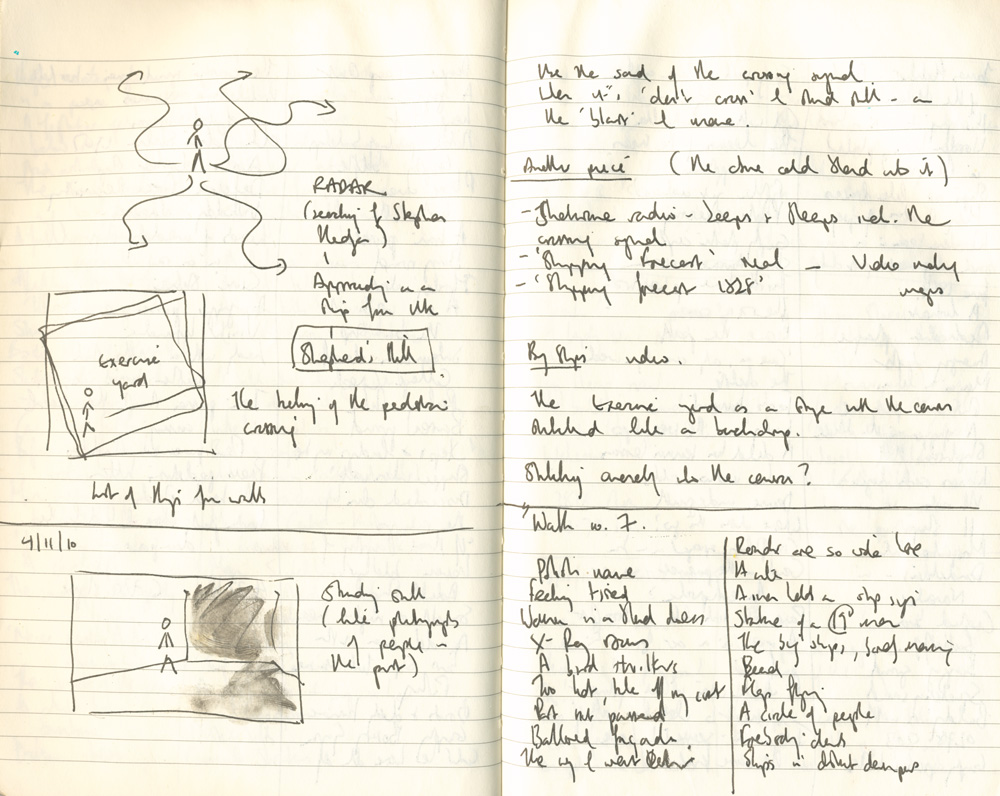
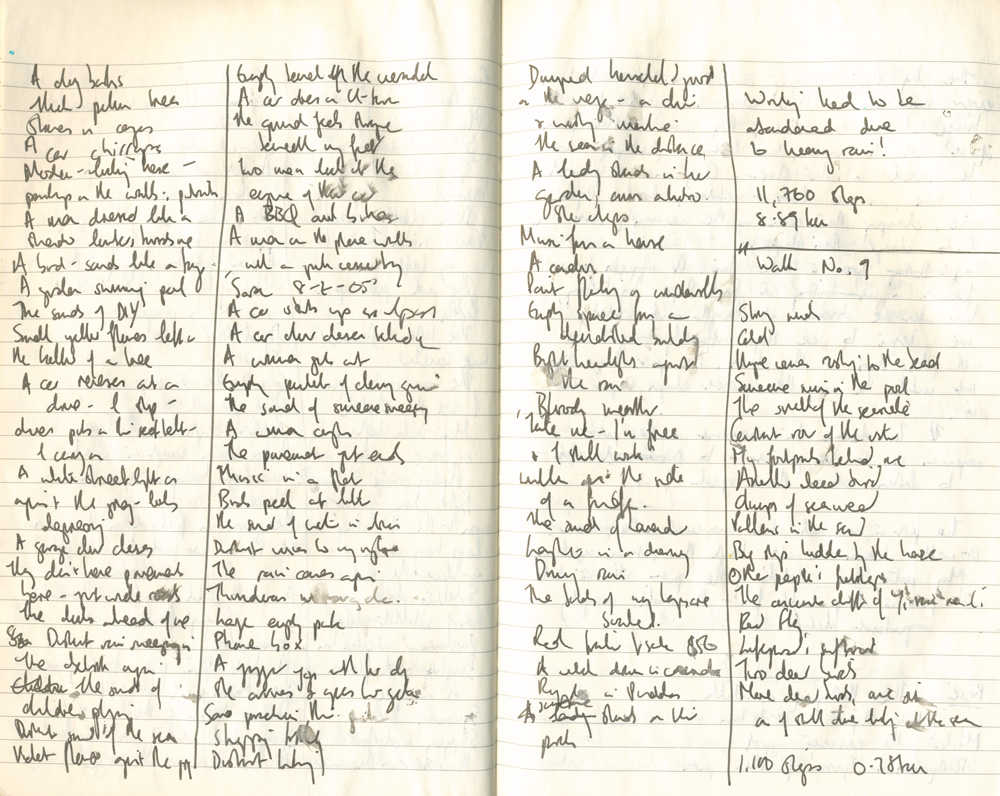
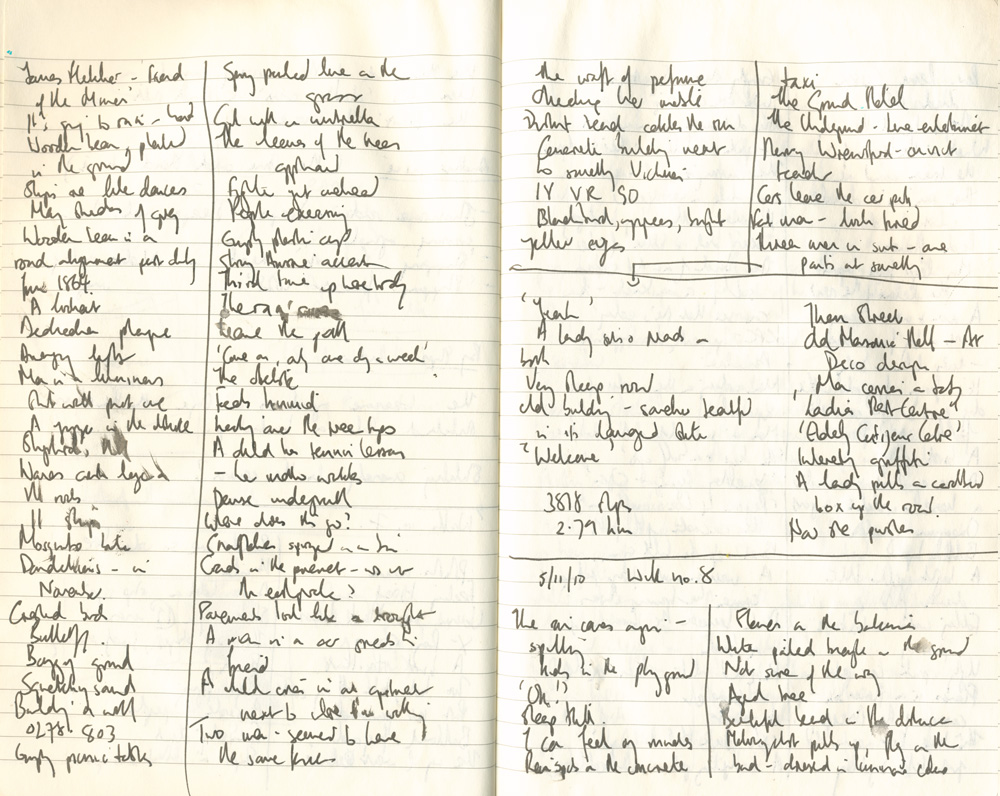
Since returning to England this morning after my residency in Australia, I’ve been looking at my notebook, and feel it’s worthwhile putting the pages up on, in particular those relating to the walks I did. So reproduced with this blog are those pages, written as I was walking (such is why the handwriting is atrocious whereas normally its little better than poor).

Filed Under: A Line Drawn in Water, Artist in Residence, Lists Tagged With: A Line Drawn In Water, Artist in Residence, Australia, Everydayness, Family Hedges, Family History, Hedges, Lines, Listmaking, Lists, Stephen Hedges, Walks

Repaired Sail of HMS York (1828)

November 17, 2010 by Nicholas Hedges

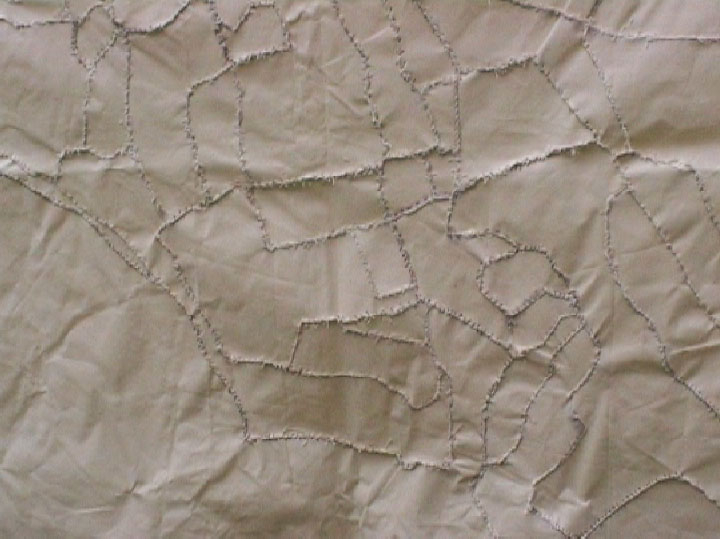
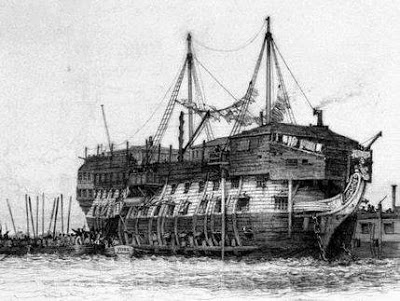
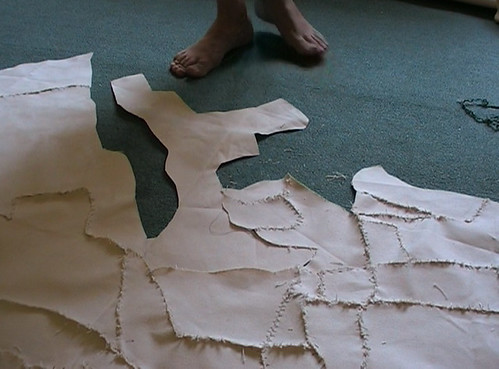
Yesterday, I finally finished stitching together the canvas pieces for a workI have tentatively called Repaired Sail of HMS York (1828), refrerring to the prison hulk on which Stephen Hedges was incarcerated before being transported to Australia. The hulk was a demasted ship and on contemporary images (such as that below) one can see how clothes were strung across the ship, almost as if replacement sails themselves.

This piece also alludes to an earlier work of mine called ‘Old Battle Flags‘ which I exhibited as part of my  recent Mine the Mountain exhibition. This work – Repaired Sail of HMS York (1828) – was made in response to the old battle flags one finds sometimes hanging in cathedrals. As I wrote in a text accompanying the work:

“Whenever I see them, hanging from their poles, still and lifeless, I think of the wind that would have once shaped them, a wind which would have once blown and turned the pages of history as it was being written. It reminds me that the flags had a place in what was then the present, rather than a scripted, preordained past. I can remember as a child, sitting on the beach when the weather was less than clement, when the wind whipped the sand, drilled the waves and flapped the canvas of the deckchairs. These deckchairs on display still have their colours, and in the main, their shape, but now they are broken; metaphors for times which cannot be revisited.“

The flags hang lifeless without the wind – the past hangs lifeless too. HMS York in this sense is a metaphor for the past – demasted and without a sail, lifeless almost, a prison for the past which in its own present criss-crossed the globe. To re-witness that past we need to see it move again, to catch the wind: we need a new sail.

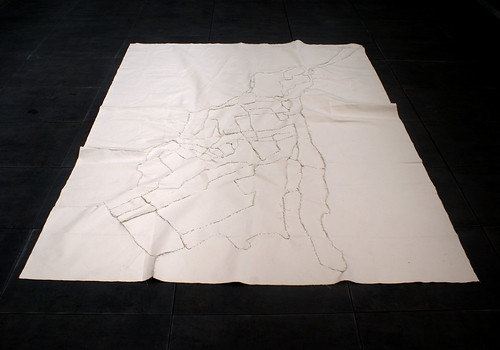
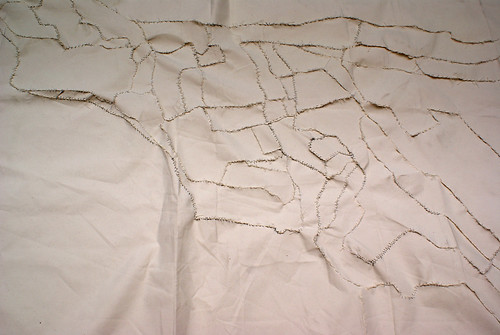
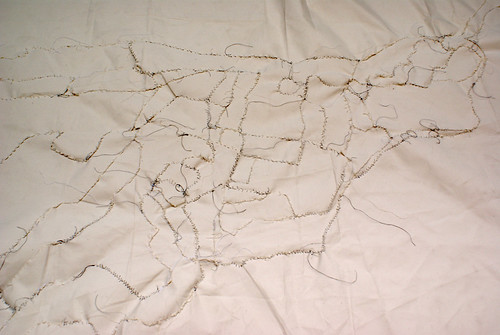
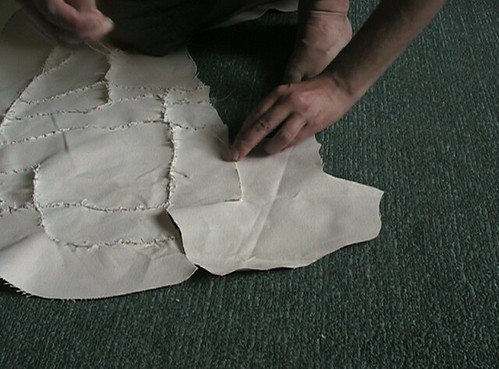
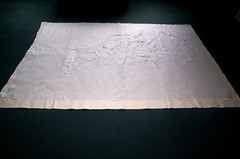
The sail in this work is made of canvas, and is derived from a pattern made from data recorded on a GPS. The data itself represents a series of nine walks made during the first week or so of the residency here in Newcastle, NSW. As I have discovered through my work over the last few years, walking and being in a particular place and experiencing the everydayness of a place, is vital in our understanding of associated historical events. It is relevant therefore, that this ‘sail’, made to catch the wind and ‘move’ HMS York once again, is constructed from a series of walks.

Below are a number of images of the sail.

Repaired sail of HMS York 1828

Repaired sail of HMS York 1828

Repaired sail of HMS York 1828

Repaired sail of HMS York 1828

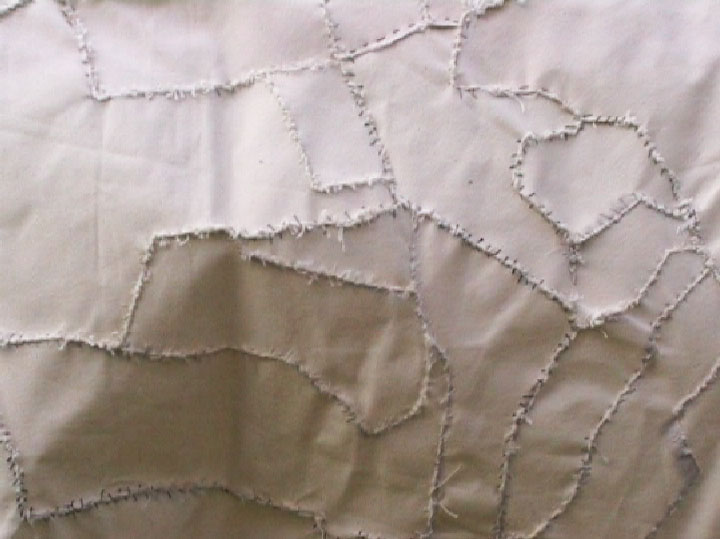
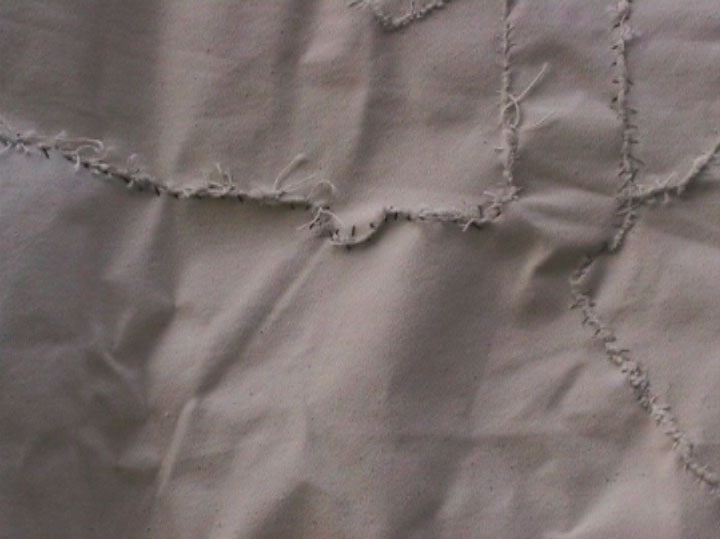
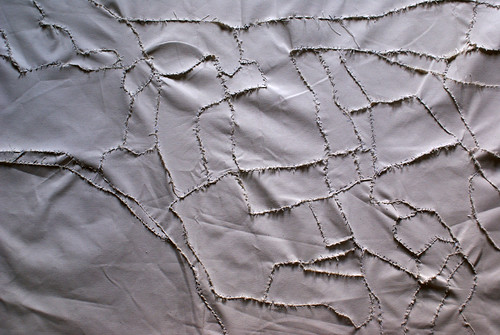
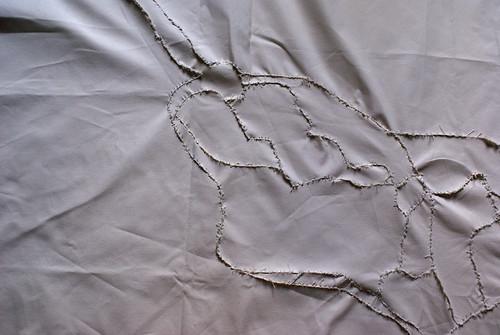
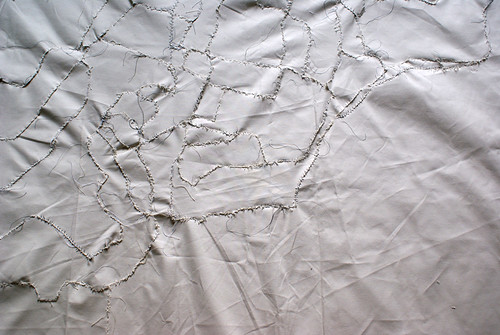
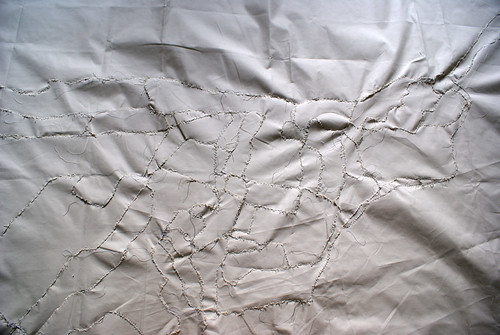
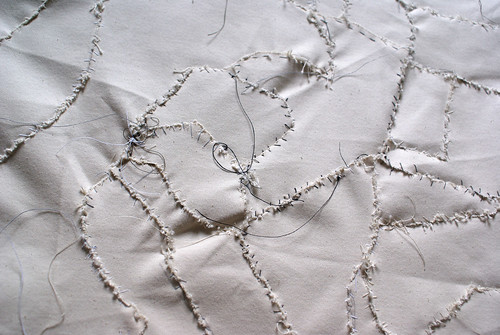
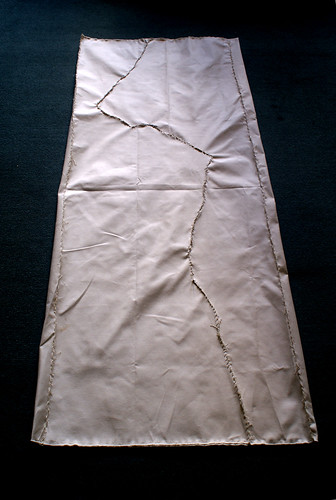
Often, it’s the reverse side of a piece like this which proves to be the most interesting, and indeed the most aesthetically satisfying. This particular canvas is no exception. When I turned it over and laid it out, I found the loose threads and knots particularly interesting. Perhaps they remind me the cut lines of past lives or the unwritten lines of text of which, for the most part, history is comprised. Below are images of the reverse side of the canvas.

Repaired sail of HMS York 1828

Repaired sail of HMS York 1828

Repaired sail of HMS York 1828

Repaired sail of HMS York 1828

Filed Under: A Line Drawn in Water, Artist in Residence Tagged With: A Line Drawn In Water, Artist in Residence, Australia, Everydayness, Family Hedges, Family History, Hedges, Lines, Stephen Hedges, Stitchwork, Walks

Cutting and Stitching III

November 15, 2010 by Nicholas Hedges

After a very nice weekend in Sydney, it’s back to work on the canvas; more cutting and stitching. With just two days left of the residency, it’s going to be a close run thing as to whether I get everything done – hopefully tomorrow I shall complete the canvas at least.

Cutting and Stitching

Cutting and Stitching

Cutting and Stitching

Cutting and Stitching

Cutting and Stitching

Filed Under: Artist in Residence Tagged With: A Line Drawn In Water, Artist in Residence, Australia, Everydayness, Family Hedges, Family History, Hedges, Lines, Stephen Hedges, Stitchwork, Walks

Cutting and Stitching II

November 12, 2010 by Nicholas Hedges

I’ve made a lot of progress over the last couple of days with video work and with the sticthed map of walks I’m creating, the title of which will be something like ‘The Lost Sail of HMS York’ referring to the prison hulk on which Stephen Hedges was incarcerated in 1828 prior to being transported to New South Wales.

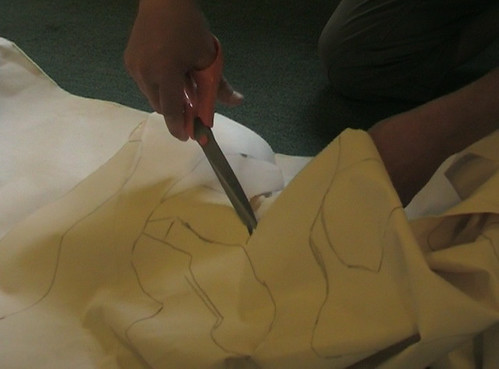
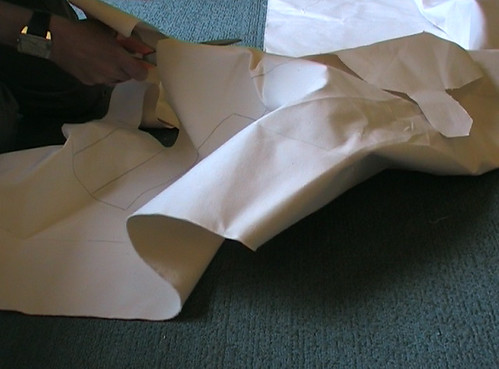
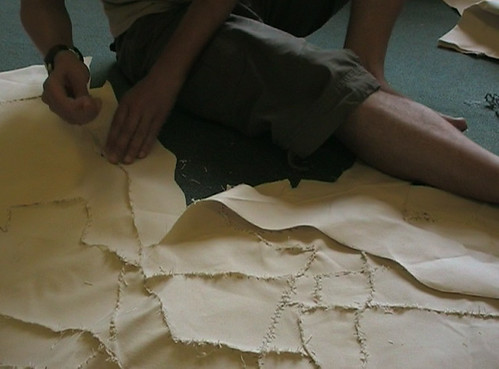
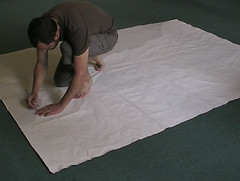
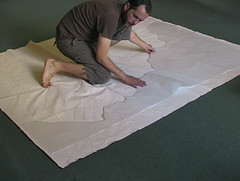
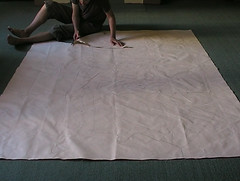
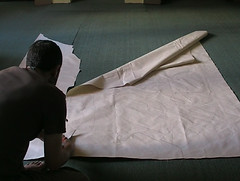
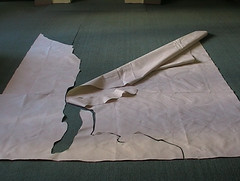
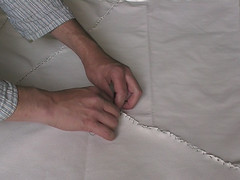
Having cut the templates and pinned them to the canvas, I then drew around each one directly onto the canvas so that I could begin cutting them out and stitching the piece together. To make things easier I will cut each piece as and when I need it so that I don’t get lost as regards where the pieces are meant to go.

The followng stills are taken from further documentary footage I’ve filmed of the process.

Template making

Template making

Template making

Template making

Template making

Filed Under: A Line Drawn in Water, Artist in Residence Tagged With: A Line Drawn In Water, Artist in Residence, Australia, Everydayness, Family Hedges, Family History, Hedges, Lines, Stephen Hedges, Stitchwork, Walks

Cutting and Stitching

November 10, 2010 by Nicholas Hedges

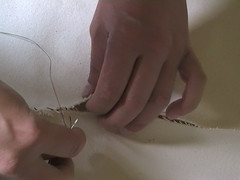
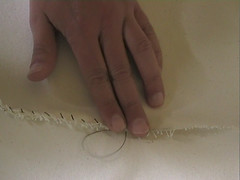
A busy day today working on a piece tentatively titled ‘Hammock’ and another which has yet to acquire even a working title. The hammock piece (shown in the photograph imemdiately below) alludes to when sailors died at sea and were sewn up in their hammocks before being cast into the water. The stitching on this particular hammock/body bag is the line recorded on my GPS when I walked the route Stephen Hedges walked from Radley House to Oxford in January 1828.

Stitching and Cutting

The hammock no longer has a body inside but what is left is the line. In many respects, the body inside was never meant to be that of Stephen, but rather his life in England, cast overboard along with his clothes when he entered the Prison Hulk York in Portsmouth following his conviction.

I want to dirty-up the canvas a bit and am thinking of taking it down to the sea tomorrow and videoing it lapping at the shore with the waves; something which would lend the work greater resonance.

The images below show the piece being made.

Work in Progress

Work in Progress

Work in Progress

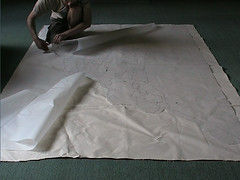
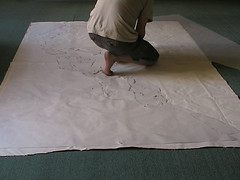
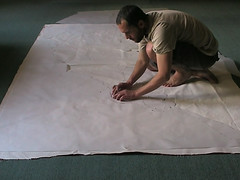
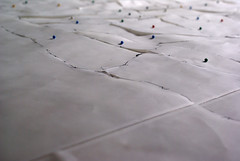
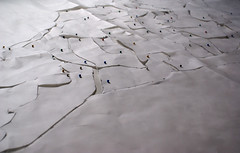
The following images are taken from the second, much bigger piece, which is a canvas comprising all the walks I have made in Newcastle NSW. The walks have been transferred to tracing paper (see Making the Map) and have now been cut up and pinned to the canvas ready for the material to be cut.

The images below are taken from documentary footage of the process.

Work in Progress

Work in Progress

Work in Progress

The map itself isn’t so easy to photograph, but I like the way it looks in its current state, with the cut out templates and the pins. Ideally I would like to inject something of a perfomative aspect into this work, so that the template creation has something to do with the process of tailoring – preparing fabric for an individual.

Stitching and Cutting

Stitching and Cutting

Stitching and Cutting

Filed Under: A Line Drawn in Water, Artist in Residence Tagged With: A Line Drawn In Water, Artist in Residence, Australia, Everydayness, Family Hedges, Family History, Hedges, Lines, Stephen Hedges, Stitchwork, Walks

A Walk of 4,342 Steps

November 9, 2010 by Nicholas Hedges

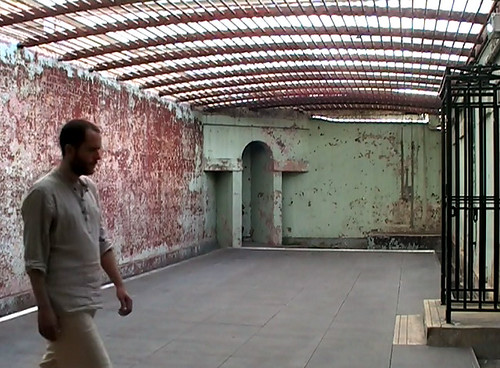
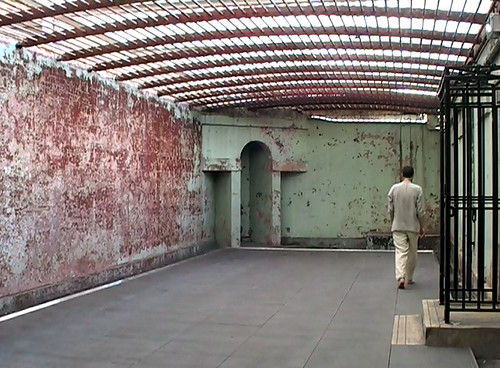
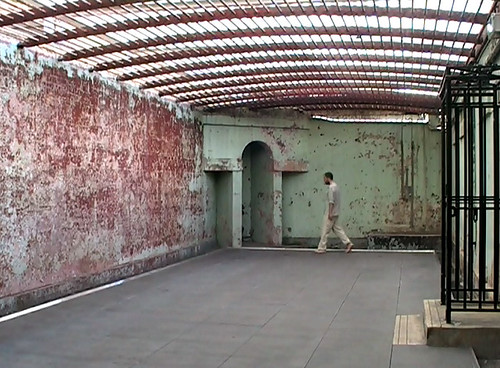
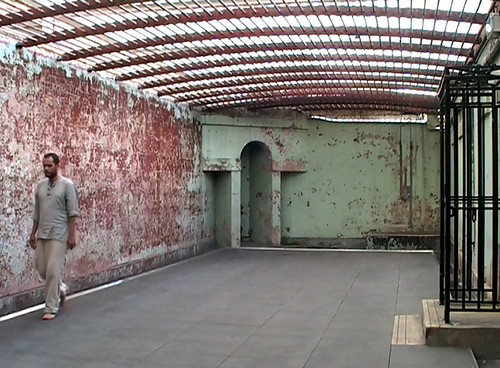
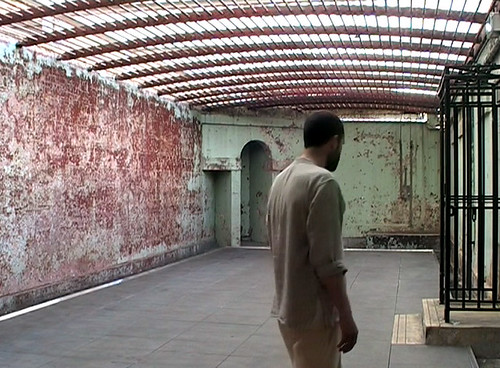
The video-based performance piece I want to make involves my walking around the exercise yard – in this case for about an hour. The ‘Walk of 4,342 Steps’ refers to a walk I did on 31st October (the first walk in a series of 9 made during the residency) and the final video will comprise my walking with details of the walk read out over the top.

The following stills are taken from the video.

Video Work

Video Work

Video Work

Video Work

Video Work

As I walked, and as I felt my body tense up and stiffen (in particular my jaw for some reason) I found myself listening to the sounds from outside, coming through the bars in the ceiling. Again this seemed to illustrate my work, as regards the idea of the constrained walk being analogous to history’s relationship with the past, where the wider past can only be ‘glimpsed’ to some degree through the bars.

Filed Under: Artist in Residence Tagged With: A Line Drawn In Water, Artist in Residence, Australia, Everydayness, Family Hedges, Family History, Hedges, Lines, Stephen Hedges, Stitchwork, Video, Walk, Walks

The Exercise Yard

November 9, 2010 by Nicholas Hedges

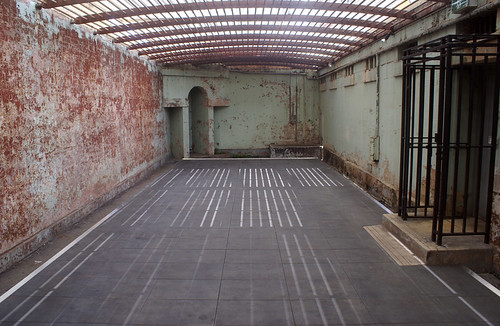
One of the most interesting spaces in the Lock Up is the exercise yard in which inmates housed in the cells would walk, sit or stand for a period of time. The space has recently been made weather-proof and a floor added to the original floor beneath so as to allow the space to be used for exhibitions and so forth. I wanted to use it in a video-based perfomance piece based on the idea of history and its relationship to the past; the idea that history is in a sense heaviliy constrained in what it can tell us about the world long gone; it is hemmed in, not free to roam, but follow a prescribed path based on the sources available to us today.

The Exercise Yard

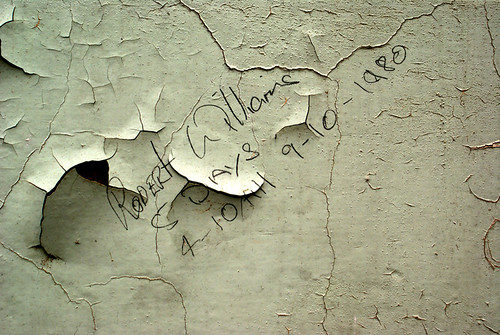
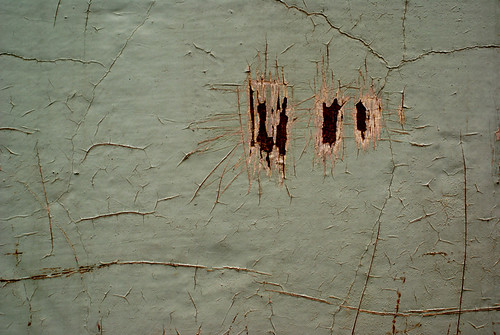
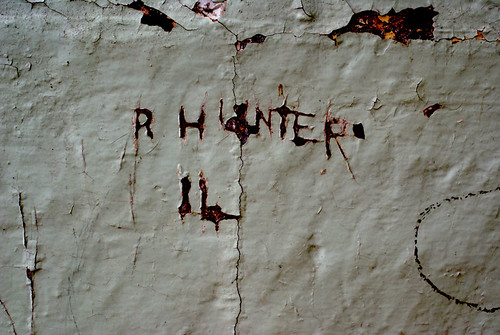
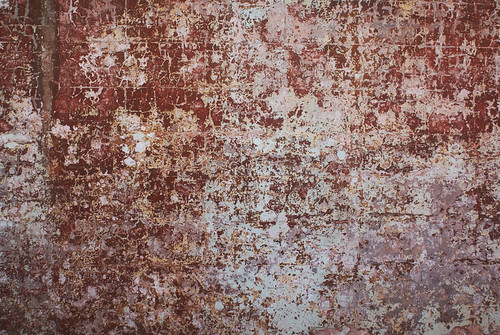
Before working on the piece (which would involve an hour’s walk around the yard), I photographed the walls, all of which have amazing textures redolent of the passage of time: peeling paint, cracked surfaces, palimpsests of paintwork and decay, as well as the inscriptions of prisoners scratched into the walls.

Below are some details from the exercise yard.

The Exercise Yard

The Exercise Yard

The Exercise Yard

The Exercise Yard

Filed Under: Artist in Residence Tagged With: A Line Drawn In Water, Artist in Residence, Australia, Everydayness, Family Hedges, Family History, Hedges, Stephen Hedges, Walks

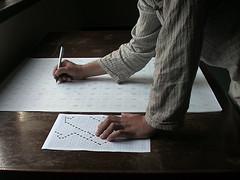
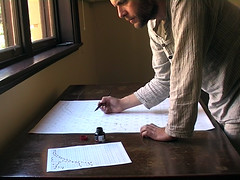
Making the Map

November 8, 2010 by Nicholas Hedges

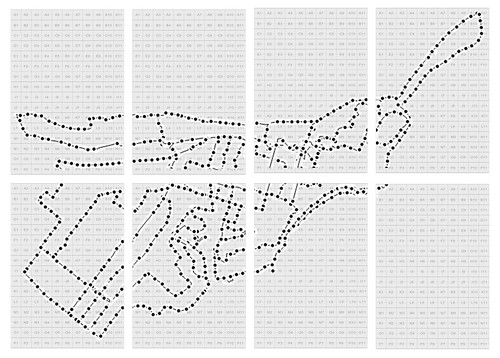
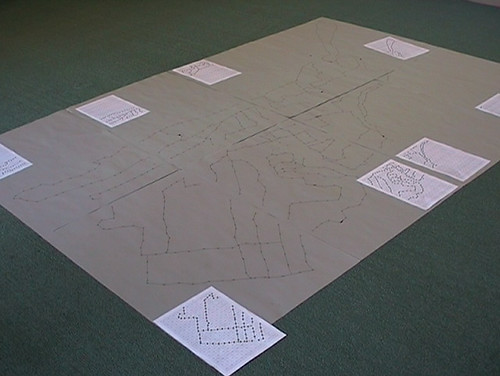
Having completed all the walks the next task is to tranfer them all to tracing paper so that templates can be cut and the map re-made on – or rather with – canvas. Taking the GPS plan, I divided it up into 8 segments, each of which I printed out onto A4 pieces of paper.

8 Sections of the Main Map

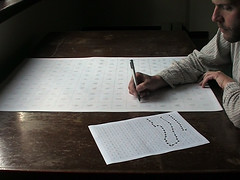
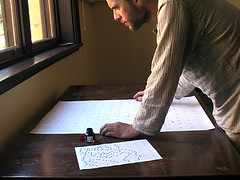
I then began scaling each piece up onto A1 heavyweight tracing paper, first marking all the dots and then joining them together. I would like to develop this whole aspect of the work, using the metaphor of sea-faring and map-making generally. Given time constraints however, the process will have to remain absent of any ‘performative’ aspect.

Marking the Dots

Marking the Dots

Having plotted the position of the dots, I then set about drawng in the lines.

Video Work

Video Work

Once copied, I joined the sheets together to make the fullsize version of the map which is now ready to be cut into templates.

Video Work

Filed Under: Artist in Residence Tagged With: A Line Drawn In Water, Artist in Residence, Australia, Everydayness, Family Hedges, Family History, Hedges, Lines, Maps, Stephen Hedges, Stitchwork, Walks

Light

November 7, 2010 by Nicholas Hedges

This evening I started filiming – for documentary purposes – my work on creating the templates for the ‘sail’ which I will start to sew soon. As I set up the video, I noticed, in the corner of the room, a patch of light on the wall and the floor. It reminded me of the paintings of Hammershoi, such as the image below which I wrote about in a previous blog entry back in March this year.

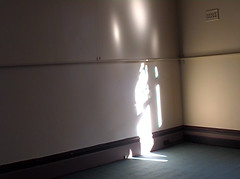
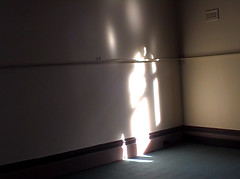
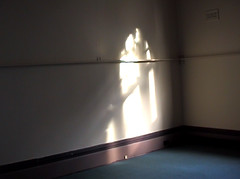
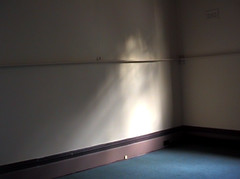
I put the video camera on the patch and started filiming for a couple of minutes, but as I watched the subtle changes in light I decided to leave it running until the tape ran out some 50 minutes later. The results were rather beautiful; an illustration of the passing of time, the end of a day and the the ‘nowness’ of the present – something which Hammershoi reveals beautifully in his paintings. Although painted at the beginning of the 20th century, the patch on the light keeps them very much a part of the present – the shape of the light cast by the window is something with which we are all familiar.

The stills below – taken from the video – show the light over a period of about 50 minutes.

The Map Room

The Map Room

The Map Room

The Map Room

The Map Room

Filed Under: Artist in Residence Tagged With: A Line Drawn In Water, Artist in Residence, Australia, Everydayness, Family Hedges, Family History, Hammershoi, Hedges, Light, Lines, Stephen Hedges, Video

  • « Previous Page
  • 1
  • 2
  • 3
  • 4
  • 5
  • Next Page »

© Nicholas Hedges 2024

  • Facebook
  • Instagram
  • Twitter
  • YouTube

Copyright © 2025 · Outreach Pro on Genesis Framework · WordPress · Log in