Nicholas Hedges

Art, Writing and Research

  • Amazon
  • Behance
  • Facebook
  • Instagram
  • Pinterest
  • YouTube
  • Art
    • Digital
    • Drawing
    • Grids
      • Correspondence
      • The Wall
      • The Tourist
    • Ink on paper
      • Shadow Calligraphy
    • Installation
      • Murder
      • Echo
    • Painting
    • Patterns
    • Mixed Media
    • Photographic installation
      • St. Giles Fair 1908
      • Cornmarket 1907
      • Headington Hill 1903
      • Queen Street 1897
    • Research/Sketches
    • Stitched Work
      • Missded 1
      • Missded 2
      • Missded 3
      • Missded 4
    • Text Work
  • Blogs
    • Family History
    • Goethean Observations
    • Grief
    • Light Slowed But Never Stilled
    • Lists
    • Present Empathy
    • Shadow Calligraphy
    • Trees
    • Time
    • Walking Meditations
  • Video
  • Photography
    • Pillars of Snow
    • Creatures
    • The Trees
    • Snow
    • St. Giles Fair 1908
    • Cornmarket 1907
    • Headington Hill 1903
    • Queen Street 1897
    • Travel
  • Illustration and Design
  • Music
  • Projects
    • Dissonance and Rhyme
    • Design for an Heirloom
    • Backdrops
    • Shadow Calligraphy
  • Exhibitions
    • A Line Drawn in Water
      • Artwork
    • A Line Drawn in Water (Blog)
    • Mine the Mountain 3
      • Artwork
    • Mine the Mountain 2
      • Artwork
      • The Wall
    • The Woods, Breathing
      • Artwork
    • Snow
      • Artwork
    • Echo
      • Artwork
    • Murder
      • Artwork
    • The Tourist
    • Dreamcatcher
    • Mine the Mountain
      • Artwork
      • The Tourist
    • M8
    • The Gate
    • Creatures
      • Artwork
    • Residue
      • Artwork
    • A visit to Auschwitz
      • Artwork
  • Me
    • Artist’s Statement

Projections

October 7, 2011 by Nicholas Hedges

Having completed my last stitching project based on trench maps from World War I, I decided to try and superimpose some postcard portraits onto them, of soldiers headed for the Front. In the first (below) I used the photograph of a family which I ‘projected’ onto the map as shown hanging on a washing line.
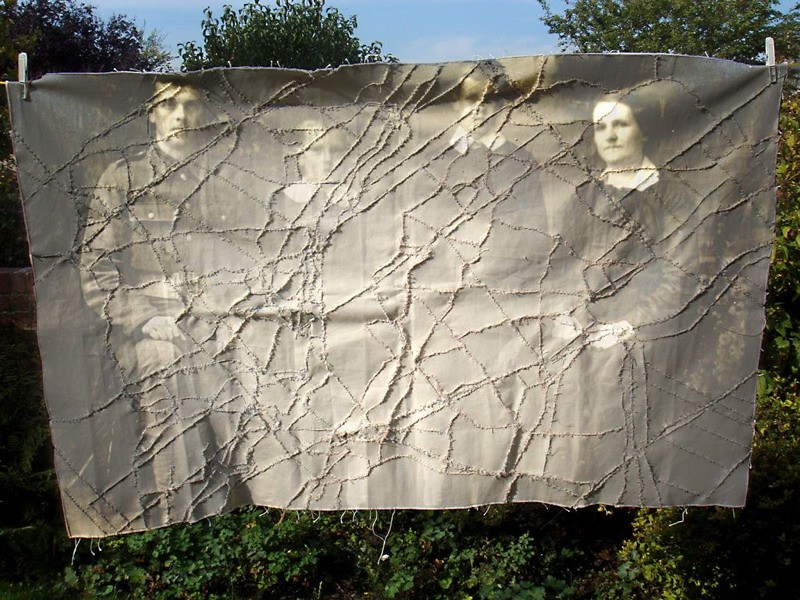

What strikes me about this image as a whole, is the contrast between now and then as it exists in the contrast between the black and white of the photograph and the colour of the day. This colour, and the sense of the nowness of the present, helps strengthen my own empathetic feelings towards those long since lost – and all but forgotten – to history.

The fact the map hangs on a line like an item of washing, also reinforces the sense of domesticity which is a theme running through some of the postcard portraits, many of which were taken in the backyards of soldiers (or their parents), where evidence of the everydayness of domestic life is in abundance.

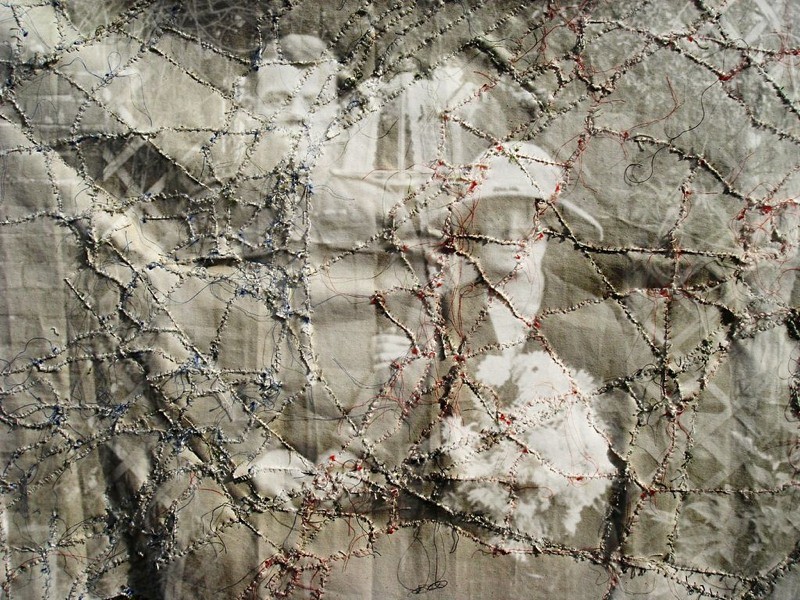
One such photograph shows a young couple who’ve recently been married. They stand, unsure of what the future brings, both wearing a look full of apprehension, staring into the lens of the camera, as if this ‘clock for seeing’ as Barthes once referred to them, really could show them the future.

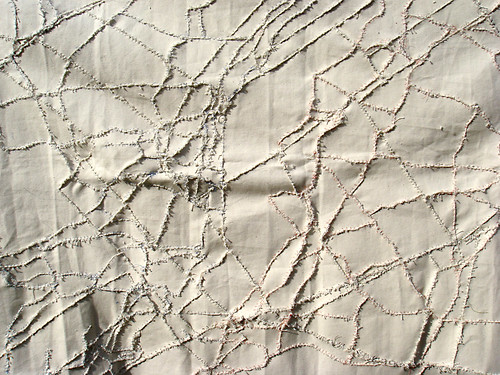
The image onto which their portrait has been projected shows the reverse side of the map, where the threads used to stitch the past together hang like the cut threads of countless lives.
Filed Under: World War I Tagged With: Empathy, Serre Palimpsest, Stitchwork, Trench Maps, World War I, WWI, WWI Postcards, WWI Postcards

Serre Palimpsest (completed)

October 1, 2011 by Nicholas Hedges

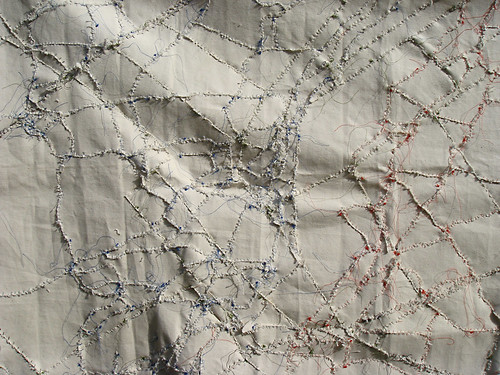
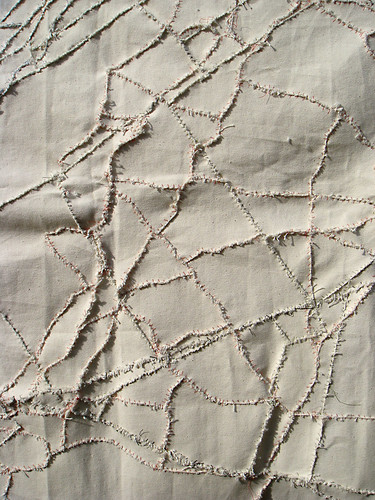
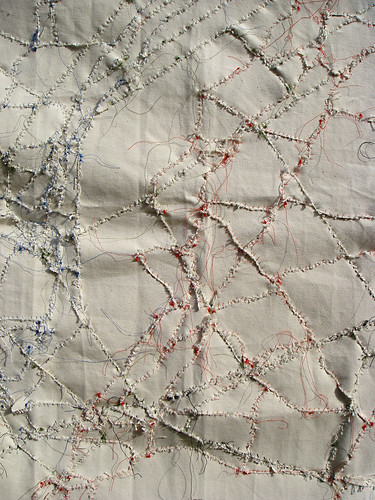
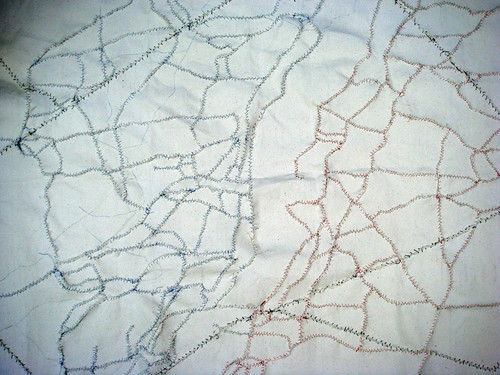
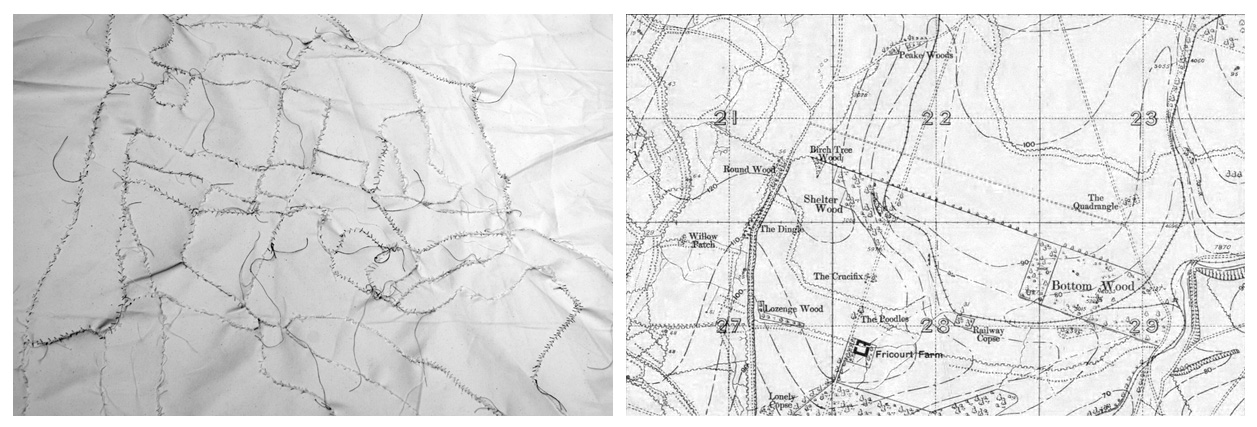
I’ve just completed – after several weeks of stitching – a piece of work called ‘Serre Palimpsest’ the creation of which I’ve been documenting on my blog. It became apparent soon after I started this work that this was a piece with two sides which may seem an obvious thing to say, but it seemed to me that the two sides we’re saying different things, just as things below the surface say something different to those above, whilst as the same time remaining connected.

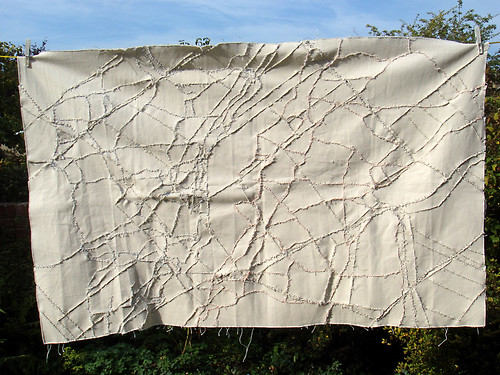
The two images below show the completed work. The first, the front:

Serre Palimpsest

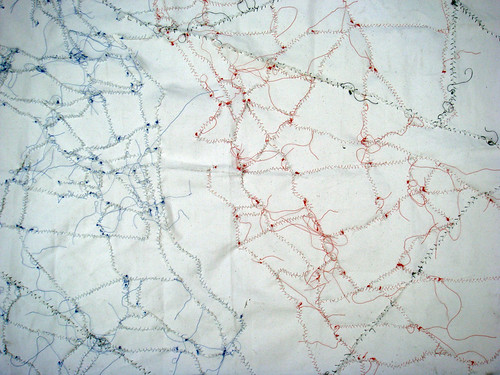
The second, the reverse:

Serre Palimpsest

The lines stitched in black show the roads before the war (the modern day road system is pretty much the same), the blue stitching and red show the British and German trenches respectively – with No Man’s Land between, and the green stitching shows the modern day field boundaries.

What was interesting about creating the work was how the threads from the reverse of the piece would emerge into the front, mirroring the way pieces of the past (bits of old shell etc.) find their way to the surface after many years below the ground. The cut lines on the reverse made me think of the paths soldiers would have taken to get there; paths which in many cases were cut in the Somme.

Serre Palimpsest

Serre Palimpsest

Occasionally, the threads would be tied together on the reverse which again made me think of how our lives today are similar to those who died in that their lives were lived lives too; of course their circumstances couldn’t have been more different, but the fact is that the vast statistics of the Somme comprise real individuals.

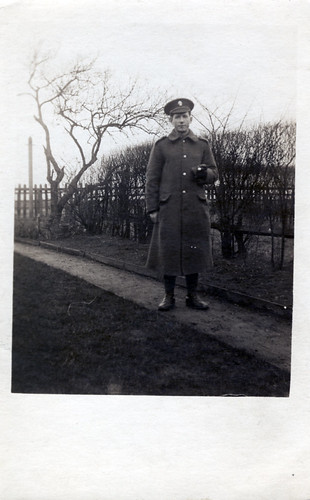
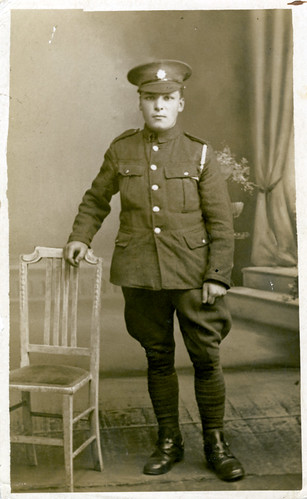
To take the photographs I hung the piece on the washing line. The weather was unseasonably hot and sunny, much like the weather would have been on the first day of the Battle of the Somme (1st July 1916). As I looked as the work swaying gently in the breeze, I thought about the photographs taken in the back gardens of those who were about to set off for the Front. I was reminded too of the backdrops used in studio-based photographs.

Serre Palimpsest

World War 1 Serviceman

World War 1 Serviceman

Filed Under: World War I Tagged With: Lines, Serre Palimpsest, Stitchwork, Trench Maps, World War I, WWI, WWI Postcards, WWI Postcards

Serre Palimpsest II

August 9, 2011 by Nicholas Hedges

I’ve just finished the second phase of a piece of work called Serre Palimpsest the results of which can be seen below.

Serre Palimpsest

Reverse side

Serre Palimpsest

So far I’ve stitched in the roads around Serre and the British and German trenches from the First World War. Next I’ll cut the fabric again to stitch in the modern day field boundaries.

Filed Under: World War I Tagged With: Lines, Serre Palimpsest, Stitchwork, Trench Maps, World War I, WWI

Serre Palimpsest

June 19, 2011 by Nicholas Hedges

Serre Palimpsest

Filed Under: World War I Tagged With: GPS, Positioning, Serre Palimpsest, Stitchwork, Trench Maps, World War I, WWI

Stitched Trench Map – Patterns

June 19, 2011 by Nicholas Hedges

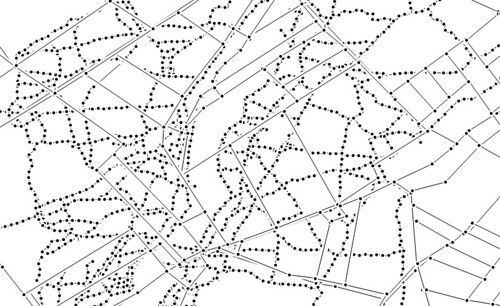
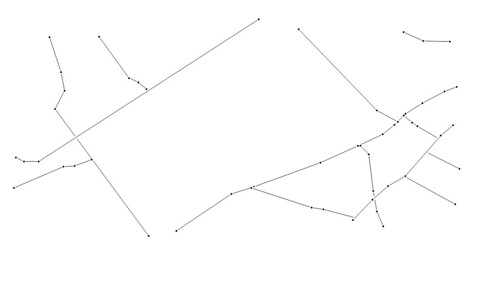
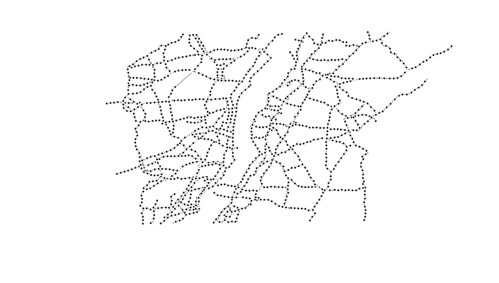
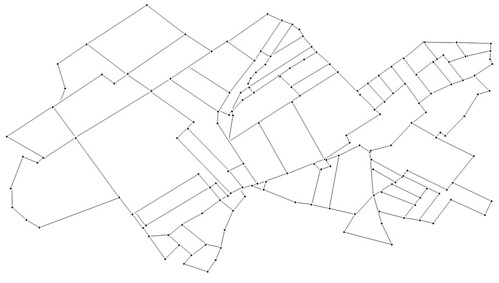
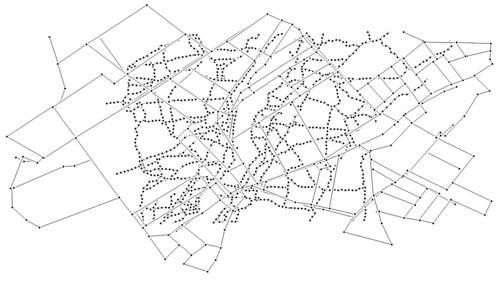
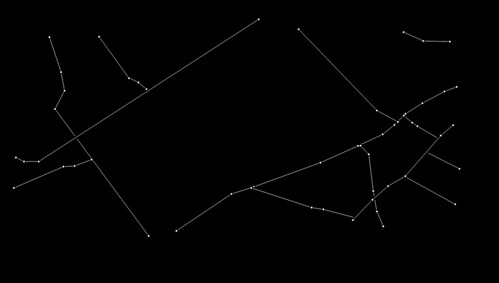
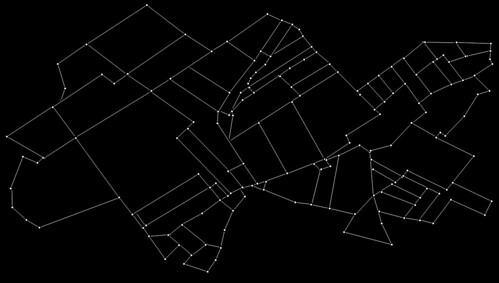
Three patterns will be used for this piece of work: 1) a map of the pre-war road system around Serre, France; 2) a map of the First World War trench system around the same area, and 3) a map of the area’s modern day field boundaries.

A single piece of fabric will be cut, firstly according to the pattern of roads.

3maps-roads

This same piece will then be re-cut according to the pattern of trenches.

3maps-trenches

And finally, this will be cut a third time according to modern day field boundaries.

3maps-fields

The final stitched piece of fabric might then look something like this:

3maps-roads-trenches-fields

Looking at the images reminded me of star constellations, and so I inverted two of the images to see how they looked.

3maps-roads-inv

3maps-fields-inv

See Serre Palimpsest.

Filed Under: World War I Tagged With: Serre Palimpsest, Stitchwork, Trench Maps, World War I, WWI

Stitched Trench Maps II

March 23, 2011 by Nicholas Hedges

I completed my first three stitched ‘trench maps’ today and have popped them in frames ready to be exhibited in Luxembourg. Ideally they wouldn’t be in frames at all and would be presented on a much large scale, but as first versions go I’m pleased. Certainly I can see how I would like to progress them, adding more layers to create kinds of palimpsests.

Filed Under: World War I Tagged With: GPS, Lines, Positioning, Serre Palimpsest, Stitchwork, The Somme, Trench Maps, World War I, WWI

Empathy and the First World War (Part 5)

March 10, 2011 by Nicholas Hedges

The backgrounds of these postcards have become of great interest to me in as far as they help elicit a sense of empathy with those who are pictured. Some of the postcards feature no backgrounds at all and are simply headshots which make an empathetic response a little more difficult. What I want to look at here are natural and studio-based backgrounds, examples of which can be found below.
I’ve already looked at two postcards with photographs taken in natural settings and these settings can be further subdivided into those which are domestic and non-domestic. It’s those taken in what are clearly domestic settings – for example the backyards of houses – which are the most poignant, for the obvious reason that they are photographs of homes these men would soon be leaving. And again the question begs to be asked, would they ever return?
This photograph is clear

Filed Under: Photography Tagged With: Empathy, Photographs, Vintage Photographs, World War I, WWI, WWI Postcards

Empathy and the First World War (Part 5)

March 9, 2011 by Nicholas Hedges

The backgrounds of these postcards have become of great interest to me in as far as they help elicit a sense of empathy with those who are pictured. Some of the postcards feature no backgrounds at all and are simply headshots which make an empathetic response a little more difficult. What I want to look at here are natural and studio-based backgrounds, examples of which can be found below.

I’ve already looked at two postcards (see Part 3 and Part 4) with photographs taken in natural settings and these settings can be further subdivided into those which are domestic and non-domestic. It’s those taken in what are clearly domestic settings – for example the backyards of houses – which are the most poignant, for the obvious reason that they are photographs of homes these men would soon be leaving. And again the question begs to be asked, would they ever return?

This photograph was clearly taken in a back garden, one which seems to comprise little more than dirt. In the background, the backs of other houses are visible and next door appears to have what looks like a chicken coup, with chicken wire fixed above the fence. What is striking about this image is the cleanliness of the soldier’s uniform. His coat is spotless; it’s almost as if this young man is little more than a child playing soldiers in the garden, and it’s difficult to look at him knowing full well what he’s about to endure.

I’ve already discussed windows in old photographs and in the background of the image above one can see a window of one of the houses behind.

I wonder what the same scene would be like if I was standing behind, looking through the net curtains? I’d see the back of the young man being photographed and those who are taking the picture – more proud parents perhaps? I’d watch for a while, then turn my back and return to my own life within the terraced house. It’s imaginative wanderings like this which serve to animate the scene, to remind us that the past was once ‘now’.

I imagine this photograph was taken in the garden of the soldier’s parents’ house. I can imagine them holding this image, just as I’m doing now and walking outside to see that corner of the garden in which he’d been standing. The dilapidated fences, the dirt ground, the trees and the houses behind would all resonate with his presence. If I walk outside into my own garden, with this image in my hand, everything that makes ‘now’ what it is, would serve to animate it. The feel of the wind, the sounds of the birds in the trees, the feel of the ground beneath my feet etc.

This photograph was obviously taken in a studio and whereas in the previous image the backdrop is a real scene, the one above is like something from an 18th century painting. In the foreground we can see bunches of wild flowers growing alongside a quiet country track, leading off through an idealised landscape complete with ‘Rococoesque’ trees, a river and a picturesque bridge. One almost expects the solider to turn away from the incongruous chair and to walk off up the path and out of sight.

With the first image, the domestic backdrop of a garden, its fences, the chicken coup and the backs of neighbours’ houses provides a stark and disturbing contrast with what we know awaited the young man being photographed. This contrast is just as stark in the studio picture above, and in some respects even more disturbing.

Whereas the fictional scene could at least be imagined by the artist, what the man standing before it was about to face on the battlefield would never have been conceivable even with the keenest of imaginations. Reality was in a way even less real than this Arcadian backdrop which seems to depict something akin to Paradise. Perhaps this is why I find this image so haunting?

The reverse of the postcard contains text which reads: To Mr J Wade, With happy memories of past days spent at Waresley House. 

I did some research into Waresley House and discovered that it was once the home of both the Peel family (Robert Peel) and the Perrins family of Worcester Sauce fame. A large Georgian pile, I wondered what the soldier did there, who Mr J Wade was and whether or not he was the owner of the house. Having looked at the 1911 census however, I could find no record of Mr Wade. The house was owned by a Mr Gibbons, an 87 year old widower who lived there with his two daughters (both single and aged 49 and 47) and nine domestic servants.

It is possible that Mr Gibbons died soon after 1911 and that Mr Wade took over the house thereafter. Looking for Mr Gibbons on Ancestry, I found him in the same house in 1891 along with 13 children. The cook in 1911, Mary Pugh was also listed. 

Filed Under: Photography, Trees Tagged With: Empathy, Photographs, Vintage Photographs, World War I, WWI, WWI Postcards

Empathy and the First World War (Part 4)

March 9, 2011 by Nicholas Hedges

Another postcard from my World War One collection:

It’s a rather faded image but we can see that it shows a man standing outside a gate to what looks like the back yard of a house. Like the previous image (see Part 3) the man is dressed in his uniform, ready to head off to war. Or perhaps he’s returned, on leave maybe, about to go back to the Front? We’ll never know, but looking at his face, there’s something about his expression which looks weary at the very least. Of course this is probably reading too much into the picture, but there is something about his face which makes me wonder. To make it easier to see, I’ve enhanced the image a little:

Detail of the soldier’s face:

Like the previous postcard, I can well imagine the scene without the soldier standing there; the feel and the colour of the ivy, the bricks and the old, rather battered door. My imagination colours the image, and through this colouring, the textures of the bricks and the door become apparent. And like the other postcard, it is in itself a tactile object which speaks of the soldier’s absence more than his presence – after all, a postcard is a form of communication sent by someone who is, at the moment, absent from the life of the receiver. Turning it over and looking at the reverse, I could see that it had been addressed to a Miss V. J. Edwards. I wondered if she was the man’s fiancee, but looking at his hands, I could see that he was wearing what appears to be a wedding ring. And again the hands are like those I’ve discussed previously (see Part 1 and Part 3).

Could Miss Edwards be his sister? As I hold the postcard, and turn it over in my hand, I find myself performing an action she herself would have performed. What would she have thought as she read the rather enigmatic text?


1919 16.Puzzle BLA.

I’m assuming that the number at the top is the date (1919) which means we can perhaps also assume the soldier on the front survived the war. Was the photograph itself taken when the war was over? Would that account for his rather tired expression? It seems unlikely, and given the rest of the text, it might be that this isn’t the date at all. Sadly, the franking mark on the stamp isn’t clear enough to tell. What does 16.Puzzle BLA mean? Is it No.16 in a series of puzzles? Is BLA itself the puzzle – a secret code shared between the two; between the soldier and Miss Edwards? Interestingly, in the image itself, we can see in the bottom left hand corner, a notebook on a wooden bench. Did the soldier conceive his puzzles within its pages?

 
A hand rolled cigarette lays next to it, and the two together serve to animate the image – or rather the soldier in the image; I can picture him smoking, writing in his notebook, in a hand like that on the reverse. Holding the postcard and reading it, I can also ‘animate’ the person to whom it was sent.

With this single image then, a relationship long forgotten has been re-established.

Filed Under: Photography Tagged With: Empathy, Photographs, Vintage Photographs, World War I, WWI, WWI Postcards

Reading Roads

March 8, 2011 by Nicholas Hedges

Introduction

In Wales in 2008 I walked a path along which my great grandfather had walked every day from his home to the mines in which he worked. He died in 1929 (as a consequence of his work) and all I knew of him, before my visit, were what he looked like (from two photographs) and things my grandmother had told me. But on that path I felt I found him on a much deeper level. The feel of the wind, the way the clouds moved, the sound of the trees and the line of the horizon were all things he would have experienced in much the same way. It was as if these elements had combined to ‘remember’ him to me.

Hafodyrynys and Surrounds

As a consequence of my walk, the line which linked us on my genealogical chart changed to become instead a path, for when I follow lines in my family tree from one ancestor to the next and find myself at the end, so that path in Wales had led to my being born. That path on which I walked for the very first time, was as much a part of who I was as my great grandfather: “places belong to our bodies and our bodies belong to these places.” [i]
Roads (paths, tracks and traces) have become an important part of my research and it was whilst reading Edward Thomas’ poem Roads that I found connections between what he had written and what I was thinking. I’ve reproduced the poem below, and where necessary added my thoughts.

Roads by Edward Thomas (1878-1917)
I love roads:
The goddesses that dwell
Far along invisible
Are my favourite gods.
Roads go on
While we forget, and are
Forgotten like a star
That shoots and is gone.
The reference to stars (or a star) in this verse, reminds me of a quote (to which I often refer) from Roland Barthes’ book Camera Lucida, in which he writes:

“From a real body, which was there, proceed radiations which ultimately touch me, who am here; the duration of the transmission is insignificant; the photograph of the missing being as Sontag says, will touch me like the delayed rays of a star. A sort of umbilical cord links the body of the photographed thing to my gaze – light though impalpable, is here a carnal medium, a skin I share with anyone who has been photographed.”

The star shoots its light and is gone and similarly we walk and are gone. But what is left behind is the road, a version of the light left by the disappeared star; a ‘delayed’ ray which allows us to ‘see’ those who went before us. I use the word ‘see’, but we ‘see’ with our bodies. We see the light from the star, but we feel the road. This in turn brings me to the idea of empathy as something which is tactile and kinaesthetic.  Roads and paths become ‘a sort of umbilical cord… a carnal medium, a skin I share’ with those who’ve walked that road or path before – precisely what I’d felt in Wales.

On this earth ’tis sure
We men have not made
Anything that doth fade
So soon, so long endure:

In the third verse we might interpret the lines as a description of the difference between the act of walking and the road itself. We walk in the moment – a moment which fades in an instant (‘so soon’) and yet, behind us a record of the sum of all those moments is lined up along the road behind us – one which endures for centuries. It’s the same difference as that between speaking and writing; one is fleeting, the other endures. Christopher Tilley writes that “…if writing solidifies or objectifies speech into a material medium, a text which can be read and interpreted, an analogy can be drawn between a pedestrian speech act and its inscription or writing on the ground in the form of the path or track.” [ii] Paths and roads ‘record’ our movements, they are texts which we can read with our feet. 
The idea of the ‘moment’ is also discussed by artist Bill Viola who writes that:
“We have been living this same moment ever since we were conceived. It is memory, and to some extent sleep, that gives the impression of a life of discrete parts, periods or sections, of certain times or highlights. [iii]
This ‘same moment’ is in many respects like the act of walking and the road rolled into one; it fades and yet endures at one and the same time. There is an echo of this idea in Camera Lucida when Barthes writes:
“In the photograph, Time’s immobilisation assumes only an excessive, monstrous mode: Time is engorged…” [iv]
I described earlier, how the path on which I walked in Wales was as much a part of me as my great grandfather; it was the first time I’d ever walked it and yet I was a part of it long before I was born. There is then a continuous moment running along all paths and roads, and it’s memory and to some extent birth and death that gives the impression of discrete parts. This ‘universal’ moment is the ‘nowness’ of the present and it was this ‘nowness’ which I experienced on that path in Wales and which I’ve since been exploring in my work as regards empathy.
“The feel of the wind, the way the clouds moved, the sound of the trees and the line of the horizon were all things he would have experienced in much the same way.”
The third verse in Thomas’ poem seems to me to allude to the idea of experiencing the moment:

The hill road wet with rain
In the sun would not gleam
Like a winding stream
If we trod it not again.

The ‘we’ in the last line refers to us as individuals, whether ‘we’ were walking that path in 1915 or today in 2011; if ‘we’ weren’t there to see it, it wouldn’t be seen at all. 
In the fourth verse we read the following:

They are lonely
While we sleep, lonelier
For lack of the traveller
Who is now a dream only.

Before I look at this verse, I want to look at another quote; this time from the catalogue of a Paul Nash exhibition in which David Fraser Jenkins writes how Nash:
“…did not often show people in the landscape, even walking about in his lanes and paths, and as a result his pictures look deserted… Despite this absence, there is in his pictures a remarkable sense of drama, and it is this reaction between things – the trees or the buildings… that these pictures are about.” [v]
Looking at the fourth verse above, we can say that the ‘lack of the traveller’ alludes to the passing of that traveller, whether from the immediate scene, or perhaps life itself. Either way, all that’s left of what Sontag called ‘the missing being’ is the trace of the road on which they walked, the text written as they travelled. That traveller is now a dream, dreamt by the road and the elements by which it’s surrounded, a dream which I see expressed by David Fraser Jenkins as a ‘remarkable sense of drama’. The road might be lonely, but it’s never empty; the trees, the buildings, the feel of the wind and the way the clouds move all dream of the traveller – the missing being. There’s also a parallel to be found here in Rainer Maria Rilke’s Duino Elegies, where in the second elegy we read:
Look – trees exist.
The houses we live in continue to stand. Only we
pass away like air traded for air and everything
conspires to maintain silence about us, perhaps
half out of shame, half out of unspeakable hope. [vi]
This ‘silence’ alludes I think to what Jenkins describes as a ‘remarkable sense of drama’ and what I have called a ‘dream’. But how can we connect with these? In his book The Materiality of Stone,  Explorations in Landscape Phenomenology, Christopher Tilley writes:
“The painter sees the tree and the trees see the painter, not because the trees have eyes, but because the trees affect, move the painter, become part of the painting that would be impossible without their presence. In this sense the trees have agency and are not merely passive objects. [Martin] Dillon comments: “The trees ‘see’ the painter in a manner comparable to that in which the mirror ‘sees’ the painter: that is, the trees, like the mirror, let him become visible: they define a point of view on him which renders visible for him something that otherwise would remain invisible – his outside, his physiognomy, his carnal presence… The trees and mirror function as Other.” [vii]
Just as the trees function as what Dillon calls ‘Other’, so does everything else. It’s as if the shapes of disappeared travellers are somehow retained, like the people-shaped holes in the ash of Pompeii, which when filled with plaster, revealed the presence of people lost for almost 2000 years. Similarly, people-shaped holes exist along every road or path; gaps which can only be filled with our own bodies, by our own presence; by our experience of the nowness of the present.
In a definition of the Metaphysical poets, Georg Lukács described their common trait of ‘looking beyond the palpable’ whilst ‘attempting to erase one’s own image from the mirror in front so that it should reflect the not-now and not-here.’ [viii] For me, the road is the mirror which Lukács describes, and as I walk along it, I try to look beyond the palpable, to erase my own image so that the road reflects the not-­now and not-here. The palpable is the present (as opposed to the nowness of the past); the not-now and not-here is the nowness of that continuous moment in its entirety. To erase one’s image is to imagine one’s own non-existence, to see a part of that continuous moment when one did not exist, when that part was nonetheless now. It is about seeing the presentness of past events.  

From dawn’s twilight
And all the clouds like sheep
On the mountains of sleep
They wind into the night.

The next turn may reveal
Heaven: upon the crest
The close pine clump, at rest
And black, may Hell conceal.

Often footsore, never
Yet of the road I weary,
Though long and steep and dreary,
As it winds on for ever.

Helen of the roads,
The mountain ways of Wales
And the Mabinogion* tales
Is one of the true gods,

(*In the tale of Lludd and Lleuelys from the Mabinogion, you will find the following text: “Some time after that, Lludd had the island measured in length and breadth; the middle point was found to be in Oxford. There he had the earth dug up, and in that hole he put a vat full of the best mead that could be made, with a silk veil over the surface. He himself stood watch that night.” I discovered this passage whilst researching my Welsh ancestry, and being as I am from Oxford, found it rather appealing.)

Abiding in the trees,
The threes and fours so wise,
The larger companies,
That by the roadside be,

And beneath the rafter
Else uninhabited
Excepting by the dead;
And it is her laughter

At morn and night I hear
When the thrush cock sings
Bright irrelevant things,
And when the chanticleer

Calls back to their own night
Troops that make loneliness
With their light footsteps’ press,
As Helen’s own are light.

Now all roads lead to France
And heavy is the tread
Of the living; but the dead
Returning lightly dance:

Whatever the road bring
To me or take from me,
They keep me company
With their pattering,

Crowding the solitude
Of the loops over the downs,
Hushing the roar of towns
And their brief multitude.

The line ‘Now all roads lead to France’ reminds us that those who fell and are buried in France (and indeed other countries) were men with lives beyond the theatre of war – that the theatre of war extends well beyond the boundaries of any trench map. To know them and to know the missing, we have to follow the roads from France back to the towns and villages where they lived, just as to know ourselves we should follow the roads and paths from our own hometowns to those of our ancestors. To walk those streets, paths and tracks, is to turn them back into ‘consanguineal lines’; to restore lost connections in forgotten family trees; to remind us that those who fought and died were each part of a family as well as a wider community of friends and acquaintances.
The road brings and takes away and the dead keep us company at every step ‘with their pattering’. Again this could refer to the idea of the moment as being both fleeting and enduring. The moment is like a looped recording which plays and records at the same time, creating a kind of palimpsest, where all that’s gone before is contained in a moment, like light, tens of thousands of years old seen in a single second.
The line ‘Crowding the solitude,’ echoes what I wrote earlier, that roads might be lonely, but they’re never empty. And finally in the last two lines, Thomas reminds us of our own mortality; where the multitudes that make the towns roar are themselves brief. 


i Christopher Tilley, 1994, A Phenomenology of Landscape, Oxford, England, Berg
ii Christopher Tilley, 2004, The Materiality of Stone – Explorations in Landscape Phenomenology, Oxford, England, Berg
iii Bill Viola, 2005, Reasons for Knocking at an Empty House, Writings 1973-1994, Thames & Hudson
iv Camera Lucida, Roland Barthes, Vintage, 2000
v David Fraser Jenkins, 2010, Paul Nash – The Elements, London, Scala Publishers Ltd.
vi Rainer Maria Rilke, Tr. Martyn Crucefix, 2006, Duino Elegies, London, Enitharmon Press
vii Christopher Tilley, 2004, The Materiality of Stone – Explorations in Landscape Phenomenology, Oxford, England, Berg
viii http://en.wikipedia.org/wiki/Metaphysical_poets

Filed Under: Paintings, Trees Tagged With: Barthes, Bill Viola, Christopher Tilley, Family History, Family Jones, Jones, Paintings, Paths, Paul Nash, Rilke, Roads, Silence, Stars, War Poets, World War I, WWI

Two Soldiers

March 8, 2011 by Nicholas Hedges

I was once given a collection of 200 World War I postcards featuring portraits of soldiers and have always wanted to trace some of those featured. Through research on the National Archives website and through deciphering rather bad handwriting I discovered that the man immediately below is one Walter Henry Chevalier who served in the Army Service Corps and Northumberland Fusiliers. I think, if my research is correct, that he survived the war, dying in 1962 aged 64.

Below, another World War I soldier and another survivor. The rather splendid surname ‘Dangerfield’ is written on the back and having searched for him and got over 100 Dangerfields I had a closer look at the image. The spurs and the crop suggest of course something to do with horses and the cap badge as far as I can see is that of the Royal Horse Artillery. Having refined my search, I found Edward Paul Dangerfield, Second Lieutenant in the Royal Horse Artillery. Again, if my research is correct, he survived the war and died in 1978.

Filed Under: World War I Tagged With: Soldiers, World War I, WWI, WWI Postcards, WWI Postcards

Empathy and the First World War (Part 3)

March 8, 2011 by Nicholas Hedges

It’s hard to tell where this image was taken, whether in a garden or a public park, but clearly it shows a young man in his new army uniform about to head to war.  He stands to attention, albeit somewhat awkwardly, staring into the camera – almost through it, into the distance. I wonder as I look at him who is on the other side taking the photograph? A proud parent perhaps, an anxious one? A friend or maybe some other relative? The young man in question would, I imagine, have left soon after the image was taken and the question is there to be asked: would they – whoever it was – have seen him again? Behind him a tangle of brambles foreshadows the barbed wire entanglements laid out in front of the trenches, wire on which so many like this young man lost their lives.

As with the previous images I’ve discussed (see Empathy and the First World War Part 1 and Part 2) I’m interested in how I can find a way of empathising with this individual, a young man whose name has been lost and who, for all I know, exists only within the image on this postcard. The difference between this ‘image’ and those discussed previously are that this is a physical object – a postcard; one of a number printed as keepsakes. However, as I look at it, I try as I do with other photographs to imagine the moment in which it was taken. I imagine the click of the camera , satisfied comments from the photographer, after which the young man picks up his cap, puts it on and walks off down the path. The crunch of footsteps dissipates along with the voices and I am for that moment left standing looking at the brambles and the undergrowth.

For some reason it’s hard for me to visualise this young man in colour – there’s something in his face which prevents me from seeing him talk. But without him there I can picture the rest of the scene easily enough in colour; I can see the colour of the bricks, the undergrowth and the path. I can see the leaves move and then imagine myself moving, turning and seeing people walking in the distance. I can hear sounds – birds and so on, perhaps because I can hear them outside my window on what is a beautiful spring-like day. It’s a photograph which depicts the presence of the young man in the picture and yet speaks of his absence, which is of course hardly surprising given that it was taken almost 100 years ago. Whether he survived the war or not he’s going to be absent from the world today.

The way in which I hold the postcard and look at the image is important, for it no doubt echoes that of those who knew him, who whilst he was away looked at the image and remembered their friend or loved one; someone who was present in their minds and yet absent from their immediate world.

On the reverse are the words ‘POST CARD’ and a ‘T’ shaped divide between correspondence and address. The postcard itself is blank, save for the 15p pencilled in the corner – the apparent monetary value of the image. I’ve worked before on the idea of the ‘T’ shape as being like a makeshift grave-marker and having looked at the photograph on the other side and having imagined him walking away – leaving just the image of the brambles – it becomes all the more poignant. There is no message, no address. Just ’15p’.

When looking at the previous images (see Empathy and the First World War Part 1 and Part 2)  there was one moment with which I could attempt to empathise – that being when the image was captured, but with the postcard there are many more which I can narrow down to two, one specific, the other more general. The first of course is again when the image was taken, the second an amalgamation of all the times it was handled, held between two hands just as I’ve been holding it today. The postcard, as an object, fits physically into a sequence of ‘gestures’, a moment in which the stark boundary between now and then – as described when a photograph is taken – is blurred. Empathy in this respect is not necessarily with the young man, but with those who remembered him; not with the man within the image, but with those who held the image.

Thinking about my hands holding the postcard, turning it round now, I find myself looking at the young man’s hands hanging at his side. They remind me of the hands of the corpse in the first image I looked at (see Part 1) and again an empathetic link is established. I wrote earlier how I found it hard to imagine his face moving in any way – it seems definitively frozen by the camera – and yet looking at his hands the opposite is true. I can well imagine them twitching nervously, unsure of what to do as he stands to attention.

I think too of the grass in the second image (see Part 2) growing over the turned earth and can well imagine the brambles behind the man doing the same.

I’ve written before how empathy is a kind of feedback loop, where our own bodily experience is influenced by our knowledge and vice-versa, growing all the while so that bodily experience influences knowledge whether, in the case of this subject, standing on a battlefield or looking at a photograph. I can see this loop working as regards the images I’ve discussed so far, how empathy accumulates slowly over time.

Filed Under: Photography Tagged With: Empathy, Photographs, Vintage Photographs, World War I, WWI, WWI Postcards

Empathy and the First World War (Part 2)

March 4, 2011 by Nicholas Hedges

This image was taken almost a year after the end of the First World War, on August 27th 1919 and is unusual in that, unlike the vast majority of photographs from this period, it’s in colour. What it shares with the image I described previously however – see Empathy and the First World War (Part 1) – is that it shows the process of burying the dead, long after the last guns have fired. We don’t see any corpses here, but we see the holes in the ground. On the right hand side, three crosses mark recent burials, while seven men look at the camera. A man sitting down by the tree seems to be writing.
With this photograph I can, perhaps not surprisingly, engage much more easily on an empathetic level compared with that I discussed previously. The colour and the texture of the soil, which the colour conveys, means that I can almost feel the ground. I can imagine walking into it, whereas with the previous image I’m kept at a distance. This photograph is about the soil and if the previous image seemed to me, to be about the thin divide between life and death, this image seems to say much the same thing. Like the (living) men in the previous image, these men are also all dead. The graves they’ve dug could easily be their own. But whereas the men in the previous image were looking at the bodies of their fallen friends, the gravediggers in this image, look directly at us. This is what awaits us all.

In many respects then, this image is, for me, quite an unsettling one – even more than that I discussed before. ‘The men that we’re about to bury,’ the men seem to be saying, ‘are just like you’. (I was reminded, looking at this image, of the fact that when soldiers marched to the front, just before an attack, they sometimes saw the huge pits dug in preparation for their deaths.)

But would such interpretations arise if the image were black and white? My feeling is they wouldn’t and having made the image monochrome, I can see why.

For one thing, it ceases to be an image into which I feel I could step; it remains very much an image. Colour delineates distance, whereas in black and white the image seems a lot flatter. (I have to point out that I’m not suggesting black and white photos don’t convey distance, or that this colour image, made black and white accurately reflects how it would look if shot on black and white film. The autochrome process, when made black and white like this, makes the resulting image very grainy). Secondly, the men no longer seem to be looking at me, but rather at the photographer. But most importantly, as a black and white image, this picture ceases to be about the soil, the substance which, during the war claimed both the living and the dead. The distinction between the soil and the grass is lost – a distinction which, in light of the time (1919), is especially poignant. Nature returns to reclaim what’s hers, and following the gaze of the diggers, that includes us. World War I was about, amongst many other things, the soil and vast ruination – and that is what this image is about. The grass comes as it comes upon castles ruined over long stretches of time. But as Christopher Woodward writes in his book In Ruins ‘Nature’s agent does not have to be flowers or fig-trees. In the case of Van Gogh, it was the miserable mud of Flanders.’

I see this photograph very much in terms of its texture. I see its weight, as if its colour makes it synaesthetic: I see in terms of touch. Empathy – as regards an empathetic understanding of this image – does not mean I empathise with what these men were doing when the photograph was taken, or what they too had certainly endured in the preceding years of war, but that I can see this moment as having once been now. As I wrote before, if anything hinders an empathetic engagement with the war, it’s the sense that it’s always already happened. In this image, it has already happened, but the wounds are still raw.

Empathy is a dialogue between bodily experience and knowledge. Visiting a battlefield, what we know of the war influences our bodily experience and vice-versa. Empathy is in many respects articulated through metaphor. The same is true of the photograph; but whereas on a battlefield we stand in the landscape, we can only look at the image, such is where a synaesthetic response is so important, and synaesthesia is after all a kind of metaphorical discourse.

Filed Under: Photography, Trees Tagged With: Colour, Empathy, Photographs, Vintage Photographs, World War I, WWI, WWI Postcards

Empathy and the First World War (Part 1)

March 4, 2011 by Nicholas Hedges

Windmill Military Cemetery, Monchy le Preux, east of Arras, 1918

This image was taken during the last months of World War I and shows a scene which became all too common during the long and bloody years it lasted. The four men at the back, almost silhouetted against the grey sky, locate the image in its context, reminiscent as they are of the lone figure in Ernest Brooks’ photo taken on Pilkem Ridge near Ypres in 1917.

The shadow figure of a survivor reflecting at the side of a grave is the image of the Great War and while these men are not quite silhouettes, they are nonetheless unknowable, just like the dead next to whom they stand. In Brook’s iconographic photo the silhouetted man and the corpse are one and the same thing, as if the dead man’s shadow, is for a time, living a while longer. There is then little to divide the four men and the two on either side from those over whom they stand, just as throughout the war, the gap between life and death could be measured by the thickness of a cigarette paper.

In the image from the Windmill Military Cemetery, over a dozen men await burial, some with makeshift crosses on which their names and dates of death would have been inscribed. Behind the men, crosses planted in the ground, stand like a wood, broken into matchsticks by the relentless pounding of shells. Everything in this image has been reduced. Men have been reduced to corpses, corpses reduced to names, the landscape reduced to ruin. On top of it all, the whole scene has been reduced to a picture; time itself reduced to a moment. There’s no colour and little by way of life.
An area in which I’ve become particularly interested as regards historic trauma and in particular, World War I, is our ability to empathise with those who suffered. If anything hinders an empathetic engagement with the war, it’s the sense that it’s always already happened, that its victims have always been dead. Reminding ourselves that the past was once the present, through an awareness of our own contemporary experience, is a vital part of the empathetic process. In this image we see a number of men. Those who ‘live’ within the image we know are now dead. Those who are dead, seem always to have been so. So how can we empathise with an image such as this; an image which is very much of its time and very much removed from our own?
The bodies are clearly dead, but the difference between them and the six men surrounding is, as I’ve said, slight. Looking at the hand of the body in the bottom right hand corner of the image, I can easily imagine how it once moved, once wrote a letter to a loved one back home, one touched a loved one, held a cigarette or a pint of beer.

There is something about it that’s painfully alive, as if it reminds us, that this photograph is a moment in time behind which there were many more moments, that those who died lived as we do today. Beneath the crosses in the background are many more bodies, of men who once lived. Their presence, or rather absent-presence, extends well beyond the limits of the moment, just as the landscape extends well beyond the limits of the photograph.
A photograph is captured in an instant and yet we ourselves are rarely aware of an instant in time. Of course we are aware of time passing and the difference between now and a few moments ago, but the moment we experience as ‘now’ is smudged to take in a part of the past. And of course, within our bodies, we carry our entire past, albeit one accessible only through the fragments of what we can remember. When a photograph is taken, the difference between the past and the present in which it was captured is much more stark. The shutter is like a knife, cutting one away from the other. But through thinking about ourselves and our own experience of the world, that sharp edge can be softened.
In an image like this, that process is made more difficult, not only because it was taken so long ago, but because what it depicts is so far beyond our own understanding. But the hand of the body I’ve described helps us bridge the divide. It’s something with which we can all easily identify; a way, albeit small, in which we can begin to empathise. 

Filed Under: Photography Tagged With: Empathy, Photographs, Vintage Photographs, World War I, WWI, WWI Postcards

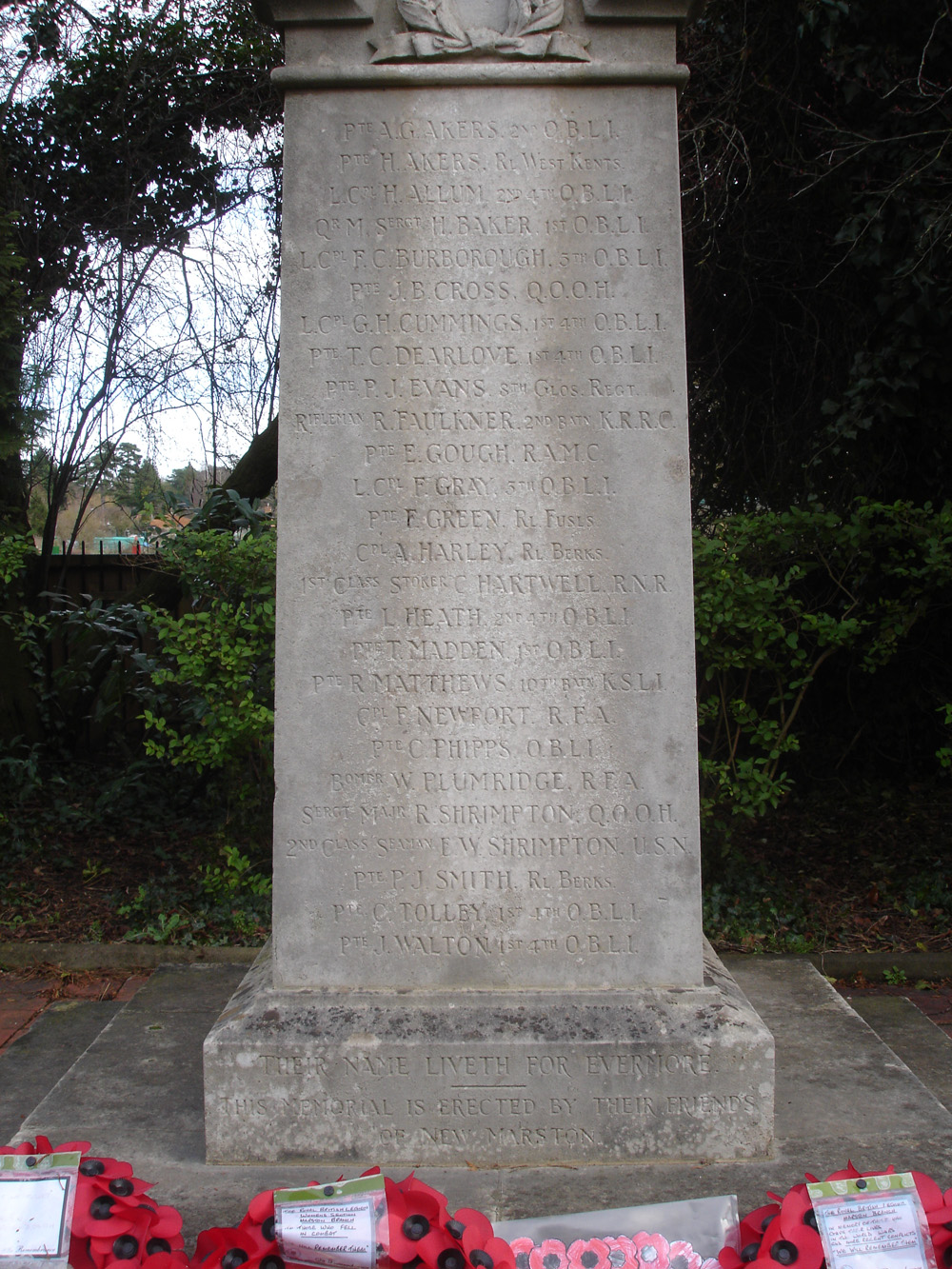
New Marston War Memorial Names

February 14, 2011 by Nicholas Hedges

At the bottom of my street is a War Memorial such as you find in most towns and villages throughout the country. I’ve walked past the memorial many, many times and while I’ve often thought of those who died in both World Wars, I’d never before read its list of people. Therefore, this week I did just that and have spent time researching where they died and where they’re now buried.

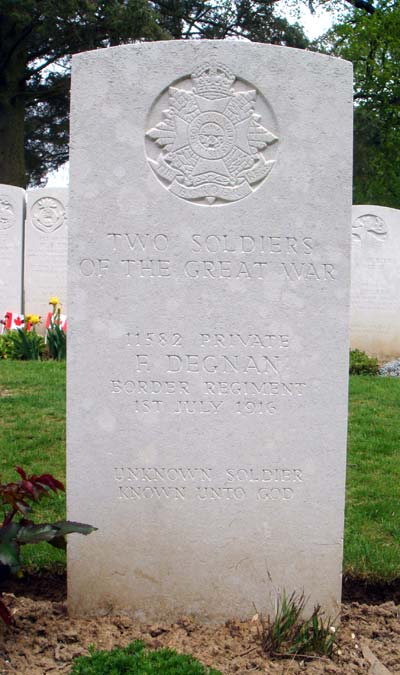
A couple of details at once stood out : A G Akers, the first on the list, lived in my road and died of wounds on the last day of the war; 11th November 1918. Arthur Gerald Harley was killed in action, aged 21 on 1st July 1916 – the infamous first day of the Battle of the Somme.

I will endeavour to find out as much as I can about some of those who are commemorated on this memorial, in the meantime the following list is what I’ve so far discovered:

A G Akers
Private 10524
11/11/1918 Died
Oxford and Bucks Light Infantry
S. II. GG. 20.ST. Sever Cemetery Extension, Rouen
Lived in New Marston
Harold John Akers
Lance Corporal G/6709
11/11/1915 Killed in action
Queen’s Own (Royal West Kent Regiment)
Panel 45 and 47.Ypres (Menin Gate)
Lived in Folkestone
Hubert Allum  
Lance Corporal 202107
10/09/1917 Killed in action
Age 25
Oxford and Bucks Light Infantry
Panel 96 to 98.Tyne Cot Memorial
Lived in New Marston
H Baker
Lance Serjeant 9341
02/08/1916 Died
Age 22
Oxford and Bucks Light Infantry
XXI. A. 19. Baghdad (North Gate) War Cemetery
Lived in Holton
Frederick Charles Burborough
Lance Corporal 17854
25/09/1915 Killed in action
Oxford and Bucks Light Infantry
Panel 37 and 39. Ypres (Menin Gate) Memorial
Lived in Tilehurst
Joseph Bailey Cross
Private 285440
05/11/1918 Killed in action
Queen’s Own Oxfordshire Hussars
In South corner. Obies Communal Cemetery
Lived in Oxford
George Herbert Cummings
Private 4706
14/08/1916 Killed in action
Oxford and Bucks Light Infantry
Pier and Face 10 A and 10 D. Thiepval Memorial
Lived in New Marston
Thomas Charles Dearlove
Private 18259
25/09/1915 Killed in action
Age 27
Oxford and Bucks Light Infantry
Panel 37 and 39. Ypres (Menin Gate) Memorial
Percival James Evans
Private 27723
18/11/1916 Killed in action
Age 24
Gloucestershire Regiment
Pier and Face 5 A and 5 B. Thiepval Memorial
R Faulkner
Private 22865
04/10/1917 Died of wounds
Age 19
King’s Own (Royal Lancaster Regiment)
P. III. K. 2A.ST. Sever Cemetery Extension, Rouen
Edward Gough
Private 446123
29/03/1919
Age 44
Royal Army Medical Corps
C. 213. Alexandria (Hadra) War Memorial Cemetery
Frederick Gray
Lance Corporal 10523
20/09/1917 Killed in action
Oxford and Bucks Light Infantry
Panel 96 to 98. Tyne Cot Memorial
Lived in New Marston
Frank Green
Private 5838
07/07/1916 Killed in action
Age 32
Royal Fusiliers
Pier and Face 8 C 9 A and 16 A. Thiepval Memorial
Lived in Oxford
Arthur Gerald Harley
Lance Corporal 10379
01/07/1916 Killed in action
Age 21
Royal Berkshire Regiment
Pier and Face 11 D. Thiepval Memorial
Lived in Oxford
Charles Thomas Hartwell
Stoker 2919T
01/11/1914
Royal Naval Reserve
5. Plymouth Naval Memorial
Lewis Heath
Private 201358
22/08/1917 Killed in action
Age 22
Oxford and Bucks Light Infantry
Panel 96 to 98. Tyne Cot Memorial
Lived in New Marston
Thomas Walter Madden
Private 201697
16/06/1918 Died of wounds
Age 20
Oxford and Bucks Light Infantry
Plot 2. Row D. Grave 3. Montecchio Precalcino Communal Cemetery Extension
Lived in New Marston
Richard David Matthews
Private 31925
31/05/1919
Age 39
King’s Shropshire Light Infantry
P. 29. Cairo War Memorial Cemetery
Frederick Newport
Corporal 83648
03/09/1916 Killed in action
Royal Field Artillery
Pier and Face 1 A and 8 A. Thiepval Memorial
Charles Percy Phipps
Lieutenant 
19/07/1916
Age 20
Oxford and Bucks Light Infantry
Panel 83 to 85. Loos Memorial
William John Plumridge
Bombardier 24311
31/12/1915 Died
Age 26
Royal Field Artillery
Plot I. Row C. Grave 12. Corbie Communal Cemetery
Richard Tirrell Shrimpton
Squadron Serjeant Major 285021
09/08/1918 Killed in action
Age 27
Queen’s Own Oxfordshire Hussars
I. AA. 1. Caix British Cemetery
Lived in Oxford
EW Shrimpton
Percy James Smith
Private 8068
01/11/1914 Killed in action
Age 26
Royal Berkshire Regiment
Panel 45. Ypres (Menin Gate) Memorial
Lived in New Marston
Charles Tolley
Private 5927
26/08/1916 Died of wounds
Age 32
Oxford and Bucks Light Infantry
I. A. 30. Varennes Military Cemetery
John Walton
Private 2239
09/04/1916 Died of wounds
Age 21
Oxford and Bucks Light Infantry
D. 31. Beauval Communal Cemetery

Filed Under: World War I Tagged With: Memorials, Memory, Soldiers, World War I, WWI

Canvas and Trench Map

November 23, 2010 by Nicholas Hedges

Filed Under: World War I Tagged With: Stitchwork, Trench Maps, World War I, WWI

Trench Panoramas

May 8, 2010 by Nicholas Hedges

There is something aesthetically beautiful about photographs taken of the Western Front during World War One. It might sound a strange thing to say, but it’s not unlike the view I have of those photographs taken by the Czechoslovak Secret Police in Prague. Although taken in very different circumstances, they are nonetheless about observation – secret observation of a perceived or definite enemy.

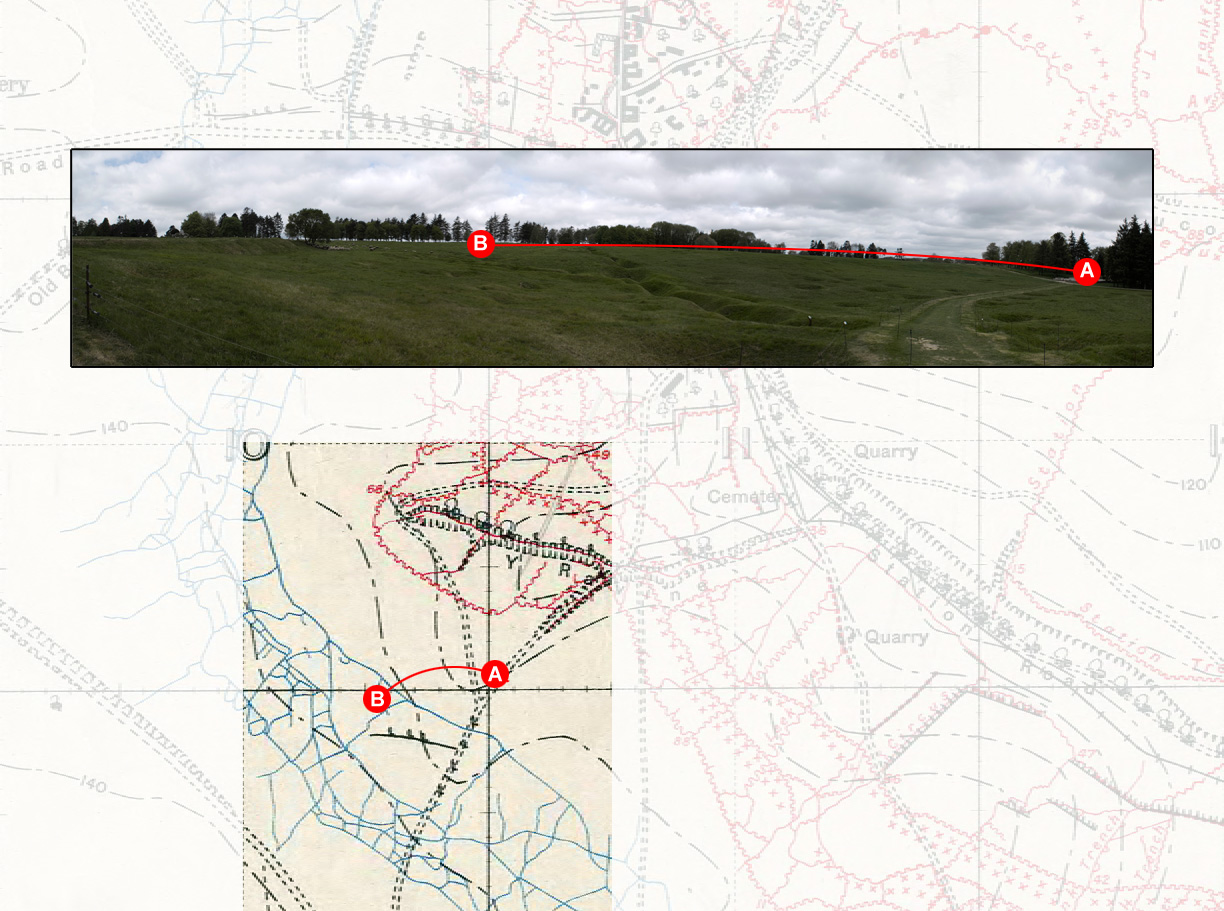
The photograph below is one of those panoramas, taken in Serre during the First World War. (I do not have permission to reproduce the image so have shown it below in no great detail.)

The fact I find these images so aesthetically pleasing is perhaps a reminder of the distance between myself and the subject. These images, it goes without saying, were not taken for their aesthetic appeal. These were images designed to better enable armies to deliver death to the enemy.

I wanted somehow to use this look in creating panormas of fake landscapes based on places to which I’ve been and the work I’ve made as part of my Mine the Mountain series, in particular, The Past is a Foreign Country which is shown below.

Alongside this work, I will, at the next Mine the Mountain exhibition, show a series of landscape photographs taken on trips around Europe, such as the two below.

I wanted to show that although the past as we perceive it is in some respects a fiction (in that it can only be imagined) it was nonetheless real – that what happened did so in what was then the present. Taking the aesthetic of the panorama above therefore, I’ve created an amalgma of the landscapes, making a single panorama. It’s not a finished piece by any means, but the start of a new line of work.

Filed Under: World War I Tagged With: Maps, Mine the Mountain, Mine the Mountain 3, Trench Panoramas, World War I, WWI

Beaumont Hamel

May 7, 2010 by Nicholas Hedges

Filed Under: World War I Tagged With: The Somme, Trench Maps, World War I, WWI

Battle of the Somme – Serre

May 7, 2010 by Nicholas Hedges

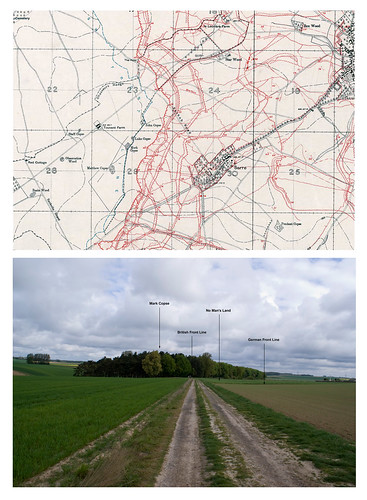
First image is a detail from a Trench Map (1916) showing Serre, the German Front Line and trenches (red) with the British Front line in blue. The photograph below shows Mark Copse, from where the 11th Battalion East Lancashire Regiment went over the top on 1st July 1916 suffering horrendous casualties as a result.

The Somme

Filed Under: World War I Tagged With: Serre, The Somme, Trench Maps, World War I, WWI

The Somme

May 7, 2010 by Nicholas Hedges

“Frontiers are lines. Millions of men are dead because of these lines.”
Georges Perec

The name Somme is, in the minds of many, synonymous with death, a byword for futile and indiscriminate slaughter. Think of the Somme and the image of men walking towards their deaths comes to mind. Think of the Somme and one date stands out above all others; 1st July 1916, the day the battle began. The battle itself lasted over four months, up until November 18th, but the 1st July is as infamous a date as any, being as it is the blackest day in British Military History. By the end of the first day’s fighting, British and Commonwealth forces had lost almost 60,000 men, with 20,000 of those killed or missing in action – a number which is almost impossible to comprehend. The exact number of casualties over the entire course of the battle (1st July – 18th November 1916) is unknown, but Allied forces lost some 620,000 men with over 145,000 killed or missing in action. Germany suffered around 465,000 casualties with almost 165,000 of those killed or missing.

These numbers are of course horrendous, but there’s always a danger that statistics such as these will only ever be numbers, rather than a single death multiplied several thousand times. Every one of those over 300,000 killed or missing in action was a son, husband or brother; an individual whose life was cut short for a small patch of ground. And we mustn’t forget the wounded whose injuries were often appalling – the result of a new type of warfare, where bodies were mauled and mangled by artillery shells, machine gun fire and shrapnel. Disfigurements and mental illness meant that even if they were lucky enough to return, many would never again lead a normal life.

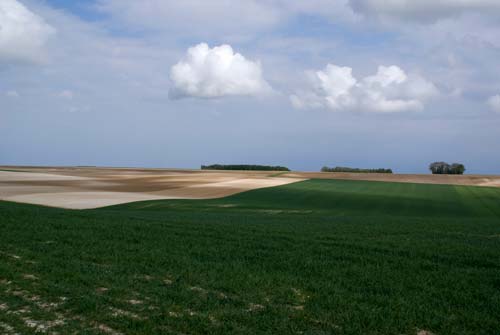
Before visiting the battlefields, I recorded my thoughts on how I imagined the Somme. Drawing on old photographs, books I’ve read and contemporaneous records, I’d built up a picture – a collage of sorts – of devastated fields, cut through with trenches; craters and mud, machine gun fire and shells. I’d imagined woods reduced to spent matchsticks occupying a space on the horizon and the terrain as I saw it in my mind’s eye was almost always flat. The images themselves were silent, equivocal and without any weight or real sense of place. There was colour but like any specific detail the colours were always vague. Any imagined scene was removed from my senses. I could try to imagine the war, but of course any idea as to what it was like would – to say the very least – be well wide of the mark. I could imagine the rain, the blue sky, the smell of the grass, but still it was all divorced from my senses; an indeterminate collection of images wherein there was little sense of direction. I could try and imagine movement, but any progression derived only from a series of stills as if I was looking down a length of film found on a cutting-room floor.

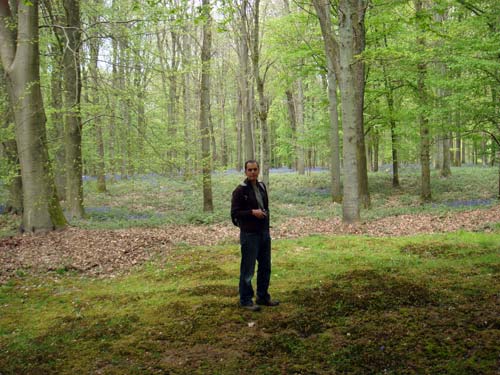
Having arrived in the Somme, we drove towards our B&B, down the narrow roads which cut across the fields. The sun was setting, casting long shadows which lay down across the landscape like discarded coats and clothes. I couldn’t help but think of those who’d stood in the trenches on the morning of 1st July 1916, knowing they might never see another sunset again. For a moment, this sunset became the one they wouldn’t to see. The sunset of that terrible day.

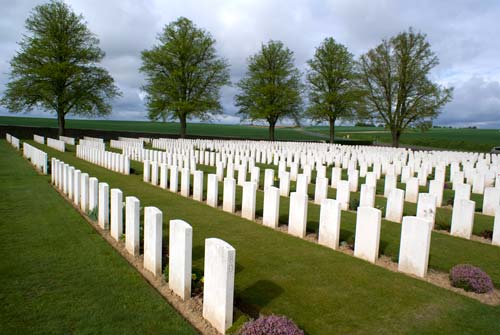
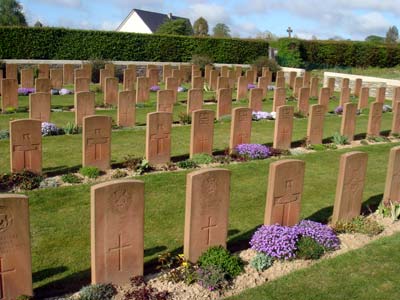
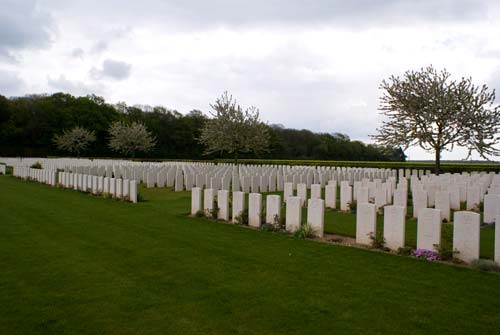
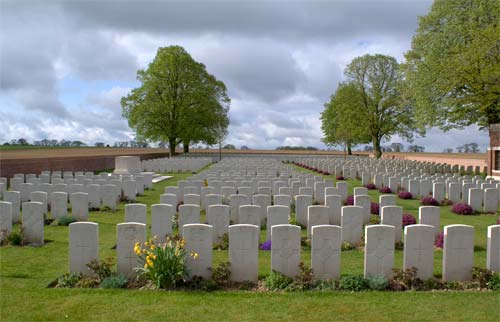
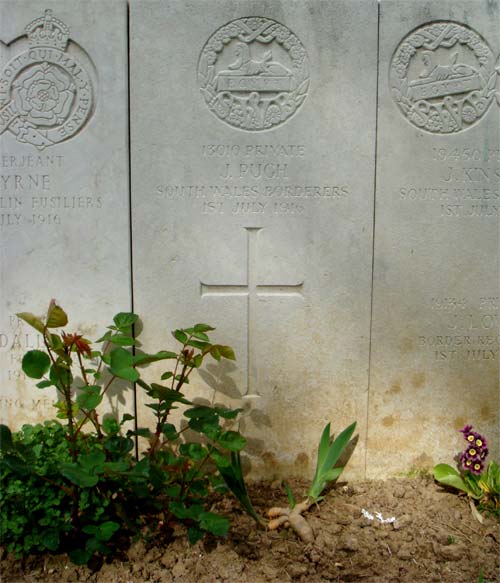
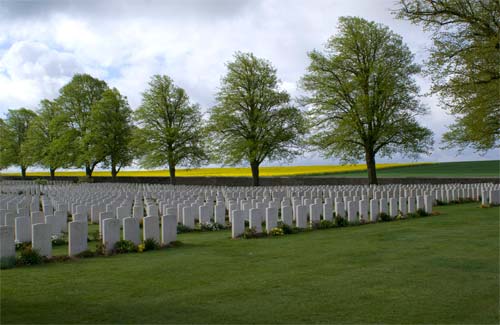
On arriving at the B&B we found our first cemetery.

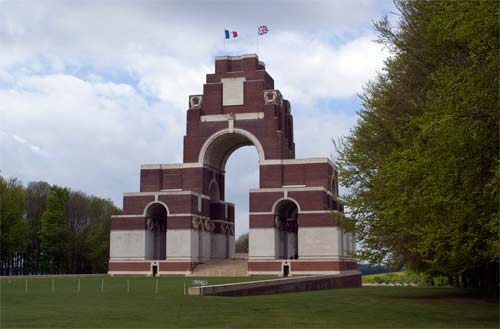
We had just over a day to explore the Somme battlefields and therefore took the ‘Circuit of Remembrance’ a route signposted with poppies which takes in the major sites of the battle. Starting at Beaumont Hamel, we travelled to Thiepval, Pozières, Longueval, Rancourt, Peronne and La Boiselle. The following morning, we travelled to Serre to see the place where, among others, the Accrington Pals suffered horrific losses on that first terrible day.

Travelling through the countryside and seeing signposts pointing the way to villages and towns such as Arras, Pozières and Thiepval, I felt a strange sensation, in that prior to visiting the Somme, these legendary names were almost fictions – places connected with a distant past found only in the pages of history. Temporal distance in some way then correlates with geographic distance, where places one has never been are like those times to which one can never go. It’s as if they are names of moments in time rather than places in another country; the past is indeed a foreign country, and yet one it seems can go there.

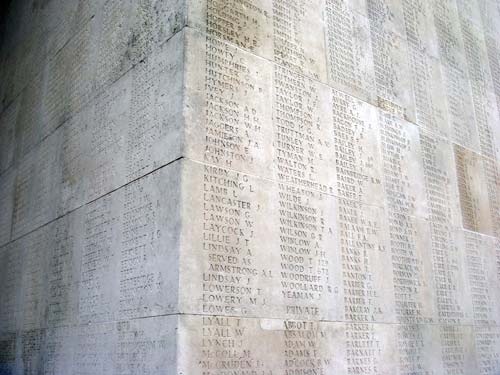
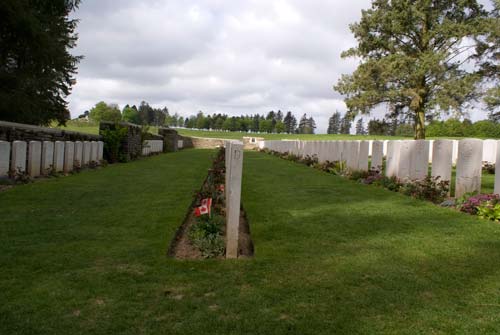
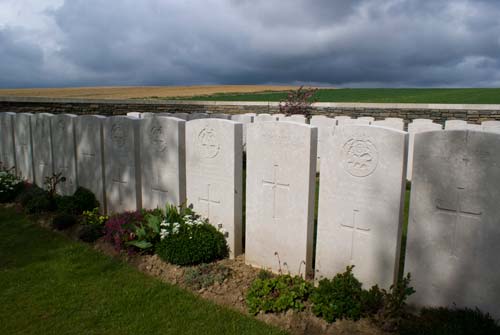
Of all the places we visited along the ‘Circuit of Remembrance,’ two stand out in particular; the site of the attack on Serre at what is now The Sheffield Memorial Park, and the Newfoundland Memorial Park at Beaumont-Hamel. Of course all other sites were extremely poignant, not least the Memorial to the Missing at Thiepval and the many cemeteries, all immaculately kept, which are found throughout the Somme countryside.

The first place we visited was the Newfoundland Memorial Park at Beaumont Hamel.

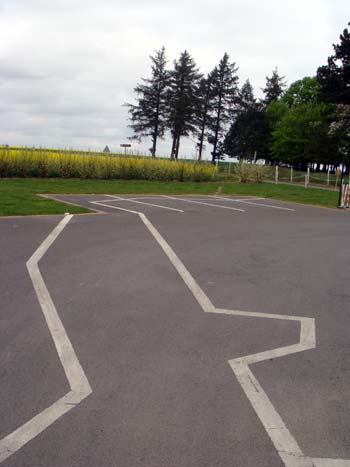
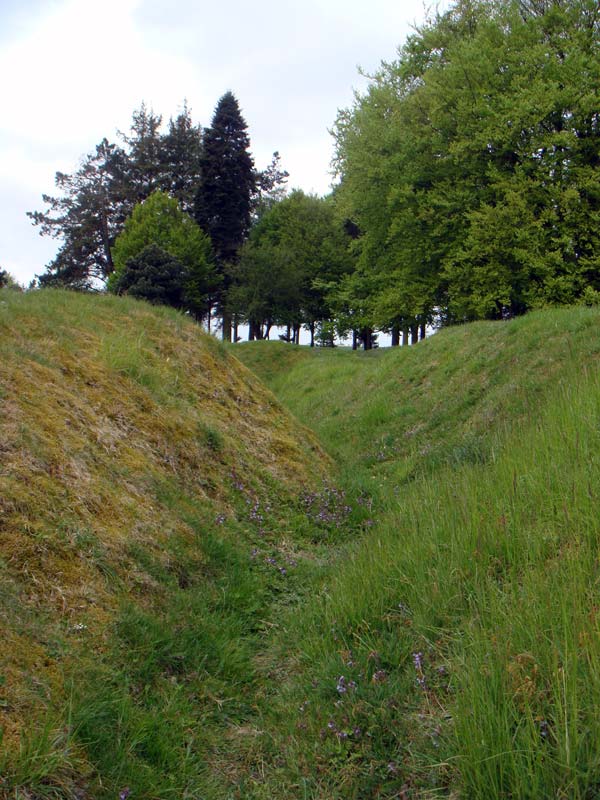
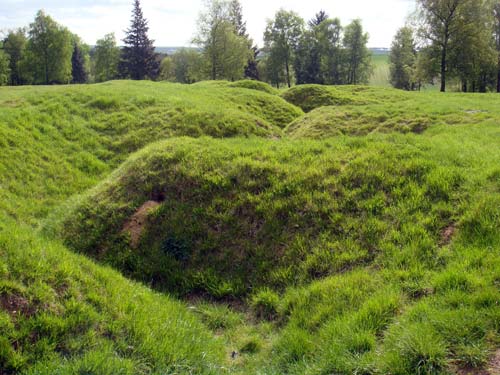
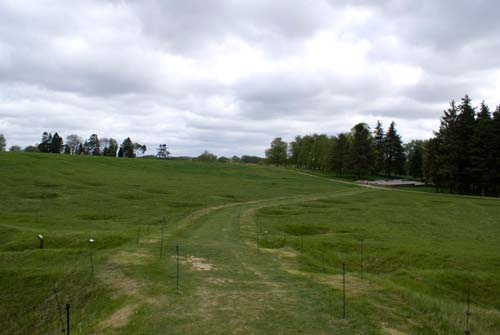
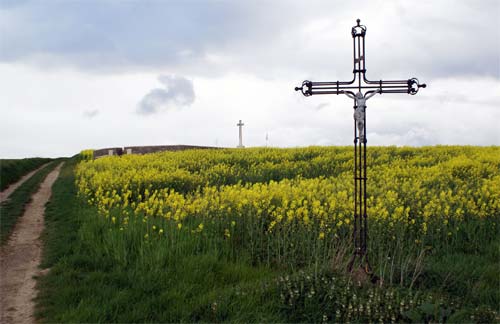
 It’s one of the few sites in the Somme region where the ground has remained largely untouched since the end of the First World War. The trenches are still visible, for example, St. John’s Road and Uxbridge Road which once led to Hyde Park Corner and Constitution Hill; trenches now filled in beneath a field of Rape (the line of the Uxbridge Road trench has been marked in white in the car park).

 The naming of the trenches has always interested me. It’s almost as if in the midst of the ruined landscape, whose pre-war character had all but been effaced, a new place was brought into being; not simply a ruin of that pre-existing world, but a new world entirely; a labyrinth of lines cut into the ground, named after streets or towns back home. It’s as if these ‘streets’, ‘lanes’ and ‘alleys’ were each a piece of the collective memory of those who fought and died there; fragments of a place called ‘home’ to which many would never return. Now of course the trenches have all but disappeared along with the men who made them, along with their individual memories. And yet they remain on maps and in books, and although the ruined towns and villages have been rebuilt, their own much older names seem to belong more to this other lost world than that before or after.


It was at Beaumont Hamel that the Newfoundland Regiment attacked on 1st July 1916, suffering as they did appalling losses. The following description is taken from the ‘Newfoundland and the Great War’ website:

“Thus it was that the Newfoundlanders moved off on their own at 9:15 a.m., their objective the first and second line of enemy trenches, some 650 to 900 metres away. In magnificent order, practiced many times before, they moved down the exposed slope towards No Man’s Land, the rear sections waiting until those forward reached the required 40-metre distance ahead…

 …No friendly artillery fire covered the advance. A murderous cross-fire cut across the advancing columns and men began to drop, at first not many but then in large numbers as they approached the first gaps in their own wire. Private Anthony Stacey, who watched the carnage from a forward trench with Lieutenant-Colonel Hadow, stated that “men were mown down in waves,” and the gaps cut the night before were “a proper trap for our boys as the enemy just set the sights of the machine guns on the gaps in the barbed wire and fired”. Doggedly, the survivors continued on towards The Danger Tree.”

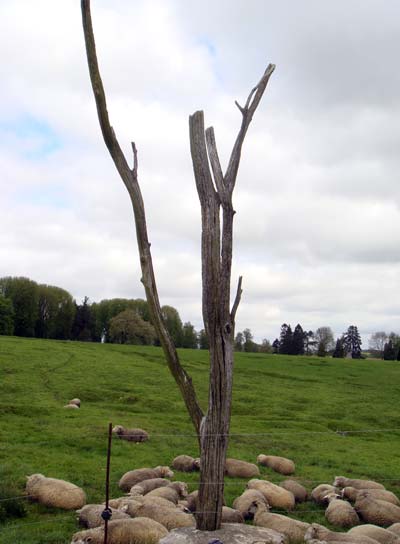
The ‘Danger Tree’ still stands, and standing there today, looking at the sheep laying around its base, it’s hard to imagine the scene at that same place 96 years ago.

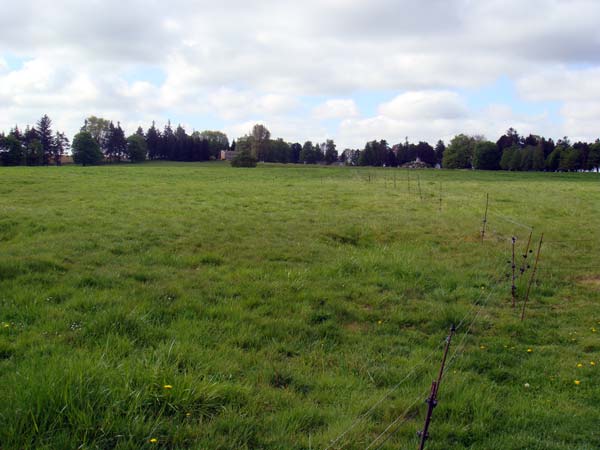
Like many who’ve read about the Somme, I was aware how close the opposing armies were to one another – at least in terms of stats – separated as they were by the void of No Man’s Land, but it was only in this place that the distance was made startlingly apparent; it was hardly any distance at all. Entering the memorial, one can see the British front lines. A leaflet guides you around and suddenly, you find yourself looking back from the German front line towards where you entered, a distance which is all but a few minutes’ walk away. And in between is a patch of ground, much like any other you might have seen before but upon which thousands lost their lives.

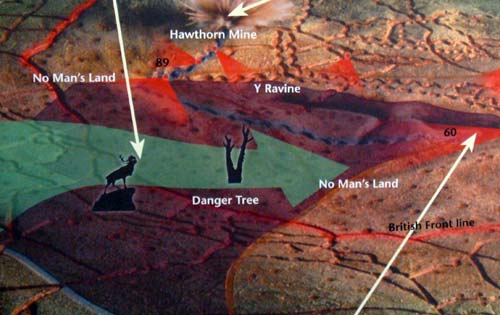
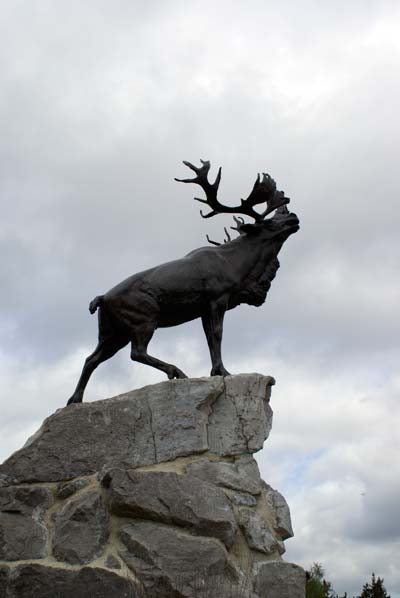
The following images show the Caribou Monument to the Newfoundland Regiment (shown on the map above) which stood at the British Front Line. The Danger Tree is that shown above which marked the furthest many men managed to get. The Y-Ravine is behind the German Front Line, the trenches of which are also shown below.

Of course it goes without saying that in 1916, the ground would have looked very different. Pockmarked by shells, cut through with trenches running on for miles and covered with swathes of barbed wire it would have presented advancing troops with considerable difficulties even without the horrors of enfilading machine gun fire and pounding artillery. 

As far as can be ascertained, 22 officers and 758 other ranks were directly involved in the advance that day. Of these, all the officers and around 650 other ranks became casualties.  Of the 780 men who went forward about 110 survived unscathed, of whom only 68 were available for roll call the following day. To all intents and purposes the Newfoundland Regiment had been wiped out, the unit as a whole having suffered a casualty rate of approximately 90%.

It goes without saying that as tourists today we can never imagine what it was like to be a part of this battle, not that we should be deterred from trying. Even so, one can appreciate things which sharpen the focus of any prior knowledge of the war and in particular any images which one might have imagined beforehand. I’d read about the attack on Beaumont Hamel in a book by Peter Hart and had imagined a vague collection of ‘ambiguous stills’ with which I did my best to appreciate the experiences of those who suffered the appalling violence of that first day. But standing in the middle of what had been No Man’s Land, with the British Front Line to my left, beside the Newfoundland Caribou Memorial, and the German Front Line to my right – just behind the memorial to the 51st Highland Division – I was struck by how small the battlefield, at that position,  was. As I’ve said, if this was any place in the countryside, it would constitute nothing more than a small part of a short walk, but in 1916 it was a great advance, in the pursuit of which, many thousands lost their lives.

There is a tendency at sites such as this, or rather in associated museums (for example that in Ypres) to create recreations of battles with sounds effects, waxworks, lighting effects and so on. For me, such recreations do nothing other than turn history into fantasy. They push history – which already borders on fiction (in that it can only be imagined)  – deeper into the world of make-believe. Recreations serve no other purpose than to ‘entertain’ and certainly do little by way of justice to memory of the men who fought there. It’s much better to be in a place, to hear the birds and see the trees… they might not be shells or machine guns, but they are real all the same.

I must admit I could have stood there in ‘No Man’s Land’ for hours, collecting together what I knew of the war and what I could glean from the guide and anchoring it to the reality of the world by which I was surrounded. What I could really appreciate here was the terrain, not only the pock-marked surface, but the level of the ground which,  superficially at least, appeared quite ‘flat’. Certainly, if one was out walking, one wouldn’t think it was particularly steep or hilly. However, from the point of view of those who left the British Front Line to attack the Germans, one could see what they were up against. The ground rose just enough to leave them exposed, while at the same time affording the German army at least a degree of shelter. Indeed, something which I found myself coming to understand in the Somme, were the subtle shifts of the terrain and how such changes, visible to the individual eye, shaped the war as a whole and determined the fates of so many hundreds of thousands of men.

The image below is taken in what was No Man’s Land. The Y Ravine Cemetery is on the right. Over the ridge in the distance is the German Front Line.

Over the course of the last few years, ever since my visit to Auschwitz, I’ve tried to understand what it is about being in a particular place that makes knowledge of a past associated with that place so much more compelling. It seems obvious that it should be the case, but why? I can watch countless DVDs about the Somme for example, view masses of photographs, read the testimonies of those who fought and look at the lists of the names of the dead. But only by standing there, in the middle of a field (upon which sheep were grazing) did the full horror make itself known.

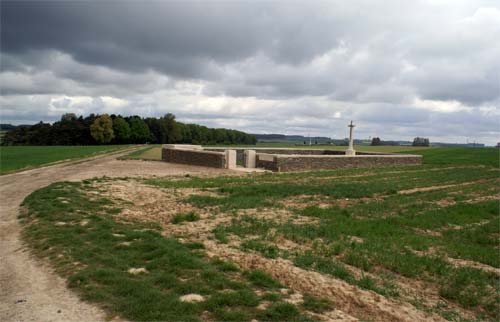
I felt exactly the same thing at the Sheffield Memorial Park, situated on what was once the British Front Line between ‘Matthew Copse’ and ‘Mark Copse’ near the village of Serre. It was from here that an attack was made on what was then a fortified village by, amongst others, the Accrington Pals and Sheffield City Battalions, again on that infamous day, 1st July, 1916.

Again, staring ahead towards the Queens Cemetery, behind which the German Front Line would have run, one could see just how close the two sides were to one another. One could also read the terrain and see the advantage the Germans had when facing the approaching army. As a result therefore, one could also see just what the soldiers of the Pals Battalions were up against, even without the horrors of machine guns and artillery.

Again I have to stress, that we can never fully appreciate what the men who climbed from their trenches faced that fateful day. But as with my experience at the Newfoundland Memorial, I found that in looking towards where the German lines would have run, across the field over which the soldiers would have walked, the horrors of which I’d read became much clearer. I couldn’t see the guns of course, or the artillery and barbed-wire. I wasn’t walking into a hail of bullets with shrapnel flying from shells bursting all around me. But there in the tranquility of the present day, where one could hear the birds, I’d brought with me to that place, the whole of my existence – my past – and that was something at least I had in common with the brave men who fought there.

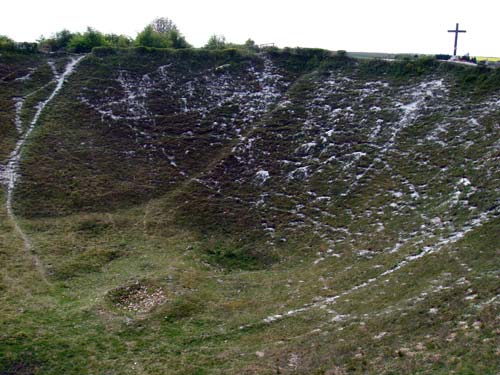
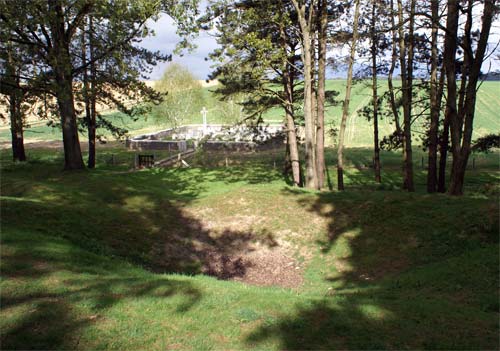
In La Boiselle, one can find the Lochnagar Crater, caused by a huge mine detonated at 7.28am on 1st July 1916. Containing 24 tons of explosives, it was at the time the largest ever man-made explosion.

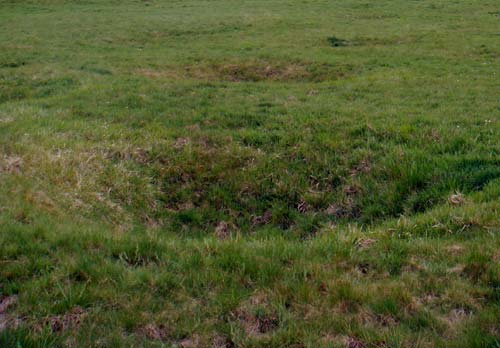
 At 300 feet in diameter and 70 feet deep, the crater is still the largest caused by man in anger. Again, like the various battlefield sites, it’s a tranquil place, in stark contrast to the violence from which it was created. And yet, although one can’t hear the noise, one can see it in the vast space left in the ground. The sound has left a footprint; it’s become physical, just as sounds remain in the pock-marked battlefields found across the Somme.

In some respects, this idea of a ‘sonic footprint’ is akin to that of people leaving a trace on paths, roads, tracks and other lines found in the landscape. The trenches for example – those which one can see today – are not as they were in 1916 (i.e. they’re not as deep and are grown over with grass) but they are lines created by people many years ago. They might not call to mind a sound in quite the same way as the Lochnagar crater, but they’re nonetheless records of actions and movements.

In his book, ‘Lines, A Brief History’, anthropologist Tim Ingold writes that human beings, ‘leave reductive traces in the landscape, through frequent movement along the same route’. He considers this in light of the etymology of the word writing (derived from the Old English term writan – meaning to incise runic letters in stone) and surmises that human beings somehow ‘write’ themselves in the landscape. Henri Bergson wrote that our whole psychical existence was something just like a single sentence. I believe,’ he said, ‘that our whole past still exists.’ The whole past could be said to exist, upon and within these trenches, as ‘sentences’, ‘written’ in the landscape by men almost 100 years ago.

These lines can also – metaphorically speaking – be thought of as magnetic tapes, where as we walk, we record our presence; where what we see, hear, touch etc. at any given moment, is analogous to the recording head of a tape-player arranging the magnetic particles so as to record the sound or video image. Equally, when we walk down a particular street, path or track, we simultaneously play-back previous recordings, those laid down by people long since lost to the past and the battlefields of the Somme are a perfect place to illustrate this point.

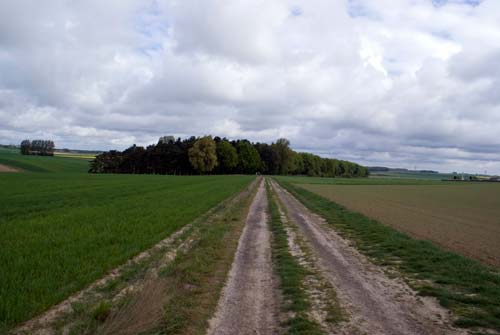
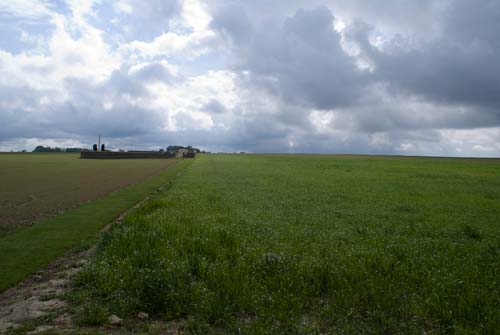
At the battle for Serre on that fateful day – 1st July 1916, hundreds of men lost their lives on the ground between the village and the memorial where we were standing. The weather on the day of our visit was mixed, but mostly dry (the battle took place on a beautiful summer’s day). There were patches of blue sky and the odd cloud. Looking ahead, I could see the lie of the land. I could see the distance, the village of Serre and behind me the trees of the copse. I could hear the birds and feel the ground beneath my feet. Imagine then, that as I walked, the things I saw were somehow recorded in the ground upon which I was walking: the position of the sun, the colour of the sky, the sound of the birds and the distance. As a record-head receives information and translates it onto tape, so metaphorically, my body was doing the same.

Of course, recording-heads don’t just record, but play-back all that’s previously been recorded. Again we can think of the ground as being crossed by many lines and that along every one of those lines are hundreds of ‘recordings’ left by those who went before us. We can imagine that what they saw, what they heard and what they thought were all translated into the ground upon which they walked.

It was Bill Viola who said that ‘we have been living this same moment ever since we were conceived. It is memory, and to some extent sleep, that gives the impression of a life of discrete parts, periods or sections, of certain times or highlights’. If we think of the lines the soldiers left behind, lines which stopped abruptly in No Man’s Land, we can imagine them leading all the way back to the time they were born.

These long, individual lines are of course impossible for us to imagine in their entirety, but on sites such as the battlefields at Serre and Beaumont Hamel, where the lines of trenches can still be seen and where No Man’s Land stretches out ahead, we can be sure at least of seeing a small part. By following these fragmentary lines, our bodies in a very small way mirror that of the soldiers. Again I have to stress the words very small way and again make it clear that we can never know what it was like to experience what they did.

When we walk down the line of a trench, the gestures of our bodies are bound in some very small way to mirror those of people caught in the midst of war. When we look at the sky, down at our feet, turn our heads left or right, we can assume that an aspect of the way our bodies move is almost a mirror-image of those who went before us. We can imagine then, that when we plant a footstep, the way our body moves, what we see around us is akin to the idea of our bodies playing back that which has been recorded in the ground; the ground determines how we move – determines the shape of our body; thus we empathise kinaesthetically with those lost to the past.

These lines, as I’ve said, are only fractions of the total line carried by men into battle, i.e. the total span comprising the entire geography of their lives. But history is full of holes, and the gaps have holes of their own.
History tells us only a little about the past. It gives us the outline whereas the rest is all but missing. The history of an event, as told in a book, has a beginning, a middle and an end, but of course in reality the past is never like that. Historic events are about the people involved, many of whom are missed out altogether. For George Lukács, ‘the “world-historical individual” must never be the protagonist of the historical novel, but only viewed from afar, by the average or mediocre witness.’ In other words, those historic events written about in books, are best discovered through the eyes of those who are missing from the text, people who at best are either given the epithet ‘mob’ or ‘masses’ or are bundled into numbers and tables of statistics. It’s through the eyes of these people that I want to see the past.

 
To consider this a little further; in the film Jurassic Park, the visitors to the Park are shown an animated film, which explains how the Park’s scientists created the dinosaurs. DNA, they explain, is extracted from mosquitoes trapped in amber and where there are gaps in the code sequence, so the gaps are filled with the DNA of frogs; the past is in effect brought back to life with fragments of the past and parts of the modern, living world. This ‘filling in the gaps’ is exactly what I have done throughout my life when trying to imagine the past and it’s just what we do in terms of the fragments of lines upon which we can kinaesthetically engage with people lost to the past. Where there are gaps we use our own lives to fill the holes and thereby understand that those who died in places like the Somme, were people just the same as ourselves.

Something else which plays a key role in interpreting landscapes such as those at the Somme is something which we might describe as ‘Embodied Imagination.’ We all at some point in our lives try to imagine the past whether through photographs, paintings or literature, but what we imagine always comprises snapshots, static images animated to some degree by our imaginations. It’s exactly how I described my thoughts on the Somme before my visit.

“Before visiting the battlefields, I wanted to record how I imagined the Somme. Old photographs, books and contemporaneous records all made a picture – a collage of sorts, comprising devastated fields, cut through with networks of trenches. Craters and mud; machine gun fire and shells. Woods reduced to spent matchsticks occupying a space on the horizon. The terrain as I’d imagined it was always flat and the images themselves silent, equivocal, without any weight or sense of place. There was colour but like any specific detail it was always vague. Any imagined scene was removed from my senses.  I could try to imagine the war, but of course any idea as to what it was like would be well wide of the mark to say the very least. I could imagine the rain, the blue sky, the smell of the grass, but still it was all divorced from my senses; an indeterminate collection of images wherein there was little sense of direction. I could try and imagine movement, but any progression derived from a series of stills as if I was looking down a length of film found on a cutting-room floor.”

 
In his book ‘The Materiality of Stone: Explorations in Landscape Phenomenology,’ Christopher Tilley writes:
“At the basis of all, even the most abstract knowledge is the sensuous, sensing and sensed body in which all experience is embodied: subjectivity is physical… The body carries time into the experience of place and landscape. Any moment of lived experience is thus orientated by and toward the past, a fusion of the two. Past and present fold in upon each other. The past influences the present and the present rearticulates the past.”

In a ‘Phenomenology of Landscape,’ he writes: “Knowledge of place stems from human experiences, feeling and thought.”

We could say therefore that knowledge of the Serre battlefield, for example, stems from ‘human experiences’ (the experiences of those who fought in 1916), ‘feeling’ (my own kinaesthetic experience of the battlefield in the present day) and ‘thought’ (my embodied imagination where my knowledge of past human experience is animated by my own kinaesthetic experience). Knowledge of a place is both geography and biography, of both the place and the individual.
 
Again, Christopher Tilley’s work is useful here. In his book, ‘Body and Image,’ he writes:

“What the body does in relation to imagery [landscape], its motions, its postures, how that imagery [landscape] is sensed through the fingers or the ear or the nose, as much as through the organ of the eye, actively constitutes the mute significance of imagery [landscape] which to have its kinaesthetic impact does not automatically require translation into either thoughts or meanings. The kinaesthetic significance of imagery [landscape] is thus visceral. It works through the muscles and ligaments, through physical actions and postures which provide affordances for the perceptual apparatus of the body in relation to which meaning may be grafted on, or attached. Meaning is derived from and through the flesh, not a cognitive precipitate of the mind without a body, or a body without organs.”

 
The ‘perceptual apparatus of the body’ as described by Tilley is akin to what I’ve described as my kinaesthetic experience of the battlefield. ‘Meaning’ can then be ‘grafted on’ or ‘attached’, where that meaning is my knowledge of past human experience. The whole is what I’ve described as ‘embodied imagination.’ But we must be careful not to reduce experience down to a mind/body dualism. The mind is not divorced from the body, neither is the body separate from the mind. ‘Consciousness is corporeal.’

I mentioned earlier the names of the trenches; the fact that for four years, a strange, new and violent place was imposed upon a peaceful agricultural landscape; how it’s almost as if the names of the trenches were fragments of the collective memory of those who dug and occupied them. Today, when we walk along what remains, we engage kinaesthetically with those who knew them during the war and we carry with us the entire geography of our existence, stretching back in a line to the day we were born. In effect, we impose – just as we’ve done throughout our lives – our own world upon that which already exists. “In a fundamental way,” writes Christopher Tilley, “names create landscapes”  and in a sense, the names of those we have known, whether throughout our lives or for a few minutes are mixed with the names of streets, cities and buildings, to make a landscape unique to us as individuals. The landscape of the Somme, in the physical present or in books and maps has been created not only by the names which existed prior to the war, but by the names of the trenches, fortifications and not least the names of everyone who fell here.

 Inevitably in a place such as the battlefield at Serre where so may men fell on that small patch of ground, one’s thoughts will turn to death – the literal end of the line. In an interview in 1979 with Frank Venaille, writer Georges Perec was asked: “…don’t you think that… the determination to work from memories or from the memory, is the will above all to stand out against death, against silence?”

If we can empathise kinaesthetically with the lives of the men who fought, it’s almost inevitable that we will somehow engage with their deaths which inevitably means a contemplation of our own, and in that sense, the fact that we can then walk away means that to some extent we do indeed stand out against death and silence.

Death is at its most visible in the cemeteries and monuments of the Somme. The landscape is covered with hundreds. Immaculate and maintained by the Commonwealth War Graves Commission, they are strangely beautiful places wherein one’s breath is always taken away by the row upon row of white headstones. It’s only here the scale of the slaughter becomes apparent. Some headstones have names, many – where names are unknown – have just the words A Solider of the Great War. Often the date is familiar, coinciding with the start of a phase in the battle, July 1st 1916 for example. But many men too vanished altogether and over 72,000 of these men are commemorated on the Thiepval memorial to the missing.

In some respects, by being in the places where they fell, by walking the lines of the trenches and through ‘reading’ or ‘playing-back’ ‘recordings’ in the lines which cover the Somme as I’ve described above, we are, kinaesthetically, remembering the missing and all who never returned home. People are places and places are people. Remembrance is not an act solely of the mind, but of an embodied imagination.

Filed Under: Trees, World War I Tagged With: Bill Viola, Cemetery, Moments, Silence, The Somme, Tim Ingold, World War I, WWI

  • « Previous Page
  • 1
  • 2
  • 3
  • 4
  • 5
  • Next Page »

© Nicholas Hedges 2024

  • Facebook
  • Instagram
  • Twitter
  • YouTube

Copyright © 2025 · Outreach Pro on Genesis Framework · WordPress · Log in