Nicholas Hedges

Art, Writing and Research

  • Amazon
  • Behance
  • Facebook
  • Instagram
  • Pinterest
  • YouTube
  • Art
    • Digital
    • Drawing
    • Grids
      • Correspondence
      • The Wall
      • The Tourist
    • Ink on paper
      • Shadow Calligraphy
    • Installation
      • Murder
      • Echo
    • Painting
    • Patterns
    • Mixed Media
    • Photographic installation
      • St. Giles Fair 1908
      • Cornmarket 1907
      • Headington Hill 1903
      • Queen Street 1897
    • Research/Sketches
    • Stitched Work
      • Missded 1
      • Missded 2
      • Missded 3
      • Missded 4
    • Text Work
  • Blogs
    • Family History
    • Goethean Observations
    • Grief
    • Light Slowed But Never Stilled
    • Lists
    • Present Empathy
    • Shadow Calligraphy
    • Trees
    • Time
    • Walking Meditations
  • Video
  • Photography
    • Pillars of Snow
    • Creatures
    • The Trees
    • Snow
    • St. Giles Fair 1908
    • Cornmarket 1907
    • Headington Hill 1903
    • Queen Street 1897
    • Travel
  • Illustration and Design
  • Music
  • Projects
    • Dissonance and Rhyme
    • Design for an Heirloom
    • Backdrops
    • Shadow Calligraphy
  • Exhibitions
    • A Line Drawn in Water
      • Artwork
    • A Line Drawn in Water (Blog)
    • Mine the Mountain 3
      • Artwork
    • Mine the Mountain 2
      • Artwork
      • The Wall
    • The Woods, Breathing
      • Artwork
    • Snow
      • Artwork
    • Echo
      • Artwork
    • Murder
      • Artwork
    • The Tourist
    • Dreamcatcher
    • Mine the Mountain
      • Artwork
      • The Tourist
    • M8
    • The Gate
    • Creatures
      • Artwork
    • Residue
      • Artwork
    • A visit to Auschwitz
      • Artwork
  • Me
    • Artist’s Statement

Two Worlds

June 17, 2015 by Nicholas Hedges

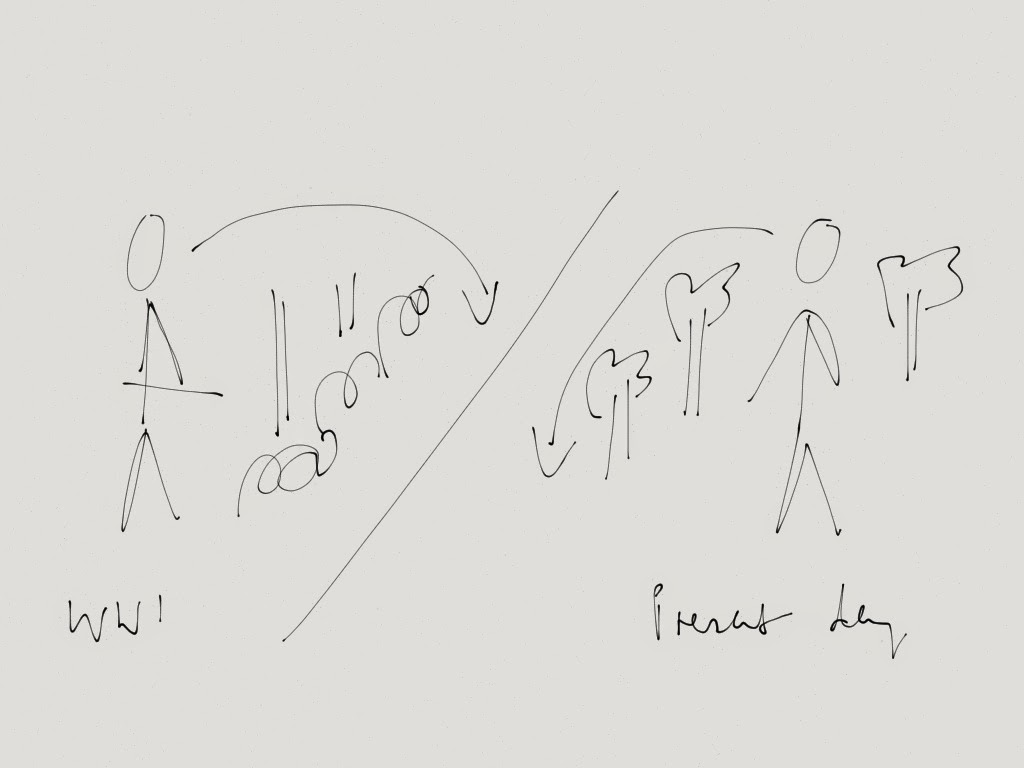
I was thinking about the post World War I landscape and how the years after 1918 saw a surge in spiritualism with grieving parents, wives and children seeking solace in the idea of their loved ones’ continued existence on ‘the other side’. There is, I think, a link with the Pastoral landscapes I’ve been thinking about of late, a place which seems best expressed by the poet Rilke:

And gently she guides him through the vast Keening landscape, shows him temple columns, ruins of castles from which the Keening princes Once wisely governed the land. She shows him the towering trees of tears, the fields of melancholy in bloom (the living know this only in gentle leaf).

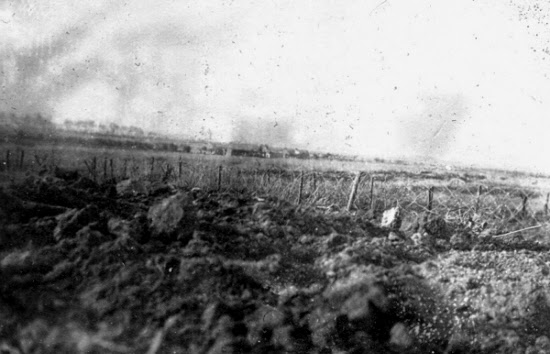
In tandem with this boom was the beginning of battlefield tours; tourists would visit the western front when the guns had hardly stopped firing. And I thought how interesting it was that there were these two different ways of looking for those who had gone: one, in a landscape of the imagination, the other, in the physical world; a pastoral plane and a place torn apart by war. And in many respects this reflects my work; the real world which we inhabit today and the plane of the past – a place in which we search for the dead in order that we might empathise with them.
Filed Under: Trees, World War I Tagged With: Empathy, Landscape, Rilke, World War I, WWI

Childhood Landscapes

October 15, 2014 by Nicholas Hedges

‘I can see him now,’ my Nana told me, talking about her dad, ‘because he went up our garden over the road and the mountain started from there up… and he’d go so far up and he’d turn back and wave to us, and if we went out to play, our Mam would say, “you can go up the mountain to play…” but every now and then our Mam would come out in the garden and we had to wave to her to know that we were alright you know… always remember going up the mountain…’

Hafodyrynys and Surrounds
Nana’s mountain

I interviewed my Nana in 2007, the year before she died. What she was describing was a scene from her childhood landscape in the years after the First World War. During the Second World War, a young boy called Otto Dov Kulka was a prisoner in Auschwitz-Birkenau. He recalls his childhood landscape thus:

“The colour is blue: clear blue skies of summer. Silver-coloured toy aeroplanes carrying greetings from distant worlds pass slowly across the azure skies while around them explode what look like white bubbles. The aeroplanes pass by and the skies remain blue and lovely, and far off, far off on that clear summer day, distant blue hills as though not of this world make their presence felt.”

Auschwitz-Birkenau
Auschwitz-Birkenau

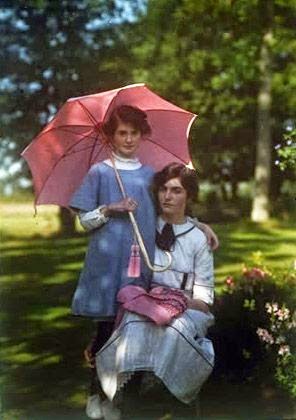
In previous blogs I have described my childhood landscapes, both real and imagined; most recently in the context of childhood landscapes pre World War I, this time of two girls who lived in what is now Bury Knowle Park in Headington, Oxford.

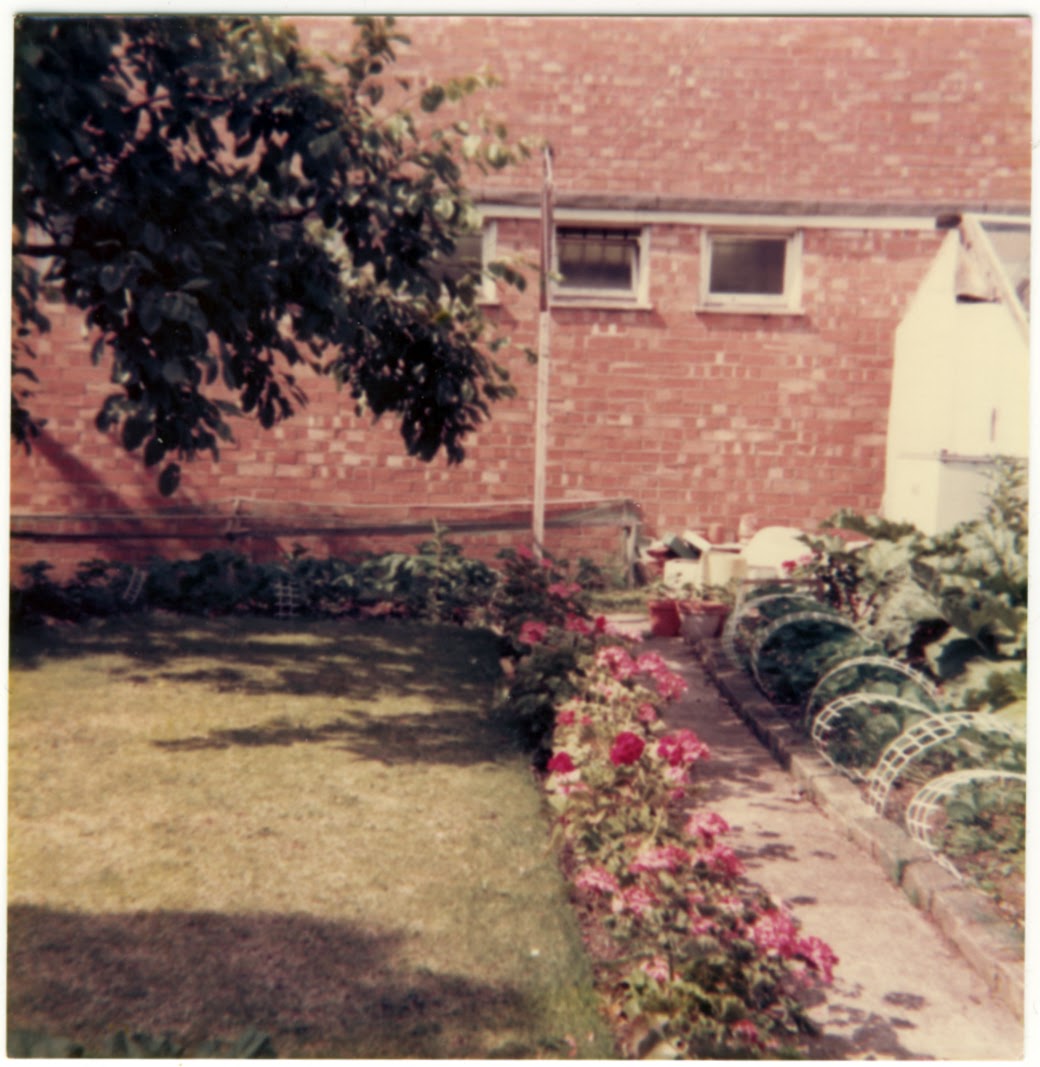
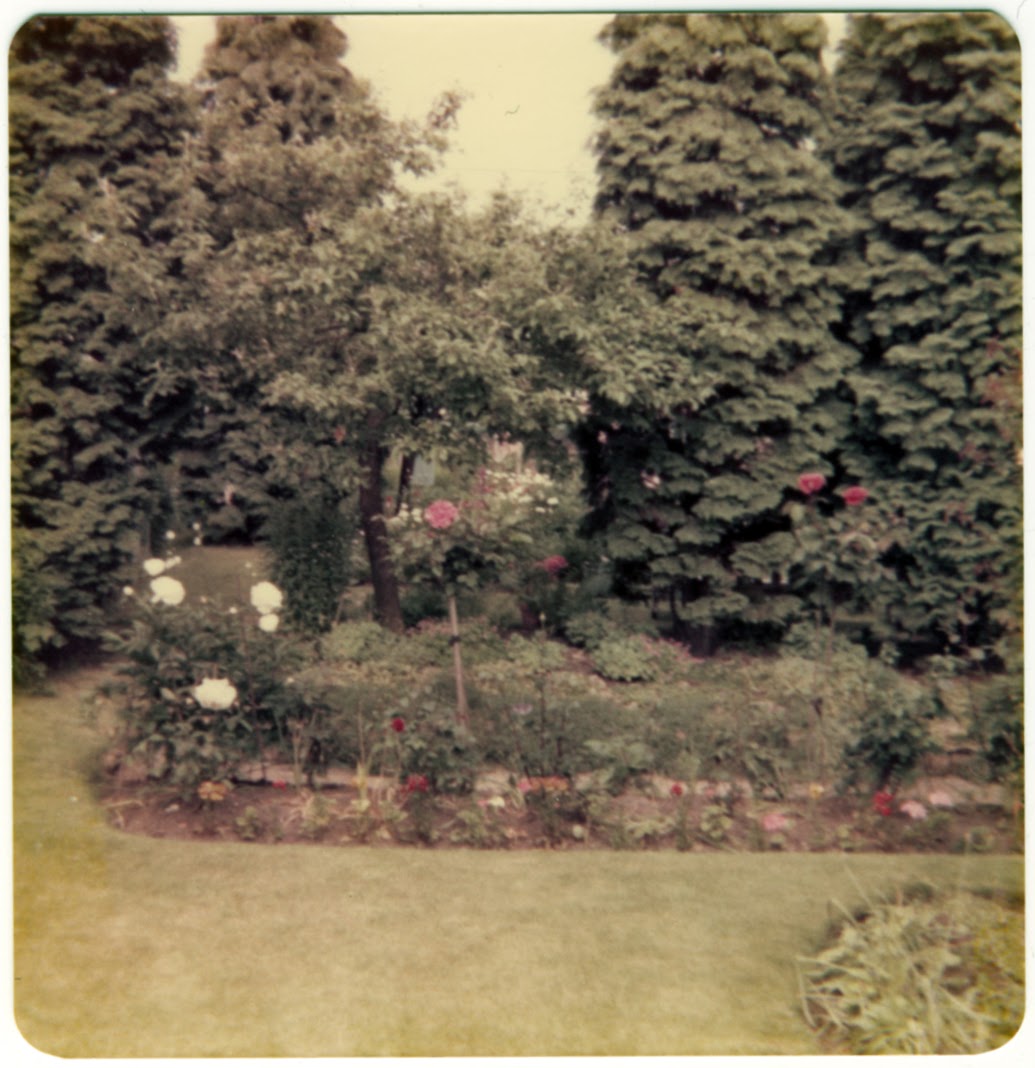
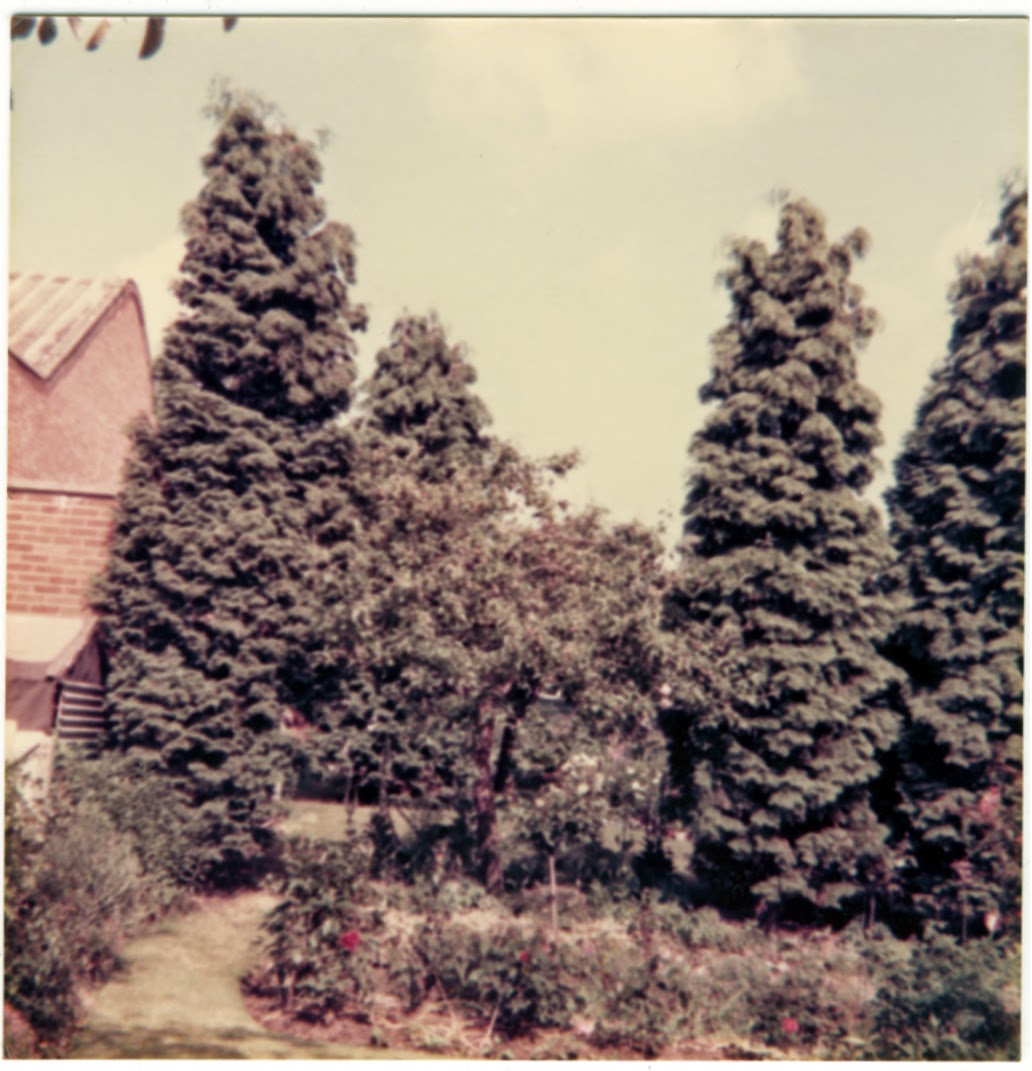
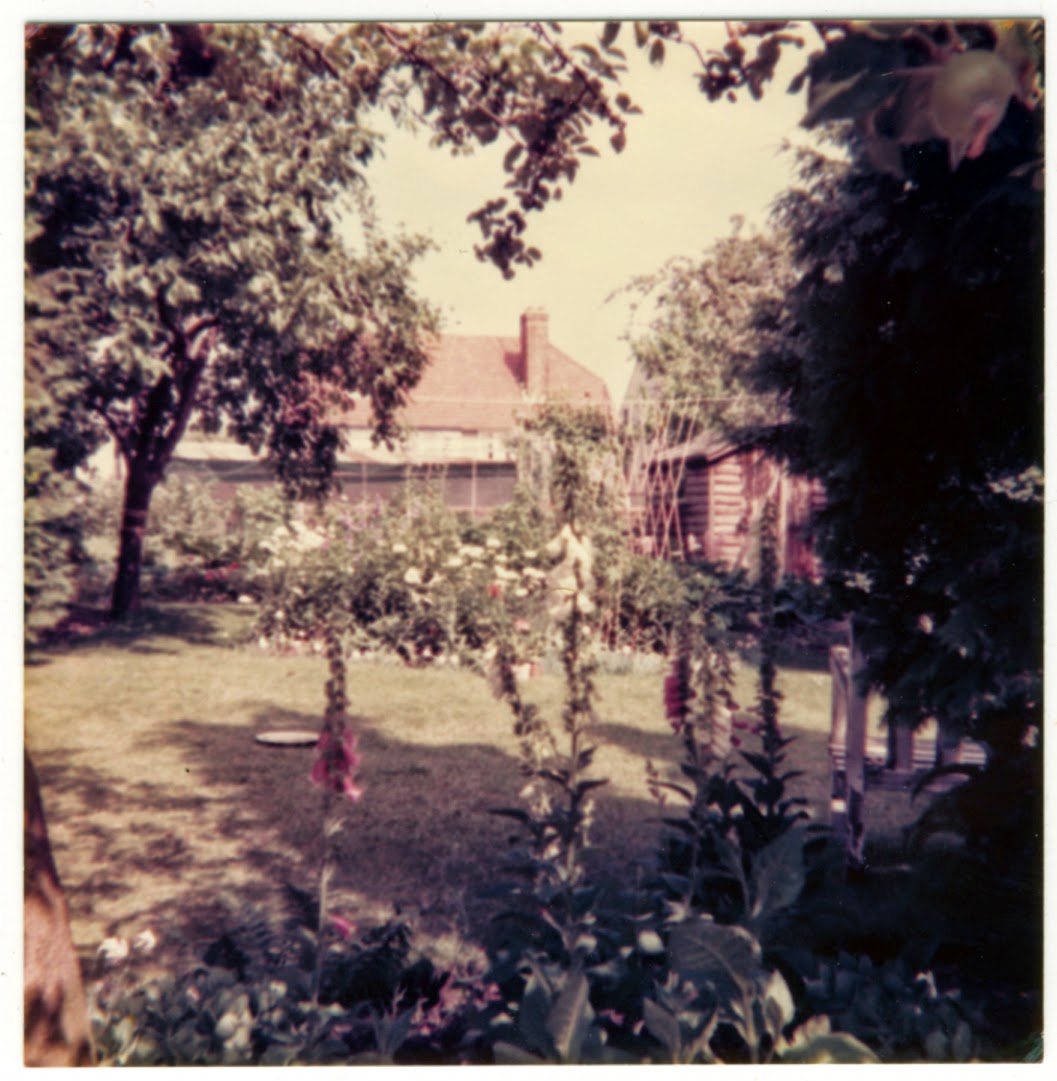
My childhood landscapes are bound up with journeys to and from my grandparents’ houses and in particular, my Nan’s garden (pictured below) also in Headington.

I have walked in all these places; in my grandparents’ garden; in Bury Knowle Park, on the ‘mountain’ in Wales and in Auschwitz. I spent many happy years in the garden of my childhood home (which has all but disappeared under a vast extension to the house).

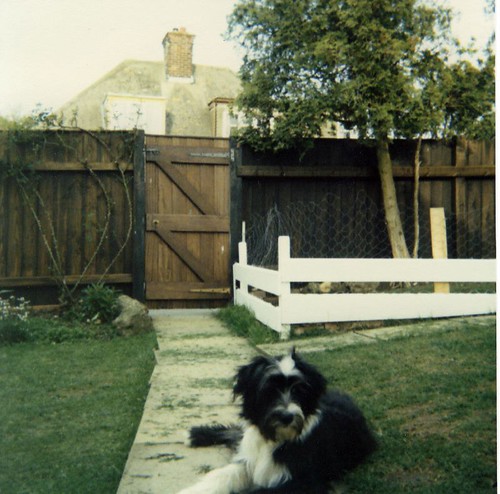
Sukey

Filed Under: Holocaust Tagged With: Bury Knowle Park, Childhood, Gardens, Holocaust, Imagined Landscapes, Landscape, Memory, Nana

Proxies

August 21, 2014 by Nicholas Hedges

Following on from my last entry I’ve been wondering whether an empathetic link between ourselves and those who fought and died in the First World War can – based on Paul Fussel’s quote regarding “moments of pastoral” (“if the opposite of war is peace, the opposite of experiencing moments of war is proposing moments of pastoral”) – be found in the idea of the garden.

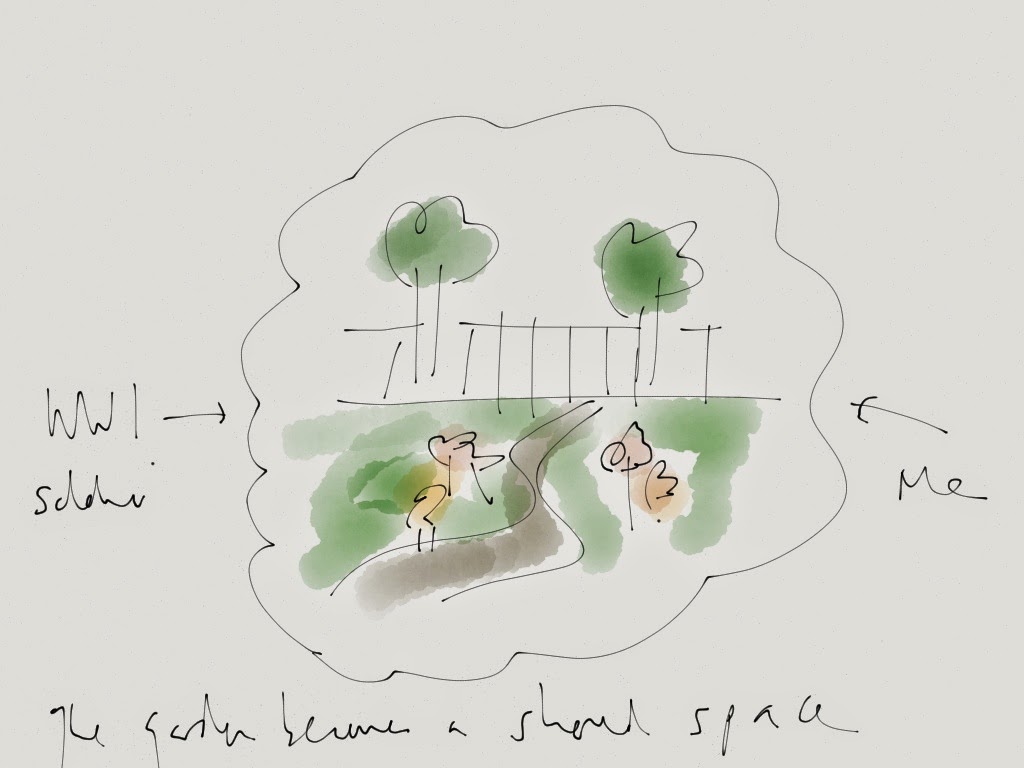
Can the garden – that domestic, pastoral space – become a space of memory and, therefore, experience shared with those who died in the violent landscape of the Western Front?

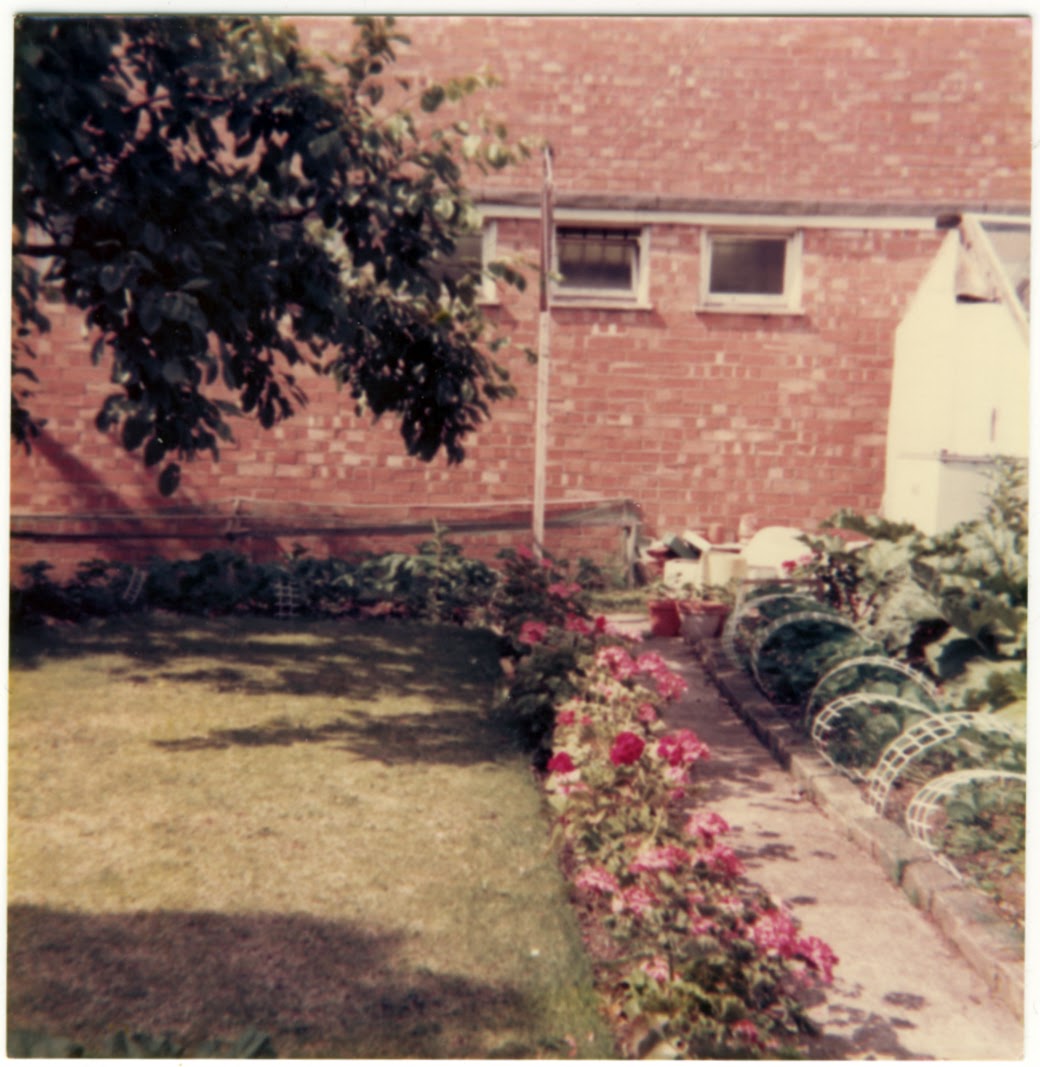
My grandparents’ garden in Oxford in the late 1970s
One of the main difficulties faced in trying to empathise with individuals who lived and died before we were born is that to think them alive we must think too of our own non-existence (and if we’re imagining our own non-existence we cannot truly empathise). Furthermore, experiences of people such as victims of the Holocaust or World War 1 soldiers are so far beyond our own, it’s impossible, even with a keen imagination, to bridge that divide.

We therefore need a proxy, and that proxy is place. Being in a place where an historic event has taken place can help us empathise, in that we can do so through a shared experience of that particular place or landscape.

This was certainly the case for me at Auschwitz where it was through observing the trees that I could best empathise with the people who were there, even though their experiences were so unimaginably different.

Trees at Birkenau

(One might imagine that a consideration of non-existence might lead to empathy through a shared consideration of death, but as Jean Amery wrote:”Dying was omnipresent, death vanished from sight.”

Non-existence bears only a passing resemblance to death and non whatsoever to dying.)

With soldiers of the First World War it’s also impossible for us to empathise with what they experienced. We can empathise through being in the landscape of Ypres or The Somme – i.e. we can empathise through a shared experience of presentness, of, in effect, being alive – but the fact the landscape looks so different today makes this especially hard.

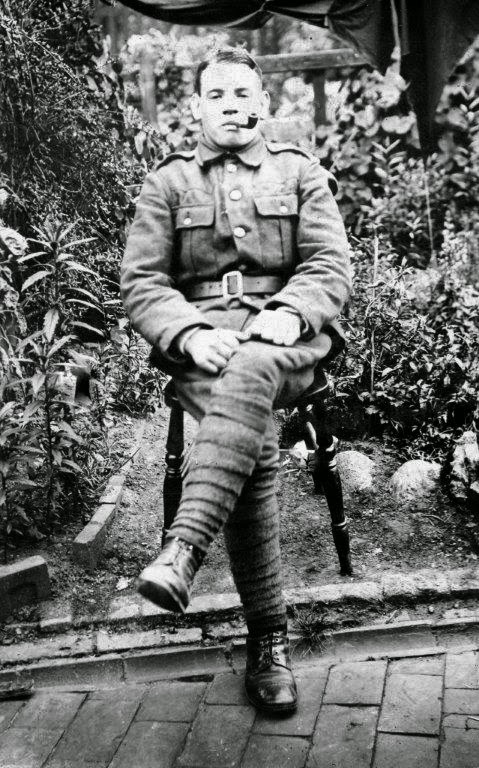
Mouse Trap Farm c1915 – a place near where Jonah Rogers fell

Paul Fussel’s quote however helps us begin to bridge that divide: the concept of the garden, that pastoral space on a domestic scale, becomes the proxy – a space which we in the present could be said to have shared with many of those who fought in the war.

My Grandparent’s garden is as much a part of the past as the garden in which Jonah (above) is sitting. It’s almost as if the past becomes a single remembered landscape – a garden in which we can find those who lived and died long before we were born.

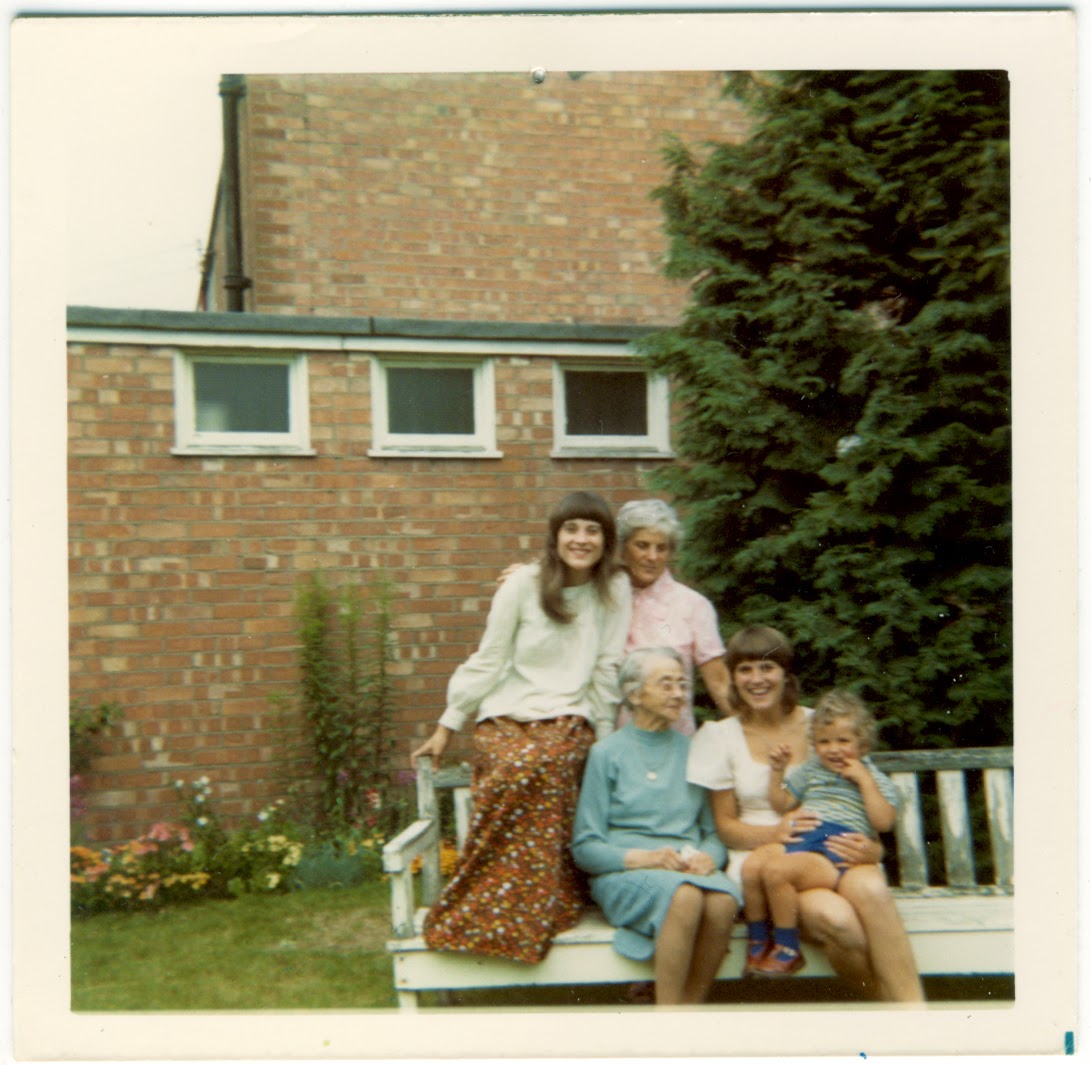
Me as a small boy with my mum, nan, aunt and great-grandmother (born in 1878)

Filed Under: Trees, World War I Tagged With: Empathy, Imagined Landscapes, Landscape, Memory, Nowness, Pastoral, Paul Fussell, Proxies, WWI, WWI Postcards

Chinese Landscape Painting

August 12, 2014 by Nicholas Hedges

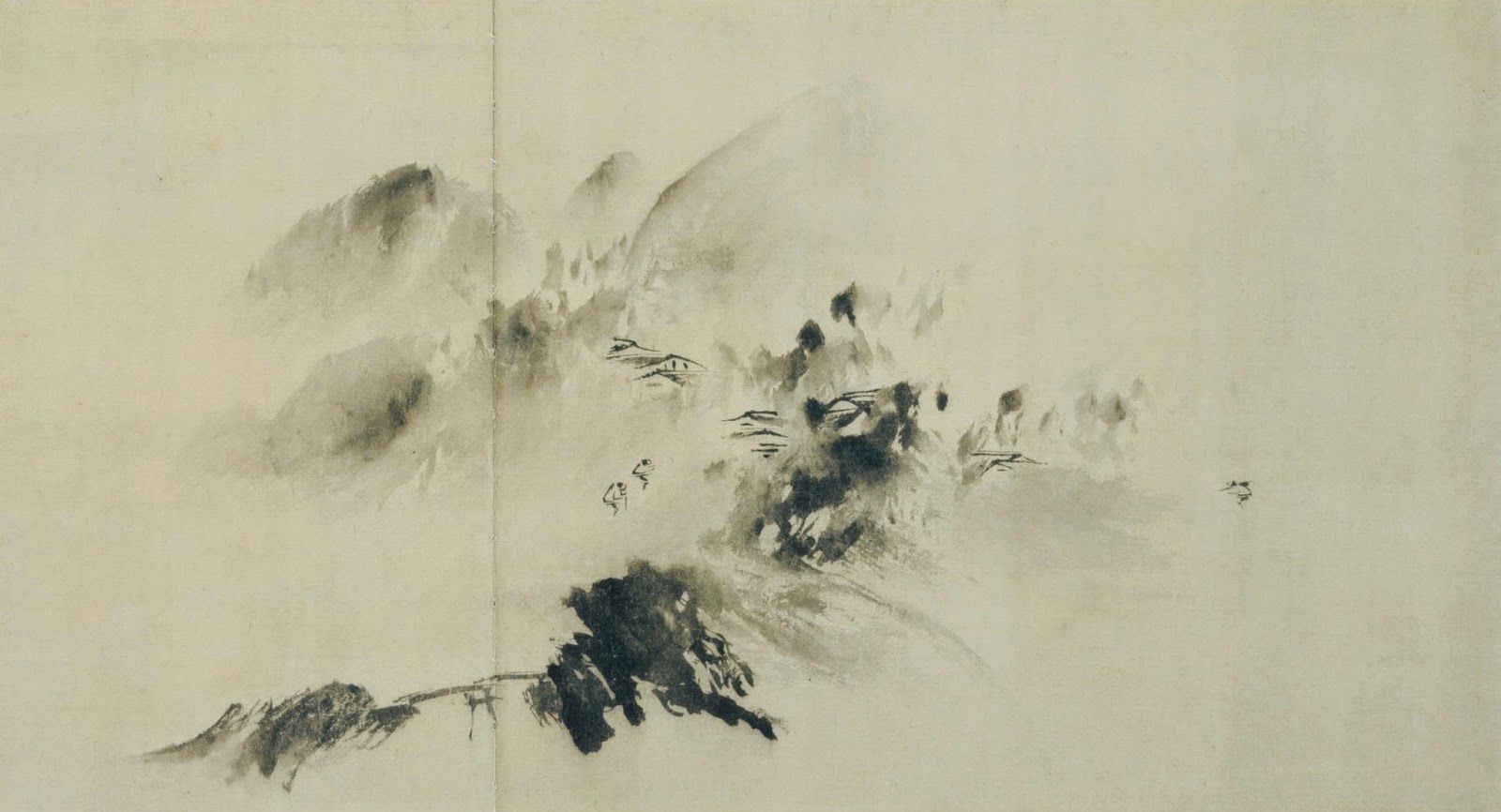
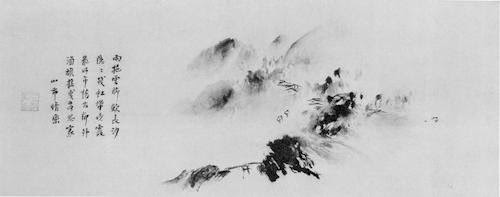
I’ve never before considered myself a fan of Chinese art but there have been times (most recently in the British Museum) when I’ve been overawed by a particular work. I refer in particular to early (11th-14th century) landscapes which move the viewer in a way one doesn’t find in the Western landscape tradition until much later on. (Why did it take so long for landscape painting to develop in the West? And why was it such a key part of painting in the Far-East so early on?) Paintings such as that below (Mountain Village in Clearing Mist by Yu Jian – made all the more extraordinary when one considers it was painted around 800 years ago in the mid 13th century), transport the viewer to a time long gone; they reveal – much as with the 17th century Japanese haiku of Basho – a moment long since past; not so much through what they depict but how it is depicted.

If I’ve never been a fan of Chinese painting per se, I have always admired Chinese calligraphy, which is of course, in itself, a form of painting. One can see in the full view of Yu Jian’s painting below, the text on the left hand side.

One can see here how the landscape itself becomes a kind of text, arranged not in straight lines, but in accordance with the serpentine lines of mountain paths, the drifting patterns of mist and the directions of distant sounds carried on the wind.

With works like these, it’s almost as if you see the landscape before the painter himself. We first see the work as a whole (the landscape as a whole), but then, whilst picking through the gestures of the artist, evident enough in the brushstrokes, we see the landscape as it is – or was – revealed. Yu Jian’s painting is not a painting of what was experienced, but rather the experiencing of what was experienced.

There’s a quote I’ve often used from Christopher Tilley. In his book, The Materiality of Stone – Explorations in Landscape Phenomenology, he writes:

“The painter sees the trees and the trees see the painter, not because the trees have eyes, but because the trees affect, move the painter, become part of the painting that would be impossible without their presence. In this sense the trees have agency and are not merely passive objects… The trees ‘see’ the painter in a manner comparable to how a mirror ‘sees’ the painter: that is, the trees like the mirror, let him become visible: they define a point of view on him which renders for him something that would otherwise remain invisible – his outside, his physiognomy, his carnal presence… the trees and mirror function as other.”

Like the trees, the mountains share that agency; they too ‘see’ the painter’ and it’s almost as if the painting becomes a painting, not of Yu Jian looking at the mountains, but of the mountain ‘seeing’ Yu Jian. It’s not the mountain that is made visible on the paper, but the artist’s outside, his physiognomy, his carnal presence.

Filed Under: Paintings, Trees Tagged With: Chinese Landscape Painting, Landscape, Nowness, Paintings

Landscape Therapy

September 24, 2013 by Nicholas Hedges

It isn’t uncommon, when faced with an issue or issues in one’s life, to seek help from a psychotherapist or counsellor. I have recently done just that and found it a rewarding experience. I spoke at length, the therapist listened intently, then aimed a well-honed question. In an instant the angle from which I’d been viewing my problem shifted; there wasn’t an answer as such, but an increased sense of clarity. It was almost like walking lost through a thicket, meeting a guide and being taken to hitherto unknown vantage points from which the landscape could be seen more clearly. By the end of the session, I not only had a better understanding – and appreciation – of the ‘terrain’ through which I’d come, but I could see the path along which I’d walked, with all its twists and many wrong turns.

IMG_1243.jpg

Traumatic landscapes have always interested me and my work over the last six or seven years has looked at how we – through art – can empathise with those who suffered in such environments, for example in the Holocaust or World War I. These landscapes – and I’m thinking in particular of battlefield sites on the Western Front – have suffered incredible trauma and as we walk through them, the relationship between landscape and walker becomes like that between patient and therapist.

In those moments of clarity I mentioned before, it was as if my therapist and I had for second become one and I have often experienced the same thing when walking, where for a second, I become one with the landscape and vice-versa. A turn of the head, a shift in viewpoint becomes the well honed question, to which the landscape responds with an answer; a depth is revealed, empathy established with some unknown person in the past. Often its fleeting, but one’s understanding of that particular place is enhanced beyond measure.

The landscape knows itself a little better. So does the walker.

“For the things of this world are their stories, identified not by fixed attributes but by their paths of movement in an unfolding field of relations. Each is the focus of ongoing activity. Thus in the storied world… things do not exist, they occur.” Tim Ingold, Being Alive: Essays on Movement, Knowledge and Description.

Filed Under: World War I Tagged With: Empathy, Landscape, Psychogeography, Therapy, Walking, World War I, WWI

The Material World

July 19, 2012 by Nicholas Hedges

“What, then, is this material world? Of what does it consist?”

So asks Tim Ingold, in his book, Being Alive, Essays on Movement, Knowledge and Description. It seems an obvious question, or rather, a question for which there is an obvious answer, but in terms of the field Material Culture it would seem to be not so straightforward. Citing a number of works on the subject, Ingold writes how “their engagements, for the most part, are not with the tangible stuff of craftsmen and manufacturers but with the abstract ruminations of philosophers and theorists.” Furthermore, “literature in anthropology and archaeology that deals explicitly with the subjects of materiality and material culture seems to have hardly anything to say about materials.” Ingold then goes on to cite an inventory of materials one might expect to see when dealing with this subject, as can be found in a book by Henry Hodges called Artefacts.

pottery
glazes
glass and enamels
copper and copper alloys
iron and steel
gold, silver, lead and mercury
stone
wood
fibres and threads
textiles and baskets
hides and leather
antler, bone, horn, ivory
dyes, pigments and paints
adhesives

In an array of books on his bookshelf, all dealing in some form with the subject of material culture, Ingold states that one looks in vain for any “comprehensible explanation of what ‘materiality’ actually means, or for any account of materials and their properties.” 

To cut a long story short, Ingold goes on to question what the material world actually is – thus the question at the top: “What, then, is this material world? Of what does it consist?”

He writes:

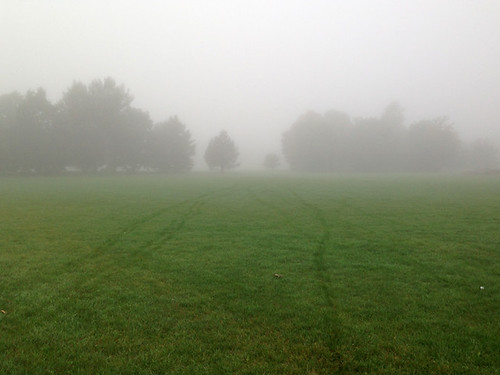
“Christopher Gosden suggests, we could divide it into two broad components: landscape and artefacts. Thus it seems that we have human minds on the one hand, and a material world of landscape and artefacts on the other. That, you might think, should cover just about everything. But does it? Consider, for a moment, what is left out. Starting with landscape, does this include the sky? Where do we put the sun, the moon and the stars? We can reach for the stars but cannot touch them: are they, then, material realities with which humans can make contact, or do they exist only for us in the mind? is the moon part of the material world for terrestrial travellers, or only for cosmonauts who touch down on the lunar landscape? How about sunlight? Life depends on it. But if sunlight were a constituent of the material world, then we would have to admit not only that the diurnal landscape differs materially from the nocturnal one, but also that the shadow of a landscape feature, such as a rock or tree, is as much a part of the material world as the feature itself. For creatures that live in the shade, it does indeed make a difference! What, then, of the air? When you breathe, or feel the wind on your face, are you engaging with the material world? When the fog descends, and everything around you looks dim and mysterious, has the material world changed, or are you just seeing the same world differently? Does rain belong to the material world, or only the puddles that it leaves in ditches and pot-holes? Does falling snow join the material world only once it settles on the ground? As engineers and builders know all too well, rain and frost can break up roads and buildings. How then can we claim that roads and buildings are part of the material world, if rain and frost are not? And where would we place fire and smoke, molten lava and volcanic ash, not to mention liquids of all kinds from ink to running water? … If, moreover, they are part of the material world, then the same must be true of my own body. So where does this fit in? If I and my body are one and the same, and if my body indeed partakes of the material world, then how can the body-that-I-am engage with that world?”

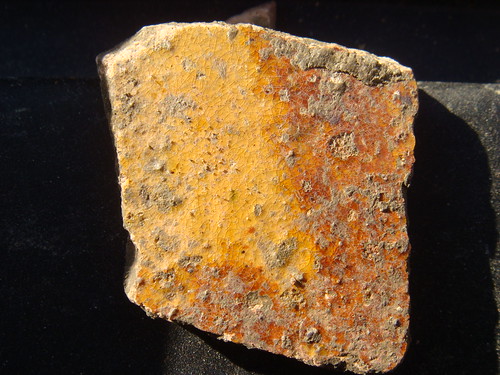
When I read this, I thought about the dig I went on last year at Bartlemas Chapel in Oxford, when I found a small but rather beautiful piece of mediaeval (I think) pottery.

Bartlemas Chapel Excavation

There are many ways in which one could interpret this find, but what I thought about was how this was like a missing piece of the present, and how, before it was lost to the soil, it had existed in a mediaeval present that was (save for the obvious differences) just like ours today. There was the wind, there were trees and flowers, the clouds, the sky and of course the sun, by whose light the beautiful glaze could be seen again, just as it had been by someone living hundreds of years ago. Reading what Tim Ingold has written about materiality and material culture above therefore made perfect sense.

And as regards my work with empathy and the importance in this respect of materiality and material culture, the idea of the body as part of the material world was also of interest. We are not set outside the material world but are an integral part – therefore it’s easier to engage empathetically with an individual through the objects those individuals once used. Empathy is as I’ve said before an augmented discourse between bodily experience and knowledge. Knowledge as Ingold writes derives through movement: “It is by moving that we know, and it is by moving, too, that we describe.” When I discovered the piece of pottery (through moving), I uncovered not only the object itself, but the material world by which it was once surrounded, including those people who once used it, or the person who even made it.

Filed Under: Archaeology, Lists, Trees Tagged With: Archaeology, Artefacts, Bartlemas Chapel, Empathy, Fragments, Landscape, Listmaking, Lists, Pottery, Stars, Tim Ingold

Landscape DNA: The Simultaneity of Stories-So-Far

October 5, 2010 by Nicholas Hedges

The Past is Time without a ticking clock. A place where paths and roads are measured in years. The Present is a place where the clock ticks but always only for a second. Where, upon those same paths and roads we continue, for that second, with our existence.

In 2006 I visited Auschwitz-Birkenau and since then have visited camps at Bełżec, Majdanek and Natzweiler-Struthof, as well as the battlefields of Ypres, Verdun and more recently, The Somme. All these sites present the visitor with numbers: 1.1 million dead at Auschwitz-Birkenau, 500,000 at Bełżec, 79,000 in Majdanek. At the start of the Battle of the Somme, on 1st July 1916, British and Commonwealth forces sustained 57,000 casualties, with almost 20,000 men killed in action on that day alone. These are all horrific statistics, but numbers rather than people and over the course of the last few years, I’ve looked for ways of identifying with the individuals behind the grim tolls. The tolls are only estimates, and the individuals to whom they allude have become themselves ‘estimates of existence’. Most have left nothing behind; no name, possessions, or photographs. Photographs, where they exist, are often nameless, names on graves are faceless, so how can we know them at all?

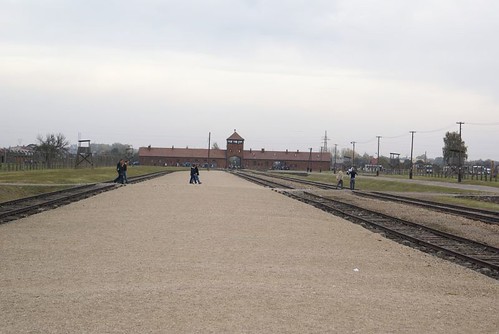
One of the most difficult things about my visit to Auschwitz-Birkenau was walking out the gate, performing an action that more than a million people could only ever dream about – if they had the time; most were killed within hours of their arrival. At Bełżec, the memorial to the dead is – in the main – a walk around the perimeter of where the camp once stood. During my visit in 2007, I recorded the walk using a GPS receiver and the fact that I, as an individual, one of several billion people on the planet, could be tracked in this place where half a million people perished, proved particularly resonant. The concept of walking as a means of remembering began to take hold in my work, evolving over time to become a means of empathising – in some small way – with those who’d perished.

In the book Walking, Writing and Performance by Deirdre Heddon, Carl Lavery and Phil Smith, artist Carl Lavery states the following:

“…pedestrian performance is a mode of resistance against the acceleration of the world, a desire, on the part of performance makers, to re-humanise space by encouraging spectators to experience the environment at a properly human pace, the bodily beat of three miles per hour. Implicit in this argument is the belief that walking is conducive to the production of place, a perfect technique for merging landscape, memory and imagination in a dynamic dialogue. Or as Michel de Certeau would have it: ‘The act of walking is to the urban system what the speech act is to language…’.”

In the passage quoted above, I was struck by the idea, as Lavery puts it, of “encouraging spectators to experience the environment at a properly human pace.” Merging landscape, memory and imagination (for which purpose, according to Lavery, walking is the perfect technique) has become central to my work. It’s also something I’ve done quite naturally since I was a child. For me, places have always been a conflation of these things, and as such, quite unique to me.

When I visit historic sites, landscape, memory and imagination merge to create something akin to what others have termed post-memories; ‘memories’ of events of which we can have no real recollection – in particular events that happened before we were even born. How this happens is something which has interested me throughout my research. A kinaesthetic engagement with a place, and our sense of the present are, it seems, both important in this regard.

Finally in the paragraph quoted above, I was struck by the words of Michel de Certeau; the idea that ‘the act of walking is to the urban system what the speech act is to language,’ reminded me very much of what I’ve read before in the work of Christopher Tilley, who in his book The Materiality of Stone – Explorations in Landscape Phenomenology, writes that ‘If writing solidifies or objectifies speech into a material medium, a text which can be read and interpreted, an analogy can be drawn between a pedestrian speech act and its inscription or writing on the ground in the form of the path or track.”

The idea of a path as ‘text’ is something which appeals to me; the notion that as we walk we ‘write’ ourselves in the landscape has a particularly poetic resonance. In his book Lines, a Brief History, Tim Ingold writes that “human beings leave reductive traces in the landscape, through frequent movement along the same route…”. The Old English word writan he tells us, meant to ‘incise runic letters in stone,’ and a  correlation can therefore be drawn between the act of walking and writing; a path is something written over years by many different people, incised into the landscape.

Just as when we speak we re-use the same words spoken over centuries – for example fragments of long forgotten conversations – so when we walk, we re-use fragments of other people’s ‘texts’, ‘written’ into the landscape. In this sense, we speak with our bodies words that other bodies have spoken or written before us. As Ingold notes: “retracing the lines of past lives is how we proceed along our own.”

In 2007, the year before she died, my grandmother told me about her childhood in Wales. The following is an extract from that conversation in which she describes her father, Elias Jones, who died in 1929, aged 47, as a result of working in the mines:

‘I can see him now because he went up our garden over the road and the mountain started from there up… and he’d go so far up and he’d turn back and wave to us…’

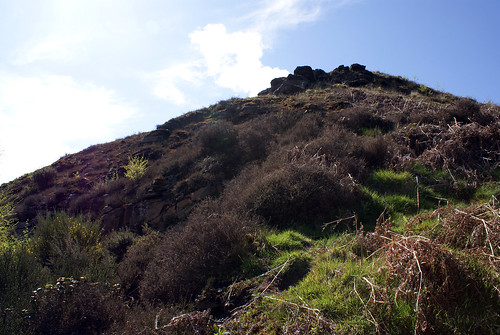
On visiting Hafodyrynys, the village where my grandmother grew up, I walked up the ‘mountain’ she’d described and followed the path my great grandfather would have taken to work in the mines at Llanhilleth. On top of the hill I turned and looked back down at the garden, imagining my grandmother and her siblings waving back at me from the past. Further on, I stood and looked at the view, rolled out all around me. A hundred years ago I thought, when I did not exist, he would have seen the very same thing. A hundred years later, long after his death, I found myself – through being in that place – identifying with him: I’d found him on the path – one which would in time lead to my being born.

Elias Jones, through frequent movement along that path had written himself into the landscape. A hundred years later, I was – through articulating my own presence through walking –  reading part of that text; speaking with my own body his simultaneous presence and absence. In many ways, I was speaking my own presence and absence too.

During that visit, I realised that as well as being a product of the ‘genetic text’ passed down the generations through a myriad number of genealogical lines, we are as much the consequence of pathways walked by every one of our ancestors. DNA is text – a kind of narrative sequence – and the paths which have led to our individual births are a vast text written across the landscape: self and environment, to borrow from Lavery, are umbilically connected.

People are therefore, in a sense, places, and in his book, Lavery quotes Mike Pearson, a performance maker and theorist who states that: “just as landscapes are constructed out of the imbricated actions and experiences of people, so people are constructed in and dispersed through their habituated landscape: each individual, significantly, has a particular set of possibilities in presenting an account of their own landscape: stories.”

Another passage in the book which interested me was that regarding the geographer Doreen Massey. Lavery writes how she offers a ‘conception of space that is interrelational, multiple and always under construction. In her book, For Space, she describes it [space] as ‘the dimension of multiple trajectories, a simultaneity of stories-so-far’.”

I like the idea of space being a ‘simultaneity of stories-so-far’, and it interested me insofar as it rang a bell with some thoughts I’d had previously regarding our own perception of the past. The following is taken from a piece I wrote on the nature of history:

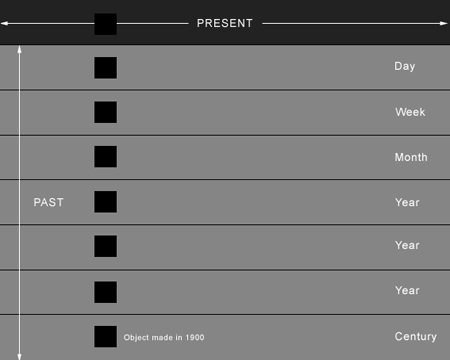
The past is often perceived much like the strata of a rock-face, wherein successive layers of geological time can be seen. We see the past as being built from the ‘ground up’ day upon day, year upon year, century upon century, like bricks in a wall. The problem with this ‘model’ however is that it makes the past difficult to access, the lines dividing each and every moment become like barriers inhibiting our movement between one and the other, particularly where one part is stacked so far below our own in what we perceive as being the present day. Another problem with this way of perceiving the past is that the layers necessarily contain objects, buildings and landscape features which, because of their age, appear in several different layers almost as if they were different things. For example, an object made a 100 years ago, would appear in each of the layers in the diagram below (see Figure 1). It’s rather like someone creating an animation, who draws the same scene a thousand times because it appears in a thousand frames, rather than using the same picture throughout them all.

Figure 1

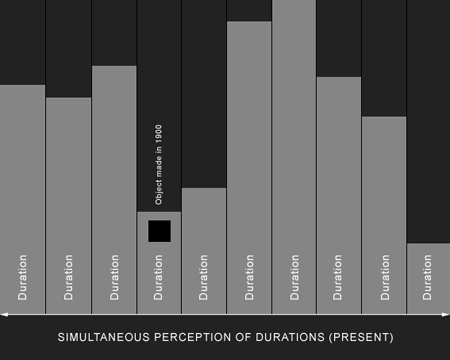
Whilst thinking about this and while considering the fact that any extant object, building or landscape feature, no matter what its age is always present, I realised that a better model for perceiving the past is one which turns the model above on its side – if not quite its head. Subsequently (see Figure 2), what we have is not a series of horizontal strata representing stacked moments in time (days, months, years, centuries etc.), but concurrent vertical lines, or what I have called ‘durations’ where each duration is an object, building or landscape feature and where the present is our simultaneous perception of those that are extant (of course, in the case of buildings, individual ‘objects’ can also contain many separate durations).

It was Bill Viola who said that ‘we have been living this same moment ever since we were conceived. It is memory, and to some extent sleep, that gives the impression of a life of discrete parts, periods or sections, of certain times or highlights’. Similarly we can say that every object, building or landscape feature has existed in one continuous moment and that it is to some extent the passing generations which gives the impression of the past as being a series of ‘discrete parts, periods or sections, i.e., the perceived layers or strata of our previous – first – model.

Figure 2

These ‘durations’ as I have described them, are indeed ‘stories so far,’ which move, as if they are being told, at the speed of walking – at a ‘properly human pace’ as Lavery puts it.

Returning to the idea of walking as writing, it’s true to say that we don’t always leave a physical trace of our presence when we walk – or at least a visible, physical trace. But, poetically speaking at least, we do leave something behind and this something is often augmented by objects, buildings or landscape features which are contemporaneous with past individuals.

Whenever I visit sites of historic trauma (death camps and the battlefields of World War One), even if they’re empty, I feel as if they’re full; not in a spiritual or pseudo-spiritual sense, but physically, as if they’re full of sculptures. Sculptor Antony Gormley describes his work as ‘confronting existence’ and that, in part, is what we do in places such as Auschwitz; death is, after all, another kind of existence. Walking itself is a means of confronting existence, being as it is a line drawn between absence and presence – just as I’d found in Wales.

“Part of my work,” Gormley writes, is to “give back immanence to both the body and art.” For archaeologist, Colin Renfrew, Gormley is “speaking of the existence of the individual, and the coming into being and self-awareness of the individual as the inhabitant of his or her body.” In reading these quotes, I began to see that the sites of trauma I’d visited, as well as those places relevant to my own family history, were full of what I can only describe as invisible sculptures – sculptures of absence, the physical presence/immanence of all who’ve gone before.

Gormley’s work comprises, in part, casts of his own body which reminds Renfrew of the bodies found in Pompeii; men, women and children frozen at the moment of their death almost 2000 years ago. Buried in ash, the spaces which had once contained their bodies remained after the bodies had decomposed, allowing archaeologists, to use them as moulds by pouring plaster into the cavities.

In light of this, I was reminded of the work of Christopher Tilley, who in his book, ‘The Materiality of Stone, Explorations in Landscape Phenomenology’ writes: “The painter sees the tree and the trees see the painter… in a manner comparable to that in which the mirror ‘sees’ the painter: that is, the trees, like the mirror, let him become visible: they define a point of view on him which renders visible for him something that otherwise would remain invisible – his outside, his physiognomy, his carnal presence… The trees and mirror function as Other.”

Just as the trees function as ‘Other’ therefore, so must the sun, the stars, the clouds, hills, mountains, the sea, rivers, the wind, the rain and so on. And in a sense, what Tilley is describing as Other, which ‘renders visible for him… his carnal presence,’ is a sense of being present in the present-day world.

In the book Walking, Writing and Performance, Lavery writes:

“…during… Mourning Walk I was aware of living more in the past than in the present. However at no time did this immersion in memory result in psychic saturation or disintegration. The natural world – the world of trees and stones – was stubbornly present and insisted on maintaining its autonomy and distance.”

When trying to access the past through walking, an awareness of the present – of being present in the world – is vital, and the natural world – the world of trees and stones – does that for us. Understanding the fact that the past was once the present, helps us in some small way to empathise with those lost to the past.

The present moment is a space, one which lasts only for a second – a space comprising the simultaneity of what Doreen Massey calls ‘stories so far’ or what I have called ‘durations’. And it’s in that space that life happens. Behind us and in front, beyond the physical boundaries of that second we are absent. The text is written, or yet to be written – the present being the moment of writing. Gormley’s sculptures then articulate this line between presence and absence, past and present.

In that space, in which we continue with our existence, we hear the birds, we see the sun, feel the wind and rain. In that space, all our hopes are held, all our fears and regrets. Into the space we carry our past in the form of memories. It’s the space of the everyday – one which we often take for granted. But it’s a space we share with everyone who’s ever gone before us.

Again, in his book, Lines. A Brief History, Tim Ingold tell us that:

‘…from late Antiquity right through to the Renaissance writing was valued above all as an instrument of memory. Its purpose was not to close off the past by providing a complete and objective account of what was said and done, but rather to provide the pathways along which the voices of the past could be retrieved and brought back into the immediacy of present experience, allowing readers to engage directly in dialogue with them and to connect what they have to say to the circumstances of their own lives. In short, writing was read not as a record but as a means of recovery.’

This paragraph has something in common with what I described earlier, the idea that just as when we speak we re-use the same words spoken over centuries – fragments of long forgotten conversations – so when we walk, we re-use fragments of other people’s ‘texts’, ‘written’ into the landscape. Walking becomes a means of recovery, where the past can be retrieved and ‘brought back into the immediacy of present experience’. As on the ‘mountain’ in Hafodyrynys, it’s  a means of engaging in a dialogue with those who’ve gone before us, and nowhere is this more keenly felt that in places of historic trauma.

It’s as if when walking through these places, we pick up – at random – the threads of other people’s texts. We tie them together, filling in the gaps with our own story. It’s rather like the film Jurassic Park, where dinosaurs are cloned using DNA extracted from mosquitoes frozen in amber. The gaps in the code are filled with modern frog DNA, creating a ‘modern’ dinosaur. Earlier, I stated that people were as much the product of places, and it figures therefore that places are as much the product of people; that the ‘DNA’ of any place comprises narrative lines laid down by everyone who’s ever been there. When we walk, we create new places based on the present day landscape. Our memory and memories, history and of course our imaginations all have a part to play. Within our imagination, we take with fragmentary strands of the landscape’s own ‘DNA’ (or history) and fill the gaps with our own presence and memory. These constantly created spaces (created then destroyed every second) are unique to us, and yet we share them, in that single moment, with all who’ve gone before us, not as part of a crowd, but as one body and mind.

The ‘stubborn’ presentness which Lavery describes is therefore vital to our empathising with the past, and in many ways the most terrifying thing at Auschwitz was the way the trees moved in Birkenau (Auschwitz II), simply because they would have moved that way during the Holocaust.

The writer Georges Perec once wrote that “the desire to find roots, the determination to work from memories or from the memory, is the will above all to stand out against death, against silence.”

I work from memories and the memory and I’m actively engaged in searching for my roots. Is this then a will to stand out ‘against death, against silence?’

Again, in Walking, Writing and Performance, Lavery writes:

“Is not all writing, all art, a response to a loss of some kind, an imaginative way of dealing with lack? …As I use it, the word recovery has nothing to do with re-experiencing the lost object in its original pristine state; rather, it designates a poetic or an enchanted process in which the subject negotiates the past from the standpoint of the present.”

This act of recovery is just the same as that which Ingold describes, where writing (in ancient times) was read not as a record but as a means of recovery. Walking as a means of ‘reading’ or ‘speaking’ the text of other people’s lives is a way of recovering a moment in the past; an ‘enchanted process’ to borrow from Lavery, where we ‘negotiate the past from the standpoint of the present.’

Empathy with the past therefore and in particular with individuals can be achieved, coming via a kinaesthetic response to the present mediated through memory and our embodied imaginations.

Filed Under: Trees Tagged With: Bill Viola, Carl Lavery, Death Camps, DNA, Georges Perec, GPS, History, Landscape, Michel de Certeau, Movement, Phenomenology, Positioning, Silence, Stars, Tim Ingold

Family Tree

November 20, 2007 by Nicholas Hedges

With both my Grandmothers still with us (both were born in 1912), I’m very fortunate to have living connections with the late nineteenth century. When they talk about their childhoods and youth, they are describing a world which has always seemed completely alien to that in which we live today, and using one’s imagination, to go beyond that world, further back into the past, that place, the world, becomes stranger still. This world, when conceived within the imagination is like a fiction. In a talk I gave as part of my residency at OVADA in May 2007, I stated that:

“…as a child, I liked to create and map worlds; countries which I would build from fragments of the world around me; forests, mountains and plains – unspoilt landscapes. And in these worlds there would exist towns and cities, created from ‘the best bits’ of those I had visited. 

These invented worlds became, as I grew up, the ‘invented’ or imagined landscapes of Oxford’s past; landscapes that were – just as they still are – created from fragments, parts of the past which are still extant in the city; old buildings, walls, objects and so on. Between these structures, these fragments, I would fill the gaps, with my own imagination, with thoughts derived from my own experience. The city’s past and the past in general, as it exists within my mind, is then, to use the metaphor of cloning in Jurassic Park, a cloned dinosaur. The extant buildings, structures and objects within museums, are like the mosquitoes trapped inside the amber. They are broken strands of DNA. All that is required is for me to fill the gaps, and this I can do with my own DNA. I am in effect, the frog.”

I will return to the frog later.

All I knew prior to my research, was that part of my family, on my father’s side, came from South Wales and worked in the mines, and that my family on my mother’s side heralded from Reading. My paternal grandfather was always an Oxford man and his family had been in the area for generations. My maternal great-grandmother (born in 1878 and who I can remember) was said to have come from Suffolk and was the daughter of a farmer (Norfolk as it would transpire).

Researching the family tree quickly becomes, not so much obsessive, but rather, compulsive; necessary. The dead, and at that, the anonymous dead, come back to life and make themselves known to you, and, what is more compelling, one feels oneself become more solid, more flesh and blood than ever before; one begins to exist in four dimensions rather than simply three (as if we, in the present, are not really a part of time) becoming part of a network whose strings vibrate like those plucked on an old musical instrument – whose sound, although feint, can nonetheless be heard or even felt. It’s rather like plugging a short-wave radio into the vast network of cables that comprise the national grid, and listening to the distant voices of ancestors telling you who you are; crackling like the damp wood of a fire which will never quite go out.

What has particularly interested me, aside from the obvious personal interest in finding lost relatives (one is also taken aback by the sheer volume of living relatives one must have but which one doesn’t know about), is how the whole project fits in so precisely with what I have been doing with my artwork; finding and identifying with the anonymous dead buried in the traumas of history, placing myself in the spaces of the past which have witnessed the most terrible catastrophes – placing myself, in effect, in the panorama of history itself. Through doing this over the past year, history has become overwhelming, its incomprehensible size as impossible to grasp as the distance of the stars. But through locating myself in the personal panorama of family history, History itself becomes a little less overwhelming; events of the past become known through great-great grandmothers and fathers – they are personalised, and yet, with this list of names and dates and with this new geography of the past, dwelling as it does in the villages of Monmouthshire and Norfolk, Lincolnshire and Oxon, one’s own impossibility is augmented still further. What were the chances of my great-great grandfather, Jabez, meeting his wife Elizabeth (what were the chances of either of them being born) and then having their son Albert? What were the odds against him doing everything he did in life exactly as he did; meeting my great-grandmother Elizabeth and having my grandfather Norman? The further one goes back into the shadows of family history, the less likely and more impossible one becomes, and this heightens, to a dramatic effect, one’s sense of place in both time and space.
Again, from the talk I gave as part of my residency, I stated:

“This metaphor [the frog and the dinosaur] is interesting in that DNA patterns are, of course, unique to everyone. My DNA is different to everybody else’s as there’s is to mine. Therefore, using my imagination to plug in the gaps of the past, means that the ‘past’ will comprise large parts of my own experience; my dinosaur will contain elements of my own being. But although my DNA is unique, it is nonetheless derived from my own past, elements have been passed down by my ancestors from time immemorial. The code which makes me who I am, comprises parts of people I know now (parents and grandmothers), people I knew (grandfathers and great-grandmother) and people lost to the past altogether (great-great grandparents and so on) [people whose names have since I wrote this become so familiar I feel as if I knew them, or rather know them]. What interests me about this, is that, through stating above how ‘my dinosaur will contain elements of my own being’ I can now see that it will also comprise elements of hundreds – indeed thousands – of people, the majority of whom I will of course never know and who have been dead for centuries. I like to think therefore, that ‘my dinosaur’ and my imagination aren’t entirely unique.
The philosopher Henri Bergson says of the past:
‘I believe that our whole physical existence is something just like this single sentence… I believe that our whole past still exists.’
Given that DNA strands are made up of letters I found this quote particularly interesting.”

The further back in time we go, the less unique we become, at least in terms of our DNA, and therefore, our individual dinosaur, that subjective sense of History created from fragments of the past (objects, buildings etc.) is increaingly attenuated; less individual and less subjective, because the ‘DNA’ (our individual selves) with which we plug the gaps is derived from that of hundreds, indeed thousands of people. That very history we are seeking to build inside myself is already there. What is more, the further back we go, with each step and every generation, the wider the family net is thrown and the greater number our number of relatives. Things which happen to other people, things on the news and so on, could be happening to people with whom we share a common past; and indeed, the same is true of events in the past. Separated by time and space, we may in fact be linked by the very fact of existence.

Filed Under: Family History Tagged With: DNA, Family History, Imagined Landscapes, Landscape, Maps, Nan, Nana

Reading and Experience

April 6, 2007 by Nicholas Hedges

“Decayed sandbags, new sandbags, boards, dropped ammunition, empty tins, corrugated iron…”

These words are those of a German soldier – written at the Front just before the Battle of the Somme – and form just a small part of an extract in Neil Hanson’s book, ‘The Unknown Soldier.’ Instantly I read them, they called to mind the remnants dredged from the battlefield which I’d seen in the museum at Hill 62 in Ieper.

On their own, these artefacts are powerful – yet mute – witnesses to the Great War, but when reading a soldier write about them, even listing them as above, they change. They each regain their voice – their signifier, and re-emerge from the shadows.

In my painting ‘Auschwitz-Birkenau Remembered‘ I cut words up into individual letters and scattered them onto the painting, I also wrote directly into the paint itself to show how words failed to articulate the horror of such a place (the written words could barely be read). Another way of looking at this however, is to say that words are able to speak of such horror, but have simply lost their original voice. It then falls to us to speak the words for those who are no longer able to do so, to put them back together.

Subsequent to this, I’ve been thinking about the process of reading, for example an extract from Filip Muller’s powerful testimony, ‘Eyewitness Auschwitz – Three Years in the Gas Chambers,’ in which he describes the horrific murder of a fellow prisoner.

“There was utter silence, broken only by the twitterings of the swallows darting back and forth.”

We were not there in Auschwitz at the moment this line describes (the moment before the doomed prisoner speaks up against the camp’s brutal regime), yet we all know silence and have seen and heard swallows. So although we were not there to witness at first hand this terrible event, we can imagine a silence, a particular one we might have felt some place before, and picture a time we saw a swallow fly. We can use fragments of evidence (photographs, documentary footage) to construct a fuller picture, and fill in the gaps with fragments of own experience. When we speak the words of others therefore, those words will form pictures in our own minds drawn from our own experience.

“As the torrents of machine-gun bullets ripped through the grassy slopes up which the British troops were advancing, the smell of an English summer – fresh cut grass – filled the air. For thousands it would be the last scent they would ever smell.”

This extract, also from Neil Hanson’s book, ‘The Unknown Soldier,’ presents us with an image of slaughter, made all the more terrible (if that were possible) with a reference to the smell of cut grass – one of those smells which invokes in most of us, memories of lazy summer’s days. The two are, obviously, utterly incongruous, yet it somehow makes our task of imagining the horror a little easier. We know the smell of cut grass, and waves of associations and memories are no doubt triggered by the aroma. In the days before the battle, when the soldiers doomed to die waited for the day, they too might have smelled the grassy air and found their way back to times when things were better. It is again the contrast – something which I’ve described before in relation to my visits to Auschwitz-Birkenau and Ieper which makes this passage so heart-breaking.

Finally, I wrote earlier (Imagination and Memory) of how as a child I created a world, made up of fragments of landscapes which I loved, and how as I grew older, I created worlds that were ‘real’ – visions of Oxford as it might have looked centuries earlier. Just as when reading the quote above, I would – as I still do – use documentary evidence to start – images (photographs and drawings) of how the city looked, contemporary writings (such as those of Anthony Wood) – and then fill in the gaps using my own direct experience, in effect, the city as it looks today.

Filed Under: Holocaust Tagged With: Auschwitz, Filip Muller, Fragments, Landscape, Neil Hanson, Silence, World War I, WWI, Ypres

© Nicholas Hedges 2024

  • Facebook
  • Instagram
  • Twitter
  • YouTube

Copyright © 2025 · Outreach Pro on Genesis Framework · WordPress · Log in