Nicholas Hedges

Art, Writing and Research

  • Amazon
  • Behance
  • Facebook
  • Instagram
  • Pinterest
  • YouTube
  • Art
    • Digital
    • Drawing
    • Grids
      • Correspondence
      • The Wall
      • The Tourist
    • Ink on paper
      • Shadow Calligraphy
    • Installation
      • Murder
      • Echo
    • Painting
    • Patterns
    • Mixed Media
    • Photographic installation
      • St. Giles Fair 1908
      • Cornmarket 1907
      • Headington Hill 1903
      • Queen Street 1897
    • Research/Sketches
    • Stitched Work
      • Missded 1
      • Missded 2
      • Missded 3
      • Missded 4
    • Text Work
  • Blogs
    • Family History
    • Goethean Observations
    • Grief
    • Light Slowed But Never Stilled
    • Lists
    • Present Empathy
    • Shadow Calligraphy
    • Trees
    • Time
    • Walking Meditations
  • Video
  • Photography
    • Pillars of Snow
    • Creatures
    • The Trees
    • Snow
    • St. Giles Fair 1908
    • Cornmarket 1907
    • Headington Hill 1903
    • Queen Street 1897
    • Travel
  • Illustration and Design
  • Music
  • Projects
    • Dissonance and Rhyme
    • Design for an Heirloom
    • Backdrops
    • Shadow Calligraphy
  • Exhibitions
    • A Line Drawn in Water
      • Artwork
    • A Line Drawn in Water (Blog)
    • Mine the Mountain 3
      • Artwork
    • Mine the Mountain 2
      • Artwork
      • The Wall
    • The Woods, Breathing
      • Artwork
    • Snow
      • Artwork
    • Echo
      • Artwork
    • Murder
      • Artwork
    • The Tourist
    • Dreamcatcher
    • Mine the Mountain
      • Artwork
      • The Tourist
    • M8
    • The Gate
    • Creatures
      • Artwork
    • Residue
      • Artwork
    • A visit to Auschwitz
      • Artwork
  • Me
    • Artist’s Statement

Heavy Water Sleep (Paintings) III

July 1, 2012 by Nicholas Hedges

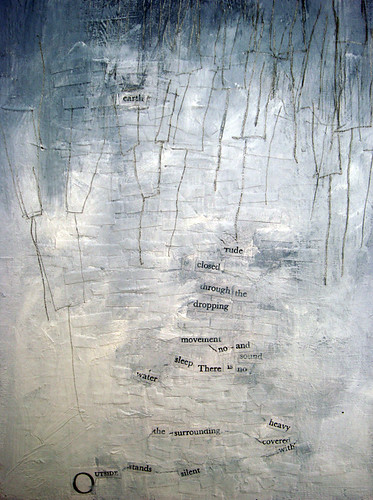
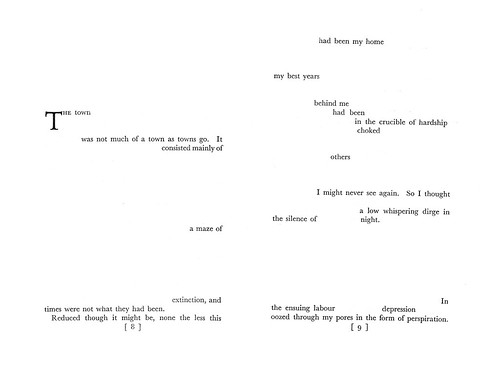
I worked again tonight on the studies for Heavy Water Sleep, working in landscape elements such as trees and sky. The original text from which the words are taken, ‘Pilgrims of the Wild’ by Grey Owl, is set chiefly in the forests of Canada. And in the ‘secondary text’ which inspired the work in the first place, ‘The Diaries of Adam Czerniakow’  there is a moving passage in which, following a visit outside the Warsaw Ghetto to the woods of Otwock, he writes simply, ‘… the air, the woods, breathing.’ Trees then seem integral to the work and have indeed been a recurring them in much of my work, particularly work to do with the Holocaust and World War I.

I wanted then to use trees in these works and found myself using a stylised form which I’d scribbled one day in my notebook based on lines you find in Family Tree diagrams.

This symbolic tree was in part inspired by some work I did on the First World War in which I used the dividing lines on the backs of original wartime postcards to symbolise the bond between the anonymous individuals who died in the war and their families back at home. These ‘T’ shaped divides reminded me of photographs in which hastily dug graves were marked on battlefields with crude crucifixes. I therefore created landscapes (based on my visits to battlefield sites on what had been the Front) and used these T-shapes to represent graves.
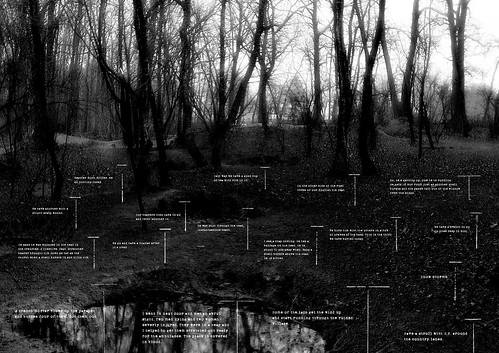
Battle 2

From these T-shapes I derived the forms for the trees below.
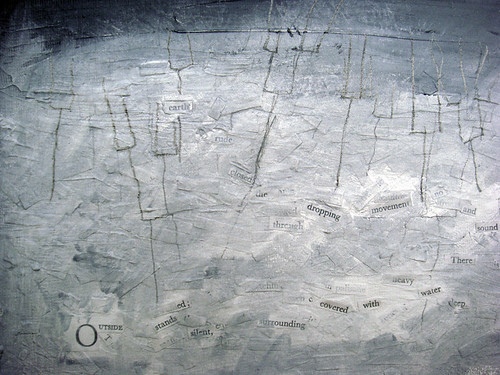
Heavy Water Sleep

Heavy Water Sleep

The link between them and the Ts above is an obvious one – even more so when one considers the original inspiration for this work.
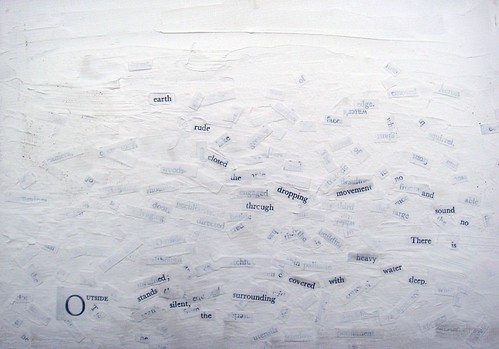
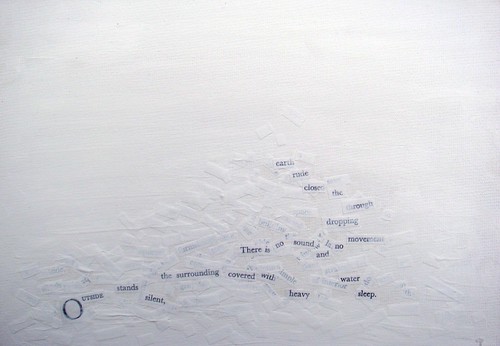
Filed Under: Heavy Water Sleep, Paintings, Trees Tagged With: Adam Czerniakow, Heavy Water Sleep, Holocaust, Paintings, Text Work, WWII

Heavy Water Sleep (Paintings) II

June 27, 2012 by Nicholas Hedges

I worked again last night on the ‘Heavy Water Sleep’ paintings, continuing to concentrate on the texture. For the first board below I used a white acrylic paint mixed with an acrylic modelling paste.

DSC07384

The words are too chaotic in this one and the paint has dried very matt. I could add some gloss medium but it would make much more sense to use oil paint which I will for the final versions. I will add another layer to the painting above later.

Having completed this painting I worked again on the one I did yesterday.

DSC07382

I like how the words are slightly more obscured now and much prefer their more ordered placement. The next thing I want to try is keeping the lines of the pages together rather than placing them in a random fashion.

Filed Under: Heavy Water Sleep, Paintings Tagged With: Heavy Water Sleep, Holocaust, Paintings, Text Work, WWII

A Flash of Genius at the London Art Fair

January 22, 2012 by Nicholas Hedges

Yesterday, at the London Art Fair, I found – amongst a plethora of ‘not very good’ and downright terrible art, an artist whose work – although disturbing -truly impressed me. It’s not the sort of work you’d want on your wall perhaps, or which would likely be snapped up by the likes of those idiots who it seemed were happy to shell out 5 grand for a print of one of Damien Hirst’s assistant’s facile spot paintings (albeit one signed by the Overlord of artistic tat), but its power was striking.

For a number of years I’ve looked to create work which facilitates an empathetic engagement with anonymous individual victims of past atrocities. This work has variously found its form in paintings, sculpture and mixed media pieces using documentary and archival material such as photographs. Where these photographs have been black and white, I’ve looked to see how colour might be used to foster that empathetic reaction.

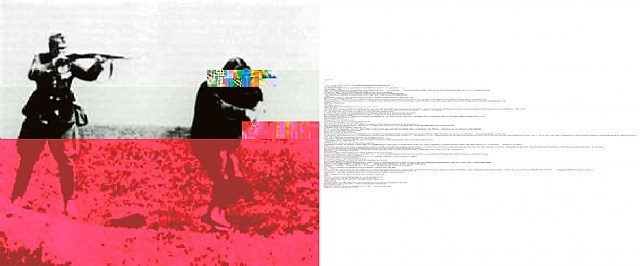
David Birkin’s work, ‘Untitled I’ does everything that I have tried to do. It’s a brilliantly conceived work and one which is conceptually perfect. The work, disturbing as it is can be seen below.

The image shows a woman about to be shot by a German soldier. The woman, like so many of the Nazi’s victims is anonymous, one more human being to make up the grim toll of 6 million killed in the Holocaust. But where so many names have been forgotten, many of course remain, trapped – like flies in amber – in the meticulous records kept by those who carried out these unimaginable crimes.

The black and white photograph printed on the left of the image has been distorted with fragments of colour, and on the right of the image we find the computer code for the original digital image, into which Birkin has placed the name of one of the countless victims. This ‘anomaly’ in the code is revealed when the image – with the anomalous name – is reprinted. The distortion is the name as read by the computer.

It is a brilliant concept. The computer code, without the name, is to (most) human eyes, little more that an incomprehensible mass of letters and numbers. It’s the equivalent of the vast and grim statistic offered to us by history. Its equivalent image is black and white – a far cry from the reality of a world full of colour – the world we know and which every one of the six million victims knew. And yet when a name – an individual – is inserted, the image is changed (distorted) with a pattern of colours, reminding us that the world of the Holocaust was not black and white, but one full of colour, of summer days and everything which we take for granted today.

The average man, woman and child are not the types of people who normally make up history, unless they are heaped together as victims, masses and mobs. They are often anomalous where history is concerned, but nonetheless vital and full of colour, something which Birkin’s work brilliantly portrays.

Filed Under: Holocaust Tagged With: Colour, Holocaust, Other artists, WWII

Belzec Video: Snow 6

June 18, 2011 by Nicholas Hedges

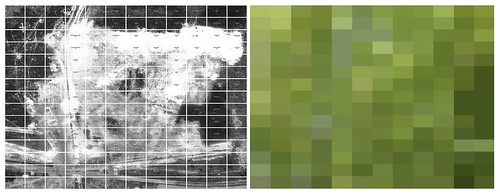
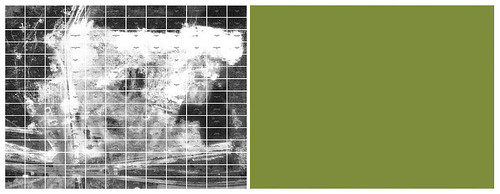
The image below shows (on the left) an earlier work about Belzec (1 to the power of 500,000) from 2010, and on the right, what would be a video (using the same number of squares) derived from the video filmed at Belzec in 1999.

Snow

Snow

Filed Under: Holocaust Tagged With: Belzec, Death Camps, Empathy, Holocaust, Snow, Video, WWII

Belzec Video: Snow 5

June 18, 2011 by Nicholas Hedges

The same idea as before applied to footage of trees at Belzec. The number of squares used is the same as an earlier work.

Filed Under: Holocaust, Trees Tagged With: Belzec, Death Camps, Empathy, Holocaust, Snow, Video, WWII

Belzec Video: Snow 4

June 18, 2011 by Nicholas Hedges

Video version of that described in the previous entry regarding this project.

Filed Under: Holocaust Tagged With: Belzec, Death Camps, Empathy, Holocaust, Snow, Video, WWII

Belzec Video: Snow 3

June 18, 2011 by Nicholas Hedges

What interests me about the video footage from the archaeological dig at Belzec (1999) is the sense of colour and movement. Often, when one is researching the Holocaust and sites like Belzec, most of the imagery one encounters is black and white and often still (although of course there is a great deal of moving footage as well).

As I’ve said, it’s difficult, given the quality of the footage, to make anything that would resemble a narrative of the investigation carried out there. So taking the idea of colour and movement as something I wanted to work with, I decided to process the video and to use a mosaic filter to reduce the image to pure forms.

When I was an undergraduate in the early 1990s, I produced a series of paintings based on this idea in a work entitled ‘A Single Death is a Tragedy, a Million Deaths is a Statistic.’ I was looking at the idea of anonymity and the past as anonymous (something which I’m still looking at today) reducing the image of a man, through a series of canvases to a single coloured pixel.

One of the ways of understanding an event as horrific as the Holocaust on an empathetic level (as far as is possible) is through understanding that the past was once the present that what happened in places such as Belzec happened when the past was now. When I sit here now and look out the window, I see the trees move, I see their colours, I see the sky, the clouds drifting and so on. I see movement and colour.

Whenever I look at images of the past, especially those in black and white, I try to imagine the scene as if it was now. I colour it, I imagine what happened immediately after the shutter was released. The smallest details become especially important. When I myself visited Belzec in 2007, I was aware of the world moving all around me, of the trees especially; of the sounds they made and the colour. Putting this together with what I knew had happened there, enabled me in some small way to empathise with those who died.

The stills below are taken from the processed video and even though they reduce the place to pixels (and therefore render it anonymous) there is something about the individual squares of colour which serve somehow to represent both the anonymous individual and the nownes of the present.

Mosaic Stills

Mosaic Stills

Mosaic Stills

Filed Under: Holocaust, Trees Tagged With: Belzec, Colour, Death Camps, Empathy, Holocaust, Snow, Video, WWII

Belzec Video: Snow 2

June 17, 2011 by Nicholas Hedges

Edited footage shot in 1999 at the site of the former Belzec Death Camp in Poland. The footage is of very poor quality and as an artist, I’m looking at how it might be used in my own work.

Filed Under: Holocaust Tagged With: Belzec, Death Camps, Empathy, Holocaust, Snow, Video, WWII

Belzec Video: Snow

June 17, 2011 by Nicholas Hedges

About two years ago I was given recordings of an archaeological investigation at the site of the Belzec Death Camp in Poland (1999). These investigations were carried out prior to the construction of the memorial there and my task was to edit the videos into something that could be seen as a narrative of those events.

The videos however were less than brilliant and any documentary-type video was going to prove impossible. However, I wanted to work with the video in some way or another and in 2010, as part of Holocaust Memorial Day, I exhibited a number of images based in part on the original video.

This year, I want to make a piece based on the video and the stills I exhibited in 2010. The initial idea is to capture all the pieces of ‘snow’ from the recordings and to arrange them in a sequence. The ‘snow’ represents the end of something, and it’s the idea of something ending which interests me as regards this piece.

Eventually I will develop the video using the colour/documentary footage on the tapes, intercutting them with the ‘snow’ elements. I will put up extracts of each stage as and when they’re complete.

Below is a short extract of the snow sequence.

Filed Under: Holocaust Tagged With: Belzec, Death Camps, Empathy, Holocaust, Snow, Video, WWII

Heavy Water Sleep: Pages 14 & 15

June 17, 2011 by Nicholas Hedges

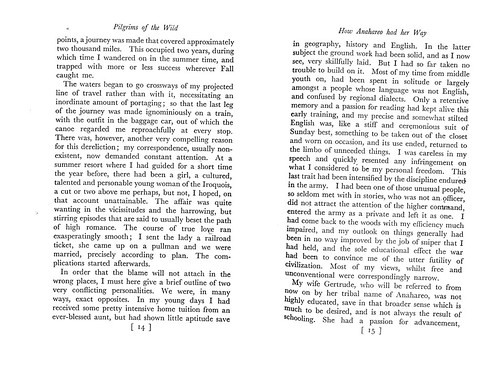
Original Pages

14-15

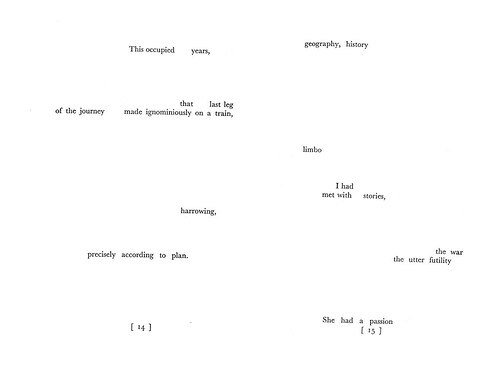
Version 1

14-15 [17.06.11]

Version 2

14-15 Version 2

Filed Under: Heavy Water Sleep, Holocaust Tagged With: Heavy Water Sleep, Holocaust, Text Work, WWII

Heavy Water Sleep: Pages 12 & 13

June 14, 2011 by Nicholas Hedges

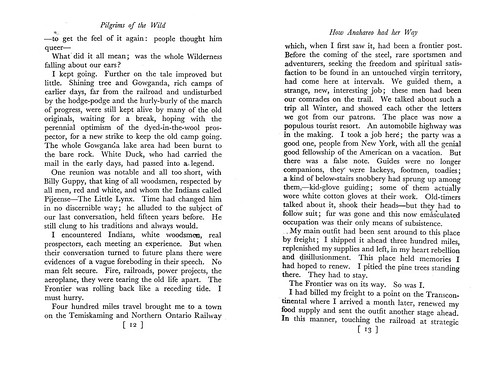
Original Version

12-13 Original Version

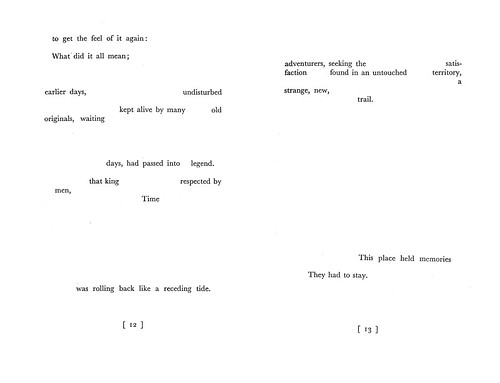
Version 1

12-13 Version 1

Version 2

12-13 Version 2

Filed Under: Heavy Water Sleep, Holocaust Tagged With: Heavy Water Sleep, Holocaust, Text Work, WWII

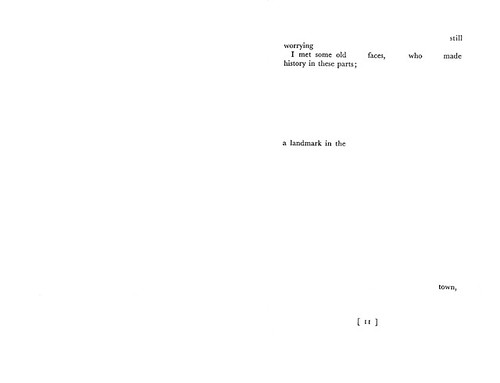
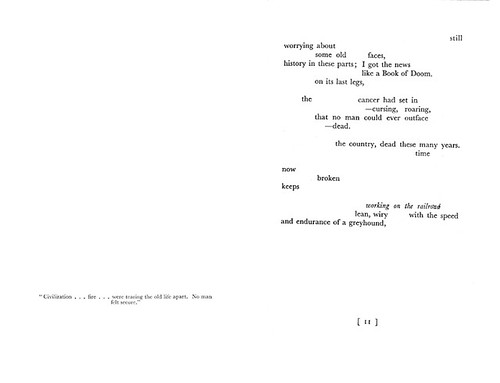
Heavy Water Sleep: Page 11

June 8, 2011 by Nicholas Hedges

Original Version

11

Version 1

11

Version 2

11

Filed Under: Heavy Water Sleep, Holocaust Tagged With: Heavy Water Sleep, Holocaust, Text Work, WWII

Heavy Water Sleep: Pages 10 & 11

January 12, 2011 by Nicholas Hedges

Original Version

Version 1

Version 2

To see other pages from this project please click here.

Filed Under: Heavy Water Sleep, Holocaust Tagged With: Heavy Water Sleep, Holocaust, Text Work, WWII

Heavy Water Sleep: Pages 8 & 9

December 29, 2010 by Nicholas Hedges

Original Version

08-09

Version 1

08-09 [29-12-2010]

Version 2

08-09

Filed Under: Heavy Water Sleep, Photography Tagged With: Heavy Water Sleep, Holocaust, Photographs, Text Work, WWII

Heavy Water Sleep: Pages 6 & 7

December 22, 2010 by Nicholas Hedges

Original Version

06-07

Version 1

06/07 - Version 2 [22-12-2010]

Version 2

06/07 - Version 2 [22-12-2010]

Filed Under: Heavy Water Sleep, Photography Tagged With: Heavy Water Sleep, Holocaust, Photographs, Text Work, WWII

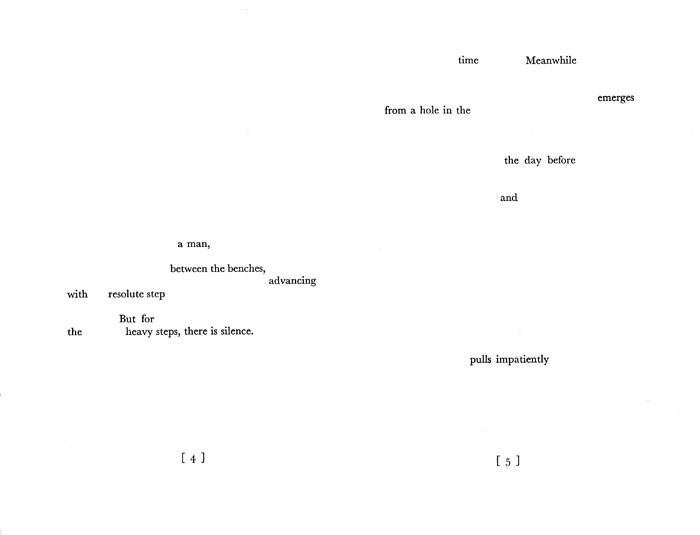
Heavy Water Sleep: Pages 4 & 5

December 21, 2010 by Nicholas Hedges

Original Version


Version 1

Version 2

04/05 - Version 2 [21-12-2010]

For more information on this project, please click here.

Filed Under: Heavy Water Sleep, Holocaust Tagged With: Heavy Water Sleep, Holocaust, Text Work, WWII

Heavy Water Sleep (Combined)

December 20, 2010 by Nicholas Hedges

I have completed two versions of the page; one based on my experience of today, the other (below the original text) inspired by my reading Adam Czerniakow’s Diary.

Filed Under: Heavy Water Sleep, Holocaust Tagged With: Heavy Water Sleep, Holocaust, Text Work, WWII

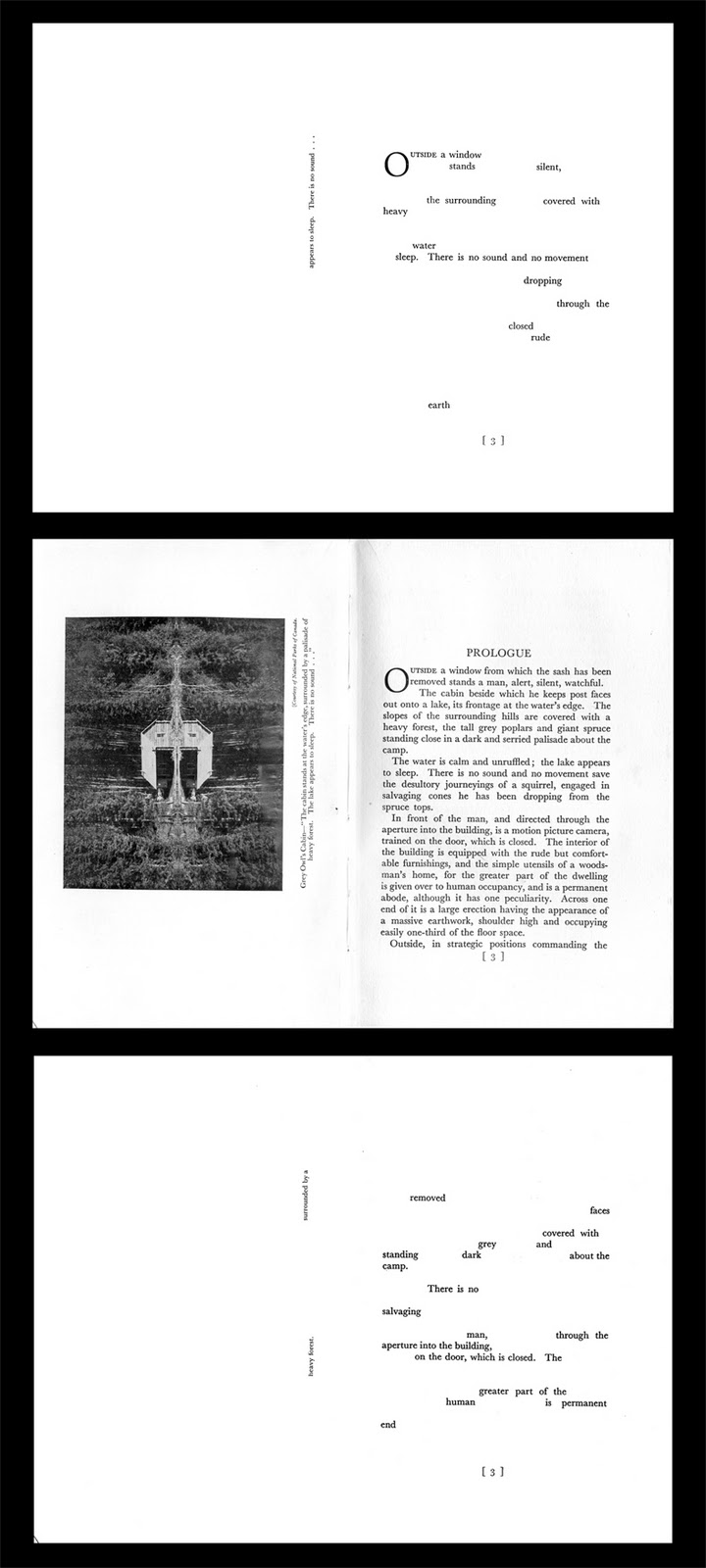
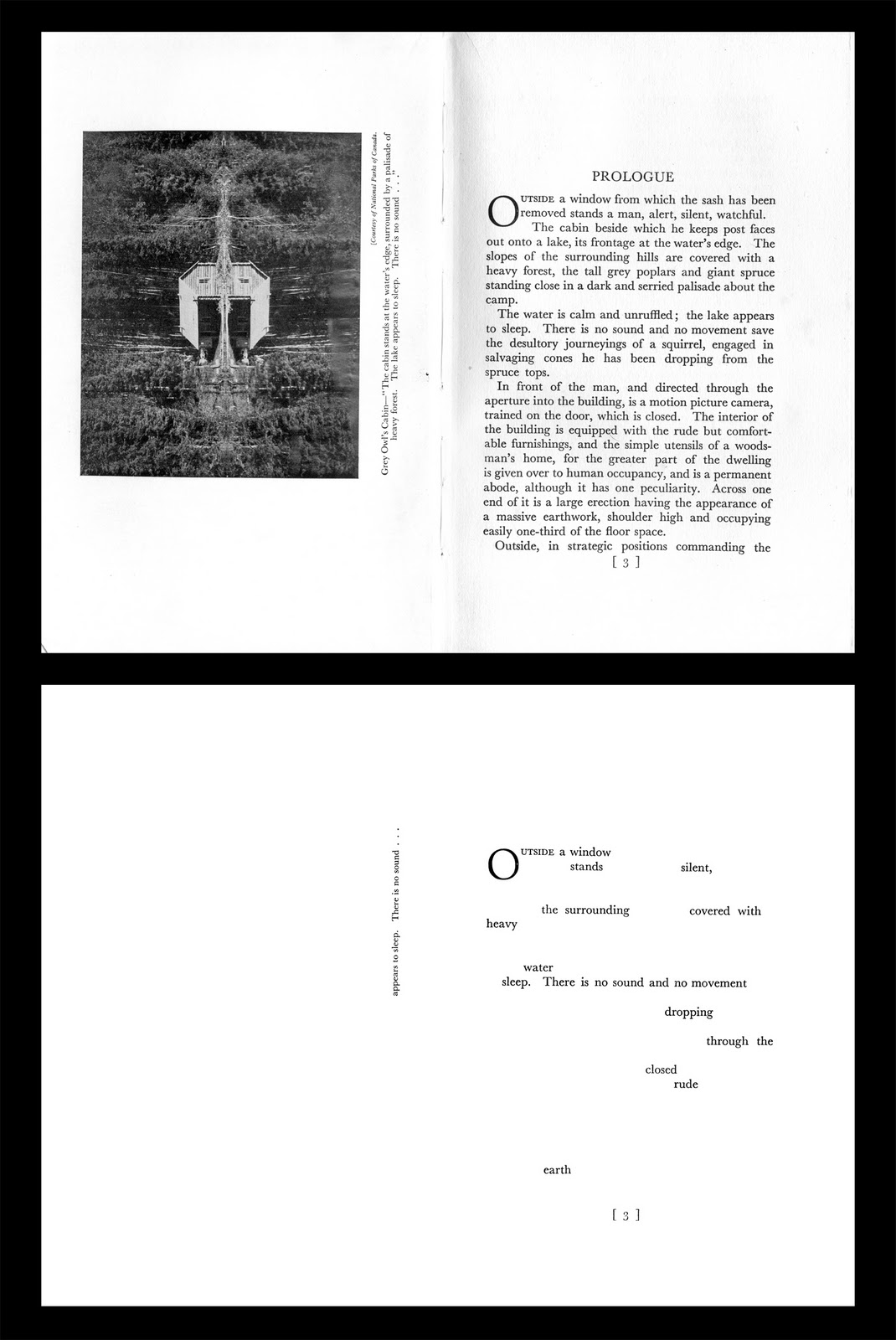
Heavy Water Sleep

December 20, 2010 by Nicholas Hedges

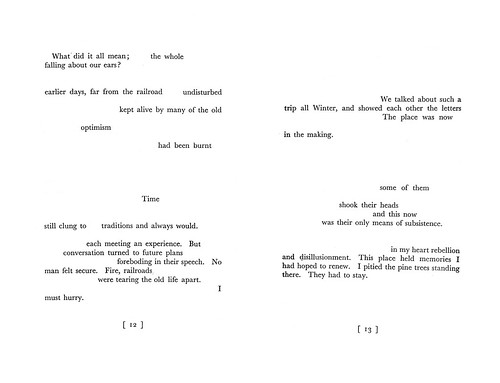
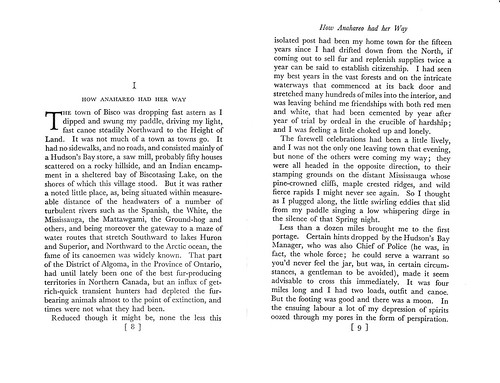
Continuing from what I was discussing yesterday (see Humument), I decided to make a start on my own ‘Humument’ by reading the first page of Pilgrms of the Wild by Grey Owl, using the text to describe something about the moment in which I was reading it. Given the snow and the freezing conditions outside, I was surprised at what I came up with, and very pleased with the result. The image below shows the original pages with my amended version below:

It goes to show how this technique can lead to unexpected, and in this case, rather beautiful results. I would never have thought before of describing snow as ‘water sleep’, but as my eyes scanned the page, the combination of words lept out at me.

My plan is to rework a page a day – not necessarily every day – and to rework the same pages with the Diary of Adam Czerniakow in mind.

Filed Under: Heavy Water Sleep, Holocaust Tagged With: Heavy Water Sleep, Holocaust, Text Work, WWII

A Humument

December 19, 2010 by Nicholas Hedges

In January this year, I used words from two seemingly unrelated books to create an installation in Shotover Country Park as part of Holocaust Memorial Day. The piece was called The Woods, Breathing, the title coming from an entry in the diary of Adam Czerniakow, who was ‘mayor’ of the Warsaw Ghetto up until his death in 1942.

In his diary, on January 19th 1940, Czerniakow describes a book he’d read, of which, he wrote: ‘The forest, little wild animals – a veritable Eden.’ The book was Pilgrims of the Wild by Grey Owl, and his comment is especially poignant given the horrors of the time in which he was living. It’s as if in the book, he found the freedom he craved, freedom which vanished as soon as the book was closed. The previous year, a few months after the start of the Nazi Occupation, he wrote how he was ‘constantly envying all the heroes of my novels because they lived in different times.’ There is a sense then, when he describes Pilgrims of the Wild that he is also envying the author, Grey Owl.

I’ve always seen Grey Owl’s book as a map, as in many respects all books are, maps through fictional landscapes, half conjured up in the minds of the author and his or her readers. Having read Czerniakow’s diary, reading Pilgrims of the Wild bought me closer, not only to him but to the time in which he was living, as if reading the book was a shared experience; as if we were walking through the same landscape, emerging at the end in very different places. That is not to say of course that reading the book enabled me to understand what it was like to live in those terrible times – nothing can ever do that. But by reading the words he would have read, it was as if I was following in his footsteps.

Looking up from the page, gazing out the window at the sky made me consider the present, the moment in time in which I was living. The sky was that of the book’s landscape, and that which Czerniakow would have seen outside his own window. We must remember, although it seems quite obvious, that the past too was once the present. By understanding this, we can begin to find indviduals lost to the pages of history. We don’t know what it’s like to experience the horrors of Nazi persecution, but reading the book beomes a shared experience, both mentally and kinaesthetically. It is an everyday activity, which opens up a crack through which we can glimpse the past.

Tom Phillips’ ‘treated Victorian novel’ – A Humument – (a page from which is pictured above) has always interested me; the technique of taking a text and changing it to make something entirely new is appealing for a number of different reasons. Every conversation we have, letter we write or note we take borrows from conversations, letters and notes spoken and written over the course of centuries (depending of course on how long the language has been used). Similarly the way we move, whether walking, sitting, standing or reading, borrows from the ways people have moved, again over the course of many hundreds, if not thousands of years. For me, Tom Phillip’s technique as used in The Humument articulates this. It’s as if we’re in the same landscape created by the original work (A Human Document by W.H. Mallock, first published in 1892) and yet are making our way through it in an entirely different way, as if the words are breadcrumbs on a trail, most of which have long since vanished.

As we walk down streets today, across parks, or through woods, we find ourselves within the same place as those who walked there a hundred, two hundred, maybe three hundred years before. We use the same words, we move the same way, but find ourselves interpretating the place quite differently. But it is the same place.

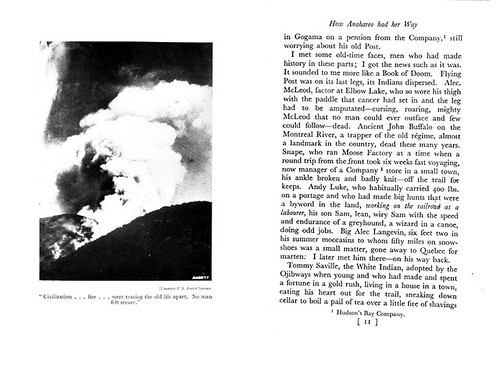
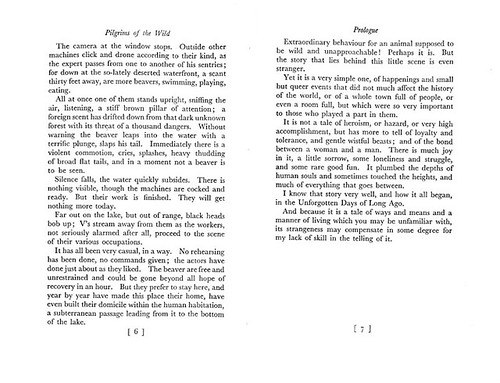
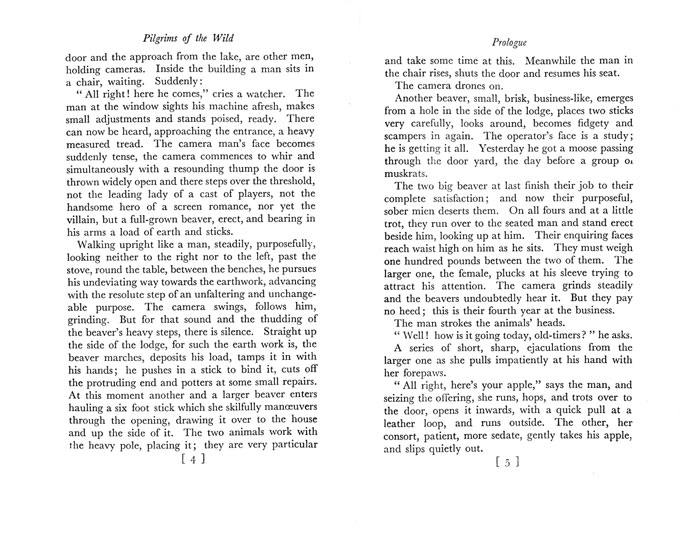
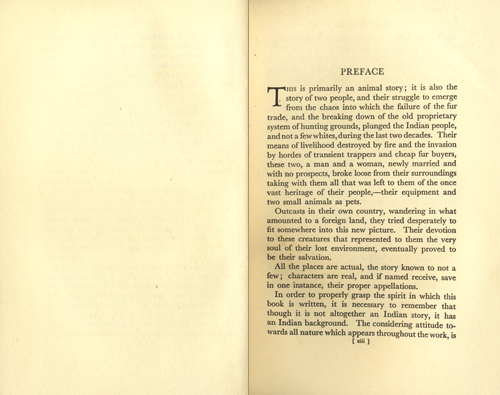
I want to useTom Phillips’ technique and create a new work from Pilgrims of the Wild, a page from which can be seen below; a work that articulates both my time of reading the book and that of Czerniakow’s.

Pilgrims of the Wild by Grey Owl

Filed Under: Heavy Water Sleep, Holocaust Tagged With: Heavy Water Sleep, Holocaust, Humument, Text Work, The Woods Breathing, Tom Phillips, WWII

An Archaeology of the Moment

May 18, 2010 by Nicholas Hedges

I’m currently reading an excellent book by Colin Renfrew, Senior Fellow of the McDonald Institute for Archaeological Research, entitled ‘Figuring it Out’, in which the author examines what he describes as ‘the parallel visions of artists and archaeologists,’ with an emphasis on contemporary art practice. As an artist with a deep interest in archaeology, I had to buy the book, and I’m very glad I did, for it’s helped me pull together numerous strands of thinking which have emerged from my research over the course of the last four years; in particular, the idea of the physical or ‘sensed’ present as a lens through which to ‘see’ the past. Professor Renfrew writes: “The past reality too was made up of a complex of experiences and feelings, and it also was experienced by human beings similar in some ways to ourselves.” The way we experience the present then, tells us a great deal about how people experienced the past when it too was the present.

I’ve written before how one of the problems we have in considering past events is the temporal distance which separates us. Reading a history book, although we know its content is‘ factual’, is nonetheless an interpretation of events; an outline at best no matter how well researched and well written it is. There may be a structure, just as in a novel, with a beginning, a middle and an end. But of course reality isn’t really like that – the boundaries are much more fluid. Necessarily therefore, a history of any event will be full of holes and it’s these holes which interest me.

In October 2006, I stood on the Ramp at Auschwitz-Birkenau and my experience there is something with which I’ve been working ever since, even whilst researching different places – whether other camps such as Bełżec or the battlefields of World War One – it’s that particular moment which I have been researching, peeling back the layers comprising the moment, much as an archaeologist digs through layers of stratified soil to uncover a whole range of times.

History is, in some respects, like fiction. What is known and written about can only be surmised from surviving evidence and what we ‘see’ as receivers of that knowledge, can only be imagined. What’s always missing is a sense of the present, as if what happened in the past always followed a script, one in which the main protagonists took their cues and delivered their lines accordingly. Hindsight, which one can hardly escape, joins all the dots, but leaves many gaps between the lines.

In the foreword to Peter Weiss’ book The Aesthetics of Resistance, Frederic Jameson writes how for the critic Georges Lukács, the world historical individual should never be the novel’s main protagonist, but rather seen from afar by the average or mediocre witness. We could say the same for history; that events described in history books are ‘best’ when seen through the eyes of those ‘average’ or ‘mediocre’ witnesses; people which history labels as ‘the mob’ or the ‘masses’; who are often buried beneath unimaginable numbers – mass graves within which, their names and individual identities are forgotten.

I’ve produced numerous works which examine this idea of the anonymous individual in history, but there’s another element I try to show, and that’s the ‘everydayness’ of any historic event. This is, I believe, key to our understanding of the past, for not only is history best seen by the ‘average’ or ‘mediocre’ witness, but – for me at least – when the main event is glimpsed as a backdrop to an individual’s own life experience. That’s not to say the event should always be viewed through the eyes of someone far away from the scene, but that it should always be seen behind the individual, rather than the individual being buried somewhere beneath.

In the time after my visit to Auschwitz-Birkenau, I wanted to find a way of identifying with those who died there. That’s not to say that I can identify with what they went through, no-one who wasn’t there can ever claim to understand what it was like to suffer, but we can seek to separate the individual from the grim statistics and site the camp in the landscape of the everyday world. Again, that’s not to say that Auschwitz-Birkenau was an everyday place, but what’s important for me, in understanding the past, in filling in the gaps which history inevitably leaves behind, is an understanding that the everyday world was happening at the time. Whatever event in whatever period we’re researching, the world was happening around it. The wind blew in the trees; the birds sang and the rain fell. The sun rose in the morning; the sky was just as blue or grey as it is today. There were clouds with their shadows, and during the night, the moon might be reflected in small pools of water, like that described by Auschwitz survivor, Filip Muller – in a pit soon to be filled with bodies. The events like the place were not everyday, but they took place regardless in an everyday world and understanding this ‘everydayness’ can help us understand and picture much more clearly events of the past.

For example, we can read hundreds of titles about the Holocaust and World War One, but when we read in the Diary of Adam Czerniakow – the ‘mayor’ of the Warsaw Ghetto – what the weather was like on a particular day, suddenly, in words like ‘beautiful weather,’ the full horror of the Holocaust is revealed, because, with these words at least, we can identify and – albeit in a very small way – empathise with someone who suffered; the past in effect becomes very much present.

In Birkenau, it wasn’t so much the sight of the gas chambers which was so horrific, or even the gaze of the infamous gatetower, but rather the way the trees moved, just as they’ve always moved, right throughout history.

Similarly, on the battlefields of the Somme, just as we cannot comprehend the horrors faced by the soldiers – the incessant shelling and machine gun fire – we can nonetheless see and feel the ground beneath our feet; we can see the sun in the sky, and feel the wind on our faces, and it’s these everyday details which take us, albeit just a little, into the midst of a battle. Of course we still need history to draw in the outlines, but it’s these other details which prevent history being a script. Events in history were not preordained, people made choices and choices can only be made and acted upon in a moment – in the present. Understanding the present therefore – that space wherein reside all our hopes and fears, our dreams and ambitions, and into which we bring our memories – is key to our understanding of the past.

In a passage written by Tadeusz Borowski, another Auschwitz survivor, we read the following: “do you really think,” he asks, that without hope such a world is possible, that the rights of man will be restored again, we could stand the concentration camp even for a day? It is that very hope that makes people go without a murmur to the gas chambers, keeps them from risking a revolt, paralyses them into numb inactivity.” People often ask why, when faced with certain death people didn’t revolt or even attempt to escape? If we read history as a script we might well feel obliged to ask that question, but when one’s alive in a moment, that in which we continue to exist, we will do anything to maintain that existence, and second by second that was achieved by doing nothing, right up to the end, for up to the end there was always the hope that something would change. Again, it’s through understanding what it means to live in the present that we can understand the past a little better.

In his book ‘The Materiality of Stone, Explorations in Landscape Phenomenology,’ Christopher Tilley writes: ‘The painter sees the tree and the trees see the painter, not because the trees have eyes, but because the trees affect, move the painter, become part of the painting that would be impossible without their presence. In this sense the trees have agency and are not merely passive objects. Dillon comments: “The trees ‘see’ the painter in a manner comparable to that in which the mirror ‘sees’ the painter: that is, the trees, like the mirror, let him become visible: they define a point of view on him which renders visible for him something that otherwise would remain invisible – his outside, his physiognomy, his carnal presence… The trees and mirror function as Other.”’ Just as the trees function as Other therefore, so must the sun, the stars, the clouds, hills, mountains, the sea, rivers, the wind, the rain and so on. Objects too, excavated during digs or on display in museums, act in much the same way.

Through archaeology, we excavate moments. We might come to better understand epochs and eras, but revealing a stone beneath a field which once belonged to part of a road reveals the movement of individuals and thereby an individual. And as we in the present stand on that stone and sense the world around us, we can bridge the gap between the past and present, even if that gap is one, two or three thousands years. If we walk along the line of the road, what we know of any relevant history becomes animated. With the aid of the ‘everydayness’ of the world we can position ourselves within an event – even if that event took place many miles away. We can become the ‘average’ or ‘mediocre’ witness, and rather than seeing a past event as one sandwiched between two pasts (those more and those less distant) we can instead bring to that past, the concept of the present and consequently the unknown future.

At the beginning of his book, ‘Figuring it Out’, Professor Renfrew looks at Paul Gauguin’s painting ‘Where Do We Come From? What Are We? Where Are We Going to?’ (1897) a title, and a question, which many artists and archaeologists alike have tried to answer. The questions posed in the title of are of course about the past, the present and the future and in reading this book I could see how these questions have always been there behind my work. After visiting Auschwitz-Birkenau and in an attempt to find anonymous individuals in history to whom I was related I began to investigate my own family tree, and, over the course of the last few years I’ve found several hundred ancestors going back on some lines as far as 1550. A year before she died, my grandmother told me about her childhood in Wales and in particular about my great grandfather who died in 1929 after years working in the mines. The following is an extract from that conversation:

‘I can see him now because he went up our garden over the road and the mountain started from there up… and he’d go so far up and he’d turn back and wave to us, and if we went out to play, our Mam would say, ‘you can go up the mountain to play…’ but every now and then our Mam would come out in the garden and we had to wave to her to know that we were alright you know… always remember going up the mountain…’

On visiting Hafodyrynys, the small town where my grandmother grew up, I walked up the ‘mountain’ she’d described and followed the path my great grandfather would have taken to work in the mines at Llanhilleth. On top of the hill I stood and looked at the view. One hundred years ago, when I did not exist, he would have seen the very same thing. One hundred years later, long after his death, I found myself – through being in that place – identifying with him, not because I know what it was like to work in the mines (of course I don’t), but because I saw the same horizon, felt the same wind, saw the same sun and so on. I’d found him there on the path (one which would in time lead to my being born).

I realised too in Hafodyrynys, that I’m not only who I am because of the genes passed down by my ancestors, but because of the things they did throughout their lives, not least because of the roads and paths they travelled, such as that upon the ‘mountain’. Anything different, no matter how seemingly irrelevant and I would not be here, and in a sense, that which I described earlier in relation to my standing on the Ramp at Auschwitz-Birkenau, where the way the trees moved seemed pregnant with the horrors of the Holocaust, is relevant here, albeit for different reasons; the everyday, insignificant details which make up a moment, are key to our existences. Until the time of our conceptions, we were always one step away (many times over) from never existing and again this refers back to what I described at the beginning of this piece; the idea of my own non-existence in relation to past events.

For the catalogue to the third in my series of exhibitions entitled ‘Mine the Mountain’ I wrote the following, in an attempt to summarise my thinking: ‘The Past is Time without a ticking clock. A place where paths and roads are measured in years. The Present is a place where the clock ticks but always only for a second. Where, upon those same paths and roads we continue, for that second, with our existence.’

The last line resonates when considered alongside what I described earlier regarding hope – that emotion which Borowski describes as ‘paralysing’ those who died in the camp.

I wrote earlier too, that through archaeology we excavate moments, that although we might come to better understand epochs and eras, revealing a stone beneath a field which once belonged to part of a road reveals the movement of individuals and thereby an individual, one continuing his or her existence for a second along the way. Artist Bill Viola wrote: ‘We have been living this same moment ever since we were conceived. It is memory, and to some extent sleep, that gives the impression of a life of discrete parts, periods or sections, of certain times or highlights.’ If we take what he says regarding this ‘same moment’ – that which we’ve been living continuously – along with what I’ve written above regarding pathways taken by our ancestors, we can see that that ‘same moment’ extends beyond the limits of our own existence and that moments and epochs are in the end, one and the same thing. The gap between the past and present – however big or small the temporal divide – is removed.

To conclude…

An ancient road, uncovered beneath a field, may be thousands of years old but nonetheless it will have been ‘written’ in terms of moments, where one individual amongst many others has carried his or her existence from one moment to the next. And as we walk ahead towards the future, along the line of the road, carrying our own existence with us; as we feel the ground beneath our feet and watch the wind blowing through the trees. As we listen to the birds and smell the scent of the grass, we’ll find ourselves in empathy with every individual who’s gone that way before us. Somewhere, beyond the horizon, Stonehenge is being built; the Romans have landed in England and the Mary Rose is sinking beneath the waves.

Filed Under: Archaeology, Trees Tagged With: Archaeology, Auschwitz, Bill Viola, Borowski, Christopher Tilley, Death Camps, Empathy, Family History, Family Jones, Holocaust, Jones, Mine the Mountain, Moments, Paths, WWII

  • 1
  • 2
  • 3
  • Next Page »

© Nicholas Hedges 2024

  • Facebook
  • Instagram
  • Twitter
  • YouTube

Copyright © 2025 · Outreach Pro on Genesis Framework · WordPress · Log in