Nicholas Hedges

Art, Writing and Research

  • Amazon
  • Behance
  • Facebook
  • Instagram
  • Pinterest
  • YouTube
  • Art
    • Digital
    • Drawing
    • Grids
      • Correspondence
      • The Wall
      • The Tourist
    • Ink on paper
      • Shadow Calligraphy
    • Installation
      • Murder
      • Echo
    • Painting
    • Patterns
    • Mixed Media
    • Photographic installation
      • St. Giles Fair 1908
      • Cornmarket 1907
      • Headington Hill 1903
      • Queen Street 1897
    • Research/Sketches
    • Stitched Work
      • Missded 1
      • Missded 2
      • Missded 3
      • Missded 4
    • Text Work
  • Blogs
    • Family History
    • Goethean Observations
    • Grief
    • Light Slowed But Never Stilled
    • Lists
    • Present Empathy
    • Shadow Calligraphy
    • Trees
    • Time
    • Walking Meditations
  • Video
  • Photography
    • Pillars of Snow
    • Creatures
    • The Trees
    • Snow
    • St. Giles Fair 1908
    • Cornmarket 1907
    • Headington Hill 1903
    • Queen Street 1897
    • Travel
  • Illustration and Design
  • Music
  • Projects
    • Dissonance and Rhyme
    • Design for an Heirloom
    • Backdrops
    • Shadow Calligraphy
  • Exhibitions
    • A Line Drawn in Water
      • Artwork
    • A Line Drawn in Water (Blog)
    • Mine the Mountain 3
      • Artwork
    • Mine the Mountain 2
      • Artwork
      • The Wall
    • The Woods, Breathing
      • Artwork
    • Snow
      • Artwork
    • Echo
      • Artwork
    • Murder
      • Artwork
    • The Tourist
    • Dreamcatcher
    • Mine the Mountain
      • Artwork
      • The Tourist
    • M8
    • The Gate
    • Creatures
      • Artwork
    • Residue
      • Artwork
    • A visit to Auschwitz
      • Artwork
  • Me
    • Artist’s Statement

Silence in the Woods

May 23, 2015 by Nicholas Hedges

I’ve discussed previously, three extracts from newspapers in which a moment of silence serves to amplify all that happened before and after. To recap, those three extracts were [my italics in all]:

“On Sunday last, at the close of the evening service, the Society Meeting was held, and references to the death of Private Rogers were made by several members of the Church. Private Rogers’s mother is one of the oldest members of the Church. The meeting passed a vote of condolence with the relatives, all present standing in silence.” (1915) 

“Shortly after dusk, the lightning appeared in the south and western horizon, and soon became most vivid, blue sheets of lightning following each other in rapid succession, but unaccompanied by thunder.” (1842)  

“Her mother got up and tried the door but it was locked by [the] witness when her father and mother came in. Her father took the sword out of the sheath which he threw to the floor and then struck her mother on the back with the flat side of sword; neither her father nor mother spoke.” (1852)

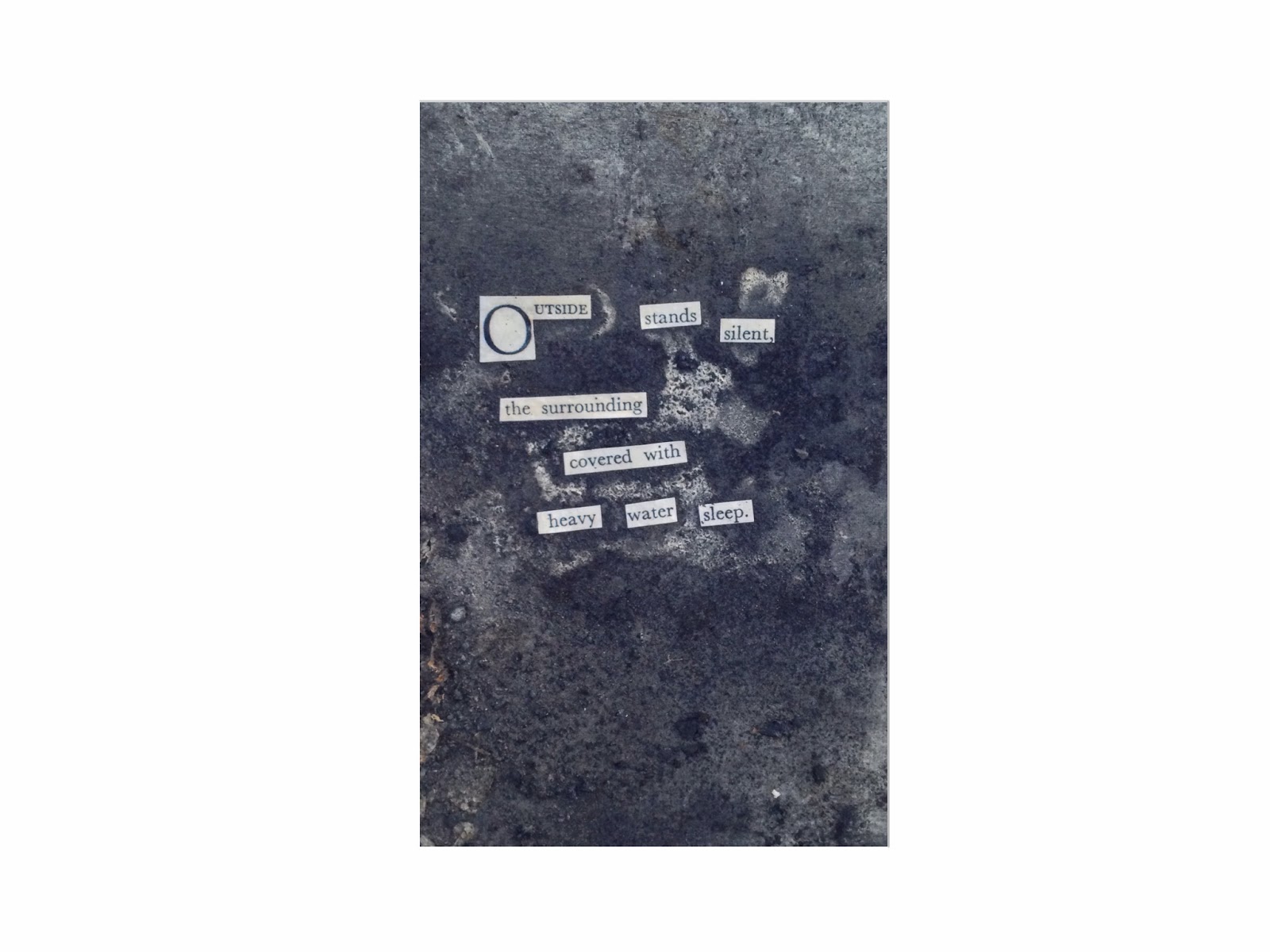
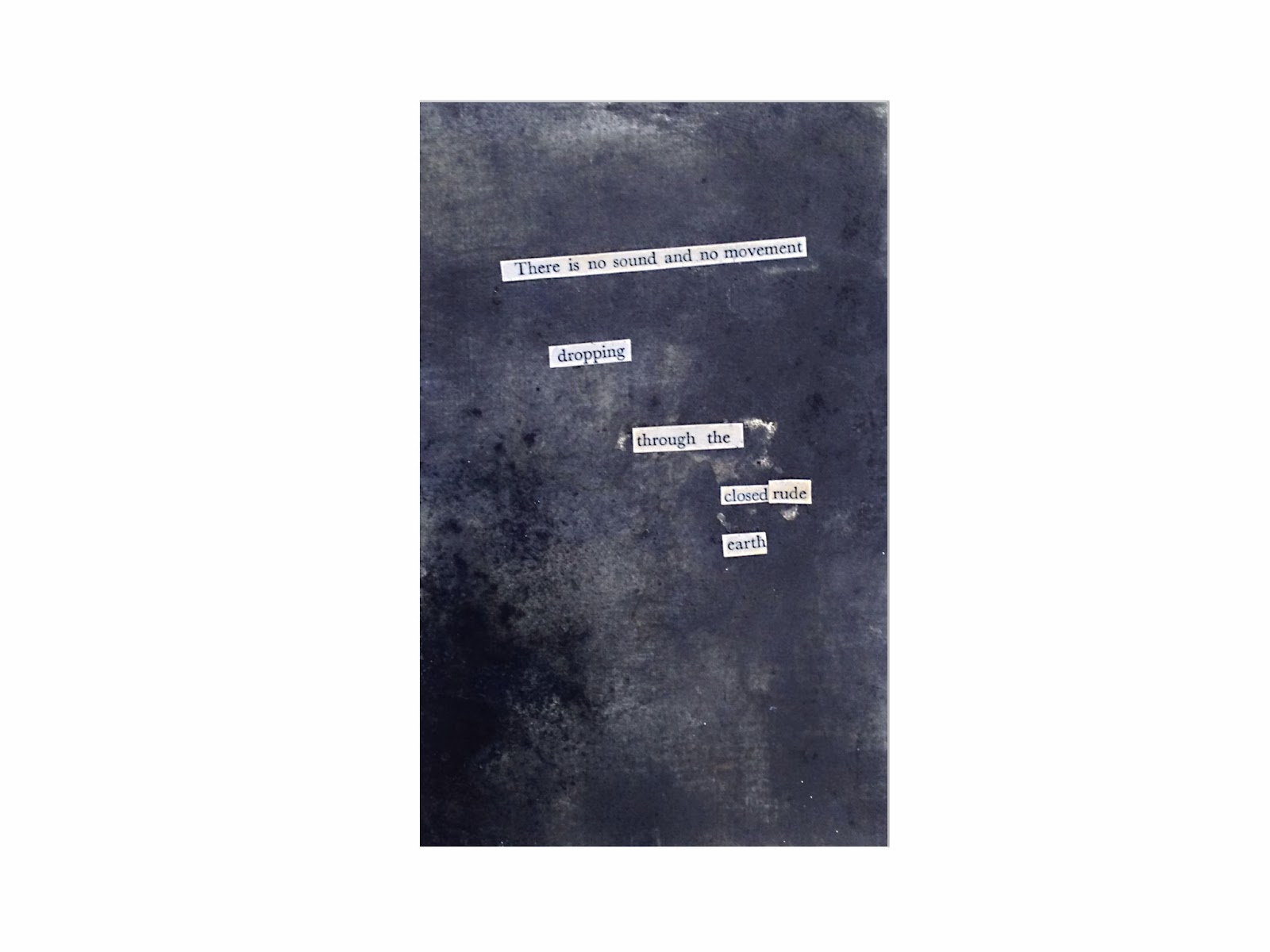
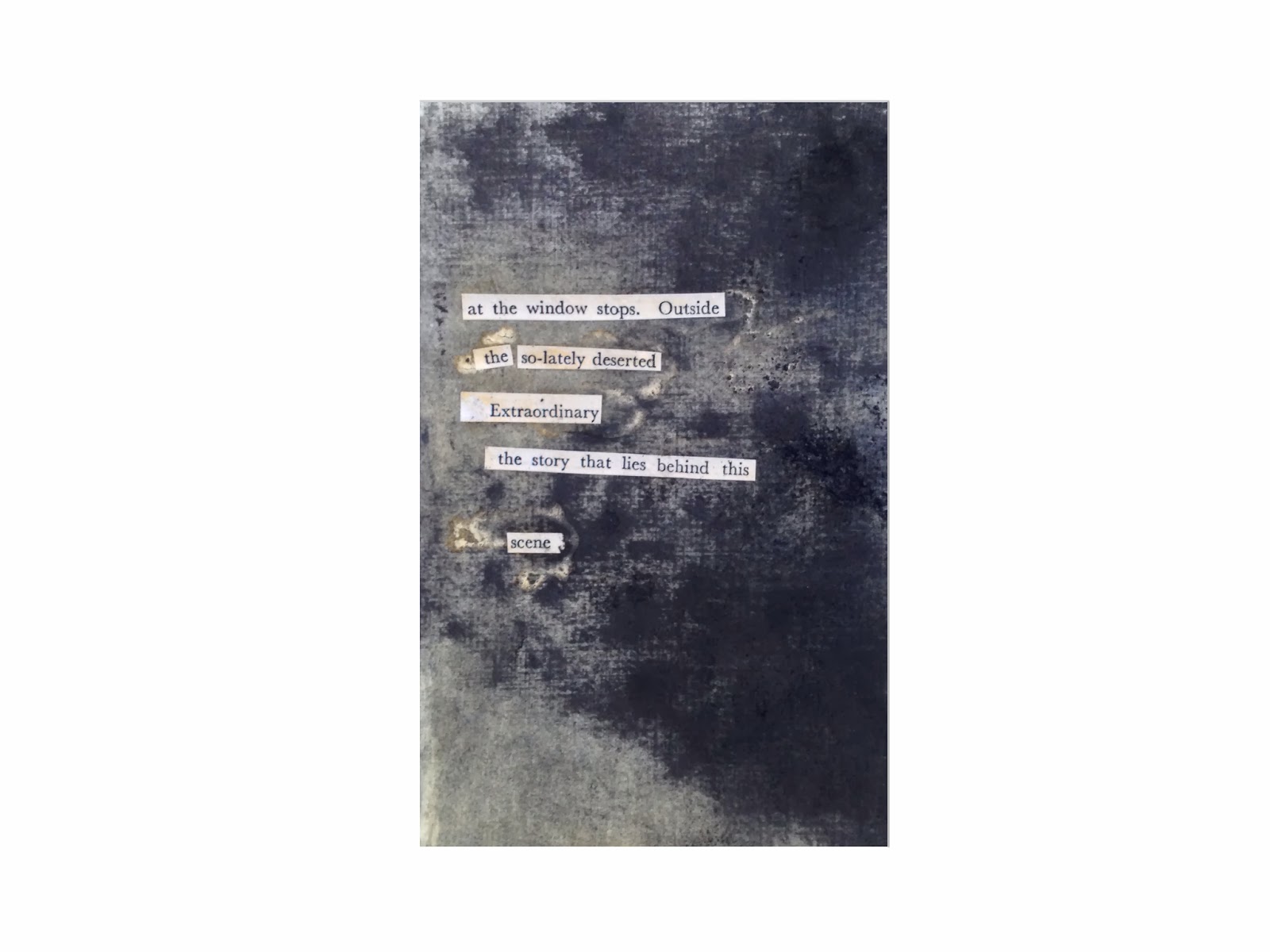
In each of these three passages, the moment of silence is set in opposition to the text preceding it, and, as a result, it serves, as I’ve said, to amplify that text. As I was thinking about this, I became aware that the pieces of work, Heavy Water Sleep and The Woods, Breathing also reflected this opposition.

Both projects use a moment in the life of Adam Czerniakow. As I’ve written before:

“For almost three years, Adam Czerniakow was ‘mayor’ of the Warsaw Ghetto. One of the inspirations for this work is a line taken from his diary, which he kept whilst living in Warsaw in occupied Poland from 1939 to his death in 1942. On September 14th 1941 he wrote:

‘ In Otwock. The air, the woods, breathing.’

On occasion, Czerniakow was allowed to leave the ghetto to visit the Jewish Sanatorium at Otwock just outside Warsaw. It was one place he could find some respite from the horror and torment he endured in the ghetto.”

In reading his diary, this effort and the toll which it took on both his physical and mental health is evident and in these few words – the air, the woods, breathing – words with which we can easily identify, we can glimpse his relief at being able, just for a short time, to stand in the woods and breathe. In that simple, everyday, action we see the other side of his life; the world far beyond our own comprehension.

Czerniakow would also seek solace in reading. One night, on January 19th 1940, he wrote:

“…During the night I read a novel, ‘Pilgrims of the Wild’ – Grey Owl… The forest, little wild animals – a veritable Eden.”

Given what we know about the Holocaust and what Adam Czerniakow went through, these silent moments – in the woods at Otwock and reading at home – are set in stark contrast to what was going on around him. As a result, these two moments serve to amplify the horrors of the war; everything that had happened and everything that had yet to occur.

In my previous blog, I quoted Jorge Luis Borges who wrote:

“A single moment suffices to unlock the secrets of life, and the key to all secrets is History and only History, that eternal repetition and the beautiful name of horror.”

The word moment crops up a lot in my work, as it has in this entry. I’ve long thought that one can only empathise with people in the past through an awareness of present day moments – moments of the everyday. Borges’ quote seems to bear this out. In the case of Adam Czerniakow I have given two such moments. Then there are the three moments of silence in the passages above.

History is a cycle, an eternal repetition of single moments. When I read the same book that Czerniakow read (Pilgrims of the Wild) I am repeating that same single moment. Likewise, when I stand in a wood I am repeating another of those single moments.

So the silence amplifies History and the nature of that silence serves as a moment of connection with the past. The nature of silence and its opposition to violence is interesting too. I return to a favourite quote of mine:

“…if the opposite of war is peace, the opposite of experiencing moments of war is proposing moments of pastoral.”

Peace equates with pastoral, and, perhaps, with silence. I shall end with a quote from Rilke which also seems to fit with what I’ve been saying:

“Look, trees exist.
The houses we live in continue to stand. Only we
pass away like air traded for air and everything
conspires to maintain silence about us, perhaps
half out of shame, half out of unspeakable hope.”
Filed Under: Heavy Water Sleep, Holocaust, Trees Tagged With: Everydayness, Heavy Water Sleep, Holocaust, Jorge Luis Borges, Moments, Pastoral, Pilgrim of the Wild, Silence, The Woods Breathing

Childhood Landscapes

October 15, 2014 by Nicholas Hedges

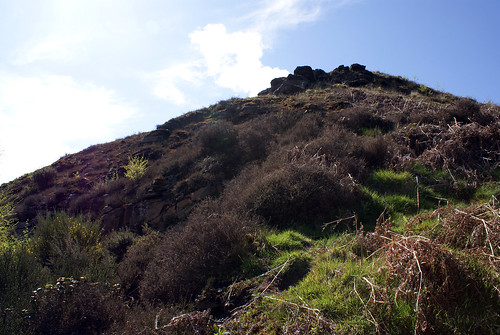
‘I can see him now,’ my Nana told me, talking about her dad, ‘because he went up our garden over the road and the mountain started from there up… and he’d go so far up and he’d turn back and wave to us, and if we went out to play, our Mam would say, “you can go up the mountain to play…” but every now and then our Mam would come out in the garden and we had to wave to her to know that we were alright you know… always remember going up the mountain…’

Hafodyrynys and Surrounds
Nana’s mountain

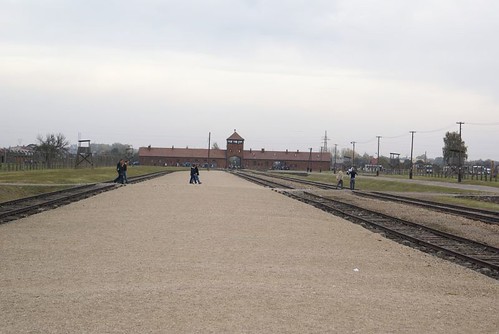
I interviewed my Nana in 2007, the year before she died. What she was describing was a scene from her childhood landscape in the years after the First World War. During the Second World War, a young boy called Otto Dov Kulka was a prisoner in Auschwitz-Birkenau. He recalls his childhood landscape thus:

“The colour is blue: clear blue skies of summer. Silver-coloured toy aeroplanes carrying greetings from distant worlds pass slowly across the azure skies while around them explode what look like white bubbles. The aeroplanes pass by and the skies remain blue and lovely, and far off, far off on that clear summer day, distant blue hills as though not of this world make their presence felt.”

Auschwitz-Birkenau
Auschwitz-Birkenau

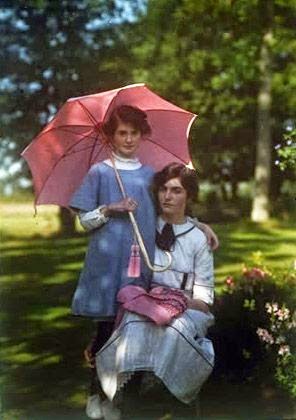
In previous blogs I have described my childhood landscapes, both real and imagined; most recently in the context of childhood landscapes pre World War I, this time of two girls who lived in what is now Bury Knowle Park in Headington, Oxford.

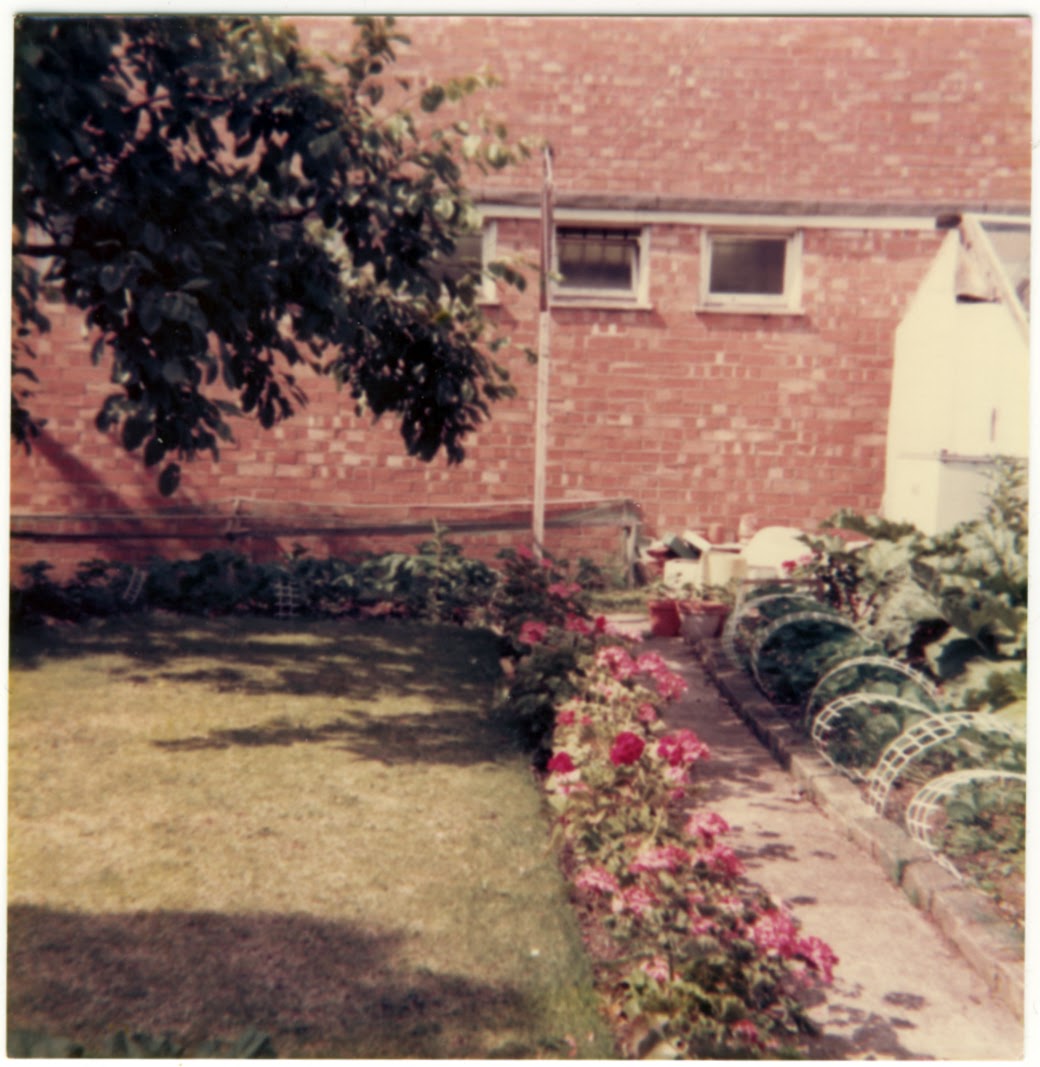
My childhood landscapes are bound up with journeys to and from my grandparents’ houses and in particular, my Nan’s garden (pictured below) also in Headington.

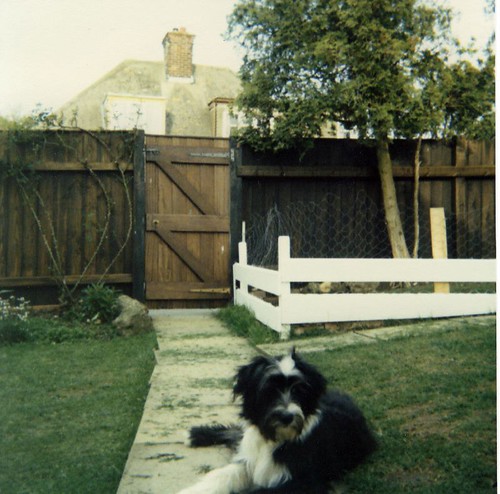
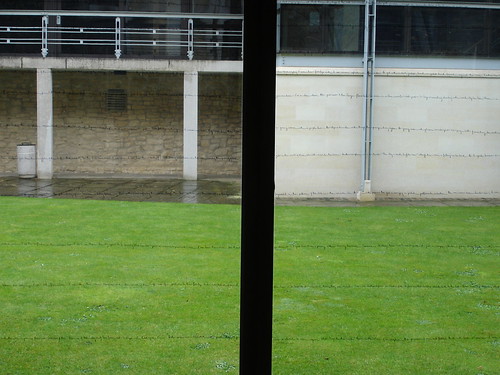
I have walked in all these places; in my grandparents’ garden; in Bury Knowle Park, on the ‘mountain’ in Wales and in Auschwitz. I spent many happy years in the garden of my childhood home (which has all but disappeared under a vast extension to the house).

Sukey

Filed Under: Holocaust Tagged With: Bury Knowle Park, Childhood, Gardens, Holocaust, Imagined Landscapes, Landscape, Memory, Nana

Authenticity of the Alienation

October 15, 2014 by Nicholas Hedges

Returning to Otto Dov Kulka’s book ‘Landscape of the Metropolis of Death,’ I want to look at another passage which I’ve copied out below:

“… many works of cinema, theatre and art, offer a way to understand and experience Auschwitz, its universe, the ghettos, that final stage, that reality. And everyone reads these books — they sell thousands of copies — so they obviously speak in a uniform language to all those myriad readers. Yet I cannot find in them what they seek to convey! It’s a completely different world! The only response I feel able to express is alienation; all that is authentic is the authenticity of the alienation.”

The ‘authenticity of the alienation’- an interesting phrase. As an artist working with subjects like the Holocaust, one has to place that sense of alienation – one’s removal from the fact – at the forefront of any work. It is the lens through which the work is seen, becoming, in my case, the work itself; i.e. how, given that sense of alienation, we can empathise with those who suffered. Kulka continues:

“Therefore I ask: in what am I different? Something is wrong with me! And then, as so often, as almost always during periods of distress, I escape to Kafka, either his diaries or his other works. At that time, I again opened at the ending – I always open randomly – I opened at the ending of the wonderful story of the man standing before the Gate of the Law. This man who stands before the Gate of the Law actually asks the same question -and it is one of the last questions he asks, driven by his insatiable curiosity, as the gatekeeper jests. He asks: ‘Tell me, after all this is the Gate of the Law, and the Gate of the Law is open to everyone.’ To which the gatekeeper says: ‘Yes, that is so.’ Then the man says (if I remember the text correctly): ‘Yet in all the years I have been sitting here no one has entered the gate.’ And the gate-keeper nods his head and says: ‘Indeed.’ The man asks him to explain this puzzling fact, and the gatekeeper does him this one last mercy and says: ‘This gate is open only for you, it exists only for you, and now I am going to close it.’ 

Accordingly, everything I have recorded here – all these landscapes, this whole private mythology, this Metropolis, Auschwitz  – this Auschwitz that was recorded here, which speaks here from my words, is the only entrance and exit — an exit, perhaps, or a closing — the only one that exists for me alone. I take this to mean that I cannot enter by any other way, by any other gate to that place. Will others be able to enter through the gate that I opened here, that remains open for me? It is possible that they will, because this gate that Kafka opened, which was intended for only one person, for K., Josef K., is actually open to almost everyone. But for him there was only one gate into his private mythology.”

On reading this, I was reminded of a text by Holocaust survivor, Elie Wiesel which I used in relation to a piece of work I made in 2009. 


“I would bring the viewer closer to the gate but not inside, because he can’t go inside, but that’s close enough.”

There is no way into Kulka’s Auschwitz – his own private mythology. But there is a way into Auschwitz.

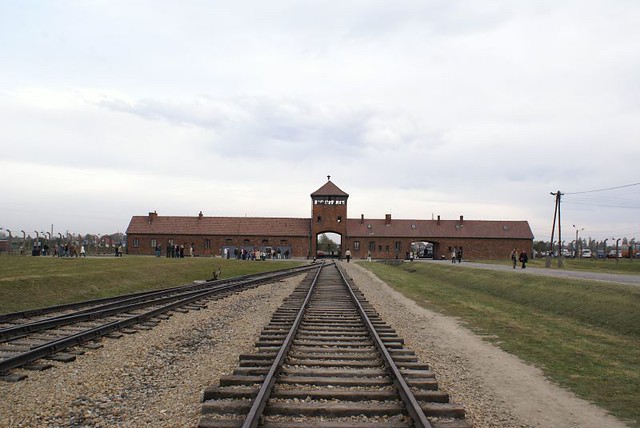
To try and empathise with those who suffered in, for example, Auschwitz, we should perhaps consider the camp as being like the Gate of the Law in the parable above; something that was, or rather is, open to everyone. Furthermore, we should think of the famous gates (the Arbeit Macht Frei gate or the gate tower at Birkenau) again like the Gate of the Law, as being gates made for specific individuals, through which only they can enter; serving to illustrate that this was a human tragedy – an individual tragedy repeated (in the case of Auschwitz) well over a million times.

Auschwitz-Birkenau

I remember clearly how strange it felt to be standing on the infamous ramp at Birkenau having walked in beneath the gate tower; how was it I could stand freely in that place where so many had perished? I think of it like this; the gate through which I walked was open only for me, it existed only for me at that particular time. To borrow from Kulka: I could not enter by any other way, by any other gate to that place. For over a million people, their only way in – their gate – led to a death camp. For me, the gate led to a memorial. 

Filed Under: Holocaust Tagged With: Elie Wiesel, Holocaust, Otto Dov Kulka, The Gate

Kulka’s Summer Skies

October 5, 2014 by Nicholas Hedges

There’s a chapter in Otto Dov Kulka’s memoir ‘Landscape of the Metropolis of Death’ which really struck me. I can’t reproduce it in full but the following excerpt gives a sense of what it says. The segment is sub-titled ‘The Blue Skies of Summer.’

“Another leap in time, to a different landscape and different colours. The colour is blue: clear blue skies of summer. Silver-coloured toy aeroplanes carrying greetings from distant worlds pass slowly across the azure skies while around them explode what look like white bubbles. The aeroplanes pass by and the skies remain blue and lovely, and far off, far off on that clear summer day, distant blue hills as though not of this world make their presence felt. That was the Auschwitz of that eleven-year-old boy. And when this boy, the one who is now recording this, asks himself — and he asks himself many times — what the most beautiful experience in your childhood landscapes was, where you escape to in pursuit of the beauty and the innocence of your childhood landscapes, the answer is: to those blue skies and silver aeroplanes, those toys, and the quiet and tranquillity that seemed to exist all around; because I took in nothing but that beauty and those colours and so they have remained imprinted in my memory. 

This contrast is an integral element of the black columns that are swallowed up in the crematoria, the barbed-wire fences that are stretched tight all around by the concrete pillars. But in that experience all this seemingly did not exist, only in the background and not consciously. 

Consciousness has internalised and submerged the sensation of the bold summer colours of that immense space; of the cerulean skies, the aeroplanes — and of the boy gazing at them and forgetting everything around him. There is almost no return to that Metropolis, with its sombre colours, with the sense of the immutable law that encloses all its beings within confines of allotted time and of death; that is, there is almost no sense of a return to that world without a sense of return to those wonderful colours, to that tranquil, magical and beckoning experience of those blue skies of the summer of 1944 in Auschwitz-Birkenau.”

It is not often one reads of an experience in Birkenau as being ‘magical.’ Further on, in a chapter called ‘Rivers which cannot be crossed and The Gate of “Law”‘ we read:

“These images of skies of blue and ‘columns of people in black being swallowed into the confines of the crematoria and disappearing clouds of smoke, the corridors of lights leading to the Metropolis of Death, the terms ‘Metropolis of Death’ and ‘Homeland of Death’, all of which are so close to me; landscapes to which I escape as one escaping into the landscapes of childhood, feeling in them a sense of freedom, protected by that immutable law of the all-pervasive dominion of death, by the beauty of summer landscapes  – all these things are part of a private mythology which I am conscious of, a mythology that I forged, that I created, with which I amuse myself and in which – I will not even say I am tormented, I am not tormented — I find an escape when other things haunt me, and even when they don’t. This Homeland exists and is available to me always. But it is a myth, it has its own mythological language…”

Ever since visiting Auschwitz I have tried through my work to see its grim past as it was; to re-witness it, as far as it is possible, as something happening now, rather than as a piece of history dead in the pages of a book. One way of doing that I found was to consider the presentness of now, they everydayness of the present moment and to project it back onto past events. As I wrote some time ago:

“For George Lukács, ‘the “world-historical individual” must never be the protagonist of the historical novel, but only viewed from afar, by the average or mediocre witness.’ In other words, those historic events written about in books, are best discovered through the eyes of those who are missing from the text, people who at best are either given the epithet ‘mob’ or ‘masses’ or are bundled into numbers and tables of statistics. It’s through the eyes of these people that I want to see the past.”

Kulka’s words reminded me of this quote. The horrors of Auschwitz are pushed to the background but as such they are all the more graspable to the present-day imagination. To re-witness the Holocaust, we have to become like that 11 year old boy, standing in the midst of unimaginable horror, but absorbed nonetheless by the vastness a beautiful blue summer’s day sky.

Filed Under: Holocaust Tagged With: Holocaust

Latest Exhibition

March 12, 2014 by Nicholas Hedges

I will be exhibiting with my wife, Addy Gardner, in Plymouth from 4th-26th April 2014. Some of the work I’ll be showing can be seen below.

Filed Under: Paintings Tagged With: Art, Exhibitions, Holocaust, Paintings, WWI

Trees

November 11, 2013 by Nicholas Hedges

In his book, Trees – Woodlands and Western Civilization, archaeologist Richard Hayman writes:

“…the forest provides the setting for chance encounters that take the protagonists away from their everyday lives. Woodland is the gateway to a parallel reality of the underworld, but it is also a refuge where the real world is held in limbo.”

“Woods,” he says, “are poised between reality and imagination…” They have “roots in the ground and reach up to the sky linking earth with heaven.” They “span many lifetimes” and in this sense can be seen to link the past and present too.

When I visited Auschwitz-Birkenau in 2006, it was the trees (pictured below) which most unnerved me. The way they moved in the breeze – just as they would have done at the height of Holocaust. It was this ‘everydayness’ which, for a second, enabled me to straddle past and present.

Portals to the past, these trees were once gateways to death. It was amongst these trees that victims were kept before being sent to the gas chambers nearby.

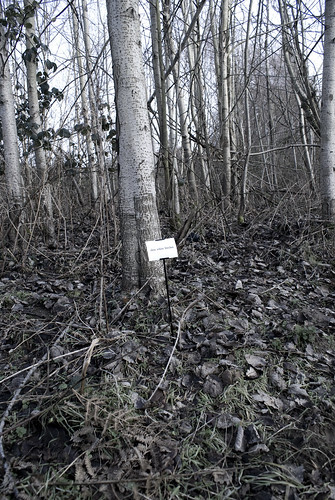
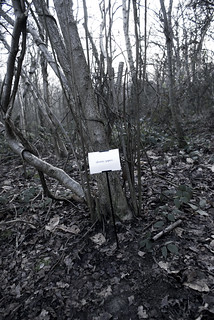
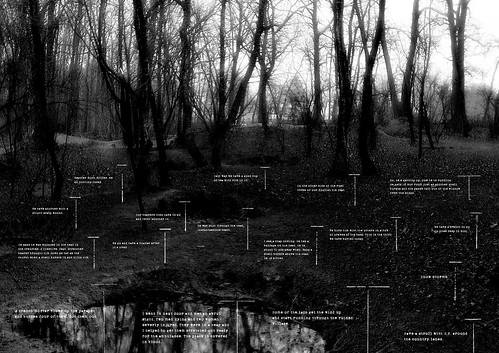
A work I created in 2009 – The Woods, Breathing – took the form of words taken from two books: one the Diary of Adam Czerniakow, the other, Pilgrims of the Wild by Grey Owl, a book which Czerniakow had read in the Warsaw ghetto.

The words were planted amongst the trees of Shotover. Some of them – quite mundane – could almost have been describing the place in which I had placed them. For example, ‘Silver birches’ pictured below.

Others, like ‘Identity Papers’ (below) called to mind the reality of Czerniakow’s world; one not so dissimilar from ours, in terms of the fact it was real.

A quote from his diary illustrates this: “In Otwock. The air, the woods, breathing.” It describes a moment of respite from the horrors of the ghetto and while we might find it hard, despite our greater efforts, to empathise with life in such appalling conditions, we can empathise much more readily with that moment in the woods.

Below is a painting by Paul Nash entitled ‘We are Making a New World.’

The trees in this landscape have been splintered by shellfire. The following extract from Neil Hanson’s book The Unknown Soldier is a vivid description of the landscape Nash is depicting.

Clearly visible on the skyline, High Wood was a long low hill, a natural strong point, the highest ground in this low-lying area. Densely forested when the fighting began, the months of incessant shelling had left it a wood in name only, reduced to a wasteland of of shell-holes, over-running with water, its trees splintered to matchwood, leaving smashed stumps barely two feet above the ground, and shattered rock and churned earth, like a sea all heaving in anger.

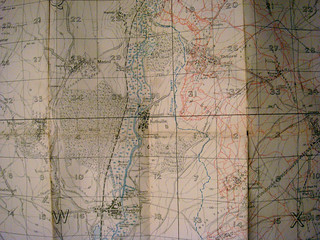
Below is a trench map showing various woods in an area of The Somme.

Trench Map 1916

One could say the Great War was the start of the modern age; the past, in the form of dense woods had been obliterated.

The woods have grown back and walking within them, it’s almost impossible to appreciate what they were like for soldiers during the Great War. As in Auschwitz-Birkenau, it was the nowness of my being there, of experiencing the present in, for example, the moving of the trees, that enabled me to establish some kind of connection with those who had lived through such a catastrophic event. With the return of the trees comes the return of the past.

Correspondence
As a child, woods were a means of accessing the past; that vast landscape covered by swathes of trees in which I would wander in a bid to find mediaeval knights and kings. I created my own worlds, which like my imagined version of the past were always deeply forested.

Filed Under: Holocaust, Trees Tagged With: Holocaust, The Trees, Trees, WWI

Heavy Water Sleep (Paintings) III

July 1, 2012 by Nicholas Hedges

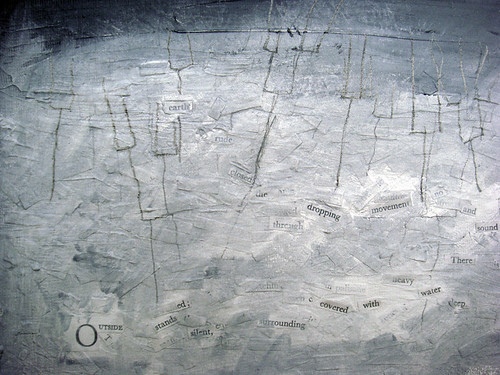
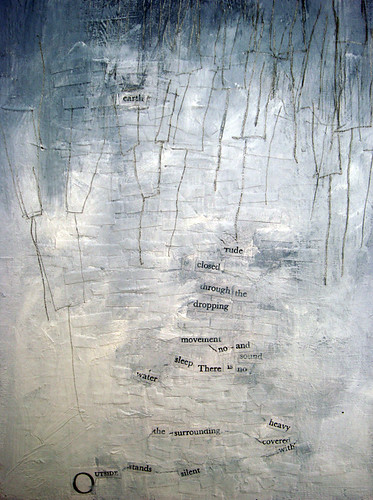
I worked again tonight on the studies for Heavy Water Sleep, working in landscape elements such as trees and sky. The original text from which the words are taken, ‘Pilgrims of the Wild’ by Grey Owl, is set chiefly in the forests of Canada. And in the ‘secondary text’ which inspired the work in the first place, ‘The Diaries of Adam Czerniakow’  there is a moving passage in which, following a visit outside the Warsaw Ghetto to the woods of Otwock, he writes simply, ‘… the air, the woods, breathing.’ Trees then seem integral to the work and have indeed been a recurring them in much of my work, particularly work to do with the Holocaust and World War I.

I wanted then to use trees in these works and found myself using a stylised form which I’d scribbled one day in my notebook based on lines you find in Family Tree diagrams.

This symbolic tree was in part inspired by some work I did on the First World War in which I used the dividing lines on the backs of original wartime postcards to symbolise the bond between the anonymous individuals who died in the war and their families back at home. These ‘T’ shaped divides reminded me of photographs in which hastily dug graves were marked on battlefields with crude crucifixes. I therefore created landscapes (based on my visits to battlefield sites on what had been the Front) and used these T-shapes to represent graves.

Battle 2

From these T-shapes I derived the forms for the trees below.

Heavy Water Sleep

Heavy Water Sleep

The link between them and the Ts above is an obvious one – even more so when one considers the original inspiration for this work.

Filed Under: Heavy Water Sleep, Paintings, Trees Tagged With: Adam Czerniakow, Heavy Water Sleep, Holocaust, Paintings, Text Work, WWII

Heavy Water Sleep (Paintings) II

June 27, 2012 by Nicholas Hedges

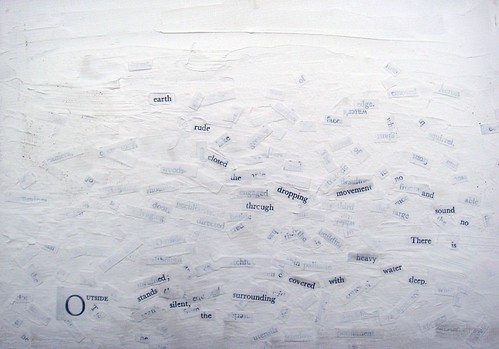
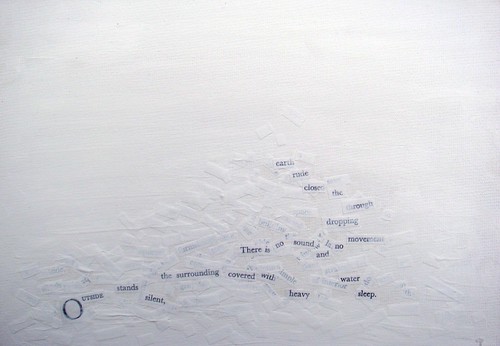
I worked again last night on the ‘Heavy Water Sleep’ paintings, continuing to concentrate on the texture. For the first board below I used a white acrylic paint mixed with an acrylic modelling paste.

DSC07384

The words are too chaotic in this one and the paint has dried very matt. I could add some gloss medium but it would make much more sense to use oil paint which I will for the final versions. I will add another layer to the painting above later.

Having completed this painting I worked again on the one I did yesterday.

DSC07382

I like how the words are slightly more obscured now and much prefer their more ordered placement. The next thing I want to try is keeping the lines of the pages together rather than placing them in a random fashion.

Filed Under: Heavy Water Sleep, Paintings Tagged With: Heavy Water Sleep, Holocaust, Paintings, Text Work, WWII

A Flash of Genius at the London Art Fair

January 22, 2012 by Nicholas Hedges

Yesterday, at the London Art Fair, I found – amongst a plethora of ‘not very good’ and downright terrible art, an artist whose work – although disturbing -truly impressed me. It’s not the sort of work you’d want on your wall perhaps, or which would likely be snapped up by the likes of those idiots who it seemed were happy to shell out 5 grand for a print of one of Damien Hirst’s assistant’s facile spot paintings (albeit one signed by the Overlord of artistic tat), but its power was striking.

For a number of years I’ve looked to create work which facilitates an empathetic engagement with anonymous individual victims of past atrocities. This work has variously found its form in paintings, sculpture and mixed media pieces using documentary and archival material such as photographs. Where these photographs have been black and white, I’ve looked to see how colour might be used to foster that empathetic reaction.

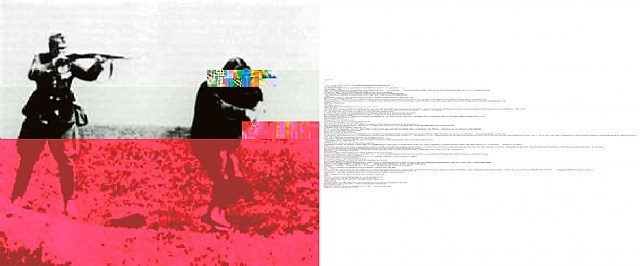
David Birkin’s work, ‘Untitled I’ does everything that I have tried to do. It’s a brilliantly conceived work and one which is conceptually perfect. The work, disturbing as it is can be seen below.

The image shows a woman about to be shot by a German soldier. The woman, like so many of the Nazi’s victims is anonymous, one more human being to make up the grim toll of 6 million killed in the Holocaust. But where so many names have been forgotten, many of course remain, trapped – like flies in amber – in the meticulous records kept by those who carried out these unimaginable crimes.

The black and white photograph printed on the left of the image has been distorted with fragments of colour, and on the right of the image we find the computer code for the original digital image, into which Birkin has placed the name of one of the countless victims. This ‘anomaly’ in the code is revealed when the image – with the anomalous name – is reprinted. The distortion is the name as read by the computer.

It is a brilliant concept. The computer code, without the name, is to (most) human eyes, little more that an incomprehensible mass of letters and numbers. It’s the equivalent of the vast and grim statistic offered to us by history. Its equivalent image is black and white – a far cry from the reality of a world full of colour – the world we know and which every one of the six million victims knew. And yet when a name – an individual – is inserted, the image is changed (distorted) with a pattern of colours, reminding us that the world of the Holocaust was not black and white, but one full of colour, of summer days and everything which we take for granted today.

The average man, woman and child are not the types of people who normally make up history, unless they are heaped together as victims, masses and mobs. They are often anomalous where history is concerned, but nonetheless vital and full of colour, something which Birkin’s work brilliantly portrays.

Filed Under: Holocaust Tagged With: Colour, Holocaust, Other artists, WWII

Belzec Video: Snow 6

June 18, 2011 by Nicholas Hedges

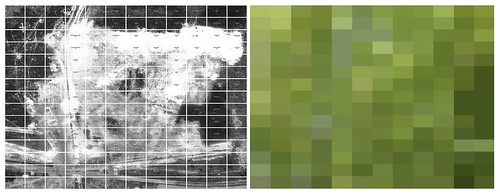
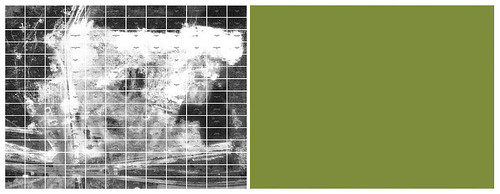
The image below shows (on the left) an earlier work about Belzec (1 to the power of 500,000) from 2010, and on the right, what would be a video (using the same number of squares) derived from the video filmed at Belzec in 1999.

Snow

Snow

Filed Under: Holocaust Tagged With: Belzec, Death Camps, Empathy, Holocaust, Snow, Video, WWII

Belzec Video: Snow 5

June 18, 2011 by Nicholas Hedges

The same idea as before applied to footage of trees at Belzec. The number of squares used is the same as an earlier work.

Filed Under: Holocaust, Trees Tagged With: Belzec, Death Camps, Empathy, Holocaust, Snow, Video, WWII

Belzec Video: Snow 4

June 18, 2011 by Nicholas Hedges

Video version of that described in the previous entry regarding this project.

Filed Under: Holocaust Tagged With: Belzec, Death Camps, Empathy, Holocaust, Snow, Video, WWII

Belzec Video: Snow 3

June 18, 2011 by Nicholas Hedges

What interests me about the video footage from the archaeological dig at Belzec (1999) is the sense of colour and movement. Often, when one is researching the Holocaust and sites like Belzec, most of the imagery one encounters is black and white and often still (although of course there is a great deal of moving footage as well).

As I’ve said, it’s difficult, given the quality of the footage, to make anything that would resemble a narrative of the investigation carried out there. So taking the idea of colour and movement as something I wanted to work with, I decided to process the video and to use a mosaic filter to reduce the image to pure forms.

When I was an undergraduate in the early 1990s, I produced a series of paintings based on this idea in a work entitled ‘A Single Death is a Tragedy, a Million Deaths is a Statistic.’ I was looking at the idea of anonymity and the past as anonymous (something which I’m still looking at today) reducing the image of a man, through a series of canvases to a single coloured pixel.

One of the ways of understanding an event as horrific as the Holocaust on an empathetic level (as far as is possible) is through understanding that the past was once the present that what happened in places such as Belzec happened when the past was now. When I sit here now and look out the window, I see the trees move, I see their colours, I see the sky, the clouds drifting and so on. I see movement and colour.

Whenever I look at images of the past, especially those in black and white, I try to imagine the scene as if it was now. I colour it, I imagine what happened immediately after the shutter was released. The smallest details become especially important. When I myself visited Belzec in 2007, I was aware of the world moving all around me, of the trees especially; of the sounds they made and the colour. Putting this together with what I knew had happened there, enabled me in some small way to empathise with those who died.

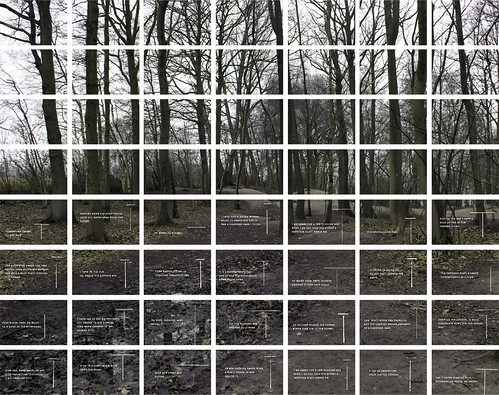
The stills below are taken from the processed video and even though they reduce the place to pixels (and therefore render it anonymous) there is something about the individual squares of colour which serve somehow to represent both the anonymous individual and the nownes of the present.

Mosaic Stills

Mosaic Stills

Mosaic Stills

Filed Under: Holocaust, Trees Tagged With: Belzec, Colour, Death Camps, Empathy, Holocaust, Snow, Video, WWII

Belzec Video: Snow 2

June 17, 2011 by Nicholas Hedges

Edited footage shot in 1999 at the site of the former Belzec Death Camp in Poland. The footage is of very poor quality and as an artist, I’m looking at how it might be used in my own work.

Filed Under: Holocaust Tagged With: Belzec, Death Camps, Empathy, Holocaust, Snow, Video, WWII

Belzec Video: Snow

June 17, 2011 by Nicholas Hedges

About two years ago I was given recordings of an archaeological investigation at the site of the Belzec Death Camp in Poland (1999). These investigations were carried out prior to the construction of the memorial there and my task was to edit the videos into something that could be seen as a narrative of those events.

The videos however were less than brilliant and any documentary-type video was going to prove impossible. However, I wanted to work with the video in some way or another and in 2010, as part of Holocaust Memorial Day, I exhibited a number of images based in part on the original video.

This year, I want to make a piece based on the video and the stills I exhibited in 2010. The initial idea is to capture all the pieces of ‘snow’ from the recordings and to arrange them in a sequence. The ‘snow’ represents the end of something, and it’s the idea of something ending which interests me as regards this piece.

Eventually I will develop the video using the colour/documentary footage on the tapes, intercutting them with the ‘snow’ elements. I will put up extracts of each stage as and when they’re complete.

Below is a short extract of the snow sequence.

Filed Under: Holocaust Tagged With: Belzec, Death Camps, Empathy, Holocaust, Snow, Video, WWII

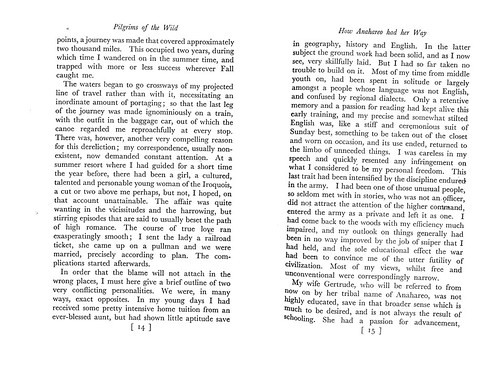
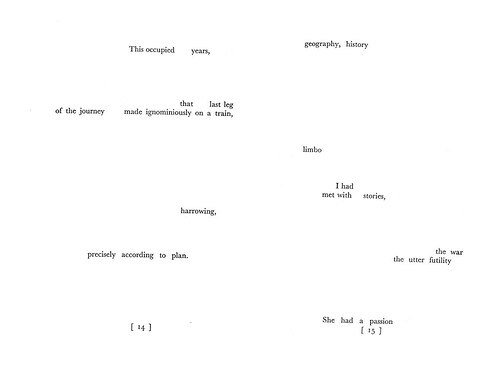
Heavy Water Sleep: Pages 14 & 15

June 17, 2011 by Nicholas Hedges

Original Pages

14-15

Version 1

14-15 [17.06.11]

Version 2

14-15 Version 2

Filed Under: Heavy Water Sleep, Holocaust Tagged With: Heavy Water Sleep, Holocaust, Text Work, WWII

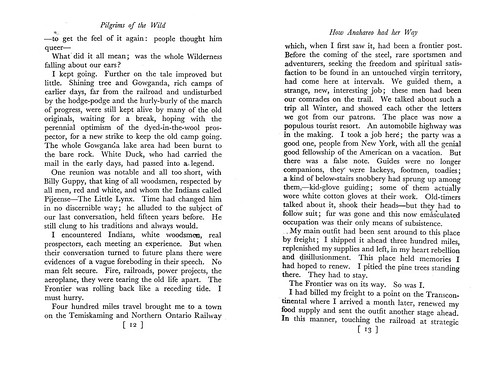
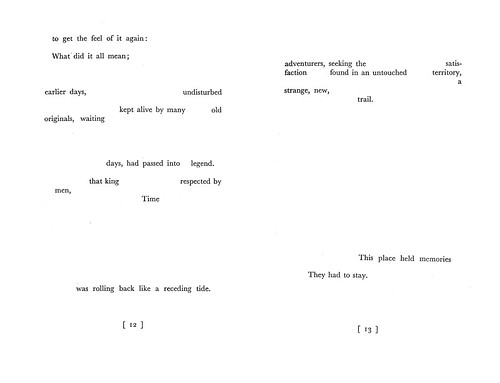
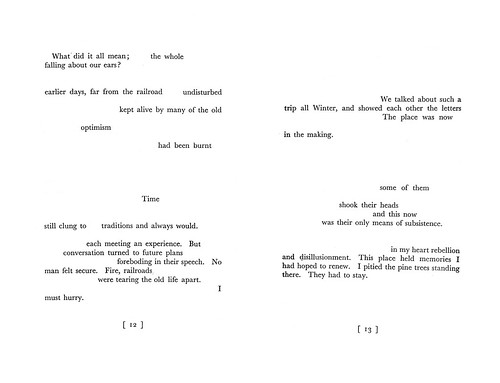
Heavy Water Sleep: Pages 12 & 13

June 14, 2011 by Nicholas Hedges

Original Version

12-13 Original Version

Version 1

12-13 Version 1

Version 2

12-13 Version 2

Filed Under: Heavy Water Sleep, Holocaust Tagged With: Heavy Water Sleep, Holocaust, Text Work, WWII

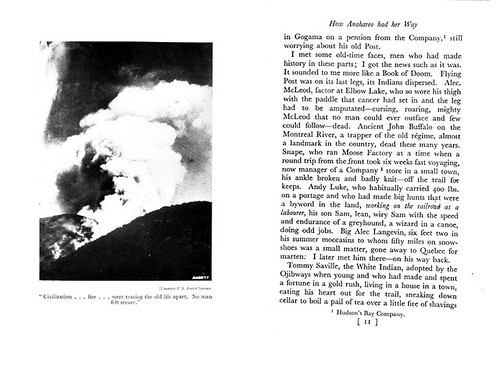
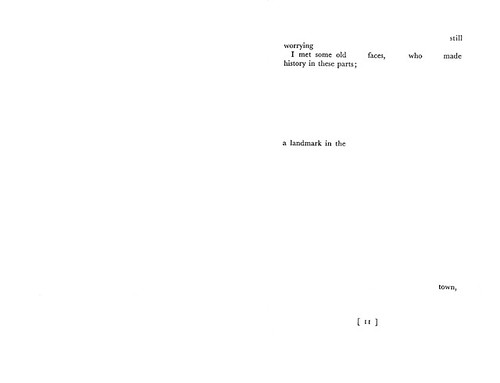
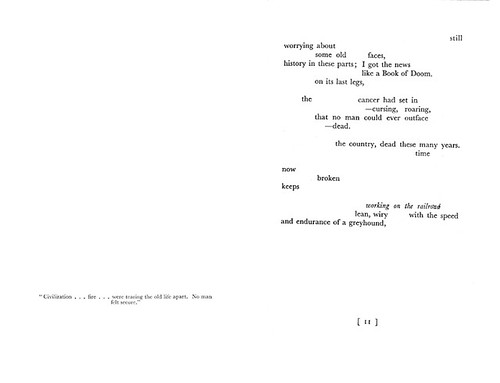
Heavy Water Sleep: Page 11

June 8, 2011 by Nicholas Hedges

Original Version

11

Version 1

11

Version 2

11

Filed Under: Heavy Water Sleep, Holocaust Tagged With: Heavy Water Sleep, Holocaust, Text Work, WWII

Heavy Water Sleep: Pages 10 & 11

January 12, 2011 by Nicholas Hedges

Original Version

Version 1

Version 2

To see other pages from this project please click here.

Filed Under: Heavy Water Sleep, Holocaust Tagged With: Heavy Water Sleep, Holocaust, Text Work, WWII

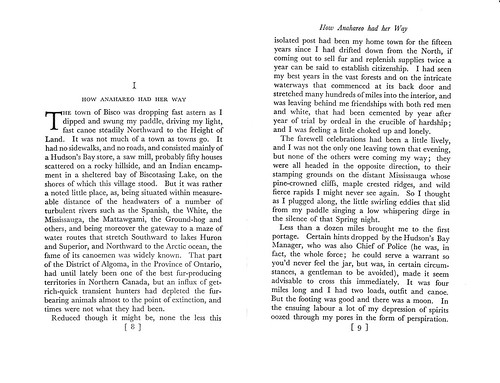
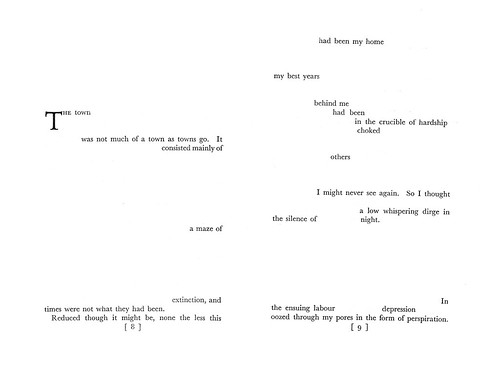
Heavy Water Sleep: Pages 8 & 9

December 29, 2010 by Nicholas Hedges

Original Version

08-09

Version 1

08-09 [29-12-2010]

Version 2

08-09

Filed Under: Heavy Water Sleep, Photography Tagged With: Heavy Water Sleep, Holocaust, Photographs, Text Work, WWII

  • 1
  • 2
  • 3
  • 4
  • Next Page »

© Nicholas Hedges 2024

  • Facebook
  • Instagram
  • Twitter
  • YouTube

Copyright © 2025 · Outreach Pro on Genesis Framework · WordPress · Log in