Nicholas Hedges

Art, Writing and Research

  • Amazon
  • Behance
  • Facebook
  • Instagram
  • Pinterest
  • YouTube
  • Art
    • Digital
    • Drawing
    • Grids
      • Correspondence
      • The Wall
      • The Tourist
    • Ink on paper
      • Shadow Calligraphy
    • Installation
      • Murder
      • Echo
    • Painting
    • Patterns
    • Mixed Media
    • Photographic installation
      • St. Giles Fair 1908
      • Cornmarket 1907
      • Headington Hill 1903
      • Queen Street 1897
    • Research/Sketches
    • Stitched Work
      • Missded 1
      • Missded 2
      • Missded 3
      • Missded 4
    • Text Work
  • Blogs
    • Family History
    • Goethean Observations
    • Grief
    • Light Slowed But Never Stilled
    • Lists
    • Present Empathy
    • Shadow Calligraphy
    • Trees
    • Time
    • Walking Meditations
  • Video
  • Photography
    • Pillars of Snow
    • Creatures
    • The Trees
    • Snow
    • St. Giles Fair 1908
    • Cornmarket 1907
    • Headington Hill 1903
    • Queen Street 1897
    • Travel
  • Illustration and Design
  • Music
  • Projects
    • Dissonance and Rhyme
    • Design for an Heirloom
    • Backdrops
    • Shadow Calligraphy
  • Exhibitions
    • A Line Drawn in Water
      • Artwork
    • A Line Drawn in Water (Blog)
    • Mine the Mountain 3
      • Artwork
    • Mine the Mountain 2
      • Artwork
      • The Wall
    • The Woods, Breathing
      • Artwork
    • Snow
      • Artwork
    • Echo
      • Artwork
    • Murder
      • Artwork
    • The Tourist
    • Dreamcatcher
    • Mine the Mountain
      • Artwork
      • The Tourist
    • M8
    • The Gate
    • Creatures
      • Artwork
    • Residue
      • Artwork
    • A visit to Auschwitz
      • Artwork
  • Me
    • Artist’s Statement

War and The Pastoral Landscape

January 30, 2014 by Nicholas Hedges

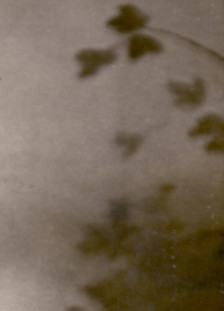
I’ve been thinking these last few weeks about a new body of work based on the First World War. For a long time – as will be evident from my blog – I’ve been looking at ways of using the backdrops of numerous World War I postcards.

A quote from Paul Fussell has been especially helpful in this regard.

“…if the opposite of war is peace, the opposite of experiencing moments of war is proposing moments of pastoral.”

The images on the backdrops are these proposed moments.

As a contemporary artist living so long after the war, it is of course impossible for me to create works about the war itself. What I can do however is comment on my relationship to the war (and those affected by it) by creating scenes – pastoral scenes – which use as their starting point the backdrops of World War I postcards.

The pastoral will, therefore, be articulated through the language of war.

These pastoral images will, predominantly, be woodscapes based on places I have visited over the last few years including Hafodyrynys (where my great-great-uncle, Jonah Rogers (1892-1915) grew up), Verdun and the Somme. They might contain  – to quote Rilke – ‘…temple columns, ruins of castles’ as per the slightly less pastoral backdrops. They will be devoid of people; the soldiers absent as if they had melted into the backdrops – as if these pastoral scenes represent the Keening landscape of Rilke’s Duino Elegies.

As I’ve written before: it is this absence which the trees express so silently, so eloquently. As Rilke so perfectly puts it:

‘Look, trees exist.
The houses we live in continue to stand. Only we
pass away like air traded for air and everything
conspires to maintain silence about us, perhaps
half out of shame, half out of unspeakable hope.’

The woods I paint will be based, as I’ve said, on those places I have visited as well as those idealised scenes in front of which the soldiers stand in the postcards. They will be – as Richard Hayman puts it – woods “poised between reality and imagination…” – shame and unspeakable hope.

Again as I’ve written before: After the war, the sense of emptiness must have been everywhere. Every insignificant moment – barely acknowledged before the war – now pregnant with a sense of incomprehensible loss. The world, outwardly the same, had shifted just a little, but it had taken the lives of millions to push it there.

There is in this text a sense of absence but also of movement, of continuation – however slight or small (something I want to record in my work). And there’s a link between this and a quote from William Wordsworth who wrote in his Guide to the District of the Lakes: we can only imagine ‘the primeval woods shedding and renewing their leaves with no human eye to notice or human heart to regret or welcome the change.’ I somehow want to turn this quote on its head and borrow from Rilke, who in his Duino Elegies describes the towering trees of tears. I want to paint scenes where there are no people, but in which their absence is recorded, primarily by the trees silently remembering.

“The painter sees the trees, the trees see the painter.”
Filed Under: Paintings, Trees Tagged With: absence, Paintings, Pastoral, Rilke, Silence, The Trees, Trees, Wordsworth, World War I, WWI

Shadows 3

July 7, 2013 by Nicholas Hedges

I was looking at something recently which made me think of the work I’ve been exploring around the backdrops used in World War One postcards, such as that below:

WW1 Backdrops
The idea of movement has played a key part in my ongoing research, and I’ve been thinking for some time of giving these backdrops a sense of movement which, I realised I could do by videoing the shadows cast by trees onto a canvas, as per the video below.

Another shadow is that in the photograph below, taken on the stairwell of William Wordsworth’s school in Hawkshead, in the Lake District. The shadow is something he might well have seen in that very same place over 200 years ago and as such, is something that is simultaneously both ancient and fleeting – much like history itself. 

SAM_2150.jpg
History of course comprises events that are by their nature transient. A shadow is also an everyday occurrence – something quite insignificant; and yet behind every significant historical event – including those of our own personal histories – lies a vast, incomprehensible network of everyday events. It is mind-blowing to think that every one of my ancestors had to lead their lives exactly as they did in order for me to be born me. From the time (literally) they got up every day, to when they went to bed, everything they did in between had to be as it was. One step out of place and I would not be here. 

Filed Under: Trees, World War I Tagged With: Shadows, The Trees, Trees, Wordsworth, World War I, WWI, WWI Postcards

Wordsworth and The Other

March 7, 2010 by Nicholas Hedges

On my journey back from Nottingham yesterday, I listened to a podcast of In Our Time about William Wordsworth’s The Prelude. Whilst listening to one of the panel talking (Stephen Gill) I was struck by his reading of a particular passage and what he said about it thereafter. The passage was from Book II of the poem and is as follows:

The garden lay
Upon a slope surmounted by the plain
Of a small Bowling-green; beneath us stood
A grove; with gleams of water through the trees
And over the tree-tops; nor did we want
Refreshment, strawberries and mellow cream.
And there, through half an afternoon, we play’d
On the smooth platform, and the shouts we sent
Made all the mountains ring. But ere the fall
Of night, when in our pinnace we return’d
Over the dusky Lake, and to the beach
Of some small Island steer’d our course with one,
The Minstrel of our troop, and left him there,
And row’d off gently, while he blew his flute
Alone upon the rock; Oh! then the calm
And dead still water lay upon my mind
Even with a weight of pleasure, and the sky
Never before so beautiful, sank down
Into my heart, and held me like a dream.

Stephen Gill said of this passage: “look at the language of this, it’s all about your body being taken over by the outside world, the dead still water lays upon thy mind, the sky sinks down into my heart and the pleasure of it all is a weight.”

I was struck by this passage and commentary as it seems to parallel the notion of the embodied mind; a corporeal consciousness engaging with the world through the physical body.

I bought a copy of The Prelude and read the first few lines which served to illustrate this point further:

Oh there is a blessing in this gentle breeze
That blows from the green fields and from the clouds
And from the sky: it beats against my cheek
And seems half conscious of the joy it gives.

The following passage is a lovely description of the act of wayfaring:

Whither shall I turn
By road or pathway or through an open field,
Or shall a twig or any floating thing
Upon a river, point me out my course.

In a piece I wrote on my website about history, I wrote the following:

In his book The Materiality of Stone,  Explorations in Landscape Phenomenology, Christopher Tilley writes: ‘The painter sees the tree and the trees see the painter, not because the trees have eyes, but because the trees affect, move the painter, become part of the painting that would he impossible without their presence. In this sense the trees have agency and are not merely passive objects. Dillon comments: “The trees ‘see’ the painter in a manner comparable to that in which the mirror ‘sees’ the painter: that is, the trees, like the mirror, let him become visible: they define a point of view on him which renders visible for him something that otherwise would remain invisible – his outside, his physiognomy, his carnal presence… The trees and mirror function as Other.”’

I am interested in how the landscape remembers the people it ‘sees’ and I find this ‘Other’ everywhere in Wordsworth’s poetry. Again in Book I of The Prelude.

How Wallace fought for Scotland, left the name
Of Wallace to be found like a wild flower,
All over his dear Country, left the deeds
Of Wallace, like a family of Ghosts,
To people the steep rocks and river banks

In Lines Written A Few Miles Above Tintern Abbey, Wordsworth addresses his sister Dorothy with the following words:

Therefore let the moon
Shine on thee in thy solitary walk;
And let the misty mountain-winds be free
To blow against thee: and, in after years,
When these wild ecstasies shall be matured
Into a sober pleasure; when thy mind
Shall be a mansion for all lovely forms,
Thy memory be as a dwelling-place
For all sweet sounds and harmonies; oh! then,
If solitude, or fear, or pain, or grief,
Should be thy portion, with what healing thoughts
Of tender joy wilt thou remember me,
And these my exhortations! Nor, perchance,
If I should be where I no more can hear
Thy voice, nor catch from thy wild eyes these gleams
Of past existence, wilt thou then forget
That on the banks of this delightful stream
We stood together

I like to think of this poem and this passage as addressing nature herself, that great ‘Other’ which remembers those whom she has seen.

Filed Under: Poetry, Trees Tagged With: Christopher Tilley, Phenomenology, Poetry, The Prelude, Wordsworth

© Nicholas Hedges 2024

  • Facebook
  • Instagram
  • Twitter
  • YouTube

Copyright © 2025 · Outreach Pro on Genesis Framework · WordPress · Log in