Nicholas Hedges

Art, Writing and Research

  • Amazon
  • Behance
  • Facebook
  • Instagram
  • Pinterest
  • YouTube
  • Art
    • Digital
    • Drawing
    • Grids
      • Correspondence
      • The Wall
      • The Tourist
    • Ink on paper
      • Shadow Calligraphy
    • Installation
      • Murder
      • Echo
    • Painting
    • Patterns
    • Mixed Media
    • Photographic installation
      • St. Giles Fair 1908
      • Cornmarket 1907
      • Headington Hill 1903
      • Queen Street 1897
    • Research/Sketches
    • Stitched Work
      • Missded 1
      • Missded 2
      • Missded 3
      • Missded 4
    • Text Work
  • Blogs
    • Family History
    • Goethean Observations
    • Grief
    • Light Slowed But Never Stilled
    • Lists
    • Present Empathy
    • Shadow Calligraphy
    • Trees
    • Time
    • Walking Meditations
  • Video
  • Photography
    • Pillars of Snow
    • Creatures
    • The Trees
    • Snow
    • St. Giles Fair 1908
    • Cornmarket 1907
    • Headington Hill 1903
    • Queen Street 1897
    • Travel
  • Illustration and Design
  • Music
  • Projects
    • Dissonance and Rhyme
    • Design for an Heirloom
    • Backdrops
    • Shadow Calligraphy
  • Exhibitions
    • A Line Drawn in Water
      • Artwork
    • A Line Drawn in Water (Blog)
    • Mine the Mountain 3
      • Artwork
    • Mine the Mountain 2
      • Artwork
      • The Wall
    • The Woods, Breathing
      • Artwork
    • Snow
      • Artwork
    • Echo
      • Artwork
    • Murder
      • Artwork
    • The Tourist
    • Dreamcatcher
    • Mine the Mountain
      • Artwork
      • The Tourist
    • M8
    • The Gate
    • Creatures
      • Artwork
    • Residue
      • Artwork
    • A visit to Auschwitz
      • Artwork
  • Me
    • Artist’s Statement

Absence II

December 17, 2014 by Nicholas Hedges

History necessitates the consideration of our own non-existence. To imagine the distant past (the past before I was born) is to try and see the world, not only as if I didn’t yet exist, but as if, in all probability, I might never exist at all. With this in mind, the past, re-imagined, becomes a teeming and terrifying space where every object and building, every man, woman and child, every word spoken or written, every intention and gesture, indeed, everything is excited by a vertiginous sense of calamity. Objects in museums, remnants of ancient buildings, old family photographs, all oscillate with this potential, which, although avoided – inasmuch as I’m alive to observe them in the present moment – hold up a mirror to reflect this past forwards, showing me, in the glass, the catastrophe of my future death. As Roland Barthes writes in Camera Lucida:

“I observe with horror an anterior future of which death is the stake.”

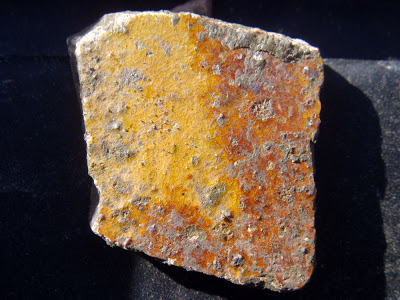
Perhaps this is why I find it strange, handling something that existed long before my birth. It’s as if when looking, for example at a mediaeval ceramic pot, or a single shard (as pictured below), that the shape, colour and decoration of that pot, created at a time when I did not exist, were essential aspects of my coming-into-being (I observe with horror how close I came to never existing). And if I can handle the object, then my body feels that horror; it feels, in effect, its own absence. (It’s strange, but the chances of there being humans 100, 200, 500 years from a given point in time is very high – barring any massive disaster. But the chances of any of those individuals being who they are is almost nil.)
As I wrote in a previous blog regarding old photographs:

“It seems to me that I’m responding to these images kinaesthetically; my mind, memories and experience read them, which is why perhaps I find often these old colour photographs – while amazing – so unsettling. My mind reads them, my body feels them and yet when the image was taken, I did not exist.”

(There is, it seems, something analogous between the distant past as seen in a colour photograph and the colours in the shard of pottery (above). What that is, I don’t yet know…)

Old objects are mirrors, reflecting what Georg Lukács called the ‘not now and not here’ whether that be the past or the future. They have a power and are possessed of a supreme indifference to us the beholder. I’m reminded here of a passage in Max Beerbohm’s Zuleika Dobson:

“Strange that to-night it [Merton College Tower] would still be standing here, in all its sober and solid beauty—still be gazing, over the roofs and chimneys, at the tower of Magdalen, its rightful bride. Through untold centuries of the future it would stand thus, gaze thus. He winced. Oxford walls have a way of belittling us; and the Duke was loth to regard his doom as trivial.”

I know that wince. It’s the same as Barthes’ horrified observation. In the past the chances of me (and indeed everyone) ever existing were infinitesimally small. Now that I do exist, I wince because I know that death is certain.

In his book ‘Other People’s Countries’, Patrick McGuinness writes:

“Of course, when you try to imagine yourself somewhere you don’t know and have never been, you can’t do it — your mind slides off the surface of the images you conjure up like a finger on wet glass; can’t get any sort of purchase. It’s much easier to imagine the inverse: the place you know well without you. It hurts more that way around too, especially if you imagine the place you know without you while you’re still there — you darken the edges of your own vision, put a black border around your days and they become like leaves curling inwards, dying from the outside in. Even as you live them forwards, you’re looking at them from behind, seeing them as they would be if they were over. I spent most of my childhood with a foretaste of its pastness in my mouth.”
Filed Under: Uncategorized Tagged With: Georg Lukacs, Rilke, Roland Barthes

Gardens

August 15, 2014 by Nicholas Hedges

In Camera Lucida, Roland Barthes describes the concept of punctum thus:

“…it is this element which rises from the scene, shoots out of it like an arrow, and pierces me. A Latin word exists to designate this wound, this prick, this mark made by a pointed instrument… punctum; for punctum is also: sting, speck, cut, little hole – and also a cast of the dice. A photograph’s punctum is that accident which pricks me (but also bruises me, is poignant to me).”

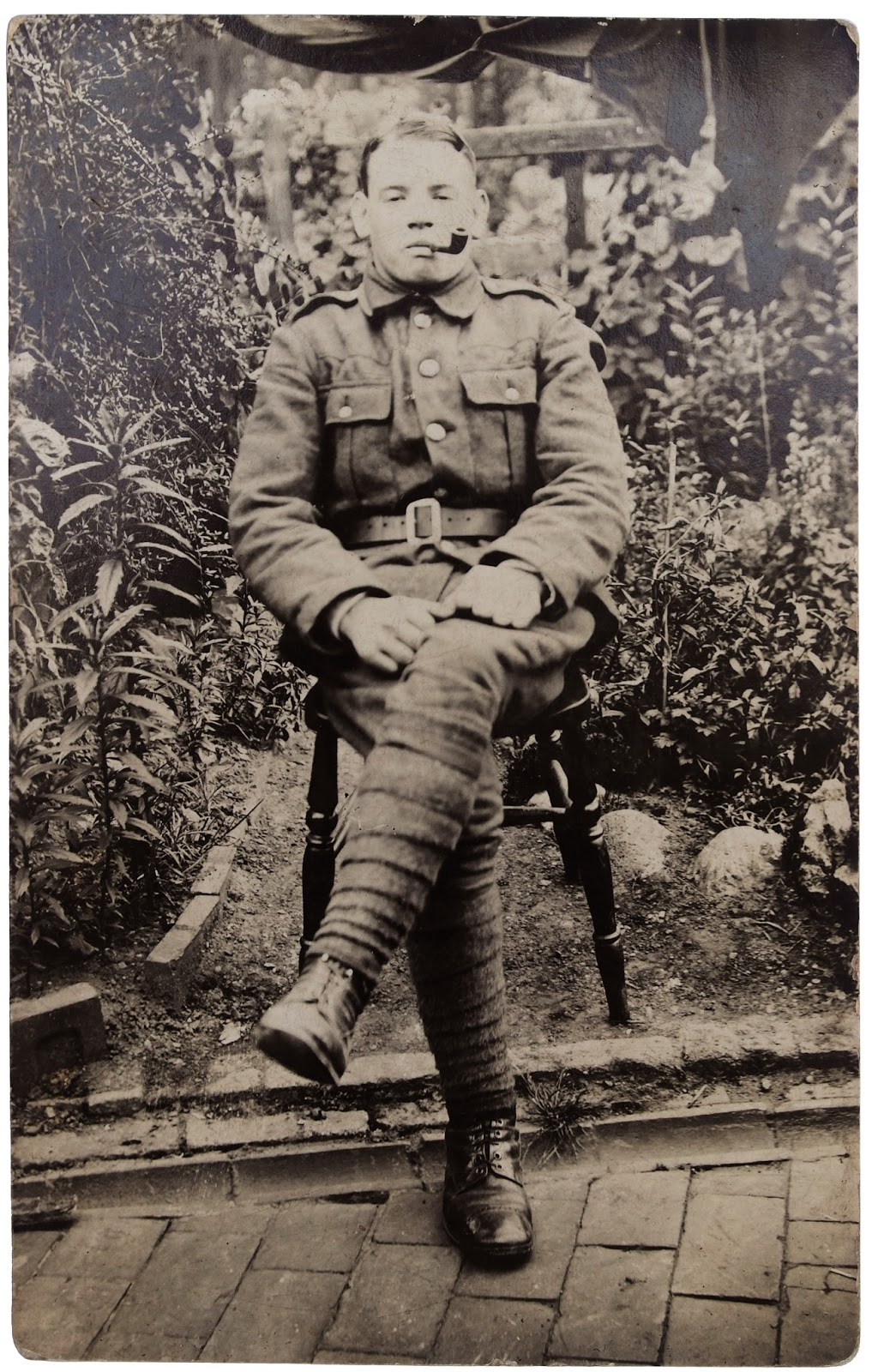
Looking again at the photo of Jonah Rogers, I became aware of something which, as Barthes might have put it, ‘pricked me’.

This is the photo…

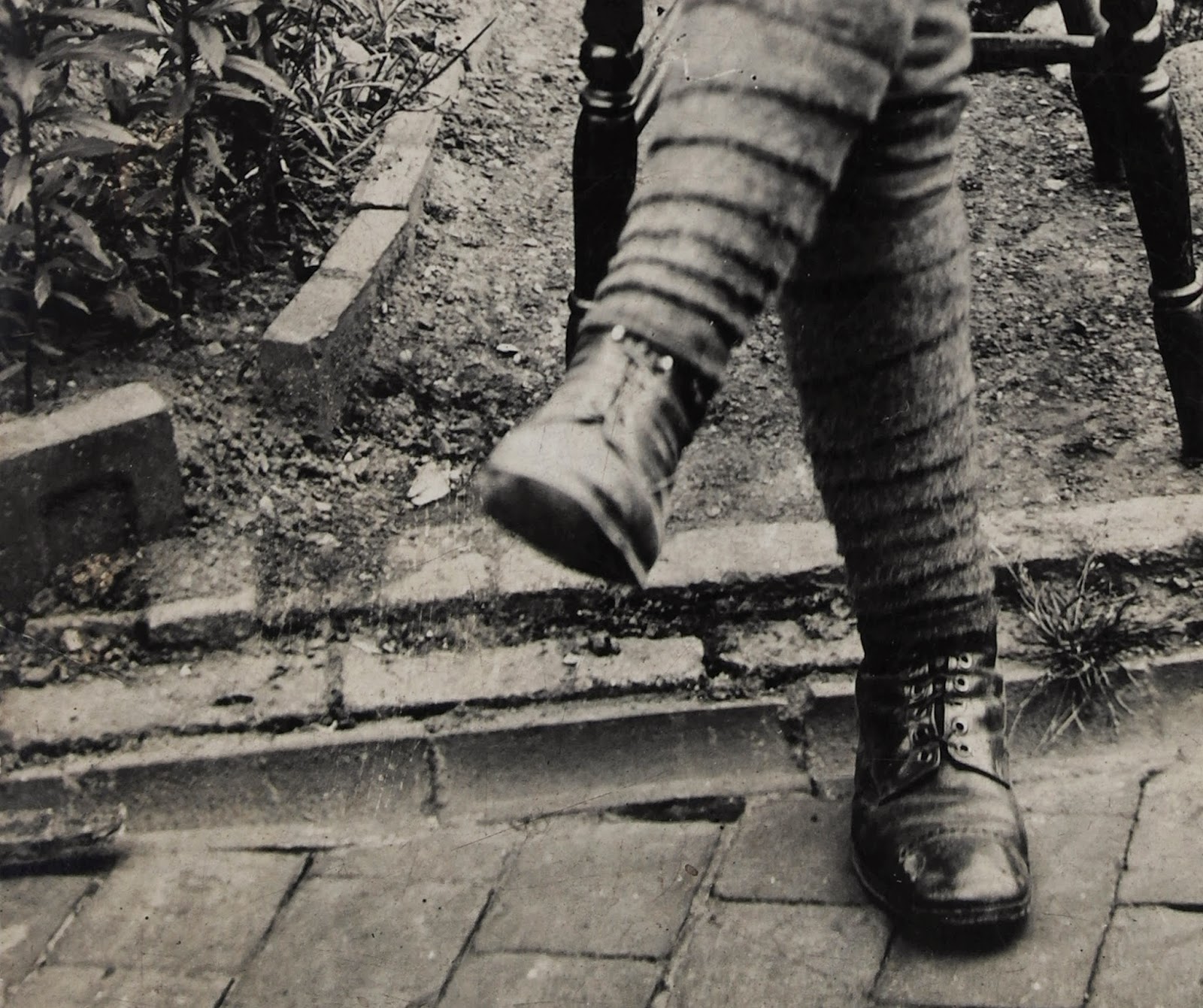
…and here is the ‘punctum‘.

In actual fact there are two things about this detail which interest me.

First, the left foot.

The fact it’s blurred implies that it was moving when the picture was taken. Otherwise Jonah appears stock still, unnaturally rigid, his hands curled into fists on his lap. One detects through this foot a sense of anxiety – not so much because of what he’d have to face on the battlefield, but rather because he was having his picture taken; he doesn’t seem comfortable in front of the camera – his foot is constantly moving. The pipe in his mouth also seems a little incongruous – especially when one considers those clenched fists; his hands look as if they’ve never held a pipe before. It’s almost as if someone has placed the pipe in his mouth.

The second thing is the ‘missing’ brick in the flower bed.

That there must have been a brick implies a passage of time between when the brick was laid and when it became dislodged – kicked perhaps out of place. That brick hasn’t been replaced, the flower bed and path have tumbled into one another and time has fallen from the photograph like the mud and mulching leaves. Or perhaps there was never a brick at all and the gap is some sort of conduit for water – the gutter running across the photograph implies this might be the case. This would still suggest a sense of time bound up in the thinking of whosoever laid the bricks in the garden, and indeed the flow of water itself. Whatever the gap is – drain or accident – both possibilities point to a time before the picture was taken; they give the photograph – to use an apt metaphor – temporal roots.

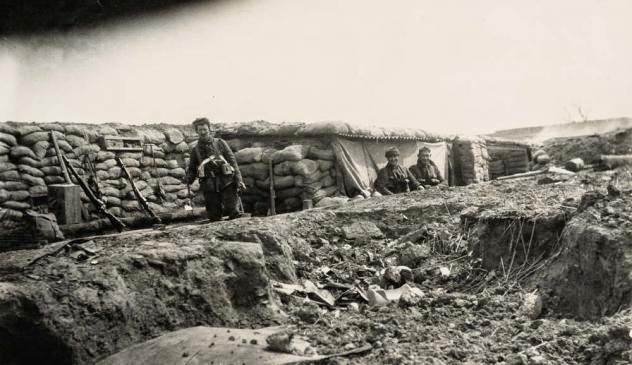
Jonah was killed in 1915 in the second battle of Ypres and I can’t help drawing a parallel between the soil of the garden and the infamous mud of the trenches such as those pictured below in which some of the 2nd Monmouthsires (Jonah’s battalion) can be seen.

This then brings me to the Paul Fussell quote I often return to:

“…if the opposite of war is peace, the opposite of experiencing moments of war is proposing moments of pastoral.”

I have for a time been thinking of the phrase ‘moments of pastoral’ and have come to regard it on a domestic level, i.e. moments of pastoral as experienced in a garden. I have always considered it vital, when establishing an empathetic link with those who died in the war, to consider their lives before the war. As I’ve written in a previous blog:

Neil Hanson, writing in ‘The Unknown Soldier’ talks of how, on the eve of the Battle of the Somme, the smell in the air was that of an English summer – of fresh cut grass; the smell – one could say – of memories; of childhood.

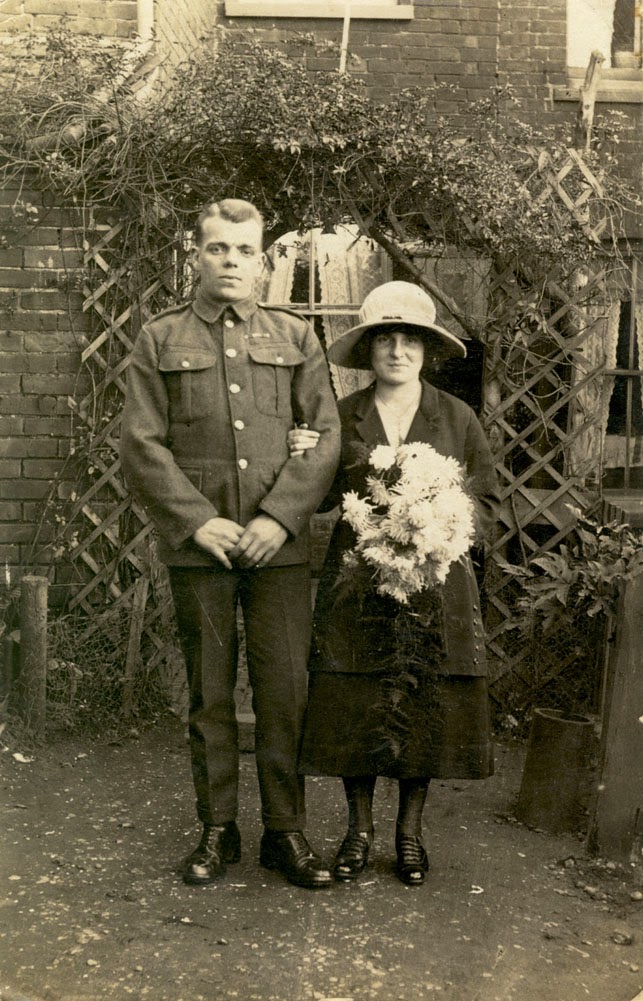
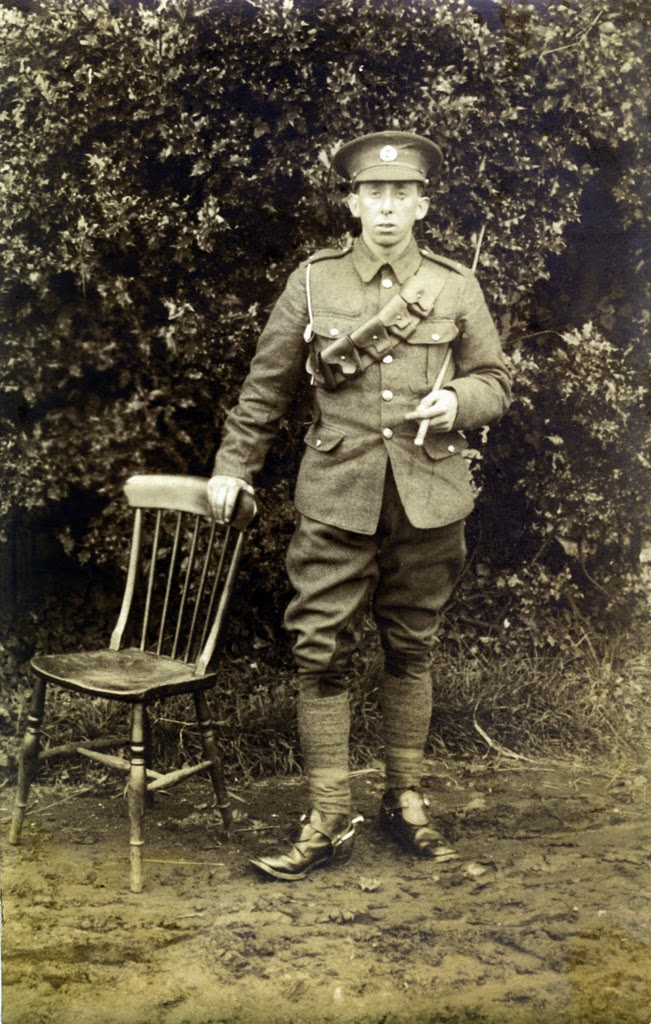
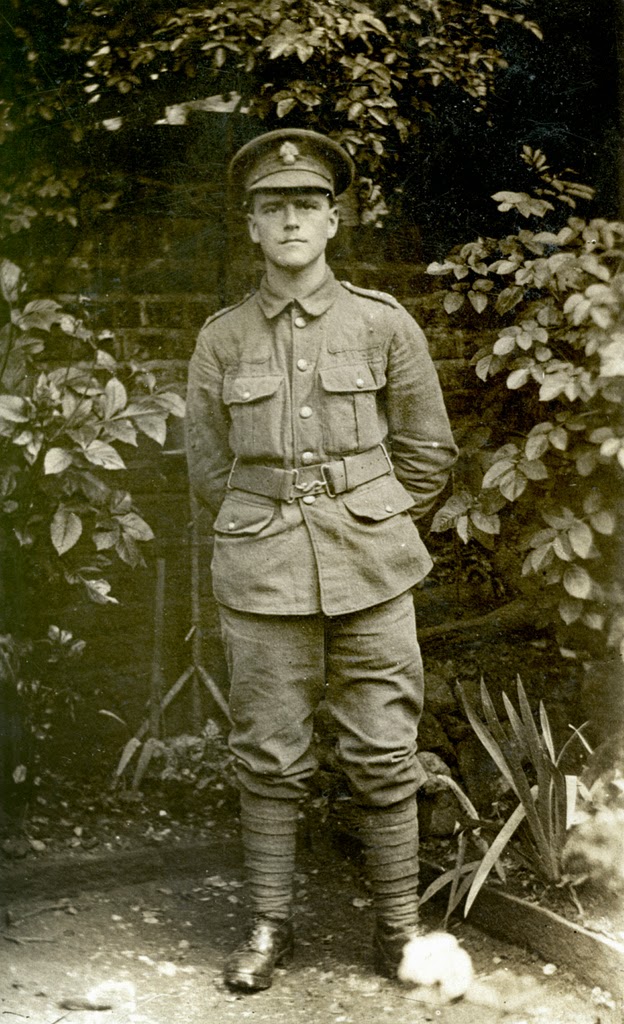
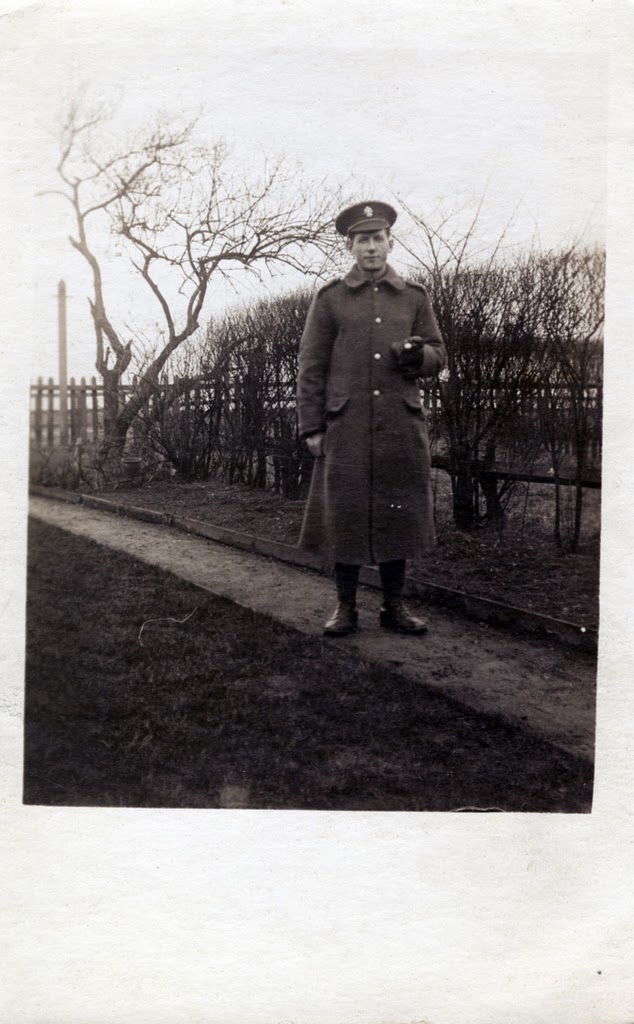
The garden then is a link to a time before the war and again this is reflected in some of the postcard portraits I have in my collection, where soldiers were photographed – prior to leaving – in their gardens.

I have always found these images especially poignant and have written about them before but there is something here I want to explore further; that is the empathetic link between ourselves and soldiers who fought and died in the war and the idea of the garden as a shared space of memory and experience, a conduit through which an empathetic link might be established.

Filed Under: Photography Tagged With: Gardens, Jonah Rogers, Pastoral, Photographs, Roland Barthes, WWI, WWI Postcards

© Nicholas Hedges 2024

  • Facebook
  • Instagram
  • Twitter
  • YouTube

Copyright © 2025 · Outreach Pro on Genesis Framework · WordPress · Log in