Nicholas Hedges

Art, Writing and Research

  • Amazon
  • Behance
  • Facebook
  • Instagram
  • Pinterest
  • YouTube
  • Art
    • Digital
    • Drawing
    • Grids
      • Correspondence
      • The Wall
      • The Tourist
    • Ink on paper
      • Shadow Calligraphy
    • Installation
      • Murder
      • Echo
    • Painting
    • Patterns
    • Mixed Media
    • Photographic installation
      • St. Giles Fair 1908
      • Cornmarket 1907
      • Headington Hill 1903
      • Queen Street 1897
    • Research/Sketches
    • Stitched Work
      • Missded 1
      • Missded 2
      • Missded 3
      • Missded 4
    • Text Work
  • Blogs
    • Family History
    • Goethean Observations
    • Grief
    • Light Slowed But Never Stilled
    • Lists
    • Present Empathy
    • Shadow Calligraphy
    • Trees
    • Time
    • Walking Meditations
  • Video
  • Photography
    • Pillars of Snow
    • Creatures
    • The Trees
    • Snow
    • St. Giles Fair 1908
    • Cornmarket 1907
    • Headington Hill 1903
    • Queen Street 1897
    • Travel
  • Illustration and Design
  • Music
  • Projects
    • Dissonance and Rhyme
    • Design for an Heirloom
    • Backdrops
    • Shadow Calligraphy
  • Exhibitions
    • A Line Drawn in Water
      • Artwork
    • A Line Drawn in Water (Blog)
    • Mine the Mountain 3
      • Artwork
    • Mine the Mountain 2
      • Artwork
      • The Wall
    • The Woods, Breathing
      • Artwork
    • Snow
      • Artwork
    • Echo
      • Artwork
    • Murder
      • Artwork
    • The Tourist
    • Dreamcatcher
    • Mine the Mountain
      • Artwork
      • The Tourist
    • M8
    • The Gate
    • Creatures
      • Artwork
    • Residue
      • Artwork
    • A visit to Auschwitz
      • Artwork
  • Me
    • Artist’s Statement

Childhood Landscapes

October 15, 2014 by Nicholas Hedges

‘I can see him now,’ my Nana told me, talking about her dad, ‘because he went up our garden over the road and the mountain started from there up… and he’d go so far up and he’d turn back and wave to us, and if we went out to play, our Mam would say, “you can go up the mountain to play…” but every now and then our Mam would come out in the garden and we had to wave to her to know that we were alright you know… always remember going up the mountain…’
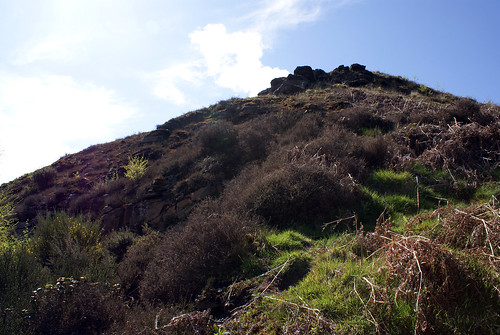
Hafodyrynys and Surrounds
Nana’s mountain

I interviewed my Nana in 2007, the year before she died. What she was describing was a scene from her childhood landscape in the years after the First World War. During the Second World War, a young boy called Otto Dov Kulka was a prisoner in Auschwitz-Birkenau. He recalls his childhood landscape thus:

“The colour is blue: clear blue skies of summer. Silver-coloured toy aeroplanes carrying greetings from distant worlds pass slowly across the azure skies while around them explode what look like white bubbles. The aeroplanes pass by and the skies remain blue and lovely, and far off, far off on that clear summer day, distant blue hills as though not of this world make their presence felt.”
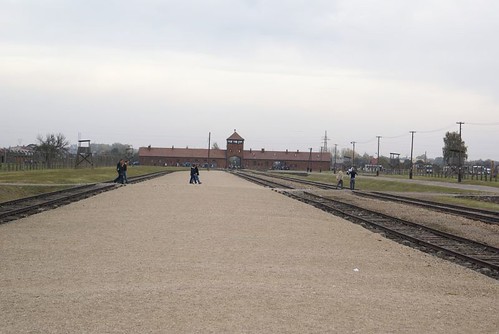
Auschwitz-Birkenau
Auschwitz-Birkenau

In previous blogs I have described my childhood landscapes, both real and imagined; most recently in the context of childhood landscapes pre World War I, this time of two girls who lived in what is now Bury Knowle Park in Headington, Oxford.
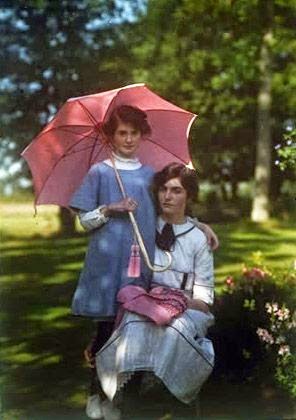
My childhood landscapes are bound up with journeys to and from my grandparents’ houses and in particular, my Nan’s garden (pictured below) also in Headington.
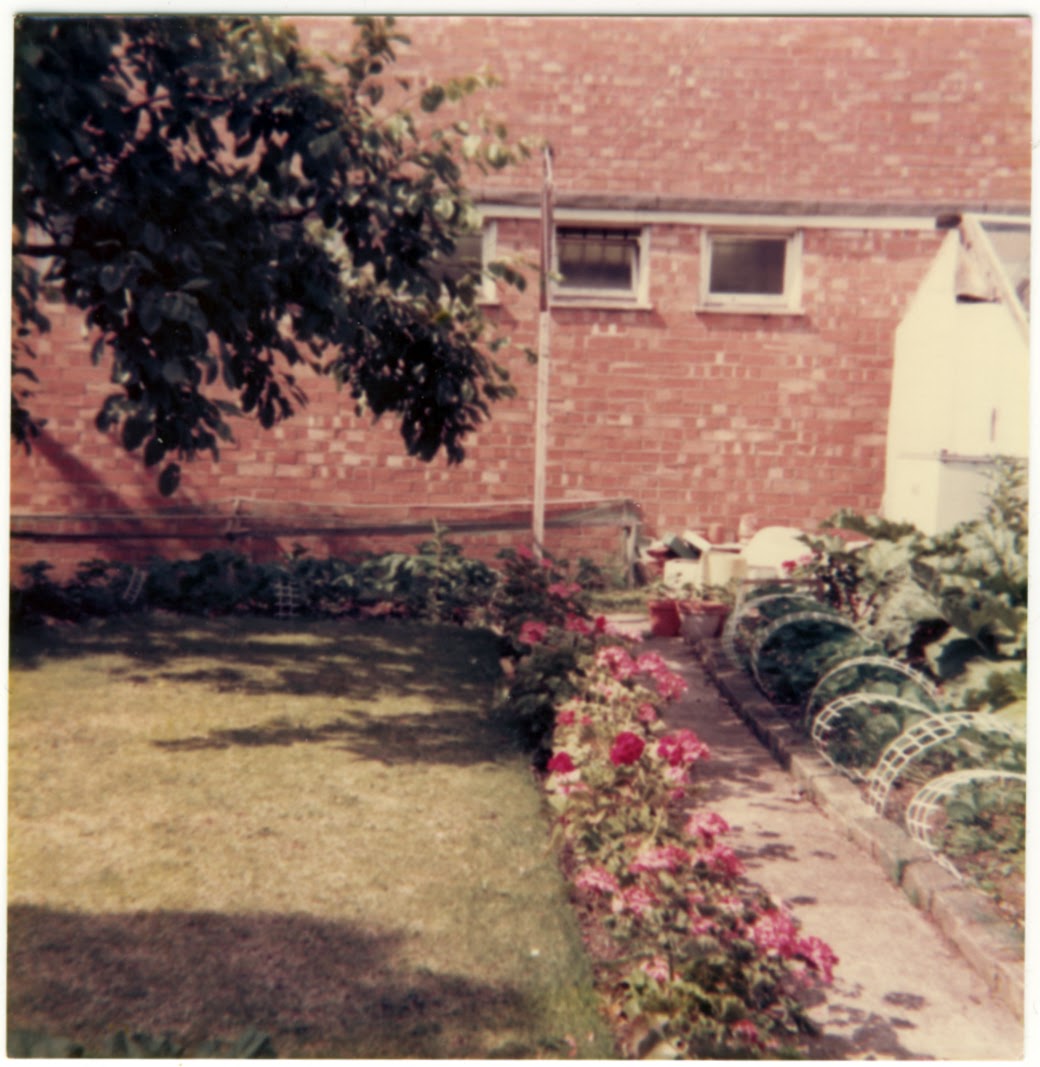
I have walked in all these places; in my grandparents’ garden; in Bury Knowle Park, on the ‘mountain’ in Wales and in Auschwitz. I spent many happy years in the garden of my childhood home (which has all but disappeared under a vast extension to the house).
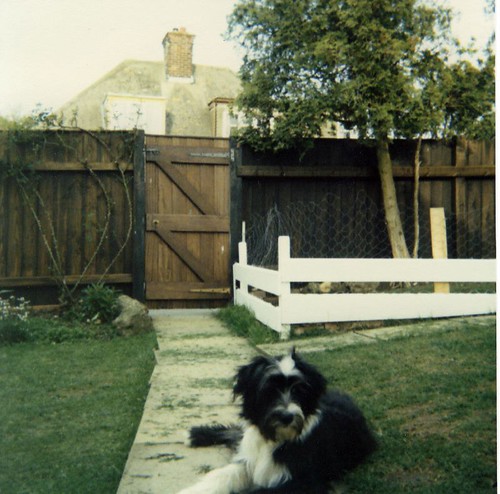
Sukey

Filed Under: Holocaust Tagged With: Bury Knowle Park, Childhood, Gardens, Holocaust, Imagined Landscapes, Landscape, Memory, Nana

Light and Sound

December 22, 2010 by Nicholas Hedges

Whilst updating the Family Tree section of my website, I listened again to part of an interview I recorded with my Nana in December 2007. She died just under a year later and the three hours I spent with her that afternoon, talking about her life have come to be amongst the most important I can remember. And whilst the content of our conversations were often moving, listening to it now, two years after her death, I began to think about how the act of listening to her, now that she is no longer with us affected me, comparing it to how I feel, when looking at photographs of those who have died. Does the difference between the two media, between light and sound, change the way we respond to the past? And if so, how?

Filed Under: Family History Tagged With: Family History, Family Jones, Interview, Jones, Nana

Waving Goodbye

May 11, 2010 by Nicholas Hedges

When I interviewed my Nana, a year before she died, she told me a story about her father who she remembered walking over what she called the mountain on his way to work. She said:

“I can see him now because he went up our garden over the road and the mountain started from there up… and he’d go so far up and he’d turn back and wave to us…”

That image of my great grandfather has stayed with me ever since, an image which seem to crystallise when I followed in his footsteps, walking from the back of my Nana’s old house in Hafodyrynys and up the slope of the ‘mountain’ as she used to call it.

Hafodyrynys and Surrounds

It was whilst reading The Duino Elegies by Rainer Maria Rilke, that I came upon the following passage:

“Who has twisted us this way round,
so no matter what we do we are always
in the position of one leaving? Just as,
on the last possible hill from which he can
glimpse his whole valley one final time,
he turns, stops there, he lingers –
so we live on, forever bidding goodbye.”

The image of my great grandfather, that which my Nana left me with, is almost exactly what Rilke has described in his poem. It isn’t just the image of him waving goodbye to his children, it’s also that of him saying goodbye to the world.

In his book, ‘The Past is a Foreign Country,’ David Lowenthal writes:

“‘Recognition does not always give us back the warmth of the past,’ writes Simone de Beauvoir; ‘we lived it in the present;… and all that is left is a skeleton.’ A long-ago scene recalled is ‘like a butterfly pinned in a glass case: the characters no longer move in any direction. Their relationships are numbed, paralysed.’ Her decaying ‘past is not a peaceful landscape lying there behind me, a country in which I can stroll wherever I please, and which will gradually show me all its secret hills and dales. As I was moving forward , so it was crumbling.’ Time’s erosion grievously afflicts what memories remain: ‘Most of the wreckage that can still be seen is colourless, distorted, frozen; its meaning escapes me.”

Filed Under: Family History Tagged With: David Lowenthal, Family History, Family Jones, Hafodyrynys, Jones, Nana, Rilke

Waving on the Mountain

December 7, 2007 by Nicholas Hedges

Yesterday I visited my paternal Grandmother and over a period of about three hours, talked with her about her childhood in South Wales and her early years in Oxford. All too often these days we don’t allow the old to speak; too often we try to speak for them, to tell them what they know (what we think they know) talking as if they are foreign and speaking at them slowly and loudly, as if that will help them ‘understand.’ I was keen with my Grandmother (Nana) to get her to just talk, and for her to make connections without my trying to prompt or ask too many questions.

As we get older, our brains lose connections, but sometimes things that may seem forgotten simply require a different map, another means of finding them, the longer way round – a longer path. Talking through events, one often stumbles upon something that leads somewhere else, a new route is found and that which was lost is rediscovered. But if we prompt too much things will remain obscured; forgotten.

Talking with my Grandmother was a very special experience and I wondered as I listened, when it was that she last spoke at length about her past? From memories of her father (who died in 1928), her Grandmother (born in 1864), to her own retirement, she took me on a journey from the mountains of Wales, to a public school in Cheltenham and on to the houses of Oxford, where she worked as a maid in the late 1920s and early 30s. But it was her reminiscences of her father which were particularly moving.

Through researching my family tree, I’ve got to know many of the names of family members, back as far as the beginning of the nineteenth century, but that, along with a few dates is all I know. My Grandmother wasn’t sure she’d be of any use to me in my research, but as I pointed out, her memories are worth their weight in gold. I can find names and dates, but it’s who these people were that matters most, and the only person who could help me was her.

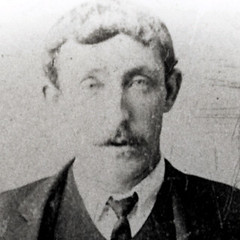
Below is a photograph of my Grandmother’s father (my Great Grandfather), Elias Jones.

Elias Jones

Born in Trevethin, Monmouthshire in 1882, he worked as a miner in the pit at Llanhilleth, a short distance away from where he lived with his wife Mary Jane and their five children, Ruth, Lillian (my Grandmother), Doll, Ray and George (one girl, Florence or Flossie, died aged 2 c.1918). With just a photograph, a name, dates and occupation, it’s difficult to surmise what he might have been liked. One tends to assume (unfairly) that miners in those days must have been – due to the harshness of their work – rather dour or surly people, but talking to my Grandmother, it became clear that as regards Elias, this couldn’t have been further from the truth. Below are a couple of extracts from our conversation.

On his walking to work:
“I can see him now, because he went up our garden over the road and the mountain started from there up… and he’d go so far up and he’d turn back and wave to us.”
On his being at home:
“I can remember now he would always help our Mam wash our hair on a Friday night… our Ruth would go first, she would wash it and our Dad would dry it and mine next…”
On his death:
“I can always remember the doctor in the room when we realised he wasn’t going to come through, he said ‘don’t grieve for him Mrs Jones, you know what he said to me, “if I can’t work for my wife and children I don’t want to stay.”‘ And he just passed away. “

Just these few, brief extracts tell me a great deal about the man in the photograph; a man who clearly loved his family and who through his working in the mines, succumbed to a disease of the lungs (possibly pneumoconiosis or ‘black lung disease’) at the age of just 42. And the image of him turning on the mountain to wave at his children below is one which will not only stay with me forever, but one I which would like to ‘explore’ in my forthcoming work. I had wanted to draw the outline of the mountain, but I also think it will be necessary to follow the route Elias Jones took, from his house, over the mountain to the pit at Llanhilleth.
Deaths in the mines (as well as deaths as a consequence of working them) were sadly nothing exceptional. And as my Grandmother poignantly explained:

“…when there was a death you know every blind in that street would be drawn, we knew directly we heard of a death the women would draw their blinds down and they would nearly all turn out to a funeral down there… Kind of almost took it in our stride you know, oh dear there’s another one gone, killed in the mines.”

Filed Under: Family History Tagged With: Elias Jones, Family History, Family Jones, Hafodyrynys, Jones, Nana

Family Tree

November 20, 2007 by Nicholas Hedges

With both my Grandmothers still with us (both were born in 1912), I’m very fortunate to have living connections with the late nineteenth century. When they talk about their childhoods and youth, they are describing a world which has always seemed completely alien to that in which we live today, and using one’s imagination, to go beyond that world, further back into the past, that place, the world, becomes stranger still. This world, when conceived within the imagination is like a fiction. In a talk I gave as part of my residency at OVADA in May 2007, I stated that:

“…as a child, I liked to create and map worlds; countries which I would build from fragments of the world around me; forests, mountains and plains – unspoilt landscapes. And in these worlds there would exist towns and cities, created from ‘the best bits’ of those I had visited. 

These invented worlds became, as I grew up, the ‘invented’ or imagined landscapes of Oxford’s past; landscapes that were – just as they still are – created from fragments, parts of the past which are still extant in the city; old buildings, walls, objects and so on. Between these structures, these fragments, I would fill the gaps, with my own imagination, with thoughts derived from my own experience. The city’s past and the past in general, as it exists within my mind, is then, to use the metaphor of cloning in Jurassic Park, a cloned dinosaur. The extant buildings, structures and objects within museums, are like the mosquitoes trapped inside the amber. They are broken strands of DNA. All that is required is for me to fill the gaps, and this I can do with my own DNA. I am in effect, the frog.”

I will return to the frog later.

All I knew prior to my research, was that part of my family, on my father’s side, came from South Wales and worked in the mines, and that my family on my mother’s side heralded from Reading. My paternal grandfather was always an Oxford man and his family had been in the area for generations. My maternal great-grandmother (born in 1878 and who I can remember) was said to have come from Suffolk and was the daughter of a farmer (Norfolk as it would transpire).

Researching the family tree quickly becomes, not so much obsessive, but rather, compulsive; necessary. The dead, and at that, the anonymous dead, come back to life and make themselves known to you, and, what is more compelling, one feels oneself become more solid, more flesh and blood than ever before; one begins to exist in four dimensions rather than simply three (as if we, in the present, are not really a part of time) becoming part of a network whose strings vibrate like those plucked on an old musical instrument – whose sound, although feint, can nonetheless be heard or even felt. It’s rather like plugging a short-wave radio into the vast network of cables that comprise the national grid, and listening to the distant voices of ancestors telling you who you are; crackling like the damp wood of a fire which will never quite go out.

What has particularly interested me, aside from the obvious personal interest in finding lost relatives (one is also taken aback by the sheer volume of living relatives one must have but which one doesn’t know about), is how the whole project fits in so precisely with what I have been doing with my artwork; finding and identifying with the anonymous dead buried in the traumas of history, placing myself in the spaces of the past which have witnessed the most terrible catastrophes – placing myself, in effect, in the panorama of history itself. Through doing this over the past year, history has become overwhelming, its incomprehensible size as impossible to grasp as the distance of the stars. But through locating myself in the personal panorama of family history, History itself becomes a little less overwhelming; events of the past become known through great-great grandmothers and fathers – they are personalised, and yet, with this list of names and dates and with this new geography of the past, dwelling as it does in the villages of Monmouthshire and Norfolk, Lincolnshire and Oxon, one’s own impossibility is augmented still further. What were the chances of my great-great grandfather, Jabez, meeting his wife Elizabeth (what were the chances of either of them being born) and then having their son Albert? What were the odds against him doing everything he did in life exactly as he did; meeting my great-grandmother Elizabeth and having my grandfather Norman? The further one goes back into the shadows of family history, the less likely and more impossible one becomes, and this heightens, to a dramatic effect, one’s sense of place in both time and space.
Again, from the talk I gave as part of my residency, I stated:

“This metaphor [the frog and the dinosaur] is interesting in that DNA patterns are, of course, unique to everyone. My DNA is different to everybody else’s as there’s is to mine. Therefore, using my imagination to plug in the gaps of the past, means that the ‘past’ will comprise large parts of my own experience; my dinosaur will contain elements of my own being. But although my DNA is unique, it is nonetheless derived from my own past, elements have been passed down by my ancestors from time immemorial. The code which makes me who I am, comprises parts of people I know now (parents and grandmothers), people I knew (grandfathers and great-grandmother) and people lost to the past altogether (great-great grandparents and so on) [people whose names have since I wrote this become so familiar I feel as if I knew them, or rather know them]. What interests me about this, is that, through stating above how ‘my dinosaur will contain elements of my own being’ I can now see that it will also comprise elements of hundreds – indeed thousands – of people, the majority of whom I will of course never know and who have been dead for centuries. I like to think therefore, that ‘my dinosaur’ and my imagination aren’t entirely unique.
The philosopher Henri Bergson says of the past:
‘I believe that our whole physical existence is something just like this single sentence… I believe that our whole past still exists.’
Given that DNA strands are made up of letters I found this quote particularly interesting.”

The further back in time we go, the less unique we become, at least in terms of our DNA, and therefore, our individual dinosaur, that subjective sense of History created from fragments of the past (objects, buildings etc.) is increaingly attenuated; less individual and less subjective, because the ‘DNA’ (our individual selves) with which we plug the gaps is derived from that of hundreds, indeed thousands of people. That very history we are seeking to build inside myself is already there. What is more, the further back we go, with each step and every generation, the wider the family net is thrown and the greater number our number of relatives. Things which happen to other people, things on the news and so on, could be happening to people with whom we share a common past; and indeed, the same is true of events in the past. Separated by time and space, we may in fact be linked by the very fact of existence.

Filed Under: Family History Tagged With: DNA, Family History, Imagined Landscapes, Landscape, Maps, Nan, Nana

© Nicholas Hedges 2024

  • Facebook
  • Instagram
  • Twitter
  • YouTube

Copyright © 2025 · Outreach Pro on Genesis Framework · WordPress · Log in