Nicholas Hedges

Art, Writing and Research

  • Amazon
  • Behance
  • Facebook
  • Instagram
  • Pinterest
  • YouTube
  • Art
    • Digital
    • Drawing
    • Grids
      • Correspondence
      • The Wall
      • The Tourist
    • Ink on paper
      • Shadow Calligraphy
    • Installation
      • Murder
      • Echo
    • Painting
    • Patterns
    • Mixed Media
    • Photographic installation
      • St. Giles Fair 1908
      • Cornmarket 1907
      • Headington Hill 1903
      • Queen Street 1897
    • Research/Sketches
    • Stitched Work
      • Missded 1
      • Missded 2
      • Missded 3
      • Missded 4
    • Text Work
  • Blogs
    • Family History
    • Goethean Observations
    • Grief
    • Light Slowed But Never Stilled
    • Lists
    • Present Empathy
    • Shadow Calligraphy
    • Trees
    • Time
    • Walking Meditations
  • Video
  • Photography
    • Pillars of Snow
    • Creatures
    • The Trees
    • Snow
    • St. Giles Fair 1908
    • Cornmarket 1907
    • Headington Hill 1903
    • Queen Street 1897
    • Travel
  • Illustration and Design
  • Music
  • Projects
    • Dissonance and Rhyme
    • Design for an Heirloom
    • Backdrops
    • Shadow Calligraphy
  • Exhibitions
    • A Line Drawn in Water
      • Artwork
    • A Line Drawn in Water (Blog)
    • Mine the Mountain 3
      • Artwork
    • Mine the Mountain 2
      • Artwork
      • The Wall
    • The Woods, Breathing
      • Artwork
    • Snow
      • Artwork
    • Echo
      • Artwork
    • Murder
      • Artwork
    • The Tourist
    • Dreamcatcher
    • Mine the Mountain
      • Artwork
      • The Tourist
    • M8
    • The Gate
    • Creatures
      • Artwork
    • Residue
      • Artwork
    • A visit to Auschwitz
      • Artwork
  • Me
    • Artist’s Statement

Magdalen Bridge 2010

June 23, 2010 by Nicholas Hedges

Although the present bridge is not that over which the enigmatic stranger crossed, it nonetheless marks the line he travelled and along that line are witnesses to the moment I’m researching. Below are a few photographs which I took today showing the famous landmark.
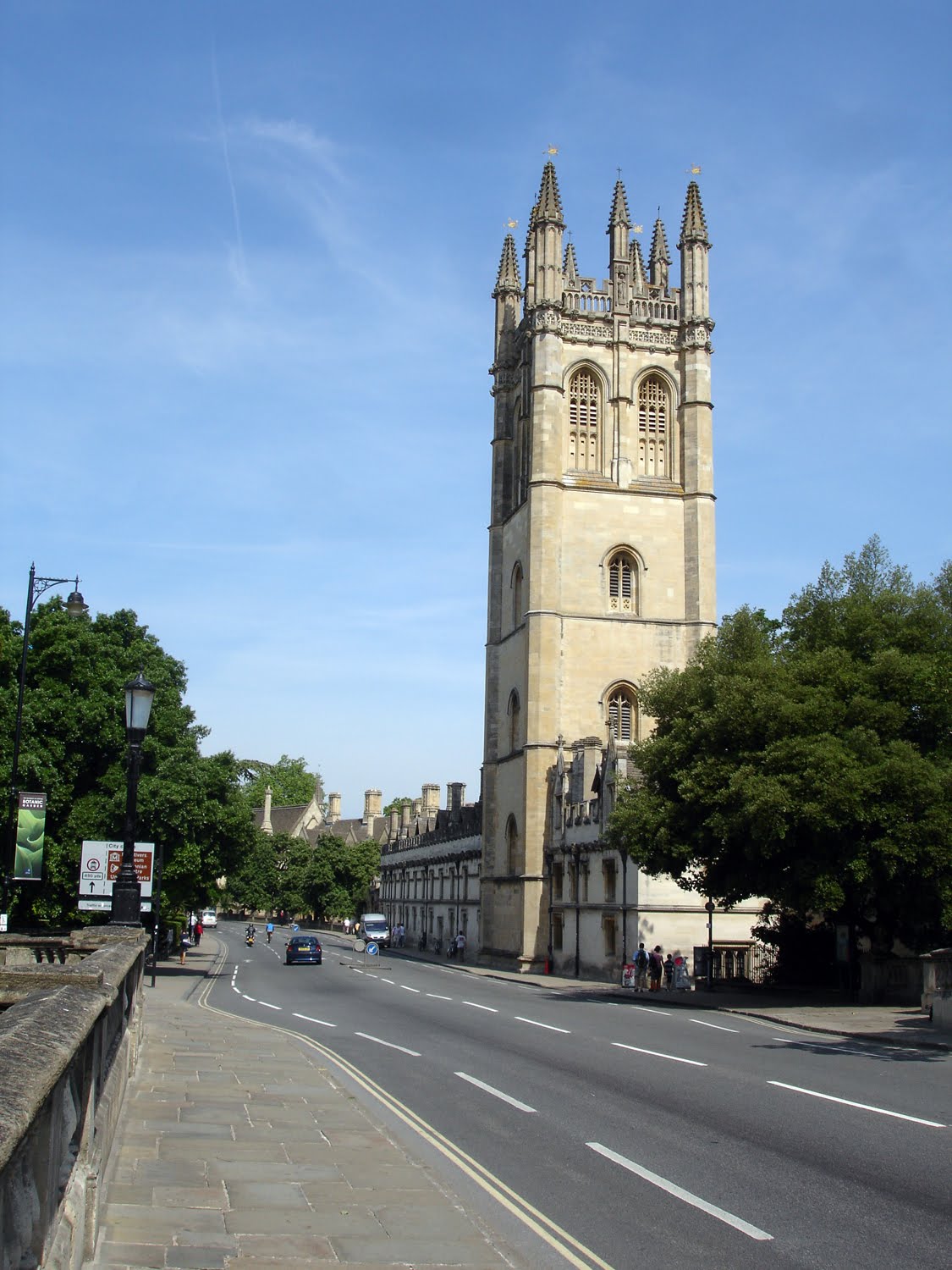
Magdalen Tower (above), as seen from the east, was completed in 1509 and would have seen the stranger pass below on his way over the bridge towards what was then the Watlington Road. The image below shows the route he would have taken with his two horses, from Magdalen Bridge on the right of the picture, towards what is now The Plain, but which in the stranger’s day would have been the church and churchyard of St. Clement, demolished in 1828.
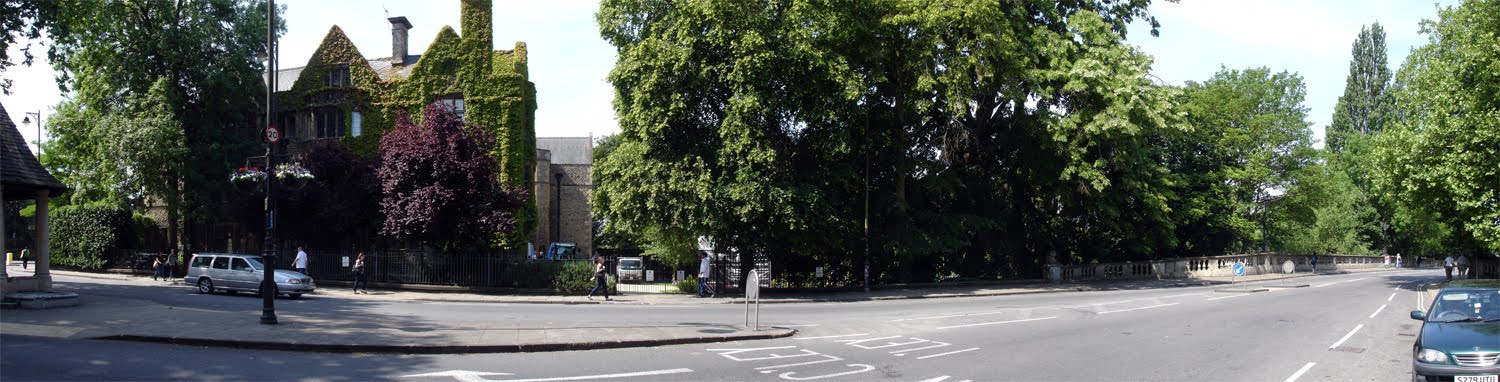
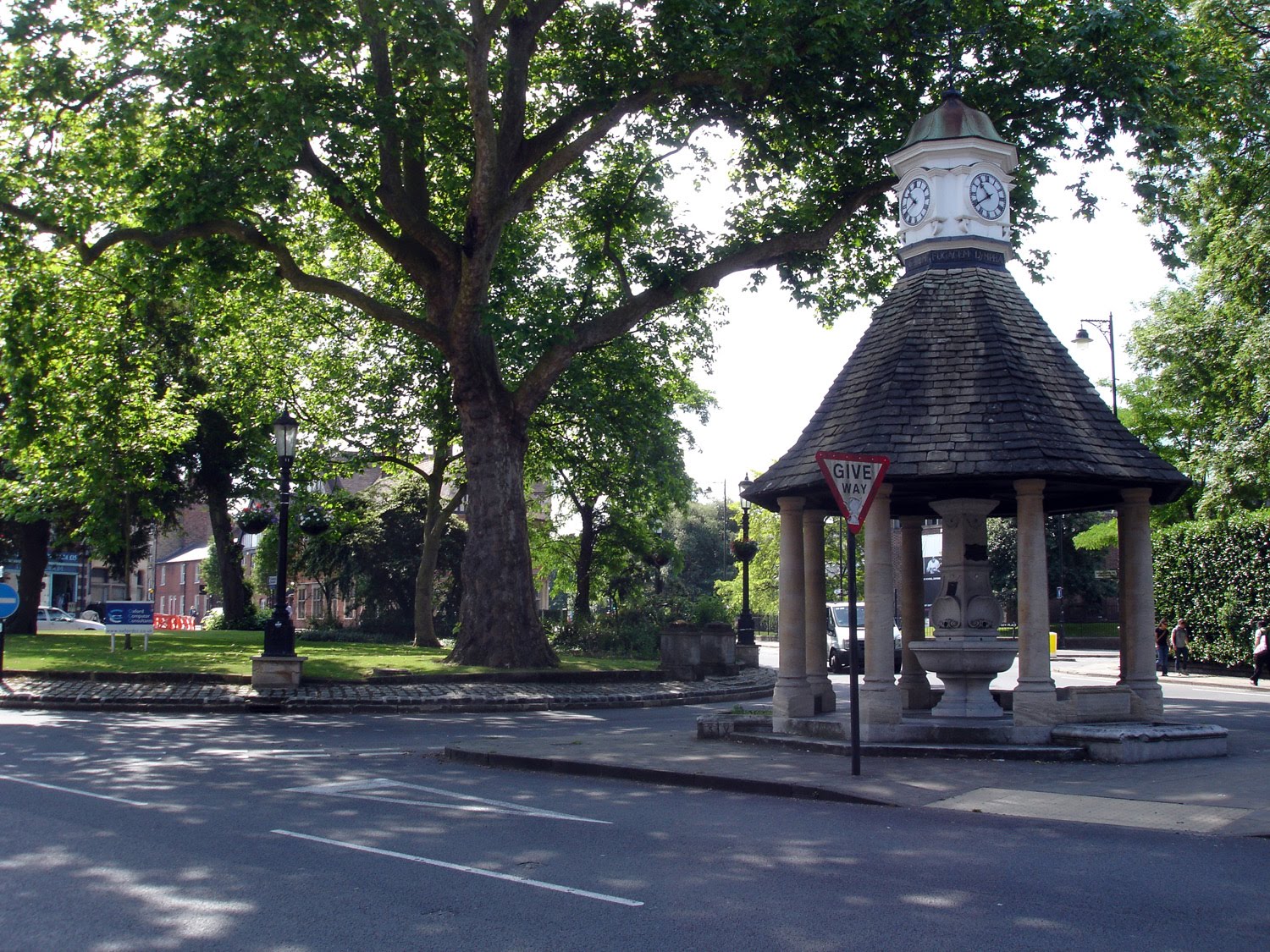
The roundabout (below) stands on what was once the church and churchyard of St. Clement . To the right is the fountain, built in 1899 as a belated tribute to Queen Victoria who celebrated her Diamond Jubilee  in 1897. This was built on the site of the old toll house. The houses in the background stand on modern-day Cowley Road, the road up which the stranger rode into obscurity.
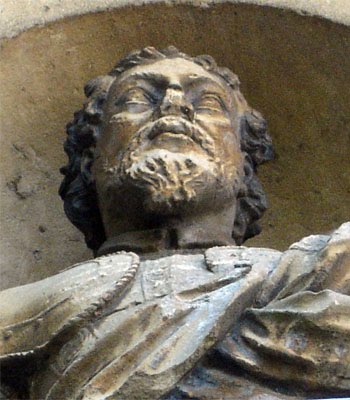
As I walked up the bridge I wondered who had seen the stranger pass and where they’d been when they saw him riding the two horses. In terms of more witnesses, the walls of the Botanic Gardens (founded in 1621) and its gateway (built by Inigo Jones’ master-mason Nicholas Stone in 1632) would have been standing at the time. The two statues and the bust, positioned in the gateway still look towards the road…
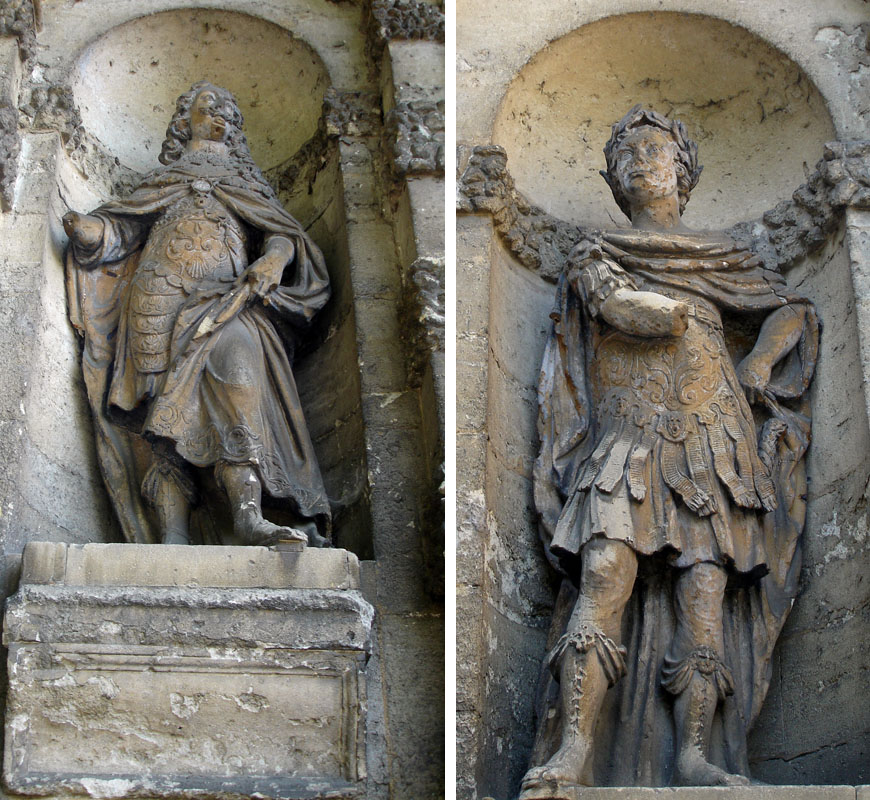
…and I like to imagine their eyes would somehow have seen him.
Filed Under: Oxford, The Gentleman's Servant Tagged With: Magdalen Bridge, Oxford, The Gentleman's Servant

Magdalen Bridge

June 23, 2010 by Nicholas Hedges

The bridge over which our Gentleman’s Servant rode in December 1770 is not the same bridge which crosses the River Cherwell today. Being as it is an important part of the story, I’ve copied an entry on the bridge from The Encyclopaedia of Oxford1 which I’ve reproduced below.

A bridge, formerly known as Pettypont and East Bridge, has stood here since at least 1004. In the Middle Ages the cost of its upkeep was shared between the county and the town, the town meeting its three-quarters share largely by alms and charitable bequests, the maintenance of bridges being then considered a pious duty. Bridge-hermits were also appointed to help travellers with any difficulties they might experience in crossing. The original bridge was of wood, but by the 16th century a stone bridge, some 500 feet long, with about twenty pointed and rounded arches, had been constructed.

At this time the city was still paying for repairs, both by taxation and by the allocation of alms; but William of Waynflete, the founder of Magdalen College, may have paid for restoration of the bridge in the 15th century, and the University certainly did so in 1723. Although a major restoration was then undertaken, less than fifty years later some of the piers had been swept away by floods and the western end had collapsed completely. Condemned as dangerous, it was rebuilt between 1772 and 1778 under the provisions of the Oxford Improvement Act of 1771, to the design of John Gwynn. At the same time a toll-house was built at The Plain, with gates across the roads from Headington to Cowley to collect dues for the maintenance of the bridge. Twenty-seven feet wide, with recesses in the middle, the bridge’s large semi-circular arches were supplemented by smaller ones over the towpaths. The plain balustrade was designed by John Townesend after plans for a more elaborate one had been dropped. The bridge was widened in 1835 and again in 1882. Notabilities have frequently been welcomed or taken their official departure at the bridge, as Queen Elizabeth I did on leaving Oxford in 1566.

1 The Encyclpaedia of Oxford, 1988, Ed. Christopher Hibbert, Assoc. Ed. Edward Hibbert; London, Macmillan London Limited

Filed Under: Oxford, The Gentleman's Servant Tagged With: 18th Century, Gentlemans Servant, John Gwynne, John Malchair, Magdalen Bridge, Oxford, Servant, The Gentleman's Servant

To Name Him Would Almost Be To Kill Him

June 22, 2010 by Nicholas Hedges

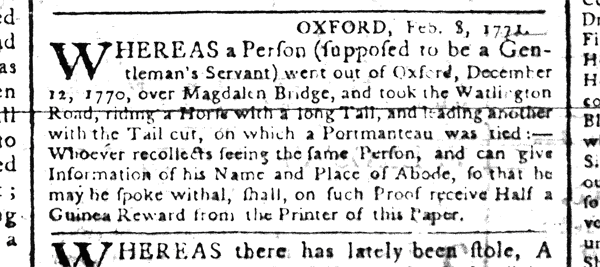
If you visit the Westgate Library in Oxford, and make your way to the second floor, to the centre for Oxfordshire Studies; if you ask to see the microfilm of Jackson’s Oxford Journal for February 9th 1771, you will find, somewhere within its pages, the following notice:

“Whereas a person (supposed to be a Gentleman’s Servant) went out of Oxford, December 12th 1770 over Magdalen Bridge and took the Watlington Road riding a horse with a long tail and leading another with a cut tail on which a Portmanteau was tied: whoever recollects seeing the same person and can give information of his name and place of abode so that he may be spoke withal, shall on such proof receive half a guinea reward from the printer.”

This enigmatic text contains just 80 words, but many questions come to mind when I read it.

Who was this man?
Where was he going?
Who was he working for?
What was in the portmanteau? And who wanted to know?
What had he done that the need to ‘speak withal’ was worthy of a reward? And why was the notice only published two months after the man had left town? Would anyone recall seeing him so long after the fact?

The man described has left neither name nor grave to posterity. Indeed, all that would seem to remain is this footprint of sorts, one comprising a few words in a text pregnant with secrets, lost in the pages of a long forgotten paper.

In the first book of his epic masterwork, À la Recherche du Temps Perdu (In Search of Lost Time) Marcel Proust writes:

“…we each derived a certain satisfaction from the mannerism, being still at the age in which one believes that one gives a thing real existence by giving it a name.”

The man described in our newspaper clipping doesn’t have a name. Does it mean therefore he has – or rather had – no real existence? The answer to that is of course, no. Certainly he’s dead, but whereas the Dead so often leave their names (as Rilke so beautifully put it in The Duino Elegies, ‘as a child leaves off playing with a broken toy’) in documents, monuments, cemeteries and so on, this man has left something else entirely. To name him would almost be to kill him.

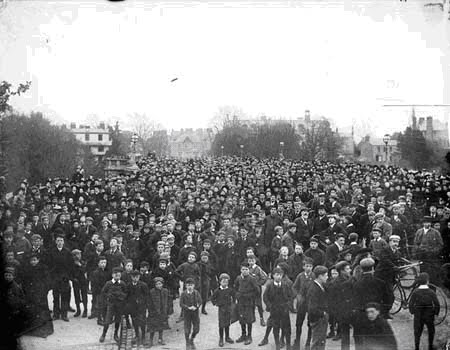
In many respects he’s not unlike those nameless men and women one often finds in old black and white photographs, for example that below, taken on the same bridge 125 years after the stranger crossed it.

What’s most intriguing about the notice, is the scene it depicts. Despite its few words we can nonetheless form an image of something which happened long before we were born; a scene in which the most insignificant detail we can imagine – perhaps a leaf fallen from a tree drifting on the river below the bridge – was more a part of the world  than we as individuals – as impossibly unlikely beings – were ever, at that moment, likely to be; even my great-great-great-great-grandfather, Samuel Stevens, born in Oxford in 1776, and to me impossibly distant, was just a step away from not being born at all.

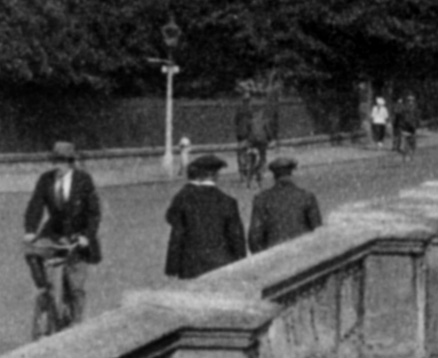
A more ‘equivalent’ image to the text might be the detail below:

Taken from a photograph, itself taken (as far as I can tell) some time in the 1920s, it’s part of a wider view of Magdalen Bridge facing west towards Magdalen Tower. No-one in this photograph is aware the picture’s being taken and in this sense it’s a genuine representation of history; an insignificant, everyday moment in time.

This project – The Gentleman’s Servant – will set out to answer the questions posed above in full knowledge of the fact that it will fail. But what interests me is, not so much the answers, but the process of looking: of researching, collecting, archiving and storytelling.

Filed Under: Photography, The Gentleman's Servant Tagged With: Gentlemans Servant, Magdalen Bridge, Servant, The Gentleman's Servant, Vintage Photographs

Postcards

April 2, 2007 by Nicholas Hedges

I was thinking (given the theme of Residue) about the residues of war, and listed the following sorts of things one might expect to find in the wake of conflict: objects dredged from the battlefield, pieces of shrapnel, bullet casings, shell casings, shoes, photographs, letters, memoirs, bones, clothes, luggage, memories (sights, sounds, smells)… and as I wrote, I thought how important the idea of ‘home’ was, and what a dreadful contrast it must have been to the realities of the often appalling predicaments of those caught up in conflict, whether soldiers or civilians.

Reading various books about World War One, it’s been interesting (and indeed heart-breaking) to read extracts from soldiers’ letters and postcards sent from the trenches, and to read about the packages they received in turn from home. How difficult (as well as comforting) it must have been for them to receive these little pieces of home as they suffered in such unimaginable conditions, and how terrible for parents and relatives to receive the postcards and letters from a loved one after news of their death.
Given that I am exploring the theme of contrast (particularly with regards to the silence of a place following a traumatic event) I thought this was an interesting ‘contrast’ to explore, particularly as Gloucester Green is a place where people are in transit, perhaps travelling away from home.

To change the subject slightly for a moment, one way of identifying with people and events so long ago – for example the Great War – is by identifying with a place (with which we are particularly familiar) as it was at the time, i.e. 1914. I have for a long time been interested in the idea of memory spaces (spaces within the memory of someone either dead or living) and how by accessing these spaces we might gain access to their contemporary thoughts. Under ‘Objects‘ on this site I have written:

“These objects, each through their own unique provenance, allow us, if we use our imaginations, to glimpse people from the pages of history; they, along with tens of thousands of others, once held a place in the minds and memories of men and women long since dead. Now we hold these objects within our minds and memories and as such share a place, a single, common space with those who have long since vanished from the world. To read about the past and those people who made it is one thing, to share this common space with them through the power of objects is quite another.

Objects can be those found in a museum, or buildings contemporary with the time you wish to explore within your imagination; in the case of the Great and the Second World War, it is most of the city (Oxford) as it stands today. As I have already written (on Objects), Aristotle says in relation to systems of memory:

“We should also seek to recover an order of events or impressions which will lead us to the object of our search, for the movements of recollection follow the same order as the original events; and the things that are easiest to remember are those which have an order, like mathematical propositions. But we need a starting-point from which to initiate the effort of recollection.”

This starting point could be anything contemporary with the time we wish to explore. In respect of the Great War, there is a photograph showing men marching to war over Magdalen Bridge and past the Jubilee Fountain which stands near what is now The Plain roundabout. These men are as anonymous to us now, ‘living’ in this photograph, as they are dead, yet the landmarks past which they march are still in existence. That same fountain occupied a place in each of their minds, and so by choosing this as our starting point we might find our way into their thoughts by placing ourselves in their position.

“For remembering really depends upon the potential existence of the stimulating cause… But he must seize hold of the starting point. For this reason some use places for the purpose of recollecting.”

The fountain, in this example, is therefore our ‘stimulating cause’, our ‘starting point’, a place for the ‘purpose of recollecting’. We share in effect a common space with those men who are marching in the photograph and as such we have a starting point from which to ‘initiate the effort of recollection’.
Whilst looking for old prewar photographs of Oxford, I happened upon some old postcards and thought at once how these objects were the perfect metaphor or symbol for our being away from home; a small sliver of our journey away. What we choose to write on the back is largely inconsequential, what is important, is that we have written, that we are remembering those back home.
As I wrote above:

“…how important the idea of ‘home’ was, and what a dreadful contrast it must have been to the realities of their often appalling predicaments.”

Home is an ever-present contrast to that place in which we find ourselves, whenever we travel or make a journey, no matter how long or short, and postcards (now perhaps superseded by texts and emails) are a means by which we remember where it is we come from, by which we close that gap.

Filed Under: Artist in Residence Tagged With: Artist in Residence, Magdalen Bridge, Objects, Oxford, Residue, Silence, World War I, WWI

© Nicholas Hedges 2024

  • Facebook
  • Instagram
  • Twitter
  • YouTube

Copyright © 2025 · Outreach Pro on Genesis Framework · WordPress · Log in