Nicholas Hedges

Art, Writing and Research

  • Amazon
  • Behance
  • Facebook
  • Instagram
  • Pinterest
  • YouTube
  • Art
    • Digital
    • Drawing
    • Grids
      • Correspondence
      • The Wall
      • The Tourist
    • Ink on paper
      • Shadow Calligraphy
    • Installation
      • Murder
      • Echo
    • Painting
    • Patterns
    • Mixed Media
    • Photographic installation
      • St. Giles Fair 1908
      • Cornmarket 1907
      • Headington Hill 1903
      • Queen Street 1897
    • Research/Sketches
    • Stitched Work
      • Missded 1
      • Missded 2
      • Missded 3
      • Missded 4
    • Text Work
  • Blogs
    • Family History
    • Goethean Observations
    • Grief
    • Light Slowed But Never Stilled
    • Lists
    • Present Empathy
    • Shadow Calligraphy
    • Trees
    • Time
    • Walking Meditations
  • Video
  • Photography
    • Pillars of Snow
    • Creatures
    • The Trees
    • Snow
    • St. Giles Fair 1908
    • Cornmarket 1907
    • Headington Hill 1903
    • Queen Street 1897
    • Travel
  • Illustration and Design
  • Music
  • Projects
    • Dissonance and Rhyme
    • Design for an Heirloom
    • Backdrops
    • Shadow Calligraphy
  • Exhibitions
    • A Line Drawn in Water
      • Artwork
    • A Line Drawn in Water (Blog)
    • Mine the Mountain 3
      • Artwork
    • Mine the Mountain 2
      • Artwork
      • The Wall
    • The Woods, Breathing
      • Artwork
    • Snow
      • Artwork
    • Echo
      • Artwork
    • Murder
      • Artwork
    • The Tourist
    • Dreamcatcher
    • Mine the Mountain
      • Artwork
      • The Tourist
    • M8
    • The Gate
    • Creatures
      • Artwork
    • Residue
      • Artwork
    • A visit to Auschwitz
      • Artwork
  • Me
    • Artist’s Statement

Herodotus and the Morning Paper

November 10, 2007 by Nicholas Hedges

One has to remove the future from a past event to really understand its ‘presentness’. One has to view historical (‘Herodotus’ – see Walter Benjamin and Objects) events as being on the periphery, whilst the mean and the commonplace (‘morning paper’) take centre stage. It is the distance which interests me, the distance from the heroic or ‘main’ event and the historical perspective this gives us.

“Thus the whole emerges simultaneously with the accumulation of the parts, not because it is the sum of the parts, but because it is immanent within them.”

Bortoft’s theory of authentic wholeness could be applied to history. A great event, such as a coronation (let’s say, that of Elizabeth I), is not a whole in itself. Step outside the ceremony, outside the city and into the countryside; walk into a tavern… what is happening there, at the exact moment of the coronation? Let’s say a man sits at a table eating his dinner, enjoying a drink. The moment of the coronation is not simply about the ceremony but the moment in time (some time on January 15, 1559); that moment, of which the Queen and the man in the house are equal parts, although history has forgotten one and kept alive the other. Within both these people (parts), the moment (the whole) is immanent.

The man in the tavern pours his wine from a jug; 450 years later and that jug is in a display case in a museum, freed as Benjamin would have it from the ‘drudgery of its usefulness.’ For us to see it properly as it stands behind the glass, we need to re-impose that drudgery, we need to see it as it was, when it was useful.

Returning to the idea of distance and perspective: the distant elements in my old holiday photographs on which I have been doing some work, as well as those in old photographs (windows and bicycles) coincide to some degree with what I have written above. When I look at a photograph, taken during a family holiday in the late 1970s, I see the people I recognise, whether that’s myself, my brother, parents or grandparents. But there are often others, all of whom were a part of that moment (such as the girl below who was standing in the distance of one of our snaps).
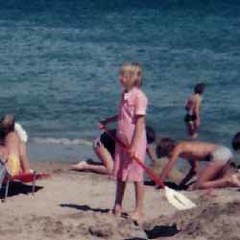
20

Returning to objects: how do we re-impose the ‘drudgery of an object’s usefulness’ back onto the object? Think of the old musical instruments in the museum. How did I give it back its usefulness? By using the Goethean method of observing, and, in particular, by placing it back – through use of the imagination – in its own time. Although I wasn’t looking at the specific ‘gesture’ of things at that time, I believe I found the gesture of the lira di braccio nonetheless.

So, returning to the man in the tavern; what are the elements of that place which one would need to understand in order to re-construct it through the imagination? Objects (contemporary and old), environments (the room itself and elements thereof), conversations…

Filed Under: Goethean Observations Tagged With: Creatures, Goethean Observation, Henri Bortoft, Herodotus, Objects, Vintage Photographs, Walter Benjamin

Walter Benjamin and Objects

November 10, 2007 by Nicholas Hedges

Walter Benjamin, in his ‘Arcades Project’ writes:

“The collector dreams his way not only into a distant or bygone world, but also into a better one-one in which, to be sure, human beings are no better provided with what they need than in the everyday world, but in which things are freed from the drudgery of being useful.”

and in his introduction (Expose 1939)…

“The subject of this book is an illusion expressed by Schopenhauer in the following formula: to seize the essence of history, it suffices to compare Herodotus and the morning newspaper. What is expressed here is a feeling of vertigo characteristic of the nineteenth century’s conception of history. It corresponds to a viewpoint according to which the course of the world is an endless series of facts congealed in the form of things.”

When I was thinking about how I perceive history, or at least, how I try to perceive history, I began to consider that it was as much about removing the ‘stain’ of history from whatever it was I was perceiving, i.e. an event, date etc., and seeing that event or date as it was, in all its minutiae, at the moment of its happening. It was as much about the mundane (the morning newspaper) as it was the heroic (Herodotus). And that is why I’m so drawn to objects, the simple things – broken bits of pots and so on – one finds in a museum, those things which have been collected and ‘relieved of the drudgery of being useful’ as Benjamin puts it. However, in order to find one’s way back in time, when looking at such objects, one needs to reimpose that drudgery, to see them as they were, when they were in fact useful, when they were being used, and who it was who was using them.

Filed Under: Uncategorized Tagged With: Arcades Project, Herodotus, Objects, Schopenhauer, Walter Benjamin

© Nicholas Hedges 2024

  • Facebook
  • Instagram
  • Twitter
  • YouTube

Copyright © 2025 · Outreach Pro on Genesis Framework · WordPress · Log in