Nicholas Hedges

Art, Writing and Research

  • Amazon
  • Behance
  • Facebook
  • Instagram
  • Pinterest
  • YouTube
  • Art
    • Digital
    • Drawing
    • Grids
      • Correspondence
      • The Wall
      • The Tourist
    • Ink on paper
      • Shadow Calligraphy
    • Installation
      • Murder
      • Echo
    • Painting
    • Patterns
    • Mixed Media
    • Photographic installation
      • St. Giles Fair 1908
      • Cornmarket 1907
      • Headington Hill 1903
      • Queen Street 1897
    • Research/Sketches
    • Stitched Work
      • Missded 1
      • Missded 2
      • Missded 3
      • Missded 4
    • Text Work
  • Blogs
    • Family History
    • Goethean Observations
    • Grief
    • Light Slowed But Never Stilled
    • Lists
    • Present Empathy
    • Shadow Calligraphy
    • Trees
    • Time
    • Walking Meditations
  • Video
  • Photography
    • Pillars of Snow
    • Creatures
    • The Trees
    • Snow
    • St. Giles Fair 1908
    • Cornmarket 1907
    • Headington Hill 1903
    • Queen Street 1897
    • Travel
  • Illustration and Design
  • Music
  • Projects
    • Dissonance and Rhyme
    • Design for an Heirloom
    • Backdrops
    • Shadow Calligraphy
  • Exhibitions
    • A Line Drawn in Water
      • Artwork
    • A Line Drawn in Water (Blog)
    • Mine the Mountain 3
      • Artwork
    • Mine the Mountain 2
      • Artwork
      • The Wall
    • The Woods, Breathing
      • Artwork
    • Snow
      • Artwork
    • Echo
      • Artwork
    • Murder
      • Artwork
    • The Tourist
    • Dreamcatcher
    • Mine the Mountain
      • Artwork
      • The Tourist
    • M8
    • The Gate
    • Creatures
      • Artwork
    • Residue
      • Artwork
    • A visit to Auschwitz
      • Artwork
  • Me
    • Artist’s Statement

Prison Hulk – York

October 3, 2010 by Nicholas Hedges

Following his conviction at the Berkshire Assizes on 15th April 1828, Stephen Hedges was sent to Portsmouth to serve time before his transportation on the prison hulk, York, pictured below.

This HMS York was the eighth ship to bear the name, and was a 74-gun third rate of 1,743 tons. Launched in 1807, she was posted to the West Indies where she was involved in the bold capture of the island stronghold of Martinique. She continued the war in the Mediterranean Squadron off Toulon and in 1819, returned to Portsmouth to serve as a prison hulk. She was broken up in 1854.

Having researched Hulks, I found the following on the Southern Life website:

“Embarking on board the hulks was a very demoralising affair; the convicts had to climb labourously up with their irons still on, stripped of their clothes, had buckets of cold water thrown over them; were issued with slops, saw their own clothes thrown overboard; were re-chained and then sent down into the lowest deck of the hulk – the darkest and most foul-smelling part of the ship.”

There’s something horribly poetic in the action of throwing the clothes overboard. Roland Barthes, in his book Camera Lucida, said that clothes made a second grave for the loved being. In this case, we could say the grave was that of a drowned man; one made before the man had actually died. Of course in many ways it really did symbolise their deaths.

For a ship with such an illustrious past, there is something pitiful about her condition in the picture above. De-masted and with her sails removed, she has instead the regulation clothes (?) of the inmates to catch the wind. She is very much the outward appearance of those locked away out of view.
Filed Under: A Line Drawn in Water, Artist in Residence Tagged With: A Line Drawn In Water, Artist in Residence, Australia, Family Hedges, Family History, Hedges, Stephen Hedges

The Voyage of The Marquis of Hastings

October 2, 2010 by Nicholas Hedges

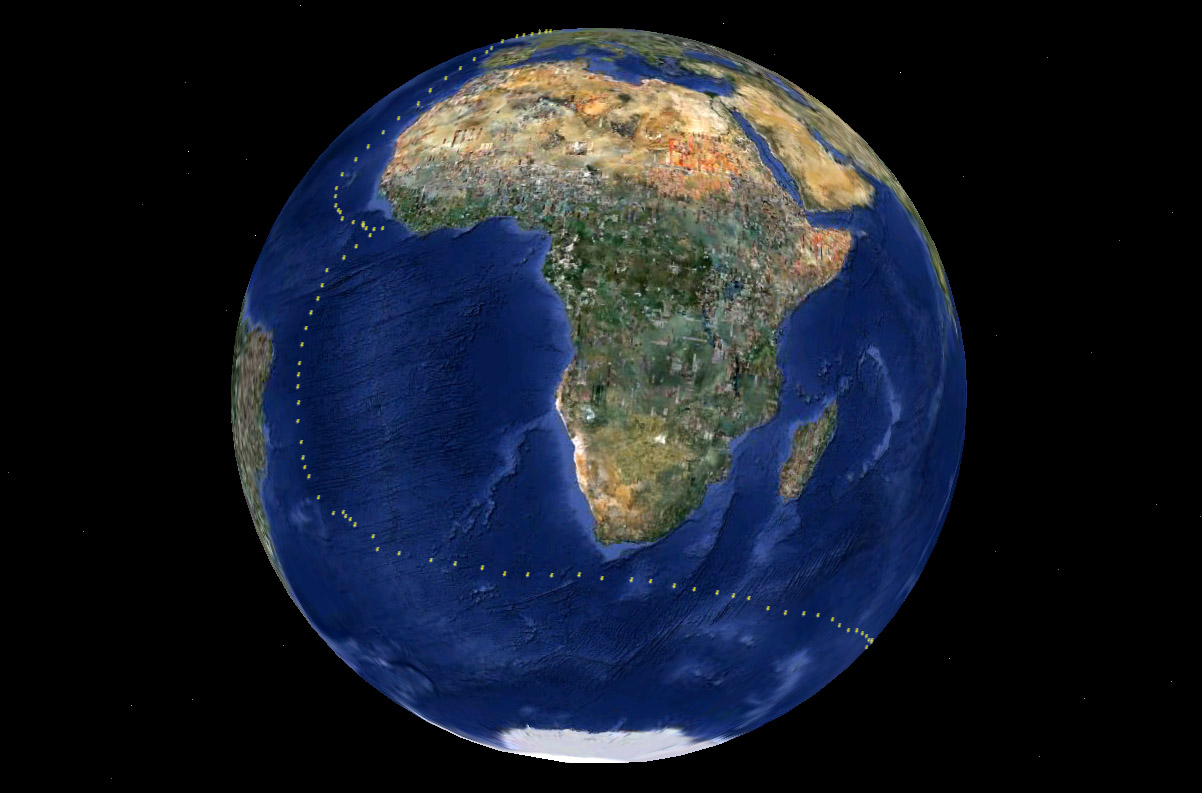
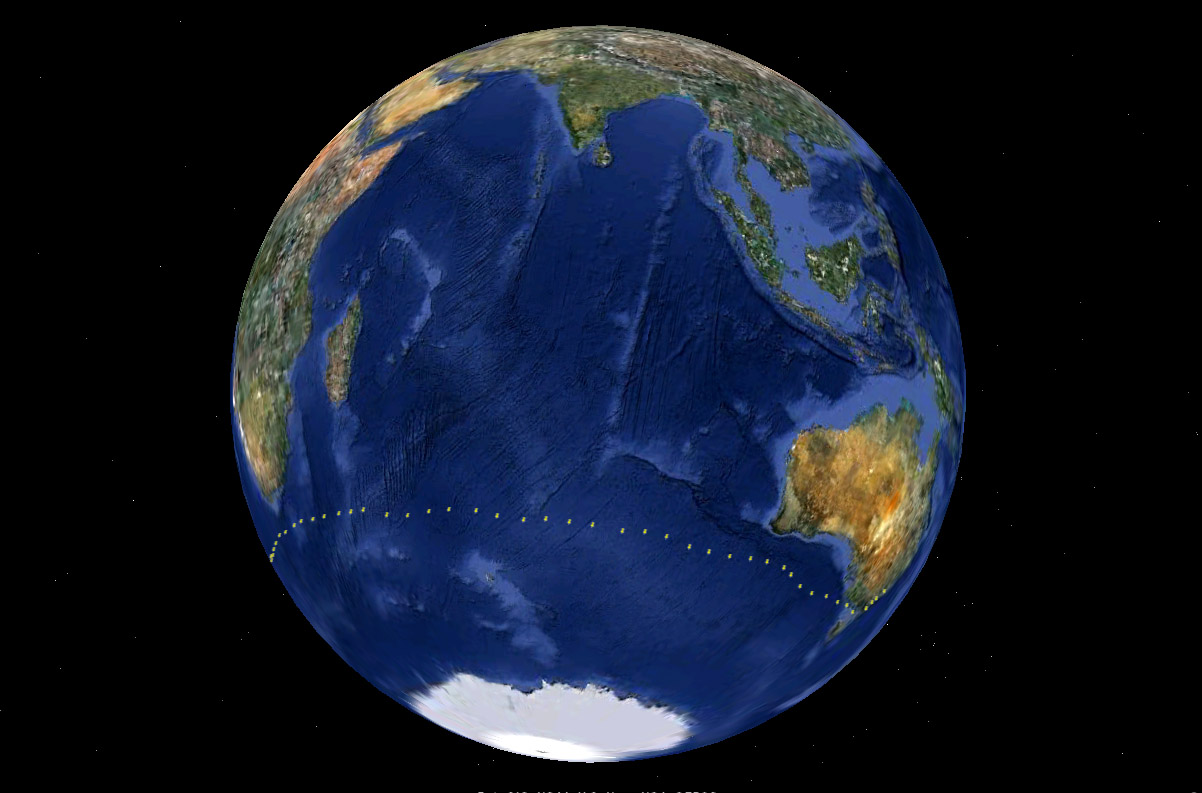
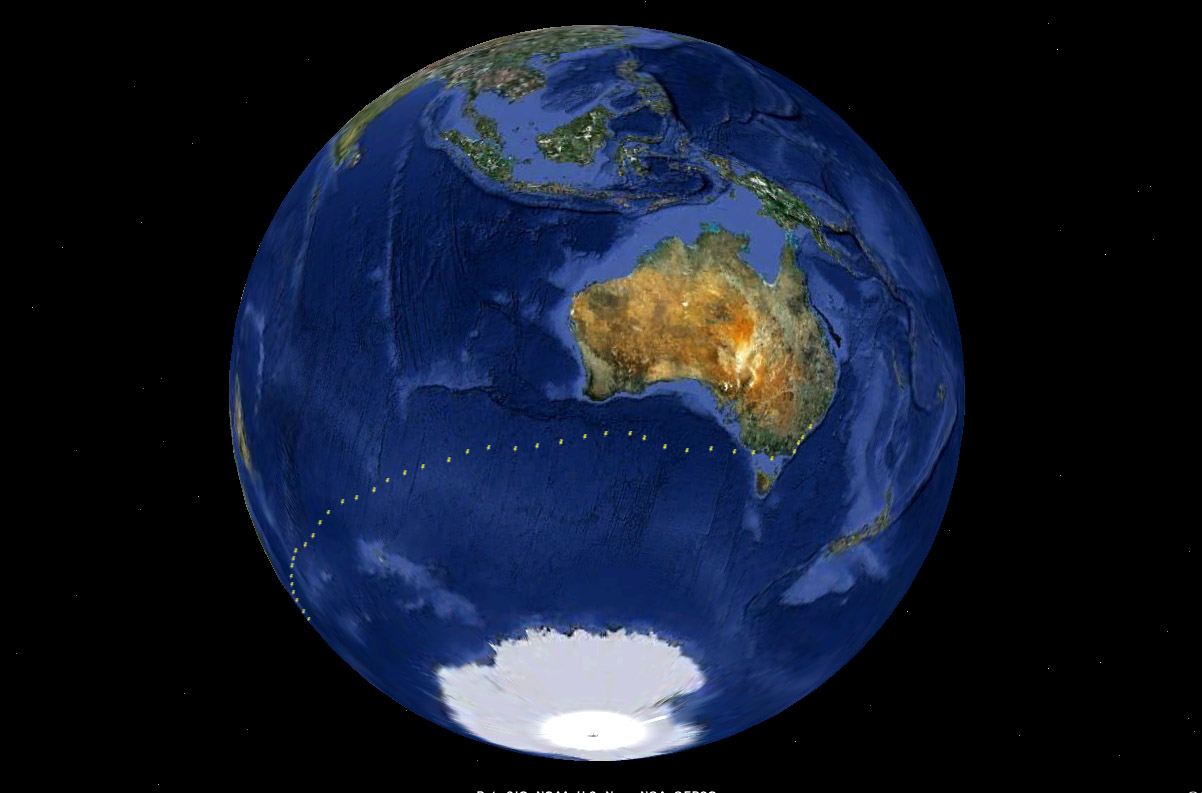
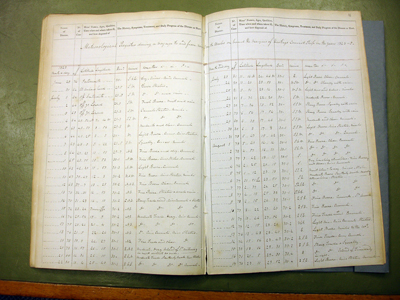
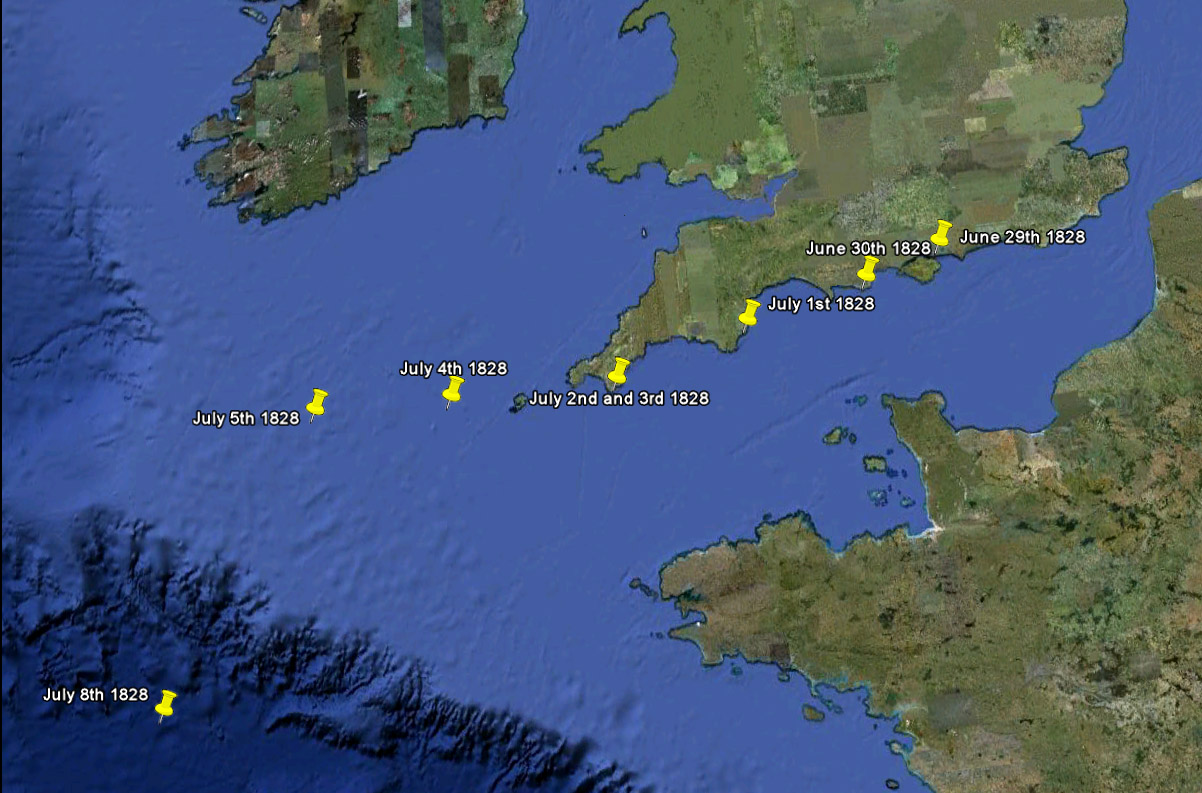
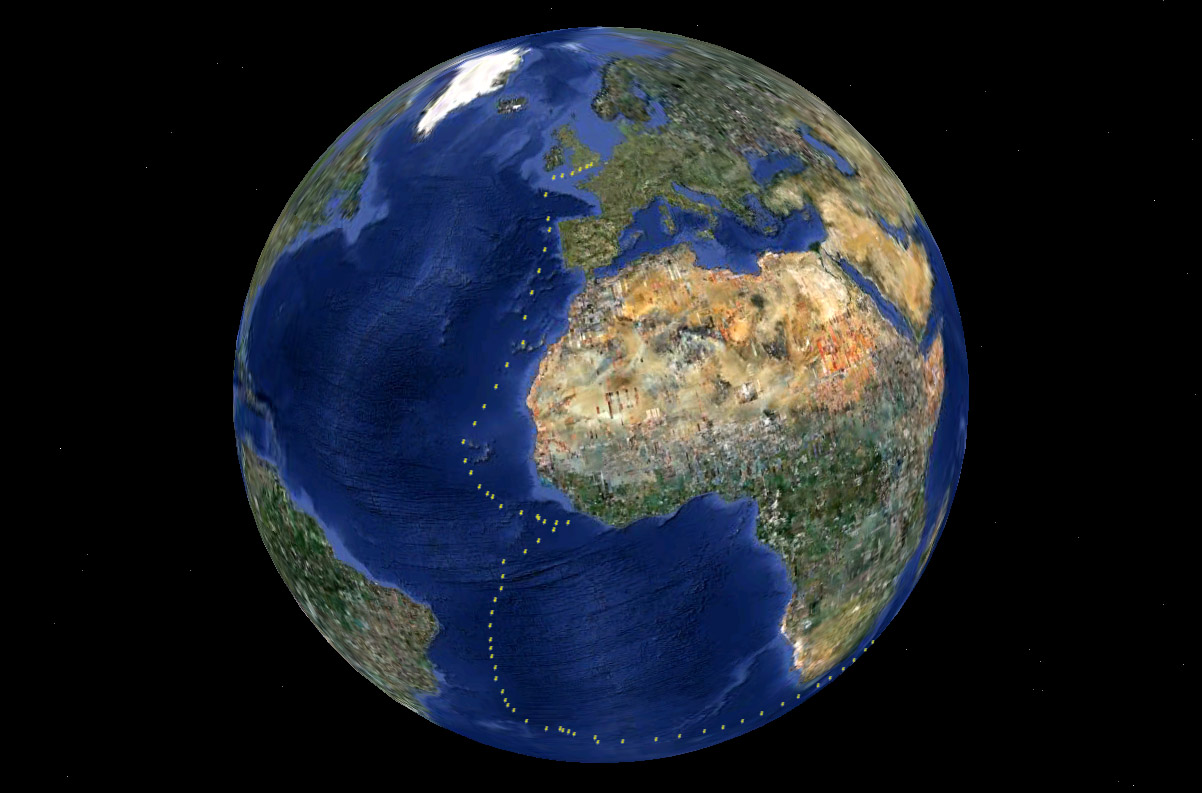
After my research in the National Archives, I took the document I’d discovered (the Surgeon’s Journal from teh voyage of the Marquis of Hatings’ 1828 voyage) and plotted the longitude and latitude references into Google Earth. Given that these measurements were taken in 1828, I wasn’t sure what the results would be, but having entered them, I was pleased with what I ended up with.

The voyage began on the 29th June 1828 in Portsmouth. The weather that day is described as ‘Dry, Cirrus, Cirrus Cumuli,’ and the temperature 74F. In reading these tiny details, the moment is straight away prised from the pages of history, as if a character from a fictional tale has, all of a sudden, become reality. They are small details but manage in their succinctness to paint a bigger picture.


Below is a screenshot from Google Earth showing the start of the voyage and the first 7 days of the journey.

One can only guess at what the prisoners must have felt leaving the country for what they surely knew would be the last time. Given the conditions some (including my ancestor, Stephen Hedges) had suffered on the prison hulks (the York in his case) it might have come as some relief that they were finally moving – not that the conditions would be be much of an improvement during the voyage.

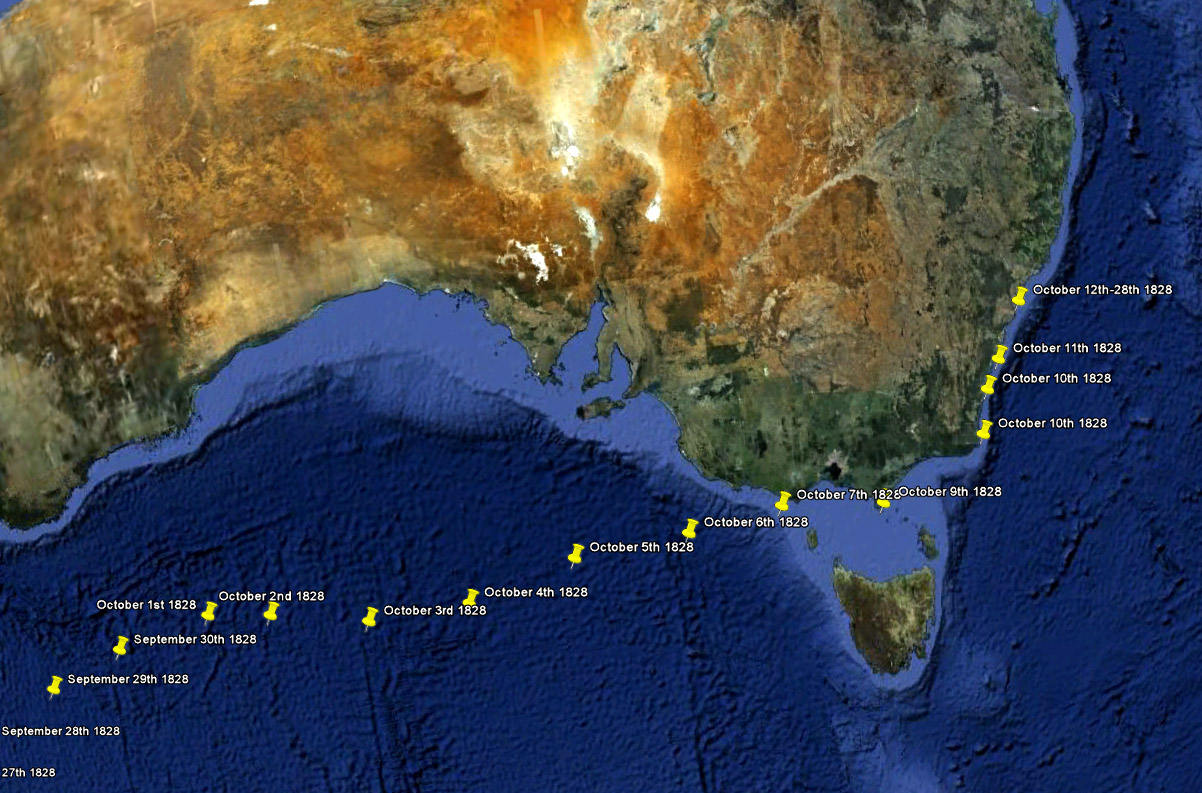
Below are screenshots showing the route of the ship, with each yellow pin representing one day of the voyage.

Having mapped the journey in this way, and having read the descriptions of weather and  temperature, the voyage and indeed the ordeal of my ancestor’s Transportation suddenly became more real. It was as if beforehand, the world of 1828 was purely a fiction, and that the names of the towns, islands and landmarks – Portsmouth, The Lizard, Tenerife and Sydney for example – just happened to have the same names as those – unconnected – places in the present day. Suddenly, the world of the past and the world of the present had collided.

The image below shows the last leg of the journey.

The last entry by William Rae (the ship’s surgeon) is dated the 28th October 1828 and reads: ‘nearing the same (Sydney Cove) since the 23rd. Prisoners disembarked.

Filed Under: A Line Drawn in Water, Artist in Residence Tagged With: A Line Drawn In Water, Artist in Residence, Australia, Family Hedges, Family History, Hedges, Stephen Hedges

The National Archives

October 1, 2010 by Nicholas Hedges

I’d never been to the National Archives and had only ever seen it on TV, on Who Do You Think You Are. As I approached the doors, I could almost hear Mark Strong (who narrates the progarmme) say, “Nick is going to the National Archives to find some information on….”

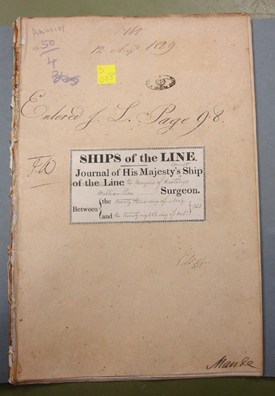
So what information was I looking for? Well, I wanted to find something on the voyage of the Marquis of Hastings, the convict ship which took Stephen Hedges and 177 other felons to Australia in 1828. Having gone through all the first time procedures and having obatined my Reader’s Ticket, I consulted the catalogue and found two documents.

 
I only had time to look at one which was the Surgeon’s Journal (above) written during the voyage by William Rae. This sounded particularly helpful, and although my ancestor wasn’t one of the patients (fortunately for him of course), the document gives a great insight into the prisoners and their health – not least the conditions they must have endured.

Furthermore, the document contains a daily list of longitiude and latitude, wind direction and weather conditions which, for me, is just the sort of thing I wanted to know from an artistic point of view – especially as regards the weather and cloud formations.

I will transcribe some in due course and return to the Archives soon to look at the other documents.

Filed Under: A Line Drawn in Water, Artist in Residence Tagged With: A Line Drawn In Water, Artist in Residence, Australia, Family Hedges, Family History, Hedges, National Archives, Stephen Hedges

Convict Trail III

September 26, 2010 by Nicholas Hedges

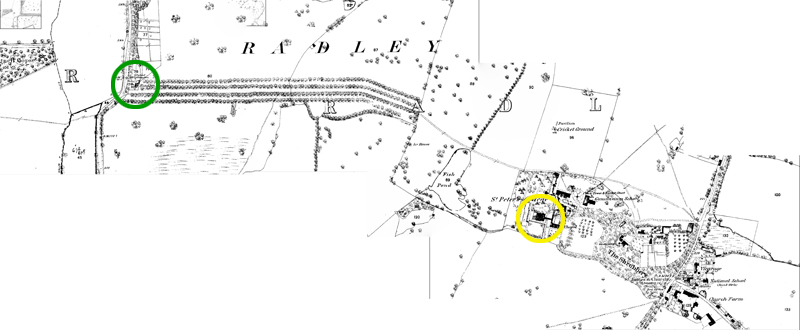
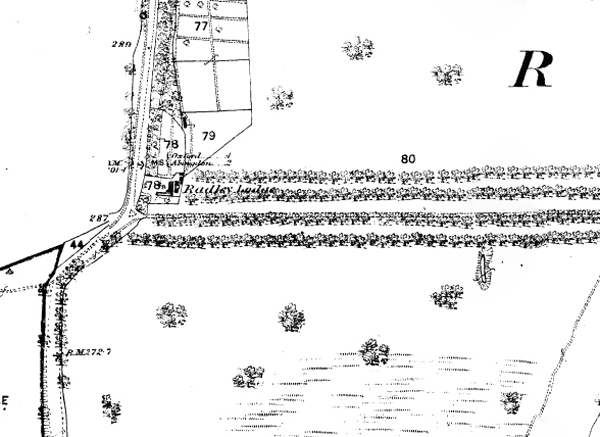
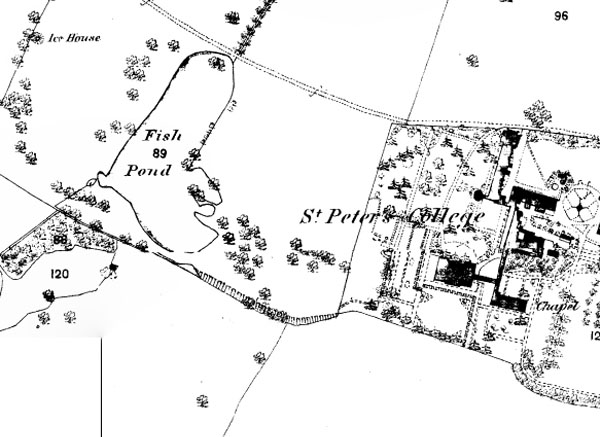
Having written to Radley College about my project, I received some very helpful information for which I’m very grateful. I was interested to know the location of Sir G.Bowyer’s lodge, next to which Richard Burgess was asked to stop by Stephen Hedges and his co-conspirators. Below is a map from 1875 showing St. Peter’s College, of which Radley Hall or House is a part. The house is circled in yellow. To the far left, is the lodge circled in green, at the end of a drive which leads out to the Oxford Road.

Below are two details taken from the map; first the lodge…

and then the house…

I think therefore we can assume that Richard Burgess was taking the route I suggested from Abingdon to Oxford. He stopped outside the Lodge whereupon Stephen Hedges, Stockwell and Harper left him to steal the lead from the ‘larder.’ The location of the larder is perhaps a little more difficult to ascertain. Benjamin Kent, who was renting the property from Sir George Bowyer, stated that the larder was about 100 yards from the ‘office’. In the painting of Radley Hall below, made by Turner in 1789 when he was just 14 years old, there is a collection a outbuildings on the left hand side, near to which, perhaps, the larder stood. Having stopped at the Lodge, Hedges and his accomplices left with a bag and returned five minutes later with the lead. If the larder was near the house, they must have worked very quickly to get to the larder, strip the roof, and return to the cart, suggesting perhaps they were well practiced in their ‘art’.

Filed Under: A Line Drawn in Water, Artist in Residence Tagged With: A Line Drawn In Water, Artist in Residence, Australia, Family Hedges, Family History, Hedges, Maps, Stephen Hedges

Convict Trail II

September 24, 2010 by Nicholas Hedges

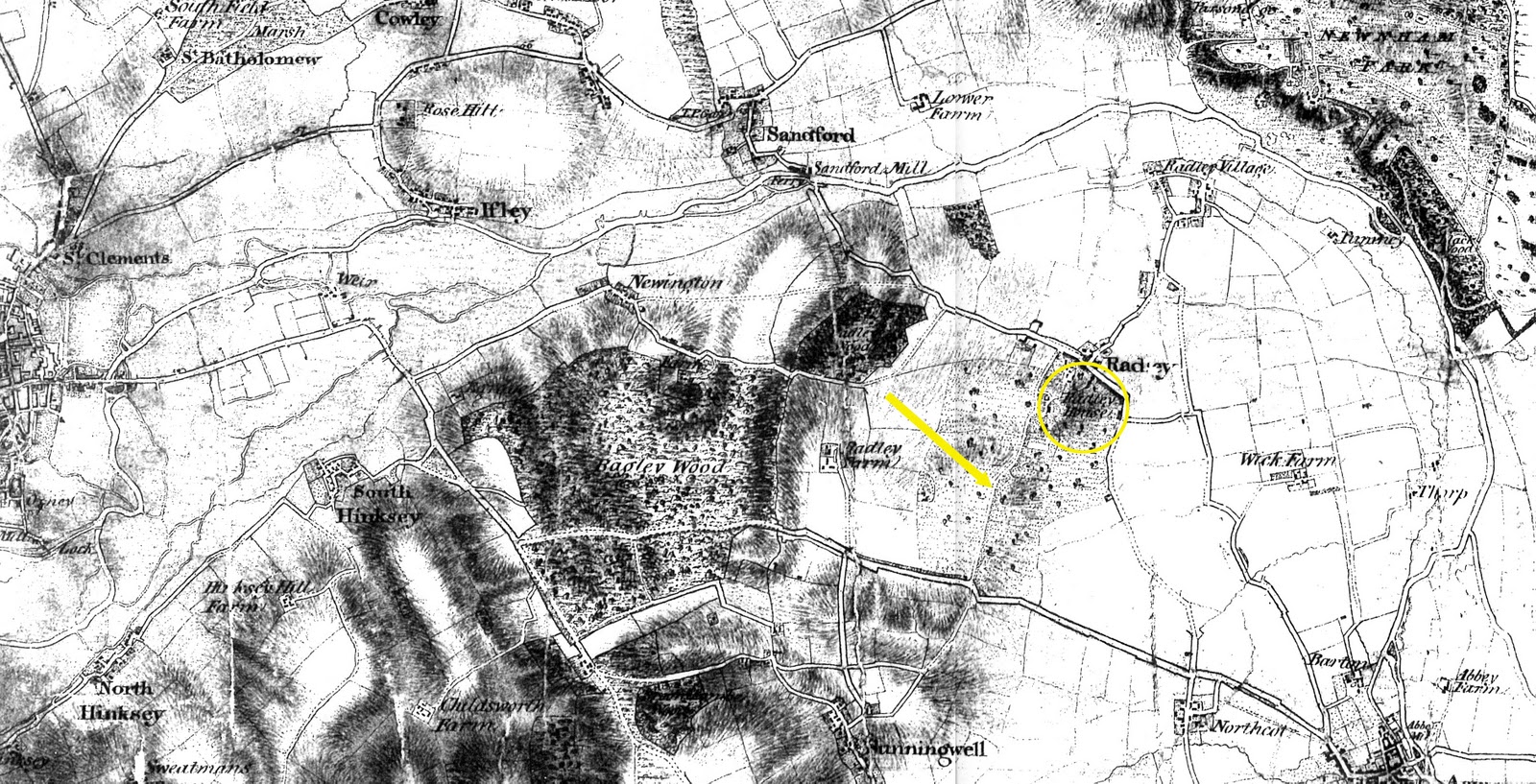
This afternoon I visited the library and found a map of Radley and its surrounds dating from 1811; 17 years before Stephen Hedges stole the lead from Radley Hall. On the map, Radley Hall (or House) is shown, along with a road – or drive – leading up, which, I think, corresponds to the satellite view I posted previously.

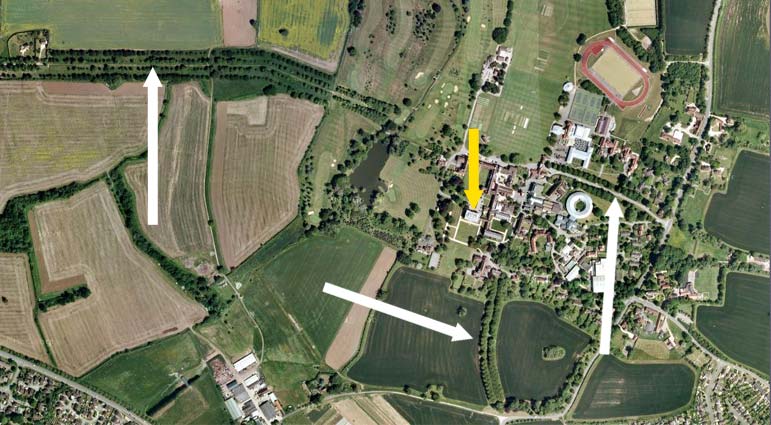
First the satellite view again:

And next, the 1811 map:

This map is aligned a little differently, but Radley Hall is circled in yellow and the drive indicated by the yellow arrow corresponds to that shown by the white arrow on the left hand side in the picture above. I’m not sure if the Lodge was located here, but the drive extends from the Oxford Road and would (I assume) have been the route taken by Richard Burgess on his way from Abingdon to Oxford. A little more research will be needed.

Having stolen the lead, I again assume that they would have travelled into the city via the Oxford Road through Bagley Wood, down Hinksey Hill and up the Abingdon Road. Once in the city, they made their way to the castle precincts and turned back up Butcher Row (modern day Queen Street) as indicated by the newspaper report. Of course I cannot be sure that this is how they travelled, but it seems much more likely compared with what I’d thought earlier.

Filed Under: A Line Drawn in Water, Artist in Residence Tagged With: A Line Drawn In Water, Artist in Residence, Australia, Family Hedges, Family History, Hedges, Maps, Stephen Hedges

Convict Trail

September 24, 2010 by Nicholas Hedges

Prior to my residency in Australia, I want to trace – as far as I can – the route my ancestor, Stephen Hedges, took with the lead stolen from Radley Hall. Radley Hall is now part of Radley College and in the newspaper article regarding the trial, the name of Sir G.Bowyer is given as the proprieter. Having Googled him, I was led to Wikipedia, where I discovered that he – George – was a Baronet and MP for Abingdon. In 1815, financial difficulties forced him to sell the contents of Radley Hall and by 1828, the house was being rented to Mr. Benjamin Kent. The article states that Richard Burgess – a sawyer – who was on his way from Abingdon to Oxford with a cart, met the defendents – Stockwell, Hedges and Harper – who asked if he could carry a parcel for them. He was asked to stop later on next to ‘Sir G. Bowyer’s Lodge’, after which the defendents went into a ‘plantation’ and returned with a heavy bag (full of lead).

Discovering the location of the Lodge will be important in helping me establish the route taken and looking at Google Maps, I have spotted a couple of possible locations for the old driveway. On the map below, the 18th century mansion is indicated with a yellow arrow, and the possible driveways with white arrows.

To be sure, I’ll need to try and find a map of the area as near to 1828 as I can, which means a trip to the library.

Filed Under: A Line Drawn in Water, Artist in Residence Tagged With: A Line Drawn In Water, Artist in Residence, Australia, Family Hedges, Family History, Hedges, Maps, Stephen Hedges

The Marquis of Hastings

September 5, 2010 by Nicholas Hedges

Prior to my residency in Australia, I’ve been researching my four-times great uncle Stephen Hedges (1811-1885) who was transported there in 1828 aboard the convict ship, the Marquis of Hastings (3). I wanted to find out more about the voyage which took 104 days between 30th June and 12th October 1828. In total, 178 convicts were transported, all of whom survived the journey, which, given the conditions in which they were kept is quite surprising. The following is a list of the men who were transported with my ancestor, with sentences of 7 years, 14 years and life.

John Birch
Thomas Smith
Charles Mason
William Smith
William Burgess
Charles Shearman
Stephen Hedges
Henry Stockwell
William Duncombe
William Edwards
Jake White
John Wright
Daniel Murrell
James Matthews
John Richardson
Joseph Dorman
Abraham Storr Junior
James Sewell
Robert Popple
James Goodey
Thomas Cherry
James Wilkinson
George Henley
David Rowland
Jas Briton
Thomas Inman
Samuel Le Count
James Unsworth
Thomas Wells
Abraham Scholfield
William Kinley
Henry Hammond Fleming
Jonathan Collis
James Dixon
Richard Grace
Matthew Green
John Mitchell
John Jones
Jonathan Knowles
William Watt
Roger Worthington
William Ford
John Marsden
Thomas Briant
John Marsh
William Finch
John Burrows
Isaac Jacobs
Thomas Booth
James Mackay
John Bywater
Michael Russell
Richard Hart
Francis Hayes
Henry Dignum
Thomas Hewitt
James Cobson
James Featherston
James Const
Steven Dace
Thomas Knight
William Longman
John Booty
William Orson
James Haines
Thomas Reynolds
John Hitchcock
William Keeven
William Baker
John Levy
William Hawkins
Robert Williams
James Herring
Michael Ryan
Bigley Hermitage
Richard Richardson
John Cavanah
Daniel McCarthy
William Allkin
George Newman
Jeremiah Crawley
Samuel Smith
Anthony Bernard
Martin Blaney
William Godfrey
John Kilminster
Thomas Floodgate
George Glover
Henry Nicholls
John Foot
Richard Jones
John Wilkie
William Mitchell
Andrew Keating
Thomas Holmes
William Cardinell
William Woodwill
James McCarthy
John Phipps
Nicholas Binken
Charles Brewhouse
James Pascoe
Thomas Willis
Joseph Griffiths
William Thompson
Thomas King
Thomas Northam
John Maxfield
Daniel Meney
Thomas Jones
John Kennedy
John McGinnis
James Moss
John Jarvis
William Reynolds
James Wiseman
Thomas Taylor
John Wade
John Jones
Philip Riches
Charles Sandy
Charles Westbury
James Pye
Thomas Burton
William Goodyer
Robert Stafford
Joseph Ockenden
William Nobes Junior
William Ockenden
William Burton
James Gumbrell
James Burraston
John Newberry
Charles Briggs
John Hockley
Offord Russ
Thomas Catley
Edward Leader
William Jones
John Smith
George Munday
Thomas Thompson
Henry Brown
Samuel Freestone
Joseph Callow
Henry Cox
Francis Barr
William Bavin
George Britton
William Jollan
Stephen Burnett
George Martin
James Millen
John Head
Martin Hall
James Bristow
Thomas Dennison
Thomas Montague
James Chambers
Edward Schofield
George Shot
James Walkins
James Binns
Joseph Smith
John Serjeantson
Thomas Winterburn
John Ledgard
William Field
George Spencer
Matthew Spencer
John Field
James Woodhead
James Lister
Joseph Quiby
Joseph Owen
Thomas Vickers
John Wild
Henry Fowler

Filed Under: A Line Drawn in Water, Artist in Residence Tagged With: A Line Drawn In Water, Emma Stevens, Family History, Stephen Hedges

Stephen Hedges (1811-1885)

July 20, 2009 by Nicholas Hedges

I discovered Stephen Hedges about a year ago whilst researching my great-great-great-grandfather Richard Hedges (1808-1882). The two of them were brothers. Having noticed that Stephen died in Australia in 1885 I straight away wondered whether he’d been transported there. Sure enough, a descendent of the family, Julia, confirmed the fact. She herself is descended (like me) from William Hedges who was born in Abingdon in 1750 and his wife Jane (surname unknown) who was born in 1754. I am descended from their son Henry Hedges (1776-1844) and Julia from his brother James (born in 1787). Stephen and Richard were sons of Henry.

Stephen Hedges was convicted at the Berkshire Easter Sessions at Newbury on April 15th 1828. On trial with him were his co-defendents, H. Stockwell and J. Harper. They were all indicted for stealing 154 lbs of lead from a house in Radley and having been found guilty Stephen and Henry Stockwell were sentenced to be transported to Australia for 7 years.

Stephen Hedges (and his accomplice Henry) left England on June 27th 1828 aboard the Marquis of Hastings, arriving in Port Jackson, New South Wales on 12th October. Having served his sentence, Stephen remained in Australia, marrying Elizabeth Carter on Christmas Eve 1838.

Below is the first part of a report concerning Stephen Hedges’ conviction taken from Jackson’s Oxford Journal (April 26th 1828) – click on the image to open the full PDF.

Filed Under: A Line Drawn in Water, Artist in Residence Tagged With: A Line Drawn In Water, Family History, Newspaper Cutting, Stephen Hedges

  • « Previous Page
  • 1
  • 2

© Nicholas Hedges 2024

  • Facebook
  • Instagram
  • Twitter
  • YouTube

Copyright © 2025 · Outreach Pro on Genesis Framework · WordPress · Log in