Nicholas Hedges

Art, Writing and Research

  • Amazon
  • Email
  • Facebook
  • Instagram
  • YouTube
  • Art
    • Digital
    • Drawing
    • Grids
      • Correspondence
      • The Wall
      • The Tourist
    • Ink on paper
      • Shadow Calligraphy
    • Installation
      • Murder
      • Echo
    • Painting
    • Patterns
    • Mixed Media
    • Photographic installation
      • St. Giles Fair 1908
      • Cornmarket 1907
      • Headington Hill 1903
      • Queen Street 1897
    • Research/Sketches
    • Stitched Work
      • Missded 1
      • Missded 2
      • Missded 3
      • Missded 4
    • Text Work
  • Blogs
    • Family History
    • Goethean Observations
    • Grief
    • Light Slowed But Never Stilled
    • Lists
    • Present Empathy
    • Shadow Calligraphy
    • Trees
    • Time
    • Walking Meditations
  • Video
  • Photography
    • Pillars of Snow
    • Creatures
    • The Trees
    • Snow
    • St. Giles Fair 1908
    • Cornmarket 1907
    • Headington Hill 1903
    • Queen Street 1897
    • Travel
  • Illustration and Design
  • Music
  • Projects
    • Dissonance and Rhyme
    • Design for an Heirloom
    • Backdrops
    • Shadow Calligraphy
  • Exhibitions
    • A Line Drawn in Water
      • Artwork
    • A Line Drawn in Water (Blog)
    • Mine the Mountain 3
      • Artwork
    • Mine the Mountain 2
      • Artwork
      • The Wall
    • The Woods, Breathing
      • Artwork
    • Snow
      • Artwork
    • Echo
      • Artwork
    • Murder
      • Artwork
    • The Tourist
    • Dreamcatcher
    • Mine the Mountain
      • Artwork
      • The Tourist
    • M8
    • The Gate
    • Creatures
      • Artwork
    • Residue
      • Artwork
    • A visit to Auschwitz
      • Artwork
  • Me
    • Artist’s Statement

The Receipt of Ordinary Weather

August 24, 2026 by Nicholas Hedges

I’ve written a lot about the textile tokens at the Foundling Museum and have recently come across the complete digitised collection of admission papers complete with the tokens left by mothers with their children.

I have also recently discovered the complete digitised collection, at Oxford University Herbaria, of Jacob Bobart the Younger’s Herbarium. It was his father’s Herbarium on display in a recent exhibition at the Ashmolean museum which piqued my interest in these specimens, but since looking through the archive, they have become an essential part of my thinking.

First of all the Foundling Museum tokens which I have already talked about at length. These tokens, left by mothers with their children, were meant as a means of identification should the mother ever be in a position to take the child back. 

The tokens themselves comprise all sorts, from thread to ribbons, textiles to coins such as that below, left with a girl, aged 6 weeks, at 9.00pm on Friday 19 February 1742.
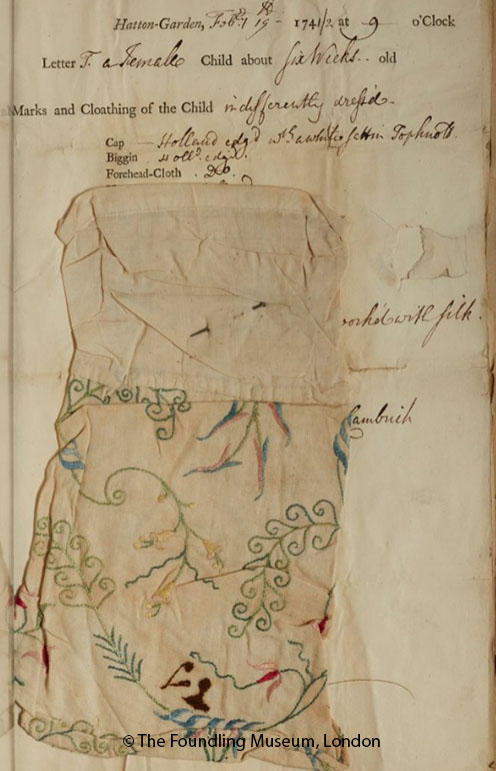
I’ve talked before about how I unpack objects in museums and tease out the gestures within them and in particular about the Foundling Museum tokens:

My work is, in part, an attempt to know the past as a present-day, lived experience; to empathise with those who lived before me and see the natural world as they would have seen it, before so much was lost.

In 2018 I visited the Foundling Museum in London, established as The Foundling Hospital in 1739 to receive and care for abandoned children. It was an emotional experience, not least because of the scraps of fabric left by mothers with their babies; a means of identifying their child in the event they might reclaim them in the future. Amounting to over 5000 items, this sad catalogue is Britain’s largest collection of 18th century textiles.

When we attempt to engage with the past, often what is left  – whether a name, a ruin, an object or story – is like those scraps of fabric, and the dress from which the fabric was cut, the world from which they’re estranged. In our mind’s eye, we can take the scrap and attempt to extend its pattern to form a view of the world long gone; the dress from which it was cut, the woman who wore it, the streets down which she walked. Whether a name, a ruin, an object or story, the process is the same; we take a fragment and, in our imaginations, extend it. 

But in this endeavour we are always like a parent, claiming a child with a mismatched pattern, pointing out the parts that rhyme, aware of those which don’t.

Of course many of the tokens were ribbons or pieces of plain fabric and were not cut from a dress at all. But I wanted a way of showing how, with a simple piece or fabric, we can extend a pattern out to create the wider world from which it came. With the token above, one can imagine doing just that, extending the lines of the embroidered plants beyond the token, onto a bigger piece of fabric. What I’m aiming for isn’t historical accuracy per se, but a vocabulary – a means of expressing that move from fragment, to body, to world; from pattern, to dress, to world.

Below is a specimen taken from Jacob Bobart the Younger’s Herbarium on the Oxford University Herbaria website.
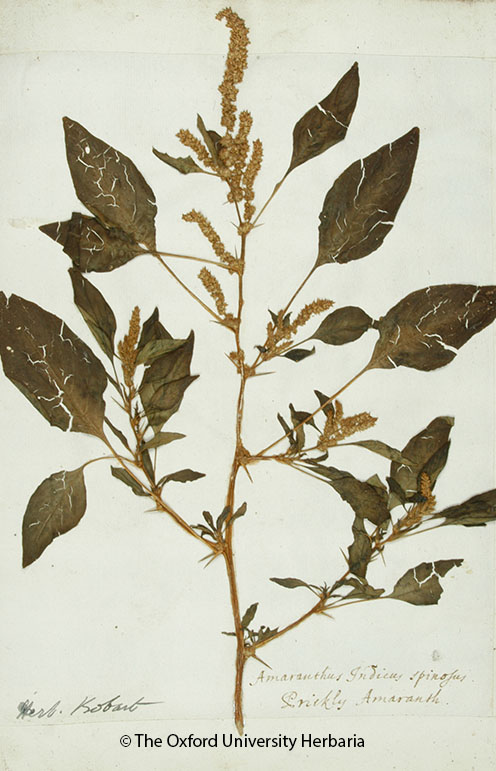
It’s hard to believe, looking at this, that it was growing in the ground over 350 years ago. We are used to seeing things that old of course. Indeed, in Oxford, 350 years is nothing compared to what else we might find around us, let alone what we might discover in a museum. But specimens like this are a different thing altogether. We are used to seeing plants grow, flowering season by season, year by year. We might place particular value on those we grow in our gardens whilst walking past those growing from walls or kerbs. The fact is, they are everyday things which – although we might notice them – occupy the background much of the time. That’s not to say they are not important – far from it – but they, more often than not, occupy the periphery of our attention. 

If we think of an event 350 years ago – for example, the Restoration of Charles II – then in history we see the headlines of that world – restored 29 May 1660 –  not the everyday, background parts which bring that world to life. These specimens in the herbarium, however, do just that. They show us the peripheral world of the mid 17th century, the everyday parts which bring that world so suddenly and wonderfully close. It’s as if the spring of that year, 350 years ago, is only a matter of weeks past. 

Flowers and plants are fleeting and yet here they are on the page 350 years later. The plant in the image is almost as it was in the mid 17th century. It’s as if we can still see its growingness, as if the mid 17th century is still in the act of unfolding. In a Goethean sense, to know something is not to stand outside it and describe it, but to participate in its continuation. When I look at the plant on the page, that is what I find myself doing – participating in its continuation.

I’ve talked before about Goethe’s concept of ‘urpflanze’ and my thoughts on an ‘urpresent’:

For Goethe, things were also best understood not as static forms, but as visible processes of becoming. With the example of a plant, what appears to us as a collection of separate parts was, for Goethe, a series of transformations: leaf becoming petal, petal becoming stamen, form passing into form. In his work he sought not to look behind the plant for some hidden cause, but to perceive within the plant the law of its own unfolding (an authentic whole within the parts). This was the ground from which his idea of the Urpflanze emerged.

Goethe’s Urpflanze (ur-plant) is not a force or thing behind the plant, or some kind of Platonic ideal. It’s seeing that what looks like a plant is actually something happening.

I see the plant growing, but not as it is now, but as it was in the mid 17th century. And in my imagination, as I turn from the plant, I glimpse the weather to which the plant, like everything else was in thrall. For a brief moment, I see the weather and the world of the mid 17th century. As Tim Ingold writes: 

‘For the things of this world are their stories, identified not by fixed attributes [petals, stamen, leaves – my addition] but by their paths of movement in an unfolding field of relations. Each is the focus of ongoing activity. Thus in the storied world… things do not exist, they occur.’

They occur not in isolation but in relationship with other occurring things. So as I look at the page, as I see the plant growing (occuring) so I see it becoming in relation to other becoming things; the weather, other plants, people walking beside them lost in conversation about the restoration of the king.

Rainer Maria Rilke wrote, ‘I look outward, and in me the tree grows’. So it is with the plant. I feel into it (einfűhlung) and the plant grows into me (weltinnenraum). So as I look at the page, that small part of the 17th century grows within me too. 

“Reason,” Goethe also wrote, “is concerned with what is becoming, understanding with what has become… Reason rejoices in development; understanding wishes to hold everything fast so that it may make use of it.”

Becoming is, as I’ve written above, the unfolding field of relations.

The plant, as a specimen, has become. What I see when I look with my imagination and tease out the gestures is its becoming within what has become. I can’t actually go back to the mid 17th century to see it’s actual ‘becoming’ but I can see it through what exists before me.

I know what it takes to make a plant grow; sunlight, rain, soil and so on. And these most everyday of things become the empathetic bridge connecting me to the 17th century garden in which the plant grew. The 17th century rain and sunlight are still there within it and that sunlight still casts a plant shaped shadow 350 years into the future. I pick up the gesture of the weather and with the knowledge of light and rain from my own time, continue the plant’s trajectory. 

The same is true of the foundling token. I look at that fabric token and imagine the wider piece of textile from which it came. Into that textile the pattern grows, but it doesn’t stop there. Nothing, as we’ve seen, exists in isolation and like the plant in the 17th century soil, the textile exists in the 18th century town. And although I can never see that town of 1742, I know the town I live in now; a town which, like the town of 1742 and the plant of the 17th century receives ordinary weather, is full of connections which are always being made and unmade. The best description of this will always be the words of Italo Calvino in Invisible Cities:

“In Ersilia, to establish the relationships that sustain the city’s life, the inhabitants stretch strings from the corners of the houses, white or black or gray or black-and-white according to whether they mark a relationship of blood, of trade, authority, agency… you come upon the ruins of the abandoned cities, without the walls which do not last, without the bones of the dead which the wind rolls away: spiderwebs of intricate relationships seeking a form.”

“Also in Raissa, city of sadness, there runs an invisible thread that binds one living being to another for a moment, then unravels, then is stretched again between moving points as it draws new and rapid patterns so that every second the unhappy city contains a happy city unaware of its own existence.”

In the archive of the Foundling Museum, we might read that a baby was left on a certain date and at a certain time. That they were six weeks old when given into care.

We are used to history being written in years (1660 – the restoration of Charles II); events described as happening on certain dates (the Great Fire of London, started Sunday 2 September 1666), but these are often events of historic import like battles and coronations. They aren’t things describing ordinary people, let alone poor and desperate mothers. And certainly they are rarely described to the hour or quarter hour. 6 ¾ o’clock. 6.45pm in our money. It’s the moment a mother says goodbye to her child leaving all her hope in a small piece of fabric sealed in a billet which will never, in all likelihood, be opened. It’s as if such a trauma requires a sharper point than that which even a day can allow.

That moment becomes folded, like paper around the token. The edges are defined and the paper sealed with wax. It has become. 

Earlier I wrote:

Whether a name, a ruin, an object or story, the process is the same; we take a fragment and, in our imaginations, extend it. 

But in this endeavour we are always like a parent, claiming a child with a mismatched pattern, pointing out the parts that rhyme, aware of those which don’t.

I realise now that the process was slightly different. The claimant would say what the sealed billet contained and then, when it was opened, their words would be set against the token inside. 

To look at an object and imagine a past to which it belonged as best we can is to say what we think the billet contains then compare. Parts might rhyme, but for the most part there is dissonance. It’s as if the parent has said there was a plain red ribbon inside but in fact the ribbon was blue and embroidered.

Many of the billets were opened in the mid 19th century when the tokens were removed and pinned to the admission papers. What is evident in these samples are the folds of the opened billets. 

These billets would have remained sealed for almost 100 years and those folds become like marks of tension, as if the sealed billet was like a clenched fist, holding something tight – something precious. 

Hope. 

When the billet was finally opened and the token removed, the tension was released, like the hand of someone letting go their last breath. The mother and child died long ago and yet that hope persisted in the folds of the paper. And even to us today, 280 years later, that hope is still visible. 

The bond is still there. 

It’s that unfolding which interests me. 

The unfolding of the billet.

The unfolding of the flower.

The unfolding of the gestures.

The unfolding of the lost world. 

The unfolding of my imagination.

I’ve spoken before about how a piece of a broken Hologram, unlike pieces of a traditional image, contains not a fragment of the image, but the whole of the image at a much reduced resolution. One can use that metaphorically to describe all objects from the past and, in our case, the Foundling token and the Herbarium specimen. The plant is not just a plant. It is the weather of its becoming, the wind which moved it, the people who saw it. Indeed, it is the whole of its time at a vastly reduced resolution. The same is true of the Foundling token. 

It was Henri Bortoft who used the metaphor of hologram when describing the concept of authentic wholes. A plant, for example, is not the sum of its parts (petals, leaves, stamen etc,) but its happening, its becoming (urpflanze). Similarly, no time is the sum of its parts; it is imminent in every part (urpresent), parts which themselves do not occur in isolation. In Buddhist philosophy, dependent co-arising teaches that phenomena manifest only in relation to other phenomena: there is no self-nature, no birth, no death — only continual transformation. Any time in the past is not the sum of all its parts, it is immanent in each of them like the whole image is immanent within the broken piece of the hologram.

Bortfoft writes:

“If we start from this position, we must at least insist on moving in both directions at once, so that we have neither the resultant whole as a sum nor the transcendental whole as a dominant authority, but the emergent whole which comes forth into its parts. The character of this emergence is the ‘unfolding of enfolding’, so that the parts are the place of the whole where it bodies forth into presence. The whole imparts itself; it is accomplished through the parts it fulfills.”

This unfolding exists in the herbarium sheets in the way the plants point beyond themselves to the time – the weeks of spring and summer – in which they were growing (although, as we’ve seen are, that time is not beyond the plant but imminent within it. The plant therefore points both beyond and within itself.). It’s like looking at an open window in the facade of a house photographed in the 19th century. 
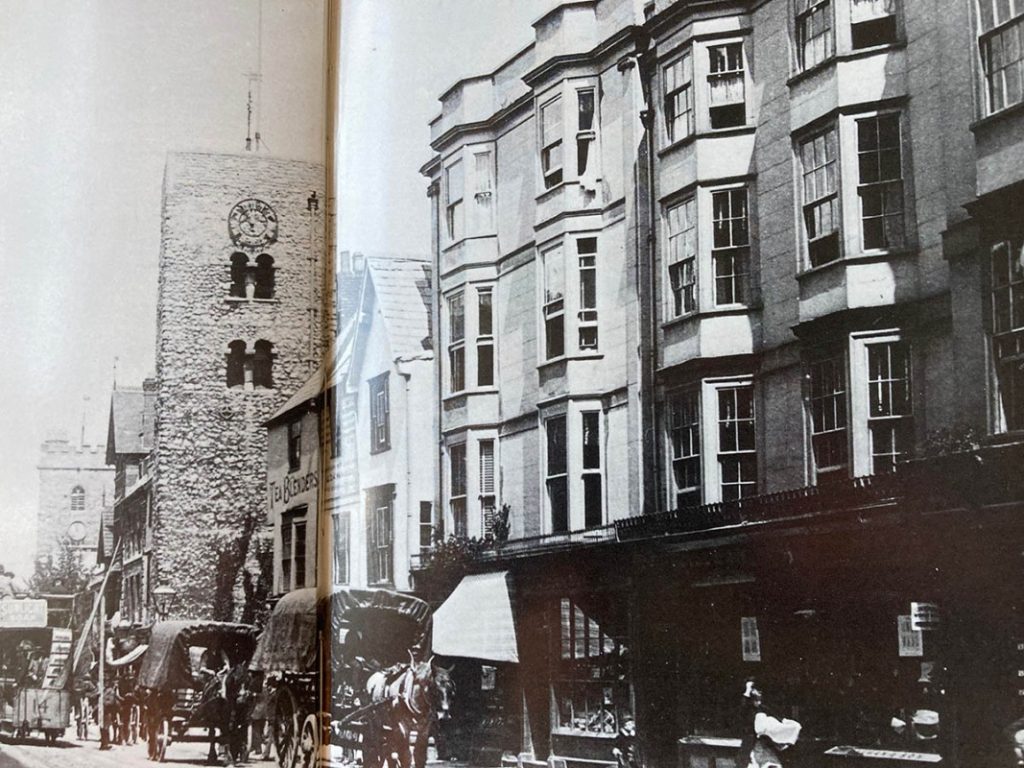
Through the open window, beyond the picture plane, is a room – a room into which the sounds of the day outside pass (there suddenly becomes an outside and an inside, not just the surface of the picture). If someone is in there, they would hear those sounds. They would feel the breeze, smell the smells. They would know the weather, the temperature outside. It is a space into which we can climb as if the photographed town is unfolding and enfolding at the same time.

This extension of space can be seen too in the following newspaper article from Jacknson’s Oxford Journal in 1841.
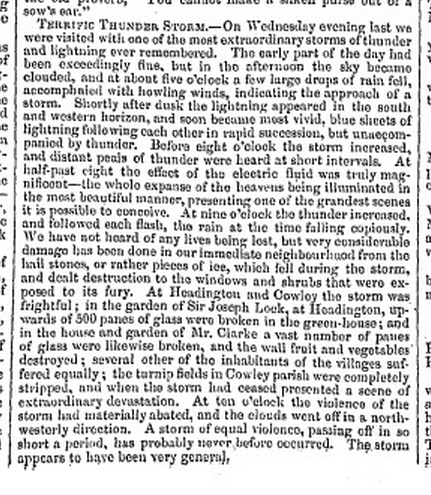
**TERRIFIC THUNDER STORM.—**On Wednesday evening last we were visited with one of the most extraordinary storms of thunder and lightning ever remembered. The early part of the day had been exceedingly fine, but in the afternoon the sky became clouded, and at about five o’clock a few large drops of rain fell, accompanied with howling winds, indicative the approach of a storm. Shortly after dusk the lightning appeared in the south and western horizon, and soon became most vivid, blue sheets of lightning following each other in rapid succession, but unaccompanied by thunder. Before eight o’clock the storm increased, and distant peals of thunder were heard at short intervals. At half-past eight the effect of the electric fluid was truly magnificent—the whole expanse of the heavens being illuminated in the most beautiful manner, presenting one of the grandest scenes it is possible to conceive.

What interests me in this text is the fact it points to a time long before the event it describes. On Wednesday evening last we were visited with one of the most extraordinary storms of thunder and lightning ever remembered. Those words, ‘ever remembered’ suggest a span of time which takes us back into the 18th century so, much like the plants in the herbarium, it unfolds the moment to show us so much more and does so through the weather – that most ordinary and most recognisable of things.

We all know what a storm looks like and that image of silent flashes of lightning on the horizon allows us to find a way back to 1841. From there the report allows us to step back further still, this time through the collective memory of those who were there. 

What this article also points to is the inner worlds of those alive at the time. Memories are contained within us. They exist within our inner worlds and if we are to empathise with those long since gone, we must recognise that they aren’t just names or people moving through the past like characters on a stage; they were people with inner worlds just like ours; worlds full of memories, loves, regrets, traumas and desires.

As Gaston Bachelard wrote: “Dreams, thoughts and memories weave a single fabric.”

The flower on the page of the herbarium is a surface. The Foundling token on the page in the archive is a surface. But like the windows in the surface of a photograph they are deictic – they point both within and without: to a mother and child, to a town, a room, a whole world and so on.  

But objects in museums not only point to the worlds from which they’re estranged, they also point to the inner worlds of those who have known them. 

We all have an inner world. 

Mine is vast. Full, like everyone else’s, of memories, thoughts, stories and dreams. It is the landscape of my imagination. The great forests of pre-industrial England which I loved to imagine as a boy; the large country houses of the 18th and 19th centuries, full of rooms, stairs and passageways. So when we think of people in the past, we not only think of the world through which they walked, but the worlds they carried within them.

Below is the trowel used to lay the foundation stone of the Museum of Natural History in Oxford on 20 June 1855. 
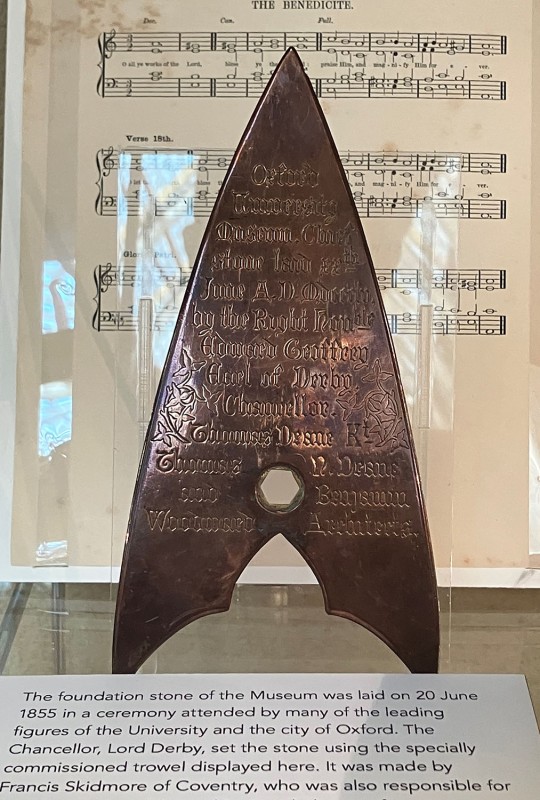
The label states that the trowel was carried in procession by Sarah Acland – the eldest daughter of Dr Henry Acland – who at the time would have been one week away from her 6th birthday. It’s amazing then to look at the trowel in its case, on display in the building for the laying of whose foundation stone it was made and to imagine the ceremony; the child in her best dress, the parents in their smartest attire, the other dignitaries and all the onlookers watching as the procession went past. One can imagine the weather – fine perhaps, the hubbub of conversation, the bored child as the ceremony wears on. I can see the space where the Museum would eventually stand and I can imagine too the day unfolding beforehand, at the Acland’s family home in Broad Street for example; the bustle of preparations, the conversations, the getting dressed, the nerves.

This is an example of unpicking the gestures still latent within an object. The past has gone and is irretrievable, but within this small object, that day can still be glimpsed through careful observation, not just with the senses, but also the imagination.

Sarah Acland would  grow up to become an eminent woman in the field of photography, being as she was – along with Ethelreda Laing, also in Oxford – a pioneer of early colour photography at the beginning of the 20th century. Ethelreda took the photo below of her daughters in the garden of their home in Headington, Oxford.
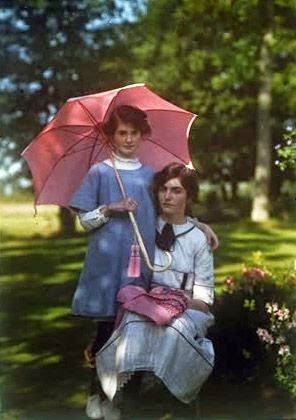
That home became Bury Knowle library, and its grounds became the park I often played in as a child. 

The photo below is a self-portrait of Sarah Acland taken in the early 20th century.
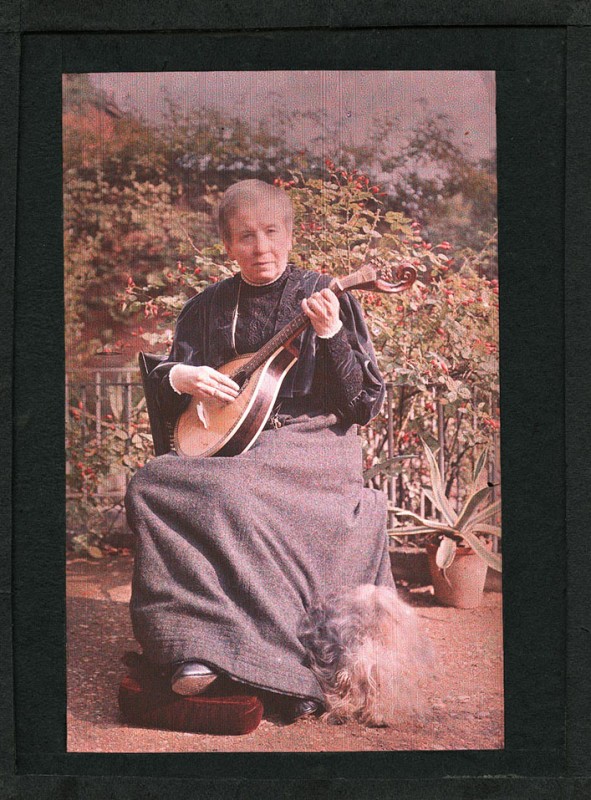
What I find interesting, looking at this photograph, is the fact that somewhere in her mind is the memory of that day in 1855, when, as a child, she had carried the trowel to the ceremony at the site of what would become the Museum of Natural History. The object I have seen in the Museum and which now occupies a space in my memory, also occupied a space in hers.

For some reason, I find that more incredible than imagining the day itself. Side by side, cheek by jowl with that memory of the trowel would be all her memories; of her mother and father, her siblings, events in her childhood, adulthood and so on, a vast hidden world wrapped up like tokens in a sealed billet. It’s as if by seeing the trowel, by sharing that image with someone who died almost 100 years ago, we can also glimpse that inner world. 

The importance of this is that when we look at something like the Foundling token above, we aren’t just glimpsing London in 1742, but the inner world of the mother. The textile fragment would sit in her memories along with the image of her child. We aren’t surfaces. We are worlds enfolded within.

As the long lost past within an object unfolds to briefly meet me, so I unfold to meet it. And at the same time, that past is enfolded back into me and I, in turn, am enfolded into the object. We become folds within one another.
Filed Under: History

Emptiness

March 23, 2025 by Nicholas Hedges

I have just finished reading two books; ‘Helgoland’ by Carlo Rovelli and, ‘Cracking the Walnut’ by Thich Nhat Hanh. It was in Helgoland, a book on Quantum Mechanics, that Rovelli mentioned the writings of an ancient, Indian Buddhist called Nāgārjuna which, he said, had had a profound effect on him. Having read some of Thich Nhat Hanh’s writing before, I found a commentary of his on the writing of Nāgārjuna which I subsequently bought.

As Rovelli writes:

“The central thesis of Nāgārjuna’s book is simply that there is nothing that exists in itself, independently from something else. The resonance with quantum mechanics is immediate. Obviously, Nāgārjuna knew nothing, and could not have imagined anything, about quanta – that is not the point. The point is that philosophers offer original ways of rethinking the world, and we can employ them if they turn out to be useful. The perspective offered by Nāgārjuna may perhaps make it a little easier to think about the quantum world.”

Signlessness is one of the three doors of liberation, along with with emptiness and aimlessness. I’d always found the idea of signlessness and emptiness rather sad, bordering on nihilistic, but reading ‘Cracking the Walnut’ I understood how I had been viewing these terms incorrectly. If we think of an object in and of itself as something which has ‘self-nature’ then we are not seeing that object (and thereby ourselves) as what they (and we) really are.

We are not things isolated from other things. We are things which manifest because of other things, which in turn manifest because of other things and so on. Objects (and again, ourselves) do not have a beginning and end as such (no-birth and no-death). But rather, when we die, we change. (This is not to say we reincarnate; we don’t die and become born again as another person or thing – that’s clearly nonsense.) ‘Cracking the Walnut’ goes deeply into the concepts of no-birth and no-death and ideas of dependent co-arising which is beyond the scope of both this blog and my current understanding, but the ideas of signlessess and emptiness are about this co-arising. We are not separate things (selfs) existing outside of other things, but changing manifestations of a connected world.

As Rovelli puts it:

“‘I’ is nothing other than the vast and interconnected set of phenomena that constitute it, each one dependent on something else.”

We are ’empty’ and ‘signless’ because we are not things in ourselves independent of other things.

It’s interesting that when I read Rovelli’s book and then words of Nāgārjuna (as explained by Thich Nhat Hanh), I realised that in some respects, I had been thinking along these lines in the way I perceive historical objects or places in my work, particularly when it came to the process of Goethean Observations.

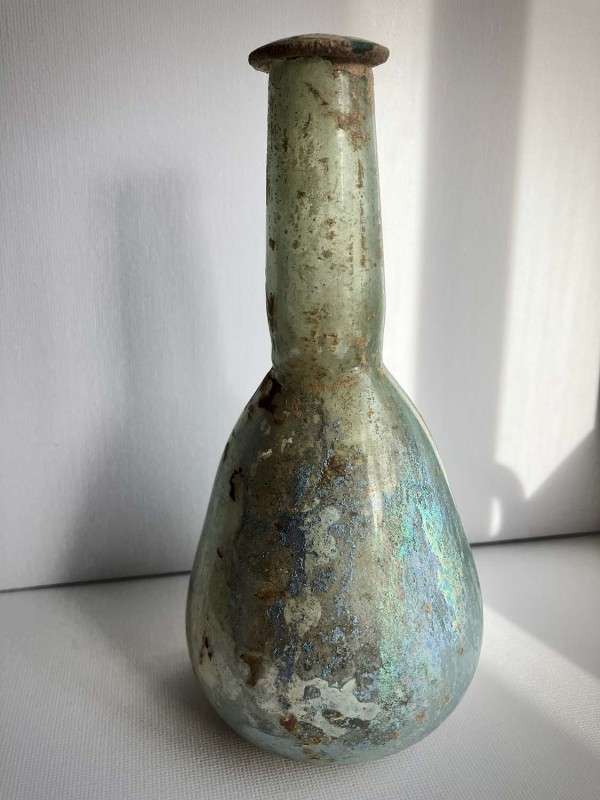
For example, a Roman bottle I bought.

One can look at it as what it appears to be; a glass bottle dating to the 3rd century CE. That is its ‘sign’. But when we look more closely, we can see that it’s so much more than ‘just’ an ancient bottle. It’s sand, heated then blown into the shape of the bottle. It’s the place from whence the sand came; it’s the sea and the long process of rock weathered down into grains. It’s weather, wind and waves. It is the breath of a man who lived nearly two millennia ago. It’s one of many moments in his life. It is his learning, his skill, his thoughts and mood that day. It’s the place in which it was kept; the oil it contained and the woman who rubbed the oil rub on their skin. It’s the grave in which they were laid with the bottle; the dark, the silence, the chemical process that caused its iridescence.

It is then, empty. Not because there is nothing in the bottle (there is, of course, air), but because it has no self-nature. It is not a thing independent of other things. It is, as Rovelli put it above, ‘nothing other than the vast and interconnected set of phenomena that constitute it, each one dependent on something else.’ The sea, the sand, the breath, the thoughts, the hands, the skin, the grave and so on. And, just as it is for the bottle, so it is with us.

In a recent blog post ‘Genius‘, I mentioned David Whyte’s book, ‘Consolations’ in which he writes:

‘Each one of us has a unique signature, inherited from our ancestors, our landscape, our language, and alongside it a half-hidden geology of our life as it has been lived: memories, hurts, triumphs and stories that have not yet been fully told. Each one of us is also a changing seasonal weather front, and what blows through us is made up not only of the gifts and heartbreaks of our own growing but also of our ancestors and the stories consciously and unconsciously passed to us about their lives.‘

In turn he describes the genius of landscape as being:

‘Genius is, by its original definition, something we already possess. Genius is best understood in its foundational and ancient sense, describing the specific underlying quality of a given place, as in the Latin genius loci, the spirit of a place; it describes a form of meeting, of air and land and trees, perhaps a hillside, a cliff edge, a flowing stream or a bridge across a river. It is the conversation of elements that makes a place incarnate, fully itself. It is the breeze on our skin, the particular freshness and odours of the water, or of the mountain or the sky in a given, actual geographical realm. You could go to many other places in the world with a cliff edge, a stream, a bridge, but it would not have the particular spirit or characteristic, the ambiance or the climate of this particular meeting place.

A place then is also empty. It is a ‘vast and interconnected set of phenomena‘.

Suddenly, more quotes began to come to mind; quotes I have used many times before; all of them seeming to concur with this way of thinking. I mentioned some in another blog post, ‘Knowing We Are There.’

One is a quote from American author and essayist Barry Lopez:

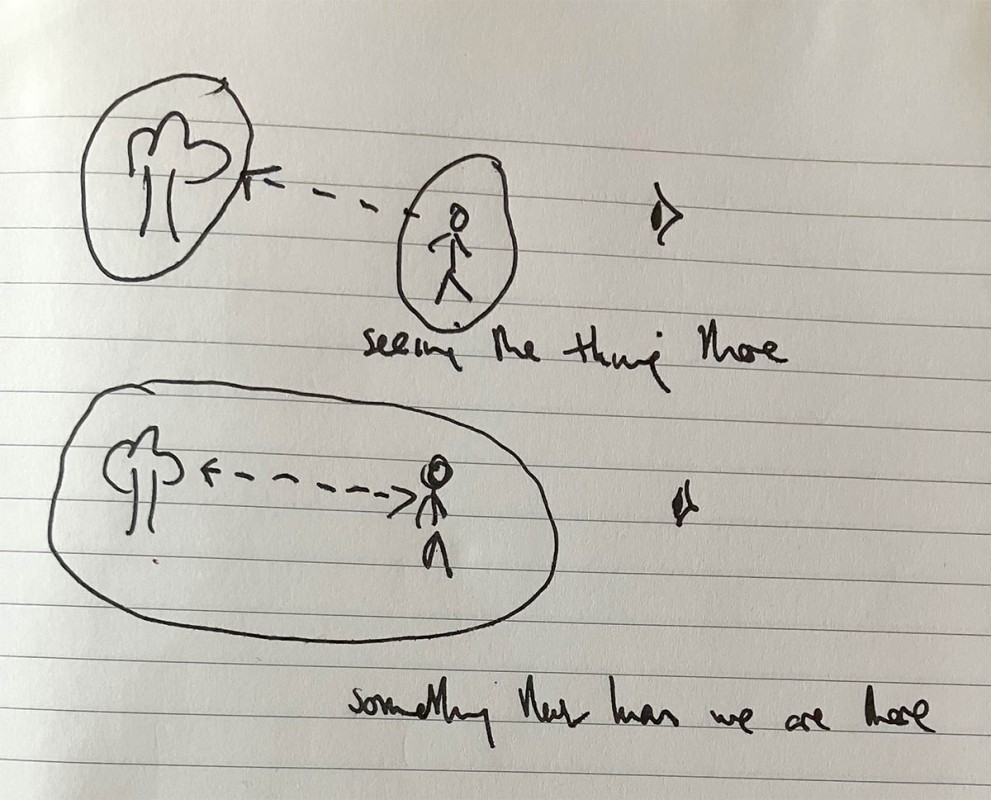
“One must wait for the moment when the thing — the hill, the tarn, the lunette, the kiss tank, the caliche flat, the bajada – ceases to be a thing and becomes something that knows we are there.”

Another by Christopher Tilley. In his book ‘The Materiality of Stone, Explorations in Landscape Phenomenology’, he writes: 

“The trees ‘see’ the painter in a manner comparable to that in which the mirror ‘sees’ the painter: that is, the trees, like the mirror, let him become visible: they define a point of view on him which renders visible for him something that otherwise would remain invisible – his outside, his physiognomy, his carnal presence… The trees and mirror function as Other.”

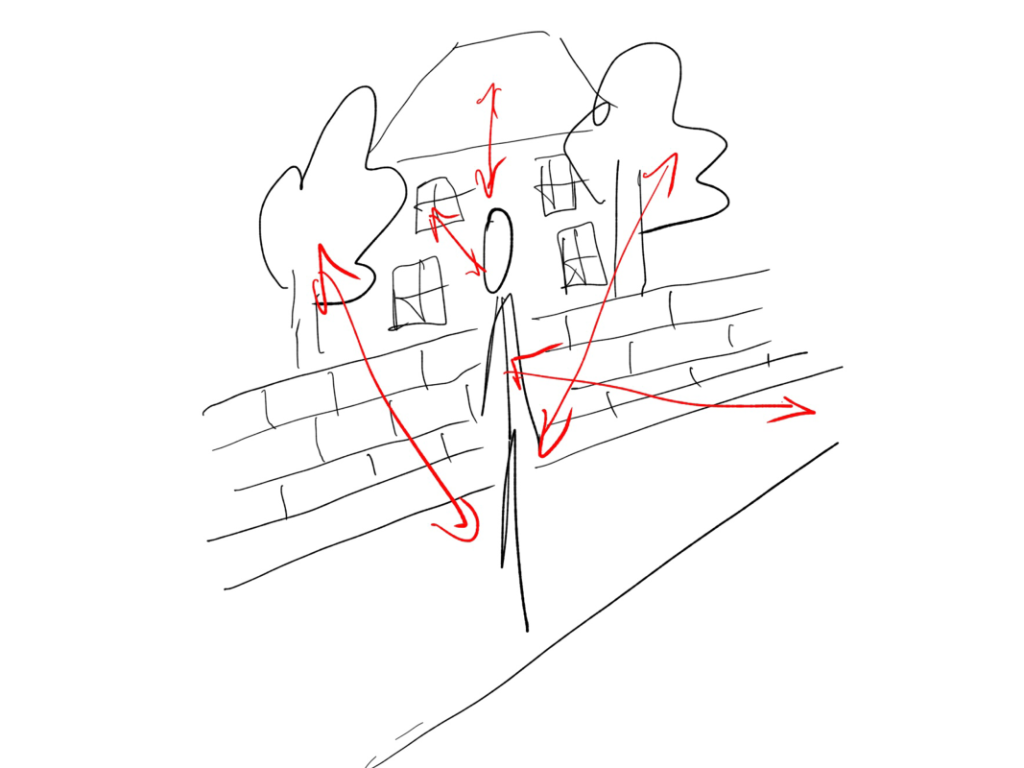
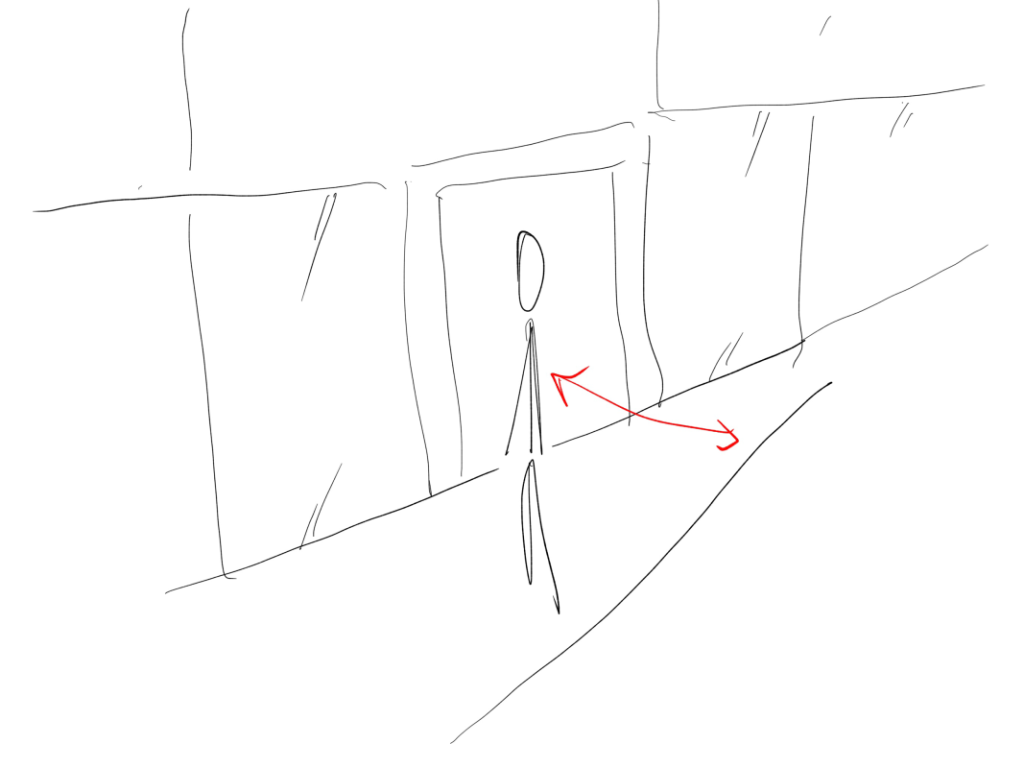
Interestingly, I drew a diagram to represent my thinking when I read Lopez’s quote, and now, over a year later, having read Rovelli’s work and the work of Nāgārjuna, it makes perfect sense.

There is not a tree and a person. There is interconnectedness.

But this interconnectedness isn’t confined to the present moment. In a post called ‘Measuring The Past‘, I wrote:

“To climb the peaks of our imagination and see a time long before we were born is, at the same time, to descend into the depths of our own non-existence, wherein which dark expanse, our imagination lights the dark as it does the paths that lead away from our deaths. Imagination and memory come together to blur the boundaries of our beginnings and ends, as if, like a book, the unseen words that might have been written before and after are suddenly revealed in all their infinite number.”

When we think about emptiness and the idea that we are that ‘vast and interconnected set of phenomena‘, we begin to see that that network isn’t confined to what we perceive as ‘now’, but rather a network which stretches back in time.

Whenever I’m in an art gallery looking at a painting, for example, one of JMW Turner’s, I often think of all the people that have stood where I am standing looking at that same painting. The painting might be hanging in a different place, but over time, thousands would have stood exactly where I am standing in relation to that same painting.

The painting is a node in a network linked to everyone who has ever stood and looked at it. I in turn am in that same network, linked to each of those people.

We can interpret Barry Lopez’s and Christopher Tilley’s quotes as revealing how it is not simply about us, as subjects, observing other objects. They too ‘observe’ us. That is, they manifest at that moment, because of us, because we are looking and vice-versa.

Before reading any of the above books I thought in this way whenever i thought about objects in museums. It’s how I can build the worlds to which those objects belonged, because essentially, it is the same world. There is only one of these vast, interconnected networks; one in which everything that exists and has ever existed is connected.

Thinking in this way, the glass bottle is a node in that network. However, like the painting, and like everyone who has ever looked at the bottle or the painting, we mustn’t think of the objects as something static (something with a self-nature) that stand like chess pieces on a board. Everything is in flux. The bottle is not a thing which came into existence fully formed in the 3rd century CE, just as the man who made it wasn’t born fully formed years before. They are both manifestations of other phenomena. The bottle is sand, fire and breath. It’s the sea and the waves, the pull of the moon; all things with which, in my own life, I’m familiar. If I think of the sea, I think of my holidays as a child. The sea and the sand become nodes linking me with the bottle, just as a breath links me with the man.

Filed Under: History, Present Empathy

Measuring the past

July 20, 2022 by Nicholas Hedges

“We have been living this same moment ever since we were conceived. It is memory, and to some extent sleep, that gives the impression of a life of discrete parts, periods or sections, of certain times or ‘highlights’.”
Bill Viola,‘Reasons for Knocking at an Empty House. Writings 1973-1994

“For although we know that the years pass, that youth gives way to old age, that fortunes and thrones crumble (even the most solid among them) and that fame is transitory, the manner in which—by means of a sort of snapshot—we take cognisance of this moving universe whirled along by Time, has the contrary effect of immobilising it.”
Marcel Proust, Time Regained

If the past is past and no longer exists and the future is yet to happen, then how do we, in the present, know about the past and experience the flow of time? In the here and now, there is no past and no future. So where are they? In Book XI of the Confessions, Augustine of Hippo concludes that they are within us:

“It is within my mind, then, that I measure time. I must not allow my mind to insist that time is something objective. When I measure time, I am measuring something in the present of my mind. Either this is time, or I have no idea what time is.”

In ‘The Order of Time,’ Carlo Rovelli writes; “…in the present, we see only the present; we can see things that we interpret as traces of the past, but there is a categorical difference between seeing traces of the past and perceiving the flow of time – and Augustine realises that the root of this difference, the awareness of the passing of time, is internal. It is integral to the mind. It is the traces left in the brain by the past.”

Things as events

In the same book, Rovelli writes:

“The world is not a collection of things, it is a collection of events… even the things that are most ‘thing-like’ are nothing more than long events.”

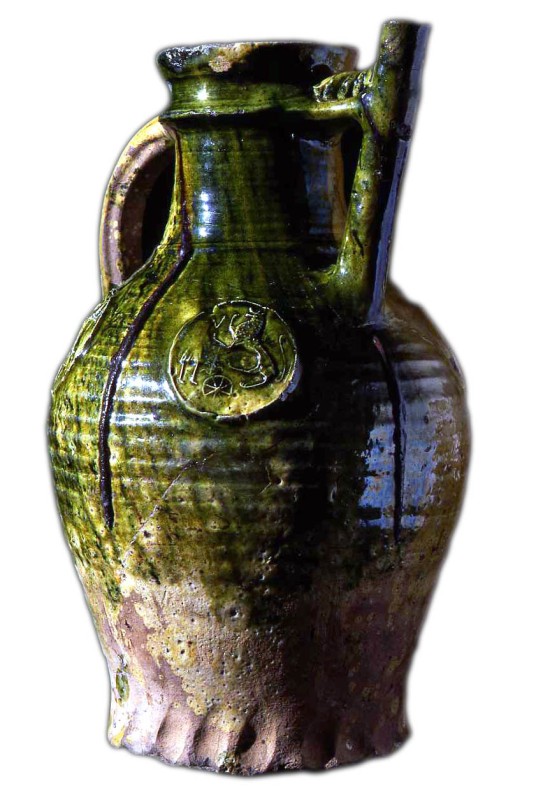
Mediaeval jug

Like us, an object in a museum (for example, a mediaeval jug) is an event, and as an event, is just as much a part of the world today as it’s always been. Its use, function or value might have changed but as an event, the fact of its nowness now, is the same as it was 800 years ago when it was experienced in much the same way as it is today.

To borrow `Bill Viola’s quote above, this event (our mediaeval jug) has been ‘living’ this same moment ever since it was made, but it’s the lives of those who have ‘experienced’ the jug (their lives and deaths) over the centuries that gives the impression of a ‘life’ of discrete parts, periods or sections – the difference between now and then; a sense of history.

“There will no longer be any more reason to say that the past effaces itself as soon as it’s perceived, than there is to suppose that individual objects cease to exist when we cease to perceive them.”
Henri Bergson (1859–1941)

Measuring the past

When we cease to look at an object, that object remains within us as a memory, a snapshot which straight away begins to bleed into vagueness, much like a drop of ink spreads on a piece of paper. Our perception of the time that’s passed is also vague. It’s hard to relive a past moment with any degree of clarity (although music, objects and, in particular, place, can certainly sharpen our remembering senses). It’s also difficult to measure the flow of time with any degree of accuracy. How often is it that on recalling when someone famous died, the time that’s passed appears much shorter than it’s actually been?

We know the length of a year, and can, with that knowledge, imagine the span of 100 years or more, but only as we might walk a mile and contemplate a journey to the moon. As a rule to measure our lived experience (the flow of time as opposed to the fact of our age) units of time (months, years, decades) are of little use. Even less so as a means of perceiving, with any degree of accuracy, a span of several centuries past.

“Time – that’s what makes death so terrifying. The very idea of not existing – forever. But when you consider the past without recourse to a clock, when the past becomes that cloth bag of moments, then the future too – there on the other side of this thing we call the present – is just another load of moments waiting to go in the bag, to be jumbled up with all that’s gone before.”
Brief Castles

To ‘measure’ the distance to a past event and contemplate that place on ‘arrival’, we need to use our own memories and relationships as a yardstick, all bound up in the presentness of our own existence. When we think of times in the distant past, we do not consider them precisely as we do when measuring distance. The years are not arrayed within us sequentially along a line, but like our memories are mixed up together. If we’re looking at something made in 1588, we know it’s 290 years older than something made in 1878. But when we consider those times in which they were made, and try to imagine what they were like, our imaginations can’t discriminate between them in terms of a quantifiable length of time.

As I’ve written above, we are all events and as events are continuously linked to hundreds of other events; a network which, like a cat’s cradle, changes with every passing second as relationships are broken and new ones created. When we imagine a moment in the distant past, we have to try and imagine its events and the links between them.

[The city consists of] “…relationships between the measurements of its space and the events of its past; the height of a lamppost and the distance from the ground of a hanged usurper’s swaying feet; the line strung from the lamppost to the railing opposite and the festoons that decorate the course of the queen’s nuptial procession; the height of that railing and the leap of the adulterer who climbed over it at dawn; the tilt of a guttering and a cat’s progress along it as he slips into the same window…”
Italo Calvino, Invisible Cities

“The trees ‘see’ the painter in a manner comparable to that in which the mirror ‘sees’ the painter: that is, the trees, like the mirror, let him become visible: they define a point of view on him which renders visible for him something that otherwise would remain invisible – his outside, his physiognomy, his carnal presence… The trees and mirror function as Other.”
Christopher Tilley, ‘The Materiality of Stone, Explorations in Landscape Phenomenology.’

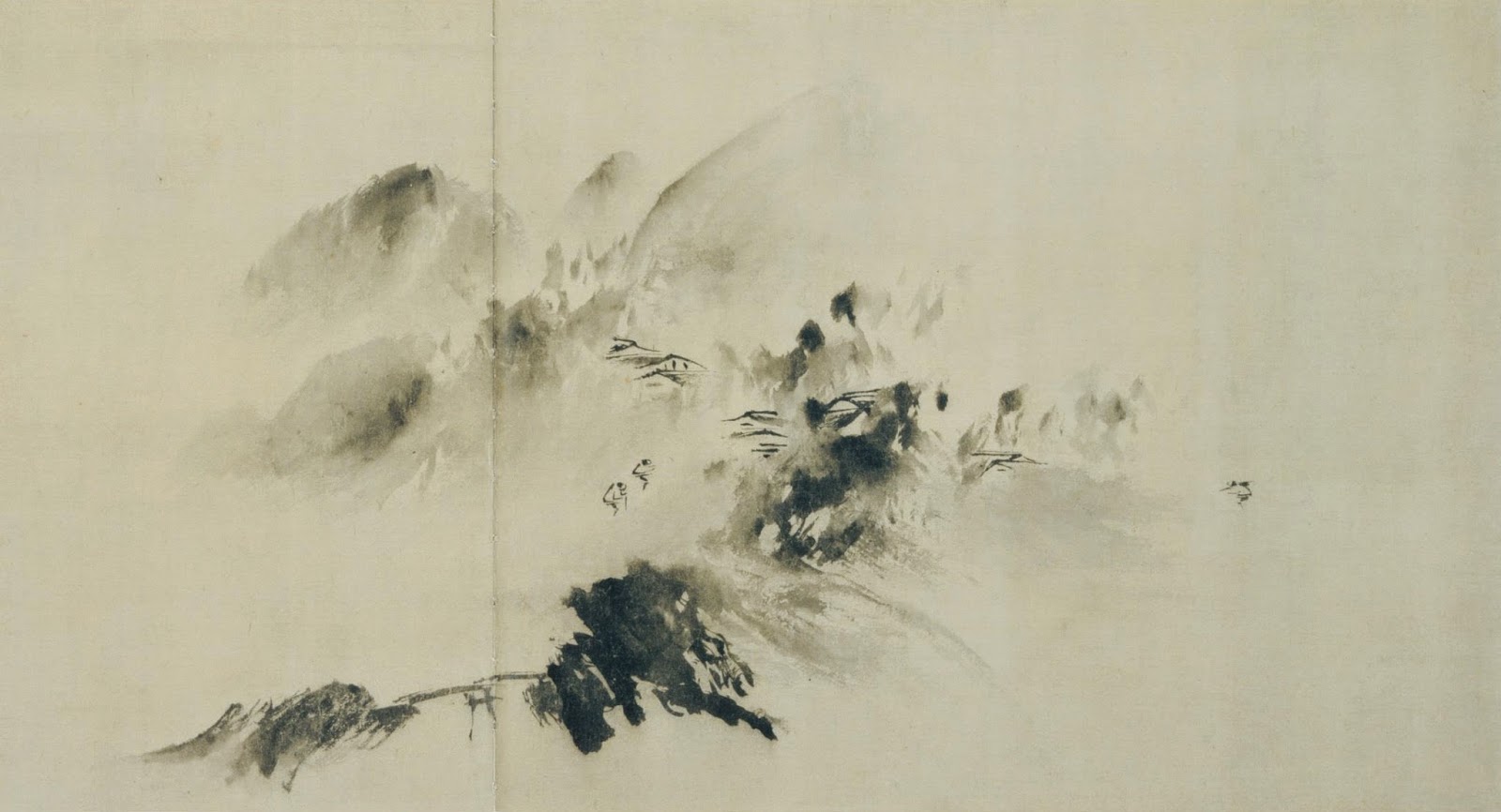
Clearing in the mist by Yu Jian

“Entitled Mountain Village in Clearing Mist by Yu Jian, the painting [shown above] was made all the more extraordinary on account of its age, made, as it was, around 800 years ago in the mid 13th century. This seemingly rapid work transported me to a time long gone. It revealed – much as with the Japanese haiku of Basho – an ancient and vanished moment, not so much through what it showed but how it was depicted. It was almost as if I could see the landscape before the painter himself. I could see the work as a whole (the landscape as a whole), but then, whilst picking through the gestures of the artist, evident enough in the brushstrokes, I could see the landscape as it was revealed. Yu Jian’s painting was not a painting of what was experienced, but rather the experiencing of what was experienced. It was almost as if the painting had become a painting, not of Yu Jian looking at the mountains, but of the mountain ‘seeing’ Yu Jian. It wasn’t the mountain that was made visible on the paper, but the artist himself – his presence at that moment. 800 years after his death, and Yu Jian was as good as sitting next to me. Or to put it another way, 800 years before I was born, I was as good as sitting next to him.”
Brief Castles

The age of a memory

How do we process the age of a memory? How do we ascribe an age to a time we’re imagining? Is it through a subconscious comparison between now and then, where the number of links between us and other remembered events are diminished (disorder) and where those memories or imaginings with the fewer extant links we recognise as the oldest?

Then


Now

To ‘visit’ the past in our imaginations is to compare the world now with what the world was then (just as with our own memories we compare the same). It’s the scale of that difference (not the rule of years) which gives us the age – the degree of ‘pastness’. It’s the number of lines which link us to that past. When we look at our mediaeval jug we are linked to that jug by dint of the fact we’re observing it. When we walk in an historic place, the links – the lines – are greater, such is why, in these places, we can often gain a better sense of the past.

This internal time travel requires that entropy is reversed. We travel away from disorder. Relationships (links) are ‘re-established’ within our imaginations through the lens of our own memories and experience. When I was a child (and still as an adult), that meant rewilding the natural world; seeing the country still covered with ancient forests before they were felled.

Somewhere along the paths of those ancient woods, the long events (our family line) of which we are each a part continued in its presentness, coiled within people long since forgotten. Those forgotten people had memories of those paths – of the trees and dappled light on a summer’s day – just like the memories we have today of roads down which we’ve travelled. And those who carried these memories of the trees and the paths through the woods also carried their children, who in turn were to carry their own memories of their childhoods further down the line.

Of course once we’re travelled back in time, we have to imagine the world as if, like today, it was moving towards disorder; as if things were not fixed by history and that all its details were still filled with potential. Having established the links we need to break them.

In my previous post (‘Disordered Time’), I wrote with reference to some old photographs:

“These open windows therefore help us see the past moment as it happens rather than as it was. They ascribe the picture a duration and give it flow.”

That duration delimits a span of time – a flow – in the blankness of our own non-existence where a symmetry is found between now and then; between a time (now) when I’m alive and someone else is dead, and (then) when they are living and I am not yet born.

That duration – that flow – is a bridge; a means of establishing empathy.

“Trying to remember is itself a shock, a kind of detonation in the shadows, like dropping a stone into the silt at the bottom of a pond: the water that had seemed clear is now turbid and enswirled.”
Patrick McGuiness, ‘Other People’s Countries’

Also in my previous post, I looked at a photograph taken 125 years ago. I looked at a detail in the background of the image, of a man oblivious to the picture being taken.

Detail of a photograph taken in Oxford in 1897

“One can imagine him working and the effort he is making and the fact he’s unaware that he is part of the picture allows me to reach beyond the edges of the photograph. It’s as if, through his being unaware of the photograph, the boundaries of the photograph are dissolved and the moment is given rein to move.”

Boundaries of the photograph. Boundaries between life and non-existence.

Those details, whether they are open windows in 19th century photographs, brushstrokes on an 800 year old painting or ancient handprints on a cave wall are, for me, what Patrick McGuiness describes above as detonations in the shadows. They are the dropped stones agitating the image and the object, disordering time and ‘increasing entropy’.

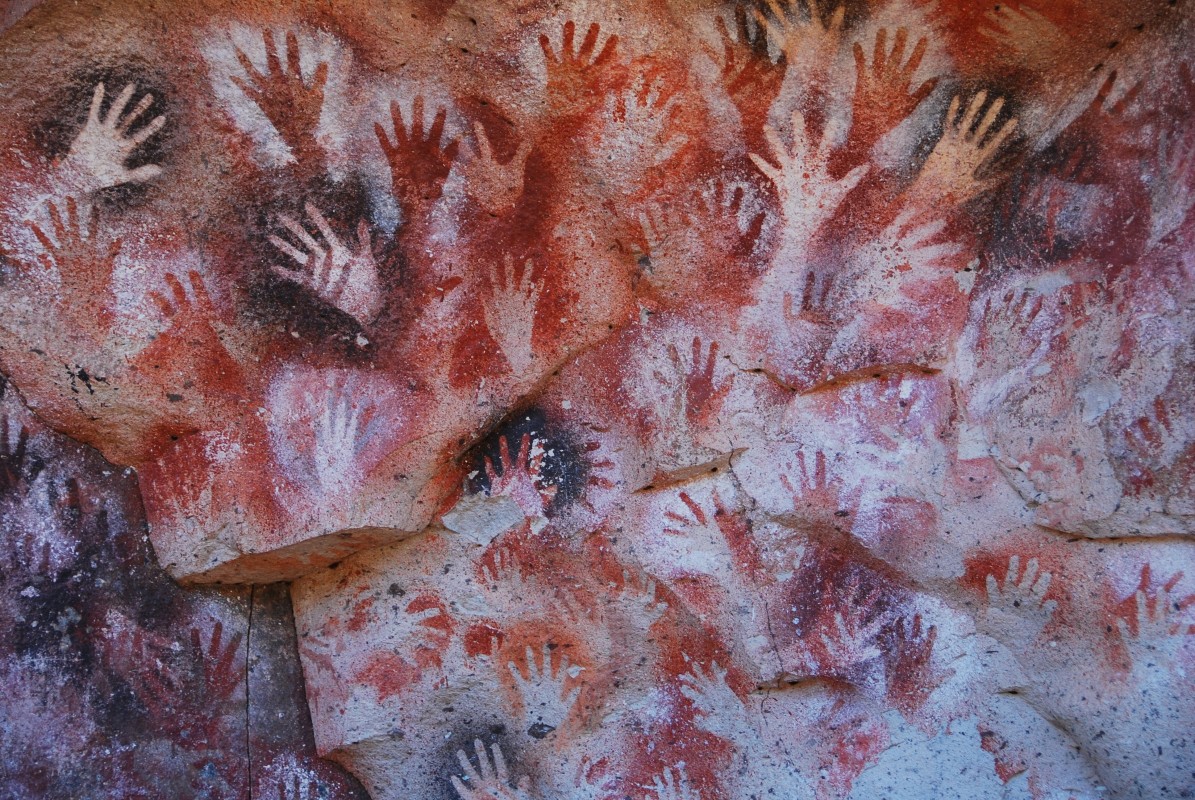
Hands on cave wall

If we imagine standing in the cave with these handprints before us, we can easily imagine the process of making them. If we were able to place our hands upon them, we could affect the same position as those who made them thousands of years ago. These links, lines or relationships help us back to the moment of their conception. But when we think of the world 35,000 years ago and what it looked like compared to ours, there are few links, lines or relationships left. The fewer the lines the older the time. The scale of disorder is vast. But that moment when a hand was painted is vivid and when set against the vast blankness of all the untold moments that make up the last 35,000 years, the sheer unlikeliness of our coming into being is dizzying. More so when we take that moment all those millennia ago and, like a ‘detonation in the shadows’, imagine its progress into the next moment and the next. And as we imagine the millions of lines, links and relationships which every second were, with the progress of those moments, made possible, we remember that 99.99999999% of them would have led to us never being born.

In a previous post (‘Entropy‘) I again referred to something Carlo Rovelli wrote in ‘The Order of Time’.

“The notion of particularity, is born only at the moment we begin to see the universe in a blurred and approximate way. Boltzmann has shown that entropy exists because we describe the world in a blurred fashion. He has demonstrated that entropy is precisely the quantity that counts how many are the different configurations that our blurred vision does not distinguish between.”

It was this line which took me a while to grasp: “He has demonstrated that entropy is precisely the quantity that counts how many are the different configurations that our blurred vision does not distinguish between.”

If we think back to the sandcastle and the pile of sand we can imagine the number of different configurations of each and can easily imagine that the number of configurations for the castle are far, far fewer than of the pile of sand. The castle therefore has few configurations that our ‘blurred vision does not distinguish between’ (low entropy) as opposed to the sand pile (high entropy).

When we think of a past moment whose future has been fixed in time we can borrow from the world of physics and say it has low entropy. But when we consider the details of a moment (the distant man oblivious to the photograph, Yu Jian’s painting in progress) and all the lines, links and relationships formed and broken with every passing second, we can say that, in our imaginations, the same fixed moment acquires greater entropy as we consider all the possible moments that could arise.

To climb the peaks of our imagination and see a time long before we were born is, at the same time, to descend into the depths of our own non-existence, wherein which dark expanse, our imagination lights the dark as it does the paths that lead away from our deaths. Imagination and memory come together to blur the boundaries of our beginnings and ends, as if, like a book, the unseen words that might have been written before and after are suddenly revealed in all their infinite number.

Filed Under: History

The Quanta of History

November 14, 2021 by Nicholas Hedges

I have just finished reading Carlo Rovelli’s ‘The Order of Time’ which, as well as being a fantastic read, has helped me think about my own thoughts on time and in particular, the idea of trying to see the past as if it were the present.

Rovelli takes the reader on a journey from what might be termed a ‘common perception of  time,’ to one that is much more strange. He describes how time moves at different rates depending on where you are. Time moves more quickly at the top of a mountain than it does on the ground – although you would need an extraordinarily accurate and precise timepiece to measure it. There is the question of what is ‘now’ – the present. The present is local (in terms of the universe) and that locality can be measured by taking the minimal length of perceived time (e.g. 1/10 of a second) and multiplying it by the speed of light. In our case, that is still a very big space, but in terms of the universe it of course very small. He then talks about entropy; that it is entropy which truly distinguishes the past from the future; the difference between order and disorder.  For example, if you have a box of 12 red and 12 green balls and the red balls are on one side and the green on the other, then the contents of the box can be termed ‘ordered’ – there is low entropy. If you stick your hand in the box and move the balls around then the balls become disordered and entropy is greater. Of course, what constitutes ‘order’ depends on the variable we use to describe the system – the contents of the box. If the red and green balls are also numbered  1-24, then it might be that the balls are disordered in terms of their colour but that their numbers are running in sequence and therefore ordered.

Anyway, what has all this got to do with me and my work?

The past is perceived as more ordered whereas in the present, entropy is greater – things are more disordered. One of the words I’ve often used to describe my thinking is ‘presentness’ or ‘nowness’ – that is, how can we see an event in the past as if it were the present and thereby establish empathy with those who are now anonymous and who lived through such an event? Having read Rovelli’s book and watched him on YouTube, I realised that our idea of the past – history – is an ordered view of time; a place of low entropy. We see the past as a succession of ordered events with beginning and ends. Henry VIII was born on 28th June 1491 and died 28th January 1547. We know about key events in his life which we can read about in countless books and the same is true for many others. For others the facts are less well known, but even with my own family history, I know, for example, that Samuel Borton, my 6th Great Grandfather was born in Oxford in 1706 and died in 1768. There is an order to his life but of course there was much more to his existence than his birth and his death; there were all the bits in between. I know that he ran the Dolphin Inn which stood in St. Giles from which he ran a coach service to London. I know he 9 children and that his parents were Richard and Mary. But that, along with a few other details are all I know. It is a very ordered (and, of course, limited) view of his life.

What I’m interested in are the people who came into his tavern; the faces he knew well along with the strangers. I like to think about the conversations he had, the weather outside the window. I like to imagine what the inn looked like, the smells and the sounds. In effect, what I’m doing is taking my ordered view of his life and shaking it up – disordering it; introducing a higher degree of entropy.

Thinking back to the fact that our view of a system depends on the variable we are using to describe it (the green and red balls, the numbered balls), does reimagining the past as if it were the present require a different variable?


Filed Under: History

© Nicholas Hedges 2024

  • Facebook
  • Instagram
  • Twitter
  • YouTube

Copyright © 2026 · Outreach Pro on Genesis Framework · WordPress · Log in