Nicholas Hedges

Art, Writing and Research

  • Amazon
  • Behance
  • Facebook
  • Instagram
  • Pinterest
  • YouTube
  • Art
    • Digital
    • Drawing
    • Grids
      • Correspondence
      • The Wall
      • The Tourist
    • Ink on paper
      • Shadow Calligraphy
    • Installation
      • Murder
      • Echo
    • Painting
    • Patterns
    • Mixed Media
    • Photographic installation
      • St. Giles Fair 1908
      • Cornmarket 1907
      • Headington Hill 1903
      • Queen Street 1897
    • Research/Sketches
    • Stitched Work
      • Missded 1
      • Missded 2
      • Missded 3
      • Missded 4
    • Text Work
  • Blogs
    • Family History
    • Goethean Observations
    • Grief
    • Light Slowed But Never Stilled
    • Lists
    • Present Empathy
    • Shadow Calligraphy
    • Trees
    • Time
    • Walking Meditations
  • Video
  • Photography
    • Pillars of Snow
    • Creatures
    • The Trees
    • Snow
    • St. Giles Fair 1908
    • Cornmarket 1907
    • Headington Hill 1903
    • Queen Street 1897
    • Travel
  • Illustration and Design
  • Music
  • Projects
    • Dissonance and Rhyme
    • Design for an Heirloom
    • Backdrops
    • Shadow Calligraphy
  • Exhibitions
    • A Line Drawn in Water
      • Artwork
    • A Line Drawn in Water (Blog)
    • Mine the Mountain 3
      • Artwork
    • Mine the Mountain 2
      • Artwork
      • The Wall
    • The Woods, Breathing
      • Artwork
    • Snow
      • Artwork
    • Echo
      • Artwork
    • Murder
      • Artwork
    • The Tourist
    • Dreamcatcher
    • Mine the Mountain
      • Artwork
      • The Tourist
    • M8
    • The Gate
    • Creatures
      • Artwork
    • Residue
      • Artwork
    • A visit to Auschwitz
      • Artwork
  • Me
    • Artist’s Statement

Wildflowers

May 21, 2025 by Nicholas Hedges

This work is one which, like the grief it represents, changes over time. It began following the death of my mum in 2022 with three empty diffusers I found in her home.
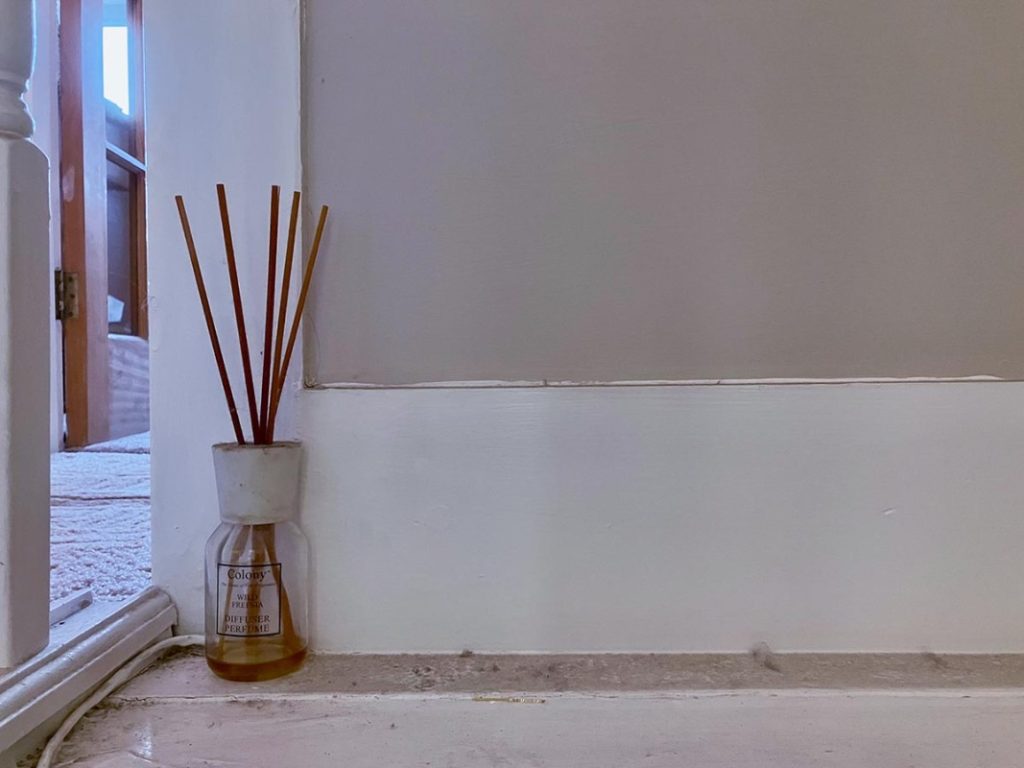
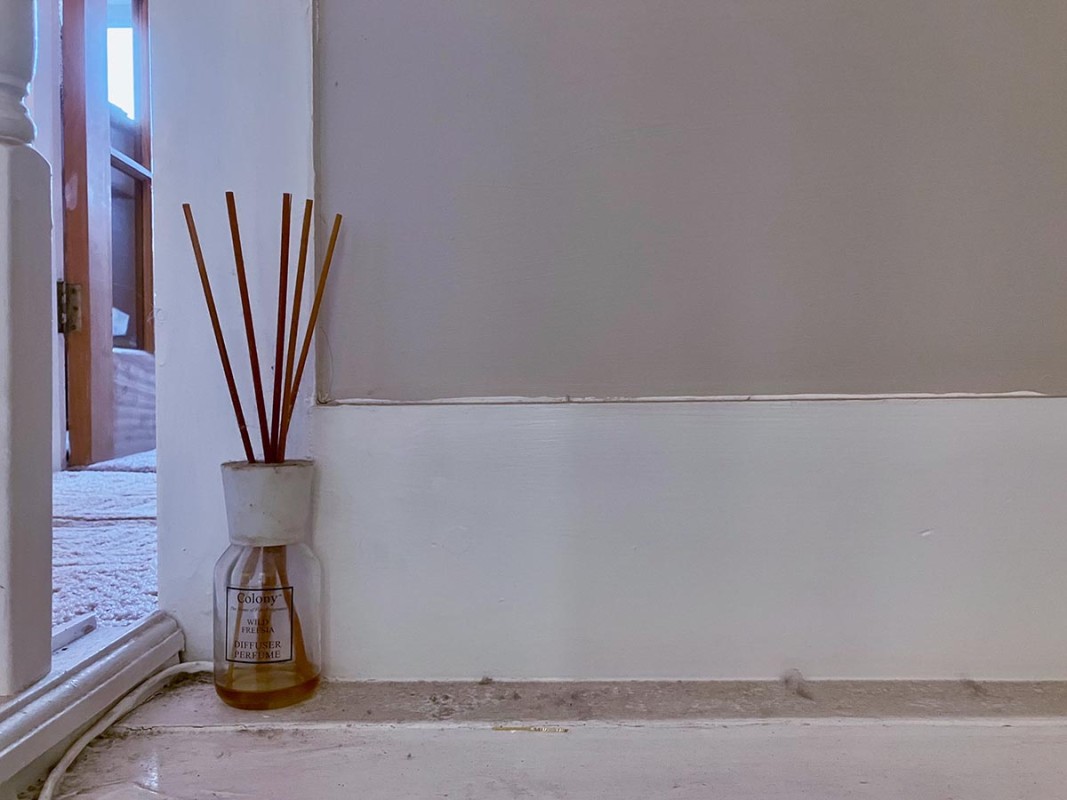
Empty diffusers in my late mother's house

They diffusers spoke to how I felt then. The bottles were empty – or almost empty – where once they were full. The reeds did nothing but smell faintly of what had once been, carrying nothing into nothing; ‘air traded for air’ as Rilke put it. They were the perfect metaphor for loss.

I wanted therefore to do something with them along with those I had in my own home. I thought about the glass containers, about what what they represented. To me they were the like the presence of my mum in the present day. They were transparent. You could see the present distorted through the glass, just as now I sometimes see the present when remembering my mum. I can’t see her, but I can hear the things she might have said. I see what I see distorted as if by her words, her laughter.
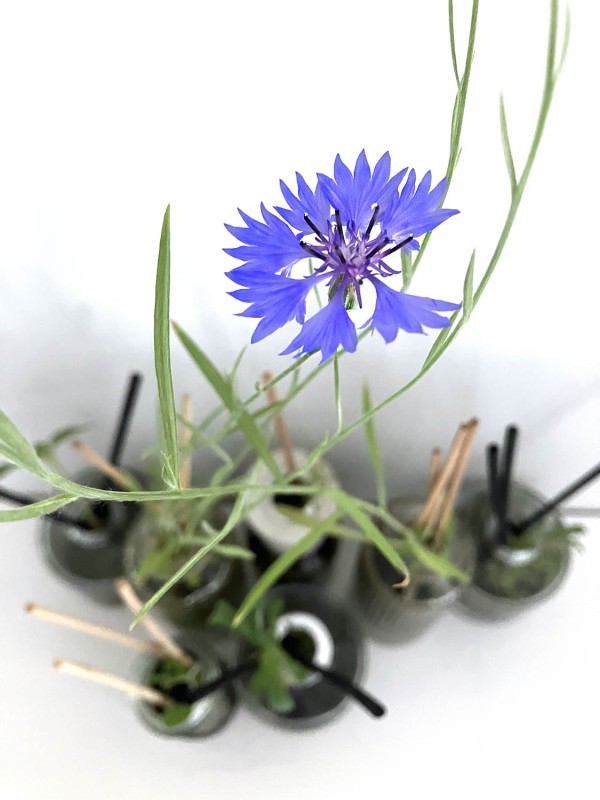
Violet wildflower growing from an empty diffuser as part of an art project about grief.

When I remember mum, I am using that presence – the shape of the glass – from which memories come not only of the past, but also of the present; as if she is still there with us, looking at the world as it is now. Planting the glass containers with wildflowers reflects that feeling. Memories are like the seeds. They sit within us and with the sun, the rain, all that is present now in our everyday world, they grow.
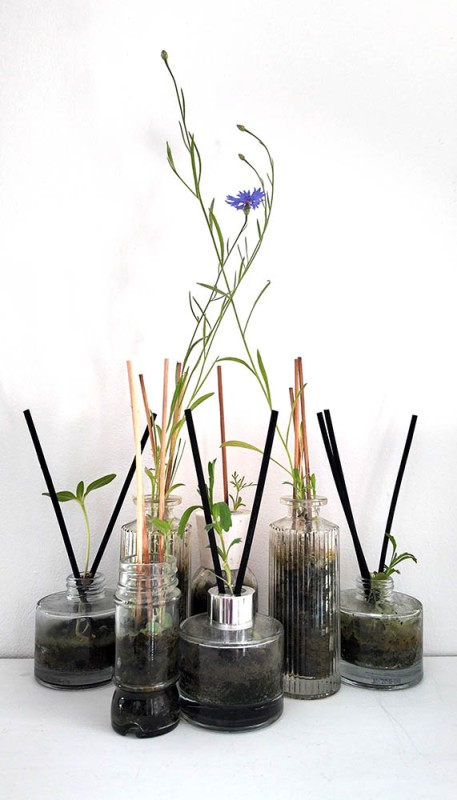
Memories are not relics – things left over from the past. They are a part of life now, growing and flowering, continuing the life of the loved one after they’ve passed away.
Filed Under: Grief, Mum

Wave (goodbye)

October 7, 2024 by Nicholas Hedges

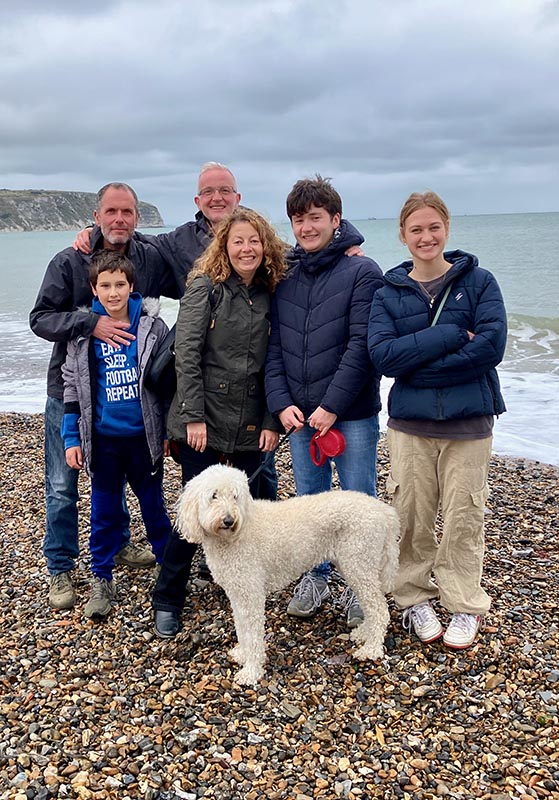
This weekend, two years after her death, we scattered mum’s ashes into the sea at a few places that have played a part in our lives as a family; Chesil Beach, Swanage and Shell Bay.

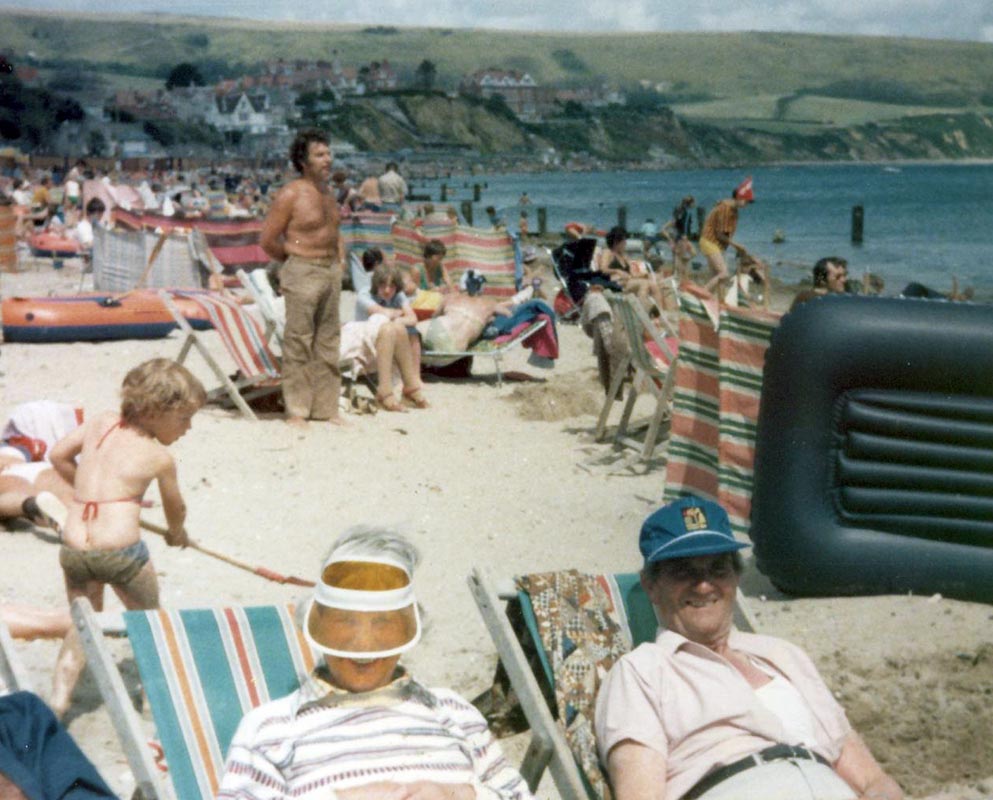
Swanage was a favourite destination for several years. We often went there with my nan and grandad (pictured below), and as we stood on the beach on Sunday morning, my thoughts were with them as well as with mum and of all the times we spent together, there on the front.

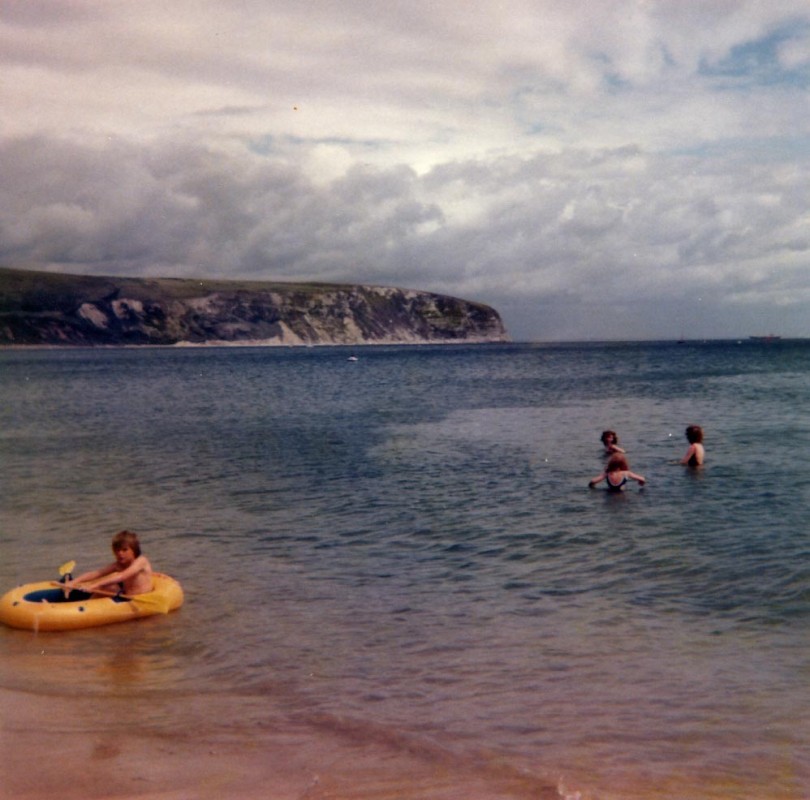
I’ve always liked the headland behind us in this photograph. It’s one of those features which reminds me so much of the past. The photo below of teh headland was taken by me on a school trip in 1983.

The image below shows the same headland, along with my brother in his dinghy, around 1980.

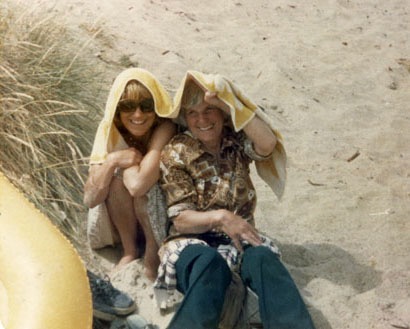
We then moved on to Shell Bay, another beach which occupies a special place in our childhood memories. The image below is of my mum and my nan on Shell Bay, again around 1980.

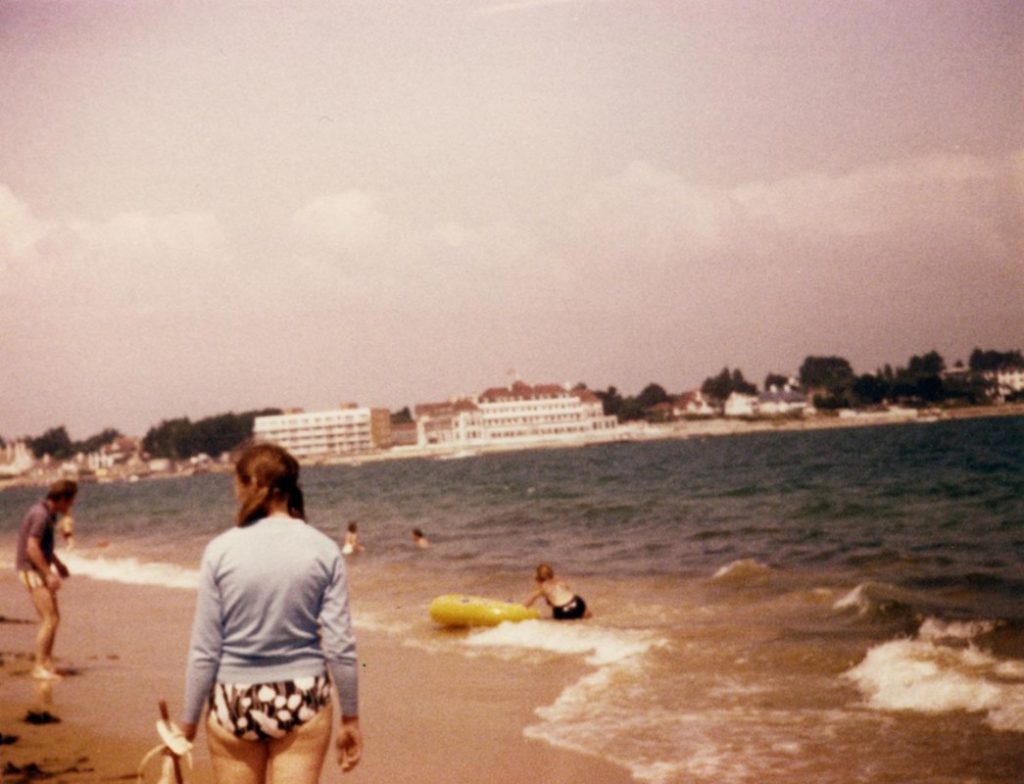
The image below, also on Shell Bay, shows my mum in the sea having tumbled out of my brother’s dinghy, and my dad on the beach looking on.

It was almost on that very spot that we scattered more of mum’s ashes, and it was so poignant and quite poetic, to watch the waves coming in to almost gather her up and take her away.

Filed Under: Family, Grief

Grief II

February 22, 2024 by Nicholas Hedges

We have all lost someone in our lives, whether that’s through death or the breakdown of a relationship. Both are painful and both require us to grieve for the missing loved one. In many ways, the loss of a partner when a relationship ends feels worse; perhaps because the grief has been chosen for us. It fits us like a second skin, but when someone dies, the grief, although painful and also made to measure, is like the remembrance of a close and comforting hug.

I have experienced both these things of late and want to express that grief through my work.

The video below was made a few years back. Filmed in Shotover Wood in Oxford, it shows the shadows cast by trees on a summer’s day and was a way of visualising the idea that all that’s left of the past is like the shadows in the film; that if we want to imagine what the past was really like, we have to imagine the trees, the sky, the sun, the colours and the sounds.

The idea of the everyday within the present moment has always been of interest to me, particularly in regards to how we can empathise with those in the past; particularly those who experienced times of trauma. When I visited Auschwitz-Birkenau in 2006, I was struck by the movement of the trees, aware that those who had suffered so much would have seen exactly what I was seeing. It was something so everyday, but something which had the power to link us together despite the difference in time and of course experience.

“‘…You have no idea how tremendous the world looks when you fall out of a closed, packed freight car! The sky is so high…’
‘…and blue…’
‘Exactly, blue, and the trees smell wonderful. The forest – you want to take it in your hand!’”

Tadeusz Borowski

“Another leap in time, to a different landscape and different colours. The colour is blue: clear blue skies of summer. Silver-coloured toy aeroplanes carrying greetings from distant worlds pass slowly across the azure skies while around them explode what look like white bubbles. The aeroplanes pass by and the skies remain blue and lovely, and far off, far off on that clear summer day, distant blue hills as though not of this world make their presence felt. That was the Auschwitz of that eleven-year-old boy.”

Otto Dov Kulka

“The air, the woods, breathing.”

Adam Czerniakow

The important thing here is how things we experience in the natural world, like trees and the sky, the wind and the rain, can connect us to those in the distant past, because they too would have experienced them. Our lives might be completely different, but those things stay the same.

Back to the trees at Shotover…

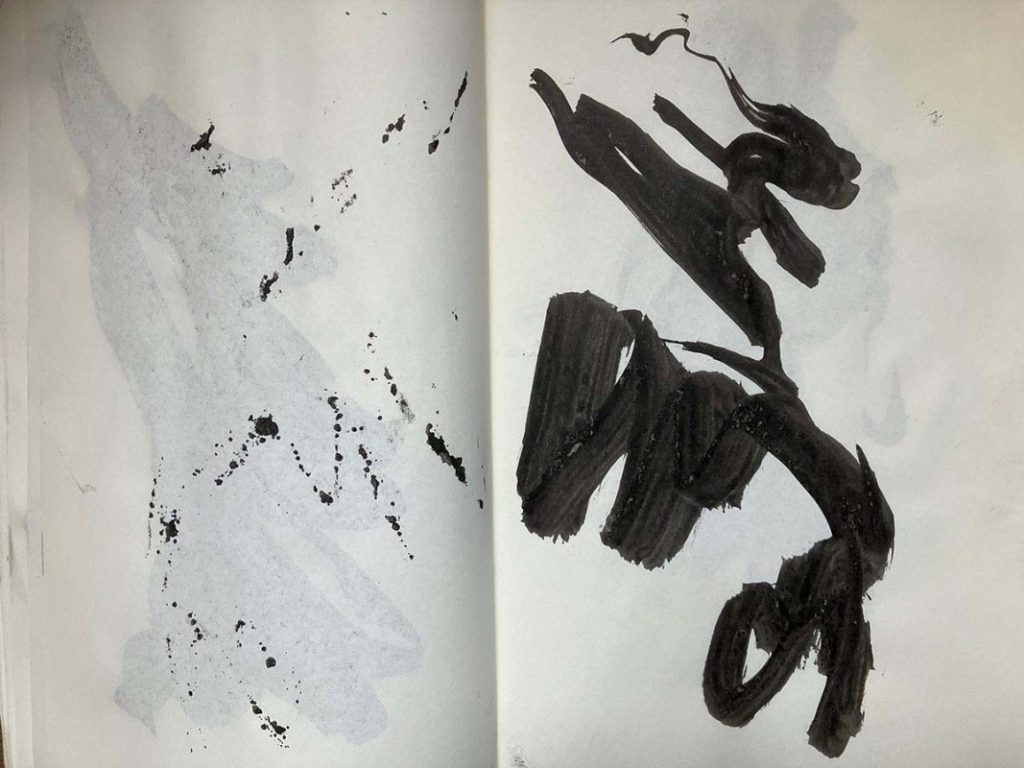
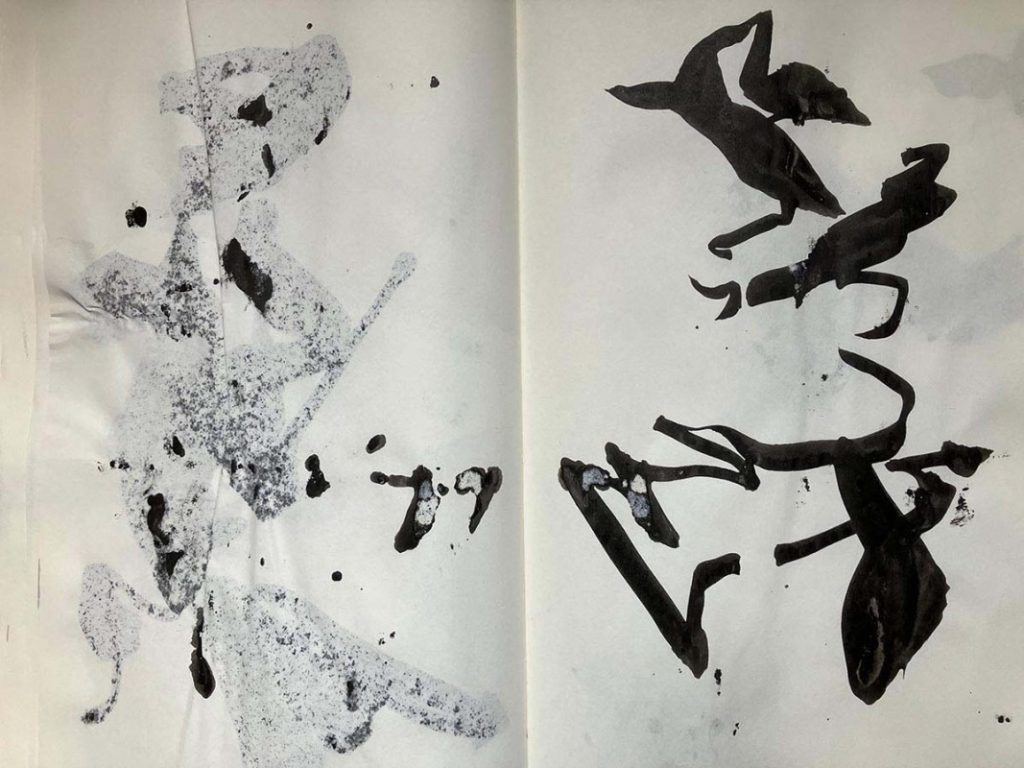
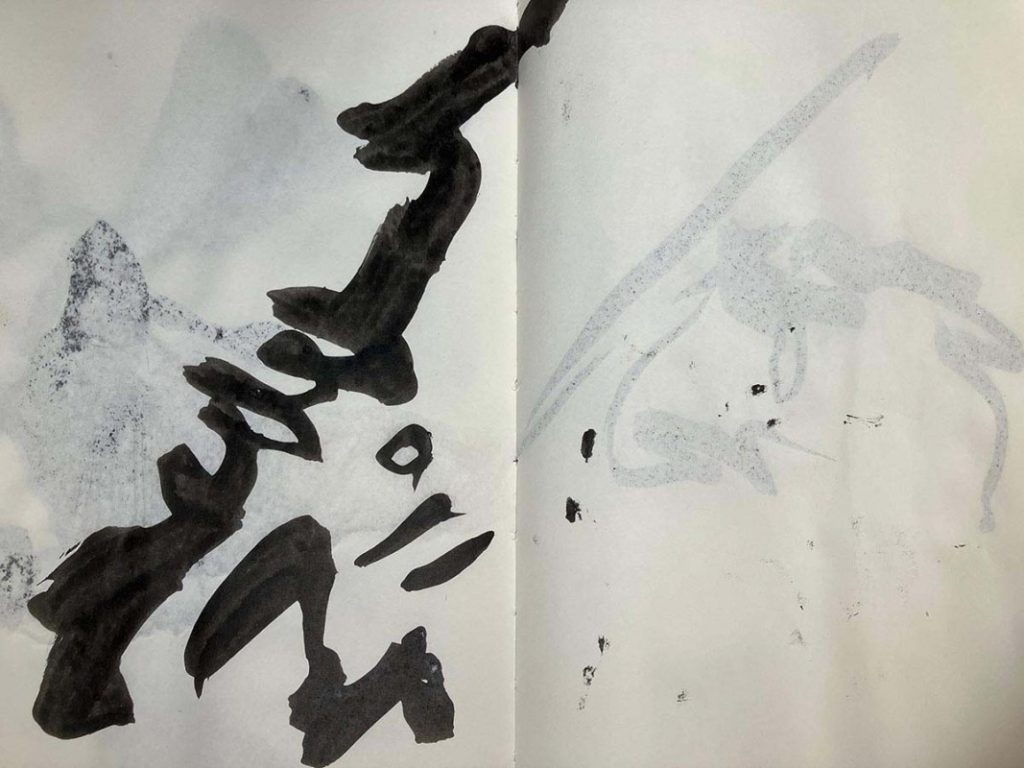
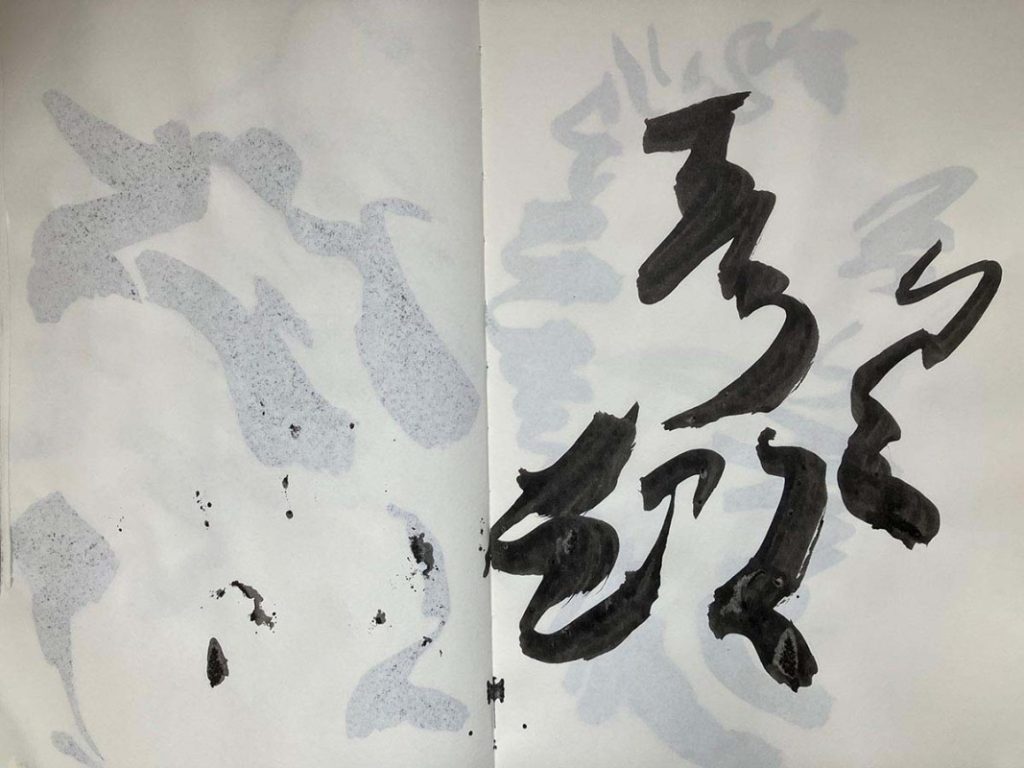
I loved the ‘calligraphy’ of the shadows as they wrote themselves on the blank piece of paper on the ground, and used that idea to paint those shadows using ink and calligraphic brushes. It was as if the trees were using me to write. They were like the words of a language created and forgotten in a moment. No-one can read these words; they speak only of a presence – my presence – in the woods at that particular moment.

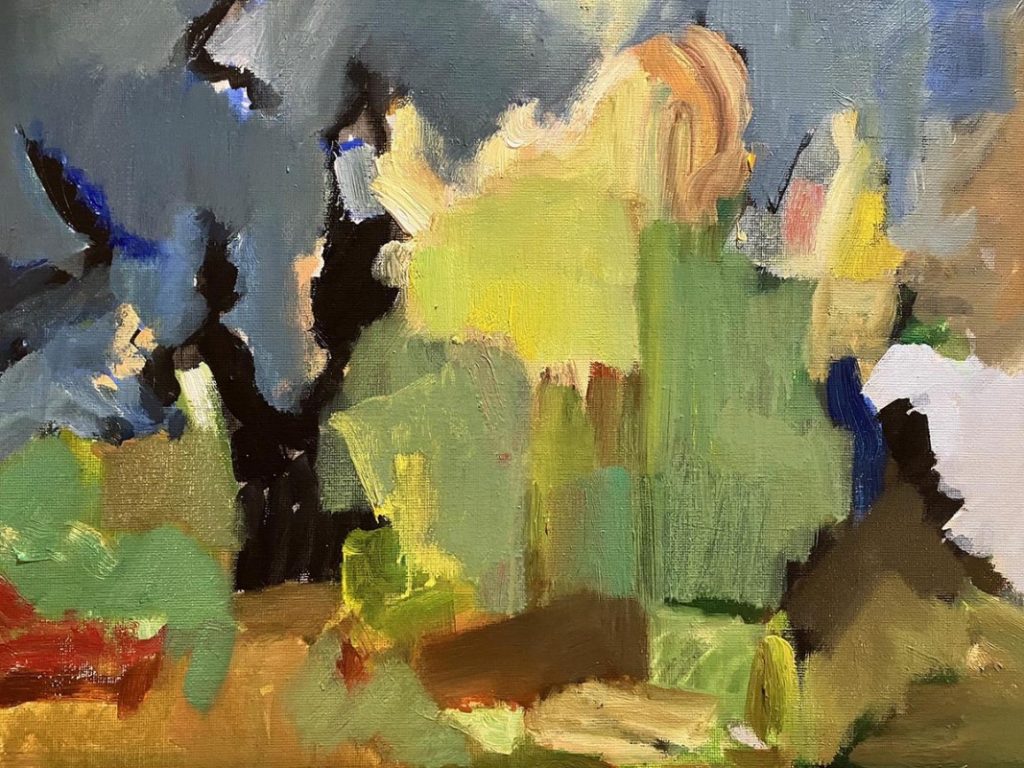
As I wrote above, if we want to imagine what the past was really like, we have to imagine the trees, the sky, the sun, the colours and the sounds. So having transferred these ‘characters’ to canvas, I began to paint, adding colour, as if, with the video, trying to imagine the fullness of the moment from which they were taken.

Nana's Mountain

So where does this with my own feelings of grief?

Grief is an expression of our relationship to someone’s absence. Its language is written in shadows like the patterns cast by the trees. But these shadows are cast by the memory of our loved one. Remembering the colours, the sounds and how it felt is painful. But remember them we must – and without regret.

Holding on to regret is like clutching feelings of anger. Soon they will start to eat away at us, damage us. We have to let them go by transforming them, just as we can try and transform our own suffering.

To transform our suffering we must ground ourselves in the present moment. When a relationship ends, it’s all too easy to become entangled in our thoughts, trying to make sense of the other person’s actions. I found myself doing just that for days and days, walking round in circles, going nowhere except down. And what would it achieve anyway? Trying to work out why something happened won’t change the fact that it did happen.

All I could learn to do was be as present in the moment as I could, to let go of my thinking about the past. That’s not to say I had to try and forget her; the memories of our time together would always be with me and precious with it. But when I think of those memories, I’m not trying to understand them or change them. I just had to stop striving for answers which I’d no chance of knowing, as if knowing them would somehow change the outcome and alleviate the pain.

I still walk and I still think, but walking meditation, where one is grounded step by step in the moment, helps still the mind and cultivate a sense of peace. Looking at the trees, the clouds, the sky. Feeling the wind or the rain (or both) helps me find the peace and contentment within. It helps my mind reconnect with my body just as I can try and connect with those who lived generations before us.

Filed Under: Grief

Take Me Home

February 19, 2023 by Nicholas Hedges

After we lost mum in September last year, I found some old audio cassettes in her attic, one of which was a selection of tracks she recorded with my aunts in around 1975/76. The recordings had suffered a little through many years in a cupboard, but having restored them as best I could, I lifted the vocals from one track and wrote a new backing track. The song is ‘Take Me Home (Country Roads)’ by John Denver, and though it’s just a small thing, ‘collaborating’ with my mum (who is singing the lead) went some small way to making up for the conversations I miss having with her.

This is also dedicated to my Auntie Mo who also passed away in 2022.

Filed Under: Family, Grief

Diffusers

February 8, 2023 by Nicholas Hedges

In the months since my mum passed away we have been emptying her house ready for sale – one of those jobs which is difficult but, sadly, necessary. Saying that, the process hasn’t been as hard as I  had imagined it would be; perhaps because I have moved so much of my mum’s things into my own house! It’s strange seeing these very familiar objects occupy places in new constellations; strange and, at the same time, comforting.

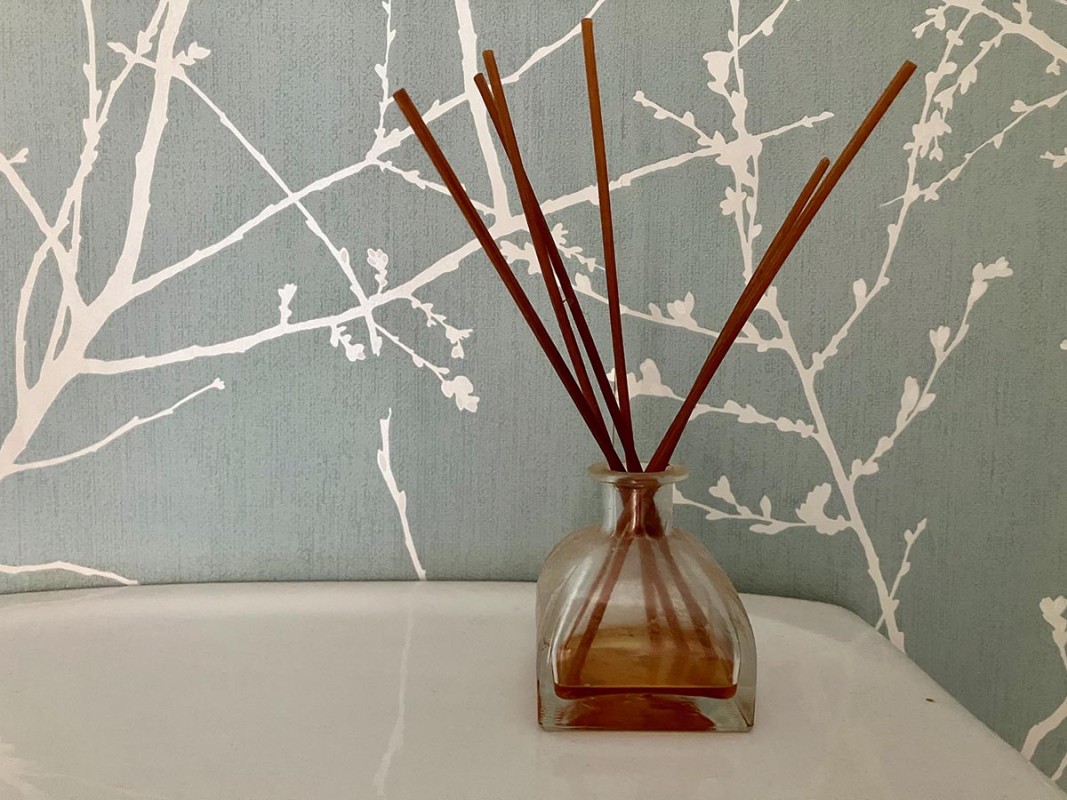
On one of my more recent visits, I noticed the empty diffusers sitting on windowsills and shelves and was struck, straight away, by the visual metaphor – the way they seemed to signify the absence of mum in our lives.

Empty diffusers in my late mother's house

Each one once contained something which, over time, has passed from the bottle into the air. Now they are empty. Nothing passes to nothing.

Standing in the house, I am of course aware of all that has gone before. Memories of times that were good and those that were sometimes hard. That is all that’s left there now. Like the bottles, the house is empty.

So, along with my mum’s possessions, I’ve brought home the empty diffusers so I can explore them as objects – as visual metaphors – for the loss I am feeling.

Filed Under: Family, Grief, Mum

Grief

November 25, 2022 by Nicholas Hedges

After my mum passed away in September I found some old cassettes in cupboards in her attic room and over the last few weeks have been converting them to digital files which I have more lately been restoring.

One of the tapes contains music mum recorded with her two sisters (as M3) around 1975/6. Among the recordings is a version of John Denver’s ‘Take Me Home (Country Roads)’ with my mum singing the lead. It was obviously very emotional to hear her and, thinking of the date it was recorded, I couldn’t help thinking of myself as I was back then – a small boy of 4 or 5 years old.

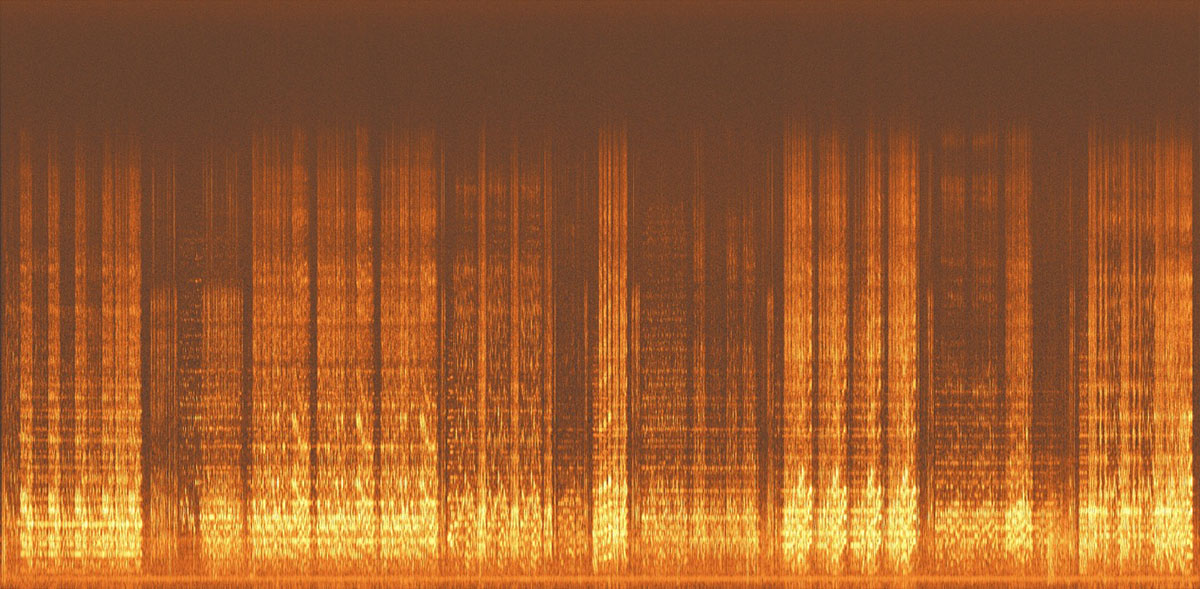
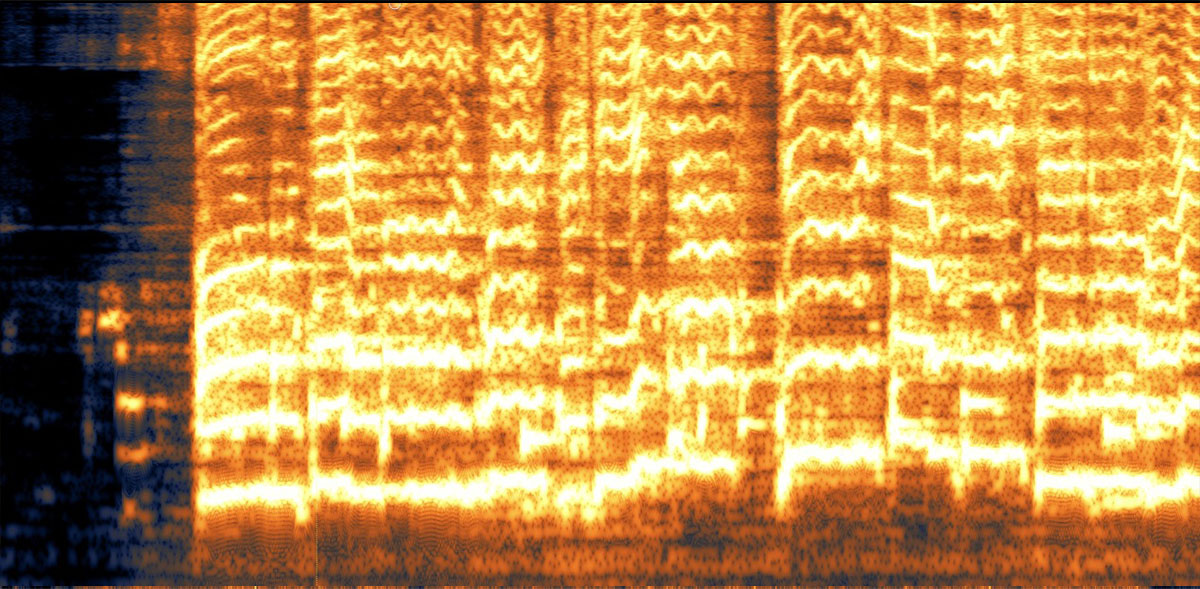
With the audio file converted and restored I then set about isolating the vocals so I could create my own backing track. Having done that I discovered that although the backing had been removed, there remained elements of the banjo bound up in with the voice. The software I was using has been called Photoshop for audio in that it shows the audio file as a spectrograph as per the image below.

Spectrogram image of an audio file

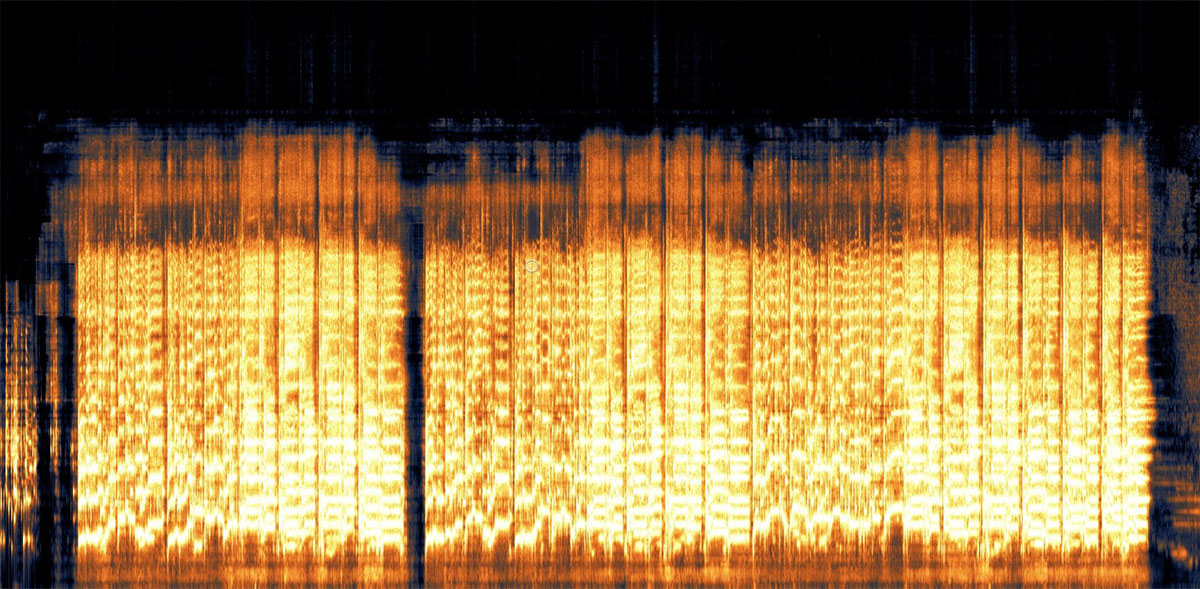
The file runs from left to right with the lower frequencies at the bottom and volume indicated through the brightness (the louder, the brighter). Zooming in, one can see different sounds, for example in the image below you can see my mum’s voice (bright at the bottom of the image) with the harmonics in layers above.

Zooming in between the harmonics (for example, between the brighter bottom two layers) I could see the bits of banjo, and, using the software’s brush, could paint these sounds into the background. As a result, mum’s voice (and that of her sisters) was even better isolated enabling me to create a new backing track for the vocal.

Spectrogram of an audio file

Creating a new backing track was great – a collaboration of sorts – but one of the things which struck me was how the act of removing the unwanted bts of audio, like an archaeologist removing dirt from a dug up artefact, was like those moments when grief is suddenly focussed by an object, a sound or a memory and the loved one is remembered against the inexplicable backdrop of their absence. These pointed moments of grief are not simply remembrances of a lost loved one, but sudden realisations, each time as if for the first time, that they have gone. 

Looking at the image above, one can see the yellow lines of my mum’s voice against the noise and silence, bright like those flashes of realisation.    

Filed Under: Family, Grief

Mum

October 24, 2022 by Nicholas Hedges

On Thursday, 29th September, my wonderful mum, Mary, passed away. She was 78 years old and had been diagnosed with both lung cancer and glioblastoma 15 months ago. Throughout that remaining time, she displayed her typical resilience in the face of adversity; carrying on with life as normal and living it to the full. Only in the last 3 months did things become difficult. In June, on Father’s Day, her condition worsened suddenly, and after 3 weeks in hospital, she returned home with round the clock care, where, 3 months later, she passed away peacefully with her family beside her.   

Seeing her in her own home, unable to look after herself was, perhaps for me, the hardest part of those last weeks. Mum was a very independent woman; strong and determined, and the fact she now had to rely on 24 hour care was as tough as it was necessary.

Over time however, that initial ‘shock’ wore off. Aunts, uncles and cousins popped in regularly, to help or visit, which was itself something mum, I’m sure, delighted in. Having such a large network of support, including that of neighbours and friends, was hugely important for me and my brother too, and the team of carers (including those from Sobell House and Marie Curie) were absolutely wonderful.

Because of the glioblastoma (her lung cancer had also matastasised to the brain), she – in terms of her character – was diminished  as the illness progressed, and, just as with someone who has dementia, she had to some extent, already left us before she passed away. 

In those last weeks, it became increasingly difficult to remember what mum was like before she was ill and when people are diminished in this way through illness, it’s often a relief when their suffering ends. That doesn’t mean, of course, that one isn’t, at the same time, desperately sad. But that part of one’s grief is, for a short time, suppressed. 

In preparing for her funeral however, looking at old photographs and watching videos of her performances on stage in the 1980s and 1990s, that diminished part of her – the mum we knew and loved; strong, fun, charismatic and hugely talented – took centre-stage once again, Suddenly, all memories of mum being so ill in those last weeks were gone.

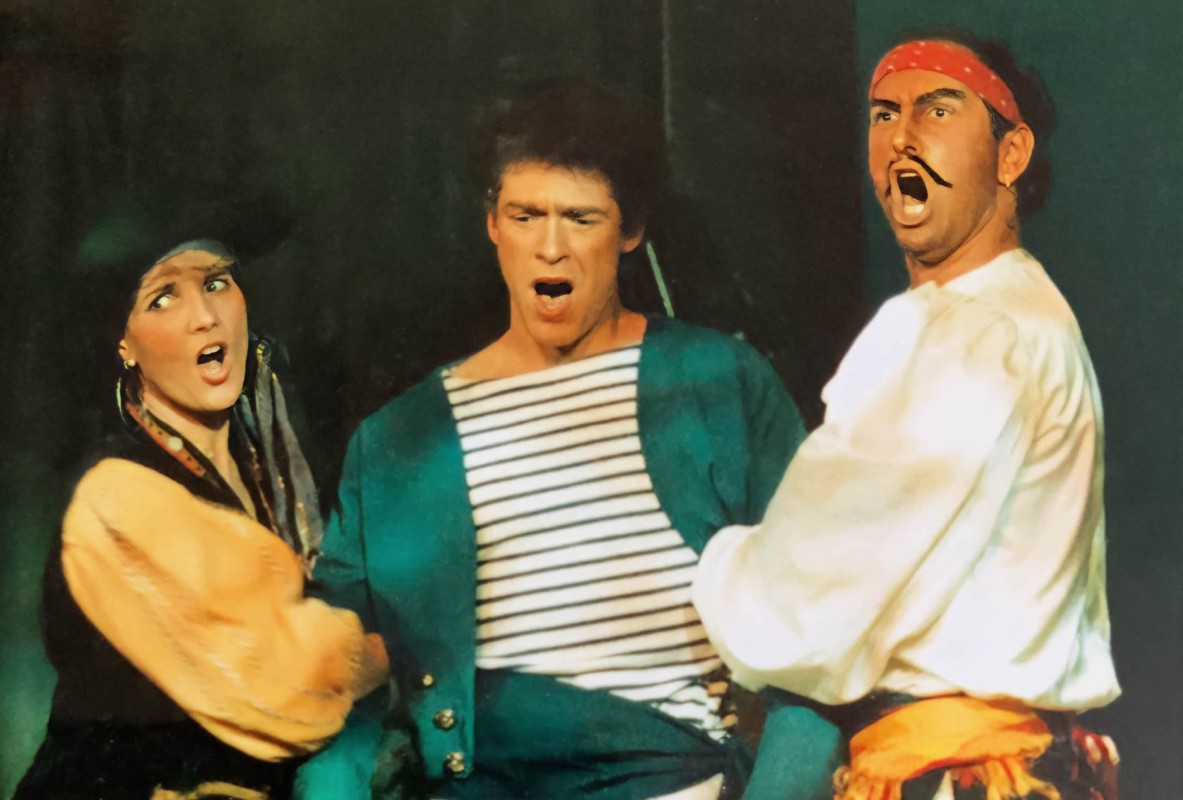
Mum in The Pirates of Penzance
My mum, pictured in The Pirates of Penzance (1998)

The mum we had lost had returned and, as a result, that sense of relief began its transformation into grief.

I always loved seeing mum perform, and for a couple of shows, I watched her from the wings, enjoying the buzz and the thrill of the whole performance. But it’s only now, as a 51 year old man, watching her performances as a woman in her early 40s, that I can appreciate just how good she was.


The videos themselves aren’t great quality (recorded from a distance on old VHS camcorders and then left in an attic cupboard for 30 years) but despite this, her talent and her wonderful voice shine through. And so, what I’m left with now, in these first weeks after her death, is, coupled with sadness, an overwhelming feeling of pride.

Filed Under: Family, Grief

© Nicholas Hedges 2024

  • Facebook
  • Instagram
  • Twitter
  • YouTube

Copyright © 2025 · Outreach Pro on Genesis Framework · WordPress · Log in