It’s taken a while to get to this stage, working out an image for a painting based on 18th century textile designs, but, at last, I’ve got there. The final design idea is shown below:
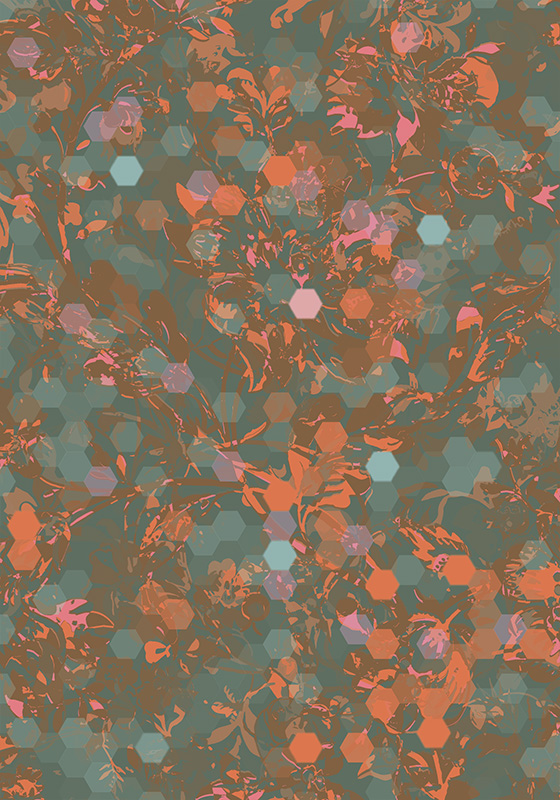
This design began with the images I created and described in my last blog, ‘Lost and Found in Translation‘. The image is titled ‘Dress Fabric for Lydia, 1764‘, Lydia being my 5x great-grandmother who was born in Oxford in 1734 and died in 1822.
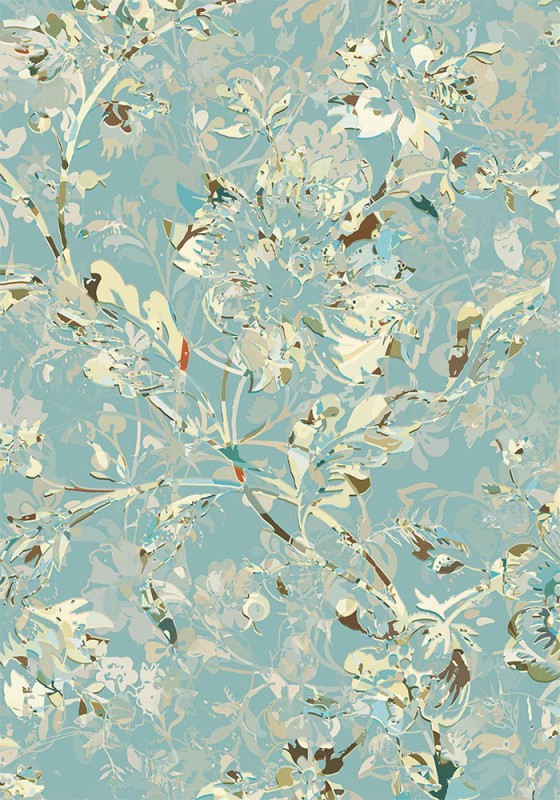
This image comprises 4 individual 18th century textiles which have been blended and recoloured to give them a fragmentary appearance. I wanted a way of increasing that fragmentation, of rendering the images, in parts, almost anonymous and impenetrable as so much of the past is.
The first thing I did was pixelate the image with some of the original pattern remaining visible.
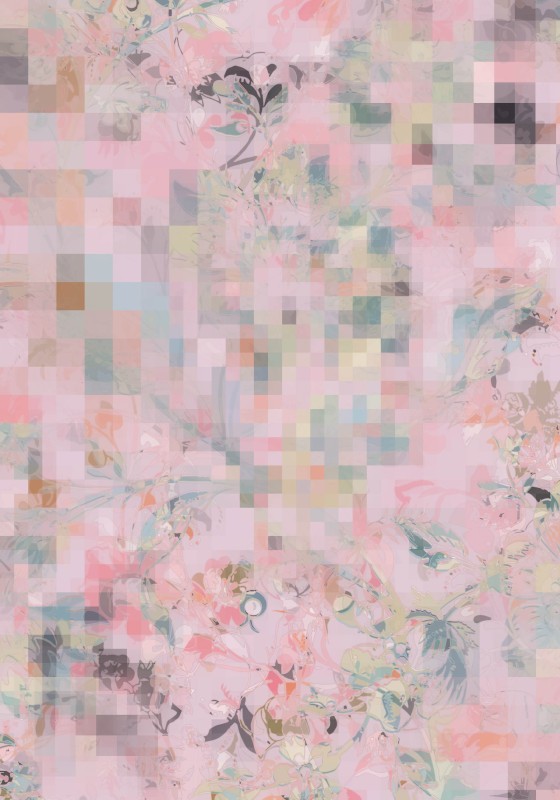
But while it did what I wanted, it looked too digital; too much of ‘this time’. So I decided to make the pixels into hexagons, alluding to the practice of mosaic patchwork (18th century term) and later English Paper Piecing.
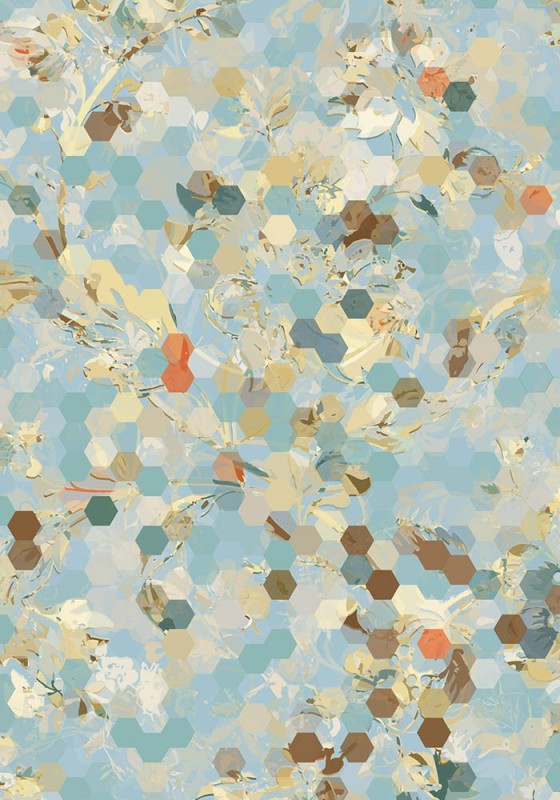
It was whilst playing around with the opacity and the colours that something suddenly became clear. The hexagons had the look of bokeh in a photograph and from there the image became about light, low light such as one might find at dusk in a garden. The end result was the image at the start of this post.